
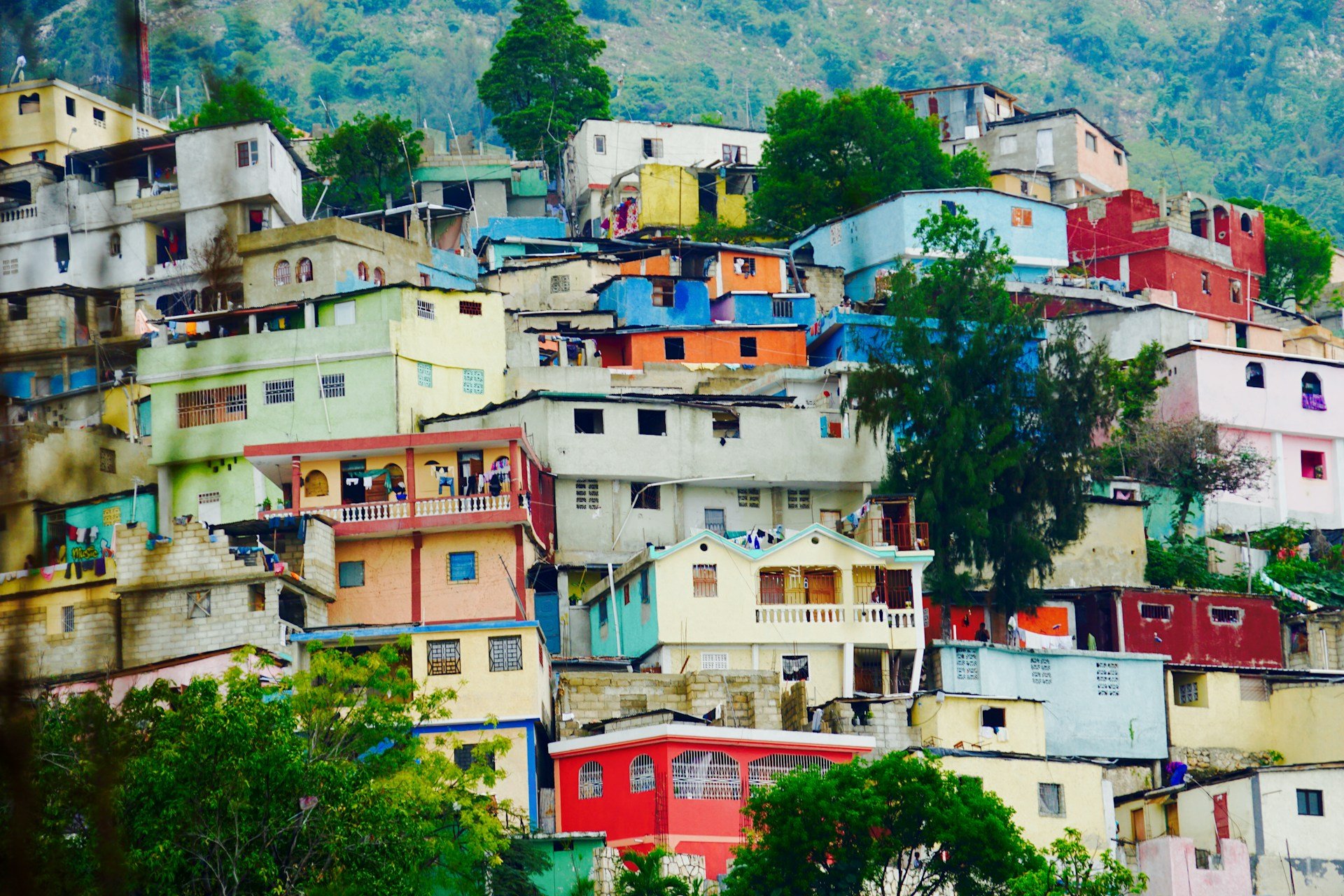
Haiti
The country that defeated Napoleon, abolished slavery in the Western Hemisphere, and paid for its freedom for two hundred years afterward. The most significant revolutionary event in the Americas happened here. Haiti deserves to be understood.
Understanding Haiti in 2026
Haiti is not a destination this guide can recommend for conventional independent tourism in 2026. That is the honest starting point and it would be irresponsible to bury it. The security situation — armed gang control of large portions of Port-au-Prince, disruption of national road networks, kidnappings affecting nationals and foreigners alike, and the collapse of state capacity in key areas — represents genuine life-threatening risk for most visitors. The US Department of State, UK Foreign Commonwealth and Development Office, Government of Canada, and most Western government travel advisories have issued their highest warning level for Haiti. This is not reflexive institutional caution. It reflects conditions on the ground.
This guide covers Haiti fully and honestly for several reasons. First, Haiti is one of the most historically significant countries in the Americas and understanding its history is important for anyone who wants to understand the Atlantic world, slavery, colonialism, and the struggle for human freedom. Second, there are forms of engagement with Haiti — through Haitian diaspora communities, Haitian art and music and literature, and through reputable humanitarian and cultural organizations — that do not require being physically present in Port-au-Prince in 2026. Third, security situations change, sometimes quickly, and the Haiti this guide describes will be worth visiting when conditions allow. Fourth, there are very small numbers of journalists, aid workers, academics, and people with family connections who travel to Haiti under professional protocols. This section covers what that looks like.
Haiti covers the western third of the island of Hispaniola, sharing a border with the Dominican Republic to the east. It has a population of approximately 11.5 million people and is the poorest country in the Western Hemisphere by most economic measures — a fact that requires its historical context to be understood rather than simply catalogued. Haiti was the first Caribbean nation to gain independence, the first Black republic in the world, and the site of the only successful slave revolution in history. It paid for that revolution with a crippling debt to France that took until 1947 to repay, a debt now estimated to have cost Haiti between $21 billion and $115 billion in today's value. Understanding Haiti's poverty requires understanding that debt, the subsequent US occupation from 1915 to 1934, the Duvalier dictatorships, and the 2010 earthquake that killed an estimated 300,000 people and displaced 1.5 million. Haiti's current situation is not inexplicable. It has causes that are both internal and very heavily external.
What Haiti has, independent of its current crisis, is extraordinary: the Citadelle Laferrière, one of the most significant monuments in the Americas; a Vodou spiritual tradition of genuine depth and sophistication; a visual art and music culture that produced work of international importance; mountains, coastline, and natural beauty; and a people whose resilience and cultural creativity have produced something remarkable under conditions that would have destroyed lesser cultures. When Haiti is safe to visit widely, it will deserve the attention.
Haiti at a Glance
A History Worth Knowing
The history of Haiti is the most important story in the Americas that most people in the Americas cannot tell. Understanding it is not merely context for a travel guide. It is essential for understanding modern history, the politics of race, the economics of colonialism, and how the world got to where it is today.
The island Columbus called Hispaniola was home to the Taíno people when the Spanish arrived in 1492. Within fifty years, the Taíno were effectively gone — killed by disease, violence, and forced labor in numbers that represent one of the first European genocides in the Americas. The Spanish colonized the eastern portion. The western third was largely ignored until French pirates and buccaneers established settlements in the 17th century. France formalized its claim in 1697 when Spain ceded the western third in the Treaty of Ryswick. The French named it Saint-Domingue.
Saint-Domingue became the most productive colony in the world. By the late 18th century, it produced roughly 40% of Europe's sugar and more than half its coffee. This wealth came from the labor of approximately 500,000 enslaved Africans, subjected to a system of brutality calibrated to work people to death. The average enslaved person in Saint-Domingue died within three to seven years of arrival. The colony was profitable precisely because it was cheaper to work people to death and import replacements than to maintain them.
The Haitian Revolution began on the night of August 22–23, 1791, at a ceremony at Bois Caïman where a Vodou ceremony is said to have initiated the uprising. Within ten days, 100,000 enslaved people were in revolt and the northern province was on fire. What followed was thirteen years of conflict unlike anything in the Atlantic world had seen.
Toussaint Louverture, born enslaved, emerged as the revolution's military and political leader. He was a military genius who defeated or neutralized British, Spanish, and French armies, abolished slavery across the territory, and drafted a constitution in 1801. Napoleon Bonaparte, threatened by Louverture's power and determined to restore slavery, sent an expedition of 50,000 troops under his brother-in-law Leclerc in 1802. The French used a ruse to capture Louverture at a negotiating meeting and deported him to Fort de Joux in the Jura mountains, where he died of cold and neglect in April 1803.
The revolution did not die with Louverture. His generals Jean-Jacques Dessalines, Henri Christophe, and Alexandre Pétion continued the fight. The French army was decimated by yellow fever and Haitian resistance. On November 18, 1803, the Battle of Vertières, the revolution's final major engagement, destroyed the remaining French force. On January 1, 1804, Dessalines declared the independence of the new nation and gave it its Taíno name: Haiti. He ordered the massacre of most remaining white colonists, ending the possibility of a return to the plantation system.
The new state that emerged from this extraordinary revolution was immediately punished by the world it had defied. The United States refused to recognize Haiti until 1862, fearing the example it set for its own enslaved population. France blockaded the country and in 1825 demanded 150 million gold francs as "compensation" for the property (including enslaved people) lost by French colonists during the revolution. Haiti, isolated and facing renewed French military threat, agreed. The debt, later reduced to 90 million francs, was crippling. Haiti took loans from French banks to pay France. The repayments continued until 1947. In 2022, the New York Times published an investigation estimating the total cost of this debt, in its compounding economic effects, at between $21 billion and $115 billion in today's value. Haiti paid for its freedom for over a century. The poverty that followed is not mysterious.
The 20th century brought the US occupation (1915–1934), ostensibly to stabilize finances but involving systematic suppression of Haitian sovereignty and peasant resistance. The Duvalier family dictatorship ran from 1957 to 1986: François "Papa Doc" Duvalier and then his son Jean-Claude "Baby Doc" ruled through the Tonton Macoutes paramilitary, eliminating opposition and plundering the economy. The restoration of democracy in 1990 was interrupted by a military coup in 1991. The US reinstated President Aristide in 1994. Political instability and corruption continued through the 2000s.
On January 12, 2010, a magnitude 7.0 earthquake struck 25 kilometers southwest of Port-au-Prince. It killed an estimated 100,000 to 300,000 people (estimates vary significantly), injured 300,000, and left 1.5 million homeless. It was one of the deadliest natural disasters in recorded history. The international humanitarian response was massive and, as has been extensively documented, significantly mismanaged. Much aid money did not reach Haitians. Some organizations, including the Red Cross, have faced serious questions about how funds were used. A cholera epidemic introduced by UN peacekeepers from Nepal killed over 10,000 Haitians and sickened nearly a million more. The UN took until 2016 to acknowledge responsibility.
President Jovenel Moïse was assassinated at his home in July 2021. The power vacuum that followed, combined with the collapse of effective state institutions, allowed armed gang coalitions to expand their control, particularly in Port-au-Prince. By 2024, gangs controlled an estimated 80% of the capital. The Kenyan-led multinational security support mission deployed in 2024 has had limited operational impact on this control. The situation as of 2026 represents a genuine humanitarian and security crisis with no clear resolution timeline.
None of this should make Haiti less interesting to understand. It should make it more so.
France formally claims the western third of Hispaniola. The colony becomes the most productive in the world, built on enslaved labor.
The night of August 22–23. Within ten days, 100,000 enslaved people are in revolt and the northern province is burning.
Napoleon uses negotiation as cover to capture and deport Toussaint Louverture. He dies at Fort de Joux in April 1803. The revolution continues without him.
January 1. Dessalines declares Haiti independent. The first Black republic. The only successful slave revolution in history.
France demands 150 million gold francs as "compensation" for colonists' losses. Haiti agrees under military threat. Repayments continue until 1947.
19 years of US military and financial control. The Haitian constitution is rewritten to allow foreign land ownership. Peasant resistance is suppressed.
Papa Doc and Baby Doc. 29 years of Tonton Macoutes terror, opposition elimination, and economic plunder.
Magnitude 7.0. Up to 300,000 dead. 1.5 million displaced. The humanitarian response is massive and widely documented as mismanaged.
President Jovenel Moïse is killed at his home in July. The power vacuum accelerates gang expansion. By 2024, gangs control an estimated 80% of Port-au-Prince.
Haiti's Key Destinations
The following destinations are described as they exist geographically and historically. Current accessibility varies significantly by security conditions and visitors should verify with current travel advisories and on-the-ground sources before any travel planning. The north of the country, particularly Cap-Haïtien and the Citadelle area, has historically had lower gang activity than Port-au-Prince and the south, though conditions change.
Citadelle Laferrière
The most significant monument in the Caribbean and one of the most extraordinary built structures in the Western Hemisphere. King Henri Christophe constructed this massive mountaintop fortress between 1805 and 1820 using the labor of tens of thousands of Haitians, with the explicit purpose of defending the new republic against French re-invasion. It sits at 970 meters above sea level in the mountains behind Cap-Haïtien, visible for miles. The scale defies expectation: walls 40 meters high, 365 cannonballs stored for each day of the year, cannons engraved with the coats of arms of the European nations who had once enslaved Haiti's people, now pointed outward in defiance. It is a UNESCO World Heritage Site. Reached by horseback or on foot from the village of Milot, where the ruins of Christophe's Sans-Souci palace also stand.
Cap-Haïtien
Haiti's second city, on the north coast, was the colonial capital of Saint-Domingue and one of the wealthiest cities in the 18th-century Atlantic world. It was called "le Paris des Antilles" — the Paris of the Caribbean. The city was burned during the revolution and rebuilt. The colonial grid survives in parts of the historic center. Cap-Haïtien is the base for the Citadelle visit and has historically been more stable than Port-au-Prince, with a functioning tourism infrastructure for the Citadelle circuit. The beaches at Cormier Plage and Labadie (a private cruise ship beach leased to Royal Caribbean) are north of the city.
Jacmel
A port city on Haiti's south coast with a significant artistic tradition, a well-preserved Victorian ironwork commercial district, and beaches that were among the most visited in the country before the current crisis. Jacmel's carnival, held in February, features paper-mâché mask-making of international repute. The Atelier Mapou and other artisan workshops produced work that defined Haitian folk art internationally. The city was affected by the 2010 earthquake and has rebuilt slowly. It remains one of Haiti's most architecturally intact cities outside the capital.
Port-au-Prince
The capital holds most of Haiti's cultural institutions: the Musée du Panthéon National Haïtien (MUPANAH) which houses the anchor of Columbus' Santa María and Toussaint Louverture's pistol; the Centre d'Art, which launched international recognition of Haitian naive painting in 1944; the Iron Market (Marché de Fer), a striking 19th-century iron structure originally built for Cairo that ended up in Haiti; and the ruins of the National Palace, destroyed in the 2010 earthquake. Port-au-Prince currently has areas under gang control that make independent visitor movement extremely dangerous. Do not visit without verified, current, professional security support.
Vertières (near Cap-Haïtien)
The site of the Battle of Vertières on November 18, 1803, the final major engagement of the Haitian Revolution, where Dessalines' forces defeated the remnants of the French expeditionary army. A monument stands at the battlefield site. The date is Haiti's Flag Day and a national holiday. For anyone visiting the north of the country with an understanding of the revolution's significance, Vertières is not a tourist attraction. It is one of the most important historical sites in the Americas, where the decisive moment of the first successful slave revolution occurred.
Pic Macaya & Massif de la Hotte
The southwest peninsula contains one of the last remaining cloud forests in the Caribbean. Parc National Pic Macaya, centered on one of Haiti's highest peaks at 2,347 meters, protects endemic bird species found nowhere else. The biodiversity of this massif is extraordinary by Caribbean standards. Access requires significant logistical support and was limited even before the current security situation made the southwest difficult to access safely. For naturalists and ornithologists, it represents one of the Caribbean's most significant unvisited habitats.
Culture, Art & Identity
Haitian culture is one of the most distinctive and original in the Americas. It emerged from the specific conditions of Saint-Domingue: a colony where the enslaved population was continuously replenished from West and Central Africa, where the African majority maintained cultural and spiritual practices that were systematically suppressed but never destroyed, and where the revolutionary break with France created the conditions for a new national culture unlike anything else in the Caribbean.
The culture's most distinctive element is Vodou, which is neither primitive superstition nor the Hollywood horror trope. It is a sophisticated syncretic religion with its own theology, cosmology, healing traditions, music, visual art, and relationship to the community. The lwa (spirits) — Erzulie Freda, Ogou, Papa Legba, Baron Samedi — are not demons. They are intermediaries between the human and divine, each with specific domains, personalities, and ritual requirements. Vodou has been used as a weapon by Western powers to delegitimize Haiti and its people. Understanding it correctly is an act of respect for Haitian culture and a correction of historical slander.
Haitian Visual Art
In 1944, the Centre d'Art opened in Port-au-Prince under American director DeWitt Peters. It brought together self-taught Haitian painters whose work was immediately recognized internationally as something new and significant. Hector Hyppolite, a Vodou priest who painted with chicken feathers, became an international name. The Sainte-Trinité Cathedral murals painted by Haitian artists in the 1950s were some of the most significant religious paintings in the Americas until they were destroyed in the 2010 earthquake. Haitian art is collected by major institutions worldwide and remains one of the country's most internationally recognized cultural contributions.
Music: Kompa, Rara & More
Kompa (also compas) is Haiti's popular music: a slow, rhythmic dance music with African and Cuban influences that became the dominant popular form across Haiti and the diaspora from the 1950s onward. Rara is a street music played during Carnival and Lent using bamboo instruments, drums, and large tin horns, with roots in Vodou ceremonial practice. Vodou-jazz, developed by jazz musician and folklorist Lina Mathon Blanchet and others, fused jazz harmonics with Vodou rhythm structures. All three forms are internationally influential and underrecognized.
Haitian Literature
Haiti has a distinguished literary tradition in both French and Haitian Creole. The Noirisme and négritude movements had significant Haitian contributions. Contemporary writers including Edwidge Danticat, Dany Laferrière (who became a member of the Académie française in 2013), and Gary Victor write in multiple languages for international audiences while remaining rooted in Haitian experience. Haitian literature is one of the richest in the Caribbean and largely unknown outside specialist circles in the English-speaking world.
Vodou: A Corrective
Hollywood Voodoo — zombie slaves, dolls with pins, evil witch doctors — has nothing to do with Haitian Vodou except a shared name. Vodou emerged among people who were being worked to death and needed a spiritual framework for survival and resistance. The Bois Caïman ceremony that is said to have initiated the 1791 revolution was a Vodou ceremony. The lwa Ogou, the warrior spirit, was invoked in the fields before the uprising. Vodou is not peripheral to the Haitian Revolution. For many historians, it was the spiritual infrastructure that made collective action possible. Approaching it with the respect any living religion deserves is the minimum any visitor owes.
Food & Drink
Haitian cuisine is one of the most underknown in the Caribbean. It differs substantially from Dominican cooking next door and from the French Creole tradition of Martinique and Guadeloupe. The flavors are built on epis, a base seasoning of blended herbs, peppers, garlic, and shallots used in virtually every dish. The cooking is flavorful without being excessively spicy, complex without being elaborate, and rooted in ingredients that have been grown on the island for centuries.
Griot
Marinated and twice-cooked pork — first braised, then fried — served with pikliz and riz djon djon or plain rice. The national dish by common consensus. The pork is marinated in citrus and epis for hours before cooking, which gives it a crispy exterior and intensely seasoned interior. Available at street food stalls and restaurants throughout the country. The best griot in the diaspora is found in Little Haiti in Miami and in Haitian neighborhoods of Montreal and New York, which may currently be more accessible than Haiti itself.
Pikliz
The essential Haitian condiment: shredded cabbage, carrots, and Scotch bonnet peppers fermented in vinegar and citrus. It accompanies griot, fried fish, and most meat dishes. The heat level is real; the flavor is complex. Pikliz is to Haitian cooking what hot sauce is to Louisiana cooking: not optional, not decorative, genuinely integral. The version sold in jars in Haitian diaspora communities is a shadow of the fresh-made version.
Riz Djon Djon
Rice cooked with djon djon, a small dried black mushroom that grows in the northern mountains around Cap-Haïtien. The mushrooms turn the rice black and give it a deeply earthy, smoky flavor unlike any rice dish in the Caribbean. It is served at celebrations and alongside seafood in the north. The djon djon is harvested seasonally and expensive relative to other ingredients. A plate of riz djon djon with shrimp in Cap-Haïtien is one of the most distinctive meals in the Caribbean.
Soup Joumou
Eaten every January 1 to commemorate independence. Joumou (calabaza squash) soup with beef, vegetables, and pasta was forbidden to enslaved people under French colonialism. On January 1, 1804, free Haitians ate it as their first act of independence. The soup is now UNESCO Intangible Cultural Heritage. It is made by Haitian families on January 1 in Haiti and across the entire diaspora. It is the most politically resonant bowl of soup in the history of food.
Poisson & Lambi
Fresh fish (poisson) fried or grilled with epis seasoning, and lambi (conch) stewed or in salad, are the central proteins of coastal Haitian cooking. Cap-Haïtien's waterfront restaurants serve both. The tomato-based sauce for lambi in the Haitian style is more complex and more herb-forward than the Dominican version, and the conch is sliced thin rather than chopped. Worth comparing directly if you have eaten lambi in the Dominican Republic.
Haitian Coffee & Rum
Haiti grows some of the world's finest Arabica coffee in the mountain areas around Jacmel and the Massif du Nord. Grown in shade under forest canopy at high altitude, it has a complex, fruity profile. Most of it is exported to Europe rather than sold domestically — a colonial economic legacy. The Haitian rum (rhum) tradition is distinct from the British-influenced rums of Barbados and Jamaica. Barbancourt, distilled in Port-au-Prince, is internationally regarded as among the finest agricole-style rums in the Caribbean, made from fresh sugarcane juice rather than molasses.
When to Go
When Haiti is safe to visit widely — which requires the resolution of the current gang crisis, restoration of state capacity, and the rebuilding of tourism infrastructure — the following seasonal notes will apply. For the small number of professional travelers (journalists, aid workers, researchers) currently operating in Haiti under security protocols, these seasonal factors remain relevant for planning within managed security frameworks.
Dry Season
Nov – MarThe dry season brings cooler temperatures, lower humidity, and the best conditions for visiting the Citadelle and hiking in the north. December through February have the most comfortable temperatures. January 1 is Independence Day — soup joumou is eaten everywhere and the day carries deep national significance.
Carnival Season
FebHaitian Carnival is one of the Caribbean's most intense, centered on Port-au-Prince and Jacmel. Jacmel's paper-mâché mask tradition is internationally recognized. The Rara street processions begin in Lent and continue through Easter. February weather is excellent. When Haiti is accessible, Carnival season offers the most concentrated cultural experience.
Wet Season
Jun – OctHaiti sits fully in the hurricane corridor. Hurricane Matthew in 2016 devastated the southern peninsula. Hurricane season brings heavy rains, flooding, and significant road disruption. September and October carry the highest risk. The rainy season also increases the risk of cholera and waterborne illness.
Safety: The Honest Assessment
Haiti's security situation in 2026 is a genuine crisis that requires direct, unvarnished description. This is not the kind of nuanced "exercise caution" assessment that applies to many countries on this site. This is a country where the capital is substantially controlled by armed criminal coalitions, where kidnapping for ransom affects Haitian nationals and foreigners alike, where access between cities has been disrupted by gang checkpoints, where the state has lost the monopoly on violence in much of the country, and where no major Western government recommends travel for its citizens.
The gang coalition known as Viv Ansanm (a merger of G9 and G-Pep, once rival gangs) controls an estimated 80% of Port-au-Prince as of early 2026. Toussaint Louverture International Airport has experienced periods of closure and restricted access due to gang activity near its perimeter. The highway between Port-au-Prince and Cap-Haïtien in the north — the main road connecting the capital to the rest of the country — has been controlled at points by armed actors making road travel extremely dangerous.
The Kenyan-led Multinational Security Support Mission that deployed to Haiti in 2024 has had limited operational effect on gang control of Port-au-Prince. As of 2026, it remains underfunded and understaffed relative to the scale of the security challenge.
For people who are considering travel to Haiti in this environment: the only sensible approach is through established organizations with experienced, current in-country security networks. This means journalists working with established media organizations and experienced local fixers, humanitarian workers deployed by organizations with established security protocols (MSF, IRC, etc.), and academics and researchers with institutional affiliations that provide security infrastructure. Even within these categories, the risk is real and should not be minimized.
The northern region around Cap-Haïtien has historically been more stable than Port-au-Prince. Some organized tour operators were running Citadelle visits from Cap-Haïtien as recently as 2023. The situation requires current verification before any planning. Security conditions in Haiti can deteriorate rapidly.
Port-au-Prince
Do not travel to Port-au-Prince for independent tourism. Gang control of the capital is extensive. Kidnapping risk for both Haitians and foreigners is high. The airport has experienced disruptions. There is no independent tourist infrastructure currently operating safely.
National Highways
The main road between Port-au-Prince and Cap-Haïtien has been subject to gang checkpoint control and armed robbery. Overland travel between major cities carries serious risk. Verify current road security with current sources before any road travel.
Cap-Haïtien & North
The north has historically been more stable. Citadelle visits from Cap-Haïtien operated as recently as 2023. The situation requires current verification. Professional security support is strongly recommended even in areas considered relatively stable.
Kidnapping
Kidnapping for ransom is a systematic problem affecting Haitian nationals and foreigners alike. Gang groups operate kidnapping as an economic activity. Any travel in Haiti carries genuine kidnapping risk that requires professional security management.
Professional Travel Only
If traveling to Haiti in 2026, do so only with: professional media organization logistics, humanitarian organization security protocols, or established academic/research institution support. Solo independent travel is not a survivable approach in most of the country.
Monitor Current Advisories
Security conditions in Haiti change rapidly. Check your government's current travel advisory within 48 hours of any departure decision. US State Department (travel.state.gov), UK FCDO (gov.uk/foreign-travel-advice), and Global Affairs Canada provide the most frequently updated assessments.
Planning for Haiti
This section is structured for the specific categories of people who may be traveling to Haiti in 2026, or planning to do so when conditions improve. It addresses what preparation looks like for each category.
Journalists & Media
Work through established media organizations with in-country contacts. Use local fixers with current on-the-ground knowledge. The Committee to Protect Journalists (CPJ) publishes Haiti-specific safety guidance. The Rory Peck Trust provides safety training resources. Do not freelance into Port-au-Prince without established local contacts and a security protocol.
Humanitarian Workers
Organizations including MSF (Médecins Sans Frontières), IRC (International Rescue Committee), and others operate in Haiti with established security frameworks. Individual volunteers should work through established organizations rather than independent arrangements. OCHA (UN Office for the Coordination of Humanitarian Affairs) publishes regular Haiti situation reports at reliefweb.int.
Researchers & Academics
Academic institutions with Haiti programs (Yale Haiti Initiative, Harvard Humanitarian Initiative, CUNY Haitian Studies Institute) maintain current in-country contacts and institutional security networks. Work through institutional channels. The Haitian Studies Association can connect researchers with academic networks.
Haitian Diaspora
People with family in Haiti face a different risk calculus. Family connections provide community support but do not eliminate the general security risk. Many diaspora Haitians are more familiar with specific neighborhood conditions than any external assessment. Coordinate with family contacts about current local conditions in the specific area you are visiting.
Health Preparation
Recommended vaccinations include Hepatitis A, Hepatitis B, Typhoid, and Cholera. Malaria prophylaxis is recommended throughout Haiti. Water sanitation is critical: drink only bottled water. The 2010 earthquake and subsequent cholera epidemic severely damaged water infrastructure that has not been fully restored. Medical evacuation insurance is mandatory for any Haiti travel.
Full vaccine info →Communications
Digicel is the main mobile provider with reasonable coverage in urban areas. Satellite communication (Iridium, Garmin inReach) is advisable for any travel outside Port-au-Prince and Cap-Haïtien. Register with your embassy's emergency notification system before arrival. Keep embassy and emergency contact numbers accessible offline.
Transport in Haiti
The following describes Haiti's transport infrastructure as it exists and as it functioned before the current security crisis. Current operational status of all transport modes requires verification with current sources.
Airports
Verify current statusToussaint Louverture International Airport (PAP) in Port-au-Prince handles most international traffic. Hugo Chavez International Airport in Cap-Haïtien (CAP) is the northern gateway and has received direct flights from Miami and New York. Cap-Haïtien airport has been more consistently accessible during the current crisis period.
Tap-Tap
Very cheap when operatingBrightly painted trucks and minibuses serving as shared transport throughout Haiti. Named for the tapping sound passengers make when they want to stop. Colorfully decorated, culturally significant, and a core part of daily Haitian transport. Operated freely in stable conditions; disrupted where gang activity affects roads.
Intercity Buses
Moderate faresCompanies including Capital Coach Line ran scheduled intercity service between Port-au-Prince, Cap-Haïtien, Jacmel, and other cities. Intercity road travel has been severely disrupted by gang checkpoint control on the main highways. Do not attempt intercity road travel without current security verification.
To the Citadelle
Negotiated rateThe Citadelle is reached from the village of Milot, about 12km from Cap-Haïtien. From Milot, horseback is the traditional method (approximately 45 minutes each way). Walking takes about 90 minutes up on a steep trail. Guides and horse hire are arranged at the Milot staging area.
Coastal Boats
Varies by routeSmall motor boats connect some coastal communities. Between Port-au-Prince and La Gonâve island, and between some northern coastal points, boat transport provides an alternative to road travel that avoids some security risks while introducing maritime safety concerns.
Air Charter
Expensive, used by NGOsSmall aircraft and helicopter charter services operate between cities for NGO workers, journalists, and others who need to move around the country without road travel. UNHAS (UN Humanitarian Air Service) operates within Haiti for humanitarian workers. The most practical option for professional travelers needing intercity movement under current conditions.
Where to Stay in Haiti
Haiti's hotel infrastructure before the current crisis included a range of properties from basic guesthouses to mid-range hotels primarily in Port-au-Prince, Cap-Haïtien, and Jacmel. The following describes what existed and, in some cases, continues to operate for the professional travelers (journalists, aid workers, researchers) who remain active in the country.
Cap-Haïtien
$60–150/night when openCap-Haïtien has several guesthouses and small hotels that have continued operating with reduced services during the crisis period. Properties near the airport and in the Quartier Morin area are used by journalists and NGO workers. Cormier Plage beach resort north of the city was a popular property for visitors to the Citadelle.
Port-au-Prince (Professional)
$80–200/night for NGO-standardProperties in the Pétion-Ville district of Port-au-Prince, which is in the hills above the capital and has historically been more secure than the lower city, continue to operate for NGO and media workers. The Kinam Hotel in Pétion-Ville has been a longstanding base for international press. Security arrangements and guards are standard at any property housing international workers.
Jacmel
$40–100/night when accessibleBefore the crisis escalated, Jacmel had a small guesthouse and boutique hotel circuit, particularly in the historic waterfront district. The Hotel Florita in the historic center was a well-regarded property in a restored colonial building. Accessibility from Port-au-Prince requires road travel that carries current security risk.
Diaspora Family Stays
Community-basedHaitian diaspora visitors with family connections typically stay with family rather than hotels, which provides community-embedded security and knowledge unavailable to any hotel guest. This is the most common form of accommodation for Haitians with relatives in the country and provides the most grounded experience of daily Haitian life when conditions allow safe travel.
Visa & Entry
Haiti's visa requirements are among the most straightforward in the Caribbean. Citizens of most Western nations including the United States, Canada, the United Kingdom, all EU member states, and Australia do not need a visa. Entry is permitted for up to 90 days on a tourist basis. A return or onward ticket is required. You need a valid passport. There is no tourist card fee for most nationalities.
The practical barrier to entry in 2026 is not the visa regime but the security situation and the limited air connections available. Cap-Haïtien airport has received some international service that Port-au-Prince has not during periods of airport disruption. Check current flight availability with airlines including American Airlines, Caribbean Airlines, and Spirit, which have historically served Haiti.
Most Western passport holders enter without a visa. The barrier to travel is the security situation, not the visa regime.
Emergency Contacts
Your Embassy in Haiti
Most embassies are in Port-au-Prince, with some maintaining presence in Pétion-Ville.
The Country That Deserves Better
Haiti is the only country in the Western Hemisphere that defeated a European imperial power in open warfare and established independence through a slave revolution. It paid for that freedom with a debt that took 122 years to repay, an occupation, two dictatorships, a catastrophic earthquake, and a humanitarian response that was substantially mismanaged. The current crisis is not an accident or an inevitability. It has causes, and those causes include decisions made in Paris, Washington, and Port-au-Prince over two centuries.
Understanding Haiti does not require visiting it in 2026. It requires reading its history, engaging with its diaspora communities, supporting Haitian-owned businesses and cultural institutions, and recognizing that the poverty and instability that characterize the country's present are the legible consequences of specific historical decisions made by specific actors — not a feature of Haitian character or capacity.
The Haitian word dèyè mòn gen mòn — "beyond the mountains, more mountains" — describes both the literal geography of an island that is mostly mountain and a philosophical orientation toward difficulty. Not despair. Not denial. Just the clear-eyed recognition that difficulty continues past any single obstacle, and that continuing to move forward is what you do. It is the philosophy of a people who survived what no one else survived. When Haiti is safe and stable enough to receive visitors properly, go. It will have earned the attention.