
Dominican Republic
The Caribbean's most contradictory country. Luxury resorts a taxi ride from neighborhoods that feel like the 1970s. The oldest city in the Americas. The loudest carnival. Humpback whales the size of buses feeding in a bay so calm you forget you're in the ocean.
What You're Actually Getting Into
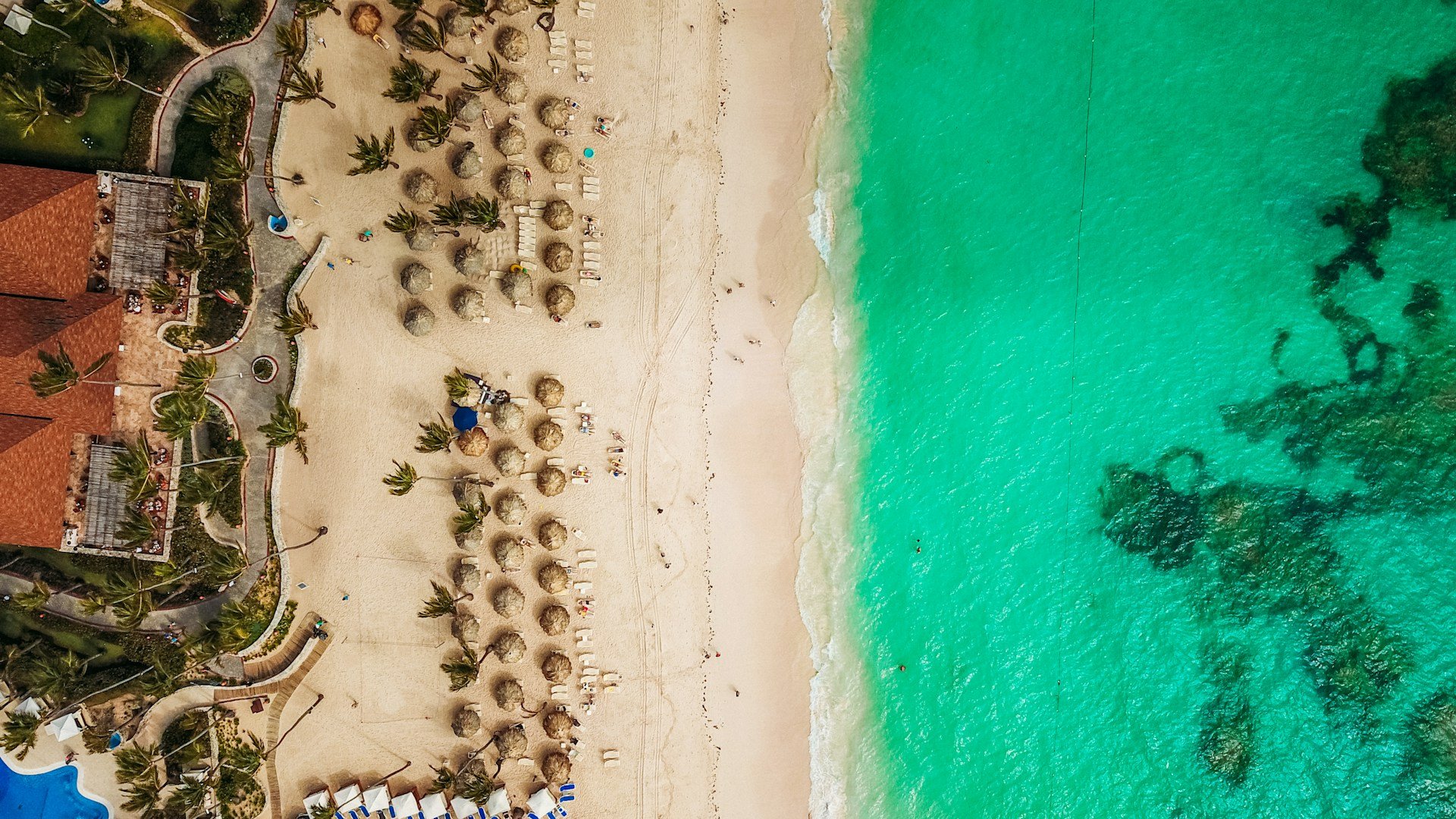
The Dominican Republic is the most visited country in the Caribbean, welcoming around 10 million tourists a year, most of them through Punta Cana's airport into a sealed ecosystem of all-inclusive resorts. If that's what you want, the DR delivers it better than almost anyone: white sand beaches, warm water, free-flowing rum, and a level of logistical ease that means you barely need to think. There is absolutely nothing wrong with this version of the trip.
But the DR is a much larger and more complex country than the resort corridor suggests. The country shares the island of Hispaniola with Haiti and covers 48,000 square kilometers. It has the Caribbean's highest mountain (Pico Duarte at 3,098 meters), the lowest point in the Caribbean (Lago Enriquillo at 46 meters below sea level), the oldest European-founded city in the Americas (Santo Domingo, established 1498), and one of the most vibrant music cultures on the planet. Merengue and bachata were both born here. Both are UNESCO-recognized Intangible Cultural Heritage. Both are audible on every street corner on any given afternoon.
The DR has real economic inequality and some real safety challenges, particularly in urban neighborhoods away from tourist infrastructure. Petty crime is the main risk for visitors. Power cuts (apagones) are a feature of daily life outside the resort zones. The traffic in Santo Domingo is aggressively chaotic. None of these are reasons not to go beyond the resort. They are reasons to go with your eyes open and your planning done.
The single best thing you can do for your Dominican Republic trip: spend at least three of your days outside whatever resort you're staying in. Santo Domingo's Zona Colonial is one of the most significant pieces of urban history in the entire Americas. Samaná in February puts you within a hundred meters of 50-ton humpback whales in the most important breeding bay in the North Atlantic. These are not minor upgrades to a beach holiday. They are completely different experiences, and the resort makes an excellent base to return to after them.
Dominican Republic at a Glance
A History Worth Knowing
Hispaniola was the first place in the Americas where European colonization took root in its full brutal form. Columbus landed here in 1492 and established La Navidad, the first European settlement in the Americas, on the north coast. The Taíno people who had lived on the island for centuries were enslaved and decimated within decades. By 1550, a population estimated at half a million or more had been effectively destroyed by disease, violence, and forced labor. The genocide of the Taíno is one of the foundational catastrophes of the modern world, and its shadow falls across everything that came after on this island.
Bartolomé Columbus, brother of Christopher, founded Santo Domingo on the south coast in 1498. It became the administrative center of Spain's American empire. The first cathedral in the Americas, the Catedral de Santa María la Menor, was built between 1514 and 1541. The first university, the Universidad Santo Tomás de Aquino, opened in 1538. The first paved road. The first hospital. The first everything in the New World, for better and for worse. Walking the Zona Colonial is walking through the prototype of every colonial city in Latin America.
The western third of Hispaniola was ceded to France in 1697 and became Saint-Domingue, the most profitable colony in the world. The eastern two-thirds remained Spanish Santo Domingo, poorer and less intensively exploited. In 1804, the Haitian Revolution produced the first Black republic in history and the only successful slave revolt in the modern world. The implications for the eastern part of the island were profound and still shape Dominican-Haitian relations today in ways that are complex, politically charged, and not reducible to a paragraph.
The Dominican Republic's independence was declared not from Spain but from Haiti in 1844, after a 22-year Haitian unification of the island. The 19th century brought instability, debt, and repeated US intervention. From 1930 to 1961, the country was ruled by Rafael Trujillo, one of the most ruthless dictators in Latin American history. His 31-year regime involved the massacre of an estimated 20,000 Haitian immigrants at the Dajabón river in 1937 (the Parsley Massacre), the cultivation of a cult of personality so total that even the capital was renamed Ciudad Trujillo in his honor, and an economic modernization built on terror. His assassination in 1961 opened a chaotic transition period that included a US military intervention in 1965.
Since the 1970s, the country has stabilized, democratized, and built the Caribbean's largest tourism economy. It is a deeply unequal society with a vibrant, loud, creative culture and a political class that has historically been more interested in power than in addressing that inequality. Understanding this context makes the DR more interesting, not less.
First European contact with Hispaniola. The Taíno civilization, numbering in the hundreds of thousands, is devastated within decades.
Bartolomé Columbus establishes the oldest continuously inhabited European city in the Americas.
Western third ceded to France, becoming Saint-Domingue. The two halves develop very differently.
Haiti becomes the first Black republic in history. The revolution reverberates across the island for the next two centuries.
Independence declared from Haiti, not Spain. A distinction that shapes Dominican national identity to this day.
31 years of brutal rule. The Parsley Massacre of 1937. A regime that modernized and terrorized simultaneously.
Most visited country in the Caribbean. A democracy with deep inequality, extraordinary culture, and a tourism economy worth $8+ billion annually.
Top Destinations
The DR divides into distinct travel zones that require different approaches. The resort corridor runs along the east coast from Punta Cana to Bávaro. The capital sits on the south-central coast. The Samaná Peninsula hangs off the northeast. The mountains occupy the center. The north coast from Puerto Plata to Cabarete is a third distinct world. Each requires different planning and offers a different experience.
Santo Domingo
The Zona Colonial is a UNESCO World Heritage Site covering the 16th-century core of the oldest European city in the Americas. Calle Las Damas, the first paved street in the New World, still exists. The Catedral de Santa María la Menor was finished in 1541 and is still holding mass. The Alcázar de Colón, the palace of Diego Columbus, has been restored and is open for visits. Beyond the Colonial Zone: the Malecón waterfront is four kilometers of seafront promenade with bars and restaurants doing serious business at midnight on a Tuesday. Allow two full days minimum.
Samaná Peninsula
From January through March, Samaná Bay hosts one of the largest concentrations of humpback whales in the North Atlantic as they arrive to breed and calve. An estimated 3,000 whales pass through. Whale watching tours from the town of Santa Bárbara de Samaná operate with very high sighting rates. The Samaná Peninsula itself is one of the most beautiful stretches of the DR's coast: Las Terrenas has a relaxed international beach town atmosphere, Playa Rincón is frequently cited as one of the best beaches in the Caribbean, and the roads through the peninsula's interior are worth the detour.
Punta Cana & Bávaro
The eastern tip of the island is where the majority of the DR's 10 million annual visitors land. Long white sand beaches, calm warm water, and a concentration of all-inclusive resorts ranging from budget three-stars to the enormous Barceló, Iberostar, and Hard Rock properties. The beach at Bávaro genuinely is as good as advertised. If you're here for a week of sun and rum without logistical complexity, it works perfectly. The airport (PUJ) is surrounded by resorts; most guests never leave the zone. You should at least once.
Cabarete & Puerto Plata
The north coast runs on a different energy from the resort east. Cabarete is the Caribbean's kitesurfing capital, with consistent trade winds and a beach town that closes at 3am rather than 10pm. Puerto Plata has a restored Victorian-era gingerbread architecture district, a cable car to the top of Mount Isabel de Torres (with a cable car-accessible Christ the Redeemer statue), and the best amber museum in a country that produces the world's finest amber.
Jarabacoa
Sitting at 530 meters in the Cordillera Central, Jarabacoa is the DR's adventure sports headquarters. Whitewater rafting on the Río Yaque del Norte, canyoning at Salto de Baiguate waterfall, mountain biking, paragliding, and the starting point for the Pico Duarte trek, the highest peak in the Caribbean at 3,098 meters. The climate here is genuinely cool by Dominican standards, which after a few days in the coastal humidity feels revelatory.
Lago Enriquillo
The lowest point in the Caribbean, a hypersaline lake 46 meters below sea level in the southwest of the country. Home to American crocodiles, rhinoceros iguanas, and flamingos. The stark, almost lunar landscape of the surrounding Hoya de Enriquillo basin looks nothing like the rest of the DR. Visited independently or as a day trip from Barahona, which has some of the country's best underdeveloped beach territory.
La Vega
Every Sunday in February, the city of La Vega in the Cibao Valley hosts what many argue is the most intense Carnival in the Caribbean. The vejigante masks, built from papier-mâché into grotesque horned demon faces, are a form of folk art that takes months to construct. The parade is chaotic and completely immersive. If you're in the DR in February, this is obligatory. It's a three-hour drive from Santo Domingo or a ninety-minute guagua ride from Santiago.
Santiago de los Caballeros
The DR's second city and the heart of the Cibao Valley. Santiago has a stronger claim than Santo Domingo on the country's cultural soul: this is where merengue was codified, where the cigar industry is based (the Zona Franca in Santiago has more cigar factories than anywhere else in the world), and where Dominican cultural life operates without the capital's political noise. The Monument to the Heroes of the Restoration on a hilltop above the city is worth the climb for the 360-degree view alone.
Culture & Etiquette
Dominican culture is loud, warm, gregarious, and physically demonstrative in a way that surprises visitors from more reserved countries. People talk to strangers. Conversations about where you're from, whether you like the DR, and what you think of Dominican food can start at a bus stop, in a queue, or in a colmado. This is not unusual. This is just how it works here.
Dominicans are intensely proud of their country and culture and can be sensitive to comparisons with Haiti or to any implication that the two nations are interchangeable. The political and historical relationship between the two countries on the shared island of Hispaniola is genuinely complex and still evolving. Navigate carefully rather than offering strong opinions without invitation.
Outside of resort zones, English is genuinely limited. "Buenos días," "por favor," "gracias," and "cuánto cuesta" will transform your interactions outside the hotel. Dominicans speak quickly and drop syllables. Don't worry about perfect comprehension. The effort is what matters.
The corner store, social hub, and unofficial community center of every Dominican neighborhood. Cold Presidente beers for around DOP 80, loud music, plastic chairs outside, and genuinely good conversation. This is where the country actually lives after work hours.
Outside resort zones, taxis don't use meters. Agree on the price before you get in. Know the rough going rate for your route. This is standard practice and not considered rude. Ask your hotel what a fair fare is for your specific journey.
La bandera (the flag) is rice, red beans, and stewed meat. It's the national lunch and costs DOP 150–250 at a comedor (local canteen). It is almost always better than what the all-inclusive buffet is serving. Seek it out actively.
The DR is predominantly Catholic with strong Evangelical and syncretic traditions. Sunday mornings are quiet. Dress modestly at churches and rural communities. Religious imagery and faith expressions are sincere rather than performative.
The all-inclusive zone is an economic bubble deliberately isolated from the surrounding economy. The people serving you at the resort live in communities that look nothing like it. The DR you see from the pool is a small fraction of the DR that exists.
Stick to bottled water throughout the country. Ice at resorts is made from purified water. Ice at a local colmado may not be. When in doubt, bottled.
Motorcycle taxis (motoconchos) are everywhere and very cheap. They're also the highest-risk transport option. For short urban hops they can be fine, but long distances on unfamiliar roads are best avoided. Accidents involving motoconchos are a leading cause of tourist injuries.
Power cuts are a daily fact of life outside the resort zones. Don't plan essential activities (charging, laptop work, medical equipment) without a backup. Keep your phone charged whenever you have power. Resorts run generators; the surrounding neighborhoods often don't.
Expensive cameras, jewelry, and phones displayed openly in urban areas invite opportunistic theft. Particularly in Santo Domingo's busier streets. Keep nice things in bags or pockets and bring out only what you're using.
Merengue & Bachata
Merengue is the national music and dance: fast, rhythmic, horn-driven, and impossible to stand still to. Bachata began in the DR's rural countryside in the mid-20th century as the music of the poor and marginalized, was suppressed by the Trujillo regime, and eventually conquered the world. Both are UNESCO Intangible Cultural Heritage. Both are played at every volume on every occasion. You will learn to dance or you will be made to feel very stationary.
Carnival
Dominican Carnival runs every Sunday in February, in multiple cities simultaneously. La Vega's vejigante (masked demon) parade is the most spectacular. Santiago's Carnival features diablos cojuelos with elaborate jeweled costumes. Santo Domingo's culminating parade on Independence Day (February 27) is the largest. Each city has its own tradition developed over centuries. Carnival in the DR is not a tourist event. It's the country's most important communal ritual.
Baseball
The DR produces more Major League Baseball players per capita than any other country on earth. Baseball is not a sport here. It is a religion, an economy, an identity. The Dominican Winter League season runs October through January. A game at Estadio Quisqueya in Santo Domingo costs DOP 200–400 and is one of the most genuinely local experiences available to tourists who bother to show up.
Colmado Culture
The colmado is the social infrastructure of Dominican neighborhood life. Part convenience store, part bar, part community meeting point. Open early, close late. Cold Presidente beer, loud music from a speaker with no discernible volume limit, plastic chairs spilling onto the pavement. The colmado outside your hotel in any non-resort neighborhood is where you learn more about the DR in two hours than a week of organized tours will teach you.
Food & Drink
Dominican food is unapologetically hearty and built around a few central proteins and starches that appear in different configurations at every meal. This is not a cuisine that chases complexity or presentation. It chases flavor and volume. After three days of buffet food at your resort, eating a proper Dominican lunch at a comedor for 200 pesos will recalibrate your entire sense of what a meal should feel like.
The national plate is called la bandera dominicana, the Dominican flag: white rice, red kidney beans in sauce, and stewed chicken or beef. It appears at lunch counters across the entire country every day, costs almost nothing, and is consistently good. This is the baseline. Everything else is variation.
La Bandera
Rice, beans, and meat. The national lunch. Every comedor, every day. The beans are stewed with sofrito (tomato, pepper, garlic, onion, cilantro) into something far more complex than the description suggests. Served with a side of tostones (fried and smashed green plantains) or maduros (sweet fried ripe plantains) and a small salad. DOP 150–250. Non-negotiable.
Chicharrón & Lechón
Pork is the prestige protein of Dominican cooking. Chicharrón is fried pork belly: crispy outside, yielding inside, best eaten standing at a market stall with a cold beer. Lechón asado (spit-roasted whole pig) appears at Sunday gatherings and roadside stands along the Autopista del Norte. If you see a roadside lechón stand with a crowd around it, stop. The crowd is the rating system.
Sancocho
The national stew. Seven different meats (sancocho de siete carnes) slow-cooked with root vegetables, plantain, yuca, corn, and herbs into something thick and deeply savory. Served at celebrations, Sunday lunches, and after late nights. The cure for everything. If a Dominican offers you sancocho, say yes regardless of what else you had planned.
Mangú
The standard Dominican breakfast. Mashed green plantains with butter and a little of the cooking water, topped with sautéed red onions, fried cheese, salami, and a fried egg. Known as "los tres golpes" (the three blows) in its full form. Available at every breakfast spot in the country for DOP 120–180. Much better than the continental breakfast at most resort hotels.
Presidente Beer
The national lager, brewed in Santiago since 1935. Cold, light, and served in large bottles at every colmado and restaurant in the country. The correct drink for the heat and the pace of Dominican daily life. Medalla Light is the other main option. Both come very cold and cost DOP 80–150 depending on where you are. A beer at a colmado costs roughly a third of what the same beer costs at a resort bar.
Morir Soñando & Jugos
Morir soñando ("to die dreaming") is orange juice and milk over ice, a Dominican institution and more delicious than it sounds. Fresh-pressed tropical juices, tamarind water, and passion fruit drinks are available at market stalls for almost nothing. The fruit grown in the Cibao Valley, particularly chinola (passion fruit), mango, and guanábana (soursop), is extraordinary. Don't spend the trip drinking imported bottled juice when this exists.
When to Go
February is the single best month to visit the DR if you can manage it. The dry season is established, temperatures are pleasant rather than brutal, Carnival is in full swing across the country every Sunday, and the humpback whales are in Samaná Bay in peak numbers. It's peak tourist season price-wise but worth every peso of the premium.
Peak Dry Season
Dec – MarConsistently good weather, lower humidity, minimal rain. February is the pinnacle: Carnival, humpback whales in Samaná, the best conditions for mountain hiking. Prices are highest December through January. February and March offer the same weather with slightly lower rates and smaller resort crowds.
Late Dry / Early Wet
Apr – MayStill manageable weather, fewer tourists, better prices. April and May bring occasional showers, mostly in the afternoon. The north coast gets more rain during this period than the east. Good for budget travelers who have flexibility on weather.
Early Dry Return
NovHurricane season officially ends November 30. November is often underrated: post-storm season, prices dropping, resorts quieter, and weather that's usually excellent. The tail end of October carries risk; November is generally clear.
Hurricane Season
Aug – OctPeak hurricane risk. The DR has been hit directly by major storms multiple times. September and October are the most dangerous months. Resorts stay open but prices reflect the risk. If a hurricane warning is issued, follow evacuation instructions from your resort without delay.
Trip Planning
Ten days is the right length for a DR trip that goes beyond the resort. Five days gives you time to absorb the all-inclusive and make one serious excursion. Two weeks lets you do the resort, Santo Domingo, Samaná, and either Jarabacoa or the north coast. Three weeks puts the entire country within reach.
The fundamental planning decision is whether you're basing out of a resort and doing day trips, or traveling independently between accommodation types. Both work. The resort base is logistically simpler; the independent route is significantly richer in experience and only marginally more complicated than it sounds, given that most major destinations have good accommodation and guagua (local bus) connections.
Punta Cana Base
Arrive, settle into your resort, decompress. Days two and three: the beach does exactly what it's supposed to do. Day four: day trip to Santo Domingo. It's a 2.5-hour drive. Your resort or a local operator runs these. The Zona Colonial in a day is better than no Zona Colonial at all.
Samaná Day Trip or Overnight
From Punta Cana: a 3-hour drive to Samaná. If it's January through March, the whale watching makes this non-negotiable. If not, Playa Rincón and Las Terrenas are worth the drive regardless. Overnight in Las Terrenas, return next morning.
Return & Departure
Final beach morning. Fly from PUJ. You'll go home having seen more of the actual country than 80% of people who visit the DR.
Santo Domingo
Fly into Las Américas (SDQ) rather than Punta Cana. Three days in the capital: Zona Colonial, Malecón, Mercado Modelo, a baseball game at Estadio Quisqueya if the season is running. Eat la bandera at a comedor on Calle El Conde.
Samaná
Guagua or private transfer to Samaná (3.5 hours). Whale watching if in season. Playa Rincón. Cascada El Limón (a 50-meter waterfall reached by horseback through the jungle). Two nights in Las Terrenas.
Jarabacoa
Three days in the mountains. Rafting on the Yaque del Norte. Canyoning at Salto de Baiguate. If you're fit, the Pico Duarte trek begins here (requires 3 days minimum, guide mandatory). Alternatively: mountain biking and a day of serious waterfalls.
Punta Cana Resort
Five days of earned rest. The beach, the pool, the free rum. Fly home from PUJ. This is the best possible version of a two-week Dominican trip.
Santo Domingo Deep Dive
Four days in the capital including day trips to San Cristóbal (Trujillo's birthplace, with caves and a fascinating dark history museum) and the southwest coast beaches near Barahona.
Southwest: Barahona & Lago Enriquillo
The least-visited and most dramatic part of the country. The desert-meets-Caribbean landscape around the Hoya de Enriquillo. Crocodiles, iguanas, flamingos at the lake. Black and striped sand beaches at Barahona. Genuinely off the tourist trail.
Cibao Valley: Santiago & La Vega
Santiago for merengue, cigars, and the Monument. La Vega on a Sunday in February for the best Carnival in the Caribbean. The Cordillera Septentrional drive between Santiago and Puerto Plata.
North Coast: Cabarete & Puerto Plata
Kitesurfing on Cabarete beach. The amber museum. Cable car to Mount Isabel de Torres. Evening fish dinner at a shack on the Puerto Plata waterfront.
Samaná
Whales or no whales, Samaná is the most beautiful stretch of Dominican coast. Las Terrenas for two nights, Playa Rincón for a full day, El Limón waterfall on horseback.
Punta Cana
The finale. The resort you've been earning for three weeks. Beach, pool, rum. Fly home from PUJ.
Vaccinations
No mandatory vaccinations. Recommended: Hepatitis A, Hepatitis B, Typhoid, and routine vaccines. Malaria is present in some rural areas of the southwest and the Haitian border region. Check current recommendations for your specific travel areas before departure.
Full vaccine info →Connectivity
Claro and Altice are the main providers with good coverage in cities and resort areas. An eSIM or local SIM is straightforward to set up and significantly cheaper than resort wifi charges. Mobile data is fast in urban areas. Rural mountain zones have patchy coverage.
Get a DR eSIM →Cash
The Dominican Peso (DOP) is the practical currency outside resorts. US dollars work at tourist businesses. ATMs (cajeros automáticos) are plentiful in cities; withdraw pesos rather than dollars for better day-to-day rates. Avoid street money changers.
Language
Spanish is essential outside resort zones. Dominican Spanish is spoken fast with distinctive vowel reduction and dropped consonants. Locals will appreciate your effort regardless of fluency. Google Translate offline works well for written menus and signs.
Travel Insurance
Strongly recommended. Healthcare quality varies significantly. Private clinics in Santo Domingo (Centro Médico UCE, Clínica Abreu) are good; rural public hospitals are not. Medical evacuation insurance is worth having for adventure activities and mountain travel.
Sun & Heat
The tropical sun is intense year-round. SPF 50 reef-safe sunscreen, a hat, and rehydration are non-negotiable. Heat exhaustion affects visitors regularly in summer months, particularly during active excursions. Drink water constantly. Don't rely on thirst as your warning system.
Transport in the Dominican Republic
The DR has no passenger rail. Getting around means road transport, and road transport runs on a spectrum from comfortable private transfers to the controlled chaos of the public guagua network. The toll highways (autopistas) connecting Santo Domingo, Santiago, and Punta Cana are well-maintained and fast. Secondary roads range from reasonable to genuinely bad, particularly in mountainous areas after rain.
For independent travelers, the combination of CARIBE TOURS intercity buses (comfortable, air-conditioned, fixed schedules) and private drivers arranged through accommodation covers most itineraries without requiring car rental. If you're covering multiple destinations on a tight schedule, a rental car saves time but requires accepting Santo Domingo traffic, which is a serious mental health challenge even for experienced drivers.
CARIBE TOURS / Metro Bus
DOP 350–600/routeThe main intercity bus companies. Air-conditioned coaches on fixed schedules between Santo Domingo, Santiago, Samaná, Puerto Plata, and other major cities. Comfortable, on-time, and cheap. Book at the terminal or show up early. The best intercity option for independent travelers.
Guagua (Local Bus)
DOP 50–200The informal shared minibus network that connects every town and neighborhood. Departs when full, takes any route the driver decides, stops whenever someone waves. Incredibly cheap, very hot, moderately chaotic, and the most authentically Dominican transport experience available. Works best for shorter hops between towns.
Taxi
Negotiate upfrontNo meters outside the major hotel zones. Always agree on a price before getting in. InDriver and Uber operate in Santo Domingo and Santiago and are significantly cheaper than negotiated taxis for the same routes. Use the app in cities; negotiate in smaller towns.
Car Rental
$40–80 USD/dayGives maximum flexibility for mountain and rural travel. Drive on the right. Traffic in Santo Domingo is genuinely stressful. Outside the capital: roads are manageable and signage is adequate. An international driving permit is technically required; in practice, your home license plus your rental agreement usually suffices, but check with your rental company.
Motoconcho
DOP 50–100 per tripMotorcycle taxis found on every street corner in every town. Fastest way through traffic. Also the highest accident risk of any transport option. For short urban hops in low-traffic areas they're fine. For longer distances or late-night rides: take a taxi.
Domestic Flights
$80–150 USDAir Century and other small carriers connect Santo Domingo, Santiago, and the Samaná area. Only worth it for time-critical connections. The CARIBE TOURS bus to most destinations is comfortable enough and significantly cheaper.
Accommodation in the Dominican Republic
The DR offers a wider range of accommodation types than almost any Caribbean destination: from the enormous all-inclusive resort complexes in Punta Cana and Playa Dorada to small family-run guesthouses in Santiago's historic center and genuinely lovely boutique properties in Las Terrenas and Cabarete. The right choice depends entirely on what you're doing.
All-inclusives in Punta Cana are the most logistically simple option and genuinely deliver on what they promise: beach, food, drinks, and entertainment in a self-contained setting. For families with young children or groups with different activity levels, the all-inclusive model works well. For independent travelers, they function best as a base to return to after excursions rather than an endpoint in themselves.
All-Inclusive Resort
$100–400+/nightThe dominant model in Punta Cana and Playa Dorada. Barceló, Iberostar, Catalonia, Hard Rock, Secrets, and dozens of others. Prices include accommodation, all meals, drinks, and entertainment. Quality varies substantially. Read recent reviews carefully before booking.
Boutique Hotel
$60–180/nightThe best option in Santo Domingo's Zona Colonial, Cabarete, Las Terrenas, and Jarabacoa. Small, locally owned, often in restored colonial or gingerbread architecture. The Hodelpa Caribe Colonial in the Zona Colonial is a classic. Boutique properties give you breakfast, local knowledge, and actual human contact with Dominican hospitality.
Guesthouse / Posada
$25–60/nightFamily-run rooms in towns across the country. Variable quality but often excellent value, particularly in Santiago, Jarabacoa, and Barahona. These are where you eat the best breakfast of your trip (fresh fruit, mangú, coffee from Cibao Valley beans) and hear the most honest advice about the local area.
Eco-Lodge / Adventure Base
$40–120/nightGrowing category in Jarabacoa and the mountains. Rancho Baiguate near Jarabacoa is the best known, offering accommodation alongside activity bookings for rafting, canyoning, and hiking. Practical for adventure itineraries where you want everything organized in one place.
Budget Planning
The DR offers an unusually wide cost range depending on how you travel. All-inclusive resorts in Punta Cana charge $150–400 per night for a package where nearly everything is included, making daily cost calculation straightforward. Independent travel outside the resort zone is significantly cheaper: local food, local transport, and guesthouses make the DR one of the better-value Caribbean destinations for budget-conscious travelers.
The exchange rate between the US dollar and Dominican peso means your dollars go a long way in local markets, colmados, and public transport. The same cannot be said at tourist-facing restaurants, taxi services, and excursion operators who price in USD. The gap between local prices and tourist prices is one of the largest in the Caribbean.
- Guesthouse or posada
- La bandera at a comedor for lunch
- Guaguas and public buses
- Presidente beer at colmados
- Self-organized excursions
- Boutique hotel or mid-range resort
- Mix of local and tourist restaurants
- Private transfers and CARIBE TOURS
- Organized tours and excursions
- Whale watching or adventure activities
- Name-brand Punta Cana all-inclusive
- All food and drinks included
- Private resort excursions
- Airport transfer included
- Entertainment and activities on site
Quick Reference Prices
Visa & Entry
The Dominican Republic is one of the most straightforward Caribbean destinations for entry. Citizens of the United States, Canada, the United Kingdom, all EU countries, and most other Western nations do not need a visa. A tourist card is required but the $10 USD fee is included in virtually all airline tickets sold to passengers flying directly to the DR. If for some reason it's not included in your ticket, you can pay on arrival at the airport.
Standard tourist entry allows a 30-day stay. Extensions can be obtained at the Dirección General de Migración office in Santo Domingo on Calle Cali in the Ensanche Ozama neighborhood. The process is bureaucratic but manageable and allows a stay of up to 60 additional days. Most tourists do not need to extend.
The $10 tourist card fee is included in the airfare for most passengers. Pay on arrival only if not included. Entry for most Western nationalities is simple and quick.
Family Travel & Pets
The DR is one of the best family destinations in the Caribbean, largely because the all-inclusive resort model was practically designed for family travel with children. Large pools, kids' clubs, shallow calm-water beaches, on-site entertainment, and the ability to let children roam the resort grounds with relative freedom make Punta Cana a genuinely low-stress family holiday. For parents who want more, the day trip infrastructure to Santo Domingo, Samaná, and nature parks means you can add substance without giving up the base.
Older children (10+) who can handle longer activities will get more out of Jarabacoa's river rafting, the whale watching in Samaná, and the Zona Colonial history than younger ones. The Carnival in February is one of the most genuinely exciting spectacles available to children anywhere in the Caribbean, provided they're old enough to handle crowd density and noise levels.
Punta Cana Beaches
The eastern beaches have gentle waves, warm water, and gradual depth increases that are genuinely safe for young children. Most major resorts have dedicated kids' pools, children's entertainment programs, and supervised beach areas. For families with children under 8, this is the most straightforward option in the Caribbean.
Whale Watching (Samaná)
Children who aren't prone to seasickness will find the humpback whale experience overwhelming in the best sense. The boats are stable and operators are experienced with mixed-age groups. January to March only. The sight of a 50-ton whale breaching 30 meters from a small boat does not require parental narration to be understood.
Carnival
The La Vega Carnival with its horned vejigante masks is spectacular for children old enough to handle crowds. The masks are genuinely dramatic and the atmosphere of the parade is unlike anything in resort tourism. February Sundays only. Bring earplugs for children sensitive to noise.
Lago Enriquillo Wildlife
American crocodiles, rhinoceros iguanas the size of dogs, and flamingo flocks in a surreal lunar landscape. Tour boats on the lake get close enough to large crocodiles that children invariably become very still and very focused. A guaranteed highlight for any child who has ever been interested in prehistoric animals.
Baseball
A Dominican Winter League game at Estadio Quisqueya in Santo Domingo costs almost nothing, involves genuine crowd passion rather than polite applause, and gives children a direct window into what sport actually means in this country. Evening games in the season (October through January) are accessible from Santo Domingo hotels.
River & Waterfall Trips
The cascades around Jarabacoa and Samaná are accessible to older children on organized tours. Salto El Limón near Las Terrenas (reached by horseback through forest) is a memorable experience for children 8 and up who can ride comfortably. The waterfall itself, 50 meters into a pool, delivers the required dramatic reaction.
Traveling with Pets
Bringing pets to the Dominican Republic involves significant advance preparation. Dogs and cats require a health certificate issued by an accredited veterinarian no more than 10 days before travel, proof of current vaccinations including rabies, and documentation issued by the Ministerio de Agricultura. Dogs must have been vaccinated against distemper, parvovirus, and canine hepatitis in addition to rabies. All documentation must be authenticated by the Dominican consulate in your country of origin.
In practical terms, the DR is not a well-developed pet-travel destination. Most resorts do not allow pets. Guesthouses vary. The heat and the logistics of travel within the country with an animal make this a challenging undertaking for a holiday trip. For a stay of less than three weeks, the paperwork burden versus the benefit rarely makes sense. Leave pets at home and bring them back a Dominican flag magnet instead.
Safety in the Dominican Republic
The DR is safe for tourists in the places most tourists go, with precautions. Punta Cana's resort zone is effectively self-contained and the security is good. Santo Domingo requires more urban awareness: some neighborhoods are genuinely high-risk after dark. The Zona Colonial and the upscale Piantini and Naco districts are fine for walking. Areas like Villa Juana and parts of the northern barrios are not places to wander in on foot without local knowledge.
The most realistic safety risks for the average visitor are not violent crime but traffic accidents (motoconcho and road accidents are a leading cause of tourist injury), petty theft (phone snatching and bag grabs in busy urban areas), and tourist-targeted scams. Stay aware, use registered transport, don't display valuables in public, and trust your instincts.
Resort Areas
Very safe for tourists. Punta Cana, Bávaro, Playa Dorada, and Las Terrenas all have low violent crime rates affecting visitors. Standard personal property precautions apply on the beach.
Santo Domingo
Safe in tourist areas (Zona Colonial, Piantini, Gazcue, Malecón). Requires awareness in other neighborhoods, particularly after dark. Use InDriver or registered taxis at night rather than walking unfamiliar streets.
Petty Theft
Phone snatching, bag grabs, and pickpocketing in crowded markets and busy streets. Keep phones in pockets when walking, use small crossbody bags rather than backpacks in urban areas, and don't wear expensive jewelry in markets.
Traffic
Road accidents are a leading cause of tourist death and injury in the DR. Motoconcho accidents, pedestrian hazards, and driving conditions at night all contribute. Use seatbelts, avoid motoconchos for longer trips, and don't drive mountain roads at night.
Scams
Overcharging in non-metered taxis, unofficial "tour guides" who redirect you to commission-paying shops, and beach vendors who quote prices in USD then claim you owe more. Agree on prices in advance for all services and ask your hotel what the going rate is before you negotiate.
Solo Women
Street harassment is more persistent here than in many destinations. Firm verbal refusals work. Traveling in pairs reduces incidents in urban areas. Resort environments are safe. Solo women should use registered taxis or InDriver at night and avoid walking unfamiliar areas after dark.
Emergency Information
Your Embassy in Santo Domingo
Most major embassies are located in the capital's Piantini and Serrallés districts.
Book Your Dominican Republic Trip
Everything in one place. The DR works best when planned well.
Step Outside the Bubble, At Least Once
You can spend a week in a Punta Cana resort and have a genuinely good holiday. The sun is real, the beach is real, and the frozen margaritas are real. But you won't have been to the Dominican Republic. You'll have been to a Caribbean resort that happens to sit on Dominican soil.
The DR outside the resort bubble is one of the most layered, historically significant, musically alive countries in the Caribbean. The oldest street in the Americas is a taxi ride from your hotel. Humpback whales the size of city buses are in the bay three hours north. The Carnival in La Vega on a February Sunday is the loudest, most joyful thing you will witness in the region.
Dominicans have a phrase for the national character: la vida es un carnaval. Life is a carnival. Not as escapism. As orientation. As the correct stance toward a complicated world. You will understand this better on a Sunday afternoon in La Vega in February than anywhere else on earth.