
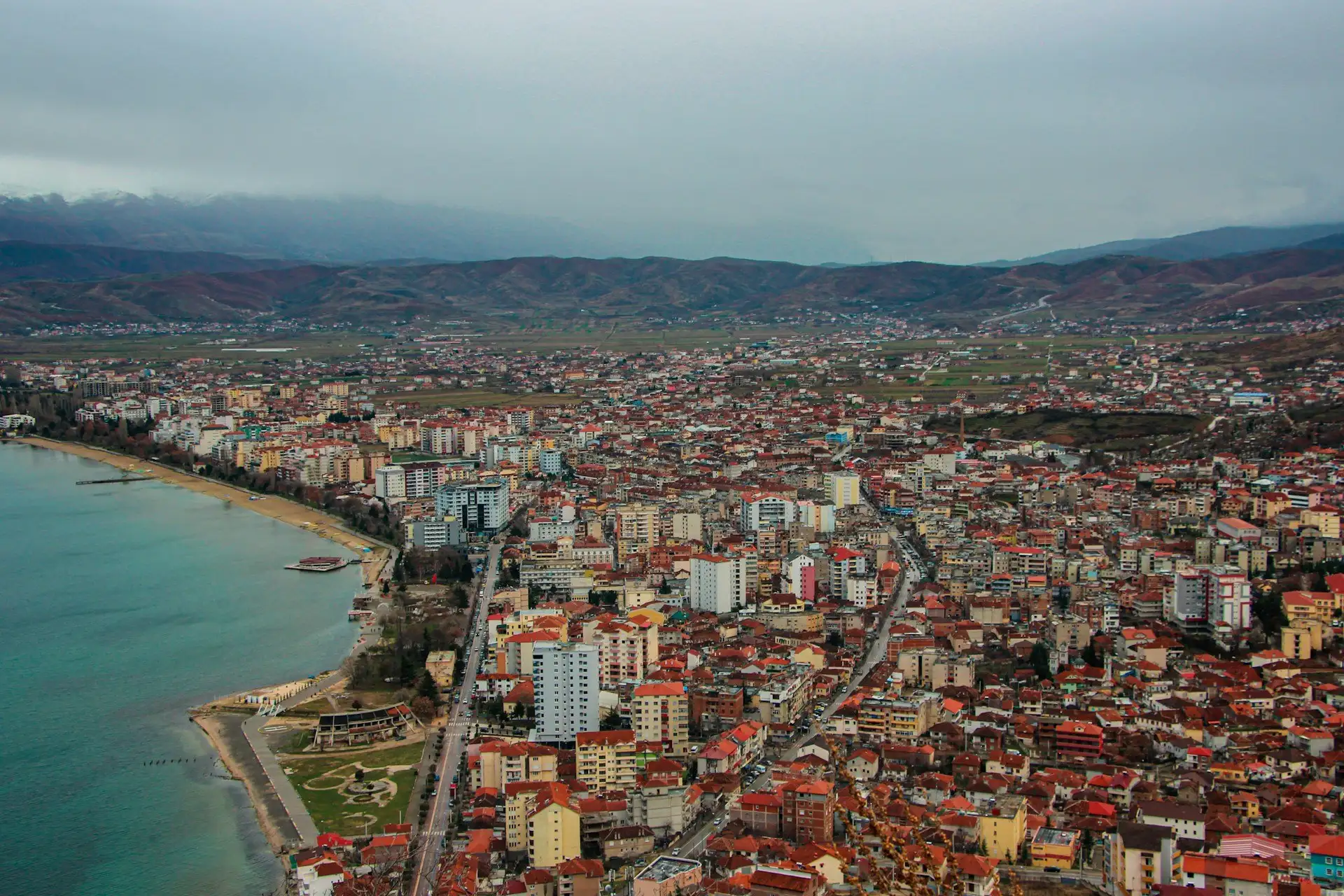
Kosovo
Europe's youngest state — independent since 2008 — with Ottoman bazaars, medieval monasteries, alpine canyons, and a hospitality tradition so pronounced it has its own name in the Albanian language. Almost nobody goes. That is a mistake.
What You're Actually Getting Into
Kosovo declared independence from Serbia on February 17, 2008, making it the youngest country in Europe and one of the youngest in the world. It is roughly the size of Connecticut. About 1.8 million people live here. The flag was designed by an international committee and uses the map of the country as its central image, which is the kind of self-conscious founding gesture that tells you something about how carefully this state was constructed and how recently.
The overwhelming majority of Kosovo's population is ethnic Albanian and Muslim, the result of centuries of Ottoman rule and modern demographic history. There is also a Serbian minority, concentrated mainly in enclaves in the south and in the north around Mitrovica, as well as Bosniak, Roma, and other communities. The relationship between the Albanian majority and the Serbian minority is the live political fault line of the country, and the north in particular — where Serbian institutions operate parallel to Kosovar state structures — remains sensitive. This context is not a reason to avoid Kosovo. It is part of what you're visiting, and understanding it enriches the experience considerably.
What Kosovo offers to the traveler is genuinely distinct from anywhere else in Europe. The Albanian concept of besa — a code of honor that places the protection and care of guests above almost all other obligations — is not tourist marketing. It is a cultural bedrock that produces the most attentive, generous, and occasionally overwhelming hospitality on the continent. A stranger invited for coffee will find themselves, two hours later, having also had lunch, met three family members, been shown the neighborhood, and been offered overnight accommodation. This is not unusual. It is the baseline.
Prizren's Ottoman old town, with its bazaar, mosques, Albanian League of Prizren museum, and the citadel above the city, is one of the most beautifully intact historic towns in the western Balkans. The Rugova Canyon west of Peja (Peć) is genuine mountain wilderness with trails that connect to the Prokletije — the Accursed Mountains — that run across the borders of Kosovo, Albania, and Montenegro and constitute some of the most dramatic and least visited alpine terrain in Europe. The medieval Serbian Orthodox monasteries of Visoki Dečani and Gračanica are UNESCO-listed and extraordinary, existing in protected enclaves that require some awareness to visit correctly.
The practical reality: Kosovo is one of the cheapest destinations in Europe. A good restaurant meal costs €8–12. Guesthouse accommodation runs €25–40. Coffee is €1. This is not a country where travel budget is a limiting factor. The limiting factors are political complexity around travel sequencing with Serbia, some infrastructure gaps outside the main cities, and the fact that almost nobody has told you to go. The last one you can do something about right now.
Kosovo at a Glance
A History Worth Knowing
Kosovo's history is contested territory in ways that go beyond the usual disagreements between nations. The same events, the same landscapes, the same medieval churches are claimed as foundational by both Albanian Kosovars and Serbs, and the two interpretations are genuinely incompatible. A visitor who arrives without this context will find themselves in the middle of arguments they don't have the vocabulary for. What follows tries to lay out the main threads without resolving what is irresolvable from the outside.
The medieval Serbian kingdom that peaked under Emperor Stefan Dušan in the mid-14th century included Kosovo and regarded the region as its religious and political heartland. The Patriarchate of Peć (the seat of the Serbian Orthodox Church) was established near present-day Peja in 1346. The Monastery of Gračanica near Pristina and the Monastery of Visoki Dečani near Deçan were built in this period and are among the finest examples of medieval Byzantine-influenced art anywhere in Europe. When the Ottoman Empire defeated the Serbian-led coalition at the Battle of Kosovo Polje — the Field of Blackbirds — in 1389, the moment was inscribed into Serbian national consciousness as a defining national tragedy from which the promise of eventual resurrection was made.
For the following five centuries, Kosovo was part of the Ottoman Empire. During this period, the demographic composition of the region shifted significantly: many Serbs emigrated, particularly during and after the Great Migration of Serbs in 1690 when the Ottomans retook territory and the Serbian Patriarch led a mass exodus northward. Albanian populations moved into the vacated areas. By the 19th century, ethnic Albanians constituted the majority of Kosovo's population. The Albanian national awakening, which produced the League of Prizren in 1878 — the first major organization advocating for Albanian national rights — was centered in Kosovo.
After the First Balkan War of 1912, Serbia and Montenegro took Kosovo from the Ottoman Empire. Albanian Kosovars resisted Serbian rule through much of the early 20th century. Under Yugoslavia — first the Kingdom, then Tito's socialist version — Kosovo was a province of Serbia with varying degrees of autonomy. The 1974 Yugoslav constitution gave Kosovo substantial autonomy, its own assembly, and de facto republican status within Serbia while remaining legally a province. Albanian Kosovars experienced this period as relatively open. Serbs experienced it as a period when Serbian heritage was marginalized and Albanian population growth (through high birth rates) transformed the demographic reality.
Slobodan Milošević's rise to power in Serbia in the late 1980s reversed Kosovo's autonomy. His April 1987 speech in Kosovo Polje, where he told Serbian crowds "no one should dare to beat you" after police clashed with Serb protesters, effectively launched his political career on a platform of Serbian nationalism centered on Kosovo. In 1989, Kosovo's autonomous status was revoked. Albanian Kosovars were dismissed from public sector jobs. The parallel Albanian society — schools, clinics, cultural institutions — operated in private homes and underground for a decade.
In 1996, the Kosovo Liberation Army (KLA/UCK) began an armed insurgency. Serbian security forces responded with operations that involved the killing and displacement of civilian Albanian Kosovars at a scale that NATO and Western governments classified as ethnic cleansing. By early 1999, an estimated 90,000 Albanian Kosovars had been displaced. After failed peace negotiations at Rambouillet, NATO launched an air campaign against Serbia in March 1999. The bombing lasted 78 days. In June 1999, Serbian forces withdrew from Kosovo. A UN administration (UNMIK) took control, with NATO peacekeepers (KFOR) on the ground.
During and immediately after the 1999 war, approximately 200,000–250,000 Serbs and other non-Albanian minorities fled or were expelled from Kosovo. This displacement — and the destruction of Serbian cultural and religious sites that followed — is a wound in the Serbian narrative of the conflict that is as genuine as the Albanian Kosovar experience of the 1990s. Both sets of events happened. Both matter. The monasteries now sit in NATO-protected enclaves partly because of what occurred after the war as well as during it.
After eight years of supervised independence negotiations that went nowhere, Kosovo declared independence on February 17, 2008. The declaration was coordinated with the United States and EU. The International Court of Justice ruled in 2010 that the declaration did not violate international law. As of 2026, Kosovo is recognized by over 100 UN member states but not by Serbia, Russia, China, or five EU member states (Spain, Slovakia, Romania, Greece, and Cyprus — all of which have their own territorial or minority concerns that inform their position). Kosovo is not a UN member. It is a member of the International Monetary Fund, the World Bank, and several other international organizations.
What you experience on the ground: a young, predominantly Albanian Muslim country with a strong secular tradition, an enormous affinity for the United States and NATO (there is a Bill Clinton statue in Pristina and a street named after him; the Newborn monument has been repainted every independence anniversary since 2008), a visible NATO peacekeeping presence that has shrunk but not disappeared, functioning institutions that are still being built, pervasive café culture, and a population that is on average the youngest in Europe. The weight of recent history is present everywhere you look but is carried with a forward-leaning energy rather than the paralysis that recent trauma sometimes produces.
Stefan Dušan's empire encompasses Kosovo. The Patriarchate of Peć and the monasteries of this era define Serbian cultural claim to the region.
Ottoman forces defeat the Serbian-led coalition. The Field of Blackbirds becomes the defining event in Serbian national mythology.
First Albanian national organization founded in Prizren. The Albanian national awakening begins in Kosovo.
First Balkan War. Kosovo transferred from Ottoman to Serbian control. Albanian resistance begins.
Milošević removes Kosovo's constitutional autonomy. Albanian Kosovars dismissed from public sector. The underground parallel society begins.
KLA insurgency, Serbian security force crackdown, mass displacement of Albanian Kosovars. NATO bombing campaign. Serbian withdrawal. UN administration begins.
Kosovo declares independence on February 17. Recognized by over 100 countries. Disputed by Serbia, Russia, China, and five EU member states.
Europe's youngest country, with a population averaging under 30. EU membership aspirations, NATO presence, unresolved north. The project continues.
Top Destinations
Kosovo is roughly 11,000 square kilometers — smaller than Connecticut — and all of its main destinations are within a few hours of each other. You can base yourself in Prizren or Peja for the west, or Pristina for the center and east. The whole country is road-trip scale, and a week is enough to see everything. Ten days with hiking in the Prokletije is the ideal first visit.
Pristina
Pristina is a capital city that is still visibly being invented. The built environment is chaotic — communist-era concrete next to gleaming new government buildings next to bombed-out ruins mid-renovation. The café scene is extraordinary for a city of 220,000: dense, young, political, open until midnight every night. Mother Teresa Square is the main pedestrian artery and the place everyone gathers. The Newborn monument (concrete letters spelling NEWBORN, repainted with a new design on every independence anniversary) is the country's unofficial mascot. The Kosovo Museum and the Ethnological Museum are small and excellent. The Grand Hotel, a Tito-era brutalist hulk, is worth a coffee just for the architectural time-travel. Don't rush Pristina — it takes a couple of days to get under its surface.
Prizren
The most beautiful city in Kosovo and one of the most beautiful in the western Balkans. Prizren's old city, built across a river gorge with a citadel on the hill above, has an intact Ottoman bazaar, a 16th-century hammam, the Sinan Pasha Mosque directly on the river, and the Albanian League of Prizren museum in the building where the first major Albanian national organization met in 1878. The Church of the Holy Savior, damaged during post-war ethnic violence in 2004 and now partially restored, is inside the old city. The citadel walk above takes 40 minutes and gives the best view in Kosovo. The Sharri Mountains begin immediately outside the city. Stay at least one night — the old city in the evening after the day-trippers have gone is when Prizren is at its best.
Peja (Peć) & Rugova Canyon
Peja sits at the entrance to the Rugova Canyon — a 25km gorge carved through limestone, lined with cliffs rising to 1,000 meters, and connecting the Kosovar valley to the Prokletije alpine zone. The canyon road runs along the river into the mountains; hiking trails branch off into increasingly remote territory. The Serbian Patriarchate of Peć monastery complex — the historic seat of the Serbian Orthodox Church, now in a NATO-protected enclave — is at the canyon entrance and is genuinely extraordinary if you visit with the right awareness. The city of Peja itself has a good bazaar and is the base for adventures into the mountains. The Rugova Canyon is the best natural attraction in Kosovo and sees almost no international visitors.
Visoki Dečani Monastery
Built between 1327 and 1335 by Serbian King Stefan Dečanski, Visoki Dečani is the largest medieval church in the Balkans and contains the most complete cycle of 14th-century Byzantine frescoes anywhere in the world — over 1,000 compositions covering every wall and vault. UNESCO lists it as being of outstanding universal value. The monastery is in a NATO-protected enclave 12km south of Deçan, staffed by Serbian Orthodox monks who have been here through the worst of the conflict and who have occasionally received threats. The monks sometimes make their own cheese and wine and have been known to offer them to visitors. Bring modest clothing, arrive respectfully, and spend at least an hour with the frescoes.
Prokletije National Park
The Prokletije range — Bjeshkët e Namuna in Albanian, literally "the Accursed Mountains" — runs along Kosovo's border with Albania and Montenegro and contains some of the most dramatic mountain terrain in Europe. Peaks above 2,500 meters. Glacial lakes in hanging valleys. Trails that cross into Albania and Montenegro with minimal border formality on the hiking routes. The Peaks of the Balkans trail, a 192km loop crossing all three countries, has put this area on the international hiking map but the infrastructure remains minimal. This is serious mountain territory: bring proper gear, hire a local guide for remote sections, and tell someone your route. The scenery is extraordinary and the solitude is genuine.
Gračanica Monastery
Fifteen kilometers southeast of Pristina, Gračanica was built in 1321 by Serbian King Stefan Milutin and is considered a masterpiece of the Raška architectural school. The frescoes inside, particularly the Dormition of the Virgin and the royal genealogy portraits, are among the finest examples of medieval Serbian art. The monastery is in a Serbian enclave within Kosovo and is actively used by the local Serbian community. Getting there from Pristina is straightforward by taxi (€15–20 round trip). The surrounding village of Gračanica is an ethnic Serbian community that exists alongside Kosovo's Albanian majority — a glimpse of the country's complexity at close range.
Mitrovica
Mitrovica is Kosovo's most politically charged city. The Ibar River divides it: the south is majority Albanian Kosovar, the north is majority Serbian. The Bridge of Peace is guarded by international peacekeepers. In the north, Serbian institutions operate — Serbian license plates, Serbian dinars, Serbian state services. Visiting the city requires awareness rather than avoidance: Mitrovica is a real place with real people navigating an extraordinary political situation, and the old mining town of Trepça in the north has its own industrial history. Most visitors come for the street atmosphere, the political symbolism, and the experience of a divided European city that is — unlike Berlin — still divided. Go with curiosity, not fear.
Brezovica
Kosovo's main ski resort in the Šar Mountains on the southern border with North Macedonia. The slopes run from 1,700 to 2,500 meters and the skiing season typically runs December to March. Infrastructure is more basic than Austrian or French resorts but dramatically cheaper — a full day's skiing costs €15–20 in lift passes. The mountain setting is genuinely beautiful. Accommodation is available in the resort itself and the town of Štrpce below. Brezovica draws primarily Kosovar and Albanian skiers and is a good introduction to Balkan ski culture at budget prices.
Culture & Etiquette
Kosovo is predominantly Albanian Muslim with a strong secular tradition. The Albanian Kosovar cultural identity was maintained through decades of pressure partly by holding tightly to pre-Islamic traditions — including the Kanun, the traditional Albanian law code — alongside Islam rather than letting one displace the other. The result is a Muslim-majority society where alcohol is widely consumed, women dress in the full range from hijab to contemporary Western fashion, and religiosity varies enormously between individuals and families.
The single most important cultural concept to understand before arriving is besa. It derives from the Albanian word for "word" or "oath" and describes the obligation to keep one's word under all circumstances — including, historically, the obligation to protect a guest from harm even at cost to oneself. The Kanun codified besa as requiring a host to defend a guest with their own life if necessary. In modern Kosovo, this translates into a hospitality culture that is genuinely intense: strangers are helped freely, coffee and food appear without being asked for, payment is refused, and invitations to people's homes come from people you met twenty minutes ago.
When someone in Kosovo offers you coffee, food, or help, they are not being performatively polite — they are fulfilling a cultural obligation they take seriously. Refusing repeatedly or leaving quickly after being helped is mildly insulting. Accept the coffee. Sit for a few minutes. This is not an imposition; it is the relationship working correctly.
"Faleminderit" (thank you), "Mirëdita" (good day), "Mirë" (good/fine). The effort is appreciated out of proportion to the linguistic achievement. Albanian Kosovars are extremely warm to visitors who try, particularly because so few do. Even a badly pronounced "Faleminderit" produces a real reaction.
At mosques (cover shoulders and knees, women cover hair), at Orthodox monasteries (same), and in conservative rural areas generally. Prizren's mosques and the monasteries around Peja and Deçan are the main religious sites requiring covered dress. A scarf in your bag covers most situations.
Photographing individuals — particularly women in conservative communities and older people in rural areas — requires asking. "A mund të bëj një foto?" (Can I take a photo?) is the Albanian phrase. Most people will agree warmly; some won't, and their preference should be respected.
Questions about Kosovo's status, the war, and Serbian-Albanian relations are genuinely sensitive. Most Albanian Kosovars will tell you their experience directly and honestly if you ask with genuine curiosity rather than provoking a reaction. Serb Kosovars have a different and equally genuine experience. Listen to both. Don't take sides publicly.
For Albanian Kosovars, Kosovo's independence is an achieved fact and a matter of profound importance. Describing it as a Serbian province, regardless of one's personal view of the politics, is deeply offensive in this context. If you have a view on the political situation, keep it to yourself while visiting.
Kosovo is majority Muslim but operates across a very wide spectrum from conservative to secular. Many Kosovar Albanians drink alcohol, don't fast during Ramadan, and describe their Islam as cultural rather than practicing. Don't assume that a Muslim-majority country means conservative dress codes or dry bars — Pristina's café culture is as open as any European city.
The 1998–1999 conflict affected every family in Kosovo in some way. The visible bullet holes in some buildings, the war memorials, and the UC K murals are not attractions for photographs. They are lived memory. Treating them as photo opportunities without understanding the context they sit in is the fastest way to signal that you don't understand where you are.
NATO peacekeepers (KFOR) still maintain a presence at the monasteries and in certain areas of the north. Their presence signals that a location requires additional awareness. Follow their instructions if given and don't treat their positions as a backdrop for selfies.
The history is genuinely complex. Both Albanian Kosovars and Kosovo Serbs experienced real suffering and displacement. The international legal and political questions are unresolved. Coming in with a pre-formed conclusion and performing it in conversations with locals will not go well on either side of the ethnic divide.
Music & Culture
Kosovo has a lively contemporary music scene centered on Pristina, heavily influenced by Albanian pop (called "tallava"), hip-hop with politically aware lyrics, and the Balkan fusion sound. The summer festival calendar includes Sunny Hill, a major music festival in Pristina that has featured international acts alongside regional artists. Dokufest in Prizren every July is a well-regarded international documentary film festival held across open-air cinemas in the old city. The arts scene in Pristina, operated by young Kosovars many of whom have spent time in Western Europe, is genuinely interesting.
The Diaspora Connection
Kosovo has one of the largest diaspora communities relative to population size in the world — over half a million Kosovars live in Germany, Switzerland, the US, and elsewhere, and their remittances constitute a significant portion of Kosovo's economy. The diaspora returns en masse in summer, when the cafés overflow and Pristina briefly becomes a cosmopolitan city with a distinctly global energy. This means the social fabric is shaped by transnational connections in ways that produce an unusually outward-looking, multilingual young population.
Pro-American Sentiment
The United States and Bill Clinton are genuinely revered in Kosovo for their role in the 1999 intervention. The statue of Clinton on Bill Klinton Boulevard in Pristina is not ironic — it is sincere gratitude from a people who believe the NATO intervention saved their lives and ended the ethnic cleansing campaign. American flags appear on buildings and car windows without any political complexity that they wouldn't carry in Western Europe. This is one of the most pro-American societies you will ever visit as an American.
Football & National Pride
Kosovo joined FIFA and UEFA in 2016 and the national football team's first steps in international competition were followed with intense national emotion. A Kosovo match — particularly a home qualifier — is an occasion for collective identity assertion that goes beyond sport. The FC Pristina and FC Drita (Gjilan) derby is the main domestic rivalry. Football discussions are politically charged in ways that require some awareness: the relationship between Kosovar Albanian club identity and national identity is explicit and intentional.
Food & Drink
Kosovar food is Balkan-Ottoman in character: grilled meats dominate, dairy products (especially kaymak — a thick clotted cream — and a range of fresh and aged cheeses) are central, slow-baked dishes appear at breakfast and lunch, and vegetables are either consumed fresh or stuffed with meat and rice. The cuisine is unpretentious, generous in portion, and built around high-quality local ingredients — the lamb from the Rugova mountains, the organic dairy from family farms, the wild mountain herbs.
Kosovo is not a destination for gastronomic tourism in the Italian or French sense. There are no Michelin-starred restaurants and the restaurant scene in Pristina, while improving, is still primarily focused on satisfying a local market rather than an international one. What it lacks in sophistication it compensates for with freshness, generosity, and the knowledge that dinner for two with beer will cost €15–20.
Qebapa / Ćevapi
The fundamental Balkan grilled meat: small cylinders of minced lamb or beef, grilled over charcoal, served with flatbread (lepinja), raw onion, kaymak, and ajvar (roasted pepper paste). In Kosovo they're called qebapa. Every town has a qebapxhinicë (grill restaurant) that does almost nothing else and does it extremely well. A portion of 10 with all the accompaniments costs €3–5 and constitutes a full meal.
Fli
Kosovo's most distinctive traditional dish: thin layers of dough baked in a copper pan beneath a heavy iron lid covered with embers, building up into a creamy, slightly charred cake that is eaten with kaymak and honey or simply with butter. It takes several hours to prepare and is impossible to rush. The process — adding layer by layer, rotating the pan, managing the embers — is a meditation on patience. Find it at breakfast at local bakeries rather than tourist restaurants.
Kaymak & Dairy
Kaymak is a thick clotted cream produced by simmering and cooling fresh milk — similar to Devon clotted cream but with a more pronounced tang. It appears alongside almost everything: bread, qebapa, fli, börek. Kosovo's dairy production, much of it from small family farms, produces exceptionally good yogurt, fresh white cheeses, and aged cheeses from the mountain areas. The dairy at breakfast in a rural guesthouse — fresh bread, kaymak, honey from a local beekeeper, white cheese — is one of the simple pleasures of the Balkans.
Börek
The Ottoman-inherited filo pastry filled with meat, spinach, or cheese and baked in large round pans. Kosovar burek (börek) is cut in wedges and weighed by the piece. Eaten for breakfast with yogurt or as a quick lunch from a bakery. The best versions — with good lamb and cheese — are genuinely excellent. The bakeries around the Prizren bazaar and the side streets off Pristina's main pedestrian street have the most reliable börek at 7–9am when it comes out of the oven.
Coffee Culture
Kosovo runs on coffee. The café is the primary social institution — a place for meetings, arguments, gossip, political debate, and hours of apparently unproductive but actually essential social maintenance. Turkish-style coffee (dark, unfiltered, served in small cups with sugar on the side) is traditional and widespread. Italian-style espresso is also common in Pristina. A coffee costs €0.80–1.50 and no one will rush you out of the seat you're occupying with it three hours later. The coffee culture alone is worth the visit.
Rakia & Local Drinks
Rakia — the grape or plum brandy that runs through Balkan culture — is present in Kosovo in homemade versions offered by guesthouses and private homes with a warmth that makes refusal complicated. It is strong (40–60%), often excellent, and offered as a gesture of hospitality rather than as a commercial product. Kosovo also has some emerging wine production around Rahovec and Malishevo in the Drini valley — the Stone Castle (Kalaja e Gurit) winery produces internationally recognized wines at prices that would be considered remarkable anywhere in Western Europe (€5–10 per bottle at the vineyard).
When to Go
May through September is the main travel window. Kosovo has a continental climate with cold winters and warm summers. June through August is ideal: the Prokletije mountain trails are fully open, the Rugova Canyon is at its most accessible, Prizren's open-air café culture is in full operation, and summer festivals — Dokufest in Prizren in late July, Sunny Hill music festival in August — add to the atmosphere. July brings the Kosovo diaspora home in force, which both enlivens the cities and fills accommodation.
Late Spring / Summer
May – AugLong warm days. Mountain trails open. Prizren's old city at its most vibrant. Dokufest festival in late July. Diaspora returns, giving cities a cosmopolitan energy. The Prokletije accessible for multi-day hiking. The Rugova Canyon at peak beauty. Accommodation fills during festival weeks — book ahead.
Autumn
Sep – OctThe best light of the year on Prizren and the mountains. Grape harvest in the Rahovec wine region. Trails still open in September. Crowds gone, prices already low to begin with but accommodation easier to find. October becomes cool quickly at altitude. The citadel views over Prizren in October are exceptional.
Winter
Dec – FebBrezovica skiing season. Pristina's indoor café culture at its most intense. Cold but manageable in the cities. Mountains are genuinely cold and hiking requires proper winter gear and local knowledge. Christmas and New Year celebrations are modest but genuine. The cheapest time to visit an already-cheap country.
Early Spring
Mar – AprUnpredictable weather. Mountain trails still closed or icy above 1,500m. Spring mud makes some rural roads difficult. The cities are quiet and the cultural life is running normally. Not a bad time if you're focused on Pristina and Prizren rather than outdoor activities. April improves noticeably.
Trip Planning
The critical planning decision for Kosovo is the Serbia question. If you plan to visit both Kosovo and Serbia, the order matters: enter Kosovo from Albania, North Macedonia, or Montenegro; exit to one of those same countries; then enter Serbia from a country that is not Kosovo. Serbia considers Kosovo entry stamps issued at Kosovo border posts to be invalid, and visitors who have such stamps may be denied entry to Serbia. The situation is as follows: entering Kosovo from Serbia is technically possible but means you can no longer cross back into Serbia with a Kosovo stamp. The safest itinerary for anyone visiting both is Kosovo first (via Albania or North Macedonia), then Serbia via a third country.
Kosovo is genuinely small. The country fits into a week's travel with time to spare. Three days covers Pristina and Prizren. Five days adds Peja and the Rugova Canyon. Seven to ten days allows a proper Prokletije hiking section or a combination with Mitrovica and the east.
Pristina
Arrive at Pristina International Airport Adem Jashari (the name itself is a statement — Jashari was the KLA commander killed in 1998 whose death ignited the insurgency). Day one: walk Mother Teresa Square and Bill Klinton Boulevard, see the Newborn monument, visit the Kosovo Museum. Evening: the café strip on Agim Ramadani Street or Marin Barleti Street. Day two: National Library (a striking brutalist building from the Yugoslav era, wrapped in a white chainmail dome that divides opinion entirely), the Church of Christ the Savior (unfinished, disputed, its construction suspended in 1999 and still contested), the Bear Sanctuary outside the city (rescued dancing bears, a genuine rescue operation).
Prizren
90 minutes by bus from Pristina. Two nights in the old city. Day three: walk the bazaar, the Sinan Pasha Mosque, the old stone bridge, up to the citadel at sunset. Day four: Albanian League of Prizren museum in the morning, then the Holy Savior Church ruins, afternoon drive to the Šar Mountains foothills, dinner in one of the riverside restaurants below the old city.
Peja & Rugova Canyon
Two-hour drive or bus from Prizren. Day five: arrive, walk the Peja bazaar, evening at the Patriarchate of Peć monastery (respectful dress, go before 5pm). Day six: hire a local guide for the Rugova Canyon trails, or drive the canyon road and hike from the trailheads. If summer, the guesthouses in the upper canyon offer basic overnight accommodation with extraordinary mountain views.
Visoki Dečani & Departure
Drive south from Peja to Deçan — 30 minutes. Taxi 12km to Visoki Dečani Monastery. Spend 90 minutes with the frescoes. Drive back north to Pristina for afternoon departure, or continue south to Prizren if departing via North Macedonia. The monastery visit, if you've prepared correctly for it, will be one of the most affecting experiences of any Balkans trip.
Pristina & Environs
Three days including a day trip to Gračanica Monastery (15km south, taxi €15–20 return), the city of Gjilan in the east for a different urban character, and a late evening at a Pristina cooking workshop or wine bar for an introduction to Kosovar food culture in a more structured context. The DokuKids film program at the Kino ABC cinema happens year-round if timing aligns.
Mitrovica & North
The divided city deserves time rather than a rushed visit. Two days: one for the city itself — walk both sides of the Ibar, eat on each side, understand the geography of the division. Day two: the Trepça industrial complex in the north (one of the world's largest lead-zinc mines, its ownership still disputed) and the Serbian enclave villages north of the city. This is the most politically complex part of Kosovo and requires the most awareness, but also the most context.
Prizren & Sharri Mountains
Three days in Prizren and the surrounding region. Day trip to the Šar Mountains — the ski resort of Brezovica in winter, or hiking trails in summer. The mountain village of Restelica above Prizren is an Albanian-speaking village in the mountains with traditional wooden architecture. Day trip to the Rahovec wine region and the Stone Castle winery for the most affordable wine tasting in Europe.
Peja, Rugova & Prokletije
Five days in western Kosovo centered on Peja. One full day in Rugova Canyon. Three days hiking in the Prokletije — a section of the Peaks of the Balkans trail, staying in mountain huts (available in season with advance notice through local hiking organizations). The final day in Peja for Visoki Dečani and departure south to Albania or west to Montenegro.
Kosovo Fully
Seven days covering all of the above: Pristina, Gračanica, Mitrovica, Prizren, Sharri Mountains, the wine region. The final day trip from Pristina to the village of Novo Brdo, where a 15th-century Serbian-era fortress ruins overlook the Kosovo plain from a hill that also has a significant medieval Ottoman settlement beneath it — archaeological layers showing the transition from the medieval Serbian kingdom to Ottoman administration visible in the same site.
Western Kosovo & Prokletije
Peja as a base for seven days of serious mountain time. The full Rugova Canyon on day one. Then into the Prokletije: the Peaks of the Balkans trail crosses into Albania and Montenegro. The section from Pejes to Valbona in Albania via the Çafa e Valbonës pass takes two hiking days and crosses into one of the most spectacularly beautiful alpine environments in Europe. Return via Montenegro's Plav Lake. This section requires proper gear, a local guide for the border crossing logistics, and physical fitness.
Regional Extension: Albania or North Macedonia
Kosovo works naturally as part of a western Balkans itinerary. Days 15–17: Albanian Riviera or Berat in Albania via the Morinë border crossing (4 hours from Pristina). Days 18–21: North Macedonia via the Blace border crossing — Skopje's baroque-kitsch new city and the ancient church art at Ohrid. Return to Pristina for the flight home, having covered a corner of Europe that most travelers will never reach.
Serbia Visit Sequencing
Critical: if visiting both Kosovo and Serbia, enter Kosovo from Albania, North Macedonia, or Montenegro — not from Serbia. Exit Kosovo the same way. Then enter Serbia. Kosovo border post stamps are not recognized by Serbia and may result in denied entry. Plan your regional itinerary accordingly.
Vaccinations
No mandatory vaccinations for Kosovo. Recommended: routine vaccines up to date, Hepatitis A, Hepatitis B for longer stays. Tick-borne encephalitis recommended for hiking in forested mountain areas. Standard Balkans precautions apply.
Full vaccine info →Connectivity
Kosovo uses its own mobile networks (IPKO and Vala). EU roaming does not apply. Buy a local SIM at the airport (IPKO or Vala, €5–10 for data) or get a Kosovo eSIM via Airalo. Coverage is good in cities and main roads; limited in the Prokletije mountains.
Get Kosovo eSIM →Mountain Hiking
The Prokletije requires proper preparation: waterproof hiking boots, layering system, map, compass or GPS, and a local guide for the first visit. The Peaks of the Balkans trail organization (peaksofthebalkans.com) has route maps and hut listings. Don't underestimate the terrain — it is genuinely remote.
Car Rental
Car rental in Kosovo is useful but has a complication: most rental contracts prohibit taking the vehicle into Serbia, and some into North Macedonia and Albania. Check the contract carefully before booking if you're planning a regional trip. Local rental companies in Pristina (Europcar, Sixt, local operators) are generally fine for in-country travel.
Travel Insurance
Kosovo is not covered by EU EHIC. Check that your travel insurance explicitly includes Kosovo — some policies exclude it due to its disputed status. Basic healthcare is available in Pristina at the University Clinical Centre of Kosovo. Travel insurance with medical evacuation coverage is strongly recommended.
Transport in Kosovo
Kosovo's transport infrastructure is modest but functional for the country's size. The Pristina–Prizren corridor is served by frequent buses (hourly, €3–4). Pristina to Peja runs several times daily (€3–5). Taxis are cheap and widely available. There is no metro and no high-speed rail — the train system is limited, slow, and primarily useful for scenic enjoyment rather than practical transport.
For the Prokletije mountains, the monasteries, and rural eastern Kosovo, a rental car or hired driver is the realistic option. Taxi drivers from Pristina and Peja are accustomed to running half-day and full-day tours at negotiated rates — €30–50 for a full day is reasonable and includes a driver who can explain things along the way.
Intercity Bus
€2–6The main practical transport between cities. Pristina–Prizren (90 minutes, hourly from Pristina bus station), Pristina–Peja (90 minutes, hourly), Pristina–Mitrovica (45 minutes, frequent). Buy tickets at the bus station or directly from the driver on some routes.
Taxi
€3–15 city tripsCheap, plentiful, and often the most practical option. Pristina taxis should use meters; outside the capital, agree on a price before entering. Airport to city center costs €15–20. Full-day hired taxis for monastery visits or mountain routes cost €30–50 and are excellent value.
Car Rental
€25–50/dayUseful for independent exploration of the Rugova Canyon, monasteries, and rural areas. Check that the rental contract permits travel in Kosovo (it's Kosovo-registered vehicles, so this should be fine for in-country travel). Check cross-border restrictions carefully before booking.
Train
€1–4Kosovo's train service covers Pristina to Peja and Pristina to Skopje (North Macedonia) among a few routes. Extremely cheap, extremely slow, and unreliable by punctuality standards. Worth experiencing once for the scenery. Not a practical primary transport mode.
Flights
€30–100Pristina International Airport Adem Jashari (PRN) has direct connections to many European cities. Wizz Air, Ryanair, Turkish Airlines, and regional carriers serve it. The airport is 18km from central Pristina — taxi costs €15–20, or take the public bus (line 5A, €1) to the city.
Minibus / Furgon
€1–3The furgon (shared minibus) is the informal public transport system connecting smaller towns and villages that the bus system doesn't serve. They depart when full rather than on a schedule. Ask locally for the right departure point — they're usually near the main bus station or the town market.
Mountain Access
VariesThe Prokletije mountains are accessed from Peja via the Rugova Canyon road. For trailheads beyond the road end, a 4WD is needed or a local guide with transport. The Peaks of the Balkans trail organization can arrange logistics. Don't attempt remote mountain routes without local knowledge and proper gear.
Regional Buses
€5–20International buses connect Pristina to Tirana (Albania, 3–4 hours), Skopje (North Macedonia, 1.5 hours), Sarajevo (Bosnia, 5–6 hours), and other Balkan cities. These depart from Pristina main bus station. Book the day before or same day for most routes.
For visiting Visoki Dečani, Gračanica, and the Rugova Canyon, hiring a taxi driver for a full day is genuinely the best option. A full day costs €35–50 and includes a driver who knows the routes, the opening hours, and often the history of every place you stop. Ask your guesthouse or hotel to arrange this — they usually know reliable drivers. Agree the price and itinerary in advance. This is better value, more flexible, and more informative than any tour package.
Accommodation in Kosovo
Kosovo's accommodation scene is developing rapidly but remains modest by Western European standards. Pristina has a growing range of hotels and guesthouses from basic to comfortable. Prizren has excellent old-city guesthouses in traditional stone buildings that are among the best value in the Balkans. In Peja, options are more limited but sufficient. The mountains have basic guesthouses and mountain huts in season.
The guesthouse tradition in Kosovo — a family running several rooms in their home or a converted traditional building — produces accommodation that is cheap, personal, and comes with breakfast made by the host and local knowledge that no hotel app provides. This is the format to choose when available.
Boutique Hotel
€40–90/nightPristina has several genuinely good small hotels. Hotel Kossovo, the Swiss Diamond Hotel, and the Vila Gërmia on the edge of the city park are reliable. The category that would be €150 in Western Europe is €40–70 here. Quality has improved significantly since 2015 and some properties are genuinely excellent.
Guesthouse
€25–50/nightThe best accommodation format in Kosovo. In Prizren's old city, traditional stone-built guesthouses like Guesthouse Drini and Shtëpia Tone offer rooms in historic buildings for €25–35 per night with breakfast. In Peja, family guesthouses near the bazaar. In the mountains, basic rooms in family homes with enormous meals included. Book through Booking.com or directly.
Mountain Hut
€10–20/nightThe Prokletije and Rugova Canyon areas have basic mountain huts operated by the Kosovo Alpine Club and by families in the mountain villages. Dormitory sleeping, basic cooking facilities, extraordinary settings. Book through the Peaks of the Balkans organization or local hiking operators in Peja. Available May through October.
Hostel
€12–20/nightPristina's hostel scene is small but growing. Hostel Han in central Pristina and the Arbëria Hostel near Mother Teresa Square are the established options. Basic but social — the common rooms have a genuinely international Balkans-backpacker atmosphere and are excellent for meeting other travelers doing the regional circuit.
Budget Planning
Kosovo is among the cheapest countries in Europe, and the gap between its cost and its quality of experience is larger than anywhere else in this guide. The GDP per capita is among the lowest in Europe, which is the economic reality behind the prices. A full day of eating, drinking, accommodation, and transport costs what a single meal costs in London or Stockholm. This is not a reason to be casual about the economics — it is a reason to spend slightly more than the minimum and ensure your tourism money reaches local guesthouses, local restaurants, and local guides rather than international booking platforms.
- Hostel dorm or basic guesthouse
- Börek and yogurt from a bakery for breakfast
- Qebapa lunch for €3–5
- Restaurant dinner for €6–10
- Bus transport throughout
- Comfortable guesthouse or boutique hotel
- Full meals at local restaurants three times a day
- Hired taxi driver for monastery/mountain day trips
- Entry to any museums or cultural sites
- Wine tasting at Rahovec wineries
- Best hotels in Pristina or old-city Prizren
- Full restaurant dining with local wine
- Rental car for flexibility
- Private guide for Prokletije or monastery visits
- Day trips into North Macedonia or Albania
Quick Reference Prices
Visa & Entry
Kosovo operates its own visa system entirely separate from the Schengen Area. Kosovo is not Schengen — it is not an EU member and has not been integrated into the Schengen zone. A Schengen visa does not permit entry to Kosovo. An Irish visa does not cover Kosovo. They are separate systems.
The important positive consequence: time spent in Kosovo does not count against your Schengen 90-day allowance. You can spend 90 days in Schengen countries, exit to Kosovo, spend additional time there, and re-enter Schengen with your full remaining allowance.
Citizens of the EU, US, UK, Canada, Australia, New Zealand, Japan, South Korea, and most Western nations can enter Kosovo visa-free for 90 days. The full list is maintained by the Kosovo Ministry of Foreign Affairs. ETIAS (the EU pre-registration system) does not apply to Kosovo. There is no pre-registration requirement for most Western visitors.
Important exceptions: Serbia, Russia, and China currently do not recognize Kosovo's independence, and there may be reciprocal entry complications for Kosovo passport holders visiting these countries. For visitors from these countries to Kosovo, check your own government's advice specifically. The situation changes periodically.
Kosovo has its own visa system. Most Western passport holders enter visa-free for 90 days. No ETIAS required. Kosovo is NOT Schengen — time there does not count against Schengen allowances. Check the Kosovo Ministry of Foreign Affairs list for your specific nationality.
Family Travel & Pets
Kosovo is genuinely welcoming of families. The besa hospitality tradition extends fully to children — a family arriving anywhere in Kosovo will be received with a warmth and attentiveness toward the children that will surprise visitors from more reserved northern European cultures. Children are everywhere in public life, in restaurants at all hours, and the culture has no discomfort with their presence. The main practical considerations are the political context (age-appropriate explanation is required before visiting divided Mitrovica or the monastery enclaves), and the heat in July and August, which can be intense in the cities.
Kosovo's landscapes are excellent for family hiking at the right ages. The Rugova Canyon trails are accessible for older children and teenagers. The Šar Mountains around Brezovica are good for families in summer. The monasteries, while requiring modest dress and quiet behavior, engage children who are given context about what the frescoes mean — the scale and color of Visoki Dečani's interior genuinely moves people of all ages.
Prizren Citadel
The 40-minute walk from the old city bazaar up to the medieval citadel above Prizren is manageable for children over seven and rewards everyone with a view of the entire old city, the river gorge, and the Šar Mountains beyond. The fortress walls are partially intact and the setting feels genuinely medieval. Go at sunset if logistics allow.
Rugova Canyon
The canyon road passes waterfalls, cliff faces, and river pools that make natural swimming holes in summer. Children who can hike 3–5km find the canyon accessible and dramatic. The upper canyon has an adventure park with zip lines and rope courses near the Rugova Canyon Resort. Basic and affordable by Western European standards.
Brezovica in Winter
At €15–20 for a day pass, Brezovica is among the most affordable ski experiences in Europe. The slopes range from beginner to intermediate. Ski and board rental is available on site. Children learning to ski in an environment with this price point makes the Kosovar mountains an argument for winter travel that is hard to counter if cost matters.
Food for Children
Kosovar food is child-accessible: bread, grilled meat, pizza (present everywhere), pasta, börek. The heavy dairy culture — kaymak, fresh white cheese, yogurt — tends to appeal to children naturally. Portions are large by Western European standards. Qebapa in bread is basically the Balkans hot dog and universally accepted. Ice cream shops are present in every town center.
Dokufest for Older Children
The Dokufest documentary film festival in Prizren in late July runs a DokuKids strand with age-appropriate documentary programming. Open-air screenings in Prizren's old city, free or very cheap entry. For teenagers interested in film, politics, or international affairs, a day at Dokufest in the world's most compact and atmospheric festival venue is a formative experience.
The Hospitality Experience
Traveling with children in Kosovo produces the most concentrated version of the besa hospitality experience. Strangers approach to admire children, offer sweets, invite families to sit and eat. Children are seated first, given the best food, and treated as the most important people at the table. This can be overwhelming if you're used to British or Nordic norms. Embrace it. It is genuine.
Traveling with Pets
Kosovo has no specific pet import agreement with the EU. Pets entering from EU countries should follow EU Pet Travel Scheme documentation: microchip, valid rabies vaccination, and a health certificate or EU pet passport. Kosovo's Ministry of Agriculture may require additional documentation — check with the Kosovo authorities before travel, as requirements are not always consistently applied and may differ from what you expect based on EU-standard procedures.
Practically: Kosovo is not well-set-up for pets as travel companions in the way Western European countries increasingly are. Most guesthouses and smaller hotels do not accept pets. The culture's relationship with dogs is more functional than the Western European pet-companion model — working dogs and guard dogs are common, but the concept of bringing a pet into a restaurant or hotel is less established. If you're traveling with a pet, verify accommodation acceptance in advance for every place you plan to stay.
Safety in Kosovo
Kosovo is generally safe for tourists. The level of violent crime against visitors is low. The main risks are contextual and political rather than criminal: the north of the country around Mitrovica has seen periodic incidents relating to Serbian-Albanian tensions, and some areas near the northern border remain sensitive. Most tourist destinations — Pristina, Prizren, Peja, the monasteries south of Peja, the Rugova Canyon — are unaffected by the northern tensions.
Check your government's current travel advisory before visiting, particularly for the north. The UK's FCDO, the US State Department, and the EU maintain advisories that are updated in response to incidents. The advice typically distinguishes between the generally safe south and center and the more cautious north.
Pristina, Prizren, Peja
Safe for tourists. Normal urban awareness applies. Petty theft exists but is not common. The hospitality culture actually works against street crime — strangers helping strangers is the norm here, not an unusual gesture.
The Monasteries
Visoki Dečani, Gračanica, and the Patriarchate of Peć are in NATO-protected enclaves. KFOR peacekeepers are present. Access is safe for respectful visitors. The monks have been receiving visitors throughout the post-war period and are generally welcoming.
North Kosovo (Mitrovica)
The north around Mitrovica has seen periodic incidents relating to Serbian-Kosovo tensions, including occasional roadblocks, protests, and sporadic violence. Check current advisories before visiting. Travel is possible but requires additional awareness. The situation fluctuates.
Mountain Hazards
The Prokletije mountains are genuinely remote. Weather changes rapidly at altitude. Trails are not uniformly marked. A local guide is strongly recommended for the first visit to the higher areas. Tell someone your route before heading into the mountains.
Political Sensitivity
Kosovo's political situation means that expressing views on independence, the war, or Serbian-Albanian relations publicly can produce strong reactions. This is not a physical safety risk in most contexts but requires awareness — particularly in areas with mixed communities or near politically sensitive monuments.
Healthcare
Kosovo has basic healthcare at the University Clinical Centre in Pristina. Outside the capital, medical facilities are limited. Travel insurance with medical evacuation coverage is important. For serious medical issues, evacuation to North Macedonia or Albania may be necessary. Carry any prescription medications you need.
Emergency Information
Your Embassy or Consulate in Pristina
Many Western countries maintain embassies in Pristina. Countries that do not recognize Kosovo may have no representation.
Book Your Kosovo Trip
Everything in one place. These are services worth actually using.
A Country Still Becoming Itself
There is a particular experience available in Kosovo that is unavailable almost anywhere else: the experience of being in a country that is actively, consciously, and sometimes desperately becoming itself. The institutions are new. The national symbols were designed in living memory. The first generation that has grown up knowing only an independent state is in its late teens and twenties. The cafés they fill every evening are full of argument about what Kosovo is, what it should be, what it owes to those who died for it, what it can become.
In Albanian, there is a word — besa — that means both the oath that binds you and the culture of trust that makes collective life possible. In a country that was denied self-determination for so long, besa extends naturally to visitors who come with genuine curiosity. You will be taken care of. You will be argued with. You will be fed more than you can eat. You will leave having understood something about the weight of recent history and the lightness that comes from a population determined not to be defined entirely by it. That is not available in Rome or Paris or Tokyo. It is available in Pristina, for €1 coffee and the price of paying attention.