
Andorra
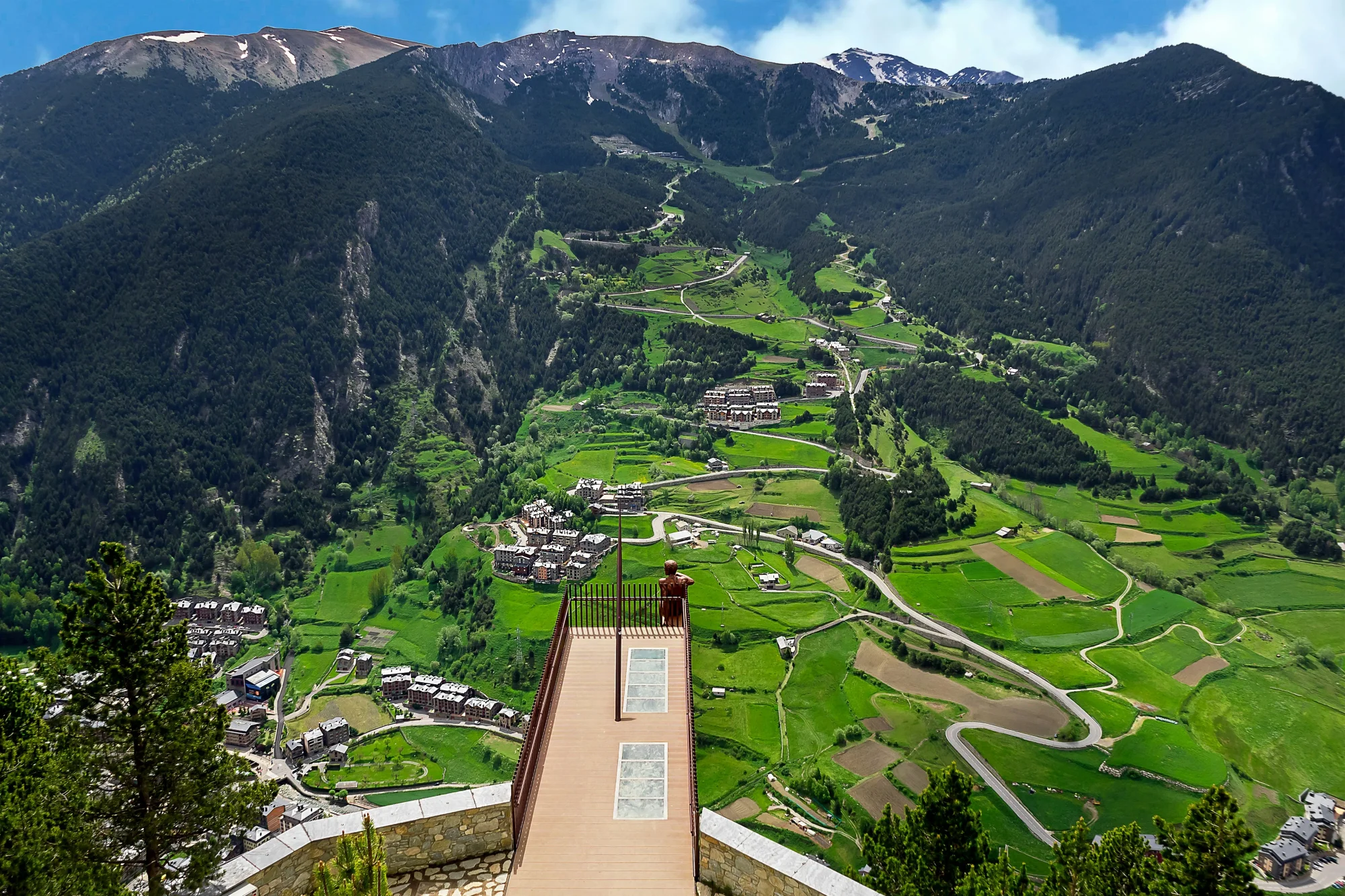
468 square kilometers of Pyrenean mountain squeezed between France and Spain, governed for 700 years by a French president and a Spanish bishop simultaneously, financed primarily by people who want to buy cheap cigarettes and ski for less than they'd pay in Val d'Isère. All of this is true. The mountains are also genuinely extraordinary.
What You're Actually Getting Into
Andorra is a microstate — 468 square kilometers, landlocked between France and Spain in the eastern Pyrenees, with a population of around 77,000 people and a GDP that would fit inside the balance sheet of a mid-sized European supermarket chain. It is also, by visitor numbers, one of the most visited countries on earth per square kilometer, receiving around 8 million visitors annually — more than 100 times its own population. The primary reasons people come are skiing, shopping, and the combination of both. The Grandvalira ski area is one of the largest in the Pyrenees. The duty-free shopping strip along Andorra la Vella's main avenue (Avinguda Meritxell) is the engine of the national economy. Fuel is significantly cheaper than in France or Spain. Cigarettes and alcohol cost less than anywhere in the surrounding region.
This is the honest frame for Andorra: it is primarily a ski destination and a shopping destination, and travelers who come expecting a cultural or adventure experience comparable to Switzerland or Austria will be somewhat surprised by the commercial emphasis of the main town. But the framing needs qualification. The mountains that surround Andorra la Vella — which itself sits in a valley at 1,023 meters — are genuinely spectacular Pyrenean terrain. The hiking in summer and autumn is excellent and largely uncrowded relative to the mountains on the French and Spanish sides of the border. The country contains a remarkable concentration of Romanesque churches from the 11th and 12th centuries — small, well-preserved, set in mountain villages — that represent some of the finest pre-Gothic ecclesiastical architecture in the Pyrenees. The Madriu-Perafita-Claror Valley, a UNESCO World Heritage Site covering 9% of Andorra's territory, is a high-altitude landscape of glacial origin that has been managed by Andorran farmers for centuries and is now one of the finest walking areas in the eastern Pyrenees.
Come for the skiing if the skiing is what you want — it's good and good value. Come for the mountains and the Romanesque churches if you're willing to look past the shopping avenues. Don't come expecting a microstate with the cultural depth of San Marino or the charm of Liechtenstein. Andorra knows what it is and is entirely unashamed of it.
Andorra at a Glance
A History Worth Knowing
Andorra's history is best understood as a series of very effective compromises. The territory in the eastern Pyrenees was contested between the Bishop of Urgell (whose diocese extended into the Andorran valleys) and the Count of Foix (a powerful feudal lord in southern France) through the 12th and 13th centuries. The conflict resolved not through conquest but through a treaty: the Pariatge of 1278, signed by Count Roger-Bernard III of Foix and Bishop Pere d'Urtx of Urgell, established a co-suzerainty over Andorra that divided authority and revenue equally between the two parties. Both parties retained their claims; neither had to surrender. The arrangement was extended, updated, and eventually encoded into Andorra's 1993 constitution.
The genius of this arrangement — or its absurdity, depending on your tolerance for medieval institutional continuity — is that it has never been superseded. When France became a republic, the French state inherited the Count of Foix's rights (eventually absorbed into the French crown). When France elected presidents, the president became the co-prince. Every French president since the Third Republic has simultaneously held the title of Co-Prince of Andorra. Emmanuel Macron holds this title now alongside whatever he considers his actual job. The Bishop of Urgell, who must be appointed by the Pope, holds the other co-princeship. The two co-princes' representatives in Andorra are the Veguer de França (French Viguier) and the Veguer Episcopal. This system is not metaphorical. It functions.
Andorra existed in considerable isolation through much of its history. The mountain terrain that made it defensible also made it economically marginal — the main industry was sheep grazing and smuggling goods across the border between France and Spain, a trade that the mountainous terrain made difficult to police and that both the French and Spanish authorities found expedient to tolerate. The tax-advantaged status that now drives the economy was not a modern invention but an extension of the traditional exemption from French and Spanish customs duties that the Andorrans maintained as part of their autonomous status.
Tourism arrived meaningfully in the 1950s and 1960s with the development of ski infrastructure and the formal recognition of duty-free status that made shopping a national industry. The first constitution in 1993 transformed Andorra from a feudal co-principality into a modern parliamentary democracy while retaining the two co-princes as constitutional heads of state. Andorra joined the United Nations in 1993. It has an ongoing negotiation with the European Union about formalizing its relationship — it uses the euro without being an EU member, has a customs union with the EU for some goods but not others, and generally occupies a specific and carefully managed position at the edge of the European project.
The country's primary geopolitical achievement is having been neither French nor Spanish for 700 years despite being entirely surrounded by both. The 77,000 permanent residents — roughly half of whom are not Andorran nationals but Spanish, Portuguese, and other workers — live in the highest-altitude capital in Europe at one of the most unusual constitutional arrangements on earth.
Count Roger-Bernard III of Foix and Bishop Pere d'Urtx of Urgell sign the co-suzerainty agreement that still governs Andorra. The most durable treaty in European history.
Henry IV of France inherits the County of Foix rights, making the French king a co-prince of Andorra. The French presidency will later inherit this role.
Universal male suffrage introduced after a brief reform movement. Women gain the vote in 1970.
Andorra adopts its first constitution, becoming a parliamentary democracy while retaining the two co-princes. Joins the United Nations. The medieval arrangement gets a modern legal framework.
Multiple ski stations merge into the Grandvalira ski area, creating one of the Pyrenees' largest ski resorts and cementing winter tourism as the primary economic driver alongside shopping.
Experiences in Andorra
Andorra is small enough — you can drive its longest dimension in 25 minutes — that the destination question is less "where to go" and more "what to do." The activities divide broadly between skiing (winter), hiking (summer-autumn), shopping (year-round), and the Romanesque churches (year-round, frequently overlooked). The combination you choose determines whether Andorra is a good trip or a disappointing one.
Grandvalira Ski Area
Grandvalira covers two main ski stations — Pas de la Casa near the French border and Soldeu in the central valley — plus several smaller areas, connected into one of the Pyrenees' largest ski domains with 210+ km of marked runs across 30 lifts. The skiing ranges from beginner greens to genuine black runs on the higher faces. The highest point is 2,640 meters, the lowest around 1,710 meters, which gives reasonable vertical but not Alpine scale. What it lacks in raw altitude it compensates for with price: lift passes, ski hire, lessons, and accommodation are cheaper than comparable French and Swiss stations. The British ski market in particular has made Soldeu and Pas de la Casa significant destinations. Ski season runs typically December to April, though this varies with snowfall.
Madriu-Perafita-Claror Valley (UNESCO)
The Madriu-Perafita-Claror Valley, inscribed on the UNESCO World Heritage List in 2004, covers 9% of Andorra's territory — a glacially carved high-altitude valley system with lakes, mountain pastures, and evidence of centuries of pastoral land use. The valley has no roads (it is accessible only on foot or by horse), which means the 5,000 hectares of the listed area are essentially visitor-free outside the summer hiking season. The classic Madriu valley hike starts from Escaldes-Engordany and takes 6-8 hours return to the upper valley refugi (mountain hut). The scenery — granite peaks above 2,800 meters, cirque lakes, summer wildflowers — is genuinely excellent and receives a fraction of the foot traffic of comparable valleys in the French Pyrenees.
Romanesque Churches
Andorra contains an extraordinary concentration of Romanesque churches from the 11th and 12th centuries — a legacy of the medieval parish system that served the valley communities before tourism arrived. The most significant are Sant Joan de Caselles near Canillo (with an intact 12th-century fresco of the Pantocrator above the altar), Santa Coloma d'Andorra (with a unique circular Romanesque bell tower, one of only a handful in the Pyrenees), and Sant Miquel d'Engolasters (on a hilltop above the lake of the same name, with views over the central valley and frescoes now in the Museu Nacional d'Art de Catalunya in Barcelona). Most are unlocked daily or accessible through a key held at a nearby house. Admission is free or nominal.
Shopping in Andorra la Vella
Avinguda Meritxell and the streets around it in Andorra la Vella constitute the shopping core that drives the economy. Electronics (cameras, laptops, tablets are noticeably cheaper before import duties), alcohol, tobacco, perfume, and ski equipment are the primary purchases. The savings are real, particularly on goods with high EU duty rates. EU citizens can bring back €430 worth of goods duty-free; the customs check on the French and Spanish borders exists and does occasionally catch people, particularly with tobacco and alcohol over the limit. Know the limits before you buy.
Caldea & Inúu
Caldea, in the Escaldes-Engordany parish adjacent to Andorra la Vella, is a thermal spa complex fed by natural hot springs — the largest thermal spa in southern Europe by some measures. The main pool area has indoor and outdoor thermal pools at 32-34°C, with views of the surrounding mountains. The spa is a genuinely popular winter activity, particularly for non-skiers and for après-ski recovery. Inúu is the premium adult-only section with a different aesthetic. Caldea books out on weekends in ski season; reserve in advance. Entry from €35 for 3 hours in the main circuit.
Vall del Nord Hiking
The northern valley system — Ordino and La Massana parishes — is the quieter, more scenic part of Andorra that most visitors miss because it's not on the road to the ski slopes. The villages of Ordino and Arinsal have kept more of their pre-tourism character. The hiking trails from Ordino toward the Comapedrosa massif (Andorra's highest point at 2,942 meters) give access to the best mountain scenery in the country. The ascent of Pic de Comapedrosa from the Arinsal trailhead takes a full day and is a serious but non-technical mountain route with exceptional views over both the Andorran interior and into Spain.
Barri Antic, Andorra la Vella
The old quarter of the capital — the Barri Antic — is a small but genuine medieval nucleus of stone buildings surrounding the Casa de la Vall, the 16th-century parliament house that served as Andorra's seat of government until a new parliament building opened in 2011. The Casa de la Vall can be visited by guided tour and contains the Sala del Consell (council chamber) where the General Council met for centuries. The Church of Sant Esteve, adjacent, is a 12th-century Romanesque church integrated into the city fabric. Neither the Barri Antic nor the Casa de la Vall takes more than an hour, but they give the commercial capital a historical grounding that Avinguda Meritxell doesn't provide.
Mountain Biking & Cycling
Grandvalira operates its lifts in summer to access the mountain bike trail network — one of the better summer activity programs in the Pyrenees. The bike park at Soldeu has trails from beginner to expert, with lift-assisted uplift and trail infrastructure that has been developed seriously. Road cycling has a separate appeal: the Coll d'Ordino, Coll de la Botella, and Coll de la Gallina passes are all popular with road cyclists, and the Andorran mountain roads see a reasonable amount of cycling traffic in summer and autumn from riders combining them with the French and Spanish col climbs in the surrounding region.
Culture & Etiquette
Andorra's official language is Catalan — not Spanish, not French, though both are widely spoken and the three languages coexist in most service environments. The Andorran national identity is built around this Catalan linguistic heritage, the distinct constitutional history, and a certain quiet pride in having maintained independence for 700 years between two considerably larger neighbors. It is a small country with a specific self-awareness about its own improbability.
The population is also notably cosmopolitan by microstate standards: Andorran nationals account for only around 36% of the resident population. Spanish (mainly Catalan-speaking from neighboring regions), Portuguese, and other nationalities make up the rest. The workforce that runs the ski resorts, shops, and hotels is largely immigrant. This creates a layered social reality — the official Andorran culture is Catalan-rooted, but the day-to-day social fabric is considerably more mixed.
"Gràcies" (thank you), "Bon dia" (good morning), "Si us plau" (please). Andorrans are accustomed to visitors defaulting to Spanish or French, which is fine — but attempting Catalan first is noted with genuine appreciation. The language is central to Andorran identity in a way that the tourist infrastructure doesn't always make obvious.
EU citizens can bring €430 worth of goods duty-free from Andorra back into France or Spain. Non-EU visitors have different allowances. The tobacco and alcohol limits are specific and enforced (particularly at busy border crossings on weekends). Check current limits at the Andorran customs website before your shopping decisions, not after.
Most tourists who come for the shopping and skiing never see the Romanesque churches that represent the most significant cultural heritage in Andorra. They are small, often unlocked, usually unattended, and free or near-free to visit. Sant Joan de Caselles is 20 minutes from Andorra la Vella and takes 30 minutes. It is one of the finer examples of 12th-century ecclesiastical fresco painting in the Pyrenees. Almost nobody makes the trip.
Mountain roads in Andorra, particularly the approaches to Pas de la Casa and the minor roads to mountain villages, carry genuine driving risks in winter conditions. Snow chains or winter tyres are required when roads are signposted accordingly. The main roads are well-maintained but mountain weather changes quickly.
Andorra is constitutionally independent and has been for 700 years. It is not Spanish territory, not a French territory, and not part of the EU. It uses the euro without being an EU member. Treating it as a Spanish tax haven province is both historically inaccurate and mildly offensive to Andorrans who take their independence seriously.
The customs check at the French and Spanish borders is real. Vehicles coming out of Andorra with large quantities of goods — particularly tobacco and alcohol — are checked. Exceeding the declared customs allowance results in confiscation and fines. The savings on cigarettes only work if you stay within the limits.
Andorra la Vella has restaurants and bars but nothing resembling a nightlife scene outside the ski season. In summer it is a quiet mountain town with shops. The energy that characterizes Soldeu and Pas de la Casa in January-March is almost entirely absent from June to November. Manage expectations accordingly.
The road from Spain (Seu d'Urgell) to Andorra la Vella is straightforward. The road from France (through the Envalira Pass at 2,408 meters — the highest road pass in the Pyrenees) requires winter preparation in November through April. Snow, ice, and the occasional road closure for avalanche risk are real. Check conditions before driving the French approach in winter.
Andorran National Day (La Meritxell)
The national day is 8 September — the feast day of Our Lady of Meritxell, the patroness of Andorra. The Santuari de Meritxell in the village of Meritxell (Canillo parish) is the country's primary national shrine. The original Romanesque sanctuary burned in 1972 and was replaced by a design by the Catalan architect Ricardo Bofill — a striking modern building that incorporates a reconstruction of the original chapel alongside contemporary liturgical space. On 8 September, Andorrans make a pilgrimage to the sanctuary from across the country. It is one of the few days when national identity is most visibly and unpretentiously expressed.
The Consell General
Andorra's parliament — the Consell General (General Council) — is one of the oldest parliaments in the world still in operation, with antecedents going back to the 14th century. The 28-member parliament is directly elected and operates a modern parliamentary democracy with the two co-princes as constitutional heads of state. The Head of Government (Cap de Govern) is the Prime Minister (Cap d'Execució). Understanding the constitutional structure — particularly the retained role of the co-princes — is the most specific intellectual pleasure that Andorra offers to the constitutionally curious visitor.
The Annual Tribute
The annual tribute paid to the co-princes — the "questia" — is one of the more surreal ongoing diplomatic arrangements in Europe. In odd years, Andorra pays 460 euros, 12 capons, 12 hens, 6 hams, and 12 cheeses to the French co-prince. In even years, the Bishop of Urgell receives 460 euros, 6 hams, and 6 cheeses. This tribute has been paid continuously since 1278. The animals are still physically delivered. It is genuinely one of the most charming pieces of administrative absurdity in European history.
Altitude Life
At 1,023 meters — the highest capital city in Europe — Andorra la Vella has a climate that visitors from coastal regions find noticeably different. Winters are cold (January averages around -2°C, with nights regularly below -10°C in the higher valleys). Summers are pleasant (around 22°C) but with significant temperature variation between day and night even in July. The altitude means UV exposure is higher than at sea level — sunscreen is relevant year-round, not just on the ski slopes.
Food & Drink
Andorran food is Pyrenean mountain food — the cooking of a cold, pastoral society that historically had limited access to the Mediterranean products of its lower-altitude neighbors. Meat (lamb, pork, wild boar), root vegetables, cabbage, dairy from mountain flocks, and freshwater fish from the mountain streams were the foundations. The cuisine is hearty, filling, and designed for people who have been outdoors in cold weather. It is not internationally celebrated but it is honest and good at what it does. The restaurant scene in Andorra la Vella also reflects the cosmopolitan workforce — Spanish, Portuguese, French, and international restaurants are abundant.
Trinxat
The national dish: potato and cabbage, boiled together, then combined with pork fat or bacon and fried in a pan until the outside is lightly crisped and the interior is soft and cohesive. The winter cabbage — harvested after the first frost, which intensifies the sweetness — is the critical ingredient. It appears on every Andorran menu and varies from genuinely good (at traditional mountain restaurants) to a pale shadow of itself (at tourist cafes near the shopping streets). The best version is served in the colder months when the cabbage is at its best.
Escudella i Carn d'Olla
A Catalan winter stew that Andorra shares with Catalonia — a two-part meal where the broth (escudella) is served first as a soup with pasta, and then the various meats and vegetables cooked in the broth (carn d'olla — "pot meat") are served as a second course. Typically includes pork, chicken, botifarra sausage, root vegetables, and chickpeas. It is substantial in the specific way that a dish designed to feed mountain farmers through a February workday is substantial. Traditional restaurants in the mountain villages make the most authentic versions.
Xai (Lamb) & Vedella
Andorran lamb from the mountain flocks is very good — the animals graze on high pastures through the summer and the flavor of the meat reflects it. Grilled lamb (xai a la graella) with alioli and roasted potatoes is the simplest and most reliable preparation. Vedella (veal) appears in stews and braised preparations. The mountain restaurant format — a fixed menu with soup, a main meat course, dessert, bread, and house wine for €14-18 — is the correct way to eat in Andorra's traditional restaurants.
Local Cheese & Charcuterie
Andorran craft producers make several sheep's and goat's milk cheeses that appear at local markets and in better restaurants. The botifarra negra (black sausage) and fuet (thin dried sausage, a Catalan tradition) are available at the Mercat de la Terra farmers' market held in Andorra la Vella on select Saturdays. Buying local charcuterie and cheese at the market and eating them with bread and a glass of wine in the mountains is the most specifically Andorran food experience available and it costs almost nothing.
Wine at Duty-Free Prices
Wine is not produced in Andorra — the altitude rules out viticulture — but the duty-free regime makes it the best place in Europe to buy Spanish and French wines cheaply. The Rioja, Ribera del Duero, and Priorat bottles that cost €15-25 in Spanish restaurants often cost €6-10 at Andorran wine shops. The Cava (Catalan sparkling wine) is particularly good value. Buying a case of wine to take home is one of the most rational Andorra shopping decisions, within customs limits.
Crema Andorrana & Ratafia
Crema andorrana is the local version of crème brûlée — heavier than the French original, closer to a baked custard, with a caramelized sugar crust. It appears on every traditional dessert menu and is reliably good. Ratafia is a Catalan liqueur made from unripe walnuts, herbs, and spice-infused spirit — sweet, dark, and aromatic, served as a digestif. At duty-free prices, a bottle of good ratafia costs €6-8 and makes a better souvenir than most of what's available in the shopping streets.
When to Go
Andorra has two distinct seasons — winter and summer — with brief transitional periods. The decision of when to visit is almost entirely driven by whether you're coming to ski or to hike and explore. Avoid the specific bottleneck weekends: the first and last weekends of school holidays in France and Spain produce traffic jams that can add 2-3 hours to the approach from Barcelona or Toulouse.
Ski Season
Dec – MarPeak ski season with the best snow conditions and the full Grandvalira ski area operational. January and February are the most reliable for snow. The Christmas-New Year period and school half-terms are the busiest and most expensive weeks — mid-week visits in January-February offer better value and fewer queues. Book accommodation well ahead for peak weeks.
Summer
Jun – SepHigh mountain trails open from June. July and August are the warmest months with the full hiking season open. September is arguably the best month — trails clear, wildflowers replaced by autumn color on the lower slopes, crowds reduced from August peak, and the weather still warm in the valleys. Shopping remains open year-round. Caldea spa is excellent in any season.
Shoulder Seasons
Apr–May & Oct–NovSpring (April-May) and autumn (October-November) are transition periods with fewer visitors, lower prices, and genuinely pleasant weather in the valleys. Mountain hiking trails may be snow-covered above 2,000m in April and November. Good for shopping, the Romanesque churches, Caldea, and low-altitude walks. The country at its most relaxed.
Holiday Weekends
School holiday starts/endsThe specific weekends when French and Spanish school holidays begin and end produce severe traffic congestion on the approach roads. The single road from Spain (via Seu d'Urgell) and the single road from France (via the Envalira Pass) both bottleneck badly. If driving, avoid Friday evenings and Sunday afternoons during any school holiday period.
Trip Planning
Andorra is typically a 2-5 day destination. A day trip from Barcelona (3 hours by bus) or Toulouse (2.5 hours by car) gives enough time for the shopping and a quick look around Andorra la Vella. Two to three days allows for the ski slopes or hiking plus the Romanesque churches. A full week would be for a serious ski trip with multiple days on the mountain. The country's small size means there is no transport problem — you can cover the whole country by car in a single day if necessary.
Arrival & Andorra la Vella
Arrive by bus from Barcelona (3 hours) or car from Spain or France. Check into ski accommodation — stay in Soldeu or Pas de la Casa for ski-in/ski-out convenience, or in Andorra la Vella for better restaurant options and the Caldea spa. Afternoon: walk the Barri Antic, the Casa de la Vall, and a visit to Sant Joan de Caselles if you arrive before dark. Dinner in Andorra la Vella — the El Bon Racó restaurant near the Barri Antic for trinxat and Catalan mountain cooking.
Grandvalira Skiing
Three full days on the slopes. Buy a 3-day pass from the Grandvalira website in advance (discounts available online). Rent equipment at a ski hire shop in Soldeu or Pas de la Casa — cheaper than resort-base rental. Day two: Soldeu sector for familiarity. Day three: Pas de la Casa and Grau Roig sectors for variety. Day four: intermediate and advanced runs on the El Tarter sector. Après-ski dinner at the Soldeu restaurants — Fat Alberts Bar for British après-ski atmosphere, Hotel Sport for Andorran traditional cooking.
Caldea Spa & Shopping
Legs tired from four days of skiing. Morning: Caldea thermal spa for 3 hours — the outdoor pool at 33°C with mountain views is the correct morning. Afternoon: the Avinguda Meritxell shopping circuit. Electronics, wine, sports equipment, and whatever else has been on your list. Check customs limits before loading the car. Evening departure for Spain or France.
Andorra la Vella & Culture
Arrive in the morning. Barri Antic and Casa de la Vall guided tour (book in advance). The Sant Esteve church adjacent. Lunch: menu del dia at a restaurant near the Barri Antic. Afternoon: drive to Sant Joan de Caselles (20 mins) for the best Romanesque frescoes in the country. Return to Andorra la Vella for the Caldea spa in the late afternoon.
Madriu Valley Hike
Start early from Escaldes-Engordany (adjacent to the capital). The Madriu valley access trail takes you from 1,200m to around 2,400m at the upper refugi. The full return takes 6-8 hours — pack lunch, water, and sun protection. The valley is genuinely beautiful: granite, glacial lakes, mountain flora. Return to Andorra la Vella for dinner. The Borda Estevet restaurant (traditional Andorran fare in a stone barn) for escudella and trinxat.
Ordino & Northern Valley
Drive north to Ordino (20 mins from the capital) — the most preserved traditional village in Andorra, with stone houses, a 17th-century church, and the Museu d'Areny-Plandolit (a restored baronial house with original furnishings, one of the better small house museums in the Pyrenees). Continue to La Massana and the Arinsal trailhead for a shorter afternoon hike toward the Comapedrosa massif. Return via Santa Coloma d'Andorra to see the circular Romanesque tower.
Shopping & Departure
Morning: targeted shopping on Avinguda Meritxell for the specific items that are worth buying duty-free. Wine from a specialist wine shop (better selection than the tourist shops). Fuel up the car (always the cheapest in the Pyrenees). Drive to Spain via Seu d'Urgell or to France via the Envalira Pass (check conditions in spring and autumn). The mountain scenery on the departing road is a final reminder of what Andorra actually contains beyond the shopping avenues.
Bus from Barcelona: 8am Arrival, 6pm Departure
The Alsina Graells/Avanza bus from Barcelona Nord station departs around 8am and arrives in Andorra la Vella by 11am (3 hours). Morning: Barri Antic and Sant Esteve church (1 hour). Lunch: menu del dia in a local restaurant (€13-16 including wine). Afternoon: shopping on Avinguda Meritxell for duty-free items. The bus back to Barcelona departs around 5-6pm. This is an efficient day trip if shopping is the primary goal. It is not enough time for hiking or the Romanesque churches beyond the town.
Practical Day-Trip Shopping
The items with the best duty-free value: wine and spirits (the biggest savings relative to French/Spanish prices), electronics and cameras (substantial savings before import taxes), perfume and cosmetics (20-30% cheaper than EU prices), ski equipment if you're planning a ski trip anyway, and fuel for the car if you drove. Tobacco savings are real but customs limits are low — know your allowance. Return bus luggage policies vary; check before buying a case of wine.
Getting There by Car
From Spain: N-145 from Seu d'Urgell (2 hours from Lleida, 3 hours from Barcelona). From France: N-22 through the Ariège valley, then over the Col d'Envalira (N-22/CG-2 road, 2,408m, closed or requiring chains in heavy snow). The Spanish approach is easier in winter. Both roads have no tolls entering Andorra. Fuel up in Andorra — it's the cheapest in the region.
Bus from Barcelona
Avanza (formerly Alsina Graells) runs direct buses from Barcelona Nord Bus Station to Andorra la Vella multiple times daily. Journey: 3 hours, around €30-35 return. This is the most comfortable no-driving option from Spain. From France: buses from Toulouse via Ax-les-Thermes. Book online at avanzabus.com or at the station.
Ski Pass Planning
Book Grandvalira lift passes online at grandvalira.com for discounts of 10-15% off ticket window prices. Multi-day passes offer better value than single-day. Ski hire is cheapest at shops in the villages (Soldeu, El Tarter, Canillo) rather than resort-base hire points. Lessons through ESF (Ecole du Ski Français) or the Andorran ski school are available — book in advance for peak weeks.
Customs Allowances
EU citizens: €430 of goods duty-free when returning to the EU. For tobacco: 200 cigarettes or 250g of other tobacco per person. For alcohol: 1 litre of spirits over 22%, or 2 litres under 22%, or 4 litres of non-sparkling wine. Non-EU visitors have different (often more generous) allowances. Check the French or Spanish customs authority website for the current and specific limits before shopping.
Winter Road Preparation
Winter tyres or snow chains are legally required in Andorra when road signs indicate. The Col d'Envalira approach from France is particularly exposed — check conditions at meteo.ad before driving. Car rental vehicles from Spain typically come with winter tyres; check before departure. If unsure, use the Spanish approach route which is lower altitude and better maintained in winter.
Payments
Euro is the currency. Cards are accepted everywhere in tourist-facing businesses. ATMs at banks (Crèdit Andorrà, Mora Banc) in Andorra la Vella dispense euros. Tipping is not culturally mandated but rounding up for good service is appreciated. Most shops and restaurants accept Spanish cards without surcharge; UK and US cards may incur international transaction fees depending on your bank — use a fee-free card where possible.
Transport in Andorra
Andorra has no airport, no railway, and no motorway. The entire country is connected by a single main road (CG-1 and CG-2) running north-south through the central valley, with secondary roads branching into the lateral valleys. Within this constraint, transport is actually manageable: the country is so small that driving from one end to the other takes 25 minutes, the bus system covers main routes, and most visitors either have a car or stay centrally and walk to everything they need.
Car (Recommended)
No tolls in AndorraThe most practical option for reaching the ski stations, Romanesque churches, and mountain valley trailheads. Parking in Andorra la Vella is paid but there are large car parks adjacent to the shopping area. Fuel in Andorra is consistently 15-20% cheaper than in France or Spain — fill up before you leave. The main CG-1/CG-2 road is good; secondary roads to mountain villages may require a higher-clearance vehicle in winter.
Local Buses (Bus Andorra)
€1.50–3 per journeyBus Andorra (busandorra.com) operates lines covering the main valley towns — Andorra la Vella, Escaldes-Engordany, Encamp, Canillo, Soldeu, Pas de la Casa, Sant Julià de Lòria, Ordino, La Massana, and Arinsal. Lines run regularly on weekdays, less frequently at weekends. Free Wi-Fi on most buses. Good for inter-town movement without a car, though not useful for remote mountain trailheads.
International Buses
€15–35/routeAvanza buses to Barcelona (3 hours), Flixbus to various Spanish and French cities, and Andorra Direct routes to Barcelona Airport (useful for ski trips combining with a flight). The main bus station is at Carrer Bonaventura Riberaygua in Andorra la Vella. Book at avanzabus.com, flixbus.com, or at the station.
Taxis
€8–25 within AndorraTaxis are metered and available in Andorra la Vella and at the ski resort bases. There are no ride-sharing apps currently operating in Andorra. Your hotel can call a taxi; there are also taxi ranks at the main shopping areas. Airport transfers to Barcelona or Toulouse by private taxi are available but expensive (€100-150+).
Ski Shuttle Buses
Free with lift passGrandvalira operates free shuttle buses between the ski station bases (Soldeu, El Tarter, Canillo, Grau Roig, Pas de la Casa) for lift pass holders. These run on regular schedules during ski hours and allow movement between sectors without driving. The schedule is available at the lift pass offices and at grandvalira.com.
Telecabins & Gondolas
Included in lift passGrandvalira's lift system also includes gondola access from the village bases directly to the ski area, which makes accommodation in Soldeu, Encamp, or Canillo functional without a car for the skiing itself. The Vallnord ski area (La Massana/Arinsal sector) operates separately from Grandvalira and has its own lift pass and shuttle systems.
Accommodation in Andorra
The choice of where to stay in Andorra depends entirely on your priority: ski-in/ski-out access vs. restaurants and nightlife vs. the thermal spa. Soldeu and Pas de la Casa work best for serious skiers. Andorra la Vella and Escaldes-Engordany give better access to restaurants, shopping, and Caldea. Ordino and La Massana are quieter village options that work for summer hiking. All locations are within 30 minutes of each other by car or bus.
Ski Resort Hotels
€80–250/night (ski season)Soldeu has the best ski resort hotel infrastructure — Sport Hotel Village and Sport Hotel are the flagship properties with ski-in access and full spa facilities. Pas de la Casa has more budget options and a livelier après-ski scene. Encamp and Canillo are quieter village bases with gondola/lift access to the Grandvalira slopes. Prices in peak weeks (Christmas, February half-term) are at the higher end; mid-week January-February is significantly cheaper.
Andorra la Vella Hotels
€60–150/nightThe capital has the best restaurants, the Barri Antic, and easy access to Caldea (10 minutes walk to Escaldes-Engordany). The Plaza Andorra Hotel and the Novotel Andorra are the most reliable mid-range options. Staying here adds a 20-30 minute drive or bus journey to the ski slopes but gives better access to everything else. In summer, this is the best base.
Mountain Village Guesthouses
€40–80/nightOrdino, Arinsal, and the smaller valley villages have family-run hotels and guesthouses at lower prices than the main resort hotels. Good for summer hiking when location near trailheads matters more than proximity to ski lifts. The character of these smaller establishments is more specifically Andorran than the international ski resort hotels.
Mountain Refugis
€15–30/night (bed in dormitory)For hikers doing multi-day routes, the mountain refugis operated by Andorra's mountain sports federation (FNMA) provide basic dormitory accommodation at high altitude. The Refugi de Coma Pedrosa (2,260m, near Andorra's highest peak) is the most used. Book through xacutandorra.com. These are for genuine hikers who plan to spend multiple nights in the mountains, not day-trippers.
Budget Planning
Andorra sits in an interesting budget position: the low tax rate makes shopping and fuel genuinely cheap, but accommodation and ski passes are priced at European resort levels. Budget skiing in Andorra is cheaper than in France or Switzerland; budget hiking in summer is very affordable. The overall trip cost depends primarily on whether you're skiing (expensive sport) or hiking (cheap sport).
- Budget guesthouse €40-50/night
- Menu del dia lunch €13-18
- Local bus transport
- Free hiking (UNESCO valley)
- Cheap wine and fuel
- Ski resort hotel €100-150/night
- Grandvalira lift pass €40-55/day
- Ski hire €25-35/day
- Restaurant dinner €20-30
- Caldea spa €35 (one afternoon)
- Sport Hotel Village or equivalent
- Multi-day ski pass (better value)
- Private ski lessons
- Inúu premium spa experience
- Full-service restaurant dining
Quick Reference Prices
Visa & Entry
Andorra has no passport controls at its own borders — entry is managed by the neighboring countries (France and Spain). In practice, EU citizens pass through freely. Non-EU visitors must ensure their Schengen visa (if required) permits multiple entries, since you exit Schengen when entering Andorra and re-enter when leaving. US, UK, Australian, Canadian, and most other Western nationals can enter Andorra freely as their entry requirements are determined by Spain or France, both of which provide visa-free access for these nationalities.
The key point: Andorra is not part of the Schengen Area. Time spent in Andorra does not count toward your Schengen 90-day allowance. But because you must enter through France or Spain (both Schengen), your Schengen visa must support the transit.
No Andorran visa required. Entry is through France or Spain — if you can enter those countries, you can enter Andorra. Andorra time does not count against your Schengen 90-day clock. Non-Schengen-exempt visitors need a multiple-entry Schengen visa.
Family Travel & Pets
Andorra is an excellent family ski destination and a reasonable summer destination for families with children who hike. The ski area infrastructure is well-developed for children — the Grandvalira kids' ski schools are among the better in the Pyrenees, the resort hotels have family rooms and facilities, and the compact country means no long transfer times from hotel to slopes. Caldea spa has dedicated areas for children. The Romanesque churches are good educational stops for older children who have been briefed on what they're seeing.
Children's Ski Schools
Grandvalira's ski school provision for children is excellent — the Anem Nevets school at Soldeu and similar programs at other sectors have dedicated children's learning areas, patient multilingual instructors, and a structured progression from first-time skiers to confident parallel turns. Week-long group lessons for children aged 4+ cost around €150-200 and make a significant difference to the family ski experience. Book in advance for peak weeks.
Caldea Spa for Families
Caldea has a dedicated family area (Relaxia) with pools at temperatures suitable for children, water jets, and a range of water features. Children under 12 access this area at a reduced rate. The outdoor pool gives children an experience of swimming in mountain-view thermal water that produces specific and lasting memories. The adult sections are separate. Book in advance for weekend sessions in ski season.
Sledding & Snow Activities
The Grandvalira ski area includes a dedicated sledding area and snow park for non-skiers and children who are too young for formal ski lessons. Snowshoe trails from the resort bases are accessible to children and require no specialist equipment. The Naturlandia adventure park near Sant Julià de Lòria operates a toboggan run (the Tobotronc, claimed to be the world's longest at 5.3 km) year-round and has zip lines and other activities suitable for children from age 3.
History for Families
The Casa de la Vall guided tour — the old parliament building in Andorra la Vella — is one of those rare heritage sites where the story (a feudal arrangement with a French president and a Spanish bishop, unchanged for 700 years, involving annual deliveries of chickens and cheese) is intrinsically engaging for children. The guide's explanation of the co-principality for a family audience consistently produces the same reaction: disbelief, then laughter, then genuine interest. Allow an hour and book ahead.
Summer Walks with Children
Several marked trails in Andorra are specifically graded for families with children — shorter circuits that access lakes, viewpoints, and wildlife without the altitude or distance of the more serious hiking routes. The Estany de la Nou lake circuit near Ordino (2 hours, gentle gradient) and the Rec del Solà aqueduct walk near Andorra la Vella (1.5 hours, almost flat) are both well-maintained and accessible for children from age 5.
Duty-Free Shopping with Children
Chocolate and sweets are noticeably cheaper in Andorra than in France or Spain. Several artisanal chocolate shops on Avinguda Meritxell sell Andorran-made and Catalan chocolate at prices that make the shopping genuinely enjoyable rather than merely economically rational. Children who have been tolerating parental shopping can be motivated with the chocolate shops at the end of the Meritxell route.
Traveling with Pets
Pets are welcome in Andorra and the entry requirements follow those of France and Spain: EU pet passport for EU residents (microchip plus current rabies vaccination), or equivalent documentation for non-EU visitors. Most Andorran hotels do not explicitly accept pets — check before booking. The mountain environment is suitable for dogs on hiking trails, though dogs must be leashed on marked trails in protected areas. Caldea and Grandvalira ski resort areas do not permit dogs. The smaller mountain village guesthouses in Ordino and La Massana are more likely to accommodate pets than the resort hotels.
Safety in Andorra
Andorra is one of the safest countries in Europe. Crime rates are very low. The primary safety risks are mountain-related (skiing accidents, hiking incidents, altitude weather changes) and traffic-related (mountain road conditions, winter driving). These are managed by normal precautions — appropriate equipment, awareness of conditions, and not overestimating your ability on the slopes or the mountain.
General Crime
Andorra has one of the lowest crime rates in Europe. Violent crime is virtually absent. Petty theft occurs in the shopping areas at the same low level as comparable European destinations. No specific security precautions are required beyond basic awareness of your belongings in crowded shopping areas.
Ski & Mountain Accidents
Ski injuries and mountain accidents are the primary safety events in Andorra. Ski within your ability on the Grandvalira slopes — the faster runs and black pistes require the technique to match. For hiking above 2,000 meters, check weather forecasts at meteo.ad before departure. Afternoon summer thunderstorms are common in the Pyrenees — start early and be off exposed ridges by 1-2pm.
Mountain Road Conditions
Winter roads — particularly the Col d'Envalira at 2,408m on the French approach — can close during heavy snow or be subject to avalanche risk. Road condition information: andorra.ad (official government site) or the gendarmerie nationale for French approach roads. The ATICS road condition service has a current information line. Winter tyres or chains: carry them and use when required.
Altitude Awareness
At 1,023 meters at the valley floor and up to 2,640 meters on the ski slopes, UV radiation is significantly higher than at sea level. Sunscreen for the face and lips is important even on overcast days when snow reflects UV. Altitude sickness is not typically an issue at Andorran elevations for healthy adults, but anyone with cardiovascular concerns should be aware that physical exertion at altitude is more demanding than at sea level.
Emergency Information
Embassies — Note: No Embassies in Andorra
Andorra has no foreign embassies on its territory. Consular services for visitors are provided by embassies in Barcelona (Spain) or Paris (France), depending on which country you entered through.
Book Your Andorra Trip
Everything in one place. Book ski passes online for discounts — then everything else.
What Stays With You
Most people come to Andorra for the skiing or the shopping and leave having gotten what they came for. This is a perfectly legitimate relationship with the country — it is what Andorra built itself to provide. But the people who stop for a morning at Sant Joan de Caselles, who walk up into the Madriu valley and come out three hours later into views of granite peaks with no other people in them, who eat trinxat at Can Benet with a glass of local wine and the afternoon sun on the terrace — those people tend to be surprised. Not because the experience is extraordinary by global standards. Because they didn't expect it here, in a country that markets itself primarily on cigarette prices and lift passes.
There is a Catalan word — seny — that roughly means practical wisdom: the common sense and groundedness that makes a person or a community reliable and durable over time. Andorra has seny in abundance. It took a territorial dispute between a French count and a Spanish bishop in 1278, resolved it into a co-principality arrangement that has lasted 700 years, and built an economy around tax differentials and mountain snow. This is not glamorous. It is, however, remarkably sensible. The mountains were always extraordinary. Andorra simply found the most pragmatic possible way to use them.