
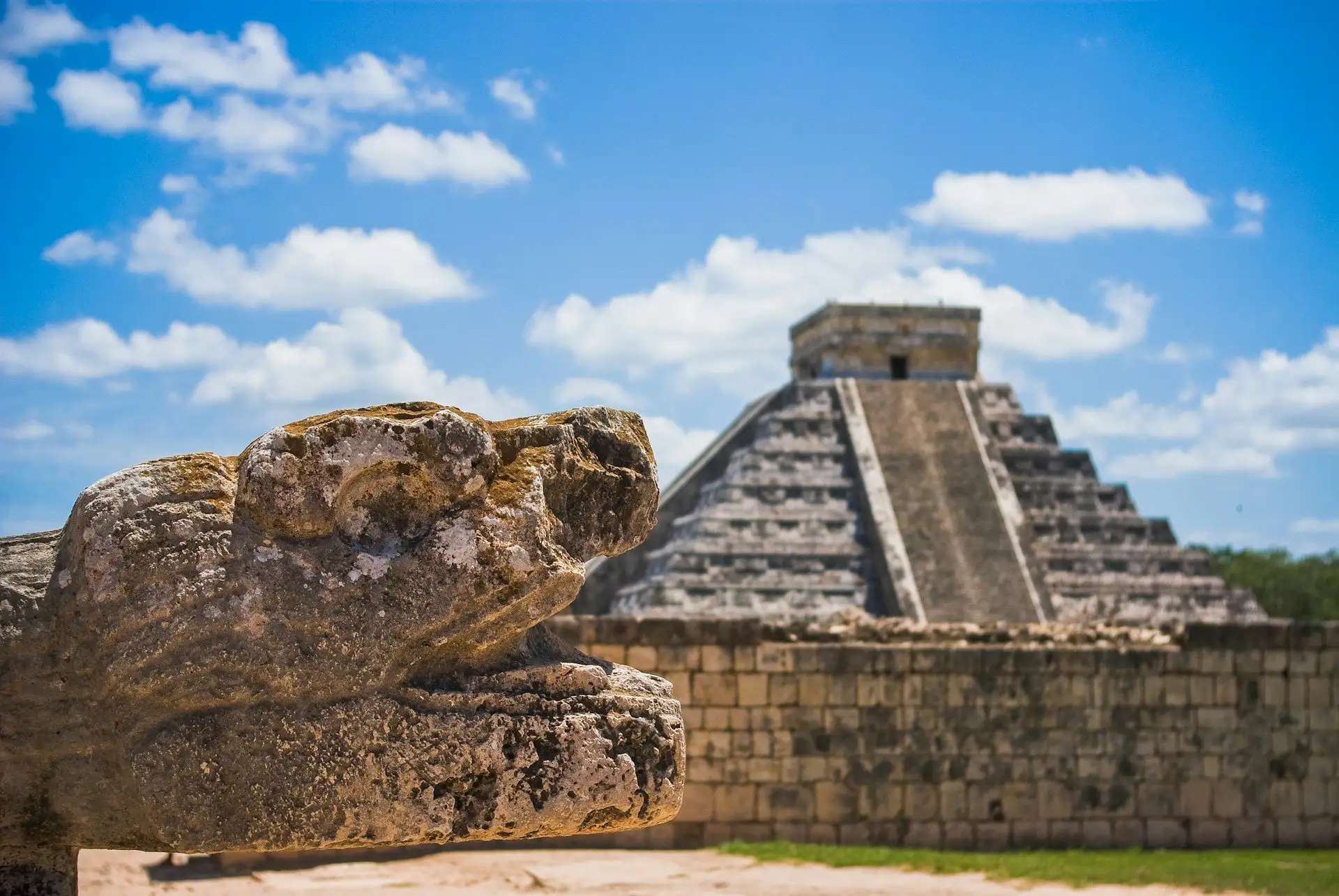
Mexico
One of the world's great civilizations, still walking around in its own ruins. A cuisine UNESCO-recognized as a cultural heritage of humanity. A capital city of 22 million people built on a lake bed over an Aztec empire, at altitude, in an earthquake zone, with one of the world's best restaurant scenes. And the best tacos on earth, which you'll find not at a restaurant but at a street cart at 11pm.
What You're Actually Getting Into
Mexico is not a country that needs defending to travelers who have been there. It is one of the world's most visited destinations, has one of the world's great cuisines, contains three of the most significant archaeological sites in the Western Hemisphere, and has a cultural production — in art, architecture, music, literature — that punches well above what the country's geopolitical position might suggest. Mexico City alone could hold your attention for a month. Oaxaca for two weeks. The Yucatán for another two. The problem is not finding things to do. The problem is the safety question, which needs answering honestly rather than dismissively.
Mexico's safety situation is complex, regional, and requires specific rather than general assessment. The country has significant areas with serious cartel-related violence that are genuinely dangerous for visitors — and it also has areas that are safer and more visitor-friendly than many cities in the United States. These are not the same Mexico, and treating the entire country as either safe or dangerous is inaccurate in both directions. The US State Department issues state-by-state travel advisories for Mexico rather than a single national assessment, because the variation is that significant. Checking the specific advisory for each state you plan to visit is the minimum responsible preparation for any Mexico trip.
The practical Mexico for most international visitors: Mexico City (CDMX) is a world-class city that rewards serious engagement. Oaxaca is one of the hemisphere's most extraordinary cultural destinations. The Yucatán Peninsula (Mérida, Chichén Itzá, Tulum, the cenotes, the Riviera Maya) is well-traveled and generally safe with normal precautions. The Baja Peninsula (Los Cabos, La Paz) is a different Mexico from the mainland — drier, emptier, more resort-focused but genuinely beautiful. Guanajuato, Puebla, and San Miguel de Allende are colonial cities of significant beauty that are on the main tourist circuit for good reasons. The Pacific coast (Puerto Vallarta, Sayulita) is excellent and accessible. Avoid the states with Level 4 (Do Not Travel) advisories.
A practical note on altitude: Mexico City sits at 2,240 metres above sea level. Most visitors feel the altitude in their first 24 hours — mild headache, slight breathlessness on exertion, fatigue. Drink water, avoid alcohol on arrival day, don't plan demanding activities for day one. By day two most people have adjusted enough to be fine. The altitude is also part of why CDMX's morning light is extraordinary and why the city's air feels thinner than its pollution statistics alone would explain.
Mexico at a Glance
A History Worth Knowing
Mexico has been inhabited for at least 13,000 years, and the civilizations that developed in Mesoamerica — the region stretching from central Mexico through Central America — were among the most sophisticated in the ancient world. The Olmec, often called the "mother culture" of Mesoamerica, flourished along the Gulf Coast from approximately 1500 to 400 BCE, developing systems of writing, mathematics, and astronomical observation that would be inherited and refined by subsequent civilizations. The colossal stone heads they carved — some weighing up to 40 tonnes — are among the most striking artifacts of the ancient Americas.
Teotihuacán, 50km northeast of what is now Mexico City, was one of the largest cities in the ancient world. At its peak between 100 and 650 CE, it had a population of 125,000 to 200,000 people — larger than any contemporary city in Europe. The Avenue of the Dead, the Pyramid of the Sun (the third-largest pyramid in the world by volume), and the Pyramid of the Moon demonstrate an urban planning sophistication that still impresses archaeologists. The city's name — "Place Where the Gods Were Created" in Nahuatl — was not given by its builders but by the Aztec, who encountered its ruins centuries after its mysterious collapse and couldn't believe mere humans had built it.
The Maya civilization, which developed across southern Mexico, Guatemala, Belize, Honduras, and El Salvador, reached its Classic Period peak between 250 and 900 CE. The Maya developed the most sophisticated writing system in pre-Columbian America, a mathematical system that independently invented the concept of zero, and an astronomical calendar of extraordinary precision — their Long Count calendar's calculation of the solar year was more accurate than the Julian calendar Europeans were using at the time. The cities of Palenque, Uxmal, and Chichén Itzá (which was actually a post-Classic Toltec-Maya hybrid) represent the physical peak of Maya architectural achievement.
The Aztec (who called themselves Mexica) established their capital Tenochtitlán — built on an island in the middle of Lake Texcoco — in 1325. By the early 16th century it had grown to a city of 200,000–300,000 people, the largest in the Western Hemisphere, connected to the mainland by causeways and supplied by a network of chinampas (floating garden islands) that fed the population. The Spanish conquistador Hernán Cortés arrived in 1519 with approximately 500 soldiers, and through a combination of military force, disease (smallpox, to which Indigenous populations had no immunity), and strategic alliances with the many peoples subjugated by Aztec rule, destroyed the empire and captured Tenochtitlán in 1521. Tenochtitlán became Mexico City, built on top of the ruins. The process of conquest and conversion that followed killed an estimated 90% of the Indigenous population within a century — primarily through epidemic disease but also through forced labor, starvation, and violence.
Three centuries of Spanish colonial rule produced the mestizo culture — the blending of European and Indigenous traditions — that characterizes modern Mexico, while also leaving a Catholic religious tradition, a Spanish language, and a colonial urban architecture that is still the visual character of the country's historic city centers. Mexican independence was achieved in 1821 after eleven years of war. The 19th century saw territorial loss — Mexico lost what is now Texas, California, New Mexico, Arizona, Colorado, Nevada, and Utah to the United States in two wars (1836 and 1846–1848) — and the 36-year dictatorship of Porfirio Díaz, whose modernization of Mexico's economy concentrated wealth while impoverishing the rural majority.
The Mexican Revolution (1910–1920) was one of the 20th century's first major social revolutions — a peasant and worker uprising against the Díaz regime that involved Emiliano Zapata (agrarian rights), Pancho Villa (northern militia leader), and eventually produced a new constitution in 1917 that embedded land reform and workers' rights. The post-revolution decades saw the Institutional Revolutionary Party (PRI) hold political power continuously for 71 years (1929–2000) in a one-party system that managed political stability through patronage, corruption, and occasional repression — most notoriously the 1968 Tlatelolco massacre of student demonstrators, ten days before the Mexico City Olympics. The PAN's victory in 2000 ended single-party rule. The current MORENA government under Claudia Sheinbaum (Mexico's first female president, elected 2024) continues the political realignment begun under Andrés Manuel López Obrador (AMLO).
The "mother culture" of Mesoamerica. Writing, mathematics, astronomy. The colossal stone heads. The template for civilizations that followed.
200,000 inhabitants. Third-largest pyramid in the world. A city whose builders remain unknown. Found in ruins by the Aztec centuries later.
Writing, zero, astronomical calendar more accurate than Europe's. Palenque, Uxmal, Copán. Then a mysterious collapse and partial continuity.
Aztec capital built on an island in Lake Texcoco. 200,000–300,000 people by 1519. The largest city in the Western Hemisphere.
Cortés and 500 soldiers destroy an empire of millions. Smallpox does most of the killing. 90% Indigenous population loss within a century.
11 years of war. Mexico independent. Then loses half its territory to the US over the next three decades.
Zapata, Villa, peasant uprising. New constitution 1917. Land reform. The murals of Rivera, Orozco, and Siqueiros document it in paint.
Mexico's first female president. MORENA continues. 130 million people, complex cartel geography, one of the world's great food cultures, and a capital city that is genuinely extraordinary.
Top Destinations
Mexico rewards the regional approach even more than most countries. Each of the main tourist circuits is a distinct world — CDMX alone could occupy multiple weeks; the Yucatán is a separate trip entirely from Oaxaca; Baja California is different again. Choose based on your interests and check current safety advisories for the specific states you'll be passing through, not just the headline destination.
Mexico City (CDMX)
Mexico City is one of the world's great cities and is consistently underestimated by visitors who approach it with the assumption that it is primarily a transit hub to somewhere else. It is not. It is a metropolis of 22 million people at 2,240 metres altitude, built on the ruins of Tenochtitlán, with the Zócalo (one of the world's largest central plazas, flanked by the National Cathedral and the remains of a Templo Mayor discovered while digging a metro station in 1978), the Palacio Nacional where Diego Rivera's epic murals of Mexican history cover the entire stairwell, the Anthropology Museum (the best in the hemisphere — give it a full day), and an emerging-to-arrived restaurant scene that has placed Mexico City in annual lists of the world's best dining cities for ten consecutive years. The neighborhoods of Roma, Condesa, and Polanco are the tourist-facing residential districts — tree-lined streets, coffee shops, markets, and restaurants at every price point. Budget five days minimum. Seven is better.
Oaxaca
Oaxaca City is the cultural heart of Mexico for many visitors — a UNESCO-listed colonial city in a highland valley at 1,550 metres, surrounded by Zapotec and Mixtec communities whose pre-Columbian traditions are still visibly alive in the markets, food, crafts, and festivals of the region. The Mercado de Benito Juárez and the 20 de Noviembre market are where the food culture is most concentrated: tlayudas, mole negro, chapulines (grasshopper tacos, eaten confidently), and Oaxacan chocolate. Monte Albán — the hilltop Zapotec city 9km from the town center — overlooks the valley with extraordinary views. Day of the Dead (November 1–2) in Oaxaca is the most celebrated version of the holiday in the country. Mezcal distilleries in the Tlacolula Valley offer the full production-to-glass experience. Budget four to five days. Return visitors give it more.
Yucatán Peninsula
The Yucatán is a world of limestone, jungle, cenotes, and Maya ruins spread across a flat peninsula jutting into the Gulf of Mexico and the Caribbean. Mérida — the peninsula's capital — is a beautifully preserved colonial city that is more relaxed and less touristed than the coast. Chichén Itzá is one of the new Seven Wonders of the World and deserves more time than the standard day-trip from Cancún allows — the Equinox on March 21st, when the light creates a serpent shadow down the pyramid's staircase, draws enormous crowds but is genuinely extraordinary. The cenotes are everywhere on the peninsula and are the main reason visitors repeatedly return to the Yucatán. Tulum's cliff-top Maya ruins above a Caribbean beach are the most photographed ruins in Mexico.
Guanajuato
Guanajuato is a colonial mining city built in a ravine in central Mexico — colorful houses stacked on steep hillsides, connected by tunnels built in the original riverbed (now the city's underground road network), with a callejón (alleyway) culture that produces the famous Callejón del Beso (Alley of the Kiss, where buildings are close enough to kiss across). The Cervantes International Festival in October transforms the city into a major cultural event. The Mummy Museum holds naturally mummified remains from the 19th century, which is either fascinating or unsettling depending on your tolerance. Diego Rivera was born here — the childhood home is a museum. San Miguel de Allende, two hours away, has become highly gentrified but retains extraordinary architecture.
Puerto Vallarta & Sayulita
Puerto Vallarta on Banderas Bay is Mexico's most visited Pacific coast resort — a full-service beach city with a genuinely excellent Malecón (waterfront promenade), a historic center with cobblestone streets and the Church of Our Lady of Guadalupe, and a beach culture that ranges from resort hotels to surf camps. Sayulita, 40km north, is a small surfing village with a more independent character and excellent beach food. The Sierra Madre mountains rise directly behind both towns, and the coast road between them passes a series of smaller towns and beaches. The humpback whales that winter in Banderas Bay (November to March) can be seen on boat tours year-round during the season.
Copper Canyon (Barrancas del Cobre)
Copper Canyon in the state of Chihuahua is four times larger than the Grand Canyon by volume — a system of six interconnected canyons carved by the Sierra Madre Occidental mountains, home to the Rarámuri (Tarahumara) Indigenous people who still run ultramarathon distances barefoot as part of their cultural tradition. The El Chepe train — Chihuahua al Pacífico railway — traverses the canyon system on an 8–12 hour journey from Chihuahua to Los Mochis, crossing 37 bridges and 86 tunnels through scenery that has no equivalent in Mexico. The Divisadero viewpoint (accessible from the train or by cable car) provides the canyon's classic panoramic view. A 3–4 day trip from Chihuahua or Los Mochis.
Puebla
Puebla is the city that invented mole poblano and chiles en nogada — two of Mexico's most celebrated dishes — and takes its culinary heritage with corresponding seriousness. The Talavera tile tradition (the glazed ceramic tiles that cover Puebla's church facades and kitchen walls in blue, white, and yellow geometric patterns) is a UNESCO-recognized craft. The city's historic center is a UNESCO World Heritage Site of Baroque architecture and churches. Cholula, 10km away, has the world's largest pyramid by volume (a natural-looking hill with a church on top — the Spaniards built 365 churches on pyramids in the Cholula area as a deliberate act of religious overwriting). Two to three days from Mexico City.
Baja California Sur
Baja California Sur is a 1,200km-long desert peninsula dangling between the Pacific Ocean and the Sea of Cortez — what Jacques Cousteau called "the world's aquarium." The Sea of Cortez has extraordinary marine biodiversity: whale sharks (swimmable), blue whales, sea lions, dolphins, and the world's largest population of hammerhead sharks. La Paz is the peninsula's capital — relaxed, non-resort, with a beautiful Malecón and outstanding seafood. Los Cabos in the south is more resort-oriented. The drive the length of Baja on Mexico Federal Highway 1 — through desert, whale-watching lagoons, and dramatic Pacific cliffs — is one of the great road trips in North America.
Culture & Etiquette
Mexican culture is built around hospitality, family, and a particular relationship with time and social interaction that is more relaxed than Northern European or North American norms. Mañana — literally "tomorrow" but functionally "later, at some point" — describes a cultural rhythm in which relationships and present-moment engagement take priority over schedule adherence. This is not a malfunction. It is a different set of values.
Mexico is a predominantly Catholic country whose religious practice is deeply mixed with pre-Columbian Indigenous traditions — the Virgin of Guadalupe is simultaneously a Catholic apparition and a continuation of Aztec goddess traditions, and the Day of the Dead is simultaneously All Saints' Day and a Mesoamerican ancestor celebration. This syncretism produces a visual and emotional culture of extraordinary richness.
Unlike the USA, English is not widely spoken outside major tourist areas and upscale restaurants in Mexico City. Learning 30–40 Spanish phrases before traveling transforms every interaction — markets, small-town restaurants, taxis, and casual conversations with locals all become accessible. Mexicans are patient with foreigners attempting Spanish and genuinely appreciative of the effort. Google Translate's camera mode is also useful for menus.
The best Mexican food is not at tourist-facing restaurants in historic centers — it is at market stalls, fondas (small family restaurants), and taquerías (taco shops) that operate for local customers. A market comida corrida (the set lunch — soup, main, rice, beans, drink for MXN 80–120) is almost always better and cheaper than the restaurant equivalent. Following locals during lunch hour (2–4pm, when Mexicans eat their main meal) is a reliable guide to where the real food is.
Mezcal (smoky agave spirit, broader production territory than tequila) is at its best in Oaxaca, where the palenques (distilleries) in the Tlacolula Valley welcome visitors for tours and tastings. The mezcal you drink in a Oaxacan palenque from a clay cup, served with orange and sal de gusano (worm salt), is a different experience from the export bottle at a bar in Berlin. Sip, don't shoot. Mezcal is not a shot drink.
At craft markets — Oaxaca's artisan markets, Mexico City's Mercado de Artesanías, San Cristóbal's Mercado de Santo Domingo — the first price is a starting point. Negotiate gently: offer 60–70% and expect to land at 70–80%. Don't bargain aggressively or walk away rudely — the vendors' work is worth more than the transaction suggests. At food stalls and government-rate tourism sites, prices are fixed and negotiation is inappropriate.
Tipping in Mexico is expected at restaurants (10–15% is standard — less than the US but culturally expected), for taxi drivers (round up), hotel staff, and tour guides. At street food stalls, tipping is not expected but appreciated. Parking attendants in cities often expect a small tip (MXN 10–20). Gas station attendants who clean your windscreen expect MXN 5–10.
Tap water in Mexico is not safe to drink anywhere in the country. This includes brushing teeth — use bottled water for this too, particularly in the first week. Most hotels and guesthouses provide a large garrafón (water jug) for drinking and toothbrushing. Ice at proper restaurants is made from purified water and is safe. Ice at street food stalls is less certain.
Mexico has 32 states with dramatically different security situations. The US State Department issues individual state-by-state advisories. Treating the whole country as a single safety environment — either assuming it's all dangerous or all fine — is how visitors end up in genuinely risky situations. Check the specific advisory for each state you're transiting through, not just your destination state.
Mexico City, Cancún, and other major airports have well-documented taxi scams where unofficial drivers overcharge or worse. Only use pre-paid taxi desks inside the terminal (look for the official Sitio taxi booth at CDMX airport), registered ride-share apps (Uber, DiDi — both work in Mexico), or your hotel's arranged pickup. Do not accept rides from people who approach you in the arrivals hall.
Mexico has significant wealth inequality and visible phones, cameras, and jewelry attract opportunistic theft, particularly in crowded markets and public transport. Keep expensive cameras in a bag when not actively shooting. Use an older or less ostentatious phone for navigation. Leave jewelry you can't afford to lose at home or in the hotel safe.
Night driving on Mexican highways — particularly outside the major toll roads — is associated with higher robbery and accident rates. The toll roads (cuota highways) are significantly safer than free roads (libre), better maintained, and faster. Plan long-distance driving to be completed before sunset and avoid overnight road journeys in unfamiliar areas.
Día de los Muertos
Day of the Dead (November 1–2) is one of the world's most visually extraordinary cultural celebrations — not morbid but joyful, a festival in which death is domesticated rather than feared. Families build ofrendas (altars) with marigold flowers (cempasúchil), photographs, and the deceased person's favorite foods and objects. In Oaxaca, the cemeteries on the night of November 2nd are lit with candles and filled with families eating, drinking, and playing music beside the graves of their relatives. The marigold-carpeted streets, the sugar skulls, and the face paint are specific to this holiday and are not, as visitors sometimes assume, "Mexican Halloween." It is older and more specific than that.
The Mexican Muralists
Diego Rivera, José Clemente Orozco, and David Alfaro Siqueiros — the three great Mexican muralists — painted the country's history, politics, and social struggles directly onto the walls of public buildings in the 1920s and 1930s, creating an art tradition that was simultaneously high modernism and political activism. Rivera's murals in the Palacio Nacional in Mexico City depict the entire sweep of Mexican history from the Aztec to the Revolution. Orozco's work at the Hospicio Cabañas in Guadalajara includes some of the most powerful political painting of the 20th century. Siqueiros was a Communist who attempted to assassinate Trotsky. The murals are in public buildings, free to visit, and completely extraordinary.
Indigenous Craft Traditions
Mexico's Indigenous artisan traditions — Oaxacan black clay pottery (barro negro), Zapotec wool rugs woven on backstrap looms in Teotitlán del Valle, Mixtec embroidered textiles, Talavera ceramics from Puebla, Huichol yarn paintings of extraordinary complexity, the alebrijes (fantastical carved and painted wooden creatures) from Oaxaca's valley villages — are living traditions, not tourist products. Buying directly from the artisan, understanding the technique, and paying the full price are all part of treating these traditions with the respect they deserve.
Fútbol Culture
Mexican football (soccer) is a national religion operating on par with Catholicism in terms of emotional investment. The Liga MX is one of the most-watched football leagues in North America, and attending a match at the Estadio Azteca in Mexico City — the only stadium to have hosted two FIFA World Cup Finals (1970, 1986) — is one of the great crowd experiences in sport. The atmosphere at a Clásico (América vs Chivas, or América vs Cruz Azul) in the Azteca, with 87,000 people, is something that no neutral observer leaves indifferent.
Food & Drink
Mexican cuisine received UNESCO Intangible Cultural Heritage recognition in 2010 — one of only two national cuisines to hold this designation (alongside French cuisine). The recognition acknowledges what anyone who has eaten seriously in Mexico already knows: this is a food culture of extraordinary depth, built over millennia of Mesoamerican agricultural civilization and three centuries of culinary encounter between Indigenous, Spanish, African, and other traditions. The domestication of corn, beans, squash, chili, tomato, avocado, cacao, and vanilla by Mesoamerican peoples created the agricultural foundation of the world's food culture — essentially everything in what we now call a standard diet traces back to Indigenous American cultivation.
The food is also not uniform. Mexican regional cuisines are as distinct from each other as Italian regional cuisines. Oaxacan food, Yucatecan food, Veracruz seafood, Northern Mexican border food (the birthplace of nachos, burritos, and fajitas — the Tex-Mex crossover), and the street food tradition of Mexico City are all different cuisines that happen to share a country.
Tacos al Pastor
Mexico City's defining street food: pork marinated in dried chilis, achiote (annatto), and citrus, stacked vertically on a trompo (rotating spit, introduced by Lebanese immigrants in the 1930s and immediately adopted into Mexican street food), shaved onto a double corn tortilla with pineapple, cilantro, and raw onion. The correct taco al pastor costs approximately MXN 15–25, is eaten standing at a counter, and is most correctly consumed between 10pm and 2am. El Huequito and El Tizoncito are the legendary CDMX spots. Nothing that calls itself tacos al pastor in London or New York is remotely the same thing.
Oaxacan Mole Negro
Mole negro — the Oaxacan version of mole, the extraordinary complex sauce that defines the state's cuisine — is made from approximately 30 ingredients: multiple dried chilis, chocolate, plantain, tomato, tomatillo, spices, herbs, charred tortilla, and a process of slow toasting, grinding, and simmering that takes 2–3 days when made properly from scratch. The result is black, deeply complex, slightly bitter and slightly sweet, with a depth of flavor that no single-ingredient description can capture. Eaten with turkey or chicken, with black beans and Oaxacan cheese on the side, it is one of the great dishes in any national cuisine.
Cochinita Pibil
The Yucatán's signature dish: pork marinated in achiote paste, citrus juice, and spices, wrapped in banana leaves and slow-cooked in an underground pit (pibil) for hours until it falls apart entirely. The deep red-orange color and the citrus-achiote flavor profile are entirely distinct from any other Mexican pork dish. Eaten in tacos or a torta (Mexican sandwich), topped with pickled red onion and habanero salsa. Ubiquitous throughout the Yucatán and available in Mérida markets from 7am until they run out (usually before noon).
Chiles en Nogada
The most aesthetically significant dish in Mexican cuisine: a poblano chili stuffed with a picadillo of meat, fruit, and nuts, covered in a walnut cream sauce (nogada), and decorated with pomegranate seeds and parsley — green, white, and red, the colors of the Mexican flag. Available only in August and September when the pomegranates and walnuts are in season. Specific to Puebla, where it was invented in 1821 to honor Agustín de Iturbide on Mexico's independence. Ordering it anywhere else in the country or any other month is a lesser version.
Mezcal
Mezcal is any distilled spirit made from agave — tequila is a mezcal made specifically from blue agave in specific regions. Oaxacan mezcal, made from dozens of agave varieties (espadín, tobalá, tepeztate, madrecuixe) each with distinct flavor profiles, using traditional clay pot or copper still distillation, is among the world's most complex spirits. The standard glass in a Oaxacan mezcalería comes with orange wedges and sal de gusano (dried agave worm ground with salt and chili) as accompaniments. Sip slowly. The smoky varieties from slow-roasted agave heart have an intensity that requires pacing.
Elote & Masa Culture
Corn — maize — is the spiritual and physical foundation of Mexican civilization and the foundation of the food culture. The nixtamalization process (cooking corn in alkali to release its nutrients and make masa) was developed in Mesoamerica 3,500 years ago and is the reason that Mexican tortillas and tamales are nutritionally superior to plain cornmeal. Elote (grilled corn on the cob with mayonnaise, cheese, chili powder, and lime) is the defining Mexican street food. Tlayudas (Oaxacan oversized corn flatbread), tamales (masa wrapped around filling in a corn husk), and sopes (thick corn cakes with toppings) are all expressions of the same 3,500-year corn culture.
When to Go
Mexico's climate varies dramatically by region — from the dry highland plateaus of the central states (temperate year-round) to the tropical humidity of the Yucatán coast, the desert of Baja and the north, and the Pacific coast's distinct wet and dry seasons. There is no single best time for the whole country, but the dry season (November to April) is generally the best window for most destinations.
Dry Season
Nov – AprThe primary peak season for most of Mexico. Comfortable temperatures throughout the central highlands, Oaxaca, and Mexico City. The Yucatán is dry and clear — cenote water visibility is best. The Pacific coast is at its sunniest. November specifically is Día de los Muertos in Oaxaca. December–January is peak domestic and international tourism. January–April is the quietest part of dry season with good prices and fewer crowds.
Shoulder Season
Oct, Apr–MayOctober is excellent for Oaxaca (Día de los Muertos timing) and for the Yucatán before the high season crowds arrive. April–May is after Easter (Semana Santa, when Mexicans travel heavily) and before the summer rains — warm, clear, and relatively uncrowded. April–May is also whale shark season in Baja (until May).
Summer Rainy Season
Jun – SepAfternoon thunderstorms across the central highlands and Oaxaca, typically brief and intense. The Yucatán's rainy season is more sustained and hurricane risk is real (June–October). The highlands are lushest and greenest in the rainy season. Prices drop significantly. Mexico City's temperatures are moderated by afternoon rain. Avoid the Yucatán coast during hurricane season if risk-averse.
Semana Santa
Holy Week (March/April)Easter Holy Week (Semana Santa) is when Mexico travels. Hotels book out months in advance, beach destinations have prices tripled, and the Yucatán, Los Cabos, and Pacific coast are saturated with domestic tourists. If you must travel during Semana Santa, Mexico City and Oaxaca are less dramatically affected than beach destinations. Book everything 3–4 months ahead if this is your only option.
Trip Planning
Ten days to two weeks is the right minimum for a first Mexico trip — enough for Mexico City (4–5 days), Oaxaca (3–4 days), and a connection between them. Adding the Yucatán requires another 5–7 days and a separate flight or bus segment. The country is large and the regional circuits are distinct enough that the standard approach is to choose two or three destinations and go deep rather than attempting to cover the north, center, and Yucatán in a single trip.
Mexico City to Oaxaca is 6 hours by bus (ADO first class) or 1 hour by flight — the bus is a genuinely comfortable and scenic option that gives you a view of the landscape between the two cities that no flight provides. Mexico City to Mérida is 20 hours by bus or 2 hours by flight — the flight wins here.
Mexico City
Day one: arrive, drink water, don't overexert — the altitude is real. Day two: Anthropology Museum (arrive at opening, spend full day — the Aztec Calendar Stone alone is worth an hour). Evening: Roma neighborhood, dinner at Contramar or El Parnita. Day three: Teotihuacán at 8am (before tour buses) — Pyramid of the Sun, Pyramid of the Moon, Avenue of the Dead. Return to CDMX afternoon. Day four: Zócalo, Templo Mayor ruins, Diego Rivera murals in the Palacio Nacional. Chapultepec park afternoon. Day five: Coyoacán (Frida Kahlo's Blue House museum — book weeks ahead), Xochimilco trajineras (floating gardens, a UNESCO site still used for weekend canal boat parties).
Oaxaca
Take ADO bus or fly from CDMX. Day six: arrive in Oaxaca, walk the zócalo, have mezcal at a mezcalería near the Mercado. Day seven: Monte Albán at 8am, back for market lunch at 20 de Noviembre (choose your meat, have it grilled on the communal grill). Day eight: Teotitlán del Valle for Zapotec rug weaving, Tule tree (the world's widest tree trunk), and Mitla ruins. Day nine: mezcal distillery tour in Matatlán, the artisan market in Etla. Day ten: Oaxacan cooking class in the morning, then fly or bus back to CDMX for onward departure.
Mexico City
As above. Five full CDMX days. Add a day trip to Puebla (2 hours by bus) if the itinerary allows — chiles en nogada at Casita Poblana and the 365 churches of Cholula are worth it. The Tlatelolco Plaza of Three Cultures (Aztec ruins, colonial church, and 1960s government housing — site of the 1968 student massacre) is a powerful historical site often missed by visitors.
Oaxaca
Four days as above. If timing coincides with a Saturday, the Tlacolula market (40km from Oaxaca, every Saturday, one of the largest weekly indigenous markets in Mexico) is essential — arrive by 9am, eat breakfast at the quesillo (string cheese) stalls, walk through the textile and produce sections before the crowds arrive.
Yucatán
Fly from Oaxaca to Mérida (1.5 hours via CDMX). Day ten: Mérida — the Plaza Grande, the Paseo de Montejo (French-influenced boulevard built during henequen boom), the city's extraordinary Yucatecan food scene. Day eleven: Chichén Itzá at 7am opening, then Cenote Ik Kil for swimming, then Valladolid for the night (40km from Chichén Itzá, far better base than Cancún). Day twelve: Cenote Dos Ojos snorkelling caves near Tulum. Day thirteen: Tulum ruins at dawn before the crowds, then Cobá ruins (the only one you can still climb) and the jungle lagoon. Day fourteen: fly home from Cancún.
Mexico City in Depth
Six days for CDMX. All the main sites plus: Xochimilco trajineras on a Sunday morning (the floating garden canal system, UNESCO listed), the Museo Dolores Olmedo (the largest Diego Rivera and Frida Kahlo collection outside the Blue House), a tour of street art in the La Roma neighborhood with a local guide, the Mercado de la Merced (CDMX's largest traditional market), and one proper dinner at a destination restaurant (Quintonil, Pujol, Rosetta — three of the world's 50 best by any year's list).
Puebla & Cholula
Three days in Puebla — the colonial architecture, the Talavera workshops in Barrio El Alto, chiles en nogada in season or mole poblano outside it, Cholula's pyramid hill with the church on top, and the view of Popocatépetl volcano (still active, still impressively smouldering) from Cholula's rooftops on a clear morning.
Oaxaca
Five days including Day of the Dead if November timing allows (book accommodation by August). Full village circuit, multiple mezcal distilleries, Oaxacan cooking class, the black clay pottery in San Bartolo Coyotepec, Sunday market at Tlacolula. One evening at Ancestral — the mezcal bar that has done more than anywhere to elevate Oaxacan drinking culture to a considered ritual.
Yucatán
Fly to Mérida. Four days: the full cenote circuit (Ik Kil, Dos Ojos, Cenote Samulá near Valladolid), Chichén Itzá at dawn, Mérida's Sunday Mercado Lucas de Gálvez and the paseo with everyone in traditional Yucatecan white linen. Uxmal ruins (smaller than Chichén Itzá, less crowded, architecturally more elegant — the Governor's Palace is considered the finest example of Puuc architecture in the Maya world).
San Cristóbal & Chiapas
Fly from Mérida to Tuxtla Gutiérrez, then bus to San Cristóbal de las Casas (1.5 hours). Three days: the Zapatista murals in the town center, the Indigenous Tzotzil Maya communities of San Juan Chamula and Zinacantán (non-Catholic religious practices in the church, deeply respectful photography rules — no cameras inside), the Cañón del Sumidero on a boat tour (a dramatic gorge with 1,000m vertical walls), and the Palenque ruins (the finest example of Classic Maya architecture in Mexico). Fly home from Tuxtla or CDMX.
Water Safety
Do not drink tap water anywhere in Mexico. Use bottled water for drinking and brushing teeth. Most hotels provide garrafón (large jugs of purified water) — use them. Stick to fruit juices at established restaurants (not street stalls where the ice origin is uncertain). Mealtimes at well-regarded local restaurants are generally safe — the food hygiene risk is primarily from raw vegetables, salsas that have been sitting out, and water of uncertain origin.
Vaccinations & Health
Hepatitis A vaccine strongly recommended for all visitors. Typhoid vaccine recommended, especially if eating at street markets. Malaria exists in some rural areas (not in major tourist destinations — CDMX, Oaxaca, Yucatán are negligible risk). Altitude sickness is a real consideration for Mexico City (2,240m) — see the altitude section in the overview. Routine vaccines current. Consult a travel health clinic 4–6 weeks before departure.
Full vaccine info →Connectivity
Telcel and AT&T Mexico (formerly Iusacell) are the main carriers with the best nationwide coverage. Buy a Telcel SIM at the airport or at an OXXO convenience store (found literally everywhere). Cheap data bundles. An eSIM through Airalo is a good alternative. Google Maps works well in Mexican cities. WhatsApp is the primary communication platform in Mexico — most local contacts, tour operators, and restaurant reservations operate via WhatsApp rather than email or phone.
Get Mexico eSIM →Taxis & Rideshare
Uber and DiDi (the Chinese ride-hailing app, very popular in Mexico) are the safest options in CDMX and other major cities — GPS-tracked, fixed price, no cash required. At airports, only use the official pre-paid taxi desks inside the terminal. Never accept rides from people who approach you in the arrivals hall. In smaller cities where apps don't operate, ask your hotel to call a trusted taxi. Street taxis (sitio taxis) are safer than hailing from the street.
Currency & Cash
Cash (pesos) is important in Mexico — many street food stalls, markets, and smaller restaurants don't accept cards. ATMs are widely available in cities (BBVA, Santander, HSBC are the most reliable for international cards). Use ATMs attached to bank branches rather than standalone machines in busy areas. Avoid exchanging money at airports (poor rates) — ATMs give the bank rate. USD is accepted in some tourist areas but at a poor exchange rate; paying in pesos is almost always better.
Travel Insurance
Essential. Mexico has both public and private healthcare — the private hospitals (particularly in Mexico City and major cities) are of good quality but expensive without insurance. An emergency room visit at a private hospital can cost $2,000–10,000 USD. Medical evacuation insurance is important for anyone spending time in remote areas (Copper Canyon, rural Chiapas). Confirm your policy covers Mexico specifically — some exclude Mexico due to travel advisories for certain states.
Transport in Mexico
Mexico has excellent first-class bus infrastructure connecting all major cities — the ADO bus network (and its premium subsidiary ADO GL) runs comfortable, air-conditioned, punctual coaches between Mexico City, Oaxaca, Puebla, Veracruz, and Mérida. For the central and southern tourist circuit, the bus is often the right choice — the journey from Mexico City to Oaxaca passes through mountain scenery that justifies the 6 hours. For longer intercity distances or the Yucatán from the center, flying is the practical choice.
Mexico City's metro is one of the world's most extensive urban rail systems — 12 lines, 195 stations, and very cheap (MXN 5 per ride). It is also very crowded at peak hours and has a documented pickpocket problem. Use it during off-peak hours and keep valuables in a front pocket or bag you hold in front of you.
ADO First Class Bus
MXN 300–900/routeADO's first-class and platinum services (ADO GL, ADO Platino) are the correct way to travel between CDMX, Oaxaca, Puebla, and Veracruz. Reclining seats, A/C, WiFi, onboard movie. Punctual and comfortable. Book at ado.com.mx or at the terminal. CDMX has multiple ADO terminals — confirm which terminal your bus departs from (Terminal Norte, Sur, TAPO, or Poniente depending on the direction).
Domestic Flights
MXN 700–2,500/routeAeroméxico, Volaris, and Vivaaerobus connect Mexico's main cities. CDMX to Oaxaca (1 hour), CDMX to Mérida (2 hours), CDMX to Cancún (2.5 hours), CDMX to Puerto Vallarta (2 hours). Volaris and Vivaaerobus offer the cheapest fares with add-on fee structures similar to European budget airlines. Book at least 3–4 weeks ahead for reasonable prices.
Mexico City Metro
MXN 5/ride12 lines connecting the entire metropolitan area. The cheapest urban transport system in the world for its scale. Crowded at peak hours (7–9am, 6–8pm) with documented pickpocketing. Use front pockets, hold your bag in front of you, and avoid it entirely during rush hour if carrying valuables. Metrobús (articulated bus rapid transit) is an alternative for some corridors. The metro map with iconic pictogram station identifiers (designed for the large illiterate population in 1969) is a design classic.
Uber & DiDi
App rateBoth operate throughout Mexico City and in major cities including Oaxaca, Guadalajara, Monterrey, and Cancún. DiDi is often cheaper than Uber in Mexico and has strong local coverage. GPS-tracked, cash or card, no negotiation. The safest taxi option in all cities. In areas without app coverage, hotel-called taxis (sitio taxis) are the recommended alternative.
Car Rental
MXN 600–1,500/dayUseful for the Yucatán (where cenote-hopping between multiple sites in a day requires a car), Baja California road trips, and Oaxacan village circuits. Major cities are best navigated without a car (traffic and parking are nightmarish). Use toll roads (autopistas de cuota) rather than free roads — safer, better maintained, and faster. Mexican car rental insurance practices differ from European/US norms — read the policy carefully and consider buying comprehensive cover.
El Chepe Train
MXN 1,500–4,000Chihuahua al Pacífico Railway — the legendary train through Copper Canyon from Chihuahua to Los Mochis (or vice versa). The Express version takes 8–12 hours; the Regional stops at all stations and takes longer. Book at chepexpress.mx — the Express sells out in advance during peak season. One of Mexico's great experiential journeys, rewarding for the landscape alone.
Colectivos
MXN 15–60Shared minivans (colectivos) are the primary short-distance transport between towns in the Yucatán, Oaxaca, and rural areas. They leave when full, drop you roadside, and are cheap and fast. The colectivo from Valladolid to Chichén Itzá runs regularly and is the cheapest way to get between the two. Ask locals where to catch them — they operate from specific street corners, not formal terminals.
CDMX Metrobús
MXN 6/rideMexico City's bus rapid transit system — dedicated bus lanes on major avenues, level boarding platforms, air conditioning. Line 1 (Indios Verdes to El Caminero) covers the major north-south corridor through Roma and Polanco. Line 7 connects Buenavista (metro and suburban rail hub) to the city center. Use a rechargeable card (purchased at terminals) rather than cash on board.
Accommodation in Mexico
Mexico's accommodation is exceptional value compared to Western Europe or the US — the peso's weakness against the dollar and euro means that a quality boutique hotel in Mexico City or Oaxaca costs a fraction of the equivalent in Paris or New York. The casa boutique model — converted colonial houses with 8–15 rooms, a courtyard, excellent breakfast, and family ownership — is the best accommodation format Mexico offers and is available at remarkably reasonable prices throughout the colonial cities.
For the Yucatán's Riviera Maya coast (Tulum, Playa del Carmen, Cancún), international resort hotels dominate and are priced accordingly. Staying in Mérida or Valladolid rather than the coast and day-tripping to the beach is both cheaper and more interesting culturally.
Casa Boutique (Colonial Cities)
MXN 1,200–4,000/night ($60–200)Converted colonial houses with a central courtyard, terracotta floors, high ceilings, local art, and a breakfast of fresh fruit, tamales, and Mexican coffee. The best accommodation format in Mexico and the correct choice for CDMX (Roma/Condesa neighborhoods), Oaxaca, Guanajuato, San Miguel de Allende, and Mérida. Book ahead for peak season. Hospitality is personal and the insider knowledge of a good casa owner is worth more than any guidebook for restaurant and experience recommendations.
Mexico City Hotel
MXN 800–6,000/nightStay in Roma, Condesa, or Polanco rather than the historic center or airport zone — these neighborhoods have the best restaurants, coffee shops, and walkability. The Condesa DF, Casa Comtesse, and Las Alcobas Polanco represent the boutique luxury end. Mid-range: Hotel Brick in Roma, Casa Decu. Budget travelers are well served by several excellent hostels in the Roma neighborhood including Casa de Los Amigos.
Yucatán Resort or Casa
MXN 1,500–8,000+/nightThe Riviera Maya has an extensive resort hotel sector with international brands at premium pricing. For a more interesting experience: stay in Mérida's centro histórico in a colonial casa (MXN 1,000–2,500) and day-trip to the coast; or Valladolid for Chichén Itzá access (MXN 800–2,000, charming small colonial city with zero resort pressure). Tulum's "eco-chic" boutique hotels on the beach road combine high prices with limited infrastructure (some are solar-powered and have limited water). Book well ahead — Tulum accommodation is perpetually limited relative to demand.
Eco-Lodge / Rural Stay
MXN 600–2,500/nightIn Chiapas, Oaxaca's Sierra Norte, Baja California, and the Yucatán jungle, eco-lodges and community-run guesthouses offer accommodation in extraordinary natural settings. The Sierra Norte mountain villages above Oaxaca (Benito Juárez, Lachatao) have community-run cabins with hiking trail access. Copper Canyon lodges around Divisadero and Creel provide the base for El Chepe train stopovers. These properties are simple, often off-grid, and the most immersive way to experience Mexico outside the cities.
Budget Planning
Mexico is one of the world's best-value destinations for European and North American visitors — the peso has weakened significantly against the dollar and euro, and the combination of cheap local food, affordable accommodation outside the tourist resort zones, and very inexpensive public transport means that a mid-range Mexico trip costs a fraction of the equivalent in Spain or the United States. The exception is the Riviera Maya resort coast and the international-facing restaurant scene in Polanco (Mexico City) and Tulum — these price at or above equivalent experiences in Europe. Eat where locals eat and stay in casas rather than international hotels and the value is extraordinary.
- Hostel dorm or basic guesthouse
- Street tacos and market fondas
- ADO bus between cities
- Metro and colectivos
- Self-guided archaeological sites
- Casa boutique or good hotel
- Mix of restaurants and markets
- Domestic flights when relevant
- Guided tours for key sites
- Mezcal and cocktails in the evenings
- Top boutique hotels
- Destination restaurants (Quintonil, Pujol)
- Private driver and guide
- Tulum eco-resort
- Cooking classes and cultural experiences
Quick Reference Prices
Visa & Entry
Citizens of over 60 countries can enter Mexico without a visa for tourism, including the US, Canada, the UK, all EU countries, Australia, Japan, New Zealand, Brazil, and Argentina. Citizens of these countries fill out a Forma Migratoria Múltiple (FMM) tourist card — either online before travel or on arrival at the immigration desk — which is required for entry and must be returned on departure. The FMM allows stays of up to 180 days.
The FMM is free when entering Mexico overland from the United States. For air arrivals, the FMM fee (approximately $30 USD) is typically included in the ticket price as an airport departure tax — if it hasn't been, you'll pay at the immigration desk. Keep your stamped FMM safe — it is checked on departure and losing it creates bureaucratic difficulty and potential fines at the airport.
Fill in the FMM online at www.inm.gob.mx before travel or at immigration on arrival. Valid up to 180 days. Free overland from the US; included in flight price for air arrivals. Keep the stamped FMM — required on departure.
Family Travel & Pets
Mexico is an excellent family destination with honest assessment of the considerations involved. Mexicans are openly warm toward children — families traveling with children receive a level of welcome that solo travelers and couples often don't. The country's theme park and beach resort infrastructure (particularly in Cancún and Los Cabos) is specifically built for international families. The archaeological sites are engaging for children who can walk the distances (Teotihuacán involves several kilometres across a large site). The food culture is rich and generally accessible to children who like flavors.
The practical considerations for families: water safety (children are more susceptible to stomach issues than adults, so the bottled-water-only rule is even more important for young children), altitude adjustment in Mexico City, and the safety advisory landscape that requires checking before any itinerary is finalized.
Teotihuacán
Children who can walk 3–4km and manage steep steps (with handrails) find Teotihuacán extraordinary — the scale of the pyramids has an impact that photographs don't convey, and climbing the Pyramid of the Sun (65 metres at an angle that is genuinely steep) produces an achievement sensation for older children. The archaeological site's museums have excellent exhibits appropriate for older children. Pre-teen minimum for the pyramid climb; any age for the site itself.
Yucatán Cenotes
Swimming in a cenote — the natural sinkholes in the Yucatán's limestone, with clear crystal water and light shafts from the ceiling — is universally loved by children who can swim. Open cenotes (no roof) are accessible to all ages. Cave cenotes require snorkelling or diving confidence. The water is cold (24°C year-round) and very clear — children who snorkel get the full experience. Most cenotes have lifeguards and defined swimming areas.
Whale Watching & Marine Life
Humpback whale watching in Banderas Bay (Puerto Vallarta, November–March) works for all ages. Gray whale watching at Laguna San Ignacio in Baja (January–April) is extraordinary — the gray whales approach boats and allow themselves to be touched, which is one of the most remarkable wildlife experiences in North America. Whale shark snorkelling in the Sea of Cortez near La Paz (October–May) is suitable for swimmers aged approximately 8+.
Día de los Muertos for Families
Day of the Dead in Oaxaca is an excellent family experience for children old enough to engage with the holiday's philosophy (usually 6+). The altars, the marigold flowers, the face paint, the sugar skulls, and the cemetery candles are visually extraordinary for children and the holiday's message — that death is part of life and the dead remain with us — is a thoughtful counterpoint to how death is typically presented in Northern European or North American culture. The cemetery at night is gentle, not frightening.
Monarch Butterfly Sanctuary
Between November and March, the mountains of Michoacán (3–4 hours from Mexico City) host the winter arrival of hundreds of millions of monarch butterflies that have migrated from Canada and the US. Standing in a forest where every surface is orange with butterflies — and the air is filled with them — is one of the most extraordinary natural spectacles in North America and affects children and adults equally. The sanctuaries at El Rosario and Sierra Chincua are the main access points. Book a guided tour; the sites are in protected forest and require a 45-minute hike at altitude.
Riviera Maya Beach Resorts
The Cancún–Tulum resort corridor on the Caribbean is specifically designed for international families — calm Caribbean water, white sand beaches, all-inclusive resort options, and the cenotes and Chichén Itzá within day-trip distance. The drawback is that the resort bubble is expensive, very touristic, and doesn't particularly represent Mexico as a cultural destination. For families wanting the beach plus some cultural context, Valladolid as a base with day trips to the coast and ruins is the better structure.
Traveling with Pets
Mexico permits the import of dogs and cats with documentation: a health certificate from an accredited vet within 10 days of travel, a valid rabies vaccination (at least 15 days before travel), treatment for internal parasites within 6 months of travel, and for dogs, external parasite treatment within 15 days. Mexico does not require a specific import permit for pets from most countries, making it more accessible than many destinations. Pets are inspected at the port of entry by SENASICA (agriculture authority).
Practically: Mexico is reasonably pet-friendly in residential neighborhoods and smaller towns. The beach destinations (Puerto Vallarta, Sayulita, Baja) have established expat and long-stay visitor cultures that include pet-friendly accommodation and cafés. Archaeological sites, national parks, and most formal tourist attractions do not permit pets. Mexico City (CDMX) has excellent parks and is increasingly pet-friendly, though the traffic and urban density make it challenging for dogs not used to city environments. The main health risk for pets in Mexico is rabies (present in the dog and wild animal population) — ensure vaccinations are current and avoid contact between your pet and stray animals.
Safety in Mexico
Mexico's safety situation requires specific, regional assessment rather than a single answer. The country has areas with serious cartel-related violence that are genuinely dangerous and should be avoided by tourists, and it also has regions with lower crime rates than comparable areas in the United States or parts of Europe. The US State Department publishes individual safety advisories by Mexican state — these are the most detailed and regularly updated assessment available for English-speaking visitors and should be consulted for each state in your itinerary, not just the headline destination.
The main tourist destinations have strong track records of safety for international visitors. Mexico City's Roma, Condesa, Polanco, and Coyoacán neighborhoods are safe for tourists with standard urban precautions. Oaxaca City has low violent crime against visitors. Yucatán state (including Mérida, Chichén Itzá, and Valladolid) consistently maintains low Level 1–2 advisories. The risks that visitors typically encounter are opportunistic theft and taxi/transport scams — not cartel violence, which is primarily between rival organizations over territory.
Yucatán, Oaxaca, CDMX (tourist areas)
These destinations are visited safely by millions of international tourists annually. Standard urban precautions (secure valuables, use official transport, avoid isolated areas at night) are sufficient. CDMX specifically: stay in Roma, Condesa, or Polanco neighborhoods and avoid the subway at peak hours with valuables.
Baja California Sur, Puerto Vallarta, Guanajuato
These destinations are generally at Level 2 (exercise increased caution) or lower and have strong safety records for tourists. Los Cabos and Puerto Vallarta are among Mexico's most-visited international destinations precisely because of their relatively safe track records.
Specific State Advisories — Check Before Going
Several Mexican states have US State Department Level 3 (Reconsider Travel) or Level 4 (Do Not Travel) advisories due to cartel activity. These include parts of Colima, Guerrero, Michoacán, Sinaloa, Tamaulipas, and Zacatecas (among others — check current advisories as they change). Acapulco, once a premier resort destination, has a Level 4 advisory and should not be visited.
Night Driving
Driving on Mexican highways after dark, particularly on libre (free) roads rather than toll (cuota) roads, carries higher risk — both from road quality and from opportunistic highway crime. Plan all intercity driving to be completed before sunset. Toll autopistas are significantly safer and are the correct choice for any significant road journey.
Airport & Transport Scams
Unofficial taxis from airports, overcharging money changers, and "helpful" strangers who guide you to their cousin's restaurant or handicraft shop are the most common tourist-targeting incidents in Mexico. Using ride apps (Uber, DiDi) or pre-paid official taxis eliminates the taxi risk. Being pleasantly but firmly uninterested in unsolicited help eliminates most of the rest.
Medical Facilities
Mexico City and major cities have excellent private hospitals — ABC Medical Center and Hospital Ángeles in CDMX are used by expats and are of international standard. Medical costs at private hospitals are expensive without insurance but significantly cheaper than the US equivalent. In remote areas, evacuation to a city hospital may be required. AMREF does not typically cover Mexico — ensure your insurance includes medical evacuation to the nearest appropriate facility.
Emergency Information
Your Embassy in Mexico City
Most foreign embassies are in Mexico City's Polanco, Lomas de Chapultepec, and Santa Fe neighborhoods.
Book Your Mexico Trip
Everything in one place. These are services worth actually using.
Still Walking Around in Its Own Ruins
The thing that separates Mexico from most travel destinations is the layering. You stand in the Zócalo in Mexico City and you are standing on the main plaza of the former Aztec capital Tenochtitlán, which sits under the current plaza, which surrounds the National Cathedral (built from the stones of the Templo Mayor, visible in the excavation pit 50 metres away), with Diego Rivera's version of all of this painted on the walls of the building opposite. Every Mexican city holds this kind of stratigraphy — civilization on top of civilization, the living culture still in conversation with what came before it.
And then the taco at 11pm from the stand that's been in the same spot for 30 years, the woman who hands you the tortilla fresh off the comal, the mezcal in a clay cup that smells of smoke and agave and the specific earth of the Oaxacan valley, the cemetery at dawn on November 2nd with the marigolds and the candles and the families sitting with their dead. Mexico asks you to pay attention, to eat everything, to slow down, and to engage with what it is rather than what you expected it to be. People who do this leave with a different relationship to the country than the one they brought. They come back.