
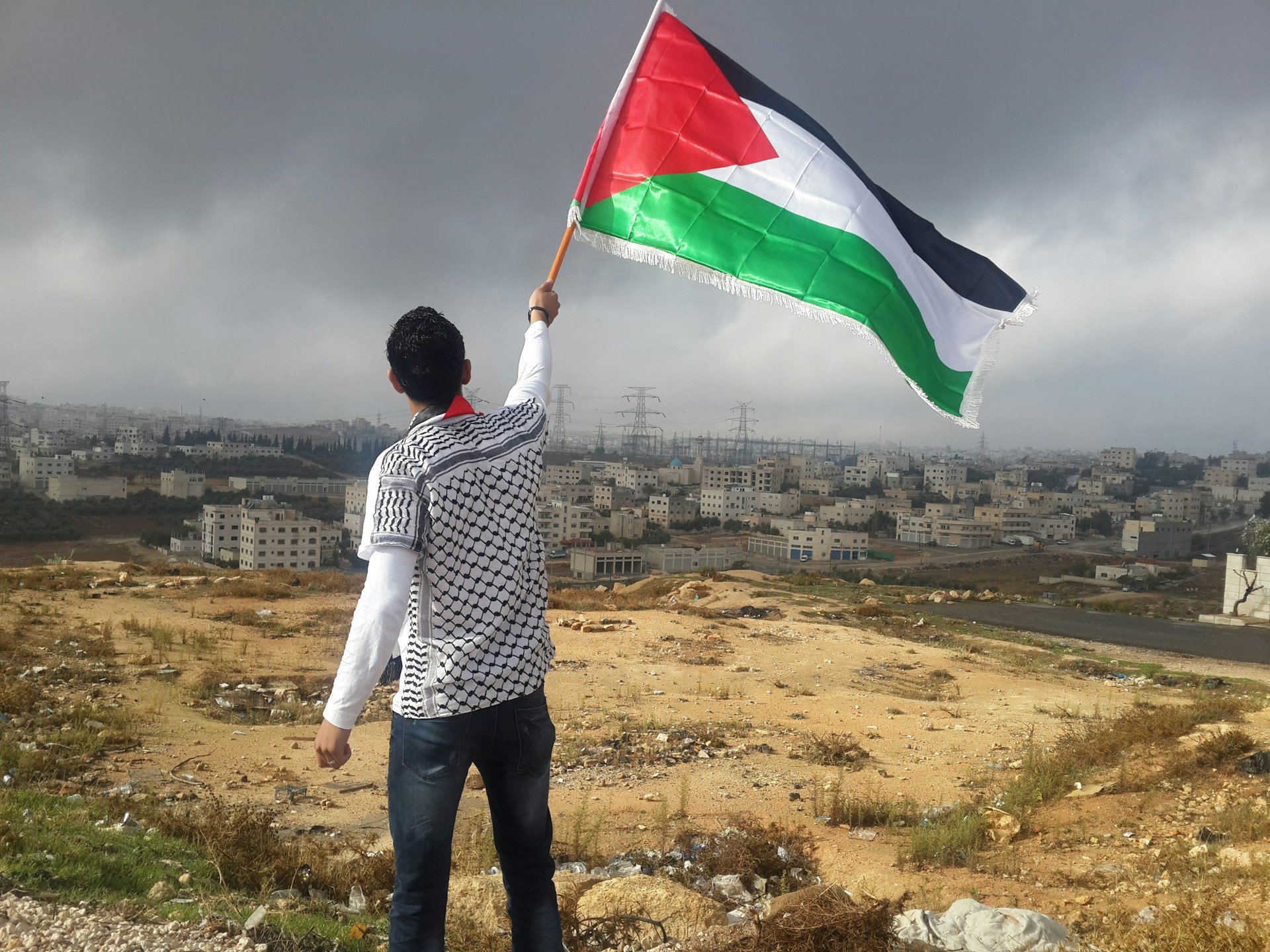
Palestine
One of the oldest continuously inhabited landscapes on earth. Jericho was a city when Rome was farmland. Nablus has been making soap since the Crusaders. The olive trees in some West Bank groves are older than most countries. This place has been here a long time.
What You're Actually Getting Into
Palestine is not a straightforward travel destination, and any guide that presents it as one is doing you a disservice. Visiting the West Bank involves entering through Israeli-controlled border points, crossing military checkpoints that can be slow, unpredictable, or temporarily closed, and navigating a political and physical landscape that has no real equivalent anywhere else in the world. That needs to be said clearly upfront.
What also needs to be said: the West Bank contains some of the most historically significant, culturally alive, and humanly compelling places on earth. Jericho is the oldest continuously inhabited city in the world — people have lived there for 11,000 years. The Church of the Nativity in Bethlehem, built over the site traditionally identified as the birthplace of Jesus, is one of the oldest continuously functioning churches anywhere. The old city of Nablus has Roman-era roads still in use, soap factories that have been operating since the 10th century, and a market that makes no concessions to tourism whatsoever. These places are extraordinary. The difficulty of getting to them is real but not, for most visitors, a reason not to try.
Understanding the political context is not optional for travelers here. The West Bank is divided into administrative areas — A, B, and C — under different combinations of Palestinian Authority and Israeli military control. These designations affect where you can go, how freely, and what the practical experience looks like. Israeli settlements, some large enough to be called cities, exist throughout the West Bank, and the road infrastructure partially serves them in ways that affect Palestinian movement and, occasionally, tourist movement too.
Most visitors to Palestine come through Israel, often combining both in a single trip. There is nothing wrong with this and it's the practical reality. What matters is approaching both with honesty, curiosity, and enough homework to understand what you're seeing when you see it.
Palestine at a Glance
A History Worth Knowing
The land that is now Israel and Palestine has been inhabited since before recorded history and has been fought over by nearly every empire that has existed in the region. This is not an accident of geography — it sits at the junction of Africa, Asia, and Europe, on the only practical land corridor between them. Controlling it has mattered to everyone from ancient Egypt to Rome to the Crusaders to the Ottomans to the British, and the consequences of that long sequence of contests are visible on almost every hillside.
Jericho's unbroken habitation stretches back to approximately 9000 BCE — more than 11,000 years of continuous settlement in a single location. What you see at Tel Jericho today is a mound of compressed human time, layer upon layer of civilizations each built over the ruins of the last. Standing on it and trying to grasp the arithmetic is a particular kind of humbling.
The Bronze and Iron Ages produced the Canaanite city-states, then the Israelite and Judahite kingdoms, then conquest by Assyria, Babylon, Persia, and eventually Alexander the Great. The Romans arrived in 63 BCE and the region became Judaea. It was under Roman rule that Jesus was born in Bethlehem, preached across Galilee, and was crucified in Jerusalem. The early Christian communities that formed after his death were largely centered in this landscape. The Church of the Nativity in Bethlehem, first built in the 4th century CE by Emperor Constantine, sits over a cave that Christian tradition has identified as the birth site for nearly two thousand years.
In 637 CE, Arab Muslim forces under Caliph Umar conquered Jerusalem from the Byzantine Empire. The subsequent centuries of Islamic rule transformed the landscape — the Dome of the Rock and Al-Aqsa Mosque were built in Jerusalem, Arabic became the dominant language, and Islam became the majority religion across most of what is now Palestine. The Crusaders held Jerusalem from 1099 to 1187, when Saladin retook it. Mamluk and then Ottoman rule followed, lasting until 1918.
The 20th century brought the conflict that continues today. The collapse of the Ottoman Empire after World War I left the region under British Mandate. Jewish immigration to the area, driven in large part by European antisemitism and then the Holocaust, accelerated through the 1930s and 1940s. The competing claims of Arab Palestinian and Jewish Zionist national movements, and the British inability or unwillingness to resolve them, produced a conflict of escalating violence. In 1947 the United Nations proposed a partition plan. In 1948, Israel declared independence, and the Arab-Israeli War that followed resulted in the displacement of approximately 700,000 Palestinian Arabs — an event Palestinians call the Nakba, "the catastrophe."
The 1967 Six-Day War resulted in Israeli military occupation of the West Bank (previously under Jordanian administration) and Gaza (previously under Egyptian administration), where it remains today. The Oslo Accords of the early 1990s established the Palestinian Authority as a limited governing body for parts of the West Bank and Gaza, but a final status agreement on borders, Jerusalem, refugees, and settlements was never reached. The situation as it exists in 2026 — Israeli settlements throughout the West Bank, military checkpoints, Area A/B/C administrative divisions, and the ongoing conflict in Gaza — is the product of that unresolved history.
This guide does not take a political position on the conflict. What it does is present the reality travelers encounter, clearly and without euphemism. Understanding the history before you arrive is not optional — it is the difference between seeing this landscape and understanding what you are seeing.
One of the world's first permanent settlements. People have lived here continuously ever since.
Traditional date of Jesus's birth in Bethlehem. The landscape of his life and ministry is entirely within modern Palestine and Israel.
Emperor Constantine constructs the first church over the traditional birth site. The current structure dates largely from the 6th century.
Caliph Umar enters Jerusalem. Centuries of Islamic governance begin. Arabic and Islam become dominant.
European Christian forces hold Jerusalem. Saladin retakes the city in 1187. The Crusader period left architectural traces still visible in Bethlehem and Hebron.
British government expresses support for a Jewish homeland in Palestine. The foundation of decades of competing claims is laid.
Israel declares independence; approximately 700,000 Palestinians are displaced. The Palestinian refugee issue begins.
Six-Day War results in Israeli military control of both territories, where it continues today.
Palestinian Authority established. A final peace agreement was not reached. The West Bank's Area A/B/C division dates from this period.
Hamas attacks on Israel on 7 October 2023 and subsequent Israeli military operations in Gaza have caused catastrophic civilian casualties and the destruction of much of Gaza's urban infrastructure. The conflict continues as of this writing.
Understanding the West Bank Zones
The Oslo Accords divided the West Bank into three administrative zones that directly affect where tourists can travel and what they will encounter. This is not background information — it is the operating reality of the place.
Area A — Palestinian Authority Control
Full Palestinian Authority civil and security control. Includes Ramallah, Nablus, Jenin, Tulkarm, Qalqilya, Jericho, and most of Bethlehem. Israeli citizens are legally prohibited from entering. Tourists enter freely from the Israeli side. No Israeli military checkpoints inside, though entry/exit points may be monitored.
Area B — Shared Control
Palestinian civil control, Israeli security control. Covers smaller towns and villages. Less frequently visited by tourists. The Palestinian Authority runs day-to-day administration but Israeli military can and does operate here.
Area C — Israeli Civil & Security Control
The largest zone by area, covering approximately 60% of the West Bank. Israeli settlements, military bases, and many rural Palestinian communities are here. Israeli construction permits freely issued for settlements; very restrictive for Palestinian communities. Movement in Area C is subject to Israeli military orders.
Gaza — Not Accessible
Under Hamas governance since 2007. Blockaded by Israel and Egypt. Since October 2023, subject to active armed conflict causing catastrophic destruction and civilian casualties. Gaza is not accessible to tourists and is not included in this guide.
Top Destinations
The major destinations in the West Bank are all in Area A and are accessible to tourists. Each requires passing through a checkpoint. Bethlehem is the most visited — it is 10 kilometers from Jerusalem and a standard day trip for anyone in Israel. Ramallah, Jericho, and Nablus reward more time. Hebron is important but complex, and requires understanding its specific situation before visiting.
Bethlehem
Ten kilometers south of Jerusalem, through Checkpoint 300, Bethlehem is where most visitors to Palestine begin and, for day-trippers, end. The Church of the Nativity, completed in its current form in the 6th century by Emperor Justinian, is a UNESCO World Heritage site and one of the oldest functioning churches on earth. The cave below the altar — the Grotto of the Nativity — has been a pilgrimage site since the 2nd century CE. Outside the church: Manger Square, the old souk, excellent restaurants, and the separation wall, which runs directly through the city's outskirts and is covered in murals including several by Banksy. Allow a full day, not an afternoon.
Ramallah
Ramallah is the de facto administrative capital of the Palestinian Authority and the most cosmopolitan city in the West Bank. It has good restaurants, a lively café culture, a functioning arts scene, and a population that includes returned diaspora Palestinians with international educations and wide perspectives. It doesn't have the ancient sites that Bethlehem or Nablus do, but it has an energy and openness that makes it the most accessible West Bank city for first-time visitors. The Yasser Arafat Museum is worth a few hours. The Friday market in al-Bireh is good. Stay a night if you can.
Jericho
Eleven thousand years of continuous human habitation. Tel Jericho (Tel es-Sultan) is the archaeological mound that contains the layered history of one of the world's first cities. The cable car to the Monastery of the Temptation above the city runs along a cliff face overlooking the Jordan Valley. The lowest city on earth (258 meters below sea level) has a warm, dry climate year-round and an agricultural richness — dates, bananas, citrus — that has attracted people here since the beginning of settled life. A day trip from Jerusalem or Bethlehem; worth a night to slow down.
Nablus
The old city of Nablus is one of the most atmospheric in the West Bank — a functioning medieval urban core with covered souqs, Turkish baths (hammams) still in operation, and the soap factories that have made Nablus olive oil soap since the 10th century. The soap is sold in cream-colored blocks stamped with the factory name and is worth buying. The knafeh at Al-Aqsa Sweet Shop on the main square is the reason people make the trip from Jerusalem. Nablus has also seen significant military incursions and unrest in recent years — check current conditions carefully and consider going with a local guide.
Hebron
Hebron is the most complicated city in the West Bank to visit and one of the most important. The Cave of Machpelah — sacred to Jews as the Tomb of the Patriarchs, to Muslims as the Ibrahimi Mosque — is one of the most contested religious sites in the world, divided between the two communities following the 1994 massacre there. The old city is extraordinary and heartbreaking in equal measure. The H2 section, under Israeli military control, contains a small settler community of a few hundred living among a Palestinian old city; much of the Palestinian commercial life has been forced out. A local guide is strongly recommended. Don't skip it because it's difficult.
Wadi Qelt
The Wadi Qelt gorge cuts through the Judean Desert between Jerusalem and Jericho. The Saint George Monastery, built into the cliff face of the gorge in the 5th century CE, is one of the most dramatically situated religious buildings anywhere. Hiking the wadi — approximately 27 kilometers from near Jerusalem to Jericho, following the ancient Roman road — is a full-day walk through desert landscape that has barely changed since the Roman era. Parts of the gorge are in Area C; check conditions and go with a guide familiar with current access.
Battir & the Terraced Hills
The village of Battir, southwest of Bethlehem, sits in a landscape of terraced hillside gardens irrigated by a Roman-era channel system still in operation. It was designated a UNESCO World Heritage site in 2014 specifically to protect its agricultural landscape from Israel's separation barrier route. Walking through the terraced groves of olive and fig trees, past Roman ruins and Byzantine water systems, gives you access to a Palestinian agricultural landscape that is genuinely ancient and increasingly rare. The Saturday market in Battir's center is small and real.
The Separation Barrier
The Israeli separation barrier — a combination of concrete wall and fence that runs for over 700 kilometers, in many places well inside the 1967 Green Line — is a physical and political reality that is impossible to ignore in Bethlehem, Ramallah, and other parts of the West Bank. The stretch near Bethlehem has become an outdoor gallery of political street art, most famously by Banksy, whose Walled Off Hotel faces the wall directly. Visiting it is not tourism in a conventional sense. It is bearing witness to something real, which is its own category of experience.
Culture & Etiquette
Palestinian society is predominantly Muslim with a significant Christian minority, particularly in Bethlehem and Ramallah, where Christian communities trace their roots to the earliest centuries of the faith. The two communities have coexisted in the West Bank for generations and the social culture reflects both — conservative in dress expectations, generous in hospitality, and deeply family-oriented.
Palestinian hospitality is the genuine article. An invitation for coffee or tea is not a preamble to a sales pitch — it is how relationships are built here. The Arabic coffee served in small cups, flavored with cardamom, is ceremonial: accepting the first cup is courteous, accepting a second signals you want more, covering the cup with your hand when you've had enough is the signal to stop. Learning these gestures is fifteen minutes of reading that changes every interaction you have.
For both men and women in cities, old souqs, and religious sites. Women should carry a headscarf for mosques and conservative areas. In Ramallah's café culture, dress codes are considerably more relaxed, but erring toward modest outside of that context is always appropriate.
Arabic coffee (qahwa) and mint tea are the instruments of Palestinian hospitality. Accept them. The offer is genuine and the coffee is good. Declining repeatedly is impolite in a way that has no easy equivalent in Western social contexts.
"Marhaba" (hello), "Shukran" (thank you), "Inshallah" (God willing — used constantly and sincerely), "Ahlan wa sahlan" (welcome, often said to you). These get more warmth and conversation than anything else you can bring.
At mosques, always. At many private homes when entering. Watch for others doing it and follow. The signal is usually a threshold step or a row of shoes at the entrance.
Palestinians encounter tourists who arrive with fixed opinions. A visitor who asks questions and listens will have a qualitatively different experience than one who arrives to have their existing views confirmed. The people who live here have complex and specific perspectives. Hear them.
Particularly in the souqs, at religious sites, and in conservative neighborhoods. Women especially. Ask first, verbally or with a gesture. Most people will agree if you ask with warmth. Nobody appreciates a camera pushed into their face without acknowledgment.
You are a guest in a place where people live the consequences of the conflict every day. Their experience is not an intellectual exercise. Approaching it with intellectual curiosity is fine. Arriving with a point to win is not. This applies equally to conversations in Israel and Palestine.
Alcohol is available in Bethlehem and Ramallah at Christian-owned restaurants and some hotels, but bringing it into the street, especially near mosques or in conservative areas, is inconsiderate. Drink privately or at licensed premises.
Many Palestinians are exhausted by the cycle of conflict, international attention, and nothing changing. Some will want to talk; many just want a normal conversation. Follow their lead. Talk about food, family, football. It's a relief for everyone.
At Israeli checkpoints: be polite, have your passport ready, answer questions directly and without argument. Do not photograph soldiers, equipment, or checkpoint infrastructure — it is illegal and will cause serious delays. Your Palestinian host or guide knows checkpoint etiquette. Follow their lead entirely.
The Olive Harvest
The October–November olive harvest is one of the most important cultural events in Palestinian life. Entire families leave work and school to pick olives from trees that may be hundreds of years old. Some organizations arrange for visitors to participate in the harvest alongside Palestinian families. This is one of the most direct ways to connect with Palestinian agricultural culture and the relationship to land that defines so much of Palestinian identity.
Music & Dabke
Dabke — a line dance performed at weddings, festivals, and celebrations — is the most visible form of Palestinian traditional music. Weddings in Palestinian towns are large, loud, and welcoming to strangers who show interest with appropriate respect. The Ramallah music scene includes contemporary Palestinian artists working in indie, jazz, and electronic forms alongside the traditional. The Edward Said National Conservatory of Music has branches across the West Bank.
Christian Palestine
Palestinian Christians — roughly 2% of the Palestinian population today, down from about 8% in 1948 — maintain some of the oldest Christian communities in the world. The churches in Bethlehem and the surrounding villages are active congregations, not museum pieces. Christmas in Bethlehem, with Midnight Mass at the Church of the Nativity, is a genuine religious event that has been held for seventeen centuries. Attending it requires booking far in advance and an understanding that you are a guest at a living liturgy.
Palestinian Embroidery
Palestinian tatreez embroidery — geometric cross-stitch patterns in red thread on white or black fabric — is a traditional craft with UNESCO recognition as an intangible cultural heritage. The specific pattern traditionally indicated a woman's village of origin. Buying tatreez from Palestinian cooperatives directly supports artisans and their communities. Look for it in Bethlehem's old souk and in the fair-trade shops in Ramallah.
Food & Drink
Palestinian food is part of the broader Levantine tradition — the eastern Mediterranean cooking built on olive oil, fresh herbs, legumes, flatbread, and grilled meat — but it has specific dishes and preparations that belong to the Palestinian table alone. The olive oil pressed in West Bank groves, from trees that in some cases predate the Ottoman period, is among the finest in the world. Buying it directly from a producer or a fair-trade cooperative is one of the best things you can bring home.
Alcohol is available in Bethlehem and Ramallah at Christian-owned restaurants and bars, and in a handful of hotels. It is not available in more conservative areas. The drink culture runs on coffee — both the ceremonial Arabic qahwa (cardamom-spiced, served in small cups) and Turkish-style coffee boiled in a small copper pot — and on fresh juice. Pomegranate juice pressed to order in the souqs costs almost nothing and is extraordinary.
Musakhan
The national dish of Palestine. Slow-roasted chicken with caramelized onions and sumac, piled on taboon flatbread and baked until the bread absorbs all the juices. Finished with toasted pine nuts and a heavy pour of olive oil. The quality of the olive oil matters more here than in any other dish. Order it at a family restaurant in Ramallah or Jericho and eat it with your hands.
Maqluba
"Upside down" — a pot of spiced rice, vegetables, and chicken or lamb, cooked with the meat on the bottom and the rice on top, then dramatically inverted onto a serving platter at the table. The presentation always gets a reaction. The taste is warm, spiced with cinnamon and allspice in a way that is distinctly Palestinian rather than generic Arabic. A celebratory dish, often made in large quantities and shared.
Nablus Knafeh
Warm white cheese between two layers of shredded wheat pastry, soaked in sugar syrup, topped with crushed pistachios. Made in large round pans, cut to order, served on a piece of bread. The version made in Nablus — using the local Nabulsi cheese, which stretches differently from any substitute — is what everyone who has had it everywhere compares everything else to. Not a dessert you have after a meal. A destination in itself.
Hummus & Foul
Palestinian hummus — made from scratch with good tahini and olive oil — is one of the great breakfast foods on earth, eaten with flatbread in the morning at small storefronts that open at 6am. Foul (slow-cooked fava beans) alongside it, with raw onion and pickles, is how the West Bank starts its working day. Pay attention to the quality of the tahini. The difference between good and mediocre tahini is the difference between a good and a transcendent bowl.
Fatayer & Street Pastries
Fatayer — small baked pastries stuffed with spinach and sumac, or with white cheese, or with spiced meat — are sold from bakeries and market stalls throughout the West Bank from early morning. Eaten warm, they cost a few shekels each. The bakeries near Manger Square in Bethlehem open at sunrise and the smell reaches the street before the door does.
Palestinian Olive Oil
Pressed from olives grown in West Bank groves, some on trees that are centuries old, Palestinian olive oil is fruity, slightly peppery, and deeply good. Buy it directly from a cooperative or producer — Canaan Palestine, based in Jenin, ships internationally and works directly with Palestinian farming families. Carrying a bottle home is one of the most useful and meaningful purchases you can make here.
When to Go
The West Bank has a Mediterranean climate with hot, dry summers and mild, sometimes rainy winters. Spring (March to May) and autumn (September to November) are the most comfortable months for walking and sightseeing. Summer is hot, particularly in Jericho in the Jordan Valley, which sits 258 meters below sea level. Christmas in Bethlehem is the single most significant tourist moment of the year — meaningful if you're going for that reason, overwhelming if you're not.
Spring
Mar – MayWildflowers across the hillsides, comfortable temperatures, good light for photography. The agricultural landscape is at its most alive. The period between Easter (variable) and late April is very busy in Bethlehem due to pilgrimage tourism — plan around it or into it.
Autumn
Sep – NovThe olive harvest in October and November is a cultural event worth planning around. Temperatures are ideal. The light in autumn on the Judean Hills is warm and specific. Fewer tourists than spring, and the communities are in a more settled daily rhythm that makes interaction more natural.
Christmas
Dec 24–25Midnight Mass at the Church of the Nativity in Bethlehem has been held for seventeen centuries. If you're going for this reason, book everything months in advance. The crowds are enormous and the experience is unlike anything else. If you're not going specifically for Christmas, avoid December 22–26 entirely.
Summer
Jun – AugExtremely hot, particularly in Jericho and the Jordan Valley. Jericho in August can exceed 40°C. The heat makes outdoor sightseeing in the archaeological sites genuinely unpleasant from noon onward. If you must go in summer, start everything at dawn and be inside by midday.
Trip Planning
Most visitors to Palestine base themselves in Jerusalem and make day trips into the West Bank, or spend one to three nights in Bethlehem or Ramallah. A week focused entirely on the West Bank, staying in Palestinian-owned guesthouses and moving between cities, gives you a qualitatively different experience from day-tripping. It is also possible and highly recommended.
The most important planning step: check conditions immediately before you travel. The West Bank situation changes. A checkpoint that was operating normally last week may be closed or restricted today. An area that was calm for months may have seen a recent incursion. The Israeli government's travel advisories are focused on security from an Israeli perspective; your own government's advisories for nationals visiting the West Bank are more specific to your situation. Read both. Then read recent posts from travelers who were actually there in the past two weeks.
Bethlehem
Enter through Checkpoint 300 from Jerusalem. Church of the Nativity in the morning — arrive early, before tour buses, and descend to the Grotto quietly. Old souk and lunch in the afternoon. The Banksy wall and Walled Off Hotel in the late afternoon. Return to Jerusalem or stay the night in Bethlehem itself, which is calmer and cheaper than Jerusalem and has good guesthouses.
Jericho
Drive from Bethlehem or Jerusalem through the Judean Desert to Jericho. Tel Jericho at 9am before the sun gets serious. Cable car to the Monastery of the Temptation. Lunch of fresh juice and local food in the city center. Wadi Qelt if time allows — even a short walk into the gorge is worth it. Back before dark.
Bethlehem
Arrive, check in, walk the old city. Church of the Nativity in late afternoon when tour groups have thinned. Dinner at a Palestinian restaurant on Manger Square. Early night — the old city sounds different after 10pm.
Battir + Hebron
Morning walk in Battir's terraced landscape. Afternoon in Hebron — hire a local guide beforehand, this is not a city to navigate alone without context. The Ibrahimi Mosque / Cave of Machpelah, the old souq, the H2 zone. An hour here is more historically concentrated than almost anywhere else you will visit.
Jericho + Wadi Qelt
Early start. Tel Jericho, cable car, lunch. Then drive to the Wadi Qelt trailhead and walk two to three hours into the gorge toward St. George Monastery. Return before dark. Stay overnight in Jericho — it's warm, quiet, and the dates are extraordinary.
Ramallah
Drive to Ramallah. Yasser Arafat Museum and mausoleum. Lunch at a Ramallah restaurant — the food scene is the best in the West Bank. Walk the city center. Friday market in al-Bireh if timing works. Coffee at one of the cafes on Main Street and a conversation with whoever sits down next to you.
Nablus
Drive north to Nablus (check current conditions before going). Old city souq and soap factory in the morning. Knafeh immediately. The Roman-era Tell Balata archaeological site outside the city. Return south in the afternoon. Exit through Qalandia checkpoint to Jerusalem or depart from Allenby/King Hussein Bridge to Jordan.
Bethlehem + Surroundings
Two full days in Bethlehem and the surrounding area. Battir terraces, Beit Sahour, the Shepherd's Field, the Milk Grotto. Eat every meal at a different Palestinian restaurant. Spend one morning at the hummus breakfast storefronts before they close at noon.
Hebron
Full day in Hebron with a local guide. Don't rush it. The old city, the divisions, the Ibrahimi Mosque, the glass-blowing workshops, the market that continues despite everything. Have tea with a shopkeeper in the half-empty old souq. Listen.
Jericho + Jordan Valley
Tel Jericho, Wadi Qelt full hike if fit (27km, full day, start at dawn). Hisham's Palace — an 8th-century Umayyad winter palace outside Jericho with remarkable mosaics. Dead Sea if you want it, though the Palestinian side of the Dead Sea has become difficult to access — confirm before going.
Ramallah + Nablus
Ramallah for culture and conversation. Then north to Nablus (check current conditions). Full day: old city, soap factory tour, Tell Balata, the best knafeh of your trip. Stay a night in Nablus if the situation allows. Leave for Jordan via the Allenby Bridge or return to Israel via a northern checkpoint.
Vaccinations
No mandatory vaccinations required. Recommended: Hepatitis A, Hepatitis B, and routine vaccines up to date. The same recommendations as for Israel. Consult a travel medicine clinic if you're visiting rural areas or staying for extended periods.
Full vaccine info →Connectivity
Israeli SIMs work in most of the West Bank. Palestinian mobile providers (Jawwal, Ooredoo) offer local SIMs but availability varies. Many guesthouses and cafes have wifi. Download offline maps before crossing checkpoints — signal in some crossing queues is poor.
Get eSIM →Power & Plugs
Type C and Type H plugs (Israeli standard) at 230V. Power cuts can occur in the West Bank, particularly in areas dependent on Israeli electricity supply. Most guesthouses have backup power for at least a few hours. Carry a power bank for day trips.
Language
Arabic is the language of Palestinian daily life. English is spoken reasonably well in Bethlehem and Ramallah, particularly in tourism contexts. In Nablus and more conservative towns, English is less common outside tourist areas. Google Translate handles Arabic script well for menus and signs.
Travel Insurance
Essential. Ensure your policy specifically covers travel to the West Bank — some policies exclude conflict zones and this region may trigger exclusions. Read the small print before departure. Medical evacuation coverage is important given the variable availability of specialist care in the West Bank.
Health
Drink bottled water. The tap water in most West Bank cities is technically treated but the infrastructure is variable and traveler's diarrhea is a real risk. Healthcare in the West Bank is available but specialist care may require transfer to Israeli hospitals or abroad. Having comprehensive medical coverage is non-negotiable.
Transport in Palestine
Getting around the West Bank involves a combination of shared taxis (servis), private taxis, Palestinian buses, and, for some routes, rental cars. The checkpoint system significantly complicates travel, particularly between cities that require passing through Area C. Budget substantial extra time for any journey that involves a checkpoint — 20 minutes can become two hours without warning.
Israeli rental cars are generally not permitted to enter Area A (the Palestinian Authority-controlled zone) under the terms of Israeli rental agreements. This is enforced by warning stickers on cars and the terms of your insurance, not by checkpoints. Renting from a Palestinian company in the West Bank is possible in Ramallah and Bethlehem. For most visitors, a combination of shared taxis and occasional private hire is the practical solution.
Shared Taxi (Servis)
5–25 ILSThe backbone of West Bank transport. Fixed routes, depart when full (usually 6–7 passengers). Cheap, direct, and run by locals who know the roads. Ask at any town center for the servis to your next destination.
Palestinian Buses
5–15 ILSConnect major West Bank cities on fixed routes. Slower than shared taxis. Useful for longer intercity routes. Stations are in city centers. Schedules are informal — ask locally for departure frequency.
Private Taxi
50–200 ILS/tripAvailable in all West Bank cities. Negotiate the price before getting in. Your guesthouse can usually arrange a trusted driver for day trips. Having a driver you trust is valuable when crossing checkpoints.
Walking
FreeOld cities (Bethlehem, Nablus, Hebron's souq) are best explored entirely on foot. The walking is part of the experience. Wear comfortable shoes — the old city streets are often cobbled, uneven, and steep.
Checkpoints
Time costYou will cross checkpoints. The main tourist crossings (Checkpoint 300 for Bethlehem, Qalandia for Ramallah) can take 5 minutes or 90 minutes depending on the day. Go early in the morning when they're less busy. Have your passport out and ready.
Allenby / King Hussein Bridge
~70–100 ILS feeThe border crossing into Jordan via the Allenby Bridge is in the Jordan Valley, controlled by Israel. Open daily with variable hours. Used by Palestinians traveling internationally and by tourists combining West Bank with Jordan. Requires advance coordination — confirm hours and conditions before counting on this exit.
For Hebron and Nablus in particular, a local Palestinian guide is strongly recommended. Beyond the safety benefit, a guide gives you access to context that you simply cannot get from reading — specific local history, introductions to families, access to parts of the old city that don't have tourist signage. Organizations like the Alternative Tourism Group (ATG) and Palestinian Hosting Society connect visitors with community-based guides whose fees go directly to local families. This is also one of the most direct ways to support the Palestinian economy through travel.
Accommodation in Palestine
Staying in Palestinian-owned guesthouses and hotels is one of the most direct ways to support the local economy and to have a qualitatively different experience from day-tripping from Jerusalem. Bethlehem has the widest range of accommodation. Ramallah has good mid-range hotels. Jericho has resort-style properties that serve the regional market. Options in Nablus and Hebron are limited but exist — ask your first guesthouse host for current recommendations, as the situation changes.
Guesthouses & Boutique Hotels
100–300 ILS/nightBethlehem has several excellent Palestinian-owned guesthouses, some in restored old stone houses. The Jacir Palace (now an Intercontinental) is the grand option. For a more intimate experience: Afteem Guest House, Casanova, and the Walled Off Hotel (Banksy's deliberately political property facing the separation wall, genuinely worth a night for the experience).
Ramallah Hotels
200–500 ILS/nightRamallah has the most developed mid-range hotel sector in the West Bank. The City Inn and Grand Park are reliable. The newer boutique properties near the city center are more interesting and similarly priced. Staying in Ramallah is the best base for exploring the northern West Bank.
Jericho Resorts
150–400 ILS/nightJericho has several resort-style properties with pools — practical in summer, when the Jordan Valley heat makes a cold pool non-optional. The Oasis Hotel and Intercontinental serve this purpose. Staying the night means seeing Jericho at dawn and dusk rather than just the middle of the day, which is a completely different city.
Village Homestays
80–150 ILS/nightOrganizations like the Palestinian Hosting Society arrange stays with Palestinian families in villages throughout the West Bank. Meals included, full immersion in daily life. Not for every traveler, but for those seeking genuine connection rather than transactions, there is nothing better.
Budget Planning
The West Bank is affordable by Middle Eastern standards. The Israeli shekel is the practical currency — Palestinian Authority issues its own currency notes in theory, but the shekel and the Jordanian dinar are what actually circulates. Day-to-day costs for food, transport, and local attractions are genuinely low. The main cost variables are accommodation (which has a wide range) and guided experiences, which are worth paying for and which put money directly into Palestinian communities.
- Guesthouse or simple hotel
- Street food, hummus spots, local restaurants
- Shared taxis between cities
- Free or low-cost sites (many are free)
- Self-guided walking
- Boutique guesthouse or mid-range hotel
- Restaurant meals plus street food
- Private taxi for some transfers
- Local guide for Hebron or Nablus
- Paid cultural experiences
- Best available hotels (Jacir Palace, Grand Park)
- Full-service restaurant dining
- Private driver for multi-city routes
- Specialist cultural and culinary tours
- Walled Off Hotel experience
Quick Reference Prices
Entry & the Checkpoint Reality
There is no separate Palestinian visa for the West Bank. Entry to Palestinian Authority-controlled territory is managed through Israeli border control. Most visitors fly to Ben Gurion Airport (Tel Aviv), clear Israeli immigration, and then travel to the West Bank via checkpoint. Citizens of most Western countries (US, UK, EU, Canada, Australia, New Zealand) enter Israel visa-free for up to 90 days, and that same entry covers travel to the West Bank.
Israeli immigration at Ben Gurion can be detailed and thorough. Officers may ask about your plans, who you know in the region, and whether you intend to visit the West Bank. Answering honestly is the right approach. Saying you plan to visit Bethlehem for religious tourism is both accurate and typically unproblematic. Having a hotel booking for both Israel and the West Bank demonstrates legitimate travel plans. Carrying evidence of political activism related to Israel-Palestine may trigger additional screening or denial of entry — this is a documented reality, not a theoretical concern.
The Allenby Bridge crossing into Jordan is the other entry/exit option for the West Bank. This crossing is controlled by Israel and has variable hours and procedures. Confirm current crossing arrangements before planning to use it as your arrival or departure point.
Safety in Palestine
Safety in the West Bank is real and variable. The risk to tourists from petty crime is very low — Palestinian communities are generally safe in this conventional sense. The risks that require attention are different: Israeli military operations, settler violence in certain areas of Area C, and the possibility of being caught in proximity to protests, clashes, or incursions that have nothing to do with your presence but put you in the wrong place at the wrong moment.
The key habit: check conditions in the specific area you're visiting in the 24–48 hours before going there. Not the country generally. The specific city. Nablus has seen significantly more military incursions than Bethlehem. The situation in Jenin has been more volatile than in Jericho. These differences matter and they are tracked by credible sources in near-real time.
Bethlehem
The most stable and tourist-accessible city in the West Bank. Regular visitors from Israel, pilgrimage groups year-round, and well-established tourism infrastructure. The separation wall is present but the tourist experience is generally smooth. Normal urban caution applies.
Ramallah & Jericho
Relatively stable. Ramallah is the most cosmopolitan city in the West Bank and has a comparatively developed security and governance infrastructure. Jericho, as a popular tourist destination and relatively isolated location, is calm. Both require current-conditions checks but are accessible to independent travelers.
Nablus
Has experienced significant Israeli military operations in recent years. The old city is extraordinary and the tourist experience during calm periods is excellent. The situation can change quickly. Check current conditions on the day of your visit and ideally go with a local guide who is connected to real-time information.
Hebron (H2 Zone)
The divided city requires careful navigation, especially in the H2 section under Israeli military control. Tensions between the settler community and Palestinian residents are ongoing. A local guide is strongly recommended. Do not stray from main tourist routes without guidance.
Area C Driving
Driving through Area C (Israeli military control) can be affected by closures, settler road blocks, or military operations. Palestinian-plated vehicles are subject to different rules than Israeli-plated ones. Know which plate your vehicle carries and what roads it can use. Your driver will know this — make sure you use someone with current local knowledge.
Jenin & Northern West Bank
The Jenin refugee camp and surrounding area have seen repeated and serious military operations. This area is not currently appropriate for tourist travel. Check government advisories specifically for Jenin and the northern West Bank. The situation may change, but as of early 2026 this region should be treated with significant caution.
Emergency Information
Your Embassy — Most Are in Tel Aviv
Most foreign embassies are in Tel Aviv or Ramat Gan, not in the West Bank. A consulate or representative office may exist in East Jerusalem. Know both numbers before you arrive.
Book Your Palestine Trip
Everything in one place. These are services worth actually using.
To Visit Is to Bear Witness
Most travelers who visit Palestine describe it as one of the most significant trips they have taken — not because it was comfortable or easy, but because it was real in a way that resists abstraction. You stand on ground that has been contested for thousands of years and is contested right now. You eat breakfast with families who have lived in the same town for twenty generations. You see the separation wall and you understand, physically and spatially, what "occupation" means in a way that no article or documentary can quite deliver.
There is a Palestinian concept, sumud — steadfastness, the quiet insistence on remaining and continuing — that describes something you will encounter in almost every Palestinian you meet. It is not despair and it is not denial. It is the decision to keep making bread, teaching school, planting olive trees, and welcoming strangers. It is one of the most dignified human stances you will encounter anywhere in the world. Palestinian hospitality is not despite the difficulty. It coexists with it, and that is the thing you will carry home.