
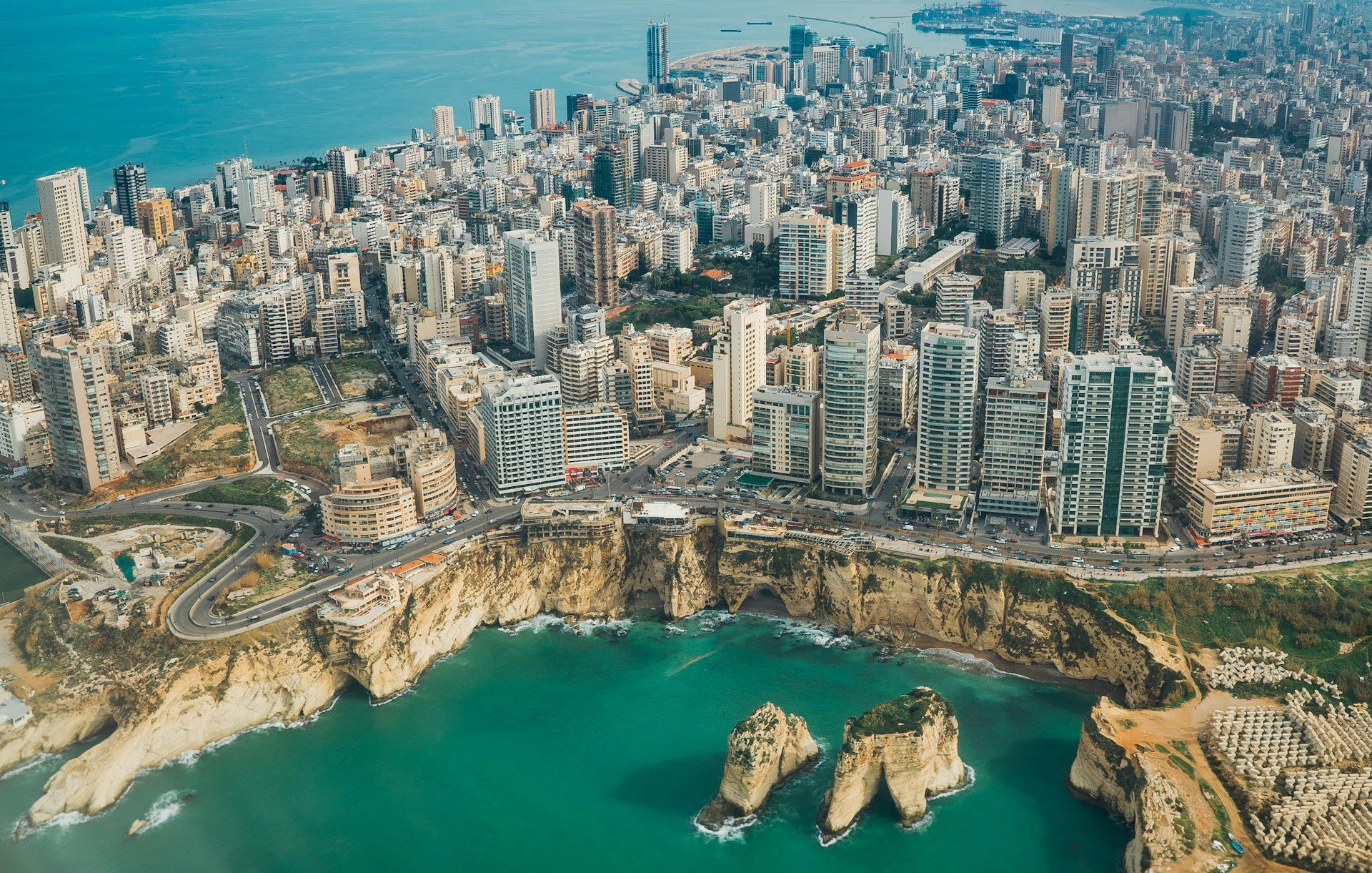
Lebanon
A country that has been rebuilt so many times it treats resilience as a personality trait. The food is among the finest in the world. The ruins at Baalbek are the largest Roman temple complex ever built. Byblos gave humanity the alphabet. And Beirut, battered and brilliant, keeps insisting on being itself against every conceivable odds. Come with current advisories in hand and open eyes.
What You're Actually Getting Into
Lebanon requires an honest conversation before anything else. The country has lived through a civil war, multiple Israeli-Hezbollah conflicts, a catastrophic port explosion in August 2020 that killed over 200 people and devastated central Beirut, one of the worst economic collapses of the modern era, and a renewed military escalation in 2024 that ended in a ceasefire in late November of that year. As of 2026, significant parts of Lebanon are welcoming visitors again — but the south near the Israeli border remains a different calculation, and the security situation can shift. Check your government's current travel advisory before you book, not just before you fly.
With that said: for travelers who do their homework and travel with appropriate awareness, Lebanon offers something that almost nowhere else in the Middle East does. The food is not merely excellent — it is the foundation of one of the world's genuinely great culinary traditions. The Roman temples at Baalbek are not just impressive ruins; they are the largest Roman temple complex ever constructed, and they rise from the Bekaa Valley floor at a scale that stops you mid-step. Byblos, occupied continuously since 7000 BCE, is where the Phoenicians developed the alphabet that most of the world's writing systems ultimately descend from. And Beirut — wounded, patched, chaotic, creative, brilliant — has a cultural energy that crises have compressed rather than extinguished.
The economic collapse that began in 2019 has transformed the country's cost structure. Lebanon now operates primarily on US dollars for any transaction above the most local level, and for visitors with hard currency, prices are a fraction of what they were when the Lebanese pound was stable. This is not an incentive to minimize what Beirut has been through. It is context for understanding why a city with this quality of restaurant, this depth of cultural life, and this architectural drama costs what a much less interesting city might cost elsewhere in the region.
Compact is the word for Lebanon geographically. The whole country is smaller than Connecticut. You can drive from the Syrian border to the Israeli border in a few hours, from the Mediterranean coast to the cedared mountains of the north in forty minutes. This compactness is both a logistical advantage — you can cover a lot of the country from Beirut on day trips — and a reason the country is so layered: every valley and hillside has been occupied, contested, built upon, and rebuilt across a span of human history that makes most European history seem recent.
Lebanon at a Glance
A History Worth Knowing
The history of Lebanon is the history of everyone who ever wanted to control the eastern Mediterranean coast, which turns out to be most of the ancient and medieval world in sequence. Byblos has been continuously inhabited since approximately 7000 BCE — not just visited, not just used seasonally, but lived in without interruption for nine thousand years, which is a claim almost no other settlement on earth can make. The Phoenicians, who emerged here around 1500 BCE, were not conquerors. They were traders, navigators, and craftspeople who changed history by doing something no other culture had managed at scale: they developed a phonetic alphabet. Twenty-two consonants, no vowels, adaptable to almost any language. The Greeks took it, added vowels, and called it the alphabet. Everything you are reading right now descends, in some traceable linguistic and visual genealogy, from marks made on clay in what is now northern Lebanon.
The empires came in the order they always came: Assyrian, Babylonian, Persian, Alexander's Greeks, who were followed by the Seleucids and then by Rome, which built its most extravagant monuments here. The temple complex at Baalbek — dedicated to Jupiter, Bacchus, and Venus — was constructed over several centuries beginning in the 1st century BCE and represents Roman religious architecture at a scale that dwarfs anything in Rome itself. The colonnade on Jupiter's temple consisted of 54 columns, each 22 meters tall, built from stone quarried nearby. Three of them still stand. Standing beneath them, looking up at stonework cut two thousand years ago at a size that would challenge modern engineering, is one of those moments of genuine human awe that you can't manufacture in any other way.
Byzantine Christianity built churches over pagan temples. Arab armies arrived in the 7th century and built mosques. The Crusaders came in 1099 — Byblos, Sidon, Tyre, and Beirut all had Crusader castles — and Saladin recaptured them. The Ottomans controlled Lebanon for four centuries until World War One, when France and Britain carved up the Middle East with lines on maps that served their interests rather than those of the people living there. France took the mandate for Lebanon and Syria and, when granting Lebanese independence in 1943, drew the borders to include the Bekaa Valley and the south — adding areas that were predominantly Muslim and Shia to a country whose political system had been designed around a Christian majority. The consequences of that border decision are still being worked out today.
The civil war from 1975 to 1990 killed an estimated 150,000 people and displaced a million more. Syrian forces occupied parts of Lebanon until 2005. Israeli forces invaded and occupied the south repeatedly. The reconstruction of central Beirut in the 1990s and 2000s produced a city that was simultaneously extraordinary and controversial — the downtown rebuilt to a standard that priced out the people it was supposedly for. The 2020 Beirut port explosion, caused by 2,750 tonnes of ammonium nitrate that had been negligently stored for years, killed 218 people, injured over 7,000, and left 300,000 homeless. It was not an accident of fate. It was the product of the specific kind of governance failure that Lebanon has been performing in slow motion for decades.
What you walk through in Lebanon today is all of this simultaneously: Phoenician port walls and Ottoman soap factories and French colonial apartment buildings and the raw concrete of post-explosion reconstruction, all on the same city block, all inhabited, all in use. The Lebanese relationship with their own history is not abstract. It is structural.
The world's oldest continuously inhabited city. Occupied without interruption for nine millennia.
The world's first widely adopted phonetic alphabet developed in the Phoenician cities of the Lebanese coast. The ancestor of most modern writing systems.
Rome builds the largest temple complex in the empire at Heliopolis (Baalbek). Jupiter's temple columns stand 22 meters tall.
Muslim Arab armies take Lebanon from Byzantium. Islam spreads; Christianity persists in the mountain communities.
Crusader castles built at Byblos, Sidon, and Tyre. Saladin recaptures most coastal cities. The Crusaders leave their architecture behind.
Lebanon gains independence from France. The National Pact establishes a confessional political system dividing power among religious communities.
Fifteen years of civil war kills 150,000 and reshapes Lebanese society irreversibly.
2,750 tonnes of ammonium nitrate explode in Beirut's port. 218 killed, 7,000+ injured, 300,000 left homeless. The city center devastated.
A November 2024 ceasefire ends the most recent military escalation. Reconstruction begins. Tourism cautiously resumes in northern and central Lebanon.
Top Destinations
Lebanon's compactness is one of its great advantages: almost everything worth seeing is within two hours of Beirut, and most of it can be done on day trips with a rental car or a shared taxi. The country divides into the coastal strip — Beirut, Byblos, Sidon, Tyre — the mountains running parallel to the coast, and the Bekaa Valley behind the mountains on the Syrian side. As of 2026, the coastal and mountain sites are generally accessible; the south near the Israeli border requires checking current advisories before any visit.
Beirut
Beirut is not a city you understand from a distance. It requires physical presence: standing at the edge of Martyrs' Square where the blast crater from 2020 is visible in the surrounding buildings; walking Mar Mikhael where galleries and bars opened in post-explosion ruins with a defiance that is either inspiring or reckless depending on your temperament; eating at a restaurant in Gemmayzeh that has hand-patched shrapnel holes in its terrace walls and a waiting list three weeks long. The corniche along the Mediterranean at sunset, walkers and runners and old men playing backgammon, the mountains rising behind the city — this is still one of the Middle East's great urban experiences, and it is cheaply had.
Baalbek
An hour and a half east of Beirut in the Bekaa Valley, Baalbek contains the most staggering Roman construction you can stand in front of anywhere on earth. Jupiter's temple platform is built on foundation stones so enormous — the largest weighing an estimated 1,650 tonnes — that no Roman-era machine could have moved them, and no satisfying explanation for how they were placed has ever been agreed upon. The Temple of Bacchus, preserved to an extraordinary degree, has more of its original stonework intact than almost any other Roman temple outside Rome. Come in the late afternoon when the light turns the limestone gold. Allow a full day.
Byblos (Jbeil)
The world's oldest continuously inhabited city is also one of Lebanon's most pleasant towns. The Crusader castle overlooks a harbor that Phoenician ships sailed from 3,000 years ago. The archaeological site layers Neolithic, Chalcolithic, Bronze Age, Phoenician, Persian, Greek, Roman, and Crusader remains in a compressed sequence that makes the depth of human habitation here physically visible. The old souk along the harbor has artisan workshops, fish restaurants, and enough texture that wandering without a plan for an afternoon is entirely justified.
Bekaa Valley
The high plateau between Lebanon's two mountain ranges has been growing grapes since before Rome arrived. The Bekaa Valley wineries — Château Ksara (Lebanon's oldest winery, with Roman-era cellars), Château Kefraya, Massaya, and a growing number of boutique producers — make wines that compete internationally and are still priced for what the local market can afford rather than for export premium. A winery tour through the valley, including lunch at one of the estate restaurants and the ruins of the Roman temple at Niha along the way, is one of Lebanon's finest days.
The Cedars of God (Arz el-Rab)
High in the mountains above the Qadisha Valley, a grove of ancient cedar trees survives as a fraction of the forests that once covered Lebanon's mountains and furnished the timber for Solomon's Temple, the Phoenician fleet, and Egyptian palaces. The oldest trees are over a thousand years old. The site is a UNESCO World Heritage designation and a national symbol so deeply embedded in Lebanese identity that it appears on the flag. In winter there is a ski resort nearby; in summer the alpine meadows around the grove are walked by anyone who needs to think clearly.
Qadisha Valley
One of the earliest Christian monastic communities in the world was established in this deep valley carved by the Qadisha River in the mountains north of the Cedars. Hermit caves, rock-cut monasteries, and cliff-hanging churches perch above a gorge whose sheer walls keep portions in perpetual shadow even in summer. The hiking trail through the valley floor — from the village of Bcharre down to Deir Mar Elisha monastery — is among the finest walks in Lebanon, quiet, dramatic, and entirely unlike anywhere else in the region.
Sidon (Saida)
An hour south of Beirut, Sidon has a sea castle built by the Crusaders on a small island connected to shore by a causeway, an old city market of Ottoman-era khan buildings, and the best traditional soap industry in Lebanon — the Sidon soap-making tradition produces olive oil soaps pressed in moulds and sold from family workshops that have operated continuously for centuries. The old city lanes are genuinely unrestored and genuinely interesting. The sea castle at the end of the causeway at dusk has a quality of light over the Mediterranean that is worth the drive.
Tyre (Sour)
Tyre was one of antiquity's greatest cities — the Phoenician capital from which Carthage was founded, the city that Alexander the Great besieged for seven months by building a causeway to its island location. The Roman ruins here are among the finest in the Middle East: a hippodrome that seated 20,000 spectators, a colonnaded avenue, and a necropolis of extraordinary sarcophagi. The old city peninsula retains its Phoenician footprint in its street plan. Check current advisories for the south before visiting.
Culture & Etiquette
Lebanon is more culturally diverse than almost any country its size, and that diversity means social norms shift considerably depending on where you are. Central Beirut and the Christian mountain villages operate on European-adjacent social norms: women dress as they please, alcohol is everywhere, mixed-sex company at restaurants and bars is entirely unremarkable. In the southern suburbs of Beirut or in Hezbollah-affiliated areas of the Bekaa, the social climate is more conservative and your behavior should adjust accordingly. This is not a generalisation — it is a genuinely accurate description of how different Lebanon's communities operate.
What is consistent across all of Lebanon is the hospitality culture, which is among the most intense in the Arab world. Being invited to eat with a Lebanese family is an experience in which your host's honor is tied to whether you leave satisfied, and "satisfied" means having eaten more than you thought possible and having been pressed to continue eating even after that. The correct response is genuine appreciation, genuine eating, and a genuine attempt to return the invitation or the kindness in whatever form is available to you.
Beirut's neighborhoods have genuinely different dress codes. In Mar Mikhael or Gemmayzeh, anything goes. At the mosques in Sidon or the Bekaa's conservative villages, cover appropriately. The range within one small country is wider than in most.
Declining food or drink repeatedly when a Lebanese host is offering it is more impolite than accepting something you didn't want. Take the coffee. Take the sweets. Take the second helping. These are not optional niceties.
"Shukran" (thank you), "marhaba" (hello), "kifak" (how are you), and "sahteen" (the toast — literally "two healths") will get you a warm reaction everywhere. Lebanese Arabic is warm and expressive and people notice the effort.
Power cuts, unreliable internet, water shortages, and bureaucratic chaos are the daily reality of Lebanese life and have been for years. Plan for them, build buffer time, and avoid expressing frustration about them to locals who have no choice but to live with them.
Lebanon's economy operates in US dollars for most meaningful transactions. Card machines exist but often don't work. ATMs are unreliable. Always have USD on your person, in small denominations. This is the single most important practical preparation for Lebanon in 2026.
Lebanon's political and sectarian divisions are live wires. Comments about Hezbollah, about specific political parties, about the civil war, or about Israeli-Lebanese relations can create genuinely difficult situations. Take your cues from the people you're with, and don't lead with these subjects.
Checkpoints, military positions, the southern border zone, and certain government facilities: do not photograph these. The Hezbollah strongholds in the southern suburbs of Beirut (Dahiyeh) are not tourist destinations and photography there is genuinely inadvisable.
The security situation in southern Lebanon near the Israeli border is different from the north and center in ways that require specific current advice rather than general principles. Check your government's travel advisory specifically for the south before any visit.
Every Lebanese person is aware of exactly what is wrong with their country and has a fully formed, sophisticated, anguished opinion about it. A visitor complaining about the power cuts or the roads adds nothing and takes something.
Beirut traffic is aggressive, lane markings are suggestions, and the concept of the right of way is fluid. As a pedestrian you are on your own. Taxis and ride-hailing apps are significantly safer than renting a car in the city. If you drive outside the city, do so with full alertness and preferably not at night.
The Creative Scene
Beirut's art, music, and cultural scene has survived everything and continues to produce extraordinary work. The galleries in Mar Mikhael, the independent music venues, the literary café culture, and the film scene are not performing resilience for tourists — they are genuine cultural production happening under genuinely difficult circumstances. The Sursock Museum, damaged in the 2020 explosion and being restored, is the anchor of the city's visual art world. Ask a local what's on this week. The answer will surprise you.
The French Connection
The French mandate left Lebanon with a dual-language culture that is simultaneously authentic and complicated. French is the second language of educated Beirutis, French baking culture is embedded in every neighborhood, and the French educational system shaped the country's intellectual elite for generations. Walking into a Beirut bakery and ordering in French is entirely normal. The ambivalence many Lebanese feel about that colonial inheritance is also entirely real.
Coffee Culture
Lebanese coffee — small, strong, cardamom-spiced Arabic coffee drunk from small cups — is served at every social visit. Turning it down is impolite. The cup is refilled when empty unless you tilt it slightly side to side to signal you've had enough. In Beirut's neighborhoods, the café culture has a distinctly French character alongside this: espresso bars, croissants, and strong opinions delivered at high volume are as much part of the social fabric as the traditional coffee ritual.
Ramadan in Lebanon
Lebanon's Christian, Muslim, Druze, and other communities mean that Ramadan is observed by a significant portion of the population but does not shut the country down the way it might in Saudi Arabia or Kuwait. Restaurants in Christian neighborhoods stay open during daylight hours. In Muslim areas, the daytime is quieter and the evenings after iftar come brilliantly alive. Lebanon's post-iftar dinner culture is one of the Arab world's most social institutions.
Food & Drink
Lebanese food is the reason this guide gives the country a 9.7 on food and feels like it might be underrating it. The cuisine is a Levantine tradition built on fresh vegetables, olive oil, yogurt, fresh herbs, legumes, and the most precise and aromatic spice combinations in the Arab world, operating at a standard of ingredient quality and preparation that produces dishes that look simple and taste extraordinary. The mezze — the spread of small plates that precedes, accompanies, or constitutes the entire meal — is one of the world's great social eating formats. Ordering mezze for a table in Beirut, with a bottle of Bekaa wine or arak arriving alongside, is one of the finer ways to spend a Lebanese evening.
The economic crisis has made Lebanon extraordinarily cheap to eat in for visitors with hard currency, while simultaneously making the food culture more intense — restaurants competing harder, home cooking more celebrated, the Lebanese obsession with food finding new expression in a city that uses dinner as one of its primary responses to difficulty.
The Mezze
The spread: hummus (the Lebanese version is lighter and more lemony than anywhere else), mutabal (roasted aubergine with tahini), labneh (strained yogurt with olive oil), fattoush (bread salad with sumac), tabbouleh (the Lebanese version is mostly herb, not mostly bulgur — this matters), kibbeh (spiced minced lamb in a bulgur crust), warak dawali (stuffed vine leaves), and whatever the kitchen decided to make today. This is not a starter. This is a philosophy of eating.
Mixed Grill & Kafta
Kafta — minced lamb mixed with parsley and spices, formed around a skewer and grilled over charcoal — is the Lebanese street food that other cuisines have borrowed and never quite replicated. The full mixed grill at a proper Lebanese restaurant: kafta, lamb chops, chicken thighs, shish taouk (marinated chicken), served over flatbread with onion and parsley, is one of those meals where you stop talking and just focus. The village restaurants in the mountains above Beirut make the best versions.
Manakish & Breakfast
Manakish — flatbread topped with za'atar and olive oil (or cheese, or minced meat) and baked in a wood-fired oven — is the Lebanese breakfast that is also acceptable at lunch, also acceptable as a midnight snack, and always correct when bought from a street bakery at 7am and eaten walking. The za'atar version, with its thyme-and-sumac spice blend glistening with olive oil on fresh dough, is the standard. The Beirut bakeries open before dawn and the queue forms early.
Seafood
The Mediterranean provides. Fish grilled whole with lemon and fresh herbs at a waterfront restaurant in Byblos or Sidon, with a plate of mezze and a glass of cold white wine from the Bekaa — this is the meal that coastal Lebanon has been serving for three thousand years and hasn't seen any need to improve. The catch comes in the morning. The restaurant serves it at lunch. The freshness is the preparation.
Sweets
Lebanese pastry culture is extraordinary and must be engaged with seriously. Knafeh (warm shredded pastry over soft cheese, soaked in rose water syrup, topped with pistachios), baklawa (the Lebanese version uses less syrup and more nut than the Turkish), maamoul (shortbread cookies filled with dates, pistachios, or walnuts and pressed in carved wooden moulds), and halawet el jibn (sweet cheese rolls filled with cream) are the main events. The pastry shops in Tripoli and Sidon make the finest versions in the country.
Wine & Arak
Lebanese wine has been produced since the Phoenicians and the Bekaa Valley produces internationally competitive bottles that cost a fraction of European equivalents in-country. The whites from Château Musar and Domaine des Tourelles are worth specifically seeking out. Arak — the anise spirit of the Levant — is the more traditional Lebanese drink: poured into a glass, water added (it turns milky white — this is correct), ice added, drunk alongside mezze over several hours. The Lebanese version is considered among the finest in the region. Don't rush it.
When to Go
April through June and September through November are the consensus windows: the Mediterranean climate is at its most pleasant, the mountains are accessible, the Bekaa vineyards are either in blossom or harvest, and Beirut's outdoor life — the corniche, the rooftop bars, the terrace restaurants — operates at full intensity without summer's heat. July and August fill with the Lebanese diaspora returning from the Gulf and Europe, which is culturally interesting but logistically demanding: prices rise, restaurants are packed, and the city operates at a social intensity that can exhaust visitors who aren't prepared for it.
Spring
Apr – JunWildflowers in the mountains, the Bekaa beginning to green, Beirut's terrace culture at its most pleasant. The light in May is the best Mediterranean light of the year. Accommodation is available and the city isn't overcrowded.
Autumn
Sep – NovHarvest season in the Bekaa — the vineyards at their most photogenic, estate restaurants at their most celebratory. October is the single best month: warm enough for the coast, cool enough for the mountains, and the summer crowds gone. The light on Baalbek's stones in October afternoon sun is extraordinary.
Winter
Dec – MarBeirut stays mild and operational. The mountains above 1,500 meters receive snow and the Cedars ski resort operates. The combination of skiing in the morning and swimming in the Mediterranean in the afternoon — a genuine possibility in Lebanon on a clear winter day — is one of those travel facts that sounds invented.
Peak Summer
Jul – AugHot, crowded, and expensive by Lebanon's current standards. The Lebanese diaspora returns and the city operates at maximum social intensity. The Baalbek International Festival (historically held in July–August) is extraordinary if it runs, but everything around it requires booking months ahead and comes at a premium.
Trip Planning
Five to seven days is the right amount of time for a focused Lebanon trip. The country is compact enough that you can cover Beirut, Baalbek, Byblos, Sidon, and a Bekaa winery in that window without feeling rushed. Ten days opens up the Qadisha Valley, the Cedars, Tripoli, and enough time in Beirut to go beyond the highlights and into the actual city. Given the security context, flexibility in your plans is more important here than in most destinations — a situation can change and a day you'd planned for the south might need to redirect to the north. Plan with that adaptability built in.
Beirut
Day one: arrive, walk the corniche at sunset, eat mezze in Gemmayzeh or Mar Mikhael. Day two: National Museum in the morning (essential), Sursock Museum if open, the downtown area around Martyrs' Square to see the blast zone context, and evening in Hamra or Badaro.
Baalbek
Day trip east through the mountains to the Bekaa Valley. Full morning and afternoon at the temple complex — arrive before 10am for the best light and before tour groups. Stop at Château Ksara winery on the return for a cellar tour and tasting. Back to Beirut for dinner.
Byblos
Drive north along the coast (an hour from Beirut). Morning at the archaeological site and Crusader castle. Lunch at a harbor fish restaurant. Afternoon wandering the old souk. Return to Beirut via Jounieh for the cable car view over the bay at sunset if the timing works.
Sidon + Departure
Drive south to Sidon for the sea castle and old city soap workshops. Lunch in the old souk. Return to Beirut for afternoon, final walk on the corniche, dinner in Mar Mikhael — the neighbourhood that rebuilt itself most visibly after 2020, with the blast walls still showing through the new paintwork.
Beirut
Three days gives Beirut space to reveal itself beyond the highlights. The Sursock neighbourhood, the Hamra intellectual café culture, the Saturday morning organic market at Horsh Beirut, and enough evenings to work through the restaurant scene properly. The American University of Beirut campus for an afternoon — the view over the Mediterranean from the campus bluff is one of the city's better-kept sights.
Baalbek + Bekaa Valley
One full day at Baalbek, including the ruins at Aanjar (Umayyad-era ruins from the 8th century, usually empty of tourists, genuinely interesting) nearby. Second day at Bekaa wineries: Massaya or Kefraya for a full estate lunch and tasting. The Niha Roman temple as an afternoon add-on.
North: Byblos + Tripoli
Byblos for the morning. Continue north to Tripoli — Lebanon's second city, more conservative than Beirut, home to the finest pastry shops and the best old souk in the country. The Mamluk-era Khan el-Saboun (soap market) and Khan el-Khayatin (tailors' market) are among the best-preserved medieval commercial spaces in the Middle East. Overnight in Byblos or Beirut.
Beirut in Depth
Four days if you're genuinely interested in the city's cultural life: gallery openings, live music, the Beirut Art Center (reopened post-blast), the Palestinian refugee camp museum at Shatila (requires sensitivity and preparation), the post-explosion Bourj Hammoud Armenian neighborhood. Beirut rewards genuine curiosity and punishes surface-level itinerary-ticking.
Bekaa Valley Circuit
Three days in the Bekaa: Baalbek over two days (the second day for the museum inside the site and the surrounding village), winery circuit on the third day, overnight at a Bekaa guesthouse to experience the valley in the morning light when the mountains on both sides are visible and the air has a clarity that the coast doesn't.
North: Tripoli + Cedars + Qadisha
Tripoli for the souk and pastry shops. Drive to Bcharre for the Qadisha Valley viewpoint and the start of the gorge hike. Overnight at a mountain guesthouse. Second day for the Cedars forest and the hike around the grove. Third day for the Qadisha gorge trail to Deir Mar Elisha — three hours, entirely worth it.
South: Sidon + Tyre (if advisories permit)
Sidon for the sea castle and old city. Tyre for the Roman hippodrome and necropolis if current advisories allow travel to the south. Return to Beirut for departure. Final dinner in the city. Manakish from the bakery on the walk to the taxi. This is the correct last meal.
Check Advisories First
This is not a standard travel advisory disclaimer. Lebanon's security situation is genuinely dynamic. Check your government's current advisory before booking, check again before flying, and monitor updates during your trip. The situation in the south specifically requires real-time guidance rather than historical generalisations.
Emergency resources →USD Cash — Non-Negotiable
Lebanon's economy runs on US dollars. Bring more USD cash than you think you need, in small denominations (ones, fives, tens). ATMs are unreliable, card machines often fail, and many transactions — taxis, small restaurants, market stalls — will require cash. This is the most important practical preparation for a Lebanon trip in 2026.
Connectivity
Lebanese mobile networks (Alfa and Touch) provide reasonable 4G coverage in Beirut and major cities. Rural mountain areas are patchier. A local SIM at the airport is cheap and recommended. Internet in guesthouses and hotels is present but power cuts affect reliability — a data SIM is your backup.
Get Lebanon eSIM →Power & Cuts
Lebanon has chronic power shortages. The national grid provides electricity for a limited number of hours per day — how many depends on the area and the political situation. Most hotels and guesthouses have generator backup. Bring a power bank. Budget properties may have limited generator hours.
Travel Insurance
Comprehensive travel insurance including medical cover and emergency evacuation is essential for Lebanon. Read the policy carefully — some policies exclude countries with active travel advisories or conflict zones. Specialist insurers covering high-risk destinations exist and are worth the additional cost.
Healthcare
Lebanon has excellent private hospitals — the American University of Beirut Medical Center and the Hotel Dieu de France are among the finest in the Middle East. The public health system is less reliable. Private hospitals expect payment (or insurance proof) upfront. Travel insurance with medical cover is not optional.
Transport in Lebanon
Lebanon has no functioning public transport system of any meaningful scope — no metro, no reliable intercity buses, no trains. Getting around is by private car, by service taxi (shared taxis that run fixed routes), or by hired taxi or ride-hailing app. The compactness of the country makes this manageable: Beirut to Baalbek is 90 minutes, Beirut to Byblos is 45 minutes, Beirut to Sidon is 45 minutes. Day trips from the capital cover most of what visitors want to see.
In Beirut itself, ride-hailing apps (Uber works, as does the local Allo Taxi) are the most reliable and safest option. Driving in Beirut is not recommended for visitors unfamiliar with the city's aggressive traffic culture.
Uber & Allo Taxi
$3–15/trip within BeirutUber operates in Beirut and is generally reliable. Allo Taxi is the main local app alternative. Both are significantly safer and more predictable than hailing street taxis. Prices are in USD and the fixed rate before confirmation eliminates negotiation entirely.
Service Taxi (Shared)
$0.50–3 per rideThe service (pronounced "ser-VEES") is a shared taxi that runs fixed routes through the city and between cities, takes multiple passengers going the same direction, and costs a fraction of a private taxi. You flag one down and state your destination — the driver will tell you if they're going that way. The most economical and most local way to move around Lebanon.
Rental Car
$35–70/dayRecommended for day trips outside Beirut where flexibility matters — the Bekaa Valley circuit, the northern mountain route, the coastal drive. Avoid driving in Beirut city center unless you're very comfortable with aggressive urban driving. Roads outside the city are generally good; the mountain roads require alertness on curves.
Intercity Minibus
$1–5/routeMinibuses leave from the Charles Helou station in Beirut toward northern destinations and from Cola intersection toward the south. Cheap, functional, and best suited for travelers with flexible timing and some Arabic to navigate the informal schedule. The Cola intersection pickup for southern routes is a Beirut institution worth experiencing once.
Private Day Trip
$60–120/day with driverHiring a private driver for a full-day trip to Baalbek, the Qadisha Valley, or the Bekaa wineries is excellent value by any standard. Your hotel or guesthouse can arrange a reliable driver. The advantage over a rental car is local knowledge and the ability to navigate the occasional checkpoint or changed road situation without the cognitive load of driving.
Beirut Airport
$15–25 to city centerRafic Hariri International Airport is about 9km from downtown Beirut. Official airport taxis operate at fixed zone rates. Uber works from the airport. Avoid unofficial taxi touts inside the arrivals hall — set the price before getting in or use an app. The drive to the city takes 20–40 minutes depending on traffic.
Jounieh Cable Car
~$10 returnThe teleferique from Jounieh, 20km north of Beirut, runs up the cliff face to the hilltop shrine of Our Lady of Lebanon at Harissa — a massive bronze Virgin Mary statue with views over Jounieh Bay, Beirut, and on clear days, Cyprus. It operates in the afternoon and evening and is worth combining with a Byblos day trip.
Ferries
SeasonalSeasonal ferry services operate between Beirut and Cyprus (Larnaca) in summer, providing a scenic alternative entry or exit point for travelers combining Lebanon with Cyprus or continuing to Greece. Check current schedules at the port authority or through your guesthouse as these vary significantly by season and year.
Accommodation in Lebanon
Lebanon's accommodation landscape has been reshaped by the economic crisis and the 2020 explosion. Many international hotels closed or downgraded. The boutique hotel and guesthouse scene, on the other hand, has become more interesting: renovated Ottoman houses, restored French colonial apartments, and the creative energy of owners who decided to stay and make something excellent from difficult circumstances. Staying in a neighborhood guesthouse in Mar Mikhael or Gemmayze puts you inside the social fabric of the city rather than adjacent to it.
Beirut Boutique Hotels
$60–200/nightThe boutique hotel scene in neighborhoods like Mar Mikhael, Gemmayze, and Hamra has produced some genuinely excellent stays in converted Ottoman and French colonial buildings. The Albergo in Achrafieh — a restored 1930s building with a rooftop pool and art deco detail — is the benchmark at the high end. Many excellent mid-range options exist in the $60–100 range that would cost twice as much in Amman or Istanbul.
Mountain Guesthouses
$50–120/nightThe Lebanese mountain villages — particularly around the Chouf, Bcharre, and the Qadisha Valley — have a network of restored stone guesthouses that provide the best base for anyone wanting to explore the interior. Stone-built, cool in summer, often family-run, with breakfasts that involve bread from the village oven and olive oil from the property's trees.
Coastal Hotels (Byblos, Sidon)
$80–180/nightByblos has several good options with direct sea access, including the Byblos Sur Mer which sits directly above the ancient harbor. Sidon's old city has a few atmospheric guesthouses within walking distance of the sea castle. Coastal stays allow early morning access to sites before day-trippers from Beirut arrive.
Bekaa Valley Stays
$40–100/nightSeveral Bekaa wineries offer accommodation, and a few Baalbek-area guesthouses place you inside the experience rather than day-tripping to it. Waking in the Bekaa at dawn, with the Anti-Lebanon mountains pink on the Syrian side and the Lebanon range behind you, and Baalbek's columns a ten-minute drive away, is the version of the trip that most visitors miss by always returning to Beirut.
Budget Planning
The economic collapse that began in 2019 has made Lebanon extraordinarily affordable for visitors with hard currency, and it is important to understand this in context. The Lebanese pound has lost over 95% of its value against the dollar. This is not an opportunity to celebrate — it is the product of a financial crisis that has destroyed the savings of the Lebanese middle class and pushed millions into poverty. Spending money in Lebanon, at local businesses, at family restaurants, at artisan workshops, is a genuine contribution to people who need it. Spend generously. Tip well. Buy the crafts.
- Guesthouse or budget hotel
- Manakish and street food for meals
- Service taxis for transport
- Free corniche, markets, neighborhoods
- Local restaurants for one sit-down meal
- Boutique guesthouse or mid-range hotel
- Restaurant dining twice daily
- Rental car or hired driver for day trips
- Baalbek, Byblos, Bekaa winery visits
- Lebanese wine with dinner
- Boutique hotel (Albergo tier)
- Dining at top Beirut restaurants
- Private driver for all excursions
- Bekaa estate overnight stays
- Full tasting menus with wine pairings
Quick Reference Prices
Visa & Entry
Citizens of many countries — including the US, UK, EU member states, Australia, Canada, and many others — can obtain a one-month tourist visa on arrival at Beirut Rafic Hariri International Airport free of charge or for a small fee. The Lebanese General Security website has the current list of nationalities and conditions, which change periodically and should be checked before travel.
One longstanding complication: Lebanon technically does not admit travelers with Israeli passport stamps, though in practice enforcement has been inconsistent and the situation has evolved since the 2024 ceasefire. If you have Israeli stamps in your passport and plan to visit Lebanon, check the current official position at the Lebanese General Security and your government's travel advisory before making any assumptions.
Many nationalities eligible at Beirut Airport. Check the current list at General Security Lebanon (general-security.gov.lb) before travel.
Family Travel & Pets
Lebanon is a country where children are enthusiastically welcomed at restaurants, family gatherings, and in the street in a way that the Middle East broadly does well and Lebanon specifically does with a warmth that visitors with children notice within hours of arrival. Children are not managed separately from the adult social world here — they are included, fed, fussed over, and treated as natural participants in whatever is happening.
The practical challenge for families is the security context. Lebanon in 2026 is accessible for family travel in the north and center, but requires more careful current-advisory monitoring than most other destinations in this series. The infrastructure is more demanding than in neighboring Jordan or Israel — power cuts, unreliable water, variable road quality — and the complexity requires more parental cognitive load than destinations with more developed tourist infrastructure. Families who are comfortable with adventure travel will find Lebanon extraordinary. Families expecting resort-standard convenience should probably wait until the infrastructure stabilizes further.
Baalbek
The scale of the Roman temples produces genuine awe in children of any age old enough to understand large things. The foundation megaliths — stones so large that their movement by any ancient technology remains unexplained — are the kind of mystery that engages children who've exhausted standard historical facts. The site is well-maintained and has enough open space to keep younger children from feeling trapped.
Byblos Sea Castle
The Crusader castle at Byblos, sitting on a promontory above the Mediterranean harbor, is the physical instantiation of every castle a child has ever drawn. Accessible, dramatic, and surrounded by a harbor where fishing boats still come and go in the morning. The combination of the castle, the archaeological site, and a fish lunch at the harbor is a natural family day.
Cedar Forest & Mountains
The Cedars grove and the surrounding mountain hiking trails work well for families with children old enough for a few hours of walking. In winter, the Cedars ski resort is suitable for families, smaller and less crowded than Alpine resorts, and priced very reasonably in current USD terms. The drive through the mountain villages is scenic enough to hold children's attention at speed.
Food for Families
Lebanese food is naturally family-friendly: the mezze format means everyone picks what they want, hummus and flatbread cover most children's food preferences, and grilled meats, fresh vegetables, and pastries leave almost nothing that a child with any appetite would decline. Lebanese restaurants keep late hours and actively welcome children at tables.
Jounieh Cable Car
The teleferique from Jounieh up the cliff face to Harissa is the kind of thing children find completely compelling: a small cable car ascending what looks like a vertical cliff, the bay opening below, the city spreading back toward Beirut, the giant bronze Madonna at the top. Combine with a Byblos day for a full and varied day for mixed ages.
Coastal Beaches
Lebanon's Mediterranean coast has swimming beaches, though many in the Beirut area are private pay-entry clubs. The public beaches further north, particularly around Batroun and the coast above Byblos, offer free access to clean water. The sea in Lebanon is warm from June through October and the coastal restaurants serve excellent fresh fish within meters of the water.
Traveling with Pets
Lebanon permits the import of pets with the appropriate documentation: an ISO-standard microchip, valid rabies vaccination, a health certificate from a licensed veterinarian issued within ten days of travel, and a health certificate from your country's official veterinary authority. Permits are processed through Lebanon's Ministry of Agriculture. Given the current economic and infrastructure situation, the import process is more administratively unpredictable than in more stable destinations and requires starting the process well in advance — at least two months before travel.
Practically: pet travel in Lebanon is not recommended for most visitors given the current context. Power cuts affect temperature control in accommodation, the security situation adds complexity to any plan, veterinary services outside Beirut are limited, and the general infrastructure challenges multiply when you add an animal to the equation. The Lebanon that makes sense as a pet travel destination is the Lebanon that existed before 2019 — that Lebanon may return, but it is not the Lebanon of 2026.
Safety in Lebanon
Lebanon's safety situation requires honest treatment rather than either blanket reassurance or blanket alarm. Following the November 2024 ceasefire, many areas of Lebanon — central Beirut, Byblos, Baalbek (accessible, though the Bekaa's wider context requires awareness), the northern coast, the mountain villages — are welcoming visitors and have been functioning with reasonable stability. The south near the Israeli border is a different situation and requires specific current guidance before any visit. The security situation can change, and monitoring your government's live advisory rather than relying on information from before your trip is not optional — it's the essential practice.
Within the areas that are operating normally, the crime rate against tourists in Lebanon is low. Lebanese hospitality culture genuinely inhibits the kind of tourist-targeting crime common in more heavily trafficked destinations. The main risks are the same ones that have always characterized Lebanon: road accidents (serious — Lebanese driving requires constant alertness as a passenger and comprehensive alertness as a driver), and the political-sectarian complexity that makes certain areas and certain conversations require more awareness than others.
Crime Against Tourists
Low in functioning tourist areas. The hospitality culture that treats guests as guests under protection of the host's honor is a genuine social norm. Petty theft exists in busy areas but violent crime against tourists is rare in the accessible regions.
Central Beirut
The central neighborhoods — Mar Mikhael, Gemmayze, Hamra, Achrafieh, Verdun — function normally in 2026 and are generally safe for visitors. The blast zone in the port area has been partially cleared and partially preserved as a memorial site.
South Lebanon
The area south of the Litani River, near the Israeli border, remains volatile following the 2024 conflict and ceasefire. Do not travel south of Sidon without specific current guidance from your government's travel advisory and, ideally, a local contact who knows the current conditions on the ground.
Sectarian Areas
Hezbollah-controlled areas including parts of South Beirut (Dahiyeh), parts of the Bekaa, and the south of the country have their own operational norms that require specific awareness. Photography is inadvisable in these areas. Your hotel or a trusted local contact can advise on current conditions.
Road Safety
Lebanon's road accident rate is significant. The combination of aggressive driving culture, poor road lighting in rural areas, and the occasional checkpoint requiring a stop makes night driving on mountain and rural roads genuinely inadvisable. Drive defensively, avoid night travel outside the city, and use a driver rather than self-driving if you're uncertain.
Healthcare
Excellent private hospitals in Beirut — the AUB Medical Center and Hotel Dieu de France are regional standards of care. Medical facilities outside Beirut are much more limited. Travel insurance with medical evacuation cover is essential, and the policy must specifically cover Lebanon given the current travel advisory status of most Western governments.
Emergency Information
Your Embassy in Beirut
Most embassies are in the Awkar and Baabda areas north and east of central Beirut.
Book Your Lebanon Trip
Everything in one place. These are services worth actually using.
Lebanon Insists on Itself
There is a word Lebanese people use about their country, usually with a rueful smile: Lubnan. Just the name, said in a particular way that contains simultaneously pride, exasperation, love, and a kind of exhausted wonder at the whole improbable enterprise of the place existing at all. A country that has survived everything it has survived, still making extraordinary food, still making art, still rebuilding its restaurants in buildings that still show the blast damage, still insisting that there is something here worth having and preserving and sharing with whoever arrives.
The correct response to that insistence is to go. To eat the mezze and drink the arak and stand in front of Baalbek's columns and walk the harbor at Byblos where the Phoenicians invented writing and understand that you are standing in the longest inhabited neighborhood in human history. Then to come back and spend your money in the restaurants and leave a tip that matters. Lebanon earns the visitor it gets. Be the right kind.