
Jordan
A rose-red city carved into a cliff two thousand years ago. A desert that glows orange at sunset and purple at night. A country that makes hospitality feel less like a cultural norm and more like a personal conviction. You came for Petra and you stayed for everything else.
What You're Actually Getting Into
The first thing you notice about Jordan, before the landmarks and before the food, is how warmly people treat you. Not in a transactional way. In the way where your taxi driver in Amman asks where you're from, discovers you've never tried knafeh, and genuinely reroutes to buy you one from the right bakery. Where Bedouin guides in Wadi Rum invite you to sit and drink tea for an hour before they try to sell you anything. Where strangers at a bus stop give you their phone number in case you get lost. The hospitality is not a performance. It's just how things work here.
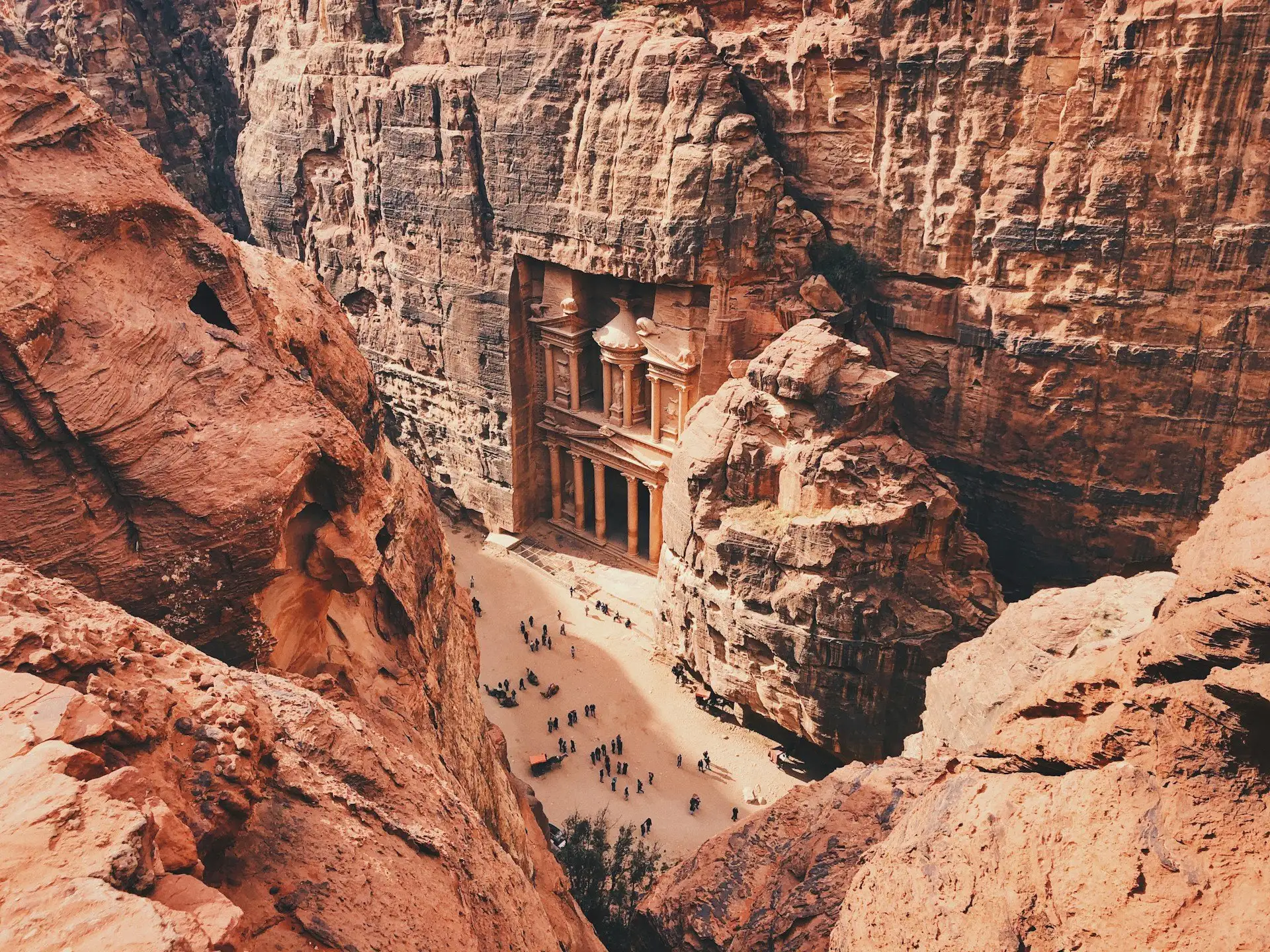
Then you add Petra. A city carved directly into rose-red sandstone cliffs by the Nabataean people two thousand years ago, accessed through a narrow canyon called the Siq where the walls press in close and the light turns everything gold, and then the canyon opens up and the Treasury is just there, exactly as large as you imagined and somehow larger. You will take the same photograph everyone takes. You will not care.
Jordan is compact enough that a well-planned ten-day trip can take in the Roman ruins of Jerash, the Dead Sea (Jordan's side, far less crowded than Israel's), Petra over two days, a night in the desert under Wadi Rum's absurd sky, and the Red Sea at Aqaba, which gives you a reef and a beach that most European tourists don't know about. That is an extraordinary amount of variety for a country roughly the size of Portugal.
The honest caveat: Jordan is not cheap by regional standards, and some tourist infrastructure (particularly transport between sites) requires planning or a rental car. The Jordan Pass is practically mandatory — it bundles your visa fee with entry to Petra and 40 other sites and saves you real money. Get it before you fly.
Jordan at a Glance
A History Worth Knowing
The land that is now Jordan has been inhabited for at least 10,000 years, which is one of those facts that sounds impressive until you actually stand in the ruins at Ain Ghazal on the outskirts of Amman and realize you're looking at plaster statues from 7000 BCE, older than the pyramids, older than writing, staring back at you from behind glass in a national museum. Jordan has been a crossroads for longer than most civilizations have existed.
What most visitors come knowing about is the Nabataeans, and rightly so. The Nabataeans were Arab traders who built one of antiquity's great commercial empires from their capital at Petra, controlling the spice and incense routes between Arabia, Egypt, and the Mediterranean. They were extraordinary engineers: Petra's water system, carved into rock to capture every drop of rain and route it through ceramic pipes across a desert city, is one of the genuine engineering marvels of the ancient world. The Romans admired the Nabataeans enough to take their territory in 106 CE and admired their city enough to keep building in it.
The Roman stamp on Jordan is everywhere once you know to look for it. Jerash, in the north, is one of the best-preserved Roman provincial cities in the world. Its colonnaded streets, hippodrome, and temples are not reconstructions. They have been standing, in various states of occupation and abandonment, since the 1st century CE. Amman itself — Roman Philadelphia — has a theater carved into a hillside that still seats thousands. You can sit in it on a Thursday evening at sunset and watch the light shift across the city below while a busker plays in the orchestra pit and pigeons roost in the upper tiers. This is the correct thing to do on your first evening in Amman.
After Rome came Byzantium, then the Arab conquest in the 7th century, the Crusaders (whose castles at Karak and Shobak still dominate their hilltops with cheerful menace), the Ottomans, and then the modern state. The Hashemite Kingdom of Jordan was established in 1946 under King Abdullah I, grandfather of the current King Abdullah II. The Hashemite dynasty traces its lineage directly to the Prophet Muhammad, which gives the monarchy a religious legitimacy that functions as genuine political ballast in a region that badly needs it. Jordan has absorbed enormous waves of Palestinian, Iraqi, and Syrian refugees across multiple generations while maintaining stability that its neighbors have not. That stability is not accidental. It is worked for, carefully, every decade.
What this means for you as a visitor: Jordan punches extraordinarily above its weight in historical sites per square kilometer, the hospitality culture has deep roots in Bedouin tradition that predates Islam, and the country's relative calm in a complicated region is something most Jordanians are quietly, justifiably proud of.
One of the world's earliest large human settlements. Plaster statues on display in the National Museum.
Arab traders build Petra and control the incense routes. An empire built on commerce and engineering.
Rome absorbs the Nabataean kingdom. Jerash flourishes as a major provincial city.
Muslim rule established. The region becomes part of the Umayyad caliphate based in Damascus.
Karak and Shobak fortresses built. Saladin recaptures both in the 1180s.
Lawrence of Arabia and the Hashemite Sharif Hussein launch the revolt against Ottoman rule from Hejaz through what is now Jordan.
The Hashemite Kingdom of Transjordan becomes fully independent. Renamed Jordan in 1949.
A constitutional monarchy, regional anchor of stability, and one of the Middle East's most welcoming destinations.
Top Destinations
Jordan is longer than it is wide, running from the Syrian border in the north to the Red Sea at Aqaba in the south, with most of the major sites strung along the King's Highway, one of the oldest continuously used roads in the world. Amman in the north, then south through Madaba, Karak, Petra, and down into Wadi Rum before arriving at Aqaba on the coast. That route, done at a reasonable pace, is the spine of a first Jordan trip.
Petra
Nothing prepares you for it. You walk the Siq — a narrow slot canyon with walls pressing in on both sides for 1.2 kilometers, the echo of hooves on stone, the light shifting from white to amber as the walls narrow — and then the canyon opens at a crack and the Treasury is there: 40 meters high, carved directly into the cliff face with a precision that defies explanation. And that's just the entrance. Petra is an entire city. The Monastery, three times larger than the Treasury and reached by 800 rock-cut steps, is the real highlight and 80% of visitors never get there. Two days minimum. Start at 6am before the tour buses arrive from Amman.
Wadi Rum
Mars. That's what it looks like, which is why NASA has used it for photo shoots and why The Martian and Lawrence of Arabia were filmed here. Red and ochre sandstone formations rising from a flat desert floor, the color shifting from burnt orange at midday to deep red at sunset to a purple that shouldn't be possible in nature as the light fades. A night in a Bedouin camp under a sky so dense with stars you can see the Milky Way as a physical thing overhead is not a cliché. It is exactly what it sounds like. Book a camp, take the jeep tour, watch the sunset from a dune. Stay two nights if you can spare them.
Amman
Amman gets underestimated because people are in a hurry to get to Petra. That's their loss. Built across seven hills, the city mixes a beautifully preserved Roman theater in its downtown with a modernist café culture in Rainbow Street and Jabal Amman, where you can eat extraordinary food and drink good wine until late, which is not the experience most people expect from a Middle Eastern capital. The old downtown — the Balad — for fresh-squeezed juice, knafeh from Habibah, and the gold souk. One full day. Two is better.
Jerash
An hour north of Amman, Jerash is one of the best-preserved Roman cities outside Italy. The colonnaded Cardo Maximus, the oval forum with its perfect symmetry, the two theaters, the hippodrome — all standing, all explorable, almost all without the crowds that make Pompeii exhausting. Visit in the morning when the light is on the columns. The Jordan Pass covers entry. Half a day is enough, a full day if you combine it with the Ajloun Castle in the hills above.
Dead Sea (Jordan Side)
The Jordanian side of the Dead Sea is quieter, less developed, and frankly more pleasant than the Israeli side. The flotation is identical — you cannot sink in water this salty regardless of which shore you're on — but here you share the beach with fewer people and the service is less rushed. The Mövenpick and Kempinski resorts have beach day passes if you're not staying overnight. The Dead Sea mud is included. Cake it on, wait for it to dry, wash it off. Your skin will be inexplicably excellent afterward.
Madaba
A small Christian town an hour south of Amman, Madaba is home to the oldest surviving map of the Holy Land: a 6th-century Byzantine mosaic covering the floor of St. George's Church, showing Jerusalem and the surrounding region in extraordinary detail. The town itself has several churches with remarkable mosaic floors, a good lunch scene, and enough to fill a leisurely half day. Combine with the Mount Nebo viewpoint 9 kilometers away, where Moses supposedly saw the Promised Land before dying and where, on a clear day, you can see Jerusalem across the haze.
Karak Castle
The Crusader fortress at Karak sits on a promontory above the town with views in every direction that explain immediately why everyone wanted it. Built in the 1140s, besieged by Saladin in the 1180s during a siege so long and so famous that both sides sent food across the walls during a wedding happening inside — that is a real historical footnote that you will want to know before you arrive. The castle itself is vast, partially underground, and largely crowd-free. Covered by the Jordan Pass. The town below for lamb mansaf at lunch.
Aqaba
Jordan's only coast: a thin sliver of Red Sea between Israel and Saudi Arabia that contains some of the best and most accessible coral reef diving in the world. The reef starts almost from the beach and the visibility on a clear day is 20 to 30 meters. Non-divers can snorkel directly off the shore. The town of Aqaba is pleasant and relaxed in a way that border towns often aren't. Stay two nights, dive or snorkel in the mornings, eat excellent grilled fish in the evenings, recover from Petra.
Culture & Etiquette
Jordan is a Muslim-majority country and the social norms flow from that, though they're applied with a warmth and flexibility that makes the adjustment easier than in more conservative neighbors. Jordanian culture is built around hospitality as a near-sacred obligation. If someone offers you tea, coffee, food, or directions, the offer is genuine. The culture of receiving guests well runs so deep that saying no to a cup of cardamom coffee from a shopkeeper can feel mildly rude even if you've had five already that morning.
Dress modestly outside of beach resorts and hotel pools. For women especially, covering shoulders and avoiding shorts in conservative areas like the downtown Balad in Amman, Madaba's churches, and any small town goes a long way. Men in shorts are generally fine in tourist areas but draw looks in traditional neighborhoods. In Wadi Rum with the Bedouin, a long scarf or light layer has a practical dimension too — the desert gets cold after sunset with shocking speed.
Tea, coffee, or a snack offered by a Jordanian host is an expression of genuine welcome. Accepting it — even briefly — honors the exchange. Rushing past a vendor's offered sample with a wave communicates disinterest in a way that doesn't land well.
"Marhaba" (hello) or "As-salamu alaykum" (peace be upon you) with a hand to the heart goes further here than anywhere a nod suffices. People notice the effort and it opens conversations.
Shoulders and knees covered for women in most towns and all religious sites. Swimwear only at hotel pools and beach resorts. Lightweight loose layers solve both the modesty and the heat problem simultaneously.
Fixed prices are fixed prices, usually marked. Everything else is negotiable, but with good humor. The bargaining is part of the transaction, not a confrontation. Start at about 60% of the asking price and meet in the middle over tea.
Especially women, especially in more conservative areas. A smile and a gesture toward your camera and a questioning expression is universal enough to work across a language gap.
Jordanians talk. If you ask for directions you may receive directions, a family history, an invitation to dinner, and a phone number before you get back on your way. Let it happen. You don't have to follow up on all of it.
Holding hands for heterosexual couples is fine. Kissing or embracing in public is not the done thing in most areas outside of upscale Amman hotels.
If your visit overlaps with Ramadan, be considerate. Most tourist restaurants stay open, but eating in the street while people are fasting is discourteous. The evenings after iftar are a genuinely special time to be out.
Remove shoes, cover heads (women), dress modestly. Many mosques in tourist areas are open to non-Muslim visitors outside prayer times. Follow any signage and guidance given by staff.
Jordan is more relaxed about alcohol than many neighboring countries — it is available in restaurants, hotels, and licensed shops in cities and tourist areas. But in smaller towns and conservative neighborhoods it's either unavailable or not publicly visible. Read the room.
Coffee Culture
Jordanian qahwa is cardamom-spiced Arabic coffee, pale green-gold, bitter, served in small handleless cups. It is offered at every shop, every guesthouse, every Bedouin camp, and every family home. The correct response is to hold out the cup to be refilled until you've had enough, then give a small shake of the wrist to indicate you're done. Not knowing this detail results in an endless stream of refills from a host who is genuinely trying to be kind.
Friday Prayer
Friday is the holy day in Jordan. Government offices, many shops, and some restaurants close for midday Friday prayers. The call to prayer — the adhan — from the mosques will be your alarm clock each morning at dawn, which is earlier than you might expect and louder than you're prepared for on day one. By day three you will barely hear it. By day seven you will miss it when you get home.
Bedouin Hospitality
In Wadi Rum and Petra, you're in Bedouin territory. The tradition of hospitality to guests — even strangers, especially strangers — is ancient and genuine. If a Bedouin guide invites you to sit and share a fire, you sit and share the fire. If tea appears, you drink it. These are not sales tactics dressed up as culture. They are culture, and they deserve to be met on their own terms.
Ramadan Travel
Visiting Jordan during Ramadan is a genuinely interesting experience if you approach it with openness. The daylight hours are quieter. The evenings after iftar — the breaking of the fast at sunset — turn cities and towns into celebratory, lit-up, food-filled events that go on until the small hours. Many locals say it's the most social month of the year. The dates shift annually: check the Islamic calendar before planning if this matters to you.
Food & Drink
Jordanian food is Levantine cooking at its most generous: enormous spreads of small dishes, freshly baked bread, shared plates that keep arriving, and a philosophy that feeding someone well is an act of love rather than a transaction. The national dish is mansaf, and if someone offers to make it for you, you eat it, you accept the compliment, and you understand that you've been welcomed in the fullest sense the country knows how.
The practical note: Amman's restaurant scene has grown into something genuinely exciting in the last decade. Rainbow Street and Jabal Amman have restaurants that compete with anything in Beirut or Istanbul. Outside the capital, quality drops but the core dishes — hummus, falafel, grilled meats, mezze spreads — are universally good because they've been made the same way for centuries and the recipe doesn't need improving.
Mansaf
Jordan's national dish and cultural centerpiece: lamb slow-cooked in fermented dried yogurt sauce called jameed, served over a mountain of fragrant rice and flatbread, topped with toasted pine nuts and almonds. It is served at weddings, funerals, celebrations, and as a welcome to honored guests. Eating it properly means using your right hand, rolling the rice into a ball, and not worrying about the yogurt sauce on your wrist. This is the correct way. Anyone who judges you for not using a fork is not a Jordanian.
Mezze Spread
Before the main course comes the mezze: hummus, mutabal (smoky aubergine with tahini), tabbouleh, fattoush, stuffed vine leaves, labneh with olive oil, olives, pickles, and more bread than you thought possible. The mezze is not the starter. In many Jordanian homes and traditional restaurants, it is the entire meal and you need to pace yourself or you will not survive to see the lamb. The quality of a restaurant's hummus tells you everything you need to know before you order anything else.
Knafeh
The dessert that Habibah bakery on downtown Amman's King Faisal Street has been perfecting since 1951. Shredded pastry soaked in sweet syrup layered over a warm soft white cheese, the whole thing finished with crushed pistachios and more syrup. It arrives on a paper plate, it costs less than a dollar, it is absolutely outstanding, and you will stand on the pavement outside the bakery eating it at 10am feeling no guilt whatsoever. This is the correct experience.
Street Food
Falafel in a sesame-seeded ka'ak (ring bread) for breakfast, bought from a cart at 7am for the equivalent of thirty cents. Shawarma rolls from street stalls that turn the spit from mid-morning onward. Corn on the cob roasted over charcoal in winter. Freshly squeezed pomegranate juice from every other corner in Amman's downtown market. Street food in Jordan is cheap, fresh, and generally better than the sit-down alternatives at the same price point.
Tea & Coffee
Sage tea — maramiyya — served in a glass with the leaves still floating is the drink of the Jordanian highlands and Dana Reserve. Mint tea appears everywhere in the south. Arabic qahwa with cardamom in Bedouin tents. Strong black tea sweet enough to make your teeth ache at every roadside rest stop between Amman and Petra. None of it costs anything to a guest. All of it is an occasion.
Alcohol in Jordan
Jordan is more relaxed about alcohol than most of its neighbors. Amman has wine bars, craft beer pubs, and cocktail spots that would hold their own in London. The local Carakale craft brewery produces genuinely excellent beer and is proudly Jordanian. Arak — the anise spirit of the Levant — with water and ice alongside mezze is the regional tradition and worth embracing. Wadi Rum and Petra camps will usually have cold beer if you ask. Religious areas and small towns: no.
When to Go
Spring is the answer, specifically March and April. Wildflowers cover the Dana Reserve and the highlands around Petra. The temperature in Wadi Rum is warm enough to sleep in a camp without misery but cool enough to hike in the afternoon. The light is the best light of the year. Autumn — October and November — runs a close second with olive and grape harvests adding to the food scene. Both windows avoid the two extremes that make Jordan difficult: the furnace heat of July and August, and the December cold that catches visitors unprepared in Petra's gorge where the wind channels straight through the Siq.
Spring
Mar – MayWildflowers in the north and highlands. Perfect hiking temperatures for Petra and Dana. The desert evenings are cool enough to be pleasant rather than cold. This is when Jordan is at its most photogenic.
Autumn
Sep – NovThe summer crowds thin. Harvest season adds to the food scene. Wadi Rum nights start requiring a layer, which makes the campfire experience more atmospheric rather than less. October is arguably the single best month.
Winter
Dec – FebAmman and the north can be cold and wet, occasionally snowy. Petra is dramatic in winter light and dramatically empty of tourists. Aqaba and the Dead Sea remain warm enough to swim. Bring layers for everything above sea level.
Summer
Jun – AugWadi Rum reaches 40°C+ and hiking is not an activity, it's a survival exercise. Petra is manageable only before 8am and after 5pm. Aqaba beach is perfect but everything else is punishing. If you must come in summer, structure your days entirely around early morning and evening activity.
Trip Planning
Ten days is the minimum to do Jordan justice. Less than a week and you'll spend your time in transit and miss the thing that makes the country work — the slow accumulation of encounters, the tea accepted at roadside stops, the extra hour at the Monastery because you stayed longer than planned. The Jordan Pass is not optional: buy it before you leave home.
Amman
Day one: arrive, walk the Roman Theater at sunset, eat knafeh at Habibah, find a restaurant on Rainbow Street. Day two: the Jordan Museum (Ain Ghazal statues), the Citadel, the souks of the Balad downtown. A half-day side trip to Jerash if you have the energy and the rental car.
Petra
Drive the King's Highway through Madaba and the Mount Nebo viewpoint to Petra. Day three: the Siq and the Treasury at dawn, then as far into the city as your legs carry you. Day four: up to the Monastery — 800 rock-cut steps, 45 minutes, entirely worth it. Start by 6:30am to beat both the heat and the crowds.
Wadi Rum
Drive south from Petra into the desert. An afternoon jeep tour with a Bedouin guide covers the main formations and gets you to the right dune for sunset. Overnight in a Bedouin camp under genuine stars. Morning tea around the fire before driving to Aqaba.
Aqaba
Snorkel the Red Sea reef in the morning. Grilled fish lunch at the waterfront. Fly home from Aqaba Airport or drive back to Amman for an international connection.
Amman + Jerash + Ajloun
Three days gives Amman room to breathe. Add a full day at Jerash — the Roman city requires a leisurely pace, not a sprint. Ajloun Castle in the forests above for the afternoon. A proper dinner in the new restaurant scene on Wakalat Street on your last Amman night.
Dead Sea + Madaba + Karak
The Dead Sea in the morning — float, mud treatment, the surreal experience of a body of water that refuses to let you sink. Madaba's mosaic map. Karak Castle in the afternoon for a Crusader fortress with views across the canyon. Overnight in Karak or drive on to Dana.
Dana Biosphere Reserve
The most undervisited stop on this list and one of the best. Two days to hike the Wadi Dana trail down through changing ecosystems from pine forest to desert canyon. The RSCN guesthouse at the village rim. Few other tourists. Extraordinary landscape.
Petra
Three days for Petra done properly: the main trail, the Monastery, the High Place of Sacrifice, the back route to Little Petra. Petra by Night on one evening — candles lining the Siq, Bedouin music at the Treasury. Worth the 12 JD.
Wadi Rum + Aqaba
Two nights in Wadi Rum to really experience the desert: a morning hike to a sandstone arch, the jeep tour, the sunset from a high dune, and stargazing that requires no equipment beyond your eyes. Two days in Aqaba for the reef, the beach, and the recovery from having walked 25 kilometers through an ancient city.
Amman + Northern Jordan
Spend real time in Amman's gallery scene and food culture. Day trips to Umm Qais in the far north — Roman ruins above the Sea of Galilee with a view across three countries. The Umm ar-Rasas mosaics (UNESCO listed, barely visited). The Azraq Wetland Reserve in the eastern desert where Lawrence of Arabia wintered.
Dead Sea + King's Highway
Drive the King's Highway south at a genuine pace: Madaba, Mount Nebo, Wadi Mujib canyon walk (the Dead Sea's Grand Canyon, with a gorge hike through waist-deep water that is absolutely soaking and absolutely worth it), Karak, Shobak Castle, Little Petra.
Petra + Dana
Petra across four full days: every trail, every viewpoint, the back route through Wadi Muthlim. Dana Biosphere Reserve for two nights, with the full Wadi Dana canyon descent and a guided birding morning in the early spring migration corridor.
Wadi Rum + Aqaba + Desert Castles
Three nights in Wadi Rum to camp, hike, and do nothing in particular in the most beautiful desert in the Middle East. Aqaba for a PADI diving course if you're not certified already — the Red Sea reef is a genuinely good classroom. Drive the Desert Castles loop east of Amman on your final day before flying home.
Jordan Pass
Buy online before arrival at jordanpass.jo. Covers your visa fee (~40 USD), Petra entry (70–90 USD alone), and 40+ other sites. The Petra Wonderpass variant (two days at Petra) is the one most visitors should buy. It pays for itself on day one.
Buy Jordan Pass →Connectivity
Jordan has solid mobile coverage in cities and tourist areas. Coverage in remote Wadi Rum and Dana is patchy — download offline maps before you leave Aqaba or Petra. Airalo offers Jordan eSIM plans from around $8 for 7 days.
Get Jordan eSIM →Power & Plugs
Jordan uses a mix of Type B, D, F, G, and J sockets across different properties — the legacy of different eras of construction. A universal adapter is strongly recommended. 230V. Most hotels have standard European or UK sockets.
Language
Arabic is the language. English is widely spoken in Amman, Petra, and tourist areas — most guides, hotel staff, and restaurant workers in tourist zones communicate easily in English. In small towns and local markets, a phrasebook app earns significant goodwill.
Travel Insurance
Comprehensive travel insurance including medical cover is strongly recommended. Medical facilities in Amman are good; outside the capital, options are limited. Wadi Rum is remote. Hiking accidents happen. Be covered.
Health
Drink bottled or filtered water. Food from established restaurants and market vendors is generally safe. The sun in the Wadi Rum and Petra is genuinely dangerous: SPF 50, a hat, and significantly more water than you think you need are non-negotiable.
Transport in Jordan
Jordan's public transport network is functional within Amman and along the main Amman–Aqaba highway, but between most tourist sites it is genuinely limited. The honest advice: rent a car for anything off the main bus routes. The country is compact enough that a week's rental covers everything, the roads are in excellent condition, and driving between Petra and Wadi Rum through desert landscape you can pull over and photograph whenever you want is a significantly better experience than a minibus.
If you're not renting, private taxis and organized tours between sites are the fallback. They're more expensive than self-driving but more flexible than waiting for infrequent buses.
Car Rental
25–60 JD/dayThe best option for flexibility. International driving permit technically required alongside your license. All major companies at Queen Alia Airport. Book in advance for spring. A small 4WD handles everything except deep desert driving.
JETT Bus
8–12 JD/routeJETT operates comfortable coaches between Amman, Petra, and Aqaba. Reliable, air-conditioned, and much cheaper than a taxi. Departs from the JETT station in Amman, not the main bus station. Book tickets in advance for Petra routes.
Taxi & Uber
Meter + negotiatedCareem (Uber's regional equivalent) works well in Amman and is generally more reliable than negotiated taxis. Outside Amman, agree the price before getting in. Most drivers are honest but meters are not always used.
Minibus (Servis)
0.5–2 JD/tripThe local shared minibus network covers routes that JETT doesn't. Cheap and genuine, but schedules are loose and routes can be confusing. Good for getting between Amman's neighborhoods and short regional hops.
Wadi Rum Jeep Tours
25–60 JD/half or full dayThe only real way to experience Wadi Rum beyond the visitor center. Book through your camp — they all have guides and jeeps. Half-day covers the main formations. Full day gets you to the remote southern areas. Sunset tours specifically are worth the premium.
Horse & Donkey at Petra
5–20 JDHorses cover the first stretch from the entrance to the Siq. Donkeys go up to the Monastery — expect persistent but good-humored pressure to take one. You don't have to. Walking the Monastery steps is genuinely better. The horse rides are a proper part of the Petra experience and worth the money once.
Domestic Flights
40–80 JDRoyal Jordanian operates Amman to Aqaba flights that take 45 minutes versus a 4-hour drive. Useful at the end of a trip if you're flying home from Aqaba. Otherwise the drive down is scenic enough to justify doing it once.
Ferry to Egypt
35–70 JDThe fast and slow ferries from Aqaba to Nuweiba in Egypt's Sinai are a legitimate regional travel option if you're continuing to Cairo or Sinai. The fast ferry takes one hour. The slow one takes anything from three to eight, depending on the day's mood.
Accommodation in Jordan
Jordan's accommodation ranges from Bedouin camps sleeping under actual stars in Wadi Rum to five-star resorts floating at the Dead Sea to historic guesthouses inside Petra village. Matching where you sleep to the experience you're trying to have matters here more than in most countries. A night in a Wadi Rum camp with no electricity, a campfire, and the Milky Way overhead is not a sacrifice. It's the whole point.
Wadi Rum Bedouin Camps
40–120 JD/nightFrom basic Bedouin tents with mattresses on the sand to "luxury" bubble tents with transparent domes for stargazing. The mid-range camps run by Bedouin families are the sweet spot: genuine hospitality, good food over the fire, and a sky you will not forget. Book in advance for spring.
Boutique Hotels (Amman)
70–200 JD/nightAmman's boutique hotel scene in Jabal Amman and Jabal el-Weibdeh has grown into something genuinely excellent. Restored 1940s villas with proper kitchens, rooftop terraces, and staff who actually know the city. The Four Rooms and Amman Pasha are consistently recommended by people who actually live there.
Petra Guesthouses
25–80 JD/nightStay in Wadi Musa (the town above Petra) rather than the large resort hotels. The family-run guesthouses have better food, better prices, and owners who will tell you which trails to take at what time to avoid the crowds. The Mövenpick at the entrance is convenient but characterless.
Dead Sea Resorts
120–350 JD/nightThe Dead Sea resorts — Mövenpick, Kempinski, Marriott — are built around the beach access and include floating pools, thermal treatments, and spa facilities. Expensive but the day pass option (around 50 JD) lets you access the beach and facilities without an overnight stay.
Budget Planning
Jordan is not a cheap destination once you factor in the cost of getting to the major sites. The Jordan Pass saves you real money on entry fees — Petra alone costs 50 JD for one day without it — but food, transport, and accommodation add up quickly. The upside: what you're spending money on is generally extraordinary, and the Jordanian Dinar is stable and easy to budget against. One dinar is worth approximately 1.40 USD, and most tourist prices are quoted in either.
- Budget guesthouses and basic camps
- Street food, market stalls, local restaurants
- JETT buses and shared taxis
- Jordan Pass covers major site fees
- Self-guided Petra and Wadi Rum
- Mid-range hotels or quality Bedouin camps
- Restaurant dining twice daily
- Rental car for flexibility
- Guided tours at major sites
- Activities: canyoning, diving, horse rides
- Boutique hotels and luxury desert camps
- Full dining with wine
- Private guides for historical sites
- Dead Sea resort day or overnight
- Helicopter or light aircraft views of Petra
Quick Reference Prices
Visa & Entry
Most nationalities can obtain a visa on arrival at Queen Alia International Airport in Amman, at Aqaba Airport, and at the major land and sea borders. The visa costs around 40 JD for most Western passport holders. If you buy the Jordan Pass before arrival, the visa fee is included — this is the primary reason the Jordan Pass pays for itself so quickly.
Entry from Israel is possible at two land border crossings: the King Hussein/Allenby Bridge (between the West Bank and Jordan) and the Sheikh Hussein Bridge in the north. The Wadi Araba crossing near Aqaba/Eilat is the most straightforward for tourists. Note that stamps from some Arab countries in your passport may cause complications at the Israeli side; this affects the Jordan-to-Israel crossing more than the reverse.
Most Western passport holders qualify. Cost ~40 JD, waived with the Jordan Pass. Check the full list at the Jordanian Ministry of Interior before booking.
Family Travel & Pets
Jordan is an exceptional family destination for children old enough to walk Petra and old enough to sit still in a jeep for a desert sunset. Jordanians adore children — genuinely, visibly, with the kind of spontaneous warmth that makes children feel they've arrived somewhere that specifically wanted them. You will be stopped in the street. Your children will be fed. This is simply how it is.
The practical challenge is Petra's scale: 10 to 20 kilometers of walking on uneven ground in potentially hot temperatures is a genuine physical demand for young children. Donkeys and horses are available for parts of the route. The Petra by Night experience works well for all ages. For very young children, two days at Petra is ambitious — consider one full day and an activity-lighter second day.
Wadi Rum Jeep Safari
A half-day jeep tour through the desert formations is universally successful with children of any age old enough to enjoy movement and color. The Bedouin guides are warm and patient with kids. The camel rides at the camps are the highlight for most children under twelve and the source of much photographic evidence of good decisions.
Dead Sea Float
Children find the Dead Sea salt buoyancy immediately hilarious. The inability to sink, the salt crust on the shore that looks like snow, the way everything floats slightly too high — it reads as magic to younger visitors. Keep eyes and mouths well clear of the water. Bring water shoes for the salt shore.
Jerash
Jerash works better for children than most ancient ruin sites because there's enough space to run around, the hippodrome still has chariot racing re-enactments on some days, and the Roman soldiers in costume near the entrance are either excellent entertainment or mildly alarming depending on the child's temperament.
Aqaba Snorkeling
The Red Sea reef at Aqaba's South Beach starts in shallow water that's accessible for children who can swim. Mask and snorkel hire is cheap and available everywhere. The coral and fish are genuine and extraordinary and visible without any special equipment or experience. This is one of the best beginner snorkel spots in the world.
Dana & Nature
The Dana Biosphere Reserve has walking trails calibrated for different fitness levels, wildlife including ibex, wolves, and over 200 bird species, and the kind of dramatic landscape change (forest to desert in a single valley) that captures children's attention more reliably than museums. The RSCN guesthouse can arrange guided family walks.
Food for Families
Jordanian food is naturally child-friendly: fresh bread, hummus, rice dishes, grilled meats, fresh juice. Mansaf is a genuinely fun communal eating experience for older children who don't mind eating with their hands. The absence of anything particularly challenging or unfamiliar makes Jordan one of the easier countries in the region for managing children's food preferences.
Traveling with Pets
Jordan permits the import of pets (dogs and cats) with the correct documentation. Requirements include an ISO-standard microchip, valid rabies vaccination issued at least 30 days and no more than 12 months before entry, a health certificate from an accredited veterinarian issued within 10 days of travel, and advance notification to Jordan's Ministry of Agriculture.
The process is considerably more straightforward than some regional neighbors but advance planning is essential. Contact the Jordanian Embassy in your country and Jordan's Department of Veterinary Services to confirm current requirements, which can change. Documentation should be in English or Arabic.
Practically: pet-friendly accommodation in Jordan is limited outside of Amman. Many hotels, guesthouses, and particularly Wadi Rum camps do not accept pets. Summer temperatures in the desert exceed 40°C and are genuinely dangerous for animals. If you bring a dog to Jordan, plan your activities with the heat in mind rigorously.
Safety in Jordan
Jordan is one of the safest and most politically stable countries in the Middle East, and that's not a low bar — it's a genuine statement. The major tourist areas have excellent safety records. Crime against tourists is rare and predominantly limited to petty overcharging and persistent but non-threatening vendor pressure at Petra. Violent crime against visitors is extremely uncommon. Solo travelers, including women, generally report feeling safe throughout the country.
The areas to be aware of are not tourist-facing: the borders with Syria and Iraq in the north and east carry elevated risk and are not tourist destinations. Check your government's travel advisory specifically for any planned trips near those frontiers.
Major Tourist Areas
Petra, Wadi Rum, the Dead Sea, Amman, Jerash, and Aqaba all have excellent safety records. The presence of tourist police at major sites is visible and professional. Petty scams exist but are mild by regional standards.
General Street Safety
Amman and Jordan's cities are safe to walk at night. Harassment is less common than in some regional neighbors. Women walking alone in cities may receive unwanted attention in some areas — confident, purposeful movement and modest dress minimize this significantly.
Petra Vendor Pressure
Persistent sales pressure at Petra — for horse rides, donkey rides, souvenirs, guided walks — is the main nuisance for visitors. It is not threatening. "La shukran" (no thank you) with a smile and continued walking is the complete response required.
Wadi Rum Heat
The desert is a genuine environmental hazard in summer. Dehydration and heat exhaustion are real risks. Always carry more water than you think you need, tell your camp where you're going if hiking independently, and do not hike alone in remote areas without informing someone.
Border Area Advisories
The Syrian and Iraqi borders carry elevated risk designations in most government travel advisories. These are not tourist areas and there is no reason to approach them. The east of the country beyond the Desert Castles loop is not a visitor destination.
Healthcare
Good hospitals in Amman. Medical facilities at tourist sites are limited. Petra has a first aid station. Travel insurance with medical cover and emergency evacuation is strongly recommended for hiking in remote areas.
Emergency Information
Your Embassy in Amman
Most embassies are in Amman's 4th and 5th Circle neighborhoods.
Book Your Jordan Trip
Everything in one place. These are services worth actually using.
You'll Be Back
Most people who visit Jordan come back, and the reason isn't just Petra. It's that the country gets under your skin in a specific way: the warmth of strangers who meant it, the tea accepted at a roadside stop, the morning light on sandstone cliffs when the desert is completely still. The feeling of sitting at a Bedouin fire when the temperature drops and the stars appear and someone hands you a glass of sweet tea without ceremony.
There's an Arabic word, ahlan wa sahlan, that means welcome — but the literal translation is closer to "you are among family and on level ground." That's what Jordan actually offers. Not just the sights. The ground to stand on. You'll want to come back to find it again.