
What You're Actually Getting Into
Japan is the rare country that lives up to the marketing and still manages to surprise people who thought they knew what to expect. The trains are as punctual as the reputation suggests. The cities really are that clean, and the culture of quiet public consideration, no eating on the move outside food markets, no loud phone calls on trains, queuing without being told to, is not a performance for visitors, it's simply how the country runs day to day. It's also a genuinely huge and varied country: Hokkaido's snow in the north and Okinawa's coral reefs in the south are as different from each other as Norway is from Sicily.
The travel infrastructure aimed at foreigners has expanded enormously since the post-pandemic tourism boom, and 2026 brings real, practical changes: Japan's international departure tax tripled to ¥3,000 in July, Kyoto's lodging tax jumps again in March, first-time bans on photographing geisha on Gion's private streets are now enforced with fines, and a mandatory electronic travel authorization called JESTA has been legislated but won't actually launch until 2028 at the earliest. None of this makes Japan harder to visit, but it does make "check before you go" better advice than it used to be.
The honest complications
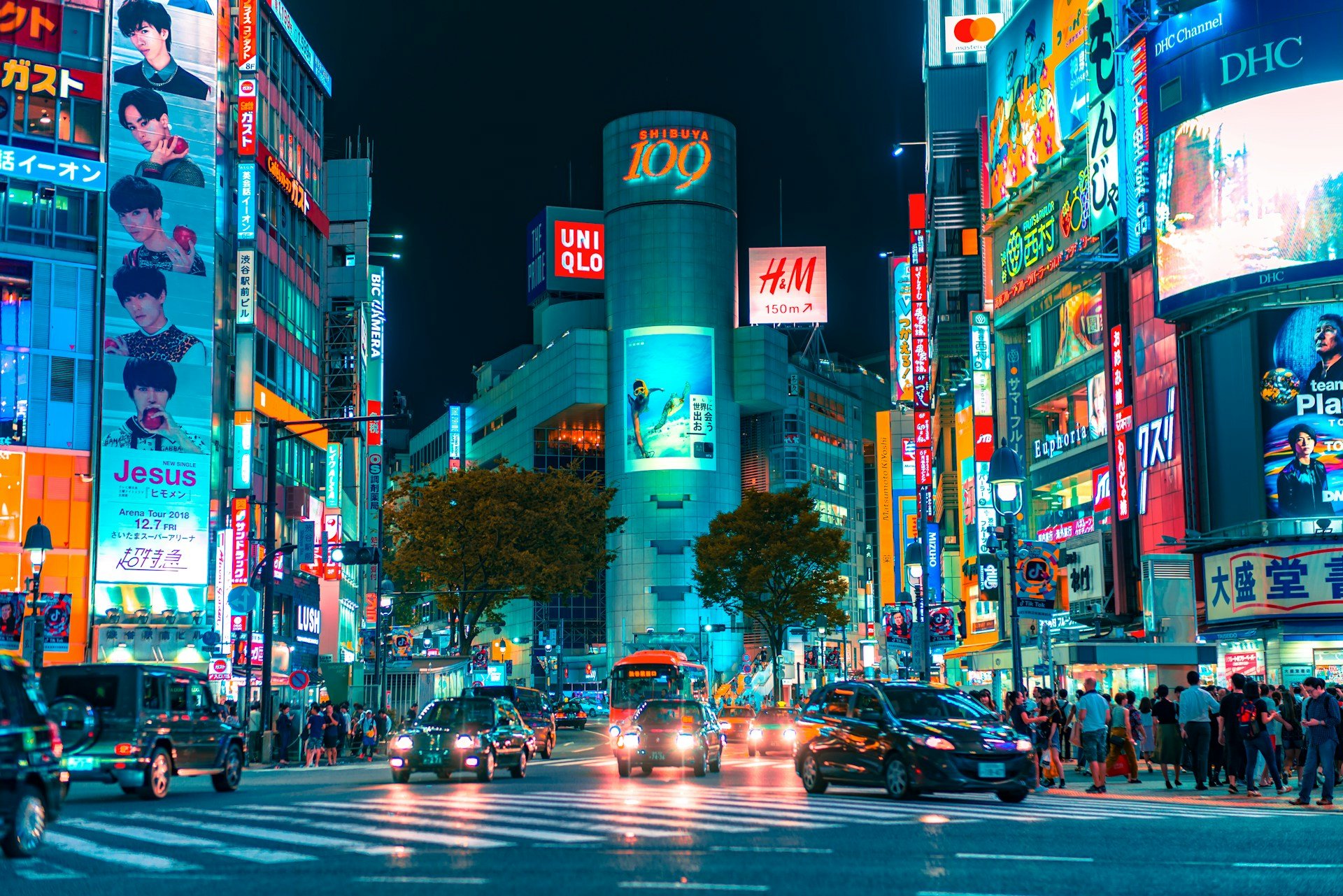
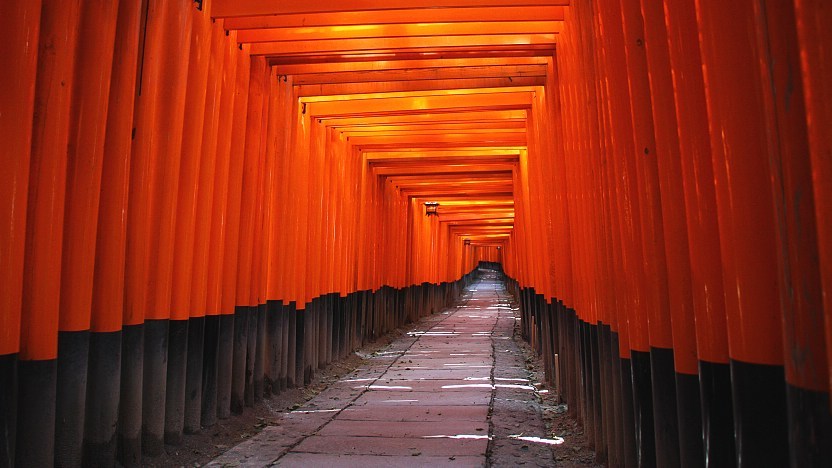
Overtourism is real in specific, avoidable spots: the Arashiyama bamboo grove and Fushimi Inari's lower gates are shoulder-to-shoulder by mid-morning, Shibuya Crossing is a photo op more than an experience most days, and Kyoto's city buses are frequently full past capacity in peak season, which is why the tourist-friendly one-day bus pass was discontinued in 2024. Cash is still more necessary than the "cashless Japan" headlines suggest, especially at small restaurants, temples and rural areas. And while the weak yen of recent years has made Japan noticeably better value than a decade ago, hotel prices in Tokyo and Kyoto have risen to reflect the demand, so "cheap Japan" is now relative rather than absolute.
A History Worth Knowing
Japan's isolation and its openness have alternated for centuries, and both left permanent marks on how the country looks and feels today. Two and a half centuries of near-total isolation under the Tokugawa shogunate preserved a level of cultural continuity, temples, festivals, craft traditions, that few countries can match. The following century and a half compressed feudal isolation, empire, catastrophic war, and a full recovery into the world's third-largest economy into a shorter span than most nations take for one of those chapters alone.
- 794-1185
The Heian period. The imperial capital moves to Heian-kyo, modern Kyoto, which remains Japan's capital for over a thousand years and its cultural capital long after that.
- 1603-1868
The Edo period. The Tokugawa shogunate enforces sakoku, near-total isolation from the outside world, while Edo (modern Tokyo) grows into one of the world's largest cities.
- 1868
The Meiji Restoration. Imperial rule is restored, isolation ends, and Japan rapidly industrializes along Western lines while the capital moves to Tokyo.
- 1945
Defeat and occupation. Atomic bombings of Hiroshima and Nagasaki end the Second World War; Allied occupation reshapes the constitution and economy.
- 1950s-1980s
The economic miracle. Japan rebuilds into the world's second-largest economy, with the bullet train (1964) and the Tokyo Olympics as its symbols.
- 2011
The Tohoku earthquake and tsunami. A magnitude-9 earthquake and the resulting tsunami devastate the northeast coast and trigger the Fukushima nuclear disaster, reshaping national disaster policy.
Read the full history: Heian Kyoto, the shoguns, and postwar Japan
Kyoto's thousand years as capital, from 794 until the Meiji Restoration moved the imperial seat to Tokyo in 1868, is why the city holds the highest concentration of UNESCO World Heritage temples and shrines of anywhere in the country. The Heian court's aesthetic sensibilities, refined, understated, deeply attuned to the seasons, still shape Japanese design and etiquette more than any later period.
The Edo period's isolation policy, sakoku, restricted foreign contact almost entirely to a single Dutch trading post in Nagasaki harbor for over 200 years. It preserved feudal social structures and traditional arts largely undisturbed by outside influence, but also left Japan technologically behind when American Commodore Matthew Perry's ships forced the country open in 1853, precipitating the Meiji Restoration fifteen years later.
The 20th century compressed imperial expansion across Asia, the Pacific War, the only wartime use of nuclear weapons in history at Hiroshima and Nagasaki, American occupation until 1952, and then one of the fastest economic recoveries any nation has achieved, into three generations. The postwar constitution renounced war and rebuilt Japan as a pacifist, trade-driven democracy, and the Shinkansen bullet train's 1964 launch, timed to the Tokyo Olympics, became the visible symbol of that recovery.
The 2011 disaster killed close to 20,000 people, mostly from the tsunami rather than the earthquake itself, and the Fukushima Daiichi nuclear meltdown that followed remains the reference point for Japan's now-extensive earthquake and tsunami preparedness infrastructure, the same warning systems and evacuation signage that make Japan one of the best-prepared countries in the world for natural disasters today.
Top Destinations
Japan divides naturally into five travel zones for a first or second trip: the capital region, the Kansai cultural triangle of Kyoto and Osaka, Hiroshima and the Inland Sea, the Japanese Alps, and everything further out. The bullet train makes the main circuit fast; the constraint is not distance but how much you try to cram into each stop.
Tokyo, the whole spectrum in one city
Tokyo is less a single city than a federation of neighborhoods that could each be their own destination: Shinjuku's neon and skyscraper observation decks, Shibuya's crossing and youth fashion, Asakusa's Senso-ji temple and old-Tokyo streets, Akihabara's electronics and anime culture, and Ginza's polished department stores and Michelin density. The Tsukiji Outer Market still runs a busy morning food scene even though the wholesale auction moved to Toyosu in 2018, and the Meiji Shrine's forested grounds a short walk from Harajuku's teenage fashion chaos is the kind of tonal whiplash that defines the city. Budget three to four days minimum.
Kyoto, a thousand years of capital
Kyoto was Japan's imperial capital for over a millennium and holds more UNESCO World Heritage temples and gardens than anywhere else in the country. It has its own complete guide on this site, covering neighborhoods, food, itineraries and the 2026 tax and etiquette changes in full.
Osaka, the food capital
Half an hour from Kyoto by train, Osaka is louder, cheaper and funnier than its neighbor, built around eating: Dotonbori's canal-side food stalls, takoyaki octopus balls, okonomiyaki savory pancakes, and a street-food culture the locals call kuidaore, eat until you drop. Osaka Castle's grounds and the Umeda Sky Building's rooftop observatory are the sightseeing anchors, but the food is the actual reason to come.
Hiroshima Peace Memorial & Miyajima
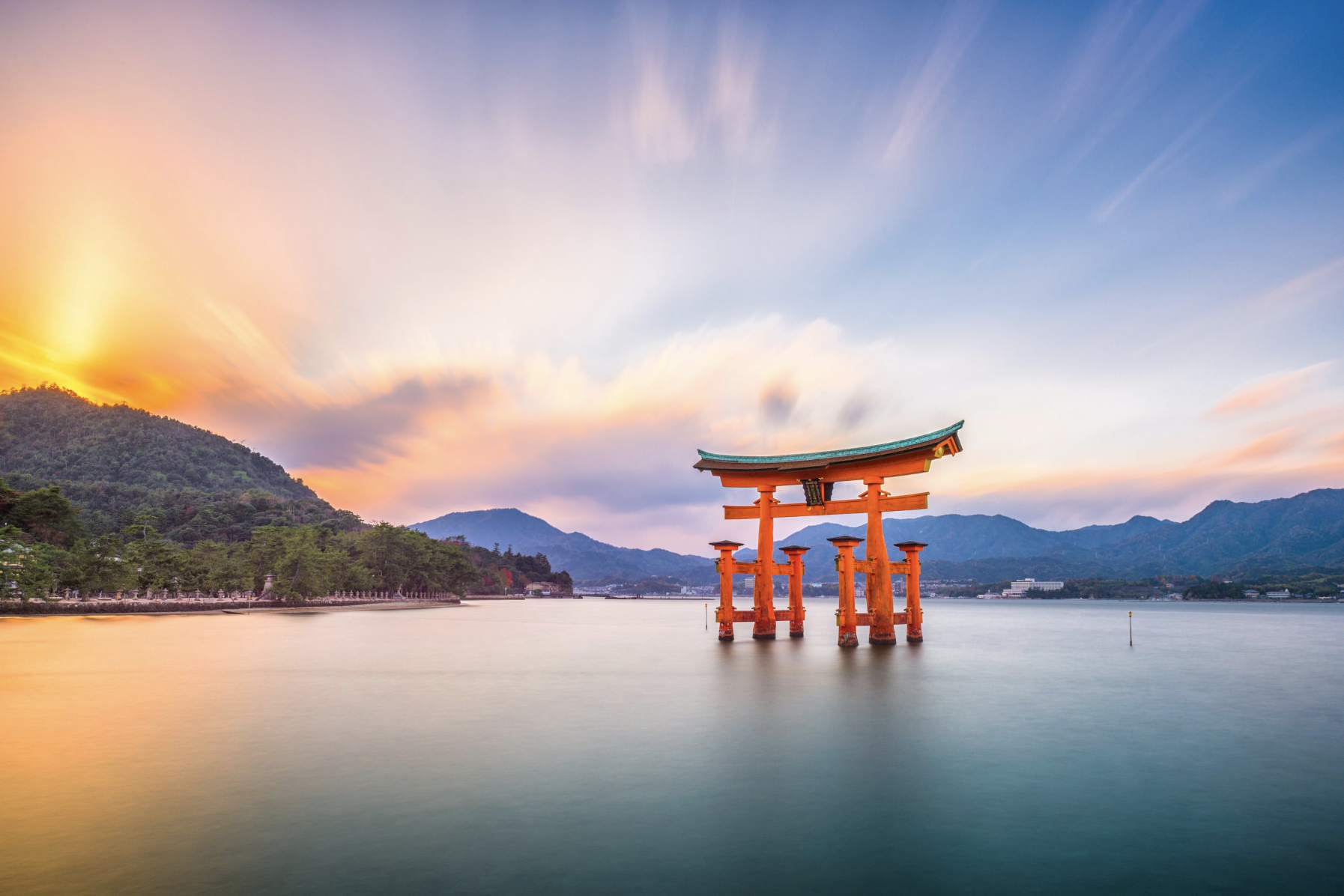
The Hiroshima Peace Memorial Park and Museum, built around the skeletal Atomic Bomb Dome, is one of the most affecting sights in Japan and handled with a clarity and lack of sensationalism that makes it appropriate for most visitors, including older children with preparation. An hour away by ferry, Miyajima island's "floating" torii gate at Itsukushima Shrine, apparently afloat at high tide, stranded on sand flats at low tide, is one of Japan's three officially designated scenic views and worth the detour on its own.
Takayama & Shirakawa-go
The Japanese Alps hold a different, mountain version of traditional Japan: Takayama's preserved Edo-era merchant streets and morning markets, and Shirakawa-go's UNESCO-listed gassho-zukuri farmhouses, thatched steep-pitched roofs built to shed heavy snow, sitting in a river valley that looks staged and isn't. Best reached from Nagoya or Kanazawa; a long day trip from Kyoto is possible but rushed.
Kanazawa, the quieter Kyoto
Kanazawa escaped WWII bombing and preserves a well-kept samurai district, geisha district and Kenroku-en, ranked among Japan's three most beautiful landscape gardens, with a fraction of Kyoto's crowds. Two and a half hours from Tokyo or Kyoto by Shinkansen.
Hokkaido
Japan's northern island: world-class powder skiing around Niseko from December to February, lavender fields in Furano in summer, and Sapporo's beer and ramen. A different country in feel from Honshu, best reached by flight rather than the long Shinkansen route.
Okinawa
A subtropical chain of islands closer to Taiwan than to Tokyo, with coral reefs, a distinct Ryukyuan culture and history separate from mainland Japan, and the best beaches in the country. Best flown to directly rather than combined with a mainland itinerary unless you have two weeks or more.
Hidden gems beyond the main circuit
The zones above cover a first or second trip well. With extra days, these reward the detour.
The Kumano Kodo
A network of UNESCO-listed pilgrimage trails through mountain forest, with rustic onsen towns along the route. Multi-day hiking, not a day trip, and one of the least crowded ways to see rural Japan.
Naoshima's art islands
A cluster of Inland Sea islands turned into an open-air contemporary art project, with Tadao Ando-designed museums built partly underground into the hillsides. Unlike anywhere else in Japan.
Uji
The birthplace of Japanese matcha culture and the setting for the final chapters of The Tale of Genji, with the Byodo-in temple, the building depicted on the ¥10 coin, on the riverbank.
Culture & Etiquette
Japanese social convention runs on consideration for the group rather than a fixed rulebook, and most visitors are given real latitude for honest mistakes. The exceptions worth knowing in advance are specific and easy to follow once you know them, and 2026 has brought a few new, enforceable rules on top of the long-standing customs.
Do
- Remove your shoes indoors. Any home, most ryokan, some restaurants and all temple interiors require shoes off; look for the genkan, the sunken entryway, and a row of slippers.
- Carry cash. Many small restaurants, temples, shrines and rural shops are still cash-only despite Japan's cashless push. Convenience store ATMs (7-Eleven's are the most reliable for foreign cards) work well.
- Queue and stand right (or left in Osaka) on escalators. Lines form without being asked, and escalator etiquette flips between Tokyo (stand left) and Osaka (stand right).
- Bow back, lightly. A slight nod is enough for a visitor; you're not expected to master the graduated bow system.
- Separate your trash meticulously. Burnable, non-burnable, recyclables and PET bottles are typically sorted differently, including at convenience stores and train stations.
Don't
- Eat while walking outside food markets. Nishiki Market in Kyoto is one of the few places it's broadly tolerated, but even there the market's own guidance asks people to step aside rather than walk and eat.
- Photograph geisha or maiko on Gion's private streets. Since 2024 this carries a ¥10,000 on-the-spot fine, enforced after years of tourists chasing and cornering performers for photos. Public streets like Hanami-koji are fine; ask before photographing individuals regardless.
- Talk loudly on trains or take calls. Phones go on silent mode; step into the vestibule between cars for a call if you must take one.
- Tip. Tipping isn't customary and can cause confusion; excellent service is simply the standard, not something paid for separately.
- Show visible tattoos at most onsen and public baths. Historically associated with organized crime, tattoos are still banned at many traditional bathhouses; tattoo-friendly onsen exist and are searchable in advance, and waterproof cover patches work at some venues.
Deeper culture: onsen etiquette, the sento, and Shinto vs. Buddhist sites
Onsen and sento etiquette. Wash and rinse thoroughly at the shower stations before entering the communal bath, which stays clean because nobody enters it soapy. Bathing is done nude, single-sex unless the onsen is specifically mixed or private, and the small hand towel is kept out of the water, typically folded on your head or set aside.
Shrines vs. temples. Shinto shrines (jinja, identifiable by the torii gate) and Buddhist temples (tera or -ji) are both common and often adjacent, reflecting Japan's long history of the two religions coexisting. At a shrine, a small bow, two claps and a bow is the standard prayer sequence at the main hall; at a temple, a single bow without clapping is more typical. Nobody expects a visitor to get this exactly right, and a respectful pause is always acceptable.
Gift-giving and business cards. If you're given a business card (meishi) or a small gift (omiyage), receive it with both hands and a small bow. This shows up more on work trips than tourist ones, but hotel and shop staff sometimes hand over receipts or change the same way.
Food & Drink
Japan's food culture rewards eating at every price point: a ¥120 rice ball from a convenience store, a ¥1,000 bowl of ramen eaten standing at a counter, and a multi-course kaiseki dinner running into the tens of thousands of yen can all be genuinely excellent, sometimes on the same day. Regional specialties are strong enough that "Japanese food" undersells how different Osaka's street food is from Kyoto's refined vegetarian temple cuisine.
Ramen ¥800-1,200
Regional styles vary enormously: Hakata's rich pork-bone tonkotsu, Sapporo's miso, Tokyo's soy-based shoyu. Order from the vending machine ticket system at most counter shops, hand the ticket to staff, no need to speak Japanese.
Sushi & Sashimi ¥100-500/piece
Conveyor-belt kaiten-zushi chains deliver excellent quality for the price; a proper sushi-ya counter meal is a different, more expensive experience worth trying at least once for the omakase, chef's choice.
Kaiseki ¥8,000-40,000+
Multi-course haute cuisine built around the season's ingredients, refined in Kyoto over centuries. Book ahead; the best kaiseki restaurants take reservations weeks in advance.
Okonomiyaki & Takoyaki ¥600-1,200
Osaka's savory cabbage pancake and octopus balls, both cooked in front of you on a griddle. Dotonbori has the highest concentration of good stalls.
Izakaya small plates ¥300-900/dish
Japan's pub food: grilled skewers (yakitori), edamame, karaage fried chicken, all meant for sharing over beer or highball. The most social, least formal way to eat out.
Convenience store food ¥120-600
Not a fallback: 7-Eleven, Lawson and FamilyMart onigiri rice balls, egg sandwiches and hot fried chicken are genuinely good and a legitimate way to eat well on a tight schedule or budget.
When to Go & Itineraries
Late March to early April (cherry blossoms) and November (autumn foliage) are Japan's two beautiful, crowded, expensive peaks; book accommodation months ahead for either. May-June and late September-October offer comparable weather with noticeably fewer crowds and lower prices. Summer is hot, humid and typhoon-prone; winter is cold but clear, and excellent for hot springs and Hokkaido skiing.
All four seasons compared, with temperatures
| Season | Verdict | Temps (Tokyo/Kyoto) | Prices & crowds |
|---|---|---|---|
| Late Mar-Apr | Best (peak) | 10-19°C | Highest prices, heaviest crowds: cherry blossoms |
| Nov | Best (peak) | 9-18°C | Second peak: autumn foliage, similar crowds |
| May-Jun & late Sep-Oct | Good value | 16-26°C | Comparable weather, noticeably fewer crowds |
| Jul-Aug | Hot & humid | 25-33°C | Typhoon season; festivals and fireworks compensate |
| Dec-Feb | Cold, clear | 1-10°C | Low season in cities; peak for Hokkaido skiing |
Kyoto runs slightly warmer and more humid than Tokyo in summer, and colder in winter due to its inland basin setting. Hokkaido is 5-10°C cooler year-round; Okinawa is 5-8°C warmer.
Itineraries
Ten to fourteen days covers Tokyo, Kyoto and Osaka with room for a day trip. A week works if you're prepared to choose between the capital and Kansai rather than seeing both properly.
- Days 1-3
Tokyo. Asakusa, Shibuya and Shinjuku, Meiji Shrine, a day trip to Nikko or a full extra day in the city.
- Days 4-6
Kyoto. Shinkansen from Tokyo (about 2h15). Fushimi Inari at dawn, Higashiyama's temples, Arashiyama, a night in Gion.
- Day 7
Osaka. Half-day trip from Kyoto (30 min by train): Dotonbori food crawl before flying home from Kansai Airport.
- Days 1-4
Tokyo extended. Add Akihabara, Ginza, a teamLab digital art museum, and the Nikko day trip.
- Days 5-8
Kyoto in full. The complete Kyoto guide's 3-day itinerary plus a day trip to Nara for the deer park and Todai-ji's giant Buddha.
- Days 9-10
Osaka. Dotonbori, Osaka Castle, Umeda Sky Building, day trip option to Kobe for beef.
- Days 11-12
Hiroshima & Miyajima. Shinkansen from Kyoto or Osaka (about 1.5h), Peace Memorial Park, ferry to Miyajima for the torii gate.
- Days 13-14
Kanazawa or Takayama. The quieter Japan: Kenroku-en garden or the Hida mountain villages, before returning to Tokyo for departure.
- Days 1-5
Tokyo region extended. Full city plus Nikko, Kamakura's coastal temples, and Hakone for Mount Fuji views and onsen.
- Days 6-10
Kyoto, Nara & Uji. The complete Kyoto circuit plus both day trips, at an unhurried pace.
- Days 11-13
Osaka & Kobe. Full food-focused stay, day trip to Himeji Castle, Japan's best-preserved original castle.
- Days 14-16
Hiroshima, Miyajima & the Inland Sea. Add Naoshima's art islands if time allows.
- Days 17-21
Japanese Alps or Hokkaido. Takayama and Shirakawa-go, or fly north to Sapporo and Niseko depending on season.
Getting there & around
Tokyo's Narita and Haneda and Osaka's Kansai are the main international gateways; Haneda and Kansai sit closer to their city centers. Domestically, the Shinkansen bullet train network is fast, punctual and the backbone of most itineraries: Tokyo to Kyoto takes about 2 hours 15 minutes and starts around ¥14,000 one way. The nationwide Japan Rail Pass costs ¥50,000 for 7 days as of 2026 (rising to ¥53,000 via overseas sellers from October 2026), a price that jumped nearly 70% in 2023, so it only pays off if you're covering long distances between multiple regions; for a single Tokyo-Kyoto-Osaka loop, individual tickets or a regional JR pass are usually cheaper.
IC cards, city transport and the 2026 Kyoto bus changes
| Option | Price | Notes |
|---|---|---|
| Suica / Pasmo IC card | Load as needed | Reloadable card for trains, subways and buses nationwide, plus convenience stores and vending machines. Available as a phone wallet or physical card. |
| Tokyo subway/JR | ¥170-320/ride | Dense network; Google Maps and the Suica card cover almost all navigation needs. |
| Kyoto bus + subway pass | ¥1,100/day | The old bus-only one-day pass was discontinued in March 2024 to reduce tourist crowding on buses; this combined pass is the current alternative. |
| Shinkansen Tokyo-Kyoto | ~¥14,000 one way | Reserved seats recommended in peak season; book via the JR app or at station machines. |
Practical prep: buy a Japan eSIM or SIM before landing, since airport counters have lines; Airalo covers most nationwide plans. Convenience store ATMs (7-Eleven, Lawson) are the most reliable for foreign cards; hotel front desks and post offices also exchange cash. GetTransfer offers fixed-price airport transfers if you'd rather skip the train with luggage.
Where to stay
Capsule hotels & hostels
Clean, secure and surprisingly comfortable, concentrated near major stations in Tokyo, Kyoto and Osaka. A distinctly Japanese budget option rather than a downgrade from a hostel dorm.
Business hotels
Chains like APA, Toyoko Inn and Dormy Inn: small, efficient rooms, reliably clean, usually near stations. The backbone of mid-range Japan travel.
Ryokan (traditional inns)
Tatami rooms, futon bedding, kaiseki dinner and often a private or communal onsen bath included. Book well ahead for the well-known ones, especially in Kyoto and hot spring towns like Hakone.
International & boutique hotels
Concentrated in Tokyo's Ginza and Shinjuku and Kyoto's central districts; prices have risen with demand but still undercut equivalent Western European or US city hotels.
Budget Planning
The weak yen of recent years has made Japan noticeably better value than a decade ago for dollar and euro earners, even after the currency strengthened somewhat through 2026 to around ¥157 to the US dollar. Food and local transport remain genuinely affordable; accommodation in Tokyo and Kyoto is where costs concentrate, especially during the cherry blossom and autumn peaks.
- Capsule hotel or hostel dorm ¥3,000-6,000
- Convenience store meals & ramen ¥2,500-4,000
- IC card local transport ¥800-1,500
- Free shrines, temple grounds and parks
- Business hotel or boutique stay
- Restaurant meals ¥6,000-10,000
- Shinkansen segments as needed
- Temple entry fees, a cellar or cooking class
- Ryokan with kaiseki dinner included
- Omakase sushi and fine dining
- Private guides and transfers
- Premium seats on the Shinkansen
Quick reference prices: coffee, transport, entry fees
| Coffee (kissaten or chain) | ~¥450 |
| Bowl of ramen | ¥800-1,200 |
| Convenience store onigiri | ~¥150 |
| Tokyo subway single ride | ¥170-320 |
| Kyoto bus + subway day pass | ¥1,100 |
| Shinkansen Tokyo-Kyoto | ~¥14,000 one way |
| Capsule hotel | ¥3,000-6,000/night |
| Business hotel | ¥12,000-25,000/night |
| Major temple/shrine entry | ¥400-1,000 |
| International departure tax | ¥3,000 (since July 2026) |
Prices reflect August 2026 research and drift over time, especially the exchange rate and Kyoto accommodation ahead of the March 2026 lodging tax increase. Treat them as a planning baseline, not a quote.
Visa & Entry
Japan has a broad visa-exemption program: US, EU, UK, Australian, Canadian and New Zealand citizens, among many other nationalities, can enter visa-free for up to 90 days for tourism. Rules do change, and Japan has a major one coming: JESTA, an electronic travel pre-authorization similar to the US ESTA, was legislated in May 2026 but will not launch until fiscal 2028 at the earliest, so it does not apply to travel in 2026 or 2027. Any website charging a JESTA fee right now is a scam; the only current requirement for eligible passports is a valid passport at the border, plus the Visit Japan Web tool, optional but recommended for a faster customs process.
✓ Valid passport
At least the duration of your planned stay; many airlines also want to see onward or return travel booked.
✓ Visit Japan Web (optional)
A free online tool that pre-registers immigration and customs declarations, speeding up airport arrival. Not mandatory, but saves time at Narita, Haneda and Kansai.
✓ ¥3,000 departure tax
The Sayonara tax, tripled from ¥1,000 in July 2026, is nearly always bundled into your airline ticket price rather than paid separately at the airport.
✓ JESTA: not yet required
Legislated in 2026, launching no earlier than fiscal 2028. Travelers in 2026 and 2027 need nothing beyond the standard visa-free entry rules above.
| Japan | South Korea | |
|---|---|---|
| Daily budget | ¥9,000-14,000 gets you far; mid-range runs higher than Korea | Generally 20-30% cheaper across food and hotels |
| First-timer pull | Temples, traditional culture, the bullet train network | K-pop and K-drama culture, Seoul's density and nightlife |
| Crowds | Overtourism concentrated at specific sights, avoidable with timing | Generally less crowded outside Seoul's core |
| Language | Extensive English signage in major cities | Similarly good in Seoul and Busan, weaker rurally |
| Entry | Visa-free 90 days; JESTA not required until 2028+ | Visa-free 90 days (K-ETA required for most nationalities) |
Safety, Solo Women & Family
Japan is one of the safest countries in the world for travelers. Violent crime against visitors is extremely rare, lost wallets and phones routinely turn up at police koban boxes with the contents intact, and walking alone at night in any major city is normal and unremarkable. The real risks are natural hazards, not crime: earthquakes, typhoons and, in specific regions, tsunami and volcanic activity.
Earthquakes
Frequent but usually minor; buildings are built to strict seismic codes. If a strong quake hits, follow posted evacuation signage and hotel staff instructions rather than running outside immediately.
Typhoons
Most common July to October, occasionally disrupting Shinkansen and flight schedules with advance warning. Build a buffer day into itineraries during this window rather than a tight connection.
Heatstroke
Summer humidity in cities is intense; convenience stores and train stations are reliable, free air-conditioned refuges, and vending machines selling cold drinks are everywhere.
Two more things worth knowing: tsunami zones and disaster apps
Tsunami warning signage is posted along coastal areas, including tourist spots like Miyajima and coastal Hokkaido; note the nearest high ground when you arrive somewhere coastal. This is standard precaution, not a sign of elevated risk on any given trip.
Safety tips app. The Japan Tourism Agency's free Safety Tips app pushes multilingual earthquake, tsunami and severe weather alerts directly to your phone and is worth downloading before you land, especially outside the main cities.
The 3 scams to actually know about
Japan is a genuinely low-scam destination; the handful of patterns that exist target tourists specifically in nightlife districts and a few tourist zones. The full country list lives on our Japan travel alerts page.
Bar touts & inflated bills
In Tokyo's Kabukicho and similar nightlife strips, touts lure solo travelers into bars with an unadvertised, wildly inflated bill. Ignore street touts entirely and stick to bars you researched beforehand.
Aggressive photo requests
Not a scam exactly, but pushy attempts to photograph or corner geisha and maiko for photos have led to fines since 2024. Ask before photographing individuals and respect posted no-photo zones.
Unofficial "guides" and SIM sellers
Occasional unofficial vendors approach arriving tourists offering SIM cards or "help" with ticket machines for a fee. Official counters and Airalo eSIMs bought in advance avoid this entirely.
Solo women travelers
Japan rates exceptionally well for solo women (9.1/10 on our scale). Public transport is safe at any hour, street harassment is uncommon, and many train lines run women-only carriages during weekday rush hours, a comfort measure rather than a signal of danger. Hotel and ryokan staff are accustomed to solo female guests and generally attentive. Practically: keep phone battery charged for maps in less English-heavy rural areas, and note that convenience stores double as safe, well-lit waypoints at any hour. Full detail on our Solo Woman Explorer pages.
Emergency numbers
Embassies and the JNTO Visitor Hotline in detail
The JNTO Japan Visitor Hotline (050-3816-2787 domestically, +81-50-3816-2787 from overseas) runs 24 hours, 365 days a year, with support in English, Chinese, Korean and Japanese for accidents, illness, natural disasters and general tourist questions. It's the single best number to save before you land.
- USA (Tokyo)
- +81-3-3224-5000
- UK (Tokyo)
- +81-3-5211-1100
- Australia (Tokyo)
- +81-3-5232-4111
- Canada (Tokyo)
- +81-3-5412-6200
- Germany (Tokyo)
- +81-3-5791-7700
- France (Tokyo)
- +81-3-5798-6000
110 vs. 119: operators may have limited English; state your location clearly and slowly, or use the Safety Tips app or the JNTO hotline as a translation bridge if you're struggling to communicate directly.
Family travel & pets
Japan is an excellent family destination (8.9/10): clean public spaces, punctual transport, and attractions spanning theme parks, castle grounds, aquariums and interactive museums that work across ages. Family rooms at ryokan and business hotels are common, and conveyor-belt sushi restaurants are a reliably fun, low-stress meal with kids.
Stroller logistics, the Hiroshima museum with kids, and bringing pets
Strollers and trains: elevators exist at nearly all stations but can require a detour from the platform; avoid weekday rush hours (roughly 7:30-9am and 5:30-7:30pm) with a stroller or small children, when trains are genuinely packed.
The Hiroshima Peace Memorial Museum is appropriate for most children over about 10 with some preparation beforehand about what they'll see; the exhibits are presented with restraint rather than graphic imagery, but staff and signage make clear which rooms are more intense if a family wants to skip a section.
Pets: EU pet passport holders and most other countries can bring dogs and cats with an advance rabies antibody test (at least 180 days before arrival) plus import notification to Japan's Animal Quarantine Service; this process needs to start months ahead, not at the airport. Pet-friendly hotels exist but are a minority; confirm directly when booking.
Japan FAQ
Is Japan safe to visit?
Yes, Japan is one of the safest countries in the world for travelers. Violent crime is rare, lost wallets routinely turn up at police koban with the cash still inside, and the main risks are natural hazards like earthquakes and typhoons rather than crime.
How much does Japan cost per day?
Budget travelers manage on ¥9,000-14,000 a day (roughly $60-95), mid-range runs ¥20,000-35,000. Tokyo and Kyoto accommodation is the biggest cost driver; food and local transport are cheaper than most Western capitals.
Do I need a visa for Japan?
Citizens of the US, UK, EU, Canada, Australia and New Zealand can enter visa-free for up to 90 days for tourism. Japan isn't part of Schengen or any similar bloc, so this doesn't interact with other regions' visa allowances.
When is the best time to visit Japan?
Late March to early April for cherry blossoms and November for autumn colour are the two peaks, both beautiful and both crowded and expensive. May-June and September-October offer good weather with fewer crowds and lower prices.
How many days do you need in Japan?
Ten to fourteen days covers Tokyo, Kyoto and Osaka properly with a day trip or two. A week works for Tokyo and Kyoto alone if that's all the time you have.
Is Japan expensive right now with the exchange rate?
The yen has been historically weak against the dollar and euro for several years, which still makes Japan noticeably better value than it was a decade ago, even after the yen strengthened somewhat through 2026. Hotels and dining are the categories where it's most noticeable.
Do I need the Japan Rail Pass?
Only if you're covering long distances between regions, such as Tokyo to Kyoto to Hiroshima, multiple times. For a single one-way trip or a trip confined to one region, individual tickets or a regional pass are usually cheaper since the nationwide pass price rose sharply in 2023.
Is Kyoto or Tokyo better for a first trip?
Both, if you have the time: they show almost opposite sides of the country. If forced to choose one, Kyoto gives a first-time visitor the temples, traditional culture and walkable historic streets that most people picture when they imagine Japan.
What is JESTA and do I need it in 2026?
JESTA is Japan's planned electronic travel authorization for visa-exempt visitors, similar to the US ESTA. The law passed in 2026 but the system isn't launching until fiscal 2028 at the earliest, so travelers in 2026 and 2027 do not need it and should ignore any site charging for it now.
Is Japan good for solo female travelers?
Yes, Japan rates among the best destinations in the world for solo women. Public transport is safe at any hour, harassment is uncommon, and many train lines run women-only carriages during rush hour as an extra layer of comfort, not a sign of danger.
Is Japan good for families with kids?
Yes. Public spaces are clean and orderly, trains are punctual and stroller-friendly outside rush hour, and attractions from theme parks to castle grounds to conveyor-belt sushi restaurants work well across age ranges.
Do I need to speak Japanese in Japan?
No. English signage is extensive in Tokyo, Kyoto and Osaka stations and major attractions, and translation apps cover the rest. A few polite phrases go a long way, but you can travel comfortably without them.
What Stays With You
Every traveler who visits Japan comes home with the same small, specific memories: the silence of a temple courtyard two streets back from a crowded torii tunnel, a bowl of ramen eaten standing at a counter next to someone in a suit who's clearly done this every day for years, the exact moment a bullet train pulls out of the station at the second printed on the ticket. None of it is staged. The country simply runs this way, and visiting it on its own terms, planning around the crowds rather than fighting them, is what makes the difference between a good trip and a great one.
Start in Kyoto if you can. A thousand years of capital left more in one city than most countries have in total, and it's the version of Japan most people come looking for.