
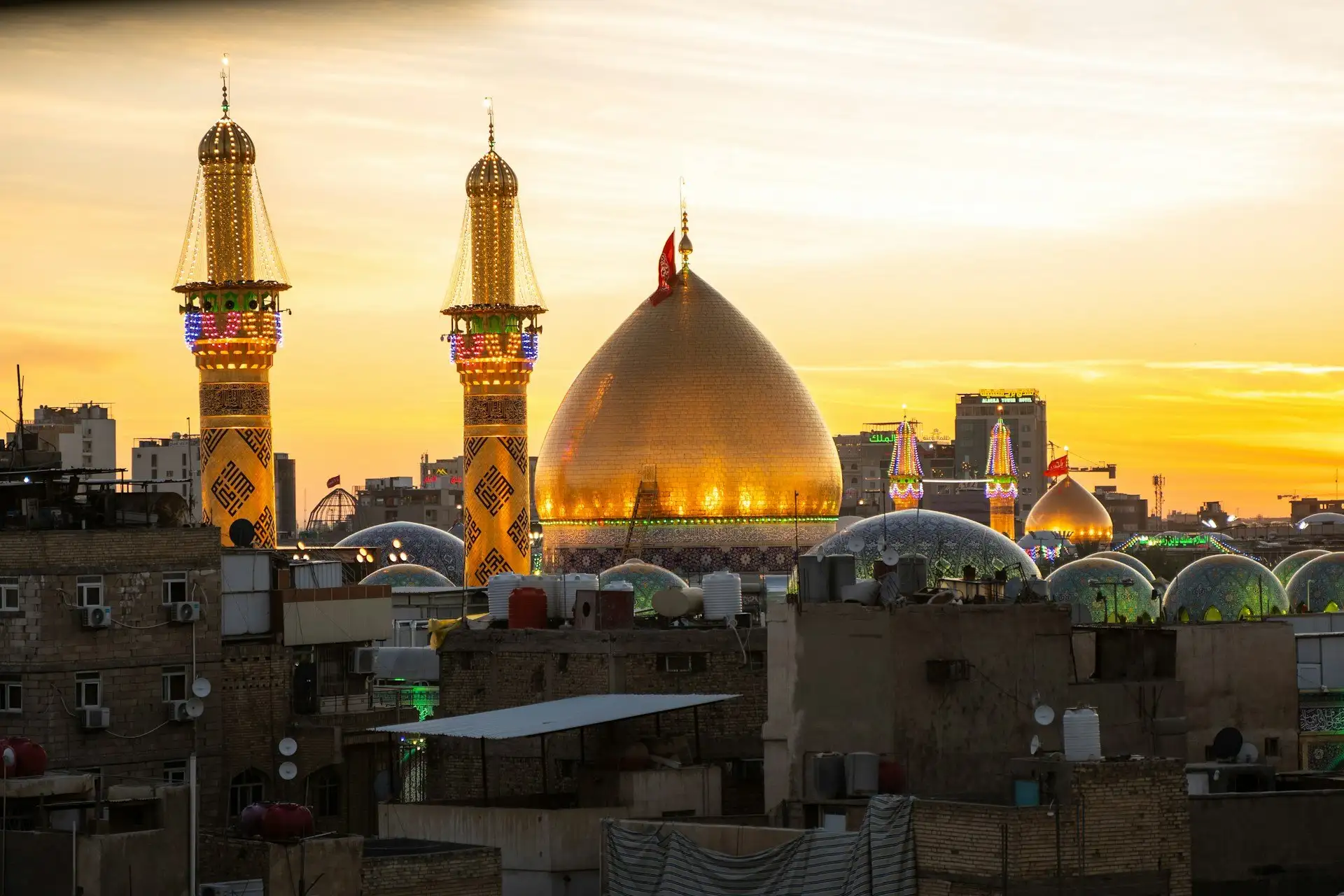
What You Need to Know First
Iraq is not one destination, and for years that distinction mattered enormously: the Kurdistan Region in the north, semi-autonomous with its own government and security forces, was largely stable, with a functioning tourism sector and direct international flights, while Baghdad and the south carried genuinely elevated risk. As of mid-2026, that distinction has narrowed sharply. A regional escalation involving Iran, following an Iranian strike on the UAE and an attack on Kuwait International Airport, has brought missile and drone attacks to Kurdistan itself, and every major Western government now includes the entire country, Erbil and Sulaymaniyah included, in its highest-level Do Not Travel advisory. Read the safety chapter before making any decisions.
None of this changes what Iraq contains. Between the Tigris and Euphrates, in the flat alluvial plain that is now largely southern and central Iraq, the Sumerians invented writing around 3500 BCE, built the world's first cities around 4000 BCE, developed the first code of laws under Hammurabi around 1750 BCE, and created the agricultural and administrative systems that became the template for every subsequent civilization in the Middle East and Europe. The ziggurat at Ur, built around 2100 BCE, is one of the oldest standing structures in the world. Erbil's Citadel has been continuously inhabited for at least 6,000 years. This is not the accumulated heritage of centuries; it's the heritage of millennia, and most of it has been visited by fewer tourists in the past two decades than a mid-sized European museum receives in a week.
Why this guide still covers Iraq in full
This guide documents Iraq's history, culture and destinations in full because they matter regardless of the current security picture, because security conditions in this region have shifted meaningfully before and can shift again, and because a small number of journalists, researchers, NGO workers and others with institutional support do continue operating in the country under different frameworks than tourism. The destinations chapter describes what exists and what was, until early 2026, genuinely accessible; treat the safety chapter as the current, binding word on whether any of it is currently visitable.
🏛️ The cradle of civilization
Writing, cities, agriculture, law, all invented here. The ziggurat at Ur is 4,100 years old. No other country holds more of civilization's beginning.
🏔️ Kurdistan, no longer the exception
Erbil and Sulaymaniyah had years of genuine stability and a real tourism sector. The 2026 escalation, with strikes hitting hotels frequented by foreigners, ended that exception for now.
🕌 The world's largest pilgrimage
Karbala's Arbaeen pilgrimage draws up to 20 million Shia Muslims annually, the largest peaceful gathering on earth, independent of but not exempt from the current advisory picture.
🍽️ Iraqi food is exceptional
Masgouf, kubba, samoon bread, and the date culture of Basra. Iraqi cuisine has deep roots in the oldest agricultural civilization in the world.
Iraq at a Glance
- Capital
- Baghdad
- Currency
- IQD / USD widely accepted
- Languages
- Arabic, Kurdish
- Time zone
- AST (UTC+3)
- Power
- 230V, Type C/D/G
- Dialing code
- +964
- Population
- ~42 million
- Area
- 438,317 km²
Safety in Iraq
Read this section fully. Iraq's security situation changes over time more than most countries in this guide, and the assessment below reflects the situation as of mid-2026, which is meaningfully worse than it was for most of 2024 and 2025, particularly for Kurdistan. Verify current advisories from your government before making any decision; this guide cannot substitute for real-time assessment.
For years, Iraqi Kurdistan was the most stable part of the country: a functioning government, its own security apparatus (the Peshmerga), and minimal incidents affecting tourists. That changed with a 2026 regional escalation. Following an Iranian strike on the UAE on 4 May and an attack on Kuwait International Airport on 3 June, Iran-aligned militias operating in Iraq intensified attacks against US-linked targets nationwide, including hotels frequented by foreigners in Erbil and Sulaymaniyah; the region has been struck by at least 16 missile and drone attacks in recent months. On 2 March 2026, the US State Department ordered non-emergency government employees to leave Iraq entirely, and by April, Iraqi airspace itself carried an acknowledged ongoing risk of missiles, drones and rockets even for reopened commercial routes.
Kurdistan Region
No longer the safe exception. At least 16 missile and drone attacks have hit the region during the 2026 escalation, some targeting hotels used by foreigners. All major governments now explicitly include Kurdistan in their Do Not Travel advisories.
Baghdad & central Iraq
Iran-aligned militias regularly attack Iraqi security forces and threaten US citizens and international companies. Improvised explosive devices, indirect fire and the risk of kidnapping remain current realities, not historical ones.
Southern Iraq
Governed by a mix of Iraqi security forces and Iran-aligned militia controlling significant territory and infrastructure. Risk here centers on the legal and security implications of militia presence rather than random violence against tourists.
Embassy operations, kidnapping risk, and areas to avoid entirely
Embassy operations: US Mission Iraq remains open while on ordered departure to assist citizens already in Iraq, but both the Baghdad embassy and the Erbil consulate general have explicitly warned citizens not to attempt to come to them in person, citing the ongoing risk of missiles, drones and rockets in Iraqi airspace and around both facilities.
Kidnapping: foreign nationals, particularly Westerners without local cover, face documented kidnapping risk, especially outside Kurdistan. The Taliban-style opacity around detention doesn't apply here, but Iraqi authorities' capacity to assist quickly is limited, and anti-US militias have specifically threatened US citizens and international companies.
Areas to avoid entirely, regardless of the general advisory: areas near the Syrian border in Anbar Province, parts of Salah ad-Din and Diyala Provinces with recent conflict history, and any area with active ISIS remnant presence, primarily rural and desert areas of central and western Iraq. US citizens should also not attempt to cross into Syria through Iraq under any circumstances; the Kurdistan Regional Government has stated it will impose prison sentences of up to ten years on anyone who illegally crosses the Iraq-Syria border.
Emergency contacts
Embassy contacts and medical evacuation
Most Western embassies are in Baghdad's International Zone (Green Zone), with access for non-official visitors restricted and current staffing reduced under ordered departure. Do not attempt to visit the Baghdad embassy or Erbil consulate in person given the current airspace risk.
- USA (Baghdad)
- +964-1-496-8000
- USA (24/7 abroad)
- +1-202-501-4444
- UK (Baghdad)
- +964-78-0111-5555
- Australia (Baghdad)
- +964-78-0523-0223
- Canada (Baghdad)
- +964-78-0445-8866
- Germany (Baghdad)
- +964-78-0451-7000
- France (Baghdad)
- +964-77-9007-7077
Medical emergencies: the Medical City complex in Baghdad and Erbil's Shakhawan Hospital are the most capable regional facilities, but for any serious emergency the realistic goal is evacuation to Amman, Dubai or Istanbul. Have your travel insurance's 24-hour emergency line, not the claims line, saved before any travel, and confirm your policy explicitly covers Iraq given the current advisory, since a Do Not Travel designation invalidates many standard policies.
A History Worth Knowing
No other country on earth holds the earliest evidence for so many of civilization's foundational innovations. The alluvial plain between the Tigris and Euphrates, called Mesopotamia by the Greeks, meaning between the rivers, is where human beings first organized themselves at sufficient scale to require writing, permanent cities and codified law. Standing at the base of the ziggurat at Ur is the difference between looking at a pile of ancient bricks and understanding you're standing where the modern world began.
- ~4000 BCE
World's first cities. The Sumerians build urban centers at Ur, Uruk and Eridu in southern Mesopotamia; populations of tens of thousands require new administrative systems.
- ~3500 BCE
Writing invented. Cuneiform writing on clay tablets developed at Uruk to track grain and livestock, the oldest known written texts in human history.
- 1750 BCE
Code of Hammurabi. Babylon's king inscribes 282 laws establishing evidence-based justice and proportional punishment, influencing legal systems for three thousand years.
- 750-1258 CE
Baghdad, capital of the world. The Abbasid Caliphate makes Baghdad the largest city on earth and the intellectual center of the medieval world; the House of Wisdom translates Greek knowledge and produces algebra and medicine.
- 1258
Mongol destruction of Baghdad. Hulagu Khan destroys the city and the House of Wisdom; hundreds of thousands killed, and the city never fully recovers its medieval dominance.
- 2003-2017
War, occupation and ISIS. The US invasion, years of sectarian conflict, and the ISIS occupation and defeat shape the modern country; ISIS deliberately destroys the Mosul Museum's Assyrian collections in 2015.
- 2026
Regional escalation. An Iran-linked regional conflict brings missile and drone strikes to Kurdistan for the first time in years, ending its status as Iraq's stable exception.
Read the full history: Hammurabi, the House of Wisdom, and the road to today
The Sumerians dominated southern Mesopotamia from roughly 4500 to 2000 BCE, building the world's first cities at Ur, Uruk, Eridu and Nippur; Uruk at its height around 3000 BCE may have held 50,000 to 80,000 people. The Akkadian Empire under Sargon of Akkad created the world's first multiethnic empire, and the Babylonian Empire under Hammurabi produced the Code of Hammurabi, 282 laws on a basalt stele now in the Louvre. Babylon under Nebuchadnezzar II was probably the largest city in the world, and the Assyrian Empire at Nineveh produced the library of Ashurbanipal, 30,000 clay tablets containing the collected knowledge of Mesopotamian civilization, before being destroyed by a Babylonian-Median coalition in 612 BCE.
The Abbasid Caliphate, established in 750 CE with its capital at newly founded Baghdad, created the most intellectually productive period in medieval Islamic history: the House of Wisdom translated Greek scientific texts into Arabic and produced original mathematical work, including al-Khwarizmi's algebra. Baghdad in 900 CE was the largest city in the world. The 1258 Mongol invasion under Hulagu Khan destroyed it with a thoroughness that shocked the medieval world, an estimated 200,000 to 800,000 killed. The British Mandate after World War I created the modern state by combining the Kurdish north, Sunni Arab center and Shia Arab south into one entity; the subsequent century brought the Ba'ath Party, Saddam Hussein, the Iran-Iraq War, the Gulf War, sanctions, the 2003 invasion, and the 2014-2017 ISIS occupation of Mosul and northern Iraq, whose deliberate destruction of the Mosul Museum's Assyrian collections and the site of Nimrud removed irreplaceable artifacts from human civilization.
Top Destinations
Iraq's destinations fall into four categories: the Kurdistan Region, Baghdad and central Iraq, southern Iraq's pilgrimage sites, and the ancient archaeological sites spread across all regions. Historically these required different preparations depending on region; as of mid-2026, the current advisory applies equally to all of them, and the descriptions below should be read as what exists and what was, until early 2026, genuinely reachable, not as a current itinerary.
Erbil
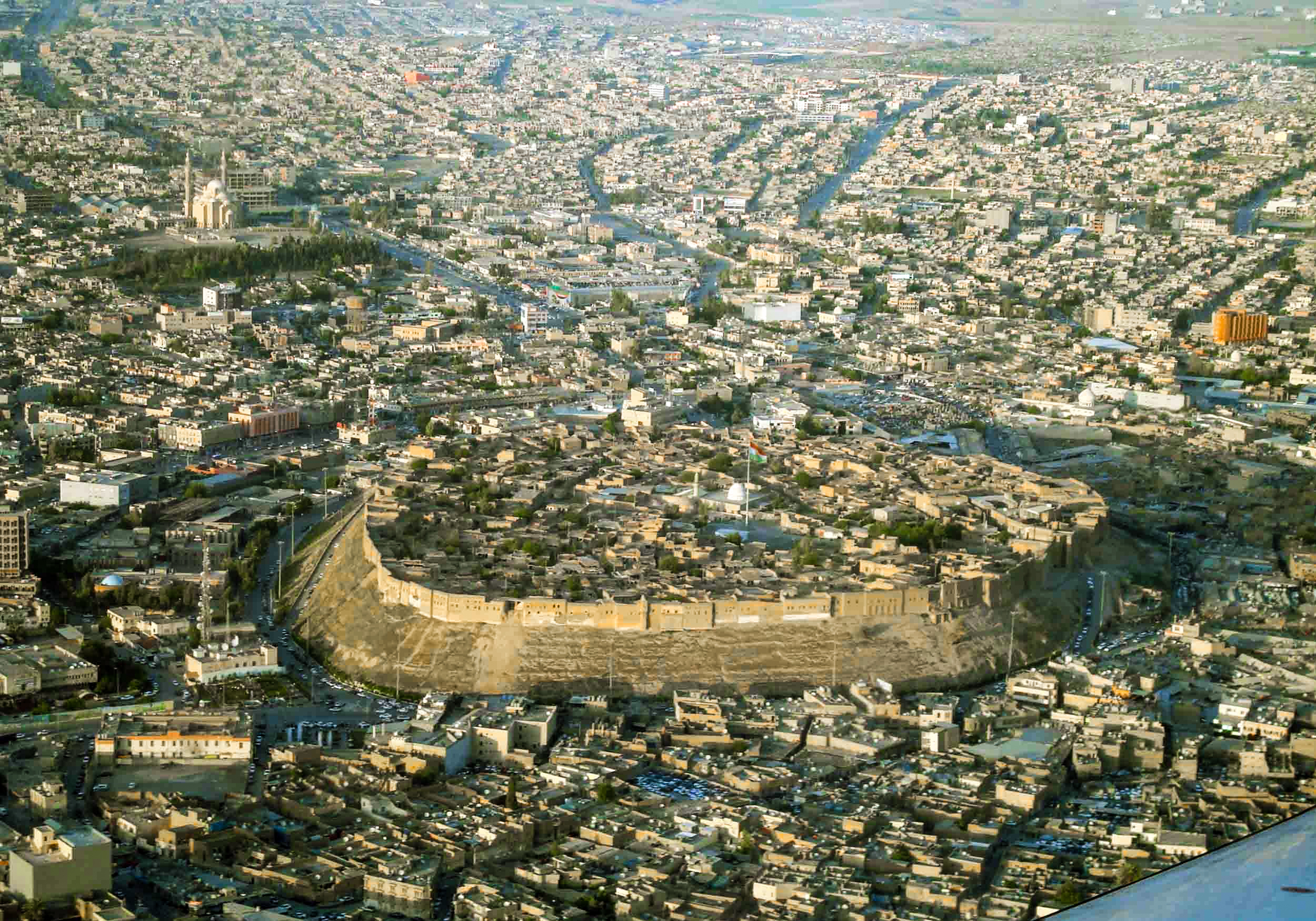
Erbil's Citadel, the Qala, is a UNESCO World Heritage Site and one of the oldest continuously inhabited settlements on earth, the mound beneath it occupied without interruption for at least 6,000 years. The bazaar at its base and the café scene in the Ankawa Christian quarter had, until early 2026, made Erbil the easiest entry point to Iraq for most visitors. The city and the wider region are now included in the same Do Not Travel advisory as the rest of the country, following missile and drone strikes that have specifically targeted hotels frequented by foreigners.
Sulaymaniyah & the mountains
Sulaymaniyah, Kurdistan's cultural heart, holds the Amna Suraka Red Security Building, the former Ba'athist intelligence headquarters converted into a memorial for victims of the 1986-1989 Anfal genocide against the Kurdish people. The Rawanduz Gorge's Hamilton Road and the mesa town of Amadiya, reached by a single road cut through rock, are among the most dramatic mountain landscapes in the Middle East.
Baghdad
Baghdad holds the Iraq Museum's world-leading Mesopotamian collection, the Mutanabbi Street Friday book market rebuilt after a 2007 car bombing, and the 13th-century Abbasid Palace in the Rusafa district, the last standing remnant of the medieval Abbasid Caliphate. Parts of the city have genuinely stabilized in recent years, but Iran-aligned militias continue targeting US-linked interests, and the city remains under the same advisory as the rest of the country.
Babylon
85 kilometers south of Baghdad near Hillah, a UNESCO World Heritage Site: the ruins of the outer walls, the Ishtar Gate site (the gate itself is mostly in Berlin's Pergamon Museum), and Nebuchadnezzar's palace. The current condition, which includes Saddam-era reconstruction over ancient foundations, is contested by archaeologists, but what remains is still substantial.
Ur
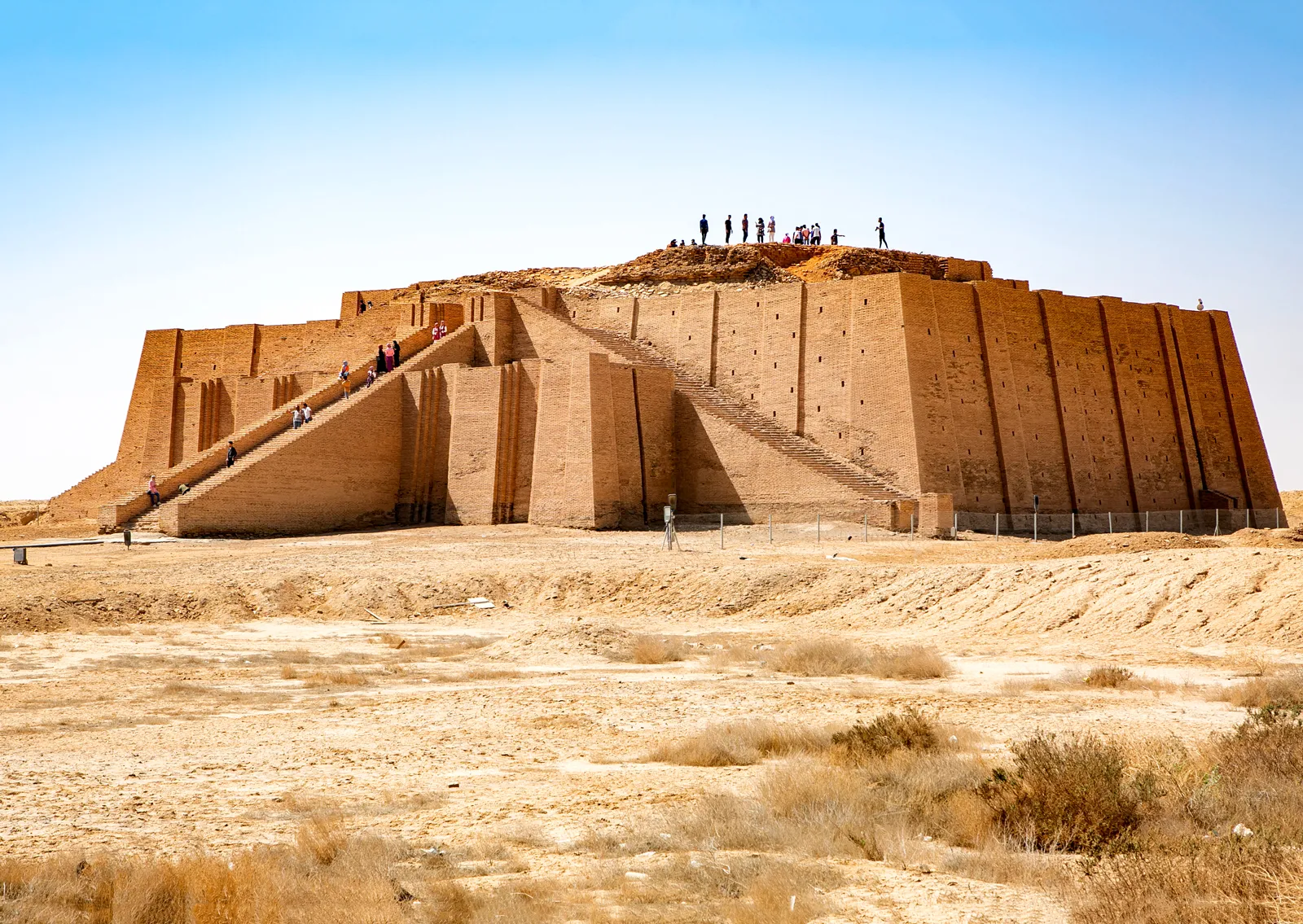
The Great Ziggurat of Ur, built by Ur-Nammu around 2100 BCE and partially restored by Saddam Hussein in the 1980s, rises from a flat desert plain near a US military base outside Nasiriyah. The Royal Tombs of Ur, excavated by Leonard Woolley in the 1920s and 1930s, produced the gold jewelry and musical instruments now split between the Iraq Museum and the British Museum. Access requires advance permission and typically a local fixer.
Najaf & Karbala
Among the holiest cities in Shia Islam. Najaf holds the Imam Ali Shrine; Karbala holds the shrines of Imam Husayn and Abbas, sites of the 680 CE battle central to Shia theology. The Arbaeen pilgrimage draws an estimated 15 to 20 million people annually, the largest peaceful gathering on earth, governed by militia presence alongside official security forces.
Mosul & Nineveh
Mosul, partially destroyed during the 2014-2017 ISIS occupation, has been under reconstruction since, including UNESCO-funded work on Al-Nuri Mosque's famous leaning minaret, destroyed by ISIS in 2017. The Nineveh ruins across the river hold the walls and gates of the Assyrian capital, and the ancient Christian villages of the Nineveh Plains, many displaced during the ISIS period, are slowly being repopulated.
The Mesopotamian Marshes
The wetlands at the Tigris-Euphrates confluence, the probable location of the biblical Garden of Eden, where the Ma'dan (Marsh Arabs) have lived on floating reed islands for at least 5,000 years. Saddam Hussein drained most of the marshes in the 1990s to destroy Shia opposition networks; reflooding since 2003 has restored a significant portion, and the reed island communities are reachable by boat from Chibayish near Nasiriyah.
Culture & Etiquette
Iraq is predominantly Muslim with a roughly equal split between Shia and Sunni communities, a Kurdish population in the north, and small communities of Christians, Yazidis, Mandaeans and others. Iraqi hospitality is among the most generous in the Middle East, the obligation to provide for a guest is deeply felt, and the phrase ahlan wa sahlan, you are welcome, you are family, is not mere politeness.
Do
- Dress conservatively throughout. Long trousers and sleeves for men; arms, legs and hair covered for women at religious sites and traditional areas. At Najaf and Karbala specifically, women must wear an abaya and cover completely, mandatory for non-Muslim visitors too.
- Accept hospitality. Tea will be offered constantly; accepting at least the tea and a small amount of food is the appropriate response.
- Learn basic greetings in Arabic and Kurdish. As-salamu alaykum, spas (Kurdish, thank you), shukran (Arabic, thank you). Using Kurdish in Kurdistan is warmly received.
- Ask before photographing people. Landscapes, ruins, mosques and bazaars freely where permitted; always ask before photographing people, and never photograph military personnel or checkpoints.
Don't
- Express political opinions. The US invasion, Iranian influence, Kurdish independence, inter-communal relations and current leadership are all topics where a casual remark can create real offense or danger. Listen more than you speak.
- Photograph security installations or military sites. This applies everywhere, especially at checkpoints, and consequences range from confiscated phones to detention.
- Enter mosques and shrines without proper preparation. At Najaf and Karbala, non-Muslims are permitted in outer courtyards but not always inner sanctuaries; follow shrine staff instructions precisely.
- Carry alcohol openly. Kurdistan has historically been more relaxed, with bars in Erbil and Sulaymaniyah, but in Baghdad and especially the south, public alcohol is inappropriate and potentially risky depending on the neighborhood.
Deeper culture: Kurdish identity, the intellectual tradition, and Arbaeen
Kurdish culture. A distinct tradition centered on language (Sorani and Kurmanji dialects), folk music and dance, and a historical memory of oppression, the Anfal genocide of the 1980s and the Halabja chemical attack in 1988, present in everyday conversation with older Kurds with the immediacy of something recent.
The Iraqi intellectual tradition. Baghdad's claim to have been the medieval world's intellectual capital isn't exaggeration; the Abbasid period produced foundational mathematics, medicine, astronomy and poetry. Mutanabbi Street, named for the greatest classical Arabic poet, represents the surviving thread: a weekly gathering that continued through every period of violence.
Ashura and Arbaeen. The annual commemoration of Imam Husayn's martyrdom produces two major gatherings, and the Arbaeen walk from Najaf to Karbala draws an estimated 15 to 20 million people, the largest annual peaceful gathering in the world, served entirely by volunteers.
Food & Drink
Iraqi cuisine has deep roots: wheat, barley, lentils and sesame have been grown in Mesopotamia since 8000 BCE. Iraqi food is not spicy but deeply flavored, dried lime in stews, lamb and fish over open fires, herb-heavy rice, and the bread culture built around samoon, the boat-shaped Baghdad loaf.
Masgouf $10-20
Iraq's national dish: a whole Tigris carp split and grilled vertically over an open tamarind wood fire for two to three hours, charred crispy skin and smoky flesh. Best at riverside establishments where the fish was in the river hours earlier.
Kubba $3-6
Oval shells of bulghur or rice stuffed with minced lamb, onion, herbs and nuts, fried, baked or simmered. Kubba Mosul (fried, bulgur shell) and Kubba Halab (rice shell) are the main regional variants.
Timman (Rice) Dishes
Iraqi rice finished with saffron, dried fruits or meat: timman wa maraq (rice with lamb broth) or quzi, a whole lamb stuffed with rice, nuts and dried fruit, slow-roasted over a mountain of fragrant rice.
Samoon & Bread
Baghdad's boat-shaped bread, puffy and hollow with a chewy crust, eaten for breakfast with cream cheese or jam. Kurdish çörek and rural flatbreads round out a diverse regional bread culture.
Kleicha Date cookie
The national sweet: pastry dough filled with dates, cardamom and sometimes rose water, made at home for Eid and bought year-round from bakeries.
Chai & Kurdistan drinks
Strong, sweet tea served constantly is the social glue of daily life. Kurdistan's beer and arak culture is more relaxed than the rest of the country, with functioning bars in Erbil and Sulaymaniyah.
Trip Planning Considerations
Given the current advisory covers all of Iraq equally, planning considerations below are written for the institutional travelers, journalists, researchers and NGO staff, who continue operating under organizational security frameworks, and as reference for when regional conditions allow ordinary travel planning again.
🛡️ Security preparation
Contact a reputable security consultancy or experienced Iraq operator before any travel. Do not rely on guidance published more than a few weeks old given how quickly conditions have shifted in 2026. Register with your embassy's traveler program before departure.
💴 Cash, essential everywhere
International bank cards have very limited acceptance outside a handful of Kurdistan ATMs and hotels. Bring USD or Euros for the entire trip plus a substantial buffer; assume cash-only in Baghdad and the south.
💉 Vaccinations & health
Hepatitis A and Typhoid recommended; malaria exists in some rural areas along the Tigris and Euphrates. Medical facilities in Kurdistan are reasonable, functional for emergencies in Baghdad, and very limited in rural southern Iraq.
📋 Permits & local fixers
Access to sites like Ur and parts of Nineveh requires advance permits from the State Board of Antiquities. A local fixer is the most valuable investment for any visit beyond a Kurdistan-only trip, once travel is advisable again.
Getting around, historically
Iraqi Airways and private carriers connected Baghdad with Erbil, Basra, Najaf and Sulaymaniyah; the Baghdad-Erbil route (1 hour vs 5 hours by road through checkpoints) was the practical way to combine both. Private car with driver was the standard for organized tourism throughout the country, since your driver provides checkpoint navigation and language skills independent movement requires.
Checkpoint etiquette, worth knowing regardless of when travel resumes
Road travel in Iraq outside Kurdistan involves passing through multiple military and police checkpoints, sometimes a dozen on a single route. Slow down well before the checkpoint, turn off loud music, have your passport visible and accessible, make eye contact with the soldier and wait for their signal, and never reach for anything not requested. Never photograph checkpoints. Your driver has done this a thousand times; your job is to look calm and follow their lead without question.
Budget & Where to Stay
Iraq is cheap by Middle Eastern standards, though the cost of security, vetted drivers, local operators, sometimes security consultants, adds substantially to any trip beyond Kurdistan. What follows reflects the pricing structure that applied before the 2026 escalation and is context for future planning, not a current tourist budget.
- Budget guesthouse or family homestay
- Local Kurdish restaurants
- Shared taxis between cities
- Citadel and bazaars, free to walk
- International hotel or good guesthouse
- Restaurant dining with occasional beer
- Private car for mountain day trips
- Local guide for archaeological sites
- Secure hotel, a real cost driver
- Vetted driver/fixer for full days
- Security consultant assessment
- Emergency evacuation insurance coverage
International hotels
The Divan Hotel, Rotana and Marriott in Erbil were the most reliable international-standard properties in Kurdistan, at $80-200/night.
Established properties
The Babylon Warwick and the historic Al Rasheed Hotel, used by journalists and diplomats since the 1980s, were the most established options for visitors requiring the most secure available accommodation.
Quick reference prices, historical baseline
| Chai at a tea house | $0.25-0.50 |
| Kubba lunch, local restaurant | $3-6 |
| Masgouf dinner, riverside | $10-20 |
| Erbil taxi across city | $3-5 |
| Baghdad-Erbil domestic flight | $60-100 |
| Budget guesthouse, Kurdistan | $20-40/night |
| International hotel, Erbil | $80-150/night |
| Private car/driver, full day | $80-150 |
Prices reflect pre-escalation research and are a historical baseline, not a current quote; current-day tourist activity doesn't exist to price given the advisory picture.
Visa & Entry
Iraq's visa situation has two parallel systems: the Kurdistan Regional Government issues its own visa on arrival at Erbil International Airport, independent of the federal Iraqi government, which issues its own visa on arrival at Baghdad. Holding a KRG Erbil visa doesn't automatically grant access to federal Iraq territory. Given the current advisory covers both regions equally, this distinction is now secondary to whether travel is advisable at all; confirm current practice with the Iraqi embassy nearest you before any travel decision.
✓ Valid passport
At least 6 months validity beyond intended departure, at least two blank pages, no Israeli stamps or visas.
✓ USD cash for visa fee
$75-80 per visa in cash; airport booths may not have change, so bring the exact amount if possible.
✓ Return or onward ticket
Immigration at both Erbil and Baghdad requires evidence of departure within the visa validity period.
⚠ Israeli passport holders refused entry
Iraq doesn't permit entry to Israeli passport holders, and passports with Israeli stamps are generally refused federally; Kurdistan practice has varied historically.
| Iraq | Jordan | |
|---|---|---|
| Current advisory | Level 4, Do Not Travel, all regions including Kurdistan | Level 2, Exercise Increased Caution |
| Ancient heritage | Mesopotamia, Ur, Babylon, Nineveh, the deepest historical layer in the region | Petra, Jerash, the Dead Sea, well-preserved and fully open to tourism |
| Tourist infrastructure | Was developing well in Kurdistan through 2025; currently not operating for tourism | Established, mature tourism sector operating normally |
| Regional stability | Directly affected by the 2026 escalation | Affected by regional tension but not under a Do Not Travel designation |
This isn't a "which vacation" comparison; it's context for travelers drawn to the region's ancient history who are weighing where that interest can currently be pursued safely.
Iraq FAQ
Is Iraq safe to visit in 2026?
No, currently every part of Iraq, including the Kurdistan Region, carries a Do Not Travel advisory from the US, UK, Canada, Australia and other major governments. This is a change from prior years, when Kurdistan was treated as a genuinely separate, comparatively safe destination; a 2026 regional escalation involving Iran, the UAE and Kuwait has brought missile and drone strikes to Kurdistan itself, including hotels frequented by foreigners.
Is Iraqi Kurdistan still safer than the rest of Iraq?
Historically yes, Erbil and Sulaymaniyah had lower crime and better infrastructure than federal Iraq for years. But since the 2026 regional conflict, Kurdistan has been struck by at least 16 missile and drone attacks, and every major government now explicitly includes it in their highest-level advisory, a marked change from the prior calculus.
What is the ziggurat at Ur?
A three-tiered mudbrick temple platform built around 2100 BCE near modern Nasiriyah, one of the oldest standing structures in the world and one of the most significant monuments to the beginning of urban civilization.
What is Erbil's Citadel?
A UNESCO World Heritage Site sitting on a mound continuously inhabited for at least 6,000 years, making it one of the oldest continuously inhabited settlements on earth, at the center of Iraqi Kurdistan's capital city.
Do I need separate visas for Kurdistan and federal Iraq?
Historically yes: the Kurdistan Regional Government issues its own visa on arrival at Erbil, separate from the federal Iraq visa issued at Baghdad, and one doesn't automatically grant access to the other region. Given current advisories cover both regions equally, this distinction is now secondary to the security question.
What caused the 2026 escalation affecting Iraq?
A regional conflict involving Iran intensified in 2026, including an Iranian strike on the UAE and an attack on Kuwait International Airport, and Iran-aligned militias operating in Iraq have since conducted attacks against US-linked targets nationwide, including in the Kurdistan Region, prompting ordered departure of non-emergency US government personnel from both Baghdad and Erbil.
What is the Iraq Museum in Baghdad?
The museum holding the largest collection of Mesopotamian artifacts in the world, including Sumerian gold jewelry from the Royal Tombs of Ur, Assyrian relief panels, and the Warka Vase from Uruk dated to 3200 BCE, one of the earliest known examples of narrative art.
Is Najaf and Karbala's Arbaeen pilgrimage still happening?
The Arbaeen pilgrimage, drawing an estimated 15 to 20 million people to Karbala, is a major recurring religious event independent of the current security advisory, but any visit, pilgrimage or otherwise, should be weighed against the same Do Not Travel guidance covering the rest of the country during periods of active regional escalation.
What language is spoken in Iraq?
Arabic is the language of Baghdad and the south. Kurdish, primarily the Sorani dialect, is the language of the Kurdistan Region. English is spoken in Kurdistan's tourism sector and by some educated Iraqis in Baghdad, but is limited elsewhere.
Why is Iraq called the cradle of civilization?
Mesopotamia, the plain between the Tigris and Euphrates that is now Iraq, is where the Sumerians built the world's first cities around 4000 BCE, invented writing around 3500 BCE, and produced the Code of Hammurabi around 1750 BCE, the foundational innovations behind organized civilization.
Where Everything Began
Somewhere in the flat plain near the Euphrates, a Sumerian clerk pressed a stylus into a wet clay tablet around 3500 BCE and made marks that represented sound rather than image for the first time. This was writing. The tablets that survive describe the receipt of grain and the administrative records of a granary, the most mundane possible objects to have changed human history so completely. Everything written since, including this guide, descends from that clay tablet.
The country that contains that plain, and the ziggurat built above it, and the ruins of Babylon, and the mountain citadel at Erbil that has been inhabited without interruption for six thousand years, is Iraq. It is also the country of the past two decades' news coverage, and now of a fresh 2026 escalation that has closed even Kurdistan's window of relative calm. Both are true simultaneously. The beginning of everything that came after is still there and still standing, waiting for the moment it can be visited again without asking people to accept the level of risk this guide has tried to describe honestly.