
What You're Actually Getting Into
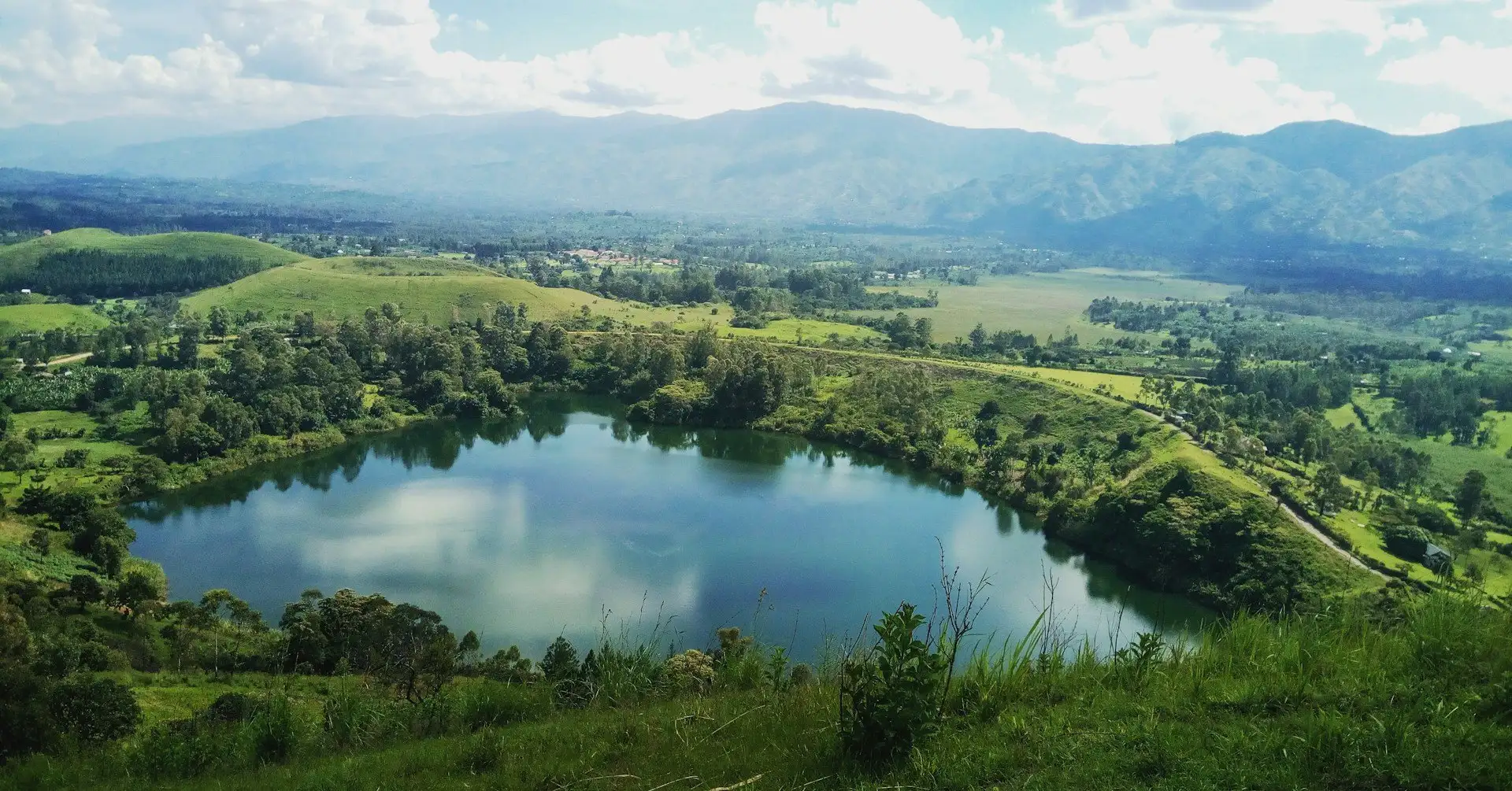
Uganda doesn't look like most people's mental image of East Africa. There's no endless savanna, no dramatic dryness, no dust. What you get instead is extraordinarily green — a landlocked country straddling the equator with two rainy seasons, crater lakes scattered across the western highlands, and forest so dense that a family of mountain gorillas can vanish into it thirty seconds after you've been watching them. The landscape is lush in a way that doesn't feel like Africa to people who've built their expectations on Kenya and Tanzania.
The wildlife pitch is real and it's specific. Uganda has about half the world's remaining mountain gorillas. It has more primate species than anywhere else in Africa. The birding is legitimately extraordinary — over 1,060 species recorded, more than the entire North American continent. Murchison Falls is one of the most violent stretches of the Nile on earth, the river compressed through a six-meter gap with a force that throws spray 40 meters into the air. These are not marketing exaggerations. They are accurately described remarkable things.
What Uganda is not: easy or cheap to do properly. Getting to Bwindi Impenetrable Forest from Kampala is a 9-hour drive on roads that range from decent to genuinely terrible. A gorilla permit costs $800. Organized safaris add lodging and guide fees on top. This is not a budget backpacker circuit. It's a wildlife destination that asks you to commit — in time, in money, in physical effort — and delivers something that no other destination quite replicates in return.
The political context matters too. Uganda has been governed by President Yoweri Museveni since 1986, making him one of the world's longest-serving leaders. The 2023 Anti-Homosexuality Act, which criminalizes same-sex relations with penalties up to life imprisonment, has drawn international condemnation and travel warnings from several governments specifically addressing LGBTQ+ safety. LGBTQ+ travelers should be aware of this and assess their risk accordingly. The law is real and the legal consequences are severe.
Uganda at a Glance
A History Worth Knowing
Long before colonial borders were drawn through the Great Lakes region, the area that is now Uganda was home to some of the most sophisticated kingdoms in sub-Saharan Africa. The Buganda Kingdom, centered around the northern shore of Lake Victoria, was a highly organized state with a standing army, a maritime fleet of war canoes, and a system of governance complex enough to astonish the first European explorers who encountered it in the 1860s. The Kabaka (king) of Buganda held court in a manner that British officers privately admitted was more orderly than some of what they'd seen at home. The Buganda Kingdom still exists today as a cultural institution. The current Kabaka, Ronald Mutebi II, was enthroned in 1993.
The British arrived in earnest in the 1890s, declaring a protectorate in 1894. Unlike neighboring Kenya, Uganda was never a major settler colony — the highlands were considered unsuitable for European farming and the climate discouraging. Instead, the British ruled largely through existing Ugandan kingdoms and administrative structures, importing South Asian laborers to build the railway from Mombasa inland, many of whom stayed and formed the foundation of Uganda's Indian community. This indirect rule left the kingdoms intact while inserting British authority above them, a layering that created political complications that persisted long after independence.
Independence came in 1962 under Milton Obote, with Buganda's Kabaka becoming the first president in a compromise that lasted four years before Obote declared a republic and abolished the kingdoms. The country's post-independence history is one of the most turbulent in Africa. Idi Amin's eight-year rule from 1971 to 1979 was characterized by mass killings, the expulsion of the entire Asian community (about 60,000 people expelled in 90 days in 1972), and the near-total destruction of the economy. Estimates of those killed under Amin range from 100,000 to 500,000. The Asian expulsion reversed itself over subsequent decades — many returned after 1986 — and today Uganda's South Asian community is a significant part of its commercial life.
Yoweri Museveni seized power in 1986 after a five-year guerrilla war and has governed since, winning successive elections while steadily narrowing the democratic space. The north of the country suffered a different kind of trauma through the Lord's Resistance Army insurgency led by Joseph Kony, which displaced over 1.5 million people and lasted from the late 1980s until the mid-2000s. Northern Uganda's recovery from that period is still ongoing but the region is now safe for tourism.
What you should understand as a visitor: Ugandans are generally proud of their country's natural wealth and increasingly its tourism reputation, and they engage with visitors with genuine warmth. The political context — Museveni's long rule, the anti-homosexuality legislation, the restrictions on press freedom — is real and not hidden. Ugandans will often speak frankly about their political situation if you ask. The complexity of post-colonial African governance is worth approaching with curiosity rather than either idealization or condemnation.
One of the most sophisticated pre-colonial kingdoms in sub-Saharan Africa develops around Lake Victoria's northern shore.
John Hanning Speke reaches the source of the Nile at Jinja, confirming Lake Victoria as the Nile's origin. Buganda's court impresses him enormously.
Uganda becomes a British protectorate. Unlike Kenya, no major settler colony develops. Existing kingdoms are used as administrative structures.
Uganda gains independence under Milton Obote. The Kabaka of Buganda becomes ceremonial president in an unstable compromise.
Mass killings, expulsion of the Asian community, economic collapse. One of Africa's most violent post-independence periods.
After a five-year guerrilla war, Yoweri Museveni becomes president. He has governed Uganda ever since — now nearly four decades.
Uganda passes severe anti-LGBTQ+ legislation drawing international condemnation. Several countries issue specific travel warnings.
Gorilla tourism drives conservation revenue. Uganda positions itself as East Africa's premium wildlife destination.
Top Destinations
Uganda's geography pulls you in two directions: the wildlife parks of the west and southwest, and the lakeside and adventure options of the east. Most first-time itineraries focus on the southwest circuit — Bwindi, Kibale, Queen Elizabeth — with a stop at Jinja on the way in or out. That's the right call. The north (Murchison Falls) adds a third dimension if you have the time.
Bwindi Impenetrable Forest
The name isn't exaggerating. Bwindi's ancient montane rainforest in the extreme southwest, on the border with the DRC and Rwanda, is exactly as dense and disorientating as it sounds. It's also home to around 459 mountain gorillas — roughly half the world's total. A trekking day starts at 8am at the park headquarters, with group sizes of eight per gorilla family. The trek itself can be 30 minutes or six hours depending on where the family has moved. The one hour you spend with them — watching juveniles chase each other through the undergrowth, watching the silverback decide whether you're interesting enough to acknowledge — is something that stays with you in a way that photographs can't fully capture. Book your permit ($800) through the Uganda Wildlife Authority website at least six months in advance. Peak season (June–August, December–January) books out faster.
Kibale National Park
Kibale contains the highest density of primates in Africa — thirteen species in a single forest — and the chimpanzee tracking here is the best on the continent. Unlike gorilla trekking, which involves following a habituated family at human pace, chimpanzee tracking requires genuine speed across difficult terrain. The chimps move fast, scream, and are not particularly interested in waiting for you to set up a shot. That's exactly what makes it extraordinary rather than performative. The Bigodi Wetland Sanctuary adjacent to Kibale is world-class birding and accessible without a full park fee. Also in western Uganda: the hot springs at Sempaya in Semuliki National Park, where boiling water geysers spray from the forest floor, are one of Uganda's stranger and less-visited sights.
Queen Elizabeth National Park
Uganda's most visited park, stretching from the Rwenzori Mountains foothills to Lake Edward on the DRC border. The Kazinga Channel boat safari — two hours through channels watched by hippos who treat the boat as mildly interesting furniture and elephants drinking three meters from the hull — is legitimately one of East Africa's best wildlife boat experiences. The Ishasha sector in the south holds the famous tree-climbing lions, a population that actually climbs into fig trees to sleep, which is not behavior lions typically do and which no one has fully explained. Drive the Ishasha section at dawn.
Jinja
The source of the Nile is here, where Lake Victoria's waters pour north toward Sudan and Egypt. Jinja is also Uganda's adventure sports capital: Grade 5 white-water rafting on the Nile, kayaking, bungee jumping over the river, and quad biking. The town itself has a pleasant colonial-era center with good cafés and guesthouses that make it an easy first stop after landing at Entebbe. It's a 2-hour drive east of Kampala. The Nile Special lager, brewed here, is Uganda's national beer and its name is earned.
Murchison Falls National Park
Uganda's largest park, in the northwest. The Nile is compressed through a six-meter gap in the rocks at Murchison Falls and the result is an almost incomprehensible volume of water forced through an impossibly narrow channel. The spray drenches you from 100 meters. The game drives produce lions, giraffes, buffalos, and elephants in good numbers. The boat trip up the Nile to the base of the falls, watching hippos and Nile crocodiles from a few meters away, is one of Africa's great river experiences. A long but rewarding drive from Kampala (5–6 hours).
Rwenzori Mountains
The fabled "Mountains of the Moon" on the border with the DRC are among Africa's great trekking destinations and one of its least visited. The highest peak, Margherita, at 5,109 meters, is permanently glaciated and involves technical climbing. The lower slopes offer multi-day trails through moorland, giant heather, and afroalpine vegetation that looks like it belongs on another planet. This is serious trekking requiring guides, proper equipment, and acclimatization. Not a day trip. Entirely worth it for the right traveler.
Lake Bunyonyi
The most beautiful lake in Uganda and possibly in East Africa. Set among steep terraced hillsides in the southwest near Kisoro, Bunyonyi is 900 meters deep in places and dotted with 29 islands. Canoe rental is cheap and the paddling between islands takes an afternoon. The lake has no hippos or crocodiles, making it one of the few places in Uganda you can safely swim in open water. Stay at least two nights. This is the decompression point after gorilla trekking and it earns it.
Kampala
Built across seven hills like Rome, though the comparison flatters neither city in the expected direction. Kampala is chaotic, noisy, full of boda-bodas (motorcycle taxis) weaving through gridlock, and genuinely interesting if you engage with it rather than pass through. Owino Market is the largest second-hand clothing market in East Africa. The Uganda Martyrs Shrine at Namugongo is one of the most significant Catholic pilgrimage sites in Africa. The Ndere Cultural Centre on Friday and Saturday evenings does traditional music and dance that's not a tourist performance — the audience is mostly Ugandan families. Spend two nights. It earns more time than most visitors give it.
Culture & Etiquette
Uganda has 56 recognized ethnic groups and an official policy of "unity in diversity" that is more than just a slogan — the Buganda, Banyankole, Basoga, Acholi, Langi, and dozens of other groups each maintain distinct languages, traditions, and cultural identities within a broadly English-speaking, Christian-majority national framework. The Christianity is real and pervasive: Sunday mornings in Kampala involve a traffic-stopping density of churchgoers, many wearing their finest clothes, and the evangelical tradition is strong enough that you'll hear music from open-air services at 7am. Respect for it is expected even from non-believers.
Ugandans are among the most genuinely welcoming people in East Africa. The phrase you'll hear constantly is "you're welcome" — used as a greeting as much as a response, meaning something closer to "we're glad you're here." Take it at face value. It usually is.
"How are you?" before any transaction or question is not optional in Uganda — it's a social requirement. Skipping the greeting to ask a direct question is genuinely rude. Allow 30 seconds for a proper greeting exchange.
Shorts and sleeveless tops are fine at lodges and parks. In Kampala markets, rural communities, and anywhere you're the only tourist, dress that covers knees and shoulders reads as respectful and is appreciated.
Always ask before pointing a camera at a person. Most people will say yes warmly. Some will ask for a small payment, which is reasonable. Take no as no without argument.
Being offered food or drink in a home or community is a significant gesture. Accepting, even a small amount, honors the offering. Refusing can genuinely offend. Eat something.
Community guides in villages near national parks rely on tourism income directly. The Uganda Wildlife Authority requires licensed guides in all parks. Beyond the requirement, a knowledgeable local guide makes every wildlife experience substantially better.
The left hand is considered unclean across much of East Africa. Handshakes, receiving items, and passing money should all involve the right hand, or both hands together for showing additional respect to elders.
Freedom of speech limitations are real in Uganda. Critical comments about Museveni in public settings — particularly in front of strangers — can cause immediate discomfort or worse. Save political conversations for trusted private contexts.
Photographing security installations, military personnel, or government buildings can lead to camera confiscation and questioning. The rules are not always clearly posted. When in doubt, don't.
The no-contact rule during gorilla trekking is absolute and enforced. Gorillas can catch human respiratory infections. You must be masked if you have cold symptoms. Stay seven meters from the animals unless they approach you — which they sometimes do.
The 2023 Anti-Homosexuality Act makes same-sex relations illegal with severe penalties. Any display of affection between same-sex partners in public — including in tourist areas — carries genuine legal risk. LGBTQ+ travelers should read the safety section carefully and assess whether Uganda is an appropriate destination for them given current law.
Traditional Music
Uganda's musical heritage is extraordinary and largely unknown outside the country. The amadinda xylophone tradition of Buganda, the endingidi fiddle, the engoma drums — these are sophisticated musical systems that UNESCO has recognized on the intangible heritage list. The Ndere Cultural Centre in Kampala is the best place to hear them performed properly by musicians who grew up with the traditions rather than learned them for tourists.
Kingdom Culture
Uganda's kingdoms were abolished by Obote in 1967 and restored as cultural (not political) institutions by Museveni in 1993. The Kabaka of Buganda remains enormously respected across Uganda and his palace in Kampala is a significant cultural site. When visiting areas within traditional kingdoms, acknowledging the cultural authority of the kingdom (without engaging in politics around it) is appreciated and signals you've done your homework.
Religious Landscape
Uganda is roughly 84% Christian (with a significant and growing evangelical proportion), 14% Muslim (concentrated in eastern and northern regions), and small percentages of traditional faiths. The religious calendar matters: Good Friday, Easter, Christmas, Eid al-Fitr, and Eid al-Adha are all public holidays when businesses close and transport changes. The Uganda Martyrs Day on June 3 is one of the largest pilgrimage events in Africa, drawing over a million people to Namugongo outside Kampala.
Boda-Boda Culture
The boda-boda motorcycle taxi is the primary urban transport for millions of Ugandans. In Kampala they navigate gridlock that would defeat any other vehicle. They're cheap (usually 1,000–5,000 UGX per ride) and fast and the accident rate is genuinely high. If you ride one, insist on a helmet. Not all drivers carry one. SafeBoda, the ride-hailing app with helmeted drivers, is the sensible option in Kampala.
Food & Drink
Ugandan food doesn't have the international profile of Ethiopian or Moroccan cuisine and it doesn't try to. It's straightforward, starchy, filling, and prepared with a focus on substance over complexity. The staple is matoke — green bananas steamed in their own leaves until soft and earthy, served alongside beans, groundnut stew, or meat. It appears on virtually every Ugandan table at lunch and dinner and most visitors who give it a proper chance find it more interesting than it sounds.
The most important food discovery most tourists miss: the rolex. Not the watch. A rolex is a chapati rolled around a fried egg and vegetables, assembled at street stalls across the country for 1,000–2,000 UGX. The name comes from "rolled eggs." It's Uganda's best fast food and the correct breakfast when you're heading out early for a gorilla trek. Every town in Uganda has a rolex stand. Find one before 8am.
Matoke
The national staple. Green cooking bananas steamed for hours until they turn pale yellow and soft, then mashed or served whole. On its own it's mild and slightly starchy. With a proper groundnut stew poured over the top, or alongside smoked fish and fermented beans, it becomes the anchor of a genuinely satisfying meal. Don't refuse it because it looks plain. Judge it with the accompaniments.
Rolex
Chapati rolled around a two-egg omelette with tomato, onion, and cabbage. Assembled in 90 seconds at roadside stalls, eaten standing up, costs almost nothing. It's the one Ugandan food that most visitors become immediately and slightly obsessively attached to. If you're leaving Uganda and haven't eaten at least three, you've made a scheduling error.
Groundnut Stew
Peanut-based sauce with meat or smoked fish, stewed long enough to develop a deep, earthy richness. Often served over matoke or rice. Every Ugandan family has a different version and every version is slightly better than the one before. The version served in local restaurants near Kibale Forest tends to use smoked catfish. Order it.
Nile Perch & Tilapia
Lake Victoria's fishery supplies the country with fresh fish daily. Nile perch grilled over charcoal, served with chips and coleslaw, is the standard Ugandan fish restaurant format and it's reliably excellent near the lake. Tilapia, the smaller and more delicate option, is fried whole and eaten with ugali (maize porridge). The fish restaurants along the Jinja waterfront are the right place for both.
Street Food & Nyama Choma
Nyama choma — roasted meat, usually goat — is eaten at roadside choma spots that appear across Uganda in the evening. Order by weight, eat with ugali and sukuma wiki (collard greens), and wash down with a warm Nile Special. The informal butcheries-with-grills on the outskirts of Kampala in Kabalagala and Kansanga do the best version. Budget UGX 15,000–25,000 for a solid sitting.
Drinks
Nile Special lager (brewed in Jinja) and Club beer are the standards. Both are light, cheap (UGX 3,500–5,000 in a local bar), and cold if the power has been stable. Waragi is Uganda's traditional spirit, a banana-based gin that has a commercial version (Uganda Waragi) and a local homebrew version (enguli) that is considerably more aggressive. The local version of waragi is best treated with caution and drunk with something. Passion fruit juice, made fresh everywhere, is outstanding and costs almost nothing.
When to Go
Uganda has two dry seasons and two wet seasons, and the difference between them matters practically rather than scenically — the gorilla treks are muddy and slippery in the rains, and some access roads in the western parks become genuinely impassable. That said, you can see gorillas year-round, and the rainy season (particularly October-November) offers lower lodge prices, more available permits, and a greener landscape. Peak season is June-August and December-January.
Long Dry Season
Jun – AugThe most popular window for gorilla trekking. Trails are drier and firmer. Wildlife game drives in Queen Elizabeth and Murchison are excellent as animals concentrate around water. Book permits and accommodation 6–12 months ahead for this period.
Short Dry Season
Dec – FebLess busy than June-August but equally good conditions. Christmas week and New Year book out fast. January and February are the sweet spot — excellent conditions, fewer visitors, and lodge rates slightly lower than peak. Book gorilla permits 4–6 months out.
Short Rains
Oct – NovGorilla permits more available. Lodge prices 20–30% lower. Trails are slippery but manageable with good boots. The landscape is dramatically lush. Birding is exceptional as migratory species arrive. A good choice for the budget-conscious or spontaneous planner.
Long Rains
Mar – MayThe heaviest rains of the year. Some park access roads become genuinely impassable after heavy downpours. Gorilla trekking is still possible but conditions are demanding — deep mud, leeches, and the possibility of being turned back. Not recommended as a primary gorilla trekking window for first-timers.
Trip Planning
Ten to fourteen days is the minimum to do Uganda properly. Less than ten and you're cutting the wildlife circuit short. The driving distances are significant — Kampala to Bwindi is 9 hours, Bwindi to Queen Elizabeth is 3 hours, Queen Elizabeth to Kibale is 2 hours — and the roads, while improving, require slower speeds than European highways. Build in travel days. Don't plan arrival at a park gate after dark.
The single most important planning task: book your gorilla permit before you book flights. Permits sell out months in advance for peak season dates. Without a confirmed permit, the rest of the itinerary is hypothetical. Start at the Uganda Wildlife Authority website (ugandawildlife.org).
Entebbe & Jinja
Land at Entebbe, sort your East Africa visa, and head directly to Jinja (2 hours). Afternoon at the source of the Nile. Day two: white-water rafting or a kayak, or simply a slow day on the river before the long drive west begins.
Queen Elizabeth National Park
Drive to QENP via Kampala (5–6 hours). Afternoon game drive. Day four: morning Kazinga Channel boat safari — this is one of East Africa's great wildlife experiences and should not be rushed. Drive to Ishasha sector if time allows for tree-climbing lions.
Bwindi — Gorilla Trek
Drive from QENP to Bwindi (3 hours). Evening briefing. Day six: gorilla trek. This is the centrepiece of the trip. Allow the full day — some treks take 6 hours. Evening decompression at your lodge. The trek is physically demanding and emotionally overwhelming in roughly equal measure.
Lake Bunyonyi
One hour from Bwindi. Two nights at the crater lake: canoeing, swimming, walks above the terraces, and proper rest after the trekking effort. This is not filler — Bunyonyi is genuinely one of Uganda's best experiences.
Return to Entebbe
Long drive back to Kampala (6–7 hours). Half-day in Kampala if energy allows — the Uganda Museum or a lunch at the Ndere Cultural Centre. Fly out from Entebbe on day ten or sleep and depart day eleven.
Entebbe & Kampala
Land and spend a proper day in Kampala. Uganda Museum, Nakasero Market lunch, Owino Market in the afternoon, Ndere Cultural Centre in the evening. Kampala rewards two days more than most visitors give it.
Jinja & the Nile
Source of the Nile, white-water rafting on day four. Jinja has good mid-range guesthouses and a pleasant riverside scene that's worth an evening. The Nile Special at a Jinja bar, next to the river it's named after, is a biographical note for the beer.
Kibale National Park
Drive to Kibale via Kampala (5–6 hours). Day six: full-day chimpanzee tracking. Day seven: Bigodi Wetland birding in the morning, drive toward Queen Elizabeth in the afternoon.
Queen Elizabeth National Park
Two nights. Kazinga Channel boat safari on day eight. Day nine: Ishasha sector for tree-climbing lions, then continue toward Bwindi.
Bwindi — Gorilla Trek
Arrive Bwindi by midday. Rest and briefing. Day eleven: gorilla trek. Take the rest of the day slowly. A second permit for day twelve is worth doing if budget allows — no two treks are the same.
Lake Bunyonyi & Return
Two nights at Bunyonyi for recovery and genuine enjoyment. Day fourteen: drive to Entebbe (6–7 hours), fly out.
Kampala & Jinja
Three days in the east: a full day in Kampala, two nights in Jinja with rafting, kayaking, and a slow morning at the source. This is the warm-up before the wildlife circuit.
Murchison Falls National Park
Fly north to Pakuba (domestic) or drive 5–6 hours. Four days: game drives for lions, giraffes, elephants. The Nile boat trip to the base of the falls. A morning walk at the top of the falls. Shoebill stork spotting on the delta — Murchison has the most reliable shoebill access in Uganda.
Kibale & Queen Elizabeth
Drive south to Kibale (6 hours from Murchison via Kampala, or fly). Two days in Kibale for chimpanzees and birding. Two days in Queen Elizabeth for the Kazinga Channel and Ishasha lions.
Bwindi — Two Gorilla Treks
Four days at Bwindi allows two gorilla trekking days, a gorilla habituation experience, and village walks in the surrounding communities. Two visits to different gorilla families is the recommended approach if budget allows.
Lake Bunyonyi, Rwenzori & Return
Two nights at Bunyonyi. Then north to the Rwenzori foothills for two nights of lower-slope trekking in the afroalpine zone. Return to Entebbe via Kampala. Final evening in Kampala at the Ndere Cultural Centre.
Vaccinations
Yellow fever vaccination is MANDATORY for Uganda entry. Carry your yellow card — it will be checked. Malaria prophylaxis is strongly recommended for all areas. Hepatitis A and B, typhoid, rabies (for cave visits and animal workers), and meningitis are also recommended. See a travel medicine clinic 6–8 weeks before departure.
Full vaccine info →Connectivity
MTN Uganda and Airtel Uganda SIM cards are available at Entebbe Airport with your passport. Data is cheap and coverage is good in cities and tourist areas. In Bwindi and remote parks, connectivity is limited or absent. Download offline maps before leaving Kampala. An Airalo Uganda eSIM is a pre-arrival alternative.
Get Uganda eSIM →Power & Plugs
Uganda uses Type G plugs (UK style) at 240V. Power cuts are common across the country, including in Kampala. Many lodges use solar and generator backup. A portable power bank is essential. Charge all devices whenever you have reliable power.
Language
English is an official language and is widely spoken, including by most people you'll encounter in tourism. Swahili is the other official language and useful in eastern Uganda and near the Kenyan border. Luganda is the language of Buganda and Kampala. "Webale" (thank you) in Luganda is a small gesture that Kampala residents notice.
Travel Insurance
Essential for Uganda. Medical evacuation from Bwindi or Murchison to Kampala or Nairobi is expensive and necessary for serious injuries. Ensure your policy covers gorilla trekking as an activity (some exclude it as "dangerous") and has emergency evacuation. World Nomads explicitly covers gorilla trekking.
Malaria & Health
Malaria is present in all of Uganda including Kampala. Take prophylaxis seriously — start before departure, continue after return. DEET-based repellent and long sleeves and trousers at dusk are non-optional. Drink bottled water only. Avoid salads and unpeeled fruit from unverified sources.
Transport in Uganda
The honest picture: Uganda is a challenging country to navigate independently, particularly for the western wildlife circuit. Road conditions range from reasonable (Kampala to Jinja) to genuinely bad (any unpaved section after rain). The distances are long and driving times are slow. Most visitors doing gorilla trekking use an organized tour operator who handles all transport, lodge bookings, and permit logistics in a single package. This is not laziness — it's the efficient approach to a complex itinerary. Budget travelers can do it independently using shared minibuses and buses, but the time cost is significant.
Private Safari Vehicle
$100–200/day incl. driverThe standard for the wildlife circuit. A 4WD safari vehicle with a knowledgeable driver-guide is the practical choice for parks. Essential for Bwindi access after rain. Many tour operators include this in package prices.
Shared Minibuses
5,000–25,000 UGXConnect all major towns and function reasonably on main routes. Depart when full, which can mean a long wait. The Kampala–Jinja route is fast and frequent. The southwestern routes to Kabale (near Bwindi) take 6–8 hours and involve multiple changes.
Domestic Flights
$150–350 one-wayAerolink Uganda flies Entebbe to Kasese (for Queen Elizabeth), Kisoro (for Bwindi), and Pakuba/Bugungu (for Murchison Falls). Short 45–90 minute flights replace 6–9 hour road journeys. Worth the cost if time is limited.
Car Rental
$60–120/daySelf-drive is possible but requires a 4WD, careful research into road conditions, and confidence on unpaved tracks. Not recommended as a first Uganda approach. The Entebbe–Kampala–Jinja corridor is manageable. Beyond that, experience matters.
Boda-Boda (Kampala)
1,000–5,000 UGXMotorcycle taxis. Fast through gridlock, genuinely dangerous, and very cheap. Use SafeBoda app in Kampala for helmeted drivers. Acceptable for short urban trips. Not appropriate for highway travel or the wildlife circuit.
Taxis & Ride-Hail
10,000–30,000 UGX cityUber and Bolt operate in Kampala and are the sensible option for airport transfers and city movement. Always confirm the price before departing in non-app taxis. Kampala traffic can double journey times during rush hour (7–9am, 5–7pm).
Boat (Bwindi & Parks)
Park rate dependentThe Kazinga Channel boat in Queen Elizabeth and the Nile boats in Murchison are organized through the parks. Lake Bunyonyi canoe rental from your lodge is cheap and the correct way to explore the island-dotted lake.
Train
N/A for touristsNo functional passenger rail service currently operates in Uganda. The railway infrastructure exists but is not in service for tourist routes. This may change — there are development plans — but plan without it.
Accommodation in Uganda
Uganda's accommodation spectrum runs from genuinely world-class eco-lodges perched above Bwindi's forest canopy — gorillas sometimes pass through the garden — to basic guesthouses in market towns that cost 30,000 UGX and come with a bucket shower. The parks have a well-developed lodge infrastructure at all price points. Kampala and Jinja have good mid-range and budget options. The deep south near Bwindi has very little budget-tier accommodation precisely because the gorilla permit cost already filters the visitor profile.
Eco-Lodges (Parks)
$200–800/night incl. mealsThe best lodges in Bwindi, Queen Elizabeth, and Kibale are genuinely excellent. Mahogany Springs, Bwindi Lodge, and Clouds Mountain Gorilla Lodge near Bwindi all offer forest-edge positions where you genuinely might see gorillas from the dining room. The price includes all meals and often includes guided activities. Worth the spend for at least the gorilla night.
Mid-Range Guesthouses & Camps
$60–150/nightUganda has solid mid-range options in all the main tourism areas. Rutooma Tourist Centre near Bwindi and a range of camps around Queen Elizabeth handle the gap between budget and luxury. Research recent reviews — quality varies and some previously recommended options have declined.
Budget Guesthouses
$15–40/nightAvailable in Kampala, Jinja, Kabale, and most larger towns. Standards vary considerably. Jinja has a particularly good backpacker scene with well-run hostels near the Nile. Kampala's Backpackers Hostel in Natete is a long-standing reliable base.
Lake Bunyonyi Accommodation
$30–200/nightRanges from island camp tents to proper lakeside lodges. Birdnest Resort at Bunyonyi and Bunyonyi Overland Resort are the best-positioned mid-range options. The setting is so beautiful that even the simpler lodges feel exceptional. Book ahead — Bunyonyi fills quickly in peak season.
Budget Planning
Uganda is not a cheap destination if you're doing the gorilla circuit. The $800 permit fee alone defines the trip's financial character. On top of that, eco-lodge accommodation near Bwindi, private safari transport, and park entry fees (roughly $40–50 per person per day in each park) mean a week doing the full circuit properly runs $3,000–5,000 per person before flights. Budget travelers can significantly reduce accommodation and transport costs but the permit and park fees are fixed. Plan the budget around those immovable numbers and work backward.
- Guesthouses and basic camps
- Shared minibuses between towns
- Local restaurants and rolex breakfasts
- Standard gorilla permit ($800 fixed)
- Park fees (fixed, non-negotiable)
- Mid-range lodges and camps
- Shared tour vehicle or hire car
- Mix of lodge and local dining
- Gorilla permit + chimpanzee tracking
- Some domestic flights to save time
- Premium eco-lodges (Bwindi, Queen Elizabeth)
- Private vehicle and driver-guide full time
- Domestic flights throughout
- Gorilla habituation experience ($1,500)
- All-inclusive lodge packages
Quick Reference Prices (UGX / USD)
Visa & Entry
Most visitors need a visa for Uganda. The e-visa system (visas.immigration.go.ug) allows online application before travel — apply at least two weeks before departure and ideally a month out. The standard single-entry visa costs $50. The East Africa Tourist Visa costs $100 and covers Uganda, Kenya, and Rwanda in a single-entry pass, making it significantly better value for multi-country trips.
East African Community citizens (Kenya, Tanzania, Rwanda, Burundi, South Sudan, DRC, Somalia) enter visa-free. Some other African nationalities have visa-free access — check the Uganda Immigration Department website for your specific passport.
Apply online at visas.immigration.go.ug before travel. Single entry $50. East Africa Tourist Visa (Uganda + Kenya + Rwanda) $100. Have your yellow fever card ready for arrival.
Family Travel & Pets
Uganda can work very well for families with older children and teenagers who are genuinely interested in wildlife and nature. The experiences — gorilla trekking, chimpanzee tracking, Nile rafting — are formative in a way that very few destinations manage. The practical challenges are real: long drives on poor roads, malaria risk requiring prophylaxis for all family members, and the physical demands of gorilla trekking (minimum age 15 for the standard trek, enforced).
Families with younger children are better served by the more accessible experiences: Jinja and the Nile, Lake Bunyonyi for safe swimming and canoeing, the Entebbe Wildlife Sanctuary (a small but good wildlife centre near the airport, good for a jet-lag day), and the game drives in Queen Elizabeth which are manageable for children of any age. Mosquito protection for children requires particular attention — DEET-based repellents are safe for children over 2 months old.
Gorilla Trekking Age Limit
The minimum age for gorilla trekking is 15, strictly enforced by the Uganda Wildlife Authority. Children under 15 cannot do the trek regardless of fitness level. Chimpanzee tracking has a minimum age of 12. Plan accordingly if traveling with younger children.
Jinja for Teens
White-water rafting (minimum age typically 15), kayaking, quad biking, and bungee jumping make Jinja an excellent stop for families with teenagers. The town is relatively safe, well-set-up for tourism, and the Nile backdrop makes every activity feel memorable.
Lake Bunyonyi for All Ages
Genuinely good for all ages. Safe swimming, canoe rentals, and island exploration work for children from about 6 up. The lodges at Bunyonyi are family-friendly and the environment is relaxed and beautiful enough to hold everyone's attention without structured activities.
Game Drives
Queen Elizabeth and Murchison Falls game drives are accessible for all ages and no more demanding than sitting in a vehicle for a few hours. Children often spot animals faster than adults. The Kazinga Channel boat safari is a particularly family-friendly format — slow, close to wildlife, and requiring no physical exertion.
Malaria for Children
All family members need malaria prophylaxis appropriate for their age and weight. Consult a paediatric travel medicine specialist for children's dosing. DEET repellent, long-sleeved clothing at dusk, and bed nets at all accommodation are the additional layers. This is not an area to cut corners.
Food for Families
Ugandan food is generally mild and accessible for children. Matoke, rice, grilled chicken, and chips are universally available. Major lodges serving international menus cover most preferences. Bring a supply of snacks for long driving days — remote routes have very few food options between towns.
Traveling with Pets
Bringing pets to Uganda is technically possible but not advisable as a tourist destination. The requirements are substantial: a microchip compliant with ISO 11784/11785, a valid rabies vaccination, a health certificate from an accredited veterinarian within 10 days of travel, and inspection by Uganda's veterinary authorities on arrival. The process involves coordination with Uganda's Ministry of Agriculture, Animal Industry and Fisheries months in advance.
More practically: Uganda's national parks require that all visitors remain in vehicles in most zones, making it impossible to take a pet into game drive areas. The malaria, rabies, and tsetse fly risk for pets is significant. Wildlife encounters — particularly near national parks — present genuine danger for domestic animals. Uganda is not a pet-friendly tourism destination in any practical sense, and attempting it adds considerable complication to an already logistically demanding trip.
Safety in Uganda
Uganda's main tourist areas are substantially safer than the country's international reputation (still colored by Idi Amin's era) might suggest. Hundreds of thousands of tourists visit annually without incident. The gorilla trekking zones, Jinja, and the main parks all have established security infrastructure. That said, Uganda is not without real risks, and the LGBTQ+ legal situation is a specific and serious concern that cannot be glossed over.
Wildlife Tourist Areas
Bwindi, Kibale, Queen Elizabeth, Murchison Falls, and the main tourist lodges are well-secured and have strong safety records for international visitors. Armed ranger escorts accompany gorilla trekking groups.
Kampala Urban Safety
Kampala has the petty crime risks of any African capital. Pickpocketing in Owino Market and the central taxi parks, phone snatching, and opportunistic theft are real. Keep valuables minimal, don't walk with expensive cameras visible, and use Bolt or Uber rather than street taxis at night.
DRC Border Areas
The border areas of western Uganda adjacent to the DRC, particularly the Ituri and North Kivu side, have active conflict. The Uganda side of Bwindi and Queen Elizabeth (a protected corridor) is secure, but do not attempt to cross into DRC without thorough current research and specific security arrangements.
Road Safety
Road accident rates in Uganda are high by international standards. Night driving is particularly dangerous due to unlit vehicles, pedestrians on road edges, and poor road surfaces. Do not drive at night outside of Kampala and Jinja if avoidable. This applies to private hire vehicles too — instruct your driver accordingly.
LGBTQ+ Safety
The 2023 Anti-Homosexuality Act is law and is enforced. Same-sex relations carry penalties of up to life imprisonment. Aggravated homosexuality (broadly defined) carries the death penalty under the law as drafted. Several governments have issued specific travel warnings for LGBTQ+ travelers to Uganda. This is not a theoretical risk — the law is real and active. LGBTQ+ travelers should make a fully informed decision about whether to travel to Uganda under the current legal framework.
Healthcare
Medical facilities in Kampala (International Hospital, Case Medical Centre) are adequate for standard care. Outside Kampala, facilities drop off sharply. Medical evacuation to Kampala or Nairobi is the correct response to serious injury or illness in the parks. Travel insurance with evacuation cover is not optional for Uganda.
Emergency Information
Embassies in Kampala
Most embassies are in the Kololo, Nakasero, and Bugoloobi districts of Kampala.
Book Your Uganda Trip
Everything in one place. These are services worth actually using.
The Pearl Still Earns It
Churchill's description has been repeated so many times it risks becoming tourism brochure language. It isn't. What he meant — what the gorillas and the Nile and the crater lakes and the extraordinary concentration of life in a small equatorial country still mean — is that Uganda sits at a convergence of things you cannot replicate or rearrange. You come for the gorillas and you leave having absorbed something larger: the weight of the forest, the sound of the Nile at full force, the way Kampala's seven hills hold the late afternoon light.
In Luganda — the language of the Buganda Kingdom that has organized life around these hills for seven centuries — the word for the feeling of unexpected beauty encountered in the natural world is obutonde. You will find it in Uganda. Probably more than once.