
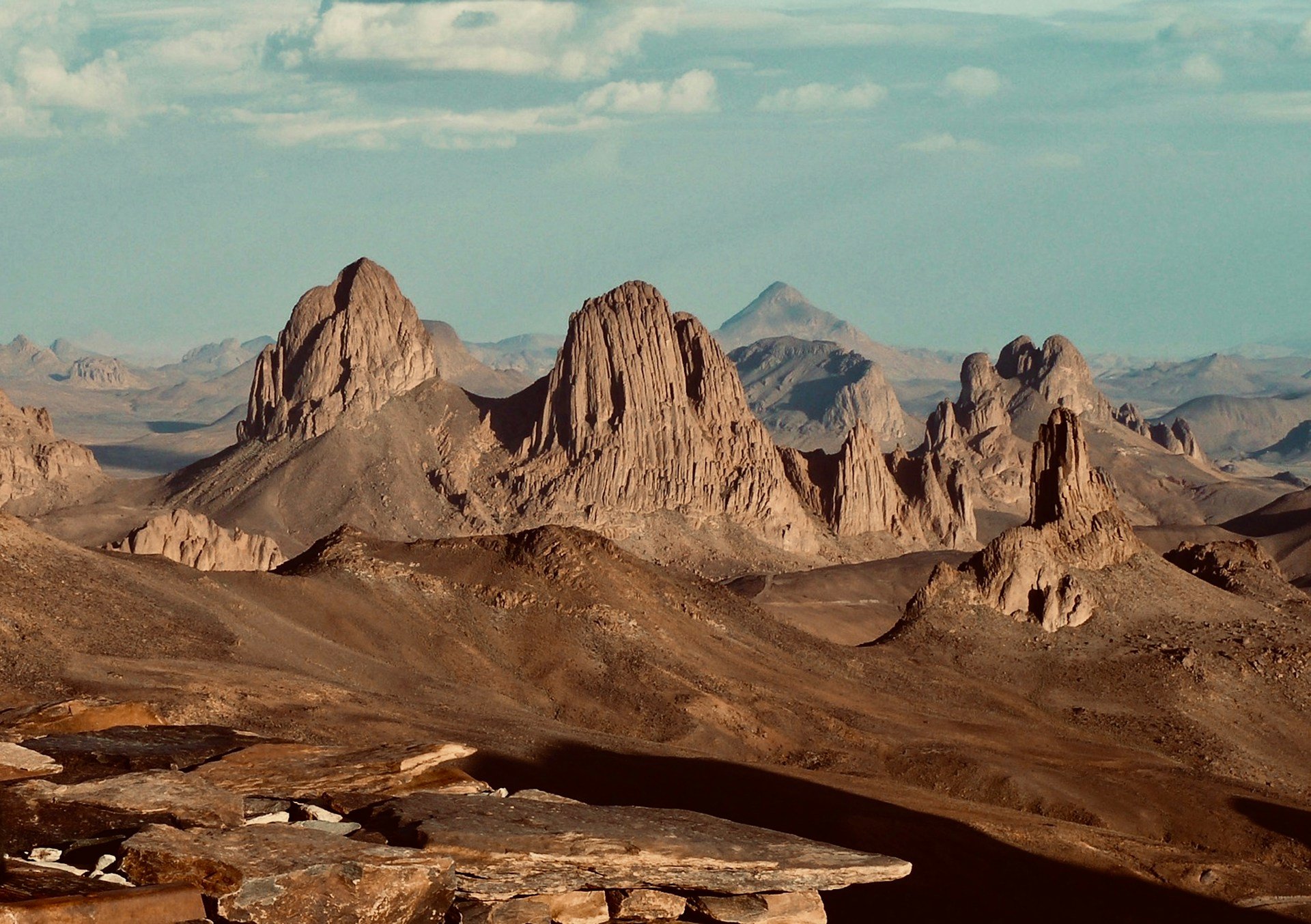
Algeria
Africa's largest country, home to Roman ruins that would be mobbed in Italy, Sahara dunes that go on for days, and a capital that almost no Western tourist has ever visited. The question isn't why go. It's why you haven't gone already.
What You're Actually Getting Into
Algeria is the largest country in Africa and one of the least visited on earth. Not because there's nothing to see. There's an extraordinary amount to see. It's because the visa process has historically been difficult, the tourist infrastructure is thin, and it sits in a part of the world that news headlines have not been kind to. All of that is worth understanding before you go. None of it should stop you.
What you actually get: Roman ruins at Timgad and Djemila that are genuinely better preserved than most of what you'll see in Italy, and you'll have them nearly to yourself. A Sahara that covers over 80 percent of the country's landmass, with dunes and rock formations and prehistoric cave paintings at Tassili n'Ajjer that the UN has called one of the most remarkable art collections on earth. A capital city, Algiers, that climbs up a steep hillside above the Mediterranean and contains a UNESCO-listed Casbah that's falling apart in the most beautiful possible way.
The practical reality: Algeria is not set up for casual independent tourism the way Morocco or Tunisia are. Getting a visa takes planning. Deep Sahara travel requires an authorized guide by law. English is less useful than French. The country runs on its own schedule and isn't particularly interested in changing that for visitors. If you treat this as a feature rather than a bug, you'll have one of the most singular travel experiences available anywhere.
The one thing that surprises everyone who goes: the hospitality. Algerians are not used to Western tourists and react with a warmth that's hard to describe without sounding like a cliche. Strangers invite you for tea before you've worked out what street you're on. People go significantly out of their way to help. You will be the most interesting person in the room most places you go, and that's not a bad way to travel.
Algeria at a Glance
A History Worth Knowing
The land that is now Algeria has been continuously inhabited for over 1.8 million years. The earliest Algerians, the Berber people (who call themselves Imazighen, "free people"), were here long before the Greeks, Phoenicians, Romans, Arabs, Ottomans, or French showed up and tried to claim the place. That sequence of arrivals and impositions is essentially the story of Algeria, and understanding it makes everything you see on the ground make more sense.
Carthage, across the water in what is now Tunisia, controlled much of the North African coast until Rome destroyed it in 146 BCE and the Romans moved in. What they built in Algeria is extraordinary and barely visited. Timgad was a complete Roman city built in 100 CE on a perfect grid plan in the Aures Mountains. Today you walk its colonnaded streets and look at its triumphal arch and its library and its forum in near-complete silence. Djemila, in the mountains above Constantine, is even more dramatic: a Roman city built on a mountain spur, its temples and basilica still largely intact. Neither gets a fraction of the attention they deserve.
The Arab conquests of the 7th century brought Islam and Arabic. The Ottomans arrived in the 16th century and ran the place loosely through local rulers called deys, whose most profitable enterprise was Mediterranean piracy. In 1830, France used a diplomatic dispute as a pretext to invade. What followed was one of colonial history's bloodier episodes: mass displacement, the deliberate destruction of existing social structures, settlement by European colonists, and a decades-long suppression of Berber and Arab culture. By the 1950s, roughly one million Europeans lived in Algeria alongside nine million Algerians who were systematically excluded from political life.
The independence war, 1954 to 1962, was fought with exceptional ferocity on both sides. French military tactics in the Battle of Algiers became a textbook case in counterinsurgency and torture. The FLN (National Liberation Front) was not without its own atrocities. Somewhere between 150,000 and one million Algerians died, depending on who is counting and when. French Algerians, the pieds-noirs, left en masse after independence. France and Algeria still argue about the war, its death toll, and who owes whom an apology. When you're in the Casbah of Algiers or walking Timgad's streets, this history is present even when nobody mentions it.
Independence in 1962 brought single-party rule under the FLN. The 1990s brought something much worse: a decade of civil conflict after the military cancelled elections that Islamist parties were poised to win. The "Black Decade" killed between 100,000 and 200,000 people and left scars that explain much of the country's current caution about political openness. Algeria today is more stable than it has been in decades, still run by a military-backed government, and sitting on substantial oil and gas reserves that fund a large state apparatus. The Hirak protest movement of 2019 showed a population willing to push for change. How far that change goes remains one of North Africa's most interesting open questions.
Imazighen people settled across North Africa. Their language and culture still survive today.
Rome destroys Carthage and takes North Africa. Timgad and Djemila follow in the next two centuries.
Islam arrives. Arabic becomes the dominant language over the following centuries.
Algiers becomes an Ottoman regency. The Barbary corsairs make the city wealthy and feared.
132 years of colonial rule begin. One of history's more brutal colonizations.
Eight years of conflict. Algeria wins independence on July 5, 1962.
Civil conflict after cancelled elections. Over 100,000 dead. The country still carries this weight.
More stable. Cautiously opening. One of Africa's largest economies and its most under-visited destinations.
Top Destinations
Algeria's geography is a north-south drama. The Mediterranean coast and Tell Atlas mountains in the north hold the cities, the Roman ruins, and the bulk of the infrastructure. The Sahara, which begins south of the Saharan Atlas range, holds the most extraordinary landscapes on the continent. Most visitors combine a few days in Algiers with either the Roman ruins circuit in the northeast or a Sahara expedition in the south. Doing both in one trip is ambitious but doable in two weeks.
Algiers
Algiers is a city that climbs. The white buildings stack up a steep hillside from the port and the modern lower town up to the Casbah, a UNESCO World Heritage site of narrow lanes, Ottoman palaces, and crumbling courtyard houses that look like they were designed by someone who found flat surfaces morally objectionable. The Casbah is genuinely extraordinary and genuinely in need of restoration. Get a local guide for the upper Casbah: the lanes are confusing enough that even locals describe getting lost in them. The lower town, built by the French, has wide boulevards, good cafes, and the kind of European-North African overlap that's specific to this coast. Allow three days minimum. The National Museum of Antiquities near the Jardin d'Essai is worth an afternoon: Roman mosaics the size of swimming pools, mostly unvisited.
Timgad
Built in 100 CE by Emperor Trajan as a veteran colony in the Aures Mountains, Timgad is one of the best-preserved Roman cities anywhere in the world. The perfect grid of its original plan is still legible from the air. Walk the main colonnaded street, the decumanus maximus, from one end to the other and you pass a forum, a theater, a library (one of the oldest on earth), public baths, and Trajan's Arch, which is 12 meters tall and still standing. On a good day you'll share it with a handful of other visitors. On a slow day, you'll have it entirely to yourself. Either way: bring water, wear a hat, and allocate a full morning.
Djemila
An hour's drive from Constantine, Djemila sits on a mountain ridge at 900 meters. The Romans called it Cuicul and built it with more verticality than the flat-plain cities: temples, a theater, and two forums built on slopes with views down into pine-covered gorges. The small on-site museum has mosaics that would make the Louvre envious. Goes perfectly with a night in Constantine afterward.
Constantine
Constantine is built on a rock above a deep gorge, connected to the surrounding plateau by a series of bridges that look like something from a film set. The Sidi M'Cid suspension bridge, built in 1912, hangs 175 meters above the Rhumel gorge. The old city has one of the most atmospheric medinas in North Africa. Stay the night at least. The city is friendly, manageable, and almost completely free of tourist infrastructure, which means it's free of tourists.
Tamanrasset
The hub for southern Algeria. From here you access the Hoggar Mountains and their dramatic volcanic rock formations: the Atakor plateau, Assekrem pass with its 360-degree sunrise views, and the hermitage of Charles de Foucauld. It's high altitude (2,700 meters at Assekrem) and cold at night even in winter. A guide is mandatory by law. Hire one in Tamanrasset before heading out. Budget four days minimum for the mountains alone.
Tassili n'Ajjer
A UNESCO World Heritage site since 1982. The Tassili plateau holds over 15,000 prehistoric rock paintings and engravings, some dating back 10,000 years when the Sahara was green and populated. The images show cattle, giraffes, hippopotamuses, and human figures in elaborate headdresses. Getting there requires significant planning: fly to Djanet, then organize a guide and a multi-day camping expedition into the plateau. The logistics are real. So is what you find.
Tipaza
An hour west of Algiers, Tipaza is a Roman and Phoenician ruin site right on the Mediterranean coast. Walk among collapsed columns and mosaic floors with the sea thirty meters away. Albert Camus wrote about Tipaza with unusual intensity: "I understood here that there is a beauty in the world which is not human, and before which I feel like an alien." The ruins are real and photogenic. The beach nearby is where Algerians spend summer weekends. Both experiences are worth having.
Oran
Algeria's second city has a different personality from Algiers: more relaxed, more open, with a Spanish colonial overlay from the 15th century that's left its mark on the architecture. The Santa Cruz fortress on the hill above the city gives views over the bay. Oran is also the birthplace of raï music, the genre that blends Bedouin folk music with Western pop and that the government tried to suppress for decades. Find it live if you can.
Culture & Etiquette
Algeria is a Muslim-majority country with a secular constitution and a complex relationship between the two. In the cities you'll see women in full hijab and women in jeans and everything between. In the south among Tuareg communities the gender dynamics are almost inverted by Western assumptions: Tuareg women have traditionally had considerably more social freedom than men in many respects. The country is not monolithic and doesn't respond well to being treated as one.
What matters practically: dress modestly outside of hotel pools and beach areas. During Ramadan, eating, drinking, and smoking in public during daylight hours is genuinely offensive and also sometimes technically illegal. The warmth of Algerian hospitality is real and not transactional. When someone invites you for tea or coffee, they mean it. Accept when you can.
Refusing tea or food when offered is a genuine slight. Say yes. You can always drink slowly. The conversation that comes with it is worth more than the caffeine.
Shoulders and knees covered outside of beach or hotel contexts. This applies to men too in traditional areas. In Algiers you can be more relaxed, in smaller towns less so.
"Shukran" (thank you in Arabic) and "merci" go a long way. "La ilaha" in greeting contexts will earn immediate respect in traditional areas. Even bad French beats expecting English.
Always ask. Many people are happy to be photographed. Some, particularly women in traditional dress, prefer not. The ask itself communicates respect that matters here.
In homes, mosques, and many traditional spaces. Watch what the person hosting you does and follow it without being told.
Genuinely offensive and in some contexts technically prohibited. Plan meals inside your hotel or in private spaces during daylight. The month itself is a cultural experience worth engaging with respectfully.
Security services are present and visible. Do not photograph checkpoints, military installations, ports, or anything that could be interpreted as a security risk. The consequences can be disproportionate.
Algerians discuss politics passionately among themselves. As a foreign visitor, tread carefully. Opinions about the government, the military, or the independence war are complex and deeply personal.
Some areas, particularly in the south and more conservative towns, have no alcohol at all. Don't arrive expecting a hotel bar when one doesn't exist. Research your specific accommodation.
The upper Casbah in Algiers is fascinating by day with a guide. At night in the narrow upper lanes, the risk calculus changes. Use your judgment. This is not paranoia, it's navigation.
Raï Music
Born in Oran in the early 20th century and suppressed by conservative elements and later by the government during the civil conflict, raï is one of North Africa's great musical exports. Khaled, Cheb Mami, and Cheb Hasni are the names that matter. Find it live in Oran if you can. It sounds like what happens when Bedouin folk music meets heartbreak and doesn't care who's watching.
Coffee Culture
Algerian café culture is serious and almost exclusively male in traditional establishments, particularly outside Algiers. Coffee is served strong, black, and in small glasses. The ritual of sitting in a café for two hours over one coffee and watching the street go by is a genuine local institution. Some cafes in Algiers are mixed and welcome everyone. Ask at your hotel which ones are appropriate for your group.
Greeting Ritual
Greetings matter here more than in most countries you've visited. Between men, handshakes and sometimes cheek kisses. Across genders in traditional contexts, wait for the other person to extend their hand first. Rushing past greetings to get to the transaction is noticed and remembered. The exchange of wellbeing questions before any business is not small talk, it is the business.
Ramadan
The country operates on a different schedule entirely during Ramadan. Shops close during the day. The streets are quiet through the afternoon and then come alive after iftar, the breaking of the fast. Restaurants fill at sunset. The mood shifts from exhausted to celebratory in about twenty minutes. Visiting during Ramadan is genuinely interesting if you approach it on its own terms rather than as an inconvenience to your plans.
Food & Drink
Algerian food is North African cooking with its own specific emphases, and it is considerably better than the international profile it has. The cuisine draws on Berber, Ottoman, Arab, and French influences in ways that don't always overlap with what you'd find in Morocco or Tunisia. The food is hearty, aromatic, and built around communal eating. Restaurant culture in cities is developing but the best meals still happen in private homes.
The staple: couscous, which in Algeria is coarser than the Moroccan version and served with braised lamb, chickpeas, and root vegetables in a rich stew ladled over the top. Friday couscous is essentially a national institution. Refuse it at your peril and social standing.
Couscous
The flagship dish. Algeria's version uses larger semolina grains than the Moroccan style, steamed over a broth and served with lamb, merguez sausage, and a heap of vegetables including turnips, chickpeas, and carrots. The broth is spooned over to taste. Arguing about whose couscous is the best is a national pastime. The answer is always someone's grandmother.
Chorba
A thick, spiced soup built on tomatoes, chickpeas, and lamb or chicken, fragrant with coriander and ras el hanout spice blend. Eaten at the start of the iftar meal to break the fast, and at lunch in most Algerian households. Order it when you see it in a restaurant. It is warming, filling, and costs almost nothing.
Pastilla and Pastries
The Ottoman and Moorish influence on Algerian pastry is spectacular. Baklava in several local variants, makroud (semolina and date pastries), griwech (honey-fried dough), and the multi-layered pastilla. Buy from a patisserie rather than a hotel. The standard is incomparably higher and the price is negligible.
Mechoui
A whole sheep or lamb slow-roasted over charcoal in a pit or on a spit, basted with spiced butter, and served communally. The celebration meal for weddings, Eid, and occasions worth marking. If you're invited to a mechoui, you've been given something genuinely rare. Eat with your right hand. Take the meat offered to you, not the best piece on the plate.
Khobz and Matlouh
Algerian bread is served with nearly everything. Khobz is the standard round loaf. Matlouh is a flatbread cooked in a dry pan, thicker and chewier, served warm and perfect for tearing through chorba or dipping in olive oil. Every neighborhood has a bakery that opens at 6am and runs out of the good loaves by 9.
Mint Tea and Coffee
Mint tea, poured from height to create a froth, is the drink of hospitality in traditional and Saharan contexts. Coffee in the cities is strong, dark, and served in small cups with a glass of cold water. In the south among Tuareg communities, you'll be offered a ceremony of three consecutive teas with progressively different flavors. Leaving before the third cup is considered impolite.
When to Go
Honest answer: the correct answer depends entirely on where in Algeria you're going, because the country spans climatic zones that operate on almost no shared logic. The Mediterranean north, the Saharan south, and the mountains in between all need different timing.
Spring
Mar – MayIdeal for the northern coast and the Roman ruins. Wildflowers in the Tell Atlas. The Sahara is warming but still manageable. Best all-round timing for a trip combining north and south.
Autumn
Sep – NovThe coast cools after the summer heat. The Sahara becomes approachable again. October is the sweet spot for most of the country. The light in the Hoggar Mountains in October is extraordinary.
Winter
Nov – FebThe only time to do the deep Sahara comfortably. Days are warm and sunny, 20 to 25°C. Nights are genuinely cold, dropping below zero in the high Hoggar. Pack accordingly. The desert light in December and January is exceptional.
Summer
Jun – AugThe southern Sahara reaches 50°C in summer. This is not uncomfortable-hot. This is medically dangerous. The coast is crowded with domestic tourists. Roman sites in direct sun become exhausting. Summer is for Algerians at the beach, not for foreign visitors doing anything ambitious.
Trip Planning
Algeria requires more advance planning than most destinations you've been to. The visa process, guide requirements for the south, and the relative scarcity of tourist infrastructure mean that arriving without preparation is a recipe for wasted days. Book your Sahara guide before you have your visa. Start the visa process two months before you plan to travel. Have your itinerary roughly planned before you need it for the visa application, because they'll ask.
Ten days is the minimum that makes the trip worthwhile given the visa effort and flight logistics. Two weeks gives you the north and a meaningful Sahara experience. Three weeks lets you go deep.
Algiers
Arrive, recover, orient yourself. Day two: the Casbah with a local guide (essential). National Museum of Antiquities in the afternoon. Day three: day trip to Tipaza, Roman ruins on the Mediterranean coast. Buy bread from the bakery on the way back.
Constantine + Djemila
Fly or take the train to Constantine. Walk the gorge bridges in the evening. Day five: drive to Djemila for the hilltop ruins and the mosaic museum. Return to Constantine for dinner.
Timgad + Batna
A full morning at Timgad. This is the Roman city you came to see. Spend at least four hours. Base in Batna. The town is functional, the ruins are extraordinary, the contrast is Algeria in a nutshell.
Fly to Tamanrasset
Three days in the Hoggar with your pre-booked guide. Assekrem sunrise on day nine. Camel trek on day ten. Fly back to Algiers for your return flight.
Algiers
Three full days in the capital. Casbah on day two, Tipaza day trip on day three. Museum of Modern Art. A slow evening in a café on Rue Didouche Mourad watching the city negotiate itself.
Constantine + Djemila + Timgad
The Roman ruin circuit. Constantine base, Djemila and Timgad as full-day excursions. These three places in combination are worth the entire trip to Algeria on their own.
Tamanrasset + Hoggar Mountains
Five days with your guide. Assekrem sunrise, volcanic landscapes, traditional Tuareg camp. This is the piece of Algeria that nobody back home has seen and that you'll be describing for years.
Oran
Fly Tamanrasset to Oran. Three days in Algeria's second city. Santa Cruz fortress, the Spanish-influenced old quarter, and an evening trying to find live raï music. Fly home from Oran if direct flights are available to your destination.
Algiers in Depth
Four days lets you go slow. Hire a Casbah specialist guide for two separate sessions covering different sections. The Bardo Museum. The Jardin d'Essai du Hamma botanical garden. Evening walks along the corniche.
The Roman Circuit + Aures Mountains
Constantine, Djemila, Timgad, plus time in the Aures Mountains among Chaouia Berber villages. The landscape between the ruins is itself worth seeing: cedar forests, gorges, traditional stone architecture.
Deep Sahara: Tamanrasset + Tassili n'Ajjer
Fly to Tamanrasset for the Hoggar, then continue to Djanet for Tassili n'Ajjer. The prehistoric rock art plateau requires a minimum three-day camping expedition. This is where the trip becomes genuinely rare.
Oran + Mediterranean Coast
Fly back north to Oran. Day trips to Tlemcen (medieval Islamic architecture, largely unvisited) and the Beni Saf coastline. Slow down. Sit in cafes. Let Algeria find you rather than the other way around.
Vaccinations
Recommended: Hepatitis A, Hepatitis B, Typhoid, and routine vaccines up to date. If spending time in rural areas, consider Rabies. Meningitis is recommended for the Sahara regions. Malaria risk is low in the north; limited risk in some southern border areas. Consult a travel health clinic.
Full vaccine info →Connectivity
Algerie Telecom and Djezzy offer local SIMs at the airport. An Airalo eSIM for North Africa works before you arrive. Data in cities is reliable. In the deep Sahara there is no signal outside Tamanrasset and a few oases. This is part of the experience.
Get Algeria eSIM →Power & Plugs
230V, Type C and F plugs (European standard). UK and US visitors need adapters. Outages are infrequent in cities but can happen. Power banks are worth carrying for day trips away from hotels.
Language
French is your most useful tool as a foreign visitor. Arabic (Darija dialect, notably different from Egyptian Arabic) is the national language. Tamazight is increasingly visible on signage. English is limited outside major hotel chains. Invest in basic French before you go.
Travel Insurance
Non-negotiable. Medical evacuation from the Sahara is expensive and complicated. Ensure your policy explicitly covers adventure activities if you're doing Sahara trekking. Check that it covers the region given current travel advisories in your home country.
Cash is King
Algeria is heavily cash-based. The Algerian dinar is not freely convertible outside the country. Exchange money at the airport, banks, or official exchange offices only. Do not use the black market: it is illegal, the rate difference has narrowed, and getting caught creates serious problems. ATMs in cities work with international cards.
Transport in Algeria
Algeria is a large country with limited tourist transport infrastructure. Domestic flights are the most practical way to cover serious distances, and Air Algérie connects all major cities and the southern hubs of Tamanrasset and Djanet with reasonable frequency. Trains connect the northern cities adequately. Long-distance buses (the main ones run by the state company SNTV) cover the north comprehensively if slowly. Do not expect the journey times shown on Google Maps to be accurate.
Domestic Flights
DZD 8,000–25,000/routeAir Algérie is the practical way to get south. Algiers to Tamanrasset, Algiers to Djanet, and connections between cities. Book in advance; flights to southern destinations fill up. The airline is functional rather than comfortable. That's fine.
Trains (SNTF)
DZD 500–1,500/tripConnects Algiers to Oran, Constantine, and Annaba with reasonable frequency. Comfortable enough. Slow: the 350km Algiers to Oran route takes around 4 hours. No trains south of the Tell Atlas. Book at the station or on the SNTF website.
Long-Distance Buses
DZD 300–1,500/routeCover the north comprehensively and cheaply. Not always comfortable. Departure times can be approximate. The main terminal in Algiers is at Caroubier. Useful for the short Constantine to Batna route for Timgad access.
Taxis
Negotiate before you rideTaxis in Algiers are yellow and numerous. Meters are not always used. Agree on a price before you get in, or use the Yango ride-hailing app which is active in Algiers and works reliably. Petit taxis are for city travel; grand taxis do intercity shared routes.
Car Rental (North)
DZD 5,000–10,000/dayPractical for the Roman ruins circuit where you want flexibility between Batna, Timgad, and Djemila. International rental agencies operate at major airports. Traffic in Algiers is chaotic enough that you don't want to drive there. Outside cities, roads are generally good in the north.
4x4 + Guide (South)
€80–150/day per personThe only way to move in the deep Sahara. Your guide will provide the vehicle, navigation, fuel, and camp setup. This is not optional: unauthorized off-piste travel in the Sahara is dangerous enough that the law requiring guides exists for genuinely protective reasons.
Algiers Metro
DZD 50/rideA surprisingly modern metro line opened in 2011 connects central Algiers to several neighborhoods. Limited network but useful for the stations it covers. Clean, air-conditioned, and extremely cheap.
Ferry
€80–200/personENTMV operates ferries between Algiers and Marseille, Alicante, and Annaba to Marseille. Crossings take 24 to 40 hours depending on the route. Popular with Algerian diaspora visiting family. A legitimate alternative to flying if you have time and enjoy sea crossings.
Accommodation in Algeria
Algeria's accommodation scene is less developed than its neighbors. In Algiers, you have a range from international chains (Sofitel, Hilton, Sheraton) to mid-range and basic local hotels. Outside the capital, options narrow quickly. In Tamanrasset and the Sahara, your guide will typically arrange camp accommodation: tents on the sand under extraordinary stars, which is genuinely the correct way to experience the desert. The camps are simple, warm-ish at night if you have the right sleeping bag, and worth every bit of the basic-ness.
International Hotels
€80–180/nightSofitel Algiers, El Aurassi, and Hilton operate to international standards in Algiers. Useful if you need reliable wifi, pool access, and an English-speaking reception. Remove the most unpredictable variables from your stay at a cost that's reasonable by European standards.
Local Hotels
€20–60/nightMid-range local hotels in Algiers and Constantine are perfectly adequate: clean rooms, functioning hot water, and a breakfast that usually involves good bread, olive oil, and strong coffee. Variable quality; read recent reviews before booking.
Desert Camp
Included in guide packageYour guide will organize camping in the Sahara as part of any expedition package. Proper tents, cooking gear, and the kind of night sky that makes you realize you've been living under light pollution your entire life. This is the accommodation to plan your entire trip around.
Guesthouses (Gites)
€15–35/nightIncreasingly available in smaller towns and the Aures Mountains. Family-run, meals often included, and the best way to eat home-cooked Algerian food. Quality varies but the experience is almost always warmer than any hotel equivalent.
Budget Planning
Algeria is genuinely cheap once you're inside the country. Fuel, food, and local transport are heavily subsidized by oil revenues and cost a fraction of European equivalents. The main costs for foreign visitors are flights (which can be expensive, particularly to the southern cities), the Sahara guide fee (which is worth every dinar), and accommodation in Algiers if you go with an international hotel. Day-to-day Algeria is affordable at a level that will surprise you.
Note: the official exchange rate at banks and airport desks is the one to use. The informal market is not worth the legal risk.
- Local hotel or guesthouse
- Restaurant meals (DZD 400–800 per meal)
- Bus and shared taxi transport
- Free ruins, mosques, and medina walking
- Excludes Sahara guide costs
- Mid-range hotel or guesthouse with meals
- Mix of restaurants and local cafes
- Train and some domestic flights
- Paid attractions and a guided Casbah walk
- Excludes Sahara guide package
- International hotel in Algiers
- Good restaurants and full Algerian dining
- Domestic flights throughout
- Private guided Sahara expedition (amortized)
- Full guide and 4x4 in the south
Quick Reference Prices
Visa & Entry
Algeria requires advance visas for most Western passport holders, and this is the single biggest logistical hurdle of the trip. The process has improved significantly since 2022 with the introduction of an online application portal for several nationalities. Apply a minimum of six to eight weeks before travel. The Algerian embassy in your country will have the current requirements, which do change.
What you'll typically need: a completed visa application, valid passport, passport photos, confirmed flights and accommodation booking, a rough itinerary, travel insurance documentation, and proof of financial means (a bank statement covering the last three months). Some nationalities also require a letter of invitation. The tourist visa (Type C) is typically issued for 30 or 90 days. Single or double entry options exist.
Citizens of Arab League and African Union countries have varying arrangements, with some enjoying visa-free or visa-on-arrival access. Check the Ministry of Foreign Affairs of Algeria for the current list.
Apply at least 6 to 8 weeks before travel. Online application now available for several nationalities. Check the Algerian Ministry of Foreign Affairs for the current requirements and your country's Algerian embassy for specific documentation.
Family Travel & Pets
Algeria with children is an interesting proposition. Algerians are exceptionally welcoming to families with children, who get an even warmer reception than adult travelers. Kids will be fussed over, fed, and treated as honored guests in a way that makes the country feel genuinely safe and warm for family travel. The practical infrastructure for family tourism, on the other hand, is thin. Stroller-friendliness in the medina or the Casbah's steep lanes is minimal. The Roman ruins require walking on uneven ground. The Sahara with young children requires careful planning around heat, sun exposure, and toilet availability (which in the deep desert means none).
The sweet spot for families: Algiers for two or three days, a day trip to Tipaza where the beach is right there after the ruins, and the Roman circuits in the north. Older children (10+) can handle a Sahara expedition with appropriate preparation and will find it extraordinary. The Hoggar Mountains particularly reward the age group that hasn't yet stopped finding things genuinely astonishing.
Timgad for Kids
Children who understand they're walking through a real city from 2,000 years ago tend to find Timgad extraordinary. The theater is particularly good: explain that people sat in the same seats watching plays in 150 CE and watch the mental gears turn. Bring shade and water. The site has minimal facilities.
Tipaza Beach
After an hour at the Roman ruins, the Mediterranean beach five minutes away solves every child's patience problem. A full day combining history and swimming is genuinely manageable and one of the better family day trips anywhere in North Africa.
Sahara Nights (Older Kids)
Children 10 and older who can camp and handle basic desert conditions will be changed by a Sahara night. The Milky Way is visible as a physical object. The silence is complete. The sand dunes at dawn are exactly what they imagined. Worth it for the right age group.
Food for Kids
Algerian food is generally kind to children. Bread is always present and always good. Couscous is usually acceptable. Chicken is available most places. Street kefta sandwiches are universally popular. The one challenge: finding vegetarian or allergen-specific options outside Algiers requires effort.
Sun and Heat
The UV index across Algeria in summer is dangerous. Factor 50 sunscreen, hats, and genuine shade breaks are non-optional for children. Plan outdoor Roman site visits before 10am and after 4pm. Midday in the Sahara is for resting in shade, not walking. This applies to adults too.
The Hospitality Effect
Traveling in Algeria with children opens social doors that stay closed for adult-only visitors. You will be invited for tea, given pastries, and have conversations that turn into invitations to people's homes. This is part of what makes Algeria with a family a different experience from almost anywhere else.
Traveling with Pets
Bringing pets to Algeria is not straightforward. Dogs in particular face cultural complications beyond the administrative ones: dogs are viewed negatively in some traditional Islamic contexts, particularly in rural and conservative areas. This creates practical problems in accommodation (most local hotels will not accept dogs) and in public spaces where your pet may generate genuine negative reactions.
The administrative requirements: a microchip, rabies vaccination, and a health certificate issued within the last 10 days by an accredited veterinarian. Algeria does not require a rabies antibody titer test but the documentation must be presented in both French and Arabic or with a certified translation. Contact the Algerian embassy in your country for the current requirements, as these change.
Honestly: leave pets at home for Algeria. The country is not set up for pet-traveling tourists, the logistics are genuinely difficult, and the experience you're going to have in the Sahara is not improved by managing an animal in extreme heat with no facilities. This is one trip where your pet is better off with someone they trust at home.
Safety in Algeria
Algeria is safer than its international reputation suggests for visitors who stay in the north and use authorized guides in the south. The cities of Algiers, Oran, Constantine, and Annaba are generally safe for tourists. Petty crime exists, as it does in any major city. Violent crime targeting foreign tourists is uncommon.
The situation is different in specific border regions, which carry genuine risk and which no sane traveler should approach without comprehensive current intelligence and very specific reasons. These are not "be careful" zones. They are actual danger zones.
Northern Cities
Algiers, Oran, Constantine, and Annaba are generally safe. Be aware in crowded markets. The Casbah warrants appropriate caution in the upper sections after dark, like any dense urban maze in any city.
Roman Ruins Circuit
Timgad, Djemila, and Tipaza are safe, frequently visited by domestic tourists and school groups, and pose no notable security concerns beyond the usual advice about managing valuables.
Central Sahara (with guide)
The Hoggar Mountains and Tamanrasset region are considered safe with an authorized guide. The mandatory guide requirement exists partly for navigational and medical safety and partly for security. Follow it.
Solo Women
Algeria requires more situational awareness than some destinations for solo women travelers. Unsolicited attention in cities is common and ranges from harmless to uncomfortable. Traveling with a companion reduces this significantly. Dress modestly and confidently. The majority of Algerians you interact with will be respectful and helpful.
Border Regions: Libya, Mali, Niger
These areas carry serious risk from armed groups and smuggling activity. The US, UK, EU, and Australian governments all advise against travel near the Libyan, Malian, and Nigerien borders. This is not bureaucratic overcaution. Do not go to these areas.
Photography Restrictions
Do not photograph military personnel, vehicles, checkpoints, government buildings, airports, ports, or infrastructure. This is taken seriously. Ask before photographing anything official-looking. When in doubt, put the camera away.
Emergency Information
Your Embassy in Algiers
Most embassies are in the Hydra and El Mouradia districts of Algiers.
Book Your Algeria Trip
Everything in one place. These are services worth actually using.
The Country Nobody Visits, That Everyone Who Visits Returns To
There's something that happens in Algeria that doesn't happen in the countries that have figured out tourism. Because you're rare, you're actually seen. The shopkeeper in the Constantine medina who spends forty minutes showing you how he makes his jewelry isn't performing for a camera. The family that invites you in for tea on a street in Batna isn't following a hospitality script. It's just what happens here.
The Tuareg have a concept, asshak, which roughly translates as the dignity and composure you owe to yourself and to others, particularly in difficult conditions. The idea that how you conduct yourself in hardship is a form of character. You'll see it in the desert guides who navigate dunes without GPS, cook a three-course meal on a camp stove in 40km winds, and still pour your tea from height to get the right froth. That's not performance. That's a people who've been living well in a hard place for a very long time. Go see it while it's still like this.