
What You're Actually Getting Into
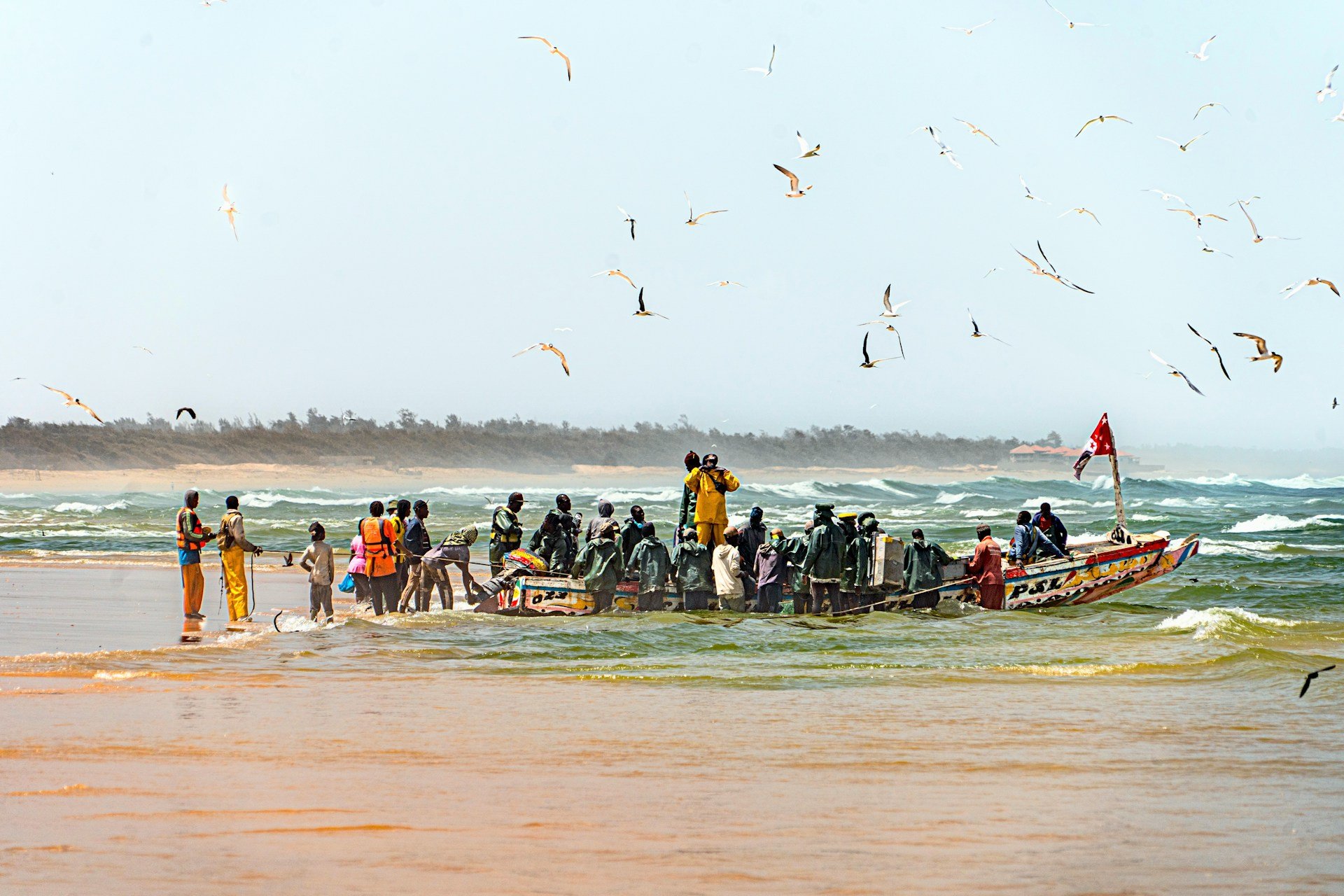
Senegal is the westernmost country in mainland Africa and, for most first-time visitors, their introduction to West Africa altogether. It is not a beach-resort country pretending otherwise: Dakar is a real working capital of roughly 18 million countrymen, loud, dusty, self-assured, sitting on a peninsula that juts further into the Atlantic than any other point on the continent. What draws people back is not any single sight but the accumulation of small things, an attaya tea ceremony that takes an hour and refuses to be rushed, a wrestling match that shuts down whole neighborhoods, a stranger who insists you eat from their bowl because that is simply what is done.
Senegal is also one of West Africa's most politically stable democracies, with a history of peaceful transfers of power that is genuinely unusual in the region, and a tourism infrastructure built up over decades of French, then international, visitors. Dakar has a real hotel scene from backpacker hostel to five-star, Gorée Island is a short and reliable ferry ride away, and the roads connecting Dakar to Saint-Louis and the Petite Côte resort towns are in decent shape. This is not an off-grid destination; it is a well-trodden one that has kept its edge.
The honest complications
Dakar's traffic is genuinely bad, and a short-looking trip across the peninsula at rush hour can eat an hour. Street hustling around major tourist sites, Gorée's ferry terminal and the airport, is persistent though rarely aggressive, and bargaining is expected everywhere from taxis to market stalls. The rainy season (June to October) brings heavy, if usually brief, downpours and higher humidity that catch unprepared visitors off guard. And Senegal's political scene, while stable by regional standards, is currently in a period of flux: President Bassirou Diomaye Faye split publicly from former ally and prime minister Ousmane Sonko in mid-2026 and formed a new party, a development worth being aware of even though it has not translated into any unrest that affects travelers.
A History Worth Knowing
Senegal's coast was a hinge point of the Atlantic slave trade for over three centuries before it became a French colonial capital, then the pilot state of African independence under a poet-president, then one of the continent's more durable democracies. The short version: centuries as a coastal trading and slaving frontier, French colonization with Dakar as the administrative capital of French West Africa, independence in 1960 under Léopold Sédar Senghor, and a modern history mostly free of the coups and civil wars that marked many of its neighbors, with one significant exception in the south.
- 15th-19th centuries
The slave trade era. Gorée Island and the Petite Côte become key points in the Atlantic slave trade, passing through Portuguese, Dutch, English and French control. Historians still debate the exact numbers who passed through Gorée specifically, but its symbolic weight is undisputed.
- 1895-1958
French West Africa. Dakar becomes the administrative capital of French West Africa, a federation spanning eight territories, and is rebuilt as a grand colonial port city.
- 1960
Independence. Senegal becomes fully independent on 20 June, after the brief Mali Federation with French Sudan dissolves. Poet and statesman Léopold Sédar Senghor becomes the first president.
- 1982-2004
The Casamance conflict. A separatist rebellion in the southern Casamance region, led by the MFDC, becomes Africa's longest-running conflict at the time. A 2004 peace accord ends large-scale fighting, though sporadic incidents and landmines persist in some border areas.
- 2002
The Joola disaster. The government ferry Le Joola capsizes off the Gambian coast en route from Ziguinchor to Dakar, killing 1,863 people, more than died on the Titanic. It remains one of the worst maritime disasters in history and a defining national trauma, especially for Casamance.
- 2024-present
A new generation. Bassirou Diomaye Faye wins the presidency in a peaceful transition, Senegal's fourth since independence, underscoring the country's reputation for stable, if occasionally turbulent, democratic politics.
Read the full history: Négritude, colonial Dakar and the Casamance peace
Léopold Sédar Senghor was, before he was a politician, one of the founders of the Négritude literary and philosophical movement alongside Aimé Césaire, a project of reclaiming and celebrating Black African identity against French colonial assimilation. As president from 1960 to 1980, he presided over a one-party-dominant but relatively open political system, cultivated close ties with France, and voluntarily stepped down in 1980, a rarity among his contemporaries across the continent. His successor Abdou Diouf continued a broadly stable, if economically difficult, trajectory through the 1980s and 1990s.
Dakar's colonial-era Plateau district, still the administrative and business heart of the city, preserves much of the grand French urban planning from its time as capital of French West Africa: wide boulevards, the Presidential Palace, and civic buildings that would not look out of place in a French provincial city, dropped onto a West African peninsula.
Casamance, the region south of The Gambia, is geographically and culturally distinct from the rest of Senegal, more forested, more Catholic and animist alongside its Muslim majority, and historically felt marginalized by Dakar. The Mouvement des Forces Démocratiques de la Casamance (MFDC) began its insurgency in December 1982; the conflict claimed thousands of lives over two decades before a 2004 peace agreement, brokered with help from the Catholic church and civil society, wound down most large-scale fighting. Sporadic clashes and banditry near the Guinea-Bissau and Gambia borders continue at a much lower level, and landmines laid during the conflict remain in some rural areas away from the main tourist routes.
The Joola disaster of 26 September 2002 disproportionately affected Casamance families, since the ferry was the region's main affordable transport link to the capital and was overloaded with students and workers traveling for the school year. Its legacy still shapes how seriously Senegal treats maritime and transport safety today.
Top Destinations
Senegal divides into five zones most visitors combine in some order: Dakar and the Cap Vert peninsula, Gorée Island just offshore, the former colonial capital Saint-Louis in the north, the mangrove-laced Sine-Saloum Delta south of the capital, and the Casamance region further south still. A week covers the first two well plus one further trip; two weeks makes a proper circuit.
Dakar, the capital that never quite sits still
Dakar sits on the tip of the Cap Vert peninsula, the westernmost point of mainland Africa, and packs colonial Plateau, dense residential Médina, and the upscale beach suburbs of Almadies and Ngor into one sprawling city. The Théodore Monod African Art Museum (still widely called by its old name, the IFAN Museum) holds nearly 10,000 pieces of traditional African art in a building that predates most of what's around it, and the newer Museum of Black Civilizations, a circular structure modeled on traditional Casamance houses, opened in 2018 to fulfil a half-century-old dream of Senghor's. Outside the peninsula's northern hills, the 50-metre bronze African Renaissance Monument is visible from much of the city; the base is free to walk around, with a modest fee to climb inside for the view. Budget two to three days for Dakar itself.
Gorée Island, small island, heavy history
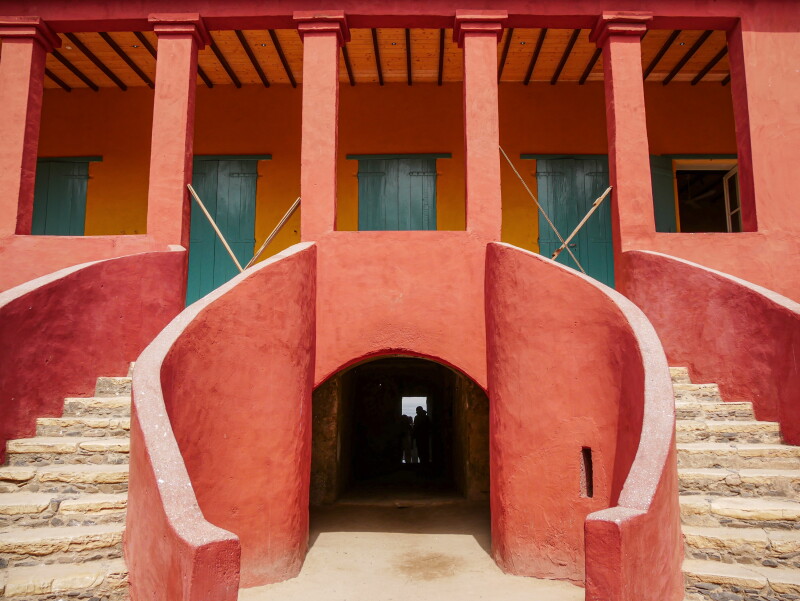
Gorée sits about 3.5km off Dakar's Plateau district, a 20 to 30 minute ferry ride and a genuine change of pace: no cars, sand streets, bougainvillea over pastel colonial facades. It has been a UNESCO World Heritage Site since 1978, largely on the strength of the House of Slaves (Maison des Esclaves), a red 18th-century building whose Door of No Return, opening straight onto the Atlantic, is the island's central and sobering landmark. Historians continue to debate exactly how many enslaved people passed through this specific building versus Gorée's broader role in the trade, a debate worth knowing about rather than a reason to skip the visit. Beyond the House of Slaves, the island's small IFAN annex, its old fort, and simply wandering the car-free lanes make for an easy half-day trip.
Saint-Louis, the old colonial capital
Saint-Louis was the capital of French West Africa before Dakar took the title, and its old island town, connected to the mainland by the iron Faidherbe Bridge, is a compact grid of fading colonial architecture that earned its own UNESCO listing. It's about a 4-hour drive north of Dakar, near the Mauritanian border, and pairs naturally with the Djoudj bird sanctuary nearby, one of the largest bird reserves in the world and a major stop for migratory pelicans and flamingos. Quieter and more atmospheric than Dakar, and best explored slowly on foot or by calèche (horse cart) along the river.
Sine-Saloum Delta, mangroves and quiet
A UNESCO World Heritage Site since 2011, the Sine-Saloum Delta is a maze of mangrove channels, saltwater bolongs and traditional Serer fishing villages roughly 3 hours south of Dakar. Pirogue trips through the mangroves at dawn, when pelicans, herons and kingfishers are most active, are the main draw, along with total disconnection from Dakar's noise. It's the natural counterpoint to a Dakar-heavy trip and works well as a 2 to 3 day add-on.
Casamance, lush and complicated
Separated from the rest of Senegal by The Gambia, Casamance is greener, more forested and culturally distinct from the north, with the beach town of Cap Skirring as its main draw: quieter, less developed beaches than the Petite Côte, reached by a 45-minute Air Senegal flight from Dakar rather than the long drive. The region's decades-long separatist conflict wound down after a 2004 peace accord, and the main tourist areas see far less risk than the rural border zones near Guinea-Bissau and The Gambia, where landmines and occasional incidents remain a genuine concern (see the Safety chapter before planning a Casamance trip). Flying rather than driving is the standard advice.
Hidden gems beyond the main circuit
The zones above cover a first or second trip well. With extra days, these reward the detour.
Lac Rose (Lake Retba)
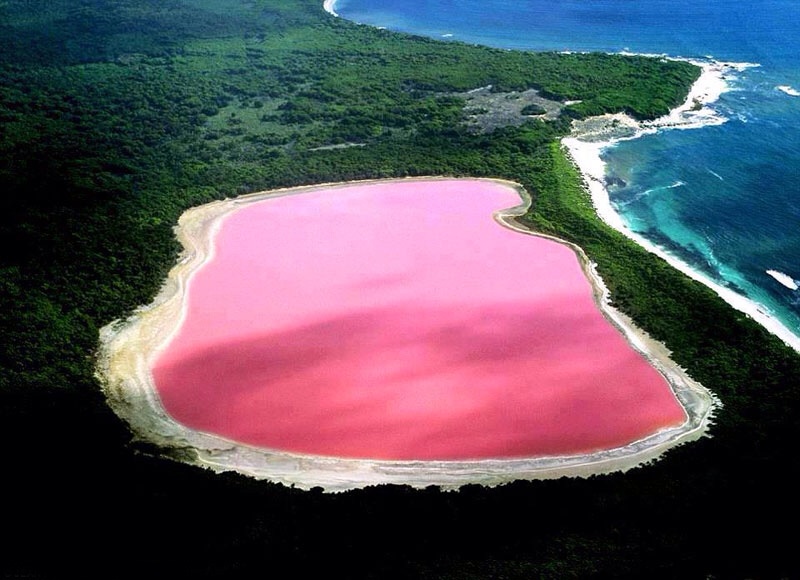
A saline lake whose pink hue, from salt-tolerant algae, faded to green after severe 2022 flooding and has since recovered. Best seen with sun and a fresh wind; salt-harvesting pirogues on the water are a genuine, ongoing local industry, not a show for visitors.
Ngor Right
Senegal's most famous surf break, a long point break made internationally known by the 1966 film "The Endless Summer." Ngor village and its tiny offshore island keep a fishing-village pace despite sitting minutes from Almadies' restaurants.
The Great Mosque of Touba
The spiritual capital of the Mouride Sufi brotherhood and one of the largest mosques in West Africa, built around the tomb of founder Cheikh Amadou Bamba. The annual Grand Magal pilgrimage draws millions; visiting outside that period is calmer and still striking.
Culture & Etiquette
Teranga, roughly "hospitality" in Wolof, is the concept Senegalese themselves reach for first when describing their culture, and it is not tourist-board language: an unhurried, genuine warmth toward guests that shows up in an offered seat, a shared meal, or a stranger walking you somewhere rather than just pointing. Senegal is roughly 95 percent Muslim, dominated by Sufi brotherhoods, chiefly the Mouride and Tijaniyya orders, whose religious leaders (marabouts) hold real social influence alongside a secular, French-modeled state. Christianity and traditional animist practices remain significant in Casamance specifically.
Do
- Greet properly before anything else. A greeting exchange, even brief, before asking a question or starting business is expected and skipping it reads as rude. "Nanga def?" (how are you, Wolof) or "Ça va?" (French) both work.
- Accept the attaya tea ceremony if offered. Three rounds of increasingly sweet green tea, poured from height to build foam, taking an hour or more. Declining outright is unusual; joining even briefly is appreciated.
- Dress modestly outside beach resorts, especially in Médina, Touba and rural areas. Shoulders and knees covered is a safe default for both men and women.
- Use your right hand for eating, giving and receiving, as in much of West Africa.
- Bargain in markets, respectfully and with good humor. It's expected, not confrontational.
Don't
- Photograph people, especially at religious sites, without asking first. Marabouts and Sufi religious figures in particular should not be photographed casually.
- Expect fast service culture. Meals, transactions and conversations move at their own pace; visible impatience lands worse here than at home.
- Discount the wrestling season. Laamb (Senegalese wrestling) is the national sport, not a curiosity; major bouts empty the streets and fill screens nationwide.
- Treat Casamance as culturally interchangeable with the north. Its Catholic and animist communities alongside its Muslim majority, and its own recent conflict history, make it a genuinely distinct region.
- Hand out money to child street vendors reflexively. Well-intentioned giving sustains a cycle that keeps children out of school; support a vetted local organization instead if moved to help.
Deeper culture: mbalax, Laamb wrestling and the Mouride brotherhood
Mbalax. Senegal's dominant popular music genre, built on sabar drumming fused with Cuban, jazz and soul influences. Youssou N'Dour, Senegal's best-known musician internationally, helped define the sound from the 1970s onward and remains a towering cultural figure, having also served as a government minister.
Laamb (Senegalese wrestling). Rooted in Sereer pre-colonial tradition, laamb combines grappling with elaborate pre-match ritual, dance, amulets and spiritual invocation. Top wrestlers are national celebrities on a level with footballers, and bout nights are genuine national events.
The Mouride Brotherhood. Founded by Cheikh Amadou Bamba in the late 19th century, the Mouride Sufi order built Touba into a religious capital and remains one of the most influential social and economic networks in the country, with a strong ethic of labor and discipline. The annual Grand Magal pilgrimage to Touba draws millions of adherents.
Dak'Art. Africa's longest-running contemporary art biennale, held in Dakar since 1992. The 16th edition runs 19 November to 19 December 2026 under the theme "(Anti)fragility," worth timing a visit around if contemporary African art is of interest.
Food & Drink
Senegalese food centers on rice, fish and slow-cooked sauces, eaten communally from a shared bowl in many local settings. The national dish carries UNESCO recognition of its own, and the best versions are rarely in restaurants aimed at visitors, they're at neighborhood spots and market stalls where a full plate costs a few dollars.
Thiéboudienne $3-8
Senegal's national dish and a 2021 UNESCO Intangible Cultural Heritage listing: fish, usually thiof, stuffed with a garlic-parsley rof paste, braised with vegetables in tomato broth, then broken rice cooked in the same liquid until a prized crust, xoon, forms at the bottom.
Yassa $4-10
Chicken or fish marinated and cooked with caramelized onions, lemon and mustard, originally from Casamance and now a national staple. Tangy, simple, and one of the easier Senegalese dishes for first-timers to love immediately.
Mafé $4-10
A rich stew built on a ground-peanut and tomato base, usually with beef, served over rice. Thicker and oilier than peanut stews elsewhere in West Africa, and a good introduction for anyone nervous about spice.
Attaya Usually free, shared
The green tea ceremony, three rounds poured from height to build foam, each round sweeter than the last. A daily ritual across Senegal and a genuine social institution, not a tourist performance.
Bissap $1-2
A deep-red hibiscus juice, sweetened and sometimes flavored with mint or ginger, sold everywhere from street carts to hotel restaurants. Cold bissap is one of the better ways to cool down in the dry-season heat.
Thiakry $1-3
A dessert of millet couscous in sweetened, vanilla-scented yogurt or sour cream, often studded with raisins. A common street-cart treat and a good counterpoint to the heavier mains.
When to Go & Itineraries
November to May is Senegal's dry season and the best window for most travel, with December to February the clear sweet spot: warm days, cool evenings, minimal rain. March and April get hot. June to October is the rainy season, hot and humid with generally brief but heavy afternoon downpours; it's a workable time to visit Dakar itself but a harder one for road trips to Saint-Louis or the Delta.
All seasons compared, with temperatures
| Season | Verdict | Temps | Notes |
|---|---|---|---|
| Dec-Feb | Best | 20-28°C | Cool, dry, comfortable; peak tourist season in Dakar and the Petite Côte |
| Nov & Mar-May | Good | 24-33°C | Dry and reliable; April-May can run hot inland |
| Jun-Oct | Workable (hot, humid) | 27-35°C | Rainy season; brief heavy downpours, higher humidity, some rural roads harder going |
Dakar's Atlantic position keeps it noticeably cooler than inland Senegal year-round; Saint-Louis and the Casamance interior run hotter and more humid than the capital.
Itineraries
A week covers Dakar and Gorée Island properly with one further trip. Two weeks makes room for Saint-Louis in the north and unhurried time in the Sine-Saloum Delta.
- Days 1-3
Dakar. Plateau, the Théodore Monod African Art Museum, the African Renaissance Monument, and an evening in Almadies for seafood and attaya.
- Day 4
Gorée Island. Morning ferry from Plateau, the House of Slaves, an unhurried afternoon on the car-free lanes, last ferry back before dark.
- Days 5-7
Lac Rose & the Petite Côte. A day trip to Lac Rose and Bandia Reserve, then two nights on the Petite Côte around Saly before returning to Dakar for departure.
- Days 1-3
Dakar. As above, with an added half-day for the Museum of Black Civilizations and Ngor village.
- Day 4
Gorée Island. Full day, including the smaller sites beyond the House of Slaves.
- Days 5-7
Saint-Louis & Djoudj. Drive or bus north (4 hours), the old town and Faidherbe Bridge, a morning at Djoudj bird sanctuary.
- Days 8-11
Sine-Saloum Delta. South to the Delta, pirogue mangrove trips at dawn, traditional Serer villages, total disconnection for three unhurried days.
- Days 12-14
Petite Côte & Lac Rose. Bandia Reserve, Lac Rose, and beach time around Saly before flying out of Dakar.
- Days 1-4
Dakar extended. The full city, plus day trips to Lac Rose and Bandia Reserve.
- Day 5
Gorée Island. A full, unrushed day.
- Days 6-9
Saint-Louis & the north. Old town, Djoudj, and the Langue de Barbarie coastal strip.
- Days 10-13
Sine-Saloum Delta. Slow days in the mangroves and fishing villages.
- Days 14-18
Casamance. Fly to Cap Skirring, beach time and Casamance's distinct culture, checking current advisories before booking this leg.
- Days 19-21
Petite Côte return. Fly back to Dakar via the capital, unwind on the Petite Côte before departure.
Getting there & around
Blaise Diagne International Airport (DSS), about 50km southeast of central Dakar near Diass, is Senegal's only major international gateway; expect 60 to 90 minutes to the city center by taxi (roughly $40-65, or 25,000-40,000 CFA), less on the toll expressway with light traffic. Air Senegal, the national carrier, runs the widest network of direct international and regional routes, including year-round service from Paris (CDG) and seasonal flights from Brussels; Delta is currently the only airline flying non-stop from the US, with a year-round route from New York (JFK). Within Senegal, Air Senegal also flies domestically, including the 45-minute hop to Cap Skirring in Casamance.
All transport options with prices: taxis, car rapides, ferries
| Option | Price | Notes |
|---|---|---|
| Yellow taxis (Dakar) | $3-8 per ride | Agree the fare before getting in; meters are rare. Ride apps like Yango operate in Dakar and remove the negotiation. |
| Car rapide / ndiaga ndiaye | Under $1 | Colorful shared minibuses on fixed routes; cheap and authentic but crowded and not signed in English. |
| Gorée ferry | ~$9-11 round trip (foreigners) | From Plateau's ferry terminal; runs roughly 6:15am to 10:30pm, every 1-2 hours. |
| Intercity buses/sept-place taxis | $5-15 | Shared 7-seat taxis leave when full from garages; cover Saint-Louis, the Petite Côte and the Delta region. |
| Domestic flights (Air Senegal) | $80-150 | Dakar-Cap Skirring is the main tourist route, 45 minutes versus a long, less straightforward drive. |
Practical prep: buy a local SIM (Orange or Free) at the airport or in town for cheap data, or get an eSIM before landing. A rental car works for the Petite Côte and Saint-Louis but Dakar's traffic and parking make hiring a driver worthwhile for city days. GetTransfer offers fixed-price airport pickups from DSS, which avoids the arrivals-hall haggling entirely.
Where to stay
Backpacker hostels
Dakar's small hostel scene is concentrated in Ngor and Yoff. Ngor International Hostel, the Ngor-Almadies area's first hostel, and ViaVia Travellers Café in the Yoff fishing village both mix dorms with a genuine traveler community.
Boutique & guesthouses
Small, design-led properties in Ngor and Almadies. La Villa 126 in Ngor Almadies is a compact six-room guesthouse; book directly for the best rates on properties this size.
Upscale Corniche hotels
Pullman Dakar Teranga and King Fahd Palace, both on or near the Corniche des Almadies, cover the international business and leisure mid-to-upper tier with sea views and full amenities.
Top-tier beach resorts
Terrou-Bi Resort and the recently rebranded Noom Hotel Dakar Sea Plaza (formerly Radisson Blu, now a member of Radisson Individuals) sit at the top of Dakar's hotel scene, both with private beach access and full resort facilities.
Budget Planning
Senegal costs more than several of its West African neighbors, mostly because Dakar's hotel and restaurant scene is genuinely international, but a budget trip built around guesthouses, street food and shared transport is still very achievable. The main splurge most travelers make is a night or two at one of Dakar's beach resorts.
- Hostel dorm or basic guesthouse $15-30
- Street food, thieboudienne stalls $3-8
- Car rapides and shared taxis
- Free beaches, one paid site
- Boutique hotel or guesthouse $60-120
- Restaurant meals $15-25/person
- Taxis and the odd domestic flight
- Gorée ferry, museum entries, Bandia safari
- Top Corniche resorts $180-400+
- Fine dining in Almadies
- Private driver and guide
- Cap Skirring flights, private Delta tours
Quick reference prices: meals, transport, entry fees
| Thieboudienne from a market stall | $3-5 |
| Restaurant meal (mid-range) | $15-20 |
| Bissap or coffee | $1-2 |
| Yellow taxi, short Dakar ride | $3-8 |
| Gorée ferry (round trip, foreigner rate) | ~$9-11 |
| DSS airport to Dakar city, taxi | $40-65 |
| African Renaissance Monument, interior | $5-11 |
| Théodore Monod Museum entry | ~$2-9 |
| Dakar-Cap Skirring flight | $80-150 |
Prices reflect August 2026 research and drift over time. The CFA franc is pegged to the euro at a fixed 655.957 rate; its rate against the US dollar and pound floats and is worth checking close to departure.
Visa & Entry
Senegal has an open visa policy for most Western travelers: US, EU, UK, Australian and Canadian citizens enter visa-free for up to 90 days, stamped on arrival at Blaise Diagne International Airport or any land border. This is genuinely free, not a paid "visa on arrival"; be wary of third-party sites that charge for something Senegalese immigration issues at no cost.
✓ Valid passport
At least 6 months validity from date of entry. Keep a photocopy or photo of the data page separate from the original.
✓ Return/onward ticket
May be requested at immigration for air arrivals, though this is rarely enforced strictly for Western passport holders.
✓ Yellow fever certificate (conditional)
Mandatory only if arriving from a country with yellow fever risk. Not required for direct entry from the US, UK or most of Europe, but a travel clinic will likely recommend it regardless.
✓ Accommodation details
Have your first night's address on hand; hotels register foreign guests as standard practice.
| Senegal | The Gambia | |
|---|---|---|
| Language | French official, Wolof widely spoken | English official, easier for Anglophone travelers |
| Depth | Dakar, Gorée, Saint-Louis, the Delta: a real multi-region circuit | A compact, mostly beach-resort circuit |
| Visa | Free for US/UK/EU/Canada/Australia, 90 days | Visa on arrival for some nationalities, fee applies for others |
| Vibe | Bigger, louder, more cosmopolitan capital | Smaller, more package-tourism oriented |
| Best for | Travelers wanting culture and history alongside beach time | Travelers wanting a straightforward, English-language beach break |
Safety, Solo Women & Family
Senegal is safe for the vast majority of visitors. The US State Department rates it Level 1, exercise normal precautions, the same tier as much of Western Europe, and the UK FCDO advises no restrictions for most of the country. The one significant exception is the Casamance region in the south, rated Level 2 by the US for increased caution due to a decades-old separatist conflict that has largely wound down since a 2004 peace accord but left landmines and occasional low-level incidents in rural border areas near Guinea-Bissau and The Gambia. Dakar and the standard tourist circuit, Gorée Island, Saint-Louis, the Petite Côte and the Sine-Saloum Delta, don't carry this caveat.
Petty theft & hustling
Pickpocketing and persistent, if rarely aggressive, street hustling cluster around major tourist sites: the Gorée ferry terminal, the airport, and central Dakar markets. Keep bags closed and in front, and a polite but firm "non, merci" ends most interactions.
Casamance border zones
The rural areas near the Guinea-Bissau and Gambian borders, away from Cap Skirring's tourist infrastructure, carry the region's real risk: landmines and occasional clashes. Fly rather than drive to Casamance, and check current advisories before planning excursions beyond the coast.
Road & ferry safety
Dakar traffic is chaotic and night driving on rural roads is best avoided. Senegal takes maritime safety seriously since the 2002 Joola disaster; the licensed Gorée ferry is well-regulated and safe.
Two more things worth knowing: the political climate and health precautions
The current political climate. President Bassirou Diomaye Faye's public split from former prime minister Ousmane Sonko in mid-2026, and the formation of Faye's new party, mark a genuinely fluid period in Senegalese politics. This has not translated into unrest affecting travelers as of this writing, but it's worth a quick check of current advisories close to departure given how fast political situations can shift.
Health precautions. Malaria risk exists across most of the country outside central Dakar; discuss prophylaxis with a travel clinic. Tap water in Dakar's hotels is generally treated but bottled water is the safer default outside the capital. Standard travel insurance with medical evacuation coverage is strongly recommended given the limited rural medical infrastructure.
The scams worth knowing about
Senegal is not a high-scam destination by regional standards, but two patterns catch uninformed visitors repeatedly.
Unofficial "guides"
Self-appointed guides approach at Gorée's ferry terminal, the airport and central Dakar, offering unsolicited help then demanding payment. A polite decline and continuing to walk works better than engaging.
Taxi overcharging
Unofficial drivers approach arrivals before the official rank and quote inflated fares. Agree a price before getting in, use the official rank, or pre-book a fixed-price transfer.
Inflated "friendship" gifts
A stranger offers a small bracelet or trinket as a "free gift," then insists on payment once accepted. Politely decline unsolicited items outright rather than accepting and negotiating after the fact.
Solo women travelers
Senegal is a reasonable choice for solo women, particularly in Dakar's tourist-facing neighborhoods, Gorée Island and organized-tour settings, where the teranga hospitality culture extends genuinely to visitors. Standard precautions apply: use licensed taxis or ride apps rather than unmarked cars, dress modestly outside beach resorts, and avoid walking alone after dark in unfamiliar parts of Médina or central Dakar, much as in any large capital city. Full detail on our Solo Woman Explorer pages.
Emergency numbers
Embassies in Dakar and practical medical notes
Emergency dispatchers in Senegal communicate primarily in French and Wolof; English-speaking operators are rare, so having a French-speaking hotel staffer or guide call on your behalf speeds things up considerably. The US Embassy in Dakar's after-hours emergency line is +221-33-879-4444.
- USA
- +221-33-879-4000
- France
- +221-33-839-5100
- UK
- +221-33-823-7392
- Germany
- +221-33-889-4884
- Canada
- +221-33-889-4700
For serious medical emergencies, private clinics in Dakar (such as those on the Corniche) offer better standards than public hospitals; medical evacuation to Europe is the standard response for anything critical, which is why evacuation-inclusive travel insurance matters here more than in many destinations.
Family travel
Senegal works well for families comfortable with a more hands-on destination: teranga hospitality extends warmly to children, Bandia Reserve's safari format is an easy win for kids who enjoy animals, and Gorée's car-free lanes are relaxed and safe to explore. The House of Slaves is heavy material better suited to older children able to process the history; younger kids are probably better served by the museums and the wildlife reserve.
Senegal FAQ
Is Senegal safe to visit?
Yes, for the vast majority of the country. The US State Department rates Senegal Level 1, exercise normal precautions, the same as much of Western Europe. The one exception is the Casamance region in the south, rated Level 2 for increased caution due to a decades-old separatist conflict that has largely wound down but left landmines in some rural border areas.
Do I need a visa for Senegal?
No. Citizens of the US, UK, EU, Canada and Australia enter visa-free for up to 90 days with a passport valid at least 6 months. Entry stamps are issued on arrival at Blaise Diagne International Airport or any land border.
What is the best time to visit Senegal?
November to May, the dry season, with December to February the sweet spot for cooler, comfortable temperatures. June to October is hot, humid and rainy, though showers rarely last more than a couple of hours.
How many days do you need in Senegal?
A week covers Dakar, Gorée Island and one further trip like Lac Rose or the Sine-Saloum Delta well. Two weeks adds Saint-Louis in the north and more time in the Delta or Casamance.
What currency does Senegal use?
The West African CFA franc (XOF), shared with seven other West African nations and pegged to the euro at a fixed rate of 655.957 XOF. Cards work in Dakar hotels and larger restaurants; carry cash elsewhere.
Is Dakar expensive?
Dakar is one of the pricier capitals in West Africa for hotels and imported goods, but street food, local transport and guesthouses keep a budget trip affordable. Budget travelers manage on $40-60 a day outside the capital's top hotels.
What language do people speak in Senegal?
French is the official language, used in government, schools and signage. Wolof is the everyday lingua franca spoken by most of the population regardless of ethnicity. English is limited outside upscale hotels and tour operators.
Is the Casamance region safe to visit?
The main tourist areas of Casamance, including Cap Skirring, see far less risk than the border zones near Guinea-Bissau and The Gambia, where sporadic incidents and landmines from the old separatist conflict remain a concern. Fly rather than drive, stick to established routes, and check current advisories before a Casamance trip.
Do I need vaccinations for Senegal?
A yellow fever certificate is mandatory only if arriving from a country with yellow fever risk; it is not required for direct entry from the US, UK or most of Europe, though a travel clinic will likely still recommend the vaccine along with routine boosters and malaria prophylaxis.
Is Senegal good for solo female travelers?
Generally yes, especially in Dakar's tourist-facing neighborhoods and Gorée Island, where the teranga hospitality culture extends warmly to visitors. Standard precautions apply around unlicensed taxis and after dark in unfamiliar areas, as in any large capital.
What is Gorée Island and is it worth visiting?
A small UNESCO World Heritage island 20 minutes by ferry from Dakar, and one of the Atlantic slave trade's most visited historical sites. The House of Slaves and its Door of No Return make it a sobering rather than a casual day out, and most visitors call it essential.
Is Senegal cheaper than The Gambia?
Roughly comparable at the budget end, though The Gambia's compact package-resort circuit can be cheaper for a beach-only trip. Senegal costs more to see properly because there is simply more ground to cover, but it offers far greater cultural and historical depth for it.
What Stays With You
Senegal doesn't perform its history for visitors, it lives alongside it. Gorée's Door of No Return, opening onto the same Atlantic the pirogues launch into every morning. Dakar's Plateau, French colonial grandeur repurposed by a country that outlasted the empire that built it. A tea ceremony a total stranger insisted on sharing with you because that is simply what is done here. None of it is staged, which is exactly why it stays with you.
Teranga, the word Senegalese reach for first, means hospitality, but it really means something closer to: you are welcome here, fully, without condition. Go and find out what that actually feels like.