
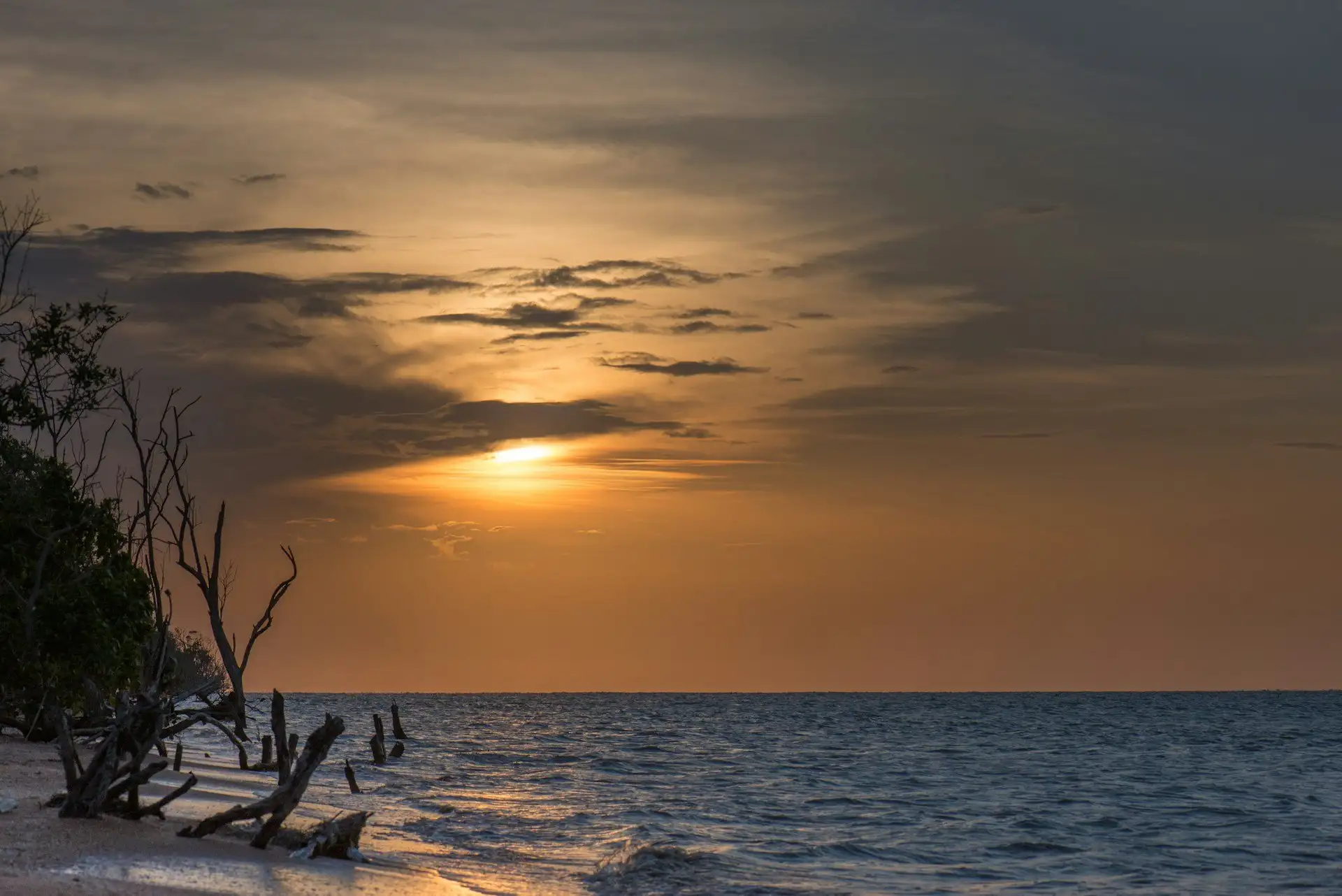
Suriname
The only Dutch-speaking country in South America. Mosques next to synagogues next to Hindu temples, all within two blocks of each other. A capital that looks like Amsterdam dropped into the tropics. Ninety-three percent intact rainforest. And Maroon people who escaped slavery, built their own civilizations in the jungle, and won. Almost nobody comes.
What You're Actually Getting Into
Suriname is a small country with an enormous identity crisis — not the anxious kind, but the productive kind, where the country has never resolved into a single narrative because it was built from too many different ones simultaneously. The official language is Dutch, the legacy of 300 years of colonial rule. The working lingua franca is Sranan Tongo, a creole that Surinamese people of every background use to talk to each other. The largest ethnic group is Hindustani — descendants of Indian indentured laborers brought by the Dutch after emancipation. The second largest is Creole, mixed African-European. Then Javanese, descendants of workers imported from the Dutch East Indies. Then Maroon, the descendants of enslaved Africans who escaped to the jungle in the 17th and 18th centuries and built six distinct civilizations there. Then Chinese, Amerindian, Lebanese, Brazilian, and Dutch. No single group constitutes a majority. All of them live in one of the smallest countries in South America.
The result, particularly in Paramaribo, is the most culturally layered city in the Western Hemisphere. A walk of four blocks on a Saturday afternoon might pass a mosque, a synagogue, a Hindu mandir, and a Dutch Reformed church. The food stalls serve roti, nasi goreng, Chinese noodles, and Creole peanut soup from consecutive vendors. The streets have Dutch names. The buildings are colonial Dutch wooden architecture, now painted in tropical colors and beginning, in some cases, to return to the earth in the specific way that tropical humidity works on wood and brick. UNESCO listed the historic inner city in 2002. It remains one of the most atmospheric and least-touristed UNESCO heritage capitals in South America.
Beyond Paramaribo, Suriname is 93% intact tropical rainforest. The Central Suriname Nature Reserve — 1.6 million hectares, UNESCO listed — is one of the largest protected forest ecosystems in the world. The Maroon communities on the Suriname and Marowijne rivers maintain cultures that are direct continuations of West African tradition, adapted over 300 years in the jungle. The Galibi coast in the northeast is one of the most important leatherback turtle nesting beaches in the Western Hemisphere. The interior is largely roadless, accessible by small plane or multi-day river journey.
The honest challenges: Suriname is not cheap despite its obscurity — the cost structure reflects a small economy with significant import dependency. Infrastructure outside Paramaribo is thin. The tourist industry is small and some operators are excellent while others are unreliable; the gap matters more than in more developed tourism markets. English is spoken in the tourism sector but Dutch and Sranan Tongo are what you'll encounter on the street. Come with patience, some Dutch or willingness to gesture, and an interest in one of the most genuinely unusual countries on the planet.
Suriname at a Glance
A History Worth Knowing
The Guiana coast was inhabited by several Amerindian peoples — Arawak, Carib, Wayampi, and others — when European contact began in the late 15th century. The region changed colonial hands repeatedly: Spanish, English, and Dutch all claimed or controlled parts of the Suriname coast in the 16th and 17th centuries. The Dutch West India Company established a permanent presence in the 1630s and 1640s, and in 1667 the Treaty of Breda made the arrangement formal: the Dutch exchanged New Amsterdam (the future New York City) to the English in return for formal control of Suriname. The exchange was considered favorable to the Dutch at the time — Suriname's sugar plantations were generating substantial revenue, while New Amsterdam was a small trading post of uncertain value. History has a specific irony about this.
The plantation economy that developed along the Suriname coast over the following century was built on the labor of enslaved Africans brought across the Atlantic in numbers that eventually totaled approximately 300,000 over the course of the colonial period — an extraordinary figure for a territory whose total current population is only 630,000. The conditions on the Surinamese plantations were brutal even by the standards of Atlantic slavery. Resistance was constant. From the early 1600s, enslaved people escaped into the rainforest interior — which the Dutch found impenetrable — and established autonomous communities that the Dutch called "Maroon" (from the Spanish "cimarrón," meaning wild or untamed).
The Maroon communities proved impossible to defeat militarily. The Ndyuka (Okanisi) signed a peace treaty with the Dutch in 1760. The Saramaka signed in 1762. These treaties are among the earliest formal legal agreements between a European colonial power and a people of African descent recognizing their autonomy and freedom — a remarkable historical fact that receives almost no attention in mainstream histories of the Atlantic world. The Maroons were not freed; they had never been recaptured. They had fought the Dutch colonial state to a standstill in the jungle and negotiated from strength. Their descendants, now numbering around 120,000 in Suriname and French Guiana, maintain languages, artistic traditions, and spiritual practices that are the most intact direct continuation of West and Central African culture in the Americas.
Emancipation of enslaved people came in Suriname in 1863 — later than in most of the Atlantic world. The Dutch, facing the same post-emancipation labor shortage as other colonial powers, turned first to contracted Chinese laborers, then from 1873 to indentured workers from British India (primarily from what are now Uttar Pradesh and Bihar), and from 1890 to workers from the Dutch East Indies (primarily Java). By 1916, over 34,000 Hindustani and 33,000 Javanese workers had arrived in Suriname. Most stayed when their indentures ended, choosing Suriname over return passages to countries that had, in many cases, been transformed beyond recognition. Their descendants constitute the country's demographic plurality today.
Independence came on 25 November 1975, when Suriname became one of the last Dutch colonies to gain sovereignty. The transition was not without trauma: a military coup in 1980 brought Dési Bouterse to power, and the December Murders of 1982 — in which 15 prominent intellectuals, journalists, and lawyers were executed — remain the defining atrocity of Surinamese political memory. Bouterse was tried in absentia in the Netherlands for drug trafficking in 1999 and eventually convicted in Suriname itself in 2019 for the 1982 murders — while still serving as president of the country, in one of the more legally surreal situations in contemporary democratic governance. He left office in 2020. The country's politics have since normalized, though the structural issues of corruption, gold mining conflicts with Maroon and Amerindian communities, and economic volatility remain present.
Treaty of Breda: the Dutch trade New Amsterdam (New York) to the English in exchange for Suriname. Considered a good deal at the time.
The Ndyuka (1760) and Saramaka (1762) sign formal treaties with the Dutch, recognizing their freedom and autonomy — among the earliest such agreements in Atlantic history.
Slavery abolished in Dutch colonies. Hindustani indenture begins 1873; Javanese indenture begins 1890. Suriname's extraordinary demographic composition takes shape.
Suriname gains independence from the Netherlands. A third of the population emigrates to the Netherlands in the following years.
Dési Bouterse leads coup. December Murders 1982: 15 intellectuals and political opponents executed. The defining political trauma of modern Suriname.
The Surinamese Interior War (Binnenlandse Oorlog) between Bouterse's army and the Maroon Jungle Commando led by Ronnie Brunswijk devastates the interior and kills hundreds.
Paramaribo's historic inner city and the Central Suriname Nature Reserve both receive UNESCO World Heritage status — a remarkable double listing for a country of 630,000.
Top Destinations
Suriname divides neatly between the coastal strip — where Paramaribo sits and where 90% of the population lives — and the vast, largely uninhabited interior. Most meaningful tourist travel involves both: Paramaribo for the culture and food and history, and the interior for the Maroon communities and wildlife. The interior requires a guide and either a small plane or a long river journey. Reputable tour operators handle both.
Paramaribo
Paramaribo's historic inner city is one of the most atmospheric UNESCO heritage sites in South America and one of the least visited. The Waterkant — the colonial Dutch waterfront, all wooden mansions and shaded promenade — gives onto the Suriname River in the golden late afternoon in a way that reminds Dutch visitors of home and surprises everyone else. The Neveh Shalom synagogue and the Keizerstraat mosque stand on the same Keizerstraat square and have done so in peace for centuries — a physical fact about religious coexistence that most of the world could use as a model. Fort Zeelandia (1667) houses the Museum Suriname with a collection that addresses the country's colonial and slavery history with more honesty than most colonial-era museums manage. The Centrale Markt on Saturday mornings is where the entire demographic spectrum of Surinamese society shops for the week.
Maroon Villages (Suriname River)
The Maroon communities along the Suriname River — particularly the Saramaka and Ndyuka villages accessible from the Brokopondo reservoir area — are the most extraordinary cultural destination in Suriname. These communities maintain languages, woodcarving traditions, textile arts, and spiritual practices that are direct continuations of West African cultures modified over 300 years of jungle autonomy. The carved and painted woodwork on the boats and house facades — kaleidoscopic, geometric, alive with color — is one of the most distinct artistic traditions in the Americas. Visiting is done through established community tourism operators who ensure protocols are followed and revenues stay with the communities. Budget a minimum of two nights; arriving for a few hours and leaving doesn't begin to convey what you're looking at.
Central Suriname Nature Reserve
One of the world's largest protected tropical rainforest ecosystems — 1.6 million hectares, UNESCO World Heritage Site — the CSNR covers the Guiana Highlands and the Sipaliwini savannah in the country's remote southwest. Access is by small plane to the Raleighvallen area, where the Coppename River cuts through primary forest that has never been commercially logged. The Voltzberg dome — a granite inselberg rising 240 meters from the forest floor — is a challenging but achievable hike. The wildlife density here is comparable to the best anywhere in the Guiana Shield: jaguars, giant otters, tapirs, harpy eagles, and the extraordinary avifauna of the intact Guiana Shield forest.
Brokopondo Reservoir & Upper Suriname River
The Brokopondo reservoir — created in 1964 when the Afobaka Dam flooded 1,500 square kilometers of forest, displacing 6,000 Saramaka Maroons — is the gateway to the interior river system. The dead trees still standing in the reservoir give it an otherworldly appearance; a boat journey across it toward the upper Suriname River passes through this drowned forest into living primary rainforest within an hour. The Dr. J.C. Eilerts de Haan Mountains and the Brownsberg Nature Park on the reservoir's southern edge offer accessible rainforest with resident howler monkeys, toucans, and the occasional jaguar track.
Galibi & Matapica
The Galibi Nature Reserve at the mouth of the Marowijne River on the Atlantic coast is one of the most important nesting beaches for leatherback, olive ridley, and green sea turtles in the Western Hemisphere. Between February and July, females come ashore at night to nest. The Carib Amerindian community of Galibi runs the conservation program and operates the community tourism that allows supervised nighttime beach visits. Matapica, accessible by boat across the Commewijne River from Paramaribo, has a smaller but more easily accessible nesting beach and a mangrove reserve with manatees and river dolphins.
Commewijne District
The Commewijne River east of Paramaribo winds through former plantation country now turned into rice paddies, banana plantations, and Javanese farming communities. The Commewijne cycling route — a day trip from Paramaribo by boat then bicycle — passes plantation ruins, a Javanese Hindu temple, and the river dolphins that inhabit the estuaries. The Fort Nieuw Amsterdam at the confluence of the Suriname and Commewijne rivers has a well-curated open-air museum of colonial plantation history. The contrast between this history and the peaceful rice fields farmed by Javanese families three generations removed from indenture is one of the more quietly affecting experiences Suriname offers.
Brownsberg Nature Park
The most accessible rainforest experience from Paramaribo — 3 hours by road and positioned on the edge of the Brokopondo plateau with views over the reservoir. Brownsberg has well-maintained trails, a resident population of howler monkeys that perform dawn concerts visible from the lodges, and a diversity of forest birds including toucans, trogons, and the Guianan cock-of-the-rock. The waterfalls (Irene Falls, Marie Falls) are accessible on marked trails. An overnight stay at the Stinasu lodge gives the early morning experience that day trips miss entirely.
Sipaliwini Savannah
The Sipaliwini savannah in the far south — accessible only by small plane — is an isolated grassland surrounded by intact Guiana Shield forest and inhabited by the Trio and Wayana Amerindian peoples. The communities here have had limited contact with the outside world and the ecotourism operations that exist are small, careful, and community-controlled. The wildlife is exceptional precisely because the area receives almost no human pressure. A trip to Sipaliwini requires a week minimum, significant advance planning through specialist operators, and the specific kind of traveler who values remoteness over comfort.
Culture & Etiquette
Suriname has no single dominant cultural model — which means the etiquette of visiting depends significantly on which community you're in at any given moment. The Hindustani neighborhood of Livorno has different social rhythms than the Javanese farming villages of Commewijne, which operate differently from the Maroon communities on the Suriname River, which are entirely different from Paramaribo's Creole inner city. What holds across all of them is a baseline warmth toward visitors combined with the specific Surinamese cultural trait of not being surprised by anything, given that the country itself is already a maximum improbability.
Sranan Tongo — the Creole lingua franca — is the real common language of Surinamese life. Dutch is formal and official. But if you overhear two Surinamers from completely different ethnic backgrounds having a conversation, they will be speaking Sranan Tongo. Learning even a few phrases is appreciated out of proportion to the effort, because so few outsiders bother.
"Mi lobi yu" (I love/like this), "Fa yu tan?" (How are you?), "Dank je wel" (Dutch: thank you), "Danki" (Sranan thank you). Attempting Sranan Tongo in particular — not Dutch, not English — signals genuine interest in Surinamese culture rather than colonial-era comfort zones. The reaction from Surinamese people when a visitor speaks Sranan Tongo is warmth out of all proportion to the linguistic effort required.
The Neveh Shalom synagogue and the Keizerstraat mosque standing on the same square in central Paramaribo is not incidental. It represents centuries of functioning religious coexistence in a country that has never experienced the religious wars that shaped European and Middle Eastern history. Surinamers are quietly proud of this. It is worth engaging with as a historical achievement rather than a tourist photo opportunity.
When visiting Maroon communities, follow the guidance of your operator and the community's own rules absolutely. Photography protocols vary by village and by what's being photographed. Spiritual ceremonies are not tourist performances. Accept hospitality when offered and reciprocate within the gift economy that the community operates — your guide will explain what's appropriate.
The Saturday morning market in Paramaribo is where Hindustani, Javanese, Creole, and Chinese food culture are all simultaneously present in their most authentic form. Eat across the stalls. Ask what things are. The vendors are accustomed to explaining Surinamese food to confused foreigners and generally find it amusing rather than tiresome.
Fort Nieuw Amsterdam and the plantation ruins along the Commewijne River are not picturesque heritage sites — they are the physical infrastructure of the Atlantic slave trade. The Museum Suriname at Fort Zeelandia addresses this history directly. Engaging with the colonial history honestly, rather than aestheticizing the wooden buildings, is the correct frame for the Paramaribo UNESCO experience.
The gold mining regions in the south and east of Suriname — where Brazilian garimpeiros and various criminal enterprises operate — carry serious security risks. These areas are explicitly not tourist destinations. Check current government advisories and avoid any area associated with artisanal or illegal mining operations.
Particularly in Maroon communities and at Hindu temples and mosques. The Hindustani and Javanese communities are generally welcoming but the specific practice of foreign visitors photographing prayer or ceremony without asking is not welcome. Ask. Accept a no graciously. The request alone is usually appreciated.
Dutch is the official language and most educated Surinamers speak it. But it creates a specific social dynamic — Dutch carries colonial associations that many Surinamers have a complicated relationship with. In informal settings, attempting Sranan Tongo or even English often creates a warmer interaction than coming in with Dutch, which can feel like asserting a colonial-era social hierarchy even when that's not the intention.
Paramaribo is at 6 degrees north latitude, sea level, high humidity. The combination is oppressive in a way that visitors from temperate climates take a few days to adjust to. The interior is hotter and the mosquitoes are significantly worse. DEET is non-optional in the forest. Malaria prophylaxis is recommended for interior travel. Start both before you arrive.
The Waterkant is pleasant at sunset and manageable after dark in the main areas. The areas behind the waterfront, away from the main tourist zone, require the same care as any tropical city at night. Your accommodation will give specific current advice. Follow it.
Maroon Art
Maroon visual culture — woodcarving, textile art, and body decoration — is one of the most distinctive artistic traditions in the Americas. The woodwork, in particular, is extraordinary: carved and painted panels, boat prows, and household objects in kaleidoscopic geometric patterns derived from West African visual traditions and modified over three centuries. The art is not decorative but communicative — patterns carry specific meanings, and the practice of commissioning a carved object from a Maroon artisan involves a relationship between maker and recipient that is not replicated in tourist souvenir production. Buy from the communities directly, not from Paramaribo souvenir shops where the provenance is uncertain.
Music: Kaseko & Kawina
Kaseko is Suriname's defining popular music genre — a propulsive fusion of African rhythms, Caribbean brass, and Dutch military march that developed in the Creole communities of Paramaribo. It is unmistakably Surinamese in the way that nothing else is. Kawina, a more traditional Creole form with African drum patterns and call-and-response vocal structure, is heard at Winti ceremonies and community celebrations. The Saramaka and Ndyuka Maroon traditions have their own distinct music — the Apinti talking drums, awasa dance music, and seketi — that are among the most direct continuations of African musical tradition in the hemisphere.
Winti
Winti is the Afro-Surinamese spiritual practice that survived the plantation system and remains active in both Creole and Maroon communities. It involves communication with spirits (wintis) through possession, drumming, and ceremony, combined with herbal healing traditions. It is not a performance and visitors do not have automatic access to ceremonies. Understanding that Winti exists and is a living spiritual practice — not a historical curiosity — is the correct posture. Some aspects are visible in daily life: the herbs sold at the Centrale Markt, the botanical preparations at the market herbalists, and the color symbolism in Maroon textiles all connect to Winti practice.
Holidays & Festivals
Suriname's public holiday calendar reflects its demographics with unusual completeness: Holi Phagwa (Hindu spring festival) in March, Id al-Fitr, Christmas, Winti ceremonies, Keti Koti (Emancipation Day, 1 July) which is the most emotionally significant national holiday for the Creole and Maroon communities, and the Javanese cultural festival Bersih Desa. If your visit coincides with Keti Koti on 1 July, attend the ceremonies at Fort Zeelandia and the evening events on the Waterkant — this is Suriname being most fully and honestly itself.
Food & Drink
Surinamese food is what happens when Hindustani, Javanese, Creole, Chinese, and Maroon culinary traditions share a kitchen for three centuries without any single one achieving dominance. The result is one of the most genuinely diverse food cultures in the Western Hemisphere and one of the least internationally known — partly because Suriname is small, partly because the food is mainly eaten at home and at market stalls rather than in tourist-facing restaurants. The best Surinamese food you will eat will be at the Centrale Markt, at street stalls on Saturday morning, or invited to someone's Sunday meal. The upscale Paramaribo restaurant versions are adequate and occasionally excellent. They are not the point.
Pom
The national dish and the food most associated with Creole Sunday culture. Pomtajer (tayer root) is grated, mixed with chicken, citrus, tomato, onion, and celery, then baked slowly until the root absorbs the liquid and transforms into something dense, tart, and deeply savory. The texture has no analogue — the pomtajer becomes neither firm nor mushy but something specifically its own. Pom is eaten with rice and a salad. It appears at every Surinamese celebration. Finding a good version is the most reliable test of a Surinamese cook's skill.
Roti (Surinamese Style)
The Surinamese roti brought by the Hindustani community is different from the Trinidadian or Guyanese versions — thinner, slightly more elastic, served with curried vegetables, chicken or goat, and a boiled egg. The combination of the soft roti and the dry-style Surinamese curry is specific enough that Surinamers who emigrate to the Netherlands consistently cite it as what they miss most about home. The roti shops (rotizaken) around Paramaribo serve it from morning. Order the roti met kip and alles erop (roti with chicken and everything on it).
Nasi & Bami Goreng
The Javanese contribution to Surinamese food: nasi goreng (fried rice) and bami goreng (fried noodles) prepared in the specific Surinamese-Javanese way — with petis (fermented shrimp paste), sweet soy sauce, and a combination of vegetables and protein that is recognizably Indonesian in origin but distinctly Surinamese in execution. Available everywhere, at all hours, from Javanese restaurants and street stalls. The version at a working-class Javanese warung in Lelydorp or Nickerie is different in texture and depth from the tourist restaurant version.
Pinda Soep (Peanut Soup)
Peanut soup — pinda soep — is the Creole comfort food that Surinamers of all backgrounds eat and that visitors consistently find revelatory. Ground roasted peanuts, chicken, plantain, and cassava in a thick, deeply savory broth, garnished with hardboiled egg. The version at the Centrale Markt, served from enormous pots that have been simmering since early morning, is definitive. It is a meal, not a starter. One bowl is enough. Order it in Dutch (pinda soep) or Sranan Tongo (nyanyan sopu) and watch the vendor's reaction to the Sranan.
Maroon Forest Food
In the interior Maroon communities, the food is what the river and the surrounding forest provide: freshwater fish, jungle game, cassava bread (kwak), and various leafy vegetables specific to the region. Tuma — a cassava-based drink, mildly fermented — is the hospitality drink offered in Maroon villages; accepting it is the correct social response. The food is simple and the ingredients are extraordinary in the sense that things eaten at the source of their origin taste different from anything transported and processed.
Drinks: Parbo & Beyond
Parbo Bier — the national lager — is reliable, cold, and consistent. The Surinamese rum industry produces Borgoe and Black Cat, both made from local sugarcane and both underrated outside the country. Dawet — a Javanese drink made from rice flour, coconut milk, and palm sugar syrup over ice — is the most refreshing thing you can drink in the Paramaribo heat. It's sold from street carts and costs almost nothing. Tamarind juice (tamrijn dresi) is the Creole street drink, tart and cold. Both are better than anything in a can.
When to Go
Suriname has two dry seasons and two rainy seasons, a consequence of its equatorial position. The long dry season (August to November) and the short dry season (February to April) are the best windows for interior travel and for the turtle beaches. The rainy seasons produce dramatic afternoon downpours, higher rivers (which can help or hinder interior river journeys), and lush green landscapes. Paramaribo is manageable year-round. For Keti Koti (Emancipation Day) on 1 July, note that this falls in the short rainy season but is worth attending regardless.
Long Dry Season
Aug – NovThe main dry window. Best for interior river journeys (water levels manageable), Brownsberg hiking, the Central Suriname Nature Reserve, and coastal beaches. Wildlife visibility in the forest is higher when animals concentrate around water sources. The turtle nesting season at Galibi continues into August.
Short Dry Season
Feb – AprShorter dry window. Turtle nesting begins at Galibi (February onwards). Good for all interior travel. Holi Phagwa in March is one of the best cultural events of the year — Hindustani communities celebrate across Paramaribo with colored powder and water. The river levels in the short dry season are lower than in August-November.
Short Rainy Season
Dec – JanAfternoon and evening showers. Interior river journeys are possible with higher water levels making some routes more accessible. Paramaribo is fine. Christmas and New Year in Suriname are festive and culturally interesting. The Commewijne cycling day trip is best avoided in heavy rain.
Long Rainy Season
May – JulHeavy, sustained rain. Some interior routes flood. The forest is extraordinarily lush. Keti Koti on 1 July is the most emotionally significant national holiday and worth attending despite the weather. River journeys can be difficult. This is when Surinamers who know the country intimately go to the interior — the bird activity in the wet forest is exceptional.
Trip Planning
Eight to ten days covers Suriname well: Paramaribo (3 days), the Maroon communities on the Suriname River (2-3 nights), Brownsberg (1-2 nights), and optionally the Galibi turtle coast (1-2 nights in season). The Central Suriname Nature Reserve requires a minimum of 3 days and a week is better. Book your interior operator before your flights — the small-plane slots and lodge capacity fill ahead of the main travel windows.
Paramaribo
Day one: Fort Zeelandia and Museum Suriname for colonial and slavery history context before seeing anything else. Waterkant in the late afternoon. Day two: Centrale Markt Saturday morning (time your arrival for this), synagogue-mosque square, Neveh Shalom and Keizerstraat mosque. Day three: Commewijne day trip — boat across the river, cycling through the former plantation district, river dolphins, Fort Nieuw Amsterdam.
Brownsberg Nature Park
Road transfer from Paramaribo (3 hours). Afternoon arrival, a short trail walk to the viewpoint over the Brokopondo reservoir. Dawn howler monkey walk on day five — the 5:30am start is the correct decision. Waterfall hike in the afternoon. Overnight at the Stinasu lodge. Return to Paramaribo on evening of day five or morning of day six.
Maroon Village Stay
Boat journey from Paramaribo's river dock up the Suriname River to a Saramaka or Ndyuka village (2-4 hours depending on the specific community). One night at a community guesthouse. Evening music performance. Dawn walk through the village with a community guide. Return to Paramaribo for departure flight.
Paramaribo Deep
Three full days including the Hindu temples in the Mungo district (the Shri Vishnu Mandir is the most architecturally striking), the Javanese warungs in Lelydorp for lunch, and a sunset walk on the Waterkant with the wooden colonial buildings turning amber. Add the Keti Koti museum if visiting near 1 July. Evening: a kaseko performance at one of the Waterkant bars.
Maroon Communities (Upper Suriname River)
Three nights on the river — deeper than the standard one-night trip. The upper Suriname River communities are less frequently visited and the cultural experience is more complete. A stay at Awarradam Island lodge (a Saramaka-run guesthouse in the rapids area) combines forest walks, fishing, and an evening of traditional music with genuine community involvement rather than performance for tourists.
Central Suriname Nature Reserve
Small plane from Paramaribo to Raleighvallen (1 hour). Three days: the Voltzberg granite dome hike (8-10 hours round trip — full day, challenging, worth it), river swimming in the Coppename, night walks for caiman and forest sounds, and the giant otter family that patrols the river section near the lodge. The density of wildlife here, in forest that has never been logged, is the standard against which all other forest experiences are measured.
Brownsberg
Return to Paramaribo by plane, then road transfer to Brownsberg for two nights. Add the full Mazaroni Falls trail (the longer waterfall hike) and a night walk for kinkajous and tree frogs. The resident Guianan cock-of-the-rock lek (display area) near the Marie Falls trail is active in the mornings.
Galibi Turtle Coast (in season)
If visiting February-July: boat from Paramaribo to the Galibi Nature Reserve (4-5 hours via the Commewijne) for leatherback turtle nesting observation. Two nights with the Carib Amerindian community. Return to Paramaribo. If outside turtle season: use these days for the Commewijne Javanese community visit, the Matapica mangroves for manatees, and a final Paramaribo evening on the Waterkant.
Malaria & Yellow Fever
Malaria prophylaxis is recommended for interior travel — the coastal zone including Paramaribo has low risk but the interior carries genuine malaria transmission. Yellow fever vaccination is required for entry to Suriname. Get the yellow fever vaccine at least 10 days before departure; it takes time to become effective. DEET 40%+ is essential in the forest.
Full vaccine info →Tourist Card / Visa
Most Western visitors need a Tourist Card obtainable on arrival or in advance online. The fee is approximately $25-50 USD. Check the current Suriname e-Visa portal before travel — requirements have changed multiple times in recent years and the current status for your nationality needs verification.
Check e-Visa portal →Cash in SRD
Suriname's economy is significantly cash-based. ATMs in Paramaribo (DSB Bank and Hakrinbank) accept international Visa and Mastercard. Interior lodges and Maroon communities deal in cash only — bring sufficient SRD from Paramaribo. USD is accepted as a fallback in tourist-facing businesses. The exchange rate has been volatile; exchange at banks rather than street changers.
Book Your Operator
METS (Mets Suriname), Stinasu (the national parks foundation), and Wilderness Explorers handle most interior logistics. For the Maroon community visits specifically, Anaula Nature Resort and the community-run Awarradam guesthouse are the most authentic options. Book 4-8 weeks ahead for dry season slots in the Central Suriname Nature Reserve.
Connectivity
Buy a Digicel or Telesur SIM at Johan Adolf Pengel International Airport on arrival. Coverage is good in Paramaribo and along the main coastal roads. The interior has no coverage beyond Brownsberg. Interior lodges use satellite communication. Download offline maps of all regions before leaving Paramaribo.
Get Suriname eSIM →Travel Insurance
Medical facilities in Paramaribo's private hospitals (Academisch Ziekenhuis Paramaribo) are adequate for most emergencies. The interior has no hospital facilities — a serious medical incident requires evacuation by charter aircraft to Paramaribo, then potentially to Barbados or Trinidad for complex cases. Medical evacuation insurance is essential for any interior travel.
Transport in Suriname
Suriname's transport infrastructure divides between the well-connected coastal strip and the largely roadless interior. Paramaribo has reasonable urban transport. The coastal highway connects the capital to Nickerie in the west and the Marowijne River in the east. Beyond the coast, access is by small plane or river boat — the same situation as neighboring Guyana, slightly more organized by the existence of Stinasu's lodge network.
Small Aircraft (Interior)
$150–350/routeGum Air and Blue Wing Airlines operate scheduled and charter flights from Johan Adolf Pengel International and Zorg en Hoop Airport (the small airport near central Paramaribo) to Raleighvallen (CSNR), Kabalebo, Pokigron (Brokopondo area), and other interior airstrips. Weather-dependent; build flexibility into interior itineraries.
International Flights
$600–1,200 from EuropeKLM flies directly from Amsterdam Schiphol to Johan Adolf Pengel International (PBM) — the most direct connection from Europe. Caribbean Airlines connects via Port of Spain. SLM (Surinam Airways) operates on select routes. The airport is 45 km south of Paramaribo — factor in the 45-minute drive.
River Boats
Arranged by operatorThe Suriname River is the main artery to the interior. Passenger boats run from Paramaribo to Pokigron (3-4 hours) from where river transport continues to the upper river communities. The journey itself is excellent — the river widens and narrows, passes through different forest types, and the transition from the coastal zone to intact rainforest happens visibly over the hours of the journey.
Long-Distance Buses
$3–10/routeBuses connect Paramaribo to Nieuw Nickerie (3 hours west, gateway to Guyana), Albina (3 hours east, gateway to French Guiana), and Brokopondo town. The roads are paved and in reasonable condition. Minibus routes cover most coastal destinations at low cost from the central Heiligenweg bus stop in Paramaribo.
International Ferries
$10–20/crossingFerry crossings connect Suriname to Guyana (South Drain ferry from Nieuw Nickerie, 3 hours) and to French Guiana (pontoon crossing at Albina over the Marowijne River). Both are operational but check current schedules — the Guyana crossing is particularly subject to seasonal variation.
Paramaribo Taxis & Transport
$3–10 within the cityTaxis in Paramaribo are not metered — negotiate the fare before departure. The standard rate for most city journeys is 30-60 SRD. WhatsApp-based ordering with specific drivers recommended by your accommodation is the most reliable system. No Uber equivalent operates in Suriname. The airport transfer to central Paramaribo costs approximately $20-30 USD and should be pre-arranged.
Accommodation in Suriname
Suriname's accommodation is best in Paramaribo and at the established interior eco-lodges. The capital has a range from boutique colonial hotels to functional guesthouses. The interior lodges — Raleighvallen, Awarradam, Kabalebo — are the standard frontier-ecotourism category: basic to comfortable, all-inclusive, and run by operators who know their ecosystems. The Maroon community guesthouses are simple and the point is not the accommodation but the experience of being in the community. Brownsberg's Stinasu facility is the standard for accessible rainforest stays.
Paramaribo Boutique Hotels
$80–200/nightThe Eco Resort Inn, Hotel Torarica, and the Courtyard by Marriott are the main quality options. The Torarica, in its colonial building on the Waterkant, has the best location and atmosphere. The newer business hotels serve the oil industry expat community and are clean but characterless. Staying within the UNESCO historic zone — the Waterkant and Gravenstraat area — is worth the premium for atmosphere.
Interior Eco-Lodges
$150–300/night (all-inclusive)Raleighvallen (CSNR), Kabalebo Nature Resort, and Awarradam Island Lodge are the primary interior options. All include meals and guided activities. Awarradam is specifically Saramaka-community-run and the most culturally integrated. Kabalebo in the far west is the most remote and has the most pristine wildlife access. Book months ahead for dry season.
Maroon Community Guesthouses
$40–80/nightSeveral upper Suriname River villages have simple guesthouses managed by the community. The accommodation is basic — hammocks or simple beds, shared facilities, no electricity after 9pm. The experience is the opposite of basic. Staying in a Maroon village means eating with the family, hearing the traditional music without it being staged, and spending the night in a community where you are genuinely a guest rather than a customer.
Brownsberg Stinasu Lodge
$50–90/nightThe Stinasu (Foundation for Nature Preservation in Suriname) lodge at Brownsberg is the most accessible rainforest accommodation in Suriname — 3 hours from Paramaribo by road, on the plateau edge with reservoir views. Simple rooms, basic meals, and the best dawn howler monkey alarm clock in South America. Book through Stinasu directly.
Budget Planning
Suriname is not cheap for South America. The small economy with significant import dependency means food, accommodation, and interior transport cost more than you might expect given the country's obscurity. Paramaribo costs roughly comparable to a mid-tier European city for the basics. Interior lodge stays are expensive because everything has to be flown or boated in. Budget separately for Paramaribo and the interior.
- Budget guesthouse ($30-50/night)
- Warung and market meals ($3-8)
- Local minibus transport
- Free UNESCO walking tour
- Parbo Beer and dawet drinks
- Boutique hotel on the Waterkant
- Mix of restaurants and street food
- Guided day tours from Paramaribo
- Brownsberg overnight stay
- Commewijne day trip (boat + bicycle)
- Charter flights to interior ($150-350)
- All-inclusive eco-lodge
- Specialist naturalist guides
- CSNR multi-day package
- Community lodge stays
Quick Reference Prices
Visa & Entry
Suriname's visa situation is more complex than most South American countries. Most Western visitors require either a Tourist Card (obtainable on arrival or online in advance) or a visa, depending on nationality. The Tourist Card currently costs approximately $25-50 USD and is available for US, EU, UK, Canadian, and Australian citizens, among others. Requirements have changed multiple times in recent years — verify the current status at the Suriname e-Visa portal (surinameevisa.org) before booking flights. Yellow fever vaccination certificate is required for all travelers entering Suriname.
Suriname's entry requirements have changed multiple times recently. Verify your specific nationality's current requirements at surinameevisa.org or the nearest Surinamese embassy/consulate before purchasing non-refundable flights. Yellow fever certificate is mandatory regardless of nationality.
Family Travel & Pets
Suriname with children is very doable for the Paramaribo portion and for Brownsberg. The interior lodges and Maroon village visits require older children who can handle rough river transport, heat, insects, and the absence of convenience. The cultural diversity of Paramaribo — the different religious buildings, the market, the food — makes it genuinely educational for children who have been briefed on what they're seeing and why. The wildlife at Brownsberg (howler monkeys visible from the lodge veranda) is accessible for any age.
Brownsberg Monkeys
Brownsberg's resident howler monkey troops make themselves known at dawn — a sound that children find simultaneously terrifying and hilarious until they understand what it is. The troupes move through the canopy near the lodge facilities and are visible without any hiking from the viewing platforms. The dawn experience — the sound building, the forest emerging from dark, the first light on the reservoir below — is genuinely affecting for adults and children equally.
Paramaribo's Religious Buildings
The mosque-synagogue square is one of the best geography and history lessons available in a single urban block for children of most ages. Understanding that these two buildings have stood next to each other peacefully for centuries, and understanding why that's unusual in world history, requires age-appropriate briefing. The mosque and synagogue both allow respectful visits during non-prayer hours. Ask inside both; the reception is warm in both cases.
Commewijne Cycling
The Commewijne day trip — boat from Paramaribo, bicycle through the plantation district and Javanese farms, river dolphins on the return — is the best family day trip from the capital. The cycling is flat and easy. The river dolphin sightings at the Commewijne-Suriname confluence are reliable in the early morning. Children who can manage a few hours of casual cycling get a cross-section of Surinamese history and landscape.
Turtle Watching (in season)
The leatherback turtle nesting at Galibi (February to July) is the most dramatic family wildlife experience Suriname offers. Watching a 900-kilogram animal haul itself up a beach in total darkness, dig a nest, and lay 80-100 eggs before returning to the sea is an encounter that stays with children permanently. The supervised nighttime visits are appropriate for children who can handle a 10pm beach walk and the silence required near nesting turtles.
The Food Experience
Surinamese food culture is excellent for children who are reasonably adventurous eaters. The warung system produces food at friendly prices and family volumes. Roti with curried vegetables is reliably popular with children. Nasi goreng needs no explanation. The dawet (Javanese rice flour drink in coconut milk) is universally loved by children encountering it for the first time. The Centrale Markt on Saturday morning, with its visual and sensory range, is a manageable education in a very small space.
Heat & Health with Children
The equatorial heat and humidity are the main challenge for family travel. Factor in at least two days of acclimatization before any demanding activity. Malaria prophylaxis and yellow fever vaccination apply to children as well as adults — consult a travel health specialist at least 6 weeks before departure. DEET-based repellent is appropriate for children over 2 months old at lower concentrations than adult formulations; check with your doctor for age-specific guidance.
Traveling with Pets
Bringing pets to Suriname requires a veterinary health certificate issued within 10 days of travel, current vaccination records, and import permits from the Ministry of Agriculture, Animal Husbandry, and Fisheries (LVV). The process is manageable for those relocating but is not practical for tourist visits. No interior lodges or Maroon community accommodations accept animals — the wildlife conservation mission of the interior is fundamentally incompatible with domestic pets. For a short trip, leave pets at home.
Safety in Suriname
Suriname is generally safe for tourists with appropriate urban precautions in Paramaribo and the specific exclusion of gold mining areas in the interior. The primary risks are petty theft in markets and certain urban areas, the health risks of interior travel (malaria, heat, insect-borne disease), and the specific safety concern around illegal gold mining zones in the south and east. The tourist circuit — Paramaribo, Brownsberg, the Suriname River Maroon communities, the CSNR — is safe when traveled with reputable operators.
Paramaribo Tourist Zone
The Waterkant, the historic center, and the main tourist areas of Paramaribo are safe during the day and manageable at night with normal urban awareness. Stay on well-lit main streets after dark, use pre-arranged taxis rather than hailing from the street, and keep valuables secured.
Paramaribo Market Areas
The Centrale Markt and surrounding streets experience pickpocketing and bag snatching. Keep your phone in your pocket rather than your hand, carry minimal cash, and use a money belt for passports and large amounts. The market itself is worth visiting; just don't make it easy for opportunistic theft.
Gold Mining Zones
Areas in the south and east associated with artisanal gold mining — particularly the Lawa River area and parts of the Marowijne district — carry serious security risks from criminal organizations and illegal Brazilian garimpeiro operations. These are not tourist destinations. Check government advisories for specific areas and avoid them entirely.
Health: Malaria & Disease
Malaria transmission occurs in the interior. Take prophylaxis, use DEET consistently, and sleep under impregnated mosquito nets (provided by interior lodges). Dengue, chikungunya, and Zika have been reported in Suriname. Yellow fever is a genuine risk without vaccination. The combination of health preparations required for interior travel is more demanding than for most South American countries.
Interior (Established Routes)
The established ecotourism routes — Brownsberg, the Suriname River Maroon communities via reputable operators, Raleighvallen — are safe. The Maroon communities have been hosting visitors for decades without serious incident. Your guide and operator are the correct authorities on current conditions in any specific interior area.
River Transport Safety
River boat journeys on the Suriname River involve rapids in the upper sections. The Maroon boatmen who operate on these rivers are expert — they have been navigating them for generations. Follow their instructions about seating, weight distribution, and movement in the boat. Don't stand up in rapids. Wear the life jacket offered even if the boatmen don't wear one themselves.
Emergency Information
Embassies & High Commissions in Paramaribo
Paramaribo's diplomatic community reflects Suriname's colonial history — the Dutch and US embassies are the most active for Western visitors.
Book Your Suriname Trip
Everything in one place. Verify your Tourist Card/visa requirements first — then book everything else.
What Stays With You
The thing Suriname does to you happens somewhere on the second day in Paramaribo, usually. You're walking a street in the historic center and you pass, in the space of two blocks, a mosque from which the midday call to prayer is coming, a Hindu mandir with marigold garlands at the entrance, a Dutch Reformed church with a notice in Dutch, and a Chinese grocery. The Sranan Tongo pop music from a car window doesn't belong to any of these specifically and belongs to all of them simultaneously. The woman selling pom from a cooler on the corner has family in the Netherlands, Hindustani ancestry, and is speaking Sranan Tongo on her phone.
In Sranan Tongo, the word firi means both "to feel" and "to understand." The two things are not considered separate operations. You feel something, and in feeling it you understand it — or you understand something, and the understanding is a form of feeling. It is a useful epistemology for a country that cannot be understood from outside itself. Suriname has to be felt. The food, the music, the religious coexistence, the Maroon woodcarving, the river at night — none of it translates into a postcard or a review. It has to be experienced as what it is: the most improbable country in a hemisphere of improbable countries, doing something genuinely unprecedented with the collision of human histories that created it.