
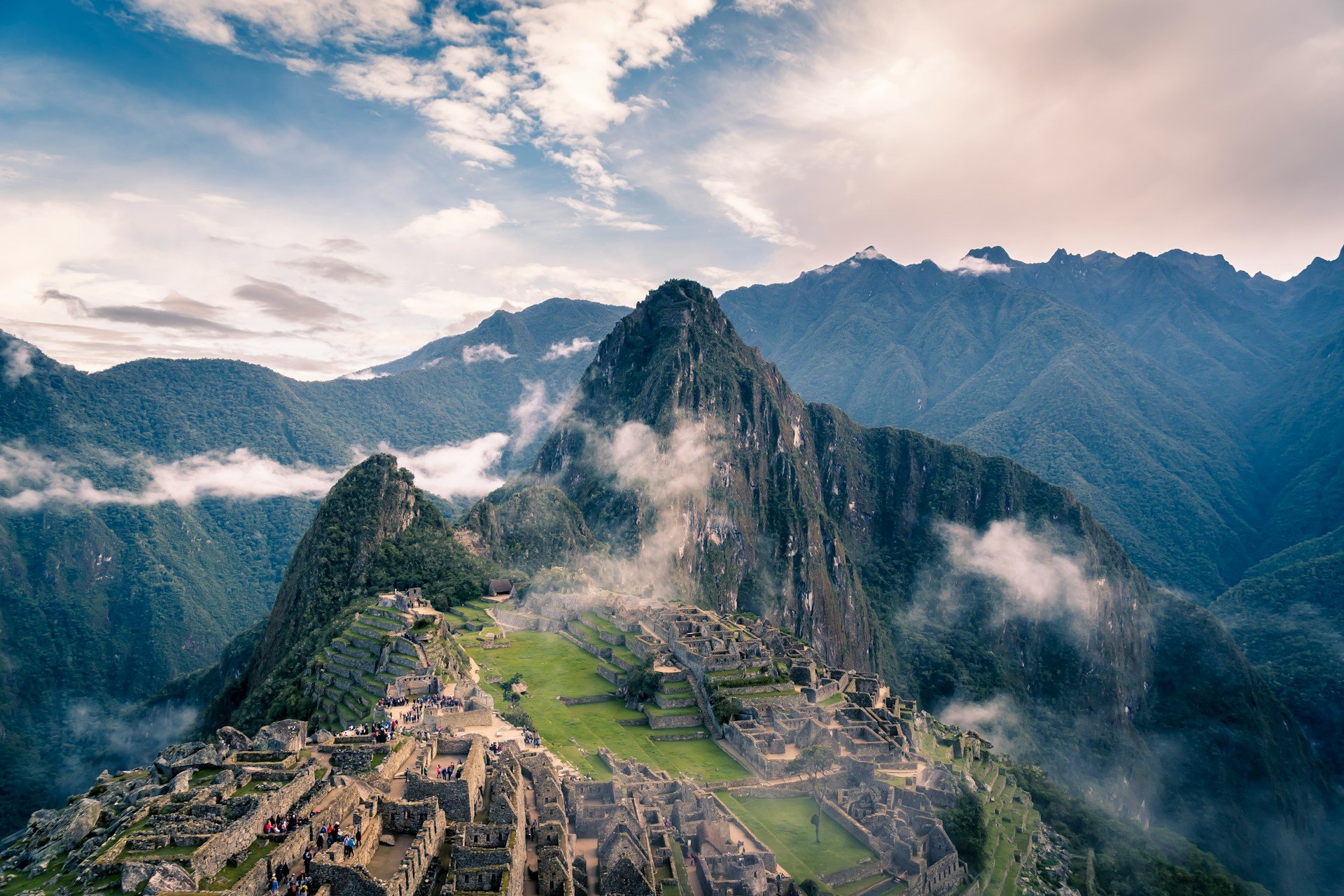
Peru
The Inca Empire's heartland, the Amazon's headwaters, and a cuisine that has been named the world's best repeatedly. The city at the center of it all sits at 3,400 metres — higher than most Alpine ski resorts — and will remind you of this fact on the first day regardless of your fitness level. Machu Picchu is as extraordinary as advertised. The altitude is worse than you expect. The food in Lima is better than you've been told. All three require respect.
What You're Actually Getting Into
Peru contains three of the world's great travel experiences stacked into a single country: the Inca citadel of Machu Picchu (which is as extraordinary as its reputation and requires more planning than most visitors realize), the Peruvian Amazon (one of the most biodiverse regions on earth, accessible from Puerto Maldonado or Iquitos), and the culinary tradition of Lima, which has produced a restaurant scene that has been competing at the world's top table since the 2000s and is now considered one of the best food cities on earth. The country also contains Lake Titicaca (the world's highest navigable lake, shared with Bolivia, at 3,812 metres), the Nazca Lines (enormous geoglyphs visible from the air, purpose still genuinely unknown), the Colca Canyon (one of the world's deepest, and the best place to see Andean condors in flight), and the Rainbow Mountain (Vinicunca, a geologically colored peak above 5,000 metres that has become a social media phenomenon and is worth visiting for the surrounding landscape even when the mountain itself is under cloud).
The altitude is the primary practical challenge of any Peru trip and deserves honest emphasis. Cusco, the jumping-off point for Machu Picchu and the Sacred Valley, sits at 3,400 metres above sea level. This is higher than the highest road pass in the Alps, higher than most Himalayan base camps, and significantly higher than any point in the continental United States. Approximately 25–30% of visitors to Cusco experience altitude sickness (soroche) in some form — headache, nausea, fatigue, shortness of breath — regardless of age, fitness, or prior high-altitude experience. The altitude does not care about your marathon time. The standard protocols (slow acclimatization, coca tea, hydration, no alcohol on day one, acetazolamide if prescribed) are not optional lifestyle choices — they are the difference between a functional first day in Cusco and a day spent in your hotel room.
Machu Picchu requires more advance planning than visitors typically prepare for. The ticketing system changed significantly in 2017 and again in 2022 — entry tickets are timed, capped, and must be purchased in advance through the official government portal (machupicchu.gob.pe). There are no tickets at the gate. In peak season (June–August), tickets sell out weeks ahead. The Inca Trail — the classic 4-day trek to the site — requires permits that must be booked 6–12 months ahead through a licensed operator. None of this makes the site less worth visiting. It makes it a planning exercise that rewards early action.
Lima is the country's most underestimated destination. Many visitors treat it as a transit hub — arrive late, rest, fly to Cusco the next morning. This is understandable given the itinerary pressure of a Peru trip, but it misses a city that has the finest food scene in Latin America, two extraordinary museums (the Larco Museum of pre-Columbian art and the Museo de la Nación), and the Pacific-facing neighborhoods of Miraflores and Barranco that are beautiful, safe, and reward two to three days of genuine engagement.
Peru at a Glance
A History Worth Knowing
Human settlement in Peru extends back at least 13,000 years, with evidence of complex societies developing much earlier than previously thought. The Norte Chico civilization (also called Caral-Supe), centered on the coast of what is now north-central Peru, is now recognized as one of the oldest complex civilizations in the world — dated to approximately 3000–1800 BCE, contemporaneous with ancient Egypt and early Mesopotamia. The Norte Chico sites include monumental platform mounds, astronomical alignments, and evidence of a social organization that predates the invention of writing and pottery. The Caral site, 200km north of Lima, is a UNESCO World Heritage Site and can be visited as a day trip.
Over the following millennia, the Peruvian landscape produced a sequence of sophisticated cultures: the Chavín (900–200 BCE), whose religious iconography spread across the Andes; the Paracas (800 BCE–100 CE), whose extraordinary textile tradition produced the finest cloth in the pre-Columbian Americas; the Nazca (100–800 CE), who etched the enormous geoglyphs into the coastal desert; the Wari (600–1000 CE), who built an empire centered in the highlands and developed many administrative systems that the Inca would later adopt; and the Chimú (900–1470 CE), whose capital Chan Chan on the northern coast was the largest pre-Columbian city in South America.
The Inca Empire — Tawantinsuyu (the Four Quarters of the World in Quechua) — emerged from the Cusco region in the 13th century and by 1438, under the emperor Pachacuti, began the dramatic expansion that would create the largest empire in pre-Columbian America: 5,500km of territory from southern Colombia to central Chile, with a population of approximately 10–12 million people. The empire's administrative genius — the quipu (knotted string recording system used for census and accounting), the mit'a (labor tribute system that built roads, temples, and cities), the 40,000km of Inca road network, the network of storehouses (qollqas) for food redistribution — represented a form of organized governance with no close parallel in the pre-Columbian world. Machu Picchu, built by Pachacuti around 1450 as a royal estate and religious center, was abandoned after the Spanish conquest and rediscovered by Hiram Bingham in 1911, largely intact because the Spanish never found it.
The Spanish conquest of the Inca Empire (1532–1572) is one of history's most dramatic stories of contingency and catastrophe. Francisco Pizarro arrived on the Peruvian coast in 1532 with 168 soldiers at the exact moment when the empire was convulsed by a civil war between two half-brothers — Huáscar and Atahualpa — over succession. Atahualpa had just won the civil war when Pizarro captured him at the Battle of Cajamarca, killed thousands of Inca soldiers with firearms and horses they had never encountered, and ransomed the emperor for a room full of gold and silver (the ransom paid, Pizarro executed Atahualpa anyway). The smallpox that had preceded the Spanish had already killed the previous emperor Huayna Capac and perhaps 50–90% of the population. The empire that had successfully organized 10–12 million people collapsed within a decade, not because of Spanish military superiority alone but because disease, civil war, and the fragility of centralized authority combined to create a moment of extraordinary vulnerability.
Colonial Peru (1532–1821) was organized around extracting the silver and gold that Spain needed to fund its European ambitions. The mita de minas — the forced labor draft that sent Indigenous men to work the silver mines at Potosí (now Bolivia) — was among the most brutal labor systems in the colonial Americas, killing an estimated 8 million people over its 250-year operation. Lima became the capital of the Viceroyalty of Peru and the main administrative center for Spanish South America — an extraordinarily wealthy city whose baroque churches, aristocratic mansions, and Inquisition archives all survive and are accessible to visitors today.
Independence (1821) was proclaimed by the Argentine general José de San Martín and consolidated by the Venezuelan Simón Bolívar — the two liberators who freed most of Spanish South America between them. The 20th century brought cycles of military and civilian government, the extraordinary intellectual and political phenomenon of the Shining Path (Sendero Luminoso) insurgency (1980–1992, which killed an estimated 69,000 people and terrorized the countryside), the authoritarian populist presidency of Alberto Fujimori (1990–2000, who ended the insurgency but also used death squads and suppressed democracy), and the ongoing struggle with inequality, Indigenous rights, and the governance of the country's extraordinary mineral wealth. The 2021 election of Pedro Castillo — a rural teacher and union leader from the impoverished Cajamarca region — and his subsequent imprisonment in 2022 following a failed self-coup represent the latest chapter in Peru's political instability.
One of the world's oldest complex civilizations on Peru's coast — contemporaneous with ancient Egypt. Monumental architecture, astronomical alignments, no writing or pottery.
The Nazca Lines etched into the coastal desert. Purpose still genuinely debated — astronomical calendar, ritual pathways, offerings to the gods. The images are only fully visible from the air.
Tawantinsuyu covers 5,500km — largest pre-Columbian empire in the Americas. 40,000km of roads. Machu Picchu built by Pachacuti around 1450.
168 soldiers. Smallpox preceding them. Civil war between Inca heirs. Atahualpa captured and executed despite paying the largest ransom in history. The empire collapses.
The mita de minas — forced silver mine labor — kills an estimated 8 million people. Lima becomes the wealthiest city in South America. The baroque churches are still standing.
San Martín proclaims independence July 28, 1821. Bolívar consolidates it. Peru's national holiday is July 28 — Fiestas Patrias.
Sendero Luminoso kills approximately 69,000 people. The countryside terrorized. The memory is present everywhere in the Ayacucho and Andean regions.
Hiram Bingham reaches the site, largely intact because the Spanish never found it. The local community had always known it was there.
Top Destinations
Peru's main tourist circuit is the so-called "Gringo Trail" — Lima, Cusco, Sacred Valley, Machu Picchu, Lake Titicaca — and it earns its reputation. But the circuit misses the northern coast (the Moche culture's Chan Chan and huacas), the Amazon (genuinely extraordinary from Puerto Maldonado or Iquitos), the Colca Canyon (the condors), and the coastal desert attractions (Nazca Lines, Huacachina oasis). A first visit covers Lima + Cusco circuit; subsequent visits explore the rest.
Machu Picchu & the Sacred Valley
Machu Picchu is at 2,430 metres — below the highlands, in the cloud forest, where the Inca built a site specifically for its dramatic mountain setting rather than administrative necessity. The citadel is large (the walk from the entrance to the agricultural terraces at the far end is 1–2 hours), impeccably built, and partially reconstructed (the grass rooftops and the white mortar you see on some walls are 20th-century additions by the Peruvian government). The site is best at opening (6am) before the crowd peaks — arrive before 7am for the light on the mountains and the site largely to yourself. The Sacred Valley (Valle Sagrado) — the Urubamba River valley between Cusco and Machu Picchu — contains its own extraordinary ruins: Ollantaytambo (a living Inca town with active terraces and a massive unfinished temple), Pisac (the terraced agricultural and ceremonial site above the town), and Moray (circular agricultural terracing used to create microclimates for crop experimentation).
Lima
Lima is South America's best food city and one of the top ten food cities in the world — a claim that is not marketing but the considered opinion of every serious food writer and restaurant professional who has visited. The ceviche (raw fish cured in lime juice with ají amarillo chili, red onion, and cilantro) is the world standard and available at a seafood mercado at noon for S/.15–25 or at a destination restaurant for S/.50–80. The Nikkei cuisine (the Japanese-Peruvian fusion developed by Japanese immigrants since 1899) at Maido. The new Peruvian cuisine at Central (ranked in the world's top 10 for several consecutive years, serving ingredients organized by altitude from the Amazon to the Andes). Barranco and Miraflores are the neighborhoods where all of this is concentrated. Lima needs two to three days to scratch the surface. Most visitors give it one.
Cusco
Cusco (Qosqo in Quechua — "navel of the world") was the administrative and ceremonial capital of the Inca Empire, then rebuilt by the Spanish on top of and within the Inca foundations. The result is a city where Inca stonework forms the lower walls of Spanish colonial churches and convents — most dramatically at the Qorikancha (Temple of the Sun), where the curved Inca walls form the foundations of the Dominican convent of Santo Domingo. Walking the San Blas neighborhood (the artisan quarter with narrow cobblestone streets) reveals the layers in a single street. The Plaza de Armas is one of the most beautifully situated central squares in South America. Give Cusco one to two acclimatization days before any active exploration.
Lake Titicaca
Lake Titicaca at 3,812 metres is the world's highest navigable lake — a body of water as large as Puerto Rico that sits on the altiplano (high plateau) of the Andes, shared between Peru and Bolivia. The Peruvian side (the port town of Puno is the gateway) has the Uros floating islands — artificial islands made of totora reeds by the Uros people who have lived on the lake since before the Inca — and the Taquile Island, where the population maintains a Quechua textile tradition of such sophistication that it was recognized by UNESCO. The Bolivian side (see Bolivia guide) includes Copacabana and Isla del Sol. The altitude at Titicaca is significant — Puno is at 3,827m and is actually higher than Cusco. Acclimatize fully before visiting.
Colca Canyon
The Colca Canyon in Arequipa region is one of the world's deepest canyons — reaching 3,270 metres at its deepest point, more than twice the depth of the Grand Canyon. Its main visitor attraction is the Cruz del Condor viewpoint, where Andean condors (wingspan up to 3.2 metres — the largest flying bird in the world by wingspan) ride morning thermals from the canyon floor past the cliff-top viewpoint, sometimes within 10 metres of standing observers. This is the most reliable place in the world to see condors in flight. The condors appear between approximately 8–11am. Base from Arequipa (3 hours by road) and combine with the colonial UNESCO-listed city of Arequipa itself, nicknamed "La Ciudad Blanca" (the White City) for its white sillar volcanic stone buildings.
Tambopata & the Amazon
The Peruvian Amazon is the most biodiverse section of the entire Amazon basin — more species per hectare than anywhere else on earth. The main access points are Puerto Maldonado (for the Tambopata National Reserve, a 1.5-hour flight from Lima or Cusco), which has extensive jungle lodge infrastructure, and Iquitos (accessible only by air or river, in the northern Amazon). The Tambopata area's clay licks (collpa) — places where parrots and macaws gather in hundreds to ingest mineral-rich clay — are one of the world's most extraordinary wildlife spectacles. A 3–4 night lodge stay provides: dawn birding, night walks, caiman spotting by boat, river swimming, and the specific sensation of being inside a functioning ecosystem at its most complex.
Nazca Lines
The Nazca Lines are enormous geoglyphs — lines, geometric shapes, and figures of animals, birds, and plants etched into the coastal desert approximately 400km south of Lima. Made by the Nazca culture between 500 BCE and 500 CE by clearing the dark surface stones to reveal the pale desert beneath, the lines are visible in their full form only from the air. Explanations for their purpose range from astronomical calendars to ritual walking paths to landing strips for ancient aircraft (the latter not a serious scholarly position). The most widely accepted interpretation is that they were ritual pathways related to water worship and agricultural fertility. Overflight tours from Nazca town or from Ica take 30–60 minutes and are the only meaningful way to see the figures.
Rainbow Mountain (Vinicunca)
Vinicunca — the Rainbow Mountain — is a 5,200m peak in the Cusco region whose geological layering of minerals (red from iron oxide, yellow from sulfurous soil, green from ferro magnesium, and others) creates the striped coloration that became a social media phenomenon around 2015. The mountain only became easily accessible then because a glacier that covered it melted — climate change is the reason the Rainbow Mountain exists as a tourist destination, which provides context worth holding. The trek from the trailhead is 8km round trip at altitude above 4,800m. Allow acclimatization in Cusco before attempting it. The surrounding landscape — the high Andean puna with vicuñas grazing — is equally extraordinary.
Culture & Etiquette
Peru is one of the world's most culturally layered countries — a society in which Inca, colonial Spanish, and modern Peruvian identities coexist, sometimes in tension, in the same city, the same neighborhood, and sometimes the same family. The Indigenous heritage is not archaeological; it is living. Approximately 30% of Peruvians speak Quechua as a first language. The Andean spiritual traditions — Pachamama (Mother Earth), apus (mountain spirits), the offering of coca leaves before significant undertakings — are practiced actively alongside Catholicism in the highlands. Peru's Afro-Peruvian heritage (particularly visible in the music — cajón, festejo, marinera) is a third major cultural strand that the official tourist narrative often underemphasizes.
The Inca Trail and Machu Picchu are not at extreme altitude — Machu Picchu is only 2,430m, lower than Cusco — but the journey to get there (through Cusco at 3,400m) requires acclimatization. Spend a minimum of two full days in Cusco before the Inca Trail or any strenuous activity. This is not optional — pushing through the headache and fatigue of soroche with physical exertion risks escalation to HACE or HAPE (serious altitude illnesses). Your Machu Picchu experience is significantly better when you're not fighting altitude sickness simultaneously.
At Uros floating islands, in the Taquile Island communities, at traditional markets in Pisac and Chinchero, and at any encounter with Indigenous Peruvians in traditional dress, ask before photographing. The standard fee for being photographed is S/.1–2 and should be paid without resentment — it is a reasonable exchange in a context of significant economic inequality between visitors and community members. Photographing people without permission or payment is common and is disrespectful regardless of frequency.
Coca tea (mate de coca) — an infusion of dried coca leaves — is the Andean remedy for altitude sickness, served in every hotel in Cusco, available at every market in the highlands, and culturally significant as one of the most important plants in the Andean spiritual tradition. It contains a small amount of the alkaloid that is refined into cocaine but in quantities so small as to be pharmaceutically negligible. It genuinely helps with mild altitude symptoms. Accept it, drink it, and don't make jokes about it in Peru — the coca plant's cultural significance predates Spanish colonization by thousands of years and the cocaine association is an external imposition that Peruvians find reductive.
Peru's artisan textile tradition — the woven goods of Chinchero, Pisac, and the Taquile Island; the silver jewelry of Cusco; the retablo boxes of Ayacucho — represents living cultural heritage. The best place to buy is directly from the market stalls run by the communities themselves (the Saturday Pisac market, the Sunday Chinchero market) rather than from tourist shops in Cusco's center. The quality is higher, the price is lower, and the money goes directly to the artisan.
Small vendors, market stalls, transportation, and admission to smaller sites all operate in cash soles. USD is accepted in major tourist hotels and restaurants but at a rate worse than the ATM rate. Card acceptance has improved significantly in Lima and Cusco but remains limited elsewhere. Withdraw soles from bank ATMs in Cusco or Lima on arrival rather than exchanging currency at the airport or using the cambio houses on the street.
This belongs in the Don'ts as well as the Dos because the most common Peru travel error is treating altitude sickness as a minor inconvenience that fitness will solve. It doesn't work that way — altitude sickness is a physiological response to oxygen reduction that fitness neither prevents nor significantly mitigates. A world-class marathon runner with no altitude experience can be more affected than an unfit person with prior high-altitude exposure. Plan for it, prepare for it, and don't try to push through it on a schedule.
The dry-stone construction at Machu Picchu, Sacsayhuamán, Ollantaytambo, and other Inca sites is thousands of years old and irreplaceable. Touching, climbing on, or leaning against the walls transfers oils and salt from hands that contribute to deterioration. The site rules prohibit touching the stones; this rule has a genuine conservation purpose.
The Inca Trail permits are capped at 500 people per day (including guides and porters), sold exclusively through licensed operators, and in peak season (May–August) sell out 6–12 months ahead. Arriving in Cusco with the hope of joining an Inca Trail departure in the next few days will not work in any month from April through September. Book well ahead or plan for an alternative trek (Salkantay, Lares, Quarry Trail).
Tap water is not safe to drink anywhere in Peru. Use bottled water for drinking and brushing teeth. Ice at established restaurants is generally made from purified water and is safe; at street vendors it is less certain. Most hotels provide bottled water; use it. Reusable water bottles with filters (LifeStraw) reduce plastic waste and are a practical alternative in Cusco and on treks where refill water is available from springs.
Unlicensed taxis operating from the Plaza de Armas in Cusco are associated with scams ranging from overcharging to more serious incidents. Use taxis called by your hotel, Uber (which operates in Cusco), or taxis with the official SOAT sticker visible. The airport taxis have official fixed rates. In Lima, use Uber or Cabify rather than hailing from the street.
Inca Cosmology & Pachamama
The Andean spiritual worldview — centered on Pachamama (Mother Earth), the apus (mountain spirits), and the concept of ayni (reciprocity between humans and the natural world) — was never fully replaced by Spanish Catholicism despite 500 years of missionary effort. The result is a syncretic belief system in which Catholic saints overlay Andean deities (the Virgin Mary and Pachamama, for instance, occupy the same devotional space in many Andean communities). Visiting Cusco during Inti Raymi (Festival of the Sun, June 24) — when 500 actors recreate the Inca sun festival at Sacsayhuamán — provides one window into this tradition; visiting a traditional market at dawn during the Carnival season (February) and watching the community offerings to Pachamama provides a more authentic one.
Music
Peruvian music divides into the highland Andean tradition (huayno, a dance music with Quechua lyrics and panpipe-and-guitar instrumentation; the pinkillu and kena flutes) and the coastal criollo tradition (the marinera, Peru's national dance — a handkerchief-waving courtship dance derived from Spanish fandango; the festejo and landó from the Afro-Peruvian community; the vals criollo). Lima's La Victoria and Barranco neighborhoods have peñas (live folk music venues) where both traditions are performed for audiences who know every word. The Brisas del Titicaca in Lima is the most established peña for traditional Andean and coastal music.
Textiles
Andean textiles are among the most technically sophisticated textile traditions in human history — the Paracas textiles (200 BCE–200 CE) use embroidery techniques and color combinations that modern weavers struggle to replicate, and the Taquile Island weavers still produce work that was recognized by UNESCO for its complexity. In the Sacred Valley, the communities of Chinchero, Pisac, and San Huilloc maintain backstrap loom weaving traditions using natural dyes derived from plants, insects (the cochineal on prickly pear cactus produces the red that was exported to Europe in the colonial period and transformed European textile color palettes). Buying textiles here directly from the weavers is culturally and economically the correct way to engage.
Football
Football is Peru's national passion and the national team's occasional qualification for the World Cup (2018, their first since 1982) produces a level of collective emotion that functionally shuts down the country for qualifying matches. Alianza Lima and Universitario are the main Lima clubs — the clasico between them is one of South America's oldest football rivalries. Estadio Nacional in Lima hosts the national team and the Alianza Lima ground in La Victoria has the most passionate atmosphere. The Peruvian football tradition has produced some of the continent's most creative playmakers, though the country's structural football development has historically not matched its natural talent base.
Food & Drink
Peru has been consistently voted the world's leading culinary destination by the World Travel Awards since 2012 — a streak with no precedent in the awards' history. This is not marketing hyperbole. The combination of extraordinary native ingredients (Peru has more than 3,000 varieties of potato, is the origin point of the tomato, chili pepper, quinoa, kiwicha, camu camu, lucuma, and dozens of other products now found globally), extraordinary natural environments (the Amazon, the coastal Pacific, and the Andean highlands produce completely different ingredient sets within a single country), and a generation of chefs who chose to work with Peruvian ingredients rather than import European ones has produced a food culture that is genuinely world-class at every price level.
The chefs who led this renaissance — Gastón Acurio, who opened Astrid y Gastón in 1994 and built it into Latin America's most celebrated restaurant; Virgilio Martínez, who founded Central and co-founded Mil (at 3,400m in the Sacred Valley); Pía León, who runs Kjolle and won the title of World's Best Female Chef in 2021 — did something unusual in the global restaurant scene: they became famous by making indigenous Peruvian ingredients the point, not the background.
Ceviche
Peru's national dish: raw fish (traditionally sole — lenguado — or sea bass) cured in lime juice (leche de tigre — tiger's milk) with ají amarillo chili, red onion, and cilantro. The acid in the lime juice denatures the proteins of the fish in the same way heat does, "cooking" it without heat. Peruvian ceviche is served immediately after preparation (not marinated for hours) because the lime continues to cook the fish beyond the correct texture. It is eaten at lunch, not dinner — the acid makes it a midday food. The best ceviche in the world is at a Lima seafood market at noon for S/.15–20. The best restaurant versions are at La Mar (Gastón Acurio's cevichería in Miraflores) or El Mercado. Ceviche from anywhere outside Peru is a different dish.
Lomo Saltado
Peru's most popular stir-fry: beef tenderloin strips stir-fried in a wok with tomato, red onion, ají amarillo, soy sauce, and vinegar, served with both white rice and french fries (both, not either/or — this is a direct reflection of Chinese immigration's influence on Peruvian cooking: the wok technique from Cantonese chifa cooking, the soy sauce from Chinese pantries, the ají amarillo and the potatoes from the Andean tradition). The result is a dish that belongs to no single cuisine and is entirely Peruvian. Available everywhere in Peru at every price level.
Ají de Gallina
One of Peru's most beloved comfort dishes: shredded chicken in a sauce of ají amarillo chili, bread soaked in milk, walnuts, parmesan, and turmeric, served over white rice with a boiled potato and a black olive. The ají amarillo (yellow chili, the flavor cornerstone of coastal Peruvian cooking) provides fruitiness and mild heat; the walnut provides richness; the bread provides body. It is warmly flavored, complex, and specific to Peru in a way that makes it impossible to make authentically outside the country without importing the ají amarillo. Available at every traditional Peruvian restaurant.
Chifa
Chifa is the Peruvian-Chinese fusion cuisine that developed after the arrival of approximately 100,000 Cantonese immigrants in the 19th and early 20th centuries. Peru now has more chifa restaurants per capita than any country outside China and the cuisine — wonton soup, arroz chaufa (fried rice with Peruvian chilis and meats), tallarin saltado (stir-fried noodles), dim sum with local adaptations — is eaten daily by most Peruvians as a standard part of their diet rather than as a special occasion cuisine. Lima's Barrio Chino (Chinatown) around Calle Capón has the highest density of traditional chifa restaurants but chifa is ubiquitous across the country.
Chicha Morada & Inca Kola
Two uniquely Peruvian beverages. Chicha morada is a non-alcoholic drink made from purple corn, pineapple, cinnamon, cloves, and sugar — deep purple, sweet-tart, and refreshing in a way that has no equivalent outside the Andean food tradition. The purple corn (maíz morado) is an Andean crop specific to the region and is now studied internationally for its high anthocyanin content. Inca Kola is a bright yellow carbonated soda with a flavor somewhere between cream soda and bubble gum that Peruvians prefer over Coca-Cola — the only country on earth where a local soda brand outsells Coke. It is used in cooking and cocktails as well as drunk straight. Both should be tried immediately.
Anticuchos & Peruvian Grill
Anticuchos — skewers of grilled beef heart marinated in ají panca chili, cumin, and vinegar — are the quintessential Lima street food, sold from carts after 7pm throughout Miraflores, Barranco, and working-class neighborhoods. The beef heart is tender, intensely flavored, and served with a boiled potato and a spicy rocoto sauce. They originate in the colonial period as a way for enslaved and lower-class Peruvians to use the offal parts that the colonial elite didn't want — a history that the dish carries without shame. The best anticuchos in Lima are eaten from a street cart, not a restaurant.
When to Go
Peru's seasons are determined primarily by the highland rainy season rather than temperature. The dry season (May–October) is the prime trekking and tourism window for the highlands and is when Machu Picchu and the Inca Trail are at their most crowded and most accessible. The rainy season (November–April) makes the Inca Trail impassable in February (when it closes entirely for maintenance) but turns the highlands green and spectacular, with dramatically lower visitor numbers. Lima operates year-round in its own climate — a coastal desert city with persistent low cloud cover (garúa) from June to November and clearer skies December to April.
Dry Season
May – OctThe primary window for the Inca Trail, Rainbow Mountain, Colca Canyon, and all Andean trekking. Clear skies, no rain on trails, the best visibility for mountain photography. June–August is peak season — Inca Trail permits and Machu Picchu tickets sell out fastest in this window. May and September–October are equally good conditions with fewer people. The Amazon is accessible year-round but the dry season reduces flooding and makes wildlife more concentrated at rivers.
Shoulder Season
Apr, Sep–OctApril (the end of rainy season) and September–October (beginning of rainy season) offer the best combination of conditions and manageable crowds. In April, the highlands are still green from the rains. In September–October, the dry season air is clear and cooler, the crowds are smaller, and accommodation prices are lower. Inca Trail permits are easier to obtain in these months. Highly recommended over the June–August peak.
Rainy Season
Nov – Mar (excl. Feb)November through January and March offer dramatically lower tourist numbers, completely green and lush highland landscapes, and dramatically lower prices. Rain falls mainly in the afternoons, leaving mornings clear. Machu Picchu is open (and genuinely beautiful with low cloud and mist around the citadel). The Inca Trail closes entirely in February for maintenance and cleaning. The Amazon is flooded (creating the extraordinary flooded forest experience but limiting some wildlife activity).
February
February onlyFebruary is the peak of the rainy season — the Inca Trail closes completely for the entire month for maintenance and cleaning. Many other highland trails become dangerous. The Colca Canyon has flooded roads. Landslides affect the road to Aguas Calientes. Some sections of Rainbow Mountain trail may close. February is viable for Lima and the coast but it is the wrong month for any highland travel. The single month to genuinely avoid.
Trip Planning
A minimum Peru trip is 10–14 days. Lima needs 2 days, Cusco acclimatization needs 2 days, the Sacred Valley and Machu Picchu need 3–4 days, and the journey between them takes time. Adding Lake Titicaca requires 2 more days and a flight or bus from Cusco to Puno. Adding the Amazon requires 3–4 more days. The Colca Canyon from Arequipa requires 2 days minimum. Choose your emphasis and build a trip around it rather than trying to cover everything in two weeks.
The booking lead time for Peru is longer than most countries: Machu Picchu tickets should be booked as soon as you have fixed dates (the portal opens tickets months ahead). Inca Trail permits must be booked 6–12 months ahead through a licensed operator for peak season. Luxury lodge accommodation in Cusco and the Sacred Valley sells out early for June–August.
Lima
Day one: arrive Lima (Jorge Chávez International Airport — LIM), check into Miraflores. The Malecón (clifftop promenade above the Pacific) at sunset. Dinner at a Miraflores cevichería. Day two: Larco Museum in the morning (essential context for everything that follows). Surquillo Mercado #2 for lunch — the ceviche, the fresh ceviche — at noon (S/.15–20 per person). Barranco neighborhood in the afternoon — the galleries, the Puente de los Suspiros. Astrid y Gastón or Central if budget allows for dinner (book weeks ahead). Night flight or early morning flight to Cusco.
Cusco Acclimatization
Mandatory. Day three: arrive Cusco, do very little. Coca tea immediately. Rest at the hotel (ideally one that provides oxygen if you need it). Short slow walk around the Plaza de Armas in the afternoon. Nothing strenuous. Early sleep. Day four: full acclimatization day — the Qorikancha (temple to the sun, the foundation of the Dominican convent), the Cusco Cathedral, the San Blas artisan quarter on foot. No altitude gain. No rushing. Sacsayhuamán ruins above the city in the afternoon if feeling genuinely well.
Sacred Valley
Day five: the Sacred Valley — depart Cusco by taxi or shared van (1.5 hours). Pisac market (Saturday or Sunday is the largest). Pisac ruins on the terraced hillside above the town. Overnight in Urubamba or Ollantaytambo. Day six: Ollantaytambo — the living Inca town with active terracing, the unfinished temple above the town (the stone blocks for the upper temple were abandoned on the hillside when the Spanish arrived and are still there). Moray circular terracing (30 min from Ollantaytambo). Day seven: afternoon train from Ollantaytambo to Aguas Calientes (1.5 hours on PeruRail or Inca Rail — book ahead).
Machu Picchu
Day eight: first bus from Aguas Calientes to Machu Picchu (5:30am — book ahead). Arrive at the site before the crowd peak. The citadel, the Intihuatana sundial, the Temple of the Sun, the residential sector — allow 3–4 hours minimum. Option: Huayna Picchu or Machu Picchu Mountain hike (separate timed tickets, sold at machupicchu.gob.pe — buy months ahead as they sell out). Return to Aguas Calientes for the night. Day nine: second Machu Picchu visit for a different circuit — the site is large and two full days reveals it more completely than one. Train back to Ollantaytambo in the afternoon, transfer to Cusco.
Lake Titicaca & Departure
Day ten: fly or take the tourist bus from Cusco to Puno (Titicaca) — bus is 7 hours via Raqchi ruins and La Raya pass, flight is 1 hour. Afternoon arrival in Puno. Day eleven: boat tour to Uros floating islands (half day) and Taquile Island (full day if combined) — the reed islands, the traditional textile weavers. Option: overnight homestay on Amantaní Island for the most authentic community experience. Day twelve: return to Puno, connect to Lima by flight for international departure.
Lima
As above with two full days — market ceviche lunch, Larco Museum, Barranco evening, and one serious restaurant dinner.
Cusco Acclimatization
Two full days as above. Add the Cusco Artisan Market at Wanchaq (the genuine local market rather than the tourist-facing version near the Plaza) on day four morning.
Sacred Valley & Machu Picchu
As above but with an added Rainbow Mountain day trip on day nine (5am departure from Cusco, back by 3pm — allow S/.90–120 for the tour including transport and guide). Fully acclimatize before attempting it.
Tambopata Amazon
Fly from Cusco to Puerto Maldonado (45 minutes). Transfer by motorized canoe to a Tambopata jungle lodge (1–3 hours downriver depending on the lodge). Three nights, two full jungle days: dawn macaw clay lick visit (the most extraordinary birdwatching experience in the Amazon), night caiman walk, canopy tower birding, river swim, community visit. The Tambopata area has higher biodiversity than any equivalent area on earth — more bird species in three days than most European countries' entire avifauna. Return to Puerto Maldonado, fly to Lima for departure.
Lima in Depth
Three Lima days. Add the Museo de la Nación (the national history museum covering pre-Columbian to modern history, including the Shining Path exhibition — one of the most honest Latin American reckonings with recent political violence in any national museum). One night in Barranco at a La Mar dinner, one morning at Central if booked, an afternoon at the Huaca Pucllana (an active archaeological site in the middle of Miraflores — an enormous adobe platform mound that has been excavating since 1981 and is surrounded by upscale restaurants).
Cusco, Sacred Valley & Machu Picchu
As above — two days Cusco, Sacred Valley circuit, two days Machu Picchu. Add the Chinchero Sunday market and weaving community (30 minutes from Cusco on the Sacred Valley road — the most authentic textile market in the region). Book the Huayna Picchu mountain hike (the dramatic peak rising behind Machu Picchu) for day two at the site — a 2-hour, near-vertical climb with extraordinary views. Capacity is 400 people per day and it sells out months ahead.
Amazon — Tambopata
Fly Cusco to Puerto Maldonado. Four nights in the Amazon, three full activity days. The Colpa de Guacamayos (macaw clay lick) in Tambopata is the world's largest macaw clay lick — up to 1,000 parrots and macaws of 15+ species gathering simultaneously at dawn. For serious nature travelers, this is the centerpiece of the entire trip.
Arequipa & Colca Canyon
Fly Lima to Arequipa. Day twelve: Arequipa city — the Plaza de Armas (one of Peru's most beautiful, framed by the Misti volcano), the Santa Catalina Convent (a 20,000m² monastery that is its own city within the city — streets, plazas, cells, and laundry lines unchanged since the 17th century). Day thirteen: 3am departure for Colca Canyon — arrive at Cruz del Condor by 8am for the condor thermals (birds appear 8–11am, reliably). Day fourteen: valley hiking or hot springs at La Calera. Return to Arequipa, fly to Lima.
Lake Titicaca
Fly Arequipa to Juliaca (for Puno/Titicaca). Three days: Uros floating islands, Taquile Island weaving community, overnight homestay on Amantaní with a Quechua family — the most complete Indigenous community tourism experience in Peru. Return to Puno, bus or fly to Lima for international departure.
Nazca, Huacachina & Paracas
Bus from Lima to Paracas (4 hours) — the Ballestas Islands boat tour (Humboldt penguins, sea lions, boobies — called the "poor man's Galápagos"). Drive inland to Huacachina oasis (an oasis surrounded by 100m sand dunes, sandboarding and dune buggy tours). Day twenty: Nazca overflight from Ica airport (30 minutes, book ahead). Day twenty-one: return to Lima for international departure.
Altitude Preparation
Acetazolamide (Diamox) — 125mg twice daily, starting 2 days before arrival at altitude — significantly reduces altitude sickness symptoms and is available by prescription in most countries. Discuss with a doctor before traveling. Coca leaves and coca tea are the traditional Andean remedy available everywhere in Cusco. Hydration is critical. Avoid alcohol on arrival day. Don't attempt strenuous activity on day one at altitude. If severe symptoms develop (confusion, inability to walk straight, severe breathlessness at rest), descend immediately and seek medical help.
Book Machu Picchu Tickets Now
Go to machupicchu.gob.pe now if your dates are set. The site has timed entry (6am or noon slots), a daily cap, and in peak season sells out weeks or months ahead. Separately: Huayna Picchu tickets (400 people/day, sells out much faster), Machu Picchu Mountain tickets (800 people/day), the Sun Gate walk — all have separate ticket allocations on the same portal. The train (PeruRail or Inca Rail from Ollantaytambo or Cusco to Aguas Calientes) must also be booked ahead at perurail.com or incarail.com.
Official Machu Picchu tickets →Vaccinations
Yellow fever vaccine is required or strongly recommended if visiting the Amazon (the Tambopata or Iquitos areas). Some countries require proof of yellow fever vaccination if arriving from Peru — carry your International Certificate of Vaccination (yellow card). Hepatitis A and Typhoid vaccines are strongly recommended. Malaria prophylaxis is recommended for the Amazon jungle areas (not for Cusco, Lima, or highland Peru). Consult a travel health clinic 6–8 weeks before departure.
Full vaccine info →Connectivity
Claro and Movistar are the main carriers in Peru. Buy a local SIM at the airport or a carrier store in Lima or Cusco — data is cheap. WhatsApp is the primary communication platform. Coverage in Machu Picchu Pueblo (Aguas Calientes) and on the citadel itself is limited to 4G in the main areas. The Inca Trail has no mobile coverage for 3 of 4 days. Download offline maps before the trail. An eSIM through Airalo avoids the SIM-swap issue.
Get Peru eSIM →Inca Trail Kit
The licensed operator provides tents, food, and a cook. You provide: a sleeping bag rated to -5°C minimum (it gets cold at 4,200m), trekking poles (strongly recommended for the descents, especially day 3), waterproof jacket and pants (rain can come at any time), layers for cold nights, broken-in hiking boots with ankle support, and a headlamp. Porters carry your main bag — you carry a day pack with water, snacks, camera, and layers. A maximum main bag weight of 7kg is typically enforced.
Travel Insurance
Essential for Peru. Confirm it covers: trekking at altitude (some policies exclude activities above a specific altitude — check for 4,200m coverage for the Inca Trail). Medical evacuation from remote areas. The Amazon jungle specifically — access to hospitals from a Tambopata lodge requires a river journey and then a flight. Trip cancellation if altitude sickness or illness prevents completing the Inca Trail (a common scenario). Hospital Clínica Internacional in Lima and Hospital Dos de Mayo are the main referral hospitals for emergencies.
Transport in Peru
Peru's internal transport divides into: flights between major cities (Lima, Cusco, Arequipa, Puerto Maldonado, Iquitos, Juliaca for Lake Titicaca), the PeruRail and Inca Rail train network for the Cusco–Sacred Valley–Machu Picchu corridor, long-distance tourist buses for the Cusco–Puno–Arequipa circuit, and Uber and registered taxis within cities. The coastal Panamericana highway connects Lima to Ica, Nazca, and Arequipa for those choosing the overland route.
Domestic Flights
USD $60–180/routeLATAM Peru, Avianca, Sky Airline, and Star Peru connect Lima to Cusco (1.5 hours), Arequipa (1.5 hours), Puerto Maldonado (1.5 hours from Cusco or 2 hours from Lima), Juliaca for Lake Titicaca (1 hour from Cusco), and Iquitos (1.5 hours from Lima). Book ahead — peak season routes sell out. The Lima–Cusco route is the most important to book early and has the most departures. Note: mountain weather can delay or cancel Cusco flights — build buffer into schedules.
PeruRail & Inca Rail
USD $50–180/routeThe train from Ollantaytambo or Cusco to Aguas Calientes (Machu Picchu Pueblo) is the only way to reach Aguas Calientes short of hiking the Inca Trail or other multi-day treks. PeruRail (perurail.com) and Inca Rail (incarail.com) both operate the route. The Vistadome service has panoramic windows; the Belmond Hiram Bingham is the luxury version with food and drinks included. Book early — the service is not very frequent and peak season trains fill up. Return tickets must be bought simultaneously with outbound.
Tourist Buses (Cruz del Sur)
USD $20–60/routeCruz del Sur and Peru Hop are the main tourist bus operators connecting Lima, Arequipa, Cusco, Puno, and Nazca. The Lima–Cusco bus is 21 hours — flying is far preferable. The Cusco–Puno route (7 hours via the altiplano, including stops at archaeological sites) is operated as a tourist experience with a guide on board and is excellent value. The Arequipa–Puno route (5–6 hours) is also popular. All ticket at cross-del-sur.com.pe or through hostels.
Uber & InDriver
App rateUber operates in Lima and Cusco. InDriver operates in both cities and is often cheaper. Both are GPS-tracked and safer than hailing unregistered taxis from the street. In Lima's Miraflores and Barranco, both apps work reliably. In Cusco, coverage is good in the city center but ask your hotel for trusted local taxi numbers for airport and early-morning travel when apps may be slow to respond.
Aguas Calientes Bus to Machu Picchu
USD $12 returnThe bus from Aguas Calientes to the Machu Picchu entrance gate runs every 5–10 minutes from 5:30am. Buy tickets in advance at the Consettur office in Aguas Calientes (the office is on the plaza near the bus stop) or at the bus stop itself — queues at 5am are long in peak season and pre-purchased tickets save time. The ride takes 30 minutes up a switchback road. Walking up or down (4km, 1.5 hours) is possible but very steep.
Amazon River Boat
Included in lodgeFrom Puerto Maldonado, motorized canoes (peke-pekes) transfer visitors to jungle lodges on the Madre de Dios and Tambopata rivers — typically 1–3 hours each way depending on the lodge location. The boat journey through the jungle corridor is the correct way to arrive at an Amazon lodge. Lodge transfers are organized and included in package prices. For Iquitos (northern Amazon), slow boats connect to jungle communities over multiple days — a distinct experience for visitors with time.
Sacred Valley Transfers
USD $10–30/personShared vans (colectivos) and private taxis connect Cusco to the Sacred Valley towns — Pisac (45 minutes), Urubamba (1.5 hours), Ollantaytambo (2 hours). The colectivos leave from Puputi street in Cusco when full and are cheaper than private hire. For a full Sacred Valley circuit (multiple sites in one day), hiring a private taxi or joining an organized tour is more practical than piecing together colectivos. Most Cusco hotels arrange these transfers.
Nazca Overflight
USD $80–130Light aircraft (4–6 passenger Cessnas) fly the Nazca Lines circuit from Nazca aerodrome or Ica. The flight takes 30–60 minutes and banks steeply from side to side so both sides of the plane can see each figure — this banking causes motion sickness in approximately 30–40% of passengers. Take motion sickness medication (dramamine, or a seasickness patch) 1–2 hours before the flight. Don't eat a heavy meal beforehand. Morning flights have the best visibility; afternoon heat haze reduces clarity.
Accommodation in Peru
Peru offers exceptional accommodation value at the mid-range level — a boutique hotel in Cusco's San Blas neighborhood in a converted colonial mansion with courtyard, beamed ceilings, and views over the city costs the equivalent of €60–90/night. Lima's Miraflores has excellent boutique hotels in the €80–150/night range. The luxury end (the Orient-Express hotels — Inkaterra Machu Picchu, Palacio del Inca in Cusco, Sanctuary Lodge directly adjacent to Machu Picchu) is priced at international luxury rates (USD $300–800/night) and sells out significantly ahead for peak season.
Cusco Boutique Hotel
USD $60–200/nightThe correct Cusco accommodation is a colonial mansion in the San Blas or San Pedro neighborhoods — converted convents and aristocratic houses with wood-beam ceilings, original stonework (sometimes Inca foundations), central courtyards, and altitude-adjusted breakfast (lighter than usual to help with acclimatization). Hotel Monasterio (a converted 16th-century monastery, now a Belmond property) and Palacio del Inca are the luxury benchmarks. Mid-range: Casa Andina, El Mercado. Budget: Hostal Rojas in San Blas (colonial building, excellent views).
Amazon Jungle Lodge
USD $150–400/person/nightAll-inclusive jungle lodges from Puerto Maldonado on the Tambopata River: Inkaterra Reserva Amazónica (luxury), Tambopata Research Center (furthest into the reserve, best wildlife including the macaw clay lick), Refugio Amazonas (mid-range, near the TRC). All include accommodation, meals, activities (dawn birding, night walks, caiman spotting), and river transfer. Book 4–6 weeks ahead minimum; longer for peak months. The Tambopata Research Center is the most wildlife-productive lodge in the system but requires the longest river journey.
Lima Miraflores Hotel
USD $70–250/nightStay in Miraflores (safe, walkable, near the Pacific clifftops, excellent restaurants and the Larcomar mall on the cliff) or Barranco (bohemian, gallery-dense, the better neighborhood for the evening). The Belmond Miraflores Park (the Lima luxury benchmark), Casa Andina Select Miraflores, and Hotel B (Barranco, boutique) represent the range. Budget: Wild Rover Lima Hostel and Pariwana in Miraflores for backpacker infrastructure in a safe location.
Aguas Calientes (Machu Picchu Pueblo)
USD $60–500/nightAguas Calientes is a tourist town that exists entirely to serve Machu Picchu visitors — it is not beautiful, not interesting, and the hotels are overpriced for what they are (except the extreme luxury end). The Sanctuary Lodge at the Machu Picchu entrance is the one property that justifies its premium — being able to walk to the site at 5:30am before the buses arrive is genuinely worth money. Otherwise: Inkaterra Machu Picchu Pueblo Hotel (cloud forest setting, extraordinary birdwatching), Sumaq Machu Picchu Hotel (mid-luxury), and El Mapi (good mid-range in town).
Budget Planning
Peru is excellent value for European and North American visitors in most categories. The exceptions are the specific Machu Picchu infrastructure costs — the train (USD $50–180 return), the Machu Picchu entry ticket (USD $25–60 depending on circuit), the bus up from Aguas Calientes (USD $12 return), and Aguas Calientes accommodation — which add up to a significant cost premium for the most visited destination in South America. Outside this specific circuit, Peru is cheap: a ceviche lunch at a Lima seafood market is S/.15–20 (USD $4–5), a set lunch menu at a Cusco restaurant is S/.20–30, and transportation between Andean towns is dramatically inexpensive.
- Hostel dorm (S/.30–60)
- Menú del día set lunch (S/.20–35)
- Colectivos and local transport
- Cooking own food at hostel kitchen
- Free sites and self-guided
- Boutique hotel (S/.250–500)
- Restaurant meals with drinks
- Guided Sacred Valley tour
- PeruRail Vistadome train
- Boleto Turístico Cusco pass
- Inkaterra or Belmond properties
- Central or Astrid y Gastón dinner
- Hiram Bingham luxury train
- Private guides for all sites
- Tambopata premium lodge
Quick Reference Prices (USD equivalent)
Visa & Entry
Peru offers visa-free entry for citizens of most Western countries for up to 90 days for tourism. US, UK, EU, Canadian, Australian, Japanese, and most other Western passport holders do not need to apply for a visa in advance. On arrival, you complete a Tarjeta Andina de Migracion (TAM) — the Andean Migration Card — which is stamped with your permitted stay. Keep this card. You must surrender it when you depart, and losing it creates bureaucratic difficulties at the airport on departure.
No advance application for US, UK, EU, Canada, Australia, Japan. Complete the TAM (Tarjeta Andina de Migracion) on arrival. Keep the stamped card — return it at departure. Check peru.gob.pe/migraciones for your specific passport.
Family Travel & Pets
Peru is an excellent family destination with honest age assessments for specific activities. Children under 12 are generally not advised for the Inca Trail (4 days at altitude, with a 4,215m pass) — but Machu Picchu itself is accessible by train and bus for any age, and the site is genuinely extraordinary for older children and teenagers. The Amazon jungle lodges typically accept children from age 6+ (some from younger) with specific child-friendly activities. Lake Titicaca is accessible to all ages. Lima's food is mild enough for children despite the ají amarillo flavor base.
Machu Picchu for Families
Children are typically transfixed by Machu Picchu — the scale of the stonework, the llamas wandering the citadel (there are llamas; they are free-range and indifferent to visitors in a way that children find both amusing and slightly threatening), and the drama of the mountain setting. The key age consideration is altitude tolerance — the train journey to Aguas Calientes is at 2,040m, and the site itself is at 2,430m. Both are well below Cusco's 3,400m and children generally tolerate these elevations well.
Amazon Jungle Lodge
Tambopata jungle lodges are extraordinary for children old enough to manage night walks and early morning activities (typically 6+). The experience — piranha fishing, macaw spotting at the clay lick, swimming in the Amazon tributaries, spotting caimans with a headlamp at night — produces the kind of travel memories that children carry permanently. The macaw clay lick (a wall of jungle clay where hundreds of macaws gather simultaneously at dawn) is one of the most visually spectacular wildlife experiences available to families anywhere in the world.
Lake Titicaca
The Uros floating reed islands are fascinating for children — the concept of an island you built yourself, made of reeds that compress and must be constantly renewed, that floats on a lake as large as a small sea — is genuinely extraordinary. The Uros families demonstrate reed boat construction and cooking. Taquile Island's weavers are engaging for older children interested in craft. The high altitude (3,812m) requires acclimatization but children generally adapt faster than adults.
Andean Animals
Llamas and alpacas are everywhere in the Sacred Valley and on the road to Machu Picchu — they are genuinely charming animals that children respond to universally (though they do spit, which children also find entertaining once it's directed at a sibling). The rainbow-colored wool pompoms the locals attach to the animals' ears signal ownership and can be used as a friendly conversation opener. In the altiplano, vicuñas (the wild, uncamelized ancestor of the alpaca) graze freely at the roadsides. Alpaca wool products make excellent gifts and are among Peru's best artisan purchases.
Lima Food for Families
Lima's food culture is accessible to children who engage with it — the ají amarillo chili base of most Peruvian cooking is fruity and mild enough for most children (hotter chilis are optional additions rather than integrated into the baseline). Ceviche with crackers is a successful child's introduction. Lomo saltado (the stir-fried beef and potato dish) is universally liked. The fresh fruit — chirimoya (custard apple), lucuma, camu camu — at Lima's mercados is both beautiful and delicious. Lima's Mercado Surquillo #2 is an excellent food market for family exploration.
Paracas & Ballestas Islands
The Ballestas Islands off the Paracas coast (4 hours south of Lima) hold colonies of Humboldt penguins, sea lions, red-footed boobies, and Peruvian pelicans visible from boat tours that approach within metres of the rock colonies. The "poor man's Galápagos" designation is apt — the wildlife density and approachability are extraordinary by continental standards. Combined with the Huacachina oasis (sand dunes and an oasis lake where dune buggy rides and sandboarding are available) for a full-day trip, this is one of the best family day circuits in South America.
Traveling with Pets
Peru permits the import of dogs and cats with proper documentation: a health certificate from an accredited veterinarian issued within 10 days of travel, a microchip, a valid rabies vaccination (at least 30 days before travel and not more than 1 year old for dogs, not more than 3 years old for cats), and a SENASA (Peru's agricultural authority) import permit applied for through the Peruvian consulate. The process is administratively complex and takes several weeks.
Practically: bringing a pet to Peru for a tourist trip is strongly inadvisable. The combination of altitude (Cusco at 3,400m causes altitude stress in animals as well as humans — dogs and cats show symptoms similar to human altitude sickness), national park restrictions (no pets in Machu Picchu, the Amazon lodges, Colca Canyon), and the logistical overhead of the import permit process makes the exercise difficult to justify. The specific experiences that make Peru worth visiting are overwhelmingly incompatible with traveling with a dog or cat.
Safety in Peru
Peru is generally safe for tourists on the main circuit with standard precautions. The primary safety considerations are: urban petty crime in Lima and Cusco, specific scams targeting tourists in Cusco, and the non-crime safety issues of altitude sickness and remote area travel. Violent crime against tourists is significantly less common than in some other South American destinations, and the main tourist areas are actively policed. The VRAEM area (Apurímac, Ene, Mantaro valleys) has security issues related to illegal coca cultivation and should be avoided — but this region is entirely off the tourist circuit.
Machu Picchu, Sacred Valley, Cusco Historic Center
These areas are well-policed and heavily visited. The main tourist police (policía de turismo) have offices on Cusco's Plaza de Armas and are specifically resourced for tourist assistance. The Sacred Valley towns (Pisac, Ollantaytambo, Chinchero) are small and safe. Machu Picchu itself has security throughout the site. Exercise standard precautions with valuables but no specific threat landscape.
Lima's Miraflores & Barranco
Both neighborhoods are among Lima's safest and are appropriate for solo walking at most hours. The Malecón clifftop promenade in Miraflores is patrolled throughout the day and well-lit at night. Barranco's main streets are safe; the side streets require more awareness after midnight. Use Uber or InDriver rather than hailing from the street and keep phones in bags rather than in hand.
Cusco Plaza de Armas Scams
The Plaza de Armas in Cusco has a documented set of tourist-targeting scams: fake police officers who ask for ID and steal wallets; "friendly" locals who offer to help and lead visitors to overpriced restaurants or shops; unlicensed tour operators selling fake Inca Trail permits; and women with dressed-up animals (alpacas, condors) who demand fees after uninvited photo opportunities. Be pleasantly but firmly uninterested in unsolicited approaches in the Plaza.
Altitude Sickness — The Primary Health Risk
Altitude sickness affects approximately 25–30% of Cusco visitors regardless of fitness. Severe altitude sickness (HACE — High Altitude Cerebral Edema, HAPE — High Altitude Pulmonary Edema) is a medical emergency. Warning signs of severe AMS: severe headache not relieved by medication, vomiting, difficulty walking straight, confusion, persistent dry cough, extreme breathlessness at rest. Descend immediately if any of these appear. Clinica Pardo (+51-84-240-387) and Hospital Lorena are the main medical facilities in Cusco.
Lima Outside Safe Areas
Beyond Miraflores, Barranco, San Isidro, and the tourist historic center, Lima requires more awareness. The districts of La Victoria, Villa El Salvador, and San Juan de Lurigancho have high crime rates that visitors have no reason to enter. The route from the airport (Callao) to Miraflores passes through some lower-income districts — take a pre-booked taxi or Uber directly from the terminal and don't walk or take local transport from the airport at night.
Medical Facilities
Lima: Clínica Ricardo Palma (+51-1-224-2224), Clínica Angloamericana (+51-1-616-8900), and Hospital Almenara are the main private facilities. Cusco: Clínica Pardo (+51-84-240-387) for emergencies and altitude sickness — the most experienced clinic in the region for altitude-related illness. Aguas Calientes has a small medical post. Amazon lodges have first aid facilities and protocols for river evacuation to Puerto Maldonado.
Emergency Information
Your Embassy in Lima
Most foreign embassies are in Miraflores and San Isidro districts of Lima.
Book Your Peru Trip
Everything in one place. These are services worth actually using.
The Altitude Will Do Its Job
The altitude is the reason Peru gets to you. Not the headache — though the headache is real — but what it does to scale. At 3,400 metres, the world slows down a specific amount. The sun is closer. The air is thinner. The body is doing more work to do less, which means you notice the body more, which means you walk more slowly, which means you look more carefully at the stonework, the mountain, the woman selling chicha at the market stall. The altitude makes you a slower and therefore better traveler.
And then Machu Picchu. You have seen it in a thousand photographs. You know approximately what it looks like. You arrive on the bus in the morning light with the mist on the mountains and the Andean swifts flying over the citadel and the llamas on the terraces, and the photographs turn out to have been roughly right about what the place looks like and completely wrong about what it feels like. Something happened here. You are standing in the physical evidence of what can be achieved by a civilization with different priorities than yours, in a location chosen for its relationship with the sky and the mountains and the rivers below, and it was abandoned rather than conquered because the people who built it walked away and didn't tell the Spanish where it was. Five hundred years of cloud forest and the site stood intact. That is the specific thing you feel when you stand there: gratitude that something from that civilization survived, in a world that worked hard to ensure it didn't.