
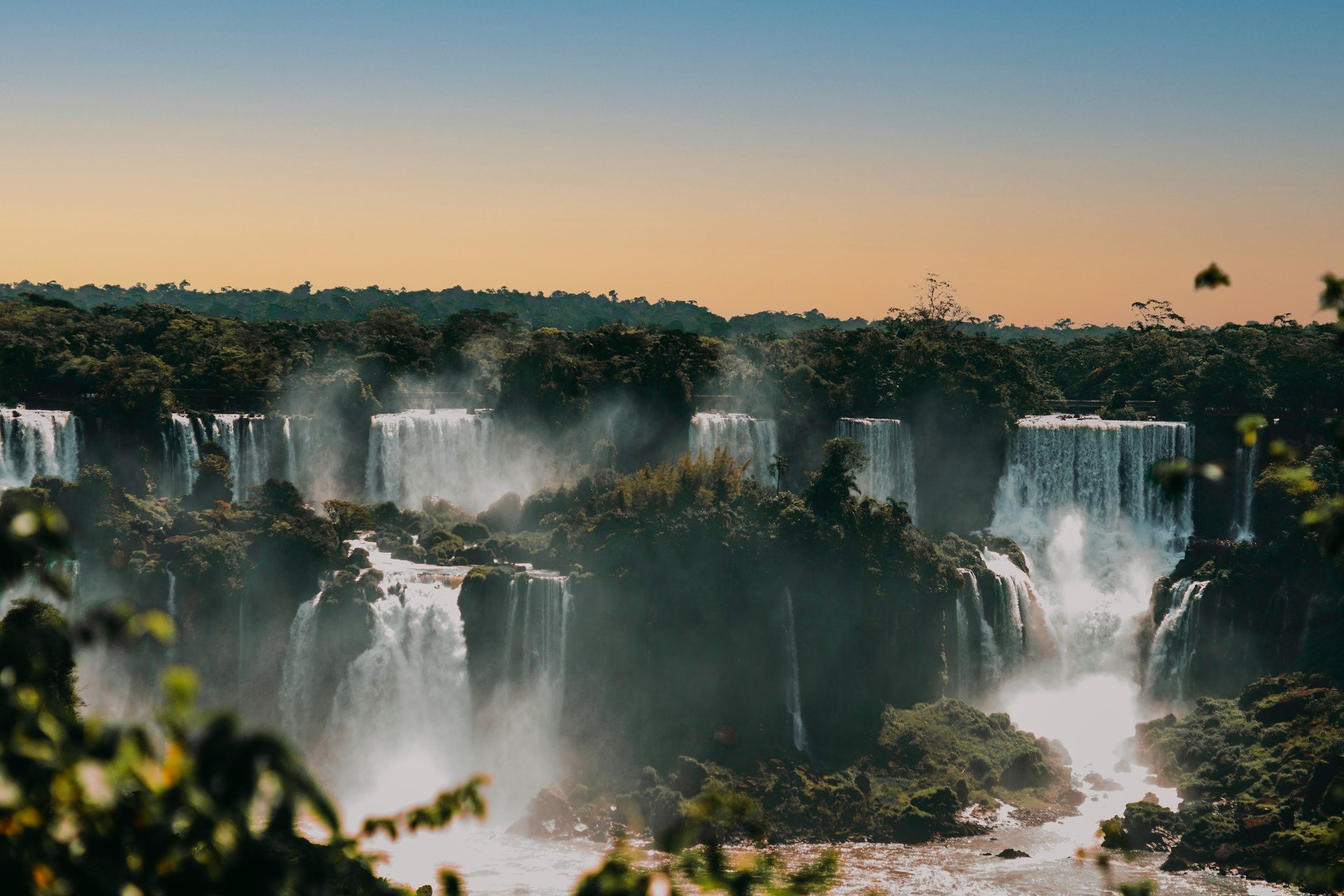
Paraguay
The country in the middle of everything that nobody visits. Guaraní is spoken by more people than Spanish. The Chaco covers two-thirds of the territory. The Jesuit ruins are UNESCO-listed and almost empty. Asunción is the most affordable capital in South America. Come before the rest of the world notices.
What You're Actually Getting Into
Paraguay sits landlocked at the heart of South America, flanked by Brazil, Argentina, and Bolivia, and consistently overlooked by travelers doing the continent's tourist circuit. There is no single dramatic landmark that functions as a shorthand reason to visit — no Machu Picchu, no Iguazú, no Galápagos. What Paraguay has instead is something harder to market but more interesting to experience: a country that has held onto something real. Guaraní, the indigenous language, is spoken in the streets, at the market, and at home by roughly 90% of the population — making it the only country in the Western Hemisphere where an indigenous language genuinely dominates everyday conversation. The Jesuit missions in the south — self-governing indigenous communities that functioned as societies without money for 150 years before being destroyed — are among the most thoughtprovoking ruins in South America, UNESCO-listed and visited by a fraction of the tourists who queue for Machu Picchu.
The Chaco covers the western two-thirds of the country — an enormous dry woodland and wetland ecosystem that is one of the most biodiverse places on the continent and among the least visited by international tourists. The Pantanal's southern edge extends into northeastern Paraguay. The country's rivers — the Paraguay and the Paraná — frame it on both sides and give it the waterway character that its landlocked geography would otherwise deny.
The honest picture includes the challenges. Paraguay has a complicated political history including the longest dictatorship in Latin American history (Alfredo Stroessner, 35 years). Ciudad del Este on the Brazilian border has a well-documented reputation for contraband trade and elevated crime. Infrastructure outside the main cities is thin. The summer heat is genuinely severe — temperatures in Asunción in January regularly exceed 40°C. English is minimal even in tourist areas. None of these make Paraguay a bad destination. They make it an honest one — a place that requires engagement rather than passive consumption and rewards the investment with one of the most authentic South American experiences available.
Paraguay at a Glance
A History Worth Knowing
The Guaraní people have inhabited the region between the Paraná and Paraguay rivers for at least 2,000 years, building a semi-nomadic culture based on horticulture, hunting, and fishing in the gallery forests and riverine zones. Their language, cosmology, and social organization were sophisticated enough to survive 500 years of colonial pressure and remain genuinely dominant in contemporary Paraguayan life — a fact with no parallel in the Americas.
Spanish colonization began in 1537 when Juan de Salazar de Espinoza founded Asunción on the bank of the Paraguay River. Unlike many other Spanish colonial ventures in South America, the Asunción settlement was relatively small and peripheral to the empire's main interests, which created the conditions for a more intimate, intermarried relationship between Spanish colonists and Guaraní people than occurred elsewhere. The mestizo Paraguayan identity that emerged — bilingual, deeply Guaraní in culture even when nominally Spanish in politics — is distinct from any other Latin American colonial synthesis.
The Jesuit missions are the most remarkable chapter in Paraguayan history and one of the most remarkable social experiments in the history of the Americas. Beginning in 1609, the Society of Jesus established a series of reducciones — organized communities of Guaraní people living under Jesuit administration. At their peak, 30 missions housed approximately 150,000 Guaraní people who governed themselves, produced exceptional music and artisanship, farmed communally, and lived in a system that had no private property and no monetary economy. The Guaraní in the missions were exempt from the encomienda forced labor system that devastated indigenous populations elsewhere. The missions were destroyed in 1767 when the Bourbon Crown expelled the Jesuits from all Spanish territories — a political decision driven by the order's growing power and independence, not by any failure of the missionary project. The Guaraní who had lived under mission governance were left without protection and within decades had been dispersed, enslaved, or killed.
The War of the Triple Alliance (1864-1870) is the defining trauma of modern Paraguayan history and one of the least-known catastrophes of the 19th century outside the region. Paraguay under Francisco Solano López went to war simultaneously against Brazil, Argentina, and Uruguay. The causes were complex — Brazilian intervention in Uruguay, territorial ambitions, political miscalculation — but the consequences were catastrophic. By the war's end, Paraguay had lost between 50% and 70% of its total population, and estimates suggest as many as 90% of its adult male population died. The country was occupied, humiliated, and stripped of territory. It took generations to recover demographically. The trauma is not ancient history in Paraguay — it is the lens through which the country understands its own fragility.
The 20th century brought political instability and ultimately Alfredo Stroessner, who seized power in 1954 and ruled until 1989 in the longest continuous dictatorship in Latin American history. The Stroessner regime was characterized by systematic repression, disappearances, and torture of political opponents, while simultaneously maintaining stability through patronage networks and alignment with the United States during the Cold War. Paraguay also became a haven for Nazi war criminals — Josef Mengele spent years there, and the country's remote interior provided cover for others. Stroessner was overthrown in a military coup in 1989. Democratic government followed, imperfect and often corrupt, but structurally stable. The country joined MERCOSUR, developed its hydroelectric resources (Itaipu Dam on the Paraná River, shared with Brazil, is the world's second-largest hydroelectric dam by power output), and has grown economically on the basis of soy agriculture and cattle ranching that have also devastated its eastern forests.
Guaraní people establish semi-nomadic cultures across the Paraguay-Paraná basin. Their language will survive 500 years of colonization.
Juan de Salazar founds Asunción. The city becomes the base for Spanish expansion across the Río de la Plata region.
The Jesuit reductions operate for 158 years — one of history's most remarkable social experiments. Expelled 1767 by royal decree.
Paraguay loses 50-70% of its population. One of the worst demographic catastrophes in the history of any nation.
35 years. Latin America's longest dictatorship. Systematic repression and a haven for Nazi war criminals.
The world's second-largest hydroelectric dam, shared with Brazil, begins operation. Paraguay's primary electricity source and major export earner.
Stroessner ousted. Imperfect democratic governance follows. Soy and cattle economy transforms the east; the Chaco remains largely intact.
Top Destinations
Paraguay's main circuit runs Asunción, the missions circuit in the southeast, and either the Chaco or the lake districts in the north. The country is compact enough that you can cover it in 10 days to two weeks without feeling rushed — the distances are manageable and the bus system covers most routes. The Chaco requires either a tour operator or significant self-reliance; everything else is accessible independently.
Asunción
Asunción is the oldest continuously inhabited European settlement in the Río de la Plata basin — older than Buenos Aires — and it shows in the most interesting way: the colonial core has survived without the gentrification pressure of wealthier cities and retains a scrappy authenticity. The Casco Histórico holds the Panteón Nacional de los Héroes, the Palacio de los López (presidential palace right on the riverbank), and the Casa de la Independencia — the oldest building in the city, from 1772, where Paraguayan independence was plotted. The Mercado 4, the largest market in the country, is where the real Asunción operates — electronics, textiles, street food, and the constant mixing of Spanish and Guaraní in the same sentence. Eat at the market comedores. Stay in the Recoleta or Villa Morra neighborhoods. Budget two to three days.
Trinidad & Jesús Missions
The two best-preserved Jesuit reduction ruins in Paraguay sit near the town of Encarnación in the southeast. Trinidad (founded 1706) is the more complete: the main church, the bell tower, the colegio, the workshops, and the residence quarters spread across a hilltop with views over the Paraná floodplain. Reliefs of angels playing instruments — the fusion of Guaraní artistic tradition with Baroque European form — decorate the stone facades. Jesús (founded 1685) has the most dramatically intact church façade, never quite completed before the expulsion. Both sites together take a full day and are most atmospherically visited at sunset when the stones turn amber. The closest base is Encarnación, which has good riverside accommodation and a pleasant costanera (riverfront promenade).
Gran Chaco
The Chaco covers 247,000 square kilometers of western Paraguay — dry tropical woodland, thorn scrub, salt flats, and seasonally flooded grasslands. It is one of the most biodiverse ecosystems in South America: jaguars, giant anteaters, giant armadillos, tapirs, maned wolves, and over 400 bird species. The Trans-Chaco Highway — the single paved road that crosses the region from Asunción to Filadelfia and the Bolivian border — runs through one of South America's most surreal travel experiences. Access to off-road wildlife areas requires a guide and a 4WD. The Defensores del Chaco National Park in the northwest is the largest protected area in Paraguay and one of the continent's best remaining jaguar habitats.
Filadelfia & the Central Chaco
In the middle of the Chaco, three hours from Asunción by paved road, the Mennonite colonies of Filadelfia, Loma Plata, and Neuland are among the world's most improbable communities. German-speaking descendants of Mennonite refugees who arrived from Russia and Canada in the 1920s have turned some of the most inhospitable land in South America into thriving agricultural enterprises. The museums in Filadelfia document both the migration history and the indigenous peoples who were displaced. The dairy cooperatives produce cheese and yogurt sold throughout Paraguay. Staying in Filadelfia — in a spotlessly clean guesthouse, eating excellent cold cuts and bread, disoriented by German signage in the middle of a South American wilderness — is one of Paraguay's most specific and memorable experiences.
Itaipu Dam
The Itaipu Dam on the Paraná River between Paraguay and Brazil is the world's second-largest hydroelectric dam by installed capacity and the largest by annual energy generation. It produces almost all of Paraguay's electricity and a significant portion of Brazil's. The dam is genuinely extraordinary in scale — the structure is 8 kilometers wide, the reservoir covers 1,350 square kilometers, and the machine hall contains 20 generating units the size of apartment buildings. Tours run in English and Portuguese from the Brazilian and Paraguayan sides. The night illumination tour is spectacular. The dam is 10 minutes from Ciudad del Este, which itself is worth passing through for the surreal border market experience.
Encarnación
Paraguay's third city, on the Paraná opposite the Argentine city of Posadas, reinvented itself after being partly flooded by the Yacyretá Dam reservoir. The new costanera (riverside promenade) has the best beach infrastructure in the country — sandy beaches, cafes, and a carnival festival in February that ranks as one of the better in South America. The ferry to Argentina takes 20 minutes and turns Encarnación into a natural node for Argentina-Paraguay crossings. The proximity to the missions (Trinidad is 30 km away) makes it the correct base for the UNESCO circuit.
Concepción & Ypacaraí
Lake Ypacaraí, 35 km east of Asunción, is Paraguay's most accessible natural destination — a shallow lake famous for the 19th-century waltz "Recuerdos de Ypacaraí" that remains one of the most celebrated compositions in Paraguayan popular music. The lakeside town of San Bernardino is a weekend resort for Asuncionians, pleasant and unpretentious. Concepción in the north, on the Paraguay River, is a cattle ranching town with a genuine provincial character and a gateway for river journeys toward the Pantanal's Paraguayan edge. The floating islands and wetland wildlife in the Pantanal margin accessible from the river north of Concepción are largely unvisited by international travelers.
Itauguá & Areguá
Just outside Asunción, the craft corridor of the Central Department has been producing Paraguay's defining traditional crafts for centuries. Itauguá is the home of ñandutí — the sun-shaped lacework that is one of Paraguay's most distinctive textiles, produced by hand on circular frames in intricate geometric patterns. Areguá, on Lake Ypacaraí, is the ceramics and strawberry town, with a bohemian character and weekend markets that attract Asuncionians for the afternoon. Both are easy half-day or day trips and give access to craftspeople working in the traditional manner rather than producing for tourist souvenir shops.
Culture & Etiquette
Paraguay's culture is most distinctive in what it has kept rather than what it has built. Guaraní is not a language being preserved — it is a language being used, every day, in markets and homes and between friends, by people who also speak Spanish and who switch between the two languages in the same sentence in a linguistic phenomenon called Jopara (mixing). The cultural weight of this linguistic reality cannot be overstated: it means that the pre-colonial Guaraní way of understanding the world — its relationship to nature, its social organization, its specific way of conceptualizing time and obligation — has remained present in the national consciousness rather than being replaced.
Paraguayans are warm and direct in a way that reflects their Guaraní heritage more than their Spanish one. The hospitality tradition is genuine. The pace of life, particularly outside Asunción, is slow in a way that is not laziness but is a fundamentally different relationship to time — the Guaraní word for it is porã, a concept of wellbeing and beauty in unhurried presence.
Tereré — cold yerba mate drunk through a metal straw from a shared cup — is the national drink and the primary social ritual of Paraguayan life. Being invited to share tereré is an invitation into someone's social world. Accept it always. The sharing of the same bombilla (metal straw) is a gesture of trust. It is more intimate than sharing a meal.
"Mba'éichapa?" (How are you?), "Iporã" (good/beautiful), "Aguijé" (thank you). Any attempt at Guaraní — even phonetically mangled — produces a reaction of genuine warmth that no amount of Spanish achieves. Paraguayans are accustomed to being invisible to the outside world, which makes being seen by a visitor who made the effort to learn their language especially meaningful.
The summer heat in Paraguay (December to February) is genuinely dangerous. Temperatures in Asunción regularly exceed 40°C and the humidity makes it feel higher. Stay indoors or in shade between noon and 3pm. Drink water constantly. This is not precautionary advice — heat stroke is a real risk for visitors acclimatized to temperate climates.
The Jesuit reductions are not just picturesque ruins. They are the physical remains of a society that lasted 158 years, was dismantled by political decree, and whose Guaraní participants were subsequently scattered and largely destroyed. Understanding this context before you walk into Trinidad changes the experience from aesthetic to historical in the most productive way.
The Paraguayan guaraní comes in large nominal denominations (a $1 USD equivalent is about 7,500 guaraní). Transactions at markets and small businesses require small bills; 50,000 and 100,000 guaraní notes will cause change problems. Carry a stock of 5,000 and 10,000 guaraní notes for daily use.
Many travelers pass through Paraguay on the way from Brazil to Argentina or vice versa, giving Asunción one rushed afternoon and concluding the country isn't interesting. This is a predictable mistake. The missions, the Chaco, and the cultural depth require time that cannot be compressed into a single afternoon. Plan at least five days or skip entirely and return properly.
The eastern border city has a well-documented history of contraband trade, elevated street crime, and a commercial chaos that requires vigilance. If you visit for Itaipu or the border crossing, stay alert, use hotel-arranged transport, and avoid carrying valuables visibly. The central market area in particular requires care.
Outside the main highways, Paraguay's roads range from adequate to genuinely rough. The Chaco routes off the Trans-Chaco Highway require 4WD in any season. Rain transforms many rural roads into mud. Check road conditions before any off-highway journey, particularly in the wet season.
Paraguayans and Argentines both consider drinking mate or tereré while driving entirely normal. As a visitor, focus on the road.
The Stroessner era is discussed in Paraguay with genuine complexity — some older Paraguayans have positive views of the stability it provided, others experienced its brutality directly. Engage with this as a complicated subject rather than a simple moral category, and listen before you offer an opinion from outside.
Tereré Culture
Tereré is cold yerba mate — the same bitter herb drunk hot across Argentina and Uruguay — prepared with ice water and often with medicinal herbs (mint, cedrón, boldo) added to the guampa (drinking vessel). It is consumed from a shared bombilla in a circular social ritual: the cebador (server) prepares and passes the cup, drinks it first to check the temperature, and passes to the next person who drinks and returns the empty cup without saying "gracias" (saying thank you means you don't want more). The ritual can last hours. It is the most accurate expression of Paraguayan social culture available to a visitor.
Guaraní Baroque Music
The Jesuit reductions produced one of the world's most extraordinary musical fusions: European Baroque composition techniques taught to Guaraní musicians who then created works that combined both traditions. The Missiones de Chiquitos recordings and the Esteban Salas collections give a sense of what was produced. In Paraguay, this tradition is kept alive by ensembles that perform the original scores. The annual Sonidos de la Tierra festival uses instruments built to original historical specifications. The music of the missions is haunting in the way that all great syntheses are — identifiable from neither direction alone.
Ñandutí Lacework
Ñandutí ("spider web" in Guaraní) is a lace-making tradition brought by Spanish colonists from the Canary Islands and transformed by Paraguayan women into something distinctly their own. The round patterns, made on circular frames with dozens of pins and thread, represent the sun, flowers, and geometric forms. The finest examples take weeks to make. The craft village of Itauguá, 30 km from Asunción, has been producing ñandutí for centuries. Buying directly from the maker means the work goes where it belongs and the price is fair.
Football
Football in Paraguay punches significantly above its weight. The national team has qualified for multiple World Cups and produced players who have starred at the highest levels of European club football. Club football in Asunción — particularly the Olimpia vs Cerro Porteño derby, one of the most intense club rivalries in South America — operates with a passion that requires no knowledge of the league table to appreciate. Finding a bar showing a derby match and watching with local supporters is one of Asunción's more visceral experiences.
Food & Drink
Paraguayan cuisine is built from corn, mandioca (cassava), meat, and fresh cheese — the indigenous and colonial agricultural base of the Paraguay River basin. It is not internationally celebrated and has not attracted the wave of gastronomic reinvention that has transformed the food scenes of Buenos Aires or Lima. What it is, at its best, is honest and specific: deeply embedded in a landscape and a history, prepared by people who have been making these dishes for generations. The food in Paraguay rewards eating at the source — the market, the home kitchen, the roadside parrilla — rather than at the few restaurants attempting international sophistication.
Chipa
The national snack and a significant cultural object. Chipa is a small bread made from mandioca (cassava) starch, eggs, fresh cheese, and anise, baked in a tatakua (clay oven) until golden outside and slightly soft inside. The texture is unlike wheat bread — denser, slightly elastic, with the mild sourness of the cheese baked in. It is eaten throughout the day, carried in baskets by vendors on buses and at terminals, and consumed in enormous quantities during Holy Week (Semana Santa) when it is almost the only food sold. Every family has their own recipe. Every Paraguayan has an opinion on whose chipa is the best.
Sopa Paraguaya
The national dish, and a source of linguistic confusion: sopa paraguaya (Paraguayan soup) is not soup. It is a cornbread baked with fresh cheese, onion, and egg — dense, moist, savory, and eaten as an accompaniment to meat or on its own as a snack. The story is that the cook of President Carlos Antonio López accidentally added too much cornmeal to the soup and created a baked dish instead. The president liked it and named it. Whether this is true is immaterial. The dish is specifically Paraguayan in a way that no other Paraguayan food is, and the combination of corn, cheese, and onion is simple and very good.
Asado & Soo'o Josopy
Paraguay takes its grilled meat seriously and the parrilla culture operates at a level comparable to neighboring Argentina and Uruguay. The Paraguayan asado has its own specific character — cow cuts, pork ribs, and the sausages are all correct. Soo'o josopy ("pounded meat" in Guaraní) is a distinctly Paraguayan preparation: tough cuts of beef pounded to tenderize and then cooked with onion, tomato, and spices. It appears in soups, empanadas, and stews. The name is entirely Guaraní — a reminder that even the Spanish-seeming food culture here has indigenous roots.
Bori-Bori & Locro
Bori-bori is a thick soup with corn flour and cheese dumplings — warming, filling, and appropriate for the mild Paraguayan winter. Locro is a corn and meat stew with Andean origins that has become embedded in Paraguayan rural cooking. Both are market comedor staples, available as the first course of the daily set lunch (almuerzo) for 15,000-25,000 guaraní ($2-3.50 total). The quality in a good market comedor is high because these are the dishes the cook grew up eating and has been making every day for years.
Fruit & Mbejú
Paraguay's tropical fruit market — mango, guayaba, mamón (papaya), naranja, and the local varieties that don't travel — is excellent and extremely cheap. Street vendors sell fresh-cut fruit for a few thousand guaraní. Mbejú is a thin pancake made purely from mandioca starch, cheese, and fat — no wheat, no corn — fried on a griddle and eaten warm. It is specifically a wet-season food, traditionally made during the rainy months, and has a texture unlike any other flatbread: crispy at the edges, slightly gooey in the center, with the mild tang of fresh cheese throughout.
Tereré & Ka'ay
Tereré (cold mate with herbs and ice) is covered in the Culture section but deserves mention here as the country's primary daily drink — more consumed than water, more socially significant than any food. Ka'ay is the hot version (just "ka'ay" means hot mate in Guaraní). Mosto is fresh-pressed sugarcane juice, sold at roadside stands for almost nothing — cold, sweet, and the correct companion to summer heat. Craft beer has arrived in Asunción in the same wave that hit every South American capital between 2015 and 2020, and a few decent local options now supplement the national Brahma and Pilsen lagers.
When to Go
Paraguay has two distinct seasons. The summer (November to March) is hot — very hot, brutally hot in the Chaco — with temperatures regularly exceeding 40°C in Asunción and potentially higher in the interior. The winter (June to August) is mild and genuinely pleasant, with temperatures around 15-22°C in Asunción and ideal conditions for overland travel. The shoulder seasons (April-May and September-October) offer good conditions with lower crowds. Avoid the Chaco in summer unless you have air-conditioned transport and very good reasons.
Winter
Jun – AugThe best time for everything: mild temperatures, dry roads, comfortable conditions for the Chaco and the missions. The Asunción parrilla culture and the tereré ritual are both enhanced by weather you can actually sit in. Night temperatures can drop to single digits in July — bring a layer.
Shoulder Seasons
Apr–May, Sep–OctPleasant temperatures, manageable rain, and the best natural landscape colors. The missions in October, with the surrounding forest in early spring growth, are particularly atmospheric. The Encarnación carnival if you time February correctly (technically summer but the festival is worth the heat for those who plan around it).
Summer
Dec – FebBrutal heat and significant humidity in Asunción. The Chaco becomes genuinely dangerous for outdoor activities. Roads flood in the wet season. That said, the Encarnación carnival in February is one of the better in South America, and the Pantanal edge is most accessible in the wet season when the waterways are full.
Holy Week (Semana Santa)
Mar/AprThe most significant Paraguayan holiday. Asunción empties as families return to rural hometowns. The chipa production goes into overdrive. The country takes on its most specifically Paraguayan character during this week — religious observance, family gatherings, and the particular combination of solemn and festive that Holy Week produces everywhere in Latin America.
Trip Planning
Seven to ten days covers Paraguay's main circuit comfortably: Asunción, the Chaco (at least a drive through), the missions, and Encarnación. Two weeks gives room to add the northern lake region, Concepción, or a proper wildlife-focused Chaco expedition. The country is manageable by independent travel — buses connect all main destinations, and the missions and Encarnación are straightforward. The Chaco off the main highway requires either a 4WD, a guide, or both.
Asunción
Day one: Casco Histórico, Palacio de los López, Panteón Nacional, lunch at Mercado 4. Afternoon: Bahía de Asunción waterfront. Day two: day trip to Itauguá for ñandutí lacework and Areguá for ceramics and Lake Ypacaraí. Back for evening asado somewhere in Villa Morra.
Missions Circuit
Bus to Encarnación (5-6 hours). Base at the costanera. Day four: full day at Trinidad and Jesús missions — arrive at Trinidad by 3pm to get the sunset light on the stone. Day five: morning in Encarnación, explore the costanera beaches. Afternoon bus or ferry connections for the next leg.
Trans-Chaco Drive
Return to Asunción and take a bus or rental car northwest on the Trans-Chaco Highway toward Filadelfia (3 hours from Asunción on a good road). Overnight in the Mennonite colonies. Day seven: the Jacob Unger Museum and a drive into the surrounding Chaco before returning to Asunción for departure.
Asunción Extended
Three days including a proper market morning, the Museo Nacional de Bellas Artes (colonial and modern Paraguayan art), and an evening at a peña for live Paraguayan music. The Costanera Norte development along the river has transformed the waterfront — walk it at sunset on day three.
Missions Circuit in Depth
Slow the missions circuit down. Add San Cosme y Damián, the third mission site near Encarnación where a Jesuit observatory was built and the original astronomical instruments remain. Visit the missions at different times of day — Trinidad at 7am before any other visitors, Jesús at 5pm. Spend the middle day doing nothing in Encarnación except eating at the market.
Chaco Expedition
Hire a guide and a 4WD in Filadelfia for three days into the deeper Chaco. The Defensores del Chaco National Park requires advance permits and a properly equipped vehicle. Night wildlife spotting (giant armadillos, giant anteaters, maned wolves are all possible). Stay at the Estancia La Golondrina or similar lodges in the central Chaco. Return to Filadelfia on day ten.
Northern Paraguay: Concepción & the River
Bus northeast from Asunción to Concepción on the Paraguay River (5 hours). Two days exploring the provincial character, the weekly market, and optional short river boat trips toward the Pantanal edge. Return to Asunción for departure, stopping at the craft village of Tobatí (wood carving) on the way back.
Asunción & Central Region
Four days in and around the capital including all the craft villages (Itauguá, Areguá, Tobatí for woodcarving, Luque for silverwork and guitars), Lake Ypacaraí, and a full day at the Museo del Barro — Asunción's best museum, focusing on Paraguayan folk art and indigenous ceramics.
Missions & Southern Paraguay
The full missions circuit: Trinidad, Jesús, San Cosme y Damián, and Santiago (further along the missions route). The Argentine missions at San Ignacio and Santa Ana are accessible on a day trip from Encarnación via the ferry. The Argentine side gives a different preservation context and scale to the same Jesuit story.
Chaco Expedition
Five days in the Chaco with a guide. Filadelfia base, Defensores del Chaco National Park, the salt flats near Fortín Infante Rivarola, and a visit to a Nivaclé or Ayoreo indigenous community with appropriate protocol and prior arrangement through your guide. The convergence of cultures in the central Chaco — Mennonites, mestizo Paraguayans, and indigenous communities all within 100 km of each other — is one of the more improbable and interesting anthropological realities in South America.
Northern Loop: Concepción, Pantanal & Itaipu
Bus to Concepción, river journey toward the Pantanal edge (2-3 days with a local operator), back to Asunción, then east to Ciudad del Este for the Itaipu Dam tour. The Brazilian side of Iguazú Falls is 45 minutes from Ciudad del Este — a worthwhile addition at this point in the trip. Return to Asunción for departure.
Vaccinations
Yellow fever vaccination recommended for the Chaco and northern regions. Hepatitis A, Typhoid, and routine vaccines. Malaria risk is low in most of Paraguay but present in forested border areas with Brazil and Bolivia — check current advice with a travel health specialist before departure.
Full vaccine info →Cash in Guaraní
Paraguay is heavily cash-based outside major hotels. ATMs in Asunción and main cities accept international Visa and Mastercard. Outside major cities, ATMs are unreliable. Withdraw sufficient guaraní in Asunción before heading to the Chaco or the northern regions. The exchange rate from USD is approximately 7,500 guaraní to $1.
Connectivity
Buy a Tigo or Personal SIM at Asunción's Silvio Pettirossi Airport. Coverage is good in Asunción and along the Trans-Chaco Highway as far as Filadelfia. Deep Chaco, the northern regions, and rural missions areas have limited or no coverage. Download offline maps before any rural excursion.
Get Paraguay eSIM →Chaco Preparation
For any off-highway Chaco travel: a 4WD vehicle, a GPS device with offline maps of the region, sufficient water for 2-3 days (there are no stores in the deep Chaco), DEET insect repellent (the mosquitoes and sandflies in the wet Chaco are severe), a satellite communicator, and a guide who knows the region. These are not precautions for the Trans-Chaco Highway; they are necessities for off-road exploration.
Heat Preparation
Summer travel (December to February) requires specific heat management: light, loose, breathable clothing; a hat with full brim coverage; high-SPF sunscreen; and a minimum of 3-4 liters of water daily. The combination of 40°C heat and high humidity in Asunción produces heat stroke conditions for visitors unacclimatized to tropical temperatures. Plan all outdoor activities for early morning or late afternoon.
Travel Insurance
Medical facilities in Asunción's private hospitals (Hospital Privado Francés and Hospital Bautista are the main options for foreigners) are adequate for most injuries. Outside Asunción, facilities are limited. For Chaco travel, evacuation insurance is important given distances involved. Travel insurance with medical and evacuation cover is recommended.
Transport in Paraguay
Paraguay's transport infrastructure covers the main routes adequately and becomes increasingly basic as you move away from the main highways. The bus system is the backbone of intercity travel — comprehensive, cheap, and generally reliable. The Trans-Chaco Highway is paved from Asunción to the Bolivian border, but everything off it requires a 4WD. Road quality in the eastern agricultural zones is variable. The country has no passenger rail and domestic flights cover only a few routes.
Long-Distance Bus
$5–20/routeThe bus system connects all major cities: Asunción to Encarnación (5-6 hours, $10-12), Asunción to Ciudad del Este (4-5 hours, $8-10), Asunción to Filadelfia (3 hours, $8). The Asunción Terminal de Omnibus at the Botánico has dozens of companies. Book at the terminal window or through the company websites (NASA, Rysa, and Alborada are reliable).
Asunción Taxis & Uber
$3–8 within the cityTaxis in Asunción use meters and are generally reliable. Uber also operates in Asunción and is the safer and more transparent option for visitors. InDriver is active and offers competitive rates. The airport is 15 km east of the city center — a taxi costs around $15, Uber is typically $8-10.
Car Rental
$35–70/dayCar rental makes the missions circuit and the Trans-Chaco Highway accessible at your own pace. For the Chaco off the main road, rent a 4WD specifically — a standard car will not manage the tracks in any significant rain. International driving permit required. Several rental agencies operate at Silvio Pettirossi Airport.
Domestic Flights
$80–150/routeAerolíneas Paraguayan and occasional charter operators serve Filadelfia (Chaco), Concepción, and a few other destinations from Asunción's Silvio Pettirossi Airport. Schedules are limited and flights are not daily on most routes. Useful for the Chaco when road time is the constraint.
River Ferries
$2–5/crossingThe ferry between Encarnación and Posadas, Argentina runs regularly and takes 20 minutes. Passenger boats on the Paraguay River connect Asunción with Concepción and points north, though schedules are infrequent and the journey takes 20+ hours. The river crossing at Asunción to Chaco'i gives access to the Chaco side by foot and small vehicle.
Local Urban Buses
3,000–4,000 PYG ($0.40)Asunción's bus network covers most neighborhoods at minimal cost. Routes can be confusing without local knowledge — ask your accommodation which bus number serves your destination. The buses are old, often crowded, and excellent for observing daily life. The Metrobus corridor on Aviadores del Chaco Avenue is the fastest urban route.
Accommodation in Paraguay
Paraguay's accommodation is functional and affordable. Asunción has the best range — from boutique hotels in the residential neighborhoods to international business hotels for the oil and soy industry. The missions region (Encarnación) has good mid-range hotels. The Mennonite colonies in the Chaco have their own guesthouse tradition — clean, simple, and operated with the efficiency you'd expect from communities that built an agricultural civilization in a wilderness. Outside these zones, accommodation is basic but available.
Asunción Boutique Hotels
$60–150/nightThe Villa Morra and Recoleta neighborhoods have the best boutique hotels. La Misión Hotel Boutique and the GHL Hotel Asunción are reliable options. The newer business hotels near the Aviadores del Chaco corridor serve the corporate market but are clean and well-located for the airport.
Encarnación Costanera Hotels
$40–90/nightThe Hotel Boutique Encarnación and several smaller guesthouses along the costanera (riverside promenade) combine river views with reasonable prices. The best accommodation in the missions region. Book ahead in February for the Carnival period when the city fills entirely.
Mennonite Colony Guesthouses (Chaco)
$35–70/nightThe guesthouses in Filadelfia (Hotel Florida is the main option) and Loma Plata are clean, functional, and operated with impressive efficiency. They offer air conditioning against the Chaco heat, a good breakfast with Mennonite dairy products, and a cultural incongruity — German-speaking efficiency in the South American wilderness — that is itself one of the more memorable Paraguayan experiences.
Estancias & Rural Lodges
$80–200/nightWorking cattle ranches (estancias) in the Chaco and the Pantanal edge offer accommodation that combines rural Paraguayan life with wildlife. Estancia La Golondrina in the central Chaco and several operations near Concepción provide guided horse riding, night wildlife spotting, and an immersion in the specific culture of Paraguayan cattle country.
Budget Planning
Paraguay is among the most affordable destinations in South America. Food and transport are cheaper here than in any neighboring country. Accommodation in Asunción at every price point costs significantly less than equivalent quality in Buenos Aires or São Paulo. The gap between budget and comfortable travel is narrower than in most countries — quality doesn't cost dramatically more because the baseline is already low.
- Budget guesthouse or hostel
- Market almuerzo ($2-3.50)
- Local buses between cities
- Chipa from terminal vendors ($0.25-0.40)
- Tereré and local Pilsen beer
- Boutique hotel or quality guesthouse
- Mix of restaurants and market food
- Occasional car rental or taxi
- Mission entrance fees ($3-5)
- Itaipu Dam tour ($25-30)
- Best available hotel in Asunción
- Private car hire for missions circuit
- Chaco estancia with guided activities
- Specialist wildlife guide in Chaco
- Restaurant dining every meal
Quick Reference Prices
Visa & Entry
Paraguay's visa policy is generally permissive for Western travelers. Citizens of the US, EU nations, UK, Australia, Canada, New Zealand, and most Latin American countries can enter visa-free for stays of up to 90 days. The 90-day stay can be renewed once by exiting and re-entering the country, which is easily done at the Encarnación-Posadas ferry crossing. Citizens of some nationalities require advance visa applications — check the current list at the Paraguayan Ministry of Foreign Affairs before booking.
Most Western nationalities and all MERCOSUR members qualify. Check the Paraguayan Ministry of Foreign Affairs for your specific nationality. Entry by air at Silvio Pettirossi International (ASU) in Asunción or overland at multiple border crossings.
Family Travel & Pets
Paraguay is a family-oriented culture and children are genuinely welcome everywhere. The practical challenge for families is the summer heat, which is severe enough to make extended outdoor activities difficult in December-February. The missions, the craft villages, and Asunción's Jardín Botánico are all good family destinations. The Chaco is more suited to older children and adults who can handle the heat and the extended drives. The Itaipu Dam tour has specific interest for older children who can engage with the scale of engineering involved.
Jesuit Missions
Trinidad and Jesús are accessible and engaging for children old enough to tolerate an hour of walking and to respond to the scale of the ruins. The relief carvings of angels playing instruments — one of the most distinctive artistic features of the missions — tend to fascinate children for reasons that have nothing to do with history. Bring water and hats. The sites have minimal shade.
Itaipu Dam Tour
The Itaipu technical tour — including the machine hall where 20 generating units the size of apartment buildings sit — is impressive enough for children who have any interest in engineering or scale. The explanations are good, the multilingual tour guides are patient with questions, and the sheer size of the structure makes an impression that doesn't require engineering knowledge to receive.
Craft Villages
Watching ñandutí lacework being made in Itauguá is the kind of craft demonstration that captures children's attention — the geometry of the patterns on the circular frame, the speed and precision of the maker's hands, and the ability to ask questions about how it works. The result is something they can buy and bring home with an understanding of how it was made.
Encarnación Costanera
The beach facilities along Encarnación's costanera are the best family beach infrastructure in Paraguay — sand, cafes, calm river water for swimming, and food vendors. It's a river beach rather than an ocean beach, which makes it calmer for younger children. The evenings on the costanera are pleasant and family-oriented in the way that Paraguayan river towns generally are.
Chaco Wildlife
For older children with an interest in wildlife, the Chaco offers night spotting for giant armadillos and giant anteaters that is genuinely exciting and accessible through estancia stays. These are rare animals in most of the world, common enough in the Chaco that patient night drives produce reliable sightings. The strangeness of a giant anteater lumbering across a Chaco road at 10pm in a headlight beam is the kind of thing that stays with a child.
Heat Management with Children
The summer heat is the primary challenge for family travel. Build all outdoor activities around early morning (6-10am) and late afternoon (4-7pm). Middle of the day is siesta time in Paraguay for good reason — follow the local example. Swimming in the rivers and lakes provides relief; the Encarnación costanera and Lake Ypacaraí are the best options. Carry more water than you think you need and enforce hydration.
Traveling with Pets
Traveling with pets to Paraguay requires a veterinary health certificate issued within 10 days of travel, proof of current vaccinations (rabies, distemper, parvovirus, and hepatitis for dogs), and the documentation must be certified by the Paraguayan consulate in your country before departure. SENACSA (the Paraguayan national animal health service) handles pet entry and can be contacted for current requirements.
For a tourist visit, the logistics rarely justify the effort. The summer heat is dangerous for many breeds of dog. Hotel pet policies vary. The Chaco is not a suitable environment for domestic animals. If you are relocating to Paraguay or traveling for an extended period, the process is worth undertaking. For a two-week holiday, leave pets at home.
Safety in Paraguay
Paraguay is generally safe for tourists, with the important qualifications that Ciudad del Este carries elevated crime levels and that certain areas of Asunción require normal urban vigilance. The rural interior, the missions region, the craft villages, and the Chaco are safe and calm. Violent crime targeting tourists in the mainstream tourist circuit is uncommon. The main risks are petty theft in markets and bus stations, and the specific issues around Ciudad del Este's contraband-driven economy.
Rural Interior & Missions
The missions region, the craft villages, the Mennonite colonies, and the rural Chaco are safe. Crime rates in Paraguayan towns and villages outside the main urban centers are low. The Mennonite colonies in particular operate with a community cohesion that makes them among the safest communities in the country.
Asunción Urban Areas
Asunción requires standard urban vigilance. Pickpocketing and bag snatching occur in the Mercado 4 area and at the bus terminal. The Casco Histórico is safe during the day and requires more care at night. The Villa Morra and Recoleta residential neighborhoods are safe at most hours. Use taxis or Uber after dark rather than walking on unfamiliar streets.
Ciudad del Este
The border city has a higher crime level than the rest of Paraguay, driven by its role as a contraband market and the associated organized crime. If visiting Itaipu Dam (10 minutes from the city), go directly and use organized transport. The central market is chaotic and requires vigilance with valuables. Avoid at night.
Road Safety
Road accidents are the most significant safety risk for travelers in Paraguay. Night driving in the Chaco (where animals cross the road unpredictably), overtaking on two-lane highways, and poorly marked speed bumps (lomadas) are specific hazards. Drive at moderate speeds, never drive the Chaco at night without local knowledge, and treat lomadas seriously — hitting one at speed damages vehicles and passengers.
Heat Risk
Summer heat in the Chaco and Asunción reaches levels that are genuinely dangerous for unacclimatized visitors. Heat stroke, dehydration, and heat exhaustion are real risks between December and February. Apply the 4-liter-per-day water rule, restrict outdoor activity to mornings and evenings, and recognize heat stroke symptoms (confusion, cessation of sweating despite heat, very hot skin) as a medical emergency requiring immediate cooling and rehydration.
Border Areas
The Brazil-Paraguay border at Ciudad del Este and the Argentina-Paraguay border at Encarnación are active smuggling zones. Customs and immigration enforcement is present but inconsistent. Do not carry items across borders on behalf of strangers. Do not purchase goods of uncertain provenance in Ciudad del Este market and attempt to export them without receipts.
Emergency Information
Embassies & Consulates in Asunción
Most embassies are in the Recoleta, Villa Morra, and central neighborhoods of Asunción.
Book Your Paraguay Trip
Everything in one place. These are services worth actually using.
What Stays With You
Most travelers who visit Paraguay return confused about why they waited so long. The country doesn't punch in the same weight class as Peru or Argentina in terms of marquee sights. But it does something harder to package: it gives you access to a genuinely different way of being in the world, preserved by the accident of its own marginality. The Guaraní language spoken at the market in the same sentence as Spanish. The tereré ritual — the sharing of the cold cup in a circle, the refusal to say thank you because thank you means you're done. The afternoon silence of a missions ruin in the southeastern heat, the carved angels still playing their music on the stone walls after 300 years.
In Guaraní, the word porã means beautiful, good, and well simultaneously — the same word for aesthetic beauty, moral goodness, and physical wellbeing. The three things are not considered separable. It is the word Paraguayans use to describe their tereré, their country, and their people. You go to Paraguay and you find that the word earns its triple meaning. The beauty is quiet and requires time to see. The goodness is consistent in the way that genuine hospitality always is. The wellbeing comes from slowing down enough to participate in the rhythm rather than observe it from outside. Porã, if you let it work on you, is what Paraguay is.