
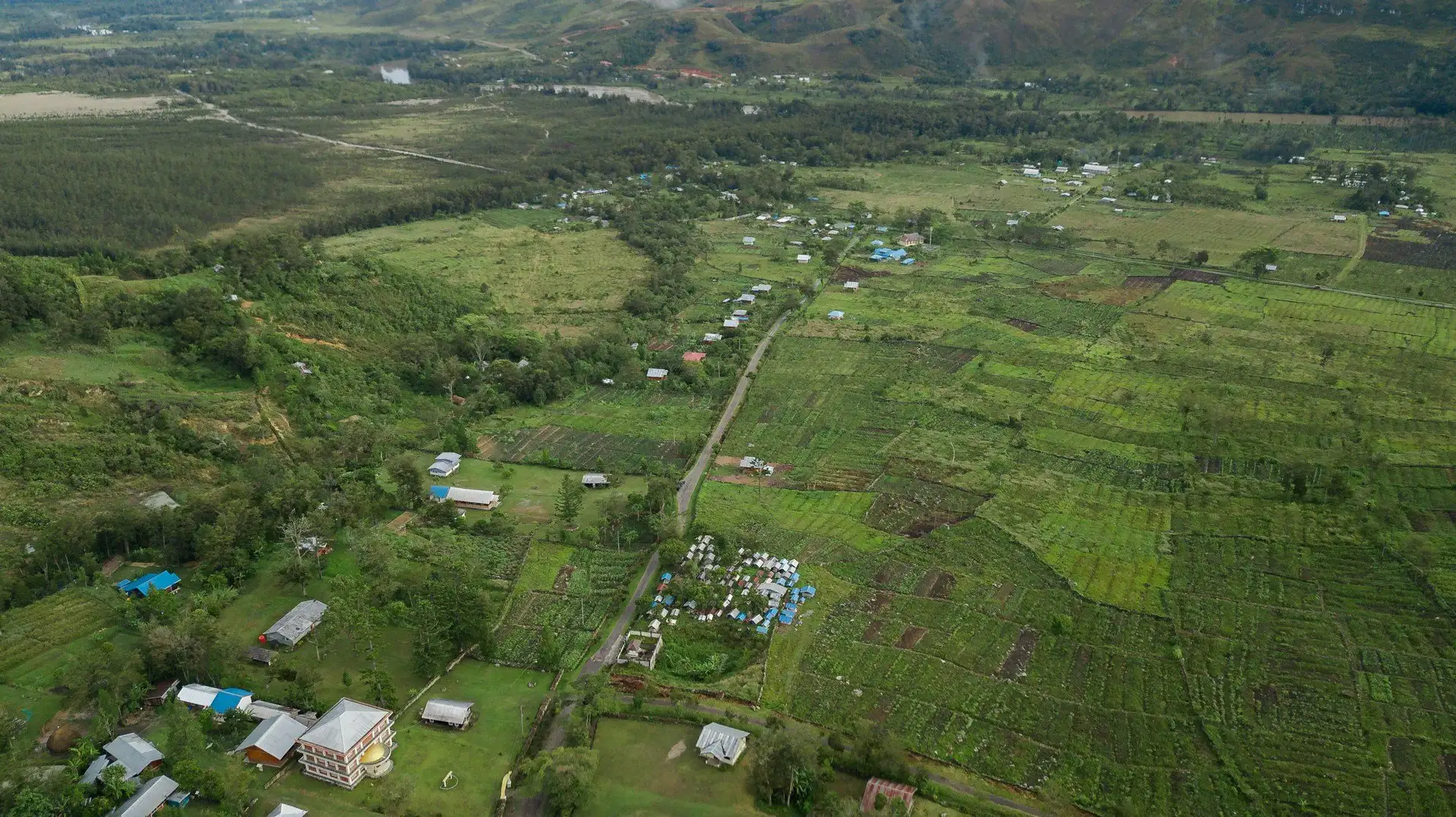
Guyana
The only English-speaking country in South America. Over 85% primary rainforest. A waterfall five times taller than Niagara that fewer than 10,000 people see each year. Harpy eagles. Giant otters. The world's most intact large ecosystem. Almost nobody comes.
What You're Actually Getting Into
Guyana sits on the northeastern shoulder of South America, squeezed between Venezuela, Brazil, and Suriname, and it operates as though the rest of the continent's tourism industry simply didn't arrive. The country receives roughly 300,000 visitors a year, the vast majority of whom are visiting family or attending business related to its rapidly expanding oil sector. Those who come specifically for the landscape and wildlife number somewhere in the tens of thousands. This is not because the country lacks things to see. It's because almost nobody knows they're there.
Consider the facts: Guyana has over 85% intact primary forest — the highest percentage in the Western Hemisphere. Kaieteur Falls, on the Potaro River in the interior, drops 226 meters as a single curtain of water, making it the world's largest single-drop waterfall by volume. The Guiana Shield beneath the rainforest is one of the world's oldest geological formations, producing the tepui table mountains that Arthur Conan Doyle used as the setting for "The Lost World." The harpy eagle, the world's most powerful raptor, nests in the Guyanese interior at some of the highest densities left on earth. The giant river otter — one of the world's most endangered mustelids — swims in the blackwater rivers. The arapaima, one of the world's largest freshwater fish, surfaces in the oxbow lakes. Jaguars, tapirs, giant anteaters, and eight species of monkey share this landscape with fewer human beings per square kilometer than almost anywhere in South America.
The honest context: Guyana is not an easy trip. Georgetown has genuine crime issues and requires urban vigilance. The interior is largely roadless — access is by small plane or very long rough-road drives. The lodges in the interior are good by ecotourism standards but are not luxury resorts. The food in Georgetown is variable. The infrastructure that enables casual tourism barely exists outside the specialist ecotourism operators who have built it over decades. Come prepared for genuine frontier travel and you will be rewarded with one of South America's most extraordinary experiences. Come expecting the polished infrastructure of Peru or Colombia and you will be frustrated.
One more thing that makes Guyana unique in South America: English is the official language. Not as a second language alongside Spanish or Portuguese, but as the first language, spoken with a Caribbean lilt that takes a day to tune your ear to. This removes the language barrier that makes several neighboring countries harder to navigate independently.
Guyana at a Glance
A History Worth Knowing
The Guiana coast and interior have been inhabited for at least 10,000 years. The Amerindian peoples — including the Arawak along the coast, the Carib in the highlands, and the Macushi, Wapishana, Wai-Wai, and others in the interior — developed distinct cultures across the range of ecological zones, from the coastal mudflats to the rainforest and the Rupununi savannahs. They remain present today: approximately 11% of Guyana's population identifies as Amerindian, and the interior regions are administered partly through a system of Toshaos (community leaders) that recognizes indigenous territorial governance.
European contact began with Spanish exploration in the late 15th century, and the coast became a site of intense colonial competition between the Dutch, British, and French throughout the 17th and 18th centuries. The Dutch established the most significant early plantations, building an elaborate system of sea-walls and drainage canals in the coastal plain that is still the basis of the country's coastal infrastructure — Georgetown itself sits below sea level, kept dry by 18th-century Dutch engineering. The sugar and cotton plantations that drove this economy ran on enslaved African labor, imported in enormous numbers from West and Central Africa.
Britain took permanent control of the Demerara, Essequibo, and Berbice colonies in 1814, unifying them as British Guiana in 1831. The abolition of slavery in 1834 and the period of "apprenticeship" that followed transformed the plantation economy. Formerly enslaved workers largely left the plantations and established free villages. The plantation owners, facing a labor shortage, imported indentured workers from India (and smaller numbers from China, Portugal, and the Caribbean) from the 1840s onwards. This system of indenture — a form of contracted labor that critics have called "a new system of slavery" — brought over 240,000 people from India to British Guiana over the following decades. Their descendants now make up approximately 40% of the Guyanese population, making it — along with Trinidad and Tobago — one of only two countries in the Western Hemisphere with an Indo-Caribbean population as the plurality.
The political legacy of this demographic history is significant. The two main political parties have historically aligned along ethnic lines — the People's Progressive Party (PPP) drawing primarily from Indo-Guyanese voters and the People's National Congress (PNC) from Afro-Guyanese voters — a pattern established in the lead-up to independence that has produced decades of contested elections, periodic political crisis, and ethnic tension that remains present beneath the surface of daily life.
Independence came on 26 May 1966. Guyana was the first British colony in mainland South America to gain independence and briefly became a cooperative republic under Forbes Burnham's PNC government, experimenting with what Burnham called "cooperative socialism" — nationalizing major industries, restricting food imports to encourage self-sufficiency, and pursuing a policy of non-alignment. The economic consequences were severe; Guyana was one of the poorest countries in the Western Hemisphere by the early 1990s.
The country's trajectory changed dramatically with the discovery of offshore oil by ExxonMobil in 2015. The Stabroek Block, off Guyana's Atlantic coast, has proven to be one of the most significant oil finds of the 21st century — reserves estimated at over 11 billion barrels have transformed Guyana into one of the fastest-growing economies in the world. Per capita GDP has quadrupled since oil production began in 2019. The transformation is visible in Georgetown: construction cranes, new hotels, a significant expansion of the expatriate community, and prices that are rising faster than wages for most Guyanese. The question of how this oil wealth will be distributed and what its environmental implications are for a country that has marketed itself as a green ecotourism destination is unresolved.
Multiple indigenous peoples inhabit the coast, rainforest, and savannah. Their descendants still constitute 11% of the population.
Dutch West India Company establishes the plantation system. Sea-walls and drainage canals that still protect Georgetown are built.
Britain takes the colonies. British Guiana unified in 1831. Slavery abolished in 1834, replaced by indentured labor from India.
Over 240,000 people from India arrive as indentured laborers. Their descendants are now approximately 40% of the population.
First British mainland South American colony to gain independence. Forbes Burnham's cooperative socialism experiment follows.
918 members of the People's Temple die in a mass murder-suicide at Jonestown in the Guyanese interior. The largest single loss of American civilian life until 9/11.
ExxonMobil finds 11+ billion barrels offshore. One of the world's fastest-growing economies. The transformation of a small, poor country is rapid and uneven.
Top Destinations
Guyana's destinations split clearly between Georgetown on the coast and the interior. Most meaningful travel happens in the interior — but it requires small planes, experienced guides, and tour operators who have built the infrastructure. The interior is where the wildlife is. Georgetown is where you start and end. Do not judge the country by Georgetown alone.
Kaieteur Falls
There is no approach that prepares you for Kaieteur. You fly for 45 minutes in a small plane from Georgetown over unbroken rainforest canopy, then the plane drops toward a landing strip cut in the forest, and you walk 10 minutes to the falls overlook. The Potaro River simply stops and drops 226 meters as a single curtain of water 100 meters wide. The mist column rises 250 meters above the falls. The forest is entirely intact in every direction. There are no guardrails, no visitor center, no gift shop. You can walk to the very edge. The Cock-of-the-Rock and the Guiana cock-of-the-rock birds — brilliant orange and scarlet — nest in the rock faces beside the falls. Day trip from Georgetown or stay overnight at the basic facility run by the national parks service.
Iwokrama Rainforest
The Iwokrama International Centre for Rain Forest Conservation and Development manages 371,000 hectares of pristine rainforest in the center of the country. The Iwokrama River Lodge and Research Station is the base for wildlife tours that include night caiman spotting, harpy eagle nest visits, giant otter tracking, and canopy walkways 30 meters above the forest floor. The jaguar sighting rate here is among the highest in South America — not guaranteed but genuinely frequent. This is not a zoo. The animals are wild, the forest is real, and the experience of lying in a hammock above the Essequibo River listening to howler monkeys at dawn is not replicable at home.
Rupununi Savannahs
The Rupununi in southwestern Guyana is a vast savannah landscape bordering Brazil, punctuated by gallery forests along the rivers and the Pakaraima Mountains to the northwest. The Amerindian communities here — Macushi and Wapishana — have been involved in community-based ecotourism for decades. Karanambu Ranch, on the Rupununi River, is run by the family of legendary naturalist Diane McTurk and is the best place on earth to see giant river otters in the wild. Saddle Ranch in the north Rupununi gives access to anaconda-watching in the wet season oxbow lakes. The night sky here, away from any light pollution, is one of the darkest in the Western Hemisphere.
Georgetown
Georgetown is a Caribbean-inflected city of wooden colonial architecture, canals, sea-walls, and a genuine hybridity — Indian, African, Amerindian, Chinese, Portuguese, and British cultural influences layered in markets, temples, mosques, churches, and food. The Stabroek Market with its cast-iron Victorian clock tower is the city's visual signature. St George's Cathedral is the world's tallest wooden church. The National Museum and the Guyana Botanic Gardens are worth a morning each. The city requires vigilance — the safety section applies here particularly — but it is more interesting than its rough reputation suggests, provided you approach it with the correct level of awareness.
Pakaraima Mountains & Tepuis
The tepuis — flat-topped sandstone table mountains rising from the rainforest — are the geological formations that inspired Arthur Conan Doyle's "The Lost World." Mount Roraima, shared with Venezuela and Brazil, is the most famous and is climbable from the Venezuelan side. The Pakaraima range in western Guyana contains dozens of tepuis in varying states of accessibility. The plateau ecosystems have been isolated long enough that they function as islands — many plant species found on tepui tops exist nowhere else on earth. Access requires serious logistics; most visits are arranged through Guyana-based operators with bush pilot connections.
Essequibo & Mazaruni Rivers
The Essequibo River is one of the largest rivers in South America — it drains more than half of Guyana's territory. River journeys up the Essequibo and its tributaries pass through Amerindian villages, rapids, flooded forest in the wet season, and an extraordinary diversity of aquatic life. The Mazaruni River in western Guyana passes through diamond-mining communities and reaches the Kaieteur plateau region from below. River journeys of 2-7 days, arranged through Georgetown operators, give access to communities and wildlife that the standard lodge circuit misses.
Shell Beach
Shell Beach, on the Atlantic coast west of Georgetown near the Venezuelan border, is one of the most important leatherback turtle nesting beaches in the Western Hemisphere. Between March and August, leatherback turtles (the world's largest reptile, up to 900 kg) come ashore to nest at night. WWF and local community organizations run conservation programs that allow supervised night visits to observe nesting without disturbing the turtles. The beach is remote — reached by boat and road from Georgetown — and the experience of watching a 900-kilogram animal haul itself ashore in total darkness is genuinely extraordinary.
Victoria Amazonica Lily Fields
The Victoria amazonica — the giant water lily named for Queen Victoria — is native to the shallow blackwater lakes of Guyana's interior. The lily pads grow up to 3 meters in diameter and can support the weight of a child. The species was "discovered" for Western science in Guyana in 1836 by botanical explorer Robert Schomburgk and seeds were subsequently grown at Kew Gardens in London. The plants still grow wild in the interior lakes and creek systems. Visiting the lily fields — usually during day trips from Iwokrama or river journeys — is one of those botanical moments that stays with a person.
Culture & Etiquette
Guyana is one of the most culturally complex societies in the Western Hemisphere, assembled from components that had no historical connection to each other and have spent 200 years working out a shared identity with varying degrees of success. The Indo-Guyanese, Afro-Guyanese, Amerindian, Chinese, Portuguese, and mixed-heritage communities each maintain distinct cultural practices while sharing English as the common language and cricket as the common religion. The overlay of Christian, Hindu, Muslim, and indigenous spiritual practices means that on any given week in Georgetown you can observe Eid, Diwali, Phagwah (Holi), and a revivalist Christian service within a few blocks of each other.
Visitors from Caribbean backgrounds will find much that's familiar. Visitors from continental South America or North America will find Guyana's cultural mix genuinely unlike anything else — it reads more like a Caribbean island that happens to be attached to a continent than like its neighbors Venezuela, Brazil, and Suriname.
Indigenous communities in the Rupununi and elsewhere have their own governance structures and cultural protocols. Your tour operator will brief you on what's expected before entering any community. The concept of asking permission, accepting hospitality graciously, and following the community's lead on what can be photographed applies at every interior stop.
Guyanese hospitality is specific and generous. Being offered food or a drink in someone's home or at a community gathering and accepting it, even partially, is the correct social response. Refusing outright can cause genuine offence. You don't need to eat everything — taking a portion and expressing appreciation is enough.
Guyana's colonial history — the plantation system, the indenture system, the legacy of slavery — is present in everyday conversation in a way it often isn't in other countries. Guyanese people talk about it with directness. Engaging thoughtfully and listening carefully goes much further than avoidance.
The ecotourism infrastructure in Guyana's interior was built by a small number of deeply knowledgeable operators over decades. Using them directly — Wilderness Explorers, Roraima Airways, Makushi Research Unit — benefits the communities involved and ensures a safe, informed experience. Going around them to save money is false economy in a frontier environment.
Georgetown moves at its own pace. Things that should be straightforward — a taxi, a meal, an arranged meeting — may involve more waiting than expected. This is not obstruction. It's rhythm. The interior operates on an even more elongated timeline where weather, wildlife, and river levels determine the schedule rather than the other way around.
Georgetown's crime situation is real and specific advice applies: avoid the Tiger Bay area entirely, the market areas around Stabroek after hours, and anywhere off the main roads at night. Use taxis (ask your accommodation to call one), stick to the main streets in the Brickdam and Waterloo Street areas, and avoid displaying valuables outdoors.
There are no corner shops, no ATMs, no hospitals, and no phone signal in most of the Guyanese interior. Everything you need — food, medicine, cash, communication — needs to come with you or be provided by your lodge operator. This is not a slight against Guyana; it is the reality of one of the world's least populated regions.
The Indo-Guyanese/Afro-Guyanese political division is a real and sensitive topic. People will discuss it openly if you listen; inserting uninformed opinions from the outside is not the same as listening. Hear the perspectives of the people you're with before forming or expressing views.
Georgetown and the coast sit at sea level in the tropics. The interior is equally hot and significantly more humid in the forest. The combination of heat, humidity, and physical exertion in the jungle produces serious dehydration faster than most visitors expect. Drink water constantly. Start hydrating before you feel thirsty. This is not dramatic advice — it's operational.
The pristine nature of Guyana's interior depends on everything going in coming back out. Leave no waste anywhere in protected areas. The lodge operators are extremely good about this. Support their standards rather than testing them.
Cricket
Guyana is a proud member of the West Indies cricket team and cricket is not merely a sport here — it is the primary common cultural reference point across ethnic lines. The Guyana National Stadium in Georgetown hosts Test matches and the enthusiasm at any West Indies match requires no context to understand. Cricket scores and schedules are a reliable conversation opener with any Guyanese person and investing even minimal interest in the subject pays dividends immediately.
Diwali & Phagwah
The Hindu festivals brought with the Indian indentured community have become national celebrations in Guyana in a way that reflects genuine cultural integration. Diwali (Festival of Lights) in October-November fills Georgetown with lights and distribution of sweets across ethnic boundaries. Phagwah (Holi) in March involves the throwing of abeer (colored powder and water) regardless of religious affiliation. If your visit coincides with either festival, participate — the invitation is genuine and cultural lines blur in ways that are genuinely heartening given the country's political history.
Music: Chutney & Soca
Guyana's music landscape reflects its demographics: chutney (Indo-Caribbean fusion of Indian and calypso traditions) and soca (energetic up-tempo calypso) are the dominant popular forms. The annual Mashramani festival on 23 February (Republic Day) fills Georgetown's streets with costumed floats, steel bands, and both chutney and soca performances. It's Guyana's Carnival equivalent and is the country at its most collectively celebratory.
Sport Fishing
The rivers of Guyana's interior hold one of the world's great freshwater fishing resources. The arapaima — a prehistoric-looking fish that can grow to 3 meters and 200 kg — is the headline, but the Peacock bass, piranha, and the lucanani (a prized food fish) attract serious sport fishing visitors. Fishing lodges in the Rupununi operate strict catch-and-release policies for arapaima. Fishing here is not sport fishing in the manicured sense — it is catching fish in rivers where the density and size of what lives there has not been shaped by decades of pressure.
Food & Drink
Guyanese food is a direct expression of the country's demographic history — Indian, African, Amerindian, Chinese, and European culinary traditions layered in the same kitchen over two centuries. The result is a cuisine that is more varied and interesting than its international profile suggests, served with the Caribbean directness of people who have been cooking these dishes for generations and see no reason to explain them.
The cooking in the interior lodges is simple, fresh, and calibrated to the energy requirements of people walking through rainforest all day. The cooking in Georgetown ranges from excellent roti shops and curry restaurants that reflect the Indo-Guyanese culinary tradition at its finest to Chinese-Guyanese restaurants that have been serving the same clientele since the 19th century. The best food in the country is not in a dedicated tourist restaurant.
Pepperpot
The national dish and a source of genuine cultural pride. Pepperpot is a slow-cooked meat stew — traditionally with beef, pork, and sometimes cow heel — made with cassareep (a preservative syrup made from cassava juice and spices with origins in Amerindian cooking) and scotch bonnet peppers. The cassareep prevents spoilage and a well-maintained pepperpot pot can theoretically run indefinitely, adding new meat and cassareep as needed. It's specifically a Christmas morning dish. It is served with homemade bread for soaking. The smell of a pepperpot cooking is Guyana distilled into a single sense.
Cook-Up Rice
The everyday national staple: rice, beans (black-eyed peas or split peas), coconut milk, and whatever protein is available — chicken, beef, saltfish — cooked together in one pot until the rice absorbs everything. It's made on Fridays traditionally and available at any Georgetown cook shop for a few hundred Guyanese dollars. It is comforting in the specific way that one-pot rice dishes are everywhere in the world where they developed independently: filling, flavored, and impossible to make badly.
Roti & Curry
The Indo-Guyanese culinary tradition has produced some of the finest roti in the Caribbean-South American region. The dhalpuri roti — split peas ground and seasoned, rolled into the flatbread before cooking — wrapped around curried chicken, goat, or potato, is the street food that defines Georgetown lunch. The roti shops on Water Street and in the markets operate from morning and sell out by early afternoon. The curry is specifically Guyanese-Indian: adapted over 180 years to local spices, vegetables, and tastes but maintaining the core technique of the original tradition.
Freshwater Fish
In the interior, every meal is framed by whatever came out of the river that morning. The gilbaka (gilded catfish), huri, and lucanani are excellent eating fish prepared by lodge kitchens in simple but effective ways: grilled, fried, or in a broth. The arapaima, while catch-and-release for sport, is also eaten in traditional Amerindian communities — dried and smoked, it keeps for weeks without refrigeration. Eating freshwater fish prepared by the people who caught it, on a river in an intact rainforest, has a specificity that no restaurant can manufacture.
Tropical Fruit
Guyana's tropical fruit market is extraordinary and largely unknown internationally. The Stabroek Market in Georgetown has soursop, sapodilla, genip, star apple, carambola, the enormous Guyanese pineapple (sweeter than any imported variety), various species of mango, and varieties of coconut that don't travel. Fruit juice vendors operate outside the market from early morning. A cup of fresh soursop juice costs less than a dollar. The soursop in Guyana — thick, cold, slightly tart — is the standard against which all other soursop is measured.
Banks Beer & El Dorado Rum
Banks Beer, brewed in Georgetown since 1955, is the national lager and perfectly adequate for the climate. El Dorado Rum, produced by the Demerara Distillers at Diamond Estate, is internationally acclaimed — the El Dorado 15-Year Special Reserve has won more rum awards than essentially any other rum in the world. The Demerara rum style, with its distinctive molasses-rich depth from the Demerara sugar cane, is specific to Guyana and the best expressions of it are extraordinary spirits. A bottle of El Dorado 15-Year costs $30-40 at Georgetown duty-free and significantly more in international markets.
When to Go
Guyana has two dry seasons: February to April (the short dry season) and August to November (the long dry season). These are the best windows for interior travel, particularly for the Rupununi savannahs where roads can flood during the wet season and wildlife concentrates around remaining water sources during the dry season. Kaieteur Falls is spectacular year-round — arguably more so during the wet season when the volume is higher — and the forest lodges operate throughout the year.
Long Dry Season
Aug – NovThe main window for Rupununi savannah travel. Wildlife concentrates around remaining water sources making sightings easier. Roads are passable. The Essequibo and Potaro rivers are lower, exposing beaches and shallow sections. Turtle nesting continues at Shell Beach through August.
Short Dry Season
Feb – AprShort dry window good for all regions. Shell Beach leatherback season begins in March. The Rupununi is accessible. Kaieteur Falls has moderate water volume. The Mashramani festival on 23 February is the best cultural event of the year and worth timing your trip around.
Wet Season
May – Jul, Dec – JanHeavy rain and flooding in the savannah make Rupununi road access difficult or impossible. Forest lodges (Iwokrama) remain accessible and the forest is lush. Kaieteur Falls at full flood is spectacular — the plunge pool disappears in mist. River journeys are excellent. Wildlife is harder to spot but birdlife is extraordinary.
Peak Wet Season
Jun – JulThe wettest months. Some interior roads become impassable. The Rupununi can flood extensively. Forest lodges remain open and accessible. Not impossible but the least convenient window for overland travel. Kaieteur in flood is genuinely extraordinary but the approach road can be muddy.
Trip Planning
Guyana requires more advance planning than most South American destinations. The interior lodges have limited capacity and book out for the best periods weeks or months ahead. The small planes to Kaieteur are dependent on weather and fill quickly. Without a confirmed itinerary and operator, the interior is inaccessible. The rule: book your operator first, then your flights. Most reputable Guyana operators — Wilderness Explorers, Roraima Airways, the individual lodge operations — can handle the full logistics once you confirm the dates.
Ten days is a workable minimum: 2 days in Georgetown, Kaieteur Falls day trip, Iwokrama 3 nights, and either the Rupununi or a river journey. Two weeks gives everything room to breathe and allows for weather delays, which are real and must be factored in.
Georgetown
Day one: recover from travel, orientation walk with your operator contact, St George's Cathedral, Stabroek Market, a cook shop lunch on Water Street. Day two: Botanic Gardens morning, National Museum, arrange logistics for the interior with your operator. The city deserves two days, not one rushed afternoon.
Kaieteur Falls
Day trip by small plane from Ogle Airport (45 min each way). Two to three hours at the falls — more than enough to walk the rim, find the cock-of-the-rock birds, eat a packed lunch in the mist, and stand at the edge until you run out of ways to describe it. Back in Georgetown by 4pm.
Iwokrama Rainforest
Drive to Iwokrama from Georgetown (8-10 hours on a rough road through the interior) or short charter flight. Three nights at Iwokrama River Lodge: dawn bird walks, night caiman boat trips, canopy walkway at noon, and the best chance in South America of seeing a jaguar from a boat on the river at dusk. Return to Georgetown for departure.
Georgetown
Two full days including a half-day tour of the city with a local guide who can explain the layers of colonial architecture, the ethnic geography of different neighborhoods, and the context for what you're about to see in the interior. Visit the St Joseph Mercy Hospital area for the best old wooden colonial buildings. Evening at one of the Main Street restaurants for a full Guyanese meal.
Kaieteur Falls
Day trip as above. Consider the option of spending the night at the basic falls facility (book months ahead) to have the falls entirely to yourself at dawn and dusk when the day-trip planes have gone and the light is extraordinary on the water column.
Iwokrama Rainforest
Four nights gives time for longer walks, the overnight canopy platforms (sleeping 30 meters up in the forest), and a river journey to a Macushi community at Surama village where community-based tourism has been operating for over 20 years. The village stay includes traditional cooking, craft demonstrations, and forest walks with indigenous guides who know the forest differently than any trained naturalist.
Rupununi Savannahs
Drive south from Iwokrama to the Rupununi (4-5 hours) or fly from Georgetown to Lethem. Karanambu Ranch on the Rupununi River for giant river otters (3 nights). Then north Rupununi for the Amerindian communities, horseback riding across the savannah, and the night sky. Return to Georgetown by road or flight from Lethem.
Georgetown Decompression
Two nights to recover, do final shopping at Stabroek Market, and eat the things you didn't eat on arrival. The Guyana Craft Market for hammocks, pottery, and Amerindian crafts. A final El Dorado rum at the bar of the Cara Lodge (the most atmospheric hotel in Georgetown) before departure.
Malaria & Yellow Fever
Malaria is present in Guyana's interior regions. Antimalarial prophylaxis is strongly recommended for any interior travel. Yellow fever vaccination is required for entry and for travel in forested areas. Get both well before departure — the yellow fever vaccine takes 10 days to become effective and the antimalarial needs to be started before you arrive.
Full vaccine info →Book Your Operator
Wilderness Explorers (Georgetown) is the most experienced general Guyana tour operator. Roraima Airways combines charter flights with tour packages. For specific lodges: Iwokrama River Lodge (direct), Karanambu Trust (Rupununi giant otters), and Surama Eco-Lodge (community tourism). Book 1-3 months ahead for peak dry season.
Cash (USD & GYD)
Interior lodges charge in USD. Georgetown operates in Guyanese dollars for local transactions. Banks and cambios in Georgetown exchange USD and Euros. ATMs at Republic Bank on Regent Street accept international cards. The interior has no ATMs — bring sufficient USD cash for your entire lodge stay plus emergency funds.
Insect Protection
DEET 40%+ concentration repellent is non-optional in the forest and savannah. Apply it to all exposed skin from dawn to dusk. Long-sleeve lightweight shirts and long trousers protect when DEET is uncomfortable. The sandfly (no-see-um) is a significant pest at forest edges and river banks — standard mosquito repellent doesn't always work on them. Ask your operator for current sandfly conditions.
Communications in the Interior
There is no mobile signal in most of Guyana's interior. Your lodge will have satellite phone or HF radio. Establish regular check-in schedules with family or your emergency contact. Download offline maps of the regions before departure. A GPS device is useful but not essential if you're with a guide at all times (which you should be).
Travel Insurance
Medical facilities in Georgetown's private hospitals (Woodlands Hospital is the main option) are adequate for most injuries. The interior has no hospital facilities — a serious medical incident requires evacuation by charter aircraft to Georgetown, then potentially to Trinidad, Barbados, or the US. Insurance with comprehensive medical evacuation cover is essential for any interior travel.
Transport in Guyana
Guyana's transport situation is the most significant logistical challenge of visiting the country. The interior is almost entirely roadless — the Linden-Lethem Road (connecting the coast to the Brazilian border through the heart of the country) is the only major interior road, and it is unpaved for most of its length and impassable in the wet season in sections. Small planes operated by Roraima Airways, Air Services Limited (ASL), and several bush operators are the primary interior access. Budget for flights. They are not optional for most interior destinations.
Small Aircraft (Interior)
$150–400/routeRoraima Airways and ASL fly Cessna 208s and similar aircraft from Ogle Airport (small airport adjacent to the capital) to Kaieteur, Lethem (Rupununi), Annai, Karanambu, and other interior strips. Flights are weather-dependent and can be cancelled or delayed. Build flexibility into any interior itinerary for this reason.
International Flights
$300–700 from MiamiCaribbean Airlines (via Port of Spain), American Airlines (from Miami), and LIAT connect Georgetown's Cheddi Jagan International Airport. Connections from Europe typically route through Trinidad, Barbados, or Miami. The airport is 40 km south of Georgetown — factor in the 45-minute drive in trip timing.
Linden-Lethem Road
$15–30 by shared vehicleThe 525-km road from Georgetown to the Brazilian border passes through Linden, the Iwokrama forest, and the Rupununi savannah. In the dry season it takes 12-16 hours. Shared minibuses depart Georgetown at 6am. The road is an experience in itself — the transition from coastal to forest to savannah to scrub as you head south is a compressed geology lesson.
Georgetown Urban Transport
$0.25–1 (minibuses)Georgetown's minibuses and route taxis cover the main city routes cheaply. Numbers and destinations are displayed in the windscreen. Taxis for airport and hotel transfers are better arranged through your accommodation. The car ferry at Vreed-en-Hoop crosses to the western Demerara region every 30 minutes.
River Boats
Arranged by operatorThe Essequibo, Demerara, and Berbice rivers are major transport arteries. Passenger boats and water taxis serve communities that have no road access. Interior lodge transfers often involve a combination of aircraft and river boat. Multi-day river journeys are arranged entirely through tour operators.
Car Hire (Georgetown)
$60–100/dayCar hire in Georgetown is available and useful for the city and East Bank. Note that Guyana drives on the left — a British colonial legacy. Road quality in Georgetown varies from good to genuinely poor. The interior roads require 4WD and are not appropriate for standard hire vehicles. Do not attempt the Linden-Lethem Road in a standard car.
Accommodation in Guyana
Guyana's accommodation is very good in the interior eco-lodges and functional-to-decent in Georgetown. The interior lodges — Iwokrama River Lodge, Karanambu Ranch, Surama Eco-Lodge, Atta Rainforest Lodge — have been built and maintained by operators who care deeply about both the guest experience and the conservation mission. They are not luxury resorts and don't pretend to be. They are excellent for what they are: base camps in some of the world's most extraordinary ecosystems, with knowledgeable guides, good food, and the sounds of the forest at night through open windows.
Interior Eco-Lodges
$150–300/night (all-inclusive)Iwokrama River Lodge, Karanambu Ranch, Atta Rainforest Lodge (near Kaieteur), and Surama Eco-Lodge are the primary interior options. All include meals, guided activities, and transfers. The rates seem high until you consider they include everything in a location where everything has to be brought in by plane. Book directly with each lodge or through Wilderness Explorers.
Georgetown Heritage Hotels
$100–250/nightCara Lodge is the most atmospheric Georgetown accommodation — a 19th-century colonial house on Quamina Street with a good bar and a garden where you can decompress after the interior. Hotel Sleepin is the practical mid-range option near the airport road. Both are significantly better than the newer business hotels that have appeared for the oil industry.
Community Lodges (Rupununi)
$60–120/nightCommunity-based tourism operations in Surama, Rewa, and other Macushi and Wapishana communities offer simple but genuine hospitality in hammock-and-room setups. Your money goes directly to the community. The experience of eating what the family eats, sleeping in their guest accommodation, and walking the forest with a guide who was born there is different from any lodge experience in kind, not just degree.
Budget Guesthouses (Georgetown)
$30–60/nightSeveral guesthouses in the Queenstown and Bel Air neighborhoods of Georgetown offer clean rooms for budget travelers. Duke Lodge and Waterchris Hotel are reliable options. The security situation in Georgetown makes neighborhood choice important — stick to the central residential areas rather than the market district.
Budget Planning
Guyana is not a budget destination by South American standards. The interior lodges are expensive relative to equivalent accommodation in Colombia or Ecuador, and the small-plane flights add costs that most South American countries don't require. Georgetown itself is affordable at the local level — cook shop lunches, rum bars, minibus transport — but the oil-boom has pushed Georgetown hotel and restaurant prices up significantly in recent years. Budget separately for Georgetown and the interior.
- Budget guesthouse
- Cook shop meals ($3-8)
- Minibus and local transport
- Free or low-cost sights
- Banks Beer and local rum
- Eco-lodge (all meals included)
- All guided activities
- Small plane transfers
- Kaieteur Falls flight ($250-350 return)
- All logistics handled by operator
- Cara Lodge Georgetown
- Multiple interior lodges
- Private charter flights
- Specialist wildlife guides
- Canopy overnight platforms
Quick Reference Prices
Visa & Entry
Guyana's visa policy is straightforward for most Western visitors. Citizens of the US, UK, EU nations, Australia, Canada, New Zealand, and all CARICOM (Caribbean Community) countries can enter visa-free for up to 90 days. Citizens of many other countries also qualify for visa-free entry — check the current Guyana Tourism Authority or Ministry of Foreign Affairs list before travel, as requirements vary more than for comparable neighboring countries.
The yellow fever vaccination certificate is required for entry. This is enforced at the airport — have your physical yellow card accessible, not just a phone photo.
US, UK, EU, Australia, Canada, New Zealand and all CARICOM nationals qualify. Yellow fever certificate required. Check current requirements at the Guyana Ministry of Foreign Affairs for your specific nationality.
Family Travel & Pets
Guyana with children is possible and for the right family genuinely extraordinary. The key constraint is age and interests — a 10-year-old who is enthusiastic about animals and can handle long travel days will have a formative experience. A 5-year-old will find the heat, insects, and rough transport more challenging than rewarding. The interior lodges have accommodated families with children, and several specifically cater to family groups. The Georgetown stay should be kept short and the interior is where the value lies.
The Kaieteur Falls day trip is appropriate for any age. The Iwokrama forest stay is suitable for children over 8 who can manage guided walks and river trips. The Rupununi savannahs on horseback are well-suited to older children who ride.
Kaieteur Falls
A day trip to Kaieteur is one of the most dramatic natural experiences available to children anywhere in the world. A waterfall five times taller than Niagara, in a forest with no fences or guardrails, accessible by small plane over unbroken jungle — the experiential intensity here is significant and lands differently on children than on adults. You can stand at the rim with an 8-year-old and watch them go very quiet, which is often the most meaningful response.
Giant River Otters
Karanambu Ranch's giant river otter program is one of the most accessible major wildlife experiences in South America for children. The otters are large, active, vocal, and fish in groups in the river in front of the ranch in the mornings. Watching a family of animals that are genuinely endangered and rarely seen anywhere else — 2 meters of otter, fishing cooperatively with extraordinary coordination — holds children's attention as surely as any zoo.
Night Caiman Spotting
The night river trips at Iwokrama — looking for caiman with torches while they reflect red in the lights from the riverbank — are genuinely exciting for children of most ages. The boats are stable, the guides are expert, and the experience of being on a river in primary forest at night with animals you can't see making sounds you can hear around you is exactly the kind of thing that makes a child's geography of the world bigger.
Freshwater Fishing
Fishing for piranha in the Rupununi — with a simple rod and a piece of meat as bait — is an activity that children find immediately engaging and that requires no particular skill or prior experience. The fish bite quickly in productive waters. The combination of drama (piranhas) and accessibility (anyone can do it) is well calibrated for 8-14 year olds. Catch-and-release is standard practice.
Heat & Health
Tropical heat and humidity plus malaria prophylaxis for the whole family plus yellow fever vaccination for everyone plus DEET application multiple times daily — the health preparation for a Guyana trip with children is real and requires planning with a travel health specialist. Start the preparation at least 6 weeks before departure. The interior lodges are experienced with family health management and can advise on current conditions.
Canopy Walkway
The Iwokrama canopy walkway — a series of suspension bridges between platforms 30 meters above the forest floor — is accessible to most children over 8 who are comfortable with heights. The experience of being at canopy level, with the forest floor invisible below and birds and monkeys moving through the branches at eye level, reframes the entire concept of a forest. Budget a full morning.
Traveling with Pets
Traveling with pets to Guyana is technically possible but extremely impractical for tourist visits. Entry requirements include veterinary health certificates, vaccination records, and import permits. The interior lodges do not accept pets — the integrity of the wildlife ecosystem is the entire basis of the tourism value, and domestic animals are incompatible with that environment. Georgetown accommodation that accepts pets is limited. For a trip specifically designed around wildlife experiences in primary rainforest, bringing domestic animals is inappropriate on ecological grounds before the logistical challenges become relevant.
Safety in Guyana
Guyana's safety picture is sharply divided between Georgetown and the interior. Georgetown has genuine urban crime challenges that require active vigilance. The interior — the rainforest lodges, Rupununi, river journeys, Kaieteur — is substantially safer, with low crime rates in the indigenous communities and ecotourism operations that have been running without serious incident for decades. Do not judge the country by Georgetown, but do not dismiss Georgetown's crime situation either.
Georgetown Violent Crime
Georgetown has a significant violent crime problem relative to other South American capitals, including armed robbery, carjacking, and home invasion. The Tiger Bay area and areas around the Stabroek Market after dark carry elevated risk. Tourists are not specifically targeted but are not immune. Stay in the main residential and hotel areas, use pre-arranged taxis, and keep a low profile with valuables.
Petty Theft (Georgetown)
Phone snatching, bag grabbing, and pickpocketing occur in market areas and at busy junctions. Don't use your phone in the street. Don't carry a bag loosely over one shoulder. Keep valuables in your accommodation or in a money belt under clothing. This is basic urban common sense applied to a city where the baseline crime rate is elevated.
Interior Communities
The Amerindian communities in the Rupununi, the Macushi and Wapishana villages, and the indigenous staff and guides at interior lodges are safe, welcoming, and have been hosting visitors without serious incident for over 20 years. The community-based tourism model has both economic incentives and genuine cultural tradition supporting visitor safety.
Health: Malaria & Disease
Malaria is a genuine risk in the interior. Take your prophylaxis, apply DEET consistently, and use impregnated mosquito nets provided by lodges at night. Dengue fever is present in Georgetown. Water from taps and rivers must be filtered or treated. Carry an oral rehydration solution for any gastrointestinal illness in the heat.
Small Aircraft
Interior flights in small aircraft are generally operated safely by experienced bush pilots. Weather causes cancellations and delays more often than safety issues. Never pressure a pilot to fly in marginal weather — this is one area where local pilot judgment should not be overridden by impatient passengers. A delayed flight is inconvenient; a flight in bad weather over the Guiana Shield is dangerous.
Wildlife in the Forest
The rainforest contains snakes (including bushmaster and fer-de-lance, both venomous and potentially fatal), jaguars, and caimans. Your guides are expert at identifying and avoiding these. Stay on marked trails, wear closed footwear in the forest, do not put your hands where you can't see, and follow your guide's instructions immediately without question if they give a specific safety instruction. These incidents are rare precisely because the guides prevent them.
Emergency Information
Embassies & High Commissions in Georgetown
Georgetown has a modest diplomatic presence. Most major Western embassies maintain offices here.
Book Your Guyana Trip
Everything in one place. Guyana requires a tour operator for the interior — start there.
What Stays With You
Most people who visit Guyana find it difficult to explain afterward. Not because nothing happened — the opposite — but because the things that happened don't fit comfortably into the standard travel narrative of beautiful places and good meals and interesting culture. The harpy eagle sitting on its nest 40 meters above you, aware of your presence and entirely unbothered by it, is a fact about the world that rearranges something. The moment at Kaieteur when you realize the roar has been building in your ears for ten minutes and you haven't noticed because you've been looking at the unbroken forest on the horizon — that is not a picturesque experience. It is a reckoning with scale.
The Macushi people of the Rupununi call their landscape tipiti — the squeeze press used to extract liquid from cassava to make cassareep. The metaphor is agricultural and practical and also, in the way that language encodes what matters, it tells you something about how these communities understand their relationship to the land: not as scenery but as a thing that requires work and yields something specific. You go to Guyana and it squeezes something out of you. What comes out is yours to figure out.