
Argentina
A country with more cattle than people, more beef per capita than anywhere else on earth, and a capital city that invented a dance and a political movement that both divided the world. Patagonia is the emptiest spectacular landscape accessible from a major city. Iguazú makes Niagara look like a garden feature. And Buenos Aires will keep you up arguing about Borges, Maradona, and the peso until 3am — which is when dinner starts.
What You're Actually Getting Into
Argentina is not a difficult country to visit. It is, in the opinion of many serious travelers, one of the most rewarding. It has the most dramatic mountain landscape in the Southern Hemisphere (Patagonia's Fitz Roy and Cerro Torre), one of the world's great shared borders with Brazil for a waterfall that makes everything else look small (Iguazú), a wine country in Mendoza that produces Malbec with volcanic mountain soil the way Burgundy produces Pinot Noir — as an expression of specific place, not as a commodity — and a capital city of 15 million people that invented a dance and a political ideology and takes both with complete seriousness.
The practical Argentina requires understanding its economic situation before you arrive. Argentina has had chronic inflation and currency instability for decades — as of 2025–2026, the country is under the presidency of Javier Milei, a libertarian economist whose dollarization agenda and drastic fiscal reforms have created a period of significant economic change. The official peso exchange rate and informal rates have at various points diverged significantly. The situation is actively evolving and the specific exchange mechanics have changed multiple times since 2020. The key guidance: check Argentina-specific travel forums and resources (r/argentina, Argentina-focused travel blogs) within 2–4 weeks of your travel to understand the current best practices for currency exchange, as this section of any printed guide becomes outdated faster than any other section of Argentina travel information.
Buenos Aires specifically deserves emphasis as a city that requires more time than most visitors give it. The standard allotment of two to three days produces an impression of an elegant but slightly shabby European-style city. Five to seven days reveals what it actually is: a city that eats dinner at 10pm, dances tango at midnight, argues philosophy at 2am, sleeps until noon, and operates at a social intensity and intellectual seriousness that has produced more Nobel Laureates and world chess champions per capita than almost any other country. The café culture (the confiterías, the traditional coffee houses), the independent bookshop density (Buenos Aires has more bookshops per capita than anywhere else in the world), and the theatre scene (the Teatro Colón is one of the world's five great opera houses) reward anyone who goes looking.
Patagonia is where Argentina produces its most visceral claim on the traveler's attention. The Perito Moreno Glacier — one of the world's few advancing glaciers, a 30-kilometre-long wall of blue ice that regularly calves car-sized chunks into the milky turquoise water below with a sound like a cannon shot — is accessible by a 1.5-hour bus from El Calafate. Mount Fitz Roy and Cerro Torre above El Chaltén provide trekking that rivals Chamonix or the Himalayas in visual drama without requiring technical skills. Ushuaia at the bottom of the world is both a tourist industry and a genuine end-of-things experience.
Argentina at a Glance
A History Worth Knowing
The territory that became Argentina was inhabited for at least 11,000 years by diverse Indigenous peoples — from the Mapuche in the southwest (who successfully resisted Inca expansion and would resist Spanish colonization for three centuries), to the Tehuelche and Selk'nam in Patagonia and Tierra del Fuego, to the Guaraní in the northeast, and dozens of other groups across the Pampas and the northwest. When the Spanish arrived in the 16th century, they encountered a continent that was neither empty nor static but occupied by peoples who had developed sophisticated responses to every environment the land offered.
Spanish colonization proceeded from two directions: from Peru in the northwest (the Spanish conquest of the Inca Empire had made Peru the center of South American colonial power, and the northwestern Argentine provinces — Tucumán, Salta, Jujuy — were settled from this direction), and from the Río de la Plata estuary in the east. Buenos Aires was founded in 1535 by Pedro de Mendoza, abandoned due to Indigenous resistance, and refounded in 1580. For most of the colonial period, Buenos Aires was a backwater — a secondary port on the edge of the Viceroyalty of Peru, whose commercial restrictions meant that Buenos Aires could not legally trade directly with Europe. The illegal trade that resulted created a culture of economic creativity around restrictions that some historians argue has never entirely left the Argentine commercial character.
The Viceroyalty of the Río de la Plata was established in 1776, elevating Buenos Aires to a political capital. Independence came in 1816, but the Argentine national project spent the following decades in civil war between the federalists (who wanted a loose confederation of provinces with retained autonomy) and the unitarians (who wanted a centralized state based in Buenos Aires). The resolution — a centralized state that nonetheless preserved significant provincial power — produced the political structure of modern Argentina.
The late 19th and early 20th centuries saw Argentina become one of the world's wealthiest countries, fueled by the export of beef and grain from the Pampas to a Europe that was industrializing rapidly and needed food. Buenos Aires was rebuilt in the Belle Époque style — the broad Avenida de Mayo modeled on Paris's grands boulevards, the Teatro Colón opera house (opened 1908) constructed to signal cultural parity with Vienna and Milan, and the grand confiterías of the city center built for a class of landowners and merchants who genuinely believed they were creating a South American civilization to rival Europe's. By 1913, Argentina had a GDP per capita higher than France and Germany. The immigrants who flooded in between 1880 and 1930 — primarily from Italy, Spain, and to a lesser extent Eastern Europe and Syria/Lebanon — transformed the country's demographics, food culture, and political landscape.
Juan Perón and his wife Eva (Evita) represent the central drama of 20th-century Argentine politics — a drama that has not concluded. Perón, who came to power in 1946, created a political movement (Peronism) based on organized labor, nationalism, populist social programs, and an authoritarian streak that has proven essentially indestructible as a political force. The Peronist coalition, which includes factions that would otherwise be at opposite ends of the political spectrum, continues to dominate Argentine politics in ways that seem inexplicable to outsiders. Eva Perón — whose charisma, working-class origins, and social programs made her genuinely beloved by the poor and genuinely feared by the oligarchy — died of cancer in 1952 at 33 and became, in death, an icon whose complexity is still being argued about. The musical Evita reduced this history to a sound bite; the reality is considerably more interesting and more disturbing.
The military dictatorships that punctuated Argentine democratic life — the most brutal being the Process of National Reorganization (1976–1983), the junta that killed an estimated 30,000 people in the Dirty War — represent the darkest chapter of modern Argentine history. The Dirty War was a systematic program of kidnapping, torture, and disappearance conducted by military and police forces against anyone suspected of left-wing politics, union organizing, or simply knowing someone who was suspected. The Madres de Plaza de Mayo — the mothers and grandmothers who gathered in the main square outside the presidential palace every Thursday to demand information about their disappeared children and grandchildren — became an international symbol of human rights resistance. They still march every Thursday. The ESMA (Naval Mechanics School) in Buenos Aires, where many of the disappearances were processed, is now a museum and memory site that is among the most significant human rights memorials in the Americas and essential for any serious engagement with Argentine history.
The return to democracy in 1983, the 2001 economic collapse (when Argentina defaulted on $132 billion in debt, banks froze accounts, and the middle class took to the streets banging pots — the cacerolazo — in protest), successive Kirchner governments' heterodox economics, and the 2023 election of libertarian economist Javier Milei — whose chainsaw metaphor for government spending cuts became a campaign symbol — constitute a political history of extraordinary volatility that continues to define Argentina's relationship with its own potential.
Mapuche, Tehuelche, Guaraní, and dozens of other nations inhabit the territory. The Mapuche successfully resist both Inca and later Spanish conquest for three centuries.
After the first 1535 settlement was abandoned due to resistance. A backwater colonial port for most of the following two centuries.
July 9, 1816. Independence from Spain. Civil war between federalists and unitarians follows for decades.
Beef and grain exports make Argentina one of the world's wealthiest countries. Buenos Aires is rebuilt in Haussmann style. Five million European immigrants arrive.
Juan Perón elected president. Eva Perón — beloved by the poor, feared by the oligarchy — dies of cancer at 33 in 1952. Peronism survives everything.
Military junta kills approximately 30,000 people. The Madres de Plaza de Mayo march every Thursday. ESMA concentration camp in Buenos Aires.
$132 billion debt default. Bank accounts frozen. The cacerolazo — pot-banging protests. Five presidents in two weeks. The country at the edge of dissolution.
Libertarian economist Javier Milei elected. Dramatic fiscal reform. The chainsaw becomes the symbol. Argentina's economic situation, as always, is actively unfolding.
Top Destinations
Argentina is the eighth-largest country in the world — 2.78 million square kilometres spanning from the tropical rainforest at Iguazú in the north to the sub-Antarctic channels of Tierra del Fuego in the south. The distance from Iguazú to Ushuaia is 4,300km — longer than London to Baghdad. The country is best visited by region: Buenos Aires (always); then either the northwest and Mendoza wine country, or Patagonia (El Calafate, El Chaltén, Bariloche), or Iguazú; not all three in the same two-week trip.
Buenos Aires
Buenos Aires is the kind of city that punishes a short visit by showing you only its surface. The surface is already good — the wide Belle Époque boulevards, the Recoleta cemetery where Evita is buried among the marble mausoleums of the people she spent her life fighting, the San Telmo Sunday market, the Boca neighborhood's La Bombonera stadium (spiritual home of Argentine football and one of the most intimidating grounds in the world), the Palermo neighborhoods with their restaurants and parks. But the city reveals itself slowly: in the confiterías that have been serving coffee and facturas since 1858, in the milongas where couples who have danced together for 30 years barely touch and move as one organism, in the bookshops on Corrientes Avenue that are open at midnight because serious people read seriously. Give Buenos Aires five to seven days. Return for more.
El Calafate & Perito Moreno
The Perito Moreno Glacier in Los Glaciares National Park is one of the world's few advancing glaciers — most glaciers are retreating, but Perito Moreno grows by approximately two metres per day and regularly surges forward until it seals the Brazo Rico arm of Lago Argentino, building pressure until the ice dam ruptures in a spectacular collapse. The glacier is accessible from El Calafate by bus (1.5 hours) and the network of boardwalks along the face allows views at multiple levels — from 200 metres away across the water to positions directly level with the calving face. The sound of the calving — a deep crack followed by the thunder of ice hitting water — is involuntarily startling even when you know it's coming. Three to four days in El Calafate is sufficient; combine with El Chaltén (3 hours north) for the full southern Patagonia circuit.
El Chaltén & Mount Fitz Roy
El Chaltén is a small village of 2,000 people at the base of the two most visually dramatic peaks in South America — Mount Fitz Roy (3,405m) and Cerro Torre (3,128m), both spires of near-vertical granite that rise abruptly from the Patagonian steppe and attract extreme alpinists from around the world. The key fact for non-climbers: the views of both peaks are accessible on day hikes from the village that require no technical skills. The Laguna de los Tres trail (4–5 hours each way) delivers you to a glacial lake directly below Fitz Roy's east face. The Mirador Torre (3 hours) approaches Cerro Torre's base. All national park trails are free, well-marked, and managed by the Parque Nacional Los Glaciares ranger service. El Chaltén is the most trekker-friendly town in South America.
Iguazú Falls
Iguazú is shared with Brazil — see the Brazil guide for the full context, but from the Argentine side the experience is different and complementary: where the Brazilian side provides the grand panoramic view, the Argentine side puts you inside the falls, walking on elevated metal boardwalks over the top of the cataracts, into the mist at the base of the Garganta del Diablo (Devil's Throat — the main cascade where the flow drops 82 metres into a thundering bowl of white water that can only be heard, not seen, from within). The Argentine circuit takes a full day with the various upper, lower, and island trails. Stay in Puerto Iguazú, the Argentine town 30km from the park, rather than the Brazilian side — the town has good restaurants and a lower price point than the Brazilian Foz do Iguaçu.
Mendoza
Mendoza produces approximately 70% of Argentina's wine and is the source of the Malbec that has made Argentina a serious wine country in the global conversation. The high-altitude vineyards (Luján de Cuyo and the Valle de Uco at 900–1,500 metres) benefit from the intense Andean sun and cool nights that produce concentrated, structured wines with the Andes as backdrop. The wine tourism infrastructure is well-developed: bicycle tours between wineries are the classic activity (the vineyards are close together and flat), with the Achaval-Ferrer, Catena Zapata (the most architecturally significant winery in Argentina, its main building designed as a Mayan pyramid), and Zuccardi Valle de Uco being the standout producers. Mendoza city itself is leafy, pleasant, and has excellent restaurants. Two to three days minimum.
Bariloche & the Andean Lakes
San Carlos de Bariloche sits on the southern shore of Lake Nahuel Huapi in the Patagonian Andes — an Andean lake district with a landscape of glacial lakes, forested mountains, and the Swiss-German architecture of the town center that reflects the European immigrants who settled here in the early 20th century. The Circuito Chico (a half-day drive around Lake Nahuel Huapi through successive viewpoints) and the Cerro Catedral ski resort (South America's largest, operating June–September) are the main summer and winter attractions respectively. Chocolate production here is taken with an intensity that surprises visitors who associate chocolate with Europe — the Bariloche chocolatiers have been at it for a century and the product is extraordinary.
Ushuaia & Tierra del Fuego
Ushuaia holds the distinction of being the world's southernmost city (Argentines dispute Puerto Williams, Chile's claim to the title, but both are very far south). The town sits in the Beagle Channel — the waterway that Darwin sailed through on the Beagle in 1832 — with the Martial Range rising directly behind it. Tierra del Fuego National Park begins at the town's edge and offers hiking through sub-Antarctic beech forest to the shores of the Beagle Channel. Ushuaia is the departure point for Antarctic cruises (October–March) — the 2-day crossing of the Drake Passage to the Antarctic Peninsula is the world's most dramatic ocean journey. For non-Antarctic visitors, the city itself is interesting for half a day and the national park for another.
Salta, Jujuy & the Quebrada
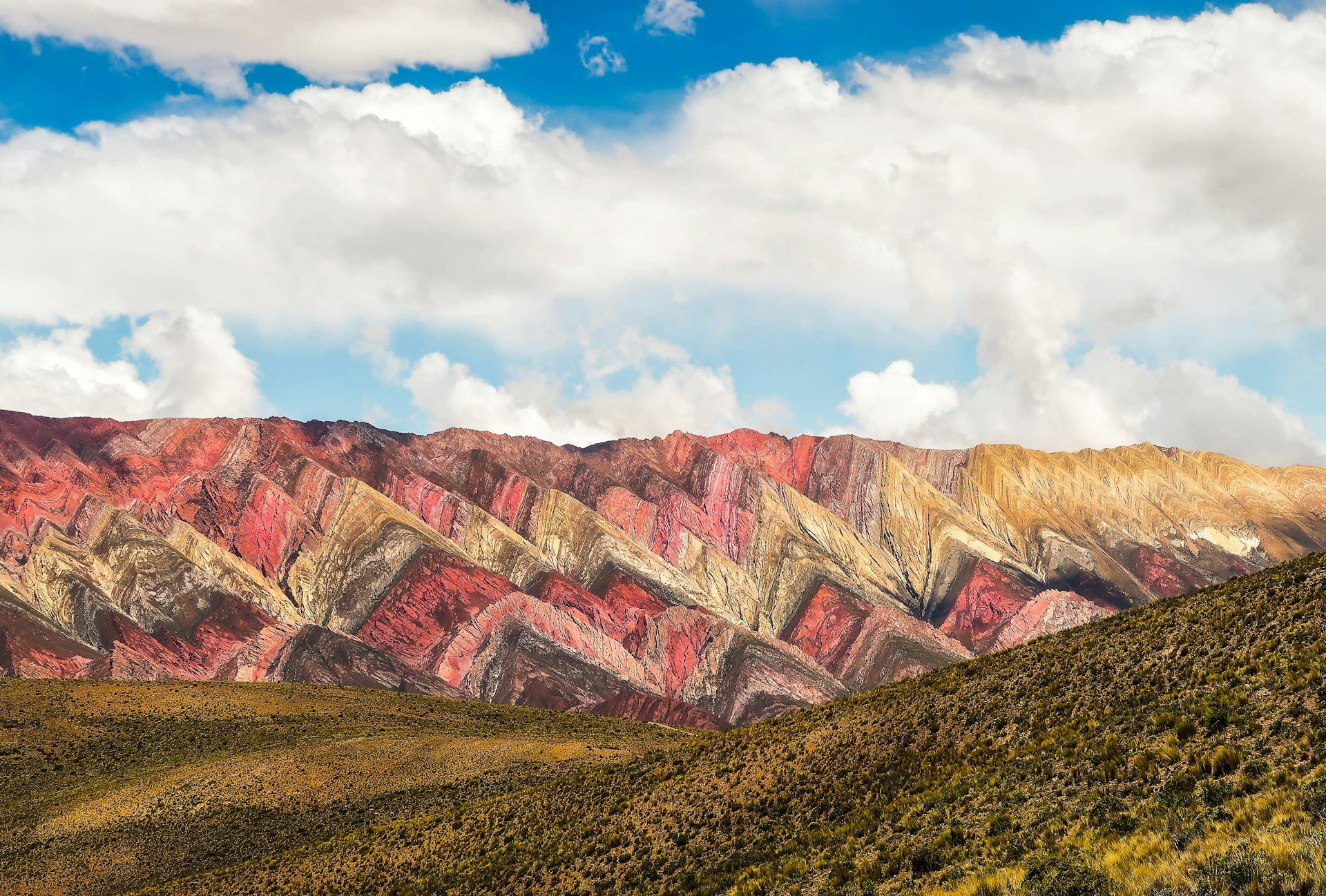
The Andean northwest of Argentina — the provinces of Salta, Jujuy, and Tucumán — is the country's most distinctly Indigenous-influenced region, the part that was settled from the Inca Empire's periphery and retains a cultural character entirely different from Buenos Aires or Patagonia. The Quebrada de Humahuaca, a 155km-long gorge in Jujuy province (UNESCO World Heritage Site), has multicolored hillsides (the Cerro de los Siete Colores — Hill of Seven Colors — at Purmamarca is the visual signature), pre-Columbian fortresses (pucará), and living Andean communities that have maintained their traditions through Spanish colonization and Argentine modernity. Salta city has beautiful colonial architecture. Best combined in a 4–5 day circuit from Salta or Jujuy.
Culture & Etiquette
Argentine culture is European in its aesthetics and South American in its warmth — a combination that produces a social environment that feels accessible to European visitors but operates on different rhythms. The most immediately apparent cultural difference: the schedule. Dinner before 9pm is unusual; dinner at 10pm or later is normal; restaurants that open at 8pm for foreigners don't expect locals until 10:30. Lunch is at 1–3pm. Breakfast is minimal — coffee and a medialuna (a croissant-like pastry). Mate is drunk continuously throughout the day.
Buenos Aires specifically has a distinctly Italian-Argentine social character — the emotional expressiveness, the hand gestures, the talking over each other, the impossibility of leaving a café before a third coffee has been consumed while the conversation finds new depths. The porteño (Buenos Aires resident) is opinionated, self-deprecating, passionate about football, opera, and politics in proportions that would seem incoherent anywhere else, and will engage a stranger in serious discussion of any of these topics within 10 minutes of meeting.
Mate — yerba mate tea drunk through a metal straw (bombilla) from a shared gourd — is Argentina's national beverage and a social ritual of genuine significance. When someone offers you the mate gourd, accept it (say "gracias" only when you're done and don't want more — saying gracias before you're done signals you've finished). Drink all the liquid, return the gourd to the cebador (the person who prepares and serves it), and wait for your next round. Don't complain about the bitterness; this is what it tastes like.
The standard Argentine greeting between any combination of people is a single kiss on the right cheek — this applies between strangers, between men meeting women, between women meeting women, and increasingly between men meeting men. This was true before COVID and has substantially returned. Extending a hand for a handshake in a social context signals excessive formality; the kiss is the correct register.
Argentine beef is best eaten in the medium to medium-rare range (punto or a punto in Argentine steak parlance) — well-done wastes the quality of grass-fed Pampas cattle that has made Argentine beef famous. Argentine restaurants often default to well-done for foreigners unless you specify. "Jugoso" = rare. "A punto" = medium. "Bien cocido" = well-done (the wrong choice). This matters.
Argentine football is a matter of deep identity — the rivalry between Boca Juniors and River Plate (the Superclásico) is one of sport's great cultural divides and carries genuine emotional weight. When Argentines ask which team you support, they mean it as a question about who you are, not a trivial choice. Attending a Boca Juniors game at La Bombonera (book through official channels only — scalpers operate extensively) is one of South America's great crowd experiences.
Argentine Spanish (Rioplatense dialect) differs from standard Spanish in accent (the Italian-influenced cadence), vocabulary (vos instead of tú, with different conjugations), and the lunfardo slang that originated in the Buenos Aires tango culture of the early 20th century. "Che" (hey / mate), "boludo" (loosely translated friend, depending on context and tone — also an expletive), "laburo" (work). Arriving with Mexican or Castilian Spanish works fine; the differences are navigable but notable.
The "ll" and "y" in Argentine Spanish are pronounced as "sh" (not "y" as in standard Spanish). "Yo me llamo" becomes "Sho me shamo." This is jarring to visitors who learned Spanish elsewhere and occasionally causes miscommunication. Adjust as you go — Argentines are patient with the adjustment period.
Buenos Aires punishes two-day visits by showing you only the surface. The city's real character — the late-night philosophy, the milonga culture, the neighbourhood-level social life — takes time to encounter. Budget at least five to seven days. The tourist circuit (Recoleta, San Telmo, La Boca, Palermo) can be done in two days; the actual city takes much longer.
The 1982 war over the Falkland Islands / Islas Malvinas (Argentina's term) is not casual conversation material. Argentines feel the islands are rightfully theirs; this is a matter of national identity rather than casual geopolitical preference. If the topic comes up naturally, listen rather than debate. It is not the place for a visitor to adjudicate.
The Argentine currency situation has historically rewarded visitors who understood the exchange landscape. Under the Milei government from December 2023, this is evolving — check current conditions. As a general principle: understand what you're doing before exchanging significant amounts, and check current forums and resources rather than relying on any published guide's specific exchange guidance, as the numbers change faster than any travel guide can track.
Peronism is not a left-wing movement or a right-wing movement — it is a coalition that has at various times included both and which holds together on a set of nationalist, populist, and labor-oriented principles that don't map cleanly onto European or North American political categories. Attempting to explain it by analogy to your home country's politics will frustrate Argentines who have spent their entire lives debating this question and arrived at no consensus. It's more interesting to ask questions than to offer frameworks.
Tango
Tango was born in the conventillos (tenement houses) of Buenos Aires and Montevideo in the late 19th century, fusing African candombe rhythms, European polka and mazurka, and the Cuban habanera into something that the Buenos Aires bourgeoisie initially found too scandalously intimate and the Paris cabaret scene found thrillingly exotic. The dance that became an international sensation was originally the music of the working poor. The milonga — the social dance event where tango is danced — is still accessible to visitors willing to observe the codes: arrive after 11pm, sit without dancing for an hour to watch, accept or give invitations through the cabeceo (a subtle nod), and never teach your partner on the floor. La Catedral in Almagro is the best entry point for first-time milonga visitors.
Literature
Buenos Aires is a literary city in a way that few others are. Jorge Luis Borges — the blind librarian, the master of the literary maze, the author of Ficciones and The Aleph — is the city's patron saint of reading. Julio Cortázar, Manuel Puig, Ricardo Piglia, Luisa Valenzuela, Cesar Aira: Argentine literature in Spanish is one of the richest traditions in the world and is available in English translation. The Centro Cultural Borges in Buenos Aires and the Biblioteca Nacional Mariano Moreno (the national library where Borges was director) are the physical anchors of this tradition. Calle Corrientes, the street of bookshops and theatres open until 3am, is where you find it live.
Maradona & Football
Diego Maradona — the Villa Fiorito barrio boy who became the greatest footballer who ever lived and simultaneously the most self-destructive — is Argentina's most complex cultural figure, more contested than Borges and more universally known than Evita. His death in 2020 produced a national mourning that required understanding the country's relationship with genius, poverty, excess, and the idea that one person can carry the identity of an entire nation. The Church of Maradona (yes, this exists, in La Plata) and the Estadio Diego Armando Maradona in La Paternal neighborhood both receive genuine pilgrims. Lionel Messi, who finally won the 2022 World Cup in Qatar, has not replaced Maradona in Argentine consciousness — he exists alongside him.
Dulce de Leche
Dulce de leche — slowly caramelized sweetened condensed milk — is not technically Argentina's invention (several South American countries claim it) but Argentina has made it the most fundamental ingredient in its culinary culture. It appears in alfajores (the shortbread-and-dulce de leche cookies that are essentially Argentina's national biscuit and are eaten daily by most of the population), in facturas (pastries), in medialunas, on toast, in ice cream in quantities that surprise Europeans expecting a drizzle and getting a solid layer, and as a standalone product eaten from the jar with a spoon, which is not considered a character flaw. Dulce de leche from a confitería is categorically different from the commercial version. Accept anything offered.
Food & Drink
Argentine food culture is built on three pillars: beef, wine, and mate. Around these pillars is an extraordinary range of regional and immigrant-influenced cooking — from the empanadas of Salta (baked, spiced with cumin and chili, filled with chopped beef and egg) to the stews of the Andean northwest that carry Inca culinary heritage, to the pizza and pasta traditions of Buenos Aires that are directly descended from Italian immigration (the Argentine pizza, thick-crusted and generously topped, is a distinct tradition from either Italian or New York pizza and should be evaluated on its own terms). The Italian-Argentine empanada is different from the Chilean or Mexican version; the Argentine dulce de leche is different from the Brazilian doce de leite. These are small countries with large national pride in their versions of shared traditions.
Asado
The Argentine asado is not a barbecue in the European sense. It is a slow-cooked communal ritual lasting 3–5 hours, with different cuts arriving in sequence: first the achuras (offal — mollejas [sweetbreads], chinchulines [intestines], riñones [kidneys]), then the chorizos and morcilla (blood sausage), and finally the main cuts — the tira de asado (short ribs), vacío (flank), and bife de chorizo (sirloin). The asado is always prepared by the asador (the grill master), who manages the fire and the timing and whose authority during the asado is absolute. Being invited to an Argentine family asado is among the most specific cultural experiences available in South America.
Empanadas
The empanada — a baked or fried pastry filled with various combinations of meat, onion, egg, olive, and spices — varies by province in ways that Argentines track with the same geographic specificity that the French apply to cheese. Salta empanadas are baked, filled with chopped (not minced) beef, potato, cumin, and chili. Tucumán empanadas are similar but slightly smaller. Buenos Aires empanadas are usually larger and milder. The fold pattern on the empanada's edge (the repulgue) traditionally indicated the filling — each shape meant a different content. Buying 6 different empanadas from a good place in Buenos Aires or Salta for lunch costs the equivalent of $3–4 and is one of the better cheap meals on the continent.
Malbec
Malbec arrived in Argentina from France (specifically from the Cahors region, where it is called Côt) in the 1850s, found that the high-altitude Andean soil and climate suited it extremely well, and became Argentina's signature wine grape in a way that Malbec never quite managed in its French homeland. The best Mendoza Malbecs — from Luján de Cuyo and particularly the Valle de Uco at 1,000–1,500 metres — have a specific combination of deep fruit (blackberry, plum), violet floral notes, and velvety tannins that comes from volcanic soil, intense sun, and cold nights. At current Argentine exchange rates, a bottle of excellent Malbec at a restaurant costs the equivalent of €10–15. The same bottle in Europe costs €30–50. Drink freely.
Mate
Yerba mate — the dried and smoked leaves of Ilex paraguariensis, brewed in a gourd and drunk through a metal straw that filters the leaves — is the Argentine national drink. It is drunk constantly, in social groups where a single gourd is passed around and each person drinks it dry before passing it back to the cebador for refilling, and alone on street corners, at office desks, and in park benches with a thermos of hot water. The flavor is intensely bitter and grassy, similar to green tea. It is an acquired taste for most Europeans. The social ritual of sharing mate is more important than the beverage itself — accepting a mate offer is accepting membership in the group.
Alfajores & Dulce de Leche
The alfajor — two shortbread cookies sandwiched with dulce de leche and coated in chocolate or powdered sugar — is eaten daily by most Argentines from childhood to old age and represents the platonic ideal of what a biscuit should be. The Havanna brand (from Mar del Plata) is the famous commercial version; handmade alfajores from a good confitería in Buenos Aires are better. Dulce de leche itself — caramelized sweetened condensed milk — appears in or on essentially every sweet thing in Argentina. The country consumes approximately 120,000 tonnes of dulce de leche annually. This is correct.
Locro & Northwest Cuisine
The Andean northwest produces Argentina's most distinctly Indigenous-influenced food: locro (a thick, slow-cooked stew of corn, beans, squash, and various meats that is specific to winter and high altitude — traditionally eaten on national holidays and cold days), humitas (corn paste wrapped in corn husks and steamed, the Argentine version of tamales), and tamales (similar but usually with meat filling). This is the food of the Inca agricultural tradition adapted to the Argentine highlands, and it is categorically different from Buenos Aires food in the same way that Oaxacan food is categorically different from Mexico City food.
When to Go
Argentina spans an enormous latitudinal range — from the subtropical north (Iguazú, Salta, Jujuy) to the sub-Antarctic south (Ushuaia, Tierra del Fuego). The seasons are reversed from the Northern Hemisphere: January and February are the height of summer; July and August are the height of winter. The best time varies significantly by region, with Patagonia having a very specific best season window and Buenos Aires being good year-round with autumn (March–May) being the quietest and most pleasant.
Southern Summer
Nov – MarThe only viable window for trekking in El Chaltén and El Calafate. The glacier operates year-round but trails are snow-free only November–March. December–February is the warmest and windiest; November and March are shoulder months with better prices, good conditions, and fewer people. Ushuaia and Antarctica operate October–March. Iguazú is best in this window too (waterfalls at maximum flow November–March after rains).
Argentine Autumn
Mar – MayBuenos Aires in autumn (March–May) has the most pleasant city weather — 18–25°C, lower humidity than summer, and the least crowded tourist streets. Mendoza wine harvest (vendimia) is in March — the most important time in the wine calendar, with the Fiesta Nacional de la Vendimia in Mendoza city. The Andean northwest (Salta, Jujuy) is excellent in this window. Best overall time for the country if Patagonia is not the primary goal.
Argentine Spring
Sep – NovSpring in Buenos Aires (September–November) is warm, flowering, and good for the city. Patagonia is only reliably good from late November. This window works for Buenos Aires, Mendoza, and the northwest but not for southern Patagonia. October and November see Antarctica cruises beginning and are good for whale watching in the Valdés Peninsula (right whales September–December).
Argentine Winter
Jun – AugWinter is for skiing at Bariloche's Cerro Catedral (South America's largest ski resort) and Las Leñas. Patagonian trekking trails are inaccessible under snow. Buenos Aires in winter (12–18°C) is cold and rainy but pleasant — the city's indoor culture (confiterías, theatres, milongas) is very much alive. Good time to visit Buenos Aires if you want cooler weather and fewer tourists at popular restaurants.
Trip Planning
Two weeks is a workable Argentina minimum but the country's internal distances mean that two weeks covers two regions well rather than three hastily. The most common first-timer circuit: Buenos Aires (5–6 days) + Patagonia (El Calafate 3 days, El Chaltén 3–4 days), with Mendoza or Iguazú as alternative third stops. The southern Patagonia circuit alone (Buenos Aires → El Calafate → El Chaltén → back) is 12–14 days done properly and is one of the world's great travel circuits.
Domestic flights within Argentina are expensive relative to the overall trip cost. Buenos Aires to El Calafate is a 3.5-hour flight that costs ARS 50,000–150,000 (check current prices — the ARS is volatile). Buenos Aires to Iguazú is 1.5 hours. Aerolíneas Argentinas is the main carrier; LATAM and Flybondi also operate. Book Argentine domestic flights early when possible.
Buenos Aires
Day one: arrive Ezeiza airport (EZE, not the domestic AEP — confirm which airport), check into Palermo hotel. Dinner at 9:30pm (this is early by Buenos Aires standards). Day two: San Telmo — the Sunday feria (antiques market) if timing works, the Mercado San Telmo otherwise. Caminito in La Boca for the colour (but don't wander the streets past the tourist area). Day three: Recoleta Cemetery in the morning (Evita's tomb, the extraordinary mausoleum culture). MALBA (Museum of Latin American Art, has the Frida Kahlo collection among others). Evening: milonga observation at La Catedral. Day four: Palermo Soho and Palermo Hollywood neighborhoods — restaurants, cafes, the weekend Feria de Palermo. Day five: Avenida Corrientes bookshopping at noon, Teatro Colón tour in the afternoon (opera house — book ahead), ESMA memory site. Fly to El Calafate.
El Calafate & Perito Moreno
Day six: arrive El Calafate afternoon, rest (you're in Patagonia now — acclimatize). Day seven: full day at Perito Moreno Glacier — take the 7am bus to be there when it opens and stay until 3pm. The morning light on the ice is blue; the afternoon calving tends to be more active. The ice trek experience (mini-trekking, booked in El Calafate) puts you on the glacier itself. Day eight: boat safari on Lago Argentino to reach the upeelo and lateral faces of the glacier (different views from the boardwalk). Drive or bus to El Chaltén (3 hours).
El Chaltén & Fitz Roy
Days nine to twelve: four days in El Chaltén, essential for the statistical chance of a clear view of Fitz Roy. Day nine (if clear): Laguna de los Tres trail immediately — 8 hours round trip, arrive at the lagoon directly below the Fitz Roy east face at the best light. Day ten (if cloudy): acclimatize, plan for Mirador Torre or shorter hikes. Day eleven: Mirador Torre trail (6 hours) for Cerro Torre view. Day twelve: departure — bus to El Calafate airport for flight back to Buenos Aires and onward connection.
Buenos Aires in Depth
Six days. Add to the above: the ESMA memory site (half day, essential). A guided tour of the Feria de Mataderos on a Sunday (the working-class fair on the edge of the city — folk music, gaucho demonstrations, empanadas, locro — entirely different from Palermo). One dinner at a parrilla that requires reservations 2–3 weeks ahead (Don Julio in Palermo is the benchmark). One evening at a professional milonga for the theatrical version.
Mendoza
Fly from Buenos Aires to Mendoza (1.5 hours). Day seven: arrive, check into a wine lodge or hotel in Luján de Cuyo. Afternoon visit to one winery. Day eight: bicycle tour through Luján de Cuyo — Achaval-Ferrer, Norton, and Vistalba for three contrasting styles. Day nine: drive to Valle de Uco (1.5 hours south) — Zuccardi Valle de Uco (ranked among world's best wineries), Andeluna, and Clos de los Siete. Day ten: Catena Zapata visit (book ahead — it's busy). Fly to El Calafate.
Patagonia
As above: El Calafate (3 days) and El Chaltén (3 days). With the extra day, add the Glaciarium museum in El Calafate (an excellent ice museum with a bar where you drink whisky on 12,000-year-old glacier ice) and the full Laguna Torre trail in El Chaltén.
Buenos Aires
Seven days. All of the above plus: a day trip to Tigre and the Paraná Delta (45 minutes from Buenos Aires by suburban train — a network of river islands with a distinctly different atmosphere from the city). One afternoon at the Biblioteca Nacional Mariano Moreno where Borges was director. A full Sunday in the Feria de Mataderos if timing works.
Iguazú
Fly from Buenos Aires to Puerto Iguazú (1.5 hours). Day eight: Argentine side of the falls — full day, the Garganta del Diablo upper boardwalk at noon, the lower circuit in the afternoon. Day nine: Brazilian side (cross the border by bus). Day ten: Iguazú jungle — the trails in the national park with a guide for bird watching (430+ species, including toucans and harpy eagles) before flying to Salta.
Salta & the Northwest
Day eleven: Salta city — the baroque cathedral, the MAAM museum (Museo de Arqueología de Alta Montaña, which holds the mummies of three Inca children found frozen on Llullaillaco volcano — one of the most significant archaeological discoveries in the Americas). Day twelve: Quebrada de Humahuaca — drive north through Purmamarca's Cerro de los Siete Colores, Tilcara's pucará (pre-Columbian fortress), and Humahuaca. Day thirteen: Tren a las Nubes (Cloud Train), the highest railway in the world — book far ahead as it sells out. Fly to Mendoza.
Mendoza
Two intense Mendoza wine days: Luján de Cuyo on day fourteen, Valle de Uco on day fifteen. Catena Zapata on one of the two. Dinner at a Mendoza restaurant using local wine with local ingredients. Fly to El Calafate.
Patagonia
Six days: El Calafate (3 nights), El Chaltén (3 nights). Full glacier experience, Fitz Roy on a clear day. Optional: rent a car for the Ruta 40 section between El Calafate and El Chaltén — one of the most desolate and beautiful road sections in the world, with condors overhead and almost no traffic. Return to Buenos Aires for departure.
Currency — Check Before You Go
Argentina's exchange rate situation has historically been complex and is actively evolving under the Milei government's reforms. Check current conditions from Argentina-specific travel resources (r/argentina, lonelyplanet.com/argentina forums) within 2–4 weeks of your travel. The general principle: Wise and Revolut typically provide rates close to official rates on card transactions; check whether ATM withdrawal rates are currently favorable. The situation changes faster than any published guide can track.
Two Buenos Aires Airports
Buenos Aires has two airports: Ezeiza (EZE) — the international airport, 35km from the city center (1 hour by taxi/remis or the Tienda León bus service); and Aeroparque (AEP, now officially renamed Jorge Newbery Airfield) — the domestic airport, 10km from the city. Most international flights arrive at EZE; domestic connections to El Calafate, Iguazú, and Mendoza depart from AEP. Confirm your terminal for every flight. The Tienda León bus from EZE to downtown costs ARS 5,000–7,000 and is much cheaper than a taxi.
Connectivity
Claro and Personal (Telecom) have the best coverage in Argentina including Patagonia. Buy a local SIM at a carrier store in Buenos Aires for cheap data. International SIMs work but are expensive. An eSIM through Airalo is good if you prefer not to swap cards. Coverage in El Chaltén and Patagonia is limited but improving — most lodges have WiFi. Download offline maps (Maps.me or Google Maps offline) before entering remote areas.
Get Argentina eSIM →Power Adapters
Argentina uses 220V with Type I plugs — the same three-flat-pin design used in Australia. European plugs don't fit. North American plugs don't fit. A universal travel adapter is essential. Most hotels have both European and Type I sockets alongside each other in modern construction. Some older buildings have only Type I — check before arriving without an adapter.
Patagonia Packing
Patagonia requires layering for unpredictable wind and temperature. The Patagonian wind is genuine — gusts of 80+ km/h are routine in El Chaltén and El Calafate. A good windproof shell (not just a rain jacket — a proper wind-resistant shell) is non-negotiable. Hiking poles significantly help on the steep sections of the Laguna de los Tres trail. Trekking boots with ankle support. Pack layers rather than single heavy items.
Travel Insurance
Essential for Argentina — particularly for Patagonia, where helicopter evacuation from a trail injury is expensive without coverage. Medical care at private hospitals in Buenos Aires (Hospital Alemán, Hospital Británico) is very good and much cheaper than North America or Europe, but still significant without insurance. Confirm the policy covers trekking activities if your Patagonia itinerary includes any serious trail hiking.
Transport in Argentina
Argentina's internal transport requires flying between major destinations — the distances make bus impractical except for specific scenic or budget routes. Buenos Aires has an excellent metro (subte) and bus system for city movement. Uber and Cabify operate in major cities. The long-distance bus network is extensive and comfortable for overnight journeys (the cama (bed) class is genuinely horizontal and excellent for 12+ hour routes), but flying is preferred for any journey over 6 hours.
Domestic Flights
Varies with ARS rateAerolíneas Argentinas, LATAM, and Flybondi connect Buenos Aires (both EZE and AEP) to El Calafate, Iguazú, Mendoza, Salta, Bariloche, and Ushuaia. Argentine domestic flights are expensive in real terms — book early. Note the two Buenos Aires airports: domestics from AEP, some from EZE. Confirm for every booking.
Buenos Aires Subte
ARS 200–300/rideSix metro lines (A through H, with gaps) covering the main tourist circuit — Recoleta, San Telmo, Palermo, downtown. Load a SUBE card (reusable transit card, buy at any kiosk) and tap. The buses (colectivos) are the city's primary transit and cover everywhere the metro doesn't. Google Maps transit mode works well for routing in Buenos Aires.
Uber & Cabify
App rateUber operates in Buenos Aires with some restrictions from the taxi lobby — it works reliably but occasional police checks mean drivers sometimes ask you to sit in the front. Cabify is the main alternative. In other Argentine cities (Mendoza, Córdoba, Rosario), both work. In Patagonia, taxis are the standard option — negotiate rates for longer rides in advance. Remis (pre-paid car services) from hotels are reliable for airport runs.
Long-Distance Bus
ARS 5,000–30,000Argentina's bus network is exceptional for overnight journeys. The cama suite class on operators like Andesmar and El Rápido offers fully flat beds — good for Buenos Aires to Mendoza (14 hours overnight), Buenos Aires to Bariloche (22 hours). The Retiro Bus Terminal in Buenos Aires is the main departure point. Buy tickets at the terminal or via omnilineas.com. Not competitive with flying for time-sensitive travel.
Car Rental
Varies — check ratesUseful for the Mendoza winery circuit (the best Valle de Uco wineries are 90 minutes from the city), for the Ruta 40 section in Patagonia, and for the Quebrada de Humahuaca in the northwest. Argentine roads are generally good on main routes; Patagonian gravel roads (ripio) require 4x4 or high-clearance vehicles. International license accepted. Rental prices fluctuate with the ARS rate — check current costs.
El Calafate to Glacier Bus
ARS 2,000–4,000 returnPublic bus service from El Calafate to the Perito Moreno Glacier runs daily with multiple departures. Buy at the El Calafate bus terminal the day before (or the morning of). This is the most economical way to reach the glacier — no car rental needed. The bus drops you at the park entrance and returns at specific times; confirm departure times when booking so you're not stranded at the glacier after last bus.
Tren a las Nubes
~USD 130The Cloud Train from Salta runs one of the highest railway routes in the world (max altitude 4,220m), crossing the Quebrada del Toro on a series of viaducts, zigzag switchbacks, and spirals that were engineering marvels when built in the 1940s. The full-day experience is spectacular and sells out — book through the official Tren a las Nubes website or a Salta tour operator months ahead. Operates April–October (weather-dependent).
Beagle Channel Boat
USD 50–120From Ushuaia, daily boat tours on the Beagle Channel visit penguin colonies (Magellanic and Gentoo) on small islands, sea lion rocks, and historic lighthouses. The full-day tours reach the dramatic landscapes of the Beagle Channel that Darwin documented. Shorter catamaran tours (half day) are sufficient for most visitors. Book at Ushuaia port or through accommodation. November–March season.
Accommodation in Argentina
Argentine accommodation offers extraordinary value at current exchange rates — a boutique hotel in Palermo, Buenos Aires that would cost €200/night in Paris costs the equivalent of €60–80 at favorable exchange rates. The Buenos Aires boutique hotel scene is excellent — converted mansions and townhouses in Palermo and San Telmo with individually designed rooms, rooftop terraces, and service levels that reflect the Argentine hospitality tradition. In Patagonia, the constraint is availability rather than price — El Chaltén has a small number of good hostels and hotels and they fill up completely in peak trekking season (December–February).
Buenos Aires Boutique Hotel
USD 80–200/night at current ratesBuenos Aires has an excellent boutique hotel sector in Palermo, San Telmo, and Recoleta. Mine Hotel, Soho All Suites, and Home Buenos Aires represent the Palermo boutique range. The Alvear Palace in Recoleta is the traditional grand hotel. In San Telmo, smaller guesthouses and B&Bs occupy colonial buildings. The value at current exchange rates is exceptional. Stay in Palermo or San Telmo rather than the downtown microcentro for neighborhood character and restaurant proximity.
El Calafate & El Chaltén Lodge
USD 80–300/nightEl Calafate has more options than El Chaltén — the town is larger and has been building out tourism infrastructure for 20 years. Los Sauces, Kaulem, and Esplendor El Calafate are good mid-range options. El Chaltén is a smaller village: Infinito Sur, Nothofagus Hotel, and the Hostería Lago del Desierto for mid-range; Explora Patagonia (remote lodge) for luxury. In El Chaltén, book 4–6 months ahead for peak season (December–February). There are genuinely only a few hundred beds in the village.
Mendoza Wine Lodge
USD 100–400/nightStaying in a wine lodge (bodega hotel) is the correct format for Mendoza — waking up in a vineyard with the Andes visible behind the morning mist and breakfast of local products. Cavas Wine Lodge (luxury, Luján de Cuyo), Entre Cielos (Luján de Cuyo, spa, pool, winery on-site), and Posada Salentein (Valle de Uco) are the standout options. In Mendoza city, the Park Hyatt Mendoza is the main luxury option. Staying in the wine regions rather than the city is much more atmospheric.
Hostel & Budget
USD 15–40/nightArgentina has an excellent hostel sector particularly in Buenos Aires (Hostel Suites Palermo, El Hostel), El Chaltén (Rancho Grande, Condor de los Andes), and Bariloche. At current exchange rates, a good hostel private room in Buenos Aires costs the equivalent of €15–25 — extraordinary value for a city of this caliber. The hostel culture in Argentine Patagonia is specifically good — the shared kitchen and common room model suits the trekking community of El Chaltén perfectly.
Budget Planning
Argentina's budget situation for foreign visitors is unusually favorable in dollar and euro terms — the combination of the peso's weakness and the country's relative price levels means that Argentina offers extraordinary value for mid-range and upscale travelers compared to European equivalents. A dinner with wine at a Buenos Aires restaurant that would cost €80 in Madrid costs the equivalent of €25–35. A bottle of excellent Malbec at a restaurant is €10–15. Hotel rooms at boutique quality are 40–60% of equivalent European prices. The caveat: this calculation changes with every significant peso move, and the Argentine economy has a history of such moves. Budget in USD or EUR and convert at the current rate when you arrive.
The main costs that are expensive in hard currency: international flights (Buenos Aires is 13–14 hours from Europe), domestic flights within Argentina, and premium Patagonia lodges (which are priced in USD rather than ARS and don't benefit from the exchange rate differential).
- Hostel dorm or private room
- Empanadas, pizza, tenedor libre (all-you-can-eat)
- Overnight bus rather than flying
- Subte and colectivo in BA
- El Chaltén trails (all free)
- Boutique hotel or good B&B
- Restaurant meals with Malbec
- Domestic flights
- Glacier ice trek (Perito Moreno)
- Winery visits in Mendoza
- Wine lodge or luxury BA hotel
- Best parrillas (Don Julio, El Baqueano)
- Explora Patagonia lodge
- Private wine tours with sommelier
- Antarctica expedition cruise (Sep–Mar)
Quick Reference Prices (USD equivalent — verify current rates)
Visa & Entry
Argentina offers visa-free entry for citizens of most Western countries — the US, Canada, UK, all EU nations, Australia, Japan, South Korea, and many others can enter for up to 90 days for tourism without any advance visa application. Citizens of some countries (previously including the US, Canada, and Australia at certain periods under reciprocity fee schemes) may have additional requirements — check the current status at the Argentine Cancillería website before traveling as these arrangements change.
Entry is via the Ezeiza or Aeroparque airports, or by land border from Chile, Brazil, Bolivia, Paraguay, and Uruguay. Land borders with Chile are the most used for Patagonian travel — the crossing at Monte Aymond between El Calafate and Puerto Natales (for access to Torres del Paine in Chile) is a frequently used Patagonia circuit connection.
No advance application required for US, UK, EU, Canada, Australia, Japan, and most other Western passport holders. Confirm the current status for your specific passport at Argentina's official migration site (migraciones.gob.ar) as reciprocity arrangements occasionally change.
Family Travel & Pets
Argentina is an excellent family destination with honest age assessments. Buenos Aires is a genuinely family-friendly city — Argentines love children and families with children receive exceptional warmth in restaurants, hotels, and on the street. The Patagonia trekking is appropriate for children who are fit hikers (the Laguna de los Tres trail is genuinely demanding — 8–10 hours, 1,200m elevation gain); there are shorter, flatter alternatives in the same national park suitable for younger children. Iguazú is universally accessible. The Perito Moreno Glacier boardwalk circuit is paved and accessible to any age.
Perito Moreno for All Ages
The Perito Moreno Glacier boardwalk circuit is paved, well-maintained, and accessible to any age that can walk a few kilometres. The experience — watching enormous chunks of blue ice collapse into the water with a sound like a cannon shot — is visceral and immediate for children of any age. No special equipment, fitness, or preparation is needed beyond the bus from El Calafate. One of the world's most accessible extreme natural phenomena.
Iguazú Falls
Iguazú is one of the world's best family natural attractions — completely accessible, visually spectacular, and with the additional appeal of the wildlife of the subtropical rainforest (coatis are everywhere on the Argentine side and will attempt to steal food from your hands with considerable confidence). The boat under the falls (available on the Argentine side) appeals to older children and adventurous families — you get completely soaked.
Football Match in Buenos Aires
Attending a Boca Juniors or River Plate match with children old enough for the experience (usually 8+, for noise and crowd management) is one of Argentine family culture's most accessible signature experiences. The atmosphere at La Bombonera is genuinely extraordinary — the stadium vibrates. Book through official club channels rather than street scalpers and go in the visitor sections if neutral. Start with a lower-tier match rather than the Superclásico for a first experience.
Penguin Colonies
The Magellanic penguin colonies at Punta Tombo on the Patagonian Atlantic coast (near Trelew — 3.5 hours from Bariloche or 1.5 hours from Trelew airport) hold approximately one million breeding pairs from September to April. Children can walk among the penguins on designated paths and approach within 2–3 metres of birds that have been habituated to human presence. Similarly, the Martillo Island colony near Ushuaia has Magellanic and Gentoo penguins viewable from a short boat trip.
MALBA & Buenos Aires Museums
The Museo de Arte Latinoamericano de Buenos Aires (MALBA) in Palermo has a world-class collection of 20th-century Latin American art (Frida Kahlo, Diego Rivera, Xul Solar, Antonio Berni) in a purpose-built contemporary building. The Museo de Ciencias Naturales (Natural Sciences Museum) in La Plata (1 hour from Buenos Aires) has the finest dinosaur fossil collection in Argentina — appropriate for children who've watched any dinosaur film. The Jardín Botánico in Palermo works for any age.
Mendoza for Families
Mendoza wine country with children works well for families with older children (teenagers who appreciate driving through beautiful landscapes, vineyard visits with non-alcoholic grape juice tasting, and excellent restaurants). The Aconcagua Provincial Park viewpoint — where the highest peak in the Americas (6,961m) is visible from the road — is universally impressive regardless of age. The city of Mendoza has good parks and the Plaza Independencia for afternoon recreation.
Traveling with Pets
Argentina permits the import of dogs and cats with documentation: a health certificate from an accredited vet issued within 10 days of travel, a valid rabies vaccination (at least 30 days and not more than 1 year before travel for dogs; 30 days to 3 years for cats), a microchip, and a SENASA (Argentina's agriculture authority) import permit obtained in advance. The permit application process requires documentation to be submitted through the Argentine embassy or directly to SENASA and takes several weeks to process.
Practically: Buenos Aires is a very dog-friendly city — parks, restaurant terraces, and many hotels accept dogs. Patagonia is more complicated — the national parks do not permit pets on trails (Los Glaciares, Nahuel Huapi), and accommodation in El Chaltén and El Calafate is inconsistently pet-friendly. For a holiday trip rather than a relocation, the logistical overhead of bringing a pet to Argentina is generally not justified by the benefit to the animal. Most of what makes Argentina worth visiting — Patagonian trekking, national parks, glaciers — is incompatible with having a dog in tow.
Safety in Argentina
Argentina is generally safe for tourists by South American standards. Violent crime specifically targeting foreign visitors is much less common than the general crime statistics would suggest — the majority of urban crime is economic and opportunistic. Buenos Aires has more petty crime than most European cities but less violent crime against visitors than Rio, Bogotá, or some US cities. Patagonia, Mendoza, and the northwest are all extremely safe.
Patagonia, Mendoza, Northwest
Extremely safe from human threats. Patagonia's crime rate is negligible — El Chaltén and El Calafate are small towns with strong community character and almost no street crime. Mendoza is generally safe in tourist areas. The main safety considerations in these regions are environmental: weather in Patagonia, altitude in the northwest (Jujuy and Salta reach 3,000–4,000m in the quebradas).
Buenos Aires — Urban Precautions
Phone snatching, bag theft at outdoor cafés, and pickpocketing in the San Telmo and La Boca tourist areas are the most common issues. Use Uber rather than hailing taxis. Don't put your phone on an outdoor café table (the standard Argentine advice). Keep expensive cameras in bags when not in use. The safest tourist neighborhoods are Recoleta, Palermo, and Puerto Madero; exercise more caution in San Telmo at night and in La Boca beyond the Caminito tourist strip.
Express Kidnapping
"Secuestro exprés" — a form of robbery where victims are briefly held and forced to make ATM withdrawals — has been documented in Buenos Aires. It primarily targets people who have been observed taking large amounts of cash from ATMs. The prevention is simple: don't withdraw large cash amounts from street ATMs late at night, use ATMs inside bank branches during business hours, and use card payments wherever possible to reduce cash carrying.
Altitude in the Northwest
The Quebrada de Humahuaca in Jujuy, the Puna plateau, and the areas around Salta's higher villages reach 3,000–4,200m. Altitude sickness (soroche) affects visitors without acclimatization. Ascend slowly, drink water, avoid alcohol for the first 24 hours at altitude, and descend if symptoms (severe headache, vomiting, confusion) develop. Coca tea (mate de coca) is available everywhere in the northwest and is the local remedy.
Patagonian Weather
El Chaltén and the Patagonian trekking areas have genuinely unpredictable and extreme weather — wind, rain, snow, and fog can appear without warning at any time of year. Always carry full waterproofs, layers, and emergency supplies on any trail beyond the immediate town area. Tell your accommodation your planned route and expected return time. The park rangers in El Chaltén's visitor centre provide daily trail condition updates — check them before every trek.
Medical Facilities
Buenos Aires has excellent private hospitals — Hospital Alemán (+54-11-4827-7000) and Hospital Británico (+54-11-4309-6400) are the main private facilities used by international visitors. Medical care is significantly cheaper than the US or Europe but still significant without insurance. In Patagonia, Calafate and Bariloche have hospitals; El Chaltén has a small medical post for emergencies. Serious cases are helicoptered to larger facilities.
Emergency Information
Your Embassy in Buenos Aires
Most foreign embassies are in Palermo, Recoleta, and Belgrano neighborhoods of Buenos Aires.
Book Your Argentina Trip
Everything in one place. These are services worth actually using.
The Country That Should Have Made It
There is a well-worn observation about Argentina: that it is the country of the 20th century's great might-have-beens, a country that was on track to be a world power in 1913 and somehow missed. The beef and grain exports, the European immigration, the Belle Époque Buenos Aires built to signal cultural parity with Paris — and then the internal contradictions, the coups, the Dirty War, the 2001 collapse, the inflation cycles, the extraordinary talent for electing or enabling leaders who dismantle what the previous administration built. Argentines have an entire lexicon for their country's relationship with its own squandered potential.
But standing on the boardwalk at Perito Moreno as a car-sized piece of blue ice detaches from the face and falls into the water with a sound that reaches you two seconds after the visual — slow, vast, entirely indifferent to any human concern — the political history seems less central than usual. Argentina is a country with an extraordinary claim on the planet's most spectacular landscapes and it makes them accessible, affordable, and friendly to the strangers who come to stand in them. The glacier advances. Fitz Roy occasionally shows its face through the clouds. The Malbec is extraordinary. The beef is what it was always supposed to be. Buenos Aires argues about everything until 3am. Come and argue back.