
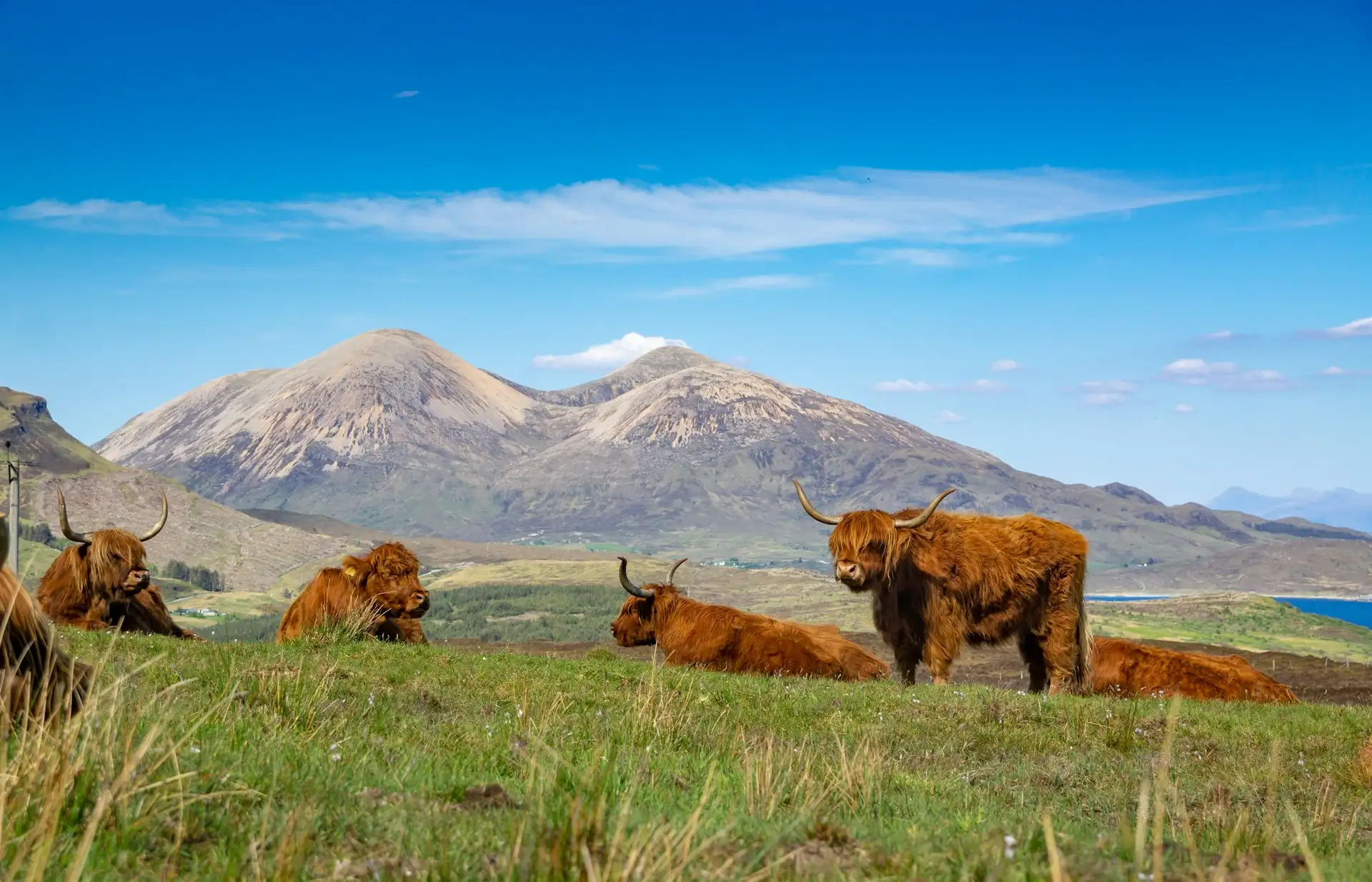
Scotland
NC500 & Skye
Inverness and back through 850 kilometres of castles, lochs, whisky, single-track roads, and the kind of weather that changes four times before lunch. The Highlands, the Isle of Skye, and the wild north coast. Bring layers and a sense of humour about rain.
Route Overview
The North Coast 500 is a 516-mile loop through the Scottish Highlands that was launched in 2015 and has since become one of Europe's most celebrated coastal drives. It starts and ends in Inverness, loops around the top of Scotland through landscapes that look like they were designed to sell whisky, and passes through villages so small that the pub, the post office, and the social life of the entire community are the same building.
This itinerary adds the Isle of Skye, which is not technically on the NC500 but is close enough and spectacular enough that skipping it would be a mistake you'd regret immediately. Skye has the Old Man of Storr (a rock pinnacle that looks like it was placed there by someone who wanted to make a point), the Fairy Pools (mountain pools of water so clear and cold that swimming in them is a combination of transcendence and cardiac arrest), and the Quiraing (a landscape so alien that it has been used as a film location for other planets).
The Highlands themselves are a landscape of peat bogs, heather, lochs, and mountains that have been carved by glaciers into shapes that shift every time the cloud moves. Eilean Donan Castle sits on a tidal island at the meeting point of three lochs and looks exactly like the castle you drew when you were seven. Whisky distilleries appear in valleys like monasteries: quiet, purposeful, and producing something that improves with time. The weather is unreliable. The midges (tiny biting insects) are a summer plague. The people are warm, the pubs are genuine, and the scenery justifies every mile of single-track road you navigate.
The Itinerary
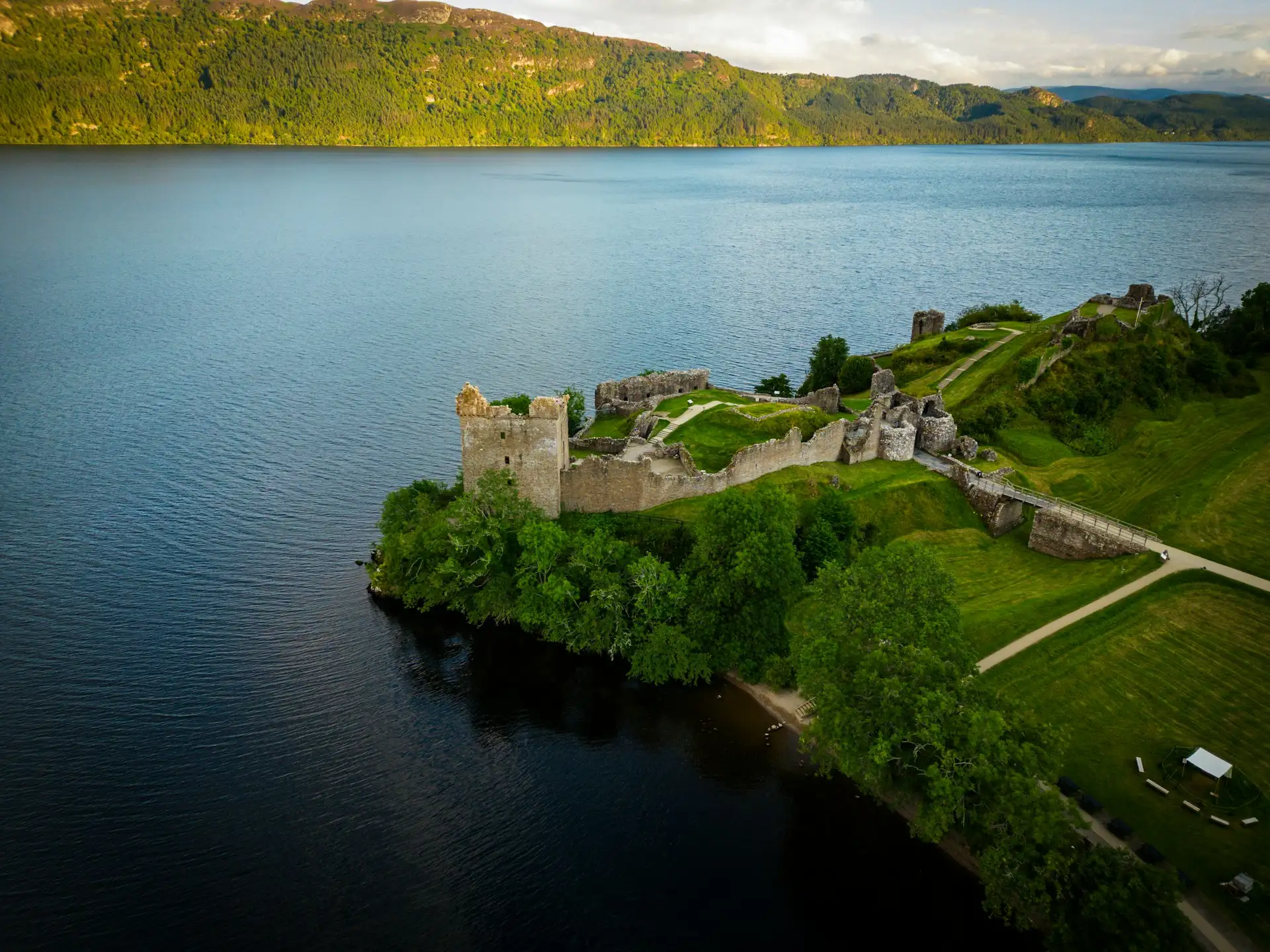
The Highland Capital
Inverness is compact, pleasant, and the starting pistol for the NC500. Walk along the River Ness, visit the Victorian Market, and eat haggis somewhere, because haggis is genuinely good when it's made properly and you should try it before your preconceptions prevent you. The castle is now a viewpoint rather than a functioning fortress, and the view from it across the river to the cathedral is the postcard shot of the city.
Day trip to Loch Ness (thirty minutes south). Urquhart Castle sits in ruins on the lochside and the setting, castle crumbling into the water with mountains behind, is more impressive than any intact castle could be. Take a boat tour if you want the Nessie experience (£15-20); the monster is almost certainly fictional but the loch is 230 metres deep and 37 kilometres long and dark enough that you understand why people believe. Culloden Battlefield (fifteen minutes east) is where the Jacobite rising ended in 1746 in forty minutes of violence. The visitor centre is excellent and moving. Pick up your rental car.
- Urquhart Castle - Ruins on Loch Ness. £12. The setting is the point. Views down the loch.
- Loch Ness boat tour - £15-20. Nessie hunting optional. The loch itself is 230m deep and atmospheric.
- Culloden Battlefield - 1746 Jacobite defeat. £14 visitor centre. Excellent and sobering.
- Inverness pubs - Live traditional music, whisky selection, haggis. Hootenanny or the Castle Tavern.
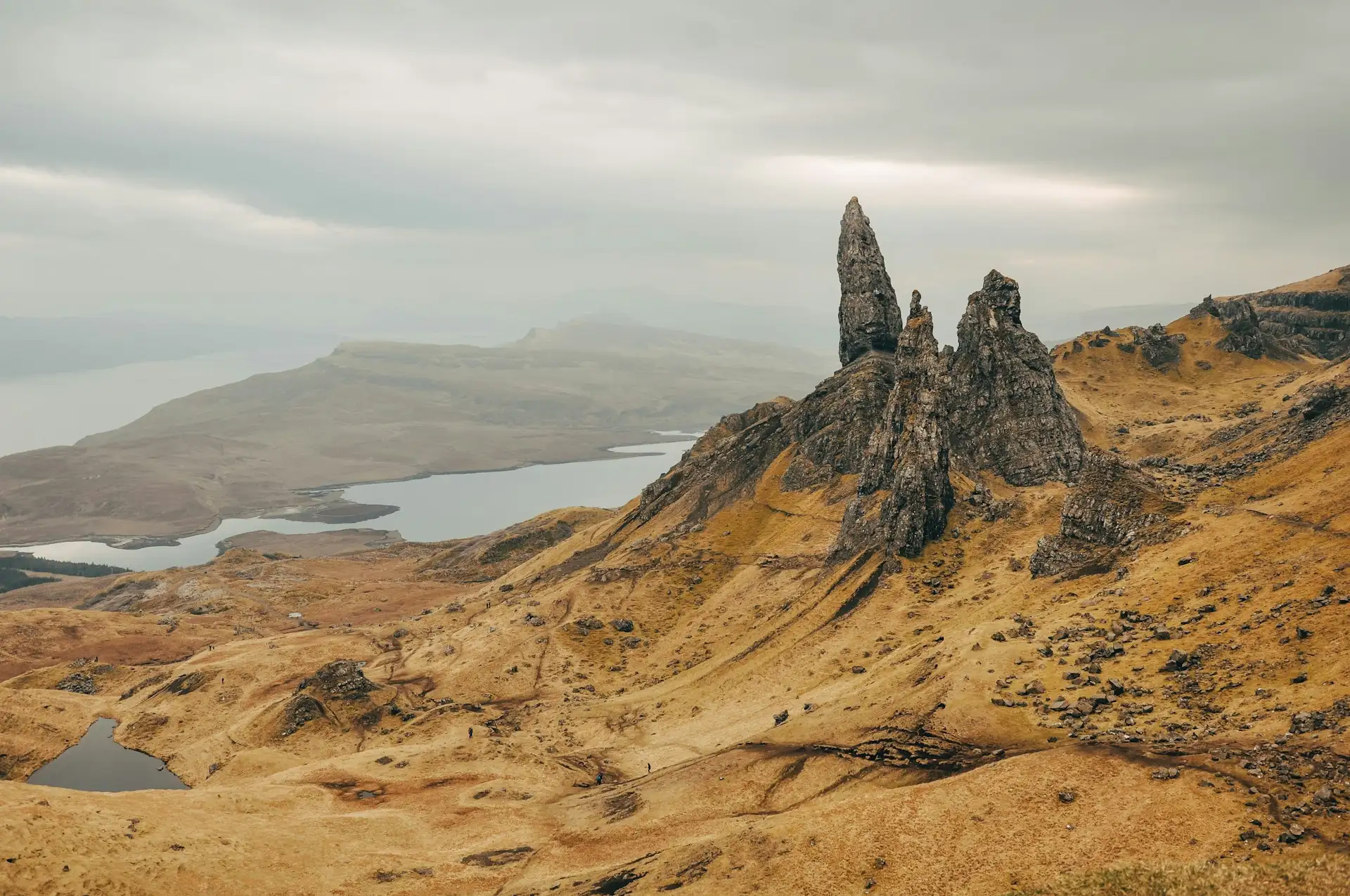
The Mystical Island
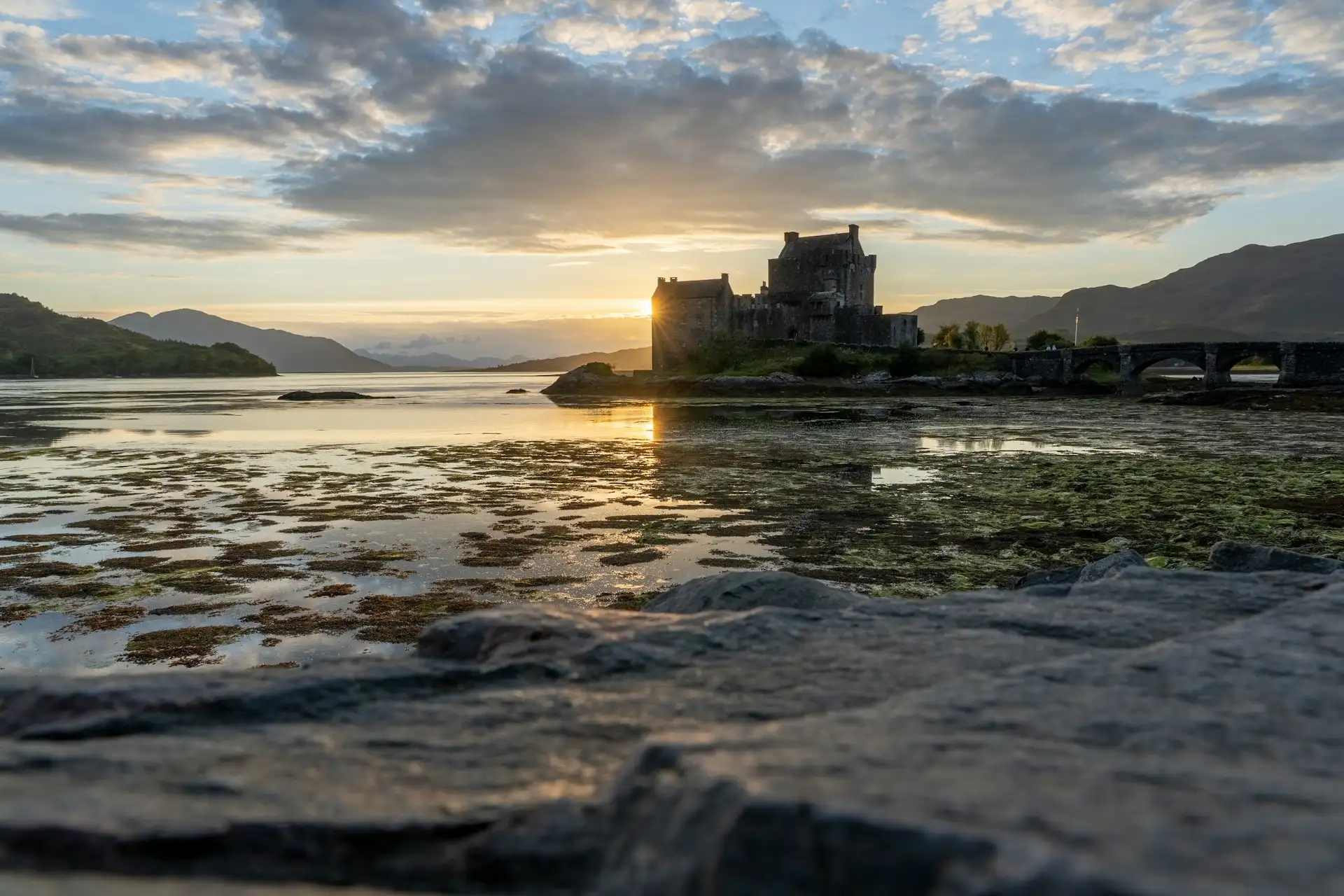
Drive west to Eilean Donan Castle, which sits on a small tidal island where three lochs meet and is the most photographed castle in Scotland because the location is implausibly perfect. Cross the Skye Bridge onto the Isle of Skye and spend two days on an island that changes character every time the cloud lifts or descends.
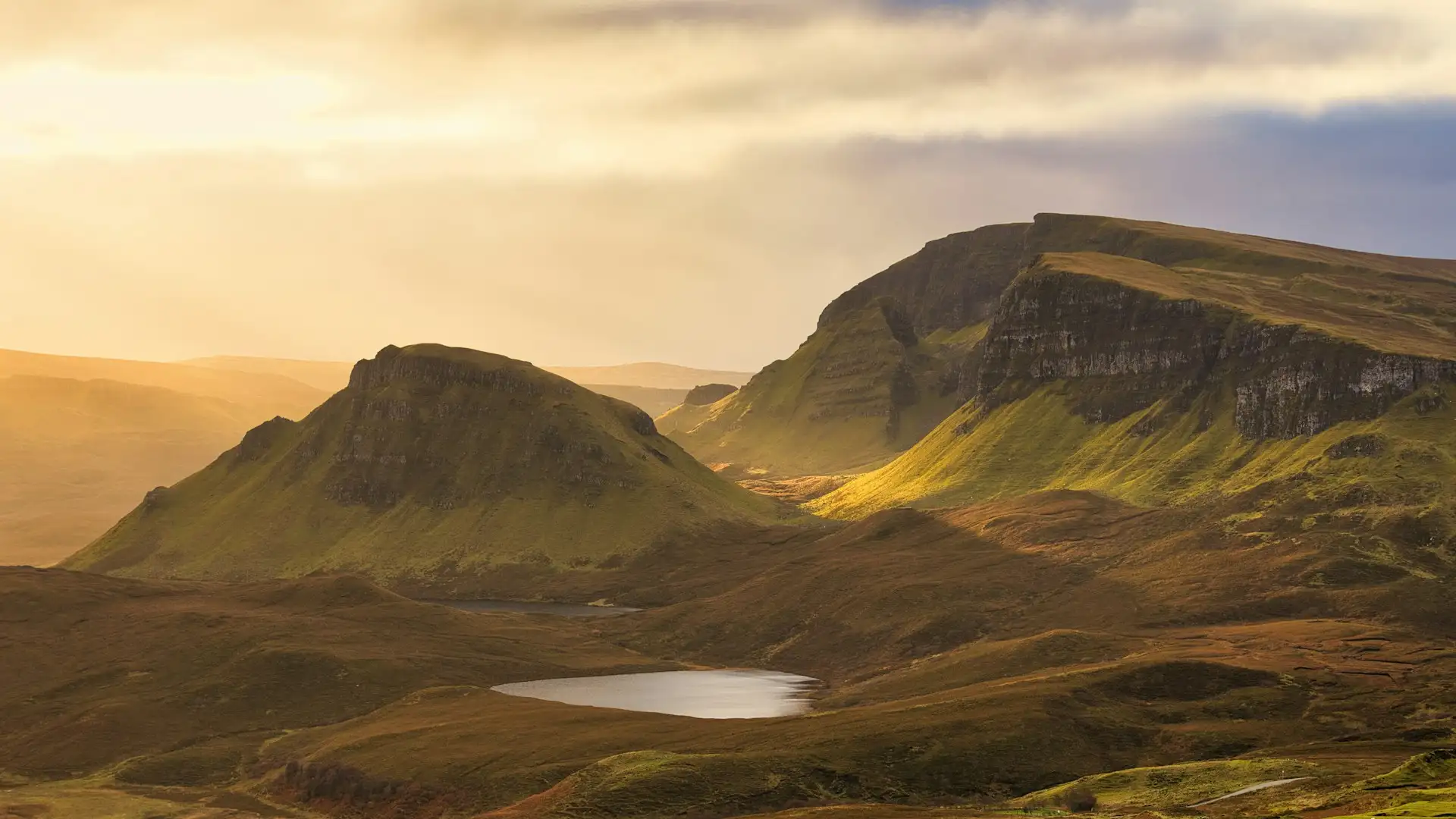
The Old Man of Storr is a basalt pinnacle visible from the road; the hike to its base (two to three hours return, moderate) puts you among rock formations that look like a cathedral designed by geology. The Quiraing is a landslip landscape of pinnacles, cliffs, and hidden plateaus that looks like another planet and is reached by a road that clings to the cliff face. The Fairy Pools (Glen Brittle) are mountain pools of crystal-clear water at the foot of the Black Cuillin ridge; people swim in them and emerge transformed by cold. Neist Point Lighthouse at the island's western tip has clifftop views and, if the weather cooperates, sunset. Portree is the main town: colourful harbour, good restaurants, limited parking. Leave Skye via the north and drive the Bealach na Ba (one of the UK's highest roads, hairpin bends, not for the faint-hearted) to Torridon.
- Eilean Donan Castle - Tidal island castle. £10. Scotland's most photographed. Three lochs meet here.
- Old Man of Storr - Basalt pinnacle. 2-3 hr hike. Moderate. Cathedral-scale rock formations. Arrive early for parking.
- Fairy Pools - Crystal mountain pools. Free. Cold swimming. Cuillin backdrop. Bring a towel and courage.
- The Quiraing - Alien landslip landscape. Drive the road or hike the ridge. Other-planet scenery.
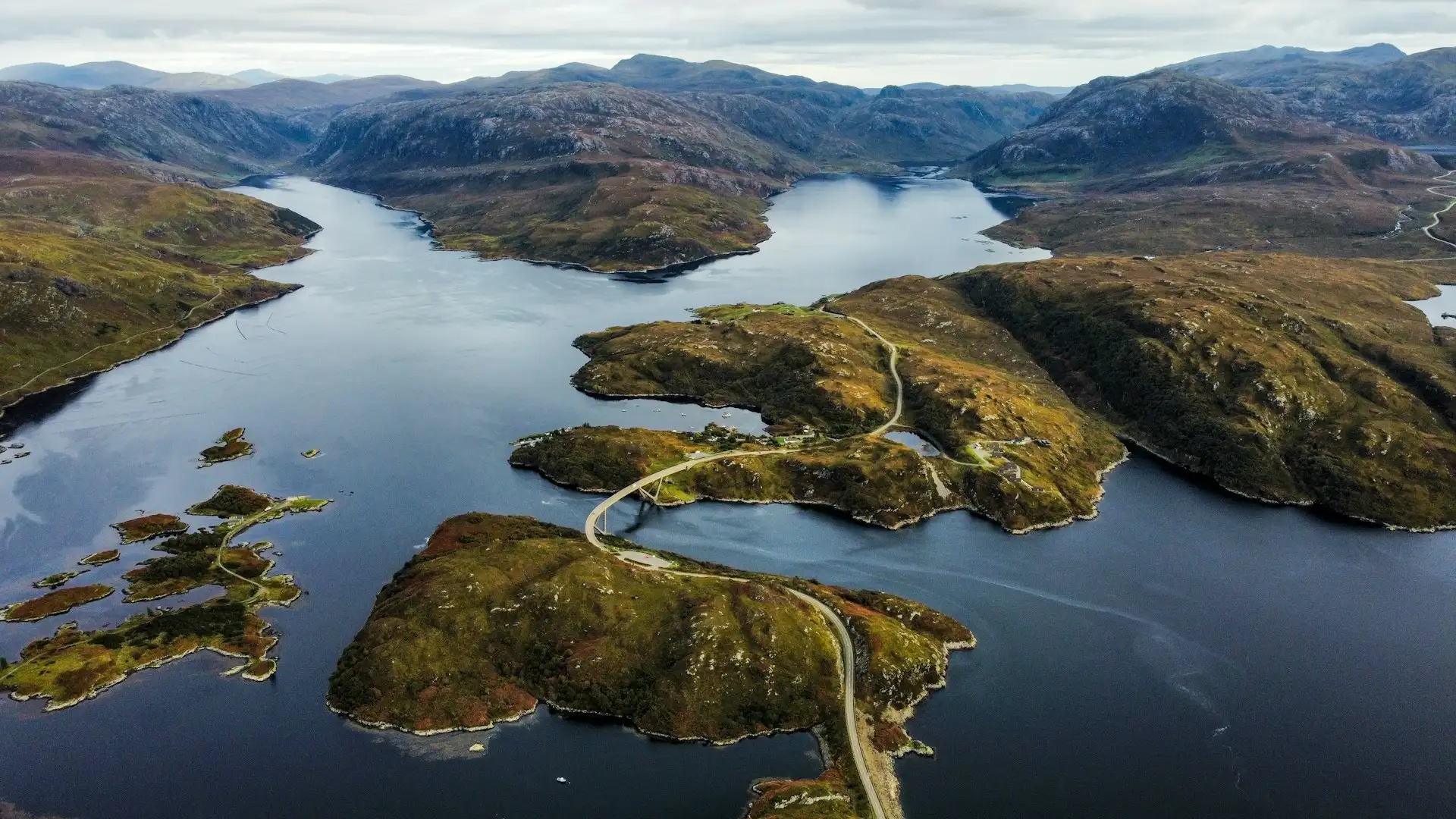
The Wild Northwest
This is the section of the NC500 where Scotland stops being pretty and starts being magnificent. Drive through Beinn Eighe Nature Reserve (ancient Caledonian pine forest, the remnant of forests that once covered Scotland) past Loch Maree to Ullapool, a whitewashed fishing village on Loch Broom that looks like it was painted onto the landscape. The fish and chips here are excellent and the harbour at sunset is worth the stop alone.
North of Ullapool, the roads become single-track with passing places, the landscape becomes increasingly remote, and the mountains (Suilven, Stac Pollaidh, Cul Mor) rise from the peat like isolated monuments. Achmelvich Bay has white sand and turquoise water that looks Caribbean until you put a toe in and discover it's the North Atlantic. Lochinver's pie shop is famous for a reason. The drive to Kylesku has sea loch views and a bridge that replaced a ferry. This section is wild, remote, and beautiful in a way that the domesticated parts of Britain cannot replicate.
- Ullapool - Fishing village, whitewashed buildings, harbour sunset, fish and chips. The charm capital of the northwest.
- Achmelvich Bay - White sand, turquoise water, wild camping. Looks Caribbean. Feels Arctic. Free.
- Stac Pollaidh - Short steep hike (2-3 hrs) to a summit with 360-degree views. One of the best short hikes in Scotland.
- Lochinver Larder - The famous pie shop. Venison, fish, vegetarian. £5-7 per pie. Worth a detour. Queue likely.
The Top of Britain
Turn east along Scotland's north coast, which is windswept, remote, and genuinely feels like the edge of something. Smoo Cave near Durness is a massive limestone cave with a waterfall inside it (free entry, short walk). Cape Wrath (Britain's northwestern point) is accessible only by ferry and minibus, which is part of the appeal. The Kyle of Tongue is a tidal estuary with a causeway and views that change with every tide.
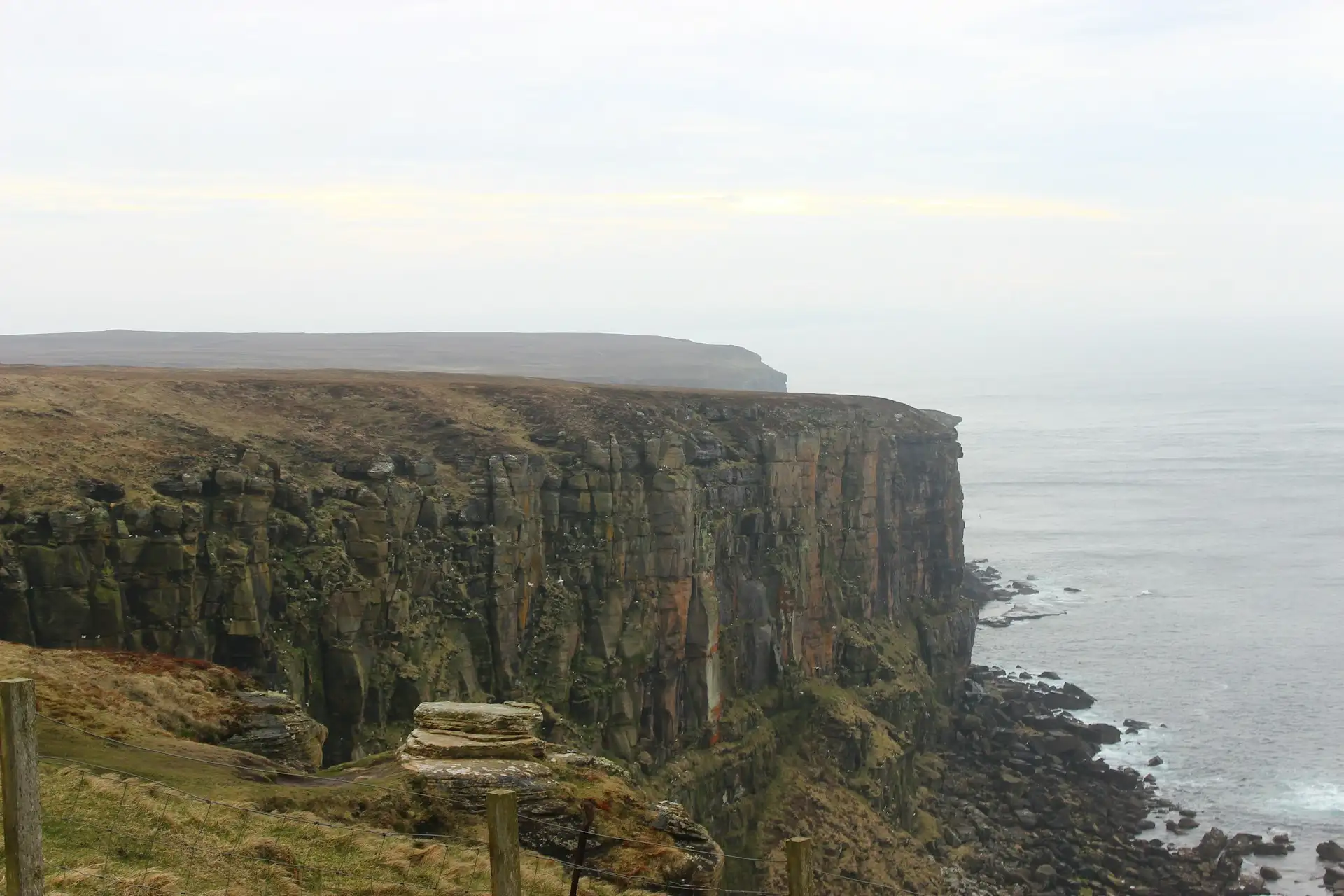
Dunnet Head is mainland Britain's most northerly point (not John o'Groats, which is the northeastern point and gets the tourists). The lighthouse and the cliffs are dramatic, the viewpoint looks north toward Orkney, and on a clear day you can see why the Vikings considered this a reasonable place to settle. Stay near Thurso. Optional: day trip to Orkney Islands via ferry from Scrabster (Skara Brae, a 5,000-year-old Neolithic village, and the Ring of Brodgar stone circle make it worth the crossing if you have the time).
- Smoo Cave - Limestone cave with waterfall. Free. Short walk from road. Boat tour into inner caves £8.
- Dunnet Head - Mainland Britain's most northerly point. Lighthouse. Cliffs. Orkney views. Free.
- Cape Wrath - Britain's NW point. Ferry + minibus access only. Remote, dramatic, worth the effort.
- Orkney (optional) - Ferry from Scrabster. Skara Brae (5,000 years old), Ring of Brodgar. Full day trip.
Castles, Whisky, and Home
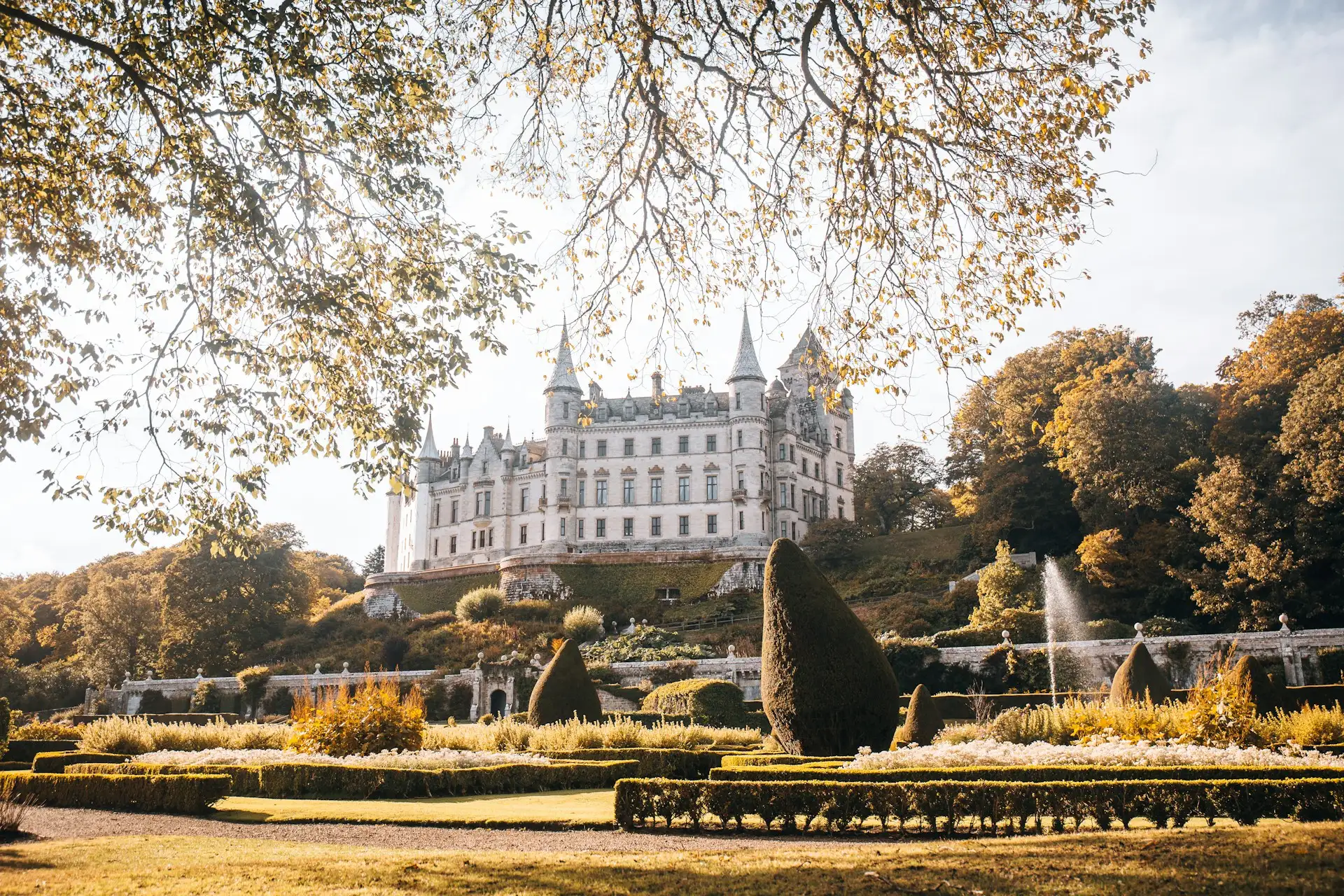
The east coast leg is gentler than the west: farmland, fishing villages, and the sense that civilisation is returning after days in the wilderness. Dunrobin Castle is the highlight: 189 rooms, French-style gardens that descend to the sea, and falconry displays that involve birds of prey being flown at your head while you try to look composed. The castle looks like it belongs in the Loire Valley and the incongruity with the surrounding Highland landscape is part of the charm.
This section has whisky distilleries: Glenmorangie (£15-25 tours), Balblair, and Dalmore are all nearby. The Black Isle peninsula (not actually an island) has views across the Moray Firth where bottlenose dolphins are frequently spotted from the shore at Chanonry Point. Return to Inverness to complete the loop. Celebrate with dinner and a dram. You've driven one of Europe's great coastal routes through landscapes that haven't changed in thousands of years, on roads that are barely wide enough for one car, in weather that changed every hour. Well done.
- Dunrobin Castle - 189 rooms, French gardens, falconry. £14. Scotland's most northerly great house.
- Glenmorangie Distillery - Whisky tours £15-25. The flagship tour includes tastings. Book ahead in summer.
- Chanonry Point - Dolphin watching from shore. Bottlenose dolphins. Free. Best at high tide. Bring binoculars.
- Dornoch - Cathedral town, beach, golf. The Royal Dornoch links course is world-ranked.
Must-See Locations
Three places on this route stay with you long after the midges have stopped itching.
Eilean Donan Castle
A castle on a tidal island where three lochs meet. The most photographed castle in Scotland. Rebuilt in the early 20th century after being destroyed in a Jacobite rising. The location is so perfect it looks like someone placed it there for the photograph.
The Quiraing, Skye
A landslip landscape of pinnacles, cliffs, and hidden plateaus that looks like another planet. Drive the single-track road along the ridge or hike into the amphitheatre. Used as a film location for other worlds. The real thing is better.
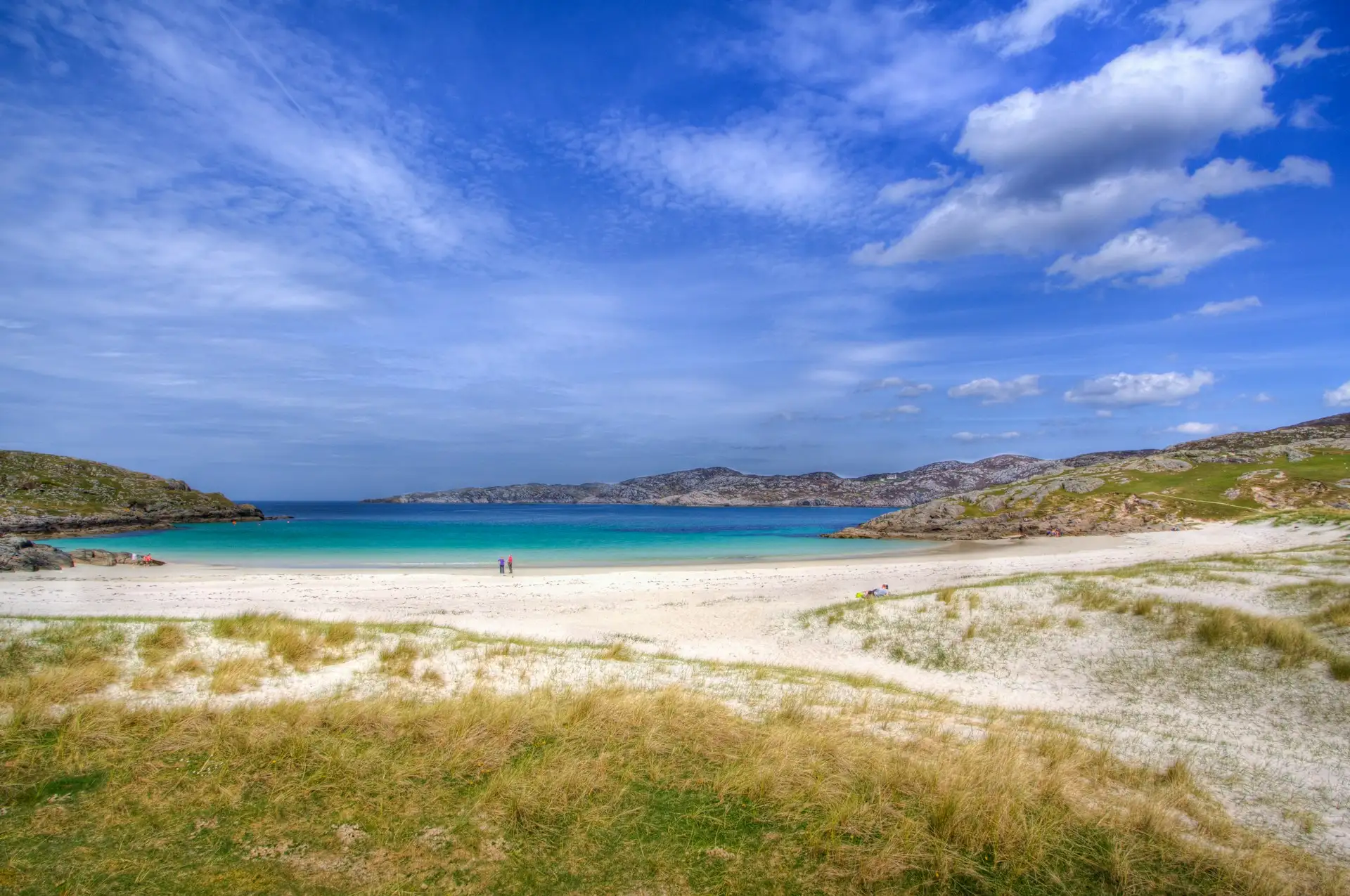
Achmelvich Beach
White sand, turquoise water, on the northwest coast of Scotland. The visual says Caribbean. The temperature says North Atlantic. The contrast between what your eyes see and what your feet feel is the entire Scottish Highlands experience in miniature.
Driving & Roads
Driving in the Scottish Highlands is unlike driving in most of Britain. The roads are narrow, frequently single-track, and demand patience, courtesy, and the ability to reverse into a passing place while a campervan approaches from the opposite direction. The scenery compensates for everything.
Single-Track Roads
Large sections of the NC500 (especially the northwest) are single-track with passing places. Pull into the nearest passing place when you see oncoming traffic. If the passing place is on the right, stop opposite it (do not cross). Let faster traffic behind you pass. Do not park in passing places. This is Highland etiquette and not optional.
Drive on the Left
The UK drives on the left. If you're from a right-hand-drive country, the first hour requires concentration, especially on single-track roads where instinct puts you on the wrong side. Roundabouts go clockwise. The gear stick is on your left. It becomes natural after a day.
Fuel
Petrol stations are sparse in the Highlands. Fill up whenever you see one, especially before the northwest section (Ullapool to Durness has very few). Prices are higher in remote areas. Most accept cards. Carry cash as backup for unmanned stations.
Wildlife on Roads
Sheep on the road are a constant. They are not concerned about your schedule. Highland cattle (coos) appear occasionally. Deer cross at dawn and dusk. Drive carefully on moorland roads. Hitting a stag is a serious collision.
Signal & Maps
Mobile coverage is limited to non-existent through much of the Highlands, especially the northwest coast. Download offline Google Maps for the entire route before you leave Inverness. Some valleys have no signal at all. This is the Highlands.
Weather & Visibility
Rain, mist, sun, and wind can all occur in a single hour. Low cloud reduces mountain visibility to zero. Wet single-track roads are slower. Carry sunglasses and waterproofs simultaneously. The best light happens immediately after rain, which is convenient because rain is frequent.
Essential Tips
🌞 Best Season
May to September. May-June has the longest days (21+ hours of light at midsummer), fewer midges, and spring colours. July-August is warmest (15-20°C) but busiest and worst for midges. September has autumn colour and fewer crowds. Winter closes some mountain roads and has very short days but offers Northern Lights potential.
🏨 Accommodation
Book months ahead for June-August, especially on Skye. Scottish B&Bs are excellent (full Scottish breakfast included, £40-80/person). Small hotels and guesthouses line the route. Wild camping is legal under the Scottish Outdoor Access Code (free, leave no trace). Highland villages have limited beds. Inverness has the most choice.
🍴 Food & Whisky
Haggis (better than its reputation). Fresh Scottish salmon. Venison. Cullen skink (smoked haddock soup). Cranachan (whisky, oats, cream, raspberries). Fish and chips at any harbour. Whisky distillery tours £15-30 with tastings. Pub meals are hearty and £12-18. Lochinver pies are a pilgrimage. Tipping: 10% in restaurants.
🦠 Midges
Scotland's tiny biting flies. Late May to September, worst July-August. Appear in still, warm, overcast conditions. Wind and sunlight keep them away. Carry Smidge or Avon Skin So Soft (Scots swear by it). Midge head nets (£5) look ridiculous and work. The west coast is worse than the east. They can genuinely ruin outdoor experiences if you're unprepared.
💰 Money
British Pounds (£). Scotland also issues its own banknotes (same value, sometimes refused in England). Cards accepted in towns and most businesses. Cash useful for small cafes, unmanned petrol stations, and tipping. ATMs in all towns. No tipping required in pubs (at the bar).
👜 Packing
Waterproof jacket (non-negotiable). Layers (four seasons in one day). Warm fleece for evenings. Hiking boots for Skye and mountain walks. Midge repellent + head net. Sunglasses (the light after rain is intense). Binoculars for wildlife. A camera. A sense of humour about weather forecasts, which are suggestions rather than predictions.
Budget Planning
Scotland is mid-range by UK standards. Accommodation is the main cost, especially in summer when limited Highland options command premium prices. Food is reasonable. Fuel adds up on Highland distances. Most of the best experiences (hiking, beaches, wild camping, viewpoints) are free.
Book Your Trip
Everything in one place.
The Road That Requires Rain
The Scottish Highlands need their weather. The mist that hides the Cuillin ridge and then reveals it all at once is the reason the mountains look mystical rather than merely tall. The rain that soaks you on the Quiraing is the reason the light afterwards makes the landscape glow in a way that clear-sky destinations cannot replicate. The clouds that sit in the valleys and lift suddenly to show Eilean Donan framed against three lochs and a mountain backdrop are part of the design, not a flaw in it.
The NC500 is not a sunshine roadtrip. It's a roadtrip where the weather is a participant. Where the single-track roads force you to slow down and the passing places force you to engage with other drivers, which in the Highlands means a wave, a nod, and occasionally a conversation about sheep. Where a whisky by a pub fire after a wet day of hiking feels earned in a way that a cocktail by a pool never quite achieves. Scotland doesn't promise you comfort. It promises you something better: landscapes that look different every time the cloud moves, and the growing suspicion that the rain is what makes all of it possible.