
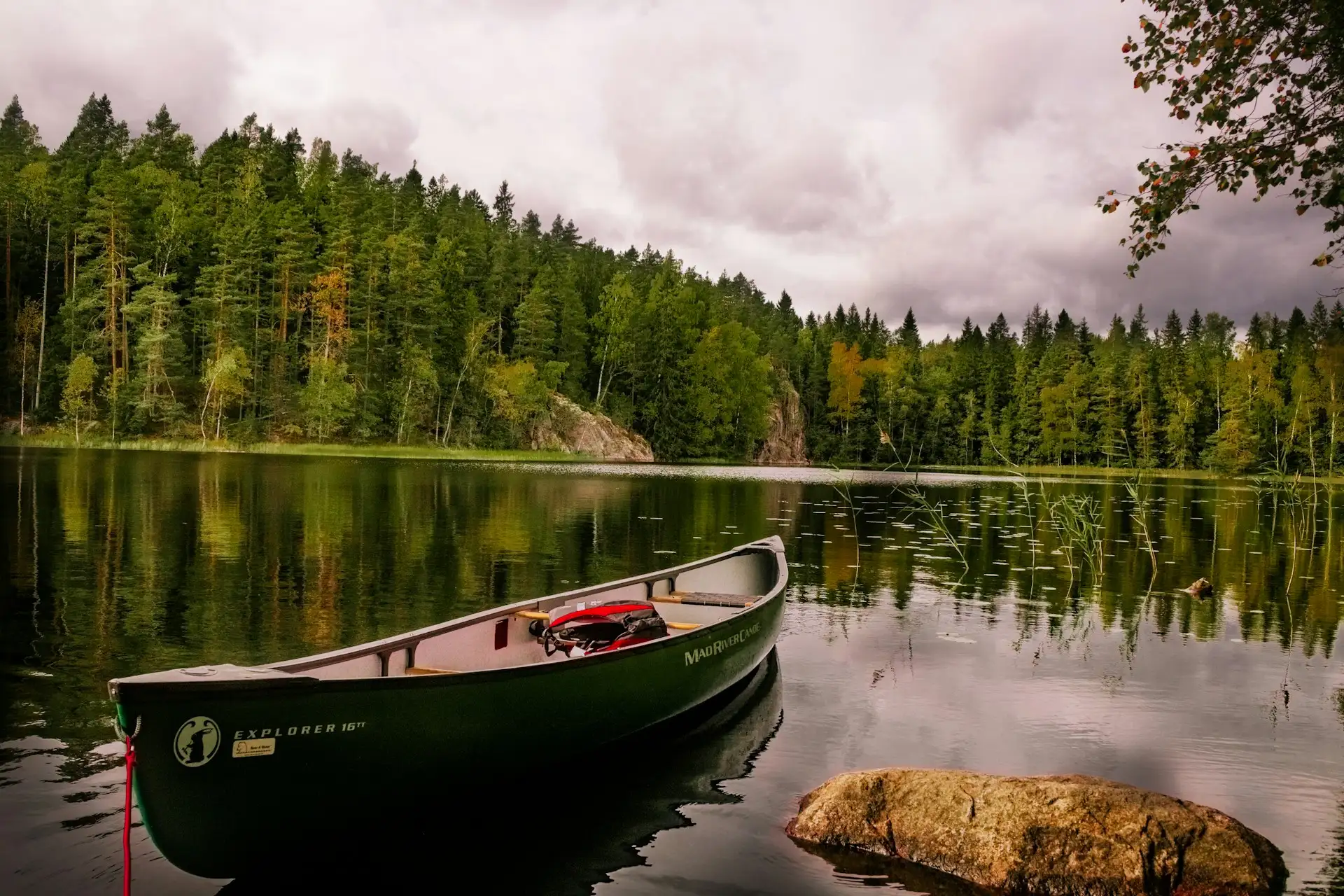
Scandinavian
Circuit
Copenhagen to Copenhagen through three countries, 3,500 kilometres, and some of the most dramatically beautiful landscape in Europe. Danish hygge, Swedish design, Norwegian fjords, and the Atlantic Road. In summer, the sun doesn't set. Neither will you.
Route Overview
Scandinavia does three things better than anywhere else in Europe: cities that work, nature that doesn't, and a quality of life that makes you reconsider your entire domestic setup. The Scandinavian Circuit loops through all three countries, starting in Copenhagen (the city that made cycling a civic religion), driving through Sweden to Stockholm (fourteen islands, one of the best-preserved old towns in Europe), crossing into Norway for the fjords (which are exactly as dramatic as you've heard and then some), and returning via Oslo and southern Sweden.
The Norwegian section is the centrepiece. The Atlantic Road connects islands via eight bridges that look like they're leading off the edge of the earth. Geirangerfjord is a UNESCO site where waterfalls drop hundreds of metres into water so deep and still it reflects the cliffs above. Bergen's Bryggen wharf is a row of colourful Hanseatic buildings that has survived fires, wars, and the temptation to modernise. The mountain roads between these places involve hairpin turns, tunnels through solid rock, and car ferries that are simply part of the road system.
The honest part: this is expensive. Norway in particular is the most expensive country in Europe for visitors. A beer in Bergen costs what a meal costs in Lisbon. A cabin for the night costs what a hotel costs in most of Southern Europe. The trade-off is that everything works, the nature is pristine in a way that the word "pristine" was invented for, and the allemannsretten (right to roam) lets you wild camp for free in one of the most beautiful landscapes on earth. The cost per spectacular view is actually quite reasonable when you calculate it that way.
The Itinerary
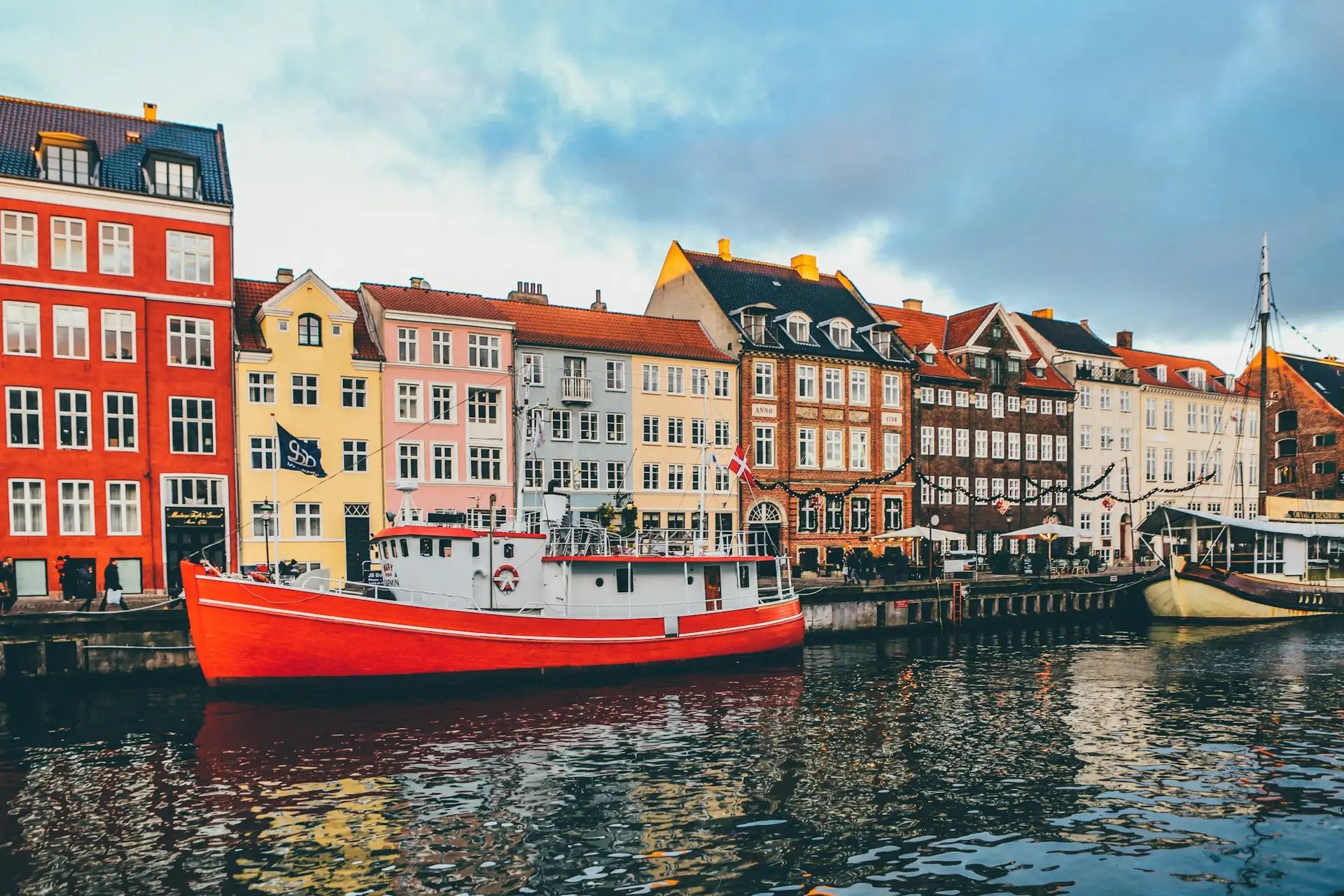
Danish Hygge
Copenhagen is the city that made cycling a transportation policy, design a national identity, and happiness a measurable outcome. Nyhavn, the colourful canal lined with 17th-century townhouses, is the photograph, but the city beyond it is the reason people stay. Rent a bike and ride like a local (dedicated lanes, traffic lights for cyclists, the whole system works). Tivoli Gardens is one of the world's oldest amusement parks and charming in a way that modern theme parks can't replicate. Rosenborg Castle has the crown jewels. Christiania, the self-governing freetown, is either an inspiring social experiment or a slightly chaotic curiosity depending on your politics.
The food scene is world-class. Smorrebrod (open-faced sandwiches, which undersells them considerably) are the traditional lunch. The New Nordic movement that produced Noma started here, and the restaurant scene at every price point reflects it. Danish pastries in Denmark are called wienerbrod and are better than any version you've had elsewhere. Pick up your rental car on day two afternoon. The Oresund Bridge to Sweden awaits.
- Nyhavn - Colourful canal. 17th-century townhouses. The photograph that sells Denmark. Best in afternoon light.
- Tivoli Gardens - 1843 amusement park. Rides, gardens, restaurants. €20 entry. Evening illumination is worth it.
- Rosenborg Castle - Crown jewels. Renaissance gardens. €15 entry. The Long Hall is impressive.
- Smorrebrod lunch - Aamanns or Schonnemann for the traditional open-sandwich experience. €15-25 for a proper lunch.
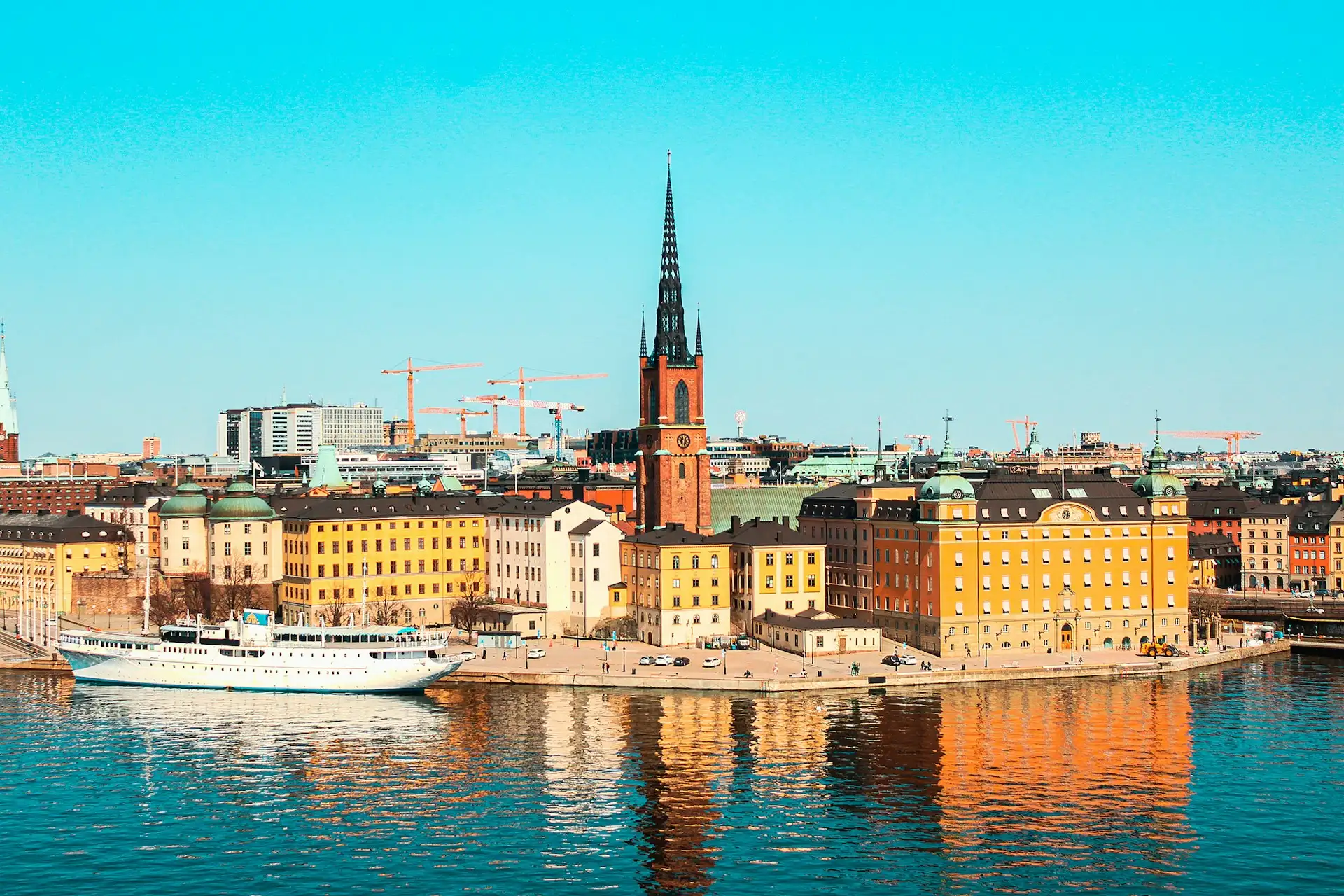
Fourteen Islands
Cross the Oresund Bridge (€55 toll, 7.8 km, the one from the TV series) into Sweden and drive north. Stop in Gothenburg if you want to split the drive: Sweden's second city has excellent seafood, the Haga district's cafes, and a relaxed coastal energy. Otherwise continue through Swedish countryside, which is forests of birch and pine, red wooden houses, and lakes that appear between the trees with no explanation.
Stockholm is built across fourteen islands where Lake Malaren meets the Baltic, and the old town (Gamla Stan) has cobblestone streets narrow enough that you can touch both walls, colourful buildings that lean at angles, and the Royal Palace. The Vasa Museum houses a 17th-century warship that sank on its maiden voyage (twenty minutes into its first trip, 1628, because they built it too tall) and was pulled from the harbour 333 years later almost intact. Sodermalm is the neighbourhood for bars, coffee, and the Monteliusvagen viewpoint that gives you the panoramic shot of the city. The archipelago (30,000 islands) is reachable by ferry for a day trip.
- Gamla Stan - Medieval old town. Narrow streets, Royal Palace, colourful buildings. Free to walk. The heart of Stockholm.
- Vasa Museum - 17th-century warship pulled intact from the harbour. ~€18. Allow 2 hours. Genuinely extraordinary.
- Sodermalm - Trendy neighbourhood. Monteliusvagen viewpoint. Coffee, bars, vintage shops. The local Stockholm.
- Djurgarden - Museum island. Vasa, Skansen open-air museum, ABBA museum. A full day if you want it.
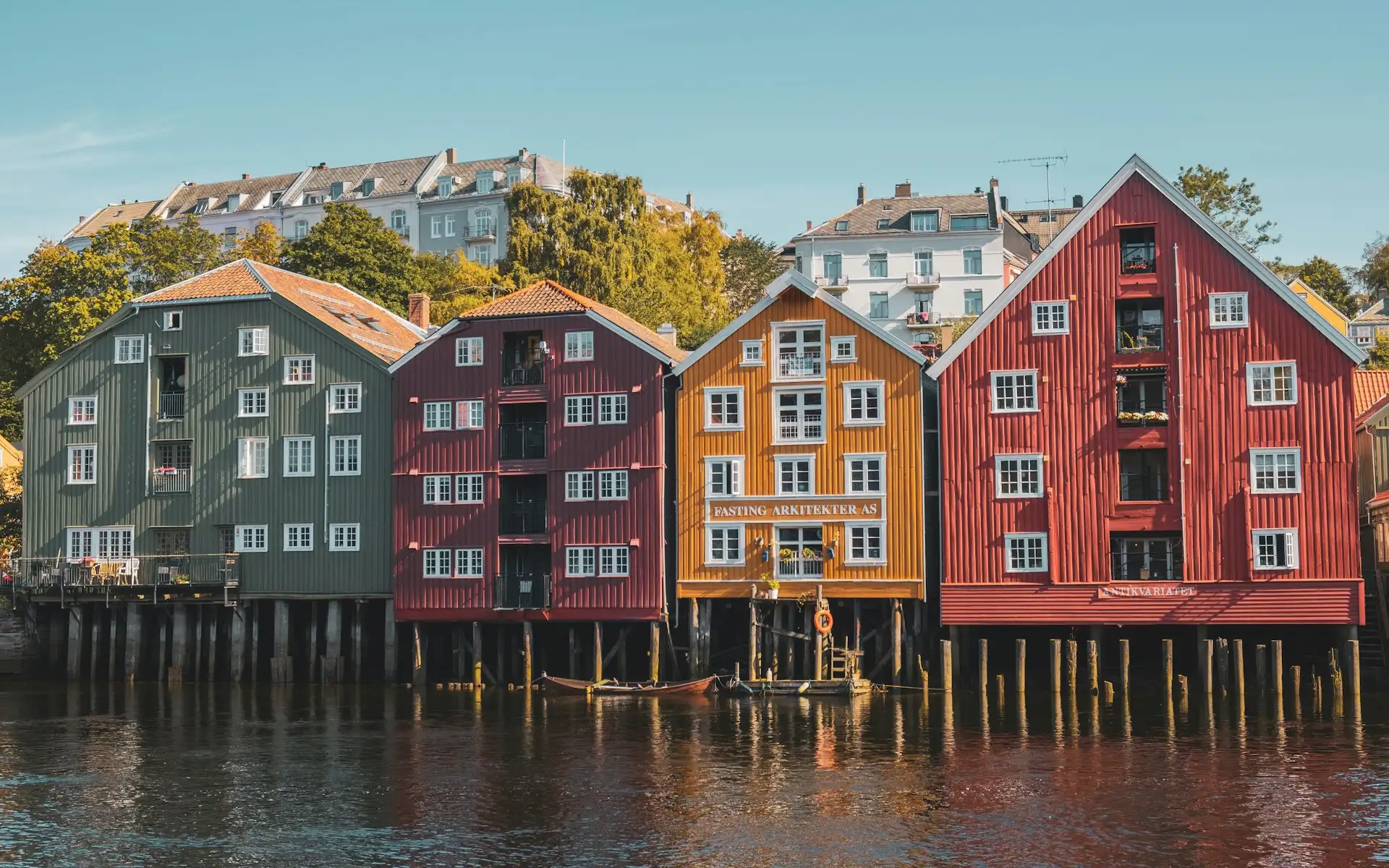
Into Norway
The long drive west through Sweden's interior is the transition: forests become mountains, lakes become larger, and the road climbs toward the Norwegian border. Stop in Ostersund on Lake Storsjon (Sweden's version of a Loch Ness monster, called Storsjoodjuret, which the locals take exactly as seriously as you'd expect). Cross into Norway where the landscape shifts decisively: the mountains are steeper, the valleys deeper, and the light has a clarity that comes from proximity to the Atlantic.
Trondheim was Norway's first capital and still has the Nidaros Cathedral, the country's national shrine: Gothic architecture in stone, built over the burial site of Saint Olav, and the northernmost medieval cathedral in the world. The Bakklandet neighbourhood has colourful wooden houses on the Nidelva River, cobblestone streets, and the kind of cafes where the coffee is excellent and the kanelboller (cinnamon rolls) are the size of your head. The old town bridge (Gamle Bybro) and Kristiansten Fortress (free, hilltop views) round out a city that has enough to fill two days without rushing.
- Nidaros Cathedral - Norway's national shrine. Gothic. ~€12. The northernmost medieval cathedral in the world.
- Bakklandet - Colourful wooden houses on the river. Cafes, cobblestones, cinnamon rolls. Trondheim's charm centre.
- Gamle Bybro - Old town bridge. The photograph of Trondheim. Best in late afternoon light.
- Kristiansten Fortress - Free. Hilltop. City panorama. Walk up from Bakklandet.
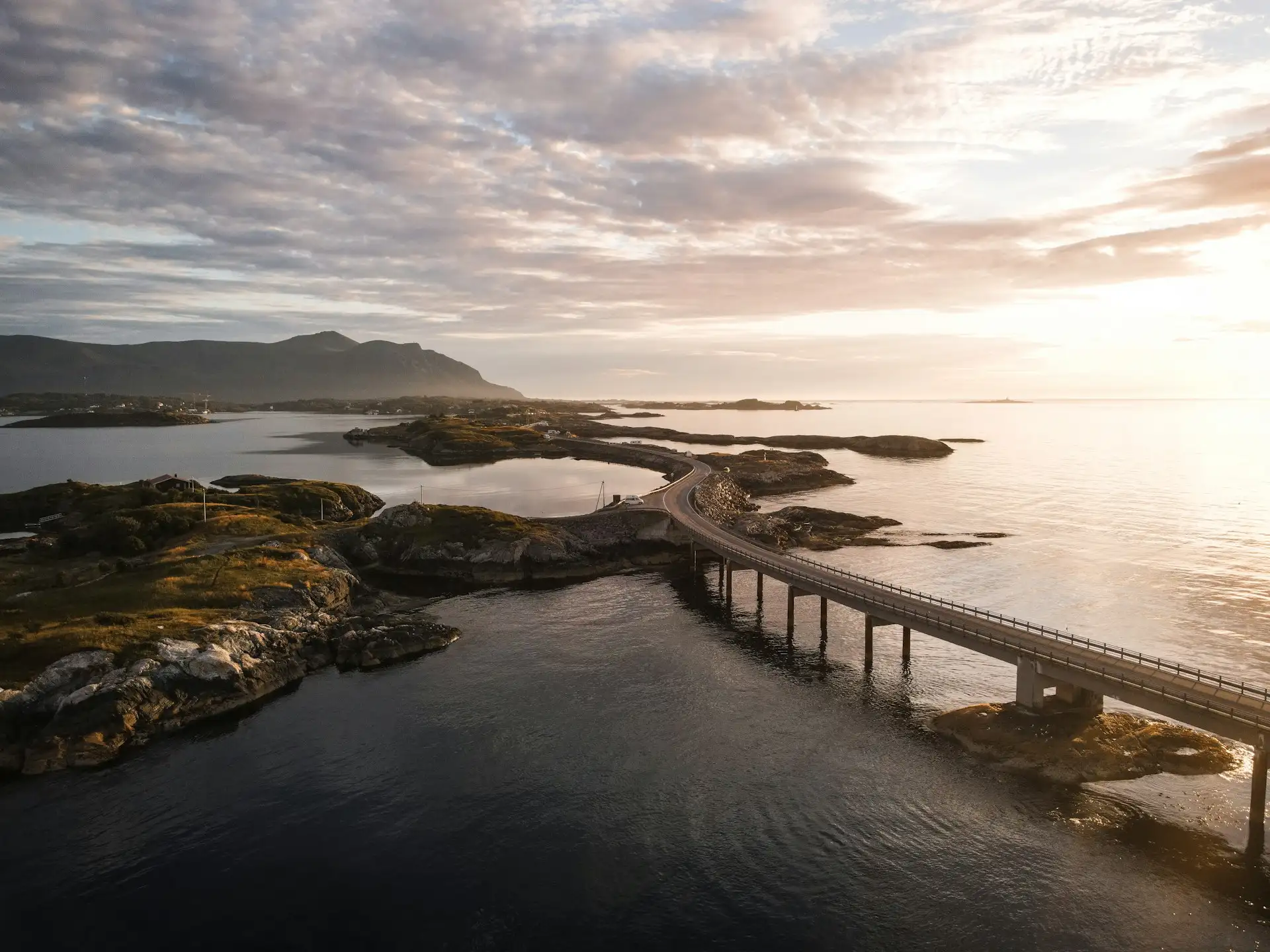
The Bridge to Nowhere
Drive south along the coast toward the Atlantic Road (Atlanterhavsveien), which is 8.3 kilometres of road connecting small islands via eight bridges over open ocean. The Storseisundet Bridge is the one in the photographs: it curves upward and, from certain angles, appears to end in mid-air. In calm weather it's scenic. In storms, waves crash over the bridges and driving across feels like an act of faith in Norwegian civil engineering (which is, to be fair, justified). Drive slowly. Stop at every viewpoint. Walk across sections if conditions allow.
Continue to Alesund, which was rebuilt entirely in Art Nouveau style after a devastating fire in 1904. The town sits across several islands and the architecture is ornamental in a way that most Norwegian towns are not. Climb the 418 steps to Aksla viewpoint for the panoramic shot: the town, the islands, the fjord, and the Norwegian Sea. The Atlantic Sea Park is one of Northern Europe's largest aquariums. Alesund is an excellent base for the next section into fjord country, and the seafood here (particularly the bacalao, ironic given the cod connection to Portugal) is outstanding.
- Atlantic Road - 8.3 km, eight bridges, open ocean. Storseisundet Bridge. Free to drive. Stop at every viewpoint.
- Aksla Viewpoint - 418 steps from the town centre. Panoramic view of Alesund and islands. Free. Do it at sunset.
- Alesund Art Nouveau - Post-1904 fire architecture. Walking tour of the centre. Art Nouveau museum ~€10.
- Atlantic Sea Park - Aquarium. Northern Europe's largest. ~€25. Good for weather-challenged days.
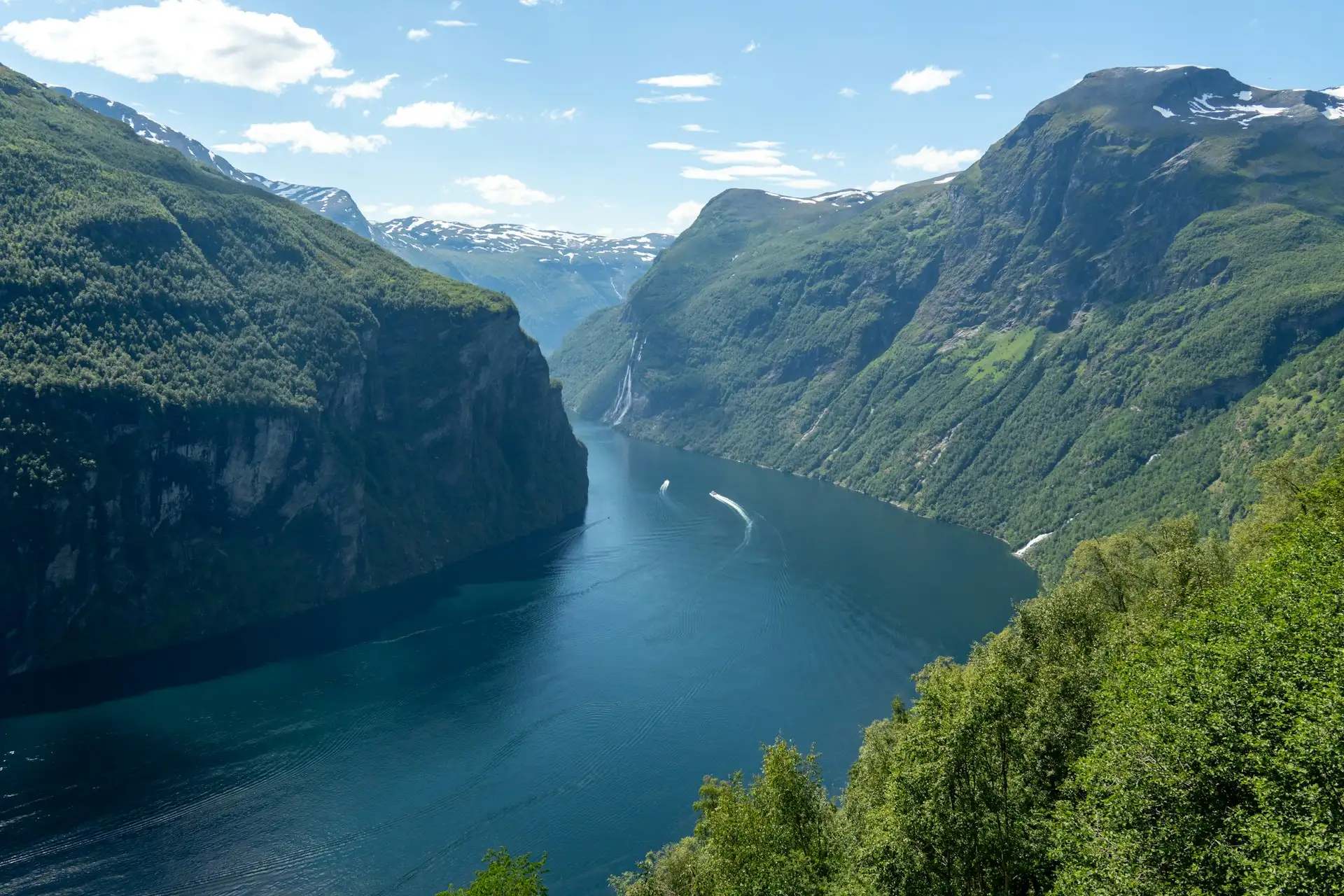
The Fjord
The drive to Geirangerfjord is a journey that treats the destination as secondary to the approach. Mountain roads with hairpin turns climb through cloud level and descend into valleys where waterfalls drop from heights that make you recalculate your understanding of vertical distance. The Eagle Road (Ornevegen) has eleven hairpin bends and a viewpoint (Ornesvingen) that looks directly down into the fjord from a height that makes photographs look CGI.
Geirangerfjord is a UNESCO World Heritage site and one of the most photographed natural features in Norway. The fjord is 15 km long with cliffs that rise 1,400 metres from water so deep the cruise ships that enter look like toys. The Seven Sisters waterfall drops in seven streams from 250 metres. Take the one-hour cruise (€30-40) for the perspective that the viewpoints can't give you: looking up at the cliffs from water level while waterfalls create mist around the boat. Continue inland through mountain scenery to Lom, where a 12th-century stave church (one of Norway's oldest wooden churches) sits in a village that makes an excellent base for the next day's drive.
- Ornesvingen Viewpoint - Eagle Road. Eleven hairpins. The view down into Geirangerfjord. Free. The photograph of Norway.
- Geirangerfjord Cruise - 1-hour cruise. Seven Sisters waterfall. €30-40. Book ahead in July. Essential.
- Seven Sisters Waterfall - 250m, seven streams, visible from the cruise. Best in early summer when snowmelt is heavy.
- Lom Stave Church - 12th century. One of Norway's oldest wooden churches. ~€8. Atmospheric and beautiful.
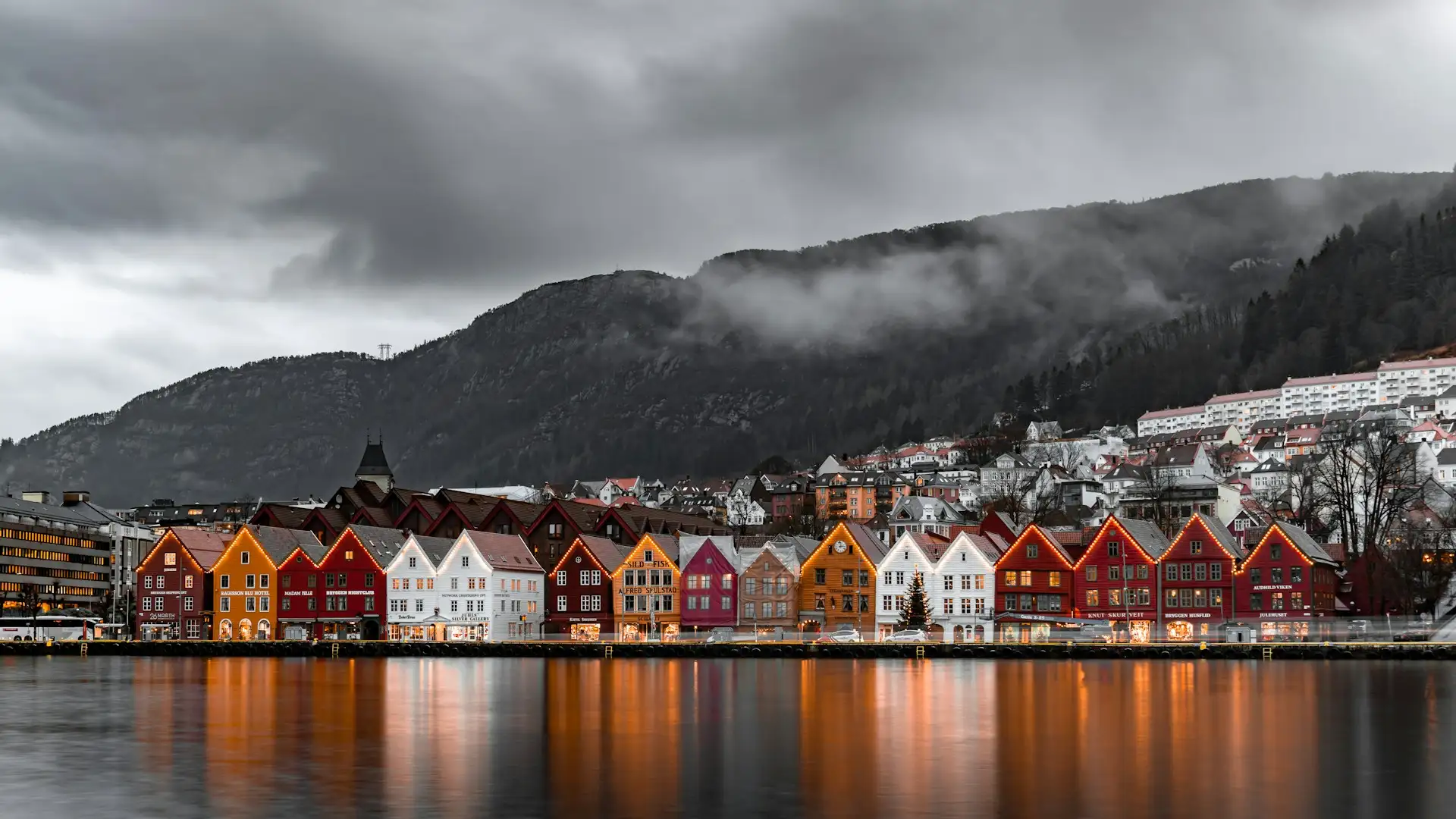
Gateway to the Fjords
Drive south through mountain scenery and descend toward the fjords. Stop in Flam if you want to add the Flamsbana railway, one of the world's steepest standard-gauge railways and a twenty-kilometre journey that descends 866 metres through tunnels and past waterfalls. Continue to Bergen, Norway's second city and "Gateway to the Fjords," which has been a trading port since the 12th century and still has the Hanseatic buildings on the Bryggen wharf to prove it.
Bryggen is the UNESCO-listed row of colourful wooden buildings on the waterfront, originally built by German merchants in the 14th century and rebuilt after fires multiple times in the same style because Bergen commits to its aesthetic. Walk the narrow alleyways behind the facades for the atmosphere that the tourist photographs don't capture. Take the Floibanen funicular to Mount Floyen (€8 return) for the panoramic view of the city, the fjord, and the mountains. The Fish Market is famous (and somewhat touristy; the indoor section is better value). Bergen rains approximately 240 days a year, which Bergensere treat as a personality trait rather than a problem. Pack a jacket.
- Bryggen Wharf - UNESCO Hanseatic buildings. Colourful wood, narrow alleys. Free to explore. Bergen's defining view.
- Floibanen Funicular - Mount Floyen. €8 return. Panoramic city and fjord views. Hiking trails at the top.
- Fish Market - Seafood. Indoor hall for better value. Outdoor market more atmospheric. Budget €15-25 for a seafood plate.
- Flamsbana Railway - Optional. Flam. €45-65. 20 km, 866m descent, 20 tunnels. One of the world's great train journeys.
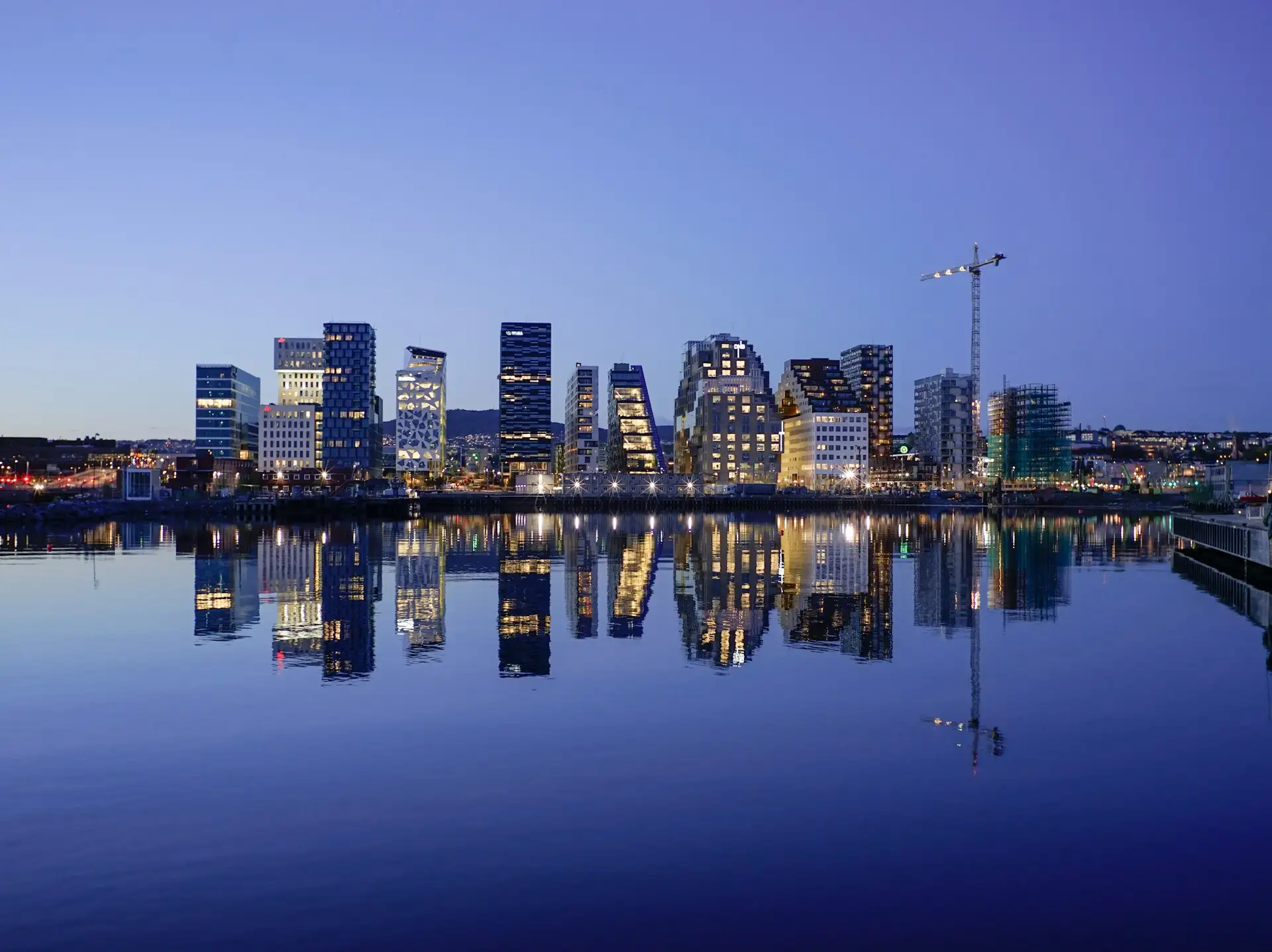
The Return
The return leg takes you east to Oslo (480 km, a long day through mountain scenery) and then south through Sweden back to Copenhagen (650 km, another long day or two with stops). Oslo deserves at least a half-day: the Opera House has a roof you can walk on (angular white marble sloping into the harbour, free, the defining piece of modern Norwegian architecture), the Viking Ship Museum has boats pulled from burial mounds, and Vigeland Sculpture Park has over 200 sculptures by a single artist, including the Monolith (a 14-metre tower of intertwined human figures that is either profound or unsettling depending on your state of mind).
The drive through southern Sweden can include stops in Gothenburg (Sweden's second city, excellent seafood, the Haga district) or Malmo (multicultural, close to Copenhagen, the Turning Torso tower). Cross the Oresund Bridge back to Copenhagen, return the car, and spend a final evening reflecting on three countries, 3,500 km, and the realisation that Scandinavia has been doing most things right for longer than you thought.
- Oslo Opera House - Walk the roof. Angular marble. Free. The building that defines modern Oslo.
- Viking Ship Museum - Preserved burial ships. ~€15. The Oseberg ship is extraordinary.
- Vigeland Sculpture Park - 200+ sculptures. Monolith. Free. One of the world's most unusual parks.
- Gothenburg (optional) - Haga district, Feskekorka fish market, canal tours. Worth a stop on the return drive.
Must-See Locations
Three moments on this route redefine what you thought Europe was capable of. You'll show the photographs and people will assume you edited them.
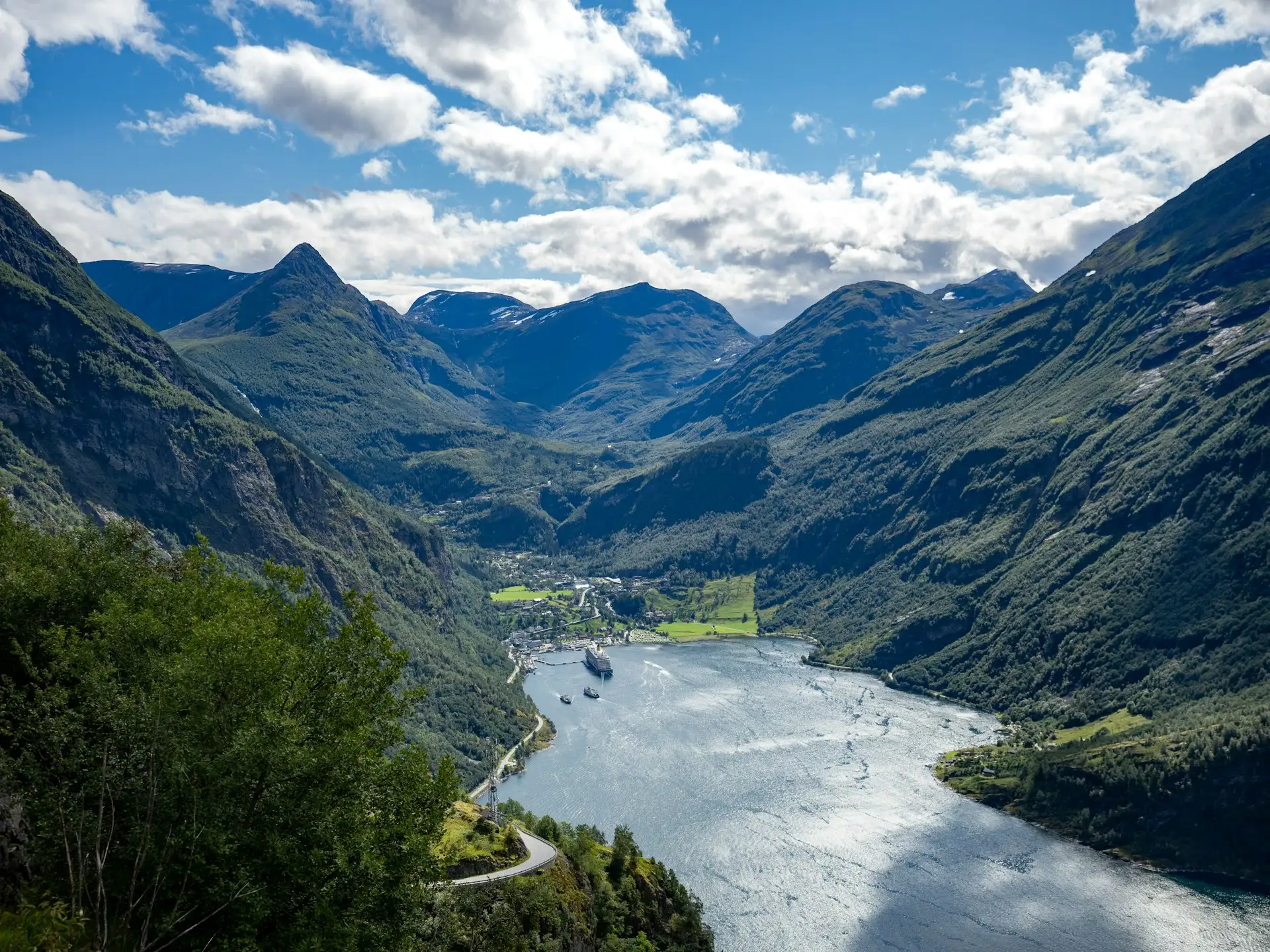
Geirangerfjord
UNESCO World Heritage. Cliffs rising 1,400m from water. The Seven Sisters waterfall in seven streams. The cruise looking up from water level. The Eagle Road looking down from 620m. Both perspectives are necessary.
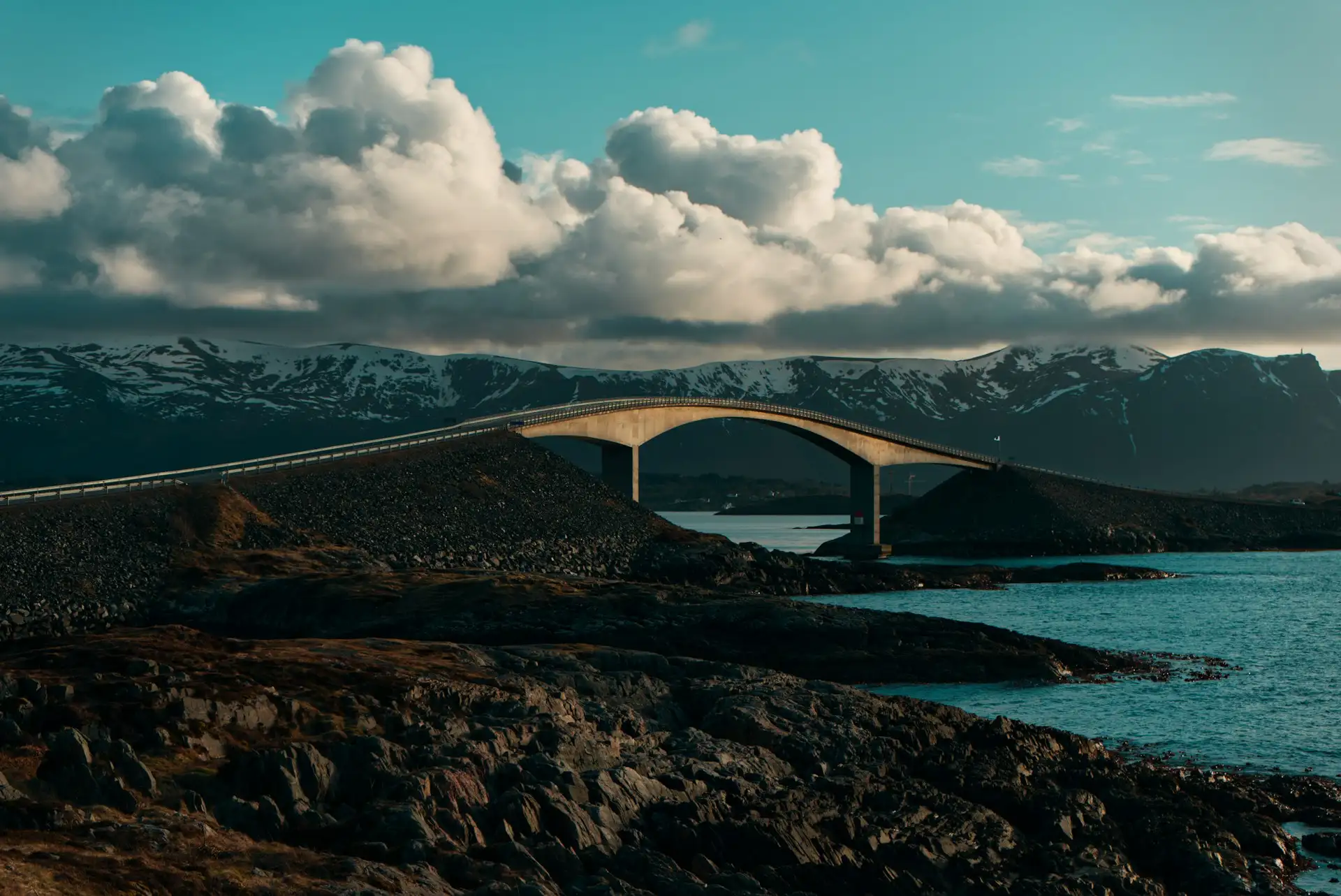
Atlantic Road
8.3 km of road over open ocean. Eight bridges connecting islands. Storseisundet Bridge appearing to end in mid-air. In storms, waves crash over the tarmac. Even in calm weather, the engineering is theatre.
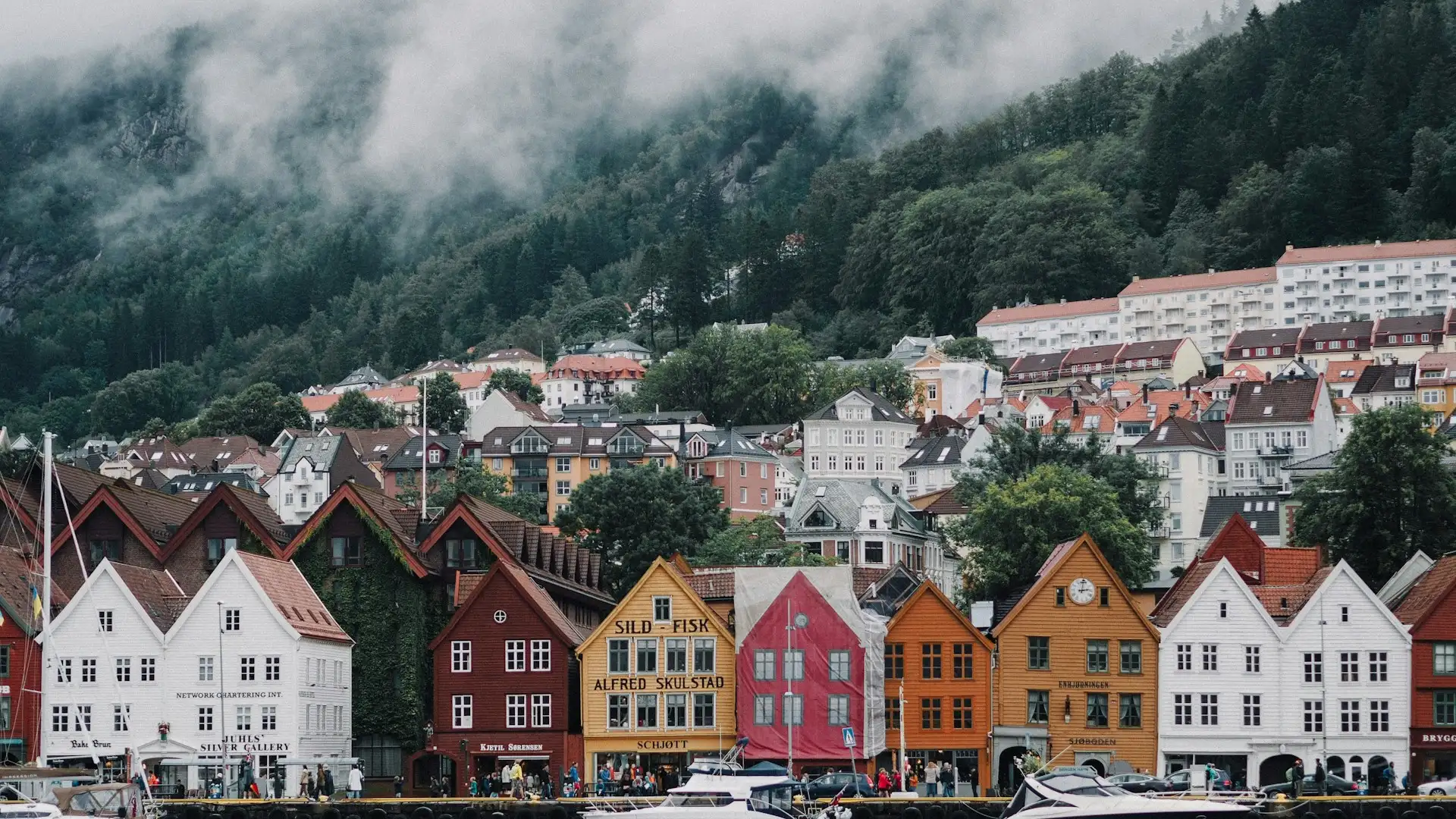
Bryggen, Bergen
UNESCO Hanseatic trading buildings from the 14th century. Colourful wooden facades, narrow alleyways behind. Rebuilt after fires in the same style because Bergen refuses to change its mind. Rain included.
Driving & Ferries
Scandinavian roads are excellent. Norwegian mountain roads are excellent and terrifying. The ferry system in Norway is part of the road network and works smoothly. The toll system is automatic. The only thing that doesn't work smoothly is your budget, because fuel, tolls, and ferries add up faster than you'd like.
Tolls
Norway has automatic tolls (AutoPASS). Your rental car is registered and tolls are charged automatically (check with your rental company). Budget €50-100 for Norwegian tolls. The Oresund Bridge (Denmark-Sweden) costs ~€55. Sweden has minimal road tolls.
Ferries
Norwegian fjord ferries are part of the road system. Most are drive-on, no booking needed. Queue and board the next available ferry. Peak summer (July) may involve 30-60 minute waits. Budget €100-200 total for ferry crossings. The ferries themselves are efficient and scenic.
Fuel
Norwegian fuel is among the most expensive in Europe (~€2.00-2.20/litre). Sweden and Denmark are slightly cheaper. Electric vehicle charging is excellent in all three countries (Norway has the world's highest EV adoption). Fill up before mountain sections. Stations are frequent on main routes.
Mountain Roads
Norwegian mountain roads involve hairpin bends, single-lane tunnels, and steep gradients. Some tunnels are underwater. Headlights must be on at all times (all countries). Passing places on single-track roads. Drive carefully and enjoy the scenery from viewpoints, not from the driver's seat.
Wildlife
Moose/elk crossings are a genuine hazard, especially at dawn and dusk in Sweden and Norway. A collision with a moose is serious (they weigh 400-700 kg). Watch for warning signs. Reindeer in northern Norway walk on roads. Slow down in forested areas.
Car Rental
Book ahead for summer. Standard car is fine for the entire route. Manual transmission is cheaper. Pick up and drop off in Copenhagen for the loop. Cross-border driving is standard (no extra fee within Scandinavia). Winter tyres required Oct-Apr in Norway.
Essential Tips
🌞 Best Season
June to August. June-July has the midnight sun in northern Norway (the sun doesn't set, which is disorienting and beautiful). August is slightly warmer with shorter but still very long days (18+ hours of light). May and September are shoulder months: cheaper, fewer tourists, but cooler and some mountain roads still closed.
🏨 Accommodation
Mix hotels, cabins (hytte in Norway, stuga in Sweden), and wild camping. Cabins with kitchens are the best-value option (cook your own meals). Book fjord-area accommodation months ahead for July. Wild camping is free and legal in Norway and Sweden (allemannsretten). Hostels exist in all cities.
🍴 Food
Restaurants are expensive (€25-40 per meal in Norway). Supermarkets are 40-50% cheaper. Cook in cabin kitchens. Norwegian supermarket salmon is world-class and cheap (relative to restaurants). Smorrebrod in Denmark, meatballs (kottbullar) in Sweden, fresh seafood everywhere. Coffee culture is strong in all three countries.
🍷 Alcohol
Norway and Sweden have state-controlled alcohol sales (Vinmonopolet in Norway, Systembolaget in Sweden). Prices are high, selection is limited to specific stores, and opening hours are restricted. Stock up on wine/beer in Denmark (supermarket prices, reasonable) or duty-free on arrival. A beer in a Norwegian bar costs €10-15.
💰 Currencies
Denmark: Danish Krone (DKK). Sweden: Swedish Krona (SEK). Norway: Norwegian Krone (NOK). None use the Euro. Cards are accepted everywhere (Scandinavia is nearly cashless). Contactless payment works in taxis, buses, kiosks, and even some public toilets. Cash is almost unnecessary.
👜 Packing
Layers (weather changes quickly, even in summer). Waterproof jacket (Bergen rains 240 days/year). Hiking boots for trails. Sunglasses (midnight sun). Sleep mask (if you can't sleep in daylight). Swimwear for lake/fjord swimming (cold but invigorating). Mosquito repellent for Swedish lakeland.
Budget Planning
The honest truth: Scandinavia is expensive. Norway is the most expensive country in Europe for tourists. But the nature costs nothing, wild camping is free and legal, supermarket food is excellent, and the experience-per-krona ratio improves dramatically when you cook in cabins and sleep under the midnight sun.
Book Your Trip
Everything in one place.
The Loop That Proves the North Got It Right
The Scandinavian Circuit is expensive. This needs repeating because every budget calculation you make before the trip will be wrong on the low side. But the fjords cost nothing to look at. The hiking costs nothing to do. The midnight sun costs nothing to stand under at 11pm wondering why the sky is golden. And the quality of everything, from the road surfaces to the city design to the cabin you cook supermarket salmon in, is so consistently high that you stop noticing it and start expecting it, which is when you realise what Scandinavia has actually done: set a standard that makes you question everything you previously accepted as normal.
Three countries. Three currencies. Three distinct personalities. Denmark's warmth and design. Sweden's order and forests. Norway's drama and nature. The Oresund Bridge connects them at one end and the fjords separate them at the other, and driving the loop gives you all of it in a sequence that builds from city charm through wilderness to mountains and back. You'll return home with a full camera, an empty wallet, and the quiet conviction that the Nordic countries figured something out that the rest of the world is still working on.