
Portugal
Atlantic Route
Lisbon to Porto along 950 kilometres of Atlantic coastline. Golden Algarve cliffs, wild Alentejo beaches, the world's biggest waves at Nazare, a medieval town that serves cherry liqueur in chocolate cups, and a city at the end where the port wine has been ageing longer than most countries have existed.
Route Overview
Portugal is the country that everyone who visits says the same thing about: they should have come sooner and they should have stayed longer. The Atlantic Route runs the length of the coast from Lisbon to Porto, with a detour south to the Algarve, and it gives you everything Portugal does well in a single trip. Golden cliffs with sea caves you kayak into. A wild, undeveloped coastline that the rest of Europe hasn't found yet. A medieval walled town that serves cherry liqueur in chocolate cups because why not. The world's biggest surfable waves. And a finish in Porto, where the port wine cellars on the river have been doing their thing since before most of Europe figured out what wine was for.
The route is 950 kilometres but the daily distances are short, the roads are excellent, and the country is small enough that you're never more than an hour from the coast. Portugal's real advantage is value. A glass of good wine costs €2-3. A full seafood lunch with a view costs €12-18. A guesthouse in the Alentejo countryside costs less than a parking space in Paris. The food is exceptional (the Portuguese relationship with salted cod alone involves over 1,000 recipes), the people are warm in a way that doesn't feel performed, and the light along the Atlantic coast in late afternoon makes everything look like someone hired a cinematographer.
This is the European coastal roadtrip that delivers the most for the least. The Algarve competes with any Mediterranean beach destination. The Alentejo coast is Europe's last great undeveloped coastline. Lisbon and Porto are two of the continent's best cities. And the whole thing costs roughly half of what a comparable trip in Spain, France, or Italy would run.
The Itinerary
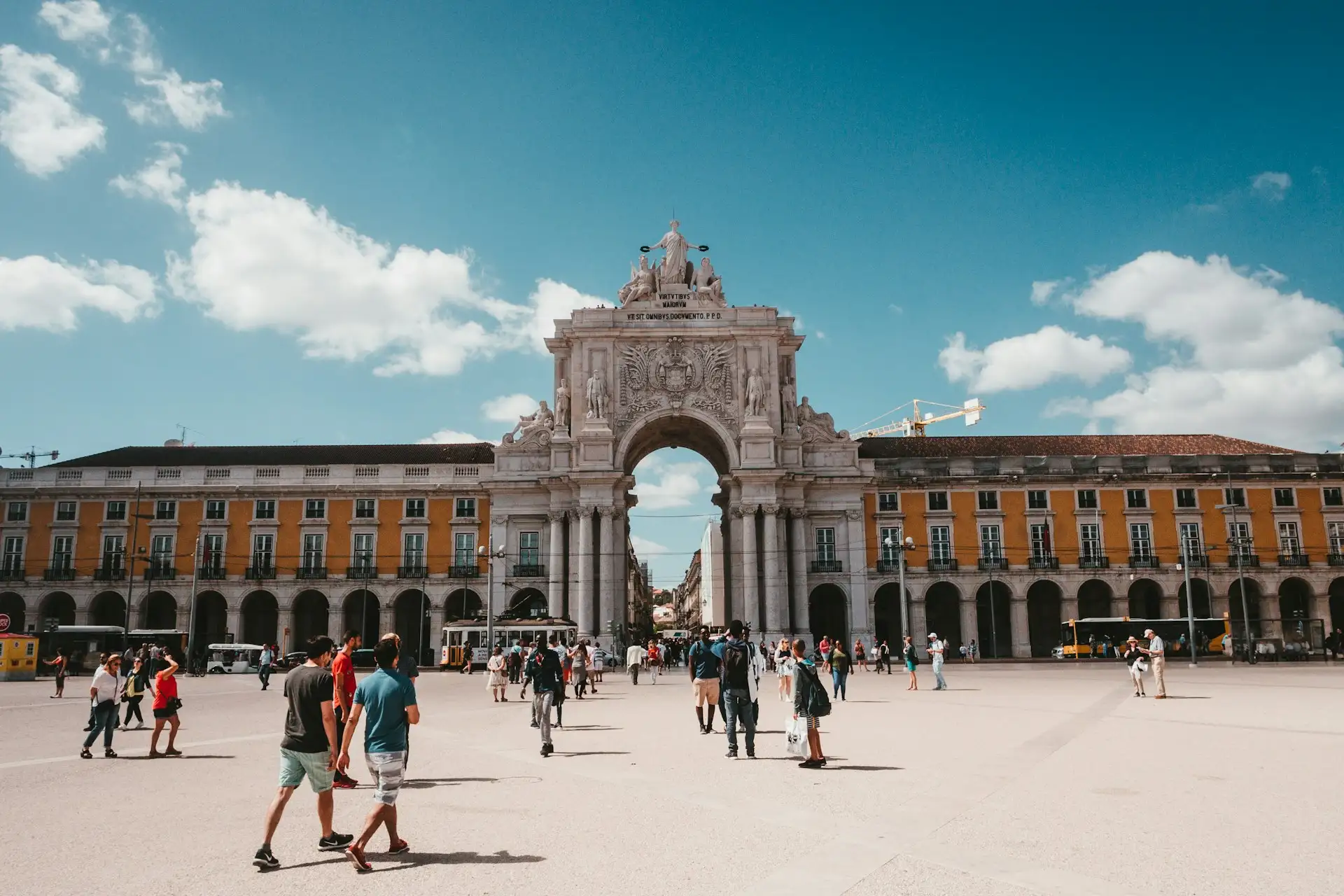
The City of Seven Hills
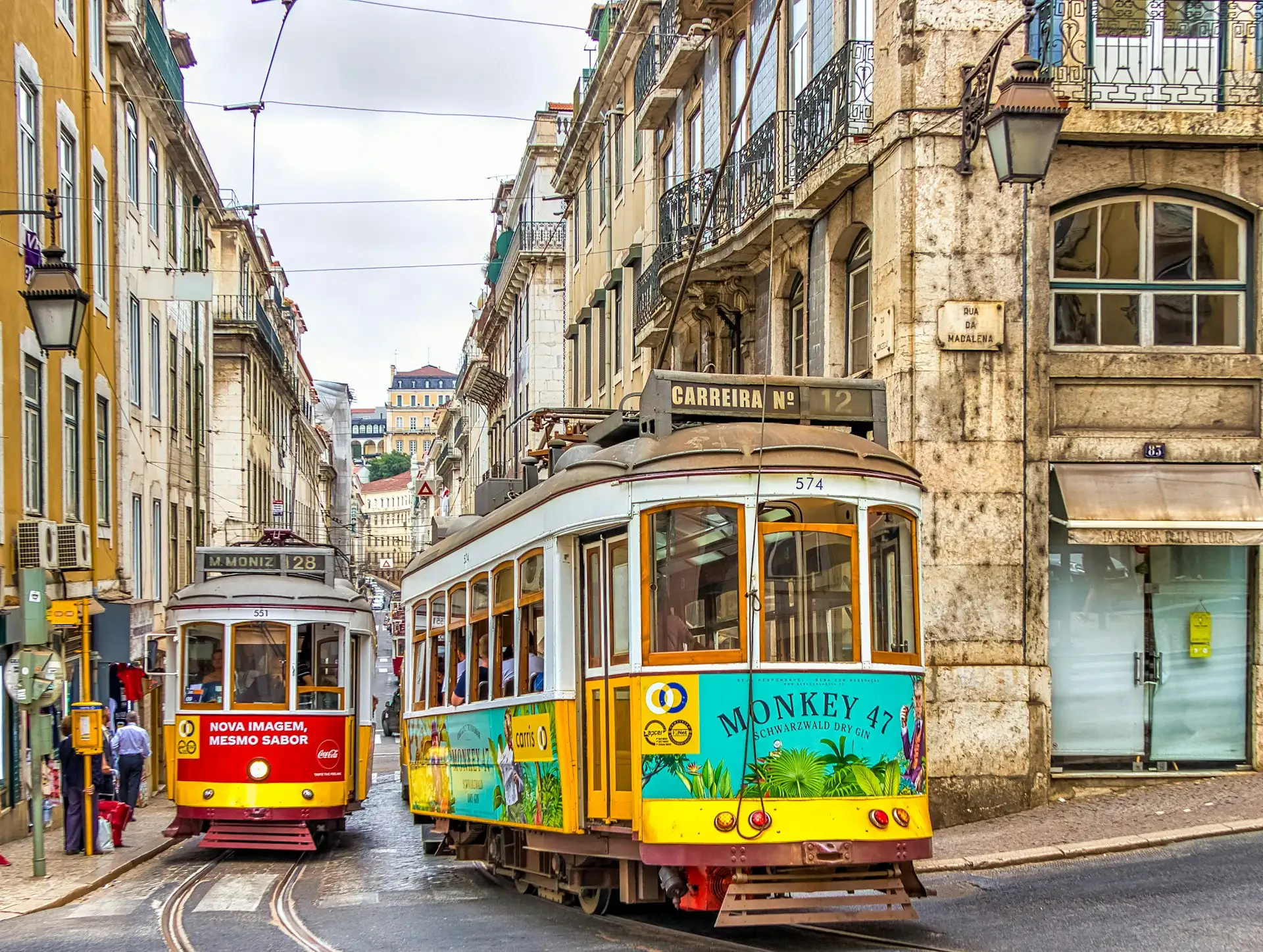
Lisbon is a city that was built on hills and never apologised for it. The trams climb at angles that seem inadvisable. The viewpoints (miradouros) at the top of each hill give you the rooftops, the river, and the light that makes the white buildings glow orange at sunset. Start at Sao Jorge Castle for the panoramic view, then walk down through Alfama, the oldest neighbourhood, where fado music leaks out of restaurant doorways and the narrow lanes descend to the river in a way that makes GPS unnecessary because downhill is always the right direction.
Belem, on the riverfront, has the Jeronimos Monastery (Manueline architecture that makes Gothic look restrained), the Tower of Belem, and Pasteis de Belem, which has been making pastel de nata since 1837 and still has a queue because the custard tarts are that good. The pink street in Cais do Sodre is the nightlife centre. LX Factory is a converted industrial space with restaurants, bookshops, and a rooftop bar. Ride Tram 28 through the narrow streets if you can handle sharing the carriage with forty other people who had the same idea. Pick up your rental car on day two afternoon.
- Alfama + Sao Jorge Castle - Oldest neighbourhood, fado houses, panoramic views from the castle. Walk down, not up.
- Belem - Jeronimos Monastery, Tower of Belem, Pasteis de Belem (queue is worth it). €11 monastery entry.
- Tram 28 - Iconic yellow tram through Alfama, Graca, Chiado. Crowded but atmospheric. Watch for pickpockets.
- Time Out Market - Food hall at Cais do Sodre. Best chefs in one place. Good for a quick, diverse meal.
Fairytale Palaces and the Edge of Europe
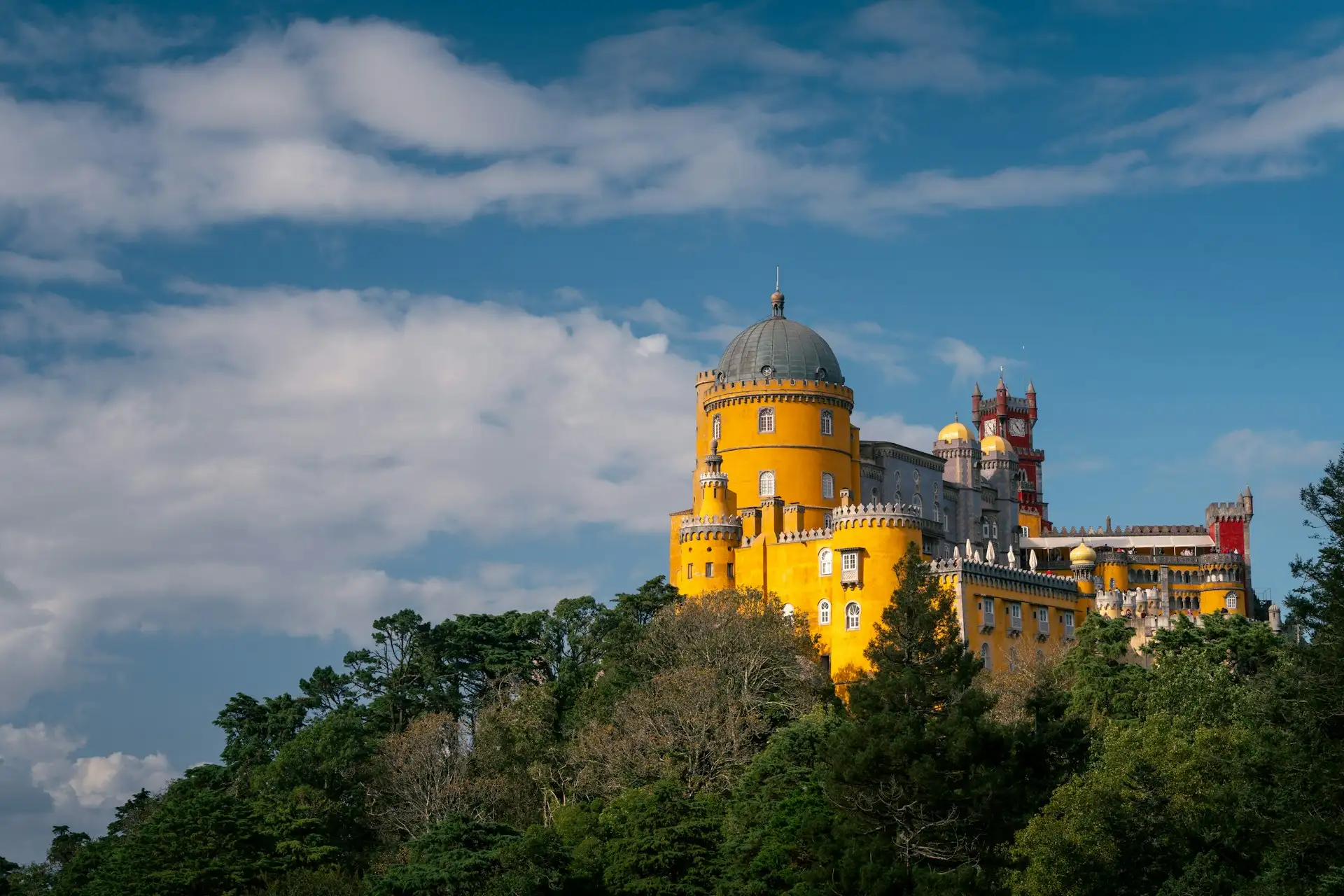
Drive thirty minutes west to Sintra, where Portuguese royalty built palaces in the misty hills because the heat of Lisbon was beneath them. Pena Palace is the one that looks like a Disney castle designed by someone on a colour theory binge: yellow, red, and purple towers on a forested hilltop with views to the Atlantic. Arrive at opening time (9:30am) or the queues become serious. Quinta da Regaleira is the atmospheric one: an initiation well that spirals underground, tunnels connecting grottoes, and a chapel covered in masonic symbols. Pick one or both depending on your tolerance for palace queues.
Continue to Cabo da Roca, the westernmost point of continental Europe. The cliff drops to the Atlantic, there's a lighthouse and a certificate you can buy that proves you stood at the edge, and on a clear day the view is worth the twenty-minute detour. Then drive south to the Algarve, arriving in Lagos by evening. Lagos has a beautiful old town, a marina, and some of the best beaches in Europe within a ten-minute drive. Base here for three nights.
- Pena Palace, Sintra - Colourful hilltop palace. Arrive at opening. €14 entry. UNESCO site. Book online.
- Quinta da Regaleira - Initiation well, tunnels, gardens. €10 entry. More atmospheric than Pena, fewer crowds.
- Cabo da Roca - Westernmost point of continental Europe. Lighthouse, cliffs, certificate (€11 if you want it).
- Lagos Old Town - Arrive evening. Marina, old walls, restaurants. The Algarve's most charming base town.
Golden Cliffs and Sea Caves
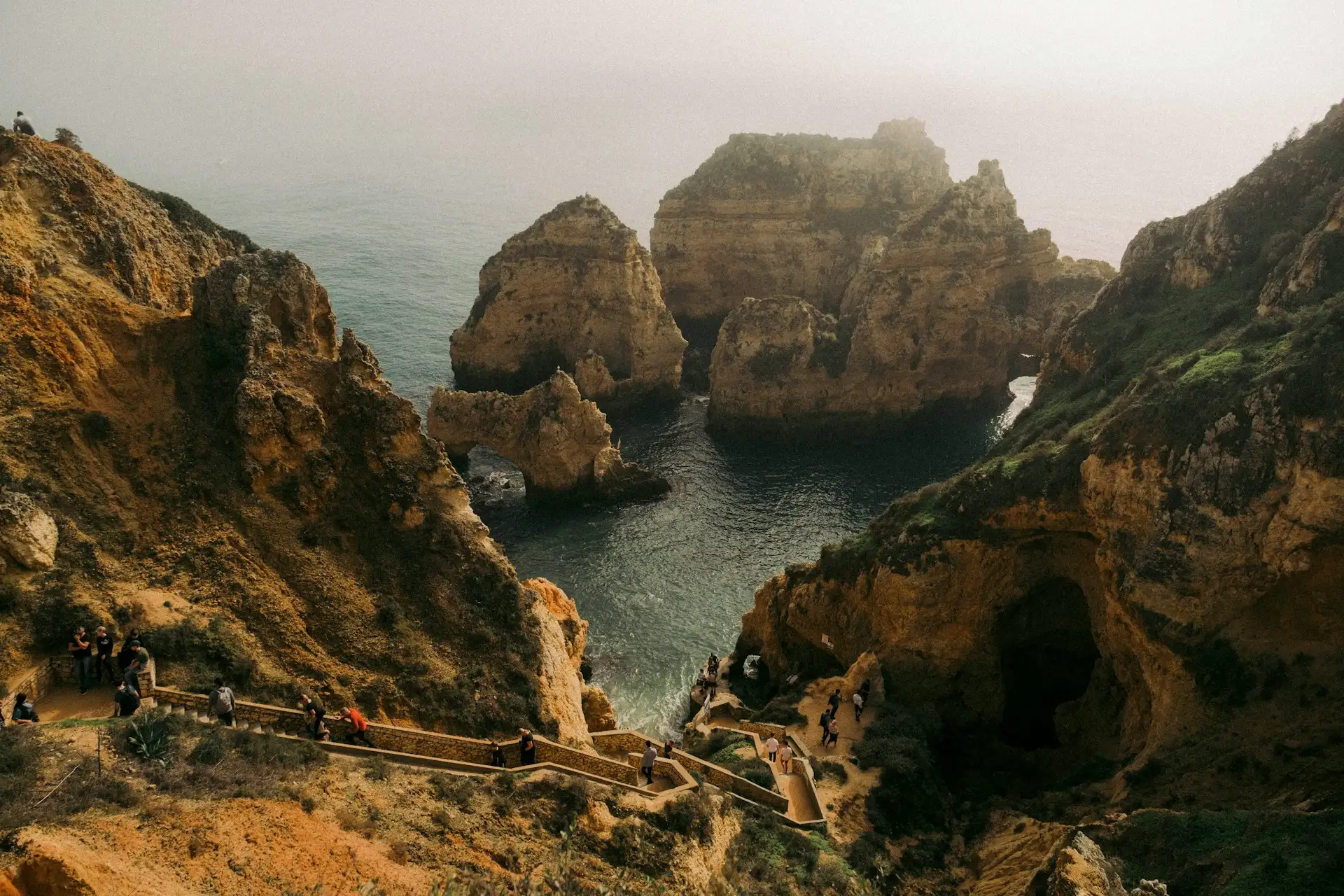
Two days to explore the Algarve coast, which is where Portugal keeps its best beaches and knows it. Ponta da Piedade, ten minutes from Lagos, is a headland of golden limestone eroded into arches, stacks, and grottoes. Walk the cliff path or take a kayak tour (€30-40) through the sea caves for the perspective that makes the photographs impossible to dismiss as edited. Praia Dona Ana is the beach below: small, sheltered by cliffs, and the water colour that brochures get accused of oversaturating.
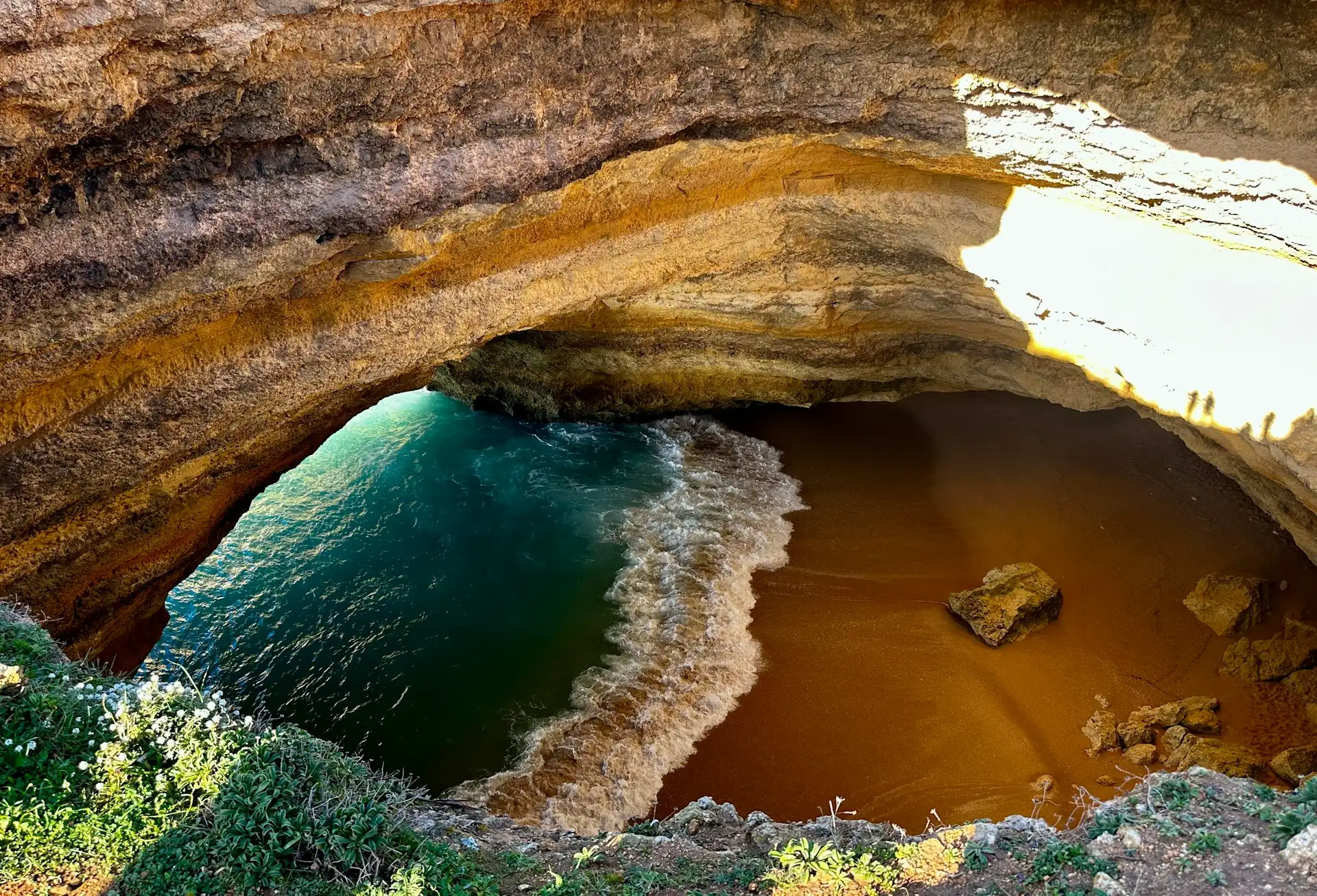
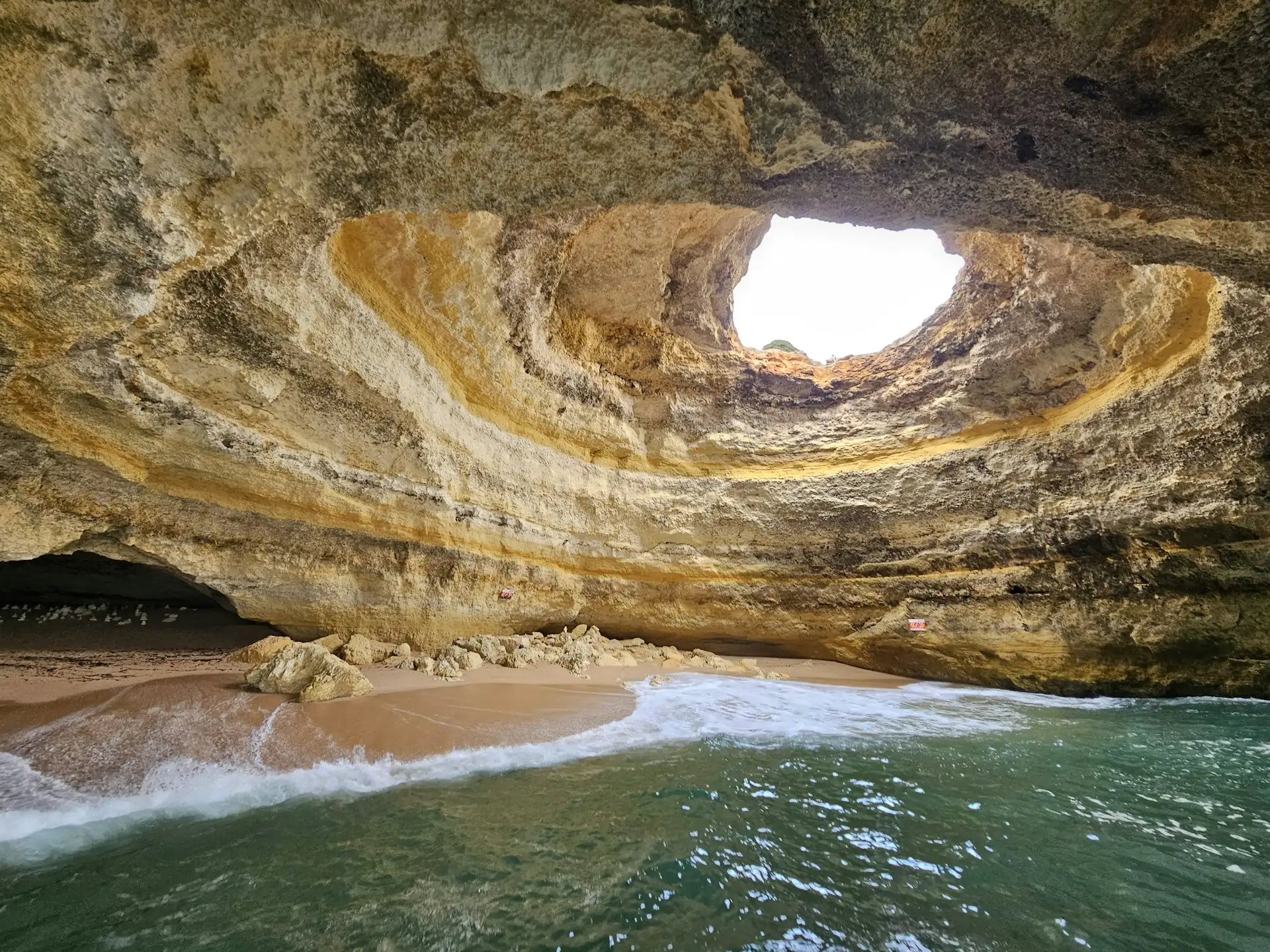
Day trip east to Benagil Cave, the collapsed sea cave with a hole in the roof that creates a natural skylight onto a hidden beach. Access by kayak or boat tour only (€20-35). Go early morning for the light and fewer people. Continue to Sagres at Portugal's southwestern tip, where the cliffs are dramatic, the fortress is windswept, and Cape St. Vincent has a lighthouse at the edge of the world. The seafood across the Algarve is exceptional and cheap. Cataplana (a copper-pot seafood stew) is the regional dish. Fresh grilled fish priced by the kilo at any beachside restaurant is the daily reality.
- Ponta da Piedade - Golden cliffs, arches, grottoes. Cliff path walk or kayak tour (€30-40). Lagos's defining view.
- Benagil Cave - Collapsed sea cave with natural skylight. Kayak or boat tour (€20-35). Go early morning.
- Praia Dona Ana - Cliff-sheltered beach. Turquoise water. Ten minutes from Lagos. The postcard beach.
- Sagres + Cape St. Vincent - Clifftop fortress, lighthouse at Europe's southwestern tip. Dramatic and windswept.
Europe's Secret Coastline
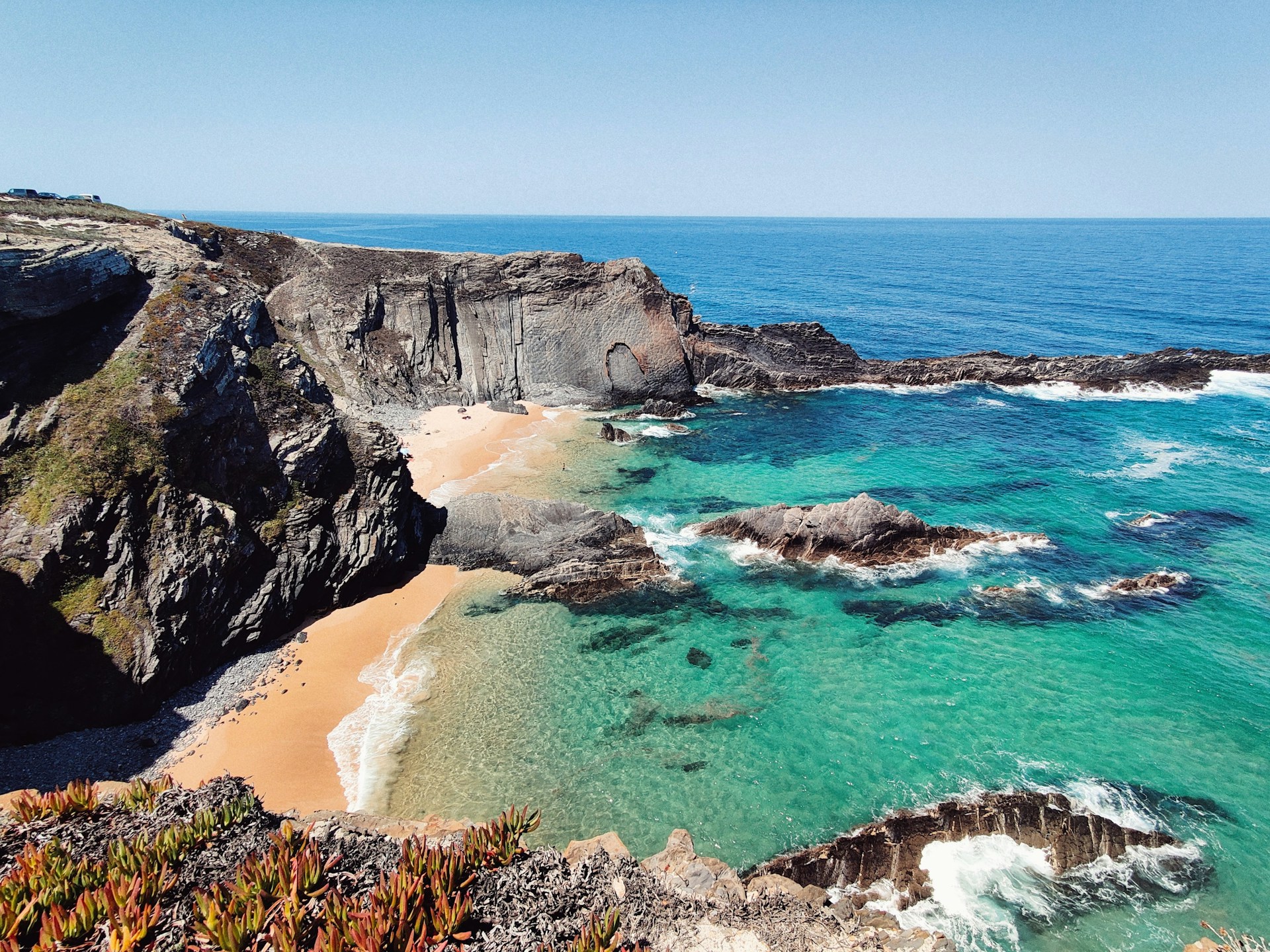
Drive north along the Alentejo coast, which is the section of this trip that surprises everyone. While the Algarve has been discovered and developed, the Alentejo coast remains largely wild: long empty beaches backed by dunes and cork forest, fishing villages where the pace of life is dictated by the tides rather than tourism, and a landscape that looks the way the whole Atlantic coast probably looked thirty years ago.
Stop at Vila Nova de Milfontes, a riverside town where the Rio Mira meets the Atlantic, with a castle, good restaurants, and a beach that's long enough to absorb crowds without feeling crowded. Continue to Comporta, which has been quietly adopted by Lisbon's creative class and European luxury travellers as the alternative to the Algarve. The beaches are white sand backed by rice paddies. The restaurants serve seafood on wooden tables in the dunes. The whole thing feels like someone designed a beach concept that the rest of Portugal hadn't thought of yet. Two nights here is the section of the trip where you stop wanting to be anywhere else.
- Vila Nova de Milfontes - Riverside town, castle, beach where the river meets the sea. The Alentejo's most charming stop.
- Porto Covo - Tiny fishing village, whitewashed houses, clifftop views. The kind of village people mean when they say "undiscovered."
- Comporta beaches - White sand, rice paddy backdrop, dune restaurants. Portugal's answer to Tulum, but with better food.
- Alentejo cuisine - Black pork (porco preto), migas, acorda, and wines from the surrounding cork country. Slow meals for slow days.
Cherry Liqueur and Giant Waves
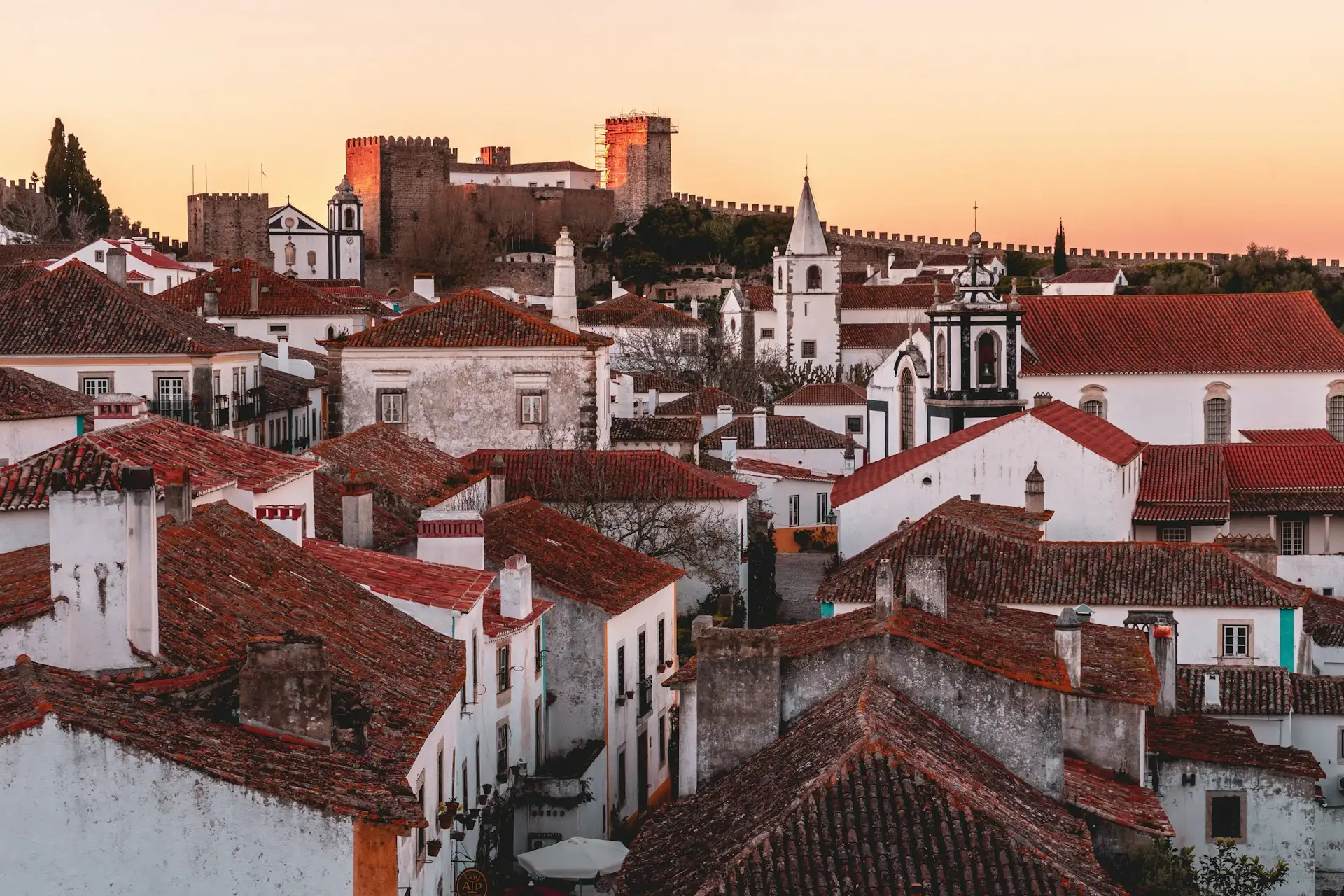
Drive north to Obidos, a perfectly preserved medieval walled town that looks like it was assembled from a kit labelled "European Charm." Walk the ancient walls for views over terracotta rooftops and whitewashed houses painted with blue and yellow trim. The narrow streets have been converted into shops, but the conversion is gentle enough that the atmosphere survives. The specialty is ginjinha (sour cherry liqueur) served in edible chocolate cups, which is exactly the kind of innovation that makes you wonder why other medieval towns haven't thought of it.
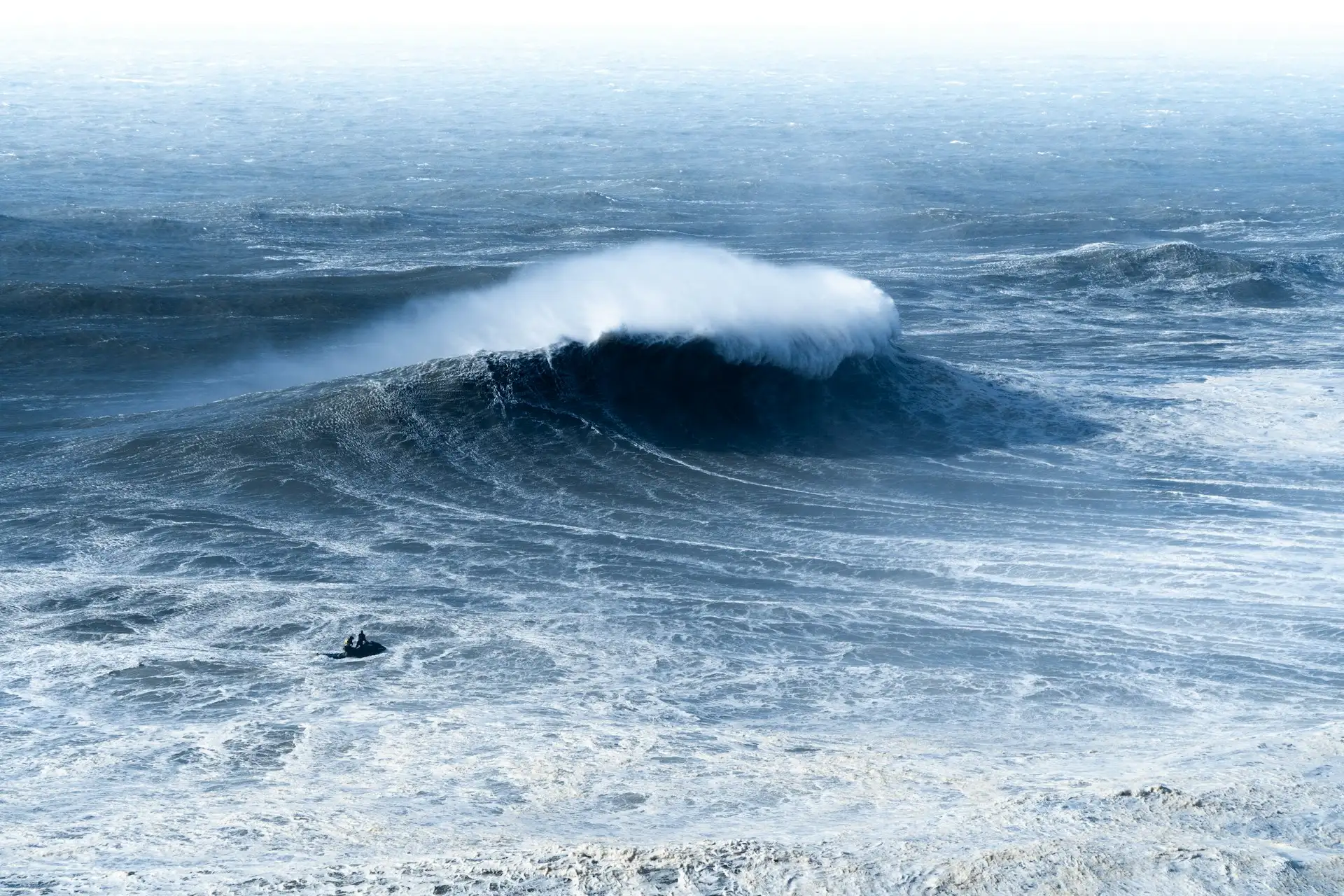
Continue to Nazare, a fishing town that became world-famous for having the biggest surfable waves on earth. The canyon offshore funnels Atlantic swells into walls of water that have exceeded 26 metres (the current world record). In winter (October to March), professional big-wave surfers come here and the clifftop at Forte de Sao Miguel Arcanjo becomes a viewing platform for watching humans do things that seem inadvisable from any angle. Outside wave season, Nazare is a traditional fishing town with a funicular up to Sitio (the upper town with panoramic views), a beach, seafood restaurants, and the kind of atmosphere that hasn't been polished for tourism.
- Obidos - Medieval walled town. Walk the walls, cobblestone streets, ginjinha in chocolate cups. Free entry. €1.50/ginjinha.
- Nazare big waves - Praia do Norte. World's biggest surfable waves (Oct-Mar). Forte viewpoint. Free to watch.
- Nazare Funicular - To Sitio upper town. Panoramic Atlantic views. €1.50 each way.
- Nazare fishing culture - Traditional boats, dried fish on racks, beachside grilled sardines. The old Portugal.
Port Wine and Azulejo Tiles
Drive north with an optional stop at Aveiro ("Portugal's Venice," which oversells it slightly but the Art Nouveau buildings, colourful canal boats, and ovos moles pastries make it worth an hour). Arrive in Porto, which is the city that delivers on every promise Lisbon makes but with less polish and more character.
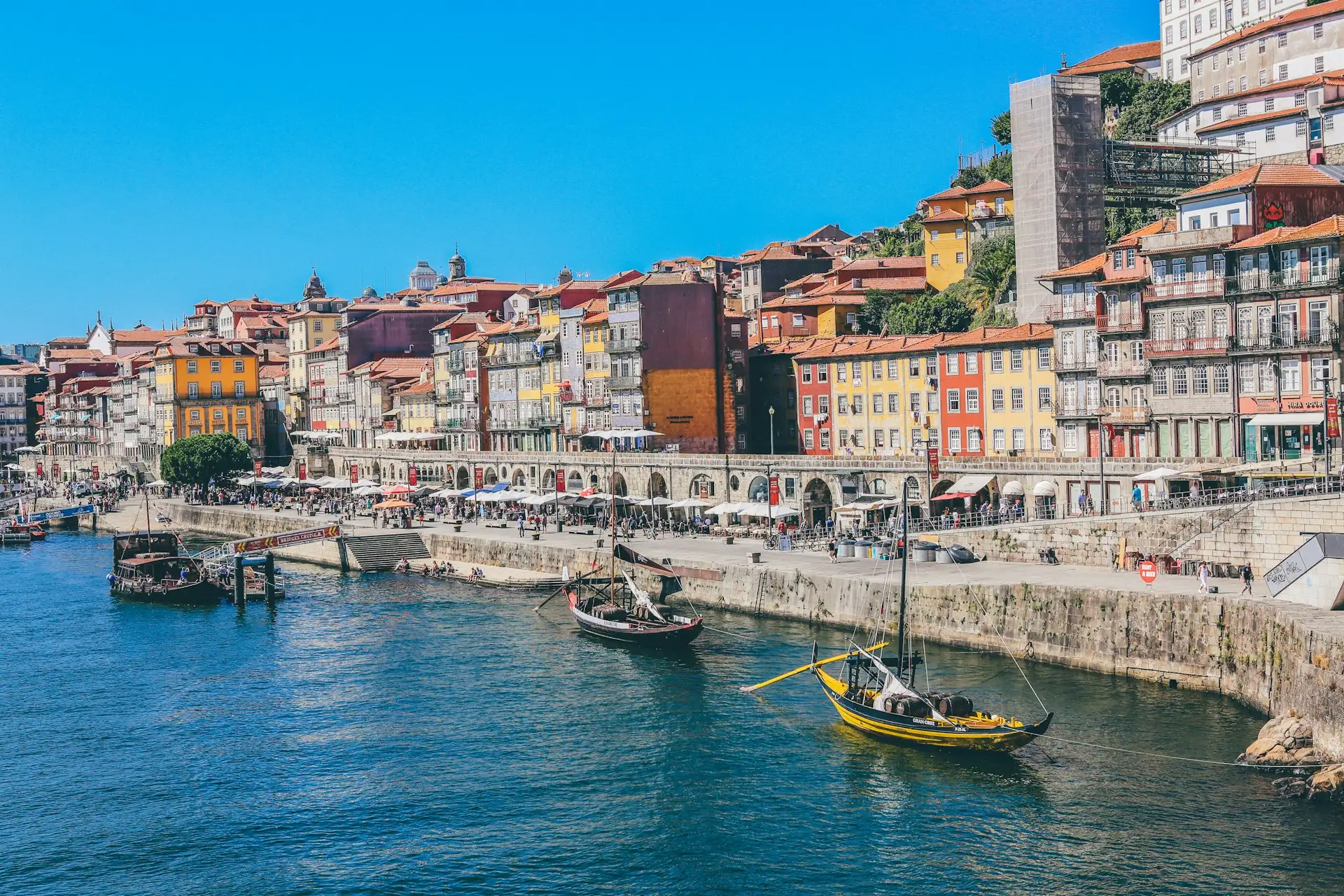
The Ribeira district (UNESCO) tumbles down to the Douro river in a stack of colourful buildings that look like they're holding each other up. Walk across the Dom Luis I Bridge (upper level for views, lower level for the experience of being at river level) to Vila Nova de Gaia, where the port wine cellars line the waterfront. Taylor's, Graham's, and Sandeman all offer tours and tastings (€15-25) and the view from their terraces back across to Porto is the photograph that sells the city. Livraria Lello (€8 entry, redeemable against a book purchase) is a bookshop so beautiful it allegedly inspired Hogwarts; the staircase alone justifies the queue. Sao Bento train station has an entrance hall covered in azulejo tiles that depicts Portuguese history. The francesinha (a sandwich entombed in cheese and beer sauce) is Porto's signature dish and exactly as excessive as that description suggests. Return your car. Fly home. Plan when to come back.
- Ribeira District - UNESCO riverfront. Colourful buildings, restaurants, Dom Luis I Bridge. Porto's heart.
- Port Wine Cellars - Taylor's, Graham's, Sandeman in Vila Nova de Gaia. Tours + tastings €15-25. The terraces have the view.
- Livraria Lello - Bookshop. Art Nouveau staircase. Allegedly inspired Hogwarts. €8 entry (redeemable). Book online.
- Sao Bento Station - Entrance hall with 20,000 azulejo tiles. Free. One of the most beautiful train stations in the world.
Must-See Locations
Three places on this route define the trip. You'll photograph all of them and describe them to people who then look up flights.
Ponta da Piedade
Golden limestone eroded into arches, stacks, and grottoes above turquoise Atlantic water. Kayak through the caves. Walk the cliff path. The Algarve's most spectacular headland and the view that sells the entire region.
Benagil Cave
A collapsed sea cave with a hole in the roof that creates a beam of light onto a hidden beach. Accessible by kayak or boat only. Go early morning when the light streams in and the cave is nearly empty.
Nazare Giant Waves
The world's biggest surfable waves (26+ metres). An underwater canyon funnels Atlantic swells into walls of water that defy belief. Watch from the clifftop fort, October to March. Free and genuinely terrifying.
Driving & Tolls
Portugal has excellent roads, moderate tolls, and a driving culture that falls somewhere between orderly Northern Europe and expressive Southern Europe. The main thing to understand is the toll system, which is electronic on some motorways and catches foreign visitors off guard.
Tolls (Via Verde)
Portuguese motorways use electronic toll collection. Some have no physical booths. Rental cars usually come with a Via Verde device (check when booking). Otherwise, register your plate at portagemonline.pt within five days. Budget €30-50 total. Toll-free alternatives exist but add time.
Car Rental
Any standard car works. Roads are paved throughout. Manual transmission is cheaper and more common. Book online in advance for peak season (July-August). Pick up in Lisbon, drop in Porto (or vice versa). One-way fees are usually small within Portugal.
Fuel
Fuel costs €1.60-1.80/litre (cheaper than Spain or France). Stations are frequent on motorways and in all towns. Most accept cards. Self-service pumps are slightly cheaper. Fill up before heading into the Alentejo interior where stations are sparser.
Parking
Free or cheap in smaller towns. Paid in Lisbon (€1-2/hr), Lagos, and Porto (€1-3/hr). Lisbon city centre parking is a nightmare; use park-and-ride or peripheral lots. Porto has good underground parking near the centre. Lagos has free parking near the marina.
Speed & Safety
Motorway limit: 120 km/h. Urban: 50 km/h. Speed cameras are common. Drink-drive limit is 0.5g/l (lower than some European countries). Roads are well-maintained. Traffic is manageable outside Lisbon rush hour. Drive on the right.
Navigation
Google Maps works perfectly. Download offline maps for the Alentejo interior where coverage can be patchy. Waze is popular in Portugal for real-time traffic (useful around Lisbon). All major rental companies include GPS or you can use your phone.
Essential Tips
🌞 Best Season
April to June and September to October are ideal: warm, sunny, uncrowded, and affordable. July and August are hot and the Algarve fills with European holidaymakers (book well ahead). November to March is mild but rainy, though it's when Nazare's giant waves happen and Lisbon and Porto are crowd-free.
🏨 Accommodation
Mix hotels, guesthouses, and pousadas (historic buildings converted into hotels, uniquely Portuguese). Book the Algarve months ahead for summer. Comporta is upscale. Lagos and Nazare have excellent budget options. Porto and Lisbon have everything from hostels to luxury. Average mid-range: €60-120/night.
🍴 Food
Pastel de nata (custard tarts, everywhere, always). Bacalhau (salted cod, 1,000+ recipes). Cataplana (Algarve seafood stew). Francesinha (Porto's cheese-and-beer-sauce sandwich). Grilled sardines (summer, especially around June festivals). A bica is an espresso. Wine is €2-3/glass. Tipping: round up or 5-10%.
🏄 Surfing
Ericeira is a World Surfing Reserve. Nazare is for watching (unless you're a professional big-wave rider, which statistically you're not). Peniche, Sagres, and the Algarve's west coast have excellent breaks. Surf schools everywhere (€30-50/lesson). Water is cold year-round: wetsuit required.
💰 Money
Euro. Cards accepted almost everywhere. Some smaller restaurants and Alentejo places are cash-preferred. ATMs (Multibanco) are plentiful. Tipping is not expected but rounding up or 5-10% is appreciated. Portugal is genuinely affordable by Western European standards.
👜 Packing
Layers for Lisbon and Porto (mornings can be cool even in summer). Swimwear for the Algarve. Comfortable walking shoes (Lisbon's hills and Porto's cobblestones require proper footwear). Sunscreen. A light jacket for evenings. A scarf for church visits. Appetite.
Budget Planning
Portugal is the best-value coastal destination in Western Europe. The combination of excellent food, good accommodation, reasonable fuel costs, and low activity prices makes it possible to travel well on a budget that would barely cover accommodation elsewhere.
Book Your Trip
Everything in one place.
The Country That Charges Half and Delivers Double
Portugal has a quiet confidence that comes from being a country that discovered half the world and then decided the best part was the bit they already had. The coast catches the Atlantic light in a way that makes everything golden. The food is built on ingredients that were good enough to need no elaboration: grilled fish, olive oil, wine, bread. The people have a word, saudade, for the particular melancholy of longing for something beautiful that has passed, and the entire coast at sunset looks like the physical embodiment of the concept.
The Atlantic Route gives you all of this in ten days. Golden cliffs you kayak through. Beaches that look like someone forgot to build hotels behind them. A medieval town that invented serving drinks in the cup. The biggest waves on earth. And a city at the end where the wine has been ageing in barrels along the river for longer than you've been alive, and the view from the terrace while you taste it is worth the entire trip. Portugal is the European roadtrip that costs the least and leaves the most.