
Oman
4x4 Circuit
Muscat to the Hajar Mountains, Jebel Shams, and the Wahiba Sands desert in one week. Mountain villages clinging to cliffs, an ancient souk, and dunes you sleep on top of.
Route Overview
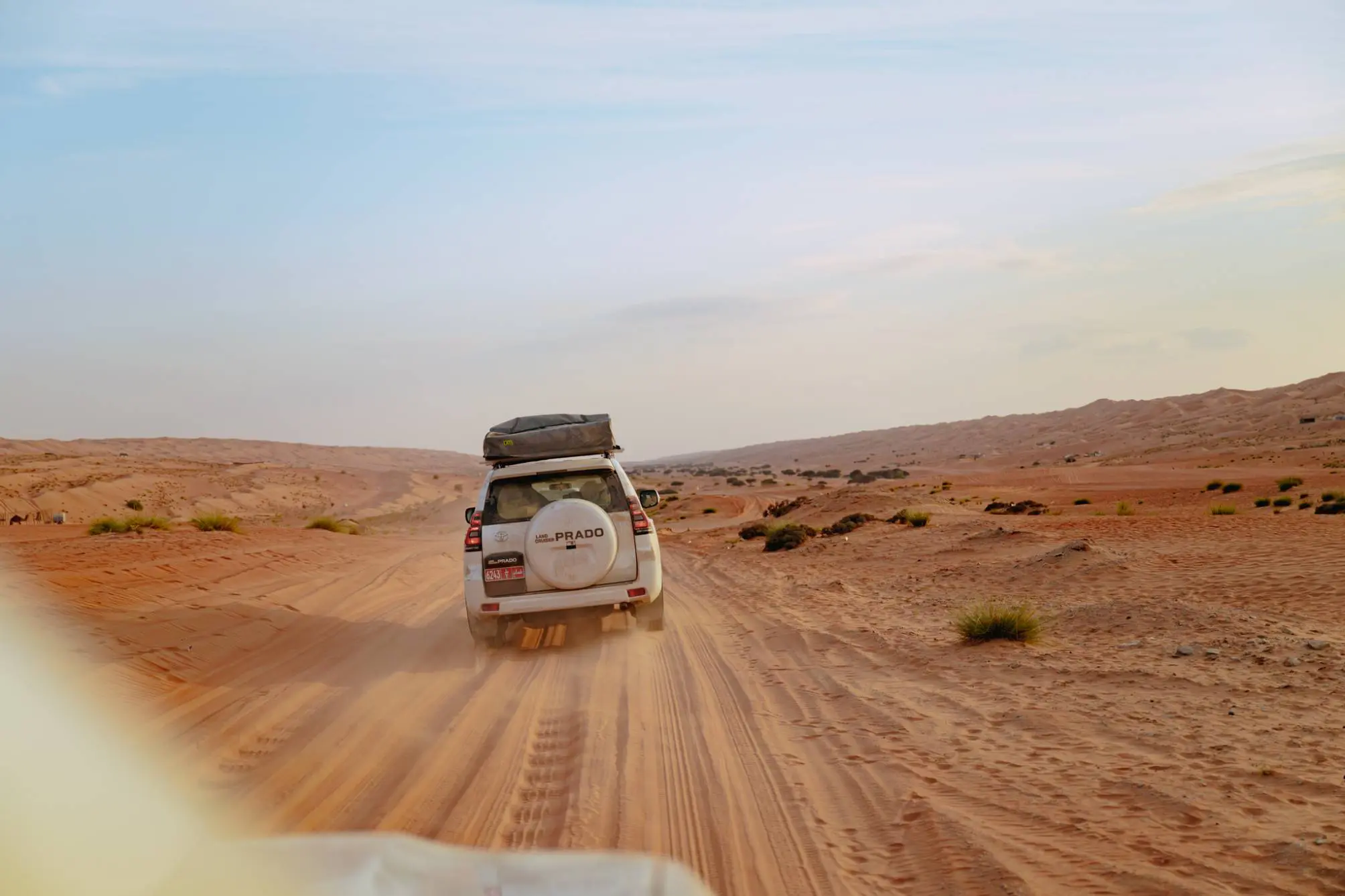
Oman rewards a 4x4 the way few countries do. In one week you go from the corniche and souk of Muscat into the Hajar Mountains, where the road narrows to a single track above villages like Bilad Sayt, up to the rim of Jebel Shams, Oman's Grand Canyon, and down into the ochre alleys of Nizwa. Then the landscape changes completely: the Wahiba Sands unroll in front of you, a sea of dunes where you camp under a sky with no light pollution for a hundred kilometres in any direction. The route closes along the coast near Sur, with a swim in Wadi Shab before the drop-off back in Muscat.
This is not a route you piece together from a rental car and a hotel app. The tracks into Bilad Sayt and up Jebel Shams need real clearance, the Wahiba dunes need deflated tyres and a driver who knows the sand, and the best nights of the whole trip are the ones spent wild camping in places a normal itinerary would drive straight past. Most of what makes this circuit worth doing is logistics most travelers do not want to solve themselves, which is exactly the gap outfits built around this exact route exist to close.
Roads throughout are in good condition, fuel is cheap, and Oman is straightforward and welcoming to drive in. The only real planning required in advance is booking your 4x4, since ordinary rental cars will not get you into the mountains or the dunes.
The itinerary above is doable with any 4x4, but the parts that trip up independent travellers are rarely the driving itself. This is what a package built specifically for this route, like the one Oman Nomads runs, is designed to solve:
- A properly insured 4x4 with offroad cover included, something most standard airport rental agreements exclude entirely
- Complete, tested camping gear: rooftop tent, kitchen set, solar shower, plus an air compressor and sand plates for the dunes
- A dedicated navigation app with exclusive GPS tracks and pre-scouted wild camping spots, so you are not guessing where to pull off for the night
- Local assistance available 24/7, which matters most exactly where you would want it, on the Wahiba Sands tracks and the pass into Wadi Bani Awf, where mobile signal and margin for error both disappear
In short: the route is the reward, the logistics are the risk, and this is the part worth not doing solo.
The Itinerary

Pick Up and the Capital
Pick up your 4x4 in Muscat on the morning of day one and spend the rest of the day exploring the capital before heading inland. Start with the Sultan Qaboos Grand Mosque, open to visitors until 11am, then walk the Mutrah Corniche and lose an hour in the Mutrah Souk, one of the oldest markets in the Gulf. If time allows, drive past the Royal Palace on your way out of the city.
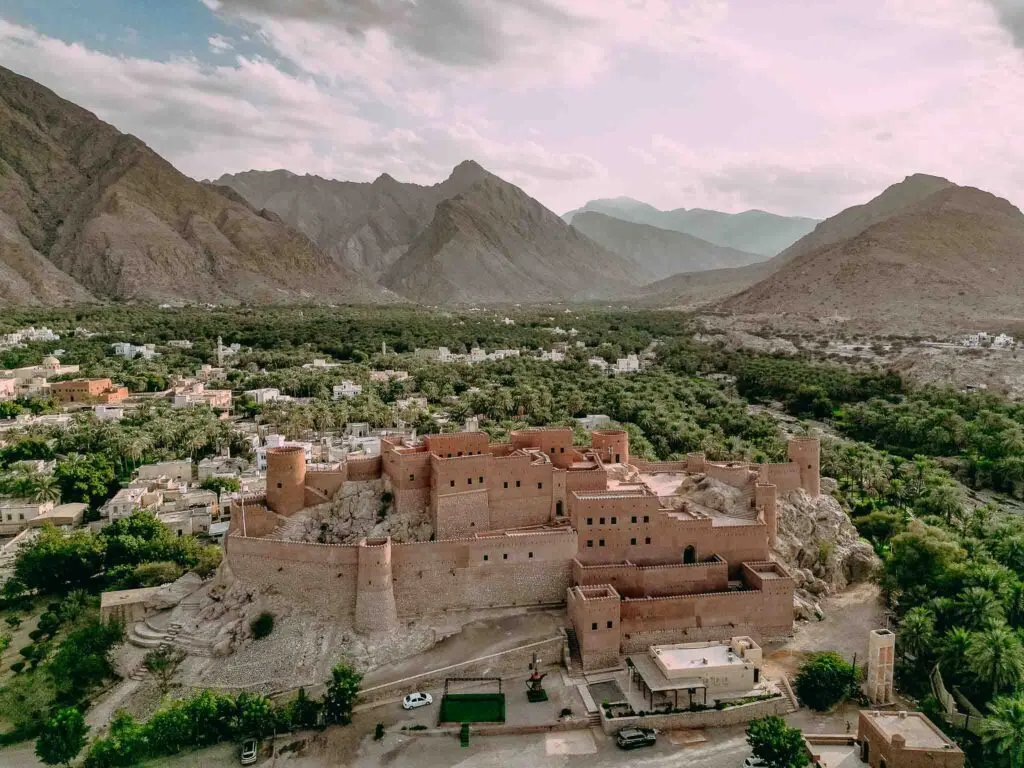
Leave Muscat in the afternoon and head for Nakhal, a small town beneath the Hajar Mountains with a well-preserved fort and hot springs nearby. This is where you set up your rooftop tent for the first night, close enough to the airport that a late arrival will not derail the rest of the week, just short on time to see the mosque.
- Sultan Qaboos Grand Mosque - Open to non-Muslim visitors until 11am. Modest dress required.
- Mutrah Souk and Corniche - One of the oldest markets in the Gulf, right on the harbour
- Nakhal Fort - Restored hilltop fort with views over the plain and the mountains behind it
- Nakhal hot springs - Ain A'Thawwarah, a short detour, warm mineral water in a palm oasis
Into the Hajar Mountains
Start the day with a lesser-visited fort in the region, quiet enough that you will likely have it to yourself. From there the road climbs into the entrance of the highest mountain range on the Arabian Peninsula through Wadi Bani Awf, and this is where the trip earns its 4x4. Engage low range and take the winding track through canyons known locally as wadi, pulling over whenever the view demands it, which is often.
The destination is Bilad Sayt, a mountain village built into terraced fields on a ledge above a wadi. It is one of the most photographed spots in Oman and one of the hardest for a normal tour to reach. Camp above the village for a night with almost no light pollution and a view down into the terraces at sunrise.
- Hajar Mountains entrance fort - A quiet, lesser-known fort before the mountain track begins
- Wadi canyons en route - Frequent pull-offs, worth the stops for photos and short walks
- Bilad Sayt - Terraced mountain village, one of Oman's most photographed places
Forts, Villages, and the Roof of Oman
The road to the country's highest point passes through some of Oman's best architecture along the way, so build in time for a fort or two and a stop in one of the mudbrick villages that line this stretch. There is no need to rush; the destination is worth pacing the day around.
Jebel Shams, at just over 3,000 metres, is Oman's answer to the Grand Canyon: a chasm over a kilometre deep cut into the Hajar range. Set up your rooftop tent at the rim for the night. It gets cold and windy up here even when the coast is warm, so pack a proper layer, but the view from your tent at sunset makes the whole detour worth it.
- En route forts and villages - Traditional Omani architecture and a slower pace before the ascent
- Jebel Shams summit road - Winding mountain track to over 3,000m
- Wadi Ghul, the Grand Canyon of Oman - Sheer cliffs dropping over 1,000m, best at sunset from the rim
The Balcony Walk and the Old Capital
Start early for the W6 Balcony Walk, the most spectacular hike in Oman. The trail clings to the cliff face of the canyon you camped above and leads to an abandoned troglodyte village built directly into the rock. Give yourself two to three hours, and go in the cool of the morning since there is no shade on the route.
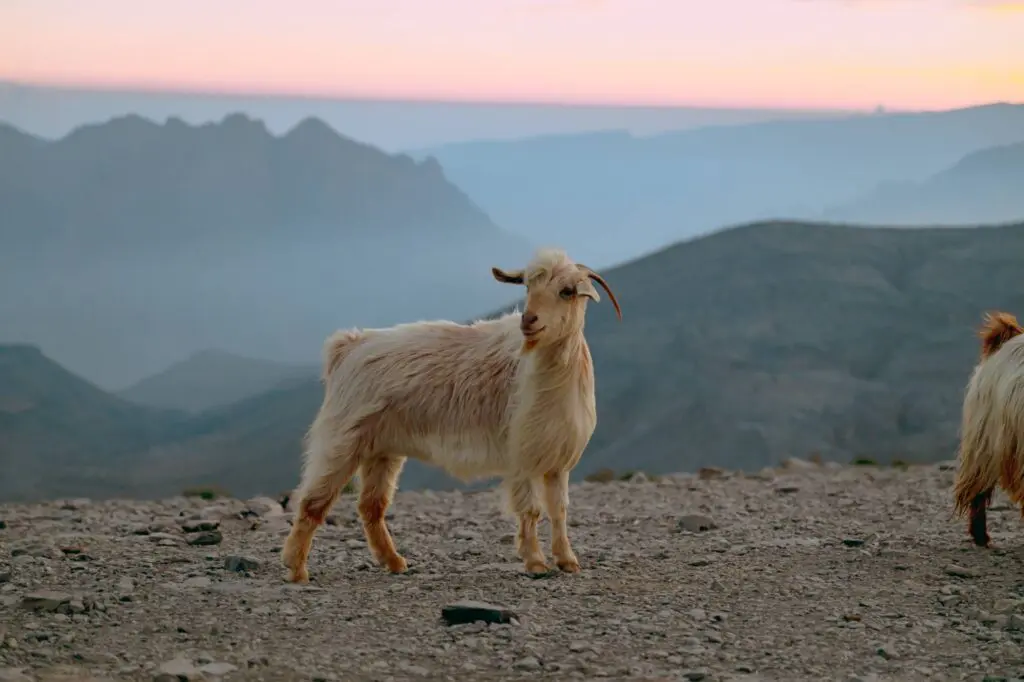
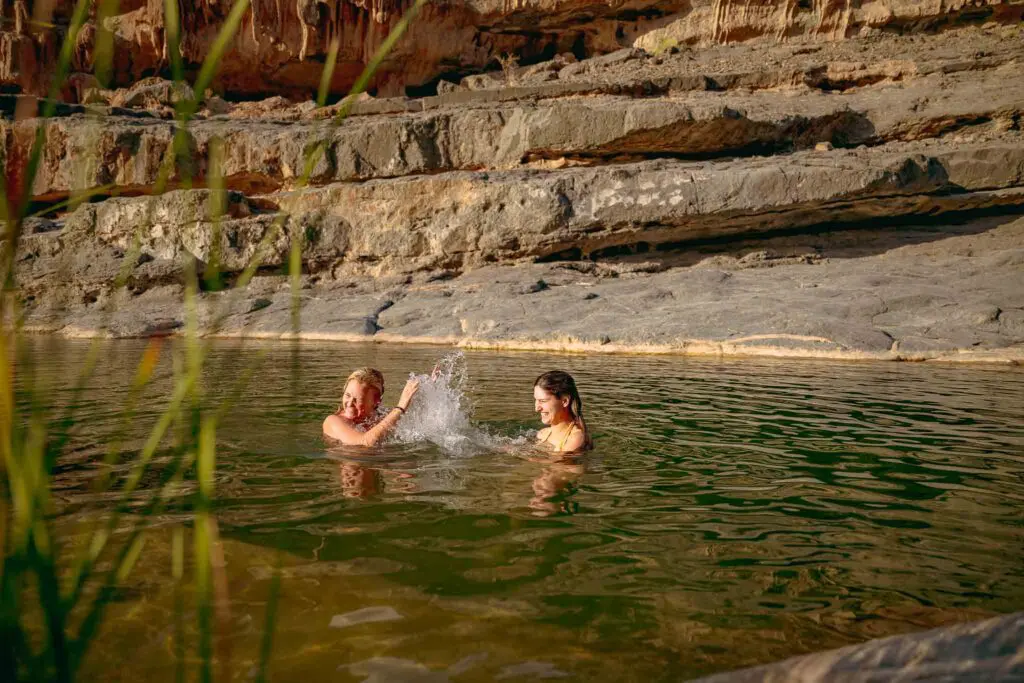
After the hike, cool off with a swim in a secluded natural pool before dropping down to Nizwa, the historic former capital of Oman. The fort is the best-restored in the country and the Friday goat market and daily souk are worth a slow wander. This is the natural point in the trip to swap the rooftop tent for one comfortable night in a hotel, close to the fort and with a pool to recover in.
- W6 Balcony Walk - Cliffside trail to an abandoned village, 2 to 3 hours, best done early
- Natural pool swim - A cool-off stop on the way down from the canyon
- Nizwa Fort - Oman's best-restored fort, right in the centre of town
- Nizwa Souq - Silver, pottery, and dates daily, livestock market on Friday mornings
From Mountains to Dunes
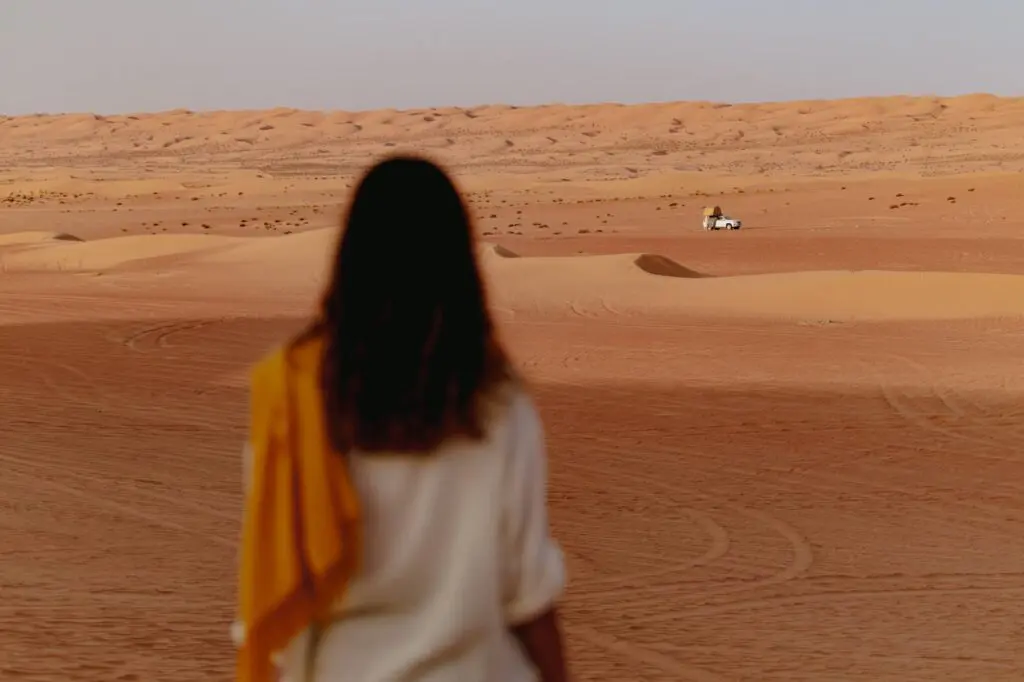
The scenery changes completely today. Leave the mountains behind and drive toward the golden expanse of the Wahiba Sands. Stop in one of the towns at the desert's edge to pick up supplies and deflate your tyres, since sand driving needs lower pressure than tarmac.
Follow the tracks left by earlier travelers deep into the dunes and find your own spot to camp for the night. You will likely cross paths with wandering camels along the way, and once the light fades, the lack of any nearby settlement means genuinely dark skies. Consider booking the Nomads-style desert dinner if you want a proper meal without cooking over your own stove.
- Desert edge town - Deflate tyres and stock up before entering the sand
- Wahiba Sands dunes - Golden dunes rising up to 100 metres, camel sightings likely
Last Dunes, First Ocean
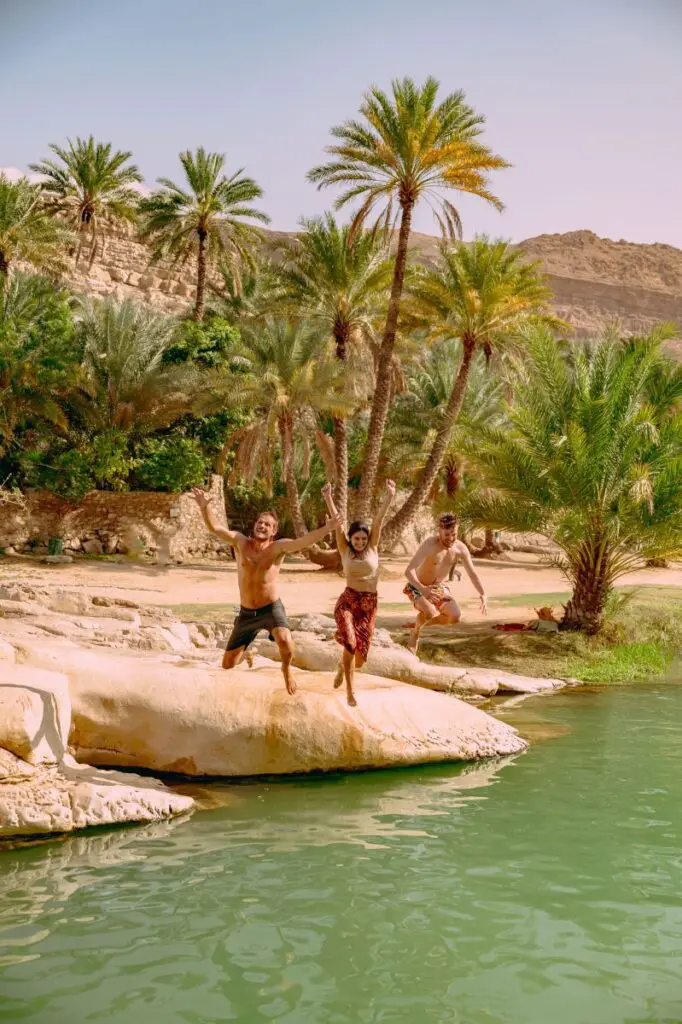
If you booked the optional sunrise hot air balloon over the dunes, this is the morning for it. Either way, take a slow start to enjoy the desert one last time before heading east. Stop at one of the region's best wadis for a swim surrounded by palm greenery, a sharp contrast to the sand you just left.
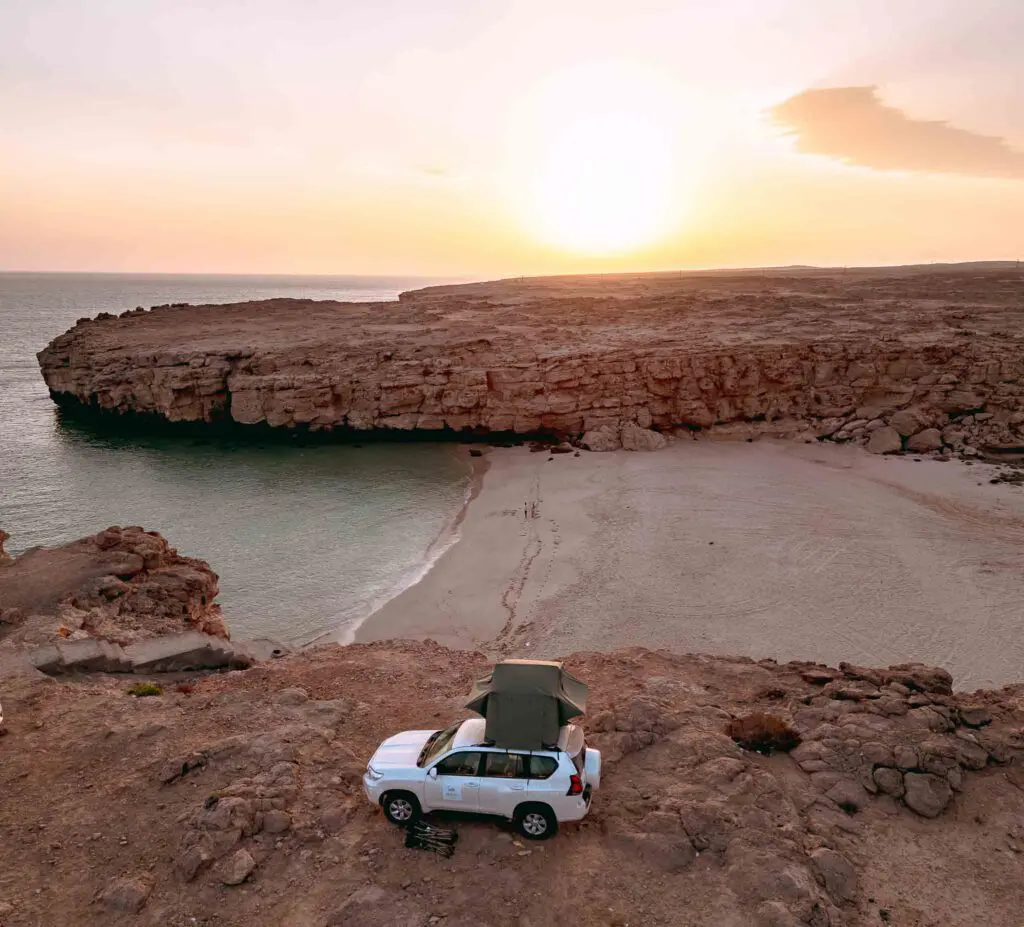
Continue east until the Indian Ocean opens up in front of you for the first time on the trip, near Sur, historically Oman's dhow-building capital. Camp on the coast for your final wild night, with the sound of the ocean instead of desert silence.
- Optional hot air balloon - Sunrise flight over the Wahiba dunes, booked in advance
- Wadi swim stop - A green, shaded pool on the way to the coast
- Sur coastline - Oman's traditional dhow-building town, first ocean views of the trip
Wadi Shab and the Drive Back
Wake to your last morning by the ocean and pack up the rooftop tent for the final time. On the way back to the capital, stop at Wadi Shab, one of Oman's most beautiful canyons, for a swim through turquoise pools that end in a partly submerged cave. Or simply relax on one of the many quiet beaches along this stretch of coast if you have had your fill of hiking.
Return the car in Muscat by the required drop-off time and check into a hotel for the night, ideally one with a pool, since a week of desert dust and mountain dirt makes for a well-earned rooftop swim. Seven days, three completely different landscapes, one vehicle you will be sorry to hand back.
- Wadi Shab - Turquoise pools, a canyon swim, and a cave at the end. One of Oman's best.
- East coast beaches - Quieter alternatives if you would rather relax than hike
- Muscat drop-off and hotel - Return the 4x4 and spend your final night in comfort
Must-See Locations
Every day on this route earns its place, but three stops define the trip. These are the ones you will be showing people photos of long after you are home.
Jebel Shams, the Grand Canyon of Oman
A kilometre-deep chasm cut into the country's highest mountains. Camp on the rim, hike the W6 Balcony Walk to an abandoned village, and watch the light change on the canyon walls at sunset.
Wahiba Sands
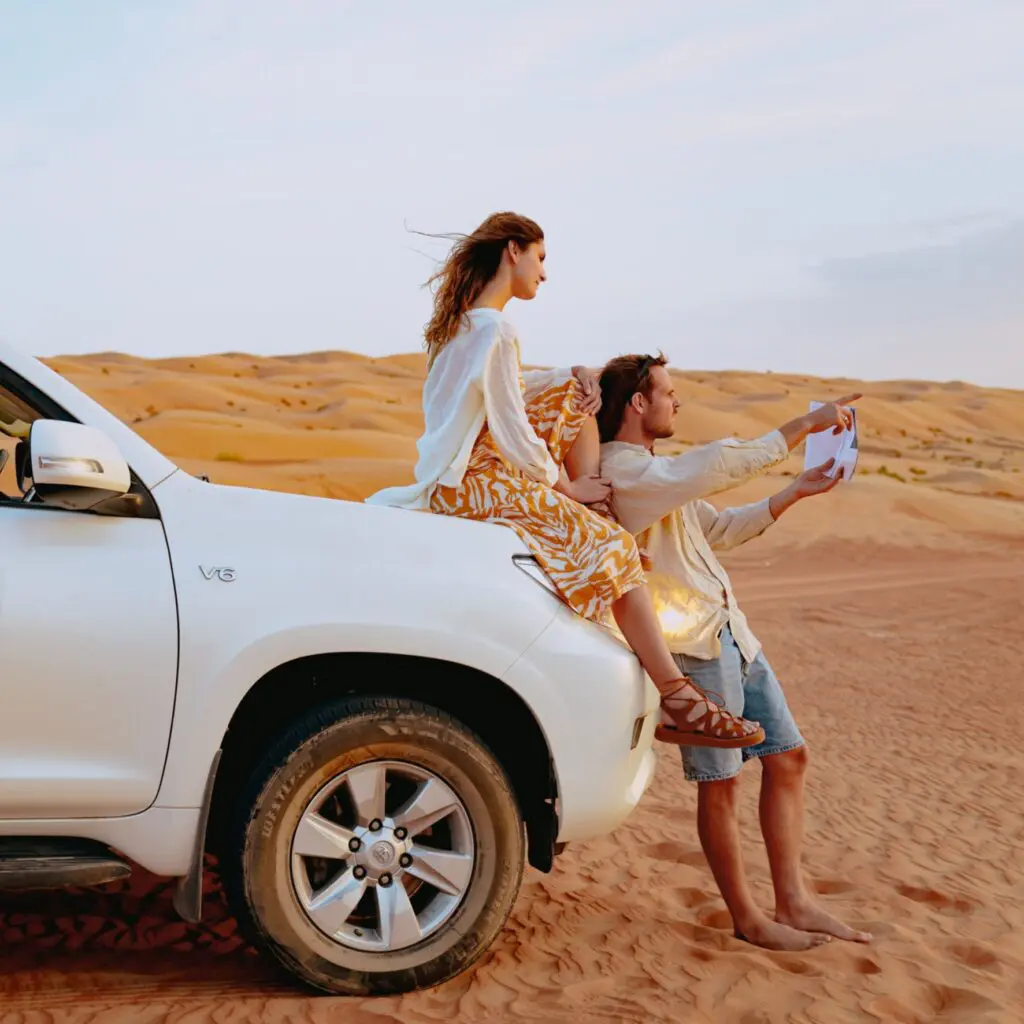
Golden dunes rising up to 100 metres, with camel herds and Bedouin camps scattered through them. Deflate the tyres, find your own spot, and sleep somewhere with no light pollution for miles.
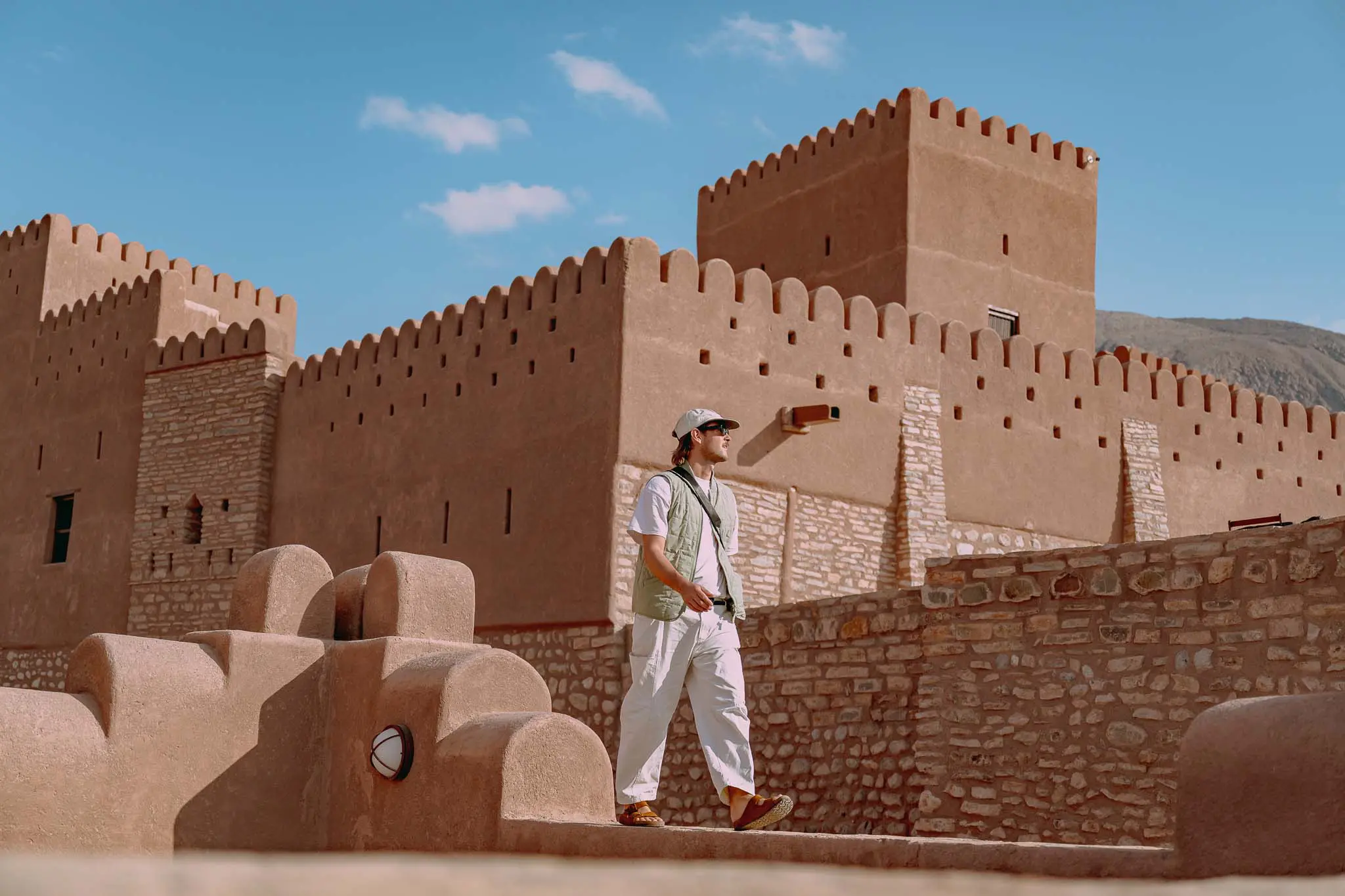
Nizwa Fort and Souq
The best-restored fort in the country, in the historic former capital. Wander the daily souq for silver and dates, and time your visit for Friday morning if you want to see the goat market in full swing.
Driving and Wild Camping
This route only works with a proper 4x4. The tracks into Bilad Sayt and up Jebel Shams have loose rock and steep sections, and the Wahiba Sands need deflated tyres and a driver comfortable with sand. Roads elsewhere in Oman are excellent, well signed in English and Arabic, and easy to navigate.
Two stretches deserve real respect rather than confidence from a video you watched once: the Wadi Bani Awf pass into Bilad Sayt, narrow, exposed, and unforgiving of a wrong line, and the open dune fields of the Wahiba Sands, where getting stuck or lost is a genuine risk rather than an inconvenience. Doing this route as a package rather than solo is what removes most of that risk, since professional recovery equipment, a tested emergency kit, and 24/7 local assistance are already built into the trip rather than something you assemble yourself at the last minute.
The Right Vehicle
A Toyota Fortuner, Nissan X-Terra, or similar automatic 4x4 with low range and good clearance handles this route comfortably. A rooftop tent setup with a double mattress, camping gear, and a shower rig turns the car into your accommodation for most of the week.
Wild Camping
Wild camping is widely tolerated across Oman and is central to this route. Camp away from private property and villages, keep sites clean, and you will rarely be questioned. The canyon rim, the dunes, and the coast near Sur are the standout spots on this itinerary.
Fuel and Age Requirements
Fuel is cheap and stations are frequent outside the desert stretch, budget around €100 for the whole loop. Most 4x4 rental partners require drivers to be at least 21 with 2 years of licence history, so check this before booking if you are travelling with a younger group.
Mountain and Desert Tracks
Engage low range for the climb into Bilad Sayt and up Jebel Shams. Deflate tyres to roughly 1 bar before entering the Wahiba Sands and re-inflate once back on tarmac. A shovel and a jerrycan of water, standard in most 4x4 rental kits, cover the rest.
Navigation
Download offline maps before you leave Muscat, coverage thins out in the mountains and disappears in the dunes. A detailed roadbook with GPS waypoints for camping spots and track junctions is worth more here than a generic map app.
Documents
An EU or international driving licence held for at least 2 years, plus your passport, valid for 6 months beyond your return date. No visa is needed for many nationalities on short stays, check current requirements before booking flights.
Essential Tips
🌞 Best Season
October to March is the sweet spot, daytime temperatures of 24 to 28 degrees and cool mountain nights. From June to September, temperatures pass 45 degrees and the Wahiba Sands become close to inaccessible. Nights on Jebel Shams can drop to around 10 degrees even in the ideal season, pack accordingly.
👞 Dress Code
Oman is conservative and welcoming in equal measure. Both men and women should cover shoulders and knees in public, and women need a headscarf for the Grand Mosque. Loose, breathable layers work best for the temperature swings between coast, mountain, and desert.
🍷 Alcohol and Water
Oman is a Muslim country and alcohol is only served in hotels and select restaurants. Bottled water is sold everywhere, and every mosque has free drinking water taps out front, useful to know when you are refilling jerrycans on the road.
💳 Currency
Oman uses the Omani Rial, one of the highest-valued currencies in the world, so prices in small units can be deceptive. Cards are widely accepted in cities; carry cash for fuel stops, small desert-edge shops, and tips.
📷 Photography
Sunset from the Jebel Shams rim, sunrise over the Wahiba dunes, the terraces of Bilad Sayt in morning light, and the turquoise pools of Wadi Shab are the shots worth planning around. Ask before photographing local people directly.
📦 Packing
You go from coastal heat to mountain cold to desert nights in one week. Pack a proper warm layer for Jebel Shams, swimwear for the wadis, sturdy shoes for the Balcony Walk, and a headtorch for camp. A local eSIM or SIM card covers navigation once mountain signal drops out.
Budget Planning
The 4x4 and camping gear are the main cost of this trip, and booking that as a package rather than piecing it together yourself is usually both cheaper and far less stressful. Everything else, fuel, food, and entrance fees, is affordable by Gulf standards.
Book Your Trip
This route is genuinely hard to do well on your own logistics. Here is the outfit that runs it as a ready-made package, plus everything else worth booking around it.
The Drive That Has Everything, In One Country
Some road trips take you across six borders to see this much variety. Oman does it inside one, and inside a single week. A capital with a mosque worth the early wake-up, mountain villages that most visitors never reach, a canyon deep enough to lose an afternoon in, and a desert where the only sound at night is the wind moving sand.
What stays with you is not any single stop, it is how completely different day 3 feels from day 6. Mountains to desert to ocean, one 4x4, and a rooftop tent you will genuinely miss sleeping in once you are back home.