
South Island
Loop
Christchurch and back through the Southern Alps, Milford Sound's fjords, Queenstown's adrenaline, West Coast glaciers, and turquoise lakes so vivid they look like someone forgot to turn off the filter. 2,500 kilometres of the most dramatic scenery on earth.
Route Overview
New Zealand's South Island is a place that looks like it was designed by a committee of landscape architects who couldn't agree on a theme and decided to include everything. Glaciers that descend into rainforest. Fjords with waterfalls dropping directly into the sea. Turquoise lakes that look artificially coloured but aren't. Mountains high enough to have permanent snow in a country small enough to drive across in a day. The Southern Alps run the length of the island like a spine, and everything on either side of them is spectacular in completely different ways.
This loop starts and ends in Christchurch, heading clockwise: south through the Mackenzie Country to Mount Cook, across to Wanaka and Queenstown, down to Milford Sound, back up the West Coast past glaciers and rainforest, and over Arthur's Pass to return. The total distance is 2,500 kilometres, but the roads are winding enough that 200 km feels like a day's driving, and you'll want to stop so often that the odometer becomes irrelevant.
The South Island has four million people and receives about three million tourists a year, which means the infrastructure exists but the wilderness dominates. You can drive for an hour without seeing another car. The night sky, in places like Lake Tekapo (an International Dark Sky Reserve), has a density of stars that people from light-polluted countries find genuinely shocking. The air smells clean in a way that makes you realise you've been breathing something compromised your entire life. New Zealand does nature at a standard that makes everywhere else look like a rough draft.
The Itinerary
Into the Southern Alps
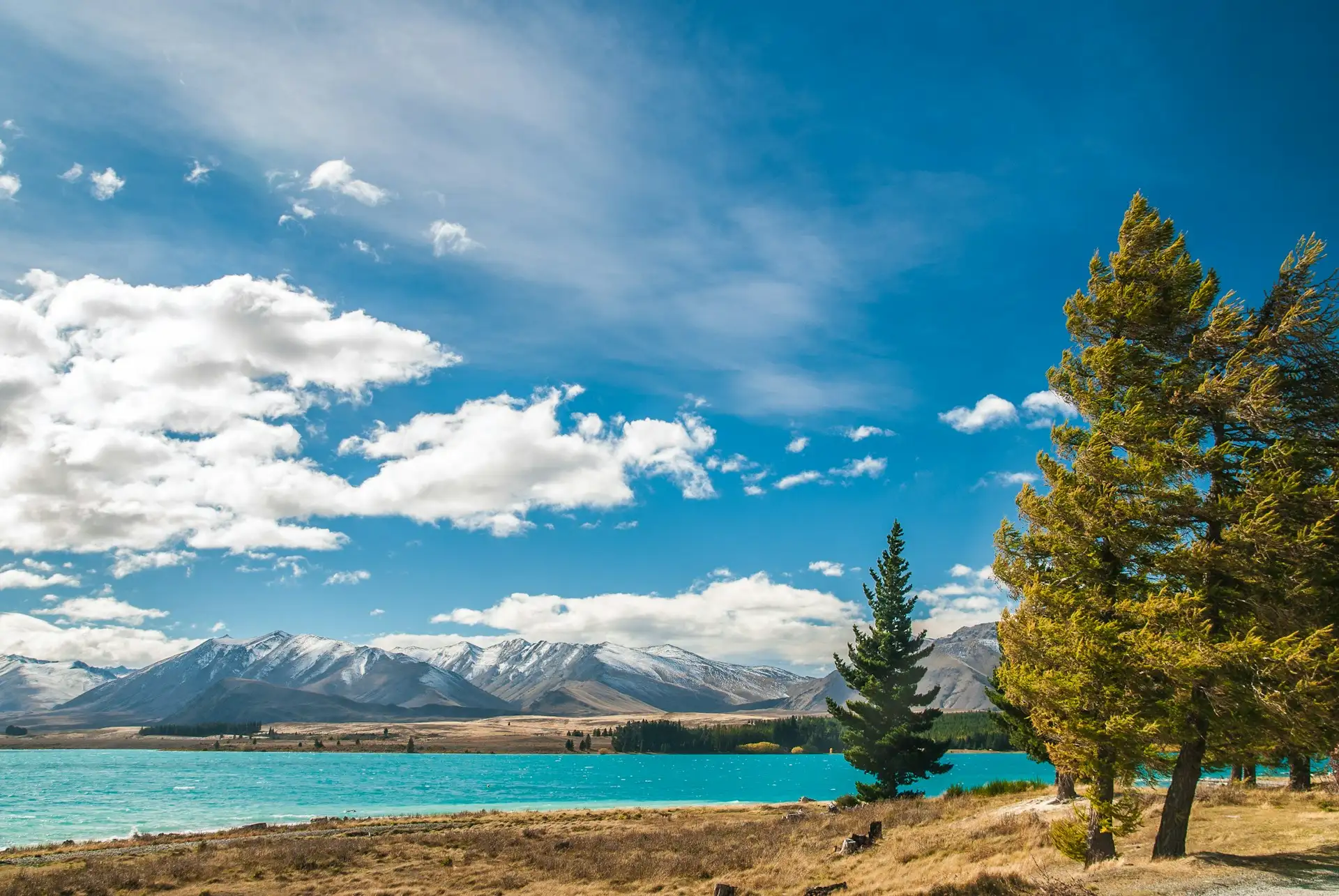
Collect your car at Christchurch Airport and drive southwest through the Canterbury Plains. The flat farmland is misleading: the Southern Alps appear ahead of you like a wall, and the turquoise of Lake Tekapo is the first sign that the colour palette of this trip is going to be unreasonable. Stop at the Church of the Good Shepherd (a tiny stone chapel on the lakeshore that frames the mountains through its altar window) and look for lupins if you're here in November-December.
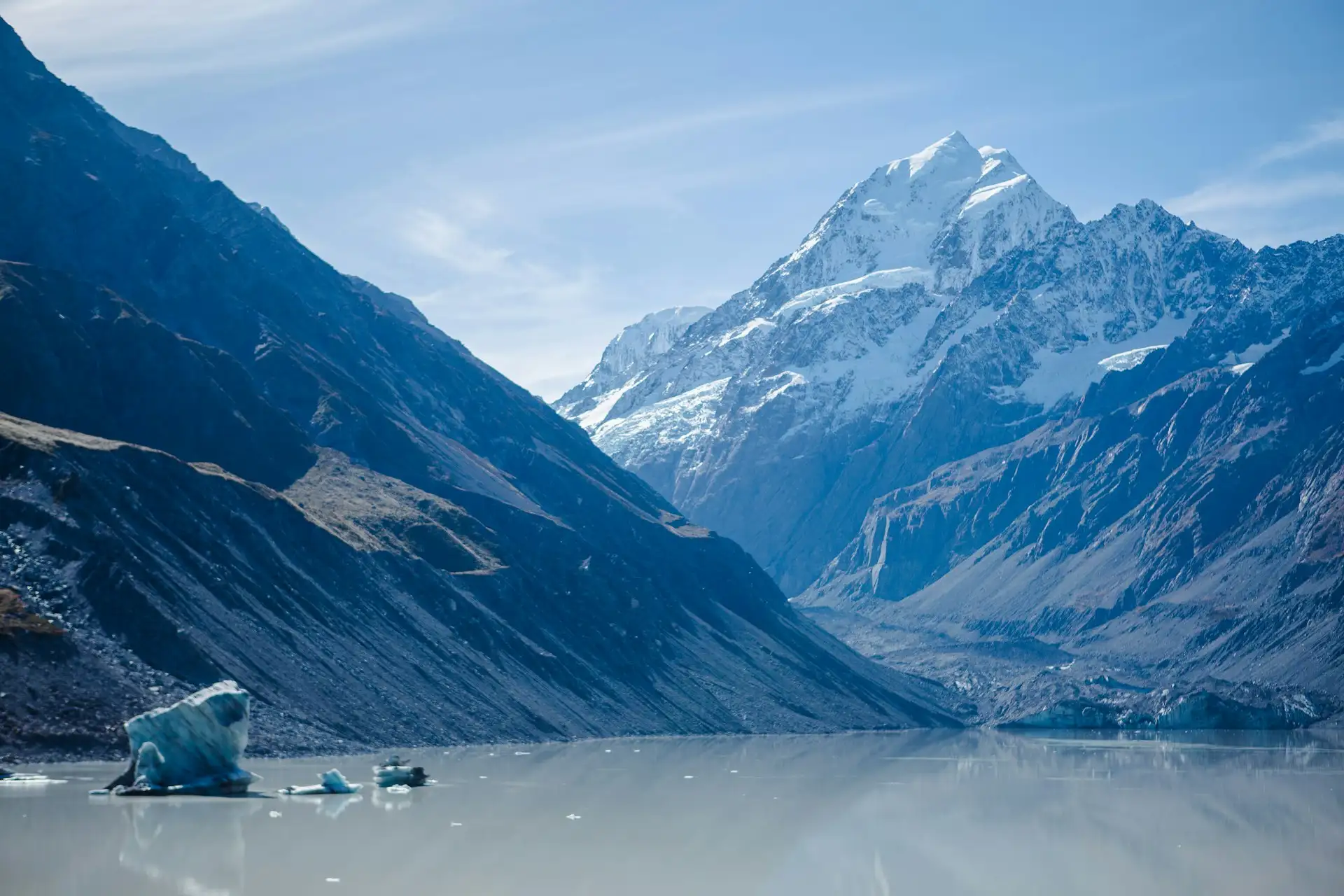
Continue to Aoraki/Mount Cook Village. The Hooker Valley Track is the must-do hike: three hours return, three swing bridges, and a glacier lake with floating icebergs at the end, with New Zealand's highest peak as the backdrop. The Tasman Glacier viewpoint is a shorter walk with equally impressive results. At night, this is an International Dark Sky Reserve. On a clear night, the Milky Way is visible as a physical band across the sky, not just a faint suggestion. Book a stargazing tour or simply walk outside and look up.
- Lake Tekapo - Turquoise glacial lake. Church of the Good Shepherd. Lupins in Nov-Dec. Dark Sky Reserve at night.
- Hooker Valley Track - 3 hrs return, swing bridges, glacier lake with icebergs, Mount Cook views. The essential South Island hike.
- Tasman Glacier - NZ's largest glacier. Viewpoint walk or boat tour on glacier lake. Icebergs calving in summer.
- Stargazing - Dark Sky Reserve. Book a tour or just walk outside after 10pm. The sky here is extraordinary.
Lake Country
Drive through the Lindis Pass (a tussock-covered mountain crossing that looks like Scotland dialled up to eleven) to Wanaka. This lakeside town is Queenstown's quieter, more grounded sibling. The lake is framed by mountains, the town centre is walkable, and the vibe is less "adventure capital" and more "place where people move to when they're tired of cities but still want good coffee."
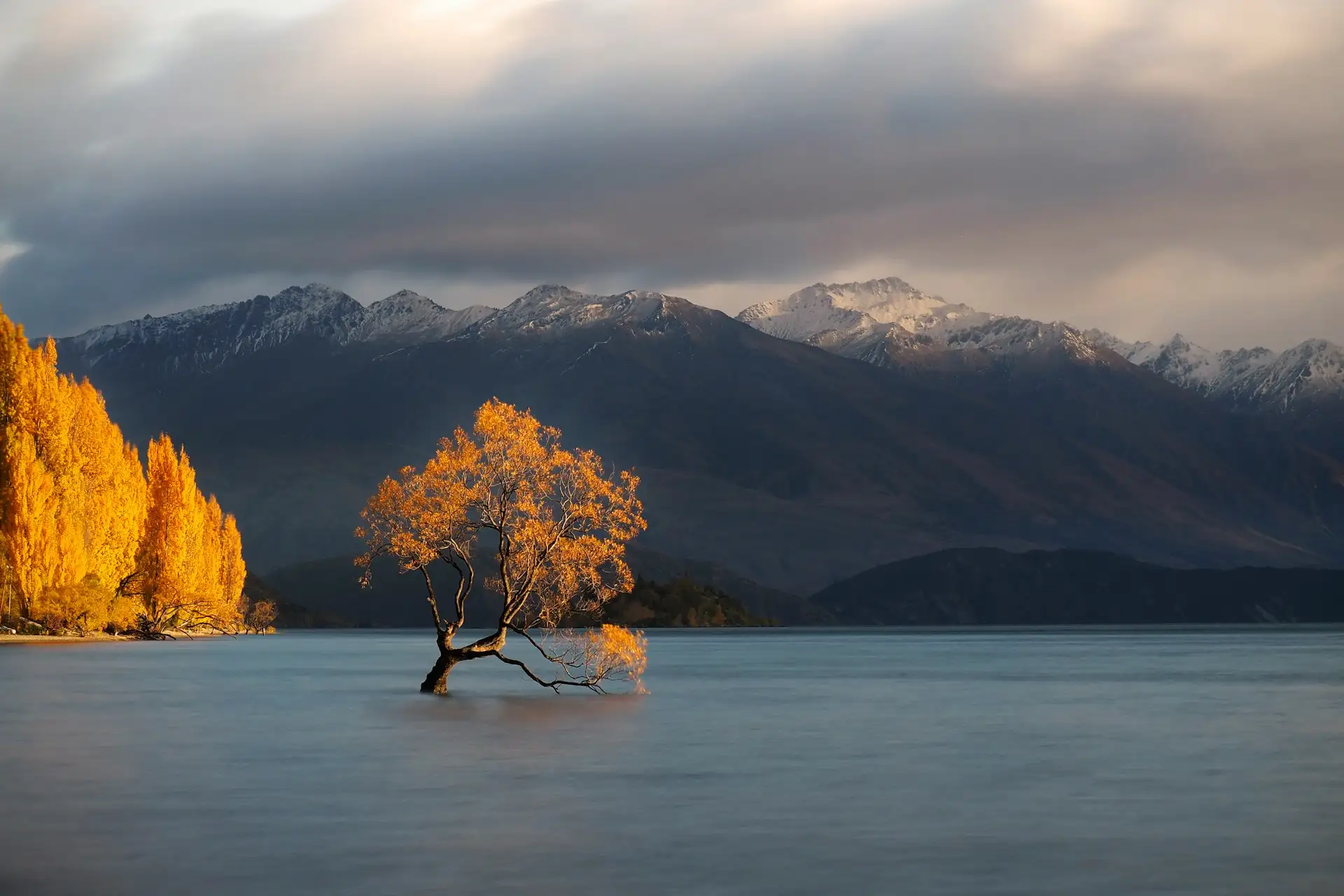
"That Wanaka Tree" (a lone willow growing in the lake) is the most Instagrammed tree in New Zealand and arguably the most Instagrammed tree on earth. Photograph it at sunrise when the light is golden and the crowds haven't arrived. Roy's Peak Track is the big hike here: six to eight hours, relentlessly steep, but the view from the top (a sweeping panorama of the lake and mountains in every direction) is one of the great hiking rewards in the country. If Roy's Peak is too ambitious, the lakefront walk and a swim are a perfectly valid alternative.
- That Wanaka Tree - Sunrise is the time. The lone willow in the lake. The most photographed tree in NZ.
- Roy's Peak Track - 6-8 hours, steep, challenging. The panoramic view from the top is spectacular. Bring water and layers.
- Puzzling World - Optical illusions and a maze. Fun if you have kids. Fun if you don't.
- Rippon Vineyard - Lakefront winery. Pinot Noir with mountain views. One of the most beautiful vineyard settings in the world.
Adventure Capital
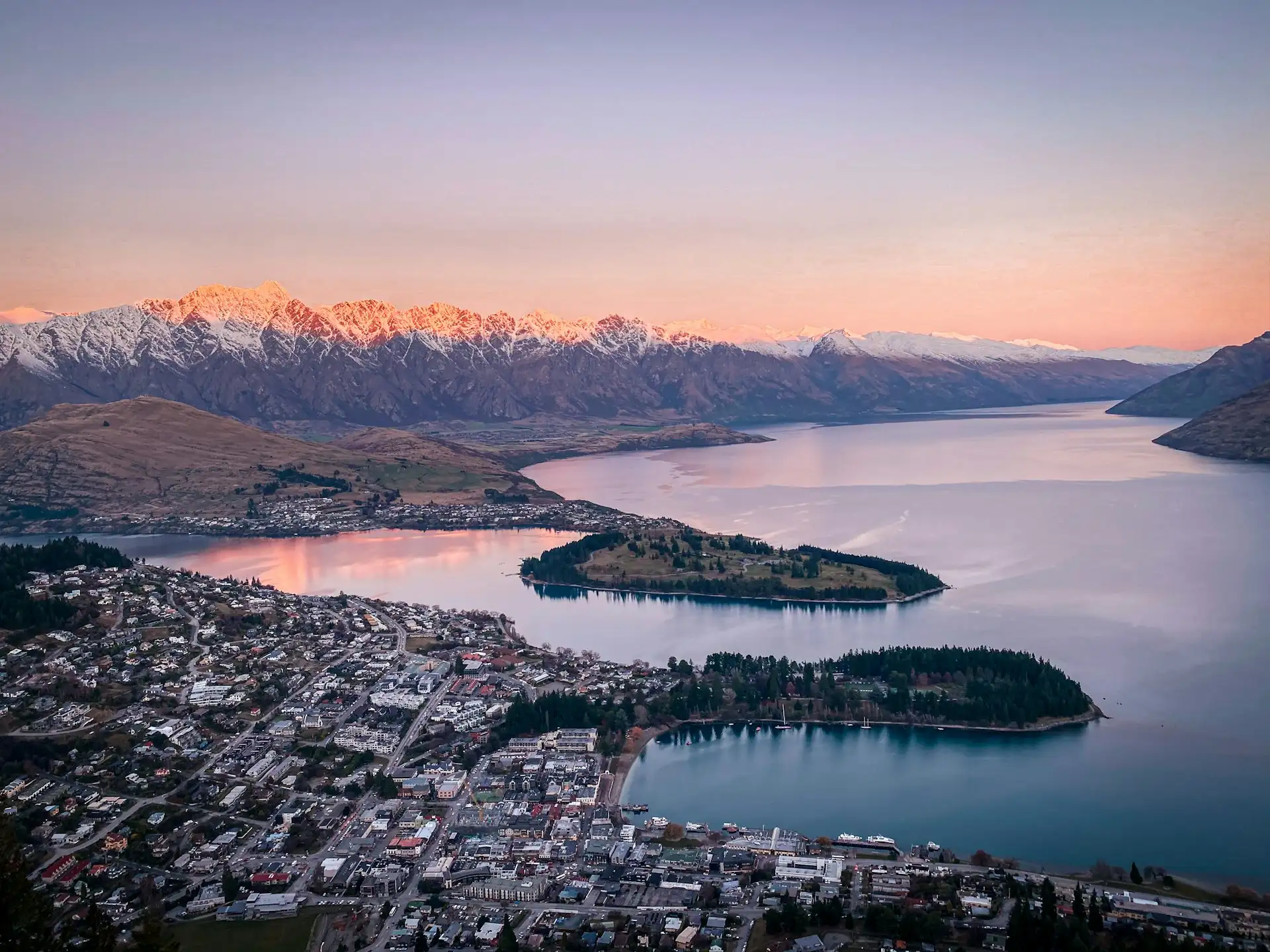
The drive from Wanaka to Queenstown via the Crown Range Road is one of the most scenic short drives in the country: hairpin turns over a mountain pass with views across the Wakatipu Basin. Arrive in Queenstown, which sits on Lake Wakatipu beneath the Remarkables mountain range and manages to be simultaneously a genuine adventure destination and a town with excellent restaurants and bars.
Three days gives you time for the highlights without burning out. The Skyline Gondola goes up Bob's Peak for panoramic views and luge rides. The original bungy jump at Kawarau Bridge (43 metres, the one that started the global bungy industry) is available for those who want to fall off a bridge on purpose. Jet boating on the Shotover River is wet, loud, and fun. The TSS Earnslaw, a 1912 vintage steamship, cruises Lake Wakatipu to Walter Peak for a farm visit. Drive to Glenorchy (45 minutes, increasingly dramatic scenery) for the start of several Lord of the Rings filming locations and some of the most pristine valley views in the country. Arrowtown, fifteen minutes away, is a former gold mining settlement with autumn colours in April that rival anywhere.
- Skyline Gondola - Panoramic views, restaurant at the top, luge tracks. The view at sunset is the one you'll remember.
- Kawarau Bungy Bridge - The original. 43m. You don't have to do it, but if you do, the video is worth buying.
- Glenorchy + Paradise - 45 min drive. LOTR filming locations. Dart River. Some of the most dramatic scenery on the island.
- TSS Earnslaw - 1912 vintage steamship on Lake Wakatipu. Walter Peak farm. The lake is 380m deep and genuinely cold.
The Eighth Wonder
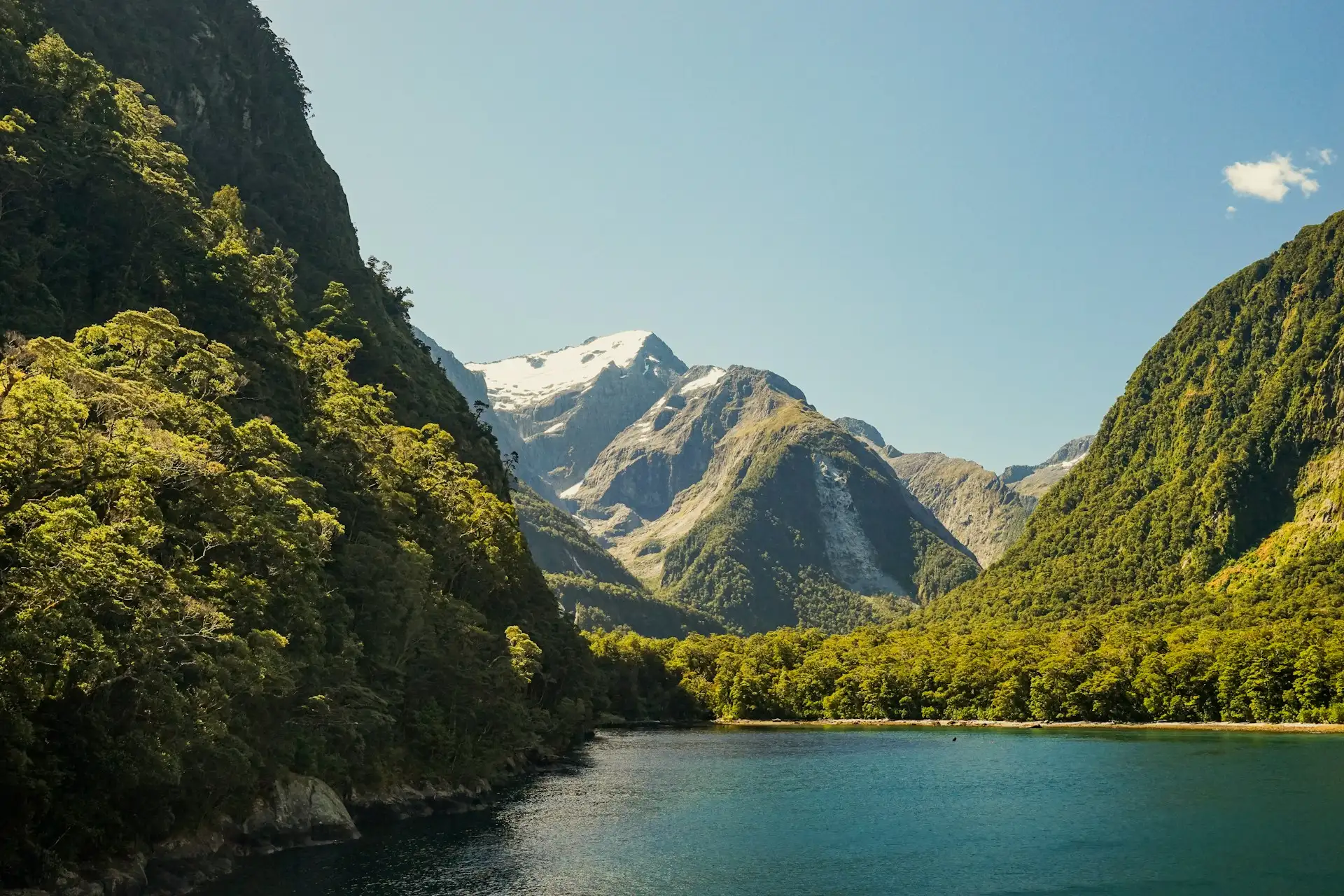
Drive to Te Anau (the gateway town for Fiordland) and then continue on the Milford Road, which is itself one of the great drives in New Zealand. Mirror Lakes (the name describes the experience on a calm day), the Homer Tunnel (a single-lane tunnel blasted through solid rock that emerges into a valley so dramatic it feels choreographed), and the Chasm (a short walk to a gorge carved by water over millennia) are all worth stopping for.
Milford Sound is a fjord, not a sound, carved by glaciers over millions of years. Mitre Peak rises 1,692 metres directly from the water. Waterfalls drop from rainforest cliffs (Stirling Falls at 155 metres is the headline act). Take a two-hour cruise to see it properly: the boat gets close enough to the falls that you feel the spray. Dolphins, fur seals, and Fiordland crested penguins are common. Consider an overnight cruise for the quieter evening and early morning experience when the day-trip boats have left. Stay in Te Anau and visit the Glowworm Caves by boat.
- Mirror Lakes - Perfect mountain reflections on calm mornings. Five-minute boardwalk. Stop on the way to Milford.
- Milford Sound Cruise - 2 hours. Mitre Peak, Stirling Falls, dolphins, fur seals. Book ahead. NZ$60-90 for a standard cruise.
- Homer Tunnel - Single-lane tunnel through solid rock. Emerge into a valley that makes you brake involuntarily.
- Te Anau Glowworm Caves - Boat tour through caves lit by bioluminescent glowworms. Book through Real Journeys.
Ice and Rainforest
The long drive north to the West Coast takes you through some of the least-visited scenery on the island. The West Coast is the wet side: over 5,000mm of rain a year produces rainforest that feels primordial, and the glaciers that descend from the Southern Alps to near sea level exist because of this rainfall feeding them from above.
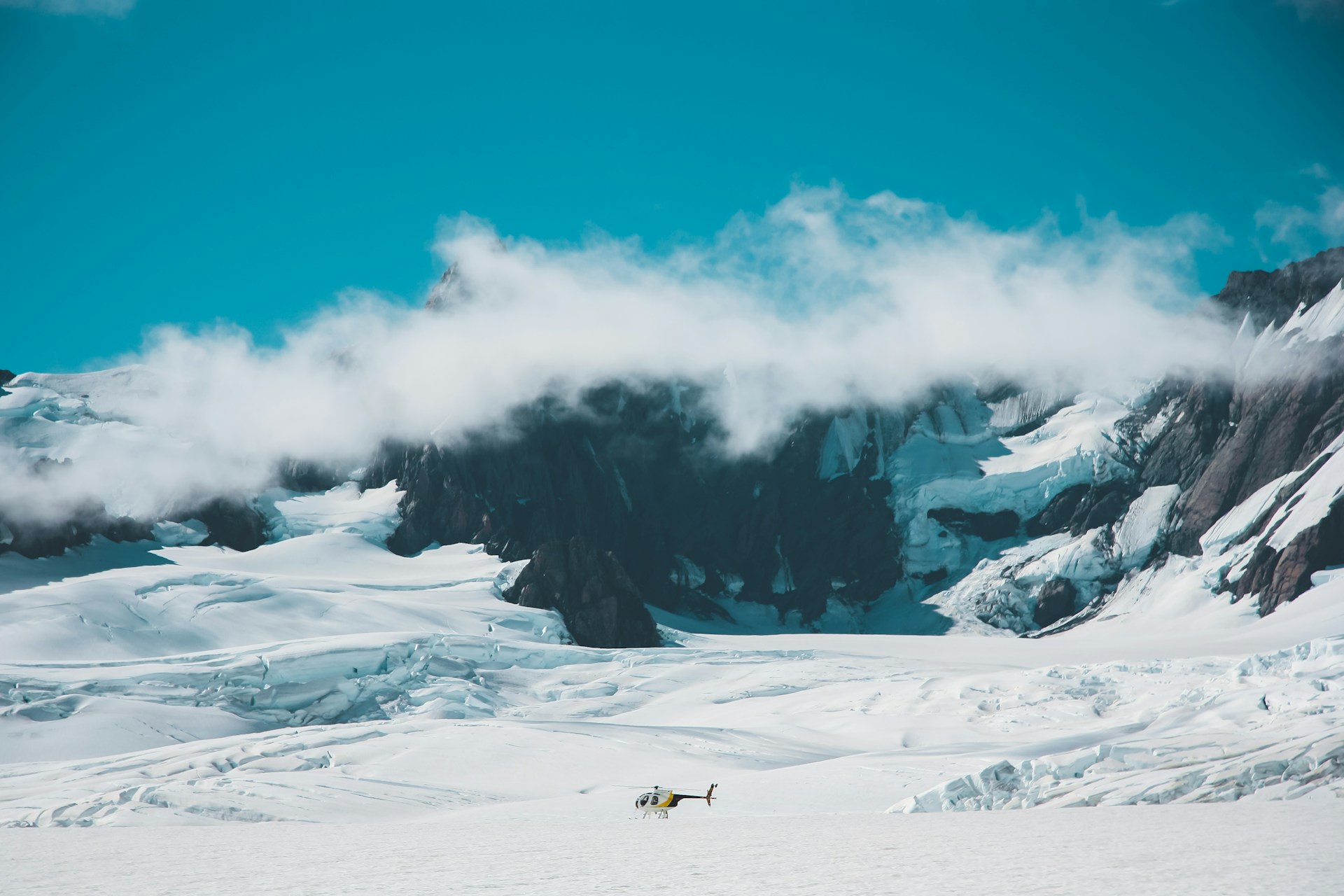
Franz Josef and Fox Glaciers are thirteen kilometres apart. Both have walking tracks to viewing points (about an hour each way) where you can see the ice from a distance. The experience that justifies the splurge is the helicopter flight with glacier landing: you fly over crevasses and ice falls and land on the glacier itself, where you walk on ice that's thousands of years old while wearing crampons and feeling very small. Lake Matheson, near Fox Glacier, is the "Mirror Lake" that reflects Mount Cook and Mount Tasman on calm mornings. Go at dawn. The Glacier Hot Pools in Franz Josef (outdoor pools surrounded by rainforest) are the correct way to end a glacier day.
- Franz Josef Glacier - Walk to viewpoint (1 hr each way) or helicopter with ice landing (~NZ$300-450). The helicopter is worth it.
- Fox Glacier - Quieter than Franz Josef. Same helicopter options. Lake Matheson nearby for the mirror reflection.
- Lake Matheson - Dawn walk for the mirror reflection of Cook and Tasman. Calm mornings only. The cafe serves good coffee.
- Glacier Hot Pools - Outdoor rainforest hot pools in Franz Josef. NZ$30. The right way to end a glacier day.
The Wild West Coast
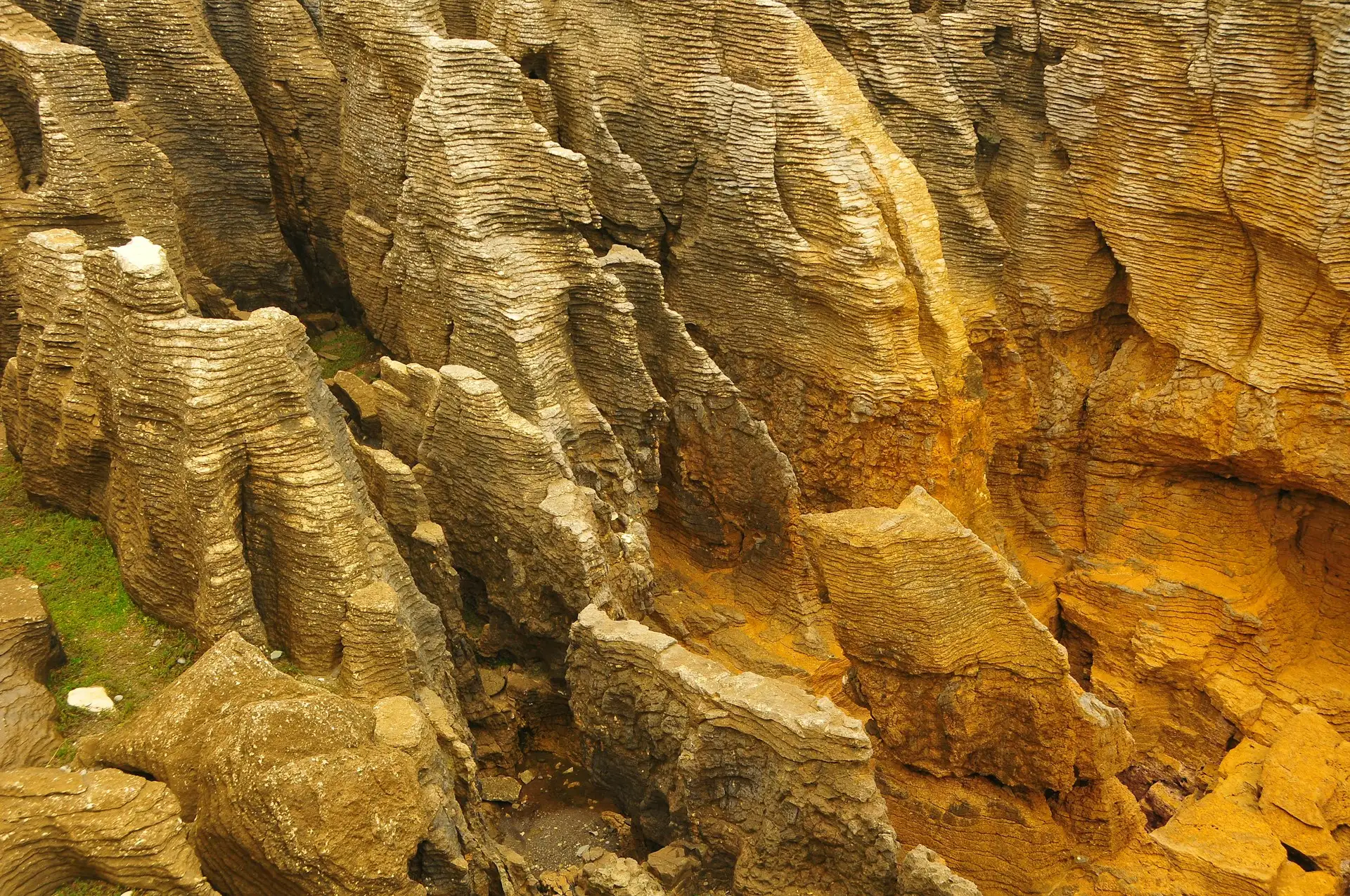
Drive north along the coast road with the Tasman Sea on your left and rainforest on your right. Stop at Punakaiki for the Pancake Rocks: limestone formations that genuinely look like stacks of pancakes, with blowholes that send seawater explosions into the air at high tide. Time your visit for high tide if possible; the blowholes are the main event.
Continue to Hokitika, a small West Coast town with more character than its size suggests. The Hokitika Gorge (thirty minutes inland) has water so turquoise it looks like a swimming pool in a forest. The town is known for pounamu (greenstone/jade) carving, a tradition with deep significance in Maori culture. Visit the workshops to see carvers at work and buy directly. The beach faces west, which means the sunsets are the kind that make you stand still. Driftwood sculptures accumulate on the shore and nobody removes them because they've become part of the landscape. The West Coast has a frontier feel: fewer tourists, more rain, and locals who are friendly in the way that people are when they've chosen to live somewhere remote and don't regret it.
- Pancake Rocks, Punakaiki - Limestone stacks and blowholes. Time for high tide. Free entry. 20-minute loop walk.
- Hokitika Gorge - Turquoise glacial water in a forested gorge. Swing bridge. 30 min from town. Free.
- Pounamu carving workshops - Greenstone/jade carving. Maori cultural significance. Buy direct from carvers.
- Hokitika Beach sunset - West-facing beach. Driftwood art. One of the best sunset spots on the island.
Back Across the Alps
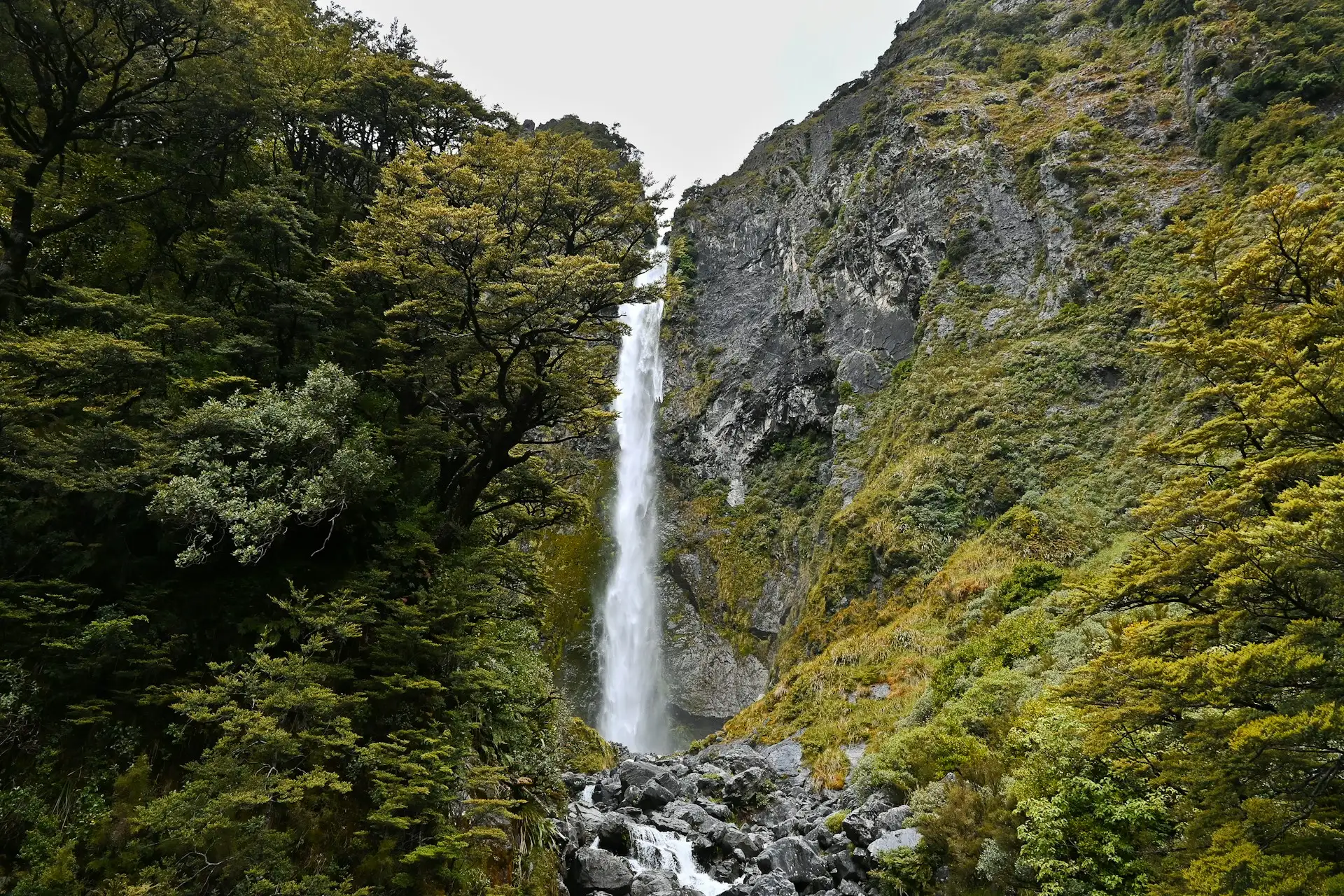
The final day takes you over Arthur's Pass, the highest road crossing of the Southern Alps, and back to Christchurch. Stop at Arthur's Pass village for the Devil's Punchbowl Waterfall (a one-hour return walk to a waterfall that drops 131 metres into a narrow canyon). Watch for kea, the world's only alpine parrot, which is intelligent, curious, and known for removing rubber from car windscreens because it can.
Castle Hill, on the eastern descent, is a field of enormous limestone boulders that the Dalai Lama described as a "spiritual centre of the universe" and that Peter Jackson used in The Chronicles of Narnia. The boulders are popular with climbers and photographers and worth a stop even if you're neither. Descend through the Canterbury Plains back to Christchurch. If you have time, the Botanic Gardens and the earthquake memorial are worth visiting before your flight. Return your car. You've just completed one of the greatest loop drives on earth, and you'll start planning the next one before you board the plane.
- Devil's Punchbowl Falls - 131m waterfall. 1-hour return walk from the village. Easy and spectacular.
- Kea spotting - Alpine parrots. Intelligent, cheeky, and endangered. Don't feed them. Do admire them.
- Castle Hill - Limestone boulders. "Spiritual centre of the universe." Narnia filming location. Climbers welcome.
- Christchurch - Botanic Gardens, earthquake memorial, Riverside Market. A city still rebuilding with character.
Must-See Locations
Three places on this loop redefine what you thought landscapes could look like. You'll try to describe them to people at home and give up.
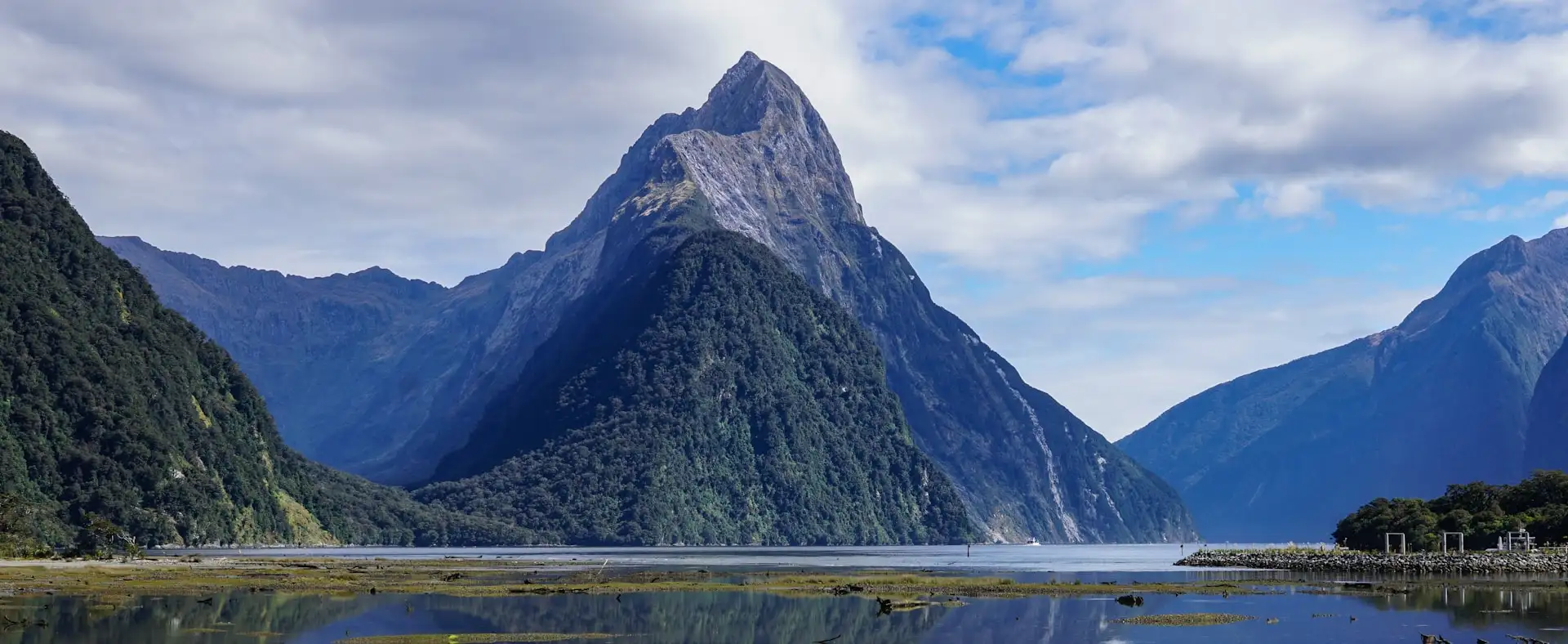
Milford Sound
A fjord carved by glaciers. Mitre Peak at 1,692m from water level. Waterfalls from rainforest cliffs. Dolphins and penguins. Rudyard Kipling's eighth wonder of the world.
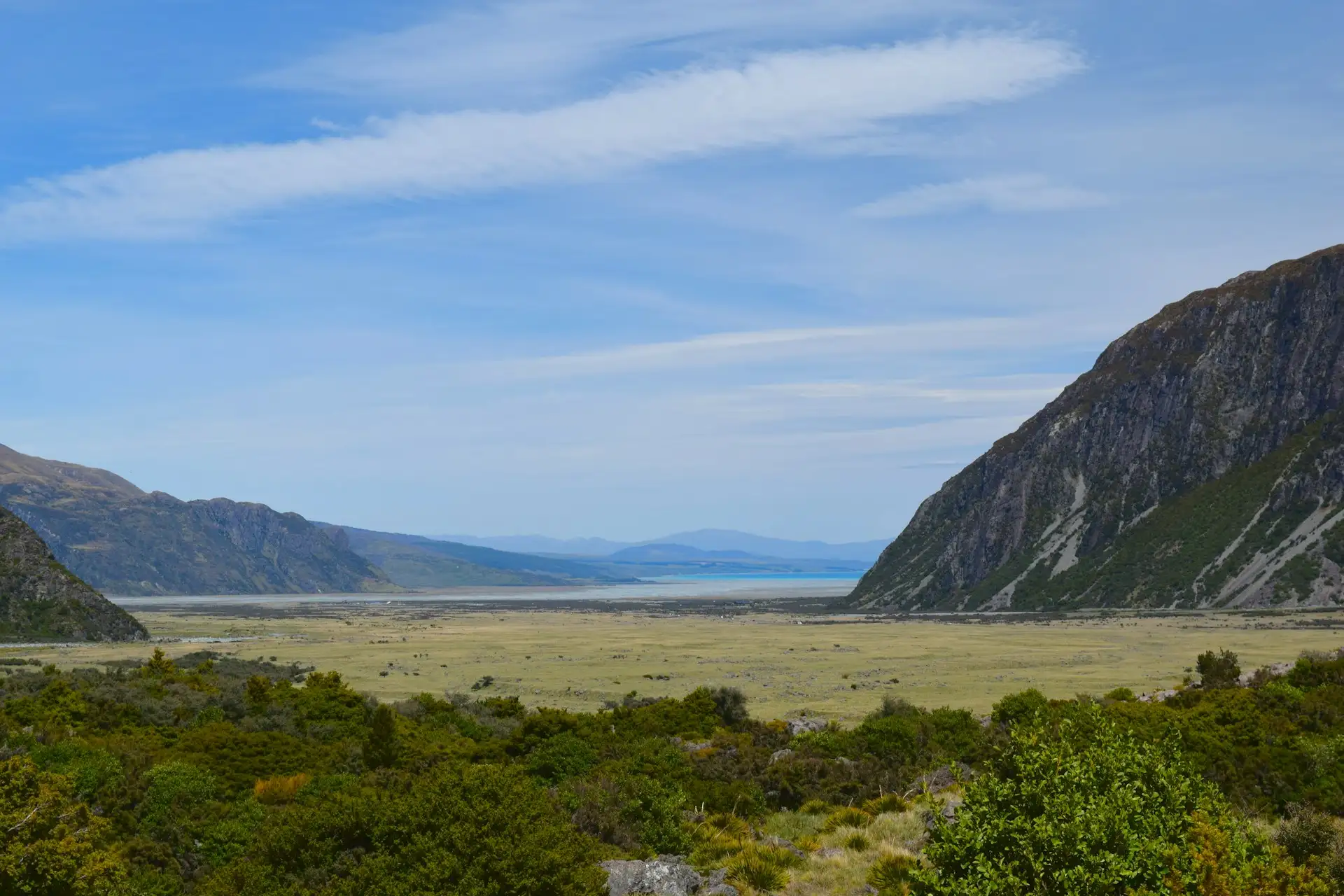
Hooker Valley, Mount Cook
Three swing bridges, a glacier lake with icebergs, and New Zealand's highest peak behind it all. Three hours return. Accessible to most fitness levels. The essential South Island hike.
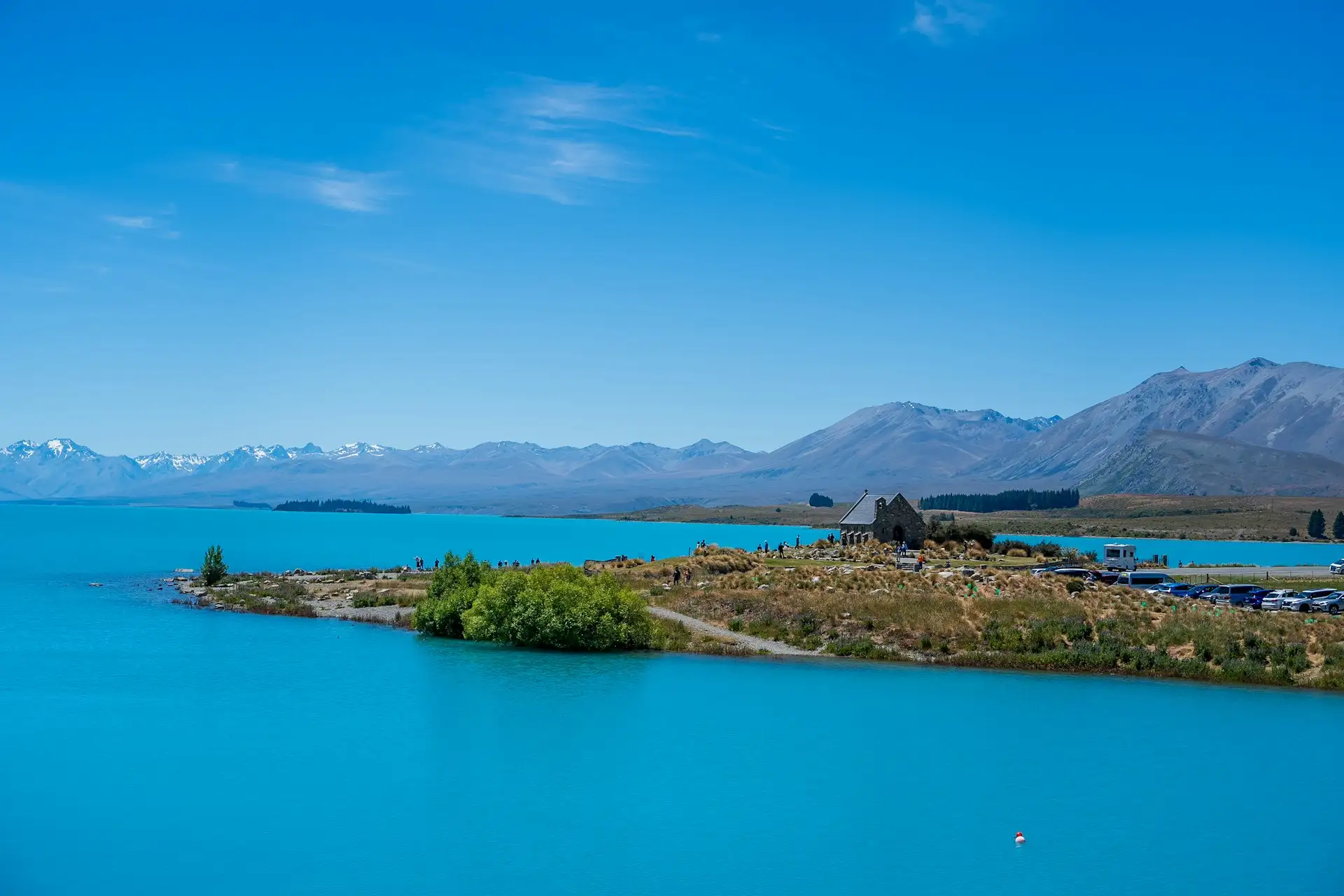
Lake Tekapo
Turquoise glacial lake, stone chapel, lupins in bloom, and the darkest night sky in the Southern Hemisphere. The gateway to Mount Cook and the first sign that this trip is going to be unreasonable.
Driving & Roads
New Zealand roads are well-maintained but frequently narrow, winding, and slower than the map suggests. The distances look manageable until you realise that 200 km on a mountain road takes three hours, not two. Drive on the left. Pull over for faster traffic. One-lane bridges are common and have priority signs. The scenery will make you want to look everywhere except at the road. Resist.
Car or Campervan
Both work on all roads in this loop. Campervans are popular and let you freedom camp (where allowed). A standard car with accommodation bookings is more comfortable. No 4x4 needed. Winter may require chains (provided by rental companies).
Road Conditions
All sealed roads on this loop. Some sections are narrow and winding (Crown Range, Arthur's Pass). Milford Road closes occasionally for avalanche risk in winter and flooding in heavy rain. Check journeyplanner.aa.co.nz before driving the Milford Road.
Fuel
Fuel is available in all towns but stations can be far apart on the West Coast. Fill up before long stretches (Te Anau to glaciers, glaciers to Hokitika). Fuel costs approximately NZ$2.50-3.00/litre. Most stations accept cards.
One-Lane Bridges
Common on rural roads. Arrow signs indicate which direction has right of way. If the arrow is pointing towards you, you wait. If it's pointing away, you go. Simple once you learn it. Confusing the first three times.
Daylight & Distances
Summer daylight is long (6am-9:30pm). Winter days are short (8am-5pm). Plan driving for daylight hours. Allow more time than Google Maps suggests. Winding roads, photo stops, and sheep on the road all slow you down.
Coverage & Navigation
Mobile coverage is patchy outside towns. Download offline Google Maps for the entire South Island. Some areas (Milford Road, West Coast) have no signal at all. GPS works everywhere. Carry a paper map as backup. Seriously.
Essential Tips
🌞 Best Season
November to April. December to February is peak summer: best weather, longest days, highest prices. November and March-April are shoulder season with fewer crowds and slightly cooler temperatures. Winter (June-August) brings skiing to Queenstown and Wanaka but closes Milford Road and limits glacier access.
🏨 Accommodation
Holiday parks (cabin/motel units, powered sites) are excellent value at NZ$80-150. Motels are NZ$120-200. Hotels and lodges in Queenstown and Mount Cook cost more. Book Milford Sound accommodation far in advance (limited options). Freedom camping is restricted to certified self-contained vehicles in designated areas.
🌧 Weather
Four seasons in one day is a cliche because it's true. The West Coast is wet. The East Coast is drier. Mountains create their own weather. Pack layers, a waterproof jacket, and accept that rain is part of the South Island experience. The most dramatic photographs happen in dramatic weather.
💧 Sandflies
The South Island's unofficial mascot. Small, biting, and present in terrifying numbers on the West Coast, at Milford Sound, and near any body of still water. Carry insect repellent (DEET-based works). Wear long sleeves at dawn and dusk. They are not dangerous but they are relentless and the bites itch for days.
💰 Money
New Zealand Dollar (NZD). Cards accepted almost everywhere. Some DOC (Department of Conservation) campsites and small West Coast shops are cash-only. ATMs in all towns. Tipping is not expected but appreciated for exceptional service. NZ is expensive by Southeast Asian standards but reasonable by European ones.
👜 Packing
Layers (temperature swings are extreme). Waterproof jacket (non-negotiable). Hiking boots for tracks. Swimwear for hot pools and lakes. Sunscreen (NZ UV is intense due to thin ozone). Insect repellent (West Coast sandflies). Reusable water bottle (tap water is safe everywhere). Binoculars for wildlife.
Budget Planning
New Zealand is not cheap, but it's not as expensive as many people fear. Accommodation and activities are the main costs. Food is reasonable if you self-cater some meals. Fuel adds up over 2,500 km. The big-ticket items (glacier helicopters, bungy jumping, Milford Sound cruises) are worth budgeting for because they're the experiences that define the trip.
Book Your Trip
Everything in one place.
The Loop That Ruins You for Ordinary Landscapes
The problem with the South Island loop is that it recalibrates your expectations permanently. After Milford Sound, other fjords feel underwhelming. After Lake Tekapo's night sky, other stars feel sparse. After the Hooker Valley Track, other "scenic walks" feel like a walk to the shops. The South Island doesn't just show you beautiful landscapes. It shows you what landscapes are capable of when nothing gets in the way.
New Zealand is far from everywhere. The flight alone requires commitment. But the distance is part of what preserves it. Four million people on an island at the bottom of the Pacific, maintaining a wilderness that looks like the earth did before humans started editing it. Drive 2,500 kilometres around it and you'll understand why people who've been once start planning how to come back before the plane touches down at home.