
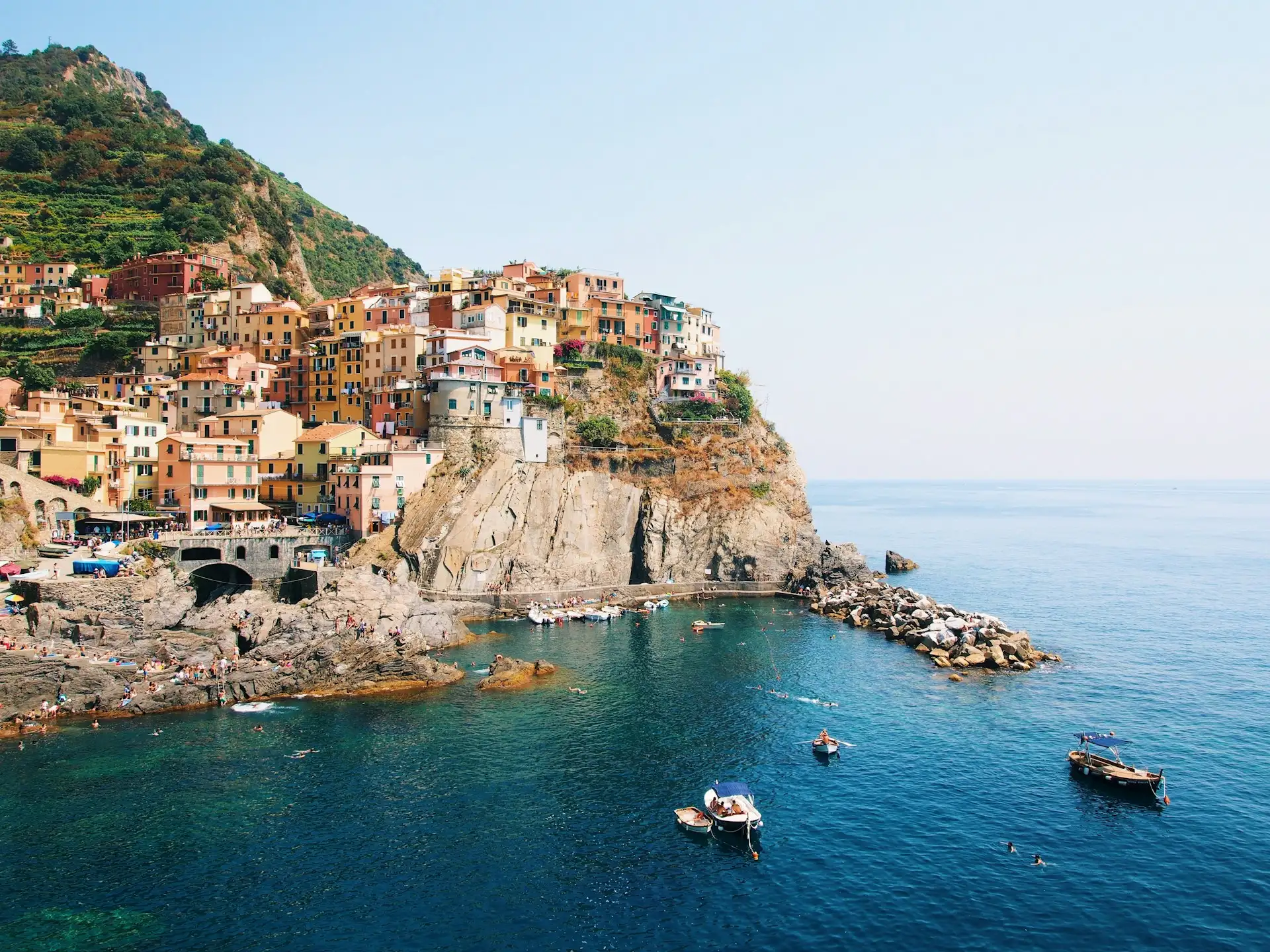
Italian
Coastline
Rome to Sicily on roads that were built by people who understood that the view matters more than the arrival time. Pompeii, Positano, Tropea, Taormina, and a ferry crossing that gets you to an island where the cannoli alone justify the trip.
Route Overview
This is the Italian roadtrip that people dream about and then discover is even better than the dream suggested. It starts in Rome (which you already know is extraordinary), heads south to Pompeii (which is more affecting than any photograph prepares you for), threads along the Amalfi Coast on a road that was clearly designed by someone who believed guardrails were for the timid, drops through Calabria to beaches that the rest of Europe hasn't discovered yet, and finishes in Sicily, where the ancient Greeks built theatres with views of an active volcano because they understood that drama requires a backdrop.
The route covers 1,200 kilometres but the daily distances are short. The longest driving day is about four hours. Everything else is two hours or less, which leaves the rest of the day for the things Italy does better than almost anywhere: eating, swimming, wandering through places where the architecture is older than most countries, and sitting at a cafe table watching the world negotiate itself around a double-parked Fiat.
The Amalfi Coast section is the stretch everyone knows about, and it earns every superlative thrown at it. But the surprise of this route is Calabria: the toe of Italy's boot, chronically overlooked, with beaches and seafood that rival the more famous destinations at a fraction of the price and with none of the crowds. Tropea's clifftop town above white sand and turquoise water is the place you'll show people photographs of and then refuse to tell them where it is.
The Itinerary
The Eternal City to the Bay of Naples
Pick up your rental car in Rome (avoid driving in the city itself; pick up at the airport or a peripheral location) and head south on the A1 autostrada. The drive through Lazio and into Campania is straightforward motorway until you exit toward the Sorrentine Peninsula, where the road narrows and the views over the Bay of Naples begin.
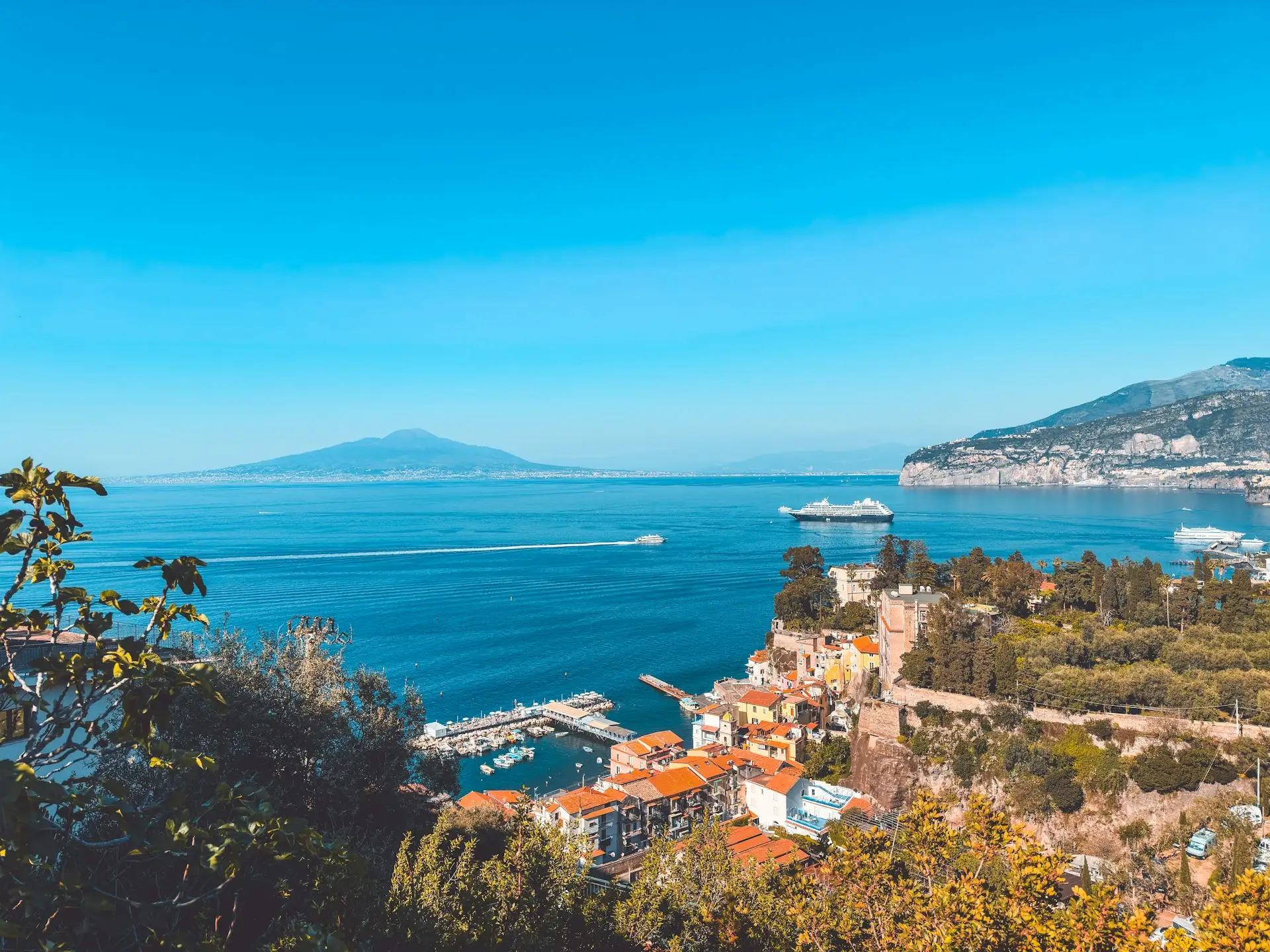
Sorrento sits on cliffs above the bay with Mount Vesuvius visible across the water. The town is compact and walkable: Piazza Tasso is the centre, Marina Grande is the old fishing harbour below (reached by a steep path and worth the descent for the seafood restaurants), and the Villa Comunale park gives sunset views over the bay that explain why this coastline has been attracting visitors since the Romans. Buy limoncello from a local shop (not the tourist ones on the main street). Eat dinner watching Vesuvius turn pink.
- Sorrento Marina Grande - Old fishing harbour below the cliffs. Seafood restaurants with water views. Walk down, taxi up.
- Piazza Tasso - Heart of Sorrento. Cafes, people-watching, evening passeggiata.
- Villa Comunale Park - Sunset viewpoint over the Bay of Naples. Vesuvius across the water.
A City Frozen in 79 CE
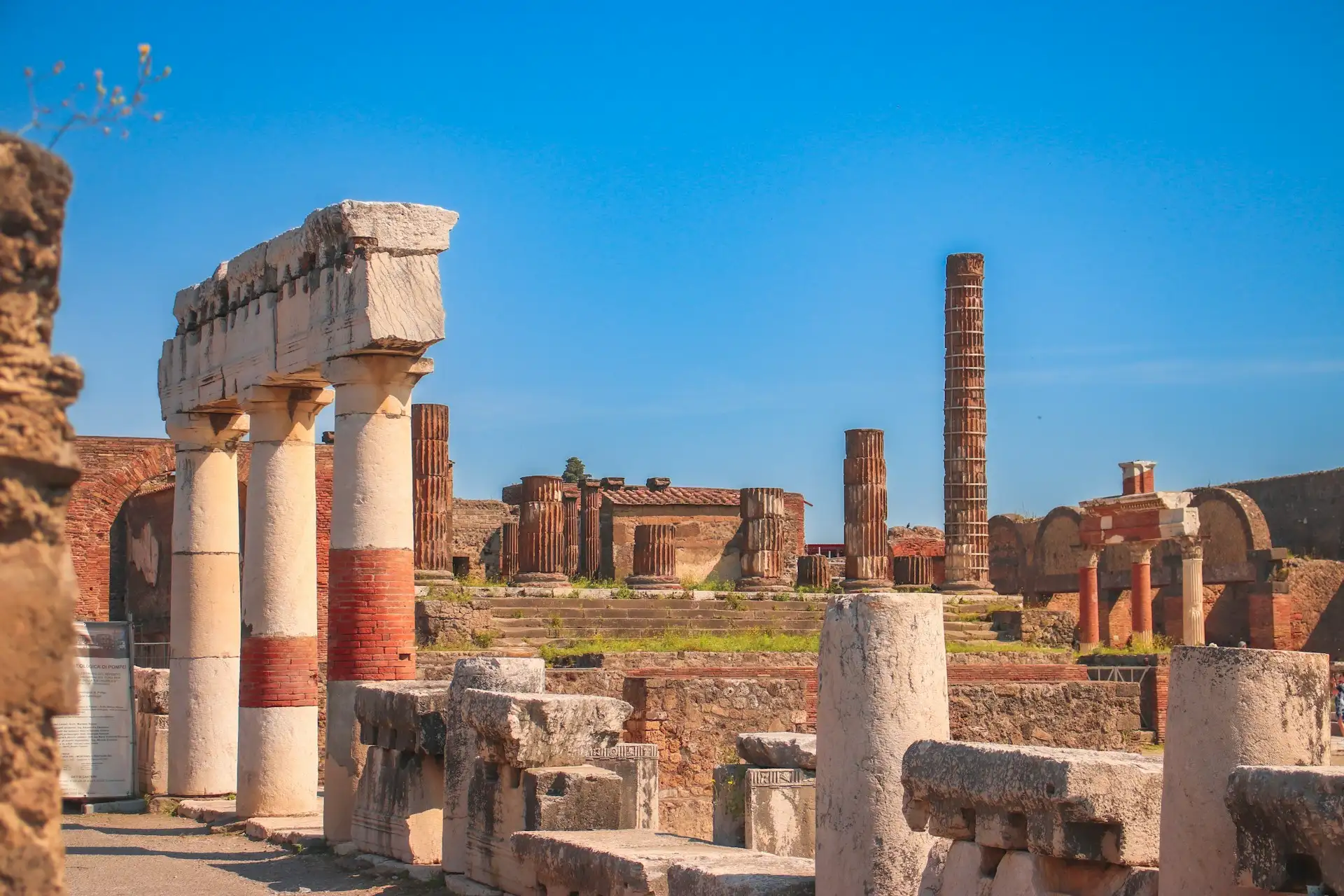
Drive thirty minutes to Pompeii and arrive when it opens. The archaeological site is enormous (allow three to four hours minimum) and genuinely extraordinary. This is not ruins in the abstract sense. This is a complete Roman city: streets with stepping stones, houses with frescoes still on the walls, a brothel with explicit signage, a forum where politics happened, and bakeries with grinding stones still in place. The plaster casts of the people who died in the eruption are the most affecting thing you'll see on the entire trip. Go early to beat the heat and the tour groups.
Afternoon option: take the ferry from Sorrento to Capri (forty minutes). The island is beautiful and expensive. The Blue Grotto is overrated unless you catch it right. The chairlift to Monte Solaro gives panoramic views of the island, the bay, and on clear days, the entire Amalfi Coast. Or skip Capri and go to Naples for pizza: L'Antica Pizzeria da Michele and Sorbillo are the names that matter, and the argument about which is better is one Naples has been having for decades.
- Pompeii Archaeological Park - Allow 3-4 hours. Book tickets online. Go early. Bring water and a hat. €18 entry.
- Forum and House of the Vettii - The civic centre and the best-preserved private house. Don't miss the frescoes.
- Capri (optional) - Ferry from Sorrento, 40 min. Monte Solaro chairlift. Beautiful but expensive.
- Naples pizza (optional) - Da Michele or Sorbillo. The birthplace of pizza. Worth the detour.
The Most Famous Drive in Italy
The Amalfi Coast road (SS163) is forty-five kilometres of single-lane hairpin turns carved into cliffs above the Mediterranean. Buses come the other way and expect you to reverse. Scooters appear from blind corners. The views are so beautiful that taking your eyes off the road is simultaneously irresistible and inadvisable. Start early (before 9am) when traffic is lighter.
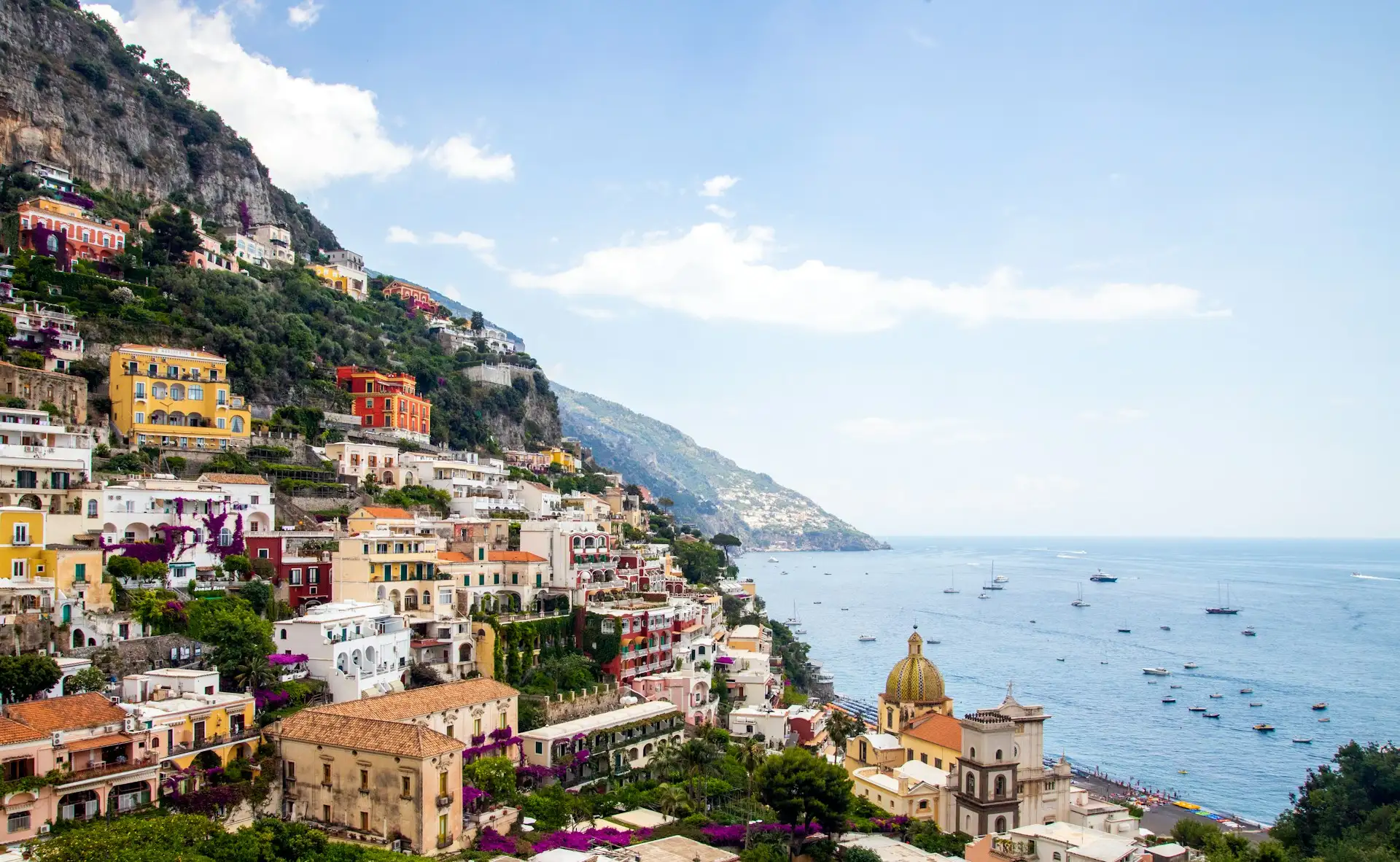
Stop in Positano, which from above looks like someone tipped a box of pastel Lego down a cliff face. The town cascades from the road down to Spiaggia Grande beach through steep, narrow lanes of boutiques and lemon-themed everything. It is genuinely as beautiful as the photographs suggest, and genuinely as crowded in July and August. Have lunch here with a view, then continue to Amalfi town. The cathedral's Arab-Norman facade dominates the small piazza. The paper museum (Amalfi was a major paper producer) is a quirky, worthwhile visit. Base here for two nights.
- Positano - The view from above, then the walk down through the lanes. Spiaggia Grande beach. Lunch with a view.
- Furore Fjord - Tiny hidden cove between Positano and Amalfi. Easy to miss. Worth stopping.
- Amalfi Cathedral - Arab-Norman facade, 9th-century origins. Cloister of Paradise is the hidden gem.
- Limoncello tasting - Amalfi lemons are the size of small melons. The limoncello made from them is the real thing.
The Terrace of Infinity
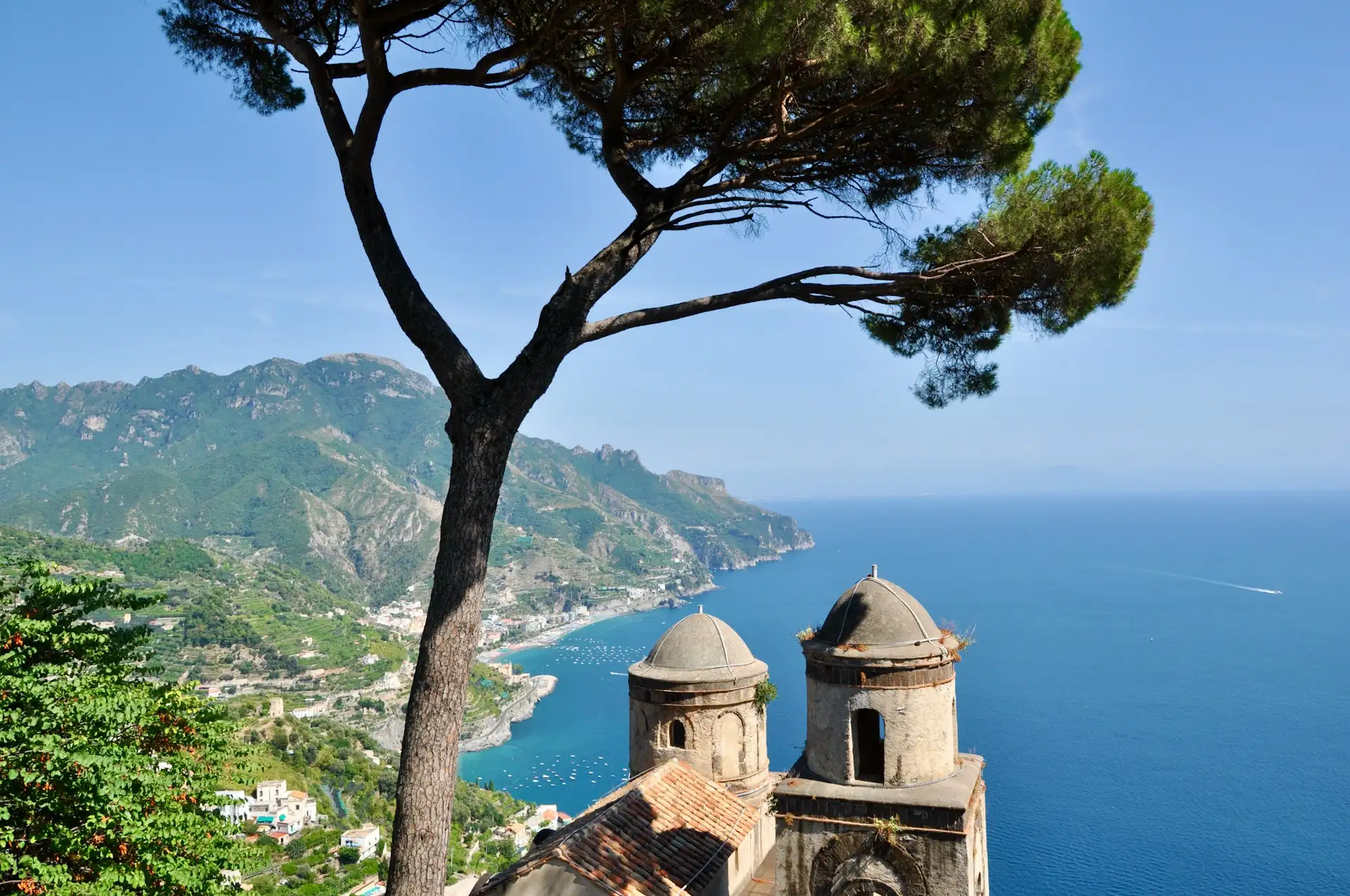
Drive up the mountain from Amalfi to Ravello, a town that sits at 350 metres above the coast and has been attracting writers, musicians, and people who like sitting in gardens overlooking impossible views since the 13th century. Wagner composed part of Parsifal here. Gore Vidal lived here for decades. The reason is immediately obvious.
Villa Rufolo has gardens with views down the entire coast. Villa Cimbrone has the Terrace of Infinity, a belvedere lined with marble busts at the cliff's edge where the view is so expansive it feels deliberate. It is. Both are worth the entry fee. Have lunch in Ravello (quieter and more refined than the coast towns below), then continue to Salerno. Salerno is a real city rather than a tourist town, which means the food is better, the prices are lower, and the evening passeggiata along the lungomare (waterfront promenade) is for locals rather than visitors. Base here for the night.
- Villa Cimbrone - Terrace of Infinity. One of the great viewpoints in Italy. Go late morning for the light.
- Villa Rufolo - Historic gardens, Wagner connection, concert venue in summer. €10 entry.
- Ravello Cathedral - 11th-century, mosaic pulpit, quieter than the coast churches.
- Salerno Lungomare - Waterfront promenade. Evening passeggiata. Real Italian city atmosphere.
Calabria's Secret Coast
South of Salerno, the tourist crowds thin out and the prices drop. This is Calabria, the toe of Italy's boot, and it is the section of this trip that people don't expect to love and then can't stop talking about. Stop at Maratea for lunch: a small coastal town with a 22-metre Christ the Redeemer statue on the hilltop above and seafood restaurants that don't charge Amalfi prices.
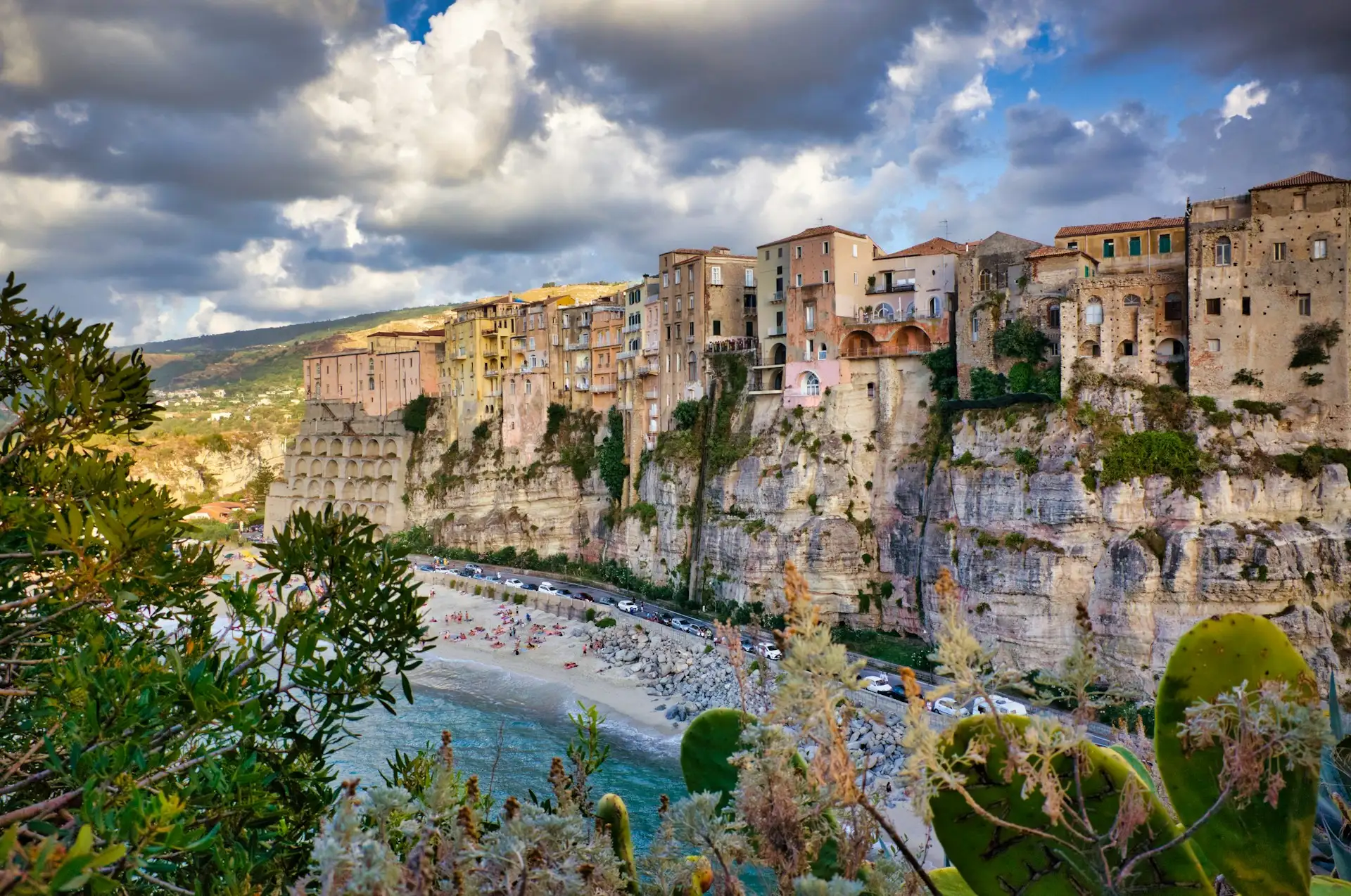
Continue to Tropea, and prepare for the moment you first see it. The old town sits on a cliff above a white sand beach with water so turquoise it looks edited. The Santa Maria dell'Isola monastery perches on a rocky promontory connected to the beach by a stone stairway. Sunset from the monastery is the photograph of the trip. Spend two days here: swim, eat Tropea's famous red onion in everything (the locals put it in gelato and it works), explore the Norman cathedral in the old town, and take a boat trip to the nearby Aeolian island of Stromboli if the weather allows. Tropea in shoulder season is one of Italy's best-kept secrets.
- Maratea - Christ statue, fishing harbour, seafood lunch. Calabria's pearl. Undervisited.
- Tropea Beach - White sand, turquoise water, cliff town above. Mainland Italy's best beach, arguably.
- Santa Maria dell'Isola - Cliff monastery connected by stone stairs. Sunset from here is the photograph.
- Tropea Old Town - Norman cathedral, red onion everything, restaurants on the cliff edge.
Crossing to Sicily
Drive to Villa San Giovanni and take the car ferry across the Strait of Messina to Sicily. Ferries run every twenty to thirty minutes, the crossing takes twenty minutes, and you simply drive on and off. No advance booking needed. The moment you drive off the ferry in Messina, the driving style changes in ways that are hard to describe but immediately obvious. Sicily has its own tempo.
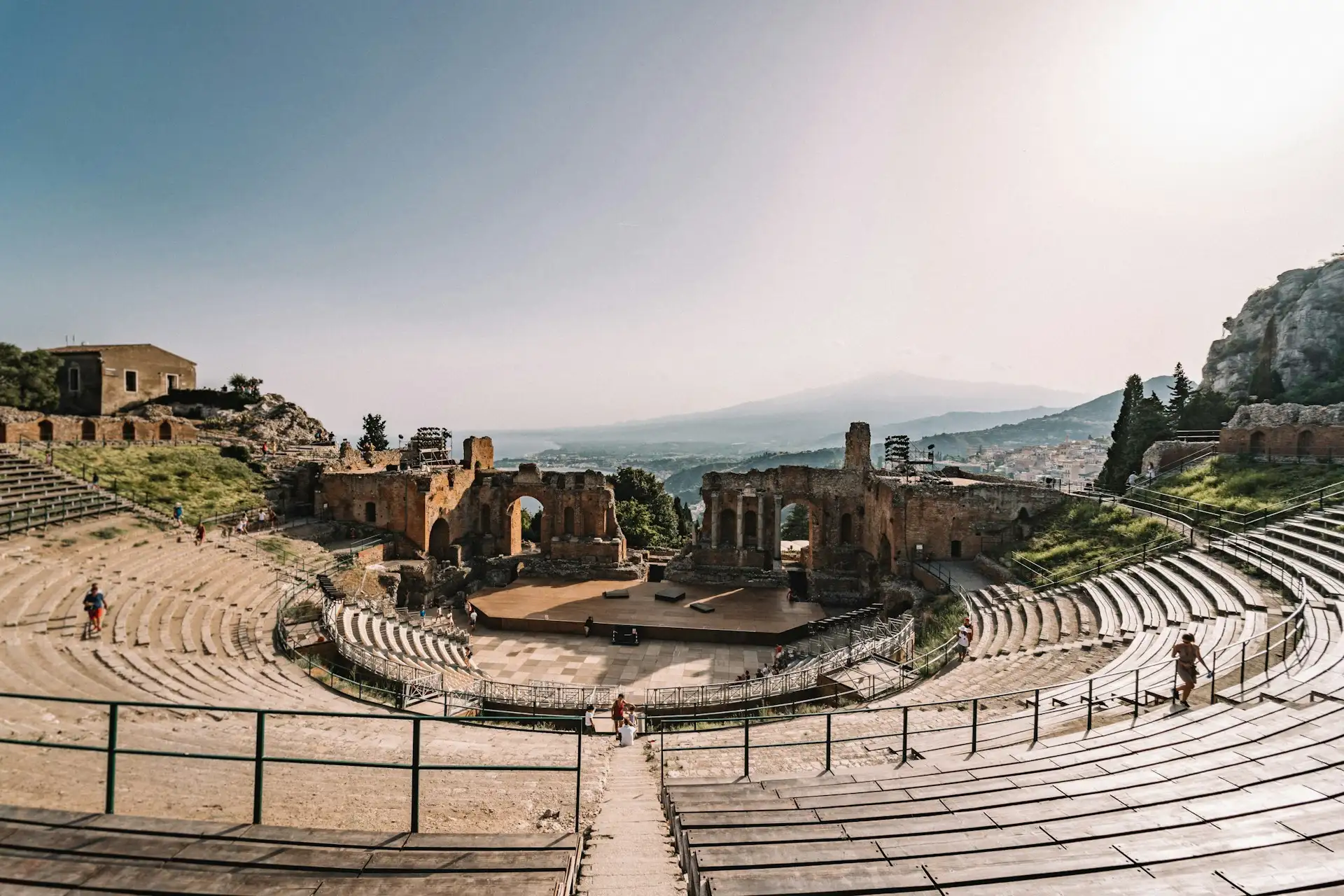
Head south along the coast to Taormina, Sicily's most elegant hilltop resort town. The ancient Greek theatre, built in the 3rd century BCE and later modified by the Romans, has Mount Etna as its backdrop. The view from the top seats, with the volcano smoking gently above the stage, is one of the great theatrical settings on earth. Corso Umberto is the pedestrian main street: pastry shops, linen boutiques, and gelato that takes the concept seriously. Isola Bella beach is below the town, reached by cable car. Consider a day trip to Mount Etna (guided tours go to the summit craters) or the Alcantara Gorges (a volcanic basalt canyon with cold, clear water you can wade through).
- Ancient Greek Theatre - 3rd century BCE. Etna behind the stage. One of the great views in the Mediterranean. €13 entry.
- Isola Bella - Beach cove below Taormina. Cable car down. Beautiful and crowded in summer.
- Mount Etna day trip - Guided tours to the summit craters. Active volcano. Genuinely impressive. Book ahead.
- Corso Umberto - Taormina's pedestrian main street. Pastry shops, aperitivo spots, evening passeggiata.
Ancient Syracuse and Journey's End
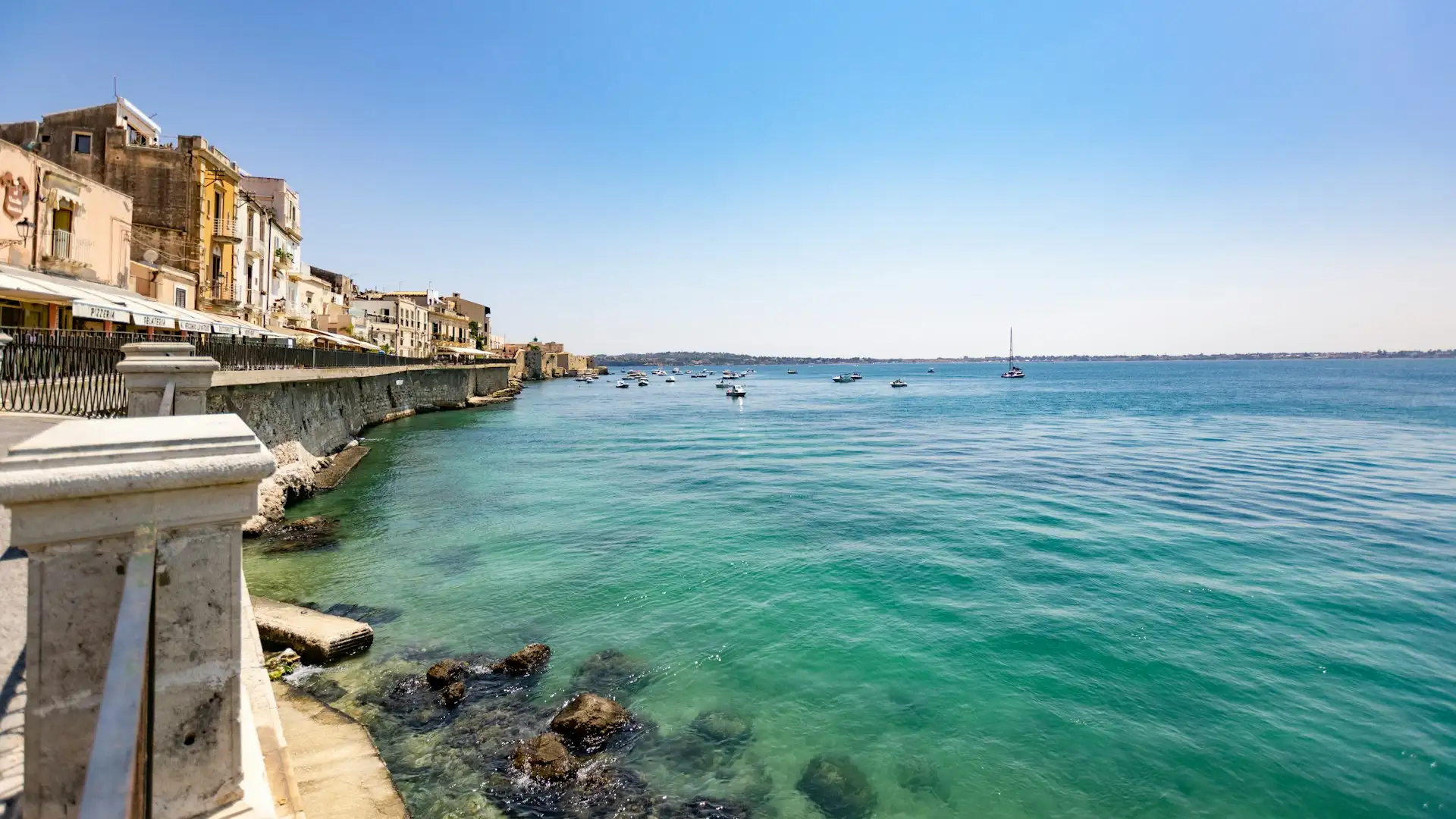
Drive south to Syracuse, which was once the most powerful city in the Greek world and which Cicero called the most beautiful city he had ever seen. The Archaeological Park has a Greek theatre still used for summer performances, a Roman amphitheatre, and the Ear of Dionysius (a limestone cave with extraordinary acoustics). The real magic is Ortigia, the island that forms Syracuse's historic centre: narrow streets, baroque palaces, a morning market selling fish that was swimming two hours ago, and the Temple of Athena built into the wall of the cathedral because Sicilians believe in not wasting a good building.
End in Catania, Sicily's second city, built from Etna's black lava stone and rebuilt after the volcano and earthquakes have knocked it down repeatedly. The fish market (La Pescheria) is chaotic, noisy, and the best free entertainment in Sicily. Via Etnea runs straight from the port toward the volcano. Return your car at Catania airport and fly home, or keep going. Sicily has enough to fill another two weeks if you head west to Palermo, Cefalu, and the Valley of the Temples at Agrigento.
- Syracuse Ortigia - Island historic centre. Baroque architecture, morning fish market, Temple of Athena in the cathedral wall.
- Neapolis Archaeological Park - Greek theatre, Roman amphitheatre, Ear of Dionysius. €13 entry.
- Catania Fish Market - La Pescheria. Morning chaos, swordfish as big as people, and the energy of a city that has survived volcanoes.
- Via Etnea - Catania's main street, running toward Etna. Baroque churches, pastry shops, and the volcano framed at the far end.
Must-See Locations
Three places on this route stay with you longer than the rest. You'll photograph all of them and describe them to people who then book the same trip.
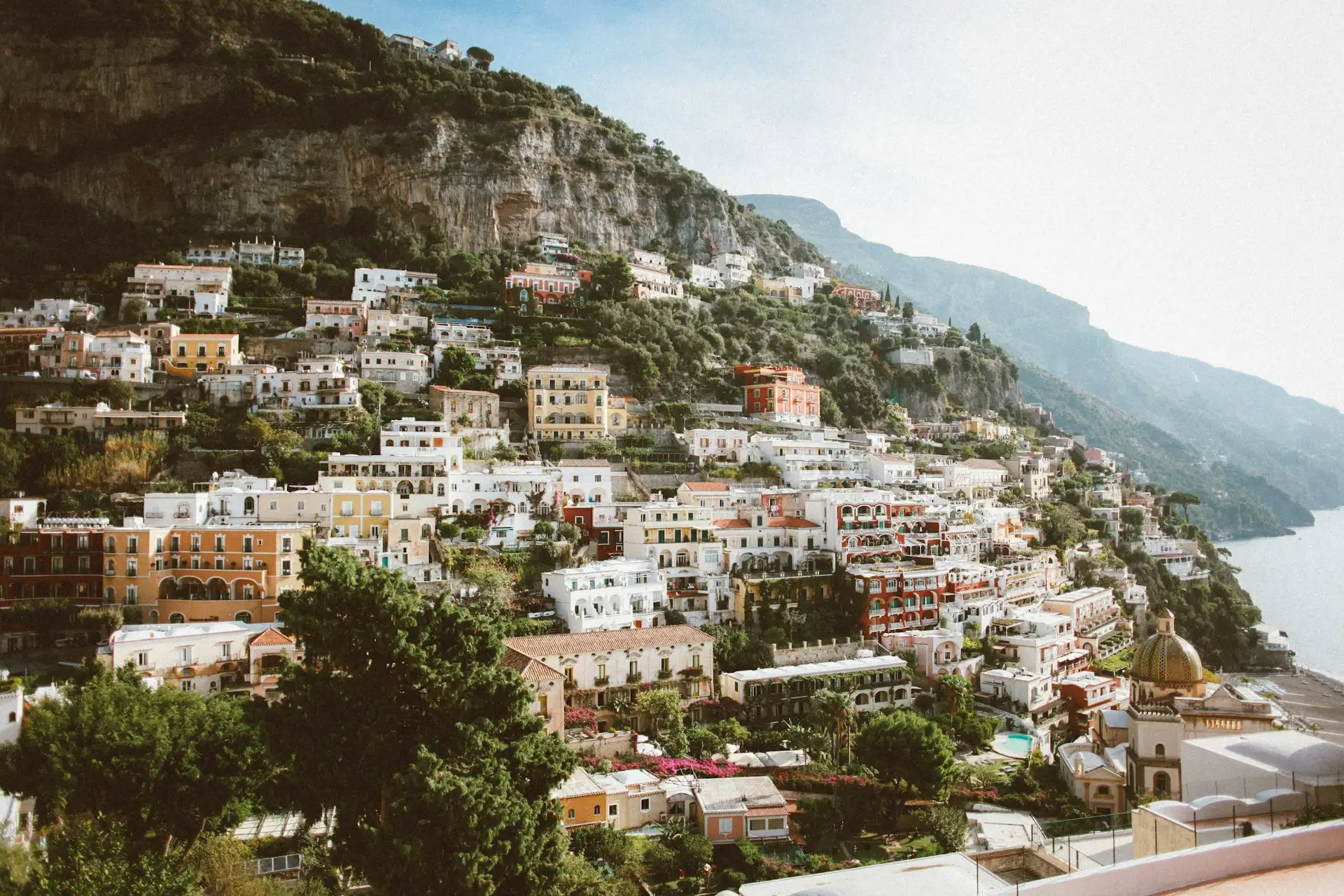
Positano
Pastel houses cascading down cliffs to the sea. The view from above before you descend into the town. The Amalfi Coast's most photographed village, and it earns every frame.
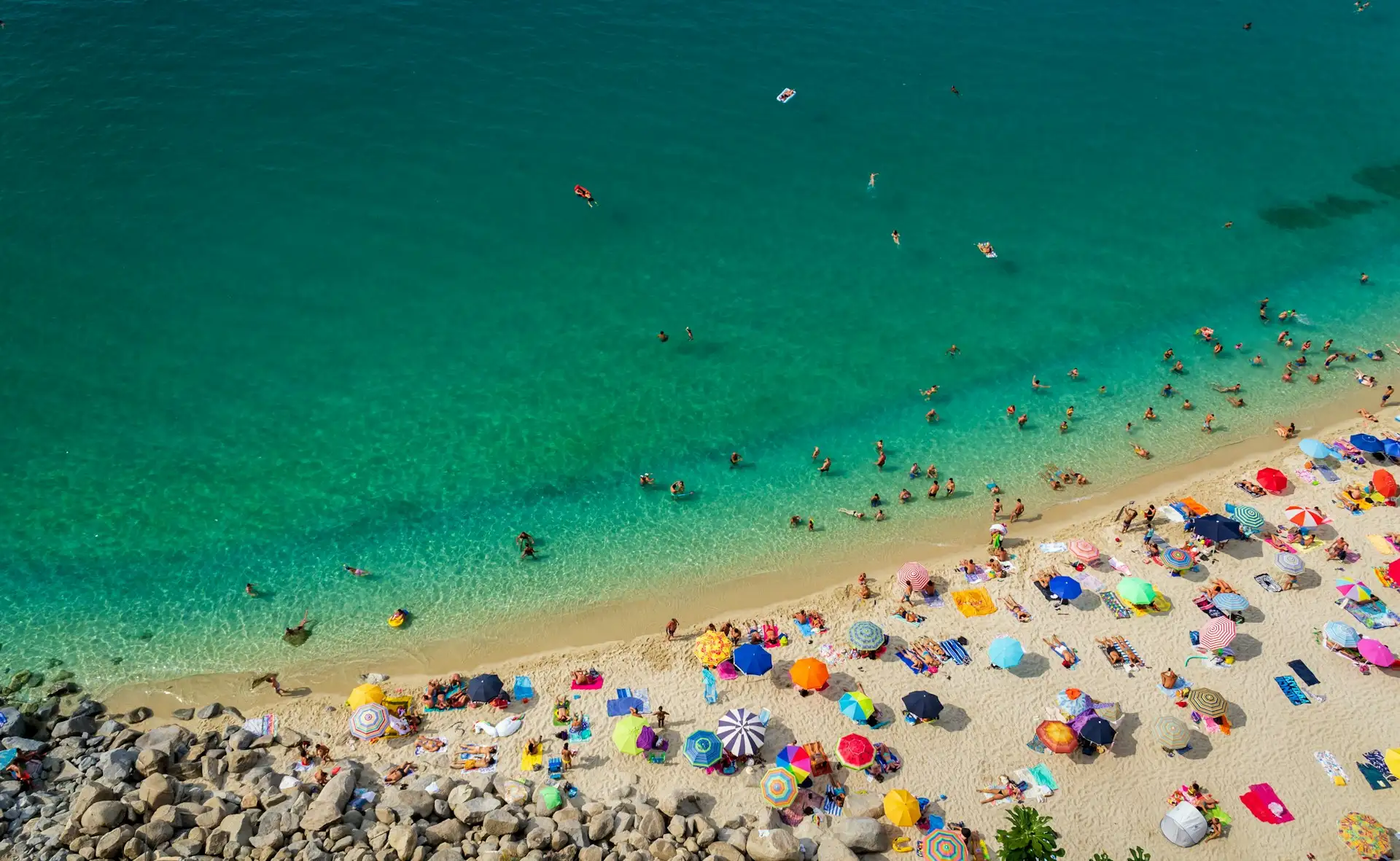
Tropea
Calabria's secret. Clifftop old town above white sand and turquoise water. Santa Maria dell'Isola at sunset. The place on this trip that nobody expects and nobody forgets.
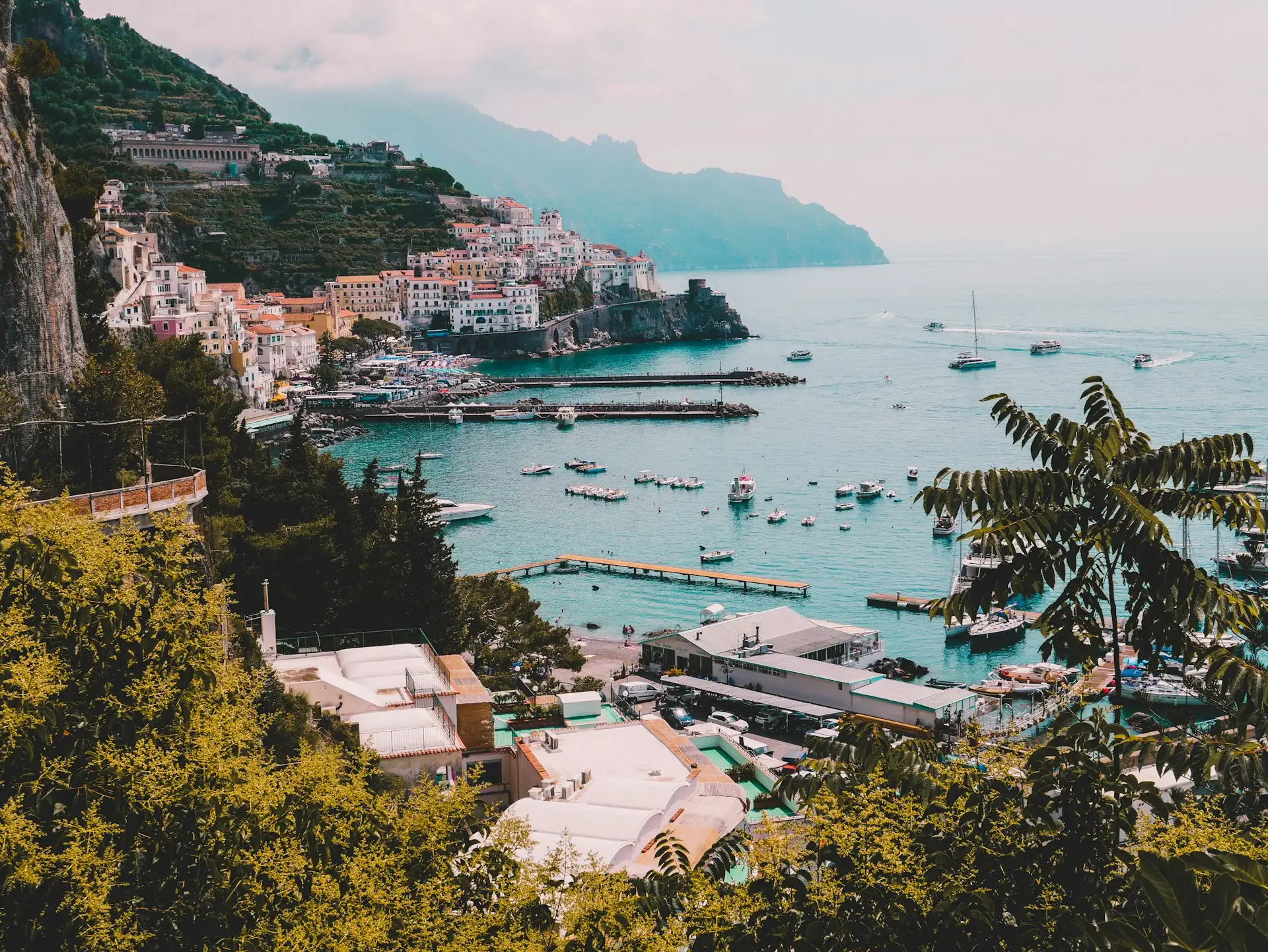
The Amalfi Drive
Forty-five kilometres of hairpin turns above the Mediterranean. Terrifying. Beautiful. The most famous coastal drive in Italy, and it deserves to be.
Driving & Tolls
Italian driving has a reputation. It is earned. The Amalfi Coast road in particular requires genuine concentration, a small car, and a willingness to reverse when a bus appears around a blind corner. That said, the infrastructure is good, the motorways are fast, and the rewards for driving yourself rather than taking tours are significant.
Car Size
Compact only. The Amalfi Coast, Positano's streets, and Sicilian old towns are not built for large vehicles. A Fiat 500, Panda, or equivalent is ideal. Manual is cheaper and more available. Automatic costs extra but is worth it on the Amalfi Coast where you need hands free for gesticulating at oncoming traffic.
Tolls (Autostrada)
Italian motorways charge tolls at booths. Rome to Salerno costs approximately €20-25. Telepass lanes (electronic) are fastest. Keep cash or a card ready. The toll system adds up over 1,200 km; budget €60-80 total for the route.
ZTL Zones
Most Italian town centres have ZTL (Zona Traffico Limitato) restricted driving zones. Enter one without a permit and you'll receive a fine (€80-100) by post weeks later. These are camera-enforced. Check before driving into any old town. Sorrento, Positano, Amalfi, and Taormina all have them.
Fuel & Parking
Fuel is expensive in Italy (€1.70-1.90/litre). Self-service pumps are cheaper than attended. Parking on the Amalfi Coast is limited and costly (€5-8/hour in Positano). Park outside towns and walk or take local buses. Sorrento has good peripheral parking.
Sicily Ferry
Villa San Giovanni to Messina. Ferries every 20-30 minutes. Drive on, 20-minute crossing, drive off. €30-40 per car. No advance booking needed. The crossing itself has views of both coastlines and occasionally dolphins.
Navigation
Download offline Google Maps for the entire route. Signal drops on some coastal stretches. A phone mount is essential for the Amalfi Coast where you cannot look at a phone in your lap. Waze is useful for real-time traffic around Naples.
Essential Tips
🌞 Best Season
May-June and September-October are perfect: warm, swimmable, and significantly less crowded than July-August. Peak summer on the Amalfi Coast is genuinely stressful: traffic, crowds, heat, and prices all peak simultaneously. Shoulder season gives you 90% of the experience at 60% of the cost and stress.
🏨 Accommodation
Book Amalfi Coast hotels months ahead for summer. Consider agriturismos (farm stays) inland for authentic experiences and better value. Calabria and Sicily are significantly cheaper. Tropea and Taormina have excellent mid-range options. B&Bs often include breakfast.
🍝 Food
Lunch is 12:30-2:30pm, dinner after 7:30pm. Restaurants that serve at 6pm are for tourists. Regional differences matter: pizza in the Naples area, seafood on the coast, arancini and cannoli in Sicily. A coperto (cover charge, €1-3) is normal. Tipping is not expected but rounding up is appreciated.
🍷 Drinks
Coffee at the bar (standing) is cheaper than at a table. An espresso should cost €1-1.20 at the bar. Wine by the carafe at local restaurants is often excellent and cheap. Aperol spritz is the universal pre-dinner drink. Limoncello after dinner on the Amalfi Coast is obligatory.
💳 Money
Euros. Cards accepted in most restaurants and hotels. Some smaller places and parking meters are cash-only. ATMs are plentiful. Avoid currency exchange booths at airports. Revolut or Wise cards give the best exchange rates for non-euro visitors.
👜 Packing
Light layers, swimwear, comfortable walking shoes (cobblestones are hard on ankles), sunscreen (Mediterranean sun is stronger than it feels), a light scarf for church visits (shoulders and knees covered), and a small daypack. Pack light because your car is small and your hotel might be up three flights of stairs.
Budget Planning
Italy is not the cheapest country in Europe, but it is far better value than its reputation suggests if you know where the money goes. The Amalfi Coast is expensive. Calabria is cheap. Sicily is somewhere in between. The biggest variable is accommodation: an Amalfi Coast hotel in August costs three times what the same room costs in May.
Book Your Trip
Everything in one place.
The Drive Where Every Meal Is Better Than the Last
Italy does many things well, but the thing it does better than anywhere else is make you feel like every region is the real Italy and every other region is missing the point. The Neapolitans believe pizza was perfected in their city and everyone else is guessing. The Calabrians think their seafood is the best on the coast and won't entertain alternatives. The Sicilians know that cannoli should only be filled to order and will judge you if you accept one that's been sitting in a case.
They're all right. That's the trick. From Rome's ancient grandeur to Pompeii's frozen moment, from the Amalfi Coast's impossible cliffs to Tropea's hidden beach, from the ferry crossing to Sicily's volcanic drama, this route gives you the southern Italy that exists in people's imaginations, and then surpasses it. 1,200 kilometres of coastline, ten days of driving, and a lifetime of describing the food to people who weren't there.