
Georgian Military
Highway
Tbilisi to Batumi through the Caucasus. A road the Russian Empire built across mountains that didn't want to be crossed, through a country that has been making wine for 8,000 years and toasting strangers for longer.
Route Overview
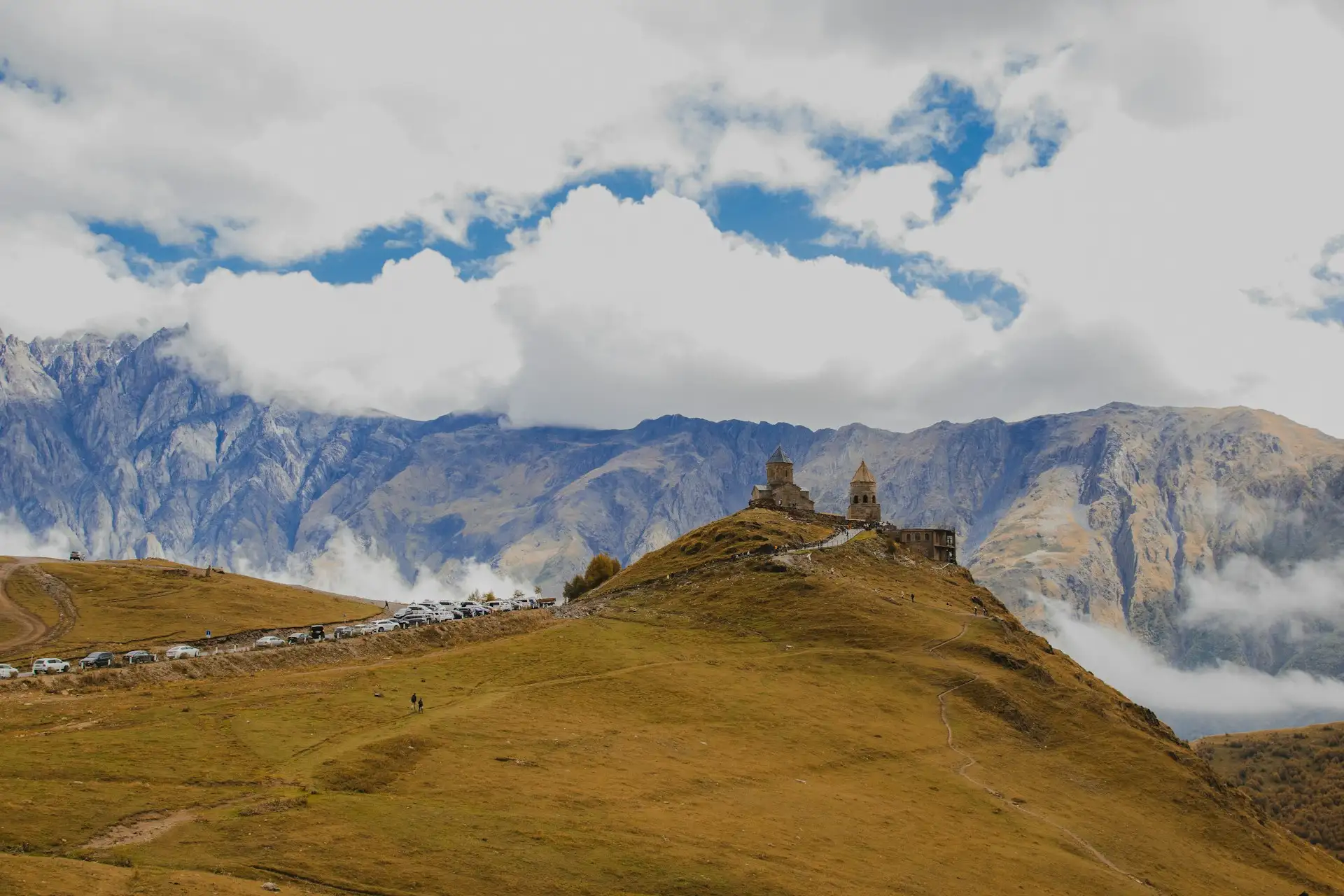
The Georgian Military Highway is one of the most dramatic mountain roads on earth. Built by the Russian Empire in the early 19th century to move troops across the Greater Caucasus, it climbs from Tbilisi at 400 metres to the Cross Pass at 2,395 metres, passing beneath Mount Kazbek's 5,047-metre peak on its way to the Russian border. You won't be going to Russia. You'll be turning around at Kazbegi, driving back through the most scenic bits, and then heading west into Svaneti, a region so isolated that its medieval tower villages survived into the modern era essentially unchanged.
This is not a polished European roadtrip. Georgia's roads range from excellent (the main highway) to adventurous (the road to Ushguli). The driving style is assertive in ways that will make you grip the steering wheel. The reward for tolerating all of this is a country where the hospitality is so intense that strangers invite you to multi-hour feasts (supras), where wine has been made in clay vessels buried in the ground (qvevri) for 8,000 years, and where a plate of khinkali dumplings costs less than a London coffee.
Georgia is one of the best-value destinations anywhere. The food is extraordinary and absurdly cheap. The landscapes move from Caucasus peaks to subtropical Black Sea coast within a single country. The people are warm in a way that feels genuine because it is. The country offers visa-free entry for up to a year for most nationalities, which tells you something about how much they want you there.
The Itinerary
Georgia's Irresistible Capital
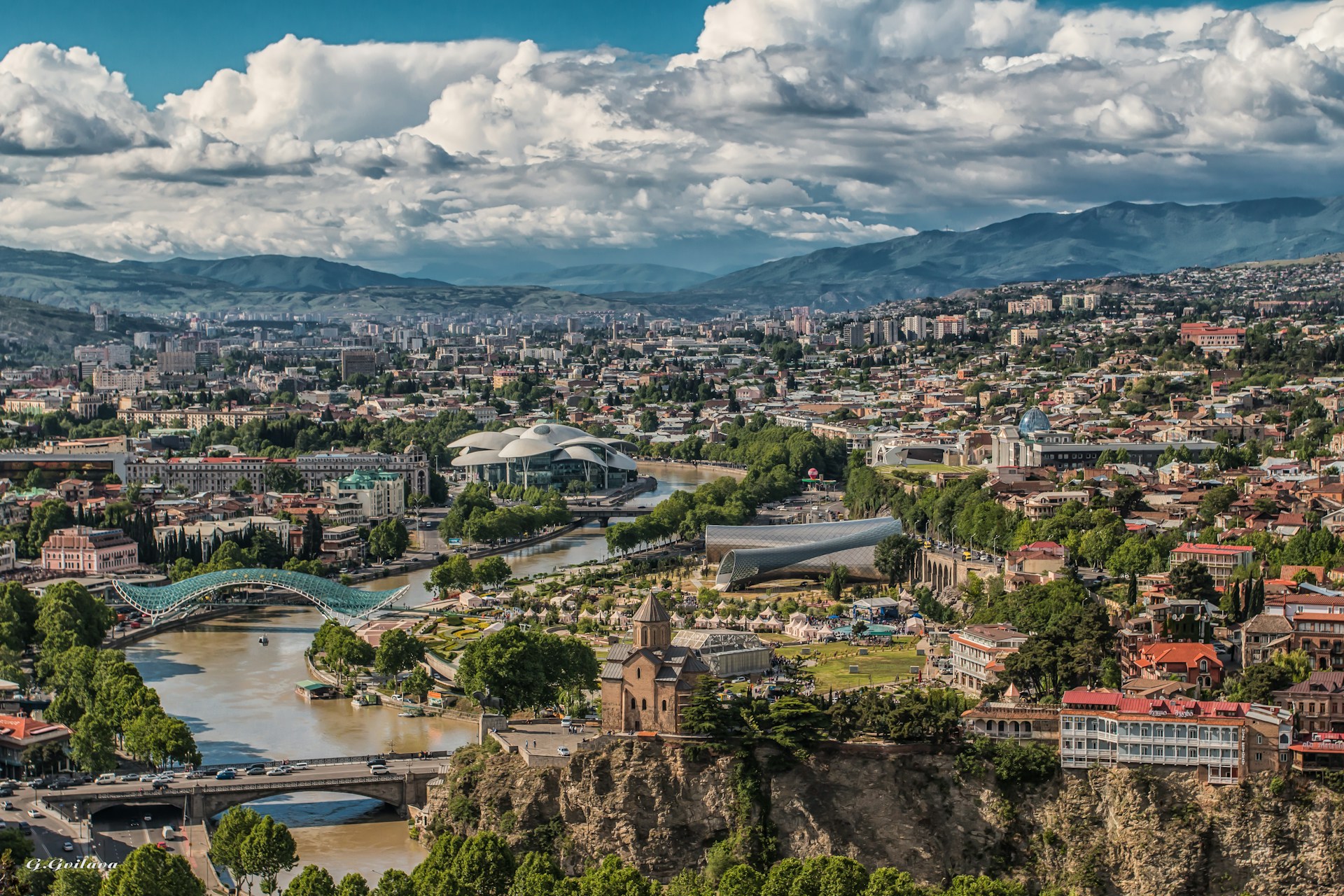
Tbilisi is a city that shouldn't work but does. Wooden balconies lean out over cobblestone streets at angles that suggest the buildings are having a conversation. Sulfur baths steam in the old quarter beneath a hilltop fortress. A futuristic glass bridge connects two neighbourhoods that couldn't look more different. The whole thing sits in a valley along the Mtkvari River and manages to feel simultaneously ancient and alive.
Start at the Narikala Fortress, either by cable car or on foot up the ridge. The view from the top covers the entire old town, the river, and the cathedral. Walk down through the sulfur bath district (Abanotubani) and try Chreli Abano or the No.5 bathhouse for the full experience: hot sulfur water, a scrub from an attendant who has no interest in being gentle, and a feeling of cleanliness that lasts three days. In the evening, find a restaurant in the old town and eat khinkali (twisted dumplings filled with spiced meat and broth, eaten by hand, twisted top discarded), khachapuri Adjarian (boat-shaped cheese bread with an egg and butter melting in the centre), and pkhali (walnut and vegetable patties). Pick up your rental car on day two afternoon.
- Narikala Fortress - Cable car or walk up. Panoramic views over the old town and river valley.
- Sulfur Baths (Abanotubani) - Historic bathhouses. Chreli Abano for the tiled domes. Budget ₾30-80 for a private room.
- Rustaveli Avenue - Main boulevard, National Museum (gold artefacts from 3000 BCE), opera house, street life.
- Fabrika - Former Soviet sewing factory turned creative space. Bars, cafes, courtyard. Where young Tbilisi hangs out.
The Legendary Highway and Mount Kazbek
Day three is the drive that gives this roadtrip its name. Head north from Tbilisi and stop first at Mtskheta, Georgia's ancient capital and a UNESCO World Heritage site. The Svetitskhoveli Cathedral, built in the 11th century, is where Georgians believe the robe of Christ is buried. Whether or not you find that credible, the cathedral is beautiful and the town around it is compact enough to see in an hour.
Continue north past the Aragvi Reservoir to Ananuri Fortress, a 17th-century complex with two churches and defensive towers overlooking turquoise water. This is the photograph that appears on every Georgia tourism poster. The road then begins to climb seriously: through gorges, past the Gudauri ski resort, and over the Cross Pass (Jvari Pass) at 2,395m, where a Soviet-era Friendship Monument offers 360-degree mountain views from a tiled panoramic platform.
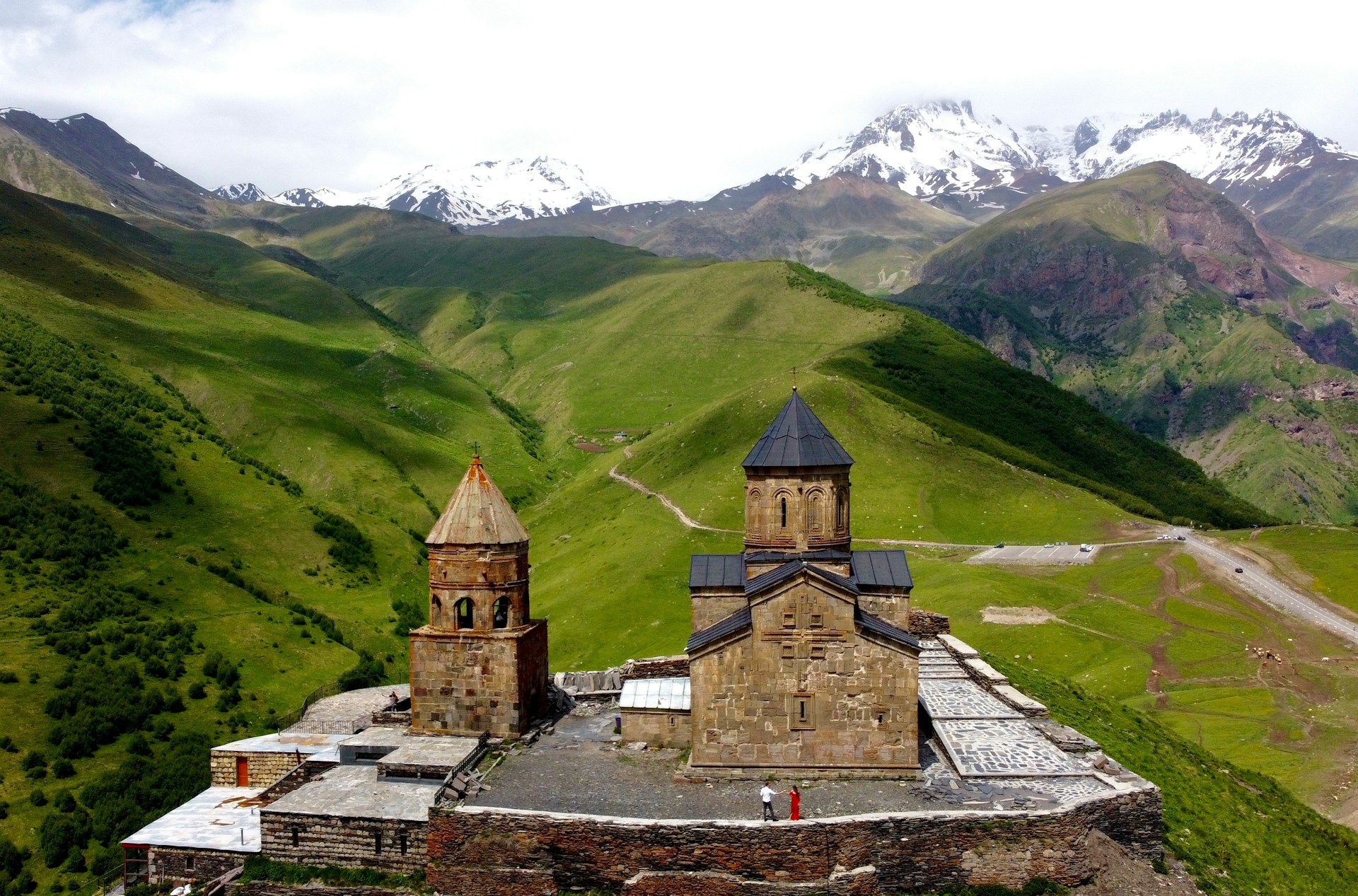
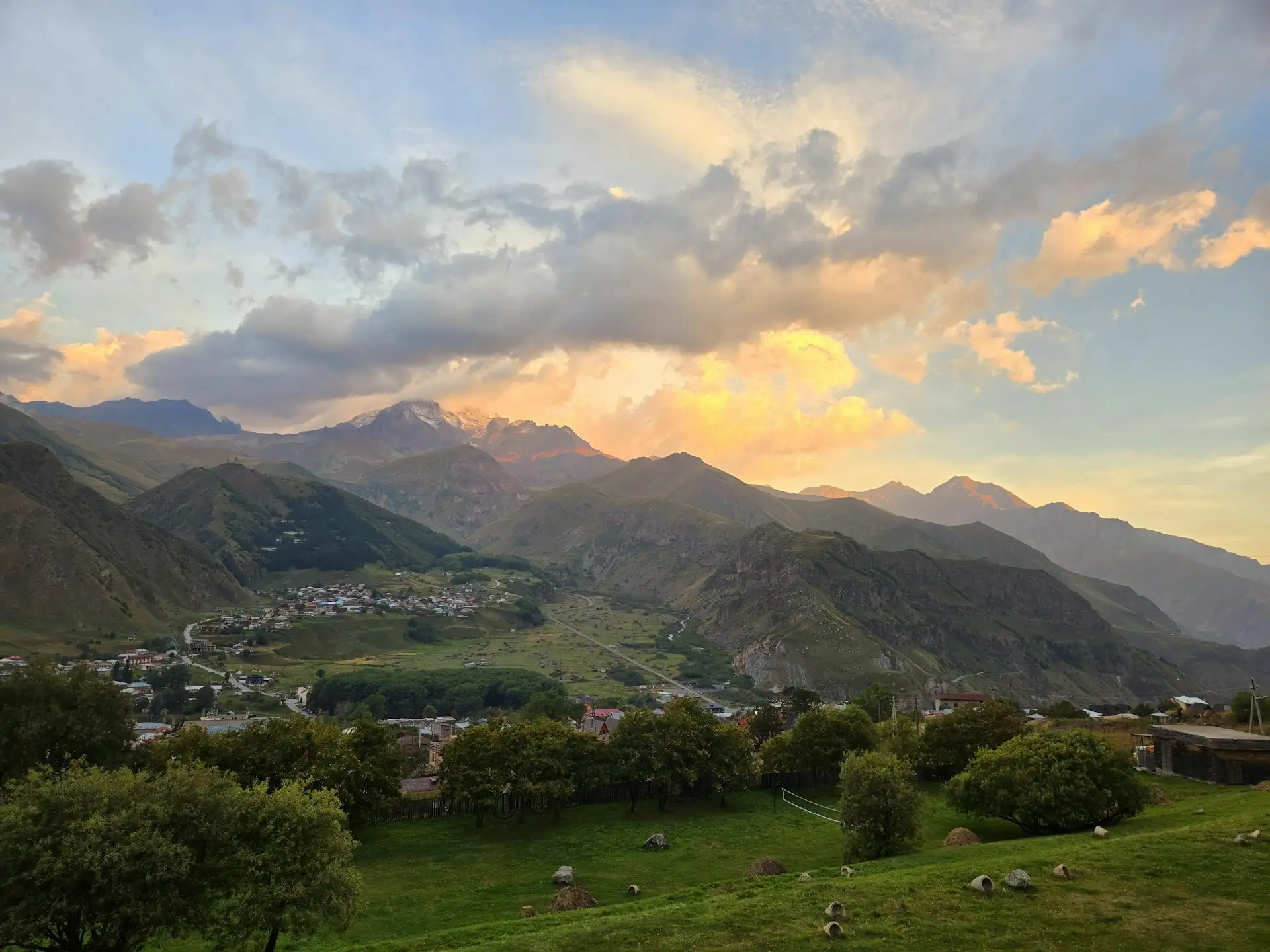
Arrive in Kazbegi (officially Stepantsminda), a village at 1,740m beneath Mount Kazbek's 5,047-metre peak. Day four is for Gergeti Trinity Church: a 14th-century stone church perched at 2,170m on a hilltop with Kazbek as its backdrop. Hike up (steep, 3-4 hours round trip, worth every step) or take a 4x4 taxi. Go early morning or late afternoon for the light. If you're fit and ambitious, continue past the church toward the glacier for another three to four hours of increasingly dramatic scenery.
- Mtskheta - UNESCO ancient capital. Svetitskhoveli Cathedral. Jvari Monastery on the hilltop above.
- Ananuri Fortress - Photogenic fortress on turquoise reservoir. Churches, towers, water. Allow 30-45 min.
- Cross Pass (2,395m) - Soviet Friendship Monument. Panoramic mountain views. Cold and windy. Bring a layer.
- Gergeti Trinity Church - Georgia's most iconic sight. Hike or 4x4 taxi. Early morning or late afternoon for the best light.
Western Georgia
Drive back south and then west through the heart of Georgia. Stop in Gori if you have an interest in Soviet history: the Stalin Museum (he was born here in 1878) is a fascinating exercise in how a country memorialises a complicated figure. The museum is more hagiographic than critical, which is itself informative. Continue west through the Rikoti Pass into the Imereti region.
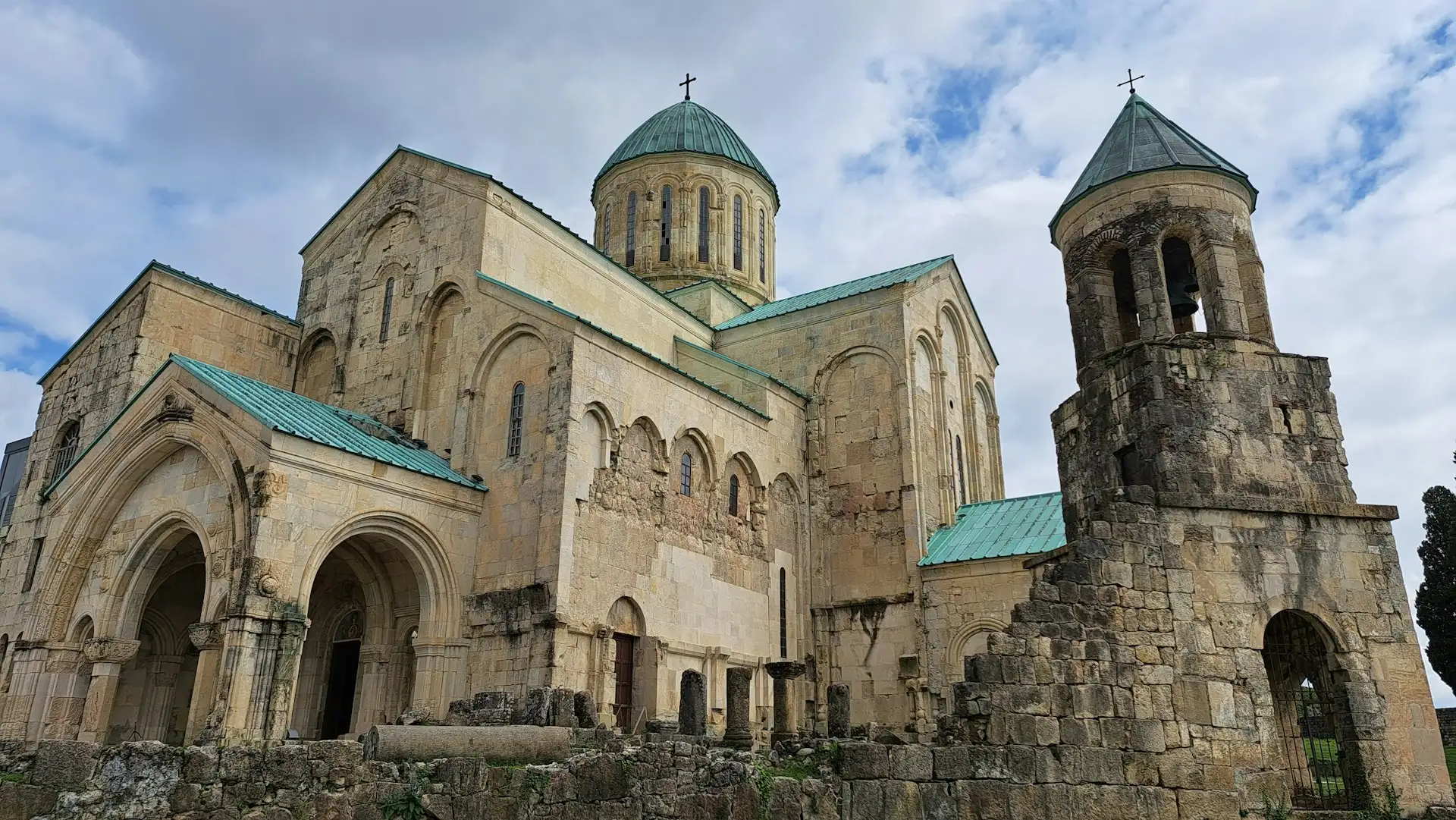
Kutaisi is Georgia's second city and one of the oldest continuously inhabited cities in Europe. The UNESCO-listed Gelati Monastery, built in 1106 by King David the Builder, has frescoes that glow in the dim light of the interior and a sense of calm that the medieval monks probably intended. The Bagrati Cathedral sits on a hill above the city with views across the river valley. The Green Bazaar in the centre is where locals buy churchkhela (strings of walnuts dipped in thickened grape juice, dried and hung like candles), seasonal fruit, and the spice mixes that make Georgian food taste the way it does. Prometheus Cave, thirty minutes outside the city, is a kilometre-long limestone cavern with stalactites, an underground river, and lighting that makes the geological formations look deliberate.
- Gori Stalin Museum - His birthplace, personal train carriage, and a museum that tells one version of the story. Optional but interesting.
- Gelati Monastery - UNESCO site. 12th-century frescoes in extraordinary condition. Twenty minutes from Kutaisi centre.
- Kutaisi Green Bazaar - Churchkhela, spices, seasonal fruit, local cheese. Where Kutaisi shops.
- Prometheus Cave - Kilometre-long limestone cave. Underground river. Boat ride available. ₾23 entry.
Remote Svaneti and the Towers
The drive to Svaneti is where this roadtrip shifts from scenic to genuinely adventurous. The road from Zugdidi into the mountains has been improved (it used to be notorious) but still winds through gorges and along cliff edges that will remind you why you opted for the insurance upgrade. The reward is one of the most unusual places in Europe.
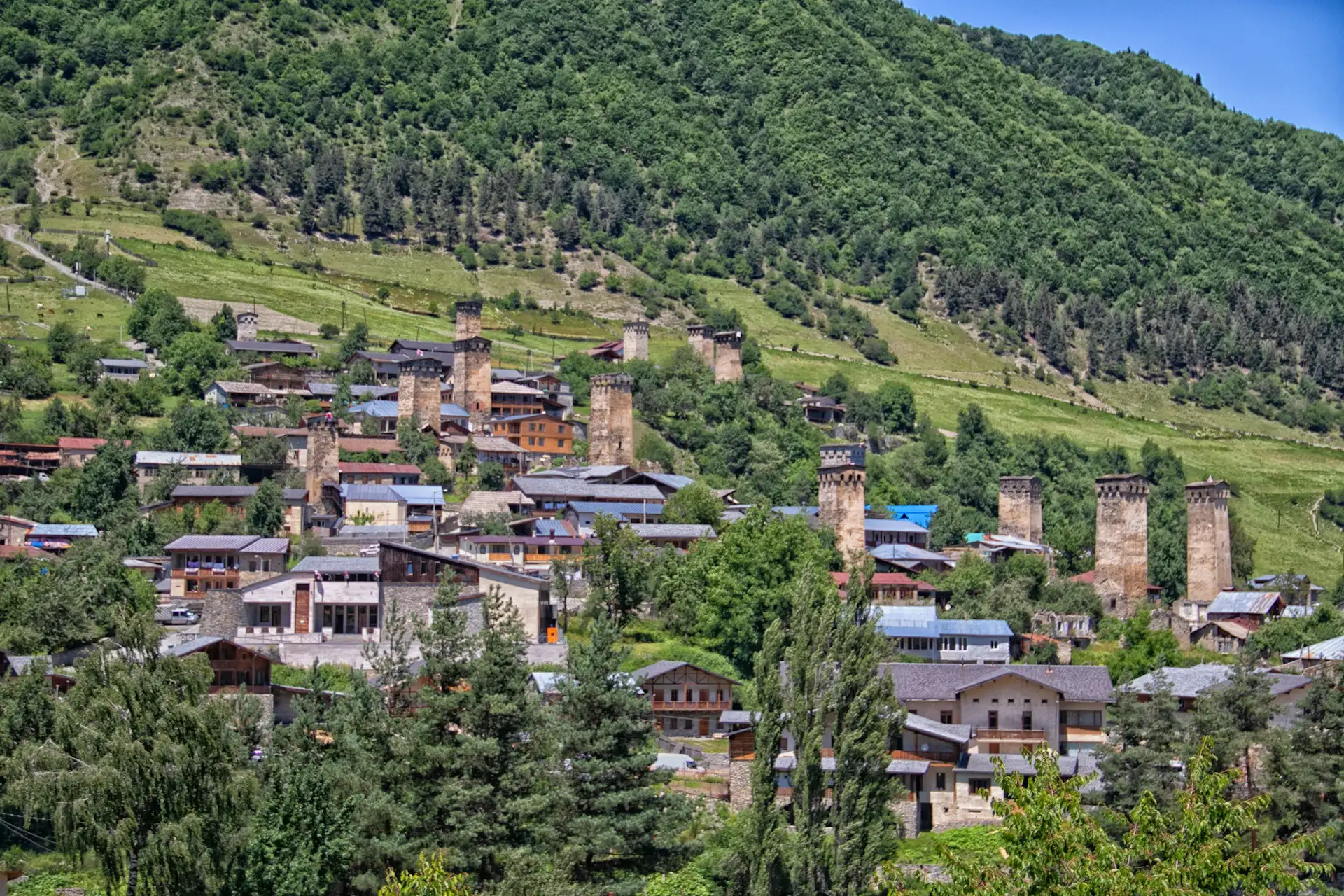
Svaneti was isolated by geography for centuries. The result is a highland culture with its own language, its own cuisine, and its own architectural signature: stone defensive towers built between the 9th and 13th centuries by individual families, used for shelter during blood feuds and invasions. Mestia, the main town of Upper Svaneti, is surrounded by peaks and dotted with these towers. The Svaneti Museum of History and Ethnography is better than you'd expect for a mountain town of 2,000 people. Hike to Chalaadi Glacier (three hours return, straightforward) for a close encounter with Caucasus ice.
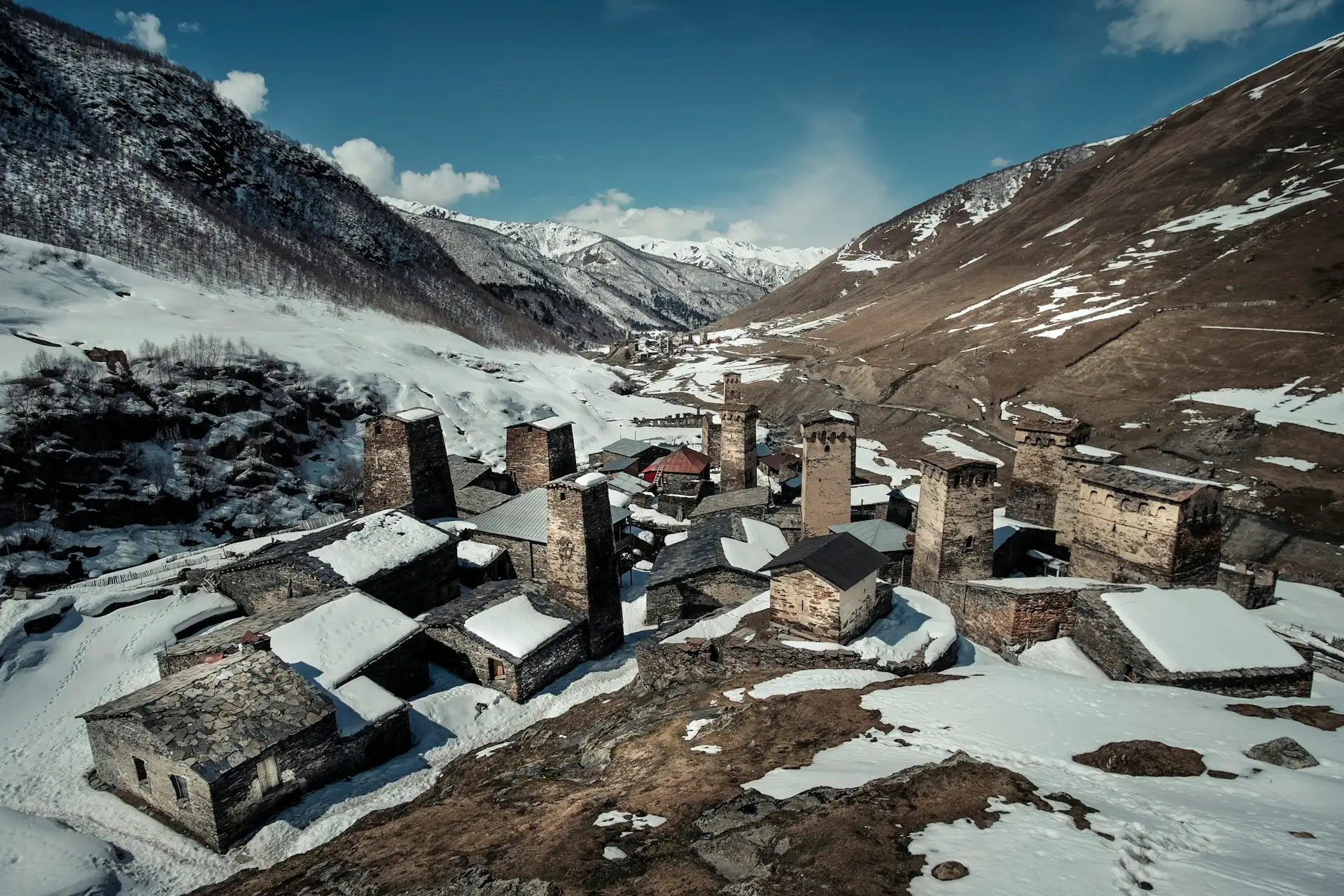
The highlight of Svaneti is the day trip to Ushguli, a cluster of villages at 2,200m that claims to be the highest continuously inhabited settlement in Europe. The road from Mestia is 40 km and takes about two hours each way on rough track (4x4 essential or hire a local driver). What you find at the end is a UNESCO World Heritage hamlet of stone towers against the backdrop of Mount Shkhara (5,193m, Georgia's highest peak). The isolation, the architecture, and the scale of the mountains behind make Ushguli feel like a place that time forgot because it wasn't interested in keeping up.
- Mestia - Svan towers, excellent museum, glacier hikes, mountain guesthouses with home cooking.
- Ushguli - Europe's highest village. UNESCO towers. Mount Shkhara backdrop. 4x4 day trip from Mestia.
- Chalaadi Glacier - Three-hour return hike from Mestia. River crossings, forest, then ice.
- Svan cuisine - Kubdari (meat-filled bread), tashmjabi (mashed potato with cheese), and chacha strong enough to sterilise things.
Black Sea Finale
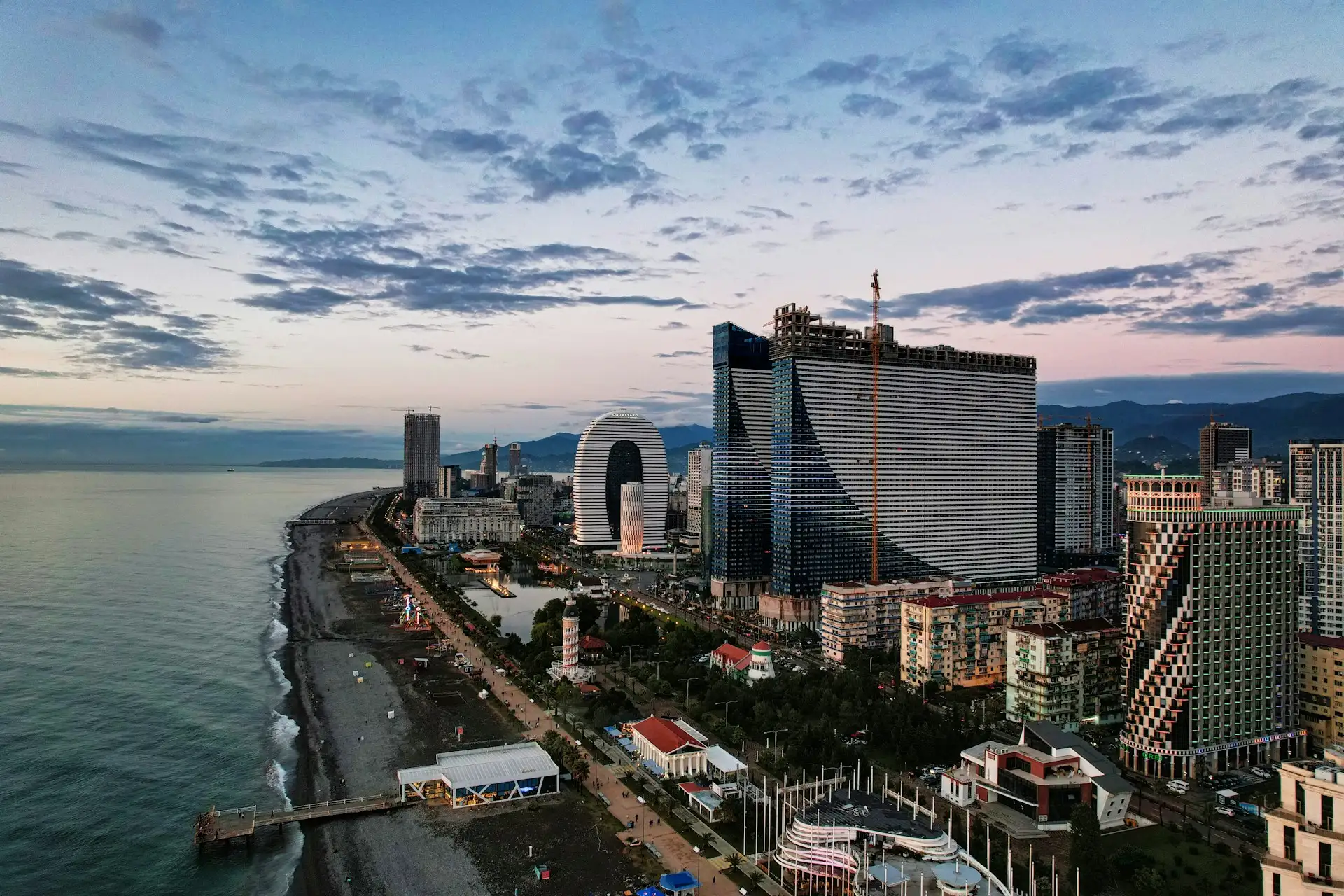
The descent from Svaneti to the coast is one of the most dramatic altitude changes on any roadtrip anywhere. You leave medieval tower villages at 1,500m and arrive at a subtropical Black Sea resort town with palm trees, casinos, and a seven-kilometre waterfront promenade lined with dancing fountains. The shift in climate, architecture, and energy is so complete that it feels like you've crossed a border.
Batumi is Georgia's summer capital and beach city. The Boulevard (seven kilometres of seafront, palms, sculptures, and cafes) is the evening passeggiata. The moving Ali and Nino statue (two metal figures that pass through each other every ten minutes) is better than it sounds. The Old Town has cobblestone streets, a piazza, and a mosque next to a synagogue next to a church, which tells you something about Georgia's approach to coexistence. The pebble beach is for swimming (the water is warm from June to September). The food shifts to Adjarian specialities: the boat-shaped khachapuri Adjarian (cheese bread with an egg cracked into the centre and a knob of butter melting into it) is the regional masterpiece. End your trip with fresh Black Sea fish, a bottle of Georgian wine, and the satisfaction of having driven one of the great mountain roads on earth from one end of a country to the other.
- Batumi Boulevard - 7 km waterfront promenade. Evening walks, fountains, cafes, beach access.
- Ali and Nino Statue - Moving metal sculpture. Two figures pass through each other every ten minutes. Go at sunset.
- Batumi Old Town - Piazza square, religious coexistence, cobblestones, excellent restaurants.
- Batumi Botanical Garden - Huge subtropical garden on sea cliffs. Worth a half-day if you have time.
Must-See Locations
Three places define this trip. You'll take photographs at all of them and describe them to people for years.
Gergeti Trinity Church
14th-century church at 2,170m. Mount Kazbek behind. Clouds below. The most iconic image in the Caucasus, and it looks even better in person than in photographs.
Ushguli, Svaneti
Europe's highest inhabited village at 2,200m. Medieval stone towers. Mount Shkhara (5,193m) behind. UNESCO World Heritage. The kind of place that makes you question your daily life.
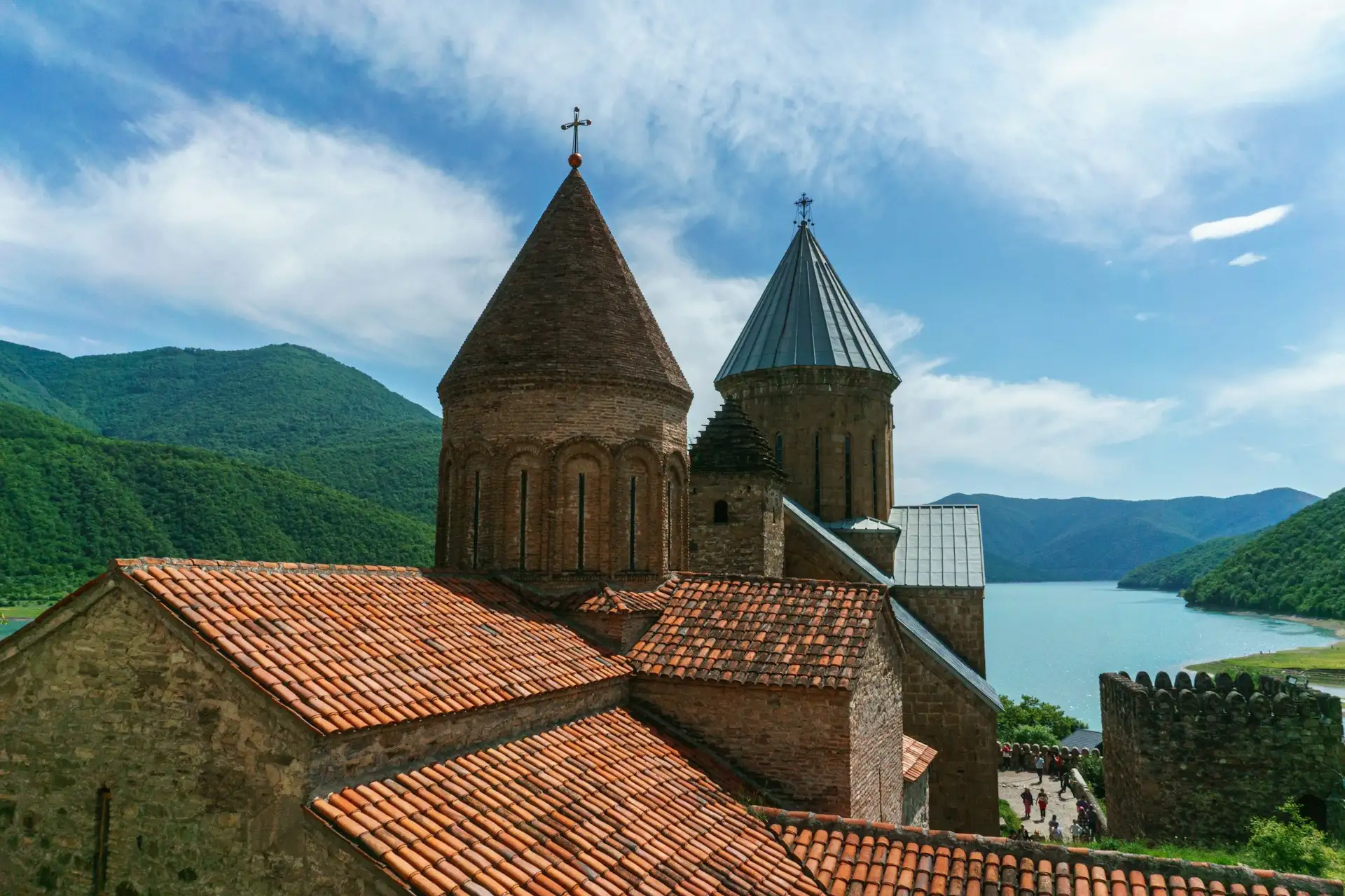
Ananuri Fortress
17th-century fortress on turquoise water. Two churches, defensive towers, and views. The postcard stop on the Military Highway that earns its reputation.
Driving & Roads
Georgian driving is not for the faint-hearted. The roads themselves range from excellent to adventurous, but the driving culture is the real variable. Overtaking on blind corners is standard practice. Horn usage communicates everything from greeting to fury. The saving grace is that speeds on mountain roads are naturally low because the terrain won't allow anything else.
4x4 Recommended
The main highway is paved. Svaneti roads are improved but can be rough, especially after rain. Mestia to Ushguli absolutely requires a 4x4 or a hired local driver. Rent a 4x4 if Svaneti is on your route.
Road Conditions
Tbilisi to Kazbegi: excellent paved road. Kutaisi to Mestia: improved but winding with some rough patches. Mestia to Ushguli: rough gravel/dirt, river crossings possible. Night driving on mountain roads is genuinely dangerous.
Fuel
Petrol stations are plentiful on the main highway and in towns. Carry extra fuel if heading to remote Svaneti. Fuel is cheap by European standards. Most stations accept cards but carry cash as backup.
Driving Culture
Georgians drive fast and overtake aggressively. Mountain roads have blind corners that locals treat as guidelines. Drive defensively. Use your horn on blind curves. Be especially cautious at night and in rain.
Mountain Passes
The Cross Pass (2,395m) on the Military Highway can close in winter snow. Svaneti roads typically close November to May. Check conditions before driving. Summer (June-September) is the safest window for all mountain routes.
Navigation
Download offline Google Maps for all of Georgia before departure. Mobile coverage is good on the highway and in towns. In remote Svaneti, coverage drops to zero between villages. GPS works, mobile data doesn't.
Essential Tips
🌞 Best Season
May-June and September-October are ideal: warm but not hot, fewer tourists, all main roads open. July-August is warmest and best for Svaneti (all mountain roads open, but lowlands are hot). November to April closes most mountain roads and limits the route significantly.
🏨 Accommodation
Georgian guesthouses are the way to go. Family-run, meals often included (breakfast and dinner for ₾80-150 per person), and the home cooking is frequently better than restaurants. Book Kazbegi and Mestia ahead in July-August. Bathrooms can be basic in mountain guesthouses.
🍷 Wine & Supras
The supra (traditional feast) is the essential Georgian experience. A tamada (toastmaster) leads elaborate toasts. Wine flows from qvevri. Chacha (grape spirit) appears whether you asked for it or not. Pace yourself. The food keeps coming. Saying no is difficult. Trying is optional.
💳 Money
Georgian Lari (GEL/₾). ATMs are plentiful in cities. Cash is preferred in rural areas and mountain guesthouses. Credit cards work in Tbilisi, Kutaisi, and Batumi tourist spots. Carry cash for Svaneti. Tipping is not expected but appreciated (10% at restaurants).
📡 Language & Visa
Georgian has its own unique alphabet (one of only 14 in the world). English is spoken in tourist areas and by younger Georgians. Russian is widely understood by older generations. Visa-free entry for up to one year for most nationalities (EU, US, UK, Canada, Australia). Incredibly generous.
👜 Packing
Layers are essential: Tbilisi can be 35°C while Kazbegi is 10°C on the same day. Warm jacket for mountain evenings. Hiking boots for Gergeti and glacier hikes. Rain gear for Svaneti. Swimsuit for Batumi. Sunscreen for altitude. A strong stomach for chacha.
Budget Planning
Georgia is one of the cheapest countries in Europe and the Caucasus for travellers. The combination of low prices, excellent food, and genuine hospitality makes it one of the best-value destinations on earth. Your biggest cost is likely the flight to get there.
Book Your Trip
Everything in one place. These are services worth actually using.
The Country That Feeds You Before It Lets You Leave
Georgia does something to people. You arrive expecting mountains and churches and find a country that treats hospitality as a competitive sport. The guesthouse owner who drives you to the trailhead because he doesn't trust your sense of direction. The winemaker who opens a bottle from his personal reserve because you said something nice about his vineyard. The stranger at the next table who insists on paying your bill and looks genuinely hurt when you try to refuse.
The Georgian Military Highway is one of the world's great mountain drives. Svaneti is one of Europe's most unusual regions. The food and wine are exceptional. But the thing you'll remember longest is the people who served it, poured it, and wouldn't let you leave until you'd had one more glass and heard one more toast. Georgia doesn't do halfway. Neither should you.