
Israel Travel Safety
Israel, the West Bank and Gaza sit at a Reconsider Travel advisory amid an ongoing regional conflict, with fresh missile and drone exchanges between Israel and Iran as recently as June 2026. Ben Gurion Airport has been open since April 9, and Tel Aviv and Jerusalem have continued welcoming visitors throughout. This page covers the current advisory picture first, then the everyday scams tourists actually encounter.
Why Israel Is a Reconsider Travel Destination Right Now
Since hostilities broke out between the United States, Israel, and Iran on February 28, 2026, the region has experienced repeated rounds of missile and drone activity. On February 27, 2026, the State Department authorized the departure of non-emergency US government personnel and their families from Israel due to safety risks, and Ben Gurion Airport closed entirely in early March before reopening on April 9, 2026. A ceasefire has held only intermittently since, with fresh Israel-Iran missile and drone exchanges occurring as recently as June 7-8, 2026, before both sides paused again. The US Embassy has continued issuing updated guidance on which areas its own staff can travel to, and has at times restricted personnel from the Old City of Jerusalem entirely.
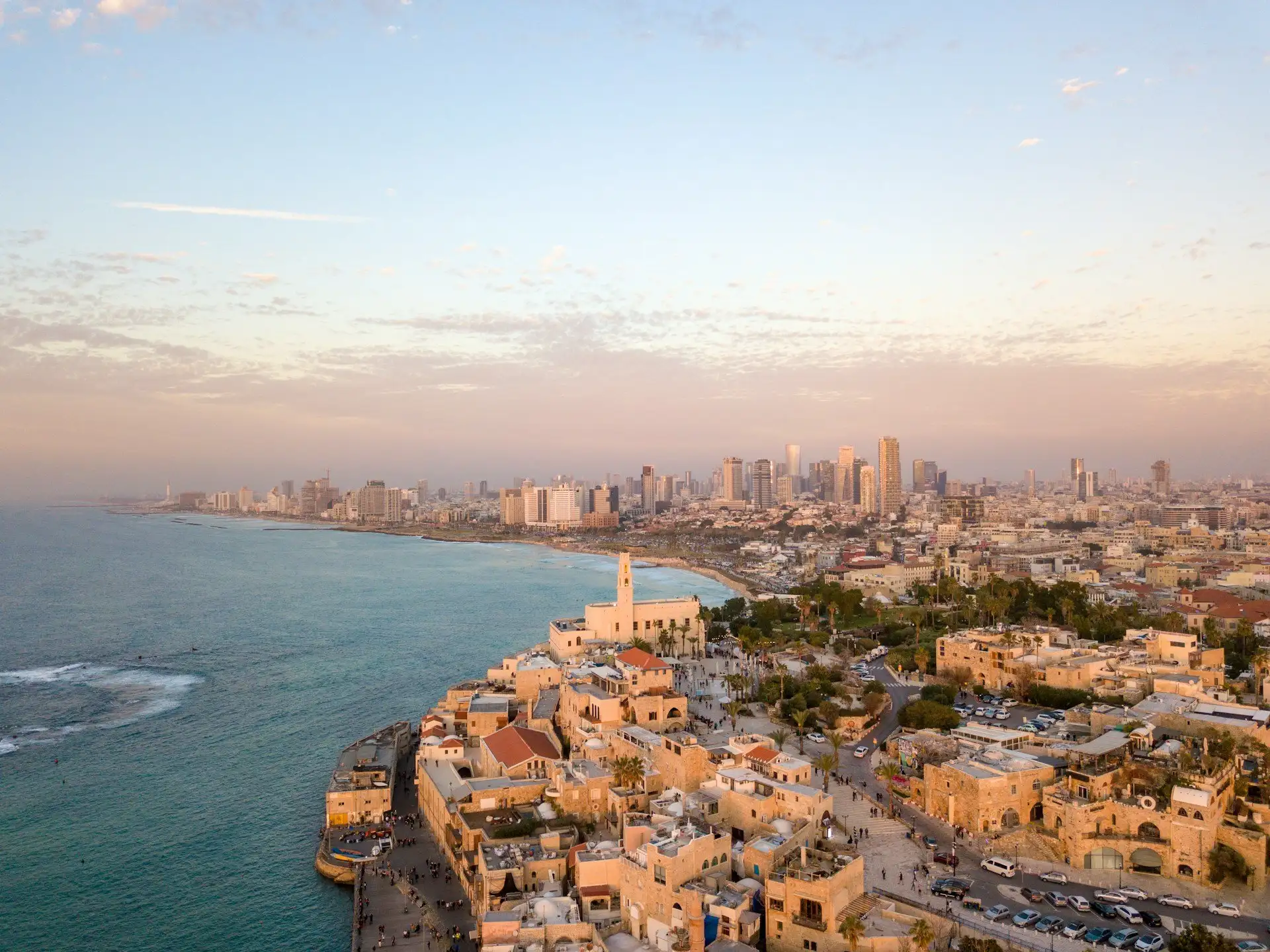
Despite this, tourism to Israel has continued throughout 2026 wherever flights and conditions allowed. Tel Aviv, Jerusalem's New City, the Dead Sea, and Eilat have remained accessible, with standard rocket-alert infrastructure, sirens, apps, and bomb shelters, treated as a normal part of daily life during active periods rather than something unique to visitors. Given how quickly conditions have shifted through 2026, from a fully closed airport in March to reopened tourism by April to fresh strikes in June, check the current advisory and embassy status directly before finalizing any trip, and again close to your departure date.
Tel Aviv: Scams and Everyday Risk
Tel Aviv's beachfront, markets, and nightlife have continued operating through 2026, and day-to-day street crime here is comparatively low by regional standards. The everyday friction visitors encounter is ordinary tourist overcharging rather than anything more serious.
🚗 Unmetered Taxi and Sherut Fare Disputes
Taxi drivers, particularly at the airport, sometimes quote a flat fare well above what the meter would show, or claim the meter is broken. Shared sherut minibuses run fixed routes at fixed prices but can be confusing for first-time visitors unfamiliar with the system.
Insist on the meter, or use the Gett app, which is widely used in Israel and shows an upfront fare. Ask your hotel what a fair price looks like for a specific route before you negotiate with a street taxi.
👷 Pickpocketing in Markets and on the Beach
Crowded markets and busy beach areas create ordinary opportunistic pickpocketing conditions found in any popular tourist destination, particularly during peak season.
Keep bags zipped and worn in front of your body in crowds, and don't leave valuables unattended on the beach, even briefly while swimming.
⛵ Demonstrations
Demonstrations occur frequently in Israel, sometimes in response to political or economic issues, on significant holidays, or during international events, and can be unpredictable.
Avoid areas around protests and demonstrations, and check local media for updates and traffic advisories if you notice a gathering forming.
Jerusalem Scams
Jerusalem's New City functions much like Tel Aviv day to day. The Old City, a dense, historic quarter shared by multiple religious communities, is where most tourist-facing overcharging concentrates, and it's also an area the US Embassy has at times restricted its own staff from visiting given the current regional situation.
🏭 Old City Vendor Overcharging
Vendors in the Old City's narrow market streets, a genuinely stunning and historic place to shop, quote prices for religious items, crafts, and souvenirs well above what a knowledgeable buyer would pay, particularly for items marketed as authentic antiquities or holy relics.
Negotiate confidently, bargaining is expected here, and be skeptical of anything sold as a genuine ancient artifact, since authentic antiquities require export licenses and legitimate provenance documentation that street vendors won't have.
👤 Unofficial Guides at Religious Sites
Individuals without official credentials offer guided tours or "special access" to religious sites at inflated prices, sometimes providing inaccurate historical or religious information.
Book guides through a licensed tour operator or your hotel rather than accepting an offer from a stranger at the entrance to a site.
🚫 Restricted Access to the Old City
The US Embassy has at times restricted its own employees from personal travel to the Old City during periods of heightened tension in 2026, a signal worth taking seriously for independent travelers as well, even when the restriction doesn't formally apply to tourists.
Check the current US Embassy Jerusalem security alerts for the latest guidance on Old City access before visiting, and be prepared to adjust plans on short notice if conditions change.
The West Bank & Gaza
The West Bank carries narrower, more specific restrictions than Gaza. As of the most recent embassy guidance, US government personnel may not travel within the West Bank except on designated routes, including Route 1, Route 90 toward the Allenby Bridge crossing, and Route 443, which can be used at any time, plus travel to Bethlehem, Beit Jala, and Beit Sahour during daylight hours only, through specific checkpoints. Independent travelers considering a visit to the West Bank should review the current, detailed embassy guidance closely rather than relying on general assumptions, since restrictions can change without advance notice in response to security incidents.
Separately, northern Israel within roughly 4 kilometers of the Lebanese and Syrian borders remains restricted due to continued military presence and activity in that specific zone, distinct from the rest of the country.
Rocket, Missile and Siren Procedures
This is not a scam-related section, but it's the single most practically important part of this page given current conditions. Sirens and shelter procedures are treated as a routine, well-rehearsed part of civilian life in Israel during active periods, not something exclusive to visitors, and knowing the basics before you arrive matters.
Treat Every Alert as Real
In the event of mortar or rocket fire, missile activity, or a hostile aircraft intrusion, a "red alert" siren may activate. Follow local instructions immediately and seek shelter without hesitation.
Know Your Nearest Shelter Before You Need It
Learn the location of the nearest bomb shelter or hardened room at your hotel or accommodation as soon as you check in, not after a siren sounds.
Download a Real-Time Alert App
The Israel Defense Forces Home Front Command app, or a commercial equivalent such as "Red Alert: Israel," gives real-time notification of rocket, missile, and drone activity and is standard practice for residents and visitors alike.
Get Travel Insurance That Covers Evacuation
Obtain comprehensive travel medical insurance that includes medical evacuation before you travel. Most standard policies do not cover mental health related illness or care, worth checking specifically given the nature of the current situation.
Enroll With Your Government
US citizens should enroll in the Smart Traveler Enrollment Program. Enrolling makes it substantially easier for your embassy to reach you and your emergency contacts if conditions change quickly.
Watch for Unexploded Ordnance in Rural Areas
When traveling in rural areas, exercise caution given the possibility of unexploded ordnance, a general advisory note that applies more broadly than just the immediate conflict zones.
Online Financial Scams
📞 International Financial Scams
International financial scams are specifically flagged by the State Department in connection with Israel, following the general pattern seen across the region, building a relationship or urgency online before requesting money.
Be skeptical of any online relationship or message that develops quickly and eventually asks for money. Never wire funds or share financial details based on a story like this without independent verification.
📱 Device Security While Traveling
Mobile devices are vulnerable to compromise, theft, and physical damage anywhere in the world, a general precaution the State Department flags for Israel alongside its broader advisory content.
Update all software before traveling, and use a VPN and encrypted messaging where possible while abroad. A local eSIM helps you stay reliably connected to alert apps and local news during a dynamic situation.
An eSIM gives you local data from arrival, important for running a real-time rocket alert app and staying informed via local news during a dynamic security situation.
Emergency and Consular Contacts
The US Embassy operates from Jerusalem with a branch office in Tel Aviv. Check current operating status before you travel given the pace of change throughout 2026.
Check Current Conditions Before You Go
Conditions in Israel have shifted quickly and repeatedly throughout 2026, from a fully closed airport in early March, to reopened tourism by April, to fresh missile exchanges in June. That volatility is the single most important thing to take from this page: recheck the official advisory and embassy status shortly before departure and again before your return flight. Away from that headline risk, the everyday precautions here, insisting on the taxi meter, negotiating firmly in Old City markets, and knowing your nearest shelter before you need it, cover most of what a visitor actually needs day to day.