
Australia
A continent that doubled as a country. The oldest continuous human culture on earth. The Great Barrier Reef. The Red Centre. The Daintree — the world's oldest rainforest. Eight cities that each consider themselves the best in the world and three of them are right. Wildlife that exists nowhere else and in several cases should not exist at all.
What You're Actually Getting Into
Australia is the sixth-largest country on earth and most visitors see a fraction of it. The distance from Sydney to Perth is greater than the distance from London to Tehran. The distance from Cairns in the north to Melbourne in the south is greater than the distance from London to Cairo. This is not a country you cover in two weeks. It is a country you choose a region of and explore properly, or spend a year in and still feel you missed most of it.
The continent has three fundamentally different travel experiences that require separate planning: the coastal cities (Sydney, Melbourne, Brisbane, Perth, Adelaide, Hobart) which are among the most liveable and most food-culturally sophisticated in the world; the natural wonders of the interior and tropical north (the Red Centre, Kakadu, the Kimberley, the Daintree, the Great Barrier Reef) which require more logistical effort and deliver experiences that have no equivalent elsewhere; and the Aboriginal and Torres Strait Islander cultural dimension which underlies everything and is the oldest continuous human culture on earth — 60,000 years of unbroken habitation that makes the 236 years since British colonisation a very recent event indeed.
Australia is expensive by global travel standards. This is not negotiable. A hostel dorm in Sydney costs $35–55 AUD per night. A flat white costs $5–6 AUD. A pub meal costs $22–35 AUD. Domestic flights are expensive relative to distance. Budget travelers who have done Southeast Asia on $25 a day will find Australia a significant adjustment. The working holiday visa (available to citizens of many countries aged 18–35) is the standard solution to this — it allows visitors to work in Australia to fund extended travel, and the agricultural work regional requirement that once applied has been modified to make it more flexible.
The wildlife is genuinely extraordinary. Kangaroos and wallabies are not a zoo experience — they are animals you encounter at rest stops on the highway, in parks in suburban cities, on golf courses at dawn. The cassowary in the Daintree is the most dangerous bird on earth and also the most visually improbable. The platypus is an egg-laying mammal with a duck bill, beaver tail, otter feet, and venomous spurs on its hind legs, which is evolution producing something that should not work and has worked for 100 million years. The funnel-web spider and the eastern brown snake will kill you if untreated and both exist in suburban Sydney. The continent's isolation has produced a wildlife roster that requires a specific recalibration of what is biologically possible.
Australia at a Glance
A History Worth Knowing
The history of Australia begins approximately 65,000 years ago — possibly earlier — when the ancestors of the Aboriginal and Torres Strait Islander peoples arrived on the continent. This is the oldest continuous human culture on earth. For 60,000 years before the British arrived, more than 250 distinct language groups maintained sophisticated knowledge systems, trading networks, astronomical practices, land management techniques, and cultural traditions across the full breadth of the continent. The Dreaming (Tjukurpa in many Western Desert languages) — the spiritual and cosmological framework connecting people to country — is not mythology in the dismissive sense. It is a comprehensive system of law, ecology, and identity that sustained human life in one of the most challenging environments on earth for longer than recorded human civilisation has existed anywhere.
James Cook charted the eastern coast in 1770 and claimed it for Britain. The First Fleet of 11 ships arrived at Sydney Cove on January 26, 1788 — a date now celebrated as Australia Day and contested as Invasion Day by Aboriginal and Torres Strait Islander people and their allies. The founding of the colony was the beginning of a catastrophe for the existing population: disease killed between 50% and 90% of Aboriginal populations within years of contact in many regions; the massacre of communities by colonial forces, settlers, and native police was systematic and continued into the early 20th century; children were forcibly removed from their families under government policy from 1910 to 1970 to break cultural transmission — the Stolen Generations.
The gold rushes of the 1850s transformed Australia from a collection of penal colonies into a multicultural society drawing immigration from Britain, Ireland, China, and across Europe. The six colonies federated as the Commonwealth of Australia on January 1, 1901 — a moment celebrated as Federation. The new constitution explicitly excluded Aboriginal and Torres Strait Islander people from being counted in the census. They were not included until the 1967 referendum — in which 90.77% of Australians voted yes to amend the constitution to include them, one of the highest yes votes in any Australian referendum.
The 20th century brought the White Australia Policy (formally implemented in 1901, dismantled progressively from 1966), the mass immigration of post-war Europeans, the Vietnam War and significant Vietnamese migration following the fall of Saigon in 1975, and the progressive immigration from across Asia that has made modern Australia one of the most ethnically diverse societies on earth. Today approximately 30% of Australians were born overseas. The multicultural society is not without tension but it is genuine — the food culture of Sydney alone reflects the cuisines of every country from which significant immigration has occurred.
The relationship between the Australian state and Aboriginal and Torres Strait Islander people continues to evolve. The Mabo decision in 1992 — in which the High Court of Australia recognised native title for the first time, explicitly rejecting the legal fiction of terra nullius (the claim that Australia was unoccupied before British arrival) — was a landmark. The formal national apology to the Stolen Generations, delivered by Prime Minister Kevin Rudd on February 13, 2008, was another. The 2023 Voice referendum, which proposed an advisory body of Aboriginal and Torres Strait Islander people to provide advice on policy affecting them, was rejected 60.06% to 39.94%. The political and cultural negotiation of what recognition, sovereignty, and justice look like in practice continues. Visitors to Australia who engage with this history — particularly when visiting Country to which Aboriginal peoples have connection — participate in it more meaningfully than those who treat the landscape as a backdrop.
The ancestors of Aboriginal and Torres Strait Islander peoples settle the continent. The oldest continuous human culture on earth begins.
James Cook claims eastern Australia for Britain. He names it New South Wales. The First Fleet follows in 1788.
January 26. The First Fleet arrives at Sydney Cove. The date is Australia Day and Invasion Day simultaneously — the most contested date in Australian history.
Gold discovered in New South Wales (1851) and Victoria (1851). Population surges. Chinese migration begins. Australia transforms from penal colony to multicultural society.
January 1. The six colonies unite as the Commonwealth of Australia. Aboriginal and Torres Strait Islander people are explicitly excluded from the census by the new constitution.
Government policy of removing Aboriginal and Torres Strait Islander children from their families to break cultural transmission. An estimated 100,000 children removed. Formally apologised for in 2008.
90.77% of Australians vote yes to include Aboriginal and Torres Strait Islander people in the census and allow the federal government to make laws for them. One of the most significant votes in Australian history.
The High Court rejects terra nullius and recognises native title. Eddie Mabo, a Torres Strait Islander man, fought the case that changed Australian law. He died five months before the decision was handed down.
February 13. Prime Minister Kevin Rudd formally apologises to the Stolen Generations. The apology had been refused by the previous government for 12 years.
Top Destinations
Australia's size means destination selection requires a strategic decision before booking. The continent divides into five broad travel zones: the southeast (Sydney, Melbourne, the Great Ocean Road, Tasmania); the tropical northeast (Cairns, the Great Barrier Reef, the Daintree); the Red Centre (Alice Springs, Uluru, Kings Canyon); the tropical north (Darwin, Kakadu, the Kimberley); and the west (Perth, Margaret River, Ningaloo Reef). Most visitors do one or two of these per trip. Three weeks minimum per zone to do it properly. The zones are not day trips from each other.
Sydney
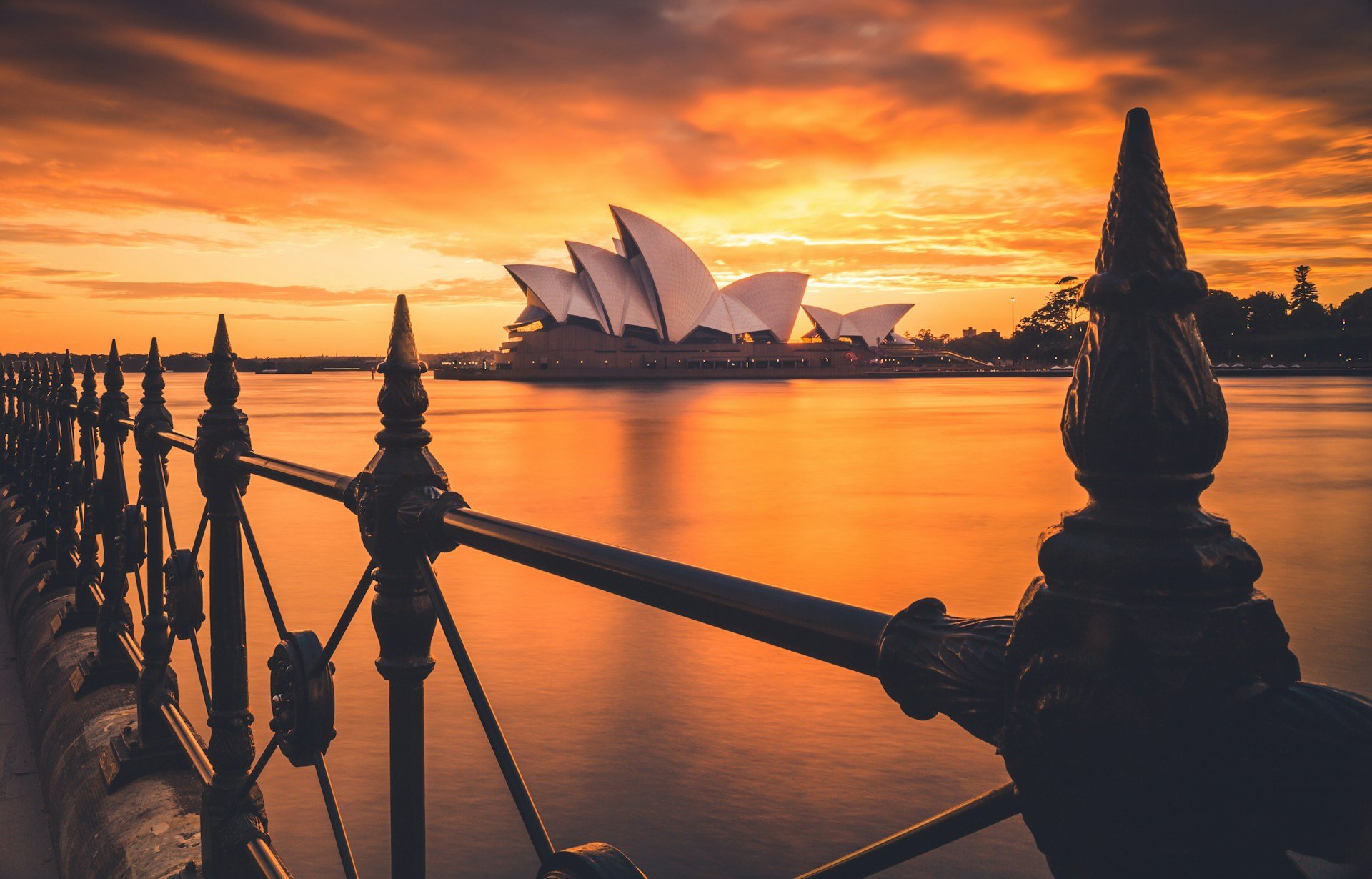
The most visited city in Australia and the one that most visitors arrive into via Kingsford Smith Airport. The Opera House and Harbour Bridge are images you recognise before you arrive and the reality matches the expectation — the harbour at dawn from Mrs Macquarie's Chair, with the bridge and the opera house in the same frame, is genuinely one of the finest urban views in the world. Beyond those two landmarks: the Rocks historic precinct where the First Fleet landed, the Bondi-to-Coogee coastal walk (6km of clifftop path above some of the world's most swimmable beaches), Newtown and Surry Hills for the food and bar culture that makes Sydney competitive with any city in the world for eating and drinking, and the Blue Mountains 90 minutes west for eucalyptus valleys, the Three Sisters rock formation, and real wilderness half a day from the CBD.
Great Barrier Reef
The largest coral reef system on earth stretches 2,300km along Queensland's northeast coast. The primary access points are Cairns (for the outer reef, which has the healthiest coral), Port Douglas (slightly less crowded than Cairns, higher-end operators), and the Whitsundays (for island sailing and Whitehaven Beach, considered the finest silica sand beach in Australia). The reef is under sustained threat from climate change — bleaching events in 2016, 2017, 2020, 2022, and 2024 have killed significant areas of coral. The remaining coral is extraordinary and the fish biodiversity still justifies the visit. Dive rather than snorkel if possible — the structure and life visible below 10 metres is substantially richer than the surface view. Book a liveaboard for any serious dive itinerary.
Uluru & Kata Tjuta
Uluru (Ayers Rock) is a 348-metre sandstone monolith in the Northern Territory that changes colour through the spectrum of red and orange as the light shifts through the day. The Anangu Traditional Owners have asked visitors not to climb since before the formal closure in October 2019 — the closure is permanent. The 10.6km base walk, the guided Cultural Tour, and the sunrise/sunset viewpoints are the correct approaches. Kata Tjuta (the Olgas) — a group of 36 large domed rock formations 25km from Uluru — is less visited and more dramatic in some views. The Valley of the Winds walk at Kata Tjuta is 7.4km of direct engagement with a landscape that predates human life on earth by a very large amount.
Daintree Rainforest
The Daintree in tropical north Queensland is the oldest continuously surviving rainforest on earth — 135 million years old, predating the Amazon by over 100 million years. It is the only place in the world where two UNESCO World Heritage Sites share a border: the reef and the rainforest meet at Cape Tribulation, where the mountains run directly into the Coral Sea. The cassowary — an enormous, flightless bird with a casque on its head and a directkick that can disembowel a human — lives here and is extremely real. The Boyd's forest dragon, the tree kangaroo, and 700+ plant species found nowhere else complete the biodiversity picture.
Melbourne
Melbourne considers itself the cultural capital of Australia and makes a strong case: the National Gallery of Victoria is the most visited art museum in Australia, the laneway coffee culture that Melbourne pioneered changed how the world drinks espresso, the Melbourne food scene is the deepest and most varied in the country, and the Australian Open in January brings the world's best tennis to a city that actually understands sport. The Melbourne Cricket Ground holds 100,000 people. The city's CBD lane network — Degraves Street, Centre Place, Hosier Lane with its legal street art wall — provides the urban texture that Sydney's harbour-focused geography doesn't generate. Melbourne is flat, walkable, and genuinely liveable in a way that makes it consistently rank in the world's top five most liveable cities.
Kakadu National Park
Australia's largest national park — 20,000 square kilometres in the Northern Territory — is jointly managed by the Bininj and Mungguy Aboriginal peoples and Parks Australia. Kakadu contains some of the most significant Aboriginal rock art in the world: the Burrungkuy (Nourlangie) and Ubirr sites have galleries of paintings in X-ray style depicting fish, animals, and Mimi spirits, some of which date to 20,000 years ago. The floodplains support the densest concentration of saltwater and freshwater crocodiles in Australia. The Yellow Water (Ngurrungurrudjba) wetlands boat cruise at dawn is one of the finest wildlife experiences on the continent. In the wet season (October–April), much of Kakadu is inaccessible by road. Visit in the dry season: May–September.
Great Ocean Road
The 243km coastal road west of Melbourne along Victoria's southwest coast, built by returned soldiers between 1919 and 1932 as a memorial to those who died in World War One. The Twelve Apostles — a series of limestone stacks rising from the Southern Ocean at Port Campbell — are the most photographed point on the road and genuinely dramatic, particularly in the late afternoon light when the stacks glow orange. The road passes through rainforest at the Otway Ranges, spectacular surf beaches at Bells Beach (professional surfing's oldest competition has been run here since 1962), and the gorge landscapes of the Shipwreck Coast. Allow three to four days rather than the one-day rush that many Melbourne tour operators sell.
The Kimberley
Western Australia's Kimberley region is the most remote accessible wilderness in Australia — a plateau of ancient sandstone larger than Germany with a population of approximately 40,000 people. The Gibb River Road (660km unsealed) is the main access route for 4WD travellers. The Bungle Bungle Range (Purnululu National Park) — a landscape of beehive-striped sandstone domes that was unknown to most non-Aboriginal Australians until 1983 — is one of the most visually extraordinary landscapes on the continent. The Prince Regent River, Mitchell Falls, and the Horizontal Falls (where tidal water pushes through narrow rock gorges horizontally) round out a landscape that is completely unlike anything in the eastern states. This is not a destination for the underprepared.
Culture & Etiquette
Australians communicate with a directness that occasionally startles visitors from cultures with more elaborate social indirection. The Australian cultural value of "tall poppy syndrome" — a strong social disincentive against self-promotion and display of status — means that bragging, formality without cause, and excessive deference to authority are all culturally suspect. The ideal interaction registers as easy, egalitarian, and slightly ironic. This is not performative. It is how Australians actually relate to each other and to visitors who can match the register.
The relationship to Aboriginal and Torres Strait Islander culture requires specific consideration for visitors. Welcome to Country ceremonies, Acknowledgement of Country at the start of public meetings, and the general cultural expectation that visitors to sites of Aboriginal significance engage respectfully with their cultural context are all part of how Australia presents itself publicly in 2026. The gap between this public acknowledgement and the lived reality of Aboriginal and Torres Strait Islander communities — which continue to face significant socioeconomic disadvantage, disproportionate incarceration, and ongoing political marginalisation — is real and contested. Visitors who engage with this complexity are more accurately seeing Australia than those who treat the Acknowledgement of Country as a box-ticking formality and the Uluru base walk as a scenic exercise.
At Uluru, Kakadu, the Daintree, and any site of Aboriginal cultural significance. The knowledge carried by Traditional Owners and their guides is irreplaceable and the guided experience is specifically better than the self-guided version. This is not political performance. It is simply the correct way to understand what you're looking at.
Australian surf beaches have lifeguard patrols marked by red and yellow flags. The area between the flags is patrolled. The area outside the flags is not. Australian surf conditions change rapidly and are significantly more powerful than they appear. People drown every year by swimming outside the flags. Swim between them.
The saltwater crocodile does not distinguish between confident tourists and local people. The box jellyfish (in tropical Queensland and Northern Territory waters) requires stinger suits or staying out of the water from October to May. The funnel-web spider in Sydney's suburbs requires knowing what it looks like and what to do if bitten (pressure immobilisation, call 000, antivenom within 2 hours). These are genuine risks, not exaggerated tourism warnings.
In Australia, "flat white" means something specific: a short black espresso base with steamed milk poured in, no foam, in a small ceramic cup. "Long black" means espresso water with espresso poured over it. Asking for a "latte" is fine. Asking for a "regular coffee" will get you a blank stare. The coffee here is genuinely excellent and the vocabulary is precise.
If driving through outback Australia — particularly the Stuart Highway, the Gibb River Road, or any unsealed road in the NT, WA, or SA — register your travel plan with a responsible person or with the appropriate state emergency service. Mobile coverage does not exist in large parts of outback Australia. A PLB (Personal Locator Beacon) is strongly recommended for any remote vehicle travel.
The climb is closed and illegal since October 2019. The Anangu Traditional Owners have asked visitors not to climb for decades before the formal closure. The base walk, the Cultural Tour, and the Field of Light installation are the appropriate experiences. The view from the top is the same as the view from the viewpoints — the view from the base is better.
The distance from Sydney to Melbourne is 878km — further than London to Edinburgh and back. The distance from Sydney to Perth is 4,000km. The distance from Cairns to the Great Barrier Reef outer reef is 1.5–2 hours by fast boat. Every element of Australian travel is further than it appears on a map of the full continent.
Saltwater crocodiles inhabit rivers, estuaries, and beaches in the Northern Territory and tropical Queensland. The signs warning of crocodiles in specific waterways are not exaggeration. Stinger nets protect the main swimming areas at Cairns and Port Douglas beaches from October to May. Outside those nets, the box jellyfish is lethal. Check before entering any tropical water you don't know.
Outback Australia is not a highway with petrol stations every 50km. On some routes, fuel is available only every 200–300km. A single flat tyre in 45°C heat without mobile coverage can be life-threatening without sufficient water (minimum 10 litres per person per day in outback conditions). Carry extra fuel, extra water, a satellite communicator, and the knowledge of how to change a tyre before driving outback roads.
Feeding wildlife is illegal in most national parks and is harmful to the animals regardless of legality. Quokkas on Rottnest Island near Perth will approach for food and the temptation is significant. The food is harmful to them and creates dependency. The cassowary that comes out of the Daintree to accept handouts will eventually injure someone. Don't feed anything in Australia.
Aboriginal Art
Aboriginal art is not a tourist souvenir category. It is the most significant art tradition in Australia and one of the most significant in the world — paintings, sculptures, carvings, and sand drawings that encode knowledge of Country, Law, and Dreaming in visual form. The dot painting style associated with Western Desert art was developed in the early 1970s at Papunya, west of Alice Springs, as a way of transferring knowledge traditionally conveyed on sand into permanent form. Buying Aboriginal art directly from community-run arts centres (Papunya Tula, Maruku Arts at Uluru, Injalak Arts at Gunbalanya in Kakadu) ensures that money reaches the artists and that the work is authentic. The "souvenir" Aboriginal art sold in tourist shops is usually not made by Aboriginal people.
Cricket & Sport
Australia's relationship to sport is the most direct route into the national character for visitors who speak the language. Cricket is not merely a sport — the Ashes against England is a cultural event that spans five Tests over two months and produces genuine national emotion. The MCG (Melbourne Cricket Ground) on Boxing Day for the Melbourne Test is the largest annual sports event in the Southern Hemisphere. AFL (Australian Rules Football) is the dominant code in Victoria, South Australia, and Western Australia — a sport with no direct equivalent anywhere else, played on an oval ground with 18 players per side and a scoring system that requires a specific education to follow but rewards investment.
Beach Culture
Australia's beach culture is not what visitors from most countries experience as "beach culture." It is a specific physical competence — surf awareness, rip current knowledge, ocean swimming confidence — that is taught in schools and expressed in the Surf Life Saving Australia volunteer culture that puts volunteer lifeguards on beaches across the country every weekend. The Bondi surf carnival, the Ironman competitions, the nippers (junior surf lifesaving) competitions on Saturday mornings — these are not tourist spectacles. They are expressions of a culture that has built physical literacy in the ocean over several generations.
Wine Culture
Australia produces world-class wine from multiple regions that are largely unknown outside the country's export market. The Barossa Valley in South Australia produces old-vine Shiraz of international standing. The Clare Valley produces Riesling aged under screwcap that is Australia's most distinctive white wine contribution. Margaret River in Western Australia produces Cabernet Sauvignon and Chardonnay at a level that competes with Bordeaux and Burgundy. The Yarra Valley east of Melbourne produces Pinot Noir and Chardonnay in a cool-climate style that Australian wine critics consider the country's finest expression of these varieties. Visiting any of these regions with a cellar door itinerary is significantly better than drinking Australian wine at home at export-market prices.
Food & Drink
Australian food culture in the major cities is among the finest in the world — a statement that would have been absurd forty years ago and is simply accurate now. The combination of exceptional local produce (seafood from three oceans, world-class beef and lamb, extraordinary fruit and vegetables from multiple climate zones), significant immigration from across Asia, and a food media culture that has elevated cooking to national sport has produced a restaurant scene in Sydney and Melbourne that competes with any city on earth. The flat white that Melbourne's café culture invented is drunk in London, New York, and Tokyo. The smashed avocado that Sydney brunches made famous — ridiculed internationally as the reason millennials can't afford houses — is genuinely excellent when made with the right avocado and the right bread.
Moreton Bay Bugs & Seafood
Australia's seafood roster is extraordinary: Moreton Bay bugs (a flathead lobster-like crustacean from Queensland) grilled with garlic butter, Sydney rock oysters (smaller and more briny than Pacific oysters, native to NSW and SA), Coffin Bay oysters from South Australia (among the finest in the world), barramundi (the iconic Australian freshwater fish, farmed and wild), and Western Australian marron (a freshwater crayfish served at premium restaurants in Perth). A Sydney fish market visit Saturday morning — the largest in the Southern Hemisphere — provides both the context and the direct purchasing option.
Coffee
The flat white — a short espresso base with steamed whole milk poured in with no foam, served in a small ceramic cup — was invented in Australia (Sydney and Melbourne dispute the precise origin) and exported globally. Australian café culture operates at a standard that consistently produces better espresso per encounter than most other countries. The specialty coffee movement in Melbourne and Sydney (pour-over filter, cold brew, single-origin) has raised the ceiling further. The vocabulary: flat white, long black, short black, piccolo, batch brew. There is no "regular coffee."
Modern Australian Cuisine
The "Modern Australian" (Mod Oz) style that emerged in Sydney restaurants in the 1980s under Tetsuya Wakuda and Neil Perry synthesised European technique with Asian flavour profiles and Australian ingredients. The result — grilled kingfish with ponzu and yuzu, slow-cooked lamb shoulder with Middle Eastern spices, pavlova with tropical fruit — is genuinely original and genuinely excellent. The restaurant scene at this level in Sydney and Melbourne is internationally significant. The Quay, Bentley, and Brae are the reference points, but the same thinking reaches into mid-priced neighbourhood restaurants throughout both cities.
Australian Beef & Lamb
Australia exports beef and lamb globally and the domestic quality is exceptional. The grass-fed beef from Victoria and southern New South Wales, and the grain-finished wagyu from several breeds crossed with Japanese bloodlines, produce steaks that are consistently among the world's finest. The lamb from the Riverina region and from Western Australia's wheatbelt is some of the best in the world. At a quality Sydney or Melbourne steakhouse (Rockpool Bar and Grill in either city), the Australian beef is competitive with anything from Kobe, Galicia, or the US Midwest.
Craft Beer
The Australian craft beer scene has grown from almost nothing in 2010 to a legitimate international competitor. Melbourne leads: Stomping Ground in Collingwood, Bodriggy Brewing in Abbotsford, and Moon Dog in Abbotsford are the best known. In Sydney: Young Henrys in Newtown (try the Natural Lager), Wayward Brewing in Camperdown. In Perth: Feral Brewing in the Swan Valley. In Hobart: Moo Brew at MONA. The mainstream Australian beers (Victoria Bitter, Carlton Draught, XXXX) are sessionable lagers that require no analysis beyond: cold, in a schooner, at a pub on a hot day. This is a valid approach.
Tim Tams, Vegemite & the Essentials
Vegemite is a dark, intensely salty yeast extract spread eaten on toast with butter in a thin layer — not a thick one, regardless of what visitors attempt. The Tim Tam (a chocolate biscuit sandwich with chocolate cream filling and chocolate coating) is the national snack of Australia and performing the Tim Tam Slam — biting both diagonal corners off and using it as a straw for hot chocolate — is a specific Australian cultural experience. The pavlova (meringue base, whipped cream, fresh fruit) was invented in Australia or New Zealand depending on who is telling the story, and both countries are absolutely certain it was theirs.
When to Go
Australia's size means there is no single best time to visit the entire country. Each major region has a different optimal window, and the country spans climatic zones from tropical monsoon to Mediterranean to alpine. The key constraints: the tropical north is inaccessible in the wet season (November–April), the Red Centre has dangerous heat in summer (December–February above 45°C), and the southern cities have a genuine winter (June–August) that is manageable but not ideal for beach activities.
Southern Cities & Red Centre
Sep – Nov (Spring)Spring is the finest season for Sydney, Melbourne, the Great Ocean Road, and the Red Centre. The Red Centre reaches comfortable temperatures (25–35°C rather than 45°C+), the wildflowers bloom across Western Australia, Sydney's harbour is at its most vibrant, and Melbourne's coffee culture operates at full intensity. The Kangaroo Island wildlife season peaks in spring.
Tropical North & Kakadu
May – Sep (Dry Season)The dry season is the only practical time to visit Darwin, Kakadu, the Kimberley, and the tropical far north. Roads that are impassable in the wet become functional. Wildlife concentrates around waterholes as the land dries. The temperature is 25–33°C rather than 35°C with 90% humidity. The Kakadu waterfalls at their most dramatic are actually in the wet season — but most visitors cannot access them safely.
Great Barrier Reef
Jun – NovThe reef is diveable year-round but the optimal window is June through November: clearer water, lower chance of stinger jellyfish, and the best visibility. December through April brings the box jellyfish season in tropical waters (stinger nets at the main beaches protect specific swimming areas). The whale migration from August to October brings humpback whales to the Whitsundays channel.
Red Centre Summer
Dec – FebUluru and Alice Springs in December through February can reach 48°C. Several people die in the Red Centre each year from heat exposure. The base walk at Uluru in summer requires starting before 7am and finishing before the park closes the walk at high heat (above 36°C). Plan outback visits around the temperature, not the calendar.
Trip Planning
Australia requires more advance planning than most destinations its size because the distances between regions mean that changing plans mid-trip is expensive. Domestic flights book up significantly in school holiday periods (January, April, July, September–October in Australian terms). The Great Barrier Reef liveaboard operators and the Kimberley expedition boats have limited capacity and book months ahead. The Working Holiday Visa application, if relevant, should be made 4–6 weeks before departure.
The standard visitor visa (ETA for most Western nationalities, eVisitor for Europeans) allows stays of 3 months at a time within a 12-month period. If planning an extended stay, the Working Holiday Visa (subclass 417 or 462 depending on nationality) allows 12 months with the option to extend by completing regional work. Apply online through ImmiAccount on the Australian Department of Home Affairs website.
Sydney
Arrive into Kingsford Smith. Day one: recovery, the harbour — Circular Quay, the Opera House exterior, the Rocks. Day two: Mrs Macquarie's Chair at dawn, Bondi to Coogee coastal walk, Bondi Icebergs pool at sunset. Day three: Blue Mountains (Katoomba, Three Sisters viewpoint, Echo Point, a short gorge walk at Jamison Valley). Day four: inner Sydney food day — Newtown for brunch and lunch, Surry Hills for dinner at a serious restaurant. Day five: the ferry to Manly, the Manly beach walk, the afternoon light on the harbour from the Manly wharf.
Great Barrier Reef
Fly to Cairns. Day six: afternoon reef orientation, the Cairns Esplanade lagoon. Day seven: full-day outer reef trip from Cairns — snorkel and dive at two outer reef sites. Day eight: Daintree day trip — the Daintree River wildlife cruise (crocodiles, birds) and Cape Tribulation. Day nine: second reef day or Atherton Tablelands — the crater lakes and the platypus viewing at Yungaburra at dusk (wild platypuses in a creek, visible at dawn and dusk).
Melbourne
Fly Sydney to Melbourne (or direct from Cairns). Five days: CBD laneways and coffee, the NGV (National Gallery of Victoria, world-class collection), a day on the Mornington Peninsula for wineries and the Peninsula Hot Springs. A half-day at the Queen Victoria Market. The Great Ocean Road in a day if pressed (Bells Beach to the Twelve Apostles) or two days if not. Fly home from Tullamarine.
Sydney & Region
Five days Sydney (all of the above plus a Hunter Valley wine day if timing allows). One day Blue Mountains extended — the Grand Canyon walk at Blackheath or the Six Foot Track section from Katoomba to Jenolan Caves.
Red Centre
Fly to Uluru (direct from Sydney, or via Alice Springs). Stay at Yulara resort village. Day seven: arrival, Uluru base walk at dawn (start before 5:30am). Day eight: Kata Tjuta Valley of the Winds walk (full morning). Day nine: Anangu Cultural Tour at Uluru, the Field of Light installation at sunset/dawn (pre-book months ahead). Day ten: Kings Canyon — fly or drive (4 hours). The Kings Canyon Rim Walk (6km loop, 3 hours, vertigo-inducing views). Day eleven: Alice Springs, the Telegraph Station historical reserve, the Alice Springs Desert Park (native wildlife, nocturnal house).
Reef & Daintree
Fly to Cairns. Outer reef two-day liveaboard for serious divers, or day trips plus Whitsunday Island sailing for others. Daintree two days — stay north of the river at Cape Tribulation or Daintree Eco Lodge. Wildlife spotting at night (tree frogs, snakes, insects).
Melbourne & Great Ocean Road
Fly to Melbourne. CBD day one. Great Ocean Road properly — two days: drive to Apollo Bay the first day, the Twelve Apostles and Loch Ard Gorge on day two, return. Melbourne food and culture for the final day.
East Coast + Barrier Reef
Sydney (5 days), Blue Mountains (2 days), drive or bus north to Byron Bay (NSW alternative coast culture, excellent surf, hinterland markets at Bangalow and The Channon), Brisbane (2 days), Noosa (2 days, the best of the Sunshine Coast), Cairns (arrival for the reef week).
Reef & Daintree Deep
Whitsunday Islands three-day sailing charter. Cairns outer reef liveaboard (2 nights, 4 dive days). Daintree three days — the full north of the river experience including a guided night walk and a dawn cassowary search on the Cape Tribulation road.
Red Centre
Alice Springs (2 days), Kings Canyon (1 day), Uluru (3 days — enough time for multiple dawn and dusk experiences and the full Cultural Tour). Fly to Darwin for the transition to the Top End.
Darwin & Kakadu
Darwin (2 days — the Mindil Beach Sunset Market if timing works, the Museum and Art Gallery of the NT for Aboriginal art context). Kakadu (4 days — Ubirr rock art at dawn, the Yellow Water wetlands boat cruise, Jim Jim Falls if accessible, Burrungkuy rock art). Fly to Melbourne.
Melbourne & Victoria
Melbourne (3 days). Great Ocean Road (2 days). Optional: Grampians National Park (1 hour west of Melbourne) or the Mornington Peninsula wine region. Fly home from Tullamarine.
Visa
ETA (subclass 601) for US, Canadian, Japanese, and some other nationals — apply via the Australian ETA app. eVisitor (subclass 651, free) for EU, UK, and most European passport holders — apply via the Department of Home Affairs website. Both allow 3-month stays within 12 months. Apply at least 72 hours before travel; approval is usually instant.
Full entry requirements →Health
No mandatory vaccinations. Routine vaccines recommended. No malaria in mainland Australia. Ross River fever and Barmah Forest virus (mosquito-borne) occur in tropical and subtropical areas. The Australian sun is among the strongest on earth — use SPF 50+ sunscreen, reapply every 2 hours, and wear a hat. "Slip, slop, slap" (cover up, apply sunscreen, wear a hat) is the national sun safety motto.
Connectivity
Telstra has the best regional coverage — essential for any outback travel. Optus and Vodafone cover cities well but have significant rural gaps. No coverage exists in large parts of inland Australia. A Telstra prepaid SIM is the recommended option for international visitors — available at the airport on arrival. Download offline maps for any region you're driving through.
Get an Australia eSIM →Driving
Drive on the left. International driving licences are valid. Petrol is sold in litres and is approximately $1.80–2.20 AUD per litre. On outback roads, fill up whenever a petrol station appears. The kangaroo crepuscular hazard (kangaroos active at dawn and dusk, frequently crossing roads) makes night driving on non-highway roads risky. Do not drive after dark in outback areas.
Wildlife Safety
Saltwater crocodiles in NT and QLD coastal areas, rivers, and estuaries — do not swim in any water without checking current croc warnings. Box jellyfish in tropical Queensland and NT from October to May — stinger nets protect designated areas. Funnel-web spiders in NSW — call 000 and apply pressure immobilisation if bitten. Eastern brown snake — do not approach or provoke. Check surf conditions before ocean swimming anywhere.
Healthcare
Australia has a world-class public hospital system. Visitors from the UK, Ireland, New Zealand, Sweden, Netherlands, Belgium, Finland, Italy, Malta, and Norway have reciprocal Medicare access for essential medical treatment. All others should have comprehensive travel insurance. Medications that require prescriptions in Australia can rarely be obtained without a local prescription — bring sufficient supply from home with a letter from your doctor.
Transport in Australia
Australia's vast distances make flying the default intercity option for most visitors. The Sydney–Melbourne air corridor is one of the busiest in the world. Qantas, Virgin Australia, and Jetstar (Qantas's budget carrier) compete on the main routes. For road trips — the Great Ocean Road, the Gibb River Road, the drive between Uluru and Kings Canyon — a rental car or campervan is the appropriate option. The long-distance train (the Indian Pacific from Sydney to Perth, the Ghan from Adelaide to Darwin) is a specific experience rather than practical transport.
Domestic Flights
$80–300 AUD per routeQantas, Virgin Australia, and Jetstar connect all major cities. Book 4–6 weeks ahead for reasonable prices. The Sydney–Melbourne route has multiple daily flights every hour during business periods and should cost $80–150 AUD with advance booking. The Sydney or Melbourne to Uluru route costs $250–400 AUD. Cairns to Darwin is most efficiently done via a flight rather than any ground option.
Car Rental
$60–120 AUD/dayDrive on the left. International driving licence valid for up to 3 months alongside your home licence. Rental from Hertz, Avis, Budget, or Australian operators Europcar and Redspot. For outback driving: a 4WD is required for unsealed roads (Gibb River Road, Jim Jim Falls access in Kakadu). Campervans (Apollo, Britz, Maui, Mighty) are the classic long-trip option and available from all major cities.
Train
$300–2,500 AUD for long routesThe Indian Pacific (Sydney–Adelaide–Perth, 4 days), the Ghan (Adelaide–Alice Springs–Darwin, 2–3 days), and the Overland (Melbourne–Adelaide) are the iconic long-distance trains. These are travel experiences in themselves — the Ghan through the Red Centre in particular — rather than practical transport. Commuter rail networks in Sydney, Melbourne, Brisbane, and Perth are functional and recommended for city travel.
Greyhound Australia covers the main coastal and inland routes. Slower than flying but significantly cheaper and more scenic. The Sydney to Melbourne Greyhound takes 12–13 hours; the Sydney to Cairns route takes several days. Pass options (Greyhound Whimit Pass) allow unlimited travel for a fixed period and suit backpackers doing the east coast.
Sydney's Opal card, Melbourne's Myki, Brisbane's Go Card, and Perth's SmartRider are the contactless tap-on tap-off transit cards for bus, train, light rail, and ferry. Get one at the airport on arrival. The Sydney ferry network (Circular Quay to Manly, Circular Quay to Darling Harbour) is the finest urban ferry system in Australia and provides harbour views as a side effect of transport.
The Manly Fast Ferry from Circular Quay to Manly in Sydney (30 min, spectacular harbour views). The Spirit of Tasmania overnight ferry from Melbourne to Tasmania (runs nightly, takes 9–10 hours, recommended for accessing Tasmania with a vehicle). The Whitsunday sailing charters for the reef. Day boats to Rottnest Island from Perth (30 min, island famous for quokkas).
Accommodation
Australia's accommodation spectrum runs from the world-class (Park Hyatt Sydney with Opera House views, Como The Treasury in Perth, The Louise in the Barossa Valley) through a well-developed mid-range of boutique hotels and Airbnb apartments in residential suburbs, to a functional backpacker hostel network that covers every major city and most regional stops on the east coast. The campervan option — renting a self-contained vehicle — is the most practical for multi-region road trips and provides accommodation and transport simultaneously.
Luxury Hotel
$350–1,200+/nightThe Park Hyatt Sydney (harbour views from every room), the Langham Melbourne (Collins Street, Victorian grandeur), Longitude 131° at Uluru (luxury tented camp with Uluru view), the Southern Ocean Lodge on Kangaroo Island (cliff-top luxury, destroyed by fire in 2020 and rebuilt in 2023). Australian luxury hotels are genuinely world-class when they're good. Book 2–3 months ahead for the best properties.
Boutique & Airbnb
$150–400/nightThe most practical mid-range option in Sydney and Melbourne. Apartments in Surry Hills, Newtown, or Paddington (Sydney) or Fitzroy, Collingwood, or St Kilda (Melbourne) provide kitchen access, neighbourhood context, and significantly more space than hotel rooms at equivalent price. Book direct or via Airbnb 3–4 weeks ahead for good options.
Hostel
$35–60/dorm, $100–180/privateThe YHA (Youth Hostels Australia) network and independent hostels cover every major destination from Sydney's Bondi Beach to Cairns to Alice Springs. YHA hostels are consistently clean and well-managed. The Nomads and Base chains serve the social backpacker market. Hostels in Australia are significantly more expensive than comparable hostels in Southeast Asia — budget accordingly.
Campervan
$100–220/day (all-in)The optimal accommodation for road trips. A campervan combines transport and accommodation — you sleep where you park, which in Australia means national park campgrounds, free camps along the highway, and caravan parks in towns. The Mighty, Jucy, Apollo, and Britz fleets cover most cities. A fully self-contained unit (with toilet, shower, and kitchen) allows access to the free camping network that makes the campervan significantly more economical over an extended trip.
Budget Planning
Australia is expensive. This is the honest answer to every budget question about the country. The minimum daily budget for a solo backpacker using hostels, self-catering, and public transport is approximately $80–100 AUD per day in cities. Mid-range travel — a boutique hotel or good Airbnb, eating out once a day, occasional activities — runs $200–350 AUD per day. The Working Holiday Visa is the primary mechanism by which visitors on limited budgets manage Australia long-term: agricultural work, hospitality work, and construction work all pay Australian minimum wage (approximately $23.23 AUD per hour as of 2025).
- Hostel dorm or campsite
- Supermarket self-catering most meals
- Public transport in cities
- Free beaches and national park walks
- Craft beer at $9–12 AUD at local pub
- Airbnb or boutique hotel
- Brunch out, dinner at a good restaurant
- Mix of public transport and Uber
- Day trips, reef snorkel, wildlife tours
- Wine tasting at cellar doors
- Park Hyatt / Langham / Longitude 131°
- Fine dining at Quay or Attica
- Private charter and helicopter transfers
- Liveaboard reef diving
- Exclusive Kimberley expedition cruise
Quick Reference Prices (AUD)
Visa & Entry
Australia requires a visa for all visitors (except New Zealand citizens, who enter visa-free). The type of visa depends on your nationality. Most Western visitors use the Electronic Travel Authority (ETA, subclass 601) or the eVisitor (subclass 651, free for Europeans). Both allow tourist stays of up to 3 months at a time within a 12-month period. Apply online before travel — approval is usually instant but can take up to 72 hours. A small service fee applies for the ETA ($20 AUD via the AUS ETA app).
eVisitor (subclass 651) — UK, EU, and most European passport holders — free, apply via the Department of Home Affairs website
Working Holiday Visa (subclass 417/462) — 18–35 year olds from eligible countries, allows working while travelling for 12+ months
Family Travel & Pets
Australia is an exceptional family destination. The beaches, the wildlife, the national parks, the cities that are genuinely liveable and have functional public transport — all of these work as well or better for families as for solo travellers. The Great Barrier Reef provides the finest family snorkelling experience in the Southern Hemisphere. The wildlife encounters in South Australia (sea lions at Seal Bay, Kangaroo Island's resident koalas and kangaroos) and Queensland (the Currumbin Wildlife Sanctuary on the Gold Coast, Australia Zoo near Brisbane) are consistently excellent for children. The distances require more flight planning but Australian domestic flights with children are straightforward — Qantas and Virgin Australia have specific family boarding processes.
Kangaroo Island
South Australia's Kangaroo Island is the finest family wildlife destination in Australia for accessible, concentrated encounters. Seal Bay Conservation Park (guided boardwalk tour among a colony of Australian sea lions), the Flinders Chase National Park (koalas in the wild, New Zealand fur seals at Admiral's Arch), and kangaroos so accustomed to people they are essentially parked on the roadside at dusk. The island is 90 minutes' ferry from Adelaide, devastated by the 2020 bushfires and genuinely recovered by 2024.
Reef Snorkelling
The Great Barrier Reef day trips from Cairns and Port Douglas that include snorkelling on the outer reef are the finest family marine experience in the Southern Hemisphere. Children who can swim confidently can snorkel the reef from the age of around 8 with a life jacket. Many operators offer guided snorkel tours with staff in the water. The introduction dive option (supervised, no certification required) is available for children 10+ at most operators.
Wildlife Encounters
Feeding kangaroos at the Cleland Wildlife Park outside Adelaide, holding a koala at Lone Pine Koala Sanctuary near Brisbane (the world's largest koala sanctuary), watching the Little Penguin parade at Phillip Island near Melbourne (every evening at dusk, penguins emerge from the sea and waddle to their burrows) — these are child-specific wildlife experiences that require no further persuasion and produce universal delight.
Family Beaches
Noosa Main Beach in Queensland has patrolled calm water, a foreshore park, and the Noosa National Park coastal walk with koalas in the trees above the path. Port Stephens in NSW (north of Newcastle) has some of the calmest and clearest beaches in NSW with dolphin-watching tours that work with children. The Whitsunday Islands' Whitehaven Beach (pure silica sand, no coarse particles to irritate skin) is the finest family beach in Australia if you can handle the boat trip to reach it.
Cultural Experiences for Kids
The Australian Museum in Sydney (natural history, extensive First Nations collection), the Melbourne Museum (Children's Gallery, live butterfly house), and the Questacon science museum in Canberra are the best dedicated children's institutions. The Taronga Zoo in Sydney (Mosman), above the harbour with a cable car from the ferry terminal, is the finest urban zoo in Australia and has kept the gorillas and the Big Cat exhibits for visitors who have children with strong opinions about large animals.
Blue Mountains Family Hiking
The Three Sisters walk at Katoomba (Echo Point to the Three Sisters lookout and down the Giant Stairway — 1,000 steps — is physically demanding but doable for children 8+), the Scenic World railway (the steepest passenger railway in the world, at 52 degrees, descending into the Jamison Valley), and the walking tracks through eucalyptus forest at all levels of difficulty make the Blue Mountains the most accessible wilderness day trip for Sydney-based families.
Bringing Pets to Australia
Australia has the strictest pet import requirements in the world, designed to protect the continent's unique wildlife from introduced diseases and species. Cats and dogs from most countries require a minimum of 10 days of quarantine in Australia following a preparation period in the country of origin that can take 6 months or more. The preparation requirements include microchipping, rabies vaccination, and rabies antibody titre testing at an approved laboratory. All preparation must be completed in a specific sequence with minimum waiting periods between steps.
The total cost of importing a dog to Australia (preparation in country of origin, the government-approved import permit, quarantine at the Mickleham Post Entry Quarantine Facility in Victoria) can exceed $5,000–10,000 AUD. For any visit under several years, bringing pets to Australia is not practical. Leave them at home.
Safety in Australia
Australia is one of the safest countries in the world by conventional crime metrics. Violent crime against tourists is extremely rare. The safety risks in Australia are primarily environmental — sun, surf, wildlife, and the outback — rather than human. This does not mean those risks are trivial. Multiple people die every year in Australia from each of: drowning (swimming outside surf flags, rip currents), heat exposure in the outback, saltwater crocodile attacks, and spider/snake bites that go untreated. The risks are real and manageable with specific knowledge.
Cities
Sydney, Melbourne, Brisbane, Perth, Adelaide, Canberra, and Hobart are all broadly very safe for tourists. Petty theft occurs in busy areas (watch bags and phones in public transport and busy tourist sites). Avoid accepting drinks from strangers in clubs — drink spiking incidents occur in nightlife precincts in all major cities.
Sun & Heat
The Australian sun causes sunburn faster than most visitors expect. UV index regularly reaches 11+ (Extreme) in summer. Apply SPF 50+ every 90 minutes outdoors. In outback temperatures above 40°C, dehydration can become life-threatening within hours. Carry 10 litres of water per person per day for any remote outback travel.
Surf & Rip Currents
Australian surf beaches have rip currents that change daily. Always swim between the red and yellow flags where lifeguards patrol. If caught in a rip: don't fight it, float and signal for help, or swim parallel to shore until out of the rip. People drown every year swimming outside flags or not knowing how to respond to rips.
Crocodiles
Saltwater crocodiles inhabit rivers, estuaries, creeks, and ocean beaches in the Northern Territory and tropical Queensland. Crocodile attack is rare but occurs. Never swim in any body of water in these regions without verifying it is safe. Obey all crocodile warning signs — they are based on verified sightings. The crocodile does not distinguish between confident tourists and cautious locals.
Snakes & Spiders
Australia has 7 of the world's 10 most venomous snakes. Most snake bites occur because someone tried to handle or kill the snake. Leave snakes alone and they will move away. If bitten: pressure immobilisation bandaging (bandage firmly from the bite upward), do not wash the bite (venom type is identified from skin swabs), call 000, and reach a hospital within 2 hours. Antivenom is available. Funnel-web spider bites are a medical emergency — same response.
Marine Stingers
Box jellyfish and Irukandji jellyfish in tropical Queensland and Northern Territory waters (October to May) are potentially lethal. Stinger nets protect specific swimming areas at Cairns, Port Douglas, and Darwin beaches during stinger season. Outside these nets: do not enter the water without a full-length stinger suit. Vinegar (carried at all patrolled beaches) is the first aid for box jellyfish stings — not urine, not fresh water.
Emergency Information
Your Embassy in Canberra
Most countries have embassies in Canberra with consulates in Sydney and Melbourne.
Book Your Australia Trip
Everything in one place. Apply for your visa first. Then plan the regions. Then book the liveaboard.
Country
The Anangu word for country is not a geographical or administrative concept. It is a relationship. To say that you are on Anangu country is to say that you are in a place that Anangu people know, have always known, are responsible for, and derive their identity from. Country knows you are there. The red dust is not scenery. The specific tree in the specific location has a name that places it in a narrative that is older than any written language. The rock formation that looks like what it looks like for reasons that geology would explain does look like what it looks like — but also it is something else, and the something else is what matters.
Every part of Australia is someone's country. The harbour that Sydney was built around was Gadigal country. The land that Melbourne occupies was Wurundjeri and Boon Wurrung country. The reef was managed by the Yiithuwarra and Dingaal peoples before any marine protected area legislation existed. The Daintree was and is Kuku Yalanji country. This does not make the harbour, the city, the reef, or the rainforest inaccessible to visitors — it makes them more complex than they appear without this knowledge.
The most significant thing Australia offers visitors is also the thing most visitors don't look for: the oldest continuous culture on earth, still alive, still here, still on Country. The base walk at Uluru at dawn, with an Anangu guide, gives you approximately four kilometres of what that means. It is not enough. It is a beginning. It is significantly more than arriving by helicopter and leaving before lunch, which is what the helicopter operators offer and what most visitors take. Don't take that. Take the walk. Ask the questions. Let the country be what it is rather than what you arrived expecting it to be. Then you will have been to Australia.