
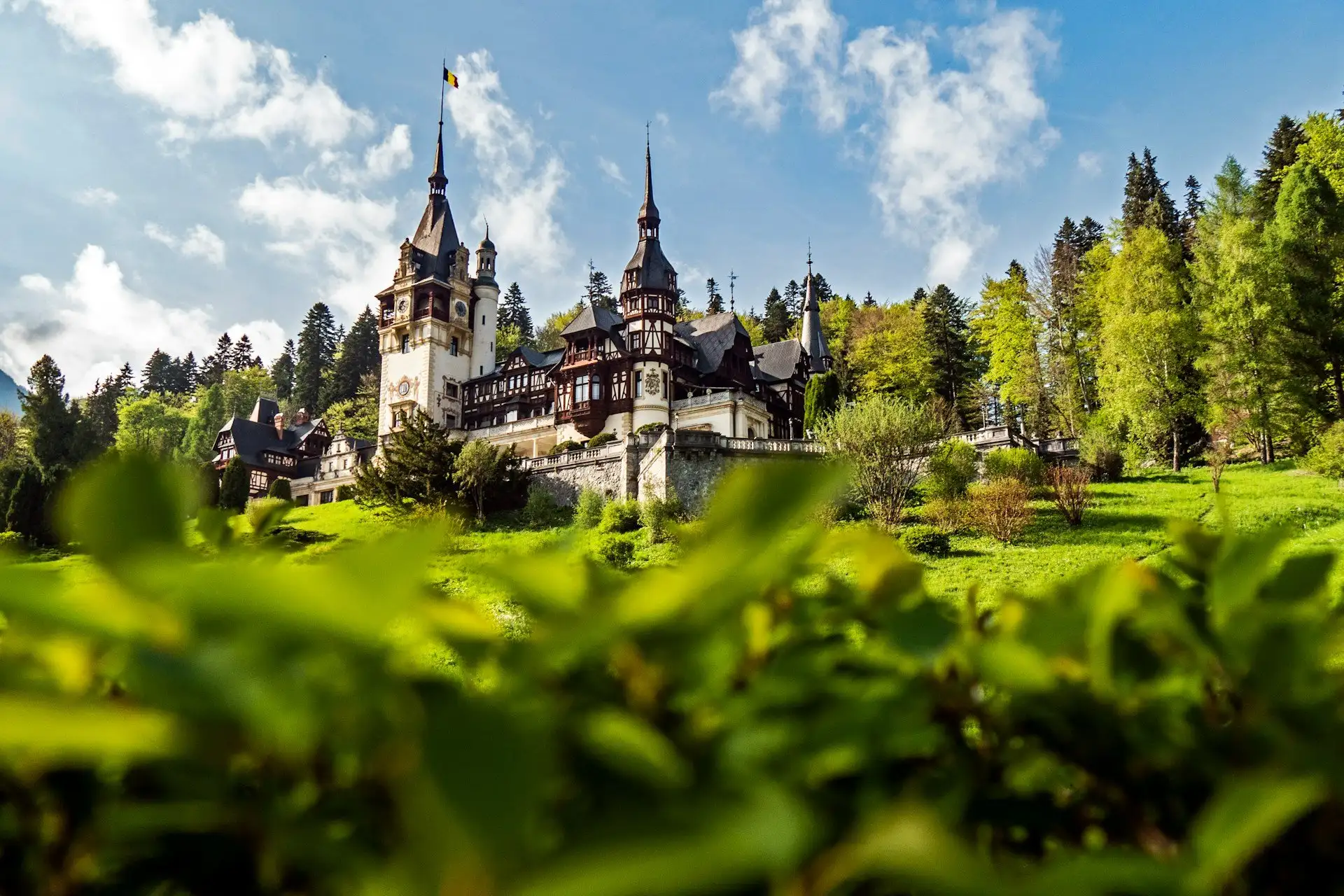
Romania
Medieval walled towns in the Carpathians, a delta where the Danube fractures into 5,000 channels full of pelicans, a capital that built itself a palace bigger than the Pentagon, and bears. Actual bears. Europe's most overlooked country is running out of excuses to remain that way.
What You're Actually Getting Into
Romania is genuinely unlike most places in Europe, in ways that are partly to do with landscape and partly to do with the particular density of history the country has absorbed. The Carpathian mountain arc that curves through the country's center contains the largest population of brown bears in Europe outside Russia, medieval walled towns built by Saxon colonists in the 12th century that look exactly as they did in the 15th, and road infrastructure that ranges from excellent to impassable depending on where you turn. Getting around requires either patience with the trains or confidence with a rental car. Both are rewarded.
The Dracula industry is real, relentless, and manageable. Bran Castle near Brașov was marketed as Dracula's Castle from the 1970s onward. The connection to Vlad the Impaler, the 15th-century Wallachian prince who inspired Bram Stoker's character, is real but thin: Vlad probably passed through or was briefly held there, didn't live there, and Stoker wrote his novel without visiting Romania. The castle itself is genuinely beautiful and the countryside around it is extraordinary. Visit it knowing what it is and you'll enjoy it. Visit expecting a Dracula experience and the gift shop will disappoint you.
What Romania doesn't market enough and genuinely delivers: the painted monasteries of Bucovina in the northeast, whose 15th and 16th-century exterior frescoes have survived five centuries of Carpathian weather with colors still vivid; the Danube Delta, the third-largest river delta in Europe and one of the world's great bird migration stopovers; the Maramureș region in the northwest, where horse-drawn carts are still the practical transport of choice and wooden churches from the 17th century have been UNESCO-listed; and Bucharest itself, which is not charming in the way Brașov or Sibiu are charming but is alive and strange and genuinely interesting once you get past the initial impression.
The currency is the Romanian leu (RON), not the euro. Romania is an EU member that has not yet adopted the euro. Prices in RON look large but convert to something surprisingly affordable: a full meal with wine costs RON 80 to 150 (€16 to €30). A beer is RON 8 to 15 (€1.60 to €3). A mid-range hotel runs RON 250 to 400 per night (€50 to €80). By Western European standards this is genuinely cheap. By the standards of what you get for the price, it is remarkable.
Romania at a Glance
A History Worth Knowing
Romania's origins as a distinct people are debated but the dominant narrative in Romanian national identity traces descent from the Dacians, the pre-Roman inhabitants of the region, and the Roman colonists who arrived when Emperor Trajan conquered Dacia in two wars between 101 and 106 CE. Trajan's Column in Rome depicts these campaigns in continuous carved relief around its shaft. The Romanian language is a Romance language, derived from Latin in a way that makes it recognizable to speakers of Italian or Spanish, which is why a Latin-derived language survives in this Slavic-surrounded corner of Europe. The Romans left after about 165 years. The language stayed.
The medieval period shaped the landscape you'll actually walk through. The three historical principalities that eventually became Romania, Transylvania, Wallachia, and Moldavia, had distinct histories and overlapping borders for centuries. Transylvania was colonized by German-speaking Saxon settlers from the 12th century onward, at the invitation of Hungarian kings, to defend the eastern frontier. The walled towns they built, Sibiu, Brașov, Sighișoara, Bistritz, Cluj, maintained their Saxon character for 700 years. The fortified churches scattered across the Transylvanian countryside, with their watchtowers and hidden food stores and defensive galleries above the nave, are the physical record of a community that needed to defend itself against Ottoman raids every few decades.
Vlad III of Wallachia, known to history as Vlad the Impaler and Vlad Drăculea, ruled from 1448 to 1476 with interruptions, and his reputation for impaling prisoners on stakes along roads to terrorize invading Ottoman armies reached western Europe via pamphlets printed shortly after his death. Bram Stoker encountered his name in the British Museum library in 1890 and adopted it. The real Vlad was not a vampire. He was a prince who used extreme violence tactically against the Ottoman threat. He is considered a national hero in Romania for successfully resisting the Ottomans during his reign.
The 20th century's defining chapter is Nicolae Ceaușescu's communist dictatorship from 1965 to 1989, which ended differently from the rest of Eastern Europe's 1989 revolutions. Where Poland and Czechoslovakia had peaceful transitions, Romania had a violent uprising in December 1989 in which over a thousand people died in street fighting. Ceaușescu and his wife Elena were arrested, tried in a brief military tribunal on December 25th, 1989, and shot. The whole event was filmed and broadcast on Romanian television the same day.
Ceaușescu's legacy is physically present in Bucharest in ways impossible to ignore. His systematization program demolished roughly a quarter of the old city in the 1980s to build wide socialist boulevards and the Palace of the Parliament, known during construction as the People's House (Casa Poporului). The building is the second-largest administrative building in the world by floor space after the Pentagon. It has 1,100 rooms, 480 chandeliers, and required the demolition of an entire historic neighborhood to build. You should visit it: not despite the circumstances of its creation but in direct engagement with them.
Emperor Trajan conquers Dacia. Roman colonization produces the Romanian language — Latin in a Slavic sea.
German-speaking settlers colonize Transylvania at the invitation of Hungarian kings. Build the walled towns still visible today.
Vlad III rules Wallachia. His reputation for impaling enemies reaches Western Europe via pamphlets. Bram Stoker encounters his name in 1890.
Wallachia and Moldavia unite. Full independence from the Ottoman Empire follows in 1877. Transylvania joins in 1918 after WWI.
Nicolae Ceaușescu rules. Bucharest's historic center is demolished. The Palace of the Parliament is built. 1989: violent uprising. Ceaușescu is executed on live TV on Christmas Day.
Romania joins the EU. Economic transformation accelerates. Brain drain to Western Europe is a persistent challenge.
Romania joins the Schengen Area for air and sea travel. Full Schengen integration with land borders continues.
Top Destinations
Romania is larger than most visitors expect: roughly the size of the UK, with driving distances between regions that require genuine planning. Bucharest is in the south. Transylvania is in the center, ringed by the Carpathians. Bucovina is in the northeast, six hours from Bucharest by the fastest train. The Danube Delta is in the far southeast. A rental car is the most practical way to cover multiple regions. A train-only trip is possible but requires accepting slow speeds and limited rural coverage.
Bucharest
Bucharest is not a beautiful city in the way that Prague or Kraków are beautiful cities. It is a city of violent contrasts: 19th-century Parisian-style boulevards alongside socialist tower blocks, the Palace of the Parliament looming over a neighborhood that was mostly demolished to make way for it, and embedded within all of this a genuine restaurant and nightlife scene that ranks among the better ones in Eastern Europe. The old Lipscani district has been partly restored and has good bars. The Floreasca neighborhood is where the money goes to eat. The Village Museum in Herăstrău Park, an open-air collection of authentic rural buildings from across Romania, is one of the best of its kind in Europe. Give Bucharest two days before moving to Transylvania.
Brașov
Brașov is the most practical base for Transylvania: compact, walkable, well-connected, and surrounded by the best the region offers within a 40-kilometre radius. The old Saxon town center, with its Gothic Black Church (whose interior walls are hung with hundreds of Ottoman carpets taken during border raids) and the medieval city walls, is genuinely beautiful. The Tâmpa mountain rises directly above the town and is cable-car accessible or 45-minute hikeable. Bear hides 15 kilometres south toward Zărnești offer some of the most reliable brown bear viewing in Europe. Bran Castle is 30 kilometres away. Allow three to four days based here.
Sighișoara
Sighișoara is one of the best-preserved medieval walled towns in Europe and the most compact. The citadel, approached through a covered wooden staircase of 175 steps, contains the clock tower, a church from 1345, and the house where Vlad the Impaler was born (now a restaurant, because of course it is). The lower town is quieter and more residential. UNESCO listed. Best visited on a weekday or out of season when the tourist coaches aren't stacked three deep in the square. Two hours from Brașov by train; an overnight stay in the citadel makes it considerably more atmospheric than a day trip.
Sibiu
Sibiu is the most livable of Transylvania's Saxon cities: well-restored, culturally active, with two connected main squares and a hilltop citadel that gives the best perspective on the medieval layout. The Brukenthal National Museum, housed in an 18th-century baroque palace, has one of Romania's best art collections. The ASTRA Museum complex southeast of the city is another excellent open-air museum of traditional rural architecture. In summer the International Theatre Festival makes Sibiu one of the more culturally significant small cities in Europe. Two to three hours from Brașov by car.
Bucovina
The painted monasteries of Bucovina in northeastern Romania are among the most extraordinary religious art anywhere in Europe. Built in the 15th and 16th centuries under Moldavian princes, their exterior walls are covered floor-to-ceiling in Byzantine-style frescoes: scenes from the Bible, the lives of saints, the Last Judgment, the Siege of Constantinople. Five centuries of Carpathian rain and frost have left most of these colors intact. Voroneț, with its famous deep "Voroneț blue," Sucevița with its vivid green ground, and Moldovița are the best three. Getting there requires a car or a committed bus journey from Suceava: the remoteness is part of the point.
Danube Delta
The Danube reaches the Black Sea not through a single channel but through a fracturing delta of 5,000 square kilometres of channels, lakes, reed beds, and islands that is one of Europe's great wildlife refuges. Over 300 bird species pass through or nest here, including the largest breeding colony of Dalmatian pelicans in the world. The main hub is Tulcea. From there, boats navigate the channels to fishing villages that have no road connections. Spend at least two nights here: a single-day visit gives you a boat trip and a pelican; two nights gives you the specific rhythm of the delta at dawn and dusk when the bird activity peaks.
Transfăgărășan Highway
Built by Ceaușescu between 1970 and 1974 as a military supply route through the Făgăraș mountains, the Transfăgărășan is 90 kilometres of mountain road that climbs to 2,042 metres above sea level through hairpin bends, glacial lakes, waterfalls, and views across the highest section of the Southern Carpathians. Jeremy Clarkson called it the best road in the world on Top Gear in 2009 and it hasn't been quiet since. Open July to October only (the pass closes for winter). The Bâlea Lake at the summit has a hotel and a glacier. Drive it northbound from Curtea de Argeș for the best sequence of scenery.
Maramureș
In the far northwest of Romania, Maramureș is the region that time forgot in a way that is neither cliché nor performance: horse-drawn carts genuinely outnumber cars on the side roads, wooden churches from the 17th and 18th centuries with their distinctive tall spires rise out of village graveyards, and the weekly markets at Sighetu Marmației draw farmers from the surrounding villages in traditional dress. The Merry Cemetery at Săpânța, where grave markers are carved and painted with scenes from the deceased's life and cheerful epitaphs, is one of the strangest and most genuinely moving places in the country. Requires a car and at least two full days.
Culture & Etiquette
Romanians are hospitable with visitors in a way that can take some getting used to if you're not expecting it. Being invited to eat, to drink, to sit and talk, happens more readily here than in much of Western Europe. Accepting is the correct response. Declining with genuine reason is understood. Making an excuse when you'd actually like to accept is considered confusing and slightly sad.
Romanian is a Romance language, which means speakers of Italian, French, Spanish, or Portuguese can often navigate menus and signs with some effort. English is widely spoken by younger people in cities and tourist areas and much less reliably in rural areas and with older generations. In Maramureș and parts of rural Transylvania, German is sometimes more useful than English as a second language, given the region's Saxon history.
Being offered food, țuică (plum brandy), coffee, or a meal is genuine. Romanian hospitality is rooted in Orthodox Christian traditions of welcoming strangers. Accepting graciously matters more than how much you actually consume.
The Romanian toast means "good luck" or "cheers." Say it with eye contact before the first drink and whenever glasses are refilled. Not doing so is noticed. Doing so from the first round earns immediate goodwill.
Both the painted monasteries of Bucovina and Orthodox monasteries across Transylvania and Wallachia require covered shoulders and knees. Scarves are available at most sites. Remove shoes when entering wooden churches in Maramureș, where the tradition requires it.
Rural markets and some craft stalls expect mild negotiation. Not aggressive haggling, but a polite counter is natural and expected. In city shops and restaurants, prices are fixed.
Rural guesthouses, village restaurants, market stalls, and smaller towns outside Bucharest and Brașov often prefer or require cash. Have RON notes in small denominations. A 200 RON note (€40) can be difficult to break in a village shop.
Romanians are aware that most foreign visitors know their country primarily through Bram Stoker's novel. The awareness is fine. The expectation that Romania is defined by this connection is less welcome. Vlad the Impaler is a national hero to Romanians for his military resistance to the Ottomans, not a monster.
The mountain pass closes for winter and even in summer can be affected by mist, rain, and the kind of road conditions that cause accidents. Check the weather before setting out. The ascent is not technically difficult; it is slippery when wet and the visibility can drop suddenly.
The Carpathian brown bears near Brașov are habituated to humans from decades of illegal feeding at the city's rubbish dumps. Habituated bears are more dangerous than genuinely wild ones, not less. Do not approach, feed, or attempt to photograph bears outside of organized hides. Incidents in Brașov itself are not unknown.
Romania's road network ranges from excellent new motorways to potholed village roads. The train network is slow by Western European standards. Rural petrol stations can be 40 kilometres apart. Plan journeys with more margin than Google Maps suggests.
Romanian is a Romance language and Romanians do not generally speak Russian. The Soviet-era association is historically understandable and culturally wrong. French was the preferred second language of the educated classes in the 19th and early 20th centuries and is sometimes more useful than Russian in older professional contexts.
Orthodox Art Tradition
The Byzantine-influenced Orthodox art tradition in Romania reaches its peak in the Bucovina monasteries, but is visible in every Orthodox church you enter: icon screens (iconostases) separating the nave from the sanctuary, gold-ground icons, and the specific deep colors of Byzantine palette. The tradition is living: contemporary icon painters work in the same style and the monasteries are active religious communities, not museums. The monks and nuns at Sucevița and Voroneț maintain the buildings that carry these frescoes and are genuinely pleased when visitors are interested rather than just photographing.
Roma Music Tradition
Romania's Roma community has produced some of the most extraordinary musicians in European history. The lăutari tradition, professional Roma musicians who played for weddings, celebrations, and aristocratic households across Romania and beyond, is the origin of much of what the world knows as "Romani music." In Bucharest's old taverns and in Transylvanian villages you still encounter this music in living form. The Fanfare Ciocărlia brass band and Taraf de Haïdouks have brought it to international stages. Encountering it in a village wedding rather than a concert hall is the definitive version.
Textile Tradition
Romanian folk textiles, particularly from Maramureș and Oltenia, are among the most sophisticated in Europe: hand-woven wool rugs (covoare), embroidered shirts (ie), and decorative towels (ștergare) with regional patterns that identify their origin village. The embroidered blouse became a global fashion moment when Maria Grazia Chiuri put it on the Dior runway in 2017. The authentic versions, made by village craftswomen, cost RON 200 to 800 (€40 to €160) from craft markets in Sibiu, Brașov, and Bucharest's Village Museum. This is not expensive for what it is.
Forest Culture
Romania has the largest area of old-growth forest in the European Union, and the relationship between Romanians and the Carpathian forest, for mushrooms, berries, medicinal plants, hunting, and timber, is active and ordinary rather than romantic. In autumn, the forest roads near any Transylvanian or Moldavian village fill with cars and people carrying baskets for mushroom picking, a national pastime done with genuine expertise. Being invited on a mushroom-picking morning by someone who knows what they're doing is one of the better ways to spend a Carpathian autumn day.
Food & Drink
Romanian food is the European cuisine that most visitors consistently underestimate. It is not subtle or elaborate: it is hearty, seasonal, rooted in peasant and pastoral traditions, and extraordinarily good value. The grilled meats are excellent. The sour soups (ciorbă) are complex and warming in a way that takes most visitors by surprise. The sarmale, stuffed cabbage rolls, are the dish that Romanian grandmothers are competed over. The cheese and charcuterie that emerge from rural mountain regions have no Western European equivalent in the combination of quality and price.
The wine has improved dramatically in the past 20 years. Moldova (the Romanian wine region, distinct from the Republic of Moldova) and Dealu Mare in Prahova county produce reds from Fetească Neagră and Merlot that are beginning to be taken seriously internationally. A good bottle of Romanian wine costs RON 30 to 80 (€6 to €16) in a restaurant. The traditional firewater, țuică, is a plum brandy that ranges from jet fuel produced in village stills to carefully aged expressions from commercial distilleries. The homemade version encountered at rural guesthouses is usually stronger and usually more interesting.
Ciorbă
Sour soup, the defining preparation of Romanian cuisine. Ciorbă de burtă (tripe soup with cream and garlic vinegar), ciorbă de fasole (bean soup with smoked pork), and ciorbă rădăuțeană (chicken soup from the Bucovina town of Rădăuți, thickened with cream and egg yolk) are the canonical versions. The sourness comes from fermented wheat bran liquid (borș, not to be confused with borscht), lemon juice, or sauerkraut brine. Order ciorbă before the main course, not alongside it. It is the first thing in any Romanian meal worth eating.
Sarmale
Stuffed cabbage leaves or vine leaves, filled with a mixture of minced pork, rice, dill, and spices, slow-cooked in a tomato and sauerkraut broth with smoked pork ribs. Served with sour cream and polenta (mămăligă). Every Romanian family considers their mother's sarmale the best in existence. They are probably right about their own family's version. In restaurants the quality varies enormously; the best are in traditional village-style restaurants rather than tourist-facing establishments.
Mici (Grilled Skinless Sausages)
Mici (literally "small ones") are grilled skinless sausages of mixed minced beef and pork, seasoned with garlic, black pepper, thyme, and sodium bicarbonate, eaten with mustard and bread. They are the Romanian equivalent of the Bulgarian meze kebapche and the Macedonian kebapčinja: street food elevated by the quality of fat-to-meat ratios and the specific spice combination. Sold from grills at roadside stalls, summer markets, and at the stadium before football matches. Cost around RON 3 to 5 each.
Mămăligă
Polenta, the traditional Romanian staple that accompanied every meal in peasant households for centuries. Not merely as a side dish: mămăligă with brânză (sheep's milk cheese) and sour cream, or mămăligă with fried eggs and smoked pork fat, constitutes a full meal in the traditional sense. The texture of properly made mămăligă, dense and slightly crusty on the outside from the cast-iron pot, is different from Italian polenta. It is best eaten at a rural guesthouse where it was made that morning for the same reason every morning for the past 40 years.
Brânză & Telemea
Romanian sheep's and cow's milk cheeses include telemea (a brined fresh cheese similar to feta, made in Transylvania and Dobrogea), caș (fresh unsalted sheep cheese), and burduf (aged sheep cheese packed into a stomach or pine bark for a specific funkiness). At any mountain market or rural cheesemaker, buying a wedge of fresh telemea with bread and tomatoes and eating it at the roadside is the correct lunch. It costs almost nothing and is better than most things you'll eat in a city restaurant.
Țuică & Pălincă
Țuică is double-distilled plum brandy, the national spirit of Romania, present at every celebration, meal beginning, and village encounter. Pălincă is the stronger Transylvanian and Maramureș version, often triple-distilled and reaching 50 to 60% ABV. Both are drunk neat and warm, not chilled. A small glass before a meal is obligatory in any rural setting where you've been welcomed. The correct response to being offered homemade pălincă is to accept it, smell it carefully, and drink it slowly. It will be stronger than anything you've encountered outside a distillery.
When to Go
Honest answer: September and October. Transylvania's forests turn rust and amber above the Saxon towns. The Transfăgărășan is still open. The Dobruja wine harvest coincides with warm days and cool evenings. The bear sighting rates from the Brașov hides are at their highest as the bears feed heavily before winter. The tourist crowds that fill Brașov and Sighișoara in August have thinned to manageable levels. This is Romania at its most atmospheric and its most rewarding.
Autumn
Sep – OctCarpathian forest colors. Bear activity peaks before hibernation. Transfăgărășan open until October. Wine harvest in the south. Dramatically fewer tourists than summer. Crisp hiking weather. The painted monasteries in autumn fog are extraordinary.
Late Spring
May – JunWildflowers in the Carpathian meadows. Danube Delta bird migration at peak. Temperatures pleasant for hiking and driving. Transfăgărășan opens in late June. Before the summer tourist peak in Transylvania's Saxon towns.
Winter
Dec – FebTransylvania under snow is genuinely magical: medieval walls and red rooftops under white. Skiing at Poiana Brașov. Christmas markets in Brașov and Sibiu. Bear hides still operational near Brașov. Significantly cheaper than summer. The Bucovina monasteries are serene and largely visited.
Peak Summer
Jul – AugBrașov and Sighișoara fill with domestic and foreign tourists. The Transfăgărășan is heavily trafficked. Bear hides book out weeks ahead. Bucharest is hot and uncomfortable for walking. The Danube Delta in July is sweltering and mosquito-heavy. That said, mountain hiking is excellent.
Trip Planning
Ten to fourteen days is the right length for a first Romania trip covering Bucharest, Transylvania, and one additional region. A week-long trip works if you focus on Transylvania only, based in Brașov. Adding Bucovina requires either flying to Suceava from Bucharest or a long overnight train; it's worth it for a separate trip or as an addition to a two-week itinerary. The Danube Delta similarly works better as a dedicated two to three-day excursion than as a rushed addition.
A rental car is the honest recommendation for most of Romania outside Bucharest and Brașov. The freedom to stop at a fortified church village, drive the Transfăgărășan at dawn, and reach Bucovina's monasteries on your own schedule is not replicable by train. Road conditions outside the main arteries require patience and a car with reasonable ground clearance.
Bucharest
Day one: Palace of the Parliament guided tour (pre-booked, bring passport). Village Museum in Herăstrău Park in the afternoon — allow three hours. Dinner at Caru' cu Bere for the interior and the mici. Day two: Lipscani old district in the morning. National History Museum. Evening departure by overnight train or early morning flight to Brașov, or rent a car for the next five days.
Brașov & Surroundings
Day three: arrive Brașov, walk the old town, Black Church. Day four: bear hide evening (book in advance). Morning: Bran Castle and the Bran village. Day five: drive the fortified church villages between Brașov and Sighișoara, stopping at Viscri, Prejmer, and Biertan. Each has a church on the UNESCO list and a caretaker with a key.
Sighișoara & Sibiu
Day six: Sighișoara old citadel. Overnight in the citadel to experience it after the day-tripper coaches leave. Day seven: Sibiu, the two connected squares, the Brukenthal Museum, and the ASTRA open-air museum. Fly home from Sibiu or drive back to Bucharest (3.5 hours).
Bucharest
Two full days including the Cotroceni Palace (residence of the Romanian president, open for guided tours on certain days), the Peasant Museum, and an evening walk through the Art Nouveau buildings of Calea Victoriei, the grandest street in the city, to understand what Bucharest was before Ceaușescu's demolitions.
Transfăgărășan
Rent a car. Drive north from Bucharest through Curtea de Argeș (the Curtea de Argeș Monastery, the most important royal monastery in Wallachia, is 30 minutes off the mountain road and worth the detour). Drive the Transfăgărășan from south to north. Overnight at Bâlea Lake if available. Descend to Sibiu the next day.
Transylvania Circuit
Three days: Sibiu and ASTRA museum. Fortified church villages: Biertan, Viscri, Malancrav. Sighișoara overnight. Brașov with a bear hide evening. Bran Castle morning.
Danube Delta
Drive or fly to Tulcea. Two nights minimum. Boat trips on the main channels and into the secondary network early mornings for bird activity. The Letea Forest, a sand dune stabilized by ancient oaks, is accessible by 4WD from Periprava and contains the most otherworldly landscape in Romania. Return to Bucharest on day ten and fly home.
Bucharest
Two full days including the Revolution Square circuit: the balcony where Ceaușescu gave his last speech on December 21, 1989, the former Communist Party headquarters, the Intercontinental Hotel where foreign journalists watched from the windows. Walking this circuit with any knowledge of the 1989 revolution is among the more quietly disorienting historical experiences in Europe.
Bucovina Monasteries
Fly to Suceava or overnight train. Three days: Voroneț, Sucevița, Moldovița, and Humor monasteries with a car rented from Suceava. Drive the forest roads between villages. Overnight at a rural guesthouse in Gura Humorului or Câmpulung Moldovenesc. The monasteries at dawn before visitors arrive are worth the early alarm.
Maramureș
Drive west from Suceava to Maramureș (3 hours). Three days: Merry Cemetery at Săpânța, the wooden churches of Bârsana and Ieud, the weekly market at Sighetu Marmației. Horse carts on the village roads. If you're there on a Sunday, arrive at the Ieud church at 9am for the service where the congregation still wears traditional dress.
Transylvania & Bucharest
Drive south through Transylvania: Cluj-Napoca for a night (Romania's second city is lively and university-driven), Turda Gorge for a morning hike, Sighișoara, fortified church villages, Brașov with a bear hide evening, Transfăgărășan road, back to Bucharest for the final night. Fly home from Bucharest or from Brașov's new international airport.
Vaccinations
No mandatory vaccinations required. Tick-borne encephalitis vaccine recommended for hiking in forested areas from spring through autumn, particularly in the Carpathians. Rabies vaccination worth considering for extended rural travel given the wildlife encounter potential. Routine vaccines up to date.
Full vaccine info →Connectivity
EU roaming applies for European SIM holders. US, UK, and other non-EU visitors should get a Romanian SIM (Orange, Vodafone, Digi) or eSIM on arrival. Coverage is good in cities and main towns. The Carpathian mountains, Danube Delta channels, and remote Bucovina roads have patchy to no coverage. Download offline maps before leaving cities.
Car Rental
Strongly recommended outside Bucharest and Brașov. Budget €25 to €50 per day from local companies. Mountain roads are manageable in a standard car in summer; winter mountain driving requires snow chains or winter tyres. Fill up whenever you see a petrol station in rural areas. Most rental companies are based at Bucharest and Brașov airports.
Currency (RON, not €)
Exchange euros at exchange offices (casă de schimb) in city centers, not at airports. Cards accepted at hotels, restaurants, and shops in cities. Rural guesthouses, village restaurants, market stalls, and smaller towns outside the main tourist circuit are often cash-only. Carry RON 200 to 300 when leaving urban areas.
Travel Insurance
Healthcare quality varies: excellent in Bucharest private clinics, more limited in rural areas. Emergency care is available throughout but may require evacuation to a city for anything serious. Travel insurance with medical cover is recommended. For bear watching or mountain hiking, ensure adventure activities are covered.
Vignette (Road Tax)
All vehicles using Romanian national roads, including rental cars, require a rovignette (electronic road tax sticker). Rental companies typically include this. If driving a private vehicle from abroad, purchase the e-vignette online at roviniete.ro before entering Romania. Fines for driving without one are significant and checkpoints are active.
Transport in Romania
Romania's transport infrastructure is uneven, which is the honest description. The A1 and A3 motorways connecting Bucharest to the west and northwest are modern and fast. The train network connects major cities but runs slowly: Bucharest to Brașov by the fastest train takes 2.5 hours for 166 kilometres. Rural roads require patience and appropriate speed. Bucharest's own metro is functional and affordable.
Book train tickets through the CFR Călători website (cfrcalatori.ro) or the Merlin app. The IR (InterRegio) and IC (InterCity) trains are the fastest option; the R (Regional) trains are slow and best avoided for long distances. The overnight train from Bucharest to Suceava (for Bucovina) takes around 6 to 7 hours and is a reasonable way to cover the distance while sleeping.
InterCity Train
RON 40–120/routeBucharest to Brașov: 2.5 hours (IC). Bucharest to Cluj: 8–9 hours. Bucharest to Suceava: 6–7 hours (overnight is the practical option). Book at cfrcalatori.ro. Punctuality is variable; build in margin.
Rental Car
RON 120–250/dayThe essential tool for Transylvania, Bucovina, Maramureș, and the Transfăgărășan. Budget and Sixt have the most reliable fleets at Romanian airports. Drive defensively: road discipline on rural roads is different from Western European norms.
Intercity Bus
RON 30–80/routeFlixBus and local operators cover major city routes. Bucharest to Brașov by bus takes 2.5 to 3 hours and is often more punctual than the train. Autogara Filaret in Bucharest is the main bus terminal. Check timetables on autogari.ro.
Domestic Flights
RON 150–400TAROM and Wizz Air connect Bucharest to Cluj, Timișoara, Sibiu, Suceava, and other cities. Flying from Bucharest to Suceava (for Bucovina) takes 55 minutes versus 7 hours by train. Worth considering for the north of the country.
Bucharest Metro
RON 3/tripFive lines covering central Bucharest. The M2 blue line connects Henri Coandă Airport to Piața Victoriei (45 minutes) for RON 8 with the airport supplement. The metro is clean, reliable, and the quickest way to cross the city. Buy a 10-trip card for RON 25.
Bolt & Uber
RON 5 start + meterBoth operate in Bucharest, Brașov, Cluj, and major cities. Significantly cheaper than metered taxis. A cross-city Bucharest journey costs RON 15 to 25 (€3 to €5). Never take an unmarked taxi from Bucharest's airport without prearranging: overcharging is a known issue.
Delta Boats
RON 50–200/tripThe Danube Delta is accessed by public ferry from Tulcea or by private boat hire. The public ferries to Sulina and Sfântu Gheorghe run daily. Private boat hire for channel exploration costs RON 300 to 600 per half-day and gives access to the secondary channels where the serious birdwatching is.
Maxi-Taxi (Shared Minibus)
RON 10–30/routeShared minibuses (maxi-taxis) supplement the train between smaller towns, particularly in Transylvania. Depart when full from town centers. Cheap, surprisingly fast, and a genuine local transport experience. Ask at any bus station for current routes.
Fly into Bucharest. Two days in the capital using the metro and Bolt. Rent a car from day three at Bucharest airport (returning to Bucharest or dropping at Brașov depending on your itinerary). This covers Transylvania, the Transfăgărășan, and the fortified villages on your own schedule. For Bucovina, fly from Bucharest to Suceava (55 minutes, RON 150 to 250) rather than the 7-hour train. For the Danube Delta, overnight train or bus from Bucharest to Tulcea, then boats. The combination of two days with metro and Bolt in Bucharest plus a rental car for the rest is the optimal structure for any trip of 7 days or more.
Accommodation in Romania
Romanian accommodation is excellent value. A genuinely good boutique hotel in Brașov's old town costs RON 250 to 450 per night (€50 to €90). Rural guesthouses in Transylvania and Maramureș, often in traditional farmhouses with home-cooked dinner included, cost RON 150 to 300 (€30 to €60). The Danube Delta's fishing village guesthouses are basic but functional and run RON 120 to 200 with meals. The quality gap between Bucharest's best hotels and its cheaper options is significant: spend a bit more in the capital for a dramatically better experience.
Rural Guesthouse (Pensiune)
RON 150–300/nightThe best Romanian experience outside cities. Traditional farmhouses with home-cooked meals, garden access, and a host who knows the local forest and the fortified churches. Viscri (near Brașov), Biertan, Rimetea in the Carpathians, and Budești in Maramureș all have excellent options. Book in advance for summer weekends.
Boutique Hotel
RON 250–500/nightBrașov and Sibiu have well-restored boutique hotels in historic buildings in their old towns. Bucharest's boutique options are in neighborhoods like Floreasca and Dorobanți, away from the center. Quality is high and prices remain significantly below Western European equivalents.
Hostel
RON 60–120/nightRomania's hostel scene is good in Bucharest and Brașov. Pura Vida Sky Bar & Hostel in Brașov with its rooftop view of the old town is genuinely excellent. Bucharest has solid options in the Floreasca and Dorobanți areas.
Wild Camping
Free in designated areasWild camping in Romania's mountains is permitted in most areas outside national park core zones. The Carpathian hiking hut (cabană) network provides basic shelter on the main routes. Camping near Danube Delta channels requires checking local rules but is generally possible on higher ground.
Budget Planning
Romania is one of the cheapest EU countries to travel. For travelers coming from Western Europe or North America, the value proposition is significant. A full sit-down restaurant dinner with wine for two costs RON 120 to 200 (€24 to €40). A craft beer in Bucharest is RON 12 to 18 (€2.40 to €3.60). Museum entry fees rarely exceed RON 30 (€6). The main cost variable is accommodation: Bucharest's good hotels are more expensive than the rest of the country, but still cheaper than any Western European capital equivalent.
- Hostel dorm or rural guesthouse
- Ciorbă and mici from local restaurants (RON 30–50 per meal)
- Train and bus travel between cities
- Free fortified churches, walks, viewpoints
- Local beer RON 8–12
- Boutique hotel or pensiune with breakfast
- Restaurant for all meals with wine
- Rental car (shared between group)
- Museum entry and guided tours
- Bear hide evening (RON 150–250)
- Best hotels in each city and region
- Private guides for monasteries and Delta
- Private Danube Delta boat charter
- Fine dining in Bucharest or Brașov
- Helicopter over the Transfăgărășan (yes, this exists)
Quick Reference Prices
Visa & Entry
Romania is an EU member state and joined the Schengen Area for air and sea travel in March 2024, with land border Schengen integration ongoing. This situation is in transition: confirm the current Schengen status before travel as the integration process completes. For practical purposes, citizens of the US, UK, Canada, Australia, New Zealand, and most Western countries can enter Romania visa-free for up to 90 days. EU citizens have full freedom of movement.
The key practical implication of Romania's partial Schengen status: if you enter Romania by air from a fully Schengen country, you may not face a border check; if you enter by land from a non-Schengen country, you will. Check the current status with Romania's border authorities or your home country's travel advisory before your trip.
Citizens of the US, UK, EU, Canada, Australia, New Zealand, and many other nationalities. Romania joined Schengen for air/sea in March 2024; land border Schengen integration ongoing. Verify current status before travel at the Romanian Ministry of Foreign Affairs.
Family Travel & Pets
Romania is a good family destination with some specific age-related considerations. The fortified Saxon villages, the Danube Delta boat trips, the bear watching hides, and the Maramureș horse carts are all experiences that land well across age ranges. The bear watching in particular, sitting in a forest hide as brown bears emerge from the treeline 50 metres away, is one of those wildlife experiences that children remember for decades.
The practical considerations: road infrastructure requires more attention than in Western Europe, particularly on mountain routes. Distances between amenities in rural areas are real. The Transfăgărășan with young children requires ensuring they have something to do in the car, as the road itself takes 2 to 3 hours and the views, while extraordinary, are not interactive.
Bear Watching
Evening bear hides near Brașov and Zărnești are suitable for children aged about 8 and upward who can sit quietly for three to four hours. The minimum age varies by operator; check when booking. Most operators provide blankets and hot drinks. Younger children may find the waiting hard; older children and teenagers find it one of the most memorable experiences of any European trip.
Danube Delta Boats
Public ferry to Sulina or private boat hire through the delta channels are both accessible with children. The pelicans, herons, cormorants, and egrets visible from the boat are self-evidently spectacular for all ages. The boat trip itself — through channels bordered by 3-metre-high reeds, with occasional otters and fish eagles — does not require any natural history knowledge to appreciate. Bring hats, sun cream, and insect repellent in quantity.
Fortified Churches
The fortified churches of Transylvania, particularly those with accessible defensive towers, are excellent for children who respond to the combination of real medieval architecture and the historical stories the caretakers provide. Biertan and Viscri are the best for family visits: both have open towers, accessible courtyards, and caretakers who speak enough English to explain the defensive function of the storage rooms and escape passages.
Maramureș Horse Carts
The opportunity to ride in a horse-drawn cart through a Maramureș village is something that rural guesthouse owners in the region can often arrange through local farmers. For children who have never experienced this as functional transport rather than tourist theatre — because in Maramureș it genuinely is the way things move — this is among the more memorable rural experiences in Europe.
Poiana Brașov Skiing
The ski resort of Poiana Brașov, 13 kilometres from Brașov's city center, has reliable snow from December to March and a range of runs suitable for beginners through advanced skiers. Children's ski school operates from age 3. Significantly cheaper than Austrian or Swiss alternatives for the same snow quality. Access is by cable car or bus from Brașov.
Farm & Food Experiences
Rural guesthouses in Transylvania and Maramureș often keep animals, make their own cheese and brandy, and cook from the garden and forest. Children who encounter the making of brânză, the milking of sheep, or the collecting of forest mushrooms with a host who has done these things their whole life get an agricultural education that is not available through any other kind of travel. These experiences are available cheaply and are not produced for tourism; they simply exist and visitors are welcome to participate.
Traveling with Pets
Romania is an EU member state and accepts pets from other EU/EEA countries with a valid EU pet passport, ISO microchip, and current rabies vaccination. Pets from non-EU countries need an official health certificate from an authorized vet issued within 10 days of travel, plus proof of current rabies vaccination. UK travelers post-Brexit need an official Animal Health Certificate for each journey.
In practice, Romania is moderately pet-friendly. Dogs are accepted at many rural guesthouses (the pensiune system is run by people who keep working dogs themselves), in outdoor restaurant settings, and in parks. Urban restaurants and city hotels are less consistently accommodating. Always confirm pet policy when booking.
A specific concern for dogs in Romania: stray dog populations exist in parts of Bucharest and some smaller cities, though the situation has improved significantly since a major neutering program began in 2013. Keep your own pet on a lead in areas where strays are present. The Carpathian forest presents a real wildlife encounter risk: bears, wolves, and lynx inhabit the mountains. Do not hike with small dogs off-lead in areas of known large predator activity. Ask locally before allowing a dog to roam freely.
Safety in Romania
Romania is generally safe for tourists. Violent crime against visitors is uncommon. The country's reputation from the early post-communist period no longer reflects current reality. Bucharest, in particular, has improved substantially and is comparable to other Eastern European capitals in terms of tourist safety. The practical risks are road conditions, petty theft in crowded city areas, taxi overcharging at airports, and wildlife in the Carpathians.
General Safety
Good. Romania is safer than its historical reputation suggests. Violent crime targeting tourists is rare. Romanian people are generally friendly and helpful to lost or confused visitors.
Solo Women
Generally safe in tourist areas and cities. Standard urban awareness applies in Bucharest late at night. Rural areas of Transylvania, Bucovina, and Maramureș are very comfortable for solo women. The culture is traditional in some rural contexts but rarely hostile.
Taxi & Transport Scams
Unmetered taxis at Bucharest Henri Coandă Airport are the most common tourist scam in Romania. Use Bolt or Uber, or pre-book an airport transfer. In the city, always use the app. Legitimate metered taxis display the tariff clearly; if there's no meter or the driver won't use it, don't get in.
Road Conditions
The biggest practical risk for self-driving visitors. Rural roads can be narrow, unmarked, potholed, and shared with horse carts and farm vehicles. Night driving in unfamiliar mountain areas is not recommended. The blood alcohol limit is 0.00%. Traffic police checkpoints are regular; have all documents accessible.
Wildlife in Mountains
Brown bears, wolves, and lynx inhabit the Carpathians. Bear encounters on popular trails near Brașov have increased due to habituation. Make noise while hiking, keep food stored away, and follow the trail rules posted at national park entrances. Do not approach bears under any circumstances.
Healthcare
Adequate in major cities; variable in rural areas. Private clinics in Bucharest (Regina Maria, MedLife) offer English-language care of high quality. EU visitors with EHIC cards receive emergency treatment at Romanian public hospitals at local rates. Travel insurance recommended for all visitors. Mountain rescue in the Carpathians is provided by Salvamont and is generally well-equipped.
Emergency Information
Embassies in Bucharest
Most foreign embassies are located in Bucharest's Dorobanți, Floreasca, and Primăverii neighborhoods.
Book Your Romania Trip
Everything in one place. These are services worth actually using.
Dor
Romania has a word that sits alongside the Portuguese saudade in that difficult category of terms that require a paragraph rather than a translation. Dor is a longing, a yearning, specifically for things and people you love at a distance. It is the feeling of a Romanian who has emigrated and misses the Carpathian autumn. It is the feeling of someone separated from a person or place that formed them. It is not pure sadness; it contains love.
You will not feel dor for Romania before you've been there. But a week in Transylvania in October, driving the forest roads between fortified churches with the mist coming down from the mountain, eating sarmale at a guesthouse run by a woman who learned the recipe from her grandmother, and sitting in a forest hide at dusk as a bear moves through the treeline fifty metres away — that week will give you the raw material. The dor comes later, when you're back home and looking at the photographs and wondering why you didn't stay another week.