
Portugal
A small country at the edge of Europe that once mapped half the world, then spent five centuries looking out to sea. The wine is extraordinary. The pastéis are non-negotiable. And something about the light here, particularly in autumn, is genuinely different from anywhere else.
What You're Actually Getting Into
Portugal has been one of Europe's most popular destinations for a decade now, and the honest consequence is that the country has changed. Lisbon's Alfama and Bairro Alto were once affordable, locally-inhabited neighborhoods; they're now extensively given over to short-term rentals, boutique hotels, and restaurants with English-language menus and prices to match. The same is true of Porto's Ribeira waterfront. The tourists came, the locals moved to the suburbs, and the thing that drew people there in the first place became partly a performance of itself.
This is not a reason not to go. Portugal is still magnificent: the food remains exceptional value relative to most of Western Europe, the wine is world-class and underpriced, the coastline is extraordinary, and the country outside the main tourist corridors, the Alentejo plains, the Serra da Estrela mountains, the Minho in the north, the Azores and Madeira archipelagos, is genuinely unhurried and available for anyone willing to get on a regional bus or rent a car. The problem is specific and manageable: Alfama in August is not Alfama. Sintra in July at noon is not Sintra. Learn the difference between the experience available and the experience in a photograph, and plan accordingly.
The country's scale is also frequently misunderstood. Portugal is small, roughly the size of Indiana, but it takes longer to move around than the map suggests. Lisbon to the Algarve is three hours by the fast train. Lisbon to Porto is under three hours. Porto to the Douro Valley vineyards is an hour and a half. It's a country genuinely suited to a slow-paced rental car trip or a series of regional train journeys, rather than trying to stack cities and regions on a single packed itinerary.
Portugal at a Glance
A History Worth Knowing
Portugal is the oldest nation-state in Western Europe with essentially its current borders, having established them in 1139 when Afonso Henriques declared himself King of Portugal and began pushing the Moorish presence southward in a campaign that concluded with the capture of Faro in 1249. The borders with Spain haven't changed meaningfully since 1297. For a continent defined by border disputes and national redrawings, this is extraordinary stability.
The period that shaped everything else is the Age of Discovery, roughly 1415 to the early 17th century. Starting with the capture of Ceuta in Morocco in 1415, Portuguese navigators, funded by Prince Henry the Navigator and his successors, systematically explored and mapped the West African coast, reached India around the Cape of Good Hope in 1498 under Vasco da Gama, arrived in Brazil in 1500 under Pedro Álvares Cabral, and established trading posts from Macau to Mozambique to Hormuz. At the height of the Portuguese Empire, a country with a population of perhaps 1.5 million controlled the most profitable trade routes on earth.
The physical legacy of this period is everywhere in Portugal, most visibly in the Manueline architectural style, a distinctively Portuguese late Gothic that incorporates maritime motifs, armillary spheres, twisted ropes, and coral into stone facades. The Mosteiro dos Jerónimos in Belém and the Torre de Belém, both UNESCO World Heritage sites, are the most celebrated examples. They were funded directly by the spice trade profits from Vasco da Gama's India routes.
The disaster that reordered everything was the Great Lisbon Earthquake of November 1, 1755. The earthquake, the subsequent fires, and the tsunami that followed killed between 30,000 and 40,000 people and destroyed most of the city. What was rebuilt under the chief minister, the Marquis of Pombal, became one of Europe's first planned urban grids: the Baixa district, with its rational street plan, identical building heights, and neoclassical facades, is essentially an 18th-century urban experiment. Lisbon's famous azulejo tile tradition, while predating the earthquake, expanded significantly in the rebuilding as a practical, durable, and beautiful surface treatment for the new city's facades.
The 19th and early 20th centuries were turbulent: the royal family fled to Brazil during the Napoleonic invasions, the monarchy was abolished in 1910, and a series of unstable republics led to the Estado Novo dictatorship of António de Oliveira Salazar, which ran from 1933 to 1974. Salazar's regime, cautious and conservative, kept Portugal neutral in WWII but also kept it poor and isolated, maintaining African colonies through brutal colonial wars in Angola, Mozambique, and Guinea-Bissau until the military coup of April 25, 1974: the Carnation Revolution.
The Carnation Revolution is one of history's more remarkable events. A military coup overthrew the dictatorship with almost no bloodshed; civilians placed carnations in the barrels of soldiers' rifles. Portugal decolonized rapidly, joined the EU in 1986, and has been a democracy since. April 25th is still celebrated with genuine feeling: you will see carnations everywhere on that date, and the meaning they carry is not ceremonial.
Afonso Henriques becomes first King of Portugal. The country's borders are essentially set by 1249 — unchanged for 750 years.
Portuguese navigators reach India, Brazil, Africa, Japan, and China. The smallest nation in Europe briefly controls global trade routes.
Kills 30,000–40,000 people. The Marquis of Pombal rebuilds Lisbon as Europe's first planned urban grid. Azulejos tile the new city.
Monarchy abolished. Decades of political instability follow until Salazar's Estado Novo dictatorship takes hold in 1933.
Military coup ends 48 years of dictatorship. Civilians put carnations in rifle barrels. Near-bloodless. Portugal decolonizes and joins the EU in 1986.
Lisbon hosts the World Expo, transforming the Parque das Nações waterfront and signaling Portugal's new European ambition.
Portugal becomes one of Europe's most visited countries. Lisbon and Porto grapple with overtourism; the rest of the country is still waiting to be properly discovered.
Top Destinations
Portugal divides into the mainland, which most visitors navigate on a Lisbon–Porto–Algarve axis, and the Atlantic archipelagos of Madeira and the Azores, which are increasingly their own destinations rather than extensions of a mainland trip. A two-week mainland trip can cover Lisbon, Sintra, the Alentejo, Porto, and the Douro Valley with room to breathe. The Algarve is worth a separate beach-focused trip rather than a rushed addition to a cultural tour.
Lisbon
Lisbon spreads across seven hills above the Tagus, which it calls the Tejo, in a way that makes every walk either a climb or a descent. The city is handsome, layered, occasionally exhausting, and genuinely unlike any other European capital. The Alfama district, the oldest neighborhood, survived the 1755 earthquake and retains its Moorish street plan: narrow, unmarked, and easy to be usefully lost in. The Bairro Alto is where the nightlife is. Belém, three kilometres west, is where the empires were launched. LX Factory, a converted industrial complex in Alcântara, is where the creative economy ended up. Allow four days at minimum. Two days is not enough.
Porto
Porto is smaller, steeper, rougher around the edges, and in many visitors' opinion more interesting than Lisbon. The Ribeira waterfront with its rabelo boats and the Vila Nova de Gaia wine lodges across the river is the postcard view; the reality behind it, Miragaia and the Bonfim neighborhood and the city's fierce loyalty to its own character, is what makes Porto compelling. The Livraria Lello, allegedly one of the inspirations for Hogwarts, requires a paid entry ticket that's deductible from a book purchase. The Igreja do Carmo outside has a full azulejo tile facade. Matosinhos, 10 minutes by metro, is where locals go for grilled fish and where prices fall back to local levels. Allow three to four days.
Sintra
A UNESCO World Heritage town 45 minutes from Lisbon by train, Sintra sits in a forested ridge above the Atlantic with an improbable concentration of palaces, each more theatrical than the last. The Pena Palace, a Romanticist fantasy in yellow and pink perched on the highest peak, is the most photographed. The Quinta da Regaleira, with its initiatory well accessed by a spiral staircase descending into the earth, is the strangest. The Moorish Castle is the oldest. Go on a weekday, arrive before 10am, and walk between sites rather than taking the tourist bus. The forest between palaces is the part most visitors rush past.
Algarve
The south coast of Portugal has the most dependably warm and sunny weather in mainland Europe from May to October. The limestone rock formations around Lagos and Praia da Marinha, the ochre sea caves at Benagil (best seen by kayak from the beach, not by tour boat), and the long sandy beaches around Tavira in the east are all exceptional. The Algarve is unambiguously touristy along most of its coast in summer. Tavira and the eastern Ria Formosa lagoon area are the most livable and least built-up sections. The southwest corner around Sagres, where the Atlantic runs cold year-round, is quieter and surf-focused.
Douro Valley
The Douro is one of the most beautiful river valleys in Europe: steep terraced vineyards dropping to the river, white quintas (wine estates) on every hillside, and the specific quality of late afternoon light that the valley traps and amplifies. The base is usually Régua, two and a half hours from Porto by scenic railway along the river. Wine tastings at quintas like Ramos Pinto, Quinta do Crasto, and Quinta da Pacheca range from free to €20. Harvest season in September and October adds noise and color. A boat cruise on the Douro from Porto to Régua takes a full day and is one of the better slow-travel experiences in the country.
Alentejo
The Alentejo is interior Portugal: rolling plains of cork oak, olive, and wheat; white hilltop villages with castle ruins; the walled city of Évora with a Roman temple in its center and a bone chapel lined with 5,000 monks' skulls that is not trying to be shocking but simply is. The Alentejo wine region has some of Portugal's best reds, full-bodied and earthy. Accommodation in restored rural quintas is excellent value. This is the part of Portugal that rewards a rental car and no particular schedule. It remains quietly magnificent and genuinely untroubled by mass tourism.
Azores
Nine volcanic islands in the mid-Atlantic, 1,500 kilometres west of Lisbon, that look nothing like mainland Portugal. The Azores are green rather than gold, marked by crater lakes, hydrothermal springs, endemic birds, whale migration routes, and a landscape that the 15th-century Portuguese must have thought was genuinely miraculous when they stumbled onto it. São Miguel is the largest and most accessible. Flores is the most remote and extraordinary. Whale watching here is among the best in the world. The Azores are increasingly well-visited but still genuinely feel like the edge of the known world.
Madeira
A Portuguese island in the Atlantic, 900 kilometres southwest of Lisbon, warm enough for year-round travel and lush enough to feel tropical despite being at 33°N. The levadas, a network of ancient irrigation channels with walking paths alongside them through laurisilva forest, are the main draw for hikers. Funchal's food market is one of the best in Portugal. The original Madeira wine, which travels across the Atlantic in a barrel and is improved by it, is made here. Good year-round with a sweet spot in spring (flowers) and autumn (wine harvest).
Culture & Etiquette
Portuguese people are warm but not effusive, generous but not showy, and notably patient with tourists in a way that has survived the tourism surge better than might be expected. The relationship with food is serious: a meal is a long, unhurried affair and a good restaurant table is held for the duration of the evening. Don't rush it. Nobody will hurry you and doing so yourself misses the point entirely.
The concept of saudade, that untranslatable longing that is the emotional core of fado, runs through Portuguese culture more broadly as a specific orientation toward the past: the Age of Discovery, the empire that was, the fishing communities that diminished. It's not depression; it's a complex, aestheticized relationship with loss and memory that is unlike anything in northern European culture. Understanding it, even partially, makes Portugal a different and more resonant place to visit.
Women greeting anyone, and men greeting women, exchange two kisses on alternating cheeks in social contexts. Right cheek first. This is standard and expected in any informal setting. In business, a handshake is more common.
Lunch is 1pm to 3pm. Dinner starts at 8pm and often runs until 11pm or midnight. Arriving at a restaurant at 6:30pm will get you a table but you'll be eating alongside the very elderly and the very foreign. Sitting down at 8:30pm is the correct approach.
The vinho da casa, house wine, in Portuguese restaurants is almost universally drinkable and costs €3 to €5 a carafe. The country produces enough good wine at low cost that restaurants don't need to cut corners on the house pour. Order it before looking at the wine list.
The bread, butter, olives, and cheese that arrive at your table before you've ordered are not free. The couvert (cover charge) ranges from €1 to €3 per person and will appear on the bill. If you don't want it, say "não queremos o couvert" and it will be removed. If you touch it, you pay for it.
At a real fado performance, silence during the performance is absolute. Talking, using your phone, or arriving and leaving mid-song is deeply disrespectful to the performer and to other audience members. The applause after a song comes after a respectful pause.
Portuguese people are acutely aware that their language and culture are not Spanish and have maintained their distinct identity in the shadow of a larger neighbor for 900 years. Speaking Spanish to a Portuguese person who speaks English fluently is not the helpful shortcut it might seem.
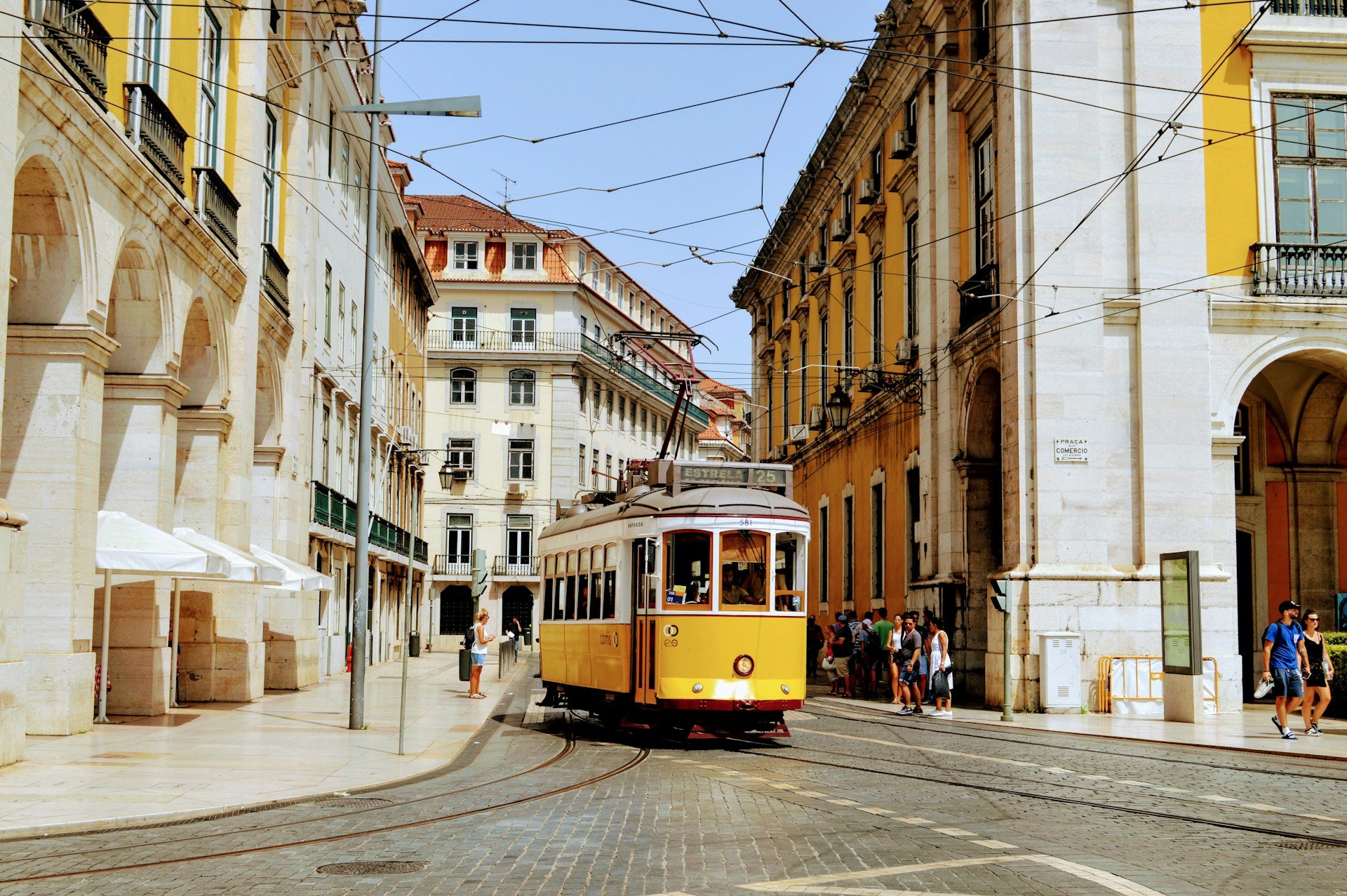
Tram 28 in Lisbon is a genuine working tram on a beautiful historic route through the Alfama. In July and August it is also one of the most crowded tourist experiences in Europe, with pickpockets operating in the crush. Ride it in October or early morning in summer; take other trams during peak tourist season.
Fado singers and guitarists at live performances are working artists. Ask permission, and even then avoid flash photography during performance. Many houses explicitly prohibit it.
Portuguese beaches have a flag system: green (safe to swim), yellow (caution, swim near lifeguard), red (do not enter water), and a checkered flag (no lifeguard on duty). The Atlantic along Portugal's west coast has cold water, strong swells, and dangerous rip currents. Red means red. Several deaths occur annually from ignoring it.
Portuguese food culture is sit-down, full-plate, and meal-structured. Petiscos exist (small plates, equivalent to tapas) but they are not the default mode of eating. Arriving somewhere for "a few small dishes" may result in confusion unless you're specifically at a petiscos bar.
Fado
Fado is not a tourist experience performed for tourists, although tourist versions exist in abundance. At its core it is a living tradition that emerged from Lisbon's working-class Alfama and Mouraria neighborhoods in the 19th century and has been continuously evolving since. A good fado house on a Tuesday in October, when the tourists have thinned, with a singer who has actually earned the material they're performing, is an experience that has no real European equivalent. Look for houses with no menu in English outside. That's not a reliable rule but it's a reasonable starting heuristic.
Azulejos
The blue-and-white ceramic tile panels that cover Portuguese facades, church interiors, train stations, and stairwells are not purely decorative; they evolved as a climate-smart surface treatment that insulates walls and reflects light. The word azulejo comes from Arabic az-zulaij, polished stone. The panels in Lisbon's São Bento station, depicting scenes from Portuguese history, and in the Igreja de Santo António in Lagos, are among the best in the country. The National Tile Museum in Lisbon traces the tradition from the 16th century to the present and is one of the most beautiful museums in the city.
Santos Populares
The June festivals honoring Santo António (June 12-13), São João (June 23-24), and São Pedro (June 28-29) transform Lisbon, Porto, and Braga into city-wide street parties. Porto's São João is the most spectacular: the whole city comes out to the streets, grills sardines, drinks vinho verde, and hits each other over the head with plastic hammers and leeks. This is not a metaphor. It is enthusiastically celebrated, genuinely participatory, and one of the best things to witness in Portugal if your timing works.
The Bacalhau Relationship
Bacalhau, salt cod, has been central to Portuguese cooking since the 15th century, when Portuguese fishermen found the cod banks of Newfoundland and developed drying and salting techniques to bring the fish home across the Atlantic. There are reportedly 365 bacalhau recipes in Portugal, one for each day of the year. This claim is probably an exaggeration. The obsession behind it is not. Bacalhau à Brás, shredded salt cod with scrambled egg and potato straws, is the most beginner-accessible version. Order it before you decide you don't like salt cod.
Food & Drink
Portuguese food sits at a crossroads of Atlantic seafood culture, southern European olive-oil cooking, and the spice influences from centuries of Indian Ocean trade, and it does all three things simultaneously without fuss or concept. The grilled fish is outstanding. The pork is outstanding. The custard tarts are outstanding. The wine, which comes in more varieties from more distinct terroirs than most visitors know about, is consistently good and almost always underpriced relative to France or Italy. A full restaurant meal for two with wine and coffee costs €35 to €55 at a good local restaurant. This is not budget dining. This is Portugal.
Grilled Fish
Charcoal-grilled fish, particularly sea bass (robalo), gilthead bream (dourada), and sardines (sardinhas), dressed with olive oil and served with potatoes and salad, is the backbone of Portuguese coastal cooking. The sardine season runs June through September; fresh sardines grilled at a São João festival taste different from tinned ones. In Matosinhos outside Porto, the fish restaurants on Rua Heróis de França serve whole grilled fish to locals who've been coming for decades. The price and quality differential from the tourist restaurants on Porto's Ribeira is significant.
Seafood
Portugal's seafood is among the best in Europe by quantity, quality, and value. Percebes (gooseneck barnacles, harvested from Atlantic rocks at considerable personal risk), amêijoas à Bulhão Pato (clams in garlic, white wine, and coriander), polvo à lagareiro (octopus roasted with olive oil and potatoes), and cataplana (a clam-sealed copper dish of seafood stew from the Algarve) are the canonical preparations. The cataplana requires advance preparation time and is best ordered the day before in smaller restaurants.
Pastel de Nata
A fluted pastry shell, caramelized and slightly charred at the edges, filled with an egg custard that is rich, wobbly, and set just past runny at the center. Eaten warm, dusted with cinnamon and powdered sugar. The recipe originated at the Jerónimos Monastery in Belém in the early 19th century; the monks sold it to pay their bills. Every pastelaria in Portugal makes a version. The temperature matters: eat within 20 minutes of baking for the full effect. Cold pastéis de nata in airport packaging are an insult to the concept.
Pork & Presunto
Bifanas are thin pork steaks marinated in white wine and garlic, served in a bread roll, from a small takeaway window, for €2 to €3. This is the Portuguese fast food that residents eat at all hours and that visitors mostly miss because they're looking for something more identifiably Portuguese. The presunto (cured ham) from Chaves in the northeast and from the Alentejo black pork rivals Spanish Ibérico for quality. Leitão (roast suckling pig) from Mealhada, a town north of Coimbra on the road to Porto, is one of Portugal's great regional dishes and worth a deliberate detour.
Wine
Portugal has 14 main wine regions and produces grapes found nowhere else on earth. Vinho Verde from the Minho is light, slightly sparkling, and the correct drink with grilled fish in summer. Douro reds, from the same valley as Port wine, are structured and age-worthy. Alentejo produces rich, fruit-forward reds that pair with pork and game. Dão and Bairrada in the center are underrated and excellent value. Port itself, both the sweet wine and the dry white aperitif styles, is best tasted in the Vila Nova de Gaia lodges opposite Porto where you can compare houses side by side.
Coffee & Ginjinha
Portuguese coffee culture is espresso-based: a bica (espresso) or meia de leite (half-and-half with milk in a glass). It costs €0.80 to €1.20 at a proper pastelaria counter. The same coffee in a tourist-facing café on a main square costs €3. Drink it standing at the counter. Ginjinha is a sour cherry liqueur served in a tiny glass or in a chocolate cup, from tiny hole-in-the-wall bars in Lisbon's Rossio area. It costs €1.50 and is drunk in one. The bar A Ginjinha on Largo de São Domingos has been doing exactly this since 1840.
When to Go
Honest answer: October. The summer crowds have gone, the light is extraordinary, the wine harvest is finishing, the temperatures are 20 to 24°C, and Lisbon feels like a city again rather than a theme park. September is almost as good. May and June are excellent before the peak builds. The months to think twice about are July and August in Lisbon, Porto, and the Algarve, when tourist volume overwhelms the experience and prices at decent accommodation spike significantly.
Autumn
Sep – NovThe Douro harvest in September. October light in Lisbon is genuinely special. Crowds dramatically reduced from August peak. Algarve beaches still warm and swimmable in September with fewer people. Wine, chestnut season, and the end-of-summer sardine festivals.
Late Spring
Apr – JunWildflowers in the Alentejo and Algarve. São João festival at the end of June. Comfortable temperatures before the summer heat peaks. The Douro Valley is green and lush before harvest. Book accommodation early as May is increasingly popular.
Winter
Dec – FebLisbon and Porto are mild and largely rain-free in December and January. Hotel prices are lowest. Madeira and the Azores are better than mainland in winter. Alentejo wine country in winter is hauntingly beautiful. Off-season fado in Alfama is at its most authentic.
Peak Summer
Jul – AugLisbon and Porto are genuinely overrun. Alfama's Tram 28 route is pickpocket territory. Sintra queues run two to three hours for the Pena Palace. Algarve beaches are packed. Prices peak. Inland Portugal (Alentejo, Serra da Estrela) is less affected and still good.
Trip Planning
Ten days to two weeks is right for a first mainland Portugal trip. Four days in Lisbon with day trips to Sintra and Setúbal, three days in the Alentejo with Évora as a base, three days in Porto, and two days in the Douro Valley covers the range without feeling rushed. The Algarve works better as a separate beach-focused trip in May or September than as a rushed addition to a cultural tour.
Lisbon
Day one: Alfama and Castelo de São Jorge in the morning (arrive before 10am for the castle). National Tile Museum in the afternoon. Fado in the evening in a small Alfama house. Day two: Belém by morning — Jerónimos Monastery, Torre de Belém, pastéis de nata at the original bakery. MAAT contemporary art museum on the riverfront in the afternoon. Day three: Sintra (first train out, tickets pre-booked). Day four: Mouraria and Intendente neighborhoods, LX Factory on a Sunday for the market, sunset from the Portas do Sol viewpoint.
Porto
Train from Lisbon (2h45m, book Alfa Pendular in advance). Day five: arrive, check in, walk the Ribeira and cross the Dom Luís bridge for the Gaia wine lodge panorama. Day six: Livraria Lello, Igreja do Carmo azulejo facade, São Bento station tiles. Evening: Matosinhos for grilled fish. Day seven: Foz do Douro at the river mouth for a coastal walk. Afternoon at a wine lodge tasting session (Taylor's and Ramos Pinto are both excellent). Evening flight or overnight to continue.
Lisbon & Surroundings
Four days: Lisbon proper plus a day in the Setúbal Peninsula for the Arrábida Natural Park, where the sea is turquoise and the limestone cliffs drop straight to the water. Rent a car or take the ferry to Setúbal. The beaches at Portinho da Arrábida require arriving early in summer to find parking.
Alentejo
Rent a car and drive to Évora (1.5 hours from Lisbon). Two days: Roman temple, Chapel of Bones at Igreja de São Francisco, the walled old town. Day six: drive through the cork oak plains to a winery tasting at Herdade do Esporão or Quinta do Crasto (Alentejo branch). Back to Évora for the night.
Porto & Douro Valley
Drive or train to Porto (3.5 hours from Évora). Two days in Porto. Then a day trip up the Douro Valley by scenic railway to Régua or Pinhão, tasting at a quinta on the hillside, and the last train back along the river at sunset. Day ten: Braga or Guimarães for medieval Portugal before flying home from Porto airport.
Lisbon
Four full days including a proper half-day at the Museu Nacional de Arte Antiga (Portugal's main art museum, with a collection that directly reflects the Age of Discovery) and an evening at a genuinely local tasca in the Mouraria — try Taberna da Rua das Flores on Rua das Flores for a petiscos format that is the real thing.
Alentejo Deep Dive
Rent a car. Three days based in Évora or at a rural quinta. Day five: Évora. Day six: Monsaraz, a perfectly preserved medieval hilltop village above a reservoir that reflects it. Day seven: drive north through the cork and olive plains stopping at Marvão, Portugal's highest inhabited village at 862 metres with Spain visible on the horizon.
Douro Valley
Drive or train to Porto. Three days: one in Porto, two in the Douro Valley. Overnight at a quinta in the valley for the specific quality of waking up above the river terraces when the morning mist is still in the valley. Quinta da Pacheca does guesthouses in giant wine barrels that are more interesting than they sound.
Minho & Galician Border
The Minho in northern Portugal, with its Atlantic climate, granite villages, vinho verde vineyards, and the walled city of Braga (Portugal's religious capital), is a different Portugal from the south. Guimarães, where the Kingdom of Portugal was born, is a day trip from Braga. The Lima River valley and the village of Lindoso, with its communal granite granaries (espigueiros) on a hillside, is the most beautiful rural corner of the country. Fly home from Porto.
Vaccinations
No mandatory vaccinations required. Routine vaccines up to date is all that's needed. Portugal has excellent healthcare infrastructure. The European Health Insurance Card covers EU citizens for emergency treatment.
Full vaccine info →Connectivity
EU roaming applies for European SIM holders. Other visitors should get a Portuguese SIM or eSIM: MEO, NOS, and Vodafone all offer tourist plans. Coverage is good in cities and along main tourist routes. The Azores and Madeira have good coverage on their main islands; more remote areas can be patchy.
Car Rental
Essential for the Alentejo, the Douro Valley off the main rail line, and Madeira. Not needed or useful in Lisbon or Porto city centers. Portugal's road network is good; the ViaVerde toll system requires registration or a rental company toll device. Tolls on Portuguese motorways are real and can add €20 to €40 to a longer trip.
Language
Portuguese sounds very different from Spanish and is harder for English speakers to parse on first hearing. English is widely spoken in Lisbon, Porto, and tourist areas, and less reliably in rural areas and with older generations. Learning obrigado/obrigada (thank you, masculine/feminine), por favor (please), and com licença (excuse me) produces disproportionate goodwill.
Travel Insurance
Healthcare in Portugal is good in major cities and more variable in rural areas. EU visitors with EHIC cards receive emergency treatment at local rates. Non-EU visitors should have travel insurance with medical cover. The Azores and Madeira, despite being Portuguese territory, involve additional maritime rescue considerations for hiking and water activities.
Pre-book Key Sights
Book Sintra's Pena Palace tickets online weeks ahead in summer (parquesdesintra.pt). Book the Jerónimos Monastery in Belém online to skip queues. The Quinta da Regaleira in Sintra also benefits from pre-booking. Most other sites in Portugal can be visited walk-in, which remains one of its advantages over more overrun European destinations.
Transport in Portugal
Portugal's train network works well on the main Lisbon–Porto and Lisbon–Algarve corridors and less well everywhere else. The CP (Comboios de Portugal) Alfa Pendular is the fast train between Lisbon and Porto (2h45m) and Lisbon and Faro (2h45m). Book tickets at cp.pt or on the CP app, ideally several days in advance for the best fares. Regional trains serve the Douro Valley, Minho, and Alentejo but run infrequently and slowly. For anything off the main rail corridors, a car is the realistic choice.
Alfa Pendular
€22–45/routeThe fast tilting train. Lisbon–Porto in 2h45m, Lisbon–Faro in 2h45m. Book at cp.pt. Comfortable, reliable, and the sensible choice for the main corridors. First class is marginally more comfortable and not much more expensive.
Douro Line Train
€10–18/routeThe scenic regional train from Porto Campanhã along the Douro River to Régua and Pinhão. One of the most beautiful rail journeys in Europe. Slow but entirely that is the point. Book in advance; it fills in summer.
Lisbon Metro
€1.65/singleFour lines covering the main tourist areas. The Viva Viagem card (reusable, €0.50) loaded with Zapping credit is the most flexible option. The metro doesn't reach Alfama or Bairro Alto; trams and walking cover those areas.
Lisbon Trams
€3/singleTram 28 is the famous one but also the most crowded. Trams 12, 15E, and 25E cover other useful routes. The yellow Carris trams are historic vehicles on real routes, not tourist transport. Use the Viva Viagem card for the standard fare rather than buying a ticket from the driver.
Rede Expressos Bus
€8–18/routeNational coach network connecting cities and towns not well-served by train. Lisbon to Évora is better by bus than train (1.5 hours vs a slow connection). Book at rede-expressos.pt. Comfortable, on time, and covers most of Portugal.
Car Rental
€30–60/dayEssential for the Alentejo, Douro Valley quintas, Minho valley roads, and Madeira's coastal route. Motorway tolls are pay-by-plate via Via Verde; rental companies offer toll devices or charge automatically. Petrol stations are plentiful everywhere except remote Alentejo.
Uber & Bolt
€4 start + meterBoth operate in Lisbon and Porto. Cheaper than traditional taxis and more reliable than hailing. Lisbon's hills and the lack of central parking make Uber practical for getting to and from Alfama, Mouraria, and Bairro Alto restaurants after dinner.
Ferries
€1.45–4/crossingThe Cacilhas ferry across the Tagus from Cais do Sodré takes 10 minutes and gives the best view of Lisbon from the water. The Setúbal ferry connects to the Arrábida peninsula. Cross-Tagus ferries to Barreiro and Montijo serve commuter routes but offer excellent river views cheaply.
The Lisbon Card (€22 for 24 hours, €38 for 48 hours, €47 for 72 hours) includes unlimited public transport plus free or discounted entry to 28 museums and monuments including the Jerónimos Monastery, Castelo de São Jorge, and several national museums. If you plan to visit three or more paid attractions in a day, it pays for itself. Check the specific included list at visitlisboa.com before purchasing; some popular sites like the National Tile Museum are included and some aren't.
Accommodation in Portugal
Lisbon accommodation has become significantly more expensive since 2019. A good mid-range hotel in central Lisbon now costs €120 to €200 per night in peak season. The practical advice: stay in Mouraria, Intendente, or Avenida da Liberdade rather than in Alfama or Bairro Alto, where the highest concentration of short-term rentals has pushed hotel prices up and neighborhood authenticity down. In Porto, the area around Bonfim and the Aliados is better value than the Ribeira waterfront for the same quality level.
Boutique Hotel
€100–250/nightPortugal's boutique hotel scene is excellent, particularly in converted historic buildings. Lisbon's Bairro Alto Hotel is the benchmark. Porto's Torel 1884 and Flores Village Hotel are excellent. Price-to-quality ratio is better than equivalent cities in France or the UK.
Solar / Quinta
€80–180/nightHistoric manor houses (solares) and rural estates (quintas) converted to guesthouses are the most distinctively Portuguese accommodation experience. Particularly good in the Douro Valley, Minho, and Alentejo. Often includes breakfast, garden access, and wine from the estate.
Hostel
€20–45/nightLisbon and Porto have some of Europe's best and most design-conscious hostels. Home Lisbon Hostel in Largo do Rato and Gallery Hostel in Porto are consistently well-reviewed. Social, well-located, and a significant cost saving over hotels. Dorm beds in peak season still sell out; book early.
Apartment Rental
€70–160/nightApartment rentals in Lisbon's Príncipe Real and Mouraria and in Porto's Cedofeita neighborhood offer the most locally-positioned experience. Good for longer stays and families. Note that Lisbon's Alfama is extensively short-term rental territory; staying there puts you in an area where the original residents have largely left.
Budget Planning
Portugal has become meaningfully more expensive over the past five years, driven by tourism demand and rising property costs. It remains cheaper than France, Germany, or the UK for equivalent quality, but travelers who visited in 2017 and return expecting the same prices will be surprised. Lisbon is the most expensive Portuguese city and has narrowed the gap with other Western European capitals. The good news: the food and wine remain excellent value, outdoor activities are largely free, and the regions outside Lisbon and Porto, the Alentejo, the Minho, and the interior, still offer pricing closer to the Portugal of memory.
- Hostel dorm or budget guesthouse
- Prato do dia lunch (€8–12 all-in)
- Pastelaria dinner with petiscos (€15–20)
- Metro, tram, and walking
- House wine and ginjinha (€1.50)
- Mid-range hotel or good guesthouse
- Restaurant for dinner, tasca for lunch
- Museum entry and day trips
- Train travel between cities
- Good regional wine with dinner
- Boutique hotel or quinta stay
- Fine dining and wine pairing menus
- Private Douro or Alentejo wine tours
- Car hire and premium transfers
- Fado dinner show with reserved seats
Quick Reference Prices
Visa & Entry
Portugal is a full Schengen Area and EU member. Citizens of the US, UK, Canada, Australia, New Zealand, and most Western countries can enter visa-free for up to 90 days in any 180-day period across all Schengen countries. Days in Portugal count toward your Schengen allowance the same as days in France, Germany, or Spain. The EU's ETIAS pre-travel authorization scheme, when active, will require most non-EU visitors to register before entering any Schengen country including Portugal. Check its current status before booking.
Madeira and the Azores, as Portuguese territory, follow the same entry requirements as mainland Portugal. No additional visa or entry documentation is required to travel between mainland Portugal and the islands.
Portugal is Schengen. Days spent here count toward the 90-day Schengen allowance alongside other Schengen countries in the same 180-day period. Verify your passport eligibility at the Portuguese Immigration and Border Service (SEF) website.
Family Travel & Pets
Portugal is an excellent family destination and particularly good for families with children who enjoy beaches, food, and outdoor exploration. Portuguese culture is family-oriented in a way that means children are genuinely welcomed in restaurants, cafes, and social spaces at all hours. The Algarve is the classic family beach destination. The Douro Valley and Sintra are compelling for older children. Madeira's levada walks and the Azores' volcanic landscape are well-suited to families with physically active older children.
Algarve Beaches
The sheltered coves and sandy beaches of the central Algarve between Albufeira and Lagos have calm water, good infrastructure, and lifeguard coverage from June to September. Meia Praia near Lagos is one of the longest and most family-accessible beaches. The sea caves and sea stacks around Ponta da Piedade, visited by boat or kayak, are one of the most memorable coastal experiences for children in Portugal.
Azulejo Tile Workshop
Hands-on tile painting workshops in Lisbon and Porto, producing the traditional blue-and-white azulejo pattern, are available for children from about age 5 upward. The tile goes into a kiln and can be sent home when fired. A 90-minute workshop costs €25 to €40 per person and produces something genuinely beautiful that children are proud to have made.
Dolphin Watching
Bottlenose and common dolphins are resident year-round off Portugal's coast. The Sado Estuary near Setúbal hosts a resident bottlenose dolphin community of about 30 animals; boat trips run from Setúbal with a very high sighting rate. The Azores is among the world's best whale and dolphin watching locations, with sperm whales, fin whales, and up to 20 species of cetacean passing through seasonally.
Sintra Palaces
Sintra's palaces are well-suited to children who respond to theatrical architecture: the yellow-and-pink Pena Palace looks like a fairy tale. The Moorish Castle has real battlements to walk. The Quinta da Regaleira has an underground initiatory well reached through a narrow spiral staircase, which most children aged 8 and up find genuinely exciting. Pre-book tickets for everything; queues at peak times test all ages.
Lisbon Trams & Elevadores
The historic yellow trams and the three funicular elevadores (Glória, Bica, and Lavra) that lift passengers up Lisbon's hills are genuinely fun for children and adults. The Santa Justa lift, a wrought-iron Neo-Gothic elevator near Chiado, is the most architecturally spectacular. All are functional public transport that happen to be over a century old.
Pastelaria Culture
Portuguese pastry shops are a family activity in themselves. The pastel de nata warm from the oven, the travesseiro (almond pastry from Sintra), the jesuíta (flaky pastry with sugar topping from the north), and the queijada (cheese tart from Sintra) are accessible to children from any cultural starting point. Visiting pastelarias at 10am for breakfast rather than eating at the hotel is also significantly cheaper and considerably more Portuguese.
Traveling with Pets
Portugal is an EU member and accepts pets from other EU/EEA countries with a valid EU pet passport, ISO microchip, and current rabies vaccination. Pets from outside the EU need an official health certificate from an authorized vet issued within 10 days of travel, plus valid rabies vaccination documentation. UK travelers post-Brexit require an official Animal Health Certificate issued within 10 days of each journey, not a UK pet passport.
Portugal is moderately pet-friendly. Dogs are welcome in many parks, beaches (with restrictions during swimming season on beaches with lifeguards), and outdoor restaurant terraces. They are less consistently welcomed inside restaurants and cafes. Some larger hotels in Lisbon and the Algarve accept pets with an additional fee; boutique guesthouses and rural quintas tend to be more accommodating and often welcome dogs without fuss.
The Algarve beach rules: from June 1st to September 30th, dogs are prohibited on many flagged Algarve beaches during bathing hours (10am to 6pm). This varies by municipality and by beach. Out of season and on non-flagged beaches the restrictions are largely lifted. Check the specific beach's rules via the local council (câmara municipal) before planning.
Safety in Portugal
Portugal is one of the safest countries in Europe for travelers. The Global Peace Index consistently places Portugal among the ten most peaceful countries in the world. Violent crime targeting tourists is extremely rare. The practical risks are the same as any popular European destination: pickpockets in crowded areas, overcharging at tourist-facing businesses, and the occasional scam targeting new arrivals. The Atlantic coast adds a specific water safety consideration: the ocean here is not Mediterranean-calm.
General Safety
Excellent. Portugal ranks among the world's most peaceful countries. Violent crime is very rare. Tourists consistently report feeling safe in cities and rural areas including walking alone at night.
Solo Women
Very safe overall. Solo women report high comfort levels throughout Portugal. Standard awareness applies in Lisbon's nightlife areas late at night. The culture is broadly welcoming and street harassment, while not absent, is uncommon by southern European standards.
Pickpockets
The primary practical risk in Lisbon and Porto. Tram 28, the Alfama viewpoints, Praça do Comércio, and crowded tourist areas in summer are where it happens. Keep phones and wallets in front pockets. Avoid extending luggage in crowded tram aisles. This is manageable with basic awareness.
Ocean Swimming
Portugal's Atlantic coast, particularly the west-facing beaches, has cold water, powerful swells, and rip currents that kill several tourists annually. The flag system is enforced and meaningful: red flag means do not enter. The Algarve south-facing beaches are calmer; west-facing beaches (Sagres, Costa Vicentina) have consistent surf conditions that catch unprepared swimmers.
Wildfires
Summer wildfire risk in Portugal's interior, particularly in central Portugal and the north, is significant from July through September. Check the ANEPC (national emergency authority) alert system before driving through forested interior areas in summer. The main tourist areas are not typically directly affected, but smoke and road closures can impact travel.
Healthcare
Good quality in major cities and increasingly in regional centers. EU visitors with EHIC cards receive emergency treatment at local rates. Private hospitals (CUF, Lusíadas) in Lisbon and Porto offer fast, English-language service for non-emergencies. Travel insurance recommended for non-EU visitors and for activities in the Azores or Madeira.
Emergency Information
Embassies in Lisbon
Most foreign embassies are located in Lisbon's Lapa, Estrela, and São Bento neighborhoods.
Book Your Portugal Trip
Everything in one place. These are services worth actually using.
October in Lisbon
There is a particular quality to October light in Lisbon that is difficult to account for with latitude or weather data. It has something to do with the way the Tagus reflects the afternoon sun back onto the city's hills, and something to do with the terracotta and limestone and azulejo surfaces that catch and hold it. The tourists have gone, the terraces are half-full with locals, and you can walk from Alfama to Mouraria to Príncipe Real in an afternoon without being in a crowd.
The Portuguese have a word for what this place does to you: saudade. The longing for something present and already slipping away simultaneously. The feeling of being somewhere so exactly right that the awareness of leaving is already folded into the experience of being there. You'll feel it somewhere between your second glass of vinho verde and the moment the fado begins, and you'll spend the rest of the trip trying to name it before you finally just let it happen.