
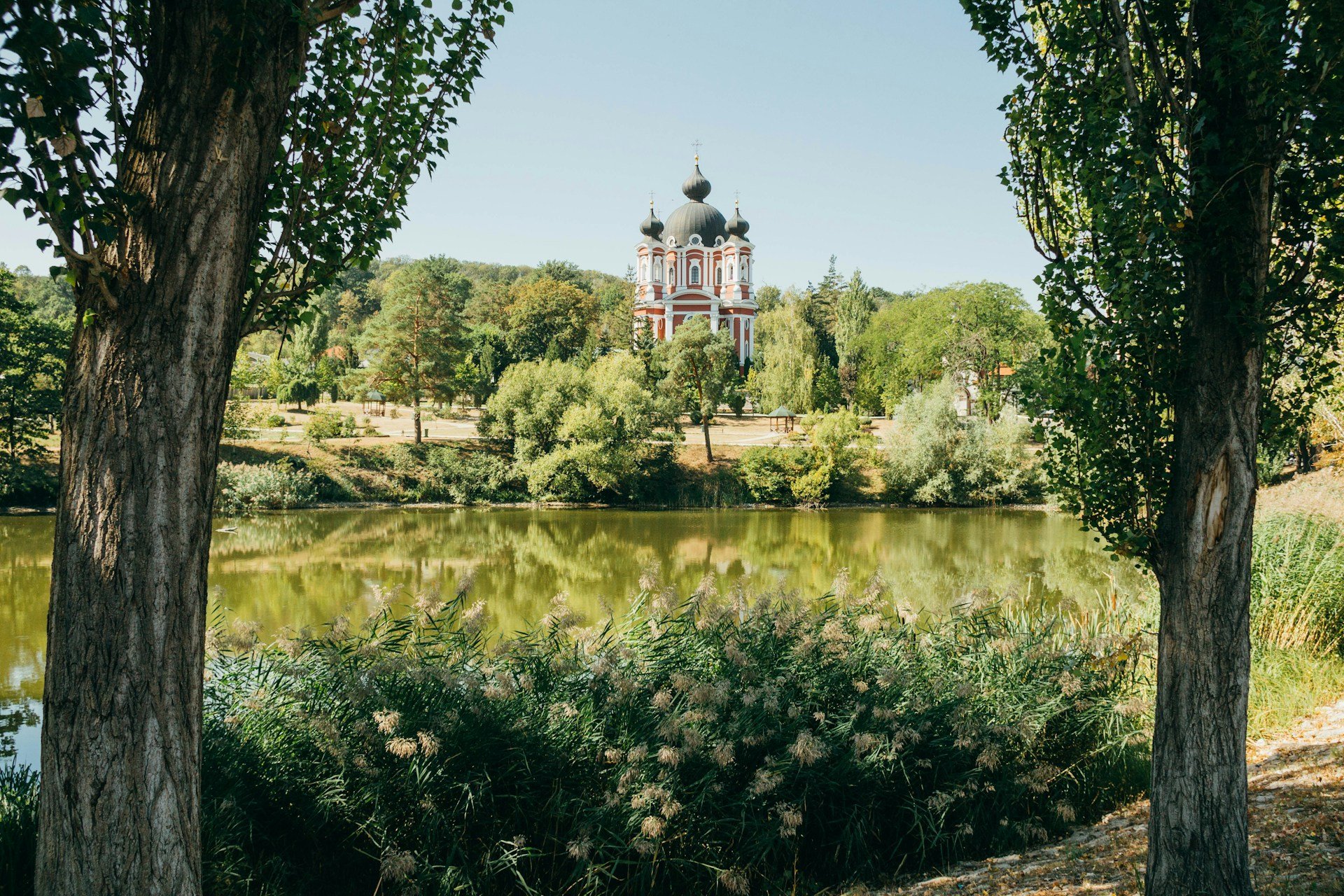
Moldova
Europe's least-visited country and its least-known wine producer. A landlocked republic between Romania and Ukraine with the world's largest wine cellar beneath its rolling hills, cliff-carved medieval monasteries, Soviet-era boulevards softening into art spaces, and a strip of unrecognized territory on its eastern edge that still runs on rubles and Lenin statues. Come curious.
What You're Actually Getting Into
Moldova is the poorest country in Europe by GDP per capita and, by most measurements, the least visited. It sits between Romania to the west and Ukraine to the east, landlocked in a landscape of gentle hills, river valleys, sunflower fields, and vineyards — an enormous proportion of vineyards. Moldova has been producing wine for five millennia, and the combination of a continental climate, calcareous limestone soils, and a wine-making tradition that survived Prohibition-era Soviet collectivization intact has produced a country that makes genuinely excellent wine in quantities that Europe outside the former Soviet bloc barely knows about. The Mileștii Mici winery south of Chișinău holds the Guinness World Record for the largest wine collection in the world — 1.5 million bottles — stored in 200 kilometers of underground tunnels carved from limestone. Visitors tour it by car.
Chișinău, the capital, is a city of wide Soviet boulevards, restored Art Nouveau buildings, underground art spaces in repurposed Soviet-era facilities, and a café scene that runs on strong coffee and the particular energy of a city that is simultaneously post-Soviet and EU-aspirant. Moldova applied for EU membership in 2022, was given candidate status, and the accession process is formally underway — a fact that shapes the country's political atmosphere considerably. The billboards advertising EU membership benefits and the Ukrainian flags on public buildings (Moldova has been one of Ukraine's most consistent supporters since 2022, despite sharing a border and a complicated history) make the capital's geopolitical position immediately visible.
The other essential context: Transnistria. On Moldova's eastern border, separated from the rest of the country by the Dniester river, is a strip of land 400 kilometers long and 40 kilometers wide that declared independence from Moldova in 1990 with Russian military support, fought a brief war in 1992, and has existed since in a state of frozen conflict as the Pridnestrovian Moldavian Republic — recognized by no UN member state including Russia, operating its own currency, its own passports, its own army, and its own thoroughly Soviet aesthetic. Tourists can visit from Moldova's side, which almost nobody does, which is part of the reason to go. Crossing into Transnistria from Moldova is straightforward — show your passport at the border, receive a registration slip, explore a city where the Soviet Union never quite ended, and return.
The honest travel reality: Moldova rewards travelers who come for specific things — wine tourism at the caves, the cliff-monastery complex at Orheiul Vechi, Transnistria for the political curiosity value, and Chișinău for a capital that is in the process of finding its post-Soviet identity in interesting ways. It does not reward travelers who show up with vague expectations of generic Eastern European charm. The infrastructure outside the capital is basic, the roads are in variable condition, and the tourism industry is in early development. The reward for accepting these limitations is a country that is genuinely unlike anywhere else in Europe, genuinely cheap, and genuinely hospitable to the few visitors who come.
Moldova at a Glance
A History Worth Knowing
Moldova's territory has been inhabited since at least the Paleolithic period, and the archaeological record includes settlements from the Cucuteni-Trypillia culture (5500–2750 BCE) — a remarkable Neolithic civilization that built some of the largest settlements in prehistoric Europe, using sophisticated pottery decorated with intricate geometric patterns and practicing what appears to have been a cyclical settlement pattern in which villages were deliberately burned and rebuilt every 60–80 years. The painted pottery from this culture, found across what is now Moldova, Romania, and Ukraine, is in the National Museum of History of Moldova in Chișinău and is among the finest prehistoric ceramics in Europe.
The medieval history of Moldova is the history of the Principality of Moldavia — a state that emerged in the 14th century under its first Prince Dragoș and was developed by his successors into a formidable regional power. The territory the Principality of Moldavia once covered is considerably larger than the modern Republic of Moldova — it encompassed what is now northeastern Romania (still called Moldova in Romanian) as well as the current country. The greatest ruler of medieval Moldavia, Stephen the Great (Ștefan cel Mare, 1457–1504), held the principality for 47 years and fought and won dozens of battles against the Ottoman Empire, Hungary, and Poland — he was called "Athleta Christi" (Athlete of Christ) by Pope Sixtus IV for his resistance to Ottoman expansion. The monasteries he built and endowed throughout Moldavia, several of which survive in various states in what is now the Republic of Moldova, are the most tangible physical legacy of this golden age.
The Ottoman period brought tribute obligations but not direct rule. The more dramatic transformation came from Russia: in 1812, following the Russo-Turkish War, the eastern portion of Moldavia — the territory between the Prut and Dniester rivers — was ceded to Russia under the Treaty of Bucharest and renamed Bessarabia. This annexation began a century of Russian cultural and demographic pressure: Russian became the language of administration, Russian settlers moved in, and the Romanian-speaking population faced suppression of their language and culture. Bessarabia briefly rejoined Romania after WWI (1918–1940) before being reincorporated into the USSR as the Moldavian Soviet Socialist Republic following the Molotov-Ribbentrop Pact's secret protocol and the subsequent Soviet annexation.
The Soviet period transformed Moldova dramatically. Collectivization destroyed the traditional small-farmer wine economy and replaced it with industrial production. The Cyrillic alphabet was mandated for the Moldovan language — a political fiction since "Moldovan" was structurally identical to Romanian, but writing it in Cyrillic enabled the claim that it was a distinct language. The deportations of June 1941 and July 1949 removed tens of thousands of Moldovans to Siberia and Kazakhstan. The 1946–1947 famine, caused by drought combined with Soviet grain requisition policies, killed between 150,000 and 300,000 people in the Moldavian SSR — one of the worst famines in postwar Europe. The memory of this famine, known in Moldova as the Foamea Mare (Great Famine), is preserved in the National Museum and in family oral histories.
Independence came on August 27, 1991. The language of the new republic was renamed Romanian (after significant political debate) and the Latin alphabet was restored. But independence was immediately complicated by the Transnistrian conflict: the Russian and Ukrainian-speaking population on the eastern bank of the Dniester, fearing Romanian-language dominance and the possibility of reunification with Romania, declared the independent Transnistrian Moldavian Republic in 1990. The brief war of 1992 ended with a ceasefire, Russian peacekeepers stationed in the region, and a frozen conflict that has remained unresolved ever since. The Russian 14th Army, stationed in Transnistria with equipment from Soviet-era stockpiles, remains.
Post-independence Moldova oscillated between pro-European and pro-Russian governments for three decades, with corruption a persistent structural feature of the political system. The LuxLeaks-adjacent Moldova Laundromat scandal (2014), in which approximately $1 billion was removed from Moldovan banks in a complex money-laundering scheme, accelerated public disillusionment with the political establishment. The election of Maia Sandu as president in 2020 — the country's first female president, a former World Bank economist — and the subsequent parliamentary majority of her pro-European Party of Action and Solidarity marked a decisive turn toward EU integration. Moldova applied for EU membership in March 2022 (six days after Russia's full-scale invasion of Ukraine began), received candidate status in June 2022, and accession negotiations formally opened in 2024.
The Russian invasion of Ukraine has had direct effects on Moldova: hundreds of thousands of Ukrainian refugees passed through or remained; Russian missile debris and drones have occasionally fallen on Moldovan territory; Transnistria's Russian military presence became a more acute security concern; and the energy crisis created by Russia cutting gas supplies forced Moldova to rapidly diversify its energy sources. The country that was most energy-dependent on Russia in Europe in 2021 had significantly reduced that dependence by 2025 through diversification to Romanian-supplied electricity and LNG. The geopolitical transformation happening in Moldova is as significant as anything in the country's history since 1991, and visitors arrive in a country that is consciously and actively choosing which direction it faces.
One of the largest Neolithic civilizations in prehistoric Europe, building enormous settlements and producing extraordinary painted pottery. Evidence throughout modern Moldova.
Dragoș establishes the principality. The region begins its independent political existence.
47-year reign, dozens of victories against Ottoman, Hungarian, and Polish forces. Called "Athleta Christi" by Pope Sixtus IV. The monasteries he built define medieval Moldovan heritage.
Treaty of Bucharest. The territory between Prut and Dniester rivers becomes Russian. A century of cultural and demographic pressure begins.
Soviet annexation following Molotov-Ribbentrop. Collectivization, deportations, the 1946–47 Foamea Mare famine killing up to 300,000. Cyrillic script mandated.
August 27, 1991: independence declared. 1992: brief war with Transnistrian separatists backed by Russian troops. Ceasefire creates frozen conflict still unresolved today.
Moldova applies for EU membership six days after Russia's invasion of Ukraine begins. Candidate status granted June 2022. Accession negotiations open 2024.
Top Destinations
Moldova is compact enough to see the main attractions from Chișinău as a base. The wine caves at Mileștii Mici and Cricova are both within 30 minutes of the capital. Orheiul Vechi is 60 kilometers away. Transnistria's main city Tiraspol is 90 kilometers east. A week covers everything. Two weeks allows deeper exploration of the wine regions south of the capital and the northern monasteries.
Chișinău
Moldova's capital is a city of contrasts that rewards a longer stay than most visitors give it. The wide Soviet boulevards — Bulevardul Ștefan cel Mare, the central spine — lined with Stalinist neoclassical buildings are the bones. The Central Market (Piața Centrală) is an overwhelming covered and outdoor market selling everything from live chickens to Soviet-era militaria, and is the most authentic single experience available in the city. The Cathedral Park with its Arc de Triomphe (a modest but genuine 1840s original, not a copy) and the National Opera are the cultural anchors. But the most interesting Chișinău is the underground one: art spaces in Soviet-era bunkers, galleries in converted factories in the Botanica district, and the regenerating neighborhood around Str. București where independent restaurants, wine bars, and creative businesses have colonized Soviet-era ground-floor commercial spaces. Allow two days minimum.
Mileștii Mici
The Mileștii Mici winery 18 kilometers south of Chișinău holds the Guinness World Record for the largest wine collection — 1.5 million bottles in 200 kilometers of underground tunnels carved from limestone. The tunnels were originally limestone quarries; the stable temperature (12–14°C year-round) and humidity made them perfect for wine storage. Tours are conducted by car — you drive through the underground roads between the barrel halls and bottle storage galleries, stopping at specific cellars for tasting. The Grand National Collection contains bottles from 1968 onward, some of Soviet vintage that are now objects of historical curiosity as much as wine. Book in advance at milestii-mici.md. The tour (approximately 3 hours including tasting) costs around €15–20 depending on the tasting tier selected.
Cricova
Cricova, 15 kilometers north of Chișinău, is the second major underground wine complex — smaller than Mileștii Mici at 120 kilometers of tunnels but more visited, partly because of its more developed tourism infrastructure and partly because of its famous guest list: Yuri Gagarin reportedly emerged from a tasting here two days late, having lost track of time. Angela Merkel, Vladimir Putin, and various heads of state have private collections stored here. Tours run daily and include a tasting that is matched to the level of the tour package selected. Cricova's sparkling wines (produced méthode champenoise) are among the best products of the Moldovan wine industry. Book at cricova.md.
Orheiul Vechi
The most extraordinary natural and historical site in Moldova: a limestone cliff above a horseshoe bend in the Răut River, occupied continuously since the Bronze Age, containing a cave monastery carved into the cliff face by Orthodox monks in the 13th century and still inhabited today. The approach — through a village of traditional Moldovan farmhouses in the valley, then up a path to the cliff top where the view opens onto the river bend below — takes about 30 minutes from the bus drop-off. The cave monastery itself is reached by descending into the cliff face through medieval-carved passages. An active monk or two live here year-round. The village of Butuceni at the base of the cliff has guesthouses where staying overnight, after the day visitors have gone, reveals the site in a silence and light that the afternoon tours completely miss. Book a guesthouse in Butuceni and stay the night.
Transnistria (Tiraspol)
Tiraspol is the capital of the unrecognized Pridnestrovian Moldavian Republic — a city where the Soviet Union never quite ended. Lenin statues still stand in front of the Soviet-era government buildings. The currency (Transnistrian ruble) is exchangeable nowhere outside the territory. The main thoroughfare, Ulitsa 25 Oktyabrya (25th of October Street), has the deliberately nostalgic aesthetic of a country that chose its moment and stopped. The Kvint cognac factory on the riverside produces genuinely excellent brandy that you can buy for almost nothing in the adjacent shop. The local beer (Tiraspol brand) is drunk at outdoor cafés. The border crossing from Moldova is straightforward: show passport, receive registration slip, proceed. Crossing into Transnistria from Ukraine is more complex and not recommended. Return to Moldova before midnight — your registration slip specifies how long you can stay.
Purcari & Southern Wine Region
The Ștefan Vodă district in southeastern Moldova, near the border with Ukraine and the Black Sea coast of Moldova, produces the most internationally recognized Moldovan wines. Purcari winery, established in 1827, makes a Negru de Purcari (a blend of Cabernet Sauvignon, Saperavi, and Rara Neagră) that was served at British royal coronation banquets in the 19th century and that genuinely competes with mid-range Bordeaux on the palate. The winery has a well-developed tourist infrastructure with accommodation, restaurant, and tasting room, making it the most comfortable single wine destination in Moldova. Day trips from Chișinău by car take 1.5 hours. Book a tasting at purcari.md.
Soroca
Soroca on the Dniester River in northern Moldova is remarkable for two things: a perfectly circular medieval fortress built by Stephen the Great in 1499 that is one of the best-preserved of his military constructions, and the extraordinary Roma (Romani) neighborhood on the hill above the town — a district of extravagant palatial houses built by Roma families who made their fortunes in trade and construction, decorated with baroque columns, golden domes, and architectural excess that produces a neighborhood unlike anything else in Europe. The "Roma Hill" (Dealul Romilor) is a genuine architectural spectacle and worth the 90-minute drive from Chișinău on its own. The fortress is open to visitors. Soroca is the most undervisited significant site in Moldova.
Saharna, Rudi & Tipova
Moldova's northern region has a cluster of medieval Orthodox monasteries set in dramatic river valley landscapes that are almost unknown outside Moldova itself. Saharna Monastery sits above a waterfall on the Dniester River. Rudi Monastery, the oldest in Moldova (founded 1777), occupies a hilltop above the river with views into Ukraine across the water. Tipova Monastery — like Orheiul Vechi — is a cave monastery carved into a limestone cliff, legendarily associated with the medieval Moldovan poet Mihai Eminescu, though the association is historically contested. All three require a car and a day trip from Chișinău or an organized tour. The landscapes alone justify the journey.
Culture & Etiquette
Moldova's culture is Romanian in language and heritage, Russian in significant demographic and linguistic overlap, and Soviet in architectural and institutional memory — a combination that produces a social environment more complex than most Eastern European countries of comparable size. The official language is Romanian (called "Moldovan" by some in a politically charged usage that the current government has formally moved away from), but Russian remains widely spoken, particularly among the older population and in the east of the country. English is limited — more limited than in the Baltic states or Romania. A few words of Romanian or Russian go a long way.
The hospitality tradition is genuine and pronounced. An invitation to a Moldovan family's home for dinner — which may come from the most casual acquaintance — will involve multiple courses, wine from the family's own vineyard (many rural families make their own), a mandatory toast before every drink, and an overwhelming expectation that you will eat everything and more. Refusing food or drink in this context is considerably more awkward than accepting it. The toasting tradition is taken seriously: the first toast is always to the host or to the occasion, subsequent toasts have a specific order, and the tamada (the designated toast-maker at formal events) is a recognized social role with genuine responsibility.
"Bună ziua" (BOO-nuh ZEE-wah) is good day. "Mulțumesc" (mool-tsoo-MESK) is thank you. "Vă rog" (vuh ROG) is please. Romanian is entirely different from Russian and Moldovans notice — and appreciate — when a visitor uses even minimal Romanian rather than assuming Russian is the default. In Transnistria, Russian is the correct language to use.
The Moldovan hospitality tradition — repeated refilling of glasses, continuous insistence that you eat more, the inability to leave without taking something home — is cultural rather than commercial. Accept it. Resist politely once or twice (as required by form) and then yield. Attempting to pay for anything offered in a private home is generally refused and slightly insulting.
The Moldovan wine industry's best value is at winery shop prices. A bottle of Negru de Purcari at the winery costs MDL 120–150 (€6–8). The same wine in a London restaurant costs £45–60. The economics of buying wine directly — and the ability to taste before buying — make winery visits the correct approach.
Transnistria has its own bureaucracy. Register at the border, keep the registration slip, stay within the validity window (usually 24 hours for a tourist day visit), and be respectful of the border crossing formalities on return. Photography of military installations and border infrastructure should be avoided. Most other photography is fine — ask individuals before photographing them.
Moldova's card payment infrastructure is limited outside Chișinău's main hotels and restaurants. Rural guesthouses, markets, marshrutkas, smaller restaurants, and essentially all of Transnistria operate on cash. Withdraw MDL at Chișinău ATMs before any excursion outside the capital.
Moldova and Romania share a language, substantial cultural heritage, and a historical connection — the current government actively promotes EU integration and the Romania relationship. But Moldovans have a distinct national identity developed through 30 years of independent statehood, the Soviet experience, and the Transnistrian conflict. "Oh, just like Romania" is heard as a dismissal rather than a connection.
Crossing into Transnistria from the Ukrainian border is a complex and potentially problematic journey that is not recommended for casual tourist visits. The correct approach is: enter Moldova from Romania or fly to Chișinău, visit Transnistria from Moldova's side (the Cuciurgan crossing near Tiraspol), and return to Moldova the same way.
The Transnistrian conflict is a live political issue in Moldova, not a historical curiosity. Moldovans have family separated by the border, property disputes that have never been resolved, and complex feelings about the Russian military presence. Treating Transnistria as a quirky tourist attraction without acknowledging that it is the result of a separatist conflict backed by foreign military force will not go well in most conversations.
English proficiency in Moldova is among the lowest in Europe. In the capital, younger people and those in the tourism sector speak English reasonably well. In rural areas and in Transnistria, Russian is far more useful than English. If you have no Romanian or Russian, a translation app with offline capability is essential for any trip outside the capital.
Moldovan wine is systematically underrated because it has almost no international distribution or marketing. The country produces 150+ million liters annually — more wine per capita than France — and the quality at mid-level producers is excellent. Dismissing it as "Eastern European wine" before tasting it is the category error that Moldovan wine tourism exists to correct.
Doina & Folk Music
The doina is the traditional Moldovan/Romanian lament — a free-rhythm vocal form expressing longing, grief, or the condition of being far from home (dor). It is UNESCO-listed as Intangible Cultural Heritage and is one of the most emotionally direct musical traditions in Eastern Europe. The Lăutari — professional Romani musicians who have been the performers of Moldovan folk music at celebrations for centuries — play at weddings and festive occasions throughout the country. A Moldovan wedding reception with a lăutar band is one of the most musically intense experiences available in the country.
The Wine Calendar
The Moldovan wine year has its own rhythm. The grape harvest (culesul viei) runs September through October and is a social event — families and friends gather to pick grapes, press them, and begin the fermentation process in private cellars. The Wine Festival (Ziua Națională a Vinului) in Chișinău, held the first weekend of October, fills the central boulevard with wine producers from across the country offering tastings for token entry prices. It is the most concentrated introduction to Moldovan wine available in a single day.
Soviet Architectural Heritage
Chișinău was heavily bombed in WWII and rebuilt according to Soviet architectural principles — wide boulevards, Stalinist neoclassical government buildings, microrayon residential blocks. The result is a city that is legible as a Soviet city in a way that many former Soviet capitals have partially obscured through post-independence renovation. The Soviet architectural heritage of Chișinău is increasingly recognized as a distinctive cultural asset rather than a legacy to be erased — the Moldova Design Week and various cultural organizations have been rehabilitating Soviet-era spaces for contemporary use.
Rural Life & Gardens
Moldova's population is still significantly rural — approximately 40% live outside cities — and the traditional village (sat) with its kitchen gardens, grape arbors, chickens, and sunflower fields is the living context for much of Moldovan culture. The village house with its veranda, its cellar full of homemade wine and pickles, and its grandmother in the garden is not a heritage reconstruction. It is the daily reality for a large portion of the population. If an opportunity arises to visit a Moldovan village home, take it — the hospitality and the food in that context is more authentic than anything available in Chișinău's restaurants.
Food & Drink
Moldovan food is Romanian in its fundamentals — the same tradition of polenta (mămăligă), pork preparations, fresh dairy, and preserves — with influences from the Russian-speaking population and the Ottoman historical layers producing a cuisine that is hearty, fresh-ingredient-focused, and in rural settings genuinely excellent. The restaurant scene in Chișinău has improved significantly in the last decade, with a generation of chefs taking traditional Moldovan ingredients seriously. But the best Moldovan food remains in home kitchens and in village guesthouses.
Mămăligă
The Moldovan staple: coarse cornmeal polenta, cooked until thick and firm, served as the base for almost everything — with brânză (white sheep's milk cheese), with sour cream (smântână), with fried pork, with braised vegetables, or as a side to the national stew. The version served in wooden bowls at village guesthouses, with fresh brânză crumbled over the top and a bowl of cold smântână on the side, is the canonical Moldovan eating experience. It is filling to the point of architecture and costs almost nothing.
Zeamă (Chicken Soup)
The Moldovan national soup — a clear chicken broth with homemade noodles, vegetables, and lovage (leuștean) that gives it a distinctive herbaceous quality found nowhere else in European cooking. The soup is made from a real chicken (not stock cubes), simmered long enough that the broth is rich and golden, and is considered the cure for everything from hangovers to illness in Moldovan folk medicine. The correct Moldovan breakfast, after a long night of wine, is a bowl of zeamă. Every traditional restaurant serves it.
Sarmale (Stuffed Cabbage)
Cabbage leaves (or grape leaves in summer) stuffed with a mixture of minced pork, rice, onion, and herbs, rolled tightly and braised in tomato sauce with sour cream. The Moldovan version uses more pork fat than the Romanian equivalent and is slightly richer. Sarmale appear at every celebration — weddings, New Year, Easter — and are the dish that defines Moldovan festive cooking. The version made in sauerkraut leaves (varza acră) has an additional layer of sour complexity that the fresh-cabbage version lacks.
Plăcinte
Thin pastry stuffed with sweet or savory fillings — brânză and dill, sour cherries, pumpkin, potato and onion — baked or fried, sold from market stalls for MDL 10–15 each (€0.50–0.80). The plăcintă is the Moldovan street food staple, the answer to the pastizz or the börek, bought hot from the oven and eaten immediately. The sweet versions (with visine — sour cherries — or with sweet cottage cheese) are breakfast food. The savory versions are lunch. Buy them at Piața Centrală in Chișinău from the stalls near the main market entrance.
Brânză & Dairy
Moldovan fresh sheep's milk cheese (brânză de oi) is salted, crumbly, and intensely flavored — closer to Greek feta than to fresh ricotta, with a mineral quality from the specific milk. It appears on mămăligă, in plăcinte, as a standalone with bread and tomatoes, and in the morning alongside sliced cucumbers and sour cream. The dairy in rural guesthouses — made from milk that was in the cow this morning — is a different product from anything available in Western European supermarkets and should be eaten at every opportunity.
Moldovan Wine
The wine is why most serious visitors come. The indigenous grape varieties — Fetească Neagră (a dark, spicy red), Fetească Albă (a delicate floral white), Rară Neagră (a lighter red with cherry and earth), and Viorica (an aromatic white) — produce wines that are genuinely distinct from anything else in Europe. The wine at Mileștii Mici, Cricova, and Purcari represents the premium tier. But the house wine poured in ordinary Chișinău restaurants — a carafe of unfiltered local wine for MDL 50 (€2.50) — is often excellent and always honest.
When to Go
May through October is the main travel window. September and October are the best months — the grape harvest is happening, the Wine Festival fills Chișinău's boulevard in early October, the temperatures are warm without summer heat, and the landscapes are at their most beautiful. May and June are also excellent. January and February are cold (-5°C to -10°C, with possible snow) and most outdoor sites are harder to visit, but the wine caves are the same temperature year-round and Chișinău's indoor culture runs through winter.
Harvest Season
Sep – OctThe grape harvest transforms the country. Wineries are pressing, the air smells of fermentation, and the Wine Festival on the first weekend of October is the single best introduction to Moldovan wine available. Orheiul Vechi in autumn light. The Dniester valley paths through vine-covered hills. The cheapest accommodation and the fullest experience.
Late Spring
May – JunThe vineyards are leafing out, wildflowers on the hillsides, the river valleys at Orheiul Vechi and Saharna at peak green. Warm enough for outdoor exploration without summer heat. The wine cave tours run without the October crowds. Chișinău's outdoor cafés fully open.
Summer
Jul – AugHot (28–34°C) but manageable given the wine caves are a consistent 12°C underground. The countryside is in full leaf. Outdoor evening culture in Chișinău peaks. Soroca and the northern sites are accessible. The national holiday on August 27 (Independence Day) produces public celebrations worth seeing.
Winter
Dec – FebCold (-5°C to -15°C), some snow, roads outside the capital deteriorate further. The wine caves are temperature-stable and open year-round — genuinely a reason to visit in winter if the caves are the focus. Chișinău's indoor restaurant and bar scene operates normally. Christmas and New Year celebrations in the city are genuine and festive. The cheapest time of year by a significant margin.
Trip Planning
Moldova is most easily approached as a short focused trip from Bucharest (5–6 hours by bus or overnight train) or Kyiv (pre-2022 this was common; post-2022, fly to Chișinău directly). Direct flights to Chișinău from London, Vienna, Frankfurt, Istanbul, and several other hubs mean the capital is accessible without connecting through Bucharest. A five-day trip covers the wine caves, Orheiul Vechi, Transnistria, and Chișinău properly. Seven days adds Soroca and the southern wine region. Ten days is genuinely leisurely.
The critical planning items: book wine cave tours in advance (Mileștii Mici and Cricova both require reservations, and popular dates fill weeks ahead during the October wine festival). If you want to stay overnight in Butuceni at Orheiul Vechi, book the guesthouse well ahead — there are very few rooms and they fill for summer weekends.
Chișinău
Arrive and orient. Walk Bulevardul Ștefan cel Mare from the Cathedral Park south to the Government buildings — the Soviet urban planning becomes legible in 20 minutes. Visit the National Museum of History of Moldova (Cucuteni pottery, deportation archive). Evening: the wine bars on Str. București for a first introduction to Moldovan wine poured by people who know what they're serving.
Mileștii Mici & Cricova
Morning tour at Mileștii Mici — book a 10am or 11am slot (reserve in advance at milestii-mici.md). The tour takes 2.5–3 hours including driving through the tunnels and tasting. Afternoon: Cricova, 15 kilometers north of Chișinău. The sparkling wine is the priority here. Return to Chișinău for dinner. Two wine cave tours in one day is ambitious but manageable if both are booked back-to-back with a careful schedule.
Orheiul Vechi
Take the marshrutka from Chișinău (bus 150, departs from the central bus station, approximately MDL 30, 60–70 minutes). Walk from the Butuceni village stop up to the cliff monastery — 30 minutes uphill through the village with views opening gradually over the river bend. Spend 2–3 hours on the site. If staying overnight in Butuceni (strongly recommended — book ahead), the evening after the day visitors leave is the best time at the site. If day-tripping, last marshrutka back to Chișinău leaves mid-afternoon.
Transnistria
Take the marshrutka from Chișinău bus station to Tiraspol (approximately MDL 60, 90 minutes). Cross the Moldovan border checkpoint — show passport, receive registration slip. Continue to Tiraspol. Walk Ulitsa 25 Oktyabrya past the Soviet-era government buildings. Visit the Kvint cognac factory shop on the riverside — buy a bottle of 10-year Kvint for approximately €5. Have lunch at a local café for Transnistrian rubles (exchange at the border or in town). Return before your registration slip expires (usually 24 hours from entry). Cross back into Moldova — show registration slip, cross. Return to Chișinău by marshrutka from the Tiraspol bus station.
Piața Centrală & Departure
Morning at Chișinău's Central Market before your flight or bus departure — the full chaotic scope of the market from produce to household goods to Soviet-era collectibles. Buy plăcinte from the stalls for breakfast. Buy a wheel of brânză to take home. Pick up a few bottles of Moldovan wine at the wine shop inside the market (better selection and prices than the airport). Depart.
Chișinău Fully
Two days in the capital: the National Museum of History, the National Art Museum (which has a surprisingly strong collection of Moldovan and Romanian art from the 19th and 20th centuries), the Central Market, the Wine Festival if timing aligns. Evening at La Pivniță for small-producer Moldovan wines. Day two: the neighborhood around Str. București — the city's most interesting regenerating area. The Memorial Complex "Eternitate" (eternal flame, military graves) on the city outskirts for Moldova's WWII context.
Wine Caves & Orheiul Vechi
Day three: Mileștii Mici and Cricova as the five-day itinerary. Day four: Orheiul Vechi with overnight in Butuceni. The evening on the cliff top after day visitors have left — just the monastery, the river bend below, the bats emerging from the caves at dusk, and the monastery's bell for vespers — is one of the most quietly extraordinary experiences in Eastern Europe.
Southern Wine Region
Rent a car for two days. Drive southeast to Purcari winery (1.5 hours) for a tasting of the Negru de Purcari and the estate's Cabernet Sauvignon. Continue south through the Ștefan Vodă district — the landscape of vine-covered hills above the lower Dniester gives a sense of the agricultural reality of Moldovan wine production. Night at the Purcari estate guesthouse. Day six: the Ciumai and Vinăria Bostavan wineries in the same region, then return to Chișinău via the Căușeni district.
Transnistria & Departure
The Transnistria day trip as described in the five-day itinerary. Return to Chișinău in the evening. Dinner at Vatra on Str. Eminescu for a final meal of zeamă and mămăligă with brânză. Departure next morning.
Chișinău & Wine Caves
As the seven-day itinerary — capital, both wine caves, Orheiul Vechi overnight.
Southern Wine Route
Purcari and the Ștefan Vodă district, Ciumai, and the lower Dniester valley. Two nights in the wine country.
Transnistria
Rather than a day trip, spend two days: cross into Tiraspol on day seven, stay overnight in a Tiraspol hotel (they exist and are functional if basic), explore the city more thoroughly — the Sherrif supermarket complex (the largest retailer in Transnistria, effectively running the economy), the Bendery Fortress across the river, the Tiraspol Fine Arts Museum (Soviet realist painting collection of genuine historical interest). Cross back into Moldova on day eight.
Soroca & Northern Moldova
Drive north to Soroca (1.5 hours from Chișinău). Stephen the Great's circular fortress in the morning. The Roma Hill palatial houses in the afternoon — the architectural extravagance is best appreciated in context of the poverty visible in the rest of the town. Night in Soroca or continue north to the Rudi Monastery area. Day ten: Rudi Monastery above the Dniester, views into Ukraine, the river valley hiking trails. Return to Chișinău for final dinner and departure.
Moldovan Leu — Essential
Moldova uses MDL, not Euro. Approximately 19–20 lei per euro. Withdraw at Chișinău ATMs (Moldova Agroindbank, Maib, and Victoriabank ATMs are most reliable for international cards). Carry enough cash before any excursion outside the capital. Transnistria requires a separate currency exchange at the border or in Tiraspol.
Transnistria Registration
When crossing into Transnistria, you receive a registration slip at the border. Keep it. It specifies how long you can stay — typically 24–48 hours for tourists. Return to Moldova before it expires. Staying beyond the registration period creates complications at the border crossing and should be avoided.
Vaccinations
No mandatory vaccinations for Moldova. Routine vaccines recommended. Hepatitis A vaccine advisable for extended stays. Tick-borne encephalitis risk in rural forested areas between April and October — use repellent if hiking in the northern forests near the Dniester. Water in rural areas should be treated or bottled.
Full vaccine info →Connectivity
EU roaming does NOT apply — Moldova is not in the EU. Get a local SIM (Moldtelecom, Orange Moldova, or Moldcell) at Chișinău airport for €5–10 for data. Alternatively, get a Moldova eSIM via Airalo before departure. Coverage is good in Chișinău and main towns; patchy in rural northern areas. Transnistria has its own mobile networks that may not connect with Moldovan SIMs.
Get Moldova eSIM →Road Conditions
Roads in Chișinău are reasonable. Roads outside the capital vary from acceptable to genuinely poor — potholes, unpaved sections, poor lighting. A car is necessary for Soroca, Purcari, and the northern monasteries. Drive defensively, avoid driving at night outside the capital, and check road conditions before heading into rural areas after heavy rain. International driving license recommended.
Translation App
Download Google Translate with Romanian and Russian offline packs before departure. English proficiency outside Chișinău is very limited. In Transnistria, Russian is the operative language. Having offline translation is not optional for any serious off-the-beaten-path activity.
Transport in Moldova
Moldova's public transport consists of marshrutkas (shared minibuses), buses, and a modest trolleybus network in Chișinău. The marshrutka is the backbone of intercity travel — cheaper and faster than the bus, operating on flexible schedules, and going everywhere the bus goes and more. A car is necessary for the northern monasteries, Soroca, and the southern wine region at your own pace. Chișinău to Bucharest by bus or overnight train is the main international route.
Marshrutka (Shared Minibus)
MDL 20–80The primary intercity transport. Depart when full from the bus station (Autogara Centrală) or designated stops. Chișinău to Tiraspol: MDL 60, 90 minutes. Chișinău to Orheiul Vechi: MDL 30, 60 minutes. Cash only, pay the driver. They are faster than buses and run more frequently. Note schedule variations — check current departure times at the station.
City Trolleybus (Chișinău)
MDL 3Chișinău's trolleybus network covers the main arteries. MDL 3 per ride (approximately €0.15). Pay the conductor. Routes cover the Central Market, the train station, the bus station, and most tourist sites in the city center. Slow but cheap and reliable.
Taxi & Bolt
MDL 30–80 city tripsThe Bolt app works in Chișinău and is significantly cheaper and more transparent than hailed taxis. A Bolt from the airport to the city center costs MDL 80–120 (€4–6). Hailed taxis from the airport have been known to overcharge tourists — agree on a price before entering. The fixed airport to city rate should be MDL 150 maximum.
Car Rental
€20–40/dayAvailable at Chișinău airport and city center. Significantly cheaper than Western European rental rates. Essential for Soroca, the northern monasteries, and the southern wine region. Check that the rental contract permits travel to all intended destinations — some contracts exclude border regions. Transnistria entry with a rental car requires checking with the rental company first.
International Train
MDL 200–400Chișinău to Bucharest overnight train (CFM — Căile Ferate ale Moldovei): approximately 14 hours, overnight sleeper. The rail link between Chișinău and Romania is slow but functional and produces an arrival in Bucharest's Gara de Nord that the bus journey to Autogara Filaret cannot match for atmosphere. Check current schedule at cfm.md.
Bus to Romania
€10–20Multiple operators run daily buses from Chișinău to Bucharest (5–6 hours), Iași (3 hours), and other Romanian cities. Operators include FlixBus, Eurolines, and local companies. The Iași route is particularly useful as Iași has onward high-speed rail connections to Bucharest and is closer to the Romanian cultural center for those combining the two countries.
Chișinău International Airport
6km from centerMoldova's main airport (KIV) is 6km southeast of the city center. Trolleybus 30 runs to the center (MDL 3, 30 minutes). Bolt app costs MDL 80–120. The airport serves direct flights from London Luton, Vienna, Frankfurt, Istanbul, Tel Aviv, and several other European hubs. Air Moldova and HiSky are the primary Moldovan carriers.
Transnistria Marshrutka
MDL 60Regular marshrutkas run from Chișinău's central bus station to Tiraspol throughout the day. The journey takes 90 minutes. You pass through the Moldovan checkpoint (show passport) and the Transnistrian checkpoint (receive registration slip). Return marshrutkas run from Tiraspol bus station. No advance booking needed — just show up.
Moldova's marshrutkas (fixed-route shared minibuses) depart from designated stops when they have enough passengers — which usually means within 10–20 minutes of arrival during daylight hours on major routes. You wave one down at the stop (or board at the bus station), state your destination, pay the driver in cash when you arrive. No ticket, no booking, no app. The system works reliably on main routes (Chișinău–Tiraspol, Chișinău–Orheiul Vechi, Chișinău–Soroca) and is the most authentic experience of Moldovan daily transport. Sit near the door if you want to get out at a specific stop — calling out "la stație!" (at the stop!) when you want the driver to pull over.
Accommodation in Moldova
Moldova's accommodation market is limited but improving. Chișinău has a small but growing boutique hotel sector alongside Soviet-era hotels that have been partially renovated. Outside the capital, the options shrink rapidly to guesthouses and agrotourism (agroturism) farmhouse stays that are genuinely charming but basic. For wine tourism, the Purcari winery guesthouse and several Cricova-adjacent options offer the best combination of location and comfort.
Boutique Hotel (Chișinău)
€50–120/nightChișinău's boutique hotel scene has expanded since 2015. Nobil Luxury Boutique Hotel on Str. Pușkin and Doina Hotel on Str. Tighina are the most reliable options. The City Park Hotel near the central park offers good value. Most boutique hotels include breakfast and have English-speaking staff — the latter is rarer in Moldova than in Western Europe, making hotel choice more significant.
Winery Guesthouse
€40–80/nightPurcari winery has accommodation on the estate — waking up surrounded by vineyards and having tasting access before the day-trippers arrive is the correct wine tourism experience. Château Vartely near Orhei also offers estate accommodation. Both book up for the October harvest period. The breakfast at Purcari — local cheese, fresh bread, preserves from the estate — is itself worth the stay.
Agroturism Guesthouse
€20–45/nightThe most authentic Moldova experience. Rural farmhouse accommodation, typically with meals included (breakfast and dinner, both hearty), family-made wine or țuică (plum brandy) offered at dinner, and the Moldovan countryside of garden, chicken yard, and grape arbor as the setting. The village of Butuceni at Orheiul Vechi has several of these. Book through agroturism.md or directly with hosts found on local tourism platforms.
Soviet-Era Hotel
€15–35/nightSeveral of Chișinău's Soviet-era hotels have been partially refurbished and offer basic but clean accommodation at very low prices. Hotel Cosmos on the main boulevard and Hotel Național on Str. Pușkin are the most central. The experience of staying in a partially renovated Soviet hotel — the original lobby marble, the new carpet in the corridors — is its own kind of historical engagement. Breakfast may be Soviet-era buffet in quality. Manage expectations accordingly.
Budget Planning
Moldova is the cheapest country in Europe for travelers. The cost gap between Moldova and its nearest EU neighbor (Romania) is substantial — roughly half the price for equivalent quality. The main budget items are accommodation (still modest by any European standard), wine cave tours (priced to be accessible to Moldovans, so very cheap by Western standards), and transport. Food is dramatically cheaper than anywhere in the EU.
- Soviet-era hotel or agroturism guesthouse
- Plăcinte from the market for breakfast (MDL 15)
- Zeamă lunch at a local canteen (MDL 40–60)
- Zeamă dinner at Vatra or equivalent (MDL 100–150)
- Marshrutkas for all transport
- Boutique hotel in Chișinău
- Restaurant meals twice daily
- Wine cave tour at Mileștii Mici or Cricova
- Bolt taxis in the capital
- A bottle of good Moldovan wine with dinner
- Purcari winery estate or best Chișinău hotel
- Premium wine cave tours with aged bottle tasting
- Car rental for independent travel
- Fine dining at the top Chișinău restaurants
- Private guide for Transnistria or wine region
Quick Reference Prices
Visa & Entry
Moldova is NOT Schengen and NOT an EU member (as of 2026, it is an EU candidate country with accession negotiations underway). It operates its own independent visa system. The critical practical consequence: time spent in Moldova does NOT count against your Schengen 90-day allowance. You can use your full 90 Schengen days in Romania or other Schengen countries and then spend additional time in Moldova without any Schengen clock implications.
Citizens of the EU, US, UK, Canada, Australia, New Zealand, and most Western nations can enter Moldova visa-free for 90 days. The full current list is at visa.gov.md — check before traveling as the list has expanded in recent years. ETIAS does NOT apply to Moldova — it is a Schengen system and Moldova is not in Schengen.
Moldova has its own visa-free system. EU, US, UK, Canadian, Australian, and New Zealand citizens enter visa-free for 90 days. NO ETIAS required. Time in Moldova does NOT count against Schengen days. Check visa.gov.md for your specific nationality.
Family Travel & Pets
Moldova is a modest family destination — not designed for it, but workable for families with older children who have an appetite for unusual experiences. The wine caves are accessible to children (who will find the underground road-touring concept immediately interesting), Orheiul Vechi works for any age with reasonable walking ability, and Soroca's Roma Hill is genuinely spectacular. Transnistria is appropriate for older children (12+) who can engage with the political and historical context — younger children won't have the framework to understand what makes it interesting.
The agroturism guesthouse format is ideal for families: private accommodation, meals included, outdoor space, and a direct encounter with Moldovan rural life that children find more engaging than hotel-room sightseeing. Most rural guesthouses will accommodate children warmly.
Wine Cave Driving Tour
Children who are old enough to appreciate that they are driving inside a mountain through tunnels lined with millions of wine bottles will find Mileștii Mici immediately engaging — not for the wine, but for the concept. The temperature (12°C underground) feels dramatically different from summer Moldova and the scale of the 200km tunnel system lands differently when experienced by car than in any description.
Orheiul Vechi Cliff Monastery
The cliff monastery carved into living rock above a horseshoe river bend is the kind of place that works for children across a wide age range — the physical drama of the location (the cliff, the view, the descent into the monastery carved from rock) communicates without needing historical context. Stay overnight in Butuceni for the morning experience when the site is completely empty.
Soroca Fortress
Stephen the Great's perfectly circular 1499 fortress on the Dniester riverbank is accessible and architecturally striking for any age. The Roma Hill above the town — with its extraordinary palatial houses — is one of the most visually unusual streetscapes in Europe and generates the kind of genuine curiosity that makes travel worthwhile for children who are old enough to ask why.
Agroturism Stay
A Moldovan farmhouse guesthouse for one or two nights — with the grandmother cooking zeamă and mămăligă, the grandfather pouring homemade wine in the grape arbor, and a garden full of chickens, rabbits, and fruit trees — is the most specifically Moldovan experience available to any visitor. Children experience the food preparation, the animal life, and the hospitality in ways that structured tourist sites don't provide.
Piața Centrală Market
Chișinău's central market — overwhelming, loud, smelling of spices and fish and fresh bread — is genuinely engaging for children of any age who can navigate crowds. The variety of the stalls (produce, dairy, spices, Soviet-era collectibles, clothing, live birds) makes it a more vivid encounter with Moldovan daily life than any museum. Go in the morning when it is fullest.
National Museum for Older Children
The National Museum of History of Moldova's exhibition on Soviet deportations — with original documents, photographs, and survivor testimonies — is appropriate for children 14 and above who have some historical context for the Soviet period. The Cucuteni pottery and the Golden Horses of Soroca artifacts work for any history-interested child from about 10 upward.
Traveling with Pets
Moldova is not in the EU and does not participate in the EU Pet Travel Scheme. Pets entering Moldova require a microchip, valid rabies vaccination, and a health certificate from an official veterinarian in your country of departure. The health certificate should be issued not more than 10 days before travel. Moldova's State Veterinary and Phytosanitary Agency (ANSA) maintains current requirements — check before booking.
Pet-friendliness in Moldova is basic rather than developed. Hotels rarely have specific pet policies — ask before booking. Rural guesthouses and agroturism facilities may accept dogs more casually than formal hotels. Walking space is plentiful in the countryside. Urban Chișinău has parks but the general infrastructure for traveling with pets (dog-friendly restaurants, parks with facilities, pet supply shops) is considerably less developed than in Western Europe.
Safety in Moldova
Moldova is generally safe for tourists. Violent crime against visitors is rare. The main practical concerns are petty theft at the Central Market, unofficial taxi overcharging at the airport, road safety outside the capital, and the specific considerations around Transnistria and the Ukrainian border region. The country's proximity to the Ukraine conflict has produced additional security awareness in Moldovan institutions but has not produced any direct security threat for visitors in Moldova-controlled territory.
General Safety
Moldova is safe by Eastern European standards. Chișinău is a calm capital with no areas specifically dangerous for tourists. Normal urban awareness applies. The combination of general poverty and tourist visibility means being overtly wealthy (expensive cameras, jewelry, expensive phones visible) attracts more attention than in Western European cities.
Petty Theft
The Central Market (Piața Centrală) and busy city transport are the main pickpocket environments. Keep bags zipped and in front. Avoid showing large amounts of cash when exchanging or paying. The market is worth visiting — just apply normal awareness in crowded spaces.
Transnistria
Transnistria is stable and has not seen armed conflict since 1992. Tourists visit regularly without incident. The main concerns are bureaucratic rather than physical: ensure you have your registration slip, don't photograph military infrastructure, be respectful at checkpoints, and return to Moldova before your registration expires. The situation should be monitored through government travel advisories given ongoing regional tensions.
Road Safety
Moldova has a significantly higher road accident rate than the EU average. Roads outside the capital have serious condition issues — potholes, poor lighting, no hard shoulder on rural routes. Drive defensively, avoid driving at night outside Chișinău, and never drive after drinking wine (the wine caves serve substantial quantities). Pedestrian crossings are observed inconsistently by drivers.
Regional Security Context
Moldova borders Ukraine, where active armed conflict has been ongoing since 2022. No fighting has occurred on Moldovan territory. Missile debris from Ukrainian-Russian exchanges has occasionally landed in Moldova. Check your government's current travel advisory before visiting areas near the Ukrainian border and keep aware of developments.
Healthcare
Moldova's public healthcare system is under-resourced. The Republican Clinical Hospital in Chișinău is the main facility. For non-emergency care, private clinics in Chișinău (Medpark, Sancos) offer better standards with some English-speaking staff. Travel insurance with medical evacuation coverage is strongly recommended — serious medical issues may require evacuation to Romania.
Emergency Information
Your Embassy in Chișinău
Most Western embassies are in the central Chișinău districts.
Book Your Moldova Trip
Everything in one place. These are services worth actually using.
The Country That Chose Its Direction
Every country in this series is in the process of becoming something. Kosovo is building a state. Lithuania is practicing active remembrance. Luxembourg is quietly getting everything right. Moldova is doing something more immediate and more difficult: in real time, in the years since 2022, it is choosing which direction it faces — east toward Russia, where half its history and much of its economic dependence have pointed, or west toward the EU, where its language, its recent political leadership, and increasingly its young population are oriented.
The wine is the oldest thing here. Five millennia of continuous viticulture on a strip of limestone hills between two rivers — the Prut and the Dniester — that have been the country's western and eastern borders for centuries. The wine survived collectivization, survived Prohibition's Soviet variant, survived the post-independence economic collapse, and is now the most internationally visible thing about a country that most of the world has never noticed. A bottle of Fetească Neagră from a small producer in the Codru hills, drunk in an outdoor café on Str. București on an October evening while the wine festival fills the boulevard a few blocks away, tastes like a place that has been making wine for five thousand years and is still, improbably, here.
In Romanian, the Moldovan word for longing — for home, for what was and is no longer, for what might still be — is dor. The same word appears in the doina folk songs that UNESCO has listed as Intangible Cultural Heritage. It is a word without a precise English equivalent, which is a way of saying that Moldova has a specific emotional vocabulary that the rest of Europe doesn't quite have access to. Coming here is one way to begin to understand it.