
Liechtenstein
The sixth-smallest country in the world, sandwiched between Switzerland and Austria, ruled by a prince who lives in a castle above the capital, uses Swiss francs without being Swiss, and can be walked from one side to the other in a morning. It is more interesting than that makes it sound.
What You're Actually Getting Into
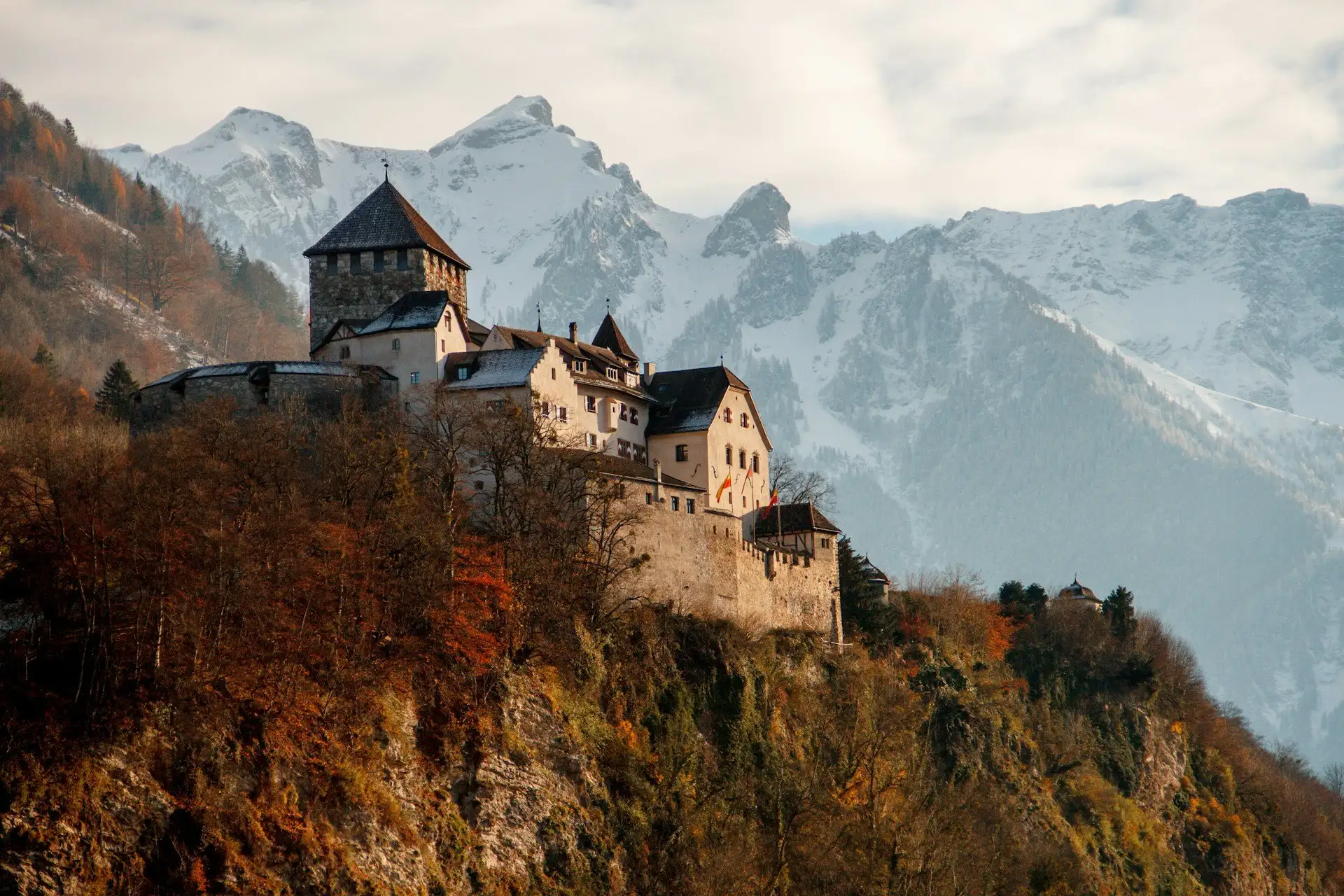
Liechtenstein is 160 square kilometers. It is 25km long and 12km at its widest point. The population is around 39,000 — roughly the size of a small English market town. It has no airport, no train station that connects internationally, and no motorway. It borders only Switzerland to the west and Austria to the east. It is the only country in the world to border two other landlocked countries (well, one of two — Uzbekistan is the other) without having access to the sea itself. It is ruled by a hereditary prince — Hans-Adam II, who transferred day-to-day governance to his son Alois in 2004 but remains head of state — who lives in a castle that is literally above the capital city and is visible from almost everywhere in Vaduz.
This is not a country that generates the kind of tourism that Italy or Greece or even Iceland generates. Most people who visit come for a day — often specifically to get the souvenir passport stamp from the Tourist Information office — and leave having seen the main street and the castle outline against the mountains. If that's what you're doing, fine. You'll have an afternoon's pleasant walking and something to tell people at parties.
But Liechtenstein genuinely rewards slightly more attention. The Kunstmuseum Liechtenstein in Vaduz has a collection of contemporary and modern art — the private collection of the ruling family, augmented by publicly purchased works — that is genuinely excellent and receives almost no international visitors because nobody expects it to be there. The Rhine Valley floor that makes up the western portion of the country is extraordinarily beautiful on a clear day, with the Rhine forming the Swiss border and the Austrian Alps rising behind the eastern ridge. The Fürstenwanderweg — the Prince's Trail — runs 75km along the length of the country through terrain that is unambiguously alpine, and the trails in the upper areas above Triesenberg and around Malbun are excellent walking for their own sake, not merely because they happen to be in a microstate.
The economic reality of Liechtenstein is also quietly extraordinary. This is one of the wealthiest countries per capita in the world. It has almost no unemployment. Its main industries are precision manufacturing, financial services, and the manufacture of false teeth (Ivoclar Vivadent, based here, produces dental prosthetics used worldwide). A third of the country's workforce commutes in from Austria and Switzerland daily. The GDP per capita is roughly comparable to Switzerland — which is to say, extraordinary by any normal measure. The country has essentially no public debt and pays a positive return on its citizens through a combination of low taxes and prudent management of national assets including the Prince's extensive private holdings.
Come for a day. Walk to the castle viewpoint. Visit the Kunstmuseum. Get the stamp if you want it. Eat lunch. Then, if you have boots and time, go up into the hills, because that's where the country actually is.
Liechtenstein at a Glance
A History Worth Knowing
Liechtenstein exists because of a specific set of circumstances that happened to align in the early 18th century, and understanding how it exists explains a great deal about what it is today. The Holy Roman Empire, which was the dominant political structure of Central Europe from 962 to 1806, had a rule that allowed anyone who owned a territory that held direct subject status to the Emperor — rather than being subject to an intermediate lord — to sit in the Imperial Diet and have a vote in Imperial affairs. This status was called "immediacy" and it conferred significant prestige and influence.
The Liechtenstein family were wealthy Austrian nobles who owned large estates throughout the Habsburg domain but crucially owned nothing that held immediate status to the Emperor. In 1699, Prince Johann Adam Andreas of Liechtenstein purchased the County of Schellenberg from a family who needed the cash. In 1712, he purchased the Lordship of Vaduz from the Count of Hohenems under similarly motivated circumstances. Both territories held immediately to the Emperor, giving the Prince the status he needed. In 1719, Emperor Charles VI combined them into the new Principality of Liechtenstein — named, in an unusual move, after the family rather than the territory — and elevated it to a principality.
What is striking about this founding is that the family had never set foot in the territory when it was created. For the first century of the principality's existence, the Liechtenstein princes continued to live in Vienna and regarded their new territory primarily as a political tool. It was small, poor, and essentially irrelevant to their actual wealth and lifestyle. The family's primary residence and significant landholdings were in Bohemia, Moravia, and Austria proper.
This changed with the dissolution of the Holy Roman Empire in 1806, which eliminated the political advantage that had motivated the purchase in the first place. The family's Bohemian and Moravian estates — the real center of their wealth — were lost when Czechoslovakia expelled its German-speaking population after WWII in the Beneš decrees, seizing the Liechtenstein family's property along with millions of other displaced persons' holdings. The family dispute with the Czech government over this confiscation remains unresolved to this day and affects the principality's diplomatic relationships with the Czech Republic.
Liechtenstein navigated both World Wars without being occupied — neutral, small, and strategically unimportant. After WWII, with the family's central European estates gone, the principality itself became the family's primary asset and residence. Franz Josef II was the first Liechtenstein prince to actually live in Vaduz Castle, moving there in 1938. The country's post-war economic transformation was rapid: from an impoverished agricultural state to one of the world's wealthiest economies through a combination of low taxes that attracted foreign holding companies, precision manufacturing, and the development of financial services.
The constitution gives the hereditary prince extensive powers by modern European standards. In a 2003 referendum, Hans-Adam II proposed constitutional changes that strengthened princely powers further, including the right to dismiss governments and veto legislation. The referendum passed, with 64% of voters in favor, making Liechtenstein's monarchy more powerful relative to parliament than most European constitutional monarchies. Hans-Adam II transferred day-to-day governance to his son Crown Prince Alois in 2004 while remaining head of state. The prince's family owns extensive art collections, forests, banks, and businesses — the Liechtenstein Global Trust is one of the world's largest private banks by assets under management.
The practical consequence for visitors: Liechtenstein is a genuinely functioning hereditary principality where the ruling family has real political power, owns much of the country's most valuable assets, and lives visibly above the capital. This is not the constitutional monarchy of the United Kingdom or the Netherlands — it is a more direct relationship between ruler and state that produces a specific and unusual character in a country that otherwise looks like a corner of Switzerland.
The Liechtenstein family buys the County of Schellenberg — the first piece of what will become the country, bought for political status rather than territory.
The Lordship of Vaduz purchased from the Count of Hohenems. The family now has both territories needed for Imperial immediacy.
Emperor Charles VI combines the two territories into the Principality of Liechtenstein. The family has never visited their new country.
Napoleon dissolves the Empire. Liechtenstein becomes fully sovereign — an outcome the Liechtenstein family had not particularly planned for.
Franz Josef II becomes the first Liechtenstein prince to actually live in Vaduz Castle. The family begins to engage seriously with the country.
Post-war development: low-tax holding company laws attract international business. Precision manufacturing grows. The country transforms from poor to prosperous within two decades.
Women gain the right to vote in national elections — the last country in Europe to grant women's suffrage after Switzerland.
Hans-Adam II transfers day-to-day governance to Crown Prince Alois while remaining head of state. The principality enters its current form.
What to See
Liechtenstein has eleven municipalities. For practical purposes, visitors focus on Vaduz in the southwest center and its immediate surroundings, with excursions toward Triesenberg and the upper country or north along the Rhine Valley. The country's geography divides into the flat Rhine floor on the west and the Alpine terrain rising steeply to the east — the eastern ridges reach above 2,500 meters. Everything is within 30 minutes of everything else by car.
Vaduz
Vaduz is a town of about 5,500 people that functions as a capital by virtue of being the largest settlement in a very small country. The main pedestrian street — Städtle — runs parallel to the Rhine and has the Tourist Information office, a handful of restaurants, some souvenir shops, and the Liechtenstein National Museum, which covers the country's history and natural history in a converted former granary building. The Kunstmuseum Liechtenstein at the south end of Städtle is the genuine highlight: an international-quality modern and contemporary art collection in a sleek black cube building designed by Morger, Degelo & Kerez, opened in 2000. Allow at least 90 minutes. The castle above the town is private but the walk up to the viewpoint area (follow the signs from Städtle — 20 minutes uphill) gives you the best perspective on the Rhine Valley, Austria beyond, and the castle itself against the mountain backdrop.
Triesenberg
The most visually spectacular village in Liechtenstein, sitting on a shelf above the Rhine Valley at around 900 meters with a panoramic view across the valley to the Swiss side that, on a clear day, extends to the Säntis and the Appenzell Alps. Triesenberg was settled in the 13th century by the Walser people — an Alemannic group from the Valais who migrated into high Alpine areas throughout the region — and has its own distinct dialect and cultural tradition. The Walser Heimatmuseum documents this heritage. The views from Triesenberg's terrace cafes are genuinely better than anything available from Vaduz itself, and the village is only 15 minutes' drive or 45 minutes' walk uphill from the capital.
Malbun
At 1,600 meters in the eastern Alpine zone, Malbun is Liechtenstein's only ski resort and only mountain resort village. Small by Alpine standards — roughly 20km of pistes, served by a handful of lifts — but set in genuinely beautiful mountain terrain and cheaper than neighboring Austrian or Swiss resorts. In summer, the area converts to mountain biking and hiking, with a network of trails connecting to the broader Alpine system. The Berghaus Sücka at 2,000 meters is a mountain hut accessible in summer on foot and offers overnight accommodation with views into Austria. Malbun is 30 minutes from Vaduz by car or bus.
The Rhine Cycle Path
The Rhine forms the entire western border of Liechtenstein with Switzerland, and the EuroVelo 15 cycle route — one of Europe's longest cycling corridors — runs along the river through the country. The Liechtenstein section is 25km and flat, running through the Rhine plain past the villages of Ruggell, Schaan, and Triesen. This is not dramatic scenery — it is open agricultural land with the mountains rising on both sides — but the cycling is easy, the path is well-maintained, and combining it with a stop at the Vaduz museums makes for a genuinely pleasant half-day if you have a bicycle. Rental is available in Vaduz.
Fürstenwanderweg
The 75km Fürstenwanderweg — the Prince's Hiking Trail — runs the full length of Liechtenstein from north to south, mostly in the eastern Alpine zone above the Rhine plain. Divided into three day stages, it passes through genuinely remote alpine terrain for a country this size: the Naafkopf summit at 2,570 meters, the Valüna valley, the Three Countries Corner where Liechtenstein, Switzerland, and Austria meet. A passport stamp at each end of the trail plus a stamping post at the Three Countries Corner is a more serious souvenir proposition than the Vaduz Tourist Office stamp. The trail requires proper hiking boots, mountain weather awareness, and physical fitness.
Hofkellerei des Fürsten von Liechtenstein
The princely family operates a winery — the Hofkellerei — on vineyards between Vaduz and Triesen, producing Pinot Noir and Chardonnay from the Rhine plain's south-facing slopes. The wines are genuinely good and largely impossible to find outside Liechtenstein. The winery shop in Vaduz sells them at cellar prices and arranges tastings. Liechtenstein produces roughly 100,000 bottles a year and has a limited export market — if you want to drink a wine with "Liechtenstein" on the label and that's important to you, this is the only place you're going to find one.
Kunstmuseum Liechtenstein
Worth expanding on from the Vaduz description because it genuinely surprises visitors: the museum holds works by Joseph Beuys, Cy Twombly, Georg Baselitz, Gerhard Richter, and a substantial collection of classic modern works from the princely family's private collection that includes pieces of genuine international significance. The building itself — a black concrete and basalt cube by Swiss architects Morger, Degelo & Kerez — is architecturally notable. Admission is CHF 15 (reduced prices available). Check what's currently showing on kunstmuseum.li before visiting — exhibitions rotate and some are exceptional.
Schaan & the North
Schaan, Liechtenstein's largest municipality by population (though Vaduz is the capital), is where the industrial reality of the country is most visible: Hilti corporation's global headquarters is here (the yellow power tool company that generates roughly a tenth of the country's GDP), alongside the Ivoclar Vivadent dental prosthetics manufacturer and other precision engineering firms. Not a tourist destination as such — but a glimpse of what actually makes Liechtenstein wealthy, which is more interesting than another souvenir shop. The northern municipalities of Ruggell and Schellenberg are flat, agricultural, quiet, and almost entirely unvisited. Ruggell Marsh is a nature reserve with rare amphibian and bird species.
Culture & Etiquette
Liechtenstein's culture is essentially German-speaking Swiss Alpine with some specific local characteristics. The dialect spoken is Alemannic — the same family as Swiss German, but with a distinct Liechtenstein flavor that is slightly different from the Swiss German spoken in neighboring St. Gallen. German (in its standard High German form) is the official language and is what you'll encounter in signage and formal contexts; the local dialect is what you'll hear Liechtensteiners speaking to each other.
The social norms are broadly those of German-speaking Switzerland: polite, reserved with strangers, punctual, environmentally conscious, and somewhat formal in business and institutional contexts. The small size of the country produces a social dynamic that visitors sometimes comment on: in Vaduz, you get the sense that everyone knows everyone, which is close to literally true in a town of 5,500 people. The princely family's visibility and presence in daily life — the family regularly appears at national events and the prince can be seen around Vaduz — creates a specifically local relationship between ruler and population that is impossible to replicate in a larger state.
The most common mistake is treating Liechtenstein as a novelty rather than an actual place with actual people. The residents are not there to fulfill a passport stamp tourism fantasy — they live and work in a country that happens to be very small. Engaging with it like a real destination rather than a box on a checklist produces a better experience for everyone.
Withdraw CHF from an ATM before or upon arrival and use it for all transactions. Euros are technically accepted at many places but at exchange rates that add a significant premium to everything you buy. Card payments are universally accepted and often the most practical option.
"Guten Tag" (good day), "Danke" (thank you), "Bitte" (please). Liechtensteiners appreciate the minimal effort — the country gets enough visitors who treat it as a side quest rather than a destination, and acknowledging that you're in a German-speaking country signals basic respect.
The museum is small and can have limited capacity on busy summer days. Check kunstmuseum.li for current exhibition and book tickets online. Arriving without a ticket on a summer afternoon may result in a wait or unavailability.
If you have any intention of going beyond Städtle in Vaduz, proper walking shoes are needed. The path up to the castle viewpoint is steep and paved but slippery when wet. The Triesenberg trails are genuinely mountain terrain. Malbun and the Fürstenwanderweg are serious hiking. The country is fundamentally alpine and rewards physical engagement with it.
Vaduz Castle is a private residence. The gate is closed to the public. The viewpoint area on the path below the castle is public and has good sightlines. Attempting to enter the castle grounds or treating the approach path as a tourist attraction that should include castle access is both fruitless and mildly rude.
Liechtenstein uses Swiss Francs, is in the Schengen Area, and is closely integrated with Switzerland economically — but it is a distinct and sovereign country. The Liechtenstein flag, the ruling family, the national identity, and the political system are all its own. Saying "oh, like Switzerland" about everything is the equivalent of saying "oh, like the US" about Canada.
Liechtenstein operates at Swiss price levels, which are among the highest in the world. A coffee costs CHF 4–5. A restaurant lunch runs CHF 20–35. A museum entry is CHF 12–15. A hotel room starts at CHF 120. Budget accordingly. There is no "cheap" tier here in the way there is in Eastern Europe.
The souvenir stamp at the Tourist Office is a perfectly good souvenir. But arriving, getting the stamp, taking a photo of the castle from Städtle, and leaving within two hours misses essentially everything that makes Liechtenstein worth an extended stop. The Kunstmuseum, the Triesenberg panorama, and the upper trails are all better than the stamp.
There is no motorway through Liechtenstein — Route 16, the main road, runs through the villages at normal speed limits. The country is genuinely small enough that if you drive through at a normal pace you will cross it in under 30 minutes. Slow down. Stop in Vaduz. This is the point.
The Princely Collections
The House of Liechtenstein has one of the most significant private art collections in the world, assembled over four centuries. The core of the collection — including major works by Rubens, Van Dyck, Rembrandt, and Raphael — is primarily housed in Vienna's Gartenpalais Liechtenstein rather than in the principality itself. What is on display in Vaduz at the Kunstmuseum represents both the contemporary additions to the collection and rotating displays from the historic holdings. The full extent of what the family owns (hundreds of paintings, sculptures, weapons, carriages, and applied arts objects) is not fully visible in Liechtenstein, which is part of the explanation for why visitors are sometimes surprised by what they find in the Kunstmuseum.
Direct Democracy
Liechtenstein's political system is a constitutional monarchy with direct democratic elements unusual even by Swiss standards. Citizens can propose legislation through petition and can veto parliamentary decisions. The prince retains significant powers including the right to dismiss governments and reject legislation. A 2003 constitutional referendum strengthened these powers at the electorate's request. This combination — direct democracy with a strong hereditary executive — is unlike any other political system in Europe and has produced remarkable stability in a very small state.
The Economy
Liechtenstein's wealth is built on an unusually diverse economic base for its size. Hilti's power tools are used on construction sites globally. Ivoclar Vivadent's dental prosthetics are in dentists' offices worldwide. The Liechtenstein Global Trust is one of the world's largest private banks. Low taxes attract holding companies. And the principality's tax regime, while reformed in response to international pressure from around 2009, remains favorable enough to support a financial services sector disproportionate to the country's size. About a third of the workforce commutes in daily from Austria and Switzerland — a fact that gives the country's road infrastructure a morning and evening character quite different from its daytime tourist activity.
Postage Stamps
Liechtenstein has produced postage stamps since 1912 and they are among the most collected in the world for a small country, known for their high production quality and artistic ambition. The national postal museum in Vaduz — the Postmuseum — houses a complete collection of all stamps issued, plus printing equipment and the complete archival history of Liechtenstein philately. If stamps are not your thing, this is probably not your museum. If stamps are your thing, this is absolutely your museum.
Food & Drink
Liechtenstein's food culture is essentially that of the German-speaking Alpine region — Alemannic Swiss-German cooking with some Austrian influence. The staples are hearty, the portions generous, the ingredients high quality, and the prices Swiss. There is no "Liechtenstein cuisine" as a distinct category in the way Italian regional cooking is distinct from its neighbors — the food you eat here is broadly what you would eat across the border in either direction, with local ingredients and some regional specifics.
The wine is the genuine local product. The princely Hofkellerei produces Pinot Noir and Chardonnay from the Rhine plain vineyards, and these wines are unavailable outside the country in any quantity. They are genuinely good and genuinely worth trying as the one distinctly Liechtenstein gastronomic experience.
Käsknöpfle
The emblematic dish of the German-speaking Alpine region and Liechtenstein's version of Swiss Käsespätzle: egg noodles (Knöpfle in Liechtenstein dialect) baked with melted Alpine cheese — typically Emmental and Appenzeller — with caramelized onions on top and often accompanied by a small green salad. Rich, filling, and excellent in cold weather. Found on virtually every restaurant menu in the country and done well at the Gasthaus Engel in Vaduz and most mountain huts in Malbun.
Alpine Meat Dishes
Venison (Reh), chamois (Gämse), and Alpine lamb appear on restaurant menus seasonally — autumn is the primary game season. The quality of the meat is excellent, the preparation straightforward, and the accompaniments typically involve some combination of potato, red cabbage, and local mushrooms. The Gasthaus Torkel — the princely restaurant — serves the best version of these dishes, at princely prices.
Bakeries & Breads
The Liechtenstein bakery tradition is the Swiss/German one: rye loaves, sourdough, pretzel bread, and Zopf (braided white bread) on Sunday mornings. A bakery breakfast — coffee and a piece of Zopf with butter and jam — is the most affordable and in some ways most satisfying breakfast in the country. The Bäckerei Wohlwend in Vaduz has been operating since 1903 and is the institution for bread.
Princely Wine
The Hofkellerei des Fürsten von Liechtenstein produces wine on vineyards between Vaduz and Triesen. The Pinot Noir is the main red and is consistently well-reviewed — fruity, medium-bodied, distinctly Alpine in character. The Chardonnay is fresh and mineral. A bottle costs CHF 18–28 at the winery shop. Drinking a glass at the Torkel restaurant on the estate, looking across the Rhine valley, is the correct first encounter with it.
Beer
Liechtenstein has one domestic brewery: Brauerei Liechtensteiner Brauhaus, producing a lager and seasonal ales under the Liechtensteiner label. Available in most restaurants and bars in the country. Not a craft beer of international significance, but drinking a locally brewed beer with a view of Vaduz Castle is a specific pleasure. Most bars also carry Swiss and Austrian beers given the country's integration with both.
Swiss Chocolate & Dairy
Being in Swiss Franc territory means Swiss dairy and chocolate culture applies. The cheese available in Liechtenstein's shops and restaurants is the full range of Swiss Alpine production — Appenzeller, Gruyère, Emmental — at Swiss quality. The chocolate in the shops is Swiss-origin and excellent. The milk and cream in coffee and cooking is from Alpine dairy herds and is noticeably better than industrial equivalents. These are not specifically Liechtenstein products but they are part of the local daily food experience.
When to Go
May through October is the practical window for most visitors. The hiking trails in the upper country are accessible from late May. The Rhine Valley is at its most beautiful in June when the surrounding peaks still have snow. August 15th is National Day — the one day the castle grounds open to the public for the prince's reception. September brings the grape harvest on the Hofkellerei vineyards. Winter works if you're skiing at Malbun or simply want to see the country in its Alpine winter mode, which is genuinely atmospheric if cold.
Late Spring / Summer
May – AugLong days, alpine trails open, Rhine Valley green, National Day on August 15th. The Kunstmuseum exhibitions are typically strongest in summer. The Torkel restaurant terrace at its most pleasant. Clear days give the best Rhine Valley panoramas from Triesenberg.
Autumn
Sep – OctGrape harvest at the Hofkellerei in September. Alpine foliage. Game season for venison and chamois. Quieter than summer with the same mountain accessibility. October becomes cold quickly above 1,500m but the valley is still comfortable for walking and cycling.
Winter
Dec – MarMalbun ski season. Snow on the valley floor possible December through February. The principality quiet and local. Vaduz's small Christmas market in December. The Kunstmuseum runs its winter program. Cold (valley can reach -10°C) but the alpine snow views are excellent and the crowds completely absent.
Early Spring
Mar – AprMountain trails still icy above 1,200m. Valley muddy. Ski season winding down at Malbun. The country is perfectly accessible for Vaduz and the museums. Triesenberg roads are clear. But the upper hiking country that makes Liechtenstein genuinely interesting for outdoor travelers is not accessible until late May at the earliest.
Trip Planning
The fundamental planning decision for Liechtenstein: how long to spend and whether to stay overnight. Most visitors treat it as a day trip from Zurich (1.5 hours), Innsbruck (2 hours), or Chur (40 minutes). This is completely valid and covers Vaduz, the Kunstmuseum, the stamp, and the castle viewpoint. Staying overnight gives you the upper country, the Triesenberg panorama, and the Fürstenwanderweg if hiking is the goal.
Getting there without a car: trains to Buchs or Sargans on the Swiss side (frequent from Zurich and Chur), then PostAuto buses into Vaduz. From Feldkirch in Austria, direct buses run to Vaduz. The bus system within Liechtenstein is the public transport network and serves all municipalities, but with limited Sunday service.
Vaduz
Arrive by bus from Buchs, Sargans, or Feldkirch. Walk Städtle from south to north. Stop at the Tourist Information office at Städtle 37 for the souvenir passport stamp (CHF 3). Visit the Kunstmuseum Liechtenstein — allow 90 minutes and check what's currently on exhibition. Look up to the castle (you cannot enter) and note the princely family's flag on the tower — if it's flying, the prince is in residence.
Restaurant Torkel or Local Tagesmenü
The Torkel is the best view and best food — princely wine, Alpine menu, historic wine press building. Budget CHF 45–65 for a full lunch. For a more budget-conscious option: the Tagesmenü (lunch special) at one of the cafés on Städtle runs CHF 18–22 and is excellent value by local standards. The bakery on Städtle has sandwiches for CHF 6–8 if you're genuinely watching costs.
Castle Viewpoint & Rhine Walk
After lunch, walk up to the castle viewpoint — 20 minutes uphill from Städtle, follow the signs. The view from the path below the castle gate takes in the entire Rhine Valley, the Swiss Alps to the west, and the Austrian mountains to the east. Then walk back down and either cycle or walk the Rhine path northward toward Schaan for 30–45 minutes and return, seeing the Rhine up close and the flat valley that contrasts with the dramatic mountain backdrop. Return bus to Zurich, Chur, or Innsbruck.
Vaduz & Triesenberg
Full day one as described above: Kunstmuseum, Städtle, stamp, Torkel lunch, castle viewpoint. In the afternoon, drive or take the bus up to Triesenberg (15 minutes). Walk the village, visit the Walser Heimatmuseum (small, free, surprisingly interesting), and sit on the terrace of one of the village cafés with the Rhine Valley below you and Switzerland across the water. The panorama from Triesenberg is significantly better than from Vaduz — altitude gives you the full context of where you are. Stay in Vaduz overnight.
Malbun & Upper Country
Drive or bus to Malbun (30 minutes from Vaduz). In summer: hike from Malbun toward the Augstenberg or the Naafkopf ridge — the views into three countries are extraordinary on clear days. In winter: ski the small but genuine resort. In either season: the mountain hut at Berghaus Sücka at 2,000m (30 minutes walk from the Malbun base area) is the correct lunch address — simple food, extraordinary views, genuinely alpine. Return to Vaduz and bus or drive onward.
Vaduz, Triesenberg, Malbun
As the two-day itinerary above: Vaduz fully, Triesenberg panorama, Malbun upper country. Stay two nights in Vaduz or one night in Malbun if the hiking is the goal.
Fürstenwanderweg (Northern Sections)
The Fürstenwanderweg's northern section from Nendeln to the Three Countries Corner can be done as a long day hike (25km, 7–8 hours, serious fitness required) or broken across two days staying in mountain huts. The trail passes through genuinely remote terrain for a country this size — the Valüna valley is as beautiful as anything in Vorarlberg or Graubünden. The Three Countries Corner (Drei-Länder-Eck) where Liechtenstein, Switzerland, and Austria meet at the Naafkopf summit is the trail's emotional climax. Return to Vaduz for departure.
Swiss Francs — Essential
Withdraw CHF from an ATM on arrival or before. The PostFinance ATM in Vaduz and the Banque Liechtensteinische Landesbank ATMs accept most international cards. Card payment is accepted essentially everywhere. Euros accepted at poor rates — don't rely on them.
Public Bus Timetable
Download the Liechtenstein Bus app or check llv.li for timetables before traveling. Sunday service is significantly reduced on some routes. The Vaduz–Malbun bus runs several times daily in season but not continuously. Planning your return time before heading into the mountains is important.
Vaccinations
No mandatory vaccinations for Liechtenstein. Routine vaccines recommended. Tick-borne encephalitis risk in forested areas between April and October — the same Alpine forest tick risk as neighboring Austria and Switzerland. Anyone planning extended forest or mountain hiking should have the TBE vaccine.
Full vaccine info →Connectivity
Liechtenstein uses the Swiss mobile network. EU roaming rates apply for European carriers (as it is EEA but not EU). Swiss network coverage is excellent in the valley and in Malbun. Coverage drops in the very highest terrain on the Fürstenwanderweg. For safety on mountain routes, a PLB or satellite communicator is worthwhile.
Get Liechtenstein eSIM →Power & Plugs
Liechtenstein uses the Swiss Type J plug — three round pins, the same as Switzerland, distinct from the European Type F. Standard European plugs (Type F) fit loosely in Type J sockets and may work for charging, but a Swiss adapter is more reliable. Available in pharmacies and hardware shops in Vaduz.
Mountain Safety
The Fürstenwanderweg and the upper terrain around Malbun are genuine alpine routes requiring proper gear, weather awareness, and physical fitness. Check conditions at alpenverein.li (Alpine Club of Liechtenstein) before any mountain route. Mountain rescue is operated through the Austrian Alpine Club given the country's size.
Transport in Liechtenstein
Liechtenstein has no airport, no international rail connections, and no motorway — none of these facts are problems, given that the entire country is smaller than many European cities. The main entry points are by road from Switzerland (via the Rhine bridges at Schaan or Vaduz) and from Austria (via Feldkirch). Public transport is provided by Liechtenstein Bus, operating bus routes throughout the country that connect to Swiss rail at Buchs and Sargans and to Austrian rail at Feldkirch.
Liechtenstein Bus
CHF 2.60–4/rideThe national public transport system. Buses run from Vaduz to all municipalities and connect at Buchs/Sargans (Switzerland) and Feldkirch (Austria) for onward rail. A day pass (CHF 8) covers unlimited bus travel within the country. Sunday service is reduced on some routes — check timetables before planning mountain excursions.
Swiss Rail to Buchs/Sargans
CHF 15–40 from ZurichThe most convenient rail access. Trains from Zurich to Buchs run every 30 minutes (70 minutes journey). From Buchs, Liechtenstein Bus line 11 goes directly to Vaduz in 15 minutes. From Sargans (also served by Zurich trains), bus line 12 reaches Vaduz in 20 minutes. Swiss Rail Half-Fare Card gives 50% discount on Swiss rail and on Liechtenstein Bus.
Austrian Rail to Feldkirch
€20–35 from InnsbruckFrom Innsbruck, ÖBB trains reach Feldkirch in 1.5–2 hours. From Feldkirch, bus line 70 connects directly to Vaduz (30 minutes). Feldkirch itself is worth an hour — it's a well-preserved medieval town with a castle — before continuing into Liechtenstein.
Car
No toll or special permitThe most flexible option for reaching Malbun, Triesenberg, and the upper country. No special permit required. No motorway vignette (unlike Switzerland). Standard Swiss or EU driving license accepted. Parking in Vaduz is limited but available at several signed parking areas off Städtle.
Cycling
CHF 20–35/day rentalBicycle rental available in Vaduz (enquire at Tourist Information). The Rhine cycle path (flat, 25km through the country) is excellent for casual cycling. The EuroVelo 15 route passes through for those doing the full Rhine journey. Upper country routes are mountain terrain and require appropriate bikes and fitness.
Walking Between Villages
FreeThe country is small enough that walking between some villages is practical. Vaduz to Triesen is 3km on the flat. Vaduz up to Triesenberg is a 5km uphill walk taking 90 minutes. The Fürstenwanderweg hiking trail connects the entire country. Marked trail network covers all terrain from valley floor to alpine ridges.
Malbun Ski Lift
CHF 38–48/day passIn winter, the Malbun ski area operates lifts serving 20km of pistes. Day passes are significantly cheaper than comparable Swiss resorts. The Malbun bus from Vaduz runs regularly during ski season. In summer, some lifts operate for mountain biking and hiking access to the upper terrain.
Taxi
CHF 3/km plus flagTaxis are available but expensive at Swiss rates. Useful for airport transfers from Zurich (expect CHF 120–160 one way) or for getting to Malbun with luggage for a ski stay. Several local taxi companies operate — the Tourist Information office can arrange. Book ahead as the driver pool is small.
If visiting Liechtenstein as part of a Swiss rail tour, the Swiss Travel Pass covers unlimited travel on Swiss Rail and includes the Liechtenstein Bus network within its coverage — making the bus from Buchs or Sargans to Vaduz effectively free if you're already holding a Swiss pass. The Swiss Half-Fare Card (CHF 120 for one month) gives 50% off all Swiss rail and many Swiss PostBus routes including the connections into Liechtenstein. Worth buying before any extended Switzerland-Liechtenstein itinerary.
Accommodation in Liechtenstein
Liechtenstein has limited accommodation options by the standards of most European destinations — this is a country of 39,000 people with a modest hotel infrastructure. The main choice is between staying in Vaduz (most convenient, best restaurant access), Malbun (best for skiing or alpine hiking), or crossing the border for accommodation in Buchs, Sargans, or Feldkirch at lower prices. Many visitors day-trip from Zurich or Innsbruck for this reason and don't stay overnight at all.
Vaduz Hotels
CHF 120–300/nightThe Hotel Real in Vaduz is the country's most established hotel — a solid 4-star with a good restaurant and central location. The Park Hotel Sonnenhof on the hill above Vaduz has the best views and a well-regarded restaurant. The Hotel Landhaus in Vaduz is a smaller, more affordable option for those who don't need full hotel services.
Malbun Alpine Hotels
CHF 100–220/nightMalbun has a cluster of ski hotel-style accommodation at the base of the slopes. The Hotel Turna, Hotel Malbunerhof, and Alpenhotel Malbun all offer ski-in/ski-out or close access in winter. Cheaper than equivalent Swiss resorts. In summer, good for hiking base camp use with simple facilities and mountain atmosphere.
Mountain Huts
CHF 40–70/nightThe Berghaus Sücka at 2,000m above Malbun and other huts on the Fürstenwanderweg offer basic dormitory or private room accommodation. Meals included or available. The experience is genuinely alpine — simple, cold in the mornings, extraordinary views, early bedtimes. Book well in advance for summer hiking season.
Across the Border
CHF/€ 60–120/nightStaying in Buchs or Sargans (Switzerland) or Feldkirch (Austria) and day-tripping into Liechtenstein reduces accommodation costs significantly. Feldkirch in particular is a beautiful medieval town worth staying in its own right, with bus connections into Vaduz taking 30 minutes and running regularly.
Budget Planning
Liechtenstein operates at Swiss price levels. This is not a budget destination by any European standard. A coffee costs CHF 4–5. A museum entry is CHF 10–15. A restaurant main course runs CHF 25–40. A hotel room starts at CHF 120. The good news: the country is small enough that transport costs are minimal, and many of the best experiences — the castle viewpoint walk, the Rhine cycle path, the Triesenberg panorama, the Fürstenwanderweg — are free. The main budget pressure comes from food and accommodation.
- No accommodation (day trip from Zurich/Innsbruck)
- Bakery breakfast or packed lunch
- Kunstmuseum entry: CHF 15
- Passport stamp: CHF 3
- Bus day pass: CHF 8
- Hotel in Vaduz or Malbun
- Restaurant lunch and dinner
- Kunstmuseum and National Museum
- Princely wine tasting
- Castle viewpoint and Triesenberg
- Park Hotel Sonnenhof or Hotel Real
- Dinner at Restaurant Torkel
- Private guide for Fürstenwanderweg
- Full Malbun ski day pass and rental
- Princely winery private tasting
Quick Reference Prices (CHF)
Visa & Entry
Liechtenstein is part of the Schengen Area and the European Economic Area but is not an EU member. In practice, the entry rules mirror those of Switzerland: no passport checks at the borders, Schengen visa rules apply. EU and EEA citizens can enter freely. Citizens of the US, UK, Canada, Australia, New Zealand, Japan, and most Western nations can enter visa-free for up to 90 days within any 180-day Schengen period.
Because there are no border controls — you simply drive or walk across the Rhine bridges from Switzerland or through the mountain crossings from Austria — visitors don't even realize they've entered a different country. The only evidence is typically a sign at the roadside reading "Fürstentum Liechtenstein" (Principality of Liechtenstein). This is why the souvenir stamp at the Tourist Office is popular — it's the only formal acknowledgment of having entered the country that most visitors receive.
ETIAS (European Travel Information and Authorisation System) is now in operation and applies to Liechtenstein as a Schengen member. Non-EU visitors who previously entered Schengen visa-free — including UK, US, Canadian, Australian, and New Zealand passport holders — now require ETIAS pre-registration. Check the current requirement for your specific nationality.
Liechtenstein is Schengen but not EU. The same visa-free rules apply as for Switzerland and Schengen EU members. No border passport checks — you cross without stopping. ETIAS required for most non-EU visitors. Time in Liechtenstein counts against your Schengen 90-day allowance (shared with Switzerland, France, etc.).
Family Travel & Pets
Liechtenstein is an excellent family destination for one specific reason: it is exceptionally safe, compact, and manageable. Children find the novelty of visiting the world's sixth-smallest country immediately engaging once it's explained — the entire country crossed in 30 minutes, the prince who lives in the castle above the capital, the passport stamp as a tangible souvenir. The scale is human and the landscape is dramatic without being threatening.
The Malbun ski resort is family-friendly in winter with a ski school, gentle beginner slopes, and the affordable ticket prices that make a first ski experience more accessible than comparable Swiss resorts. In summer, the hiking above Malbun has well-marked trails at various difficulty levels accessible to children over eight with reasonable fitness. The Rhine cycle path is flat and safe for family cycling at any age.
The Castle Story
Children who are told before arriving that there is a prince who actually lives in the castle above the town, that the castle is his real home and not a museum, and that they might be able to see the family's flag flying if the prince is there — will approach Vaduz with an immediacy of interest that purely historic sites often struggle to produce. The story is genuinely true and the castle is genuinely visible. This is a good starting point for any family visit.
Kunstmuseum for Older Children
Children over about 12 who are interested in contemporary art will find the Kunstmuseum genuinely engaging — particularly if a current exhibition has interactive or installation elements. Younger children may find it less accessible than history-focused museums. The National Museum on Städtle, with its more narrative approach to the country's history and natural history, works better for younger ages.
Malbun Ski School
The Malbun ski school offers beginner and children's lessons at Swiss-Alpine quality for significantly less than comparable Arlberg or Engadine resort pricing. The slopes are not extensive but are absolutely sufficient for learning. The combination of small resort scale, manageable crowds, and affordable pricing makes Malbun an underrated choice for a first family ski experience.
Rhine Cycle Path
The flat Rhine cycle path through Liechtenstein is ideal for family cycling — no hills, well-maintained, safe, and with the dramatic backdrop of mountains on both sides of the valley. 25km through the country is manageable for families with children over 8. Shorter sections between specific villages work for younger children. Bike rental available in Vaduz.
The Passport Stamp
Children respond very well to the passport stamp souvenir concept — a tangible, personal record of having visited a specific country at a specific time. The CHF 3 stamp at the Tourist Information office (Städtle 37) makes an excellent first activity on arrival and frames the rest of the visit in terms of "what else is there to discover in this particular country." Buy a small book for collecting stamps rather than using the actual travel passport.
Triesenberg Panorama
The bus ride up to Triesenberg takes 15 minutes from Vaduz and delivers a mountain village with a panoramic view that children can understand immediately — the whole country laid out below, Switzerland across the valley, Austria visible behind the ridge. The village café serves cake. The Walser Heimatmuseum is small enough to hold children's attention without testing it. A good two-hour addition to any Vaduz visit.
Traveling with Pets
Liechtenstein follows EU/EEA pet travel rules as part of the Schengen Area and European Economic Area. Dogs and cats from EU countries need a microchip, valid rabies vaccination, and an EU pet passport. Pets from non-EU countries (including post-Brexit UK) need a health certificate from an accredited vet and may require additional documentation.
Liechtenstein is generally pet-friendly in outdoor contexts. Dogs are permitted on the Rhine cycle path, in most outdoor areas, and on marked hiking trails (typically on a lead required in nature reserves). The Ruggell Marsh nature reserve requires dogs on leads at all times due to ground-nesting bird species. Most guesthouses and smaller hotels accept dogs with advance notice; some hotels do not — verify before booking.
The mountain trails around Malbun and on the Fürstenwanderweg are accessible for dogs in good physical condition, but the terrain is genuinely alpine and requires the same awareness as for human hikers. Trail surfaces are rough, elevation gain is significant, and weather can change rapidly. The Berghaus Sücka mountain hut accepts well-behaved dogs.
Safety in Liechtenstein
Liechtenstein consistently ranks among the safest countries in the world. Violent crime is essentially absent. The country has no standing army (the last military expedition was in 1866, which returned with one more soldier than it left with — it had picked up an Italian ally on the way home and not been required to fight anyone). The main practical safety considerations are natural rather than criminal: alpine weather, mountain terrain, and tick risk in forested areas.
Personal Safety
Liechtenstein has essentially no crime against visitors. You will not be pickpocketed, scammed, or threatened. This is one of the genuinely safest places in Europe by any metric. Normal common sense is all that applies.
Solo Women
Exceptional safety for solo female travelers. The country's small size, low crime, and Swiss-standard social norms make it one of the most comfortable destinations in Europe for solo women at any time of day or night.
Mountain Weather
Alpine weather in the upper country and Malbun area changes rapidly. Summer afternoon thunderstorms are common above 1,500m. Always carry a rain layer and an extra warm layer when hiking above the valley. Check the weather forecast before any mountain excursion — meteoswiss.admin.ch provides the most accurate local forecast.
Ticks
Tick-borne encephalitis and Lyme disease are present in Liechtenstein's forest areas — the same Alpine forest tick risk as Switzerland and Austria. Anyone hiking in forested areas between April and October should use tick repellent, wear long trousers, and check for ticks afterward. The TBE vaccine is recommended for extended forest hiking.
Winter Mountain Hazards
Avalanche risk exists in the upper country in winter and spring. The Malbun ski area maintains standard avalanche safety and patrol. Off-piste skiing or hiking in winter without local knowledge and avalanche safety equipment is genuinely dangerous. Check conditions with the ski area or local Alpine Club.
Healthcare
Liechtenstein's healthcare is Swiss-standard and excellent. The Liechtenstein National Hospital (Landesspital) in Vaduz handles routine and emergency cases. For serious trauma or specialist care, patients are typically transferred to Feldkirch or Zurich hospitals. EU EHIC is accepted. Comprehensive travel insurance is strongly recommended for mountain activities.
Emergency Information
Embassies & Consulates
Liechtenstein has no embassies of its own outside a handful of countries. Most nations handle Liechtenstein consular matters through their Swiss embassy in Bern. In an emergency, contact your embassy or consulate in Bern.
Book Your Liechtenstein Visit
Everything in one place. These are services worth actually using.
The Country That Shouldn't Exist and Does
Liechtenstein exists because of an administrative convenience that served a wealthy Austrian family's political ambitions in 1699 and happened not to be undone by any of the subsequent upheavals — the Holy Roman Empire's dissolution, the Napoleonic Wars, the collapse of the Austro-Hungarian Empire, the World Wars — that remade everything around it. The fact that it is still here, still sovereign, still ruled by the same family that bought it three centuries ago for political access purposes, is genuinely improbable. Most similarly positioned microstates were absorbed by their neighbors at some point in the last 300 years. Liechtenstein was not, partly through geography, partly through neutrality, partly through good management, and partly through the kind of institutional inertia that keeps things in place once they've been in place long enough.
In German, there is a word for things that have this quality — Beständigkeit, steadiness or permanence, the quality of enduring without being fortified. Liechtenstein has it in an unusual degree. The country endures. The prince is still in the castle. The stamp is still CHF 3. The wine is still made on the same slopes. The mountains haven't moved. Whether you come for a stamp or for a week on the Fürstenwanderweg, you are in a place that has been quietly, steadily, improbably itself for three hundred years. That's worth something.