
Italy
More UNESCO World Heritage Sites than any country on earth. The most Michelin-starred restaurants. Food that is intensely local, wine that rewards loyalty, ancient ruins you walk through on your way to a coffee that will ruin all other coffee. And absolutely everyone else has also figured this out.
What You're Actually Getting Into
Italy is not one country. It is twenty regions that were unified by politics in 1861 but remain distinct in dialect, food, character, and self-understanding in ways that matter more than any national narrative. What a Sicilian considers lunch, a Milanese would call dinner. What a Florentine considers a proper steak, a Roman considers beef. What a Venetian considers a comfortable pace of life, a Neapolitan considers suspended animation. Italy rewards the traveler who goes deep into one region at a time more than the one who races between capitals checking off monuments.
That said: the monuments are extraordinary. There are more UNESCO World Heritage Sites in Italy than any other country on earth — 58 at last count, a number that is partly a function of Italian cultural lobbying and partly a function of the fact that the civilizations that used Italy as a stage include the Romans, the Etruscans, the Greeks, the Normans, the Byzantines, the Lombards, the Arab-influenced Sicilians, and the Renaissance city-states, all of which left physical evidence of a density and quality found nowhere else.
The planning reality in 2026: Italy is overwhelmed by tourism in ways that have changed the experience at peak destinations. The Sistine Chapel in July has 20,000 visitors a day passing through a space designed for 500. Venice imposes a day-visitor fee to manage numbers. The Cinque Terre footpaths require permits in summer. Florence's Uffizi sells out six weeks ahead. This is not a reason to avoid these places — it is a reason to plan seriously, book early, go early in the morning, and understand that the version of Italy you want is entirely achievable but does not happen by accident.
The most underplayed fact about Italy: the second-tier cities are extraordinary. Lecce in Puglia is the most beautiful Baroque city in southern Europe and has almost no international tourists. Bologna has arguably the best food in the country and a medieval university atmosphere. Palermo's street markets, Siena's medieval center, Ferrara's perfectly preserved Renaissance walls, Matera's cave dwellings that were inhabited until the 1950s — any of these would be a major destination in a smaller country. In Italy, they are overshadowed by Rome and Florence and remain genuinely excellent for it.
Italy at a Glance
A History Worth Knowing
The Italian peninsula has been continuously inhabited and culturally significant for so long that summarizing its history requires the kind of compression that distorts as much as it illuminates. What follows is not a history of Italy — it is a map of the periods whose physical evidence you will walk through, so that when you stand in front of a building or a painting or a ruin, you know broadly what world produced it.
Start with the pre-Romans. The Etruscans, a people of uncertain origin, controlled much of central Italy from roughly 700 to 400 BCE. Their cities — Tarquinia, Cerveteri, Volterra, Orvieto — are now second-tier tourist destinations with extraordinary archaeological museums and underground tombs full of painted frescoes. Nobody visits them relative to their quality. The Etruscans gave Rome its kings, its augury, its engineering traditions, and its architectural language before the Romans absorbed them entirely. In the heel of Italy, Greek colonies had existed since the 8th century BCE — Magna Graecia, the Greek world beyond Greece. The Greek theaters at Agrigento in Sicily and Paestum south of Naples are more intact than most things in Greece itself.
Rome dominates the next twelve centuries. Founded, according to tradition, in 753 BCE, the Roman Republic gradually conquered the Italian peninsula, then the Mediterranean world, then most of the known West. At its peak under the 2nd-century CE emperors — Trajan, Hadrian, Antoninus Pius, Marcus Aurelius — the Roman Empire contained 70 million people and administered them with roads, aqueducts, law, and a civic culture of remarkable sophistication. The Forum Romanum, the Pantheon (built 118–128 CE under Hadrian, still the most perfectly preserved large ancient building in the world), the Colosseum (built 72–80 CE), Pompeii (buried by Vesuvius in 79 CE and therefore preserved in extraordinary completeness) — these are not tourist attractions. They are the physical remains of a civilization whose legal, linguistic, and institutional legacy is still running everywhere from European contract law to the Catholic Church.
The fall of the Western Roman Empire in 476 CE did not produce the blank page of history that the term "Dark Ages" implies. In Ravenna on the Adriatic coast, the Byzantine emperors who ruled from Constantinople built the most extraordinary mosaic art program in the Western world — the basilicas of San Vitale and Sant'Apollinare are UNESCO-listed and visited by a fraction of the people who queue for the Colosseum. The Lombards, who invaded from the north in 568, gave northern Italy its name (Lombardy) and a distinct early medieval culture. The Normans who took Sicily in the 11th century produced the most extraordinary cultural fusion in medieval Europe: Arab-Norman-Byzantine architecture in Palermo's Cappella Palatina that has no parallel anywhere.
Then the Renaissance. Florence in the 15th century was a city of roughly 50,000 people that produced Brunelleschi, Donatello, Masaccio, Fra Angelico, Botticelli, Leonardo da Vinci, Michelangelo, Raphael, and Machiavelli within a single generation, funded by the Medici banking dynasty and driven by a cultural project that deliberately looked back to classical antiquity as the standard of human achievement. The Uffizi Gallery in Florence does not contain a collection of great Renaissance paintings — it contains the entire movement, in the building where the Medici administration was housed. Walking through it in order is a three-century art history course in two hours.
The political fragmentation of Italy after Rome produced, paradoxically, the most concentrated cultural production in European history: Venice's commercial empire funding Titian and Tintoretto; the Papal States commissioning Michelangelo and Raphael; the Sforza dukes of Milan employing Leonardo; the Este family in Ferrara patronizing Ariosto. Italy did not become a unified nation-state until 1861, when Garibaldi's military campaign and Cavour's diplomacy brought together a peninsula that had been divided among the Papal States, the Kingdom of the Two Sicilies, the Kingdom of Sardinia, and various northern duchies for a thousand years. The Risorgimento, as this unification movement was called, left a country whose identity was civic in the north and deeply skeptical of central government in the south — a tension that never fully resolved and that shapes Italian politics to this day.
The 20th century brought Mussolini's Fascism (1922–1943), wartime alignment with Nazi Germany, Allied invasion through Sicily and up the peninsula, liberation, the post-war economic miracle, the First Republic's chronic instability (sixty-odd governments between 1945 and 1994), the Clean Hands (Mani Pulite) corruption investigations of the 1990s, and the Second Republic that emerged. Modern Italy is a democracy with the world's eighth-largest economy, chronic structural problems in public administration and economic productivity, extraordinary cultural patrimony, and a quality of life — in its food, its landscape, its slow afternoon culture — that most countries do not seriously attempt to replicate.
Sophisticated pre-Roman culture dominates central Italy. Their tombs, frescoes, and cities survive in unexpected quality.
From city-state to Mediterranean empire. Republican institutions, law, and engineering reshape the ancient world.
The Colosseum, the Pantheon, Pompeii, Hadrian's Wall. 70 million people administered under Roman law.
Ravenna's mosaics. Norman Sicily's Arab-Byzantine fusion. Italian city-states begin their rise.
Florence, Venice, Rome. Brunelleschi, Leonardo, Michelangelo, Raphael. The redefinition of Western art.
The Risorgimento creates the Kingdom of Italy after a thousand years of political fragmentation.
Mussolini's regime. Wartime alliance with Nazi Germany. Allied invasion ends in liberation and civil war.
Post-war rebuild. The "economic miracle" of the 1950s–60s. EU founding member. Chronic political instability alongside extraordinary culture.
Top Destinations
Italy's geography runs from the Alps in the north to Sicily in the south — nearly 1,400km. The high-speed rail corridor connects the major northern and central cities efficiently. The south and the islands require more planning but reward it disproportionately. Italy divides broadly into the north (Milan, Venice, Bologna, the lakes, the Dolomites), central Italy (Tuscany, Rome, Umbria, the Adriatic coast), and the south (Naples, the Amalfi Coast, Puglia, Calabria, Sicily, Sardinia). Each is a separate Italy.
Rome
Rome requires at least four days and rewards a week. The layering of civilization here — a Republican temple converted to a medieval church with a Baroque facade, built on top of an Etruscan shrine, next to a Renaissance palazzo overlooking an ancient racetrack that is now a piazza — is present on almost every block and never becomes routine. The Colosseum and Forum Romanum: book well ahead, go at opening or late afternoon. The Vatican Museums and Sistine Chapel: book months ahead, get the first entry slot, and budget three hours minimum for the museums before you reach the Chapel. The Borghese Gallery: strictly 360 visitors per two-hour session, sells out a month ahead, contains Bernini's greatest sculptures and some of Caravaggio's most unnerving paintings. The Pantheon: now requires a ticket (€5) but free in the evening for prayer. Trastevere for dinner: the oldest neighborhood with the least glamour and the best food in central Rome.
Florence
The most concentrated city of art in the world for its size. The Uffizi: book weeks ahead, allow three hours, don't rush Botticelli's Primavera or try to take photographs instead of looking. The Accademia has Michelangelo's David — genuinely overwhelming, the photographs do not prepare you — and sells out fast in summer. The Duomo complex: Brunelleschi's dome is the greatest engineering achievement of the 15th century and the climb to the top (book it) shows you how it was built from the inside. The Piazza della Signoria is the best outdoor museum in Europe. The Oltrarno neighborhood across the Ponte Vecchio has better restaurants, fewer tourists, and the Brancacci Chapel with Masaccio's frescoes (the foundation paintings of the entire Renaissance tradition). Three days minimum. Five is better.
Venice
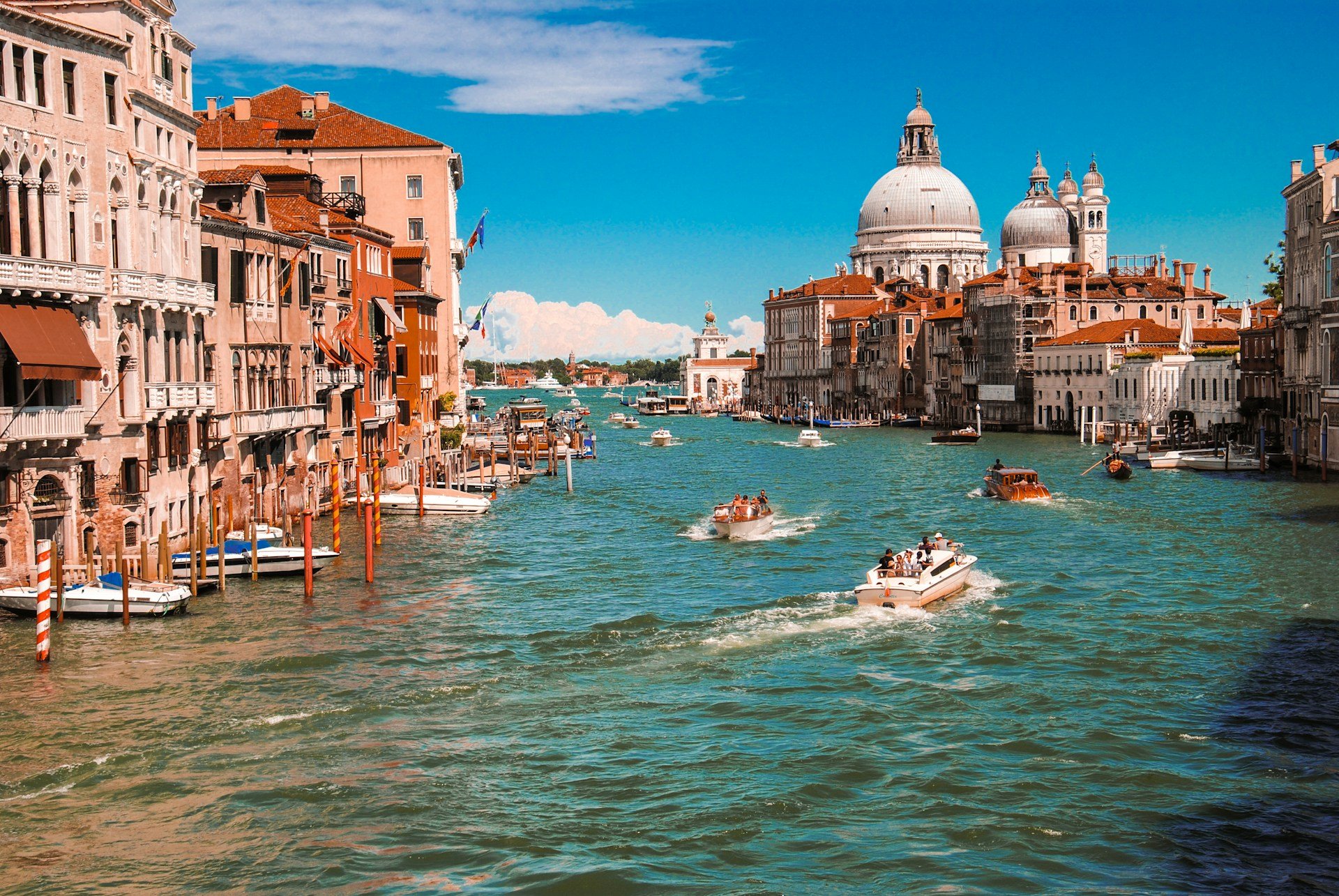
Venice in November, when the day-trippers and cruise ships have gone, the acqua alta flood sirens sound occasionally, and the city is grey and atmospheric and relatively yours: this is when Venice is best. The experience of arriving by water from the airport — take the Alilaguna water bus rather than a land taxi — and watching the impossible city emerge from the lagoon is one the great arrival moments in European travel. St. Mark's Basilica: free, no queue if you go before 9:30am on a weekday. The Frari church: Titian's Assumption above the altar is the greatest painting in Venice and almost no one goes to see it. The Giudecca island across from the main waterfront: fewer tourists, local bars, and the best view of the city. Two nights minimum, three is the sweet spot.
Naples
Naples is the most polarizing city in Italy for visitors and one of the most rewarding if you come with the right expectation. It is chaotic, operatic, loud, layered, and genuinely unlike every other Italian city. The Spaccanapoli — the ancient Greek road that splits the city in a straight line from east to west — is a medieval street alive with laundry, motorcycles, shrines, and the smells of espresso and frying. The National Archaeological Museum has the greatest collection of Roman art and artifacts outside Rome itself, including everything removed from Pompeii. Pompeii is 30 minutes by circumvesuviana train. The pizza at Pizzeria da Michele on Via Cesare Sersale, where the menu has exactly two items (Margherita and Marinara), costs €6 and is the reason pizza exists.
Bologna
Bologna has the oldest functioning university in the world (founded 1088), 38km of medieval porticoes under which you can walk from one end of the city to the other in the rain without getting wet, towers (the Due Torri) that were the medieval equivalent of skyscraper competition between wealthy families, and the most sophisticated regional cuisine in Italy. The ragù that became "bolognese" abroad bears almost no relationship to the slow-cooked Sunday version served with fresh tagliatelle in the trattorias around Via Pescherie Vecchie. Bologna is quieter, cheaper, and in many respects more genuinely Italian than Florence. Most people skip it entirely. This is their loss.
Tuscany & Umbria
Siena's medieval center, built for pedestrians on a hillside, has a Duomo more elaborately decorated than Florence's (Pisano's pulpit, Duccio's Maestà) and the Campo — the shell-shaped square where the Palio horse race has run since 1644. Orvieto perches on a volcanic plateau with a Gothic cathedral and Etruscan underground tunnels beneath the city. Assisi is the hilltop birthplace of St. Francis with Giotto's frescoes in the basilica above the saint's tomb. Pienza, built as an ideal Renaissance town in the 1460s, is still complete and still produces the Pecorino di Pienza that Tuscan butcher shops sell with the paper still on. Rent a car. Drive slowly. Stop when something looks interesting.
Sicily
The largest island in the Mediterranean is also the most historically layered: Greek temples at Agrigento that predate the Parthenon, a Roman mosaic villa at Casale near Piazza Armerina with 3,500 square meters of intact floor, Arab-Norman cathedrals in Palermo and Cefalù that resulted from eight centuries of architectural cross-pollination, and the markets of Palermo's Ballarò and Vucciria quarters that are the most intense food markets in Italy. Mount Etna is active and climbable. The baroque towns of the Val di Noto — rebuilt after a 1693 earthquake destroyed them — are UNESCO-listed and genuinely beautiful. Fly into Palermo, rent a car, drive east. Allow ten days minimum to do Sicily justice.
Puglia & the Deep South
The heel of Italy's boot has become the most rapidly growing tourist destination in the country and is still, outside the peak Alberobello trulli and Polignano a Mare, largely quiet. Lecce's Baroque churches and palaces in warm golden limestone — "the Florence of the south" is an overused comparison that understates how good Lecce actually is. The masseria farmhouses converted to agritourism accommodation. Otranto's mosaic cathedral floor depicting the entire medieval world. Matera in neighboring Basilicata: a cave city inhabited without interruption for 9,000 years, used as a stand-in for Jerusalem in Mel Gibson's The Passion of the Christ, now a European Capital of Culture. These places are not secret anymore but they remain significantly less crowded than the north.
Culture & Etiquette
Italian culture operates on a set of social understandings that are mostly intuitive but occasionally very specific. The pleasure principle is genuine: Italians take the quality of daily life — food, coffee, conversation, the afternoon passeggiata — seriously in a way that is cultural rather than performative. The person taking 25 minutes over an espresso at a bar counter is not wasting time. They are doing something correctly.
The north-south distinction matters culturally in ways that visitors often miss. Milan operates on a northern European tempo: efficient, punctual, fashion-conscious, somewhat reserved. Naples operates on a different clock entirely and a different emotional register: louder, more expressive, more physically demonstrative, more cynical about institutions, more warmly hospitable to strangers. Neither is more "Italian" than the other. They are different countries that happen to share a passport.
Every church in Italy, from the Sistine Chapel to a village chapel in Calabria, requires covered shoulders and knees. Guards enforce this actively at major sites and politely everywhere else. Many churches have disposable paper shawls for those who arrive underdressed. Carrying a scarf or light cardigan solves this permanently.
Italian bars charge one price at the counter and a higher price (sometimes double) for table service. The correct way to have an espresso is standing at the bar, which is also the faster and more sociable way. Order, pay at the till, hand the receipt to the barista, receive your coffee. The whole transaction takes 90 seconds.
Lunch runs 12:30–2:30pm. Dinner starts at 7:30–8pm minimum (8–9pm in the south). Arriving at a restaurant at 6pm or 7pm marks you immediately as a tourist. Many kitchens aren't firing yet. The aperitivo hour (6–8pm, a drink with free snacks) is the correct pre-dinner ritual. Aperol Spritz in Venice, Negroni in Florence, Campari soda anywhere.
Cappuccino after breakfast is a tourist signal — Italians drink it only in the morning. Ordering a cappuccino after a meal will be served without comment but registered as foreign. A macchiato (espresso "stained" with a drop of milk) is the correct lunch option. Asking for "a coffee with milk" in the afternoon is genuinely confusing to a Roman barista. An espresso is just "un caffè."
Italian buses and regional trains operate on an honor system with random inspector checks. Tickets must be validated (stamped in the machine at the platform or on the bus) before travel. An unvalidated ticket is the same as no ticket. The fine is significant, inspectors are unsympathetic, and "I didn't know" does not function as a defense in Italian transport bureaucracy.
Rome and Florence have introduced rules prohibiting eating and drinking near major monuments and in many historic piazzas. The fine for sitting on the Spanish Steps with a sandwich is €250. Drinking alcohol outside on certain streets has similar penalties. This is taken more seriously than many visitors expect.
The pasta sauce known internationally as "bolognese" is in Bologna served exclusively as ragù, exclusively with fresh tagliatelle (never spaghetti — there is a recipe deposited at the Bologna Chamber of Commerce specifying this), and never with the heavy spicing and tomato-forward preparation found abroad. Ordering spaghetti bolognese in Bologna is possible; the response will be patient and slightly sad.
Photography in the Sistine Chapel is prohibited under the terms of the Vatican's agreement with Nippon Television, which funded the restoration in exchange for exclusive photographic rights. The ban is enforced and the result is a room where everyone is actually looking at the ceiling rather than filming it. This is better. Look at the ceiling.
Tipping is not a cultural obligation in Italy. A small tip — rounding up to a round number or leaving €1–2 — is appreciated but not expected. Service charges (coperto) are standard in restaurants and cover the bread and tablecloth. The coperto is not a service charge in the sense of going to the staff — it is a cover charge for the restaurant. The tipping norms are closer to France than to the US.
Swimming, wading, or sitting in Rome's monumental fountains carries fines that start at €250 and go higher for the Trevi Fountain specifically. The rules are enforced by dedicated city police. This includes dipping feet. The water in the Trevi Fountain is cleaned and recycled rather than being safe to drink or swim in.
Coffee Culture
Italy invented espresso and the Italian bar counter is the most sophisticated coffee-delivery system in the world. An espresso in a good Roman or Neapolitan bar — dense, with a persistent crema, served at exactly the right temperature, consumed in 90 seconds while standing — is a product of significant technique. The beans are typically a darker roast than northern European or specialty-coffee-movement preferences; the extraction is shorter and more intense. Naples argues it has the best coffee in Italy; Rome argues back. They are both right about their own version.
How People Dress
Italy is the country where fashion was invented in its modern sense and where the standard of everyday dressing is visibly higher than in most of Europe. Italians do not leave the house in athleisure for any reason that doesn't involve athletic activity. For visitors: you don't need to dress like a Milanese — but jeans with holes, visible athletic logos in non-athletic contexts, and very casual beachwear in cities will mark you as a tourist before you open your mouth. Italy rewards the effort of dressing slightly better than usual.
The Passeggiata
The evening walk — the passeggiata — is one of Italy's defining social rituals. In the hour or two before dinner, the center of every Italian town from Milan to Palermo fills with people walking, meeting, looking, and being seen. It is not exercise. It is social display and community maintenance at once. Joining a passeggiata in a provincial Italian town — getting dressed up a little, walking slowly, stopping to talk — is how you participate in Italian culture rather than observe it.
Football (Calcio)
Italian football is not a sport in Italy — it is identity. The clubs map onto city, class, and political feeling in ways that require some knowledge to navigate. Asking a Roman which team they support means asking Lazio or Roma, which has social and cultural implications beyond sport. A Serie A match — particularly a city derby — is genuinely different from attending the game in stadiums elsewhere: more theatrical, more intense, more sonically overwhelming. Tickets through official club websites are the safest purchase.
Food & Drink
Italian food is not a cuisine. It is a collection of twenty or more distinct regional cuisines that share an insistence on ingredients over technique, locality over universality, and tradition over innovation — and that are vigorously defended by their practitioners against both homogenization and outside influence. The ragu made in Bologna uses a specific ratio of beef to pork, a specific amount of milk, a specific absence of garlic, and a fresh egg pasta. The pizza baked in Naples uses a specific dough hydration, a wood oven at 485°C, a specific San Marzano tomato, and a specific fior di latte. These are not suggestions. They are prescriptions.
The practical consequence for travelers: eat the regional food of wherever you are. Eating pasta with tomato sauce in Venice is a missed opportunity — eat sardines in saor (sweet and sour, a Venetian Jewish preservation technique), bigoli in salsa (thick pasta with salted anchovies), risi e bisi (rice and peas in the spring). Eat the food that is from there. Everything else is available at home.
Pasta — the Real Thing
Cacio e pepe in Rome: pasta, Pecorino Romano, black pepper. Nothing else. The technique — emulsifying the cheese into a sauce with pasta water rather than adding cream — requires attention and produces a dish of impossible richness. Tagliatelle al ragù in Bologna: fresh egg pasta, slow-cooked meat sauce, no cream, no garlic, no oregano. Orecchiette con cime di rapa in Puglia: the "little ear" pasta with bitter turnip greens, anchovy, garlic, and chilli. Each of these is a different dish in a different tradition using the same nominal ingredient. This is Italian food.
Pizza
Neapolitan pizza is the original: a charred, leopard-spotted, slightly wet and floppy disc of dough from a 485°C wood oven, topped simply with San Marzano tomatoes, fior di latte or buffalo mozzarella, basil, and olive oil. Da Michele has been making only Margherita and Marinara since 1906. Sorbillo on Via dei Tribunali is bigger and also excellent. Roman pizza by contrast is thinner and crispier. Sicilian sfincione is thick, oily, and covered with caramelized onions and anchovies. All of these are correct in their place.
Meat & Cured Goods
Bistecca alla Fiorentina: a T-bone from Chianina cattle, 1kg minimum, grilled over wood charcoal to rare only, served without sauce. The price is by weight and will seem high; it is worth it at a good address (Buca Mario, Trattoria Mario). Prosciutto di Parma and di San Daniele. Culatello di Zibello — aged in Parma's river fog and considered by those who know such things to be the greatest cured pork product in the world. Mortadella in Bologna, which is the original of what became baloney and is completely different from it. Nduja from Calabria — a spreadable, fiery salami made with chilli that you put on bread and eat with a glass of Calabrian wine before dinner.
Cheese
Parmigiano Reggiano aged 36 months eaten in chunks with honey. Buffalo mozzarella from Campania, eaten on the day of production (it deteriorates within 24 hours — anything not eaten fresh has been compromised). Pecorino di Pienza, aged in walnut leaves. Burrata from Puglia, the fresh cream-filled buffalo mozzarella exterior that is consumed within hours. Gorgonzola naturale from the hills south of Milan. Taleggio washed-rind cheese from Lombardy. Italy has its own Protected Designation of Origin system for cheese with 55 registered varieties. Eat them at source.
Wine
Barolo from Piedmont is the "king of Italian wines" — Nebbiolo grape, long-aged, requiring a decade to open fully, one of the world's great reds. Brunello di Montalcino from Tuscany — Sangiovese at its most profound, needing fifteen years to reach peak. Amarone della Valpolicella from Verona's hills — made from partially dried grapes, massively concentrated, extraordinary with aged cheese. For everyday drinking: the natural wine bars (enoteca) in any Italian city serve glass pours of regional wines at €4–7 that are genuinely better than most things at twice the price abroad. Start with the local wine, whatever the house is pouring.
Gelato, Granita & Dolci
Real gelato is made fresh daily and served at a temperature slightly warmer than ice cream — pourable, not rock-hard. At a good gelateria (look for natural colors, mounded and covered displays, not neon-colored peaks under bright lights) the pistachio should taste of pistachios rather than sugar. Granita in Sicily — particularly the almond granita with brioche at breakfast in Catania or Palermo — is a Mediterranean institution that does not fully translate elsewhere. Tiramisù is from Treviso, near Venice, and is best made there. Cannolo siciliano should be filled to order, not pre-filled — if the shell is soggy, the ricotta has been in there too long.
When to Go
April through June is the answer for most travelers — warm enough for the south, not yet brutal in the cities, wildflowers in Tuscany and Umbria, long evenings, and the tourist peak still a few weeks away. September and October are equally good: the grape harvest is happening in Tuscany and Piedmont (and you can watch it and drink from it), the beaches of Sicily and Puglia are at peak warmth, and Rome and Florence breathe again after August's departure. July and August: hot, crowded, expensive, the main Italian holiday month when half the country is also on vacation and regional businesses close. Avoid Rome in August specifically — it empties of Romans while filling with tourists in 40°C heat.
Spring
Apr – JunItaly at its most beautiful. Wildflowers in Tuscany. The Amalfi Coast before the season peak. Comfortable temperatures for walking Rome and Florence without heat exhaustion. Easter in Rome or Seville is its own experience — book a year ahead. Venice in April is genuinely atmospheric without the summer mass.
Autumn
Sep – NovHarvest season in wine country. The Amalfi Coast and Sicily still warm enough to swim. Truffle season in Piedmont (Alba's white truffle fair in October) and Umbria. Rome and Florence breathe. Venice in November is moody, beautiful, and nearly empty. Accommodation prices drop from August peaks.
Winter
Dec – FebRome and Naples are mild and manageable. The Dolomites and Alps are ski country. Museums with no queues. Christmas markets in Bolzano are Germany-quality. Sicily in January is 15°C and essentially empty of tourists. Carnivale in Venice in February (book a year ahead if you want accommodation). Prices are the lowest of the year.
Peak Summer
Jul – Aug38–42°C in the southern cities. The Sistine Chapel has 20,000 visitors a day. Venice Day-Visit Entry Fee applies. The Cinque Terre requires timed-entry trail permits. August is the month all of northern Italy goes on holiday simultaneously, closing many neighborhood restaurants. If your only option is summer: plan early mornings, afternoon rests, and cool underground sites.
Trip Planning
The single most important planning rule for Italy: book the Borghese Gallery, the Uffizi, the Colosseum, and the Vatican Museums before you book your flights. These sell out in the order of weeks to months ahead in peak season. If you're traveling in summer, start with museum availability and build the trip around the windows you can secure. Arriving in Rome in July without a Colosseum ticket is survivable but the same-day ticket queue is two hours minimum.
Italy has a museum booking complexity that is worth understanding: some major sites (Uffizi, Borghese) are managed by ticketing platforms that require reservation fees and timed entry. Others (the Vatican) have premium fast-track entry options. The Pompeii excavations sell out summer entry on specific days. The Sistine Chapel has recently introduced after-hours access programs that are genuinely better than standard entry but more expensive.
Rome
Day one: arrive, walk from Termini or your accommodation to the Pantheon (evening, free), then Campo de' Fiori for dinner at one of the side-street trattorias. Day two: Colosseum and Forum Romanum on the pre-booked ticket (8am opening), walk the Forum at the ancient street level, afternoon rest, Trastevere for dinner. Day three: Vatican Museums and Sistine Chapel (pre-booked, first entry slot), afternoon Castel Sant'Angelo and Prati neighborhood for an outdoor lunch, evening aperitivo at Pigneto if you want to see where Romans actually drink.
Florence
Frecciarossa from Roma Termini, 1h30m. Day four: Piazza della Signoria and the loggia (free outdoor sculptures), Uffizi on the pre-booked ticket (first entry), walk the Ponte Vecchio, dinner in Oltrarno. Day five: Duomo complex with dome climb (book at the complex), Mercato Centrale for lunch, afternoon San Miniato al Monte church up the hill for the view with none of the crowds. Day six: the Accademia for David (book in advance), Brancacci Chapel in Oltrarno for Masaccio's frescoes, last dinner at one of the trattorias on Via dei Serragli.
Day Trip or Departure
Frecciarossa to Siena takes 1h30m with a change at Chiusi — rent a car from Florence and drive instead (90 minutes, park outside the walls). Siena's Campo and Duomo in the morning, lunch in a trattoria on the Campo, drive back to Florence and fly home. Alternatively: take a morning train to Bologna for lunch at the Mercato di Mezzo and tagliatelle al ragù before heading to the airport at Guglielmo Marconi (Bologna's airport is 20 minutes from the center).
Rome
Four full days to include the Borghese Gallery (pre-booked a month ahead — Bernini's Apollo and Daphne is one of the most extraordinary things a human being has made from marble), the Capitoline Museums (original Marcus Aurelius statue, the Capitoline Wolf, and a terrace overlooking the Forum that beats every other view in Rome), the Appian Way on a rented bicycle on a Sunday morning when the road is closed to traffic, and a day trip to Tivoli for Hadrian's Villa — his retirement estate 30km from Rome, larger than much of ancient Rome's city center, now a ruin of extraordinary scale and atmosphere.
Naples & Pompeii
Frecciarossa to Naples, 1h10m. Two nights in Naples: Spaccanapoli walk on the first afternoon, the National Archaeological Museum on day six (the Secret Room with Roman erotic art, the mosaic of Alexander from the House of the Faun, the bronze athlete from Herculaneum — this museum requires three hours minimum). Day seven: Pompeii by circumvesuviana train from Napoli Centrale (30 minutes, €3). Day eight: Herculaneum (better preserved than Pompeii, less visited) and the Vesuvius crater walk (45-minute hike from the bus drop-off at 1,000m).
Amalfi Coast
SITA bus from Naples or hire a car from Sorrento. The Amalfi Drive is genuinely spectacular and genuinely terrifying — two lanes of traffic on a corniche road with sheer drops and no guardrails on sections. June or September for manageable traffic; July and August are borderline undrivable. Positano for beauty and expense. Ravello for the gardens at Villa Rufolo above the clouds. Amalfi itself for the paper museum and the Arab-Norman Duomo. The Path of the Gods hiking trail between Nocelle and Bomerano for the views that are worth the climb.
Florence & Tuscany
Train to Florence. Three days including Florence city and a rented-car day through the Chianti Classico wine zone — the road from Greve in Chianti through Radda and Gaiole, stopping at estate cellars for tastings and purchasing the wines you won't find abroad. San Gimignano for the medieval towers, an hour southwest of Florence. Fly from Florence or take the Frecciarossa back to Rome for an international departure.
Rome Deeply
Five days in Rome including Ostia Antica — the ancient Roman port city 30 minutes by commuter train (Roma-Lido line), as large as Pompeii, with almost no one there, completely free — and the Palazzo Altemps, one of four National Roman Museum branches housed in a Renaissance palazzo near Piazza Navona that has the most beautiful presentation of ancient sculpture in Italy. The Capuchin Crypt beneath Santa Maria della Concezione church on Via Veneto: a baroque arrangement of 4,000 monk skeletons in five chambers. Deeply strange and genuinely moving.
Naples, Pompeii & the Islands
Naples properly, including the underground — the Napoli Sotterranea tour through the Greek and Roman tunnels beneath the city, the MADRE contemporary art museum in Forcella, and a pizza at Starita a Materdei in the Sanità neighborhood where Sophia Loren's mother worked and the margherita has been made since 1901. Ferry to Capri or Ischia for one night each — Capri is expensive and spectacular (the Blue Grotto), Ischia is volcanic and spa-focused (the Negombo thermal park).
Sicily
Fly from Naples to Palermo (1 hour). Rent a car. Palermo's Ballarò market on the first morning. The Cappella Palatina in the Royal Palace — the most extraordinary room in Italy, Arab-Norman-Byzantine ceiling mosaics from 1143. Drive east: Cefalù, the Nebrodi mountains, Taormina with Etna above it, Catania for Sicilian street food (arancino, granita with brioche). Valley of the Temples in Agrigento at sunset. Fly from Catania back to mainland Italy or direct home.
North: Bologna, Venice & Dolomites
Frecciarossa to Bologna — two nights for food and the Archiginnasio's anatomy theater and the porticoes. Venice for three nights (November or early December: the best Venice). Then rent a car and drive into the Dolomites — the pale mountains that turn orange-pink at sunset, the Tre Cime di Lavaredo walk, staying in a rifugio mountain hut for one night. Come down through Bolzano into Milan. Fly from Malpensa.
Booking Museums
Book these before your flights: Borghese Gallery (coopculture.it — strict 2-hour sessions, 360 person limit, sells out a month ahead), Uffizi (uffizi.it), Vatican Museums (museivaticani.va), Colosseum (coopculture.it). The Frecciarossa trains book at trenitalia.com — advance fares significantly cheaper than day-of.
Vaccinations
No mandatory vaccinations required for Italy. Recommended: routine vaccines up to date. No significant tropical disease risk. Standard European travel precautions apply. Tick risk in forested mountain areas.
Full vaccine info →Connectivity
EU roaming for European carriers. Non-EU visitors should get an Italian or EU eSIM via Airalo. Coverage is excellent in cities and along motorways; patchy in the mountains and some rural southern areas. Download offline maps for any driving outside major cities.
Get Italy eSIM →Power & Plugs
Italy uses Type F and Type L plugs at 230V. The Type L (three round pins in a line) is specifically Italian and less common elsewhere. Most modern electronics accept F plugs. UK and US visitors need adapters. Buy a universal adapter — Italian sockets are sometimes specifically L-type.
ZTL Zones
Italian historic city centers have ZTL (Zona Traffico Limitato) zones — restricted traffic areas where only registered vehicles may enter. Driving into a ZTL without authorization results in fines of €80–200 per infraction, often sent weeks later by post. If renting a car, do not drive into historic city centers — park outside the walls and walk or take public transport.
Travel Insurance
EU EHIC covers emergency treatment at Italian public hospitals for EU citizens. Non-EU visitors should carry travel insurance with medical coverage. Italian healthcare is good in major cities; more variable in rural southern areas. Assistance with medical Italian translation is worth having in smaller towns.
Transport in Italy
Trenitalia's Frecciarossa high-speed trains are the spine of Italian travel between major cities — fast, comfortable, and significantly cheaper when booked in advance online. The Rome to Milan route (2h50m at 300km/h) makes air travel unnecessary. The competing Italo operator on the same routes often has better promotional fares and a good app. For regional travel — the Cinque Terre, Tuscany's hill towns, Calabria — regional trains are slower but cover the territory adequately.
Cars are necessary in Tuscany for vineyard-hopping, in Sicily for coast-to-coast travel, and in Puglia for the masseria countryside. They are counterproductive in Florence, Rome, Venice (no roads), and any historic city center with ZTL zones. The rule: park outside the historic center and walk. Always.
Frecciarossa / Italo
€19–80/route (advance)The high-speed rail corridor: Turin–Milan–Bologna–Florence–Rome–Naples–Salerno. Frecciarossa at 300km/h is the primary option; Italo is often cheaper. Book at trenitalia.com or italotreno.it — advance fares are dramatically better than day-of prices. Frecciargento and Frecciabianca cover additional routes at lower speeds.
Regional Trains
€3–20Slow but cheap. The circumvesuviana from Naples to Pompeii and Sorrento. The cinque terre train between La Spezia and Levanto. The coastal Litoranea from Rome to Ostia. Trenitalia regionale tickets are cheap, frequently on time, and don't require advance booking. Validate the ticket in the yellow machine before boarding.
City Metro
€1.50–2/rideRome has two main Metro lines (A and B) plus the newer C line. Milan has an extensive network. Naples has three lines. Palermo and Florence have limited tram systems. The Roman Metro is useful for covering distances; walking is generally better for seeing the city. Buy 48-hour or 72-hour passes for value in Rome.
Intercity Bus (Flixbus/SITA)
€5–25Flixbus covers major intercity routes cheaply. SITA and regional operators run the Amalfi Coast service (the famous blue SITA buses) and connect smaller towns not served by rail. The Amalfi SITA bus is the affordable alternative to renting a car on the coast — buy tickets at tabacchi shops, not from the driver.
Car Rental
€40–80/dayEssential for Tuscany, Sicily, Puglia, Umbria hill towns, the Dolomites, and anywhere the train doesn't reach. Avoid in major cities with ZTL zones. Book through international companies (Hertz, Europcar, Budget) rather than local operators for more reliable insurance. An International Driving Permit is recommended but not always required.
Ferries
€20–80Essential for the islands. Naples to Capri (40 mins fast ferry), to Ischia (1 hour), to Procida (1 hour). Palermo to Naples overnight ferry. The Alilaguna water bus in Venice from Marco Polo Airport is the correct way to arrive in the city. Sardinia by ferry from Genova, Livorno, or Civitavecchia.
Taxi
€3.50 start + meterRoman taxis are metered, yellow, and regulated. Use only white or yellow licensed taxis — the unofficial drivers outside Termini and Fiumicino are a well-known scam. The ItTaxi app is the official taxi app for Rome. Uber operates in Italian cities using licensed drivers at roughly taxi rates.
Domestic Flights
€30–100Worthwhile for mainland to Sicily or Sardinia. ITA Airways (former Alitalia), Ryanair, and easyJet cover domestic routes. Rome to Palermo by train takes 12 hours; the flight takes 1 hour. For anything below 500km the high-speed train beats the flight when airport transfer time is included.
Both operators run high-speed trains on the main corridor (Turin–Milan–Bologna–Florence–Rome–Naples). Trenitalia's Frecciarossa and Italo's EVO and AGV trains are comparable in speed and comfort. The practical difference is price: both run aggressive promotional fares that can put a Rome–Florence journey at €19 when booked weeks ahead. Sign up for both apps and compare at time of booking. Trenitalia covers more regional routes and is the only option for Sicilian connections. Italo is often cheaper on the premium Rome–Milan route.
Accommodation in Italy
Italy's accommodation market runs from design hotels in converted Florentine palazzi to farmhouse agriturismo in Tuscany where breakfast involves the family's own olive oil, prosciutto from the pig that was alive six months ago, and bread from the village oven. Both extremes deliver something that generic hotels do not. The agriturismo system — farm accommodation regulated by regional governments — is genuinely one of Italy's great travel value propositions: good rooms, better breakfast, and a family who will tell you which vineyard to visit and which road to take.
Location within the city matters enormously in Italy. In Rome, staying inside the Aurelian Walls (the historic center) means everything is walkable. In Florence, staying in Oltrarno (south of the Arno) puts you in the neighborhood that locals actually live in rather than the tourist concentration north of the river. In Venice, staying on Giudecca or Sant'Elena rather than around San Marco gives you the city at a fraction of the price and a fraction of the noise.
Palazzo Hotel
€180–500/nightItaly's conversion of historic palazzi into hotels produces some of Europe's finest accommodation. The Hassler at the top of the Spanish Steps. The Palazzo Senato in Milan overlooking the Brera gallery. The Palazzino di Corina in Matera's sassi cave district. Staying in a 16th-century palazzo changes the texture of a city visit in ways that a modern hotel cannot replicate.
Agriturismo
€60–180/nightFarm accommodation, typically with breakfast and often dinner available. Required by Italian law to produce at least some of their own food on site. Quality varies enormously but the best — in Tuscany's Chianti zone, in Umbria's olive country, in Sicily around Ragusa — are the most authentically Italian sleeping experience available at any price.
Boutique Hotel
€100–250/nightItaly's independent boutique hotel scene is excellent. In Rome: the Residenza in Farnese near Campo de' Fiori. In Florence: Soprarno Suites in Oltrarno. In Naples: Decumani Hotel de Charme in the historic center. These are distinctly Italian properties, often in historic buildings, without the generic international hotel formula.
Hostel
€20–45/nightItaly has good hostels in major cities. The Yellow in Rome (near Termini, lively, well-equipped) and the Generator Rome are reliably excellent. In Florence, the Academy Hostel near the Accademia. In Naples, Spacca Napoli Hostel in the heart of the Spaccanapoli. The Italian hostel scene improved significantly in the 2010s and is now among Europe's best.
Budget Planning
Italy's costs vary dramatically by region and destination. The north (Milan, Venice, the lakes) is among the most expensive travel in Europe. Rome and Florence sit at mid-range Western European levels. Naples, Sicily, Puglia, and inland Calabria are genuinely affordable — a full meal with wine at a good Neapolitan trattoria costs €20–25 per person, which is less than an average pub meal in Dublin or London. The key to managing Italy's cost is avoiding the tourist-trap restaurants near major attractions and eating where locals eat, which is almost always cheaper and better.
- Hostel dorm or cheap B&B
- Bar counter breakfast (€2.50 espresso + cornetto)
- Trattoria or market lunch (€10–15)
- Aperitivo hour with free snacks for dinner
- Train travel on advance Trenitalia fares
- Boutique hotel or good B&B
- Trattoria lunch and restaurant dinner
- Frecciarossa between cities
- Paid museums (Uffizi, Borghese, Colosseum)
- A bottle of house wine with dinner
- Palazzo hotel or design hotel
- Full restaurant dining with regional wine selection
- Private transfers and flexible rail
- Agriturismo with dinner in Tuscany
- Cooking class, wine tour, private guide
Quick Reference Prices
Visa & Entry
Italy is a full member of the Schengen Area. EU and EEA citizens can enter and stay indefinitely. Citizens of the US, UK, Canada, Australia, New Zealand, Japan, South Korea, and most Western nations get 90 days within any 180-day Schengen period visa-free. The Schengen clock runs across all member countries — time spent in France or Germany before arriving in Italy counts against the same 90-day allowance.
ETIAS (European Travel Information and Authorisation System) is now operational and required for most non-EU nationals who previously entered visa-free. This includes US, UK, Canadian, Australian, and New Zealand passport holders. It is an online pre-registration (not a visa), costs €7, is valid for three years, and takes minutes to complete. Check the current status for your specific passport nationality before booking travel.
Most Western passport holders qualify. ETIAS registration required for US, UK, Canadian, Australian, New Zealand, and other non-EU visitors. The 90-day Schengen allowance covers all Schengen countries combined. Check the full list at the Italian Ministry of Foreign Affairs before travel.
Family Travel & Pets
Italy is one of the best family destinations in Europe, largely because Italian culture is openly, enthusiastically, and sometimes extravagantly welcoming to children. A family arriving at a restaurant with a five-year-old does not receive tight smiles — it receives immediate attention, probably a piece of bread for the child, and the kitchen staff checking on the bambino during the meal. Italy's late dining culture is initially challenging (dinner at 8pm) but Italian children are present in restaurants at all hours and this is entirely normal.
The practical challenges are the summer heat in cities and the scale of the major museums, which require significant energy from children and adults alike. Build in rest time, plan outdoor activities for morning and evening, use the museums for two-hour targeted visits rather than marathon sessions, and accept that Pompeii on a 38°C August afternoon with two children under ten is a test of everyone's limits.
Pompeii & Herculaneum
An ancient city preserved by a volcanic eruption is more comprehensible to children than any museum display. The Forum, the gladiators' barracks, the bakeries with bread carbonized in the ovens, the graffiti on the walls, the plaster casts of the people caught by the ash — Pompeii is history at a scale and completeness that engages children of almost any age above seven. Go early. Bring water and hats. Allow four hours.
Food as the Experience
Italian children eat adult food from a young age and the kitchen makes accommodations naturally. Pizza is universally accepted. Pasta in simple forms (butter, tomato, cheese) is available everywhere. Gelato solves most crisis points in any Italian day. The Saturday morning market in any Italian town is a food education for children — the stalls, the vendors, the arguments about which tomato, the free samples pressed into small hands.
The Islands
Capri, Ischia, Sicily's Aeolian Islands, and Sardinia all offer clear water, beach culture, and a slower pace than the mainland cities. The Aeolian Islands north of Sicily are volcanic — Stromboli has an active crater you can hike to at night and watch erupt at close range (with a guide), which is one of the genuinely memorable experiences available to families in Mediterranean Europe. Lipari and Salina are calmer and have excellent beaches.
Castles & Medieval Towns
Castel Sant'Angelo in Rome (former mausoleum, medieval fortress, papal escape route via a secret passage to the Vatican). Castel dell'Ovo in Naples' harbor. The castles of the Val d'Aosta in the northern Alps. Siena's medieval center with its horse race. San Marino, the tiny independent republic on a hilltop, which children find conceptually fascinating once it's explained. Medieval Italian town walls are universally accessible and free — walk the walls of Lucca on hired bicycles.
Etna & Natural Wonders
Mount Etna in Sicily is the most active volcano in Europe and a guided summit approach via cable car and 4WD jeep is available from Nicolosi on the south side. The Grotte di Castellana in Puglia — a 3km underground cave walk through stalactite formations — requires no special equipment and takes 90 minutes with a guide. The Dolomites have Via Ferrata climbing routes for older children and families with basic mountain experience.
Cooking Classes
Family cooking classes in Tuscany, Rome, and Sicily are genuinely excellent: making fresh pasta by hand, rolling pizza dough, learning to make gelato. Children produce something they immediately eat, and the result (fresh pasta with ragù that they rolled themselves) is usually better than any restaurant version they've had. Book through GetYourGuide or directly with local operators — sessions typically run 3 hours and include the meal.
Traveling with Pets
Italy follows standard EU Pet Travel Scheme rules. Dogs and cats entering from EU countries need a microchip compliant with ISO 11784/11785, a valid anti-rabies vaccination, and an EU pet passport. Pets from non-EU countries need a health certificate from an accredited veterinarian and may require additional documentation depending on origin country — check the Italian Ministry of Health regulations before travel.
Italy is moderately dog-friendly in practical terms. Dogs are allowed on most beaches outside the bathing season (typically October to April) and on specific dog-friendly beach sections in summer. Dogs are generally welcome in outdoor restaurant areas and in many Italian accommodations, particularly agriturismi. The interior of restaurants and most public buildings does not permit pets. Trains allow small dogs in carriers for free; larger dogs require a half-price ticket and a muzzle on Trenitalia services.
The summer heat in Italian cities is a genuine dog welfare concern — pavements in Rome and Florence in July reach 50–60°C and cause serious paw burns. Summer travel in the south with dogs requires early morning and evening activity, access to shade and water at all times, and avoiding the hottest midday hours entirely.
Safety in Italy
Italy is a safe country for tourists by any objective measure. Violent crime against visitors is genuinely uncommon. The main risks are pickpocketing in the tourist areas of Rome, Florence, and Naples — specifically on the Roma Termini–Colosseum Metro line, around the Spanish Steps and Trevi Fountain, and in Naples' crowded street markets. These are avoidable with standard urban awareness and do not define the experience of visiting Italy.
General Safety
Very good in most of Italy. Rome and Florence are as safe as any major Western European city. Northern Italy (Milan, Bologna, Venice) is particularly safe. The south and Naples have a reputation that significantly overstates the risk for tourists — Naples is safe for visitors exercising normal urban awareness.
Solo Women
Italy is generally safe for solo female travelers, though street harassment (verbal, not physical) is more common than in northern Europe, particularly in the south and in tourist-heavy areas. It is less aggressive than in some Mediterranean countries. Normal awareness applies in city centers late at night.
Pickpocketing
The main tourist risk, concentrated in Rome (Metro Line A between Termini and Vatican, around Colosseum and Trevi Fountain), Florence (Uffizi queues, Ponte Vecchio), and Naples (Spaccanapoli street markets). Front-pocket wallets, money belts under clothing, and keeping bags zipped in front are standard precautions that work.
Tourist Traps & Scams
The rose-selling scam (someone hands you a flower, then demands payment), the friendship bracelet scam (tied to your wrist before you can refuse, then charged), and the fake petition scam are common in tourist areas of Rome. The price at the bar counter versus table is not a scam — it is standard Italian practice. Reading the menu posted outside before entering prevents all restaurant price surprises.
Road Safety
Italian driving is aggressive by northern European standards. Traffic signals and lane markings function as suggestions in Naples more than instructions. Pedestrian crossings in Rome are observed inconsistently by drivers. Cross with a group, make eye contact with drivers before stepping out, and assume nothing. Vespa riders especially should be watched carefully in Rome and Naples.
Healthcare
Italy's public healthcare (Sistema Sanitario Nazionale) covers EU citizens with an EHIC card. Non-EU visitors should carry travel insurance. Major Italian public hospitals are generally good; smaller southern facilities less so. Pharmacies (farmacia, green cross) are well-staffed and Italian pharmacists can advise on minor conditions without a prescription.
Emergency Information
Your Embassy in Rome
Most embassies are in the Parioli and Via Veneto areas of Rome.
Book Your Italy Trip
Everything in one place. These are services worth actually using.
The Thing Italy Actually Teaches You
Every country in this series teaches something specific to the visitor who pays attention. Iceland teaches scale and geological time. Japan teaches precision. Greece teaches the pleasure of doing nothing well. Italy teaches what happens when a civilization decides that daily life itself is worth doing with the same care and craft it brings to art, architecture, and food — and sustains that decision across centuries.
The Italians have a phrase: il dolce far niente — the sweetness of doing nothing. It describes the afternoon hour after lunch when nothing useful happens and nobody is pretending otherwise. The coffee is better than it needs to be. The tomatoes are from the market, not the supermarket. The conversation has no agenda. The light at four o'clock comes through a window the way it has come through that window for four hundred years. Italy is insistent about this. It will slow you down whether you planned to slow down or not, and when you leave, the speed of everywhere else will feel like a collective mistake that everyone else has simply agreed not to mention.