
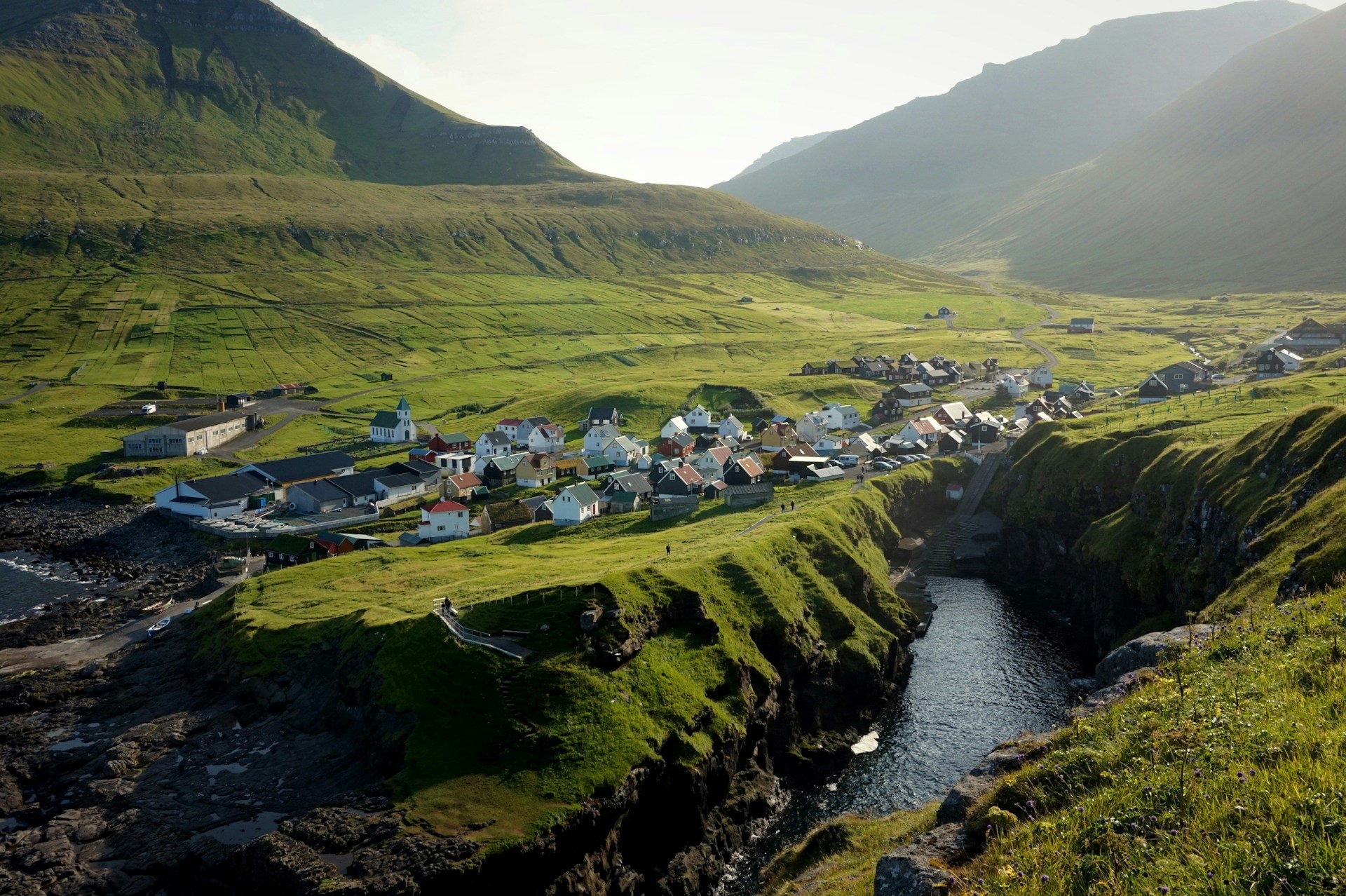
The Faroe Islands
Eighteen islands, one good weather window, and a puffin colony that won't wait for you. Eight stops, in the order we'd walk them.
"A country whose entire population would fit inside a football stadium, and whose cliffs make you feel appropriately small."
The Faroe Islands sit roughly halfway between Iceland and Norway, eighteen volcanic islands connected by tunnels, ferries, and bridges you'll cross without noticing because you'll be looking at the fjord instead. Mid July is the one stretch of the year when the weather here does something close to cooperating, long daylight, puffins still on the cliffs at Mykines, and roads that aren't fighting you with ice.
Torshavn, the capital, has under 14,000 people and feels more like a large village than a capital city, which is exactly right for a place where sheep still roughly outnumber people. Outside it, villages of a dozen turf-roofed houses sit at the end of single-lane roads that dead-end at the sea. This week we'd walk it as eight stops, roughly five to six days, with one day left unscheduled on purpose.
The ferry to Mykines cancels for weather more often than anyone expects. Book it for day one, not the day you're saving as a reward.
Eight Stops, One Good Week
Roughly the order we'd do this in, weather permitting, which in the Faroes is never entirely guaranteed.
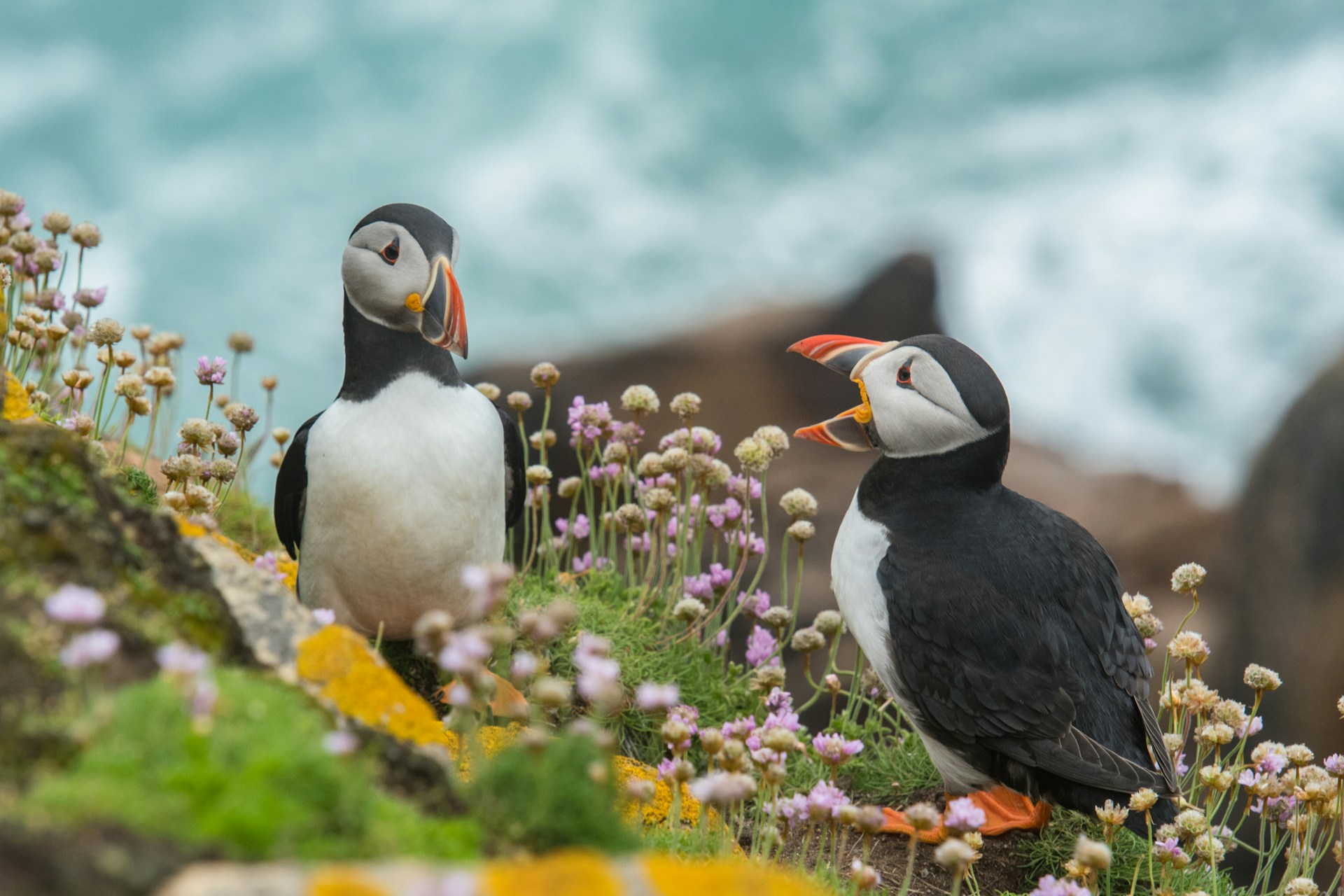
Mykines and the puffin cliffs
A small ferry from Sorvagur reaches the westernmost island, home to one of the North Atlantic's most accessible puffin colonies. The walk to the lighthouse at Mykineshólmur crosses a footbridge over a sea chasm with gannets nesting below. Ferry space is limited and weather-dependent, book the earliest sailing and treat it as provisional.
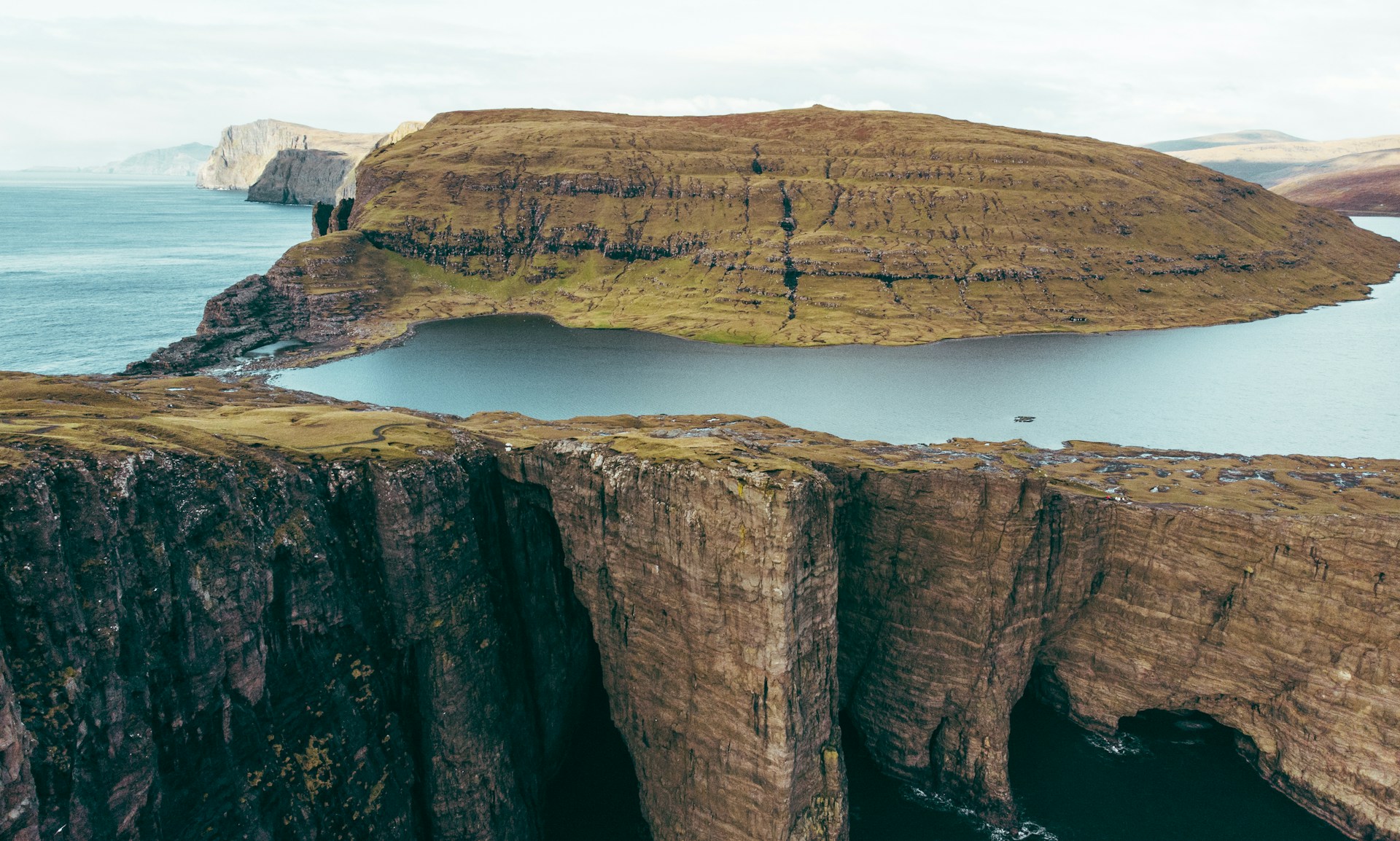
Trælanípa and the floating lake
A two hour walk to the optical illusion that made Sørvágsvatn famous online, from the right angle it appears to hover 30 meters above the ocean. Best in evening light, when the crowds thin and the cliffs go gold.
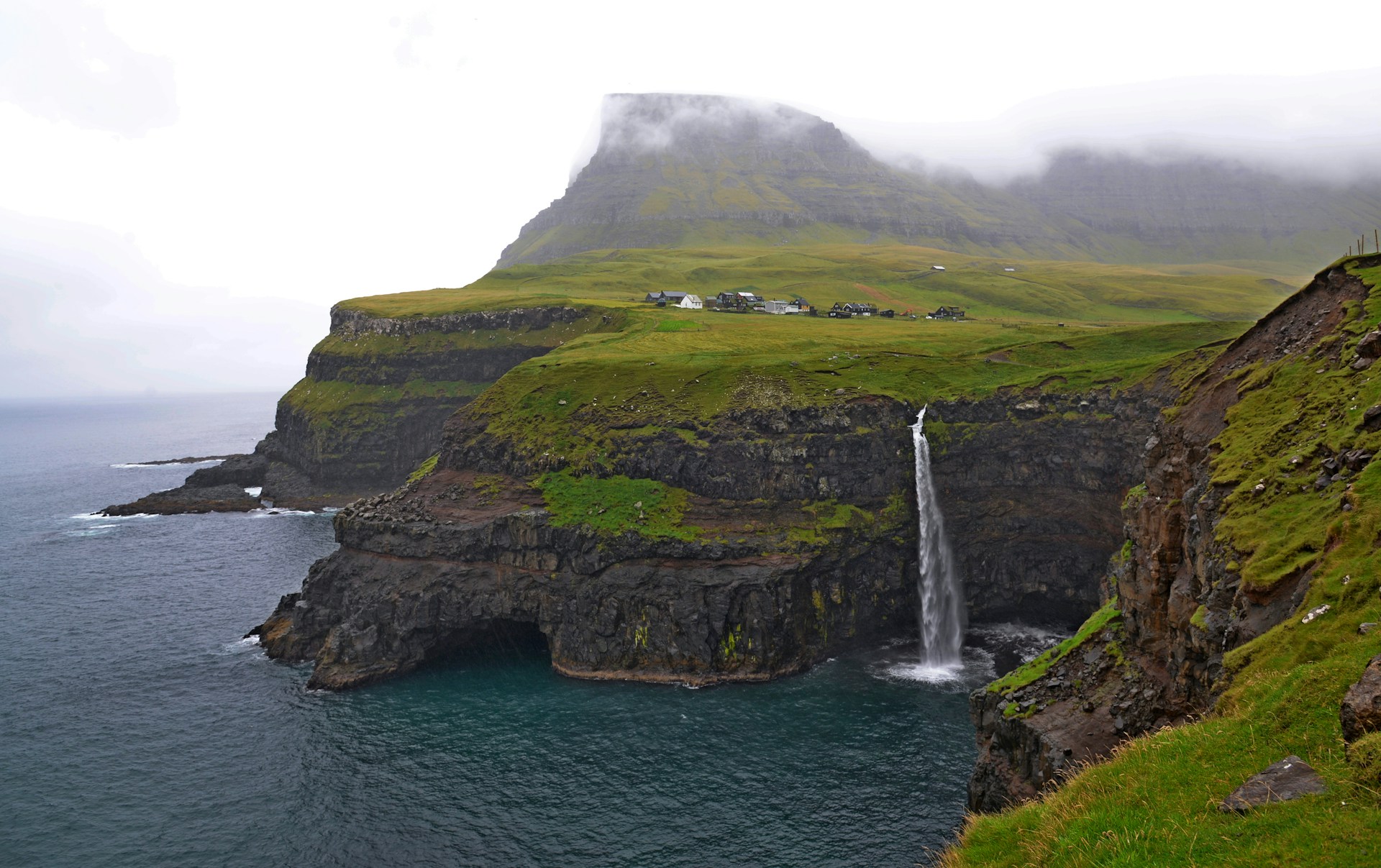
Múlafossur waterfall, Gásadalur
A waterfall drops directly into the sea beside a cluster of houses that only got a road connection in 2004, before that the village was reached on foot over the mountain. No hike required, just the short walk from the car park.
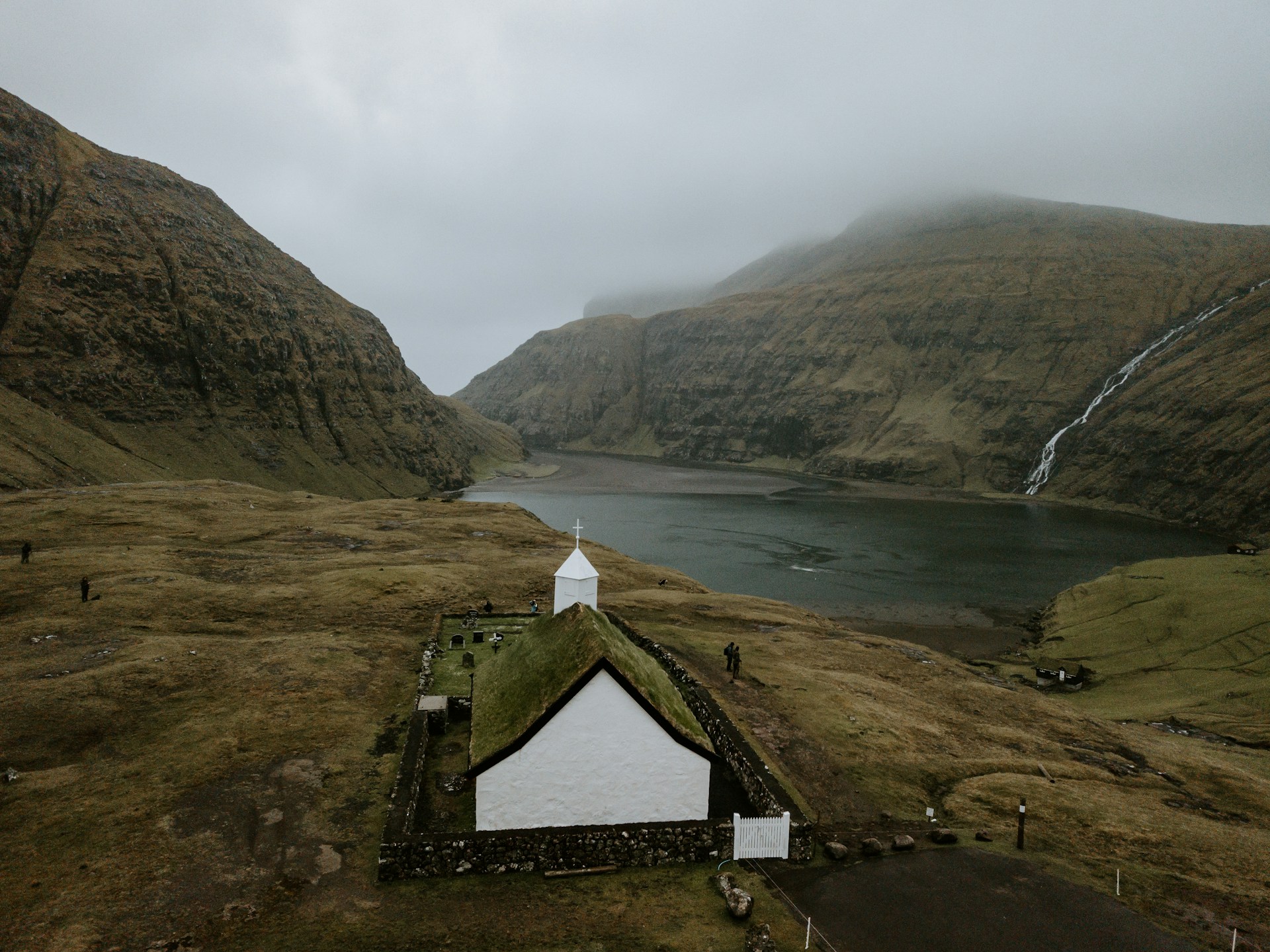
Saksun's turf church
A tidal lagoon sealed by a storm in the 1600s, houses still lived in, not preserved as museum pieces. Walk quietly, this is someone's home village, not a stage set.
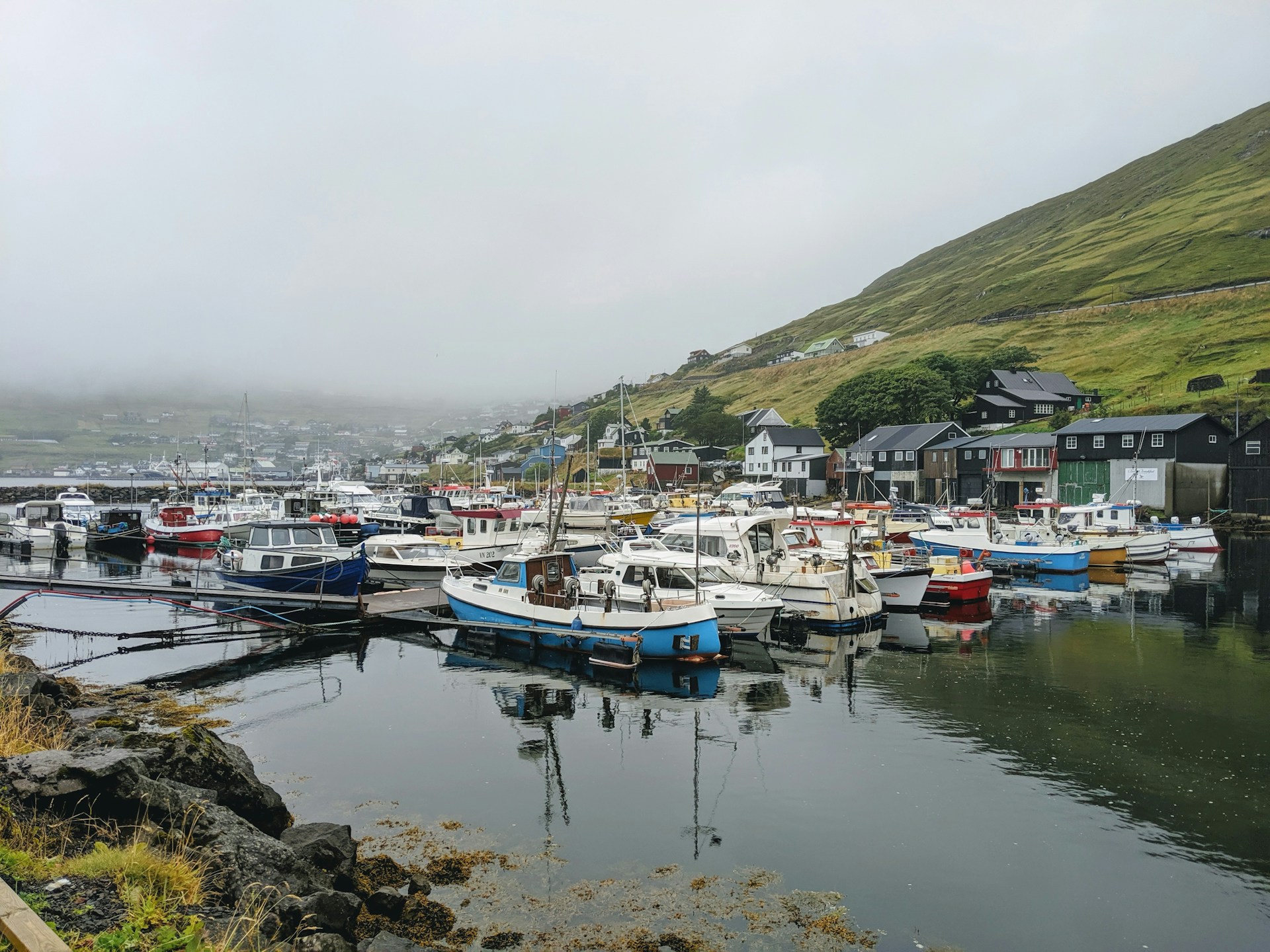
Vestmanna sea caves by boat
A boat threads caves beneath cliffs thick with nesting kittiwakes and guillemots, captains who've read these waters for decades know exactly how close is close enough.
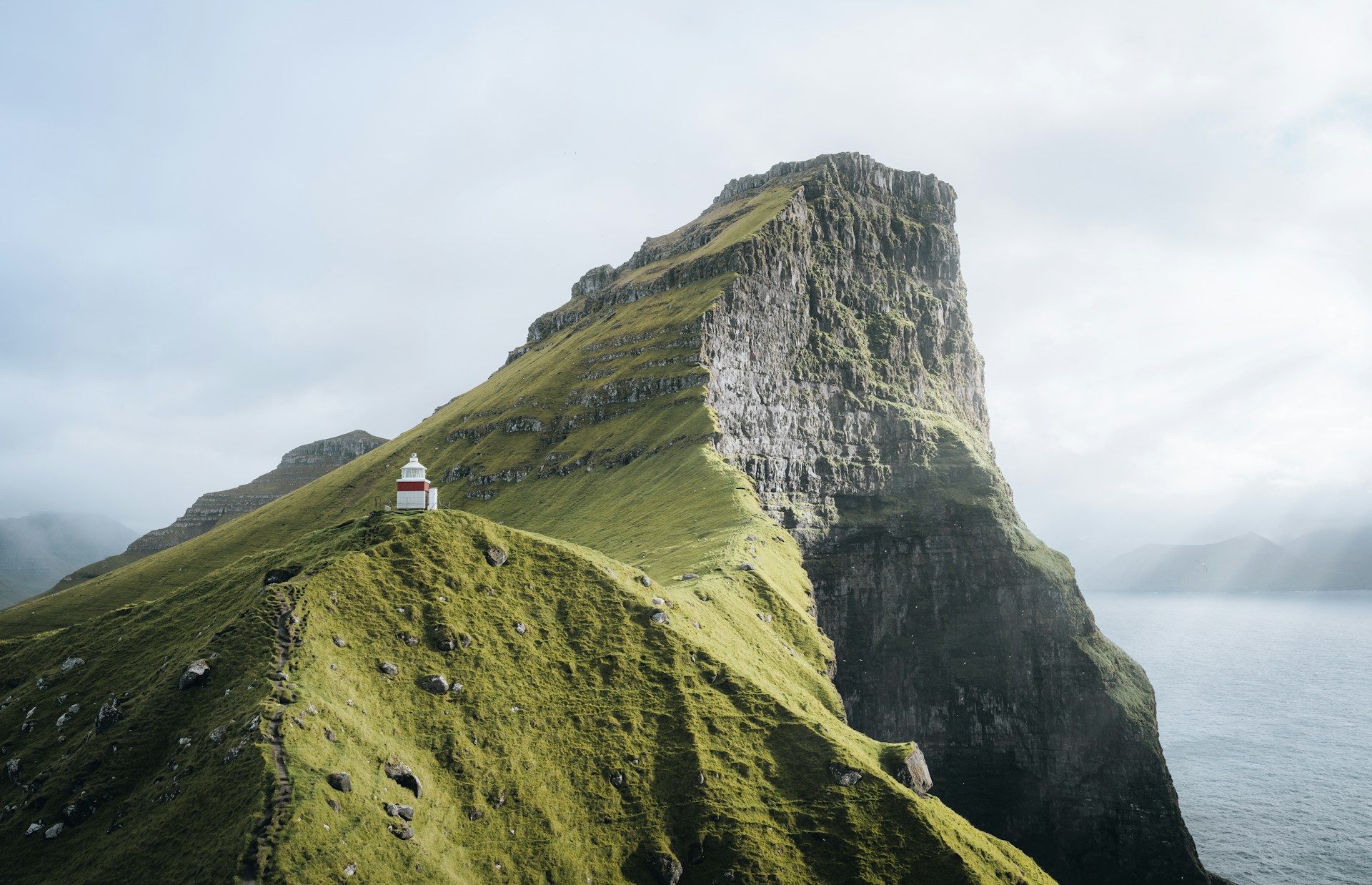
Kallur lighthouse, Kalsoy
A ferry to Kalsoy then a 45 minute ridge walk to a lighthouse perched between two fjords, sheep grazing right to the drop. The ferry limits numbers, so it stays quiet even at its most photographed.
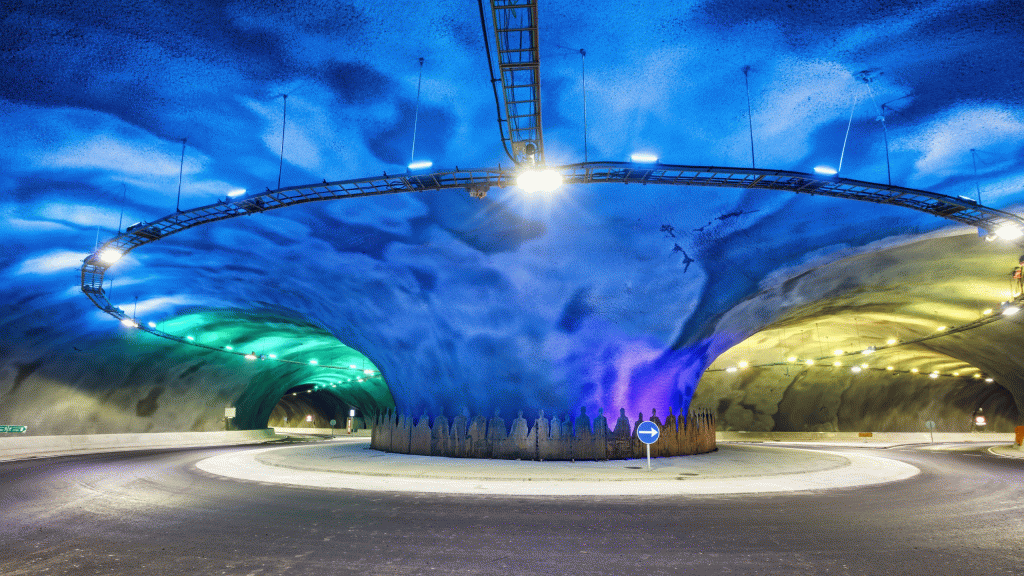
The undersea roundabout
The Eysturoyartunnil connects three islands beneath the ocean floor, with a colored light installation at its center. Drive it once, the tunnel itself opened day trips that used to need a ferry.
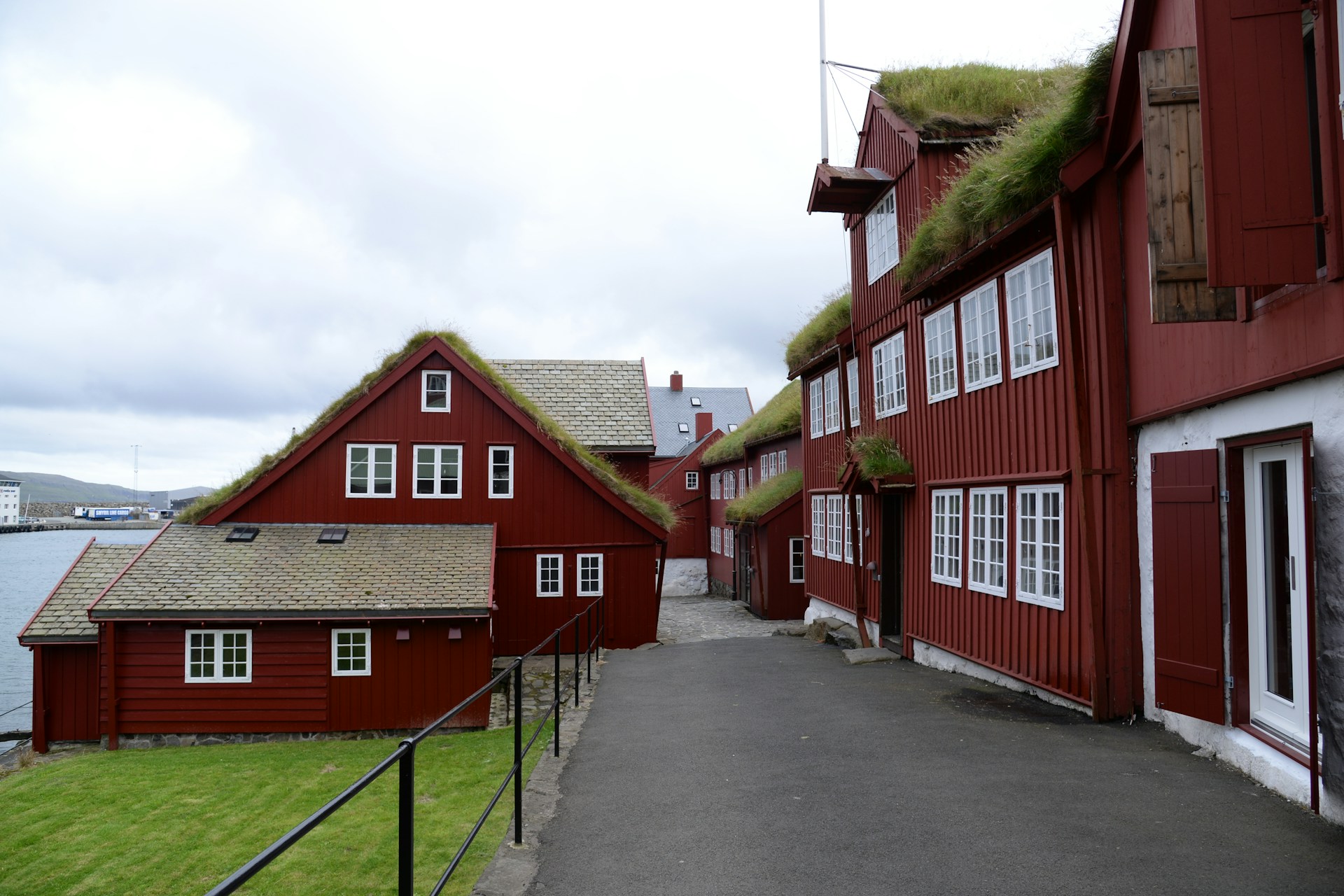
Tinganes, Tórshavn
Turf-roofed government buildings on a peninsula used as an assembly ground since around 900 CE, one of the longest continuously used parliamentary sites anywhere. Fifteen minutes on foot, worth an hour with a coffee.
Pick Your Base
Torshavn puts you within two hours of everything on the route above. A night in a village guesthouse trades that convenience for atmosphere, worth doing at least once.
What to Actually Order
Faroese food runs on what the sea and wind provide, lamb, fish, and a fermentation tradition called ræst, born from centuries without refrigeration.
Cafe Natur, not the harbor bars
Cafe Natur in Tórshavn is where the fishing crews actually drink, not the tourist-facing bars nearer the water. Go on a weeknight for the best sense of how the town actually socializes.
What This Week Costs
Prices track Denmark and Norway rather than the rest of the North Atlantic's tourist trail. Not cheap, but it's a short week, which helps.
Quick Reference Prices
Practicalities
Flying in
Atlantic Airways flies direct from Copenhagen, Reykjavik, and a handful of other European cities into Vágar airport, the only airport in the islands, about 45 minutes from Torshavn. Return fares typically run 180 to 350 EUR depending on season and how far ahead you book.
Once you're there
A rental car is by far the most practical way to see the islands. Tunnels and bridges connect most of the main landmasses, and the driving itself, single-lane roads along fjords, is part of the experience. If you're not renting, the Yviri um ferð pass covers buses, ferries, and helicopter flights across the public network, including the Mykines ferry when seats are available.
The undersea tunnels
The Eysturoyartunnil and Sandoyartunnilin both charge a toll, paid online or through an automatic number-plate system rather than a booth. Rental companies usually add this to your final bill automatically, worth confirming at pickup.
Build in a spare day
Ferries to the smaller islands, Mykines especially, cancel for weather more often than a first-time visitor expects. A five day plan with no flexibility is a plan that loses its best day to fog. Build the trip around six days if you can.
Cliff edges and wind
Many of the best views have no barrier at all. Stay well back from any unfenced edge, especially in wind.
Weather changes fast
Sun, fog, and rain can happen within the same hour. Pack a real waterproof regardless of forecast.
Respect working land
Turf-roofed houses are real homes. Stick to marked trails and close any gate you open.
Limited medical facilities
The National Hospital in Torshavn covers most needs. Travel insurance with medical coverage is worth having.
Book the ferry for day one, not day three
The Mykines ferry cancels for weather more often than visitors expect, and most people save it as a reward for later in the trip, then lose it to fog with no days left to rebook. Put it first. If it cancels, you've still got the week to try again. If it runs, you've protected the trip's centerpiece.
Next Monday, a new place. Wherever the season points us.
The Atlas Guide desk