
Gran Canaria vs Tenerife at a glance
Eleven rounds, scored honestly. Gran Canaria takes beaches and nightlife by a distance, Tenerife takes nature just as clearly, and most of the rest is close enough that it shouldn't drive your decision. Select a category to jump to the full comparison.
| Category | Gran CanariaTenerife |
|---|---|
| The eleven rounds | |
| BeachesSaharan dunes beat resort sand over volcanic black | Gran Canaria, decisively |
| Cost & valueSame country, same currency, similar prices | A genuine tie |
| Culture & capital citiesLas Palmas's scale against La Laguna's heritage | Gran Canaria, narrowly |
| Nature & landscapesNothing on Gran Canaria matches Teide | Tenerife, clearly |
| Things to doSurfing and golf vs windsurfing and whales | Different strengths |
| FoodShared Canarian cuisine, different specialities | Draw |
| NightlifeThe Yumbo Centre is unmatched in Europe | Gran Canaria, decisively |
| WeatherBoth are "eternal spring"; the real divide is north vs south | A genuine tie |
| Getting aroundSmaller and simpler to cross in a week | Gran Canaria, narrowly |
| SafetyBoth very safe; the same practical risks apply | Draw |
| FamiliesSiam Park and Loro Parque edge it for older kids | Tenerife, narrowly |
| Best for | |
| LGBTQ+ travellersEurope's best LGBTQ+ resort scene | Gran Canaria |
| Digital nomads & remote workLas Palmas is a well-known nomad hub | Gran Canaria |
| Wine & guachinche cultureA rural wine tradition unique to the island | Tenerife |
| OverallNo outright winner; it comes down to priorities | Depends on your priorities |
The miniature continent vs the volcanic giant
Two Atlantic islands, 90km apart, both bathed in year-round sunshine, yet shaped by completely different geological and cultural forces into two distinct holiday experiences.
A continent in miniature
In a single day you can move from the sweeping Saharan sand dunes of Maspalomas through lush banana plantations to a rocky highland interior where the Roque Nublo monolith rises above pine forests at 1,800 metres. Capital Las Palmas is a genuine, cultured Canarian city with a beautiful old quarter, and the island is Europe's most celebrated LGBTQ+ resort destination, centred on the Yumbo Centre in Playa del Inglés.
Dominated by a volcano
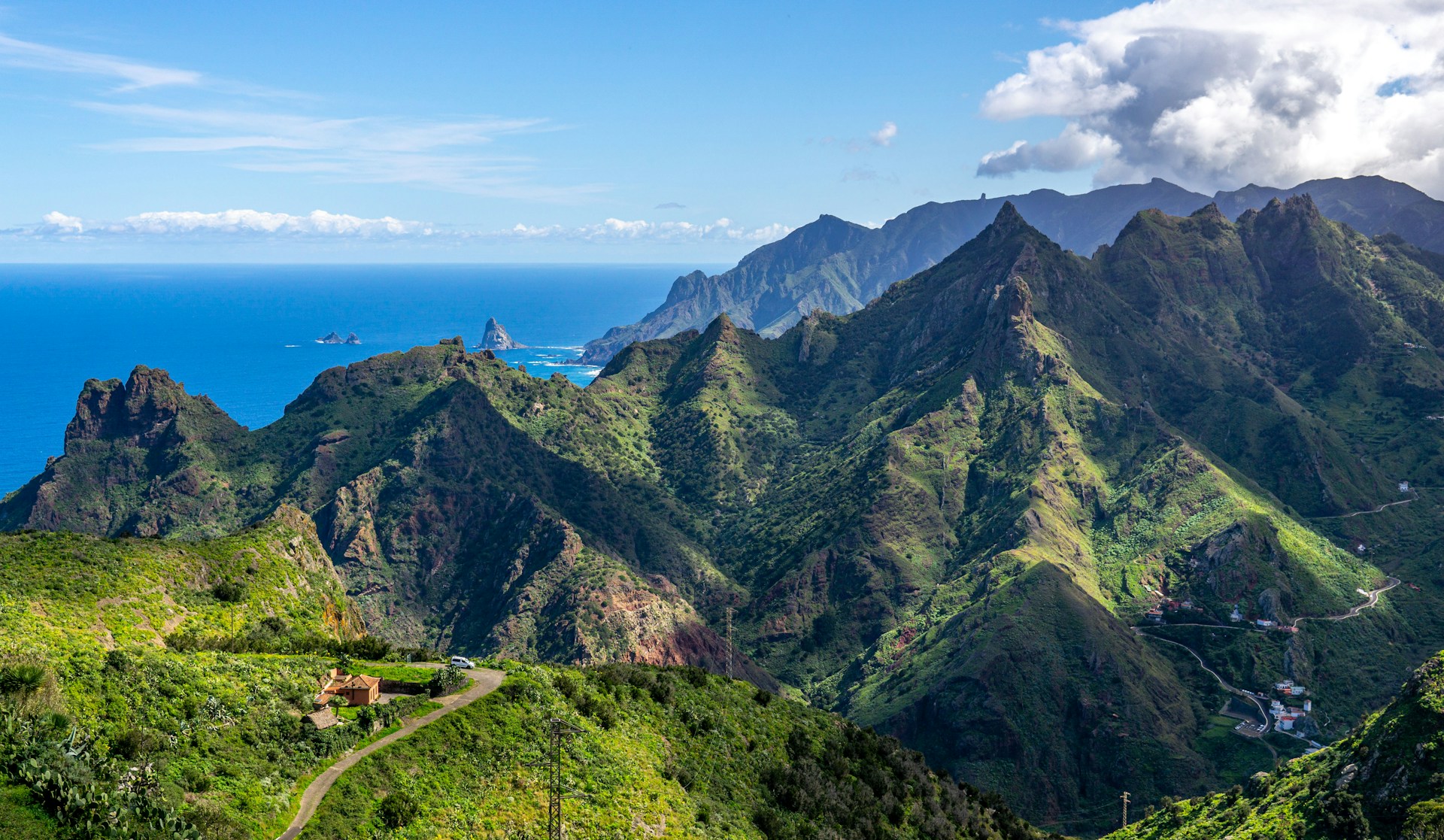
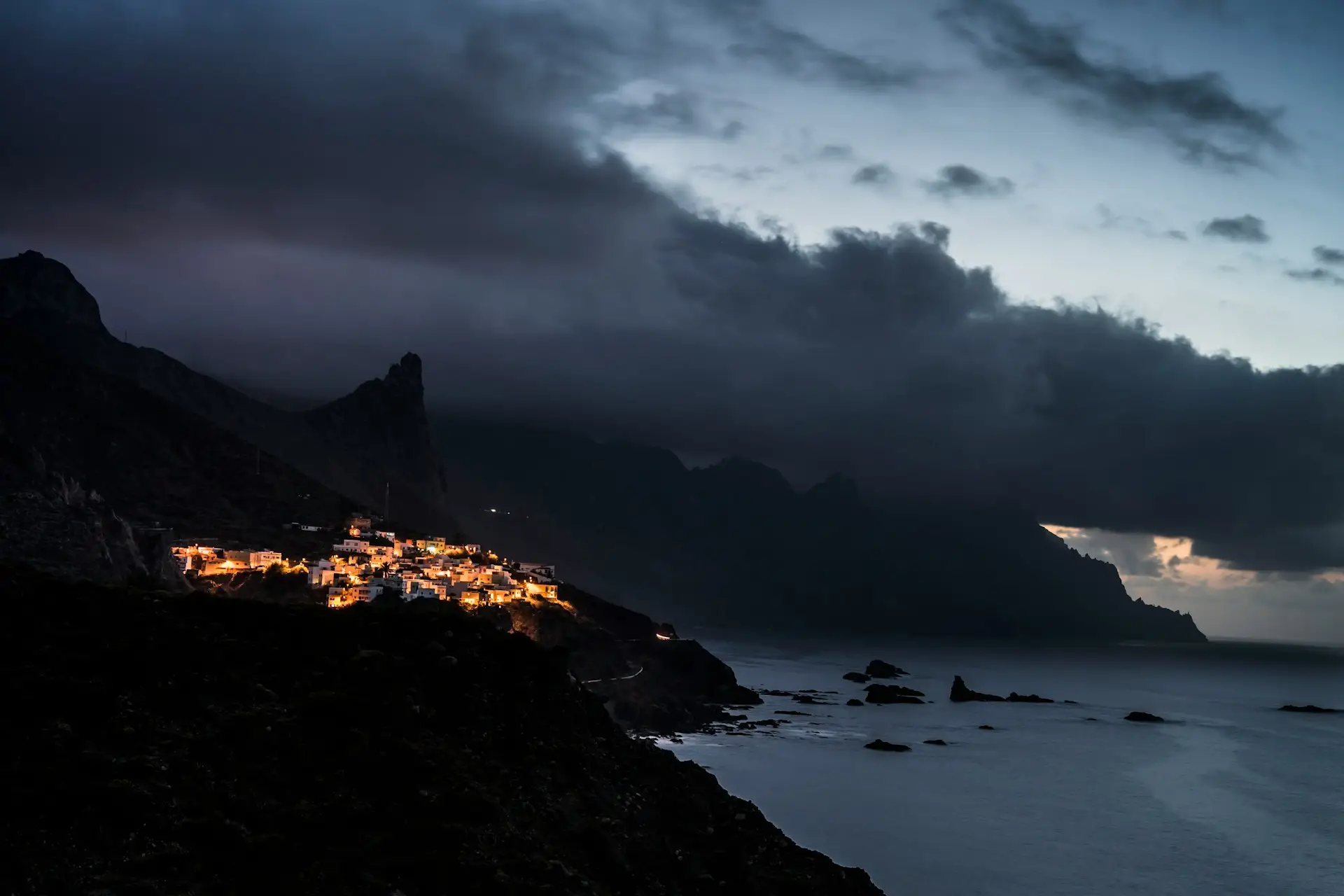
At 3,718m, Mount Teide is Spain's highest peak and the third-largest volcano on earth, creating a landscape of otherworldly drama that alone justifies a place on any serious travel itinerary. Tenerife is also Europe's most popular island destination overall, welcoming 17 million visitors a year to its south coast resorts, Siam Park and Loro Parque. Its north, Teresitas beach, UNESCO-listed La Laguna and the ancient forests of Anaga, is frequently missed by package tourists.
Key facts side by side
| Fact | 🏖️ Gran Canaria | 🌋 Tenerife |
|---|---|---|
| Size | 1,560 km² | 2,034 km², the largest Canary Island |
| Population | 850,000 | 950,000 |
| Main airport(s) | Gran Canaria (LPA) | Tenerife South (TFS) and Tenerife North (TFN) |
| Year-round temperature | 18–26°C | 18–26°C on the south coast |
| Signature sight | Maspalomas dunes | Mount Teide, 3,718m |
| Highest point | Pico de las Nieves, 1,949m | Mount Teide, 3,718m, Spain's highest |
| Best water park | Aqualand Maspalomas | Siam Park, rated Europe's best |
| LGBTQ+ scene | Europe's best, the Yumbo Centre | Good resort nightlife, less distinctive |
| Annual visitors | ~14 million | ~17 million |
| Currency | Euro, Spain / EU | Euro, Spain / EU |
Both islands are part of Spain and the EU, so visa, currency and entry rules are identical.
Round 1 of 11
Which has better beaches, Gran Canaria or Tenerife?
Gran Canaria wins, decisively
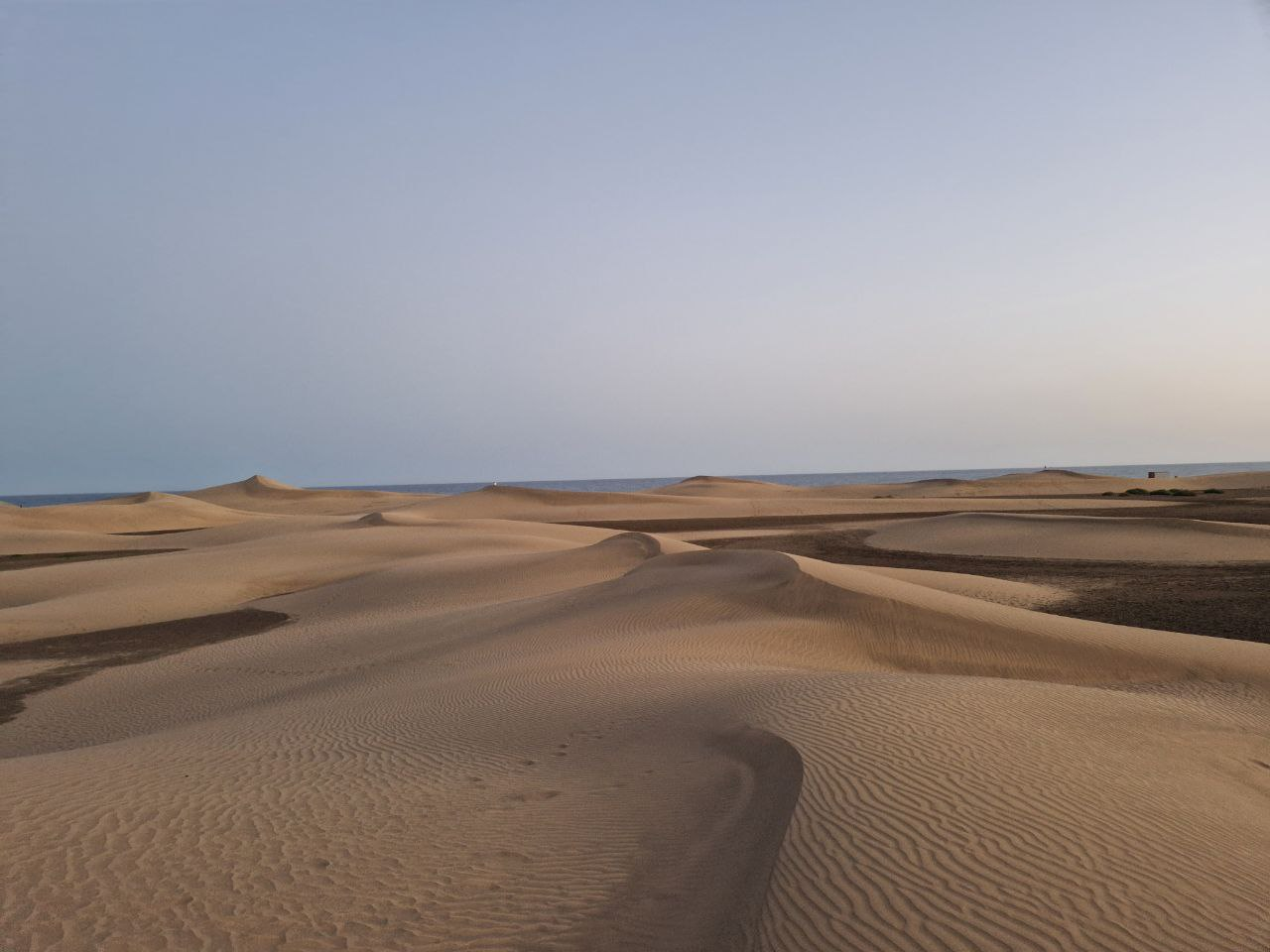
Gran Canaria, and it isn't close. The Maspalomas dune system is the finest beach landscape in Spain. Tenerife's beaches are perfectly good for a resort holiday, but the sand is often imported over natural volcanic black.
 🏖️ Gran Canaria
Maspalomas: the finest beach landscape in Spain
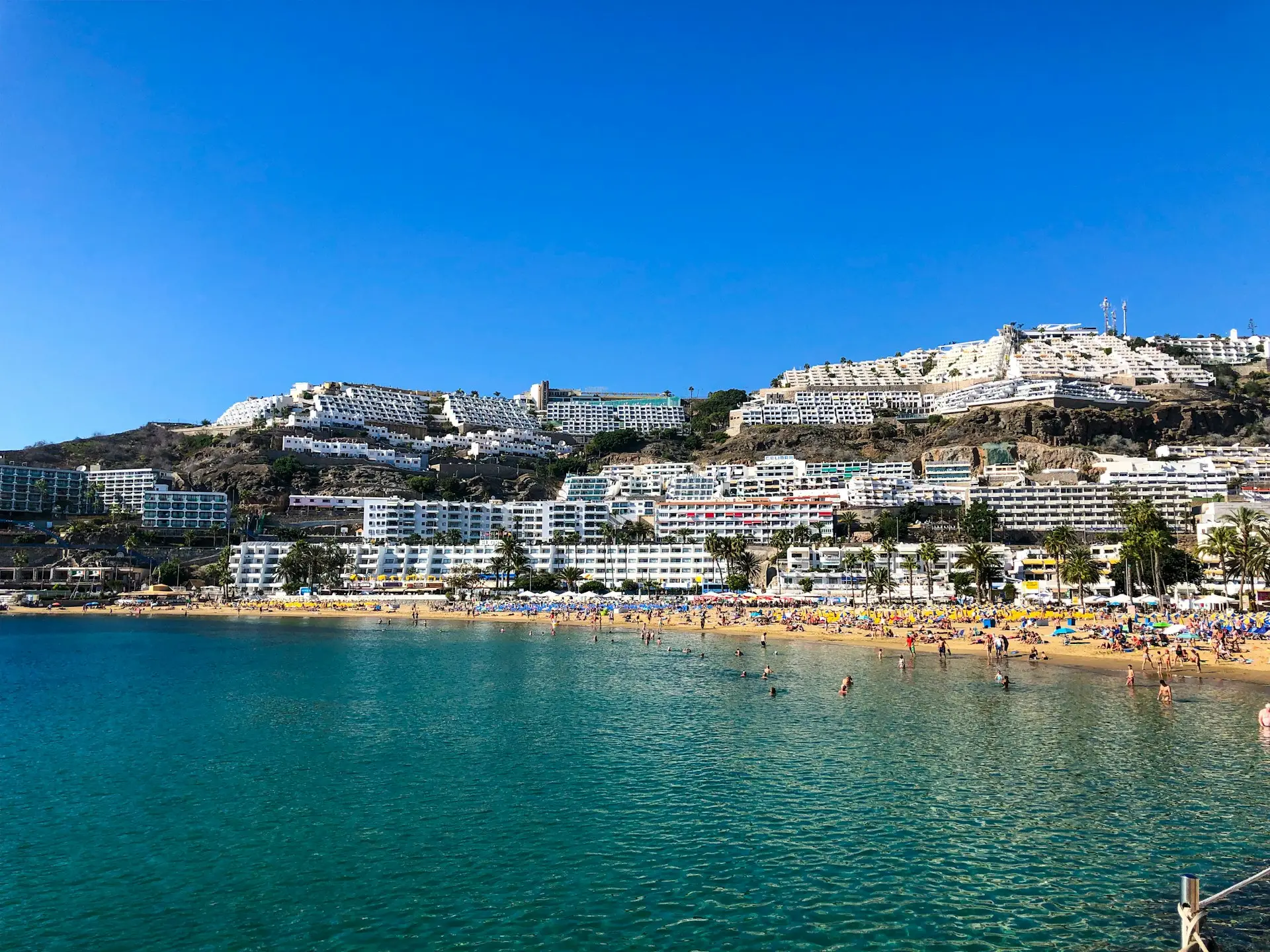
The Maspalomas dune system is simply spectacular, several kilometres of fine golden Saharan sand, blown across from the African coast 150km away, forming sweeping dunes that meet the Atlantic. The adjacent Playa del Inglés stretches north with more organised beach infrastructure, while Puerto Rico and Amadores in the west offer sheltered, calm bays for excellent swimming. Gran Canaria's south coast beaches are predominantly golden sand, not the volcanic black that surprises visitors to parts of Tenerife.
- Best for scenery
- Maspalomas dunes, Playa del Inglés
- Best for swimming
- Amadores, Puerto Rico
 🌋 Tenerife
Good resort beaches, not the headline act
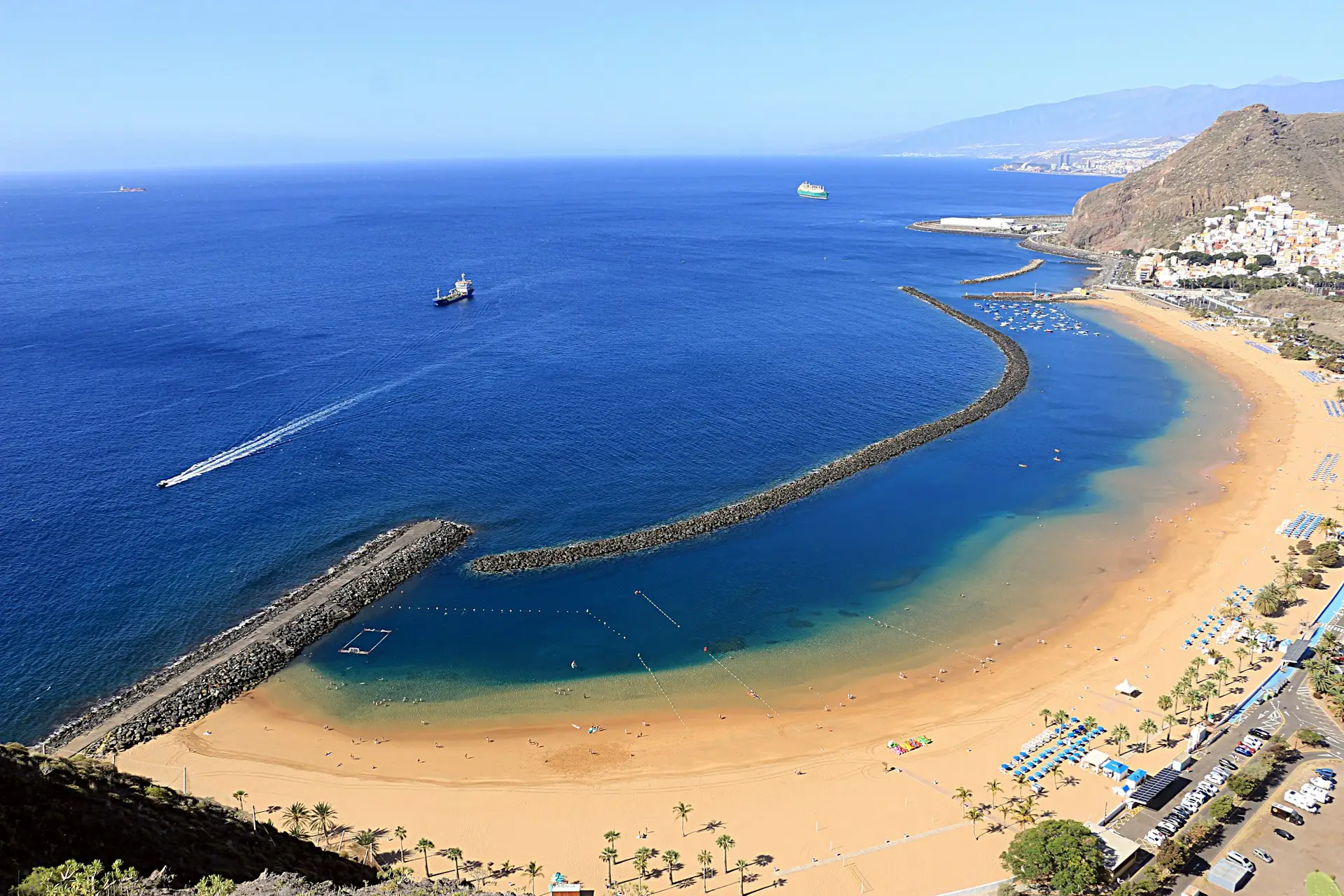
The south resort beaches, Playa de las Américas, Los Cristianos, Playa del Duque, are wide and well-serviced, but the sand is often imported golden sand laid over the island's natural volcanic black. Playa de las Teresitas near Santa Cruz is a genuinely beautiful golden beach, its sand imported from the Sahara in the 1970s, but it's better for scenery than serious swimming. El Médano is excellent for windsurfers rather than sunbathers.
- Best for scenery
- Playa de las Teresitas
- Best for resorts
- Playa de las Américas, Costa Adeje
Round 2 of 11
Which is cheaper, Gran Canaria or Tenerife?
A genuine tie
Close to a tie. Both islands share the same currency, cost of living and tourism pricing as the rest of Spain, so typical costs run very close together.
| Typical cost | 🏖️ Gran Canaria | 🌋 Tenerife |
|---|---|---|
| Budget apartment, per night | €45–75 | €50–85 |
| Mid-range resort hotel | €100–180 | €110–200 |
| Local menú del día | €10–15 | €10–16 |
| Mid-range restaurant | €20–35 | €22–38 |
| Car hire, per day | €25–40 | €25–45 |
| Water park entry | €26 (Aqualand Maspalomas) | €45 (Siam Park) |
| Inter-island flight or ferry | €30–70 one way, either direction | |
Typical 2026 prices in euros, excluding international flights. Rates move with the season.
Where the gap opens: Tenerife's polished Costa Adeje resorts and Siam Park's entry price run a little higher than Gran Canaria's equivalents, while Playa del Inglés has a wider spread of budget apartments. Neither island should be the deciding factor on cost alone.
Round 3 of 11
Culture and capital cities
Gran Canaria wins, narrowly
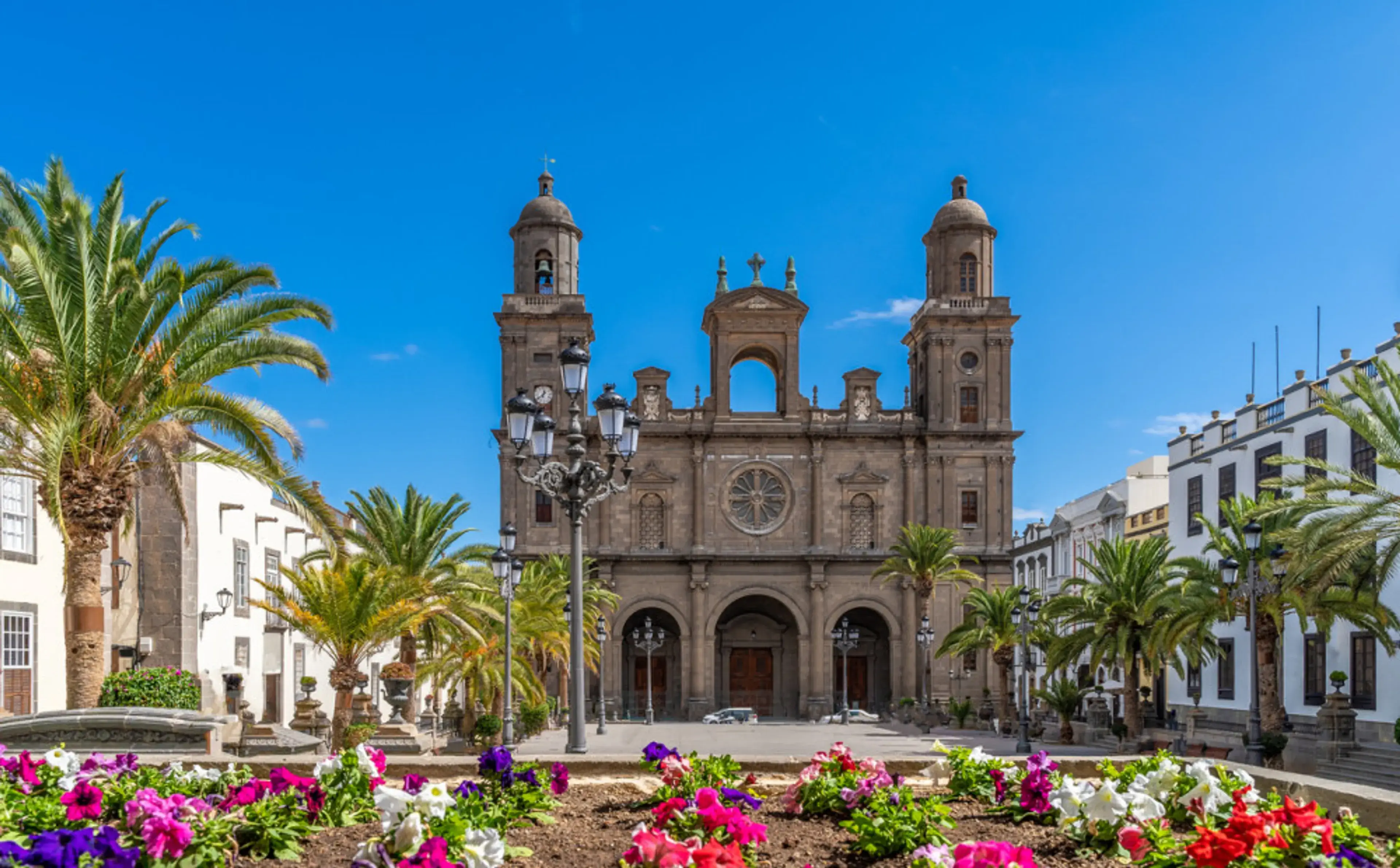
Beyond the resort zones sit the real island cities most tourists miss. Las Palmas has the scale and the urban beach; La Laguna has the deeper heritage, but is further from the resorts.
 🏖️ Gran Canaria
Las Palmas: a real city with beaches and Columbus
Las Palmas de Gran Canaria is one of Spain's most underrated cities: a genuine metropolis of 380,000 people with a beautiful historic quarter (Vegueta), excellent museums including the Casa de Colón, where Columbus stopped on his first voyage to the Americas, and Playa de las Canteras, a 3km urban beach consistently ranked among Europe's best. It has real character, surf culture, university energy, and a year-round local life independent of the tourist season.
- Don't miss
- Vegueta old town, Playa de las Canteras
 🌋 Tenerife
La Laguna: UNESCO heritage, less connected to the south
Tenerife's administrative capital Santa Cruz is workmanlike, with a good carnival, second only to Rio in scale, but it's the nearby historic city of La Laguna, a UNESCO World Heritage Site, that deserves attention. It was the first Spanish colonial city laid out on a grid plan, a template later used across the Americas, and retains extraordinarily well-preserved 16th and 17th-century architecture. It's genuinely beautiful, but further from the south resorts than Las Palmas is from Maspalomas.
- Don't miss
- La Laguna's old town, Santa Cruz carnival
Round 4 of 11
Nature and landscapes
Tenerife wins, clearly
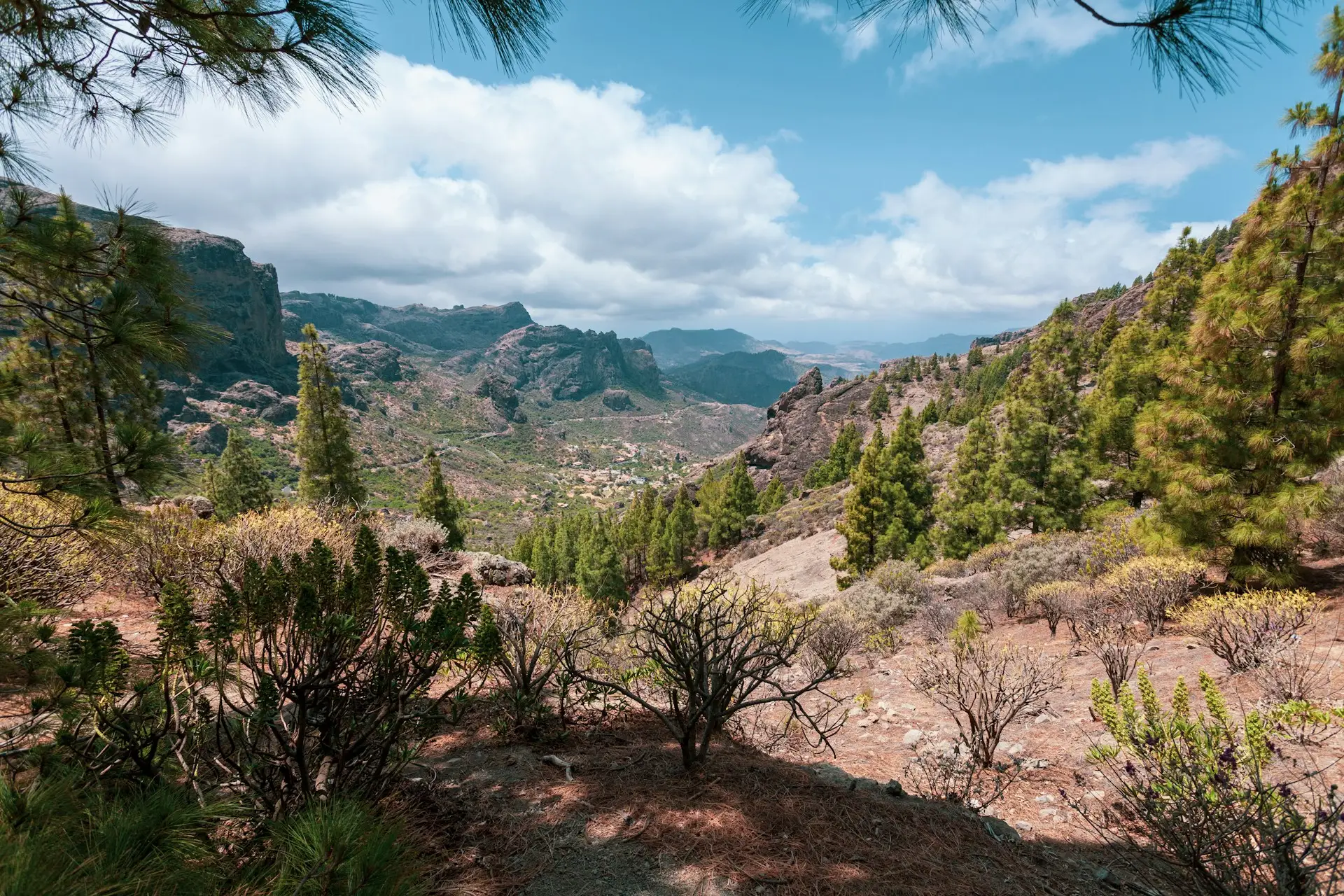
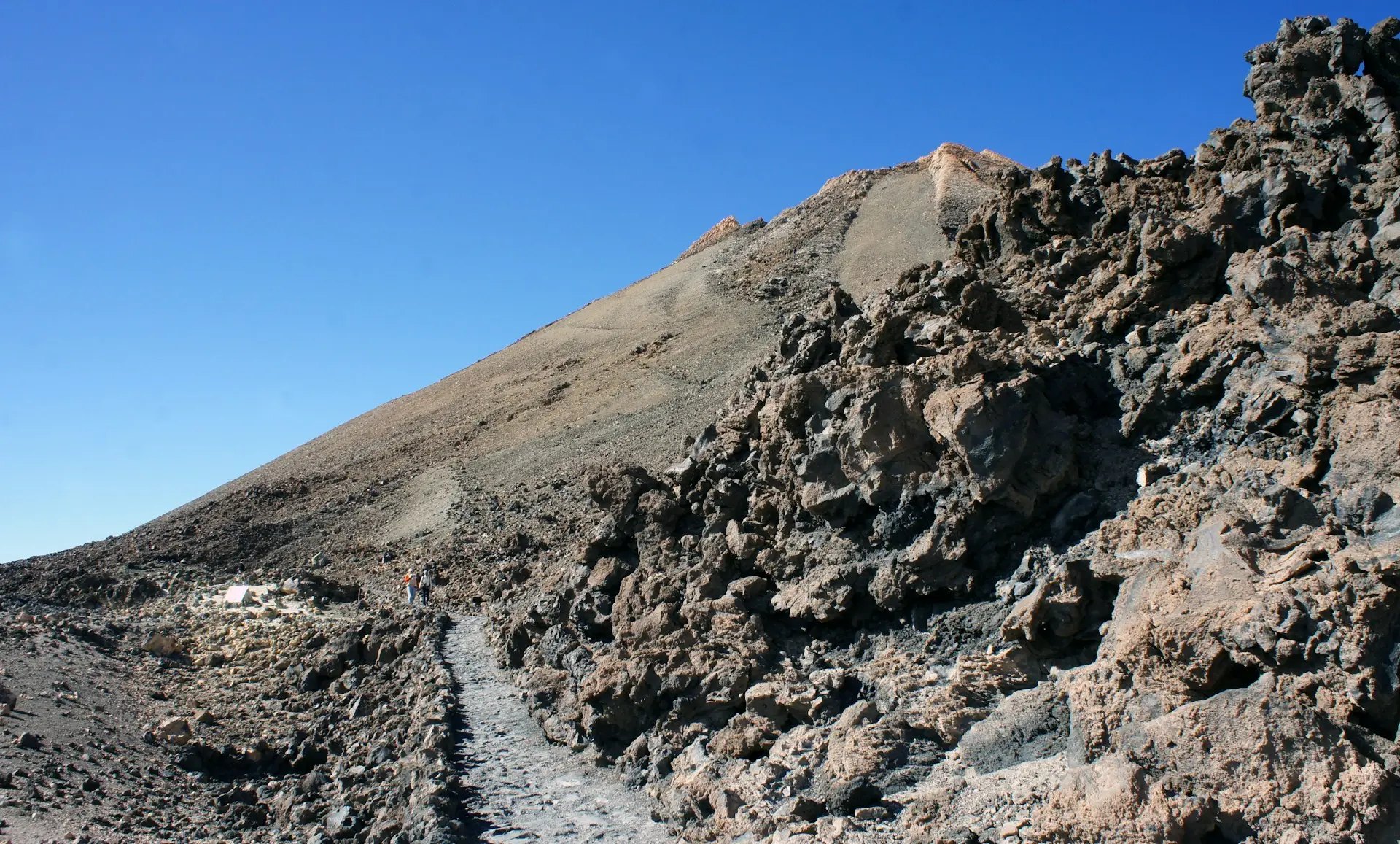
Both islands have dramatic interiors, but Tenerife has a volcano that changes everything. Gran Canaria's landscape is varied and excellent; it just doesn't have anything on Teide's scale.
 🏖️ Gran Canaria
Roque Nublo and a miniature continent
Gran Canaria's interior is genuinely stunning and largely undiscovered by the beach tourists in the south. Under an hour from Maspalomas, the central highlands hold ancient pine forests, dramatic gorges, almond blossom valleys in February, and the iconic Roque Nublo, a 65-metre basalt monolith at 1,813m with views across to Teide on a clear day. The Barranco de Guayadeque ravine is lined with cave houses still inhabited today.
- Don't miss
- Roque Nublo, Barranco de Guayadeque
 🌋 Tenerife
Teide National Park: one of the world's great natural wonders
Mount Teide is extraordinary: Spain's highest peak, a UNESCO World Heritage Site, and the third-largest volcano on earth by volume. Standing at 2,200m surrounded by lava formations, pumice fields and obsidian flows while the summit cone rises another 1,500m above you is one of Europe's most powerful natural experiences. The cable car to 3,555m is booked weeks in advance. The Anaga Rural Park's ancient laurel forest, on ocean-facing ridges in the northeast, is one of Europe's oldest ecosystems.
- Don't miss
- Teide cable car, Anaga Rural Park
Round 5 of 11
Things to do beyond beaches and volcanoes
Different strengths
Gran Canaria leads on surfing, golf and paragliding; Tenerife leads on windsurfing and whale watching. Both islands have good diving on volcanic reefs.
| Activity | 🏖️ Gran Canaria | 🌋 Tenerife |
|---|---|---|
| Surfing | Las Canteras, a well-known city surf beach | Some spots, less developed |
| Windsurfing & kitesurfing | Pozo Izquierdo, a world championship venue | El Médano, one of Europe's best |
| Golf | Several courses, including one of Spain's oldest clubs | A handful of resort courses |
| Paragliding | Reliable thermals over the central highlands | Limited sites |
| Whale & dolphin watching | Boat trips available | The Tenerife–La Gomera channel, resident pods |
| Diving | Good volcanic reefs | Good volcanic reefs, similarly rated |
Round 6 of 11
Which has better food, Gran Canaria or Tenerife?
A genuine draw
Call it even. Both islands share the same Canarian cuisine. Gran Canaria's edge is Las Palmas's cosmopolitan restaurant scene; Tenerife's is a rural wine-tavern culture Gran Canaria doesn't have.
 🏖️ Gran Canaria
Canarian classics and a cosmopolitan capital
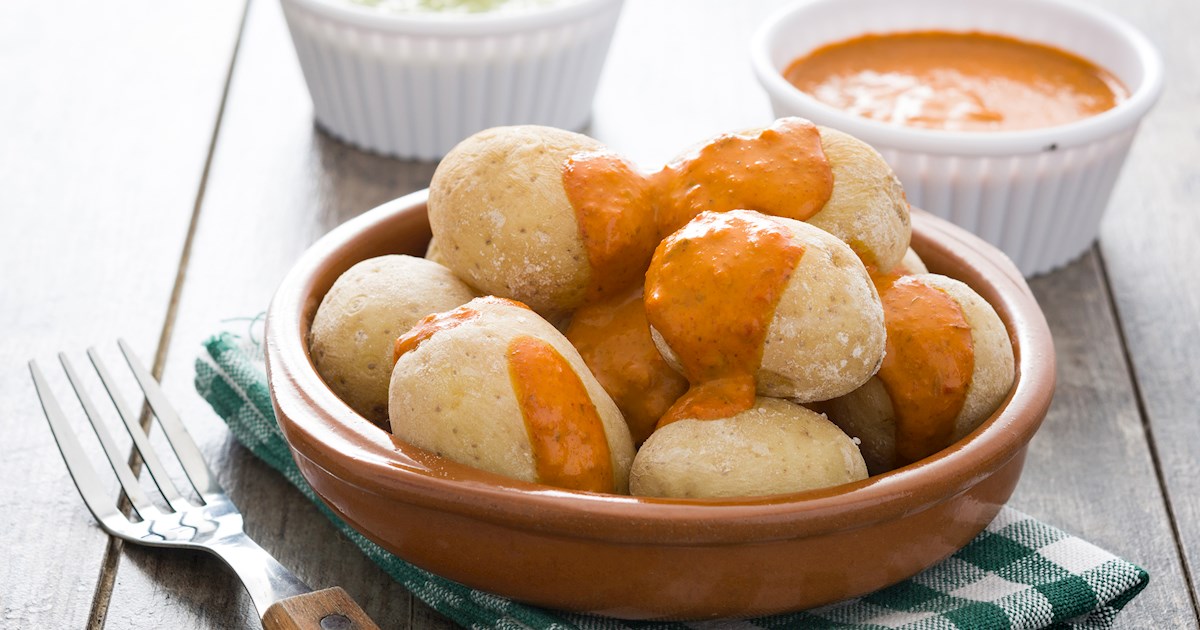
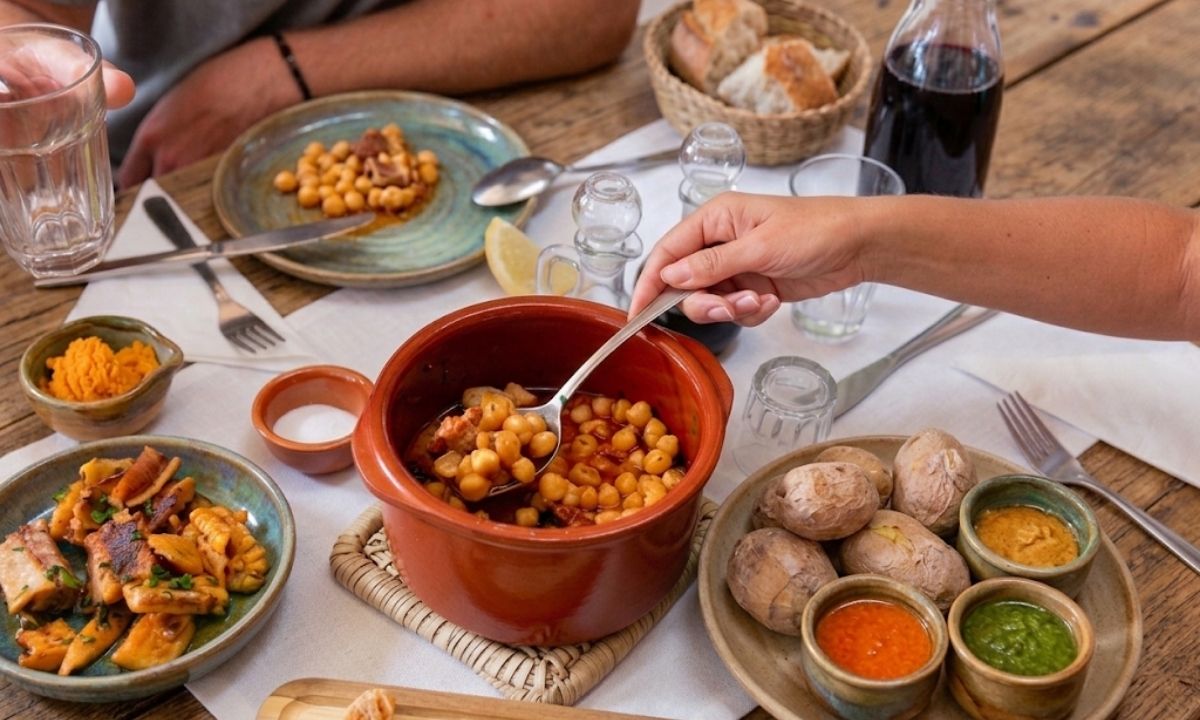
Papas arrugadas (wrinkled salt-boiled potatoes) with red and green mojo sauce, gofio (toasted grain meal), and fresh Atlantic fish are staples across the island. As the archipelago's largest city, Las Palmas has the biggest and most cosmopolitan restaurant scene in the Canaries, from traditional Canarian cooking to serious international dining, alongside a strong café and brunch culture.
- Must eat
- Papas arrugadas con mojo, fresh grilled fish
 🌋 Tenerife
Guachinches and the island's own wine
Tenerife shares the same Canarian staples, but its rural wine country north of Teide has a food culture Gran Canaria doesn't: guachinches, informal, often unsigned family-run taverns that pour their own harvest's wine alongside simple, honest home cooking. Tenerife's DO-certified wines have a genuine pedigree, referenced as "Canary sack" as far back as Shakespeare, and are worth seeking out beyond the resort restaurants.
- Must try
- A guachinche, local DO wine
Round 7 of 11
Nightlife
Gran Canaria wins, decisively
Both islands have strong resort nightlife, but Gran Canaria has something unique in Europe.
 🏖️ Gran Canaria
The Yumbo Centre: Europe's most celebrated LGBTQ+ nightlife
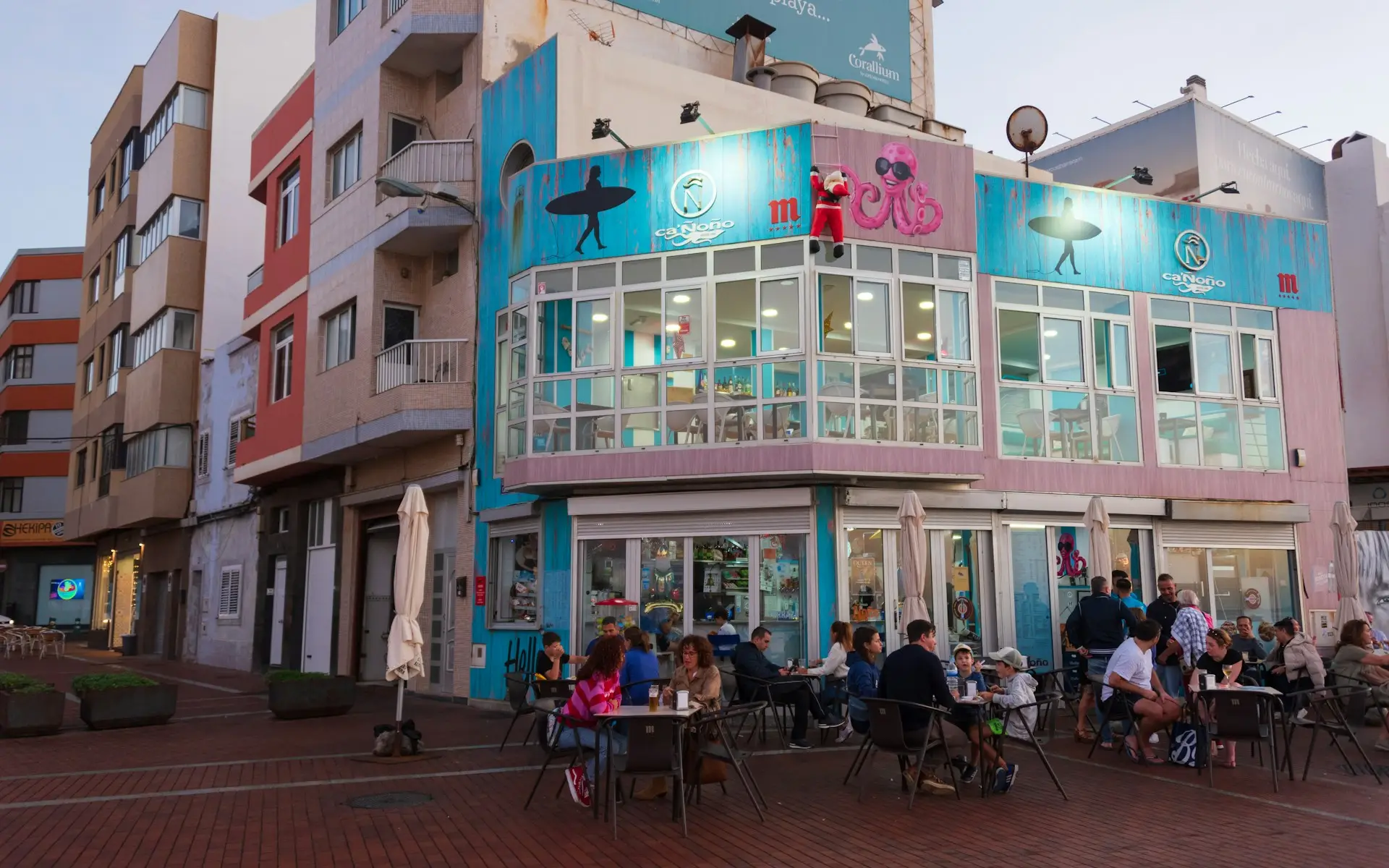
Playa del Inglés is home to the Yumbo Centre, an open-air shopping centre that transforms after dark into Europe's most famous LGBTQ+ nightlife destination, drawing visitors from across the continent for its dozens of bars, clubs and drag shows, running nightly until well past dawn. Winter Pride (January) and Maspalomas Pride (May) each attract tens of thousands and are among Europe's biggest LGBTQ+ events. Las Palmas' Triana district has a separate, authentic local nightlife scene.
- Go-to areas
- Yumbo Centre, Las Palmas' Triana
 🌋 Tenerife
The Veronicas strip: lively and accessible
Tenerife's nightlife centres on the Veronicas strip in Playa de las Américas, a long stretch of open bars, clubs and live music venues drawing a predominantly British and northern European crowd, lively and unpretentious in the resort tradition. Costa Adeje has upscale cocktail bars and beach clubs, and Santa Cruz has genuine local nightlife on weekends. Neither the scale nor the cultural distinctiveness of Gran Canaria's Yumbo is matched here.
- Go-to areas
- Veronicas strip, Costa Adeje
Round 8 of 11
When to go: the best time for Gran Canaria and Tenerife
A genuine tie
Both islands earn the "eternal spring" nickname. Gran Canaria's south is marginally drier in winter than Tenerife's south, but the more meaningful divide on both islands is north versus south, not between them.
The real divide is north vs south, not island vs island. Tenerife's north (Puerto de la Cruz, La Laguna) and Gran Canaria's northern coast are both noticeably cloudier and greener than their south coasts. If guaranteed winter sun is the goal, stick to the south of either island; the difference between them is too small to be the deciding factor.
Round 9 of 11
Getting there and getting around
Gran Canaria wins, narrowly
Gran Canaria is simpler to cover in a week. It's smaller, with one main airport near the resorts, while Tenerife's extra size and two airports mean more driving to see everything.
Compact enough to cross in under two hours
One main airport sits close to the south coast resorts, and the whole island is compact enough to drive from Maspalomas to Las Palmas or the central highlands and back in a day. Bus (guagua) services are decent for a car-free holiday, though a rental car opens up far more of the interior.
Bigger, with two airports and a tram
Tenerife South serves the resort coast and Tenerife North serves Santa Cruz and La Laguna; check which one your flight uses before booking a transfer. The island is the largest in the archipelago, so driving between the south resorts, Teide and the northern towns takes longer. Santa Cruz and La Laguna share the archipelago's only tram line, a genuine convenience if you're based in that corner.
Moving between the two: Binter Canarias and CanaryFly fly the route in about 40 minutes for €30–70; Fred Olsen and Naviera Armas ferries take around two hours.
Round 10 of 11
Is Gran Canaria or Tenerife safer for tourists?
A draw
Both are very safe, sharing Spain's low rates of violent crime against tourists. The practical risks are near-identical on both islands.
🏖️ Gran Canaria: what to watch
- Sun and heat: the dunes and south coast offer little shade; strong sunscreen and water are essential.
- Calima events: Saharan dust storms occasionally reduce air quality and visibility for a day or two.
- Mountain roads in the central highlands are winding and can be foggy; take them slowly.
- Emergency number: 112 works nationwide, as anywhere in the EU.
🌋 Tenerife: what to watch
- Altitude and weather at Teide: conditions change fast above 2,000m; dress in layers and check forecasts before hiking.
- Rip currents at windier, Atlantic-facing beaches like El Médano; swim at flagged, patrolled beaches.
- Winding mountain roads in the north and around Anaga, especially in low cloud.
- Emergency number: also 112.
In both cases the sensible precautions are the same as anywhere in Spain: watch belongings in crowded tourist areas, drive defensively on mountain roads, and respect flags and warning signs at the beach.
Round 11 of 11
Family holidays
Tenerife wins, narrowly
Both islands are excellent for families. Tenerife edges ahead on purpose-built attractions; Gran Canaria is just as good for very young children.
 🏖️ Gran Canaria
Safe beaches, Aqualand and a camel safari
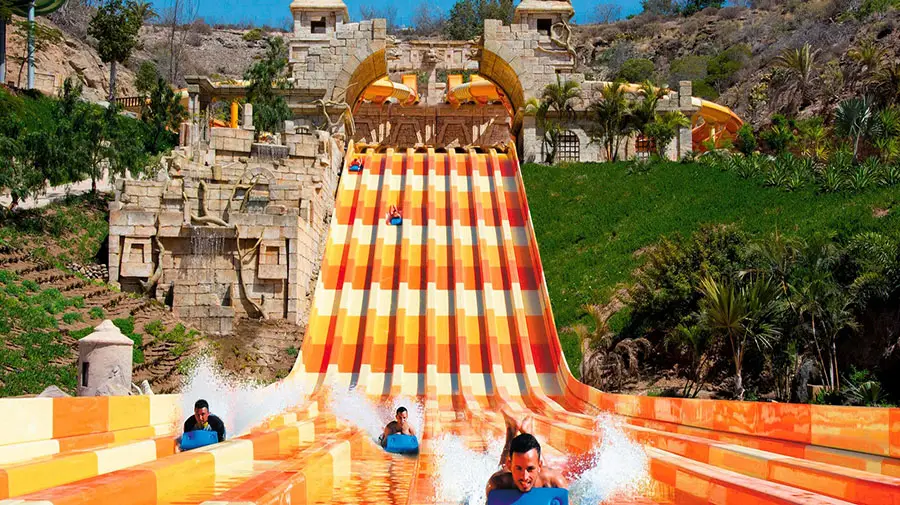
The Maspalomas beaches are wide, safe and shallow enough for young children, and the climate is reliably warm year-round. Aqualand Maspalomas is a well-equipped water park, Palmitos Park's botanical and bird gardens are educational and well-kept, and a camel safari through the dunes is genuinely magical for children. The island is compact enough to mix a beach morning with a pine-forest walk in the afternoon.
- Don't miss
- Maspalomas beach, a dune camel safari
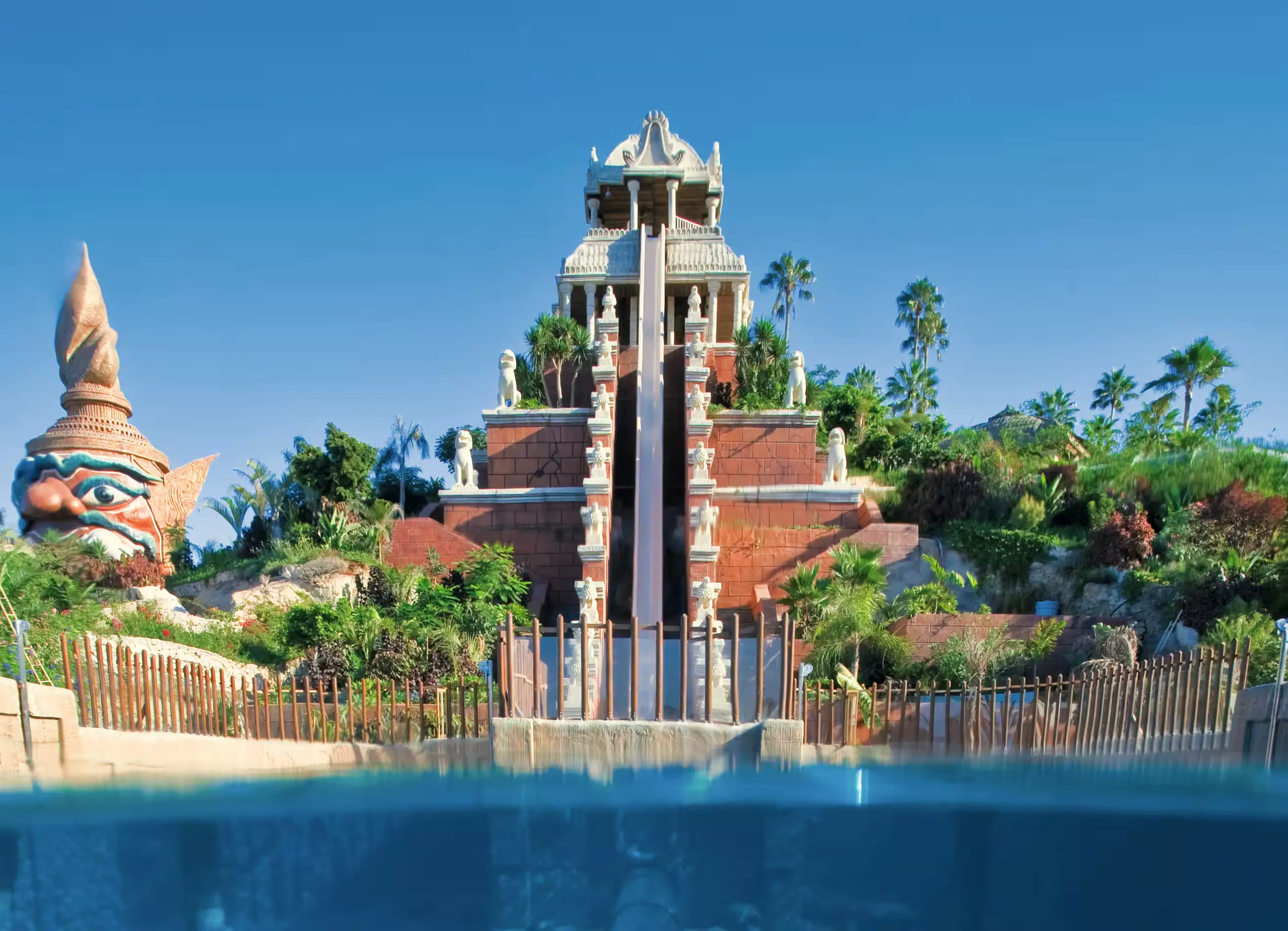 🌋 Tenerife
Siam Park and Loro Parque, the best in the Canaries
Siam Park has been rated Europe's best water park for multiple consecutive years, the Tower of Power freefall slide is one of the world's great water slides, and the wave pool is genuinely ocean-scale. Loro Parque in Puerto de la Cruz is one of Europe's finest zoological parks, with large enclosures for gorillas, chimpanzees, tigers and penguins. The Teide cable car is also a thrill for older children and teenagers.
- Don't miss
- Siam Park, Loro Parque
Which is better for couples, solo travellers and specific trips?
Gran Canaria for LGBTQ+ travellers, digital nomads and golfers. Tenerife for wine lovers, hikers and first-timers wanting the biggest variety on one island.
Couples & honeymoons
Either
Gran Canaria has Las Palmas and the quiet coves of Amadores; Tenerife has rural fincas near Teide and the Anaga coast. Both deliver.
LGBTQ+ travellers
Gran Canaria
The Yumbo Centre and two major Pride events make it Europe's most celebrated LGBTQ+ resort destination.
Digital nomads & remote workers
Gran Canaria
Las Palmas has built a genuine reputation as a European remote-work hub: warm climate, direct flights and good connectivity year-round.
Wine lovers
Tenerife
A rural guachinche and DO wine culture that Gran Canaria simply doesn't have.
Golfers
Gran Canaria
Several courses including one of Spain's oldest clubs, with a wider spread of options than Tenerife.
Windsurfers & kitesurfers
Tenerife
El Médano is one of Europe's best windsurfing spots, though Gran Canaria's Pozo Izquierdo hosts world championships too.
Hikers & volcano trekkers
Tenerife
Teide National Park and the Anaga laurel forests are in a different league from anything on Gran Canaria.
First-time Canary Islands visitors
Tenerife
The largest island packs beaches, a volcano, forests and family attractions into one trip, with the most flight options.
Can you combine Gran Canaria and Tenerife in one trip?
Yes, and it's easy. A 40-minute flight or a two-hour ferry connects the two islands, so a 10–14 day trip covering both is entirely realistic.
Gran Canaria: days 1 to 5
- Days 1–2
Maspalomas. Settle in, walk the dunes at sunset, and take a camel safari or a dune buggy tour.
- Day 3
Las Palmas. A day trip north to Vegueta's old town, the Casa de Colón, and Playa de las Canteras for a late lunch by the sea.
- Day 4
The central highlands. Roque Nublo, pine forests and the Barranco de Guayadeque's cave houses.
- Day 5
Beach and Yumbo. A last beach day in Maspalomas or Puerto Rico, then fly to Tenerife.
Tenerife: days 6 to 10
- Day 6
Arrive and Costa Adeje. Land, settle in, and ease in with the south coast's beaches and restaurants.
- Day 7
Teide National Park. The cable car (book weeks ahead) and a walk among the lava fields.
- Day 8
Siam Park or Loro Parque. A full day at one of Tenerife's two headline family attractions.
- Days 9–10
The north. La Laguna's old town, Playa de las Teresitas, and the Anaga forest, before flying home.
When to go: both islands work any month thanks to the "eternal spring" climate, but book Teide's cable car and Siam Park well ahead regardless of season. Fly into one island and out of the other to avoid backtracking.
Verdict: Gran Canaria or Tenerife?
There's no single overall winner. It comes down to one question: do you prioritise beaches and nightlife, or nature and family attractions?
Choose Gran Canaria if…
Gran Canaria, for beaches and nightlife
The right choice when the Maspalomas dunes are on your bucket list, you want the best LGBTQ+ resort scene in Europe, or you want to pair a beach holiday with a genuine Spanish city break.
- Maspalomas dunes and beach quality are the priority
- LGBTQ+ travel, Gran Canaria is Europe's best
- A city break alongside the beach, Las Palmas delivers
- Nightlife and clubbing matter, the Yumbo scene is unmatched
- Hiking the varied central highlands appeals
- You prefer a smaller, more intimate island
Choose Tenerife if…
Tenerife, for nature and families
The right choice when Teide National Park is the goal, you're travelling with children who need purpose-built attractions, or you want the most dramatic volcanic landscapes in Europe.
- Mount Teide and volcanic landscapes are a must-see
- A family trip, Siam Park is Europe's best water park
- Loro Parque is on the itinerary
- You want the largest, most varied Canary Island
- Hiking the Anaga forest or Teide summit is planned
- You want more international flight options
Weigh it for your own trip
Select everything that matters to you.
Pick what matters on this trip and the needle will move.
Gran Canaria vs Tenerife: frequently asked questions
Is Gran Canaria or Tenerife better for beaches?
Gran Canaria wins. The Maspalomas dune system, several kilometres of fine golden Saharan sand meeting the Atlantic, is the finest beach landscape in Spain. Gran Canaria's south coast beaches are predominantly natural golden sand. Tenerife's beaches are more varied: good resort beaches in the south, but often imported sand over natural volcanic black, which surprises some visitors. For pure sandy beach quality, Gran Canaria is the better choice.
Is Gran Canaria or Tenerife cheaper?
They're close to a tie. Both islands share the same currency, cost of living and tourism pricing structure as the rest of Spain, and typical costs for hotels, food and car hire are broadly similar. Tenerife's polished Costa Adeje resorts can run slightly higher than equivalent Gran Canaria options, while Gran Canaria's Playa del Inglés has a wider spread of budget apartments. Neither island should be the deciding factor on cost alone.
Is Tenerife or Gran Canaria better for nature and hiking?
Tenerife wins clearly. Mount Teide (3,718m) and its national park are among the world's most dramatic volcanic landscapes, there is genuinely nothing comparable on Gran Canaria. The Anaga Rural Park in Tenerife's northeast offers ancient laurel forest on ocean-facing ridges that feel prehistoric. Gran Canaria has good hiking in the central highlands around Roque Nublo and is excellent for variety, but cannot match Teide's scale and drama.
Is Gran Canaria or Tenerife better for nightlife?
Gran Canaria wins, particularly for LGBTQ+ nightlife. The Yumbo Centre in Playa del Inglés is Europe's most celebrated LGBTQ+ nightlife destination, drawing visitors from across the continent, and the island hosts two of Europe's biggest Pride events. For mainstream resort nightlife, both islands are comparable, Gran Canaria's Playa del Inglés and Tenerife's Veronicas strip both deliver a lively resort bar and club scene.
Which has better food, Gran Canaria or Tenerife?
Call it a tie. Both islands share the same Canarian cuisine: papas arrugadas with mojo sauce, gofio, and fresh Atlantic fish. Gran Canaria's Las Palmas has a bigger, more cosmopolitan restaurant scene as the archipelago's largest city. Tenerife answers with guachinches, informal, often unsigned family-run wine taverns unique to its rural wine country, serving simple home cooking alongside the island's own DO-certified wines.
Which island has better weather year-round?
Both islands have outstanding year-round weather and broadly comparable temperatures (18–26°C). Gran Canaria's south coast is marginally drier in winter than Tenerife's south. Tenerife's north (Puerto de la Cruz, La Laguna) is noticeably cloudier and rainier than its south; the same north-south divide applies in Gran Canaria but is less extreme. Both islands' south coasts are reliable winter sun destinations, the difference is minor enough that it shouldn't drive the decision.
How do you get around Gran Canaria and Tenerife?
Gran Canaria is compact enough to drive across in under two hours, with one main airport near the south coast. Tenerife is larger and has two airports (Tenerife South near the resorts, Tenerife North near Santa Cruz), plus the archipelago's only tram line connecting Santa Cruz and La Laguna. Both islands are easy to explore by rental car; inter-island flights with Binter Canarias or CanaryFly take about 40 minutes, and ferries take around two hours.
Is Gran Canaria or Tenerife better for families?
Tenerife edges ahead for families with older children specifically because of Siam Park, rated Europe's best water park, and Loro Parque. For very young children who need safe, shallow beaches, Gran Canaria's Maspalomas is excellent, the dunes are magical for children and the beach is gentle. Both islands have all the resort infrastructure a family holiday requires.
Is Gran Canaria or Tenerife safer for tourists?
Both are very safe, sharing Spain's low rates of violent crime against tourists. The practical risks are the same on both islands: sun exposure and occasional Saharan dust (calima), rip currents at windier, Atlantic-facing beaches, and winding mountain roads that need extra care, especially in low cloud on Tenerife's north or Gran Canaria's highlands.
Which has the better capital, Las Palmas or Santa Cruz de Tenerife?
Las Palmas de Gran Canaria wins for most visitors: a genuine city of 380,000 with a beautiful historic quarter, excellent museums, and Playa de las Canteras, a 3km urban beach ranked among Europe's best. Tenerife's Santa Cruz is more workmanlike, but the nearby UNESCO-listed city of La Laguna, the first Spanish colonial city built on a grid plan, is genuinely beautiful and worth the detour.
What else is there to do beyond beaches and volcanoes?
Gran Canaria has strong surfing at Las Canteras, championship golf courses including one of Spain's oldest clubs, and reliable paragliding thermals. Tenerife has world-class windsurfing at El Médano and some of Europe's most reliable whale and dolphin watching in the channel between Tenerife and La Gomera. Diving is good on both islands' volcanic reefs.
Can you combine Gran Canaria and Tenerife in one trip?
Yes. Inter-island flights with Binter Canarias take around 40 minutes and cost €30–70 each way; ferries with Fred Olsen or Naviera Armas take about two hours. A combined 10–14 day trip works well: 5–6 nights on Gran Canaria for the Maspalomas dunes, Las Palmas and the central highlands, then fly to Tenerife for 4–5 nights for Teide National Park, Siam Park and Anaga. Fly into one island and out of the other to avoid backtracking.
There's no wrong answer here
Gran Canaria and Tenerife are compared so often because both are genuinely excellent, not because one is secretly bad. Pick on what you want from this trip: beaches, nightlife and a real capital city, or a volcano, forests and the best family attractions in the Canaries. Better still, a 40-minute flight means you don't really have to choose.