

Why Gran Canaria keeps pulling me back
I've been to Gran Canaria four times now. Not because it's the most spectacular place I've ever visited, but because it does something specific incredibly well: it lets you completely switch off. No stress, no planning pressure, no feeling like you're wasting a trip if you spend a whole afternoon doing nothing. The island is compact enough that you get your bearings fast, and relaxed enough that you don't feel guilty for not doing more.
All four of my trips were what I'd call decompression trips rather than main holidays. A week to reset. And Gran Canaria is almost perfectly designed for exactly that. The weather holds up year-round, the food is cheap by European standards, getting around is straightforward, and there's just enough to do that you never feel stuck. The south of the island is pure resort territory, the interior is dramatic mountain scenery most tourists never see, and the capital Las Palmas is a proper city with a real local life. Three very different islands in one.
Skip every restaurant on Paseo del Faro in Maspalomas. It's the strip closest to the dunes and it's built entirely for tourists who don't know better. Walk ten minutes inland and the menus change completely. The food gets better and the prices drop.
Where to stay
The south is where most tourists land and most tourists stay. Maspalomas and Playa del Inglés dominate the resort scene. Las Palmas in the north is a different experience entirely. Which one you pick shapes the whole trip.
Maspalomas (my base)
All four of my trips were based in Maspalomas, right next to the dunes. It's convenient, walkable, and well-stocked with supermarkets, restaurants, and rental car offices. We did an all-inclusive hotel the first time and won't do it again. You end up eating buffet food that leans heavily European and never actually discover what the island tastes like. The second trip we switched to an Airbnb and paid around €600 for three people for a week, which is roughly €200 per person. Night and day difference. We cooked some meals ourselves using the BBQ, went out for dinner almost every evening, and spent significantly less than the hotel cost.
If you want a hotel and prefer all-inclusive, Sunprime Atlantic View is a solid option in the area. But an Airbnb will serve you better for the money.
Las Palmas de Gran Canaria
The capital is worth considering if you want a more urban base. It has a proper old town (Vegueta), a long city beach, good restaurants that aren't designed around tourists, and a different energy from the south. It's about 45 minutes from Maspalomas by car. If you're doing the full island circuit, staying a night or two here makes sense.
The interior
Villages like Tejeda and Artenara sit up in the mountains and feel nothing like the coast. If you want total quiet and dramatic scenery, there are rural guesthouses up there. Not practical as a full-time base unless you have a car and don't need a beach, but worth a night if you're doing the island roadtrip.
Find accommodation: Search Gran Canaria on Booking.com →
The beaches
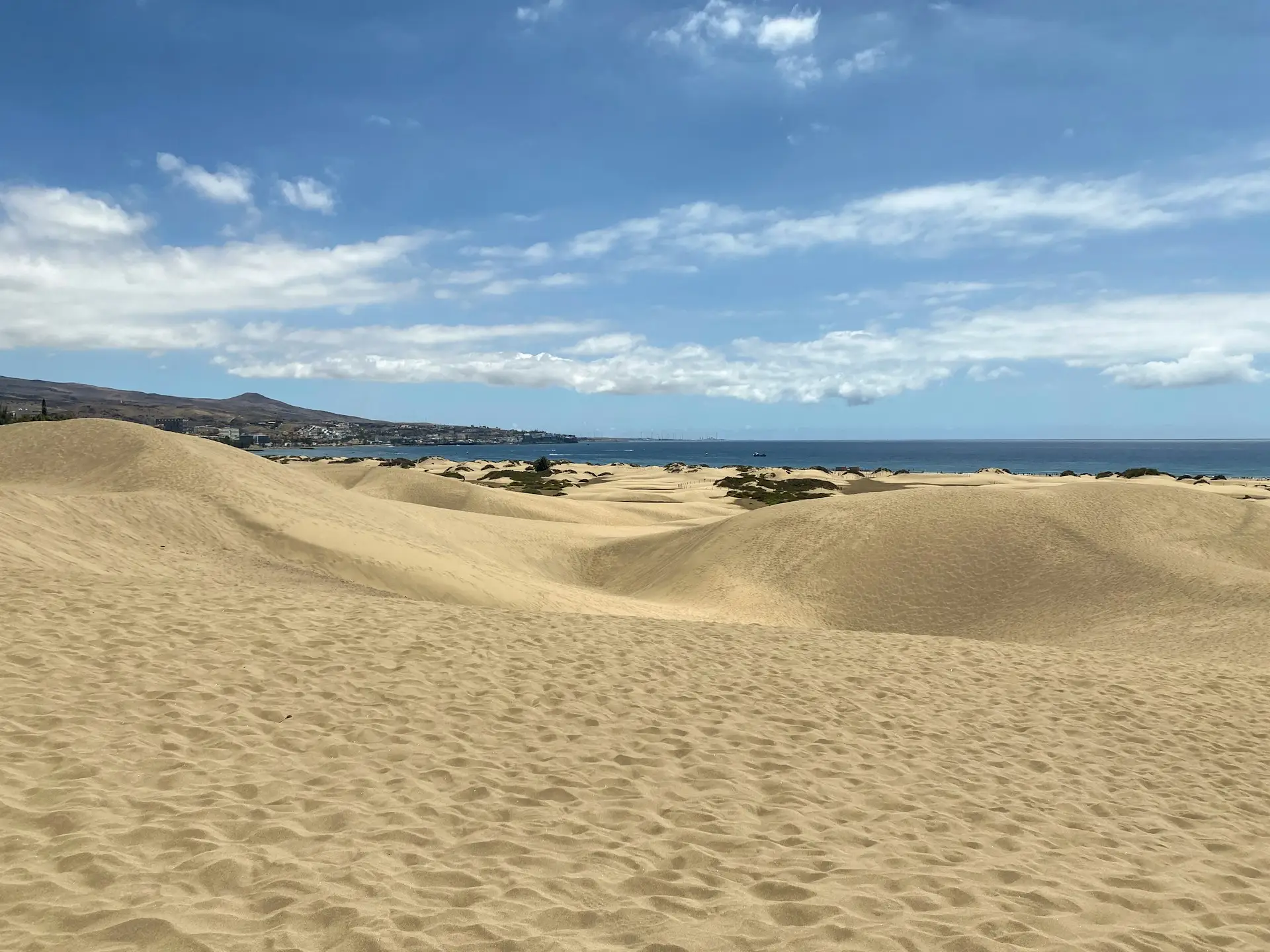
The dunes beach at Maspalomas is the obvious one and it earns its reputation. Long, wide, backed by actual sand dunes, and the water is calm enough to swim comfortably. It gets busy but it's big enough that you can always find space. The beach at Puerto Rico is smaller but cleaner, and after a shopping trip to Mogan Mall it makes for a perfect afternoon swim.
Food and where to eat
Gran Canaria is genuinely cheap for food compared to most of western Europe. Our group of three spent around €1,200 on food for a full week, about €400 each. That covered going out for dinner almost every night, lunches, breakfasts, and supermarket runs. You can eat well here without watching every euro.
The key is getting away from the obvious tourist strips. Paseo del Faro in Maspalomas is the street to avoid. It looks appealing because it's close to the dunes, but the food is mediocre and overpriced.
Where to actually go
Café del Mar Meloneras is the standout. It's right on the seafront in Meloneras, has excellent food, and puts on a live show in the evenings. It's popular so go a little early or book ahead. The combination of good food, sea views, and entertainment makes it worth the visit every time I've been.
For a shopping and beach day, Puerto Rico is the place. The Mogan Mall is a proper shopping centre with prices running around 25% cheaper than you'd pay back home in most northern European countries. Once you're done, the beach is right there.
Getting around
Rent a car. It's by far the most practical way to get around, and Gran Canaria is one of the cheapest places in Europe to do it. Budget around €50 for a week if you want the cheapest option, or €100 for something more comfortable. We hired a convertible for three of our trips because the weather demands it, but a cabrio starts around €200 to €300 so factor that in if it matters to you.
Fuel is cheap and a full tank lasts most of the week. We did the full island roadtrip and still only used one tank total. If you're not doing the roadtrip and mostly staying south, you'll use even less.
If you're not planning to do much driving or leave the resort area, you can skip the rental. The south is walkable for day-to-day life. But the moment you want to see the interior or reach the capital, you need wheels. Buses exist but they're slow and not worth the hassle for most tourist routes.
Compare car rental prices: GetRentacar.com →
What to do
The first two trips I did activities. The last two I just ate, relaxed, and shopped. Both approaches work fine, which tells you something about the island. Here's what's actually worth doing if you want to get out:
The island roadtrip
Do this at least once. A full circuit of the island takes you through the mountains, past volcanic landscapes, through whitewashed villages, and along stretches of coastline that look nothing like the resort south. We did it twice and both times it felt like a completely different island from the one we were sleeping in. Here's the route we used as a starting point.
Palmitos Park
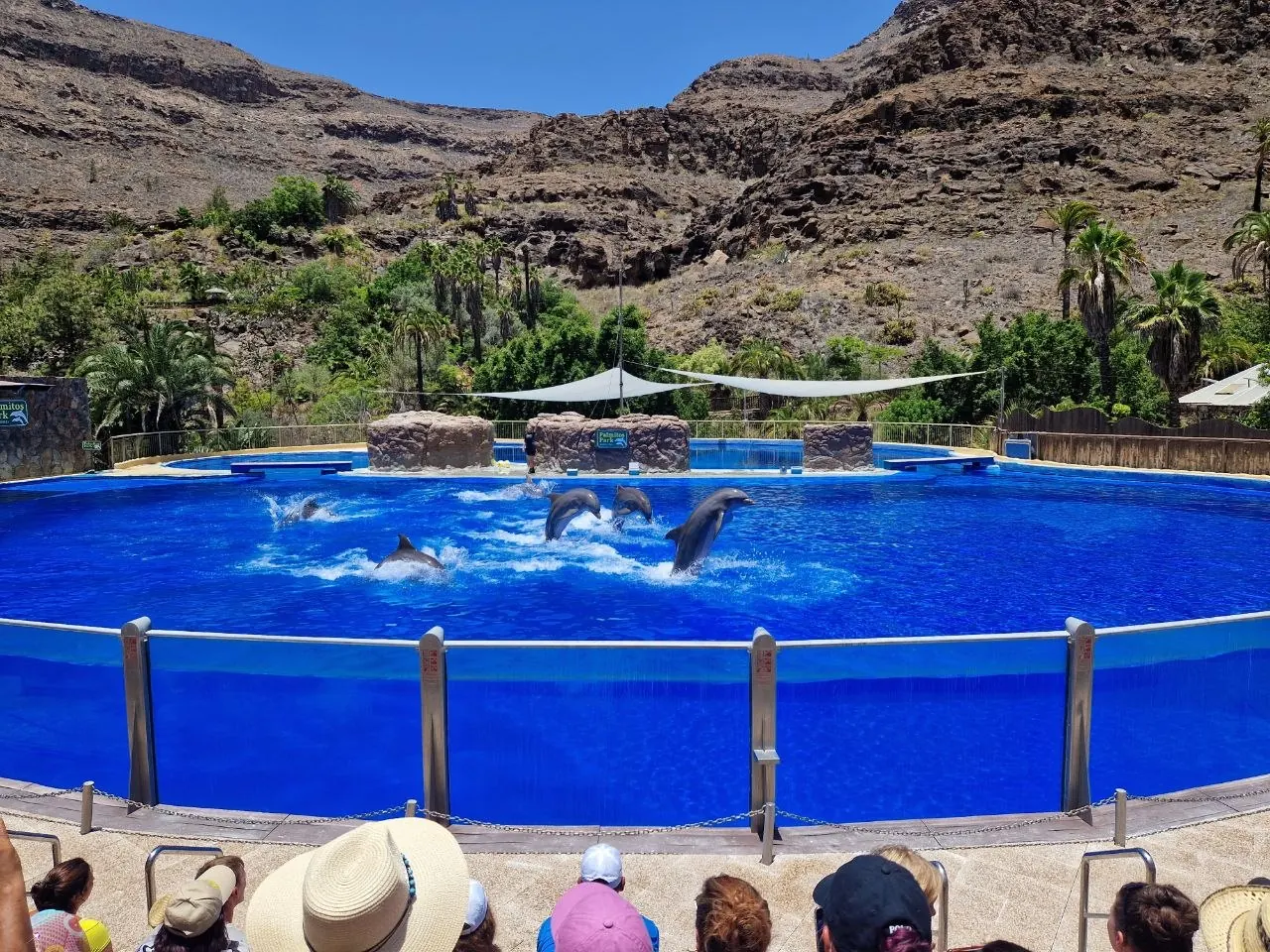
A zoo up in the hills that's smaller than you'd expect but genuinely beautiful to walk through. Half a day is the right amount of time. The dolphin show and bird show are both worth catching. Not a theme park experience, more of a proper wildlife park in a scenic setting.
Book Palmitos Park tickets on GetYourGuide →
Poema del Mar aquarium
Located in Las Palmas, this is one of the better aquariums I've visited. Sharks, jellyfish, an impressive deep-ocean tunnel, and well-designed exhibits throughout. Worth the trip to the capital on its own.
Book Poema del Mar skip-the-line tickets →
The dunes (free)
Walk into the Maspalomas dunes properly, not just along the edge from the beach. Go ten minutes inland and you're in a genuine desert landscape. It's free, it's strange, and it's one of those places that doesn't look like it belongs on a European island.
Mirador Astronómico de la Degollada de las Yeguas (free)
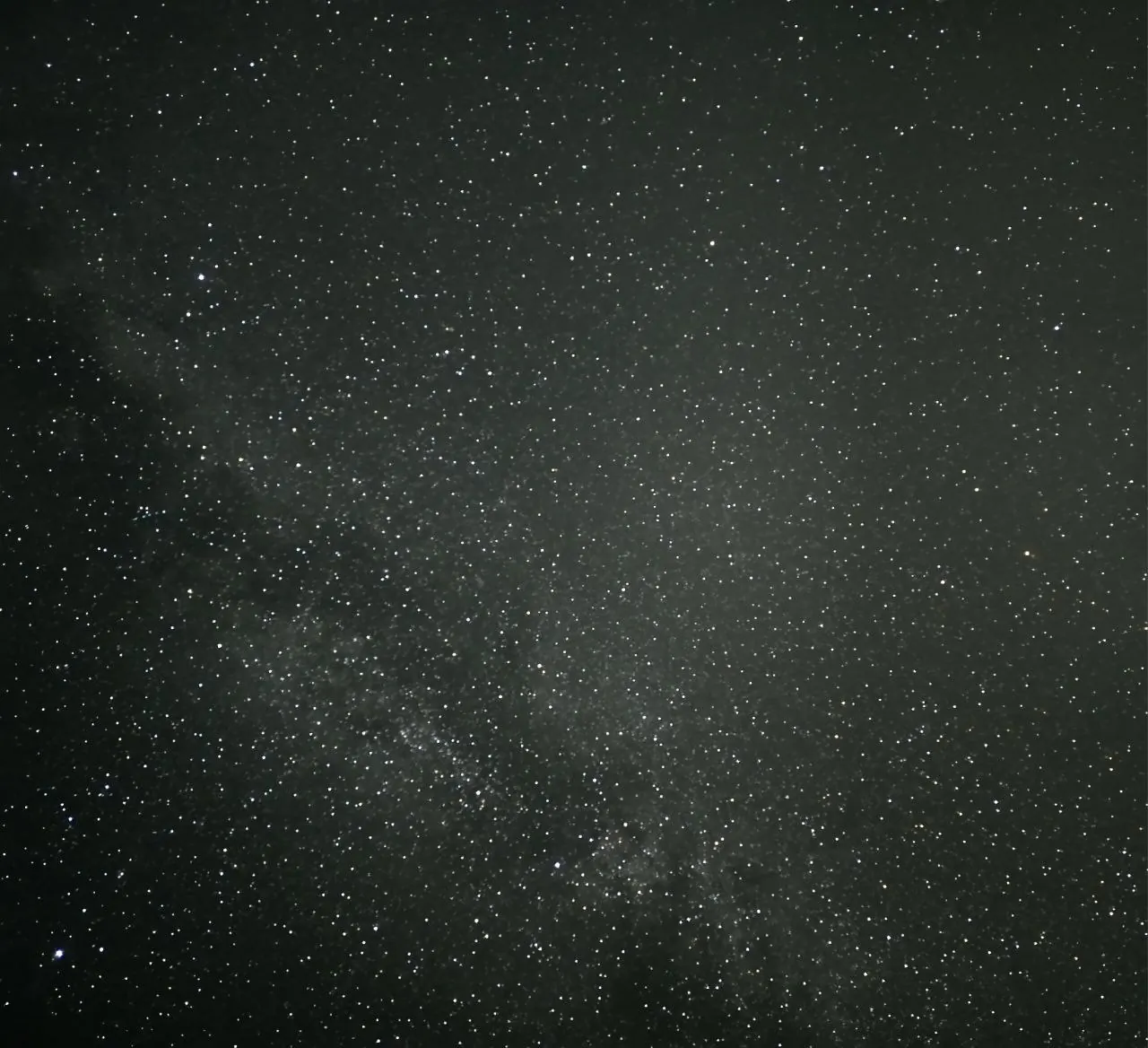
A stargazing viewpoint in the mountains. On a clear night you can see the arms of the Milky Way with the naked eye. Gran Canaria sits far enough from the mainland that light pollution drops sharply once you're in the interior. Go late, bring something warm, and stay long enough for your eyes to fully adjust.
Aqualand (with kids)
If you're travelling with children, Aqualand Maspalomas is the obvious choice for a full day out. It's a standard water park but a well-run one in a good location.
Book Aqualand tickets on GetYourGuide →
Practical info
Getting there
We flew from Belgium and paid around €200 per person return. Budget carriers like Ryanair and Vueling serve Las Palmas Airport (LPA) from most major European cities. Combined with a week's accommodation at roughly €200 per person, you're looking at a €400 total before food and activities. For a week in the sun that's genuinely hard to beat.
Search flights: Kiwi.com →
Money
Gran Canaria is noticeably cheaper than most of western Europe. Food, car rental, and day-to-day costs are all lower. Cards are accepted almost everywhere. Bring a Revolut or Wise card to avoid foreign transaction fees, which add up over a week even on small purchases.
Connectivity
Coverage is good across the island including most of the interior. As an EU destination, European SIMs work at no extra cost. If you're coming from outside the EU, an Airalo eSIM for Spain is the easiest option.
eSIM Spain: Airalo →
The verdict
Gran Canaria is not the most dramatic destination I've ever been to. It won't blow your mind with ancient history or unusual culture. What it will do is give you exactly what it promises: reliable sun, decent food at fair prices, a compact and easy-to-navigate island, and enough to keep you occupied without ever feeling like you have to be somewhere. If you need a week to decompress without overthinking the logistics, it's one of the best options in Europe for exactly that.
The total cost for one person for a week, flying from Belgium: flights at €200, accommodation at €200, food at €400. That's €800 all-in before car rental and activities. Add €100 for a decent rental car and a couple of paid attractions and you're still under €1,000 for a full week in the sun. Hard to argue with that.
The Canarians have a concept called tranquilidad. Not laziness, not indifference. Just a deliberate, unhurried ease with how time passes. Gran Canaria has it in the air. You'll feel it by day two.