
What You're Actually Getting Into
Timor-Leste became an independent nation in 2002. That's not a long time. The country is still figuring out basic infrastructure, tourism, and what it wants to be. Roads outside Dili range from rough to genuinely impassable in the wet season. Power cuts in the capital are a regular event. The ATMs work until they don't. This is not a country you visit for comfort.
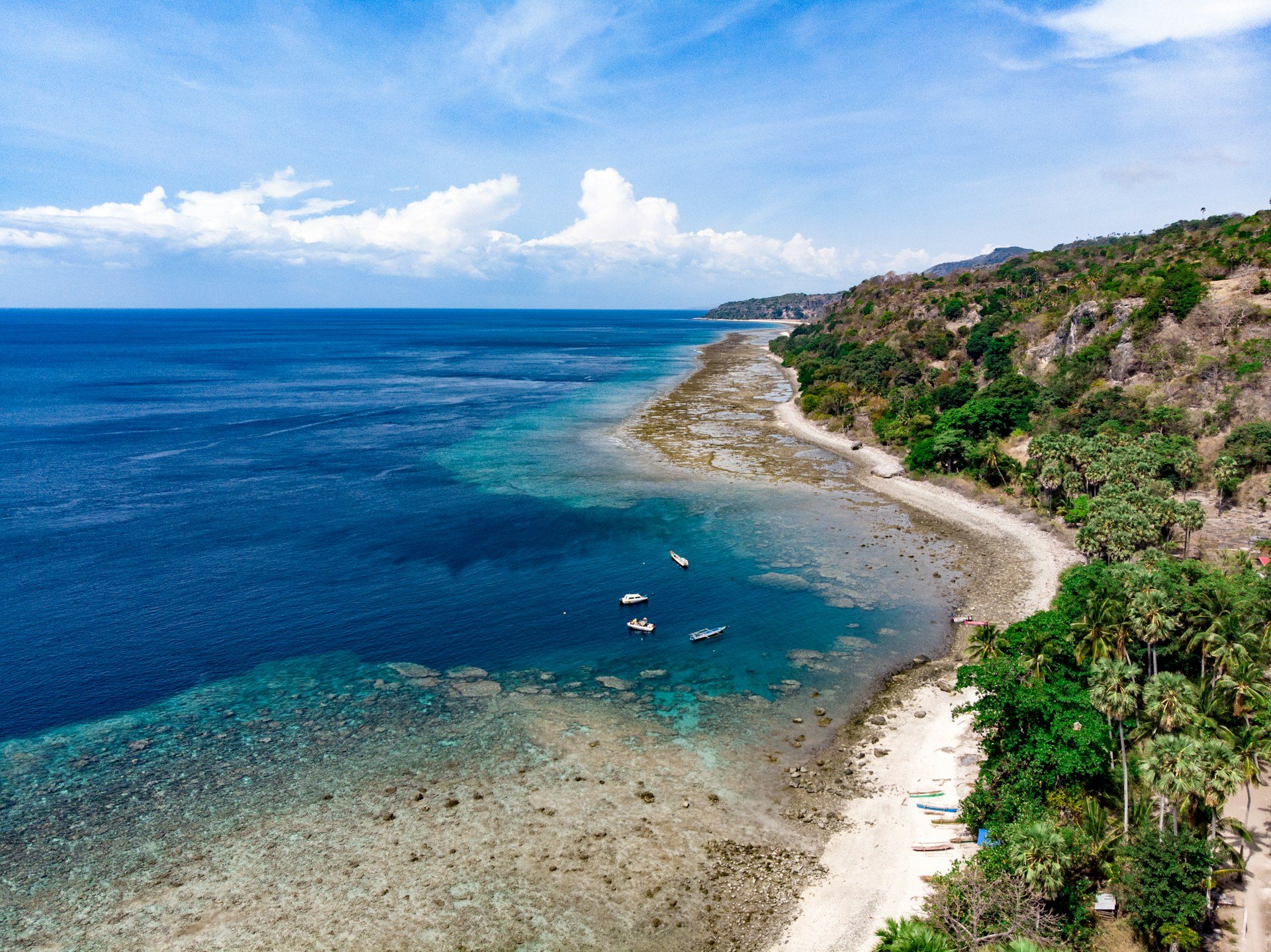
It is, however, a country you visit for something real. Atauro Island, a 90-minute ferry ride from Dili, has been measured by Conservation International as having the highest reef fish biodiversity on earth. You can be standing in water 20 meters deep looking at something you've never seen before, with no other divers in sight, in a country that received fewer than 75,000 international visitors last year. That is increasingly rare.
Dili itself is a small, hot, slightly chaotic capital where Portuguese colonial buildings share the waterfront with UN-era compounds and Chinese-owned restaurants. The Cristo Rei statue looks out over the Banda Sea from a hill above the city. Xanana Gusmao's name is on half the streets. The history is everywhere, not in a museum-exhibit way but in the way that the people you talk to actually lived it.
The biggest mistake people make: expecting Southeast Asian infrastructure at Southeast Asian prices. Timor-Leste imports almost everything. A beer at a mid-range Dili restaurant costs $4-5. A guesthouse room runs $30-60. Come with the right expectations and you'll love it. Come expecting Bali prices and you won't.
Timor-Leste at a Glance
A History Worth Knowing
The island of Timor has been inhabited for at least 42,000 years. The name itself likely comes from "timur," the Malay word for east. For most of recorded contact, the island was known for its sandalwood, which brought Arab and Chinese traders centuries before any European arrived. The Portuguese showed up in the early 1500s and eventually colonised the eastern half of the island. They stayed for 450 years. The coffee, the Catholicism, and the architectural fragments you'll see in Dili all trace back to that era.
In 1975, Portugal, amid its own political upheaval, abruptly withdrew from its colonies. East Timor declared independence on 28 November 1975. Nine days later, Indonesia invaded. What followed was one of the worst humanitarian catastrophes of the late 20th century. The occupation lasted 24 years. Estimates of those killed, through direct violence, famine, and disease, range from 100,000 to 180,000 people, out of a pre-invasion population of around 600,000. The figures are contested, but no credible estimate is small.
A 1999 UN-supervised referendum saw 78.5% of the Timorese vote for independence. Indonesia's army and pro-Indonesian militias responded with a campaign of destruction that levelled most of the country's infrastructure before an international peacekeeping force arrived. You can still see buildings in Dili with the marks of that period.
On 20 May 2002, Timor-Leste became the first new sovereign state of the 21st century. Xanana Gusmao, who had spent years in an Indonesian prison, became the country's first president. The country has had a fragile but functioning democracy since. Oil revenues from the Timor Sea have kept the government funded, though those reserves are projected to decline significantly in coming decades.
What this means practically for visitors: this is a country that has only had 20-odd years to build itself from rubble. The scars are physical and they are in people's living memory. Most Timorese adults you meet spent their childhoods under occupation. The warmth with which travelers are received here is not performed hospitality. It's something harder to explain and more genuine. Understand the context before you arrive.
Among the earliest evidence of human settlement in the Austronesian region.
Sandalwood trade brings European colonisers. Catholicism takes root and never leaves.
Nine days after independence declared, Indonesia invades. 24-year occupation begins.
Indonesian forces open fire on mourners at Dili's Santa Cruz cemetery. 250+ killed. The footage changes international opinion.
78.5% vote for independence. Militias destroy the country. International peacekeepers arrive.
The first new nation of the 21st century. Xanana Gusmao becomes president.
Fragile democracy, declining oil revenues, extraordinary natural environment, tourism just beginning.
Top Destinations
Timor-Leste is small, about the size of Northern Ireland, but the road conditions mean distances take longer than a map suggests. The main circuit for most visitors is Dili, a day trip or overnight to Atauro Island, the south coast to Suai, and the mountain interior via Maubisse and Same. Allow more time than you think you need. Allow even more if it rained recently.
Dili
Dili is small, hot, and genuinely interesting. The waterfront Avenida de Portugal is lined with Portuguese-era buildings, UN compound leftovers, and the occasional decent restaurant. The Resistance Museum on Rua Colmera is one of the best small history museums in Southeast Asia and costs almost nothing. The Cristo Rei statue at the end of the peninsula requires a 20-minute walk through coastal forest and rewards you with views across the Banda Sea. Stay two days minimum to actually feel it.
Atauro Island
A 25-kilometer ferry ride north of Dili, Atauro is one of the most extraordinary diving locations in Asia. Conservation International measured its reef fish biodiversity as the highest ever recorded. The walls drop to depths that require experience, but the shallows are accessible to beginners. Barry's Place and Bergie's Bungalows handle most of the dive tourism and run well. The ferry from Dili's pier takes 90 minutes on a good day. Come for at least two nights. Three is better.
Maubisse
Two hours south of Dili on a decent road by local standards. At 1,400 meters elevation, it is genuinely cool, which feels extraordinary after Dili's heat. The old Portuguese pousada sits on a ridge with views down into the valley. Coffee is grown in the hills around the town and the local stuff is legitimately excellent. Good base for hiking and acclimatising before going deeper into the interior.
Mount Ramelau
At 2,963 meters, Ramelau is the highest point in Timor-Leste and one of Southeast Asia's more accessible high-altitude climbs. Most people start the ascent around 2am from the village of Hatu-Builico to reach the summit for sunrise. The statue of the Virgin Mary at the top, placed there during the occupation as an act of resistance, is one of the more quietly moving things you will see in this country.
Com & Jaco Island
The far eastern tip of the country. Com is a small fishing village with basic accommodation and some of the country's best snorkeling off the beach. Jaco Island, a short boat ride from Tutuala, is uninhabited and considered sacred by local communities. Swimming is permitted; camping is not. The drive out to Tutuala involves roads that will test any vehicle, but the coastline on the south is wilder and less visited than anything near Dili.
Oecusse (Oé-Cusse)
Technically part of Timor-Leste but geographically separated by Indonesian West Timor, Oecusse is a special administrative zone with its own airport and a different atmosphere. This is where the Portuguese first landed in 1515, and there is a small monument to mark it. The town of Pante Macassar has a handful of guesthouses and almost no other tourists. Getting there requires a flight or a ferry from Dili, neither of which runs daily.
Santa Cruz Cemetery
In east Dili, the Santa Cruz Cemetery is where Indonesian forces fired into a crowd of mourners in November 1991. The footage captured by journalist Max Stahl was broadcast internationally and shifted the political momentum of the independence movement. The graves are still visited by families. It is quiet, well maintained, and not a tourist attraction in any conventional sense. Go anyway. Understand what happened here.
Baucau
Timor-Leste's second city and second-busiest airport. Baucau sits on a plateau above a lower coastal area and has the country's best preserved Portuguese colonial architecture — a grid of whitewashed administrative buildings and a Portuguese-era swimming pool that still functions. Good base for the eastern interior and the road toward Com. The old town market is worth an early morning.
Culture & Etiquette
Timorese culture is shaped by three overlapping forces: indigenous animist traditions that predate any colonial contact, 450 years of Portuguese Catholicism, and the shared experience of a brutal occupation that ended only 25 years ago. These layers sit on top of each other without conflict. Someone might attend Sunday mass, consult a local healer about a family problem, and talk about resistance heroes all in the same day without any sense of contradiction.
The key thing to understand as a visitor is that Timorese people are extraordinarily generous and patient with guests, but this is not unlimited. Respect for elders, for sacred sites, and for the dead is taken seriously. The occupation-era trauma is recent. Read the room.
"Bondia" (good morning), "Botarde" (good afternoon), "Bonnoite" (good evening) in Tetum. Any attempt at local language gets a response disproportionate to the effort. Try.
Particularly in villages and markets. People are generally happy to be photographed but asking first is basic courtesy that many tourists skip here. Don't be that tourist.
In rural areas and villages, covered shoulders and knees for both men and women is expected. Swimwear belongs at the beach, not in a village market.
If a family offers you coffee, betel nut, or food, accepting is respectful. Refusing without explanation can cause offence. You can politely decline betel nut (it stains teeth red) but do it with a smile and a thank you.
For mountains and rural areas, a local guide is both practical and meaningful. The money goes directly to communities and your guide will tell you things no guidebook has.
Comparing prices, roads, or food to Indonesia in conversation with locals is tone-deaf given the history. Timorese people know Indonesia well. They don't need or want the comparison from visitors.
Lulik (sacred) sites, which can include certain trees, rocks, houses, or ceremonial spaces, are taken seriously. If a local tells you an area is lulik, it means stay out. This is not superstition. It is their law.
Things operate on their own schedule here. The ferry may be late. The road may be blocked. The power cut may last until 11pm. Accept this before you arrive, not after.
Ask questions, listen, be respectful. But don't make it a conversation starter over dinner. People will bring it up when they want to. Follow their lead.
The island is considered sacred. Day visits and swimming are permitted by local custom. Camping is not. This is consistently ignored by a small number of travellers and consistently resented by local communities.
Tais Weaving
Tais is the traditional woven cloth of Timor-Leste, produced by women across the country in patterns that vary by region. It is used ceremonially, worn as clothing, and sold as handicrafts. Buying tais directly from the weaver rather than a Dili shop means the money goes to the person who spent days making it. The Tais Market in central Dili has vendors who are often the weavers themselves.
Football Culture
Football is the national sport in a way that is hard to overstate. The national team's qualification matches are community events. If there is a game on when you're in Dili, find a bar showing it and watch with locals. You don't need to know any Tetum. The common language of football functions perfectly.
Catholicism
Around 97% of Timorese are Catholic, and the Church was a central institution of resistance during the occupation. Sunday Mass attendance is high. The cathedral in Dili, Immaculate Conception Cathedral, is large, active, and worth visiting when a service is on. Religious festivals, particularly Easter and Christmas, involve the entire community.
Betel Nut
Betel nut, chewed with lime paste and a mustard leaf, is the most common social ritual across the country. The red stains on the pavement in Dili are from people spitting out the juice. It produces a mild stimulant effect. Accepting the offer of betel nut from a local host is a social gesture even if you don't actually chew it. Politely taking it, holding it, and putting it in your pocket later is fine.
Food & Drink
Timorese food is not the reason you come here. That's honest. The cuisine is simple, based around rice, fish, grilled meats, and vegetables, with Portuguese and Indonesian influences layered in. In Dili, the restaurant scene is serviceable and occasionally excellent, driven partly by expat demand. Outside the capital, you eat what's available and you don't always know in advance what that is.
The one exception: the coffee. Timor-Leste produces some of the best coffee in Asia. The country has been growing Arabica since the Portuguese introduced it in the 19th century, and the highland varieties from Ermera and Maubisse are clean, low-acid, and complex. Drinking a cup in Maubisse with the mountains around you and paying 50 cents for it is a quietly perfect moment.
Timorese Coffee
The country's most exportable product and genuinely world-class. The Cooperative Cafe on Dili's waterfront serves it properly. In rural areas, buy green beans from farmers and roast them yourself when you get home. The Ermera highlands produce the best single-origin in the country. Don't leave without a kilo.
Grilled Fish
Fresh fish grilled over charcoal with rice and vegetables is the default meal along the coast and it is very good. The fish is caught that morning. The warungs (small local restaurants) near the Dili waterfront do this for $3-5. Ignore the nicer-looking places if you want the best version.
Saboko & Batar Daan
Batar daan is the closest thing to a national dish: corn, mung beans, and pumpkin cooked slowly together. Saboko is a fish or meat dish wrapped in banana leaves and cooked over fire. Both are home cooking more than restaurant food. If a family or guesthouse offers you a home-cooked meal, say yes.
Portuguese Echoes
Four and a half centuries of Portuguese influence left pastéis de nata (custard tarts), grilled chicken with piri-piri, and a fondness for bread that the rest of Southeast Asia doesn't share. A handful of Dili restaurants do these things properly. Castaway, on Avenida Bispo Medeiros, handles the Portuguese-Timorese fusion better than most.
Beer & Drinks
Timor Lager is the local beer. It's fine. Cold is the relevant quality at 35-degree heat and it usually is. Sagitarius, a palm wine, is drunk in rural areas and varies enormously in quality. Imported wine and spirits are available in Dili at imported prices. Coconut water from a roadside vendor costs $1 and is legitimately better than anything in a bottle.
Dili Restaurant Scene
Better than you'd expect for a city its size. Agora Food Studio near the waterfront does good modern food. The Night Market along the beachfront road operates from around 6pm and has cheap grilled meats and satay. Fatumea Cafe in Farol does the best breakfast in the capital for under $6. Don't plan your trip around the food but don't dread it either.
When to Go
This is not complicated: come in the dry season, May to November. The wet season is technically possible for a Dili-and-Atauro trip but mountain roads become genuinely dangerous and large sections of the interior become unreachable. If you want Ramelau, the eastern interior, or any serious overland travel, dry season is not a preference. It is a requirement.
Dry Season
May – NovClear skies, excellent diving visibility, mountain roads open, and the heat is dry rather than humid. July and August are the coolest months in the highlands. This is when you should come.
Wet Season
Dec – AprHeavy rains, flash flooding, and road closures. Interior roads can be impassable for days. Diving visibility drops. Fine if you're only doing Dili and Atauro, but not ideal even then. January is typically the wettest month.
Trip Planning
Ten days is a reasonable first trip. Five of those can be split between Dili and Atauro Island. The remaining five let you do the mountain circuit through Maubisse and Ramelau, or head east to Baucau and Com. Three weeks gives you the full country with breathing room. Don't try to rush Timor-Leste. The roads won't let you anyway.
Dili
Day one: land, acclimatise, eat grilled fish on the waterfront, sleep. Day two: Resistance Museum in the morning, Cristo Rei walk in the late afternoon when it's cooler, Farol neighbourhood for dinner. Day three: Santa Cruz Cemetery, Tais Market, and evening at the Dili Night Market.
Atauro Island
Morning ferry from Dili pier (book in advance, seats are limited). Three nights at Barry's Place or Bergie's Bungalows. Dive twice a day or once if you're a snorkeler. The wall dives on the east side of the island are the best. Don't rush back.
Back to Dili
Morning ferry back to Dili. Afternoon in town. Buy coffee at the Cooperative Cafe to bring home. Evening flight if departing, or one more night before an early departure the next morning.
Dili
Full exploration of the capital. Resistance Museum, Santa Cruz Cemetery, Cristo Rei, Tais Market, waterfront. Rent a motorbike for a day and explore the outer neighbourhoods. The Portuguese lighthouse at the Farol district is accessible and undervisited.
Atauro Island
Three nights of diving. This is the reason most international visitors come. Go deep on the walls, stay shallow in the garden sites, do both. Barry's arranges everything. You just show up and get in the water.
Mountain Interior: Maubisse & Ramelau
Hire a driver with a 4WD from Dili. Two nights in Maubisse at the pousada on the ridge. Day hike into the surrounding hills. Then drive to Hatu-Builico and start the Ramelau ascent at 2am on day nine for sunrise at the summit. Descend by mid-morning. Return to Dili on day ten.
East: Baucau & Com
Drive east along the coast road to Baucau. Portuguese colonial old town, the tidal pool below the cliff, the morning market. Continue to Com for snorkeling and a night at a basic guesthouse. Return to Dili in time for departure.
Dili Deep Dive
Slow down in the capital. Take a Portuguese language lesson (the Alliance Française runs them). Visit the Chega! exhibit at the Balide Prison site where resistance members were held. Eat at every waterfront warung. Do a shore dive at K41, 41 km west of Dili, one of the best accessible wall dives in the country.
Atauro Island Extended
Four nights gives you a full range of dive sites including the north coast, the channels, and the deepest walls. Non-divers can kayak, hike the island's interior, and visit villages. The island is small enough to walk across in a few hours.
Full Mountain Circuit
Ermera coffee country, Maubisse, Ramelau sunrise, Same on the south coast, then back north via Ainaro. This requires a good driver and a capable vehicle. Allow more time than the distances suggest. The landscape on the south coast road is extraordinary and largely unseen by visitors.
Far East: Baucau, Com & Jaco
The far eastern circuit. Baucau for the colonial architecture. Los Palos for a night among locals with almost no other tourists. Com for snorkeling. Tutuala for the viewpoint and the boat to Jaco Island. Return to Dili via the north coast road.
Vaccinations
Malaria prophylaxis recommended for rural areas. Required or strongly recommended: Hepatitis A, Hepatitis B, Typhoid, Rabies if spending time in rural areas. Check current advice from your travel health clinic 6 weeks before departure.
Full vaccine info →Cash is Essential
Bring enough USD for your entire trip if going outside Dili. The ANZ and BNU branches in Dili have ATMs that work. There are no ATMs on Atauro Island, in Maubisse, or anywhere in the rural east. Plan accordingly.
Connectivity
Buy a local SIM at the airport or any Telkomcel or Telemor shop in Dili. Data is cheap and coverage is acceptable in Dili and along the main coast road. In the mountains and east, coverage is patchy. Download offline maps before leaving Dili.
4WD
For anything outside Dili and the main coast road, you need a 4WD with good clearance. Hire a driver with their own vehicle rather than renting. A local driver knows which roads are passable and which aren't after recent rain. This is worth paying for.
Travel Insurance
Medical facilities in Dili are limited. Serious emergencies are medically evacuated to Darwin, Australia. Medical evacuation costs tens of thousands of dollars. Travel insurance with medevac cover is not optional here.
Medical Kit
Bring a comprehensive kit. Pharmacies exist in Dili but are limited outside the capital. Include malaria prophylaxis, water purification tablets, oral rehydration salts, broad-spectrum antibiotics (with your doctor's guidance), and blister supplies for hiking.
Transport in Timor-Leste
Getting around Timor-Leste is an exercise in patience and planning. There is no train. Public buses are cheap but infrequent and slow. The road from Dili to Baucau (about 120 km) takes 2.5 to 3 hours on a good day. The road from Maubisse to Same involves switchbacks, unpaved sections, and river crossings that are genuinely impassable after heavy rain. Hire a driver with a 4WD, build time buffers into every leg, and accept that your plan may change.
In Dili: taxis are cheap and readily available, identifiable by their blue color. Agree a price before you get in. Motorbike taxis (mikrolets) cover shorter distances. The city is small enough that many guesthouses are walkable from the waterfront.
Domestic Flights
$50–120/routeAirlink operates between Dili and Baucau, Oecusse, and occasionally other regional airports. Schedules change frequently. Book as early as possible and confirm the day before.
Atauro Ferry
$7–10 one wayGovernment ferry runs several times weekly from Dili's main pier to Atauro Island. Takes 90 minutes. Faster speedboat transfers are arranged by dive operators like Barry's Place. Book your seat ahead.
Hired 4WD with Driver
$80–150/dayThe standard way to see the country outside Dili. Your guesthouse will connect you with reliable drivers. A good driver is worth considerably more than the hire cost for navigating roads and knowing what's currently passable.
Public Minibus
$1–5/routeMikrolets and public minibuses serve most towns but run on no reliable schedule, leave when full, and stop frequently. Budget an extra 50% time for any public bus journey. Good option if you have time and no firm schedule.
Motorbike Rental
$15–25/dayAvailable in Dili for local exploration. Reasonable for the coast road but not appropriate for mountain roads. Helmet is mandatory and enforced. An international driving permit is technically required.
Taxis (Dili)
$2–8 within the cityBlue taxis are everywhere in Dili. No meter; always agree the price first. Most in-city journeys are $2-4. Your guesthouse can give you a reference price for common routes to avoid the tourist rate.
Walking (Dili)
FreeThe waterfront area of Dili is walkable, though the heat makes long midday walks unpleasant. The Cristo Rei walk, from the Farol roundabout along the coast path, takes 20 minutes each way and is best done before 8am or after 4pm.
Land Border (West Timor)
VariesBatugade and Mota'ain are the main land crossings from Indonesian West Timor. Possible and used by overlanders but requires Indonesian visa if entering from that side. The crossing at Batugade is more straightforward than Mota'ain.
Accommodation in Timor-Leste
Accommodation in Timor-Leste is improving but limited outside Dili. The capital has a reasonable spread from guesthouses to mid-range hotels. Atauro Island's dive operations have their own bungalow accommodation. The rest of the country runs on basic guesthouses (pensioes) with cold water, a fan, and a bed. Electricity in rural areas may be four hours in the evening. This is not a complaint about the accommodation. It is a description of it.
Dili Hotels
$40–120/nightThe Timor Plaza Hotel is the city's most reliable mid-range option. Esplanade Hotel on the waterfront is decent for the location. Several smaller guesthouses in the Farol district offer clean rooms with breakfast for $35-50.
Atauro Island Dive Resorts
$60–120/night incl. mealsBarry's Place and Bergie's Bungalows are the two main operations. Both include three meals, accommodation, and dive packages. Both are excellent. Book months ahead in peak season (July to September).
Pousadas (Rural)
$20–40/nightThe Portuguese-era pousada at Maubisse is the most atmospheric rural option, a whitewashed colonial building on a ridge with mountain views. Basic rooms, cold water, and a dining room that serves simple meals.
Community Guesthouses
$10–20/nightBasic local guesthouses (losmen or pensioes) in smaller towns like Baucau, Same, and Los Palos. Standards vary enormously. Cold bucket shower, fan, a mat on a bed. Meals negotiated separately. Part of the experience of genuine travel here.
Budget Planning
Timor-Leste is more expensive than its development level suggests and more expensive than neighbouring Indonesia. Everything is imported, from fuel to building materials to most food. The expat infrastructure that exists to support UN and NGO workers has pushed prices in Dili above what you'd find in comparable Southeast Asian cities. On the other hand, rural areas are genuinely cheap and community guesthouses cost almost nothing.
- Basic guesthouse or community stay
- Local warungs and market food
- Public minibuses where available
- Mostly free attractions (beaches, Cristo Rei)
- Local beer and street food only
- Decent guesthouse or hotel in Dili
- Mix of restaurants and local food
- Shared or private 4WD hire
- Atauro Island dive resort (all-inclusive)
- Occasional day tours and experiences
- Best available hotel in Dili
- Private 4WD driver for overland travel
- Restaurant dining for all meals
- Full dive packages on Atauro
- Private boat charters and guided hikes
Quick Reference Prices
Visa & Entry
Timor-Leste offers visa on arrival to most nationalities at Dili's Presidente Nicolau Lobato International Airport. The cost is $30 USD, paid in cash at the immigration counter. The visa is valid for 30 days and can be extended once for another 30 days at the immigration office on Rua de Caicoli in Dili. Extensions cost an additional $30.
Entry by land at the Batugade or Mota'ain crossings from Indonesian West Timor is also possible with a visa on arrival. Allow extra processing time at land crossings. The Oecusse enclave is technically accessible by land through Indonesian territory but this route requires a valid Indonesian visa as well.
Valid for 30 days, extendable once. Most major nationalities qualify. Bring $30 in USD cash for the immigration counter.
Family Travel & Pets
Timor-Leste is not an obvious family destination, but it's not impossible either. Children are welcomed warmly by Timorese people, who have a strong family culture. The challenges are practical rather than social: the heat is intense, long road journeys on rough roads are tiring for young children, and medical facilities are very limited outside Dili. With older children, particularly teenagers who can engage with the history and environment, it can be an extraordinary trip.
For families with young children, the most realistic plan is Dili-based with a day trip to Atauro Island. Snorkeling in the shallows around Atauro is accessible to children who can swim. The Resistance Museum has content that requires parental guidance for younger children but is genuinely meaningful for older ones.
Atauro Snorkeling
The shallow reef gardens on the west side of Atauro Island are accessible to children who can snorkel. The fish diversity is extraordinary and visible even in very shallow water. Barry's Place can arrange snorkeling equipment and guidance for non-divers of all ages.
Resistance Museum
For children 12 and above who have been briefed on the history, this is one of the most impactful museum experiences in Southeast Asia. The staff are extraordinarily knowledgeable and the exhibits are clear and well-presented. Budget two hours.
Areia Branca Beach
The main beach area east of central Dili has a gentle shore, shallow water, and weekend crowds of local families. Vendors sell food and cold drinks. It's not a pristine beach but it's entirely safe and gives children room to run around.
Cristo Rei Walk
The 20-minute coastal walk to the Cristo Rei statue is appropriate for children above about 6. The path is flat and shaded in sections. The panoramic view from the hilltop is genuinely impressive and the statue itself is a memorable sight.
Tais Market
The market in central Dili is colorful, accessible, and good for older children to experience. The tais weaving process, explained by the vendors, can hold a child's attention. Buying a small piece of tais as a gift or souvenir is a direct contribution to local craftswomen.
Practical Health Notes
Malaria prophylaxis is recommended for children travelling to rural areas. Pack oral rehydration salts and a thermometer. The most common issues for children are stomach problems from food and dehydration from the heat. Keep them drinking water all day. Bring more sunscreen than you think you need.
Traveling with Pets
Bringing pets to Timor-Leste is technically possible but involves complex biosecurity requirements and is rarely done by tourists. Requirements include a valid microchip, current rabies vaccination, a health certificate issued by an accredited veterinarian within days of travel, and advance approval from Timor-Leste's Ministry of Agriculture. Regulations are not as formalized as countries like Japan or Australia, but this means the process is less predictable, not easier.
The practical reality: Timor-Leste has a significant stray dog population. Rabies is present in the region. Veterinary facilities are essentially nonexistent outside Dili. Travelling with pets here is not recommended for anything other than long-term residency, and even then requires serious planning. Leave your pets at home and donate to a local animal welfare organisation instead.
Safety in Timor-Leste
Timor-Leste is generally safe for travelers and violent crime against tourists is rare. The country has been politically stable since 2012 and the security environment in Dili is manageable. That said, petty theft occurs in the capital, road accidents are a real risk on rural roads, and the medical response to any serious incident is severely limited. Know the actual risks rather than the general reputation.
General Crime
Low violent crime rate for tourists. Petty theft in Dili's market areas and at the beach on weekends. Keep bags visible and phones put away in crowded areas. The risk is comparable to many other Southeast Asian capitals.
Road Safety
This is the primary risk. Rural roads are genuinely dangerous: no guardrails, steep drops, unpaved surfaces, and occasional rock falls. A good local driver mitigates this significantly. Don't drive mountain roads yourself at night under any circumstances.
Solo Women
Timor-Leste is manageable but requires more caution than many Southeast Asian destinations. Unwanted attention is possible in Dili after dark. Dress modestly outside the capital. Travel with others in rural areas where possible. Trust your instincts.
Political Tensions
Occasional tensions around elections, government transitions, and land disputes. These rarely affect tourists directly but can cause localized unrest in Dili. Monitor news in the weeks before your trip and follow your embassy's travel advice.
Health Risks
Malaria in rural areas, dengue fever, stomach illnesses, and heat exhaustion are the main health risks. Start malaria prophylaxis before departure, use DEET insect repellent, drink only bottled or purified water, and stay hydrated. The heat in Dili is serious.
Medical Facilities
The Dili National Hospital and a small number of private clinics handle routine cases. Serious injuries or illnesses require medical evacuation to Darwin (Australia). This takes time and money. Adequate travel insurance with medevac cover is essential, not optional.
Emergency Information
Embassies & Consulates in Dili
Timor-Leste has a small diplomatic presence. Many countries are represented through their Australian or Indonesian embassies for consular emergencies.
Book Your Timor-Leste Trip
Everything in one place. These are services worth actually using.
What Stays With You
Most people who go to Timor-Leste come back different in a way that's hard to articulate at a dinner party. Not because it was difficult, though parts of it are. Because the country itself is an argument for something. That people can survive extraordinary violence and still be warm. That a place can be genuinely poor and genuinely beautiful and those two facts don't cancel each other out. That a dive site that only 400 people visited last year is not automatically inferior to one that saw 40,000.
In Tetum, the word for a person who maintains dignity and composure through hardship is hakmatek. Literally: to keep yourself still. It is used as a term of high respect. You will meet a lot of hakmatek people in Timor-Leste, though they would never use the word about themselves. Remember them.