
Philippines
7,641 islands, most of them inconveniently beautiful. An archipelago that defeated Spanish colonizers, survived American occupation, and responded to both by developing one of the warmest, most welcoming cultures in Southeast Asia — and a cuisine that deserves far more attention than it gets.
What You're Actually Getting Into
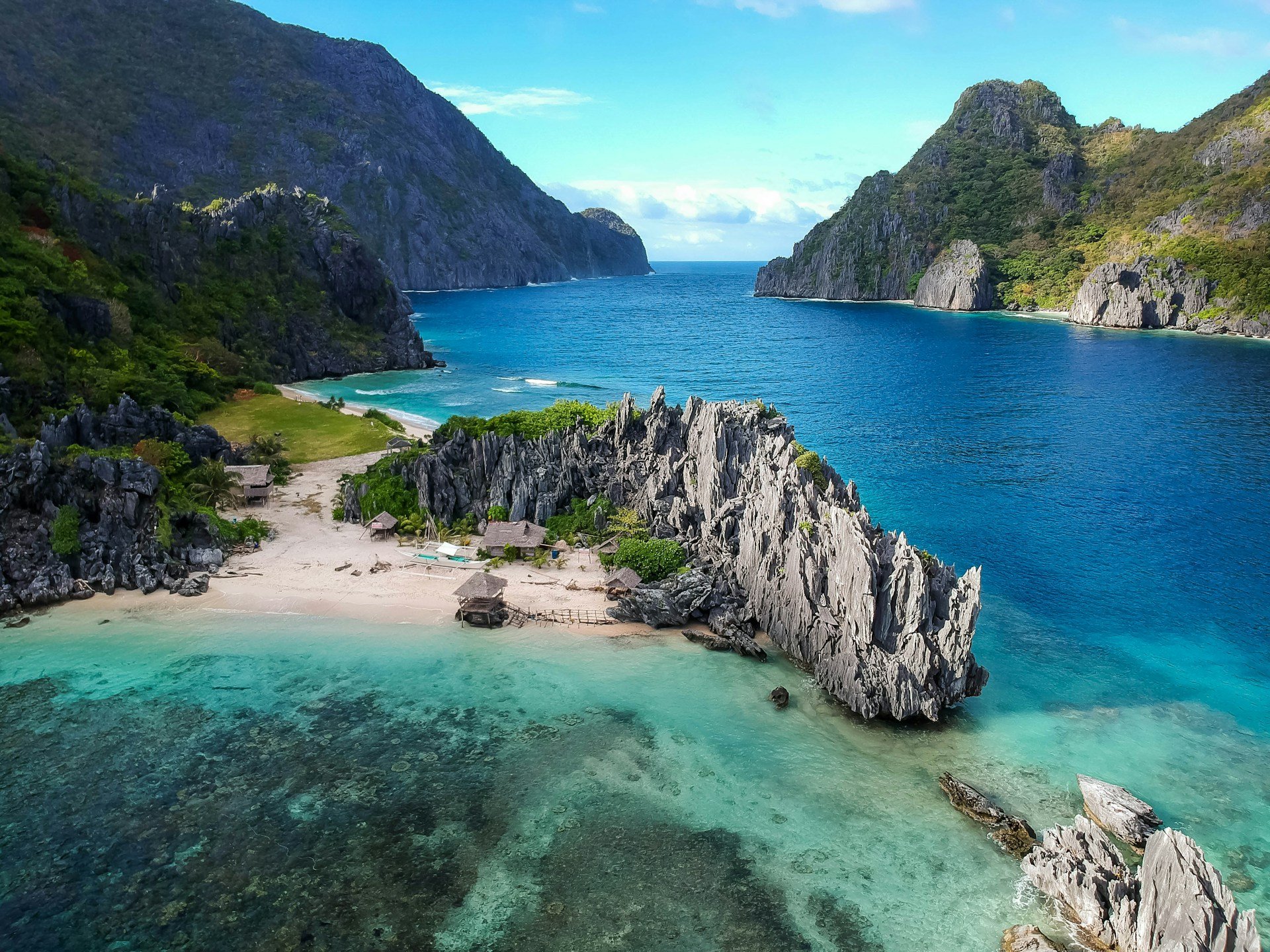
The Philippines will seduce you with photographs of Palawan's limestone karsts rising from improbably turquoise water, then reveal that getting between islands requires planning that makes European rail travel look casual. Inter-island flights are cheap and plentiful but don't always go where you want. Ferries take twice as long as expected and occasionally three times as long. The islands themselves, once you're on them, are so consistently extraordinary that the transport becomes a war story you tell fondly at dinner six months later.
What the photographs don't tell you: the Philippines has the warmest hospitality in Southeast Asia and it's not close. A Filipino stranger who discovers you're in their town will spend twenty minutes making sure you know the best place to eat, then probably walk you there. The word mabuhay — welcome, live — is used constantly and means both things genuinely. This is not a performance of friendliness. It is a cultural orientation toward guests that runs deep enough to have survived 300 years of Spanish colonialism, 50 years of American occupation, and the full apparatus of modern tourism.
The country's complexity deserves honest acknowledgment. Manila is chaotic in ways that reward patience but punish rushed itineraries. The south of Mindanao has genuine security concerns that require research before going. Typhoon season is not a minor inconvenience — a strong typhoon can strand you on an island for days, close airports, and cancel every boat. The Philippines rewards travelers who plan carefully for these realities and build enough flexibility to absorb them.
The biggest planning mistake: trying to see too many islands. Two weeks in the Philippines should cover at most three island groups, with slow travel between. The temptation to add Coron to your El Nido itinerary to your Siargao booking to your Bohol side trip creates an itinerary where you spend more time in airports than on beaches. Pick fewer places. Go deeper. The Philippines rewards it.
Philippines at a Glance
A History Worth Knowing
The Philippine archipelago was settled by Austronesian-speaking peoples arriving from Taiwan approximately 4,000 years ago, making Filipinos culturally and linguistically part of the same migration wave that populated Madagascar, New Zealand, Hawaii, and nearly everywhere in between. By the time Ferdinand Magellan arrived in 1521, the islands were a network of independent coastal and river-valley communities called barangays, trading with China, Java, and the Malay peninsula. There was no single "Philippines" — just hundreds of distinct polities with their own rulers, languages, and social structures.
Magellan's arrival ended with his death in Mactan, Cebu, where chieftain Lapu-Lapu killed him in a beach battle that Filipinos still celebrate as their first act of resistance. The Spanish returned in 1565 under Miguel López de Legazpi, this time to stay. They named the islands after King Philip II of Spain, imposed Catholicism across most of the archipelago, and ran the Manila Galleon trade — the trans-Pacific route that connected Manila to Acapulco and made the city one of Asia's wealthiest trading ports from the late 1500s to the early 1800s. The Spanish also built Intramuros, Manila's walled city, in 1571. Parts of it still stand.
Three hundred and thirty-three years of Spanish rule left marks that are impossible to miss. More than 80% of Filipinos are Catholic today. Family names are largely Spanish. Fiestas, patron saints, and church architecture define the landscape of every provincial town. The Philippine Revolution of 1896, led by the Katipunan movement of Andres Bonifacio, was the first successful nationalist revolution against a European colonial power in Asia — a fact that gets far less attention globally than it deserves.
The Americans arrived in 1898, purchasing the Philippines from Spain for $20 million after the Spanish-American War, without consulting a single Filipino. What followed was the Philippine-American War — a brutal counterinsurgency that cost between 200,000 and 600,000 Filipino lives and has been largely forgotten in American historical memory. American colonial rule introduced universal public education in English (which is why English proficiency is so high today), a national bureaucracy, and infrastructure. It also introduced a deeply complex relationship with American culture that still shapes Filipino identity in ways that are both embraced and contested.
The Japanese occupation of 1941–1945 was catastrophic. The Battle of Manila in 1945, in which American forces retook the city from Japanese defenders who refused to surrender, killed an estimated 100,000 Filipino civilians and destroyed nearly every colonial-era building outside Intramuros. Manila was the most destroyed Allied capital after Warsaw. The scars of that destruction are still legible in the city's fragmented, patchwork urban fabric.
Independence came in 1946. The subsequent decades brought democracy, the Marcos dictatorship (1972–1986), the People Power Revolution that peacefully removed Marcos, and a continuing cycle of democratic politics that has been messy, occasionally inspiring, and generally resistant to simple narration. The Philippines today is a young, predominantly Catholic, remarkably English-proficient nation of 115 million people, with a diaspora of roughly 10 million working abroad — OFWs (Overseas Filipino Workers) whose remittances are a structural pillar of the economy. Understanding that diaspora context explains a lot about Filipino family culture and the particular warmth with which they receive foreign visitors.
Seafaring peoples from Taiwan begin settling the archipelago. The ancestors of modern Filipinos arrive.
Ferdinand Magellan lands in Cebu, attempts to claim the islands for Spain. Chieftain Lapu-Lapu kills him in the Battle of Mactan. Spain takes note and returns.
López de Legazpi establishes the first permanent Spanish settlement. 333 years of colonial rule, Catholicism, and the Manila Galleon trade begin.
The Katipunan, led by Andres Bonifacio, launches Asia's first successful anti-colonial revolution against a European power.
Spain sells the Philippines to the US for $20 million. The Philippine-American War that follows kills hundreds of thousands of Filipinos.
One of WWII's most destructive urban battles. 100,000 Filipino civilians killed. Manila's colonial architecture largely destroyed.
The Philippines becomes the Republic of the Philippines, one of the first Asian nations to gain post-WWII independence.
Millions of Filipinos line EDSA highway in Manila, peacefully removing Ferdinand Marcos after 21 years of dictatorship. A template for non-violent revolution.
Top Destinations
The Philippines divides into three main island groups: Luzon in the north (where Manila is), the Visayas in the center (Cebu, Bohol, Siargao), and Mindanao in the south. Palawan is technically part of the Mimaropa region but functions as its own destination. For most travelers, a focused trip picks one or two of these regions rather than attempting to link them all. The inter-island logistics punish ambition.
Palawan — El Nido & Coron
Palawan is consistently voted one of the world's best islands and the geography explains why: 1,780 islands and islets off the main island's coast, most of them limestone karst formations rising vertically from water that cycles through seven distinct shades of blue depending on depth and cloud cover. El Nido in the north has the most dramatic scenery — Tour A, B, C, and D island-hopping routes cover different lagoon and snorkeling combinations, each full-day boat tour around 1,500 pesos. Coron, three hours north by ferry, has WWII Japanese shipwrecks that are among the best dive sites in the world. Don't try to do both in under a week. You'll spend all your time on boats between them.
Siargao
Siargao built its reputation on Cloud 9 — a heavy, hollow reef break off General Luna that produces the kind of barrel waves that appear on surf magazine covers. But the island kept the visitors who came for surfing by being an extremely pleasant place to exist: good food, coconut palms over quiet roads, lagoon pools, and a laid-back population that absorbed tourism without becoming defined by it. Non-surfers come for island-hopping to Naked Island and Guyam, for motorbike rides through rice paddies, for the treehouse bars, and for a general pace of life that defies productivity. Fly from Cebu or Manila. Rent a motorbike on day one. Everything else follows.
Bohol
Bohol has two things that exist nowhere else on earth: the Chocolate Hills (1,268 near-identical grass-covered limestone mounds that turn brown in dry season, visible from a hilltop viewing deck as a surreal rolling landscape extending to the horizon) and the Philippine tarsier, one of the world's smallest primates, nocturnal, enormous-eyed, and found only in a few Southeast Asian locations. The Loboc River cruise at lunch is touristy and worth it. Oslob, a few hours south in Cebu, offers whale shark encounters — the ethics of the Oslob site are genuinely contested (the sharks are conditioned by feeding); research alternatives at Donsol in Sorsogon if this matters to you.
Manila
Manila requires managing expectations. It is not a beautiful city — the WWII destruction and subsequent unplanned development produced something sprawling, traffic-choked, and architecturally incoherent. But it rewards patience. Intramuros, the Spanish walled city built in 1571, is one of Asia's oldest European colonial districts. Rizal Park is where national hero José Rizal was executed by the Spanish in 1896. Binondo, the oldest Chinatown in the world (established 1594), has food that justifies the journey. BGC (Bonifacio Global City) is where you go for the infrastructure and comfort you miss after two weeks of island living.
Boracay
White Beach on Boracay is 4 kilometers of powder-fine white sand, reliably ranked among the world's best beaches, and flanked by a dense strip of resorts, restaurants, bars, and fire dancers that constitute one of Southeast Asia's most developed resort strips. The government shut Boracay for six months in 2018 for environmental rehabilitation; it reopened cleaner. It is the most tourist-infrastructure-dense destination in the Philippines. If you want a beach resort experience with all conveniences included, it delivers. If you want solitude, go to Palawan.
Batangas & Taal
Two hours from Manila, Taal Volcano sits inside a lake that sits inside another lake — a volcano within a lake within a larger volcanic caldera, one of the world's most unusual geological formations. The trek across Taal Lake and up the inner volcano cone takes half a day and can only be done with a local guide from Tagaytay or Talisay. Taal erupted in January 2020; check its current status before hiking. Anilao, on the Batangas coast below, has some of the best macro diving in the world for underwater photographers.
Batanes Islands
The Batanes group, 200 kilometers north of Luzon toward Taiwan, is one of the least visited and most striking parts of the Philippines — rolling green headlands, stone houses built to survive typhoons, and a seafaring Ivatan culture that has more in common with Pacific Islander traditions than with the rest of the country. Only a few hundred tourists visit per month. Flights from Manila are infrequent and expensive. The reward is a landscape that looks like Ireland fell into the South China Sea. Allow five days minimum and accept that weather can close the airport.
Vigan
Vigan in Ilocos Sur is the best-preserved Spanish colonial town in Asia — a UNESCO World Heritage site whose cobblestone streets and 16th-century stone houses survived WWII and the 1990 earthquake. Walking Calle Crisologo in the evening, when the horse-drawn calesa carriages still run and the stone facades glow amber, is a genuinely atmospheric experience that nothing in Manila can replicate. The longganisa (local garlic sausage) and bagnet (deep-fried pork) of Ilocos cuisine are reasons to stay an extra day.
Culture & Etiquette
Filipino culture is one of the most syncretized in the world — Malay at its base, layered with three centuries of Spanish Catholicism, half a century of American popular culture, Chinese commercial traditions in the cities, and an overlay of regional variation that means Ilocano culture in the north, Cebuano culture in the Visayas, and Maranao culture in Mindanao are as distinct from each other as they are from anything outsiders might identify as generically Filipino.
The organizing values are pakikisama (getting along, group harmony) and hiya (a concept of shame or social embarrassment that makes direct confrontation deeply uncomfortable). Both shape interactions in ways that are easy to misread. A Filipino saying "yes" may mean "I understand what you're asking" rather than affirmative agreement. Plans made for a specific time may be understood as approximate. Adjusting your communication style toward indirect warmth — asking how someone is before asking what you need — produces dramatically better results than transactional directness.
These are Tagalog honorific particles added to sentences when speaking to elders or in formal situations. "Po" softens a statement; "opo" is a respectful yes. Using them signals you've done some homework and generates instant warmth. Even badly pronounced, the effort is received well.
Filipino hospitality centers on food. Being offered food and declining is mildly impolite. Accepting a small amount, even if you're not hungry, respects the gesture. At family homes, refusing to sit down for a meal can genuinely offend your host.
The Philippines is deeply Catholic and churches are active places of worship, not tourist attractions. Cover your shoulders and knees. Remove hats. Be quiet. The country has thousands of churches and at least some of your sightseeing will involve them.
The Filipino custom of pressing an elder's hand to your forehead — called "mano po" — is a gesture of respect you'll see younger Filipinos do constantly. As a foreigner, you're not expected to do it, but recognizing it when it happens shows cultural awareness.
"Filipino time" is a real phenomenon — social gatherings and informal meetings run significantly later than the stated time. For tours and transport, punctuality is more reliable but still variable. Add buffer. Don't schedule your flight connection too tight after a boat journey.
Filipinos are deeply proud of their country and receive criticism of it personally, even from other Filipinos. What reads as honest feedback in Northern European culture registers as rude dismissal here. If something isn't working, express it as a question or concern, not a complaint.
Public displays of anger are deeply taboo. Raising your voice at a service provider, a driver, or a hotel staff member causes profound embarrassment and makes your situation worse, not better. The Filipino concept of hiya means public humiliation is felt acutely. Calm persistence always outperforms frustration.
Pointing at people or objects with a single extended index finger is considered rude. Filipinos point with a slight lip-pout gesture or with the whole hand. When asking directions and pointing at a map, use an open hand.
Board shorts and bikini tops belong on the beach. In Manila, Vigan, and any town center, they read as disrespectful. Dress up slightly for cities and towns — Filipinos themselves dress well, especially for malls and churches, and they notice when visitors don't.
The Philippines is tropical year-round. The combination of heat and humidity in lowland areas from April to June regularly exceeds 38°C with full humidity. Drink water before you're thirsty. Plan outdoor activities for before 10am or after 4pm in peak season.
Fiesta Culture
Every barangay (neighborhood) and every town has an annual fiesta celebrating its patron saint. Fiestas involve elaborate street decorations, a procession carrying the saint's image, a Mass, and an enormous communal feast to which strangers — including foreign visitors — are welcome. Arriving in a town during its fiesta is one of the great accidental pleasures of Philippine travel. The food alone is worth it.
Karaoke Is Serious
Filipino karaoke is not ironic. It is not a joke. It is a genuinely important social institution practiced with feeling and considerable skill. KTVs (karaoke television venues) operate in every city. Home karaoke machines are standard household equipment. Being invited to sing is an honor. Singing badly is completely acceptable. Refusing to participate is the only wrong move.
Catholic Philippines
More than 80% of Filipinos are Catholic, making the Philippines one of the two majority-Catholic nations in Asia. Religion shapes daily life visibly — roadside shrines, blessing of vehicles, the Angelus prayer at noon audible from outdoor speakers, and the absolute centrality of the church in every town's layout. Semana Santa (Holy Week) sees some towns reenact the Passion with live participants in full detail. It's not for everyone. It is unmistakably real.
Basketball Everywhere
The Philippines is the most basketball-obsessed nation in Asia, a legacy of American colonial rule that became entirely self-sustaining. Basketball courts exist in every barangay, regardless of income level or island remoteness. The Philippine Basketball Association (PBA) is the second oldest professional basketball league in the world after the NBA. Asking a Filipino man about the PBA is a reliable conversation-starter anywhere in the country.
Food & Drink
Filipino food is one of the most underrated cuisines in the world, and Filipinos know it and are mildly annoyed about it. The cultural synthesis that produced the country — Malay, Spanish, Chinese, American — also produced a cuisine that doesn't map neatly onto any of its sources. The Spanish brought vinegar-braising technique (which became adobo). The Chinese brought noodles (which became pancit). The Americans brought canned goods (which became a staple with rice). The Malays brought the fundamental spice palette. What emerged is Filipino food: intensely sour and savory, heavy on pork and seafood, built around rice, and deeply satisfying.
The beer of choice is San Miguel, specifically San Miguel Pale Pilsen, which has been brewed in Manila since 1890 and is cold, light, and pairs with almost everything served in the Philippines. Lambanog — coconut wine distilled from palm sap — is the traditional spirit, strong and slightly sweet. Tuba is the unfermented palm toddy from which it's made. Both are locally made and locally drunk, best tried at a market stall rather than a tourist bar.
Adobo
The national dish, though every province makes it differently and every family swears their version is definitive. The constant: meat (usually chicken or pork, often both) braised in vinegar and soy sauce with garlic, bay leaves, and black pepper until the liquid reduces to a sticky, intensely savory glaze. The vinegar gives it keeping quality even in tropical heat — the dish pre-dates refrigeration. Eaten with white rice for every meal of the day, including breakfast.
Sinigang
A sour tamarind soup with pork ribs, prawns, or fish, loaded with vegetables — eggplant, water spinach, long beans, tomato, okra — and served steaming hot in a clay pot. The sourness is the point: it cuts through the heat and the fatty richness of the meat in a way that makes it one of the most refreshing hot soups in existence. Every Filipino has a sinigang opinion. Most of those opinions are correct.
Lechon
Whole roast pig, slow-cooked over charcoal for six to eight hours until the skin lacquers into a shattering, mahogany-colored crackling and the meat pulls apart at a touch. The Cebu version — stuffed with lemongrass, spring onions, garlic, and bay leaves, requiring no sauce — is the one that makes food writers reach for superlatives. Present at every major celebration, fiesta, and birthday. When a Filipino family asks if you like lechon, the only correct answer is yes.
Sisig
Chopped pig's face, ears, and liver, sizzled on a cast-iron plate with calamansi juice, chili, and onion, often finished with a raw egg cracked on top at the table. Invented in Pampanga, now eaten everywhere. Crispy, fatty, sour, spicy. One of the best things to eat with a cold San Miguel at 11pm in a Manila street-side sizzle restaurant. Not a delicate dish. Completely perfect.
Pancit
Noodle dishes brought by Chinese traders and made entirely Filipino. Pancit canton uses flat egg noodles with vegetables and meat; pancit bihon uses rice vermicelli; pancit Malabon is a seafood-heavy version from Manila. Eaten at birthdays (long noodles symbolize long life), fiestas, and ordinary lunches with equal regularity. Each region has its own version; collecting them is a reasonable project for a long trip.
Halo-Halo & Drinks
Halo-halo (Tagalog for "mix mix") is the Filipino response to the heat: a tall glass layered with shaved ice, evaporated milk, sweetened beans, coconut strips, ube (purple yam) ice cream, leche flan, and jackfruit, then handed to you with a long spoon and the expectation that you mix it thoroughly before eating. Available at every Jollibee and every small eatery from April to June. Calamansi juice — made from the tiny Filipino lime, tart and aromatic — is the other essential drink, squeezed fresh over nearly everything.
When to Go
The Philippines has two seasons: dry (amihan) and wet (habagat). Typhoon season is the most important thing to understand before booking, because the Philippines is one of the most typhoon-affected countries on earth — around 20 typhoons enter the Philippine Area of Responsibility annually, with 5 to 9 making landfall. A strong typhoon doesn't just bring rain; it closes airports, cancels all boats, and can strand you on an island for days. This is a real planning variable, not a distant theoretical risk.
Regional variation matters significantly. Palawan's dry season runs November to May. The east coast of Samar and the Caraga region in Mindanao have their best weather from March to September. Siargao's famous surf season is July to October — which is also typhoon season. The Batanes Islands are always at risk of typhoon interruption. Plan with regional conditions, not a national average.
Dry Season
Nov – MayThe primary tourist season. Cool northeast winds (amihan) keep temperatures pleasant and skies clear. December to February is peak season with maximum reliability. March to May gets hot — 35°C+ in Manila — but beach destinations remain excellent. Book accommodation early for December to January.
Surf Season
Jul – Oct (Siargao)Siargao's best surf coincides with typhoon season in the rest of the country. The island is positioned to receive southwest swell while being partially sheltered from the worst typhoon tracks. The surf at Cloud 9 from July to October is what draws professional surfers. Monitor typhoon forecasts and have flexible bookings.
Typhoon Season
Jun – Oct (most areas)The southwest monsoon brings heavy rain, and typhoons track through the Philippine Sea from June to October. Travel is possible but requires trip cancellation insurance, flexible bookings, and realistic expectations. Some typhoons pass quickly; others stall. PAGASA (Philippine Atmospheric agency) forecasts are the most reliable local source.
Christmas & New Year
Dec 16 – Jan 3The Philippines celebrates the world's longest Christmas season — officially starting December 16 with Simbang Gabi (nine consecutive pre-dawn Masses). The festivity is genuine and extraordinary but this period is the most expensive, most crowded, and hardest to book. Domestic flights fill months ahead. Plan accordingly or embrace the chaos.
Trip Planning
Two weeks is the sweet spot for a Philippines first trip. Three weeks lets you add a third island group or slow down. The most important planning insight: map your route geographically before booking flights. El Nido to Siargao requires flying via Manila or Cebu — two airports, potential overnight, and a full travel day that could have been an additional day at your destination if you'd planned the order differently.
Book domestic flights early. Cebu Pacific and AirAsia Philippines have cheap fares but their prices rise sharply as the date approaches. Book the same week you confirm your international flights. Island-hopping tours in Palawan and boat transfers in Siargao should be booked through your guesthouse on arrival — not pre-booked online where the prices are higher and the flexibility is lower.
Manila
Land, orient, walk Intramuros in the late afternoon when the light is good. Dinner in Binondo Chinatown — the oldest in the world, established 1594, with food worth the taxi. Day two: Rizal Park and the National Museum of the Philippines, which has an excellent permanent collection of Philippine history and art and is free to enter.
El Nido, Palawan
Fly Manila–El Nido or Manila–Puerto Princesa (then van to El Nido). Five days is the right amount: two island-hopping tours (Tour A and C are the best combination for first-timers), one day at the beach doing nothing, one day kayaking the small lagoon, one morning watching the limestone karsts at dawn from the town beach before the day-trippers arrive from the resorts.
Manila
Intramuros, Binondo, the National Museum. If you arrive at night and are exhausted, BGC (Bonifacio Global City) has the infrastructure and English menus that make first-night arrival painless. Move to Intramuros the next morning.
Palawan — El Nido
Fly to El Nido. Five days: Tours A and C, plus a full day at Nacpan Beach (one of the finest beaches in the Philippines, 45-minute tricycle ride from town, almost entirely undeveloped). Rent a motorbike one afternoon and ride north along the coast until the road ends.
Coron
Ferry El Nido to Coron (4 hours, scenic). Two days: a twin-otter light aircraft or fast boat snorkeling tour of the lakes and Japanese WWII shipwrecks. Kayangan Lake, accessible only by boat, is possibly the clearest water in the Philippines. Budget divers: book a wreck dive. The Japanese fleet sunk in 1944 is now one of Asia's premier diving sites.
Siargao
Fly Coron–Manila–Siargao. Five days on the island: rent a motorbike on day one and don't give it back. Cloud 9 viewpoint even if you don't surf (the barrel wave is worth watching). Magpupungko rock pools at low tide. Sugba Lagoon by boat. Taktak Falls. One evening just eating the fresh tuna and drinking cold San Miguel at a beach bar.
Manila + Vigan
Two days in Manila properly. Then overnight bus or flight to Vigan — the UNESCO colonial town in Ilocos Sur. Walk Calle Crisologo at dusk, eat the Ilocos longganisa breakfast, visit the Crisologo Museum. Return to Manila by plane or continue the north Luzon route.
Palawan
El Nido for four days. Ferry to Coron for two days. Don't rush the ferry — the journey through the Linapacan Strait, threading between limestone islands the whole way, is one of the great ferry rides in Southeast Asia.
Bohol
Fly Coron–Cebu–Tagbilaran. Four days in Bohol: Chocolate Hills, tarsier sanctuary, Loboc River cruise, chocolate hills road trip on a hired motorbike, and a day trip to Panglao Island for diving or snorkeling. Cebu lechon dinner on the transit day through Cebu.
Siargao
Fly Cebu–Siargao. Five days as above. Slow down here. One full day of absolutely nothing counts as a successful travel day in the Philippines when the location is right.
Batanes (or return Manila)
If the flights align and your budget allows: fly Siargao–Manila–Batanes for two nights. The most remote and stunning landscape in the Philippines. If Batanes is too complicated, return to Manila for two nights, explore the Pasig River heritage sites and a final lechon dinner in Cubao Expo food market.
Vaccinations
Recommended: Hepatitis A, Hepatitis B, Typhoid, and routine vaccines up to date. Rabies pre-exposure is recommended for extended stays and trekkers — the Philippines has one of Asia's highest rabies rates and stray dogs are present on every island. Dengue fever is present year-round; use mosquito repellent from dusk.
Full vaccine info →Connectivity
Get a Globe or Smart SIM at Manila or Cebu airport arrivals — 500 pesos for a month of data that covers most of the country. Remote islands have signal gaps. Download offline maps before leaving any city. Signal in El Nido and Siargao is workable but slower than the cities. In the Batanes: bring books.
Get Philippines eSIM →Power & Plugs
Type A and B plugs (same as the US) at 220V. Most modern devices handle 220V without an adapter. Power outages are common on smaller islands — carry a power bank and charge everything you own whenever you have reliable electricity. El Nido's power grid is island-generated and sometimes unreliable.
Language
English is an official language and is genuinely widely spoken across all socioeconomic levels — a direct legacy of American colonial education policy. You will rarely need translation in tourist areas. Filipino (Tagalog-based) is the national language; Cebuano, Ilocano, and dozens of others are regional languages. A few Tagalog phrases get warmth that English doesn't.
Travel Insurance
Essential and non-negotiable. Ensure it covers typhoon-related cancellations (many standard policies don't — read carefully), water sports and scuba diving if applicable, and medical evacuation from remote islands. Healthcare on small islands is very limited. Any serious injury requires transfer to Cebu or Manila.
Health
Drink bottled water everywhere outside major city hotels. Eat at busy local restaurants where food turnover is high. Mosquito repellent with DEET for dengue prevention, especially at dusk. Sun protection is non-negotiable — the tropical sun at sea level is intense and the combination of reflection off water and sea breeze creates a false sense of protection. Sunburn here is serious.
Transport in the Philippines
Getting around the Philippines is the part of the trip most likely to test your equanimity, and also one of the most genuinely entertaining parts when you accept it. The country's geography — thousands of islands, no land connections between the major ones — means everything involves either a boat or a plane. Both are cheap. Both are subject to weather cancellation. Both occasionally feel like they're held together by optimism and goodwill.
The Jeepney deserves its own mention. Repurposed from American WWII jeeps and extended into brightly painted communal minibuses, the jeepney is the primary public transport across Luzon and the Visayas. They run fixed routes, cost 12–25 pesos per ride, have no set timetable, and depart when full. New modernized versions are replacing the old ones in Manila. Both are worth riding at least once.
Domestic Flights
PHP 800–3,500Cebu Pacific and AirAsia Philippines connect Manila and Cebu to most major destinations. Book early — fares double in the week before departure. Budget carriers mean basic seats and paid baggage, but the prices make island-hopping by air genuinely accessible.
Fast Boats & Ferries
PHP 300–2,500The primary inter-island connection. 2Go Travel operates large overnight ferries across long routes (Manila to Cebu, Cebu to Cagayan de Oro). Fast boats (outrigger bangkas) connect smaller islands — the standard transport for island hopping, between El Nido and Coron, and in the Visayas. All boats stop in rough weather.
Tricycle
PHP 30–150A motorbike with a sidecar, the universal last-mile transport of the Philippine provinces. Negotiate the price before you get in. Usually 50–80 pesos within a town center, more for longer runs. The primary way to get from guesthouses to beaches, ports, and restaurants everywhere outside Manila.
Bus (Luzon)
PHP 200–600Victory Liner, Partas, and Dominion Bus Lines run air-conditioned coaches across Luzon — Manila to Vigan (8 hours), Manila to Baguio (5 hours). Comfortable, cheap, and the best way to see the country's northern landscape. Book at the Cubao or Pasay terminals in Manila.
Motorbike Rental
PHP 400–700/dayThe best way to explore Siargao, Bohol, and most island provinces independently. Basic semi-automatic bikes are available everywhere. An international driver's license is technically required but rarely checked. Wear a helmet — they're provided and the roads reward caution.
Grab (Rideshare)
PHP 100–400Grab operates in Metro Manila, Cebu City, and a few other urban centers. The only reliable metered alternative to negotiated taxis in Manila traffic. Essential for airport transfers in Manila, where airport taxis have a long history of overcharging arriving passengers who don't know the routes.
Between El Nido and Coron: the direct fast ferry takes 4–5 hours and runs most days in dry season. Book through your guesthouse or the ferry operator's desk in town. The scenic route — threading through limestone islands the whole way — makes this one of the best ferry journeys in Southeast Asia. Don't fly this stretch just to save time. The Coron to Busuanga airport flight takes 15 minutes. The boat takes five hours and is worth all five of them.
Accommodation in the Philippines
Philippine accommodation spans the full spectrum from bamboo huts with shared bathrooms for 500 pesos per night to overwater villas in Palawan at $800 a night. Most first-time visitors find the sweet spot at the mid-range: a fan room with a private bathroom and breakfast in a Filipino-run guesthouse, usually between 1,000 and 2,500 pesos per night. Air-conditioning adds roughly 500–700 pesos to the bill and becomes non-optional in Manila and lowland areas from March to May.
Beach Resorts
PHP 3,000–30,000/nightPalawan has everything from bamboo cottages at the water's edge (2,000 pesos) to El Nido Resorts' private island properties (10,000+ pesos). Boracay and Bohol have well-developed mid-range resort infrastructure. Siargao has excellent guesthouses and surf camps from budget to boutique. Book ahead during peak season (December to February) — the best options fill months out.
Guesthouses & B&Bs
PHP 800–2,500/nightThe best value category in the Philippines. Filipino-run guesthouses are almost universally welcoming, often family-operated, and usually include breakfast. The owners know the island better than any booking platform and can arrange transport, tours, and local tips that aren't available otherwise. Book through Booking.com for options with reviews; message the guesthouse directly for better rates on extended stays.
Manila Hotels
PHP 2,500–12,000/nightManila has a full range. For historical character: Intramuros has a few restored heritage properties. For comfort and connectivity: BGC has international chains and good infrastructure. For convenience: staying near NAIA (Paranaque, Pasay) minimizes the traffic ordeal. Avoid budget hotels in areas around Malate and Ermita unless you specifically know the area — the neighborhood has changed and not uniformly for the better.
Surf Camps
PHP 1,500–4,000/nightSiargao has made surf camp accommodation an art form. Many include board rental, lessons, and a built-in community of other travelers. The best ones are within walking or easy motorbike distance of Cloud 9. Patrick's on the Rock and Harana Surf Resort are consistently well-reviewed options at different price points.
Budget Planning
The Philippines is affordable by Southeast Asian standards, with one important caveat: the island-hopping transport adds up. A full-day boat tour in El Nido (Tour A) costs around 1,500 pesos. Renting an outrigger boat for a private day trip in Coron runs 3,000–5,000 pesos. If you're island-hopping seriously, budget those tours separately from your day-to-day costs. Food and accommodation are remarkably cheap; the ocean is where the money goes.
- Fan room guesthouse with shared bath
- Local restaurants and street food
- Jeepneys and tricycles for transport
- Group island-hopping tours
- San Miguel beer at local prices
- Air-conditioned guesthouse or small resort
- Mix of restaurants and local eateries
- Domestic flights for key routes
- Private island-hopping options
- Occasional diving or surf lesson
- Boutique beach resorts and villas
- Full restaurant dining and cocktails
- Private boat charters
- Liveaboard dive trips
- Private transfers and guides
Quick Reference Prices
Visa & Entry
The Philippines is one of the more straightforward entry experiences in Asia. Citizens of 157 countries, including the US, UK, all EU countries, Australia, Canada, and New Zealand, receive a free 30-day visa on arrival. The requirements: a valid passport with at least 6 months validity, a return or onward ticket, and proof of sufficient funds. Immigration officers occasionally ask to see the return ticket — have your booking confirmation on your phone.
Extending beyond 30 days is easy and cheap. The Bureau of Immigration (BI) has offices in Manila, Cebu, and Davao, and extension offices in major tourist areas including Puerto Princesa (Palawan) and General Santos. A 59-day extension costs around 3,130 pesos and can be done at any BI office. Extensions can continue beyond that for stays up to a practical maximum of around three years, though rules change periodically — check the current BI policy for extended stays.
157 nationalities qualify. Extendable at any Bureau of Immigration office. One of the most visitor-friendly visa regimes in Southeast Asia.
Family Travel & Pets
The Philippines is excellent for family travel in ways that its transport reputation might obscure. Filipino culture is intensely family-centered — children are welcomed everywhere, fussed over by strangers in the most well-meaning way, and treated as honored guests in guesthouses and restaurants. The beaches are genuinely some of the world's best, and the range of water activities means older children have options beyond passive beachsitting.
The practical considerations: the transport between islands is genuinely challenging with young children. Long boat rides in choppy water with no bathroom facilities require realistic planning. The heat from March to May is serious for small children — build the itinerary around morning activities and extended rest periods. The Bohol attractions (Chocolate Hills viewpoint, tarsier sanctuary, gentle river cruise) are the most family-friendly major destination in the country.
Bohol for Families
The Chocolate Hills are magical for children — 1,268 identical hills, visible from a hilltop viewpoint, creating a landscape that looks entirely invented. The tarsier sanctuary is slow, quiet, and educational. The Loboc River cruise serves lunch on the water with a rondalla band playing. All of this happens within 30 minutes of each other.
Snorkeling for Kids
Philippine reef systems are among the most biodiverse on earth, and the shallow lagoons in Palawan are accessible to children who can snorkel. El Nido's Tours A and C have sites suitable for children. Bring children's masks from home — rental equipment in island areas is often adult-sized and poorly fitting.
Boracay Resort Infrastructure
Boracay has the most developed resort infrastructure in the Philippines, which makes it the most practical family beach destination. White Beach has calm shallow water at low tide, resorts with pools, kids' clubs at the upscale properties, and every water activity available for hire on the beach.
Food for Kids
Filipino food works well for children who eat chicken, rice, noodles, and sweet things. Jollibee Chickenjoy wins universal approval from children of all nationalities. Fresh tropical fruit — mangoes, bananas, papaya — is available everywhere and excellent. Halo-halo is the dessert of choice for anyone under 14.
Boat Safety
Philippine outrigger bangkas are generally safe but can be rough in choppy water. Children should wear life jackets (provided on tour boats) for all inter-island crossings. Don't let enthusiasm for a specific tour override caution about sea conditions — tour operators cancel for weather but sometimes need prompting. Your child's seasickness and comfort are valid reasons to skip a boat day.
Health Precautions
Dengue fever is present year-round and children are more vulnerable to severe cases. Apply DEET-based repellent from dusk onward every single day. Keep children covered during peak mosquito hours. Sunscreen is critical — children burn badly under the tropical sun, especially on water. Carry oral rehydration salts for heat exhaustion.
Traveling with Pets
Bringing pets to the Philippines involves a genuinely significant bureaucratic process. Dogs and cats require a valid rabies vaccination (administered at least 30 days but not more than 12 months before arrival), a microchip compliant with ISO 11784/11785, a health certificate issued by an accredited veterinarian not more than 10 days before departure, and import clearance from the Bureau of Animal Industry (BAI). Start the process at least 3–4 months before travel.
The practical reality: the Philippines has a significant stray animal population and rabies is present. Veterinary care is available in Manila and Cebu but limited on smaller islands. Most guesthouses and beach resorts do not accept pets. The island-hopping transport is difficult for animals. This is not the ideal destination for traveling with a pet, and the import process is substantial enough that most travelers leave animals at home for this trip.
Safety in the Philippines
The Philippines is generally safe for tourists in its major destinations. The safety picture requires regional specificity — the tourist areas of Palawan, Siargao, Bohol, Boracay, Cebu, and Manila's main districts are visited by millions of tourists annually without incident. Certain parts of Mindanao have genuine and serious security concerns that require explicit research before visiting.
Palawan, Siargao, Bohol, Boracay
The main tourist island destinations are safe. Petty theft in crowds is the primary concern; violent crime against tourists is rare. Standard travel awareness — don't leave bags unattended on beaches, keep valuables secured — is sufficient.
Manila (Main Areas)
BGC, Makati, and Intramuros are safe during the day and evening. Avoid flashing expensive cameras and phones in crowded areas. Use Grab rather than hailing taxis from the street. The tourist areas are significantly safer than Manila's reputation suggests; the city's danger is concentrated in areas tourists rarely visit.
Water Safety
Rip currents affect several Philippine beaches, including parts of Boracay and surf beaches near Siargao. Know how to identify and escape a rip current. Drowning is the leading cause of tourist death in the Philippines. Blue flags and lifeguards are rare outside major resorts — swim within your ability and watch the conditions.
Typhoons
A genuine hazard from June to October. Download PAGASA's weather app, monitor typhoon forecasts during your visit, and have a flexible plan for boat and flight cancellations. Don't attempt inter-island boat crossings during Signal 2 or above. This is one of the most important safety precautions for Philippines travel.
Scams in Manila
Airport taxi overcharging, gem scams in tourist areas (friendly strangers invite you to a gem shop and pressure you into purchases), and ATM skimming in tourist-area machines. Use Grab from the airport. Don't follow strangers who offer you special deals. Cover the keypad when entering PIN numbers.
Mindanao — Some Areas
Western Mindanao, including Zamboanga City, the Zamboanga peninsula, and the area around Marawi, carry active travel warnings from most Western governments due to kidnapping risk and armed group activity. Research your specific Mindanao destination carefully — Davao City and areas in northern and eastern Mindanao have a different security picture from the west. Do not treat Mindanao as uniformly dangerous or uniformly safe.
Emergency Information
Your Embassy in Manila
Most foreign embassies are in Metro Manila, concentrated in Makati City and the Pasay/BGC area.
Book Your Philippines Trip
Everything in one place. These are services worth actually using.
You'll Want to Come Back
People return to the Philippines more consistently than almost any other Southeast Asian destination, and when you ask them why, the answer is rarely a specific beach or dive site — though those matter. It's the people. The particular quality of Filipino warmth that isn't performance, isn't transactional, isn't the hospitality industry's version of friendliness. It's the woman at the sari-sari store who gives your change and then asks where you're from and then tells you her cousin lived in your city for five years and then invites you to try her adobo.
There's a word: mabuhay. It means welcome. It means live. It means may you live long. Filipinos say it constantly — at arrivals, at celebrations, at the beginning of speeches, on signs at airports — and they mean all three things every time. It's not a bad word to carry home.