
Myanmar
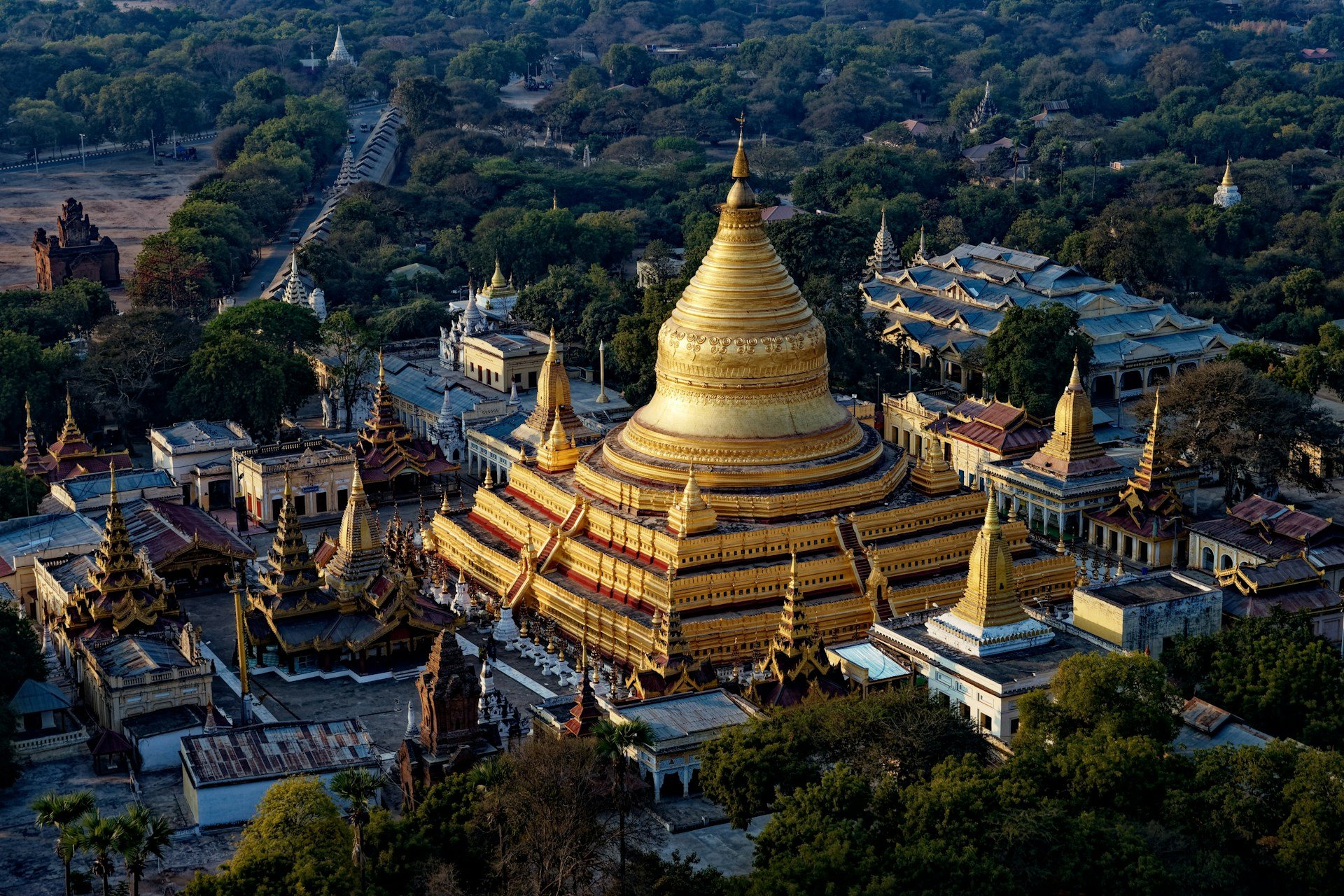
Over 2,000 temples rising from the plain at Bagan. The floating villages of Inle Lake. Monks in saffron collecting alms in the grey dawn. And since February 2021, a military coup, a civil war, and a humanitarian crisis that has reshaped what it means to visit this country and requires that anyone going does so with their eyes open about what they're walking into and whose interests are served by their being there.
Going Anyway: What You Need to Know
There is no clean way to write about Myanmar in 2026. The military coup of February 1, 2021 ended what was at best a transitional democracy, arrested the elected government including Aung San Suu Kyi, and launched a brutal crackdown on peaceful protesters that killed hundreds in the first months and has continued as an armed conflict since. As of 2026, fighting between the military junta (the SAC — State Administration Council) and a coalition of ethnic armed organizations and People's Defence Force resistance fighters is ongoing across large parts of Sagaing, Chin, Shan, Kayah, and Kayin states. This is not a low-level insurgency. It is a civil war, and significant portions of the country that visitors traveled freely in before 2021 are now active conflict zones.
This does not mean Myanmar is uniformly inaccessible. Bagan, Inle Lake, Mandalay, and Yangon have continued to receive visitors throughout the post-coup period. The main tourist circuit — now significantly scaled back from pre-coup visitor numbers — functions. Local guesthouses, restaurants, boat operators, and guides whose livelihoods were already devastated by COVID are now further devastated by the collapse in tourism that followed the coup. Many Myanmar-based civil society organizations and local advocacy groups have explicitly asked visitors to continue coming and to spend money directly with local businesses rather than boycott — the argument being that the people who suffer from a tourism boycott are not the generals but the ordinary Myanmar people who depend on the tourist economy.
The counter-argument is that every visa generates revenue for the junta, that some hotel and transport operations have links to military-connected conglomerates, and that tourism provides a degree of normalization and international legitimacy to a government that has lost both. The NUG (National Unity Government — the shadow government formed by elected MPs who escaped arrest) has not issued a blanket call to boycott tourism to Myanmar and has instead called for targeted pressure on military-linked businesses.
This guide documents Myanmar as it is — the temples, the lakes, the food, the culture, the logistics — while being honest about the political context that no travel guide should pretend doesn't exist. The decision about whether to go is yours to make with full information, not ours to make for you by omitting the uncomfortable parts. Check your government's current travel advisory before booking — this is not optional boilerplate for Myanmar. It is the minimum.
Myanmar at a Glance
A History Worth Knowing Before You Arrive
Myanmar's history is not background material. It is the active context of every conversation you will have in the country, every building you walk past, every checkpoint you might encounter, and every decision about where to eat and sleep that has political implications you should understand. The short version: Myanmar has been governed by its military for most of its independent history, interrupted by a brief and contested democratic opening from 2010 to 2021 that ended badly.
The longer version begins with the Pagan Empire, founded in the 9th century on the banks of the Irrawaddy River, which unified the peoples of the central plain and began the extraordinary temple-building project that produced Bagan — over 10,000 religious structures built between the 11th and 13th centuries, of which more than 2,000 survive in some form. The Mongols sacked Pagan in 1287 and the empire fragmented, with the subsequent centuries featuring a succession of Burman and Mon kingdoms until the Konbaung Dynasty unified the region in the 18th century and expanded to the point of provoking three wars with the British East India Company between 1824 and 1885. The British won all three. Burma became a province of British India in 1886.
The British period produced what the British period produced everywhere it went: a colonial infrastructure that served extraction rather than development, an ethnic complexity deliberately managed through divide-and-rule policies that armed different communities against each other, and a generation of educated nationalists who studied British law and used it to argue for independence. General Aung San led the independence movement, negotiated the Panglong Agreement in 1947 with the ethnic minority leaders that promised a federal state, and was assassinated six months before independence along with most of his cabinet. His daughter — Aung San Suu Kyi — would become the defining figure of Myanmar's democratic movement fifty years later. The Panglong Agreement was never implemented and the ethnic conflicts it was supposed to resolve have continued, in various forms, ever since.
General Ne Win's military coup in 1962 installed a form of socialist military rule that isolated Myanmar from the world for the next half-century. The 8888 Uprising of August 8, 1988 — student-led pro-democracy demonstrations that spread across the country — was crushed with approximately 3,000 killed. Aung San Suu Kyi, who had returned from Britain to nurse her dying mother, spoke to massive crowds and became the movement's leader, earning a Nobel Peace Prize and spending fifteen of the next twenty years under house arrest. The 2010 elections — boycotted by her party and widely considered fraudulent — began a nominal transition. The 2015 elections were genuinely free; her NLD party won in a landslide. The military, however, retained control of key ministries, security forces, and veto power over constitutional changes under a constitution they had written to protect their interests.
The February 2021 coup ended even this constrained democratic opening. The context — the military's claim of electoral fraud in the 2020 elections that the NLD won by a wider margin than 2015 — fooled nobody. The spring 2021 crackdowns killed hundreds. The resistance that formed — the PDF, coordinated with established ethnic armed organizations — has evolved into an armed conflict that by 2024 and 2025 was producing significant territorial gains for anti-junta forces and significant military losses for the SAC, producing a conflict with a genuinely uncertain outcome. The country in 2026 is in the middle of this, not at the end of it.
The first unified Burmese state builds over 10,000 religious structures at Bagan. The Mongols sack Pagan in 1287 and the empire fragments.
Britain fights three wars to take Burma. By 1886, all of Burma is a province of British India. Rangoon (Yangon) becomes a colonial commercial center.
General Aung San negotiates federal union with ethnic leaders. He is assassinated six months before independence along with most of his cabinet. The agreement is never implemented.
Burma gains independence from Britain on January 4. Ethnic armed conflicts begin almost immediately in Karen, Shan, and other border regions.
General Ne Win takes power in a coup. Myanmar is governed by the military, in various formations, for the next 60 years.
Mass pro-democracy protests crushed with approximately 3,000 killed. Aung San Suu Kyi emerges as the movement's leader.
The military junta renames the country from Burma to Myanmar. Democratic governments and dissidents continue using Burma to signal non-recognition.
Aung San Suu Kyi's NLD wins a landslide majority. A constrained democratic transition begins, with the military retaining control of key ministries and security forces.
The SAC seizes power on February 1. Aung San Suu Kyi and other NLD leaders are arrested. The crackdown on protests kills hundreds in the first months.
Resistance forces (PDF + ethnic armed organizations) gain territory against the SAC. Ongoing conflict across Sagaing, Chin, Shan, Kayah, and Kayin regions. Outcome uncertain.
The Main Sites — and What's Currently Accessible
The destinations below represent Myanmar's main visitor sites in normal times. As of 2026, accessibility varies by region and the security situation changes. Bagan, Inle Lake, Mandalay, and Yangon have generally remained accessible to visitors throughout the post-coup period. Areas in Sagaing, Chin, Shan State (particularly the border regions), Kayah State, and Kayin State have active conflict and are not safe for visitors. Check your government's current advisory for specific zone-by-zone guidance before planning any itinerary.
Bagan
The central experience of Myanmar travel and one of the great archaeological sites in Asia. Between the 11th and 13th centuries, the Pagan kings built over 10,000 religious structures on this plain beside the Irrawaddy River. More than 2,000 survive — temples, pagodas, and monasteries in various states of preservation, spread across 40 square kilometers of scrub plain and viewed at their most extraordinary at dawn, when the mist fills the valley and the sun begins catching the gold-tipped spires. Hot air balloon flights over the plain at sunrise — when the landscape below is entirely temples and mist from horizon to horizon — are one of Southeast Asia's finest experiences. Allow three full days minimum.
Inle Lake
At 900 meters altitude in the Shan Hills, Inle Lake is one of those places where the description — a freshwater lake where fishermen row with one leg wrapped around a long paddle, villages built on stilts over the water, floating gardens anchored to the lakebed and growing tomatoes and flowers — sounds like tourism copy until you're there and realize it is simply accurate. The Intha people have lived on the lake for generations and the leg-rowing technique evolved because both hands were needed to manage fishing nets. The morning light on the water, with the mountains behind the mist and the wooden boats moving silently between the floating gardens, is one of Southeast Asia's most specific and irreplaceable experiences.
Yangon
The former capital and still the commercial and cultural heart of Myanmar. The Shwedagon Pagoda — the most sacred Buddhist site in Myanmar, a 98-meter golden stupa gilded with 27 metric tons of gold and topped with a diamond-encrusted orb containing hairs of the Buddha — is at its most moving at dawn, when monks and worshippers fill the marble terrace that circles the stupa's base and the light catches the gold from the east. The colonial-era downtown, built by the British and now crumbling in a way that is more beautiful than maintained, contains buildings that would be carefully preserved in any European city. The street food at night markets around Chinatown on 19th Street is excellent. Plan two to three days.
Mandalay
The last royal capital of Burma before the British conquest, and the cultural and religious center of upper Myanmar. The Mandalay Palace — a reconstruction, as the original was destroyed in WWII — sits within a square moat and massive outer walls at the city's center. The real highlights are the monasteries and religious sites surrounding the city: Mahamuni Pagoda, where pilgrims add gold leaf to a Buddha image until it is a lumpen mass of accumulated devotion centimeters thick. The Mahagandayon monastery at dawn, where hundreds of monks eat in silent procession in the refectory. The teak bridge at Amarapura, the U Bein Bridge, crossing the lake at sunset, 1.2 kilometers of teak on stilts.
Mrauk-U, Rakhine State
The former capital of the Arakan Kingdom, with Buddhist temples as remarkable in their own way as Bagan — older in some cases, more weathered, and almost entirely without the tourist infrastructure that Bagan now has. Mrauk-U was the center of a maritime trading state that interacted with Portuguese, Dutch, and Mughal merchants in the 16th and 17th centuries. The temples are being slowly reclaimed by jungle and the town around them is a small provincial settlement with minimal visitor facilities. Critically: Rakhine State requires checking current security and access conditions very carefully before attempting to visit. The situation in Rakhine has been volatile since well before the 2021 coup.
Pyin Oo Lwin (Maymyo)
A hill station at 1,070 meters built by the British as a summer retreat from Mandalay's heat, with a remarkably well-preserved colonial character — Tudor-style guesthouses, strawberry farms, a botanical garden, horse-drawn carriage taxis still operating on the main streets, and a temperature cool enough that sweaters are relevant even in summer. The Gokteik Viaduct — a railroad trestle bridge built by the Pennsylvania Steel Company in 1901 that the colonial train crosses 100 meters above the gorge — is one of Myanmar's great railway journeys. Two hours from Mandalay. Check current train operation status.
Kyaiktiyo (Golden Rock)
A gilded boulder balanced on the edge of a cliff at 1,100 meters altitude — a rock that by any engineering analysis should have rolled off centuries ago and hasn't, which the Buddhist tradition explains by a Buddha hair enshrined inside. The pilgrimage to Kyaiktiyo — crowded, colorful, loud with prayer and devotion — gives an unmediated view of popular Buddhism in practice that the curated experience of Shwedagon doesn't provide. The trail up the mountain, lined with pilgrims buying offerings and monks collecting alms, is more memorable than the destination and the destination is already remarkable.
Ngapali Beach
The only significant beach destination on Myanmar's western Rakhine coast, with a long arc of white sand, clear water, and a fishing village at its southern end where the catch comes in every morning. Less developed than Thai beach destinations, quieter, and more expensive to reach (domestic flight from Yangon). Check the current security situation in Rakhine State before booking — access to Ngapali has varied since 2021 and requires current confirmation rather than assumption based on historical accessibility.
Culture & Etiquette
Myanmar's culture is shaped by Theravada Buddhism at a depth and density that distinguishes it even from its Buddhist neighbors. Monks are everywhere — the crimson robes of the Shan, the dark maroon of the Burman tradition — and the relationship between laypeople and the monastic community is the living center of Myanmar social life. Merit-making through donations to monks and pagodas, the role of the monastery as community center and school, the daily almsgiving circuit at dawn — these are not performances for visitors. They are the social fabric of a country that, under everything that is happening politically, is still living its religious life with the seriousness it deserves.
Myanmar people's warmth toward foreign visitors has remained one of the most remarked-upon things about traveling there, even post-coup. People who have been through a great deal tend to respond in one of two ways: they close inward or they open outward with an intensity born of the knowledge that human connection matters. Most Myanmar people have done the latter, and conversations in guesthouses, on buses, over shared meals, have a directness and depth that is specific to the country's current moment.
This applies at the base of the approach, not just at the entrance — often at the bottom of the stairway or before the covered walkway begins. You will be walking on marble that heats in the midday sun and that is cool and clean in the morning. The early morning visits are correct for this reason as much as any other.
At all religious sites. Sarongs are available to borrow or buy at every major pagoda. In towns and markets, modest dress is appreciated without being strictly enforced, but the context of the country means that respectful presentation is more important than in more tourist-saturated destinations.
"Mingalaba" (hello — an auspicious greeting), "cè-zù tin-ba-deh" (thank you), and "kaung-ba-deh" (it's good/delicious) will get you immediate and genuine warmth. Myanmar people notice the effort precisely because so few visitors make it.
Given the political context, where you spend matters more here than almost anywhere else. Locally owned guesthouses, family restaurants, independent boat operators, and local guides rather than any business with visible connections to military-associated conglomerates. Your tour operator can advise; do your own research.
Myanmar people are aware that conversations with foreigners can have consequences. Some will speak openly; many will not, particularly in the presence of others. Take cues from the person you're with, never initiate political conversations in semi-public spaces, and never put anyone in a position of political exposure they didn't choose.
In Theravada Buddhist practice, monks observe precepts that prevent them from direct contact with women. Women should not touch monks, sit next to them on public transport, or hand objects directly to them — items should be placed on a cloth or surface for the monk to take. Men can hand items to monks directly.
The feet are the lowest, most spiritually impure part of the body in Burmese Buddhist culture. At temples, sit with feet tucked behind you or to the side, never extended toward an altar or a monk. At any religious gathering, be aware of how your feet are directed.
Do not photograph checkpoints, military vehicles, uniformed soldiers, or any military infrastructure. This is not a cultural sensitivity — it is a genuine security concern. Delete any incidental photographs immediately if they accidentally include military subjects.
The left hand is considered unclean in Myanmar culture. Always use the right hand to pass money, food, or objects, or use both hands if the item is significant. This applies in restaurants, shops, and all social transactions.
In the current political climate, photographs or social media content that shows local people in political contexts, at protests, or making political statements could expose them to serious danger. Treat your phone and camera with the awareness that your content has real consequences for the people in it.
Theravada Buddhism
Approximately 88% of Myanmar's population is Theravada Buddhist and the religion shapes daily life at a depth that is immediately visible: novice monks as young as seven collecting alms at dawn, laypeople making offerings at shrines in the corner of shops and offices, the calendar of religious festivals that governs much of the country's social rhythm. The role of the monastery as school, community center, and welfare institution is particularly visible in rural areas where government infrastructure is absent. The spiritual authority of senior monks carries political weight that the military has historically respected and occasionally tried to co-opt — the Saffron Revolution of 2007, led by monks protesting against the military government, was a significant moment in this relationship.
Thanaka
The yellowish-white paste that Myanmar women (and some men and children) apply to their faces and arms is thanaka — ground from the bark of the Thanaka tree and mixed with water on a flat stone called a kyauk pyin. It serves as sunscreen, cosmetic, and skin treatment simultaneously, and has been in continuous use for over 2,000 years. The patterns vary: some women apply it in solid patches on the cheeks, others in circular or leaf patterns. It is one of the most distinctive visual signatures of Myanmar and one of the more genuinely local practices — not performed for tourists, not imported from anywhere, simply daily life.
Pwè (Festival Performances)
The traditional outdoor performance culture of Myanmar — zat pwè, the classical dance-drama form that dramatizes Jataka tales from the life of the Buddha, and anyein pwè, the comic variety format with clowns and singers — is one of the great performance traditions of Southeast Asia. A full pwè runs from evening through dawn, and the performers, particularly the male comedians who improvise commentary on current events with a political acuity that operates just under the level of overt statement, have historically been one of Myanmar's most durable forms of social commentary. Ask your guesthouse if there is a local pwè during your visit.
Ethnic Diversity
Myanmar recognizes 135 distinct ethnic groups in its official count — a diversity that is the country's greatest cultural richness and the source of its most intractable political conflicts. The Bamar (Burman) majority occupy the central lowlands; the Shan, Kayah, Kayin (Karen), Chin, Kachin, Mon, and Rakhine peoples occupy the border highlands and coastal regions, many with their own languages, religious traditions (including Christianity and animism alongside Buddhism), and — in many cases — their own armed organizations that have been fighting for autonomy from the central government for decades. Visiting Myanmar without some understanding of this complexity produces a flatter experience of a more interesting country.
Food & Drink
Myanmar cuisine is one of the most underrated in Southeast Asia, partly because the country was closed for so long that its food culture never developed the international profile of Thai or Vietnamese cuisine. It sits at the intersection of Indian, Chinese, and uniquely Burmese culinary traditions, deploying fermented flavors (laphet — fermented tea leaves — is the most specifically Burmese ingredient in any pantry), rich fish-based broths, and a salad tradition that uses ingredients — lotus root, ginger, tofu, dried shrimp, fermented tea leaf — in combinations that are entirely local.
The most important food fact about Myanmar: Mohinga, the fish noodle soup eaten as breakfast across the country, is one of the great morning foods in Asia. If you are having breakfast from a street vendor at 7am and someone asks what you'd like, the answer is always Mohinga. This is not a preference. It is simply the correct answer.
Mohinga
The national breakfast: thin rice noodles in a rich catfish broth flavored with lemongrass, banana stem, and fish paste, topped with crispy fried fritters, sliced hard-boiled eggs, and fresh coriander, with lime squeezed over at the table. It is eaten standing from street carts at dawn and sitting in simple restaurants until mid-morning when it typically sells out. Every region has its version and every family has their recipe and the debates about whose is best are as contentious as they are unresolvable.
Laphet Thoke (Tea Leaf Salad)
The most distinctively Burmese dish: fermented tea leaves mixed with sesame seeds, fried garlic, dried shrimp, tomatoes, chilli, and the specific crunch of fried lentils, yellow beans, and peanuts, all tossed together at the table. The fermented tea is slightly bitter, the combination of textures is unlike any other salad anywhere, and the caffeine from the tea leaves means eating a large portion of laphet thoke in the evening has the same effect as a strong coffee. It is offered as an end to meals and shared between friends and it is one of those dishes that cannot be reproduced outside its country of origin.
Shan Noodles
From the Shan plateau in eastern Myanmar: flat rice noodles with a light, clear, slightly sweet pork or chicken broth, topped with sesame oil, pickled vegetables, and crushed peanuts, served cold or warm. The Shan version is lighter and cleaner-flavored than the Bamar tradition, reflecting the Chinese influence on Shan cuisine. The best versions in Yangon and Mandalay are at Shan-operated restaurants where the owner is usually from the state itself.
Myanmar Curry
Not the curry of India or Thailand: Myanmar curry (hin) is cooked with a base of onion, garlic, ginger, tomatoes, and chilli slowly reduced in oil — the oil separation that floats on the top of a Myanmar curry is intentional and indicates that the curry has been cooked long enough. Served with plain rice, a clear soup, pickled vegetables, and a small dish of fresh herbs and vegetables on the side, it is a meal structure that repeats across the country with variations by region and income level.
Gin Thoke (Ginger Salad)
Shredded young ginger mixed with fried garlic, sesame seeds, dried shrimp, coconut, lime juice, and various crunchy additions — a salad that is more pungent than almost any other and more refreshing for it. Often served as a starter or alongside other dishes. The ginger is young and not yet fibrous, so the shreds are tender and the flavor is bright rather than harsh. A good gin thoke alongside a Myanmar curry and steamed rice is the local lunch.
Tea House Culture
The Myanmar tea house — a simple establishment open from early morning through evening, serving sweet milky tea (laphet yay — poured in layers with condensed milk at the bottom), Indian-influenced roti and samosas, and sometimes full meals — is the social institution of Myanmar cities. Old men play chess. Students debate. Vendors take breaks. The conversations that happen in tea houses have historically been where Myanmar's political and cultural life was conducted when public spaces were dangerous. The tea house is still the right place to sit for a few hours and watch the country go about its day.
When to Go
Myanmar has a clear monsoon pattern. November through February is the dry season and the universally correct time to visit: cool temperatures, clear skies, and the Bagan balloon flights operating at maximum frequency. March and April are hot — Bagan in April reaches 40°C and the temples radiate the heat back in a way that makes midday exploration genuinely uncomfortable. May through October is the monsoon: heavy rains, flooding, and reduced accessibility in rural areas, though Inle Lake is particularly beautiful in the lush green of the wet season and prices are significantly lower.
Cool Dry Season
Nov – FebThe right time to visit. Temperatures comfortable across the country (Bagan at 20–28°C, Inle Lake cool at altitude). Balloon flights over Bagan operate daily. The light on the temples in the early morning is the particular golden quality that the photos suggest. December and January are peak — book accommodation and balloon flights three to four months ahead.
Shoulder (March)
MarMarch is transitional: hot but manageable, with the balloon flights still running and the visitor numbers beginning to thin. The light is excellent for photography. April is too hot for Bagan and most lowland sites — if you're visiting in April, prioritize Inle Lake and the hill stations above 900 meters.
Monsoon
May – OctHeavy rain but not constant — usually afternoon downpours with clear mornings. Inle Lake is exceptionally lush and the floating gardens are at their fullest. Prices are significantly lower. Balloon flights over Bagan are suspended. Rural roads may be impassable after heavy rain. The country is quieter and in some ways more itself without the peak-season tourism.
Peak Heat
AprApril is the hottest month: Bagan reaches 40°C, Yangon is insufferable by noon, and the country is in a sort of suspended animation between the cool season and the rains. The Thingyan water festival (Burmese New Year in mid-April) is the exception — a three-day national water fight of extraordinary enthusiasm — but the heat either side of it is challenging for most visitors.
Planning Your Myanmar Trip
Ten to fourteen days is sufficient for the main circuit: Yangon, Bagan, Inle Lake, and Mandalay. This can be done by domestic flights between centers (fast and not expensive) with full days at each destination. Two weeks also allows a slower pace that reveals more — Myanmar rewards days of wandering without agenda, and the tea house hours and the conversations that happen in guesthouses are part of what the country offers that cannot be scheduled.
Given the current situation, flexible bookings are more important for Myanmar than for most destinations. The security situation can affect transport routes and specific sites with limited notice. Build flexibility into your itinerary, have accommodation bookings that can be changed, and have a clear plan for what you do if a planned destination becomes inaccessible while you're in the country.
Yangon
Day one: arrive, walk the colonial downtown from Sule Pagoda to the riverfront, evening at 19th Street for dinner. Day two: Shwedagon Pagoda at dawn (this requires an early alarm and is the correct way to experience it — arrive as the monks are completing their alms circuit and the worshippers are beginning their morning prayers, before the heat and the tour groups arrive simultaneously). Afternoon at the Bogyoke Aung San Market for gems, lacquerware, and textiles. Evening tea house on Anawrahta Road.
Bagan
Fly from Yangon to Bagan (1 hour). Three full days: the balloon flight on the morning of day three if booked (non-negotiable if available — do this first). Days four and five by e-bike (electric bicycle) between temples at your own pace — the e-bike is the correct Bagan vehicle, faster than a bicycle and quieter than a car, able to reach small temples on sand tracks that tour vehicles don't attempt. Sunset from Shwesandaw Pagoda. Dawn from wherever you find a good vantage by day five.
Inle Lake
Fly from Bagan to Heho (45 minutes) and transfer to the lake. Three days: day six for the morning boat through the floating gardens and the leg-rowing fishermen in the early light, the Phaung Daw Oo Pagoda, the weaving workshops on the water. Day seven: rent a bicycle and cycle the lake's western shore through the villages and pagodas above the water level. Day eight: Indein — a collection of ruined stupas on the lakeshore, reached by long-tail boat, covered by encroaching jungle but slowly being cleared, with the morning light through the stupa forest extraordinary at 7am.
Mandalay + Departure
Fly from Heho to Mandalay (45 minutes). Day nine: Mandalay Hill at dawn for the panorama, Mahagandayon Monastery for the monks' meal procession, Mahamuni Pagoda for the gold-leaf Buddha. Day ten: the U Bein teak bridge at Amarapura in the afternoon light and the drive to the airport for the evening flight home or onward.
Yangon
Three days for Yangon done properly: Shwedagon at dawn, the National Museum, the colonial downtown walking circuit with the Botahtaung Pagoda on the river. A day trip to Bago (an hour by bus) for the Shwemawdaw Pagoda — at 114 meters, taller than Shwedagon — and the Kyaikpun Pagoda's four seated Buddhas. The Yangon Film School alumni regularly screen films at the Thamada Cinema on Alan Pya Pagoda Road — check the schedule.
Bagan
Four days gives Bagan proper space: the balloon flight, two full days of independent e-bike exploration including the less-visited eastern section of the plain where Chinese restoration efforts have been controversially applied, and a day trip on the Irrawaddy by local boat to the village of Yenanchaung and back — four hours on the river past the scrub plain with the temples visible on the banks, the actual Irrawaddy experience rather than the curated version.
Inle Lake
Four days including the full lake circuit, the Indein ruins, a day trip to the markets rotating through the lake villages on a five-day cycle, and an overnight at Nyaung Shwe town for the evening market and the guesthouse conversations that are some of the best in the country. The morning market at Thalay, accessible by bicycle from Nyaung Shwe, is the least tourist-facing version of the lake's commercial life.
Mandalay
Three days: Mandalay proper plus day trips. Mingun (upriver by boat, an hour each way) for the unfinished Mingun Pahtodawgyi pagoda — begun by King Bodawpaya in 1790 and never completed, it would have been the largest pagoda in the world — and the Mingun Bell, the largest ringing bell on earth at 90 metric tons. Pyin Oo Lwin by bus for the botanical garden and the colonial hill station atmosphere. Amarapura for U Bein Bridge at sunset on the final evening.
Yangon
Full Yangon including the day trip to Kyaiktiyo (Golden Rock) — a four-hour bus journey and a short truck ride up the mountain, arriving at the gilded boulder balanced on the cliff edge for sunset and staying overnight to experience dawn at the summit without the day crowds. Return to Yangon for the connection north.
Bagan
Five days including the slow boat from Mandalay to Bagan (if security on this route is confirmed — check current status). The Irrawaddy boat journey between Mandalay and Bagan — one to two days depending on vessel — passes through the central Myanmar plain with pagodas on the banks and villages appearing briefly at each sandbar and provides a travel perspective on the country that the flights don't.
Inle Lake + Kalaw Trek
Five days: three on the lake plus a two-day trek from Kalaw to Inle Lake through Shan and Pa-O ethnic minority villages, arriving at the lake on foot through the hills. The Kalaw trek is one of Myanmar's finest multi-day walks when it's operating — confirm current status given the Shan State security situation.
Mandalay + Surrounds
Five days covering Mandalay, Mingun, Pyin Oo Lwin, and the Gokteik Viaduct railway journey. The teak workshops and marble carvers of the religious artisan quarter around Mandalay Hill are worth a half-day dedicated specifically to watching craftspeople work — the teak furniture-makers and stone Buddha sculptors are producing work that supplies monasteries and temples across the country.
Ngapali or Mrauk-U (if accessible)
Subject to current security conditions in Rakhine State: either Ngapali Beach for three days of rest, or Mrauk-U for the extraordinary jungle-overgrown temples of the Arakan Kingdom if the access route is safe. Fly back to Yangon for departure.
Check Advisories — Seriously
Myanmar's security situation changes at a speed that makes pre-trip research insufficient as a substitute for real-time advisory monitoring. Check your government's advisory before booking, check again before flying, and download your government's travel alert app for push notifications during your trip. The FCDO, US State Department, and Australian DFAT all maintain detailed zone-by-zone guidance. Register with your embassy's travel alert system before arrival.
Emergency resources →Cash in USD
Myanmar operates on a dual currency. Kyat is the official currency; USD cash (new, unmarked, post-2006 bills only — older or damaged bills are refused) is accepted at tourist-facing venues. ATMs have been unreliable since the coup and the banking system has significant restrictions. Bring more USD cash than you expect to need. New notes only. No folds, tears, or pen marks.
Connectivity & VPN
Local SIMs from Ooredoo and MPT are available at the airport. 4G works in Yangon, Mandalay, Bagan, and Nyaung Shwe (Inle). VPN use is technically illegal under the junta's telecommunications law but is in practice widely used by locals and visitors alike — download and configure a reputable VPN before arrival, as the junta periodically blocks the download sites. Social media platforms are intermittently blocked.
Get Myanmar eSIM →Vaccinations
Recommended: Hepatitis A, Hepatitis B, Typhoid, and routine vaccines. Japanese Encephalitis for rural and extended stays. Rabies worth considering given dog populations and distance from treatment in rural areas. Malaria prophylaxis recommended for some border and forested areas — the central tourist circuit (Yangon, Bagan, Inle Lake, Mandalay) has lower risk but consult your travel clinic for current recommendations.
Full vaccine info →Travel Insurance
Comprehensive travel insurance including medical evacuation is essential. Read the policy carefully — some insurers exclude countries with active travel advisories or active conflict. Specialist insurers covering higher-risk destinations exist and are worth the additional premium for Myanmar specifically. Medical facilities in Yangon are the best in the country and limited; outside the main cities, evacuation to Bangkok is standard for serious cases.
Where Your Money Goes
The ethical spending question in Myanmar: prefer locally owned guesthouses (look for family operations rather than large chains), independent restaurants, local boat operators and guides who are self-employed, and artisans selling directly from workshops. Avoid any business with visible connections to military conglomerates (UMEHL, MEC, and their subsidiaries are the main ones to research). Your tour operator and your guesthouse owner can both advise on specific local alternatives.
Transport in Myanmar
Myanmar's transport infrastructure has always been limited and since 2021 has become more unpredictable — certain routes have been affected by security conditions, fuel shortages have periodically disrupted both road and air travel, and the general economic disruption of the post-coup period has affected service frequency and reliability. The domestic flight network between the main tourist centers (Yangon, Bagan, Mandalay, Heho for Inle Lake) remains the most reliable long-distance option and is generally affordable. Ground transport requires checking current conditions for specific routes.
Domestic Flights
$40–120 one-wayThe most reliable connection between the main tourist centers: Yangon–Bagan (1 hour), Yangon–Mandalay (1 hour), Bagan–Heho/Inle (45 min), Heho–Mandalay (45 min). Myanmar National Airlines and KBZ Air operate the main routes. Book at least a few weeks ahead in peak season. Domestic airport security requires arrival 90 minutes before departure.
Express Bus
$8–25 per routeAir-conditioned express buses between major cities are comfortable and dramatically cheaper than flying. Yangon to Mandalay is 8 to 9 hours overnight; Mandalay to Bagan is 5 to 6 hours. JJ Express and Mandalar Minn are the better operators. Check current route security before booking any bus outside the central corridor — some routes pass through areas with security concerns.
Train
$5–30 per routeMyanmar's train network is slow, old, and often significantly delayed. The Yangon to Mandalay overnight train takes 12 to 16 hours for a journey that a bus covers in 8. The exception: the Gokteik Viaduct crossing on the Mandalay to Pyin Oo Lwin route is a specific train experience worth the schedule uncertainty. Check current service status as some routes have been affected by the conflict.
Irrawaddy Slow Boat
$30–80 per routeThe slow boat between Mandalay and Bagan — when operating — takes one to two days on the Irrawaddy River and provides the most genuine travel experience on the route. The government MIPS ferry and private tourist boats operate different grades of comfort. Confirm current security and operational status before booking, as river routes have been affected periodically since 2021.
E-Bike (Bagan)
$6–10/dayElectric bicycles are the correct vehicle for Bagan temple exploration. Quiet enough not to disturb the atmosphere, fast enough to cover the 40-square-kilometer plain without exhaustion, and able to navigate the sand tracks to remote temples that cars and tuk-tuks cannot. Available from every guesthouse and rental shop in Old Bagan and Nyaung-U. Charge your e-bike overnight — the range on a full charge covers a full day of exploration comfortably.
Long-Tail Boat (Inle Lake)
$15–25/half dayThe standard mode of transport on Inle Lake: narrow wooden boats with a long-tailed outboard motor, steered through the channels between the floating gardens and into the open lake. Arranged through your guesthouse. Share a boat with other travelers to reduce cost or hire privately for the full-day circuit. The morning departure — just after dawn, when the leg-rowing fishermen are working in the golden light before the tourist rush — is the time to be on the water.
Taxi & Grab (Yangon)
2,000–8,000 MMK/tripGrab operates in Yangon and is the safest and most reliable urban transport option. Street taxis exist but the standard advice about negotiating price before entering applies strictly. Taxis in Yangon are older vehicles and air conditioning is variable — the Grab vehicles tend to be in better condition. For airport transfers, pre-booked is preferable to arrival-hall negotiation.
Yangon Circular Train
200–500 MMKThe circular train that loops through Yangon's inner and outer suburbs is technically transport and experientially something else: a two-to-three-hour journey on a slow train through neighborhoods that no tourist would otherwise visit, past local markets set up at trackside stations and households visible from the window at domestic intimacy. It is one of the best things to do in Yangon and costs almost nothing. Take the full loop from Yangon Central Station; bring a window seat and no particular agenda.
Accommodation in Myanmar
Myanmar's accommodation range runs from family-run guesthouses at $10 to $20 per night to international hotel brands and boutique heritage properties. The middle ground — locally owned guesthouses and small hotels in the $25 to $60 range — is the most interesting and, in the post-coup context, the most ethically straightforward. The large international branded hotels in Yangon and Mandalay have complex ownership structures that require research; the family guesthouse in Nyaung Shwe or the small hotel in Old Bagan has much clearer local ownership.
Family Guesthouses
$15–50/nightThe backbone of Myanmar's independent travel scene and the most ethically clear spending choice. Family-run guesthouses in Nyaung Shwe (Inle Lake base), Old Bagan, and neighborhoods away from Yangon's hotel district are typically licensed, locally owned, and provide the most direct benefit to local families. Quality varies but the better ones offer extraordinary breakfast spreads and guesthouse owners who are often the best source of current local information.
Boutique Hotels
$60–200/nightMyanmar has some genuinely excellent boutique properties — the Governor's Residence in Yangon (a converted colonial teak mansion) and the smaller boutique hotels in Bagan's Nyaung-U area represent the upper mid-range. Research ownership before booking any hotel that might have links to military-associated conglomerates. Your tour operator or a quick online search of the property's ownership can usually clarify.
Inle Lake Floating Hotels
$80–300/nightSeveral hotels on Inle Lake are built directly over the water on stilts — the Inle Princess Resort and the Pristine Lotus Spa Resort are the most known. The experience of waking to the lake through floor-to-ceiling windows and watching the leg-rowing fishermen pass in the morning mist from your bed is genuinely extraordinary. These are among the most atmospheric stays in Southeast Asia at prices that, even at the high end, are modest by regional standards.
Bagan Temple Area Stays
$30–150/nightStaying within the Bagan Archaeological Zone gives you dawn and dusk access to the temples without the minibus commute. Old Bagan has a few upmarket options; Nyaung-U, the main town north of the zone, has the widest range of budget and mid-range guesthouses. The New Bagan area has some good family guesthouses within cycling distance of the main temple clusters.
Budget Planning
Myanmar is affordable for the quality on offer. The Bagan balloon flight — the biggest single discretionary expense — is around $320 to $380 per person and is worth it. Everything else on the main circuit is significantly cheaper than equivalent experiences in Thailand or Vietnam. The economic disruption of the post-coup period has pushed prices down in some areas while the kyat's depreciation means USD purchasing power for visitors is higher than pre-coup. Domestic flights are the main ongoing transport cost.
- Family guesthouse (shared or private room)
- Mohinga, tea houses, local restaurants
- Buses between cities
- Bicycle or e-bike for local exploration
- Free or low-cost temple visits
- Boutique guesthouse or small hotel
- Mix of local restaurants and better dining
- Domestic flights between main centers
- Shared boat tours at Inle Lake
- Private guide for temple sites
- Heritage hotels (Governor's Residence, floating hotels)
- Full restaurant dining
- Bagan balloon flight (~$350)
- Private boat hire at Inle Lake
- Private guide and vehicle for all sites
Quick Reference Prices
Visa & Entry
Myanmar's visa system has been in flux since the 2021 coup. The e-visa system (evisa.moip.gov.mm) has been suspended and reinstated at various points, and the application process and fees have changed repeatedly. As of the most recent confirmed information, most visitors require either an e-visa applied online before arrival or a visa on arrival at Yangon International Airport. Check the current situation with the Myanmar immigration portal or your nearest Myanmar embassy before making any travel plans — this is one of those cases where a travel guide's information may be outdated by the time you read it.
Myanmar's visa rules have changed multiple times since 2021. Check evisa.moip.gov.mm or your nearest Myanmar embassy for the current system before travel. Do not rely on pre-2021 information.
Family Travel & Pets
Myanmar is a complex destination for families in 2026 — not because the cultural and physical environment is particularly difficult for children, but because the political and security situation adds a layer of risk management that most families visiting Southeast Asia don't expect to navigate. Families with children who are adaptable, comfortable with variable infrastructure, and whose parents have done thorough current advisory research will find Myanmar genuinely rewarding. Families expecting seamless Southeast Asian tourist infrastructure should wait until the security situation stabilizes further.
For families who do go: Myanmar people's warmth toward children is notable even by Asian standards. Children who visit temples, try the food, and engage with local people with any degree of openness will have interactions that are more immediate and genuine than in more heavily touristed destinations. The Bagan balloon is suitable for children over a certain age and weight (operators specify minimums). Inle Lake's boat travel is calm and child-appropriate. The heat, the temple walking, and the variable bathroom situations are the practical challenges.
Bagan Balloon
Most Bagan balloon operators have a minimum age of around 7 years and minimum height or weight requirements. The flight is 45 to 60 minutes over the temple plain at dawn — not physically demanding, not cold, and visually one of the most dramatic experiences available to a family in Southeast Asia. Children who have flown before and are comfortable with height will find it extraordinary. Check age and weight minimums with your specific operator when booking.
Temples at the Right Time
The Bagan temples and Yangon's Shwedagon are not air-conditioned and midday visiting in peak heat is genuinely uncomfortable for adults, let alone children. Early morning visits — 6 to 9am — are the correct approach for families: cooler temperatures, better light, fewer crowds, and the temples populated by actual worshippers rather than tour groups, which is more interesting for children than the reverse.
Inle Lake Boat
The long-tail boat experience on Inle Lake is child-friendly for most ages — calm water, interesting scenery, and the leg-rowing fishermen who are genuinely fascinating to children in a way that temple visits sometimes aren't. The floating markets and the weaving workshops on the water provide activity and novelty. Bring sun protection and hats; the lake's altitude means UV exposure is high despite the temperature feeling mild.
The Natural History Museum (Yangon)
Yangon's Natural History Museum is a Soviet-era institution with display cases that look like they've been unchanged since 1975 and a collection of Myanmar's fauna, flora, and geological specimens that has a specific charm born of its complete absence of modernization. Children who are interested in animals will find it engaging; children who are not will find the surrounding neighbourhood walk more interesting. Worth an hour.
The Food
Myanmar food is more child-accessible than the unfamiliarity of its ingredients suggests. The noodle soups, the fried rice, the grilled meats — these are comfort food structures that children recognize even in unfamiliar flavor profiles. The laphet thoke tea leaf salad is the one that requires persuasion. The Mohinga, with its broth and noodles and fritters, is the one that most children eat contentedly within two days of arriving.
Security Considerations for Families
The advice that applies to all visitors — check advisories, stay on the main tourist circuit, have flexible bookings, register with your embassy — applies with additional weight for families traveling with children. Do not plan itineraries that require transiting through areas with any active conflict risk, even if those routes were safe in previous years. The standard circuit (Yangon, Bagan, Inle, Mandalay) has been consistently accessible; expansion beyond it requires current guidance that goes beyond this guide.
Traveling with Pets
Pet travel to Myanmar is theoretically possible but practically very difficult and inadvisable in the current context. The import process requires a veterinary health certificate, a rabies vaccination certificate, a microchip, and a health certificate from an official veterinary authority. The permit is processed through the Myanmar Livestock Breeding and Veterinary Department, whose operations have been disrupted since the coup.
The practical reality in 2026: the security situation, the unreliable infrastructure, the heat, the variable accommodation standards, and the logistical complexity of any unusual requirement in the current administrative environment make pet travel to Myanmar a significant undertaking with uncertain outcomes. Leave pets at home. This is one destination where the answer is clear.
Safety in Myanmar
The safety landscape in Myanmar since 2021 is divided: the main tourist circuit — Yangon, Bagan, Inle Lake, Mandalay — has generally remained accessible and without direct threat to visitors. The conflict areas — Sagaing, Chin, Shan (particularly border areas), Kayah (Karenni), and Kayin states — are active combat zones where no civilian travel is appropriate. These two realities coexist in the same country and the boundary between them can shift.
Main Tourist Circuit (Yangon, Bagan, Inle, Mandalay)
Has remained generally accessible throughout the post-coup period. Visitors are not specifically targeted. Normal urban awareness applies in Yangon (bag snatching, taxi safety). The atmosphere at tourist sites is calm. This can change with limited notice.
Active Conflict Zones
Sagaing Region, Chin State, Kayah State, Kayin State, and parts of Shan State are active conflict areas. Do not travel to these regions under any circumstances. The conflict involves airstrikes, artillery, and ground combat. No travel justification for a visitor makes entering these areas acceptable.
Rakhine State
Rakhine has been a zone of ongoing conflict between the SAC and the Arakan Army, separate from the main post-coup conflict. The situation in Rakhine — including access to Ngapali Beach and Mrauk-U — requires specific current guidance before any travel. Check your advisory for the current zone-by-zone status.
Checkpoints
Military and police checkpoints are more common since 2021. Have your passport readily accessible. Answer questions calmly and briefly. Do not photograph checkpoint personnel or infrastructure. Your guesthouse or tour operator will brief you on what to expect on specific routes you're planning.
Digital Security
Myanmar authorities have powers to inspect phones and devices at checkpoints. Use a VPN, be aware of content on your devices, and consider traveling with a clean device if you are a journalist or human rights worker. Sensitive material on your phone — photographs, messaging app conversations — can create problems at checkpoints.
Healthcare
Yangon's Asia Royal Hospital and the International SOS clinic are the best medical options in the country. Outside Yangon and Mandalay, medical facilities are very limited. Serious medical situations require evacuation to Bangkok, which is the standard regional medical evacuation destination. Travel insurance with medical evacuation is non-negotiable for Myanmar.
Emergency Information
Your Embassy in Yangon
Most embassies are in the Kamayut, Bahan, and Golden Valley areas of Yangon.
Book Your Myanmar Trip
Everything in one place. These are services worth actually using — and for Myanmar, we specifically note that flexible booking options are more important here than anywhere else in this series.
The Country Beneath the Headlines
There is a Myanmar that exists beneath the coup, the conflict, and the military government — one that has been there for centuries before any of this and will be there long after. Bagan was built over three hundred years. The Irrawaddy has been running between these banks for longer than any empire. The leg-rowing fishermen on Inle Lake learned that technique from their fathers who learned it from their fathers in a line that disappears into history. The monks collecting alms at dawn are doing what monks have done every dawn in this country for over a thousand years. None of this is untouched by what is happening. But neither is it erased by it.
When you go to Myanmar — and this is for the people who have decided they are going — the thing to do is to be fully present to what's there. The conversations in the tea houses. The patience of the people who have been through more than most of the travelers they meet and who remain, somehow, genuinely warm. The particular gold of Shwedagon at dawn. The specific way the mist clears from the Bagan plain in the first hour of light. These are real. They are worth going for. Go with your eyes open, spend your money honestly, and come back having seen something that not enough people have the opportunity to see while it is still this way.