
Three world-class landscapes, one manageable country
Jordan is a small country doing an unreasonable amount of geographic and historical heavy lifting. In under a week you can walk through a 2,000-year-old Nabataean city carved directly into sandstone cliffs, sleep in a Bedouin camp in a desert that doubled for Mars in two different films, and float, genuinely effortlessly, in the saltiest large body of water on Earth. None of it is a secret: Petra alone draws roughly a million visitors a year. But the country is small and organized enough that a well-planned week covers the essentials without feeling rushed.
Jordan's other defining trait is stability in a genuinely unstable neighborhood. Bordered by Syria, Iraq, Saudi Arabia, Israel and the West Bank, the Hashemite Kingdom has spent decades as one of the region's few consistently functioning states, and its tourism infrastructure, from the JETT bus network to the Jordan Pass to English-speaking guides at every major site, reflects that. That said, 2026 is not a year to pretend the regional context doesn't exist: read the Safety chapter before you book, not after.
The honest complications
Jordan is not cheap. Petra's entrance fee alone runs 50-60 JOD, Wadi Rum camps add another 30-150+ JOD a night, and once you add a rental car or driver, Jordan comes in noticeably more expensive per day than Egypt or most of Southeast Asia. The regional security picture in 2026 is genuinely live: periodic airspace closures and flight disruptions tied to broader Iran-Israel-US tensions have affected some carriers serving Amman, even though the tourist sites themselves have not been directly affected. And Petra's Siq entrance corridor and the Treasury forecourt get seriously crowded by mid-morning; the payoff for an early start is real.
A History Worth Knowing
Jordan's ancient identity is Nabataean before it is anything else: an Arab trading people who carved Petra out of rock as their capital from around the 4th century BCE, growing rich controlling the incense and spice routes between Arabia and the Mediterranean. Rome absorbed the Nabataean kingdom in 106 CE, and the region passed through Byzantine, Umayyad, Crusader, Ayyubid, Mamluk and four centuries of Ottoman rule before the modern Hashemite Kingdom emerged from the British Mandate in 1946.
- 4th c. BCE
The Nabataeans. An Arab trading people carve Petra into the sandstone as their capital, growing wealthy on the incense and spice trade between Arabia and the Mediterranean.
- 106 CE
Roman annexation. Rome absorbs the Nabataean kingdom as the province of Arabia Petraea; Jerash becomes one of the empire's best-preserved provincial Roman cities.
- 7th-16th c.
Islamic and Crusader era. Umayyad desert palaces, Crusader castles at Karak and Ajloun, and centuries under the Mamluks precede four centuries of Ottoman rule from 1516.
- 1916-1918
The Arab Revolt. Sharif Hussein bin Ali leads the revolt against Ottoman rule, assisted by T.E. Lawrence, laying the groundwork for the modern Hashemite state.
- 1946
Independence. The Emirate of Transjordan, a British Mandate territory since 1921, becomes the independent Hashemite Kingdom of Jordan under King Abdullah I.
- 1999-present
King Abdullah II. Ascends the throne in 1999, continuing Jordan's role as a comparatively stable regional actor through decades of upheaval among its neighbors.
Read the full history: Nabataeans, Rome, the Arab Revolt and the Hashemites
Before the Nabataeans, the biblical kingdoms of Ammon, Moab and Edom occupied parts of modern Jordan; Amman itself sits on the site of ancient Rabbath-Ammon. The Nabataeans, originally nomadic Arab traders, settled and built Petra into one of the ancient world's great cities, engineering an elaborate water-management system that let a desert capital thrive. Rome's annexation in 106 CE brought roads, temples and the founding of the Decapolis cities, including Jerash, whose Roman ruins remain among the best-preserved outside Italy.
The Umayyad Caliphate, ruling from nearby Damascus in the 7th and 8th centuries, built a string of desert palaces and hunting lodges across eastern Jordan, several of which survive largely intact. Crusader forces built castles at Karak and Shobak in the 12th century to control the pilgrimage and trade routes between Damascus and Cairo, before Saladin's Ayyubid forces retook the region. Four centuries of Ottoman rule followed from 1516, ending with the Arab Revolt of 1916 to 1918, in which Sharif Hussein bin Ali of Mecca, assisted by the British officer T.E. Lawrence (Lawrence of Arabia), led Arab forces against Ottoman control, an episode that still shapes how Jordan and the wider Arab world narrate this period.
The post-war British Mandate created the Emirate of Transjordan in 1921 under Hussein's son, Abdullah I, who became king when the country gained full independence in 1946 as the Hashemite Kingdom of Jordan. The Hashemites trace their lineage to the Prophet Muhammad, a claim that underpins the monarchy's religious as well as political legitimacy. Jordan absorbed large refugee populations after the 1948 and 1967 Arab-Israeli wars and again after the 2003 Iraq War and the Syrian civil war from 2011, a pattern of regional absorption that has repeatedly strained, and repeatedly been managed by, a country with limited natural resources. King Abdullah II, on the throne since 1999, has continued his father King Hussein's long balancing act: a close US and Western alliance, a 1994 peace treaty with Israel, and a domestic identity built partly around being the region's comparatively stable, moderate constant.
Top Destinations
Jordan divides cleanly into five zones along a single north-south spine: the capital, the Dead Sea and biblical sites west of Amman, Roman Jerash to the north, Petra and Wadi Rum in the south, and Aqaba on the Red Sea. A rental car or the JETT bus network connects all of them; nothing in this guide requires backtracking.
Amman, the seven hills
Jordan's capital is less a single-sight city than a base with excellent food, real hospitality, and its own Roman and Islamic layers worth a full day or two. The full breakdown, neighborhoods, hotels, restaurants and a walkable itinerary, lives on our dedicated Amman city guide.
Petra, the rose-red city
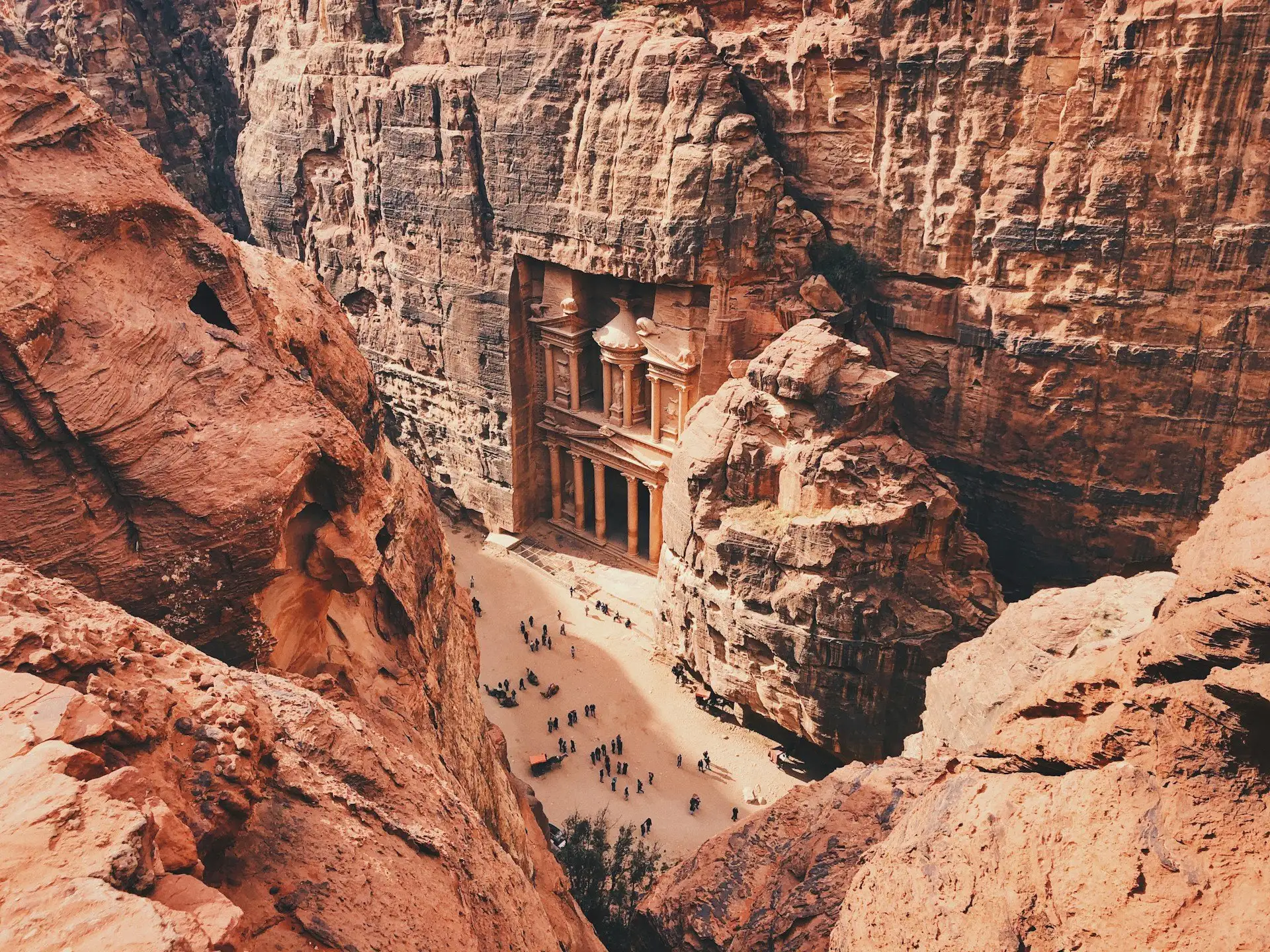
Petra is Jordan's headline site and earns it. The half-kilometer walk through the Siq, a narrow sandstone canyon that in places closes to just a few meters wide, opens suddenly onto the Treasury (Al-Khazneh), the facade carved directly into the cliff face that most photos of Jordan are actually of. But the Treasury is the entrance, not the destination: the site covers a vast, largely unexcavated Nabataean city with hundreds of tombs, a Roman-era colonnaded street, and the Monastery (Ad Deir), reached by roughly 800 rock-cut steps and, at 45 meters wide, actually bigger than the Treasury. Budget a full day minimum, two if you can; go at opening (entry from 6am in summer) to beat both the heat and the tour-bus crowds arriving by mid-morning.
Entry costs 50 JOD for one day, 55 for two, 60 for three (included in the relevant tier of the Jordan Pass), and the site requires either an overnight Jordan stay or a steeper day-visitor rate, another reason to base yourself in nearby Wadi Musa for at least one night. Petra by Night (30 JOD, three evenings a week), the Siq and Treasury lit by 1,500 candles with Bedouin music, is a genuinely different experience from the daytime visit and worth adding if your dates align.
Wadi Rum, the Valley of the Moon
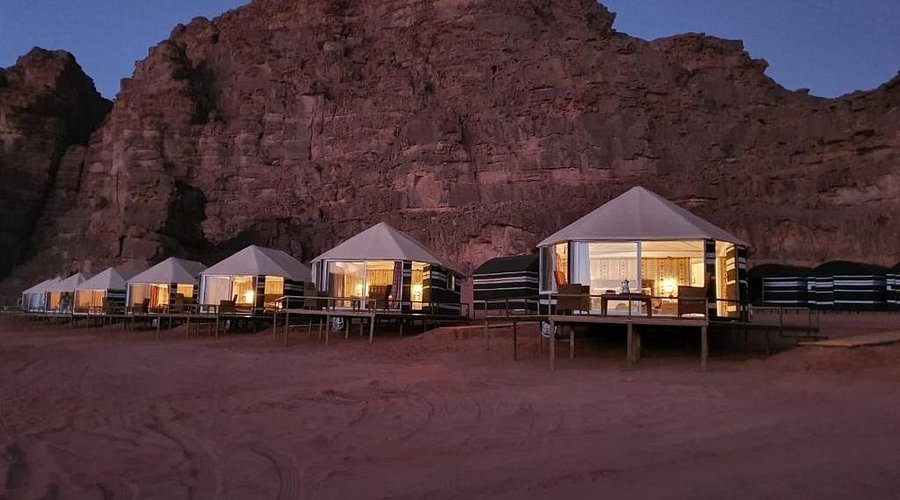
A protected desert of towering red sandstone monoliths, natural rock bridges and dunes that has stood in for Mars, an alien planet and Arrakis in several major films, and that T.E. Lawrence described as vast, echoing and God-like. An overnight in a Bedouin-run camp is the point: jeep tours through the canyons by day, a zarb dinner (meat and vegetables slow-cooked underground) as the sun drops, then a night sky with essentially no light pollution. Budget camps with shared tents and included dinner and breakfast run roughly 30-40 USD per person; mid-range and "bubble" or luxury tented camps run considerably higher, up to several hundred dollars a night at the top end.
The Dead Sea, Madaba & Mount Nebo
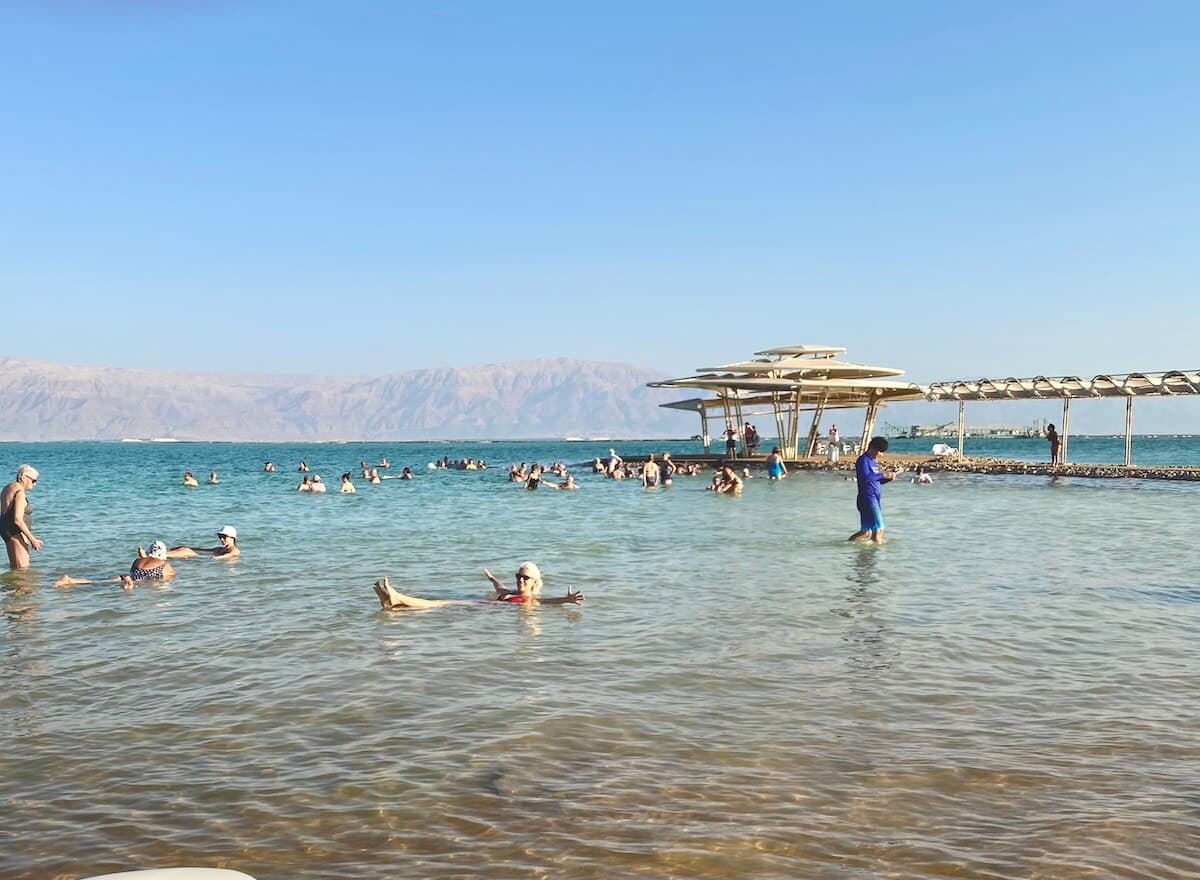
The Dead Sea sits about 430 meters below sea level, the lowest point on Earth's land surface, with a salinity above 30 percent, roughly ten times the ocean, that makes floating effortless and swimming essentially impossible. The Jordanian shore, about an hour from Amman, is lined with resort hotels selling day access to their private beaches (from roughly 30 JOD), showers and the black mineral mud most visitors come to slather on. Combine it with Madaba, "the City of Mosaics," whose Greek Orthodox Church of St. George holds a 6th-century mosaic map of the Holy Land, and Mount Nebo (entry ~3 JOD), where tradition holds Moses viewed the Promised Land, with a genuinely sweeping view over the Jordan Valley toward the West Bank on a clear day.
Aqaba, Jordan's Red Sea coast
Jordan's only coastal city and its sole beach resort town, Aqaba sits on the Red Sea with warm water, over 400 recorded coral species and around 1,500 fish species, plus wreck dives, making it a genuinely serious diving destination that gets overshadowed by Petra and Wadi Rum in most itineraries. It's also the practical southern gateway: closer to Petra by road (about 2 hours) than Amman is (about 3), and travelers arriving or departing specifically through Aqaba's port, airport or land borders qualify for a visa waiver under the Aqaba Special Economic Zone, provided they exit through the same point.
Beyond the classic circuit
The zones above cover a first trip well. With extra days, these reward the detour.
Jerash
One of the best-preserved Roman provincial cities anywhere, with a colonnaded main street, two amphitheaters and an oval forum still largely intact. Entry roughly 10 JOD, included with the Jordan Pass; the Jerash Festival in July adds live performance in the ruins.
Karak Castle
A massive Crusader fortress on the old King's Highway, built in the 1140s and fought over by Saladin's forces for years. Far fewer visitors than Jerash, with tunnels and galleries you can still wander mostly unsupervised.
The Jordan Trail
A 675-kilometer waymarked long-distance trail running the length of the country, walkable in full over roughly 40 days or in short guided sections; the Petra-to-Wadi Rum stretch is a popular 3-5 day option for hikers with the time.
Culture & Etiquette
Jordanian hospitality is a genuine cultural value, not a tourism pitch: being invited for tea or coffee, and having that invitation taken seriously, is a normal part of traveling here. Jordan is a majority-Muslim country with a religious minority Christian population (mostly around 3-4%), and the two communities coexist visibly, particularly in Amman and Madaba. Modesty in dress and public behavior matters more here than in Beirut or Istanbul, but Jordan is markedly more relaxed than the Gulf states.
Do
- Dress modestly. Shoulders and knees covered for both men and women outside hotel pools and Dead Sea resort beaches; loose, breathable fabric works better in the heat than tight clothing anyway.
- Accept tea or coffee if offered. Declining outright can read as rude; a polite "just a little" is always an acceptable middle ground.
- Use your right hand for eating, giving and receiving, especially with elders and in traditional settings.
- Learn a few Arabic words. Shukran (thank you), marhaba (hello) and inshallah (God willing, used constantly and unironically) go a long way.
- Bargain in souks, gently and with good humor; fixed-price shops and hotels don't expect it.
Don't
- Eat, drink or smoke in public during Ramadan daylight hours, even if you're not fasting yourself; many restaurants close or shift hours during the month.
- Photograph people, especially women, without asking first. Military, police and government buildings should not be photographed at all.
- Show affection publicly beyond hand-holding; more overt displays are culturally out of place.
- Discuss Israeli-Palestinian politics casually with strangers. Jordanians, many of Palestinian origin, have strong and varied views; it's not off-limits in genuine conversation, but it's not small talk either.
- Assume alcohol is unavailable. It's legally sold in hotels, restaurants and licensed shops in Amman and tourist areas, just not casually in more conservative or rural areas.
Deeper culture: Bedouin heritage, the mansaf tradition and Jordan's Christian communities
Bedouin heritage. While most Jordanians today live in cities, Bedouin tribal identity remains culturally central, especially in the south around Petra and Wadi Rum, where many camp operators and guides are literally from the families who have lived in that desert for generations. Traditional hospitality customs, coffee ceremonies, guest rights, are rooted in Bedouin practice.
Mansaf as social ritual. Beyond being the national dish, mansaf is served communally from a single large tray at weddings, funerals and to honor important guests; how it's eaten, traditionally by hand, rolling rice into a ball with the right hand, is itself part of the cultural transmission.
Jordan's Christian communities. Among the oldest continuous Christian populations in the world, concentrated in Madaba, Karak and parts of Amman, with roots tracing to the earliest centuries of Christianity; churches and mosques sit within sight of each other in several towns, and religious coexistence is a point of national pride.
Food & Drink
Jordanian food shares a Levantine backbone with Lebanese and Syrian cooking, mezze, grilled meats, fresh bread, olive oil, but has its own centerpiece dish and its own specific ingredients, most notably jameed, a dried fermented yogurt unique to the region.
Mansaf Jordan's national dish
Lamb slow-cooked in a tangy jameed (dried fermented yogurt) sauce over rice, topped with almonds and pine nuts. Traditionally eaten by hand from a shared platter. Try it at Sufra on Rainbow Street or, better, if you're ever invited to a Jordanian home.
Mezze & falafel ~1-3 JOD/dish
Hummus, mutabbal (smoky eggplant dip), foul medames and falafel, the backbone of any Jordanian meal. Hashem Restaurant in Downtown Amman, menu-less and cash-only, has served this exact spread since long before "authentic" became a marketing word.
Knafeh ~1-2 JOD/slice
Shredded pastry over sweet cheese, soaked in syrup, served hot. Habibah Sweets in Downtown Amman, open since 1951 and ranked among the best knafeh shops in the Arab world, is the standard reference point.
Zarb Wadi Rum camps
Meat and vegetables slow-cooked in an underground pit oven, the standard Wadi Rum camp dinner and a genuinely different cooking method worth experiencing on its own terms.
Mint tea & Arabic coffee
Sweet mint tea and cardamom-spiced Arabic coffee (qahwa), served constantly and central to hospitality rituals; a Bedouin coffee ceremony involves specific pouring and refusal etiquette worth knowing before you're offered a third cup.
Fresh juice & St. George beer
Fresh-squeezed juice stands are everywhere in Amman; for something stronger, St. George, brewed in Jordan since the 1990s, and locally produced wine from the Zumot family's vineyards are both widely available in licensed venues.
When to Go & Itineraries
March to May and September to November are Jordan's sweet spots: warm days, cool desert nights and manageable crowds at Petra. Summer (June-August) gets genuinely hot in Petra and Wadi Rum by midday, low-to-mid 30s°C and higher, though early starts and the Dead Sea's heat-friendly float make it workable; it's also peak season for Aqaba diving. Winter has cold nights, especially in the desert and in Amman, and occasional rain, but far smaller crowds at the major sites.
All four seasons compared, with temperatures
| Season | Verdict | Temps | Notes |
|---|---|---|---|
| Mar-May & Sep-Nov | Best | 19-30°C Amman/Petra | Warm days, cool nights, manageable crowds |
| Jun-Aug | Good (hot) | 32°C+ Petra/Wadi Rum by day | Early starts essential; excellent for the Dead Sea and Aqaba diving |
| Dec-Feb | Good (cold nights) | Below freezing possible, Amman/desert nights | Lowest prices and crowds; pack real layers |
Amman sits at altitude and swings 19.5-29.5°C in the shoulder seasons, reaching around 32°C in peak summer with cold winter nights below freezing possible; Petra and Wadi Rum run several degrees hotter by day and colder by night than Amman year-round.
Itineraries
Five days covers the essentials: Amman, Petra and Wadi Rum. Seven adds the Dead Sea and Jerash without rushing. Ten lets you add Aqaba diving or simply slow the whole trip down.
- Day 1
Amman. Citadel, Roman Theatre, Rainbow Street at sunset, mansaf or a Hashem/Habibah downtown crawl.
- Days 2-3
Petra. Drive or JETT bus to Wadi Musa (3-4 hrs). Full day at the site from opening: Siq, Treasury, Monastery hike; second morning for anything missed or Petra by Night if the schedule aligns.
- Days 4-5
Wadi Rum. Transfer south (~1.5 hrs from Petra), afternoon jeep tour, overnight in a Bedouin camp, sunrise before heading back to Amman for departure.
- Day 1
Amman. Citadel, downtown, Rainbow Street.
- Day 2
Jerash & Dead Sea. Morning at Jerash's Roman ruins, afternoon floating at a Dead Sea resort, overnight near the sea or back in Amman.
- Day 3
Madaba & Mount Nebo en route south, then on to Wadi Musa for Petra.
- Days 4-5
Petra, two full days including the Monastery hike and Petra by Night if it aligns.
- Days 6-7
Wadi Rum, overnight camp and sunrise, then back to Amman via the Desert Highway for departure.
- Days 1-2
Amman extended. Full city, plus a day trip to Karak Castle on the old King's Highway.
- Day 3
Jerash & Ajloun. Roman ruins, then the Ayyubid-era Ajloun Castle for a quieter counterpart to Karak.
- Day 4
Madaba, Mount Nebo & Dead Sea, overnight at a Dead Sea resort.
- Days 5-6
Petra, two unhurried days, King's Highway drive south for the views over the Karak plateau.
- Days 7-8
Wadi Rum, two nights, a longer trek or camel ride added to the standard jeep tour.
- Days 9-10
Aqaba, Red Sea diving or snorkeling, a slower finish before flying home from Amman or, with the ASEZA visa waiver, directly via Aqaba if your entry point matches.
Getting there & around
Queen Alia International Airport (AMM), about 35-55 minutes south of Amman depending on traffic, is Jordan's main gateway, with Royal Jordanian and a wide range of international carriers connecting from Europe, the Gulf and North America. The fixed official taxi tariff into the city runs roughly 20-22.50 JOD; Uber, Careem and the local Petra Ride app are also available and generally cost about the same. Aqaba's King Hussein International Airport is a smaller, useful alternative if you're starting in the south.
All transport options with prices: JETT bus, rental cars, taxis
| Option | Price | Notes |
|---|---|---|
| JETT tourist bus | ~11 JOD/route | Amman-Petra and Amman-Aqaba, air-conditioned, book ahead at jett.com.jo in high season. |
| Rental car | 50-80 JOD/day | Amman-Petra: ~3 hrs via Desert Highway, ~4.5 hrs via the scenic King's Highway. |
| Private driver/transfer | Varies, negotiate | Flexible middle option; common for multi-stop days like Madaba-Nebo-Dead Sea. |
| Airport taxi (AMM) | ~20-22.50 JOD | Fixed official tariff to central Amman, 35-55 minutes. |
| Uber/Careem/Petra Ride | Similar to taxi | Available in Amman and at the airport; upfront pricing, card payment. |
Practical prep: buy a Jordanian SIM at the airport (Zain, Orange or Umniah, roughly 10-15 JOD for a tourist data package) or an eSIM before landing. Some rental agreements restrict crossing into the West Bank or Israel; confirm before booking if that's part of your plan. Given the regional flight-schedule volatility noted in the Safety chapter, build in buffer time around connecting flights rather than tight same-day connections.
Budget Planning
Jordan is not a cheap Middle East destination. Petra's entrance fee, Wadi Rum camp nights and rental cars or drivers add up quickly compared to Egypt or Southeast Asia, though the Jordan Pass and JETT bus network give budget travelers real ways to control costs.
- Hostel dorm or budget guesthouse
- Falafel/mezze meals, 3-8 JOD
- JETT buses between cities
- Budget Wadi Rum camp incl. meals
- Boutique hotel or 4-star
- Restaurant meals, 10-20 JOD
- Rental car or private driver
- Mid-range Wadi Rum camp
- 5-star hotels (Four Seasons, Grand Hyatt)
- Private guides and drivers throughout
- Luxury or "bubble" desert camps
- Dead Sea resort spa days
Quick reference prices: entry fees, transport, food
| Petra, 1-day entry | 50 JOD |
| Jordan Pass (1-day Petra tier) | 70 JOD |
| Jerash entry | ~10 JOD |
| Amman Citadel + museum | ~3 JOD |
| Roman Theatre, Amman | ~2 JOD |
| Mount Nebo | ~3 JOD |
| Dead Sea resort day access | ~30 JOD |
| Falafel/mezze meal | 3-8 JOD |
| JETT bus, Amman-Petra | ~11 JOD |
| Wadi Rum budget camp incl. meals | ~30-40 USD/person |
Prices reflect August 2026 research and drift over time. Treat them as a planning baseline, not a quote, and confirm current entrance fees at each site.
Visa & Entry
Citizens of the US, UK, EU, Australia, Canada and over 130 other countries can get a single-entry tourist visa on arrival at Queen Alia International Airport or Jordan's land and sea borders for 40 JOD (about 56 USD), valid for one month. Passports need at least 6 months' validity from the date of entry. Rules do change; jordanpass.jo is the official source, not third-party sites that charge a markup for something you can arrange directly.
✓ Valid passport
At least 6 months validity from date of entry, or you'll be denied boarding or entry.
✓ Visa on arrival, 40 JOD
Most Western nationalities; paid at passport control on landing, cash or card depending on the border point.
✓ The Jordan Pass alternative
70-80 JOD depending on Petra days included; waives the visa fee entirely if you stay 3+ consecutive nights, and bundles entry to 40+ sites. Buy online before you fly.
✓ Entering via Aqaba
Travelers who both enter and exit through Aqaba's port, airport or land borders qualify for a free visa under the Aqaba Special Economic Zone; exiting elsewhere forfeits the waiver.
| Jordan | Egypt | |
|---|---|---|
| Headline site | Petra, a rock-cut Nabataean city you walk into and through | The Giza pyramids and the temples of Luxor, on a larger, more spread-out scale |
| Daily budget | Higher: 45-65 JOD (~$65-90) baseline | Generally the cheaper of the two for a comparable trip |
| Independent travel | Straightforward: JETT buses, rental cars, well-marked sites | Also straightforward, with a larger, more built-out tourism industry |
| Add-on landscape | Wadi Rum desert camps and Dead Sea floating | Red Sea diving at Sharm el-Sheikh or Dahab, and the Nile itself |
| 2026 context | Level 3 regional advisory; core sites open and functioning | Lower current advisory level; established mass-tourism infrastructure |
Safety, Solo Women & Family
Jordan itself is a low-crime country: violent crime against tourists is rare, and the specific risks visitors actually encounter, traffic, heat, desert navigation, are mundane compared to the regional headlines. The complication is the neighborhood, not the country. The US State Department renewed a Level 3 (Reconsider Travel) advisory for Jordan on March 2, 2026, following hostilities between the US and Iran that began on February 28, ordering non-emergency US government staff and family members to leave and citing ongoing risk of drone and missile activity and disruption to commercial flights across the region. Security alerts from the US Embassy in Amman as recent as August 1, 2026 describe the environment as complex with potential for unforeseen escalation, and advise Americans in the region to avoid demonstrations, keep a low profile near US-associated locations, and be prepared for flight cancellations or airspace closures.
Against that, the UK Foreign, Commonwealth & Development Office eased its Jordan advice on 3 June 2026, lifting a broader essential-travel-only restriction; as of this writing the FCDO's only standing no-go zone is a narrow strip within 3 kilometers of the Syrian border. The US Level 4 (Do Not Travel) designation is similarly limited to specific areas: Mansheyat al Ghayyath, Ruwayshid, and the immediate border zones with Syria and Iraq, none of which sit on the standard Amman-Petra-Wadi Rum-Dead Sea circuit. Read that as what it is: a real, live regional risk picture worth checking again close to your travel date, not a reason the core tourist route is unsafe today.
Flight disruption
The most likely way this advisory actually affects a trip: periodic airspace closures and schedule changes on some regional carriers. Build buffer time around connections and check your airline's status close to departure.
Border zones
Avoid the Syria and Iraq border areas and Mansheyat al Ghayyath/Ruwayshid entirely; none of them are on any standard tourist itinerary in this guide.
Traffic & heat
Jordanian driving is assertive and road markings inconsistent outside main highways; the more routine risk for most visitors. In summer, dehydration and heat exhaustion in Petra and Wadi Rum are the practical daily hazard, not crime.
One more thing worth knowing: keeping current with the situation
Because the underlying regional situation (Iran-Israel-US tensions) is actively developing, check your own government's current advisory within a week or two of departure rather than relying solely on this page: US State Dept and UK FCDO both update frequently. Travel insurance that covers trip disruption and cancellation is a sensible baseline for any 2026 Jordan trip given the flight-schedule volatility, regardless of how the ground situation at the sites themselves looks.
Solo women travelers
Jordan is regarded as one of the safer Middle Eastern countries for solo women: violent crime is rare and decades of relative political stability have built genuine tourism infrastructure around visitor safety. The realistic friction point is unwanted attention or catcalling in some urban and market settings, not physical danger. Dressing modestly, shoulders and knees covered, noticeably reduces this. Group tours and Bedouin-run camps in Wadi Rum are experienced hosting solo female travelers and routinely pair them with other guests. Full detail on our Solo Woman Explorer pages.
Emergency numbers
Legacy emergency numbers and embassy contact
911 was verified as Jordan's unified emergency number (police, ambulance and fire) as of January 2026. Older service-specific numbers, 191 (police), 192 (fire) and 193 (ambulance), are still published on some official government pages alongside 911, so if 911 doesn't connect, try the older number for the service you need. Given this inconsistency, save both. The US Embassy in Amman is reachable at +962-6-590-6000; other Western embassies are concentrated in the Abdoun and Deir Ghbar districts.
Family travel
Jordan works well for families: Bedouin hospitality extends readily to children, floating in the Dead Sea is a genuine kid highlight, and Petra's horse-and-carriage option through the Siq (an extra fee, optional) helps with tired legs. The Monastery's 800 steps and the desert heat are the practical limits, plan Petra and Wadi Rum days with early starts and real shade breaks for younger children.
Jordan FAQ
Is Jordan safe to visit right now?
Jordan carries a US State Dept Level 3 (Reconsider Travel) advisory as of March 2026, tied to regional Iran-Israel-US tensions and the risk of flight disruptions, not to conditions on the ground in Petra, Wadi Rum or Amman. The UK FCDO eased its advice in June 2026 and now only flags a narrow strip near the Syria border. The standard tourist circuit is open and functioning; check your government's latest advisory before booking.
Do I need a visa for Jordan?
Most Western passport holders, including the US, UK, EU, Australia and Canada, get a visa on arrival for 40 JOD (about 56 USD), valid for one month. If you're staying at least 3 consecutive nights and plan to visit Petra, the Jordan Pass is cheaper overall.
What is the Jordan Pass and is it worth it?
A single online purchase (70-80 JOD depending on Petra days) that waives the 40 JOD visa fee for stays of 3+ consecutive nights and includes entry to 40+ sites including Petra, Jerash and Wadi Rum. For almost any first-time itinerary it pays for itself; buy it online before you fly.
How many days do you need in Jordan?
Five days covers Amman, Petra and Wadi Rum at a reasonable pace. Seven adds the Dead Sea and Jerash properly. Ten lets you add Aqaba diving or a slower, less rushed version of the whole circuit.
How much does a trip to Jordan cost per day?
Budget travelers manage on roughly 45-65 JOD (about 65-90 USD) a day, mid-range on 90-150 JOD. Jordan is noticeably pricier than Egypt or Southeast Asia; Petra entry and Wadi Rum camps are the main line items.
When is the best time to visit Jordan?
March to May and September to November: warm days, cool desert nights and manageable crowds. Summer (June-August) is very hot in Petra and Wadi Rum by midday but excellent for the Dead Sea. Winter has cold nights, especially in the desert and Amman.
Is the Dead Sea in Jordan or Israel?
Both. The Dead Sea, the lowest point on Earth's surface at about 430 meters below sea level, is bordered by Jordan to the east and Israel and the West Bank to the west. The Jordanian shore, about an hour from Amman, has resort beach access from roughly 30 JOD.
How do I get from Amman to Petra?
The JETT tourist bus costs 11 JOD and takes about 3.5-4 hours via the Desert Highway; book at jett.com.jo. A rental car takes roughly 3 hours on the Desert Highway or up to 4.5 on the scenic King's Highway. A private driver or transfer is the flexible middle option.
Is Jordan safe for solo female travelers?
Yes, generally. Jordan is considered one of the safer Middle Eastern countries for solo women, with rare violent crime, though catcalling and unwanted attention happen in some urban areas. Dressing modestly (covered shoulders and knees) reduces this noticeably.
What should I wear in Jordan?
Modest, loose clothing covering shoulders and knees, for both men and women, especially outside tourist hotels and resorts. Swimwear is fine at hotel pools and the Dead Sea resort beaches. Bring layers: desert nights in Wadi Rum and Petra get cold even when days are hot.
Do I need a guide to visit Petra?
No, Petra is fully open to independent exploration with a Jordan Pass or standard ticket, and the site is well signposted. A local guide (hired at the entrance) adds historical context and is worth it for a first visit, but is not required.
What language is spoken in Jordan?
Arabic is the official language. English is widely spoken in Amman, Petra, Wadi Rum and other tourist areas, and on menus, signage and by hotel and tour staff; less so in rural villages.
What Stays With You
Most people arrive in Jordan for Petra and leave remembering the whole trip in equal measure: the specific quiet of the Siq before the day's first tour group catches up, the way the Wadi Rum sky looks with no light pollution at all, the improbable, buoyant stillness of floating in the Dead Sea. None of it needs embellishing, which is unusual for a country whose headline site has appeared on every "wonders of the world" list for a generation.
The regional context in 2026 is real and worth taking seriously in your planning, not in your expectations of the country itself. Jordan has spent decades being the stable constant in an unstable region; that reputation, and the country's own quiet insistence on hospitality regardless of what's happening across its borders, is the thing most travelers underestimate before they arrive.