
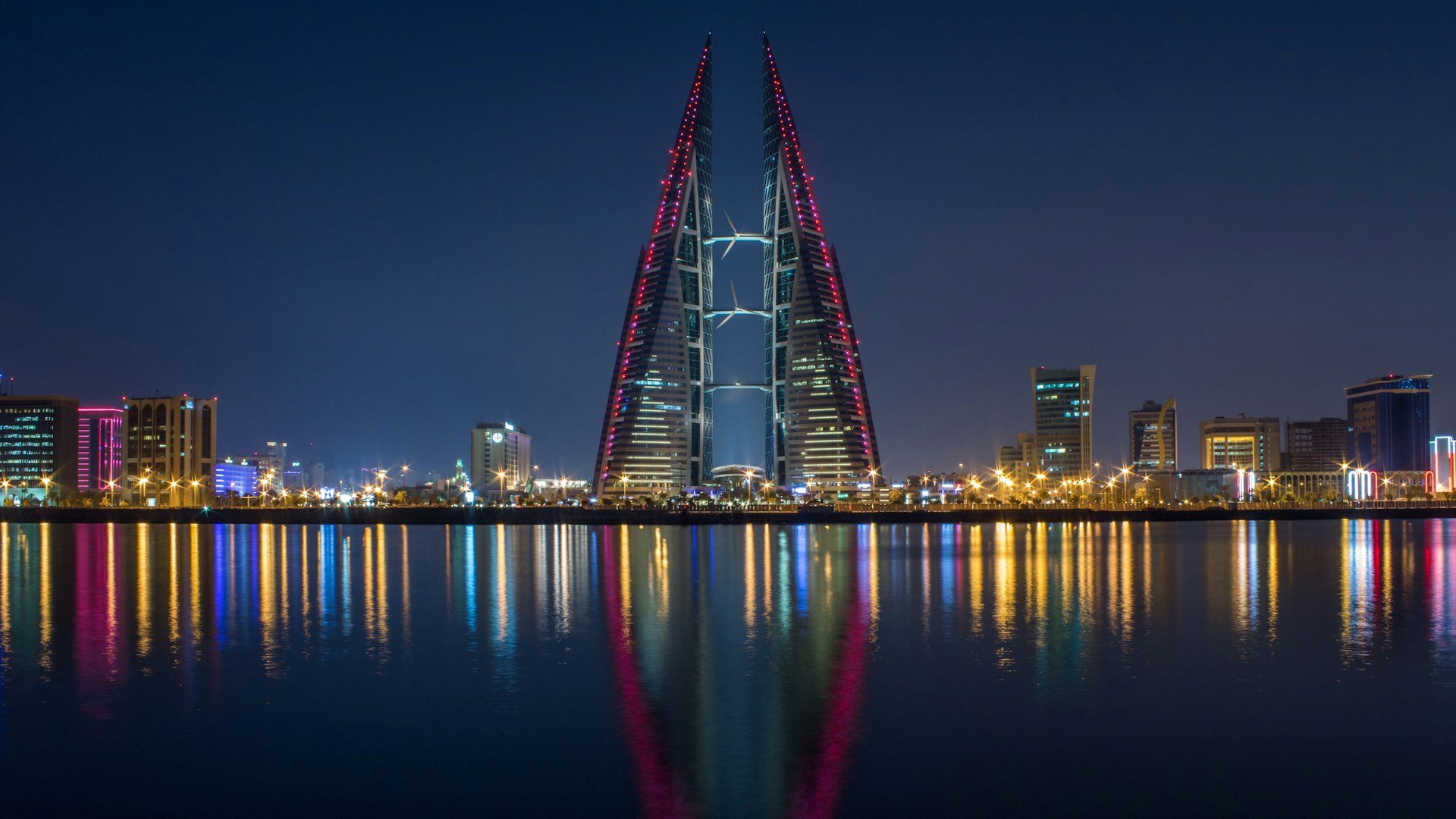
Bahrain
An island that was trading pearls with Mesopotamia four thousand years ago, hosting Formula 1 last month, and serving the Gulf's best machbous in between. Small enough to drive across in an hour, deep enough to take a week to understand.
What You're Actually Getting Into
Bahrain is the Gulf's most overlooked destination, which is a strange thing to say about a country that hosts a Formula 1 Grand Prix, has been continuously inhabited for four thousand years, and is the only island nation in the Middle East. Most people who land at Bahrain International Airport are in transit or arriving for a business meeting. The ones who stop and actually look around tend to find something they weren't expecting: a place with genuine layers, a real capital city with old neighborhoods that haven't been demolished for towers, a food culture that is quietly better than Dubai's, and an attitude toward visitors that is noticeably warmer and less performative than its more famous Gulf neighbors.
The island is small. You can drive from the northern tip to the southern tip in under an hour, from the eastern edge to the causeway to Saudi Arabia in about the same. What that means practically: Bahrain rewards depth rather than distance. You are not going to spend days traveling between destinations. You are going to spend time in the same places, noticing more each time, eating at the same restaurants twice because they were that good, finding the souk stall that has been in the same family since your hotel was a date palm grove.
What makes Bahrain genuinely interesting is its contradictions, which are visible on a single street in Manama's Adliya neighborhood: a traditional Arabic coffee house next to a craft beer bar next to a mosque next to a shisha cafe where Bahraini men and expats from three continents are watching the same football match together. This is not Dubai's managed multicultural performance. It is the organic result of an island that has been at the center of Gulf trade for millennia and has consequently developed a tolerance for difference that comes from actual necessity rather than brand positioning.
The honest limitations: Bahrain is not a destination with an obvious natural landscape to explore. The desert is there but it is flat and uniform compared to what you find in Saudi Arabia or Oman. The beaches are functional rather than spectacular. The diving around the Hawar Islands is good but not great. What Bahrain offers instead is archaeology, food, genuine cultural texture, and a pace of life that the rest of the Gulf has in some ways traded away for scale. Three to four days done properly is the right amount of time. A long weekend from Europe, Dubai, or Riyadh is the conventional format and it works.
Bahrain at a Glance
A History Worth Knowing
Bahrain's history is older than its neighbors are willing to acknowledge and more interesting than its own tourism board has quite figured out how to communicate. The island has been continuously inhabited and continuously important for at least four thousand years, which is not something you can say about most places in the Gulf. Understanding why requires starting with fresh water.
Bahrain sits above a natural aquifer that has been producing fresh water springs in the Gulf seabed for millennia. Ancient sailors knew that at certain points in the shallow Gulf waters off Bahrain, you could dive down and drink from underwater springs bubbling up through the salt water. This was considered close to miraculous in a region that was otherwise desperately short of fresh water. It made Bahrain a haven, a stop, and eventually a permanent settlement for everyone moving between the great civilizations to the east and west.
The civilization that emerged from this advantage was the Dilmun, one of the oldest urban cultures in the Arabian Peninsula. Dilmun appears in Sumerian texts from 2000 BCE as a land of abundance described as the place where the sun rises, possibly a reference to its position east of Mesopotamia. It was also described as the land where the dead go to be purified, which might explain the extraordinary concentration of burial mounds that covers much of northern Bahrain: an estimated 170,000 tumuli, the largest prehistoric burial ground in the world by some counts, representing centuries of people from across the Gulf being brought here for their final rest.
The Bahrain Fort, called Qal'at al-Bahrain by the UNESCO committee that designated it a World Heritage Site, sits on a tel, a man-made mound accumulated from 4,000 years of successive settlements built on top of each other. Archaeologists have identified layers of Dilmun, Kassite, Assyrian, Greek, and Portuguese occupation on the same site. Standing at the top of the tel in the late afternoon, with the Gulf visible on three sides and the layers of human occupation literally below your feet, is one of those moments that quietly recalibrates your sense of time.
The pearl diving economy that defined Bahrain for most of its recorded history deserves more than a footnote. For centuries, Bahraini pearls were among the most prized in the world, sought by Persian, Indian, and European traders who understood that the Gulf's specific combination of warm, shallow water and the oyster beds it supported produced a lustre that other pearl-producing regions couldn't match. The diving season ran from June to October, when fleets of boats would head out into the Gulf and the divers, their nostrils pinched with bone or horn clips, would descend on a weighted rope to gather oysters from the seabed. A good diver might make fifty dives a day. The life expectancy of a professional diver was shortened measurably by the pressure and the exertion.
The pearl economy collapsed in the 1930s when Japanese cultured pearls arrived on the global market and undercut the price of natural pearls at a speed that left the Gulf fishing communities with almost no transition time. Oil was discovered in Bahrain in 1932, the first commercial oil discovery on the Arabian side of the Gulf, and the economic transformation that followed was rapid. Bahrain processed not just its own oil but Saudi crude through its refinery, positioning itself as the Gulf's financial and technical hub before Dubai existed as a modern concept.
Independence from Britain came in 1971 and the subsequent decades brought Bahrain into the position it occupies today: a small, financially sophisticated island state that has had to be more creative than its oil-rich neighbors because its reserves were always more limited. The banking sector developed earlier and more robustly here than anywhere else in the Gulf. The social liberalism that allows alcohol, mixed social spaces, and a degree of political pluralism that Saudi Arabia does not permit reflects a practical calculation: Bahrain's prosperity has always depended on attracting people from elsewhere, and people from elsewhere need a reason to come. The pearl fishermen understood this four thousand years ago.
One of the ancient world's great trading civilizations. Fresh water springs in the Gulf make Bahrain a regional hub between Mesopotamia and the Indus Valley.
An estimated 170,000 burial tumuli are constructed across northern Bahrain, representing centuries of use as the region's primary burial site.
Alexander the Great's expedition reaches the Gulf. Greek settlement at Qal'at al-Bahrain leaves a layer in the archaeological record still being excavated.
Portugal controls Bahrain as part of its Indian Ocean empire. The Portuguese fort at Qal'at al-Bahrain is the most visible legacy of their presence.
Britain signs a series of treaties with the Al Khalifa ruling family. Bahrain becomes the administrative center of British Gulf interests.
The first commercial oil find on the Arabian side of the Gulf. The pearl economy had already collapsed two years earlier with the arrival of Japanese cultured pearls.
Britain withdraws from the Gulf. Bahrain becomes an independent sheikhdom under Emir Sheikh Isa bin Salman Al Khalifa — not yet a monarchy. The country is ruled as an emirate for the next three decades.
Sheikh Hamad bin Isa Al Khalifa renames the country the Kingdom of Bahrain and takes the title of King, transitioning from the emirate structure that had been in place since independence.
Banking, F1, tourism, and a refinery economy. Bahrain hosts more Western expats per capita than any other Gulf state and has the region's most open social environment.
Top Destinations
Bahrain is small enough that everything described here can be visited in three full days without rushing. The logical sequence is to start at the National Museum for context, move through the heritage neighborhoods and fort in the following days, and use the island's evenings for the food and social scene that is genuinely one of the Gulf's best.
Qal'at al-Bahrain (Bahrain Fort)
The most important archaeological site in the Gulf and the best argument for Bahrain's claim to genuine historical depth. The tel, a mound built up from four thousand years of successive civilizations building on top of each other, rises from the northern coast and looks, from a distance, like a low hill. The Portuguese fort that crowns it is the visible layer. Below it are Assyrian, Kassite, and Dilmun levels that archaeologists have been carefully peeling back since the 1950s. The view from the top at sunset, with the Gulf on three sides and the ancient site map at your feet, is one of those moments that recalibrates your sense of time in a way that photographs cannot adequately capture. The associated museum is excellent and free. Plan two to three hours.
Manama's Heritage Districts
Central Manama is one of the better-preserved Gulf capitals for actual old neighborhoods. Bab Al Bahrain, the gateway arch at the entrance to the souk, marks the start of a dense traditional market area that has been trading continuously since the Portuguese built the original customs house. The Muharraq Island old town, connected to Manama by causeway and technically a separate island, has the most intact collection of pearl merchant houses in the Gulf: the Bin Matar House, the Sheikh Isa Bin Ali House, and the Siyadi House are all restored and open to visitors, giving a more intimate picture of pre-oil Bahraini life than any museum can. The Adliya neighborhood, southeast of the city center, is where the restaurants and bars have congregated, the streets on a Thursday evening resembling something closer to a Barcelona nightlife district than what you'd expect in the Gulf.
Tree of Life
A 400-year-old mesquite tree standing alone in the middle of the southern desert, with no obvious water source within kilometers, that has been growing in the same spot for four centuries and shows no sign of stopping. Nobody has fully explained it. The underground aquifer that makes Bahrain extraordinary for its fresh water is the most plausible theory. The tree itself, gnarled and spreading with branches reaching several meters in every direction, has attracted visitors for centuries precisely because of its inexplicability. It is worth visiting not as a major attraction but as an object for quiet contemplation in the middle of a flat, hot desert. Go at sunset. Take water.
Dilmun Burial Mounds
The A'ali burial mounds are the most accessible section of Bahrain's extraordinary prehistoric cemetery, which once contained an estimated 170,000 tumuli across the island's northern plain. Most have been lost to development but several thousand survive in protected areas. The mounds at A'ali, some reaching five meters in height, are a strange and moving landscape: rolling humps of earth that look like a frozen sea when the light is low, each one the resting place of someone who lived here when Sumerian was the world's dominant language. The nearby A'ali pottery village, where traditional Bahraini pottery has been made continuously for millennia, is still working and visitors can watch the wheel.
Bahrain International Circuit
The Formula 1 Bahrain Grand Prix, typically held in March as the season opener, turns the island into one of the year's most concentrated racing weekends. The circuit is purpose-built in the desert south of Manama and regularly hosts night races with the floodlit track visible from the highway. Outside of race weekends, the circuit offers go-karting, driving experiences, and guided track tours. If you're visiting specifically for F1, book accommodation six months in advance: every hotel on the island fills and prices triple during race week, with many visitors choosing to stay in Dubai or Abu Dhabi and fly in for race days.
Al Fateh Grand Mosque
One of the largest mosques in the world, the Al Fateh Grand Mosque in Manama can accommodate over 7,000 worshippers and is open to non-Muslim visitors outside prayer times on guided tours run daily except Friday. The fibreglass dome, the largest in the world when it was built, contains a library of 7,000 books on Islamic history and culture. The guided tour, which includes an explanation of Islamic prayer practice and architecture and the offer of tea and dates, is one of Bahrain's best cultural experiences and is entirely free. Women are provided with abayas at the entrance.
Bahrain Pearl Trail
The UNESCO-listed pearl diving heritage trail connects eleven sites across Bahrain and Muharraq that together tell the complete story of the pearl economy: the merchant houses where the fortunes were accumulated, the mosques built from pearl profits, the oyster beds where the divers worked, and the auction sites where the catch was sold to traders from across Asia. The Muharraq section of the trail, which runs through the old town's restored merchant quarter, can be walked in two to three hours. The Al Murjan and Al Louloua pearl farms off the coast still cultivate oysters and can be visited on guided boat tours.
Hawar Islands
A cluster of small islands off Bahrain's southern coast, accessible by a 45-minute ferry from Sitra, the Hawar Islands are a nature reserve notable for the largest colony of cormorants in the Middle East, resident dugongs, and the most intact coral and seagrass beds in Bahraini waters. The main island has a single resort hotel and limited day visitor facilities. Snorkeling and diving around the islands is the best marine experience in the country and the bird watching during migration season (October to March) attracts serious ornithologists from across the region. The ferry schedule varies by season: contact the operator directly or check their website for current departure times before planning a day trip.
Culture & Etiquette
Bahrain is the most socially liberal country in the Gulf, which is a relative statement. It is a Muslim monarchy with a conservative social baseline in most public contexts, and a genuinely relaxed social scene in the licensed bars, restaurants, and hotels that are concentrated in Manama's Adliya, Juffair, and Amwaj Islands areas. Understanding which context you're in at any given moment is the essential navigation skill. The Bahraini approach to this coexistence is generally pragmatic rather than anxious: the rules exist, the licensed spaces exist, and most people in both contexts are getting on with their day without much friction.
Bahrain has a Shia Muslim majority population and a Sunni Muslim ruling family, a sectarian divide that has shaped the country's politics significantly, particularly in the context of the 2011 protests and their aftermath. This is background context rather than something that affects a visitor's day-to-day experience, but it helps explain certain aspects of the country's political culture and the geography of different neighborhoods.
In souks, local neighborhoods, mosques, and government buildings, cover shoulders and knees. In licensed hotel zones, beach resorts, and the Adliya restaurant district, dress standards are considerably more relaxed. Swimwear stays at the beach and pool. A light layer for transport between areas is practical.
Arabic coffee (qahwa) and dates are the foundational hospitality gesture throughout Bahrain. When offered in a home, traditional guesthouse, or formal meeting, accept with your right hand and drink the small cup. Tilting the cup from side to side when you've had enough signals you want no more.
The left hand is considered unclean. Pass food, money, and objects with your right. This matters more in traditional and religious contexts than in international hotel restaurants, but the habit is worth maintaining throughout.
Some smaller shops and local restaurants close briefly during prayer times. This is increasingly less common in Manama's commercial areas but still practiced in traditional neighborhoods and the souk. The closures are short. Wait and return.
As-salamu alaykum (peace be upon you) and shukran (thank you) are the two most useful phrases in Bahrain. Using them, even imperfectly, generates genuine warmth in contexts where English is the default. Bahrainis are generally delighted when non-Arabic speakers make the attempt.
Alcohol is legal in licensed premises. Drinking on streets, beaches, or in unlicensed restaurants is illegal. Public intoxication is a criminal offense. The licensed venues are numerous and comfortable enough that there is no reason to drink anywhere else.
Kissing in public is not appropriate anywhere in Bahrain. Hand-holding between couples is generally overlooked in tourist areas. The standard is significantly more relaxed than in Saudi Arabia across the causeway, but more conservative than what most Western visitors are used to.
Particularly Bahraini women in traditional dress, people at prayer, and military or government installations. In the souk, asking vendors before photographing their stalls is appreciated and almost always results in agreement. Government buildings, the causeway, and security infrastructure should not be photographed.
Bahrain's cybercrime laws include provisions for prosecuting online content that is considered critical of the government or ruling family. Social media posts have resulted in arrests of both residents and, in at least one documented case, a visitor. Standard conversational discretion applies.
If your visit coincides with Ramadan, eating, drinking, and smoking in public during daylight hours is not appropriate. Restaurants still serve in designated areas. Adjust your schedule to eat in hotels, malls, or at private tables. The evenings during Ramadan are social and atmospheric in ways that reward flexibility.
Qahwa Coffee Culture
Bahraini qahwa is made with lightly roasted green coffee beans, cardamom, and sometimes saffron and rosewater, producing a pale, aromatic drink that tastes nothing like the dark coffee of Southern Europe or the Gulf-style karak chai of the South Asian community. It is served in small handle-less cups called finjan and it is the opening gesture of any formal meeting or home visit. The coffee's role is social rather than stimulative: it signals that you are being received as a guest and that the conversation that follows has been properly opened. Drinking it correctly is a small but genuine form of respect for the context.
Leiwah and Pearl Diving Music
Leiwah is the traditional music of the Bahraini pearl diving culture: call-and-response songs originally sung on the boats to coordinate the divers' rhythm and maintain morale on the water. It is performed today at cultural events, the National Museum, and occasionally at the heritage sites in Muharraq. The Bahrain Authority for Culture and Antiquities maintains active programs to preserve the leiwah and other traditional music forms, and public performances are held regularly. If you happen on one, stay for it. The energy of forty people singing in unison in a traditional courtyard is not something you forget.
The F1 Factor
The Formula 1 Grand Prix transforms Bahrain in ways that are worth understanding even if you're not visiting for the race. For the weeks around the event, accommodation prices triple, the social scene intensifies across the entire island, and the normally relaxed pace of Manama acquires a different energy. If you are visiting during this period for non-racing reasons, book early, expect crowds at restaurants and bars you'd normally have to yourself, and consider it either a bonus or a reason to schedule around it depending on your preferences.
The Saudi Weekend
Every Thursday and Friday (the Gulf weekend), significant numbers of Saudi nationals cross the King Fahd Causeway into Bahrain specifically for the social freedoms that Bahrain's more liberal environment provides: restaurants that serve alcohol, mixed social spaces, cinemas, and a general atmosphere that Saudi Arabia's social restrictions don't permit. This creates a specific weekly rhythm in Manama's restaurant and nightlife districts: quieter Sunday to Wednesday, noticeably busier from Thursday evening through Friday. Book restaurant tables in advance for Thursday dinner during peak season.
Food & Drink
Bahraini food has been significantly shaped by the island's history as a trading hub between the Persian Gulf, India, and East Africa. The spice profile of traditional Bahraini cooking, with its heavy use of turmeric, dried lime, cinnamon, and black pepper, reflects centuries of trade with the Indian subcontinent and the Persian mainland. The result is a cuisine that feels distinctly its own despite drawing from all its neighbors: richer and more spiced than other Gulf food, less fiery than Indian, more aromatic and Gulf-inflected than Persian.
Bahrain is also the most accessible Gulf country for alcohol, with a licensed bar and restaurant scene that serves the large expat community and the Saudi visitors who cross the causeway for it. The Adliya neighborhood's concentration of restaurants, bars, and casual dining venues is the best nightlife district in the Gulf for its size, combining Bahraini and international food with a social atmosphere that is noticeably less performative than Dubai's equivalent.
Machbous
The national dish: long-grain rice cooked in a rich broth of dried lime, turmeric, cinnamon, cardamom, and black pepper, topped with slow-cooked fish, shrimp, or meat. The dried lime, called loomi, gives it a specific citrus-sour base note that doesn't exist in any other cuisine in quite this form. The fish version, machbous samak, is the Bahraini benchmark: the morning's catch from the Gulf, the rice cooked in its broth, the whole thing arriving at the table in a fragrant cloud that announces itself before it's visible. This is what to order at every traditional Bahraini restaurant. If it's not on the menu, you're in the wrong restaurant.
Gulf Seafood
Bahrain's position in the Gulf means the seafood is fresh, varied, and central to the local diet in a way it isn't in the desert-interior Gulf states. Hamour (grouper), safi (rabbitfish), and kingfish are the prestige species. The shrimp from the Gulf, smaller and more intensely flavored than farmed prawns, are a specific regional pleasure. The Central Fish Market in Manama opens at 4am and the adjacent restaurant strip begins cooking by 6am. Arriving for a fish breakfast at 7am, while the market is still active behind you, is one of Bahrain's best experiences and costs about BD 2 per person.
Muhammar & Harees
Muhammar is sweet rice cooked with dates and sugar and served with fish: a combination that sounds wrong and tastes right, the sweetness of the rice against the savory fish creating a balance that is characteristic of Bahraini cooking's willingness to blend flavors that other cuisines would keep separate. Harees is the slow-cooked wheat and meat porridge that appears across the Gulf at Ramadan and on special occasions: the version made in Bahraini homes, finished with clarified butter and a dusting of cinnamon, is better than most restaurant versions anywhere in the region.
Street Food & Breakfast
Bahrain's street food scene is shaped heavily by its Indian community, which has been here since the pearl trading days and has contributed balaleet (vermicelli noodles cooked sweet with eggs and saffron, eaten for breakfast), samboosa (fried pastry triangles with meat or vegetable fillings), and the specific khuboos (flatbread) from the clay ovens in the old souk that has been baked in the same ovens for generations. The Bahraini breakfast of khuboos with fresh cream cheese, date syrup, and eggs at a traditional coffeehouse in Muharraq is the correct start to any morning that involves heritage sites.
Drinks — the Liberal Gulf
Bahrain's status as the Gulf's most alcohol-accessible country means the bar scene in Manama is genuine and varied in a way that no other Gulf capital matches. The Adliya and Juffair areas have everything from craft beer bars to hotel cocktail lounges to the kind of unreconstructed pub that has been serving the British expat community since the 1970s. Prices are lower than Dubai. The atmosphere is generally more relaxed. The Friday brunch at several Manama hotels has the same social-drinking function as Dubai's version but without the same sense of self-consciously performing luxury.
Qahwa & Karak
The traditional qahwa, served at heritage sites and in traditional coffeehouse settings, has been described in the culture section. The everyday drink of Bahrain's working population is karak chai: the South Asian spiced milk tea that arrived with the trading community and has been adopted wholesale by Bahraini culture. A karak from a street cart costs a few hundred fils and tastes of cardamom, ginger, and condensed milk and is the correct companion to a morning in the souk.
When to Go
Bahrain's weather follows the Gulf pattern: very hot and humid from May to September, genuinely pleasant from November to March, with transition months on either side. The Formula 1 Grand Prix in March (sometimes late March, occasionally early April depending on the calendar) adds a specific dimension to the winter season: the best weather and the busiest social environment on the island coincide for that weekend. The Hawar Islands bird watching is best during migration season from October to March.
Winter
Nov – MarThe only comfortable outdoor season. Temperatures of 15–25°C make the archaeological sites, the pearl trail walk, and evening dining on outdoor terraces genuinely pleasant. The F1 Grand Prix in March brings the best weather and the highest hotel prices of the year. Book early for anything around race weekend.
Shoulder
Oct & AprTransitional months with manageable temperatures between 22 and 33°C. October is particularly good: the summer crowds have thinned, prices are lower than peak winter, and the Hawar Islands bird migration is beginning. April after F1 is quiet and warm but manageable for outdoor activity in the mornings and evenings.
Summer
May – SepExtreme heat and humidity. 40°C is normal in July and August, with Gulf humidity making it feel significantly worse. Outdoor activity is not viable outside of very early morning. Everything moves indoors to air conditioning. Hotel prices drop significantly as demand falls from leisure visitors. If you're visiting for business or don't mind an entirely indoor trip, the savings are real.
Ramadan
Varies — lunar calendarRamadan affects public life meaningfully in Bahrain. Many restaurants reduce hours or close during daylight. The alcohol policy in licensed venues becomes more restricted during daytime. The evenings after iftar, however, are atmospheric and the traditional Ramadan tents at hotels serve elaborate spreads. Not a reason to avoid Bahrain but it requires adjustment.
Trip Planning
Three to four days is the ideal length for a first Bahrain trip. Day one: National Museum and Manama souk. Day two: Qal'at al-Bahrain fort, the Dilmun burial mounds, and the Tree of Life in the desert. Day three: Muharraq island and the pearl trail, Al Fateh Grand Mosque. Day four if you have it: Hawar Islands or a slower repeat of what worked best. The island is small enough that nothing feels rushed at this pace and substantial enough that you leave feeling like you've actually been somewhere.
Bahrain works extremely well as a stopover. Gulf Air and several other carriers route through Bahrain International Airport, and the 24-hour visa-on-arrival means you can turn a transit into a day or two of genuine exploration without advance planning. The airport is 10 minutes from the city center by taxi.
Manama Heritage & Food
Morning at the National Museum (90 minutes, free): the Dilmun galleries first, then the pearl diving exhibition. Lunch at the fish market restaurant. Afternoon: Bab Al Bahrain and the souk lanes. Late afternoon: Adliya neighborhood coffee and a walk through the restaurant district. Dinner at a traditional Bahraini restaurant for machbous samak.
Fort, Mounds & Desert
Early morning at the Central Fish Market (4am to 8am is the best window, though 7am is more civilized). Mid-morning: Qal'at al-Bahrain UNESCO fort and its museum. Afternoon: A'ali burial mounds and pottery village. Late afternoon: Tree of Life in the southern desert for sunset. Evening: Adliya bar and restaurant strip.
Muharraq & Pearls
Morning: Muharraq old town and the pearl merchant houses (Sheikh Isa Bin Ali House, Bin Matar House). Late morning: Al Fateh Grand Mosque guided tour. Lunch: traditional Bahraini coffeehouse near the mosque. Afternoon: Pearl trail walk through Muharraq. Evening: dinner at Bu Qtair for the machbous the locals have been eating for thirty years.
Hawar Islands or Slow Day
Ferry to Hawar Islands (contact the operator in advance for current times, as the schedule changes by season). Bird watching and snorkeling if the conditions are right. Or a slower day in Manama: the Bahrain National Theatre, the Pearls of the Sea waterfront sculpture trail, lunch at a new restaurant in Adliya, afternoon karak at the souk. Fly home from Bahrain International in the evening.
Arrive Thursday Evening
Land, check in, head directly to Adliya for dinner. Thursday is the first night of the Gulf weekend and the neighborhood is at its most lively. Book a table in advance. The mixture of Bahrainis, Saudi visitors, and international expats on a Thursday evening in Adliya is one of the Gulf's more genuinely cosmopolitan social scenes.
Friday: Heritage & Seafood
Fish market breakfast at 7am. National Museum until it closes. Qal'at al-Bahrain in the afternoon. Sunset at the fort tel with the Gulf catching the light behind you. Friday evening at a licensed hotel restaurant for Gulf seafood and whatever the kitchen does best.
Saturday: Muharraq & the Pearl Story
Full morning in Muharraq: pearl merchant houses, the old souk, the traditional bakery on the main lane that has been producing khuboos for generations. Al Fateh Grand Mosque noon tour. Afternoon: Tree of Life and A'ali burial mounds. Evening: Bu Qtair for the machbous.
Heritage Before the Noise Starts
Arrive two days before race weekend. The island is already energizing but not yet at full intensity. Use this window for the heritage sites, Muharraq, and the fort. These become progressively harder to do calmly as race week accelerates. The National Museum on a Wednesday morning before F1 week is a different experience from the Saturday of race weekend.
The Circuit & the Social Scene
Qualifying day is often the better spectacle for the money: the cars are running at comparable speeds and the crowd is smaller. Race day evening at the Adliya bars watching the post-race analysis with the mixed crowd of racing fans, Bahraini families, and Saudi visitors who've crossed the causeway for the event is a specific experience that Bahrain's social liberalism makes possible in a way no other Gulf venue can quite replicate.
Recovery Day
The island quiets rapidly after the race crowd departs. A slow day at the Hawar Islands or the Central Fish Market in the post-race morning, when the island has returned to itself, is a genuinely nice counterpoint to race weekend's intensity. Fly home from Bahrain International feeling like you saw two entirely different places in the same week.
Vaccinations
No mandatory vaccinations required for most nationalities. Hepatitis A is recommended as a standard precaution. Routine vaccines should be up to date. Healthcare in Bahrain is good quality at both public and private facilities. The American Mission Hospital in Manama has been operating since 1902 and is reliable for most medical needs.
Full vaccine info →Connectivity
Batelco and STC Bahrain offer tourist SIM cards at the airport. Coverage is excellent everywhere on the main island. Unlike the UAE, Bahrain places no restrictions on VoIP services — WhatsApp calls, FaceTime, Signal, and all other calling and messaging apps work normally. A local SIM or eSIM gives you the best data speeds across the island.
Get Bahrain eSIM →Power & Plugs
Bahrain uses British-style Type G three-pin plugs at 230V. American and European visitors need adapters. Most hotel rooms have universal sockets in bathrooms. Power is completely reliable across the island.
Language
Arabic is the official language. English is widely spoken across the tourism sector, most businesses, and with younger Bahrainis. The large South Asian and expat community means you'll also encounter Hindi, Urdu, and Tagalog in service contexts. Navigation as an English speaker is straightforward throughout the country.
Travel Insurance
Recommended. Bahrain's healthcare system is good and private hospitals are internationally accredited. The main scenarios requiring insurance are unexpected medical issues and trip cancellation. Emergency treatment is generally available without significant advance payment. Ensure your policy covers any sports or adventure activities you plan.
Medication
Several medications common elsewhere are controlled substances in Bahrain. Check the Ministry of Health list before packing any prescription medication. Most standard medications are available at pharmacies throughout Manama. Bring a copy of any prescription and a letter from your doctor for controlled medications.
Transport in Bahrain
Bahrain is a car-centric island where the distances are short and the road network is good. There is no metro or rail system. Taxis and Uber cover Manama well. Renting a car is the most practical option for visiting the fort, the burial mounds, the Tree of Life, and the south of the island, all of which are reachable by road but inconveniently far from the center by taxi for a day of multiple stops.
Uber & Careem
BD 1.5–5/tripBoth apps operate in Bahrain and are reliable in Manama and the main tourist areas. Fixed prices, no negotiation, air-conditioned cars. The standard choice for single destinations. For a full day of multiple sites, a rental car is more economical and more flexible.
Taxis
BD 1.5 start + meterMetered orange taxis are available throughout Manama and can be hailed on the street or booked through hotels. The meters are generally honest. For the airport, use the official taxi rank rather than any offers outside arrivals. For multi-stop days, negotiate a daily rate in advance.
Car Rental
BD 15–30/dayRecommended for visiting the Bahrain Fort, burial mounds, Tree of Life, and the south of the island in a single day. The roads are well-marked in English. International driving permits are required for some nationalities. Traffic in Manama can be congested during morning and evening rush hours.
Hawar Islands Ferry
BD 5–10 returnThe only ferry service operating in Bahrain connects Sitra on the main island to the Hawar Islands. The schedule changes by season, so contact the ferry operator directly or check their website before planning a day trip — do not rely on fixed published times. The ferry may also not run in poor weather. Day trips work but require planning around current departure times.
King Fahd Causeway
BD 2 (Bahrain to Saudi)The 25-kilometer causeway connecting Bahrain to Saudi Arabia carries enormous traffic, particularly on weekends. Crossing requires a valid Saudi visa for Saudi Arabia entry. The Bahraini side of the border has a duty-free complex and causeway hotel. The immigration queue can be long on Thursday evenings and Friday mornings when Saudi visitors are crossing in both directions.
Bahrain International Airport
Taxi: BD 3–5 to ManamaThe airport is 10 minutes from central Manama by road and has no rail connection. The official taxi queue at arrivals is metered and reliable. Uber works from the airport. The terminal was expanded significantly in recent years and has good food and retail in both departures and arrivals.
The causeway is one of the busiest border crossings in the Gulf and the main reason Bahrain's hotel occupancy peaks every Thursday and Friday. If you're driving from Saudi Arabia, have your passport, Saudi exit permit, and Bahrain visa documentation ready before the toll plaza. The Bahrain-side border control is faster than the Saudi side in most conditions. On race weekends, both sides can be extremely slow. Budget two hours for the crossing on peak traffic days and considerably less on a Tuesday morning.
Accommodation in Bahrain
Bahrain's accommodation is concentrated in three main areas: the Diplomatic Area and Seef district for corporate and five-star hotels; Adliya for boutique hotels and guesthouses with easy access to the restaurant and bar scene; and the Amwaj Islands for beach resort-style accommodation on the reclaimed islands off the northeast coast. The Muharraq heritage district has a small number of restored traditional properties that are the most atmospheric stays on the island.
Five-Star Hotel
BD 80–250/nightThe Four Seasons Bahrain Bay and the Gulf Hotel are the two most established luxury properties. The Four Seasons occupies a waterfront position on Bahrain Bay with views across to the Manama skyline. The Gulf Hotel has been the social center of Bahrain's expat and diplomatic community since the 1960s and has a pool terrace and garden that are genuinely pleasant in winter evenings.
Boutique Hotel
BD 30–80/nightThe Adliya and Muharraq areas have small boutique hotels and guesthouses that put you closer to the food, bar, and heritage scenes than the corporate hotel district. The Liwan Hotel in Muharraq is a restored traditional property in the pearl merchant quarter. Several well-reviewed smaller hotels in Adliya are within walking distance of the best restaurants on the island.
Beach Resort
BD 60–150/nightThe Amwaj Islands development off the northeast coast has several resort-style hotels with private beach access and water sports facilities. The address is removed from the heritage and restaurant action of central Manama but the waterfront setting is pleasant and the beaches are the best available near the capital. Good for families or those prioritizing beach time over city access.
Mid-Range Hotel
BD 25–60/nightThe Seef and Juffair districts have a solid range of mid-range three and four-star hotels catering to the business and shorter-stay market. The Juffair area, near the US Naval Support Activity base, has the highest concentration of mid-range options and easy access to the licensed bar scene. Clean, functional, and considerably cheaper than the five-star alternatives.
Budget Planning
Bahrain is moderately expensive: cheaper than Dubai for comparable experiences, more expensive than Southeast Asia, and with a local food scene that keeps costs manageable for anyone willing to eat where Bahrainis eat. The Bahraini Dinar is one of the world's highest-value currencies (1 BD equals roughly USD 2.65), which means prices that look low in dinar still translate to reasonable amounts in other currencies. The architecture of daily costs is similar to the UAE: hotels and licensed alcohol are the main drivers; food is manageable if you use local restaurants rather than hotel dining.
- Mid-range hotel or guesthouse
- Local restaurants and fish market meals
- Uber and occasional rental car
- Free sites: fort, mosque, burial mounds
- Karak tea and coffeehouse breakfasts
- Four-star hotel in Adliya or Seef
- Mix of local and mid-range restaurants
- Car rental for archaeological day trips
- Evening drinks at licensed bar
- Hawar Islands ferry day trip
- Five-star hotel (Four Seasons or Gulf Hotel)
- Restaurant dining for every meal
- F1 Grand Prix tickets (race weekend)
- Friday hotel brunch experience
- Pearl diving heritage tour and pearl farm visit
Quick Reference Prices
Visa & Entry
Bahrain operates a relatively straightforward visa system for most nationalities. Citizens of many Western countries including the US, UK, EU nations, Australia, and Canada can obtain a visa on arrival at Bahrain International Airport for stays of up to 14 days, extendable once. The more practical option is to apply for the e-visa online at evisa.gov.bh before departure: the process takes 24 to 48 hours, costs BD 5 (approximately USD 13), and avoids the arrival queue. GCC nationals (Saudi Arabia, Kuwait, UAE, Qatar, Oman) enter Bahrain visa-free.
Visitors driving across the King Fahd Causeway from Saudi Arabia must have a valid Bahrain visa before crossing: the visa on arrival is only available at the airport, not at the causeway border. If you are planning to drive into Bahrain from Saudi Arabia, obtain the e-visa in advance.
Apply at evisa.gov.bh before departure. Approved in 24–48 hours. Valid for 14 days, extendable. Required for causeway crossings; visa on arrival only available at the airport.
Family Travel & Pets
Bahrain is a comfortable family destination with a few practical considerations. The island is safe, English is widely spoken, the distances are manageable, and there is a genuine range of family-appropriate activities from archaeological sites to beach resorts to the wild bird colonies of the Hawar Islands. The main challenges are heat (limiting outdoor activity to November to March for anything with young children) and cost (Bahrain is not budget-friendly, particularly for family-sized hotel rooms).
The heritage sites, specifically the Bahrain Fort and the burial mounds, work well with older children who have some historical context. The National Museum's interactive galleries are genuinely well-designed for younger visitors. The Hawar Islands ferry trip and the snorkeling reefs are universally enjoyable regardless of age.
Bahrain Fort for Kids
The fort's scale and the visible archaeology of four different civilizations stacked on top of each other is engaging for children who like history. The fort museum has interactive elements and clear explanations aimed at a general audience. The coastal location means there is room to walk and explore without the confined-site feeling that exhausts young children at smaller museums.
Hawar Islands Wildlife
The cormorant colony and the snorkeling reefs at Hawar are particularly good for older children and teenagers who appreciate wildlife or water sports. The ferry journey itself is entertaining. The dugong population in the seagrass beds around the islands is rarely glimpsed but the possibility is exciting enough to keep children scanning the water. Contact the ferry operator directly for current departure times before planning the day, as the schedule changes by season.
Formula 1 for Families
The Bahrain Grand Prix is a genuinely good family event if children are old enough to appreciate motor racing. The circuit layout means there are viewing areas at multiple points with good sightlines. The noise is significant: proper ear protection for younger children is essential. The family-friendly areas of the grandstands are well-signposted. Book tickets and accommodation six months in advance.
Beaches & Water
The Amwaj Islands beach resorts have calm, shallow water appropriate for young children and water sports facilities for older ones. The Al Jazayer public beach on the south of the main island is the most family-used public beach in Bahrain: free, reasonably clean, and with food vendors on busy weekends. November to March is the only comfortable season for extended beach time.
Cultural Experiences
The Al Fateh Grand Mosque guided tour is well-suited to families with curious older children. The tour leaders are patient and the question-and-answer format works well in family groups. The pearl merchant house visits in Muharraq provide a concrete picture of pre-oil Bahraini life that is easier for children to connect with than abstract history. The A'ali pottery village where you can watch traditional clay work is consistently popular with younger visitors.
Food for Kids
Bahraini food is broadly approachable for children: machbous rice with mild fish or chicken, grilled kebabs, fresh flatbread, and fruit are all non-confrontational. The fish market restaurants and simpler Bahraini cafeterias offer children's-sized portions implicitly by the nature of how the food is served. International food is available everywhere in Manama for the genuinely cautious eaters.
Traveling with Pets
Bahrain permits the import of dogs and cats with the correct documentation: a microchip to ISO standard, current rabies vaccination, a health certificate from an accredited veterinarian issued within 10 days of travel, and import approval from the Ministry of Municipalities Affairs and Agriculture obtained before departure. Apply for the import approval at least two to three weeks before travel.
Certain dog breeds are restricted or prohibited under Bahraini law, including several bull and mastiff breeds. Check the current Ministry list before making any travel arrangements with a dog. Dogs in public must be on a leash. Pet-friendly accommodation in Bahrain is limited: most hotels do not accept pets, with the exception of some serviced apartment properties and villa rentals. Verify pet policies with each property before booking.
Safety in Bahrain
Bahrain is a safe country for visitors by any regional and global standard. Violent crime targeting tourists is extremely rare. The main safety considerations are legal rather than criminal, and they are the same framework as the UAE: behaviors that are standard in Western countries can have legal consequences in Bahrain, and the enforcement is real if inconsistent. Understanding the framework removes essentially all risk for a visitor who is not deliberately testing it.
General Safety
Very safe for tourists. Crime rates are low. Petty theft is uncommon in tourist areas. Women travel alone throughout Manama without meaningful risk. The general atmosphere in the tourist areas is relaxed and welcoming.
Solo Women
Bahrain is one of the more comfortable Gulf destinations for solo female travelers. Harassment is less common than in several regional comparators. Dress modestly outside resort and tourist zones. Avoid poorly lit areas late at night as standard precaution. The licensed social areas are genuinely mixed and relaxed.
Legal Risks
Alcohol outside licensed venues, public intoxication, public displays of affection, and social media criticism of the government are all legally actionable. The cybercrime laws are real and have been applied to visitors. None of these are reasons for anxiety if you apply basic awareness of where you are and what context you're in.
Political Sensitivity
Bahrain had significant political unrest in 2011 and the political sensitivities that produced that unrest have not fully resolved. Certain neighborhoods in the Shia-majority areas south of Manama have seen periodic tension. This does not affect normal tourist movement but is worth being aware of for the context it provides.
Road Safety
Traffic in Manama can be fast and assertive by Western standards. The ring roads are multilane and high-speed. Pedestrian infrastructure is limited outside the city center. Use crossings where available. The Uber and taxi network is safer than pedestrian movement across traffic for most journeys.
Healthcare
Good medical facilities in Manama at both public and private level. The American Mission Hospital, BDF Royal Medical Services, and Ibn Al Nafees Hospital are reliable private facilities. Bahrain Health Insurance covers some emergency treatment for visitors from GCC countries. All other visitors should have travel insurance.
Emergency Information
Your Embassy in Manama
Most major Western embassies have a physical presence in Manama, primarily in the Diplomatic Area along the coast road.
Book Your Bahrain Trip
Everything in one place. These are services worth actually using.
The Aquifer Under Everything
The thing that explains Bahrain, if one thing can, is the water. The fresh water springs bubbling up through the saltwater of the Gulf seabed, the aquifer that has been producing drinking water for an island with no rivers and almost no rainfall for thousands of years, is the reason everything happened here. The Dilmun civilization. The pearl diving economy. The trading connections that brought Indian spices, African ivory, and Mesopotamian grain through the same harbor. The fresh water is why people came, why they stayed, and why you can stand on a mound of four thousand years of accumulated human settlement and count the layers.
The Tree of Life in the southern desert, which nobody has fully explained in four hundred years of observation, is probably drawing on the same aquifer. The freshwater springs offshore that ancient sailors knew to dive for in the Gulf are still there. The connections run deep and long and wet in a country that looks, from the outside, like it should be dry. Bahrain rewards the people who look for what is underneath things. The fort has eight civilizations under its Portuguese surface. The souk has a history underneath its 1970s concrete facing. The machbous has a spice trade underneath its Gulf seafood. Pay attention to what is below the surface and Bahrain is a considerably more interesting place than it first appears. Which is, perhaps, the most honest summary of what this island is.