
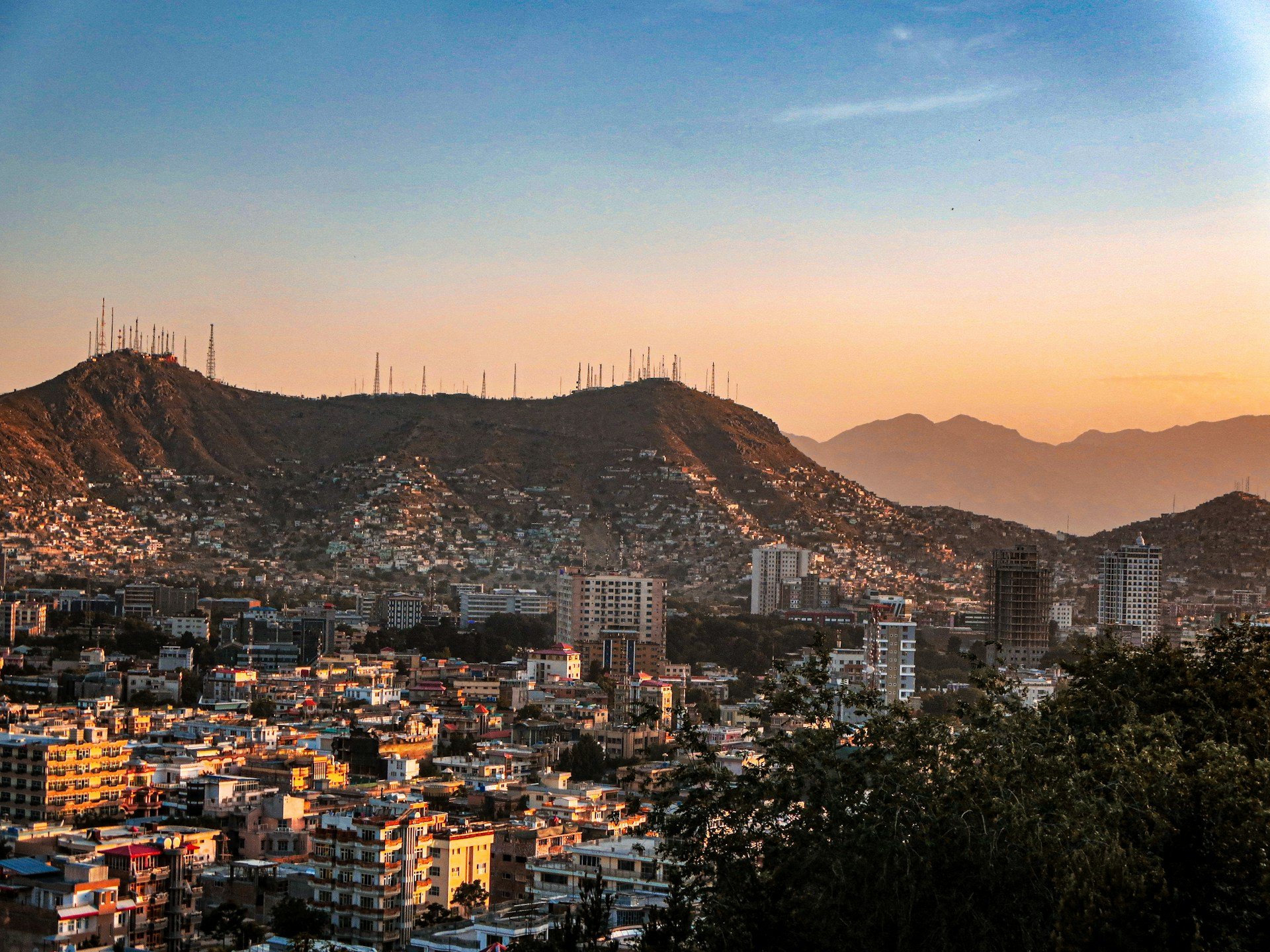
Afghanistan
One of the most beautiful, historically layered, and inaccessible countries on earth. The turquoise lakes of Band-e Amir exist. The hospitality of Afghan people is real and remarkable. The danger is also real. This guide tells you all three things honestly.
What You Need to Know Before Anything Else
Afghanistan is one of the most beautiful countries in Asia. This fact and the danger of visiting it are both true simultaneously and it is important to hold both without letting one cancel the other. The Hindu Kush mountains rise to 7,400 meters and their foothills contain valleys that have been producing some of the world's finest pomegranates, grapes, and melons for three thousand years. Band-e Amir, the series of mineral-blue lakes in the central highlands, looks like something that shouldn't exist in this landscape and somehow does. The old city of Herat, with its extraordinary Friday Mosque tiled in turquoise and its medieval minarets still standing at the city's edge, is one of the great Islamic architectural sites in Asia. Kabul's bazaars, the dried fruit and nut shops of Mandawi Market, the chaos of the old city, carry a density of sensory experience that few cities anywhere approach.
The hospitality of Afghan people toward guests is not a travel cliché. It is one of the most deeply embedded cultural values in a country that has seen enough visitors, many of them uninvited, to have good reasons not to be welcoming. The Pashtunwali code's concept of melmastia, the obligation to provide hospitality to any guest regardless of personal cost, has shaped how Afghans receive travelers for centuries. Visitors who traveled in Afghanistan before 2001, and the small number who have traveled there since the Taliban's return in 2021, describe a quality of human encounter that is genuinely rare elsewhere.
None of this changes the current reality. The Taliban government that has controlled most of Afghanistan since August 2021 is not internationally recognized, operates by a set of laws that are unpredictable for foreigners, and has shown willingness to detain foreign nationals for reasons that are not transparently communicated. ISIS-K, the Islamic State's Khorasan Province affiliate, operates independently of the Taliban and has carried out multiple mass-casualty attacks in Kabul, Mazar-i-Sharif, and other cities since 2021. Kidnapping of foreigners, both by criminal groups and politically motivated actors, remains a documented risk.
A small number of tourists do visit Afghanistan. Adventure travel companies based in Kabul offer guided tours primarily to Band-e Amir and Bamiyan. Some experienced independent travelers have made the overland crossing from Iran or Pakistan. The experiences they describe are, in many cases, extraordinary. The question is not whether Afghanistan is worth seeing. It clearly is. The question is whether the current risks are manageable for you specifically, with your specific background, passport, and risk tolerance. This guide helps you answer that question honestly.
Afghanistan at a Glance
A History Worth Knowing
Afghanistan's location at the junction of Central Asia, South Asia, and the Middle East has made it the meeting point of almost every major civilization and military force in recorded history. The Silk Road ran through it. Every empire that sought to connect East and West either controlled Afghanistan or was stopped by it. The phrase "Graveyard of Empires," applied to Afghanistan by everyone from Victorian journalists to American generals, reflects a genuine historical pattern: the country has absorbed and outlasted Alexander the Great, the Mongols, the British Empire, the Soviet Union, and the United States, in each case through a combination of geographic intractability, fierce local resistance, and a political complexity that outside powers consistently underestimate.
The pre-Islamic history of Afghanistan is less well-known in the West and more extraordinary for it. The Bactrian civilization, centered in the northern plains around Balkh, was one of the ancient world's most sophisticated urban cultures. The Zoroastrian religion, which influenced Judaism, Christianity, and Islam, emerged in part from this region. The Buddha passed through the Gandhara region in what is now eastern Afghanistan, and the Gandharan art tradition that developed here, blending Greek Hellenistic and Indian Buddhist styles after Alexander's campaigns, produced some of the most striking Buddhist sculpture in existence. Much of it now lives in the Kabul Museum, the British Museum, and wherever else it survived the wars.
The Buddhas of Bamiyan, two enormous figures carved into sandstone cliffs in the Bamiyan Valley in the 5th and 6th centuries CE, were the world's tallest standing Buddhas for 1,400 years. The Taliban destroyed them with artillery and explosives in March 2001, an act of iconoclasm that was condemned worldwide and that the Taliban's own minister of information later described as a mistake. The empty niches still stand in the cliff face. Archaeologists have been excavating the rubble since 2001 and have found the remains of a third, reclining Buddha that may be even larger. The absence of the statues is now part of what Bamiyan is.
The 19th century brought the Great Game between Britain and Russia, two empires using Afghanistan as the arena for their competition over Central Asia. Britain fought three Anglo-Afghan Wars, winning none of them decisively and losing two in ways that became bywords for imperial overreach. The 1842 retreat from Kabul, in which a British-Indian army of 16,500 people was nearly entirely destroyed, produced one of the most harrowing accounts of military disaster in colonial history. The survivor, army surgeon William Brydon, arrived at the gates of Jalalabad alone on a dying horse. His arrival became a painting. The British kept trying.
The Soviet invasion of 1979 and the decade-long war that followed, in which CIA-backed mujahideen fighters used American Stinger missiles to ground the Soviet air force, killed between one and two million Afghans and produced five million refugees. The Soviet withdrawal in 1989 was followed by a civil war between mujahideen factions that destroyed much of Kabul and killed tens of thousands of civilians. The Taliban emerged from this chaos in 1994 as a movement promising to end the warlordism and impose order through a strict interpretation of Islamic law. They captured Kabul in 1996 and governed until the American invasion following September 11, 2001.
The twenty years of US presence, and the billions of dollars spent on reconstruction, security forces, and development, produced a government that collapsed in eleven days when American troops withdrew in August 2021. The speed of the collapse surprised almost everyone, including, reportedly, the Taliban. The images of Afghans crowding Kabul airport, clinging to aircraft, falling from planes, are part of the visual record of the 21st century now. The humanitarian crisis that has followed, with the economy in freefall, international aid suspended, and women excluded from most education and public life, is ongoing.
Understanding this history does not make visiting Afghanistan straightforward. But it makes the country's people, their resilience and their exhaustion and their continued hospitality toward strangers, comprehensible in a way that the geopolitical shorthand doesn't capture.
One of the ancient world's most sophisticated urban cultures flourishes in northern Afghanistan. Zoroastrianism emerges in the region.
Alexander conquers the region on his way to India. Gandharan art blending Greek and Buddhist styles develops in his wake.
Two enormous Buddhas carved into sandstone cliffs. They stand for 1,400 years before the Taliban destroys them in 2001.
Babur, founder of the Mughal dynasty, rules from Kabul. His garden, Bagh-e Babur, still exists in the city. He is buried there.
An army of 16,500 is almost entirely destroyed retreating from Kabul. Army surgeon William Brydon arrives at Jalalabad alone on a dying horse.
Soviet forces invade. CIA-backed mujahideen resistance kills one to two million Afghans. The Soviet withdrawal leaves a failed state and a civil war.
The Taliban captures Kabul in 1996. The Buddhas of Bamiyan are destroyed in March 2001. The US invasion follows September 11th.
US and NATO forces withdraw. The Afghan government collapses in eleven days. The Taliban takes Kabul on 15 August 2021.
Top Destinations
Afghanistan's tourist infrastructure is minimal and what existed before 2021 has largely collapsed since. The destinations described here are the ones that travelers have visited in recent years and that are currently accessible with a guide and appropriate security planning. Accessibility changes frequently and what is reachable one month may not be the next. Verify current conditions with a Kabul-based tour operator before committing to any itinerary.
Band-e Amir
Six mineral lakes held in place by natural dams of travertine, a calcium carbonate mineral deposited by the spring water, at an altitude of 2,900 meters in the central Hazarajat highlands. The water is a blue so saturated and so specific that photographs of it are routinely assumed to be edited. They are not. Designated Afghanistan's first national park in 2009, Band-e Amir is the destination that most adventure travelers who visit Afghanistan come specifically to see. It is roughly three to four hours by road from Bamiyan on routes that are scenic and sometimes difficult. The area around Band-e Amir has been relatively stable under Taliban governance, and Afghan and foreign tourists visit it. This does not make the journey risk-free.
Bamiyan Valley
The Bamiyan Valley, a wide green bowl of farmland surrounded by red-brown cliffs and snow-capped mountains, was the center of a Buddhist civilization that lasted from the 2nd to the 9th centuries CE. The cliff face that once held the great Buddhas still stands, their niches empty since 2001. The scale of the niches, 55 meters for the taller, gives you a sense of what was there. The rubble has not been fully cleared. Around the valley: the Shahr-e Gholghola citadel destroyed by Genghis Khan in 1221, the caves that Silk Road travelers and monks carved into the cliff over centuries, and the archaeological sites that continue to produce extraordinary finds. Bamiyan town has guesthouses and a small restaurant economy built around the trickle of travelers that has continued through every period of Afghan history.
Herat
Herat is Afghanistan's third-largest city and its most architecturally significant. The Friday Mosque, the Masjid-i-Jami, is one of the great Islamic buildings of Central Asia: its interior entirely tiled in geometric patterns of turquoise, cobalt, and white that have been maintained and repaired for seven centuries. The Musallah Complex's surviving minarets, five of the original nine still standing, are some of the finest surviving examples of Timurid brickwork. The old city bazaar retains much of its traditional layout. Herat is located near the Iranian border and has historically been more accessible from that direction. The security situation here, as everywhere in Afghanistan, requires current verification.
Kabul
Kabul sits at 1,800 meters in a bowl of mountains and has been inhabited for at least 3,500 years. Bagh-e Babur, the garden where the Mughal founder is buried, is restored and genuinely peaceful in the mornings. The National Museum, despite the losses of the civil war and the Taliban's first period, holds remarkable collections of Gandharan Buddhist art and Bactrian gold jewelry. The old Mandawi Market, the spice and dried fruit bazaar that operated through every government and every war, still operates. Kabul is the point of entry for most foreign visitors and the base for organized tours. It is also where the most significant security risks for foreigners are concentrated. The US Embassy, among others, issued specific warnings about Kabul's Serena Hotel, the Park Palace, and other foreign-visible locations. Security briefings from your tour operator before any city movement are essential.
Balkh & Mazar-i-Sharif
Balkh, called the Mother of Cities in the ancient world, was one of the great urban centers of the ancient Silk Road and possibly the birthplace of Zoroastrianism. It was destroyed by Genghis Khan in 1220 and the ruins of its walls still circle the modern town. The Blue Mosque of Mazar-i-Sharif, the Rawze-e-Sharif, is one of the most beautiful buildings in Afghanistan: its blue-tiled domes visible for kilometers across the northern plains, its courtyard full of white doves that are considered sacred. The city was the site of significant violence during the Taliban's return in 2021. Current conditions require verification before any visit.
Minaret of Jam
A UNESCO World Heritage Site in the Hari Rud valley of the Ghor province, accessible only by a serious four-wheel-drive journey through remote mountain territory. The 65-meter minaret, built in the 12th century and never fully explained by historians who disagree about its original context, stands in a narrow river valley surrounded by mountains so remote that it wasn't documented by Western scholars until 1957. The tile and stucco work of its shaft is extraordinary. Getting there requires planning, a guide, and a full day's drive each way from Herat. It is one of the most isolated and remarkable monuments in Asia.
The Wakhan Corridor
A narrow strip of Afghan territory extending northeast between Tajikistan and Pakistan to reach the Chinese border, the Wakhan Corridor is one of the most geographically remote inhabited places on earth. The Wakhi and Kyrgyz peoples who live here have done so through every government and every conflict with minimal outside contact. The landscape of high-altitude pastures, glaciers, and valleys below the Pamir peaks is genuinely unlike anything else in the region. Access requires crossing extremely remote roads, significant logistical planning, and a guide with specific experience in the area. It was already one of Asia's most difficult journeys before 2021. It remains so.
Kandahar & the South
Kandahar, the spiritual home of the Taliban and the country's second-largest city, is one of the oldest urban sites in Afghanistan. The Shrine of the Cloak of the Prophet, said to contain the cloak of Muhammad, is the most sacred religious site in the country. The orchards and vineyards of the surrounding Arghandab Valley were famous across the medieval world for their pomegranates. The south is the region with the highest security risk for foreign visitors and is not accessible for tourism in any practical sense under current conditions. It is described here because it is part of Afghanistan's complete picture.
Culture & Etiquette
Afghan culture is shaped by Islam, by the Pashtunwali code of conduct among the Pashtun majority, and by a long history of self-reliance in the face of external pressure. The code of melmastia (hospitality), nanawatai (asylum and forgiveness), and nang (honor) that underlies Pashtunwali describes a set of values that have real force in daily life. Being received as a guest in Afghanistan, properly introduced and with appropriate context, produces a quality of welcome that visitors consistently describe as the most generous they have encountered anywhere.
Under the current Taliban government, behavioral expectations for visitors have shifted significantly from those of the 2001 to 2021 period. The Taliban's enforcement of its interpretation of Islamic law affects dress codes, gender interaction, photography restrictions, and the overall environment in ways that require active awareness. What follows describes the current reality as it applies to foreign visitors.
Men should wear long trousers and long-sleeved shirts. Women must cover their hair and body fully. A headscarf is the minimum; a more complete covering is advisable and expected outside of hotel compounds. This is not optional under current Taliban governance and non-compliance will draw attention that creates risk.
Tea and food offered by an Afghan host is a serious expression of welcome. Declining without a specific reason is considered disrespectful. Accept, eat a small amount if you cannot eat more, and express genuine appreciation. The hospitality is real and the correct response is to receive it with equal sincerity.
The Islamic greeting (peace be upon you) and its response (wa alaykum as-salam) are the appropriate opening for any interaction with Afghans. Learning this and using it genuinely will open more doors than any other single gesture.
A local guide provides not just logistical support but social context. Being introduced by a known community member changes the nature of every interaction. Traveling without one removes this protection and creates ambiguity about your purpose that is risky in the current environment.
Photography of people requires explicit permission in every case. Photography of military installations, Taliban checkpoints, and government buildings is prohibited and dangerous. Photography of women is not permitted under Taliban governance. When in doubt, put the camera away.
This is not a cultural preference. It is a security risk that can result in detention. Taliban checkpoints, military vehicles, government buildings, and any infrastructure with armed personnel present should not be photographed under any circumstances.
Expressing political opinions, criticism of the Taliban, or comparative statements about previous governments in any public context creates risk for you and for any Afghan who hears you. The consequences of being reported are unpredictable and potentially serious.
Under the Taliban's current governance, solo female travel in Afghanistan is not safely possible. Women traveling to Afghanistan should do so with a male companion (mahram) and in the context of an organized tour. This reflects the current legal and social environment, not a recommendation about what should be the case.
Alcohol is prohibited in Afghanistan. Carrying it will result in serious consequences if discovered at a checkpoint. This applies to all visitors without exception.
Wearing crosses, carrying religious texts other than the Quran openly, or displaying any non-Islamic religious symbolism creates risk in the current environment. Keep any personal religious items private.
Tea Culture
Green tea (sabz chai) and black tea (sia chai) are the beverages of Afghan social life. Tea is offered immediately upon any meeting, and the ritual of preparing, pouring, and sharing tea is the social framework within which conversation happens. There is always time for tea. Refusing it when offered signals either illness or serious social displeasure. Accept it, drink it, and understand that the conversation that happens over it is the actual point.
Guest Rooms
Traditional Afghan homes have a hujra or mehman khana, a guest room maintained specifically for visitors. Being offered the guest room is a significant act of hospitality. The room is typically the best-furnished in the house, removed from the family's private quarters. Sleeping in the guest room means sleeping better than the family who's hosting you. This is intentional and should be received as the honor it is.
Music Under the Taliban
The Taliban banned most music in public after their 2021 return to power, and enforcement has been inconsistent but real. Traditional Afghan music, including the rubab lute and the tabla drum, has been part of the country's cultural identity for centuries. It continues in private. The Kabul Music Institute, which survived the first Taliban period, went underground after 2021. This is part of the current cultural reality and worth understanding when you interact with Afghan musicians or ask about cultural traditions.
Honor and Face
The concept of nang (honor) is central to Afghan, and especially Pashtun, social interaction. Causing someone to lose face in public, even inadvertently, creates a social debt that can have consequences. Conversely, showing respect, acknowledging someone's status, and treating interactions with genuine courtesy generates goodwill that has practical as well as social value. The Afghan phrase qabil dary (you are worthy) used when receiving hospitality, and mehrbani (kindness) as a general expression of thanks, are worth knowing and using.
Food & Drink
Afghan food is Central Asian in its bones and South Asian in its spicing, with its own distinct identity that shares the rice-and-meat traditions of Persian cuisine while developing independently into something that feels entirely local. The landscape explains a lot: sheep and goat are the predominant animals in an arid, mountainous terrain, so lamb is the meat of Afghan cooking. The fruits, the pomegranates and apricots and grapes of Kandahar, Herat, and the Panjshir Valley, are genuinely exceptional and have been since the medieval Silk Road traders catalogued them.
Alcohol is not available in Afghanistan. The drinks culture runs on tea, fresh juices, and dugh, a yoghurt-based drink similar to ayran that is cooling and filling and available everywhere.
Qabuli Palaw
The national dish and the most important meal for guests. Long-grain rice cooked in meat broth and flavored with caramelized carrots, raisins, cardamom, and cumin, topped with pieces of slow-cooked lamb or chicken. The rice absorbs the broth and the sweetness of the carrots and raisins creates a balance with the savory depth that is unlike any other rice dish in the region. It is served on special occasions and to honored guests. Being served qabuli palaw is a statement of welcome.
Mantu
Steamed dumplings filled with spiced minced lamb or beef and onion, served on a base of yellow split peas and topped with yoghurt, dried mint, and a tomato-based sauce. Afghan mantu are larger and differently spiced than their Central Asian cousins, and the combination of the yoghurt and the tomato sauce over the dumplings is a contrast that doesn't appear elsewhere in the region's food traditions. Found at restaurants throughout Kabul and in family meals across the country.
Kebabs
Afghan kebabs, specifically chapli kebab, a flat minced meat patty from the Pashtun southeast flavored with pomegranate seeds, coriander, and chili, and the more standard skewered lamb kebabs found across the country, are street food at their most honest: charcoal-grilled, wrapped in flatbread, eaten standing at a market stall. The chapli kebab is particular to the Pashtun regions and is the version that has spread most widely outside Afghanistan. The version made in Peshawar and Quetta across the Pakistani border is slightly different and slightly less good.
Bread
Afghan bread, naan, is the foundation of every meal: a large, oval flatbread baked against the walls of a clay tandoor oven and brought to the table wrapped in cloth to keep it warm. Fresh Afghan naan, eaten within minutes of coming out of the oven with a glass of green tea, is one of the simple pleasures that travelers to Afghanistan consistently name as something they think about for years afterward. The bakeries open before dawn and the smell of baking bread in a Kabul morning is worth waking up for.
Fruit
Afghan fruit has been famous for millennia. The pomegranates of Kandahar, the apricots of the Panjshir Valley, the grapes of Herat, the melons of Mazar-i-Sharif, are not hyperbole. The dried fruit and nut trade from Afghanistan was a foundation of the Silk Road economy for centuries and the dried apricots, mulberries, and pistachio of Kabul's Mandawi Market are the correct airport purchase for anyone who values what fruit can taste like when it has been grown properly and dried slowly. The fresh fruit in season is even better.
Tea & Drinks
Green tea with cardamom is the default beverage in most of Afghanistan. Black tea is the preference in Pashtun areas. Both are served sweet and refilled continuously. Dugh is the yoghurt drink, thin and salted or lightly flavored, that is the cooling summer alternative. Fresh pomegranate juice in season is available at street stalls and is worth finding. There is no alcohol anywhere in the country under Taliban governance.
When to Go
Afghanistan has a continental climate with extreme seasonal variation. The summers in most of the country are hot and dry. The winters are severe, with heavy snow closing many mountain roads from November to April. The spring and autumn windows, April to June and September to October, are the most comfortable for travel and the most practical for accessing the mountain destinations. Band-e Amir and the Wakhan Corridor are accessible only in summer and autumn. The Bamiyan Valley is accessible year-round in practical terms but the mountain roads into it can be difficult in winter.
Spring
Apr – JunWildflowers across the mountain valleys, snow still visible on the peaks, and manageable temperatures in Kabul and the lowlands. The mountain roads open progressively through April and May. Band-e Amir is typically accessible from late April or May. The best window for combining lowland cities with the central highlands.
Autumn
Sep – OctThe fruit harvest is at its peak. Pomegranates, grapes, and apples are at their best in September and October. The temperatures are cooling but still comfortable. The mountain colors shift to yellows and oranges. The Wakhan and Band-e Amir are still accessible before the first serious snowfall. Possibly the single best month for first-time visitors is October.
Summer
Jul – AugHot in the lowlands (Kabul reaches 35°C), but the highlands and Band-e Amir are at their most accessible and most beautiful with long days. The Wakhan Corridor is only fully accessible in this window. The heat in Kandahar and Jalalabad is extreme. Focus on the mountains and the north in July and August.
Winter
Nov – MarMountain roads close with heavy snow. The Hazarajat, Bamiyan, and Band-e Amir become inaccessible or very difficult to reach. Kabul and Herat remain open but are cold and grey. Not recommended for first-time visitors to an already challenging destination. Winter in Kabul averages -5°C at night and frequent snowfall.
Trip Planning
Planning a trip to Afghanistan in 2026 requires significantly more preparation than planning a trip to any other destination in this guide. The standard tourist infrastructure of hotels, transport, and organized activities that exists in varying forms across the rest of Asia is minimal here. What works in its place is a combination of organized tour operators, local contacts established before arrival, and a flexible approach to logistics that accepts that plans will change.
The practical starting point for anyone seriously considering Afghanistan travel: contact Afghan Logistics and Tours or another Kabul-based operator and have a full conversation about current conditions before committing to anything. These operators have real-time knowledge of which routes are open, which checkpoints are cooperative, and which areas are currently safe for foreign visitors. Their assessment of the current situation is more reliable than any travel guide written months earlier, including this one.
Vaccinations
Hepatitis A and Typhoid are strongly recommended. Rabies pre-exposure is advisable for extended travel. Polio vaccination must be up to date: Afghanistan is one of the few remaining countries with endemic wild poliovirus. Consult a travel medicine clinic at least six weeks before departure. Malaria prophylaxis is recommended for lowland regions including Jalalabad and parts of the south.
Full vaccine info →Connectivity
Afghan mobile networks (Roshan, MTN, AWCC) operate in urban areas with reasonable coverage. Rural and mountain coverage is limited to nonexistent. A local SIM provides better coverage and call rates than roaming. Internet access is available in Kabul at hotels and some cafes but is slow and intermittent. Download offline maps and any essential information before departure. Do not rely on consistent connectivity.
Power & Plugs
Afghanistan uses Type C and F plugs at 220V. Power supply is unreliable outside major hotels: outages are frequent in Kabul and common elsewhere. A power bank is essential. Solar charging equipment is useful for mountain travel. Most quality hotels have generators for when the mains fail, which they do regularly.
Language
Dari (a dialect of Persian/Farsi) and Pashto are the two official languages. English is spoken by a small educated class in Kabul, largely people who worked with international organizations before 2021. Outside Kabul and the main cities, English is rare. Your tour operator or guide serves as interpreter. Learning basic Dari phrases before departure is useful and appreciated: the greeting alone (salaam alaikum) opens doors.
Travel Insurance
Standard travel insurance will not cover Afghanistan: the Do Not Travel advisory invalidates most policies. You will need specialist hostile environment insurance from providers who cover conflict zones. The cost is significant. Check that your policy covers medical evacuation: in a medical emergency in rural Afghanistan, evacuation to a facility capable of treating serious injuries requires a charter flight or helicopter and costs tens of thousands of dollars without coverage.
Medical Preparation
Medical facilities in Afghanistan are extremely limited outside Kabul and inadequate even there by Western standards. Carry a comprehensive first aid kit, prescription antibiotics for traveler's diarrhea, and any prescription medications you require for the entire trip plus a significant buffer. There is no reliable supply chain for medications. Altitude sickness preparation is essential for Band-e Amir and Bamiyan. Know the symptoms and carry acetazolamide.
Transport in Afghanistan
Afghanistan's transport infrastructure reflects decades of conflict and chronic underfunding. The road network is incomplete, variable in quality, and subject to seasonal closure in mountain areas. There is no functioning passenger rail network. Domestic air services have significantly reduced since 2021. Getting between destinations requires flexibility, a reliable vehicle, and a local driver and guide who know the current state of each route.
International Flights
Varies significantlyKam Air and a small number of other carriers operate limited international routes into Kabul International Airport. Connections from Dubai, Istanbul, and regional Central Asian cities are the most common entry points. Flight schedules are irregular and subject to change. Book through your tour operator who will have current information.
4WD Vehicle & Driver
$100–200/dayThe standard transport for organized travel. A reliable four-wheel-drive vehicle with an experienced local driver is non-negotiable for any travel outside Kabul. The driver handles checkpoint interactions, knows which roads are currently passable, and provides a level of local context and safety that is irreplaceable. Your tour operator arranges this.
Shared Taxis & Minibuses
Very cheapThe way most Afghans travel between cities: shared taxis and minibuses operating on fixed routes from city bus stations. Cheap, functional, and very much not recommended for foreign tourists traveling without a guide. The combination of checkpoint scrutiny, language barriers, and the absence of any support structure makes this option viable only for the most experienced travelers with specific local knowledge.
Domestic Flights
Limited availabilityDomestic air connections between Kabul, Herat, Mazar-i-Sharif, and Kandahar operated under the previous government. Kam Air and Ariana Afghan continue to operate some routes but schedules are unreliable. For Herat and the north, domestic flights save significant overland travel time but require flexibility about departure dates.
Trekking
Varies by routeThe Hindu Kush and Wakhan Corridor offer trekking that is genuinely among the most spectacular in Asia, by any comparison. Trekking requires pack animals for equipment, a guide, and complete self-sufficiency for food and accommodation. No rescue infrastructure exists. Altitude is a serious consideration: the Wakhan starts above 3,000 meters and goes much higher.
Road Conditions
N/ARoad quality varies enormously: the Kabul-Kandahar highway is paved and reasonable; the road from Kabul to Bamiyan crosses a mountain pass and is unpaved in sections. Routes to Band-e Amir, the Wakhan, and the Minaret of Jam require serious 4WD. Seasonal closures from snow, flooding, and road damage are common. Your driver will know the current state of any route.
Taliban checkpoints operate throughout Afghanistan and you will pass through multiple on any inter-city journey. Standard protocol is to slow down, have your passport and visa visible, wait for the officer to approach the vehicle, and let your driver and guide handle the interaction. Do not reach for your camera. Do not speak first. Do not get out of the vehicle unless explicitly asked to. The interaction is almost always brief and uneventful when handled correctly by a guide with local knowledge. It is your guide's job to manage checkpoints. Let them do it.
Budget Planning
Afghanistan is cheap in terms of local costs: food, accommodation outside the few international-standard hotels in Kabul, and local transport are all extremely inexpensive. The costs that make Afghanistan travel expensive are the specialist ones: hostile environment travel insurance, guide and driver fees, international flights on limited-competition routes, and the satellite communication equipment that responsible travel here requires. Budget for the specialist costs carefully. The local ones will not surprise you.
- Guesthouse accommodation
- Local restaurant meals
- Tea, bread, and market food
- Local transport (with guide)
- Mosque and site entry (minimal or free)
- Guide and driver fees
- 4WD vehicle rental
- Mid-range guesthouse or hotel
- Tour operator support and logistics
- Local meals and transport covered
- Hostile environment travel insurance
- International flights (limited routes)
- Security-vetted accommodation in Kabul
- Satellite communication equipment
- Emergency evacuation contingency budget
Quick Reference Prices
Visa & Entry
The visa situation for Afghanistan is complicated by the absence of international recognition for the Taliban government and by the fact that many countries have closed their Afghan embassies or consulates. The process for obtaining a tourist visa since 2021 has been inconsistent and is best navigated through a tour operator with current experience rather than through official channels that may not be functioning normally.
In broad terms: most Western passport holders require a visa and must apply either at an Afghan embassy or consulate (where one exists and is operational) or arrange a letter of invitation through a tour operator, which can facilitate the process. The Taliban government has issued tourist visas to visitors, but the process and requirements have changed multiple times. Verify current requirements with your tour operator as the closest thing to a reliable current source.
Entry points are limited: Kabul International Airport is the main international entry for air travelers. Overland crossing from Iran (Islam Qala border) and from Pakistan (Torkham and Spin Boldak) are used by some travelers but carry their own security considerations depending on the current situation at each crossing.
Contact a Kabul-based tour operator for current requirements before applying anywhere. The official channels are inconsistent and the operator's current knowledge is more reliable than any published guidance.
Safety in Afghanistan
Afghanistan has been the subject of Do Not Travel advisories from the US, UK, Australia, Canada, and most European governments continuously since at least 2001, and the advisories have not been lifted following the Taliban's return to power in 2021. These advisories reflect genuine, ongoing, and assessed risk. They are not bureaucratic caution. The specific risks they reference include terrorist attacks by ISIS-K, kidnapping by criminal and political actors, arbitrary detention by Taliban security forces, and the general absence of any consular support infrastructure for Western nationals who get into trouble.
A small number of tourists have visited Afghanistan since 2021 and had positive experiences. Their accounts are genuine. They are also a selected sample: they are the people who went and came back and chose to write about it. The people who had serious problems are less represented in the public record. This selection effect is worth acknowledging when reading positive accounts of current travel in Afghanistan.
Terrorist Attacks
ISIS-K has carried out multiple mass-casualty attacks in Kabul, Mazar-i-Sharif, and other cities since 2021, targeting mosques, educational institutions, airports, and locations associated with foreigners. The US Embassy has issued specific warnings about attacks on locations used by Westerners including hotels and the Kabul airport arrivals area. The risk is real and ongoing.
Kidnapping
Kidnapping of foreign nationals for ransom or political leverage has occurred throughout Afghanistan's recent history and has not ceased under Taliban governance. Criminal kidnapping networks operate independently of political actors. The risk is highest for Westerners who are visibly foreign and without adequate security arrangements.
Arbitrary Detention
Foreign nationals have been detained by Taliban security forces for reasons including photography, unclear documentation, and activities perceived as intelligence-gathering. The legal framework governing such detentions is opaque and the detention conditions are not those of Western legal standards. Several foreigners have been held for extended periods without clear communication to their embassies.
Landmines
Afghanistan remains one of the most heavily landmine-contaminated countries in the world from decades of conflict. Do not walk off established paths anywhere outside of cities. Do not pick up any unfamiliar objects from the ground anywhere in the country. HALO Trust and other demining organizations have cleared significant areas but the contamination is not fully mapped and not fully cleared.
No Consular Support
Most Western embassies have no physical presence in Afghanistan. If you get into serious trouble, your country's ability to help you is extremely limited. Emergency consular assistance may have to be coordinated from a neighboring country, which takes time that medical or security emergencies may not provide. This is the most practically significant risk factor for Western tourists.
Relatively Stable Areas
Bamiyan Province and Band-e Amir have been among the more stable areas for visitors under Taliban governance, largely because the population is predominantly Hazara and the area receives enough local Afghan tourism to have functioning informal hospitality structures. This relative stability is not guaranteed and can change. It is not a reason to relax security practices.
Emergency Information
Your Embassy — Remote Operations
Most Western embassies have no physical presence in Afghanistan. Contact is handled remotely from neighboring countries or capital cities. Save these numbers before departure and verify current emergency contact procedures with your embassy before leaving home.
The Country Beneath the Headlines
Every piece of writing about Afghanistan eventually collides with the same problem: how to describe a place that is simultaneously one of the most beautiful, historically significant, and humanly generous countries in Asia, and one of the most dangerous for the people who try to visit it. The collision doesn't resolve. Both things are true at the same time and the tension between them is part of what makes Afghanistan so difficult to think about honestly.
The Afghan people, who did not choose any of the governments that have governed them in the past fifty years, have continued to receive travelers with an openness and warmth that those travelers consistently describe as the most generous they have encountered anywhere. The qabuli palaw cooked for a guest on short notice. The guest room offered without hesitation. The glass of tea and the conversation that outlasts the translator's vocabulary. These experiences happen in Afghanistan now, today, in the middle of everything else that is also happening.
Whether the current moment is the right one for you to go and have those experiences is a question only you can answer, with current information, honest self-assessment, and a clear-eyed look at both what you might gain and what you might cost the people who receive you if something goes wrong. Afghanistan has absorbed enough of the consequences of other people's decisions. The least a traveler can do is make this one carefully.