
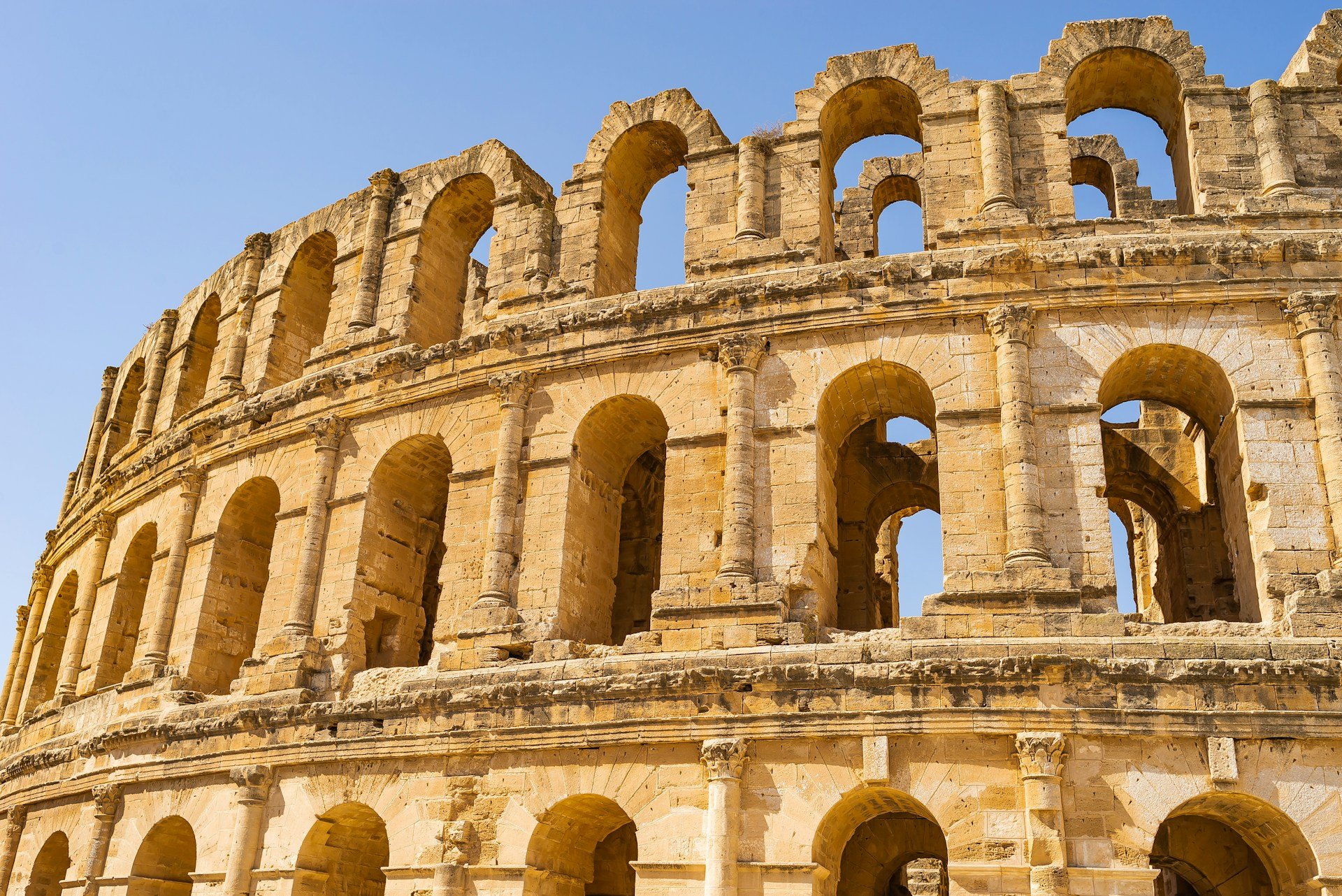
What You're Actually Getting Into
Tunisia sits at the crossroads of everything. Phoenicians, Romans, Arabs, Ottomans, and French colonizers have all passed through and left something behind. The result is a country that can offer you a proper Roman amphitheater in the morning, a medina souk in the afternoon, harissa-slathered grilled fish for dinner, and a Saharan dune camp the following night. Most visitors don't realize how much is packed into a country roughly the size of Georgia.
This is also the country that sparked the Arab Spring in 2010 and has since navigated a complicated path between democracy and authoritarian drift. Tourism dropped sharply after the 2015 Bardo museum and Sousse beach attacks, and the country has spent years rebuilding confidence. The security situation today is substantially improved. Most visitors return having felt no tension whatsoever in the main tourist areas. That said, a handful of border regions remain genuinely off-limits and you should check current advisories rather than assuming either the worst or the best.
What Tunisia does better than almost anywhere else in Africa: value for money. Your Tunisian dinar goes meaningfully further here than in Morocco, Turkey, or southern Europe for comparable experiences. A really good lunch in Tunis runs 8–12 TND. A private room in a well-reviewed guesthouse in the medina is 80–120 TND. A full-day Sahara excursion, camel included, is about 200 TND. If you're coming from Western Europe, your wallet will notice the difference within the first hour.
The one adjustment most visitors need to make: slow down. Tunisia rewards patience. The medinas are designed to disorient and then reveal. The Sahara requires an overnight to actually feel it. The coast is better at an unhurried pace. Give yourself at least a week, ideally ten days.
Tunisia at a Glance
A History Worth Knowing
You cannot walk through Tunisia without tripping over history. This is not a metaphor. The ruins of Carthage are on the northern suburbs of Tunis, reachable by suburban train. Dougga, one of the best-preserved Roman cities in the entire Mediterranean, sits on a hillside in the interior that most visitors somehow never make it to. The Bardo museum in Tunis contains the largest collection of Roman mosaics in the world. The country's historical density is extraordinary for its size.
It starts with the Phoenicians, who founded Carthage around 814 BCE on a peninsula jutting into the Gulf of Tunis. Carthage became one of the most powerful cities of the ancient world, a maritime empire that dominated western Mediterranean trade and produced Hannibal, the general who marched elephants over the Alps to terrify Rome. The Romans didn't find it funny. They eventually won three Punic Wars and in 146 BCE razed Carthage to the ground, salted the earth (according to some accounts, though historians dispute whether the salting actually happened), and built their own city directly on top. That Roman Carthage is the ruin you see today.
Roman North Africa was prosperous and culturally significant. Several Roman emperors were born here, including Septimius Severus from Leptis Magna, just across the Libyan border. The region supplied Rome with grain, olive oil, and those extraordinary mosaics. When you look at the Bardo's collection, you're seeing the everyday interior decoration of wealthy Roman North African homes, not special occasion pieces.
The Arab conquest arrived in the 7th century and was transformative. Kairouan, founded in 670 CE in the interior of Tunisia, became one of the most important cities in the Islamic world, the fourth holiest city in Islam after Mecca, Medina, and Jerusalem. The Great Mosque of Kairouan, still standing, was built in 670 CE and has been continuously used for prayer ever since. The Aghlabid dynasty that ruled from Kairouan spread Islamic civilization across North Africa and into Sicily. Tunisian culture, architecture, music, and food still carry deep Islamic roots that 13 centuries haven't erased.
Ottoman rule from the 16th century brought a further layer: the Husainid beys who governed Tunisia as a semi-autonomous province developed a sophisticated court culture in Tunis, visible today in the ornate palaces repurposed as museums in the medina. France colonized Tunisia in 1881, declared a protectorate, and built the French colonial city directly adjacent to the Arab medina in Tunis, a spatial metaphor for the whole colonial enterprise. Independence came in 1956 under Habib Bourguiba, whose secular, modernizing agenda shaped the Tunisia that exists today, including its relatively progressive laws on women's rights compared to neighboring countries.
The 2010 Jasmine Revolution that ousted President Ben Ali after 23 years in power and ignited the Arab Spring across the region was the country's most recent defining moment. Tunisia's subsequent decade of democratic experiment was real and fragile simultaneously. Current President Kais Saied has consolidated power significantly since 2021. The political situation is worth understanding before you visit, not because it will directly affect your trip in most cases, but because Tunisians are often eager to talk about it and engage thoughtfully with visitors who show genuine interest.
Phoenician city becomes a Mediterranean superpower. Hannibal and his elephants are centuries away.
End of the Third Punic War. Romans build their own city on the ruins. The mosaics you'll see at the Bardo come from this era.
Islam arrives. Kairouan becomes one of the most important cities in the Islamic world.
Tunisia becomes an Ottoman province. The Husainid beys develop a sophisticated court culture in Tunis.
France colonizes Tunisia. The European new city is built alongside the Arab medina in Tunis.
Habib Bourguiba leads Tunisia to independence. His secular modernizing project shapes the country for decades.
Mohamed Bouazizi's self-immolation sparks protests that topple Ben Ali's 23-year regime and ignite the Arab Spring.
Post-revolutionary democratic experiment under pressure. Tourism recovering. A country still negotiating its identity.
Top Destinations
Tunisia's geography does a lot in a short distance. The north is Mediterranean, green, and cool. The coast from Hammamet south to Sfax is beach resorts and fishing towns. The interior holds the ancient sites and the salt lakes. The south is Sahara. A first-time itinerary that tries to cover all four zones in a week will feel rushed. Pick two or three zones and go properly.
Tunis & the Medina
The medina of Tunis is a UNESCO World Heritage Site and one of the Arab world's great surviving medieval cities. The souks are organized by trade, as they have been for a thousand years: perfumers on one street, leather workers on the next, fabric merchants after that. Rue de la Kasbah, Rue des Libraires, and the area around the Zitouna Mosque are the core. Give it at least half a day on foot without a plan. Budget another morning for the Bardo. The French-colonial Avenue Habib Bourguiba district is pleasant for coffee and people-watching in the evening.
Sidi Bou Said
Twenty minutes from central Tunis by TGM train, Sidi Bou Said is the white-and-blue village perched above the Bay of Tunis that ends up on every postcard of Tunisia. The reality matches the image surprisingly well once you get past the tourist souvenir density on the main Rue Habib Thameur. The views across the bay from the clifftop cafes are genuinely spectacular, particularly late afternoon when the light goes golden. Walk down to the port for grilled fish and relative quiet. Stay for sunset. Take the train back.
Carthage
Spread across a residential suburb north of Tunis, Carthage is less a single site than a series of ruins scattered among upscale villas. The Antonine Baths, once the third-largest Roman baths in the world, are the most dramatic fragment. The Punic ports give you a sense of what made Carthage a maritime empire. The archaeological museum pulls it together. Combine Carthage with Sidi Bou Said in a single day on the TGM suburban train.
Kairouan
The fourth holiest city in Islam. Non-Muslims cannot enter the Great Mosque but can view the exterior and explore the medina, which is one of Tunisia's least touristy and most genuine. The Aghlabid basins, 9th-century water storage tanks that solved the city's water supply problem, are an underrated sight. Kairouan carpets are the country's best. Budget a full day. The drive from Tunis through the flat Tunisian interior is itself quietly meditative.
Dougga
The best-preserved Roman city in North Africa and one of the best in the entire Mediterranean world. The Capitol temple is virtually intact. The theater still hosts performances. The hilltop location above the Tunisian interior is dramatic. It gets a fraction of the visitors that Pompeii or Volubilis in Morocco receive, which means you can wander it almost alone on a weekday morning. This is Tunisia's most underrated major site. Don't miss it.
Douz & the Dunes
Douz calls itself the "gateway to the Sahara" and earns the title. The real Saharan dunes begin here, an hour's drive south into the Erg Oriental. An overnight dune camp is the standard experience and it's worth every cliché associated with it: the silence after sunset, the star density, the cold before dawn. Most tours depart from Douz at around 4pm, ride camels or take 4WDs to the camp, and return by 9am the next morning. Book through a reputable guide rather than a street tout.
Tozeur & Chott el-Djerid
Tozeur is the most atmospheric town in the Tunisian south, built in distinctive yellow-brick architecture and surrounded by one of the largest palm oases in North Africa. The Chott el-Djerid salt lake to the east is a vast white expanse that shifts color across the day — at noon it glows like a mirror; at dusk it turns pink and violet. The drive across the causeway is one of Tunisia's stranger experiences. Several Star Wars films were partly shot in this region. The moisture evaporators near Tozeur are real, not sets.
Djerba
Connected to the mainland by a Roman causeway that's still in use, Djerba is Tunisia's resort island. The beaches on the north shore at Sidi Mahres are long, clean, and calm. The medina of Houmt Souk has a functioning pottery market and a 15th-century fortress. Djerba also has one of the oldest Jewish communities in the world and the El Ghriba synagogue, which dates in its current form to the 19th century but on a site of continuous worship since antiquity. It's a 90-minute flight from Tunis or a 6-hour drive.
Culture & Etiquette
Tunisia sits between the Arab world and the Mediterranean and is genuinely both. It has the most progressive personal status laws in the Arab world — women have had equal inheritance rights since 2018, alcohol is legal and widely available, and a secular tradition going back to independence shapes daily public life in ways that aren't always obvious to first-time visitors from other Muslim-majority countries. This is not Europe, but it's also not the Gulf. Context matters here more than blanket rules.
What this means practically: you can drink a beer in a Tunis café without anyone batting an eye. Women traveling alone are not novelties but do receive more attention than they would in most European cities, particularly in rural areas and smaller towns. Dress that would be unremarkable in Marseille may draw stares in Kairouan or Douz. Calibrate your clothing choices to where you actually are, not to a uniform Tunisia-wide standard.
Both men and women should have shoulders and knees covered at mosques, mausoleums, and shrines. Many sites provide wraps at the entrance. Use them.
Being offered tea in a shop or private home is a social ritual. Refusing is awkward. Accepting doesn't obligate you to buy anything. Sit, drink, chat, leave politely.
"Assalamu Alaikum" or simply "Bonjour" before any transaction or question signals basic respect. Tunisians notice when visitors skip the greeting and launch straight into a request.
Fixed prices don't exist in souk stalls. Opening prices for tourists can be two to three times the expected final price. Counter-offer with calm good humor. Walk away if it's not moving. Usually it moves.
Particularly older women and people in traditional dress. A smile and a pointed camera gesture usually gets a yes or no quickly. Take no as no.
Bikinis and swimwear are fine on resort beaches and hotel pools. The same outfit walking into Houmt Souk's medina is inconsiderate. Change before you leave the beach zone.
Eating, drinking, or smoking in public during Ramadan daylight hours is disrespectful to fasting locals. Restaurants in tourist areas stay open, but being discreet in non-tourist neighborhoods matters.
Unlicensed taxis and some legal ones quote tourist prices. Always confirm the price before you get in, or insist the meter is running. The base rate in Tunis is about 0.5 TND per km.
Many Tunisian households don't drink for religious reasons. Bringing wine as a gift is well-intentioned but potentially offensive. Pastries from a known patisserie are a universally safe alternative.
The medinas of Tunis and Sousse are safe enough by day but significantly less navigable at night. If you get lost after dark, the streets empty quickly and getting your bearings is harder. Plan to be out before 9pm or go with a local guide.
The Hammam
A traditional hammam visit is one of Tunisia's best experiences and costs almost nothing. The standard process: undress to swimwear or provided shorts, sit in the steam room for 15 minutes, get scrubbed with a kessa mitt by an attendant (this part is more aggressive than you expect), soap wash, rinse, rest. Budget 15–30 TND including the scrub. The hammams in Tunis's medina are the most atmospheric. Ask your guesthouse host which one locals actually use.
Café Culture
The traditional Tunisian café is almost exclusively male-occupied. This is not aggressive — it's just how it has always worked. Women traveling alone may feel like outsiders in a traditional café, though in Tunis and coastal cities mixed cafés are increasingly common. If you want to engage with the traditional version, a male travel companion changes the dynamic. Tourist cafés in Sidi Bou Said and the medina are mixed without any tension.
Malouf Music
Malouf is Tunisia's classical musical tradition, brought by Andalusian refugees expelled from Spain after 1492. It survived five centuries in the medinas of Tunis, Testour, and Kairouan. You'll hear it at cultural centers, occasionally in medina restaurants, and at the Festival of Malouf in Testour if your timing is right. It sounds like nothing else in North Africa — lutes, violins, and rhythms that carry Spain's ghost.
Language Reality
French is your best tool in urban Tunisia. Virtually all educated Tunisians speak it and speak it well. Tunisian Arabic (Darija) is genuinely different from Egyptian or Moroccan Arabic and difficult for other Arabic speakers. English is improving in tourist areas but not reliable in the interior or south. Download a French offline translation pack before you go. Basic French phrases will take you further here than in most of France.
Food & Drink
Tunisian food is one of North Africa's most underrated cuisines and it is genuinely, aggressively spicy in a way that Morocco's food is not. The base of almost everything is harissa, Tunisia's slow-cooked chili paste made with roasted dried peppers, garlic, caraway, and coriander. The Tunisian version is wetter and smokier than the squeezed-from-a-tube thing you get in supermarkets at home. It appears at breakfast alongside bread and olive oil. It goes into the shakshuka-style eggs. It's in the merguez sausages. It is not optional.
Olive oil is the other constant. Tunisia is one of the world's major olive oil producers and the local olive oil in markets and restaurants is fresh, grassy, and much better than most of what gets exported. Buy a bottle. It's half the price of European equivalents and significantly superior. Check customs regulations before flying home with it.
Lablabi
Tunis's working-class breakfast. A bowl of chickpea broth with a torn-up bread roll in the bottom, topped with a raw egg that cooks in the heat, a spoon of harissa, cumin, capers, and olive oil poured over the top. Costs about 3 TND from a proper lablabi counter near the central market. The place on Rue de l'Agha behind the medina has been serving it since before independence. Arrive before 9am.
Mechouia Salad
Roasted pepper and tomato salad, charred and chopped, dressed with olive oil and lemon, topped with canned tuna, capers, and hard-boiled egg. The Tunisian version of a composed salad and an absolutely reliable lunch for 5–8 TND at any decent restaurant. The quality spread between a bad version and a good version is enormous. The good version is in a restaurant where the peppers are blackened that morning, not from a jar.
Brik
A thin pastry pocket, deep-fried, filled with egg, tuna, capers, and sometimes cheese or parsley. You have to eat it in one bite or the egg runs everywhere. This is considered part of the experience. Every medina has a brik stand. They cost 1.5–2.5 TND each. Eat two. The trick is biting into it while leaning forward over the paper it's served on.
Grilled Fish
The Mediterranean coast from Bizerte south to Sfax produces excellent fresh fish. Dorade (sea bream), loup de mer (sea bass), and red mullet are caught daily and grilled simply with olive oil, lemon, and herbs. The fishing ports at Sidi Bou Said, La Goulette, and Sfax have the freshest supply. A full grilled dorade with mechouia and bread runs 20–35 TND depending on the restaurant's tourist orientation.
Sweets & Pastries
Tunisian pastry culture blends Arab, Ottoman, and Andalusian traditions. Makroudh (semolina pastry filled with date paste, dipped in honey) from Kairouan is the most famous. Assida, a sweet porridge served at celebrations with nuts and honey. Bambalouni, the Tunisian version of a fried doughnut sold from beach carts. A proper patisserie in the Tunis medina is worth 30 minutes of your afternoon.
Alcohol in Tunisia
Tunisia is one of few North African countries with a functioning wine industry, and the local Tunisian wines are better than their reputation. Domaine Neferis and Château Mornag are the labels worth asking for. Celtia beer is the local lager — light, reliable, cold. Alcohol is available in licensed restaurants and some shops in tourist areas but not universally. Check before assuming. The Carthage wine festival in August is a legitimate event with actual good producers.
When to Go
March to May is the best window for most of Tunisia. The coast is mild and swimmable by May. The interior and Sahara are warm but not punishing. The countryside between Tunis and Dougga goes green with wildflowers in April. Spring is also when the crowds are light enough that Sidi Bou Said is actually pleasant to walk through rather than shuffle through.
September and October are a close second. The Mediterranean is at its warmest, the summer beach crowds have gone, and the Sahara's extreme heat has dropped to something manageable for a desert overnight. October is arguably the optimal month overall.
Spring
Mar – MayMild temperatures, wildflowers across the interior, manageable crowds. May is warm enough for coastal swimming. The Sahara is doable without suffering. Book accommodation early for Easter week.
Autumn
Sep – NovWarmest sea temperatures of the year. Post-summer quiet. The Sahara overnight is the most comfortable it gets. Dates are harvested in October around Tozeur. Genuinely excellent timing.
Winter
Dec – FebTunis can be rainy and cool but rarely cold. The Sahara is cold at night (near zero) but dramatically clear days. Northern coast and Tunis sightseeing is good. Beach resorts are quiet and cheap.
Summer
Jun – AugThe coast is packed with European package tourists and prices spike. The interior is fiercely hot (Tozeur hits 45°C). The Sahara is genuinely dangerous for overnight camps in July and August. Mediterranean beach holiday is doable; anything else is a grind.
Trip Planning
Seven to ten days is the right length for a first Tunisia trip. Less and you're cutting the Sahara or the medinas short. More and you'll want to get into the north — Bizerte, Tabarka, the Cap Bon peninsula — territory most visitors never reach and that rewards patience.
Tunis, Sidi Bou Said & Carthage
Day one: land, check into medina guesthouse, walk the souk, eat lablabi. Day two: TGM train to Carthage and Sidi Bou Said. Sunset from the clifftop café. Evening in the medina. This is a manageable and excellent first 48 hours.
Bardo Museum + Kairouan
Morning at the Bardo. Afternoon drive to Kairouan (1.5 hours), check in, evening walk of the medina and Great Mosque exterior. Kairouan's medina at dusk is particularly good.
South: Tozeur, Douz & the Sahara
Drive south through the interior to Tozeur. Afternoon walk in the old medina and palm oasis. Day five: drive the Chott el-Djerid causeway to Douz. Afternoon departure by camel to the dune camp. Overnight in the Sahara.
Return North via Matmata
Morning return from dune camp. Drive north via Matmata troglodyte village (worthwhile half-hour stop). Return to Tunis. Final evening for dinner in the medina at a proper Tunisian restaurant, not a tourist terrace. Fly home day seven or sleep before early day-eight departure.
Tunis, Sidi Bou Said & Dougga
Two full days in Tunis with a Carthage and Sidi Bou Said day. On day three, rent a car and drive to Dougga. The Roman site deserves 3–4 hours. Return to Tunis or overnight in the nearby town of Le Kef.
Kairouan & the Central Interior
Kairouan deserves a full day. The Great Mosque exterior, the medina carpet shops, a proper makroudh pastry, and a long lunch. Overnight in Kairouan. Day five: drive south toward Tozeur.
Sahara Loop: Tozeur, Douz & Matmata
Tozeur old medina and oasis. Chott el-Djerid drive. Overnight Sahara camp from Douz. Day eight: Matmata troglodyte villages. Drive up to Sfax or the coast.
Sousse or Hammamet Coast
Two nights on the coast for beach time and the Sousse medina and ribat (coastal fortress). Fly home from Tunis-Carthage International.
North Tunisia: Tunis, Bizerte & Cap Bon
Four days in the north allows Tunis properly plus day trips to Bizerte (Tunisia's northernmost city, good beaches and old port), and the Cap Bon peninsula where the wine country is and where the Romans planted their first olive groves. Nabeul has the best pottery market outside Kairouan.
Interior: Dougga, Le Kef & Kairouan
The interior route from Tunis south through Dougga, the highland town of Le Kef (a Roman-Arab-Ottoman layered city most visitors miss entirely), and Kairouan. Three days is enough to go slowly and eat well.
The Sahara South
Tozeur, Chott el-Djerid, Douz overnight camp, Matmata, and time in the southern oasis town of Kebili. The south is rewarding if you don't rush it. Take a second night in the dunes if you can manage it.
Djerba Island
Fly or drive to Djerba. Three nights gives you beach time, the Houmt Souk medina, the El Ghriba Synagogue, and a genuinely slow couple of days. Fly home from Djerba-Zarzis Airport.
Vaccinations
No mandatory vaccinations required. Recommended: Hepatitis A and B, Typhoid if eating in local markets, Rabies if spending time in rural areas. Routine vaccines up to date.
Full vaccine info →Connectivity
Tunisian SIM cards (Ooredoo, Tunisie Telecom) are cheap and easy to buy at the airport or any phone shop with your passport. An Airalo eSIM is another option. Mobile data coverage is good in cities and along main roads; patchy in the deep south.
Get Tunisia eSIM →Power & Plugs
Tunisia uses Type C and Type E plugs at 230V, the same as continental Europe. UK, US, and Australian visitors need adapters. Power cuts in older medina guesthouses are occasional — a portable power bank is sensible.
Language
French is your most useful tool after Tunisian Arabic. Most city-dwellers and tourism workers speak it well. Download Google Translate with French and Arabic offline packs. The camera translation feature works on Arabic signage.
Travel Insurance
Essential for Tunisia given the amber security status and the distance from major trauma centers in the south. Ensure your policy covers emergency evacuation. World Nomads and AXA both cover Tunisia without exclusions for the main tourist zones.
Health Considerations
Drink bottled water outside of trusted hotels and restaurants. Stomach adjustments from the olive oil and chili are normal for the first day or two. A standard travel health kit with oral rehydration salts and an antihistamine covers most eventualities.
Transport in Tunisia
The honest assessment: Tunisia's intercity transport works if you work with it, not against it. Trains connect Tunis to Sfax and Sousse efficiently enough. Louages, the shared long-distance taxis, are the backbone of the country and faster than buses. Renting a car unlocks the interior and the south in a way that public transport cannot. For a trip that includes Dougga, Tozeur, and the Sahara, a car is not optional — it's the only way to do it without losing half your time waiting for connections.
Train (SNCFT)
5–25 TND/routeTunis to Sousse takes 2 hours. Tunis to Sfax 3.5 hours. Comfortable enough air-conditioned carriages. Slow compared to driving. Book same-day at the station; no need for advance reservations on most routes.
Louages
8–35 TND/routeShared long-distance taxis that depart when full. Faster than buses, cheaper than private taxis. The system requires knowing which station serves which route in each city. Ask your guesthouse. Essential for the south.
TGM (Tunis Suburb)
1–2 TNDThe suburban train connecting Tunis city center to La Marsa, Sidi Bou Said, and Carthage. Runs every 15–30 minutes. Essential for day trips north of Tunis. Cheap, reliable, and a good way to see the residential suburbs.
Car Rental
60–120 TND/dayThe right choice for the interior and south. Roads between main cities are paved and generally good. International driving permit technically required but rarely checked. Avis, Hertz, and local companies are all at Tunis airport.
SNTRI Buses
10–30 TNDLong-distance buses connect all major cities. Slower and less comfortable than louages but cheaper on some routes. Air-conditioned on modern coaches. Advance booking recommended for southern routes in high season.
Taxi
0.5 TND/km (meter)Yellow taxis in Tunis are metered and affordable within the city. Always insist on the meter running. Night rate applies from 9pm. Avoid unlicensed vehicles near the airport and tourist sites.
Domestic Flights
40–90 TNDTunisair operates Tunis to Djerba and Tunis to Tozeur. Useful for reaching the south quickly if time is short. Book direct on the Tunisair website. Luggage allowances are stricter than on international routes.
4WD & Camel
Tour-dependentIn the Sahara south of Douz, 4WD vehicles and camels are the only options for reaching the dune fields. Book through reputable tour operators in Douz or pre-book from Tunis. Never go into the deep desert alone.
Accommodation in Tunisia
Where you stay in Tunisia shapes the trip fundamentally. A dar (traditional courtyard house) in the medina of Tunis is a completely different experience from the all-inclusive beach resort on the Hammamet coast, and both have their place depending on what you want. The medina dars are the more interesting choice for understanding Tunisian life. The coastal resorts are honest about what they are: a warm beach in winter, a full-service package holiday in summer.
Dar (Courtyard House)
80–200 TND/nightThe traditional option in medinas. A converted Ottoman-era courtyard house with tiled floors, carved plasterwork, and usually a rooftop terrace. The dar in Tunis's medina is the best possible base for exploring the souk. Book direct where possible — many aren't on major booking platforms.
City Hotels
60–150 TND/nightModern hotels along Avenue Habib Bourguiba and the newer districts of Tunis are comfortable and competitively priced. The Hotel Majestic and Hotel Africa (both on Bourguiba) are mid-range stalwarts. International chains (Novotel, Marriott) exist for those who want consistency.
Beach Resorts
100–300 TND/nightHammamet, Sousse, and Djerba have large all-inclusive resorts catering primarily to European package tourists. The beaches are genuinely good. The food inside the all-inclusive perimeter is less genuine. Venture out for dinner at least once.
Desert Camps & Eco-Lodges
150–350 TND/night incl. mealsSaharan camp experiences range from basic tents to genuine glamping setups with proper beds, Berber rugs, and multi-course dinners. The quality difference between the cheapest and best is significant. Spend a bit more here. It's worth it.
Budget Planning
Tunisia is one of the best-value destinations in the Mediterranean world. The Tunisian dinar (TND) has depreciated significantly against the euro and dollar over the past decade, which means your money goes substantially further than it did even five years ago. What you'd spend on a modest lunch in Paris gets you an excellent three-course meal with wine in Tunis. This is not accidental — it's a structural advantage that the country's tourism sector runs on.
- Medina guesthouse or cheap hotel
- Lablabi and brik for breakfast/lunch
- Local restaurants for dinner (10–15 TND)
- Louages and public transport
- Free medina walking and souks
- Dar or mid-range hotel
- Mix of local and tourist restaurants
- Rental car for interior/south segments
- Paid sites and museum entries
- Guided Sahara overnight
- Quality dar or beach resort with meals
- Private driver for flexibility
- Quality Sahara glamping experience
- Wine with dinner, hammam, guided tours
- Domestic flights to save time
Quick Reference Prices (TND)
Visa & Entry
Most Western visitors don't need a visa for Tunisia. Citizens of the US, UK, all EU countries, Canada, Australia, New Zealand, and many others can enter for stays of up to 90 days on a valid passport alone. At the border you'll receive an entry stamp. Keep your entry card if given one — you'll need it at departure.
Passport validity should be at least 6 months beyond your planned stay. Hotels may hold your passport briefly upon check-in as required by local law — this is standard and legal. They will return it.
US, UK, EU, Canada, Australia, New Zealand, and most other Western passport holders. Check the Tunisian Ministry of Foreign Affairs for your specific nationality before booking.
Family Travel & Pets
Tunisia works well for families with older children and teenagers, particularly those with an interest in history, archaeology, or the Sahara. For younger children, the beach resorts at Hammamet and Djerba are genuinely child-friendly, with calm shallow water, plenty of activities, and the organizational simplicity of an all-inclusive property. The medina and interior travel is better suited to families with kids who can handle some walking and uncertainty without major incident.
Tunisians are warm and welcoming toward children. You will not lack for attention or helpfulness. The food can be quite spicy for young palates — always confirm with the kitchen and have some non-spiced alternatives in mind (grilled chicken, plain rice, bread) for pickier eaters.
Djerba Beaches
The north shore beaches are long, calm, and shallow, ideal for young children. The all-inclusive resorts have dedicated kids' clubs and pools. Djerba is the easiest and most stress-free Tunisia experience for families with very young children.
Sahara Experience
Children aged 6 and up generally love the camel ride and overnight camp if they're reasonably comfortable outdoors. The stars over the Sahara are a genuine wonder. Check with tour operators that their camp has appropriate facilities for the age of your children.
Star Wars Locations
For children who know Star Wars, the Matmata troglodyte hotels and the Mos Espa movie set near Tozeur (a full-scale set still standing in the desert) are genuinely exciting. The set has not been maintained but the scale is still impressive and the location surreal.
Dougga & Carthage
Older children who respond well to Roman history will find Dougga exceptional — the scale of the site and the intact theater make it tangible in a way that many ruins aren't. Carthage pairs well with the Bardo's mosaics for a day of genuinely impressive ancient history.
Food Strategy
The spice levels in traditional Tunisian food are real. Ask staff explicitly for dishes without harissa for young children. Grilled fish, plain couscous, merguez without the sauce, and mechouia with harissa on the side are safe approaches. Pastries and sweets are universally child-approved.
Health Precautions
Stick to bottled water for all children, including for tooth brushing in budget accommodation. Sun protection in the south is non-negotiable — the UV is intense and the desert provides zero shade outside the camp. Bring more sunscreen than you think you need.
Traveling with Pets
Bringing pets to Tunisia is possible but involves significant paperwork and advance planning. Dogs and cats require a microchip compliant with ISO 11784/11785 standards, a valid rabies vaccination administered at least 30 days before travel, a health certificate issued by an accredited veterinarian within 10 days of travel, and a certificate of good health. The certificate must be endorsed by your national veterinary authority and by the Tunisian embassy or consulate in your country before departure.
Upon arrival, pets are subject to inspection by the Tunisian veterinary services. Animals that don't meet requirements face mandatory quarantine. The process differs slightly for different countries of origin; contact the Tunisian embassy well in advance of travel and confirm the current requirements, which can change.
Inside Tunisia, pet-friendly accommodation is limited outside of private villa rentals and some upscale hotels. Street dog and cat populations are significant — this is a normal part of the environment, but supervise your pets accordingly. Veterinary care is available in Tunis and major cities but limited elsewhere.
Safety in Tunisia
Tunisia's security situation is more nuanced than either the alarmist "avoid entirely" advisories of 2015–2018 or the completely casual approach some visitors take today. The main tourist areas have been substantially secured and millions of tourists visit each year without incident. The country has dedicated significant resources to tourism security since the attacks of 2015. That said, this is a real context that warrants genuine attention, not dismissal.
The distinction between zones matters: Tunis, Sidi Bou Said, Hammamet, Sousse, Djerba, Tozeur, and the main Sahara circuits are meaningfully different in terms of risk profile from the Kasserine region near Algeria or the areas near the Libyan border. Check your government's advisory, understand which specific areas are flagged, and plan accordingly. Avoid flagged border regions entirely.
Tourist Areas
Tunis, Sidi Bou Said, Carthage, Hammamet, Sousse medina, Djerba, Tozeur, and the main Sahara circuits are generally safe for tourists with normal urban precautions. Security presence at major sites is high.
Solo Women
Tunisia is not hostile but requires more active management than Europe or East Asia. Street harassment (verbal) is a real experience, particularly in smaller cities and conservative areas. Covering up in non-tourist areas, walking with confidence, and having a response prepared helps. The coastal resorts and Tunis are more relaxed than the interior.
Border Regions
The mountainous areas near the Algerian border (particularly Kasserine and Jendouba regions) and the areas near Libya are genuinely high-risk and should be avoided. These are not tourist areas, but some routes through the interior pass near them. Know where you are on the map.
Petty Crime
Pickpocketing in crowded medinas and scams targeting tourists (overpriced guides, misleading shops, taxi overcharging) are the main issues. Stay alert in Tunis's medina and the main souks. Keep valuables minimal and distributed.
Desert Safety
Never go into the Sahara without a reputable guide and a registered tour operator. Inform someone of your route. Heat exhaustion and disorientation in featureless terrain are real dangers. Carry more water than you think you need. Four liters per person per day minimum in summer.
Healthcare
Medical facilities in Tunis are generally adequate. Outside the capital and major cities, quality drops sharply. Travel insurance with evacuation cover is essential for Sahara travel. Pharmacies are well-stocked in cities for standard medications.
Emergency Information
Embassies in Tunis
Most embassies are in the La Marsa and Les Berges du Lac districts north of central Tunis.
Book Your Tunisia Trip
Everything in one place. These are services worth actually using.
More Than You Expected
Most visitors to Tunisia arrive having underestimated it and leave having been quietly corrected. A medina that took nine centuries to build doesn't reveal itself in a single afternoon. A Saharan night sky doesn't translate to a photograph. The harissa on your second day is already better than the harissa on your first, because you've learned how to eat it.
There's a concept in Tunisian Arabic called marhba bik — a welcome that implies genuine pleasure at your presence, not just obligation. You will hear it constantly in Tunisia. The warmth behind it is real. It is a good place to receive it.