
Togo
A needle-thin country draped over West Africa from the Gulf of Guinea to the Sahel — 550 kilometers long, 115 at its widest. Francophone, Vodun-practicing, deeply layered. Lomé's Akodessawa Fetish Market is one of Africa's strangest and most serious markets. The UNESCO Koutammakou mud-tower houses are unlike anything else on the continent. The Kpalimé highlands have waterfalls and butterflies. And the Gnassingbé family has ruled Togo for 58 years, starting with a coup that assassinated Africa's first democratically-elected head of state — and they are still going.
What Togo Is
Togo is one of West Africa's most undervisited countries — which is partly a function of its small size, partly its Francophone status (which makes it less accessible to English-speaking travelers), and partly the legacy of international isolation under the Eyadéma dictatorship that left its infrastructure underdeveloped. None of these are reasons not to go. They are reasons to find it authentic and uncrowded.
The country runs north-south in a narrow corridor: the Gulf of Guinea coast with Lomé and lagoons and beaches; the Plateaux region of the center-south with hills, forests, waterfalls, and the highland town of Kpalimé; the Centrale region around Sokodé; the Kara region in the north-center with the Batammariba and their extraordinary Koutammakou tower-houses; and the Savanes region in the far north — fascinating, but currently inaccessible due to jihadist spillover from Burkina Faso. The accessible northern circuit ends at Kara and Koutammakou; everything north of Kandé requires professional judgment about conditions.
Togo's most distinctive characteristic is Vodun — a spiritual system that practitioners rarely call "voodoo" (the colonial-era diminutive). Roughly 50% of Togolese practice Vodun alongside or instead of Christianity (44%) and Islam (14%). This is not tourist performance. The Akodessawa Fetish Market in Lomé is a working marketplace for Vodun practitioners. Togoville on Lac Togo is a genuine center of Vodun tradition. The shrines, fetishes, and sacred sites scattered throughout the country are active places of worship. Treating them as curiosities is wrong; treating them with the same respect you'd give any religious site is right.
Togo at a Glance
A History Worth Knowing
The coastal strip of what is now Togo was part of the "Slave Coast" — the stretch of Atlantic-facing West Africa from which millions of enslaved people were shipped to the Americas between the 15th and 19th centuries. The Ewe and Mina peoples of the coast, along with the Fon of neighboring Dahomey (now Benin), were both victims and occasionally participants in the trade — a complexity that the country's coastal heritage sites at Agbodrafo (Porto Seguro) and Aného acknowledge. The German colonial period began in 1884 when the German Empire signed a "protection treaty" with Mlapa III, the chief of Togoville on Lac Togo, annexing the territory as Togoland. German colonial rule was relatively brief (1884–1914) but left distinct marks: the colonial architecture of Lomé and the railway that once connected coast to interior.
At the start of World War I, British and French forces invaded Togoland in August 1914. Germany surrendered within weeks — one of the first Allied victories of the war. Togoland was partitioned between France (the east, which became Togo) and Britain (the west, which eventually merged with Ghana). French Togoland became a League of Nations mandate and then a UN trust territory before independence on 27 April 1960.
Togo's first president was Sylvanus Olympio — a Ewe from the south, educated in England and at the London School of Economics, a skilled economist, and by all accounts a genuinely capable administrator trying to build a functioning post-colonial state. He was assassinated on 13 January 1963 — in the first military coup in independent Africa. A group of about 30 soldiers, mostly recently discharged from service in the French army, stormed the presidential palace in the early hours of the morning. Olympio ran to the grounds of the US Embassy seeking asylum. He was shot on the embassy steps. The coup leader was Sergeant Étienne Eyadéma of the Kabiyé ethnic group from the north. It is widely believed that Eyadéma personally fired the shot that killed Olympio, though this has never been fully established.
A nominal civilian government followed for four years. In January 1967, Eyadéma staged a second coup and declared himself president. He would rule for 38 years — one of Africa's longest dictatorships. His regime was characterized by a personality cult of extraordinary dimensions (he commissioned a watch that played his image every hour), the suppression of political opposition, and the alignment of the army almost entirely with his own Kabiyé ethnic group (which today still constitutes approximately 70% of the military despite being only 13% of the population). International sanctions were imposed in the 1990s over human rights abuses; Togo became one of the most isolated states in West Africa.
Eyadéma died in office on 5 February 2005. His son Faure Gnassingbé was immediately installed as president by the military, in what the African Union condemned as a coup. Under international pressure, elections were held — and Faure won, in elections that the opposition and international observers considered fraudulent. At least 500 people were killed in post-election violence. Faure has governed since, through a series of constitutional maneuvers designed to extend and consolidate his power. In March 2024, the UNIR-controlled National Assembly voted to eliminate direct presidential elections and create a new "President of the Council of Ministers" position with no term limits. In May 2025, Faure was sworn into this new role, effectively becoming prime minister for life while a ceremonial president was installed. In June 2025, massive protests broke out in Lomé — demonstrations are legally banned in Togo since 2022, making the protests extraordinary — and were dispersed with tear gas and arrests. Bodies were later found in lagoons around Lomé; the government attributed the deaths to drowning.
The Gnassingbé family has now ruled Togo for 58 years: father from 1967 to 2005, son from 2005 to the present and indefinitely into the future. This is the political context for a visit to Togo. It is not a reason not to go — travel in most of southern and central Togo is entirely manageable — but it is worth understanding before you arrive.
German Empire annexes Togoland after signing a "protection treaty" with the chief of Togoville. Colonial architecture in Lomé and a railway system date from this period. Britain and France partition the territory in 1914 after Germany's rapid World War I defeat in the region.
French Togoland becomes independent. Sylvanus Olympio wins the first free elections and becomes Togo's first president — one of Africa's most capable post-colonial leaders.
Sergeant Étienne Eyadéma leads a group of ~30 soldiers in storming the presidential palace. Sylvanus Olympio is shot outside the US Embassy while seeking asylum — the first assassination of an elected African head of state. Eyadéma is widely believed to have fired the shot.
Eyadéma stages a second coup in 1967 and rules for 38 years. The Kabiyé ethnic group dominates the military. International sanctions in the 1990s over human rights abuses. A personality cult including a watch with his image. One of Africa's longest dictatorships.
Eyadéma dies in office. His son Faure is installed as president by the military; the AU condemns the succession as a coup. Elections are held — at least 500 killed in post-election violence. Faure wins and begins 20+ years of rule.
The UNIR-controlled assembly votes to eliminate direct presidential elections and create a new "President of the Council of Ministers" post with no term limits. Faure is sworn in May 2025. Massive protests in Lomé June 2025, dispersed by tear gas. Bodies found in lagoons. The "Hands Off My Constitution" movement continues organizing.
Top Destinations
Lomé
A coastal capital of about 1.5 million people on the Gulf of Guinea, with broad colonial boulevards, a deep-water port (the only one in West Africa), and a character that is simultaneously Francophone, Togolese, and shaped by the Atlantic trade. Lomé is manageable, walkable in its central districts, and has enough going on to occupy several days. The Grand Marché occupies an entire city block and is presided over by the Nana Benz — the powerful women traders who made fortunes in the Dutch wax-print (or pagne) fabric trade from the 1950s onwards. Their story is one of the more remarkable West African entrepreneurial traditions: women who controlled the import and wholesale of the fabrics that define Togolese clothing culture, becoming among the wealthiest people in the country, operating without formal banking.
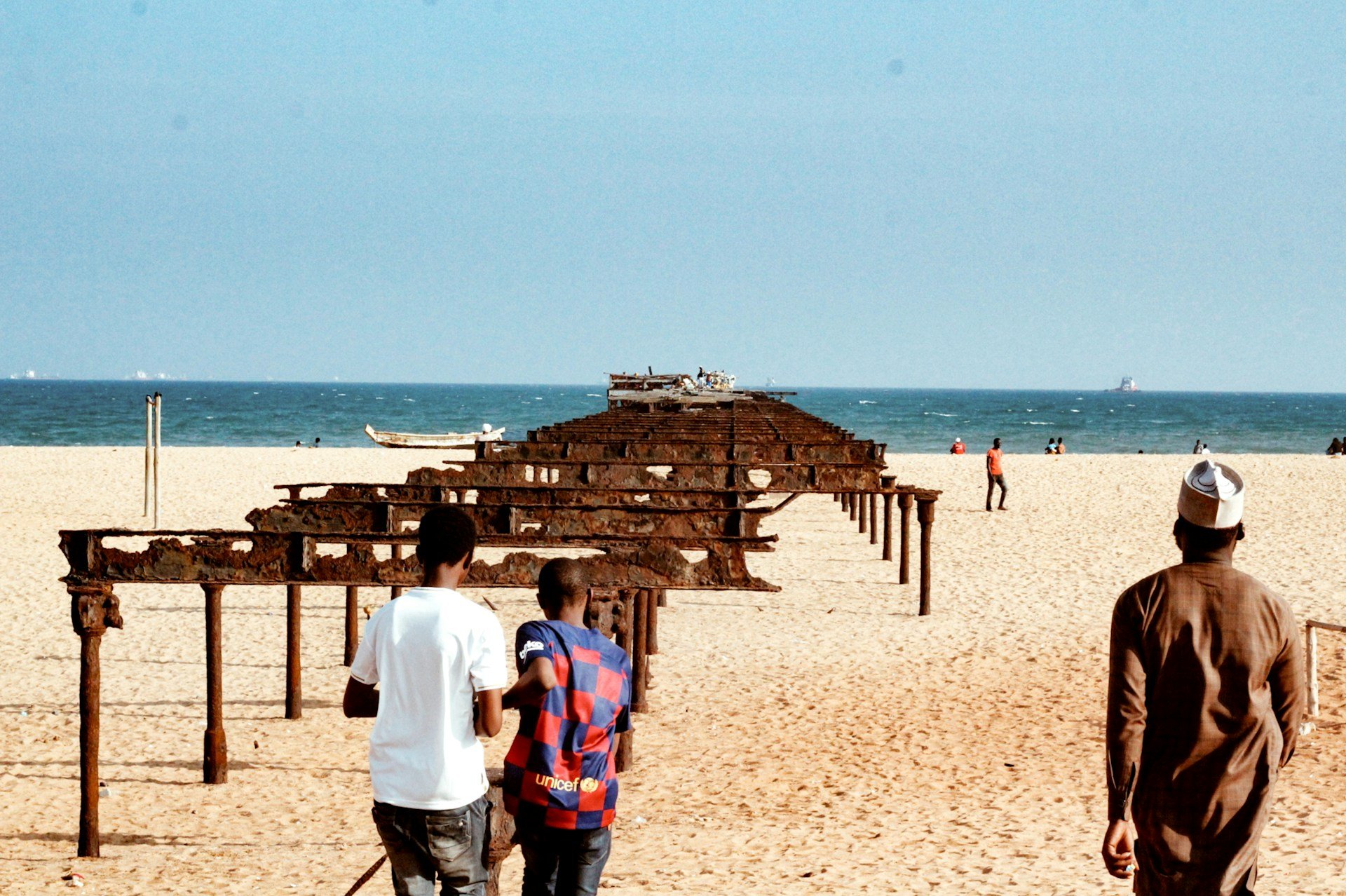
Beyond the market: the National Museum (Togolese art and ethnography), the Independence Monument on the main boulevard, the colonial German-era architecture in the downtown area, and the beach. Lomé's beach runs along the entire southern edge of the city — though the Atlantic here has strong currents and beach safety is a genuine concern; several drownings occur each year. Swim only in designated areas and follow local advice.
Akodessawa Fetish Market (Marché des Fétiches)
In the Akodessawa district of Lomé, about 4 kilometers east of the center: a market of perhaps 100 stalls and tables piled with the ingredients of Vodun practice — dried animal heads (monkey, dog, hyena, baboon, crocodile), skins, claws, bones, shells, dried birds, medicinal herbs, mineral and organic materials. Fetish priests (bokonon) are present and will, for a fee, diagnose problems and prescribe cures. This is not a display for tourists; it is a functioning marketplace where practitioners buy what they need. The sellers are generally happy to explain what things are used for.
Visiting requires a guide (arranged at the entrance — expect to pay around 2,000–3,000 CFA) and cultural respect. Do not treat the market as a freak show or photograph indiscriminately. This is a religious tradition followed by millions of people. The visceral quality of the ingredients is real and confronting; approach it as you would any serious religious site. Early morning is the most active time.
Koutammakou — Land of the Batammariba
In the northeastern Kara region, about an hour north of Kara town: a 50,000-hectare cultural landscape where the Batammariba people (also known as Tamberma or Tammari) have built their extraordinary takienta tower-houses for centuries. Two-story earthen towers with thatched conical roofs, grouped into village clusters surrounded by low walls. The ground floor houses animals; the upper floor is the living space; the terrace roof is used for sleeping, grain drying, and ceremony. The architecture reflects an animist worldview in which every structural element has spiritual meaning: the doorway orientation, the placement of shrines, the positioning of the ancestor's granary. UNESCO recognized it in 2004.
The Batammariba are animists who believe in Kuiye (the sun god and creator) and practice a religion that has resisted both Islam and Christianity. Arriving as a visitor requires a local guide — do not wander independently into villages, which is rude and potentially problematic — and paying a village entry fee that goes to the community. The landscape is genuinely spectacular: terracotta towers in a landscape of farmland, forest, and sacred sites, with the quality of light in morning and evening making photography extraordinary.
Kpalimé & the Plateaux
About 120 kilometers north of Lomé in the Plateaux region: a highland town surrounded by forested hills, waterfalls, coffee and cocoa plantations, and one of Togo's best concentrations of butterfly species (Mount Kloto above the town is famous for butterfly-watching). Mount Agou, Togo's highest peak at 986 meters, is hikeable from nearby villages. The Kpimé and Akouavi waterfalls are accessible by foot from town. Kpalimé itself has a pleasant central market, colonial-era buildings, and a cooler climate than the coast (typically 5–8°C lower). A good base for 2–3 days of walking and exploring the surrounding villages.
Lac Togo & Togoville
Lac Togo (actually a lagoon, not a true lake) is about 35 kilometers east of Lomé along the coast. Boat tours from Agbodrafo reach Togoville — the historic village on the north bank where the Mlapa III signed the 1884 treaty with Germany that made Togo a German colony. Togoville is Togo's most important Vodun center: wooden fetish figures in the main square, active shrines throughout the village, Vodun priests who receive visitors. There is also a small Catholic church whose altar features a fetish figure presented to Pope John Paul II during his 1985 visit — a peculiarly Togolese synthesis of religious traditions.
Fazao-Malfakassa National Park
Togo's largest protected area in the Centrale region, centered around the town of Sokodé — covering varied terrain from forest to savannah. Home to elephants, hippos, western hartebeest, warthogs, baboons, and over 150 bird species. Wildlife viewing is less reliable than East Africa, but the park is accessible, affordable, and receives almost no international visitors. A guide is required and should be hired at the park entrance. The park has basic accommodation at the Fazao camp. Access is straightforward from the Lomé–Ouagadougou highway.
Aného (Little Popo)
An atmospheric small town about 45 kilometers east of Lomé on the lagoon — Togo's colonial capital before Lomé, with crumbling German and French colonial architecture, old trading houses, and a quiet lagoon-side character. Aného was a center of the slave trade and then of palm oil and cocoa commerce; the faded grandeur of its colonial buildings reflects this history. The nearby village of Agbodrafo (Porto Seguro) has ruins related to the slave trade that are accessible by pirogue.
Sokodé & the Fire Dance
Togo's second city, in the Centrale region, center of the Tem people and one of the country's most significant Muslim communities. Sokodé is known for the Adossa fire dance — a ceremony performed by Muslim warriors who prove their faith by walking through fire and handling burning embers without injury. The dance typically occurs during the Prophet's birthday (Mawlid) celebrations. Sokodé market is one of the finest in the country. The Bimah Mosque dates to the 18th century.
Vodun in Togo
Vodun (the word means "spirit" or "divine" in the Fon language) is one of Africa's most widespread and most misunderstood religious traditions. It originated in the coastal kingdoms of what is now Togo, Benin, and Ghana, traveled to the Americas with enslaved West Africans, and became Haitian Vodou, Louisiana Voodoo, and Candomblé in Brazil. The distorted Western image — of pins in dolls, zombies, and dark magic — is largely a colonial invention designed to demonize a coherent and sophisticated spiritual system that Togo's people practice with the same seriousness that Catholics practice Catholicism or Muslims practice Islam.
In Togo, Vodun is practiced by approximately half the population as a primary religion and influences the spiritual life of many who identify as Christian or Muslim. It centers on the worship of vodun spirits (deities) who mediate between the creator god (Mawu) and human beings, and on the veneration of ancestors. Every social group, village, family, and individual has their own protective vodun. The bokonon (priests/healers) diagnose illness, misfortune, and spiritual imbalance through divination and prescribe remedies using the animal, mineral, and plant materials sold at the Akodessawa market. The kanda — public possession ceremonies in which individuals are entered by vodun spirits — are among the most visually powerful religious experiences in West Africa.
For travelers, the key is approach: Vodun is a religion, not an attraction. The Akodessawa market is a religious supply market, not a haunted house. Togoville is a sacred town, not a curiosity. If you want to witness ceremonies, ask your guide to arrange an appropriate introduction to a community that accepts visitors. Never enter a vodun shrine uninvited. Never photograph sacred sites or ceremonies without explicit permission. Respectful curiosity is welcome; rubbernecking is not.
Culture & Identity
Pagne & the Nana Benz
The wax-print cotton fabric (pagne) is the visual language of Togolese life — women's wrappers, men's shirts, children's school uniforms, ceremony dress, everyday clothing. The Nana Benz — named for the Mercedes-Benz cars they drove as symbols of their success — were Togolese (particularly Ewe and Mina) women who built personal fortunes by controlling the import and wholesale of Dutch-manufactured wax-print fabrics from the 1950s onwards. They operated entirely outside formal banking, used rotating credit associations (tontines), and became among the most economically powerful people in the country. Their monopoly was eventually broken in the 1980s–90s by cheaper Asian imports, but the Nana Benz tradition is part of Togolese commercial culture and the Grand Marché remains a place where powerful women run significant businesses.
Music & Dance
Togo has a distinctive music culture built on a foundation of drum traditions — Ewe drumming is among the most sophisticated in West Africa, with polyrhythmic structures that influenced modern jazz (through the African-American diaspora via Haiti). Contemporary Togolese music blends these drum traditions with Afropop, Highlife, and local genres. King Mensah ("The Golden Voice of Togo") is the country's most internationally known musician. The Atakpamé and Kpalimé regions have strong balafon (West African xylophone) traditions. The Adossa fire dance in Sokodé is one of the most extraordinary ritual performances in the country.
Ewe & Kabiyé Cultures
The most significant ethnic and cultural divide in Togo runs north-south: the Ewe (and related Mina, Watchi, and Fon groups) dominate the south, with a history of coastal commerce, Christianity, and sophisticated political organization. The Kabiyé (and related northern groups) dominate the north, with stronger traditions of agriculture, Islamic practice (in some areas), and the culture that produced both Gnassingbé Eyadéma and the majority of the Togolese military. This north-south tension — which has been the dominant political fault line in Togo since independence — is visible to a perceptive visitor in the cultural differences between Lomé (Ewe) and Kara (Kabiyé).
Festivals
The Epe-Ekpe festival (Guin-Mina New Year, usually September) in Glidji near Aného involves a sacred divination by Vodun priests that predicts the coming year's fortune. It is one of Togo's most important religious events and receives the community's full participation. The Evala initiation festival in the Kara region (July) involves young Kabiyé men wrestling as part of their passage to adulthood — a week-long celebration with music, dance, and the physical contest of wrestling. The Habye Kotokoli festival in Sokodé around the Prophet's birthday includes the Adossa fire dance.
Togolese Food
Togolese cuisine is built on fermented and pounded starches with intensely flavored sauces — palm oil, groundnut (peanut), tomato, dried and smoked fish, and fresh pepper. It is serious food: complex, nourishing, and the kind of cooking that rewards regular eating. French colonial influence shows in the presence of baguettes, café au lait culture, and some restaurant cuisine in Lomé. The overlap with neighboring Ghanaian (to the west) and Beninese (to the east) cooking creates a regional food culture worth exploring seriously.
Pâte (Fufu)
The staple: pounded starch (cassava, yam, maize, or sorghum depending on the region and the cook) kneaded into a smooth, dense dough and served with sauce. Pâte blanche (white cassava paste) and pâte rouge (red sorghum paste) are both common in Lomé; pâte d'igname (yam) in central Togo. You tear off a small piece with your right hand, shape it, and dip it into the sauce. The sauce is where the cooking skill lives: palm nut soup (light, complex), groundnut stew (rich, filling), and tomato-fish sauce are the main variants. The entire meal costs 300–500 CFA at a street stall.
Brochettes (Grilled Meat)
Skewers of beef, chicken, or goat grilled over charcoal at roadside stalls throughout Togo — the universal snack and street food. Served with sliced raw onion, tomato, and a spiced sauce. The charcoal-grilling gives a specific smokiness that is one of the most immediate food memories of any West African country. Available from evening until late at most major intersections in Lomé and other towns. A brochette costs 200–500 CFA; three brochettes with a cold Flag beer is the ideal Togolese evening snack.
Poisson Braisé (Grilled Fish)
Atlantic fish (barracuda, grouper, bream) grilled whole over charcoal — the main event at Lomé's beach restaurants and fish stalls. The fish is marinated in a sauce of onion, tomato, ginger, and fresh pepper before grilling; it arrives charred on the outside and moist within, served on newspaper with fried plantain, alloco (fried plantain), and a hot sauce. At the beach stalls east of Lomé around Bè Beach, the catch arrives daily and the grilling is done within sight of the ocean.
Sauce Arachide (Groundnut Sauce)
A rich, dark peanut-based sauce with meat or fish, similar to the peanut stews of the broader West African tradition but with the specific Togolese character of palm oil, fermented locust beans (soumbala), and a particular depth of seasoning. Served over rice or with pâte. This is the sauce that defines the interior regions — less common at coastal fish stalls but ubiquitous in local restaurants (maquis) throughout central Togo.
Ablo & Akpan
Fermented corn preparations that are specific to the Ewe coastal tradition: ablo is a soft, slightly sour steamed corn cake eaten for breakfast with a spicy pepper sauce or bean fritters; akpan is a fermented corn porridge eaten cold from a small clay pot, refreshing and slightly sour. Both are sold by street vendors in the early morning in Lomé's neighborhoods. Ablo in particular is one of those breakfast foods that takes about three minutes to understand and then becomes difficult to leave behind.
Flag Bier & Tchakpalo
Flag Bier is Togo's own lager, cold and perfectly functional in the coastal heat. Tchoukoutou (or tchoukou) is the local millet beer, slightly opaque and drunk from calabashes at market stalls in central and northern Togo — an acquired taste (lightly sour, earthy) that is the correct accompaniment to a Sokodé market visit. Tchakpalo is a similar fermented drink from the Kara region. Sodabi is the local palm spirit — distilled from palm wine, strong and variable in quality. Try it from a known source; street sodabi can be dangerous.
When to Go
Nov – Mar
Main Dry SeasonThe clearest, driest, and most accessible period. November–January is the coolest and best for travel throughout the country including Kpalimé and the interior. February–March gets hotter and the harmattan dust from the Sahara can reduce visibility and irritate respiratory systems. Roads throughout the south and center are passable. Best time for Koutammakou and upcountry travel. Peak of the tourist (what little there is) season.
Apr – Oct
Rainy Season(s)The south has two rainy seasons: April–July and September–November. The center and north have one longer rainy season May–September. Roads deteriorate significantly in the interior — upcountry travel in July–August can be very difficult. But: the landscape is green, festivals peak (Evala wrestling in July, Epe-Ekpe in September), prices drop, and the country is far less visited. For travelers focused on Lomé and the coastal area, the rains are less disruptive.
Trip Planning
French is essential in Togo — outside Lomé's tourist hotels and some upmarket restaurants, English is rarely spoken. Basic French (greetings, numbers, simple questions) will vastly improve your experience. A week allows Lomé, Kpalimé, and Lac Togo. Ten days to two weeks lets you add Sokodé, Kara, and Koutammakou. The accessible circuit from Lomé to Koutammakou follows the main N1 north-south highway, which is the country's only reliable sealed road.
Lomé
Day 1: arrive at Lomé-Gnassingbé Eyadéma International Airport; central district orientation. Grand Marché in the afternoon (get there before 4pm when it begins to wind down). Evening brochettes and Flag beer near the central market. Day 2: Akodessawa Fetish Market in the morning (arrange guide at entrance, allow 1.5–2 hours). National Museum. Afternoon at Lomé beach — swim only in the safer sections; ask hotel staff where locals swim. Dinner at a beach restaurant: poisson braisé.
Lac Togo & Togoville
Day trip east to Lac Togo (35 km). Take a pirogue from Agbodrafo to Togoville (30 minutes across the lagoon). Visit the fetish shrines in the main square, the Catholic church with its vodun elements, and the colonial treaty site. Return to Lomé in the afternoon. Optional: continue east to Aného to see the colonial architecture before returning.
Kpalimé
Day 4: drive or bush taxi north to Kpalimé (120 km, ~2 hours on the N1). Afternoon orientation walk in the town center; market; craft workshops. Day 5: Mount Kloto butterfly trails in the morning (hire a guide from town). Afternoon hike to one of the waterfalls (Kpimé waterfall is the most accessible). Kpalimé is cool enough for sleeping without air conditioning — one of the few places in Togo where you can genuinely cool down.
Return to Lomé
Day 6: optional stop at Atakpamé en route south for the central market. Day 7: Lomé — any remaining items (shopping at the fabric market in Grand Marché, colonial architecture walk, beach). Evening departure or overnight before morning flight. Buy pagne fabric — the wax-print fabrics in Lomé's market are some of the finest and most fairly priced in West Africa.
Lomé & Lac Togo
As per 7-day: Grand Marché, Akodessawa, National Museum, Lac Togo/Togoville. Add Aného colonial heritage town.
Kpalimé Highlands
As per 7-day: Mount Kloto, waterfalls, town market. Consider Mount Agou ascent (full day, hire guide from Kpalimé).
Sokodé & Fazao-Malfakassa
Day 6: drive north to Sokodé. Afternoon market walk; Bimah Mosque; local dinner. Day 7: day trip to Fazao-Malfakassa National Park (hire guide at park entrance). Return to Sokodé overnight or continue north to Kara.
Kara & Koutammakou
Day 8: arrive Kara. Kara market and city orientation. Arrange Koutammakou guide and transport. Day 9: full day at Koutammakou UNESCO site — village walks, tower-house compound visits, late afternoon light on the takienta. Return to Kara for overnight.
Return to Lomé
Long drive or overnight bus back to Lomé (4–5 hours on the N1). Or fly: Lomé-Kara route is served by small domestic carriers when operational. Final evening in Lomé.
Health
Yellow fever vaccination mandatory — certificate checked on arrival. Malaria is present throughout Togo year-round; prophylaxis essential. Hepatitis A, typhoid, meningococcal (particularly for north Togo and sub-Saharan travel generally), and rabies (given limited post-exposure care) are recommended. Tap water is unsafe — drink sealed bottled water only. Medical care in Lomé is limited to a few private clinics; outside Lomé it is very limited. Carry sufficient prescription medication. Medical evacuation to Accra (Ghana, 2.5 hours) or Europe for serious cases.
Full vaccine info →Money
West African CFA franc (XOF) — shared with Senegal, Côte d'Ivoire, Burkina Faso, and other former French colonies, pegged to the Euro at 655.957 CFA = 1 EUR. If you are travelling from another CFA zone country, no exchange is needed. ATMs in Lomé accept international cards (Société Générale and Ecobank are most reliable); very limited ATM coverage outside Lomé. Carry sufficient CFA cash for upcountry travel. Credit cards are accepted only in upmarket Lomé hotels and a few restaurants.
Connectivity
Togocel and Moov Africa are the main mobile operators. Buy a local SIM in Lomé — cheap calls and data. 4G coverage in Lomé; 3G in major towns; limited upcountry. Internet connectivity is slow and unreliable outside Lomé. Power outages are common throughout the country; carry a power bank. The government has shut down mobile internet during protests in the past — be aware this can happen.
Language
French is the official language and is essential for navigating Togo independently. English is very rarely spoken outside upmarket Lomé hotels. Ewe greetings go a long way in the south: "Woèzon" (welcome/hello), "Akpe" (thank you). Kabiyé greetings in the north: "Mbaa" (hello). Learning 10–15 phrases in French before arrival is strongly recommended for anyone who wants to go beyond hotel-organized experiences.
Getting Around
Bush taxis (shared taxis on fixed routes) are the standard long-distance transport — cheap, reliable on the main N1 highway, but slow and crowded. For Lomé city travel: green taxis (agree fare in advance, no meters), motorcycle taxis (zemidjans — efficient but risky), and occasional private hire. For upcountry comfort, hire a private car with driver in Lomé (around 40,000–60,000 CFA/day). No Uber or Bolt. The N1 north-south highway is the country's only consistently reliable paved road.
North Togo Warning
The Savanes region (far north, Dapaong area and beyond) and areas north of Kandé are high-risk due to jihadist spillover from Burkina Faso. The Savanes region is under a state of emergency. US government employees require special authorization and cannot overnight north of Mango. Do not attempt to travel to this area without current security intelligence. The accessible northern circuit ends at Kara and Koutammakou; do not attempt to continue north without professional guidance on current conditions.
Transport in Togo
International Flights
Via Addis, Brussels, ParisLomé-Gnassingbé Eyadéma International Airport (LFW) — Togo's main gateway and hub for ASKY Airlines (West and Central Africa's main regional carrier, based in Lomé). Connections via Ethiopian Airlines (Addis Ababa), Brussels Airlines (Brussels), Air France (Paris), Kenya Airways, and various regional carriers. Good connections within West and Central Africa. Lomé is a hub, so connecting flights within the region are generally good.
Bush Taxi (Taxi-Brousse)
Very cheapShared taxis that fill to capacity before departing on fixed routes — the standard long-distance transport. Main routes from Lomé: north to Atakpamé, Sokodé, Kara; east to Aného; west toward Ghana border. Cheap (a few thousand CFA for Lomé–Kpalimé), reliable when roads are passable, and extremely crowded. Depart from designated gares routières (bus stations) in Lomé. Plan for significantly longer journey times than the distance suggests.
Lomé Taxis
Negotiate beforehandGreen taxis for private hire in Lomé — always negotiate fare before entering; no meters. Typical short journey: 500–1,000 CFA. Night tariff slightly higher. Taxis at the airport charge tourist rates; agree before loading bags. Don't share with strangers — safety risk. For airport transfers, arrange through your hotel.
Zemidjan (Moto-Taxi)
100–500 CFAMotorcycle taxis that are the fastest and cheapest way to move around Lomé and other towns. Effective for short distances. Safety record is poor — road conditions and driving standards are genuinely dangerous. If you use one: wear a helmet if possible, hold on securely, avoid them after dark.
Private Car & Driver
40,000–60,000 CFA/dayHire a car with driver for upcountry travel — the comfortable way to reach Kpalimé, Sokodé, Kara, and Koutammakou. Arrange through Lomé hotels or tour operators. 4x4 recommended for the rainy season and for off-N1 tracks. Rates typically include fuel within a daily distance budget; confirm arrangements carefully.
Pirogue (Lagoon Boat)
1,000–3,000 CFAEssential for Lac Togo to Togoville and some coastal lagoon navigation. Traditional dugout canoes paddled or poled. Generally safe but choose your craft based on condition — don't board an overloaded or poorly maintained pirogue. Arrange from the dock at Agbodrafo for Togoville.
Budget Planning
Togo is inexpensive by most international standards. Street food and local transport are very cheap; accommodation ranges from basic local guesthouses (5,000–10,000 CFA) to mid-range Lomé hotels (25,000–50,000 CFA) to the few quality options (50,000–100,000 CFA). The CFA's peg to the Euro makes it easy for European visitors to estimate costs.
- Basic guesthouse (5,000–10,000 CFA)
- Street food: pâte, brochettes, ablo
- Bush taxi intercity transport
- Zemidjan in Lomé
- Mid-range Lomé hotel (25,000–50,000 CFA)
- Mix of local restaurants and maquis
- Green taxis in Lomé
- Guided market and cultural visits
- Best Lomé hotels (50,000–100,000 CFA)
- Private car + driver for upcountry
- Restaurant dining throughout
- Private guides and organized tours
Quick Reference Prices (approximate)
Visa & Entry
Safety in Togo
The US rates Togo Level 2 overall (Exercise Increased Caution), with a Do Not Travel sub-advisory for the Savanes region. The north of the country — particularly anywhere near the Burkina Faso border — carries genuine jihadist risk that has escalated since 2021. Do not push the boundaries of the accessible north beyond Kara and Koutammakou without current security intelligence. The accessible south and center of Togo, including Lomé, Kpalimé, Atakpamé, and the coast, are manageable with standard precautions.
Savanes Region / Far North
Do Not Travel. State of emergency in the Savanes region. Jihadist armed groups have conducted kidnappings and attacks near the Burkina Faso border. US government employees cannot overnight north of Mango. The UK advises against all travel within 30km of the Burkina Faso border (except Dapaong and the N1 to it).
North of Kandé (Not Savanes)
US advises Do Not Travel to areas north of Kandé due to terrorist risk. Jihadist activity has been reported in areas near the Benin border in this zone. If traveling to Koutammakou (which is south of this), verify current conditions and stay on the established tourist circuit.
Lomé Street Crime
Petty theft and pickpocketing are common, particularly at the Grand Marché, on beaches, and around the ferry terminal. Staged traffic accidents are a known scam: motorbikes cut you off then demand compensation. Armed robbery occurs — don't walk on Lomé's beaches at night. Keep bags secure, don't display valuables, and use trusted taxis rather than walking after dark.
Political Protests
Public demonstrations are banned in Togo since 2022, but mass protests broke out in June 2025 over the constitutional changes. Security forces used tear gas; dozens were arrested. Monitor the political situation and avoid any gathering that could be a protest. Police can use force without warning at demonstrations.
Ocean Swimming
Lomé's beaches and the Gulf of Guinea coast have strong currents and undertow. Multiple drownings occur each year. Dangerous beaches are unlikely to have warning signs. Only swim where locals swim and ask specifically whether the current stretch of beach is safe before entering the water.
Road Safety
Road conditions are hazardous — potholes, poorly maintained vehicles, aggressive driving, pedestrians and livestock on roads, unlit highways at night. Do not drive at night outside Lomé. If using a driver, ensure the vehicle is in reasonable condition before departure on long journeys.
Emergency Information
Embassy Contacts in Lomé
Book Your Togo Trip
Everything you need to plan and book your Togo journey.
13 January 1963
In the early hours of 13 January 1963, a group of about 30 soldiers — mostly recently discharged veterans of the French army, mostly from Togo's northern Kabiyé ethnic group — stormed the presidential palace in Lomé. Sylvanus Olympio, Togo's first president, ran. He got as far as the wall of the United States Embassy compound and tried to climb it. He was shot there, on the embassy steps, before dawn.
Olympio was 54 years old. He had been president for just under three years, since Togo became independent from France in April 1960. He was a Ewe from the south, educated at the London School of Economics, a former senior employee of the United African Company and a negotiator of some skill. He had won Togo's first free elections. He was trying to build something — a functioning post-colonial state, with balanced budgets, a small professional army, and the kind of economic management that would actually benefit ordinary Togolese people rather than drain them. The soldiers were angry because he had refused to expand the army to employ them. He had said the country could not afford it.
His assassination was the first military coup in independent Africa — the moment that established the template that much of the continent would follow for the next 60 years. The coup leader was Sergeant Étienne Eyadéma, from the Kabiyé north. It is widely believed that Eyadéma fired the shot that killed Olympio, though this was never fully established. In 1967, Eyadéma staged a second coup and made himself president. He ruled for 38 years, until his death in 2005. His 70% Kabiyé-staffed army — a deliberate ethnic stacking of the military — has maintained the family's grip on power through five political crises and dozens of attempted democratic transitions.
When Eyadéma died in 2005, his son Faure was installed by the military — the African Union condemned it as a coup. At least 500 people were killed in the protests that followed. Faure won the subsequent elections. He has governed since, through one constitutional maneuver after another: resetting term limits in 2019, then eliminating direct presidential elections in 2024, then in May 2025 becoming President of the Council of Ministers — a new position with no term limits at all, effectively prime minister for life while a ceremonial president was installed above him.
In June 2025, Togolese people took to the streets of Lomé in mass protests. Demonstrations have been legally banned in Togo since 2022 — the people came anyway. Security forces used tear gas. Dozens were arrested. Bodies were later found in the lagoons around Lomé. The coalition that organized the protests called itself "Hands Off My Constitution." The government said the deaths were drownings.
The Gnassingbé family has ruled Togo for 58 years. It started with a shot in the dark outside an American embassy, fired at a man who was trying to climb a wall to safety, who had refused to spend money Togo didn't have on an army that the country didn't need.
His name was Sylvanus Olympio. There is a square named after him in Lomé. Walk through it on your way to the Grand Marché, where the Nana Benz women have been selling pagne since before independence, keeping the commerce of this country alive through everything that has happened to it. The country survives its rulers. It usually does.