
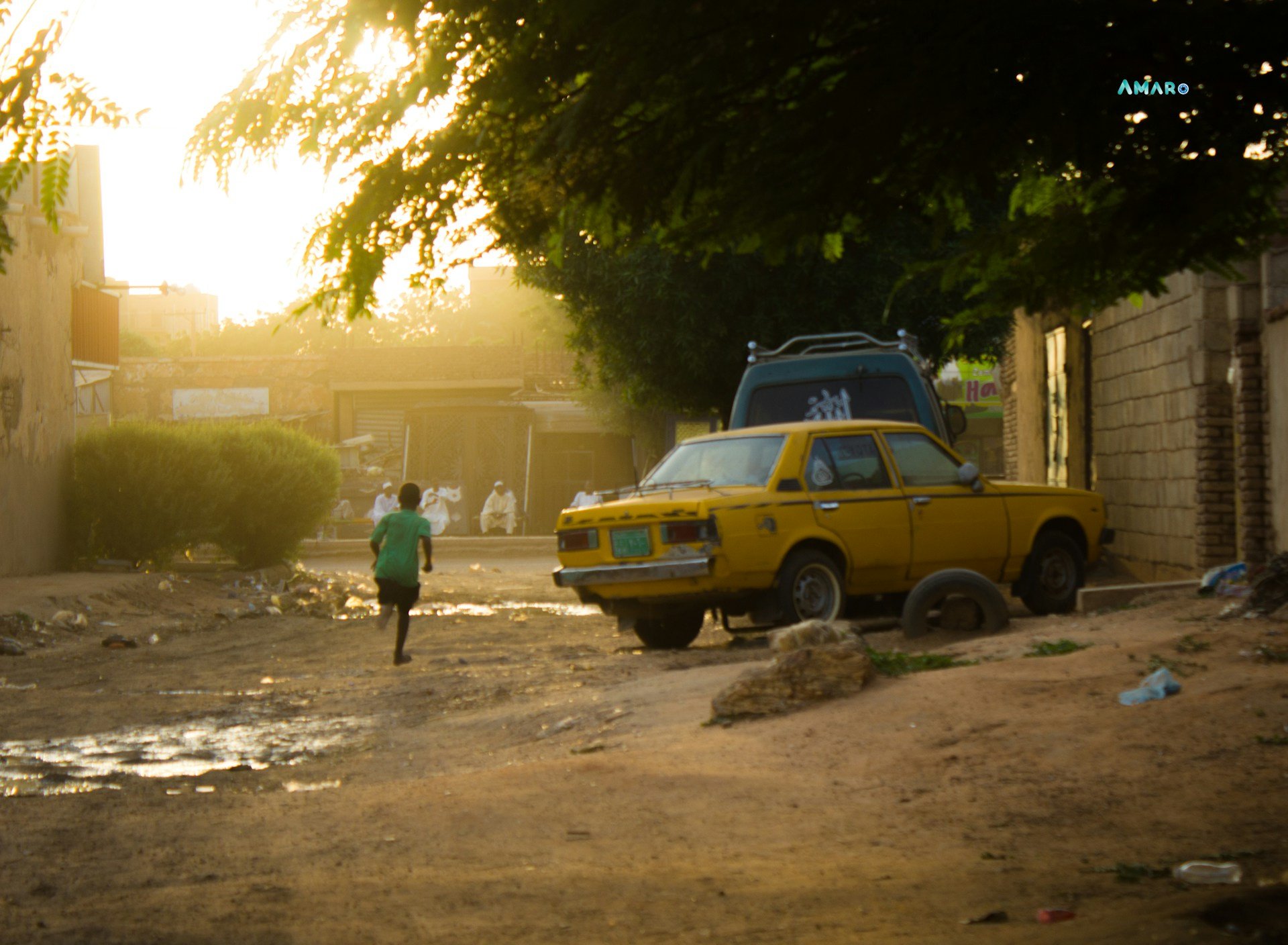
South Sudan
The world's youngest country, born on 9 July 2011 when 98.8% of South Sudanese voted for independence — the most overwhelming democratic mandate in African history. By December 2013, it was at war with itself. By 2025, the UN was warning it stood "on the brink of relapse into civil war." This is that story — what was built, what was destroyed, and what it means for the people who live there and the world that watched.
What Is Happening in 2025–2026
South Sudan entered 2025 in a deepening political and security crisis that by March had escalated to the brink of full-scale civil war. The proximate trigger was a clash on 3 March 2025 in Nasir, a town in Upper Nile State near the Ethiopian border, where fighters from the Nuer White Army overran a South Sudan People's Defence Forces (SSPDF) military base. During an attempted evacuation of SSPDF troops, a UN helicopter came under fire, and 27 soldiers died. The government responded with military operations — including airstrikes — against civilian-populated areas across Upper Nile State. The UN reported in April 2025 that the government used improvised incendiary weapons in at least four attacks, killing at least 58 people. An estimated 63,000 people were displaced in the immediate aftermath; by early 2026 internal displacement had risen by 40% to 3.2 million.
The political response was equally dramatic. President Salva Kiir — who accused opposition-affiliated forces of organizing the attack — placed First Vice President Riek Machar under house arrest in March 2025, surrounding his compound with government troops. In September 2025, Machar, along with seven co-defendants, was formally charged with murder, treason, and crimes against humanity. His trial began on 22 September 2025 and is ongoing as of early 2026. The charges are widely seen as politically motivated — a Small Arms Survey report found that "Riek Machar and the leadership of the SPLM/A-IO were not responsible for the March 2025 assault on the SSPDF barracks in Nasir." Machar's detention effectively suspended the 2018 Revitalized Agreement on the Resolution of the Conflict (R-ARCSS) — the power-sharing deal that was supposed to lead to elections in December 2026. Those elections are now in serious doubt.
Fighting has expanded beyond Upper Nile State. Clashes between government forces and opposition elements have been reported in Jonglei, Unity, Western Equatoria, and Western Bahr el-Ghazal states. Uganda deployed special forces to South Sudan in support of Kiir's government, which both the opposition and international observers noted as a potential violation of the UN arms embargo. Between March 2025 and January 2026, the UN verified 5,519 deaths from conflict-related violence. The UN says South Sudan "shows all the signs of a clear and present danger of relapsing back to full-scale conflict."
The humanitarian situation, already one of the world's worst before March 2025, has severely deteriorated. The Sudan civil war to the north continues to drive refugees into South Sudan; South Sudan's main oil export pipeline — its primary revenue source — ruptured in 2024 due to the Sudan conflict and remains non-operational, creating a deep fiscal crisis that has further destabilized Kiir's capacity to maintain political alliances. The combination of active conflict, oil revenue collapse, continuing Sudan war spillover, climate-related flooding, and a humanitarian funding shortfall (the 2025 response plan was only 28.5% funded) makes South Sudan's situation one of the most acute in the world.
Upper Nile State
Active armed conflict since March 2025. Government airstrikes on civilian areas. The UN described attacks using incendiary weapons on civilian-populated communities. 5,000+ UN-verified deaths March 2025–January 2026. An evacuation order was issued for Nasir County. Completely inaccessible and extremely dangerous. Do not travel to or through Upper Nile State under any circumstances.
Juba
The capital has a heightened military presence, numerous legal and illegal checkpoints, and a highly volatile political environment. US government ordered non-emergency employees to leave in March 2025. Multiple embassies have temporarily or permanently closed. Violent crime — carjacking, armed robbery, assault — is common. The city is not safe for civilian visitors under current conditions.
Jonglei, Unity, Western Equatoria
Active clashes between government forces and opposition elements. These states have been sites of intercommunal violence, cattle raids, and ethnic armed group activity even during relatively peaceful periods. The current escalation has increased risks across all three.
All Road Travel
Roads outside Juba are extremely dangerous: armed checkpoints (both official and criminal), carjacking, ambushes, intercommunal violence, and landmines. Many routes are impassable in the rainy season (May–October). The US State Department specifically warns that "poor road conditions and unauthorized checkpoints make travel outside Juba very dangerous."
All Borders
The border with Sudan is affected by the Sudan civil war and is extremely dangerous. The Ethiopian, Ugandan, DRC, CAR, and Kenyan borders all have varying levels of armed group activity, smuggling, and intercommunal violence. Do not attempt to cross any land border in South Sudan.
Landmines
Landmines and unexploded ordnance are present throughout the country — a legacy of the independence wars and the subsequent civil war. While many areas are marked, unmarked ordnance causes multiple casualties each year. Do not walk in any area that has not been certified mine-free by a competent de-mining authority.
South Sudan at a Glance
A History Worth Knowing
The territory that became South Sudan has been contested, colonized, and fought over for centuries — but the modern conflict begins with the colonial partition of Sudan. When Britain took control of Sudan (jointly with Egypt under the Condominium of 1899), it administered the predominantly Arab and Muslim north and the predominantly Black African and Christian/animist south as effectively separate territories, discouraging north-south contact and permitting Christian missionary activity only in the south. This separation was not benevolent: it was designed to prevent the spread of Arab nationalism, and it reinforced the social and economic gulf between the wealthy, Arabic-speaking northern elite and the poorer, largely pastoralist southern population.
At the 1947 Juba Conference, Britain and northern Sudanese representatives decided — without meaningful southern consent — that an independent Sudan would unite north and south as a single country. Southerners who wanted separation were overruled. This foundational betrayal shaped everything that followed. Even before formal independence in 1956, southern soldiers mutinied in August 1955, anticipating exclusion from the post-colonial government. The First Sudanese Civil War (1955–1972) pitted the southern Anya-Nya movement against the Khartoum government. A peace deal in 1972 ended the fighting but did not address its causes, and when Khartoum imposed Islamic sharia law on the entire country in 1983 and reneged on southern autonomy commitments, the Second Sudanese Civil War began.
The Second Civil War (1983–2005) is the crucible from which both South Sudan's independence and its subsequent dysfunction emerged. The Sudan People's Liberation Army (SPLA), led by John Garang, fought for over two decades in one of Africa's bloodiest conflicts — approximately 2 million people died, and 4 million were displaced. The war involved systematic atrocity: aerial bombardment of civilian areas, deliberate starvation, slavery (Khartoum-backed northern militias raided southern communities and enslaved captured women and children), and the abduction of child soldiers. The international community paid limited attention to this catastrophe through the 1980s and 1990s.
The war finally ended with the Comprehensive Peace Agreement (CPA) of January 2005, brokered with significant US involvement under the Bush administration. The CPA provided for a six-year interim period, after which a referendum would allow southerners to vote on independence. John Garang — the SPLA's charismatic leader and the most credible figure to lead an independent South Sudan — died in a helicopter crash just three weeks after the CPA was signed, in July 2005. His successor was Salva Kiir, a Dinka from the Warrap region, less educated, less internationally connected, more dependent on the patronage networks that Garang had always kept imperfectly controlled.
The independence referendum took place in January 2011. The result was extraordinary: 98.83% voted for independence — the most overwhelming democratic mandate in the history of African elections. People queued for hours in the heat to vote. There were celebrations in the streets of Juba, in churches, in diaspora communities in Nairobi, London, Minneapolis, and Sydney. South Sudan became independent on 9 July 2011, the 54th country in Africa and the 193rd member of the United Nations. The international community celebrated. Aid money flowed. Oil revenues provided a budget. There was, briefly and genuinely, hope.
Britain and northern Sudanese representatives decide southern Sudan will be unified with the north — without meaningful southern consent. Southerners who wanted separation are overruled. The foundational injustice that drives two civil wars.
Southern soldiers mutiny even before Sudanese independence (1955). The Anya-Nya movement fights a 17-year guerrilla war against Khartoum. A peace deal in 1972 ends the fighting without resolving the underlying grievances.
Khartoum imposes sharia law on the entire country in 1983 and revokes southern autonomy. The SPLA, led by John Garang, fights for 22 years. ~2 million people die. 4 million displaced. Slavery, aerial bombardment of civilians, child soldiers. Among the bloodiest conflicts in modern African history.
The CPA ends the Second Civil War, providing for a six-year interim period and a referendum on southern independence. John Garang dies in a helicopter crash three weeks later. Salva Kiir becomes SPLA leader and head of the Government of Southern Sudan.
The independence referendum: 98.83% of South Sudanese vote for independence — the most overwhelming democratic mandate in African history. International celebrations. Genuine hope.
The Republic of South Sudan becomes the world's newest country. 54th in Africa, 193rd in the UN. Salva Kiir is president; Riek Machar is vice president. Oil revenue flows. Aid money flows. The world pays attention — briefly.
President Kiir dismisses Vice President Machar and accuses him of plotting a coup. Fighting breaks out between Dinka presidential guards (Kiir) and Nuer guards (Machar). ~400,000 killed 2013–2018. 4 million displaced. Ethnic massacres, systematic rape, starvation as a weapon of war. The UN warns of genocide risk.
Kiir and Machar sign the R-ARCSS, leading to a unity government in February 2020. Implementation is slow and incomplete. Security sector reform stalls. Elections postponed repeatedly. The peace deal "froze the conflict rather than resolving it," as one official said.
White Army overruns army base in Nasir. UN helicopter shot down; 27 killed. Government conducts airstrikes on civilian areas using incendiary weapons. Machar placed under house arrest, charged with treason. UN: "South Sudan is on the brink of relapse into civil war." 5,519 killed March 2025–January 2026.
What the War Is Actually About
The civil war in South Sudan is often described as an ethnic conflict between the Dinka (Kiir's group, South Sudan's largest) and the Nuer (Machar's group, the second largest). This framing captures a real dimension — the massacres that began in December 2013, when Dinka presidential guards killed Nuer in Juba, and the Nuer White Army's retaliation, were nakedly ethnic in character. But ethnicity is a mechanism rather than a cause. The Council on Foreign Relations expert Alex de Waal, among others, has argued that the conflict's root was not ethnic division but the failure to build a professional, institutionalized army — instead, South Sudan had "a collection of militias, each organized on an ethnic basis," which meant that when elite political competition turned violent, it instantly became ethnic violence.
What that elite competition was actually about, at its core, was oil. South Sudan sits on approximately 3.5 billion barrels of proven oil reserves — the third-largest in sub-Saharan Africa — and oil revenue constituted 98% of government revenue in 2013, the year the civil war began. The state had essentially one source of income, and whoever controlled the state controlled that income. Kiir's "big tent" policy — keeping potential rivals onside by distributing oil money through patronage — worked while oil revenues were high. When they declined (South Sudan's oil must be exported through Sudan's pipeline, which Sudan periodically shuts), the patronage system could no longer pay off all the competing factions, political competition intensified, and conflict followed.
The result was a war in which military commanders, politicians, and local militia leaders were simultaneously ideological rivals, ethnic mobilizers, and economic competitors — fighting over cattle, mining, timber, and government contracts as much as over political power. The USHMM (United States Holocaust Memorial Museum) documented ethnic massacres and the use of rape, starvation, and torture as weapons of war. The UN warned of genocide risk in 2017. An estimated 400,000 people died between 2013 and 2018.
The 2018 Revitalized Peace Agreement created a unity government — Kiir as president, Machar as first vice president — but implementing its terms required the government to take concrete steps that reduced Kiir's power: integrating rebel and government forces into a unified army, conducting security sector reform, holding elections. None of this happened adequately. As one ruling party official told the New Humanitarian: "In many ways, the agreement froze the conflict rather than resolving it." The 2025 escalation is the frozen conflict resuming.
The broader regional context matters: the Sudan civil war (ongoing since April 2023) has pushed refugees into South Sudan, disrupted the oil pipeline, and destabilized the border. South Sudan's fiscal crisis — driven by the pipeline rupture — has weakened Kiir's ability to buy loyalty and maintain alliances, making the political situation more fragile. Several analysts warn that the South Sudan conflict could merge with the Sudan conflict, creating an unprecedented regional catastrophe.
Culture & Identity
South Sudan has approximately 60–70 ethnic groups, each with distinct languages, traditions, and territorial histories. The Dinka and Nuer are the two largest (together making up roughly 40% of the population), but the Shilluk, Azande, Bari, Kakwa, Kuku, Murle, Mundari, and dozens of other groups each have their own claims on the land, their own governance traditions, and their own relationships with the pastoral and agricultural economies of the country.
Cattle Culture
Cattle are the foundation of social life across most of South Sudan. For the Dinka, Nuer, and many other groups, cattle are wealth, are used for bride wealth payments (lobola), are the subject of poetry and song, and define social status. Boys grow up learning to tend cattle; the cattle camp — where cattle are kept during the dry season and young men sleep alongside them — is one of the central institutions of traditional life. The intercommunal cattle raids that are one of the drivers of recurring violence in places like Jonglei and Lakes states are not simply criminal — they are embedded in a tradition of raiding as a form of resource competition and masculine display that predates the current conflict by centuries. Understanding cattle culture is understanding South Sudan.
Christianity & Traditional Belief
South Sudan is majority Christian — predominantly Catholic and various Protestant denominations introduced through missionary work during the colonial period. The church was a site of resistance during the independence wars and remains one of the strongest civil society institutions in the country. Local churches have been involved in peace negotiations, humanitarian distribution, and community reconciliation at the grass-roots level even as the national political process has failed. Traditional beliefs — including the Nuer prophet tradition (the role of spiritual leaders who provide guidance to communities) — run alongside Christianity in many communities.
Music & Oral Tradition
South Sudan has a rich tradition of oral poetry, storytelling, and music. The Nuer and Dinka have elaborate praise-song traditions for cattle — poets who compose and perform songs that describe the markings, movements, and character of individual animals. The guitar-based music that developed in Juba during the relatively peaceful periods of the 1970s and early independence years blended indigenous rhythms with Congolese and Ugandan influences. South Sudanese musicians and artists have continued to create — often in diaspora, in Nairobi, Kampala, or Western cities — and their work is one of the ways the country's cultural identity is maintained despite the violence.
The Nile
The White Nile flows through South Sudan, passing through Juba — the capital sits on its western bank — and running north through lakes and swamps before entering Sudan and eventually Egypt. The Sudd, the enormous inland swamp created by the Nile in South Sudan's center, is one of the world's largest freshwater wetlands and one of Africa's most extraordinary ecosystems: home to millions of migratory birds, large populations of hippos, elephants, and other wildlife, and the seasonal grazing grounds for hundreds of thousands of cattle. The Sudd is also one of the reasons South Sudan was so hard to colonize and remains so hard to govern: its flooding makes vast areas inaccessible for months each year.
South Sudan's Landscape
South Sudan is a landlocked country of approximately 644,000 square kilometers — larger than France. Its terrain ranges from the flat, seasonally flooded plains of the Sudd (the world's second-largest tropical wetland) to the wooded savannahs of the south and the mountains of the Eastern Equatoria highlands near the Ugandan and Kenyan borders. The country contains extraordinary wildlife that in stable conditions would support East Africa-caliber safari tourism: Boma National Park and the surrounding Boma-Jonglei landscape contain the second-largest wildlife migration on earth, with millions of white-eared kob, tiang, and Mongalla gazelle moving seasonally across the plains — a phenomenon that, unlike the Serengeti migration, almost no international visitor has ever seen.
Boma National Park
The centerpiece of what would be South Sudan's wildlife tourism industry if the country were stable. The Boma-Jonglei ecosystem supports the second-largest animal migration in Africa — millions of white-eared kob and tiang antelope crossing the flat plains in seasonal movements that rival the Serengeti in scale but are almost entirely unknown to the outside world. Also home to elephants, buffalo, lions, and large populations of Nile lechwe. Last formally operational for tourism before the 2013 civil war; poaching during the war years decimated some populations but wildlife persists. Future tourism potential is extraordinary if peace can be sustained.
The Sudd
One of Africa's most extraordinary ecosystems: a vast wetland created by the White Nile flooding the flat South Sudanese plains — covering up to 130,000 square kilometers in flood season, making it the world's second-largest freshwater wetland. The Sudd supports extraordinary bird life (shoebill stork, African fish eagle, numerous waders and waterbirds), large mammals including hippos and sitatunga, and the seasonal pastoral movements of Dinka and Nuer cattle herders. Egyptian and classical scholars knew it as the impenetrable swamp that blocked all attempts to reach the source of the Nile from the north for centuries. It remains one of Africa's least explored landscapes.
Juba
A city of approximately 400,000 people on the western bank of the White Nile — one of Africa's fastest-growing cities between 2011 and 2013, driven by oil money, NGO spending, and the energy of a new country. The riverside market, the UN compound (one of the world's largest), the Catholic Cathedral, the Juba Bridge over the Nile. The city in 2011 had the feel of a place making itself from scratch — constructing its own national identity in real time. The civil war that began in 2013 and the renewed conflict of 2025 have repeatedly disrupted this process, though between conflict periods, Juba maintains a genuine urban life. Under current conditions, it is not safe for visitors.
Nimule & Eastern Equatoria
The area near the Ugandan border — Nimule National Park (hippos in the Nile, accessible from Uganda's border town of Elegu), the Didinga Hills, the Acholi cultural zone. This region was more stable than the north during the worst of the civil war years and retains significant natural and cultural interest. The crossing from Nimule into Uganda's Murchison Falls National Park offers a theoretically remarkable wildlife corridor. Under current conditions, this area has also seen armed group activity and is not accessible for tourist travel.
If You Are Going to South Sudan
This section is for aid workers, journalists, development professionals, diplomats, and others who have non-negotiable professional reasons to be in South Sudan. It is not a recommendation to travel. Under current conditions (early 2026), South Sudan is not safe for any category of tourist travel and is barely safe for the professional staff of international organizations who operate there with security infrastructure that individual travelers cannot access.
Security Essentials
All travel must be coordinated through a security-aware organization or professional security provider. Never travel without a plan, a communication system, and a known contact. Movement outside Juba requires specific security intelligence — conditions change rapidly and what was passable yesterday may not be today. Avoid night travel anywhere. Carry multiple forms of identification. UNDSS (UN Department of Safety and Security) operates in South Sudan and provides security briefings to INGO staff. Register with your embassy before arrival.
Vaccinations & Health
Yellow fever vaccination is mandatory — certificate checked on entry. Malaria is high risk throughout and year-round — prophylaxis essential. Cholera is present, particularly around displacement camps and flood-affected areas. Typhoid, Hepatitis A, Rabies (given widespread dog population and limited post-exposure care) are recommended. Medical care is effectively nonexistent outside Juba, and even in Juba is limited to NGO facilities. Medical evacuation to Nairobi is the standard for serious cases — confirm coverage explicitly.
Full vaccine info →Money
South Sudanese Pound (SSP) — highly volatile and subject to rapid devaluation. USD is widely used and preferred for significant transactions. Cash is king; ATMs are unreliable. The financial system is extremely limited. Bring more USD than you anticipate needing. Mobile money exists but is not accessible without a local SIM registered to a local ID.
Flights
Juba International Airport is served by Kenya Airways (Nairobi), Ethiopian Airlines (Addis Ababa), Fly Dubai (Dubai), and a few regional carriers. Flights can be cancelled at short notice during security incidents. The airport is in a secure compound but has been the site of conflict in previous incidents. Confirm flight status before travelling to the airport. Have a fallback plan if your flight is cancelled.
Visa
A visa is required for entry and must be obtained in advance from a South Sudanese embassy. There is no visa on arrival for most nationalities. The Embassy of South Sudan in the US is in Washington DC (+1 202 293 7940). Processing takes 1–2 weeks typically. Yellow fever certificate required. Note that conditions for journalists are particularly restrictive — see the specific journalists advisory below.
For Journalists
Journalism in South Sudan is extremely dangerous. Reporters have been killed covering the conflict, and the government regularly detains and harasses journalists it perceives as critical. Working without documentation from the South Sudanese Media Authority is illegal. The Committee to Protect Journalists and Reporters Without Borders maintain specific guidance for working in South Sudan. Do not attempt freelance or independent journalism in South Sudan without specialist security training, local support, and organizational backing.
Emergency Contacts
Emergency services in South Sudan are extremely limited to nonexistent outside Juba, and even within Juba are unreliable. The US government has limited ability to provide consular services; other Western governments have even less. If you are in South Sudan, your first call in an emergency should be to your organization's security team, then to the nearest UNMISS outpost, then to your embassy. Your embassy's ability to physically assist you may be extremely limited given current conditions.
Key Emergency Contacts
98.83%
In January 2011, the people of southern Sudan voted on whether to become an independent country or remain part of Sudan. They had been fighting for this choice for more than 50 years. Two civil wars had killed approximately 2.5 million people. They had endured slavery, aerial bombardment, displacement, famine, and the systematic denial of their political existence by a government in Khartoum that had treated them as resources to be exploited rather than citizens to be governed.
98.83% of them voted for independence.
This is the most overwhelming democratic mandate in the history of African elections. Not a simple majority. Not 60% or 70% or even 90%. Almost every single person who voted said: yes. We choose this. We choose to exist as a nation. The queues were hours long. People in diaspora communities around the world voted at consulates in Nairobi, London, Sydney, and Minneapolis. There were photographs of elderly women who had walked for hours to vote, of young men weeping at the ballot box, of celebrations that went on for days. The international community celebrated too. The US, which had been heavily involved in brokering the peace deal that made the referendum possible, was invested in this outcome. It felt, briefly and genuinely, like something had gone right.
South Sudan became independent on 9 July 2011. Salva Kiir was sworn in as president. Riek Machar as vice president. They had both fought in the same liberation movement for two decades. They had, at points, also tried to destroy each other during the independence wars — a massacre in Bor in 1991, orchestrated by Machar's faction against Kiir's Dinka community, killed around 2,000 people. But they shook hands and wore suits and there was a flag and a national anthem, and the world said: Africa's 54th country. The youngest country on earth.
By December 2013 — 27 months after independence — they were at war again. By 2017, the UN was warning of genocide. By 2025, the UN Mission in South Sudan was saying the country stood "on the brink of relapse into civil war." Five thousand, five hundred and nineteen people killed in the nine months after the Nasir clashes in March 2025. Airstrikes on civilian areas. A vice president on trial for treason. An election postponed. A peace agreement that, as one official said, "froze the conflict rather than resolving it."
What does it mean that 98.83% of people voted for something and got this instead? It means that the people of South Sudan did everything they were supposed to do — waited 50 years, fought two wars, voted overwhelmingly, formed a government, tried to build institutions — and that their leaders took the oil money and the patronage networks and the ethnic militias and the accumulated grievances of 50 years of conflict and turned them on each other and on the population that had voted for something different.
South Sudan is not hopeless. It has survived catastrophe before. The Sudd is still there, the White Nile still flows through Juba, the kob migration still happens across Boma. People are still trying to build things. Churches negotiate local ceasefires. Women organize peace networks. Young South Sudanese in diaspora universities study governance and economics and return to try to use what they've learned. The 98.83% who voted in 2011 are still there, most of them — older, harder, with less reason for optimism but the same fundamental desire to live in a country that works.
That desire was stated in a vote. It remains the most legitimate political fact about South Sudan. Everything that has happened since is a betrayal of it.