
Africa's Emptiest Big Country
Namibia is roughly twice the size of California with a population of about 3 million, which makes it one of the least densely populated countries on the planet. That emptiness is not incidental to the trip, it is the trip: hours of gravel road with nothing but oryx and the occasional farmhouse, campsites where the Milky Way is the main event, and national parks big enough that you can go a full day without seeing another vehicle. It is also, as a direct result, one of the least stressful countries in Africa to drive yourself around.
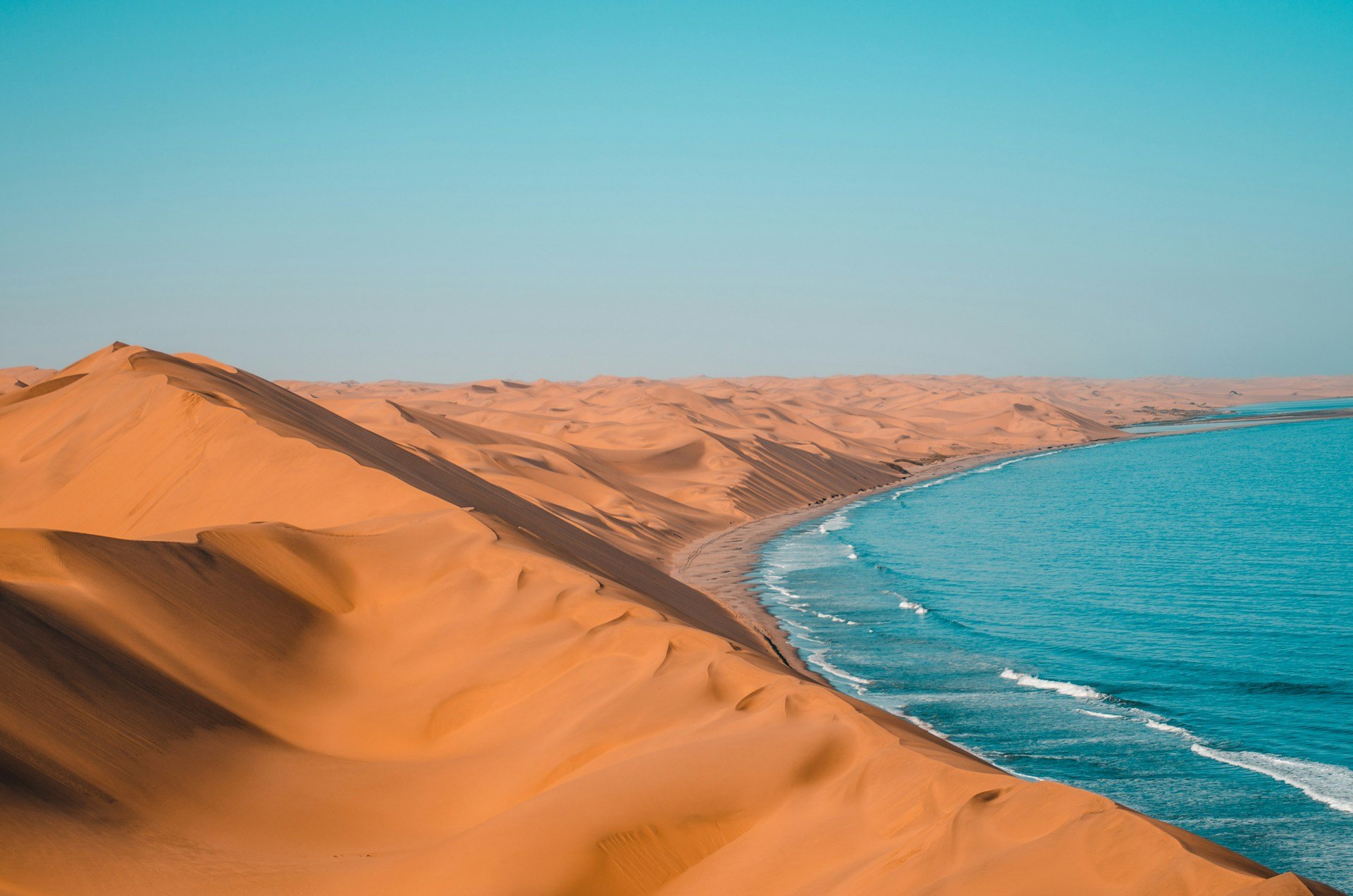
The landscapes do most of the marketing themselves. The Namib, thought to be the world's oldest desert, produces the towering orange dunes at Sossusvlei and the ghost forest of Deadvlei. The Skeleton Coast fog-belt turns a stretch of Atlantic coastline into a place so hostile that shipwrecks are a tourist attraction. Etosha's saltpan waterholes concentrate elephant, lion, rhino and giraffe into some of the most reliable game viewing on the continent, no boat or bush-plane required.
The honest complications
Namibia's distances are genuinely long: Windhoek to Etosha is a full day's drive, and a rushed one-week trip that tries to cover Sossusvlei, Swakopmund and Etosha will spend more time in the car than at any one place. Self-drive is easy by African standards but not risk-free: punctures on gravel roads are routine, fuel stops are sometimes hours apart, and breakdown assistance in remote areas can take a long time to arrive. Visa policy has also become genuinely unstable since April 2025, when Namibia revoked visa-free access for more than 30 nationalities with little notice; check current requirements close to your travel dates rather than trusting anything written more than a few months ago, including this page.
A History Worth Knowing
The San, believed to be among the first peoples to settle this land, have a presence going back tens of thousands of years. Later migrations brought Bantu-speaking Herero and Ovambo communities and Khoekhoe-speaking Nama and Damara peoples, whose descendants make up most of Namibia's population today. What followed was German colonization, one of the 20th century's first recognized genocides, decades of South African apartheid rule, and a long liberation struggle that ended in one of Africa's more orderly transitions to independence.
- 1884
German South West Africa. Germany declares a protectorate over the coast, later expanding inland as settlers seize land and cattle from Herero and Nama communities.
- 1904–1908
Genocide. After a Herero uprising, German General Lothar von Trotha issues an extermination order. An estimated 65,000 Herero and at least 10,000 Nama are killed through massacre, forced marches into the desert and concentration camps. Germany formally recognized this as genocide in 2021.
- 1915–1990
South African rule. South Africa occupies the territory during WWI and administers it for seven decades, extending apartheid to what was then called South West Africa.
- 1966–1989
Liberation struggle. SWAPO wages an armed and diplomatic campaign for independence; the UN formally recognizes the name Namibia in 1968.
- 21 March 1990
Independence. Namibia becomes Africa's last colony to gain independence, with Sam Nujoma as its first president.
- 2021
German recognition. Germany officially calls the 1904-1908 killings genocide and commits over $1.1 billion to development projects, though many Herero and Nama descendants say the settlement falls short of formal reparations.
Read more: the San, the mandate years and independence
The San. Namibia's San communities, sometimes called Bushmen (a term with a complicated and often derogatory history), are descended from some of the region's earliest inhabitants, with rock art in areas like Twyfelfontein and the Brandberg attributed to their ancestors going back thousands of years. Today an estimated 30,000 to 40,000 San live mostly in the north and east, and many communities continue to face land and economic marginalization.
The mandate years. After Germany's WWI defeat, the League of Nations handed administration of the territory to South Africa as a mandate. Rather than preparing it for independence, South Africa incorporated it in all but name, extending its own racial legislation. The UN revoked South Africa's mandate in 1966, but South Africa ignored the ruling for over two decades while SWAPO fought a bush war from bases in Angola and Zambia.
The road to 1990. A UN-supervised transition, tied to the withdrawal of Cuban troops from Angola under a broader regional settlement, led to Namibia's first free elections in November 1989 and formal independence in March 1990. The transition is often cited as one of the more successful UN-brokered decolonizations, though land ownership, still concentrated among the white minority decades later, remains an unresolved legacy.
Top Destinations
Namibia's highlights sit on a loose loop out of Windhoek: south to the dunes, west to the coast, north to the game parks. Trying to do all of it in under ten days means more driving than exploring; most first-time visitors are better off picking three or four of the zones below and giving each two full days.
Etosha National Park
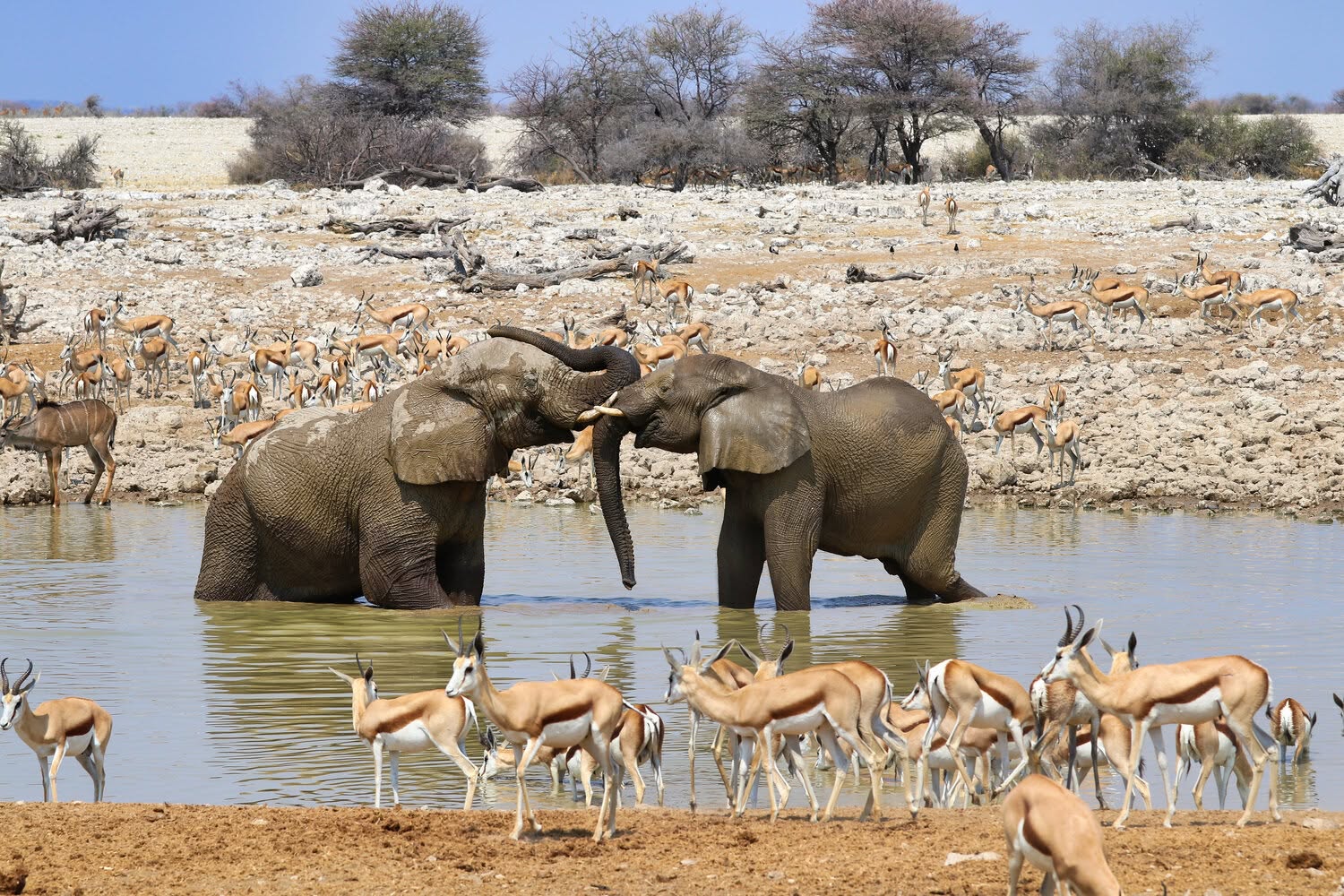
Etosha is built around a vast salt pan roughly the size of Connecticut, and in the dry season the waterholes ringing it draw elephant, lion, black rhino, giraffe and enormous herds of springbok and zebra into view without any need to leave the road. Self-drive is straightforward: gravel roads connect a network of floodlit waterholes at the park's rest camps, so evening and pre-dawn waits often produce the best sightings for free. Foreign adults pay roughly N$150 per person per day plus a vehicle fee, paid at Anderson Gate (the main southern entrance), Von Lindequist Gate (east), Galton Gate (west) or King Nehale Gate (north). Bring a passport for entry and budget at least two full days inside the park.
Sossusvlei & Deadvlei
The Namib-Naukluft's star dunes rise over 300 meters above the desert floor, and Big Daddy and Dune 45 are the two most climbed. The real payoff is Deadvlei, a white clay pan studded with 600-year-old dead camelthorn trees against orange dune walls, a short walk from the 2x4-accessible car park (the final stretch to Sossusvlei itself needs 4x4 or the shuttle). Entry is through Sesriem Gate, which opens at sunrise; arriving at opening time avoids both the heat and the crowds, and gate fees run in the tens of dollars per person plus a vehicle fee, best confirmed on arrival since the published rates have moved more than once recently. Sesriem Canyon, a narrow rock gorge a short walk from the gate, is worth an hour on the way in or out.
Swakopmund, the adventure coast
Swakopmund is Namibia's adventure capital, a slightly surreal German-colonial seaside town wedged between the dunes and the cold Atlantic. Quad biking and sandboarding run directly out into the surrounding dune fields, skydiving and paragliding launch off the dune tops, and catamaran or kayak trips out of nearby Walvis Bay go looking for the ocean's "big five": whales, dolphins, seals, sunfish and turtles. Sandwich Harbour, where towering dunes drop straight into the ocean, is reachable only by guided 4x4 tour and is one of the most photographed spots on the coast. Further north, the Skeleton Coast's fog-bound shipwrecks and seal colonies (Cape Cross has a colony of over 100,000 animals) reward a full day trip.
Damaraland & Twyfelfontein
Damaraland's rust-colored mountains and dry riverbeds hold Namibia's most striking ancient art: Twyfelfontein, a UNESCO World Heritage Site, has one of Africa's largest concentrations of rock engravings, some more than 6,000 years old, depicting rhino, giraffe and human figures. The region is also one of the few places on earth with desert-adapted elephants, which move along dry riverbeds like the Huab and Ugab in search of water. Spitzkoppe, a cluster of granite peaks nicknamed the "Matterhorn of Namibia," makes a striking overnight camping stop with its own ancient rock art.
Fish River Canyon
Africa's largest canyon cuts 160 kilometers through the southern desert, second in scale only to the Grand Canyon among the world's largest. The main viewpoint near Hobas is an easy stop for anyone driving the south, while the full 5-day, 85-kilometer hike down through the canyon (permit and medical certificate required, open only May to mid-September) is a serious undertaking reserved for fit, well-prepared hikers. It sits roughly 6-7 hours' drive south of Windhoek, so it works best as part of a southern loop rather than a rushed side trip.
Culture & Etiquette
Namibia is one of Africa's most ethnically diverse countries for its population size, home to Ovambo, Herero, Damara, Nama, Kavango, Caprivian, San, Baster and German and Afrikaner-descended communities, among others. English is the sole official language but a first language for only a small share of the population; Oshiwambo and Khoekhoegowab are more widely spoken at home, alongside Afrikaans and German, a lingering trace of the colonial period still visible in Windhoek and Swakopmund's architecture and bakeries.
Do
- Greet before you ask anything. A hello and how-are-you before a question, even a quick one at a fuel station or shop, is expected and genuinely changes how you're received.
- Ask before photographing people. This applies with extra weight in Himba and San communities, where tourism has sometimes turned people into photo subjects without consent; ask, and be prepared for the answer to be no.
- Drive with your headlights on even in daylight on gravel roads; it's standard local practice for visibility in dust.
- Tip in cash. 10% at restaurants, and small tips for fuel attendants and lodge staff are customary and appreciated.
- Carry a paper map or offline maps alongside GPS. Namibia's back roads are numerous, similarly named, and cell signal disappears for long stretches.
Don't
- Treat Himba or San villages as a zoo. Community visits arranged through a proper operator, with a share of proceeds going to the community, are a different thing entirely from a random stop to take pictures.
- Underestimate gravel roads. Speeds that feel safe on tar aren't on loose gravel; excess speed on corrugated gravel is the leading cause of self-drive accidents.
- Drive at dawn, dusk or night in game areas without real caution: wildlife on the road, including kudu, is a genuine collision risk at these times.
- Assume every fuel stop has fuel, card facilities or a working ATM. Fill up whenever you're below half a tank in remote areas.
- Wander off marked paths at rock art sites like Twyfelfontein; some of the engravings are fragile and thousands of years old.
Deeper culture: San heritage, Herero dress and German influence
San heritage. Namibia's San communities carry one of the oldest continuous cultural lineages on earth, and their rock art, particularly at Twyfelfontein and in the Brandberg's "White Lady" panel, is thousands of years old. Several community-run cultural tourism initiatives, particularly in the Kalahari and Bwabwata areas, let visitors learn traditional tracking and foraging knowledge directly from San guides, with proceeds going to the community rather than an outside operator.
Herero dress. Herero women's Victorian-style long dresses and horn-shaped headwraps, adopted from 19th-century German missionary and settler fashion and then made distinctly their own, are a striking and deliberate cultural statement rather than a costume; they're worn at ceremonies and often daily in Herero communities.
German influence. Windhoek and Swakopmund still show the clearest traces of the German colonial period: half-timbered buildings, German-language newspapers, bakeries selling proper pretzels and strudel, and Namibia's own well-regarded beer brewed under the Reinheitsgebot purity law inherited from that era.
Food & Drink
Namibian food leans heavily on game and beef, a legacy of both the country's ranching economy and German settlement, with South African influence in the everyday staples. Meat quality is a genuine highlight: much of it is grass-fed and free-range by default rather than as a premium claim.
Game meat & braai
Kudu, oryx (gemsbok), springbok and ostrich appear on menus across the country, often as biltong (dried cured meat, the local answer to jerky) or grilled at a braai (barbecue). Expect it lean, gamey and usually excellent.
German-Namibian classics
Schnitzel, sausages and fresh bread are everywhere, a direct legacy of German settlement. Windhoek's bakeries turn out proper German bread and pastries that feel out of place, in a good way, this far into the desert.
Namibian beer
Windhoek Lager and other local beers are brewed under the German Reinheitsgebot purity law, a source of genuine local pride. Cold, and very welcome after a hot day of driving.
When to Go & Itineraries
May to October, the dry southern-hemisphere winter, is the best window for wildlife: as surface water disappears elsewhere, animals concentrate at Etosha's waterholes, making sightings far more reliable. Nights are cold, sometimes near freezing, in June and July, so pack layers even though the days are warm and dry. The wet season, November to April, greens the desert dramatically and brings spectacular skies, but scatters wildlife away from waterholes and can make some gravel roads and river crossings temporarily impassable.
Seasons compared, with temperatures
| Season | Verdict | Temps | Notes |
|---|---|---|---|
| May-Oct (dry, winter) | Best for wildlife | 20-28°C days, near-freezing nights Jun-Jul | Reliable Etosha sightings, dry gravel roads, peak lodge prices Jul-Oct |
| Sep-Oct | Excellent, hot | Up to 35°C+ | Peak game viewing as water gets scarcer; busiest and priciest |
| Nov-Mar (wet) | Good for scenery, lower prices | 25-35°C, humid with afternoon storms | Dramatic green desert and skies; wildlife disperses, some roads affected |
Coastal Swakopmund runs cooler and foggier year-round than the interior, often 15-22°C, thanks to the cold Benguela current; pack a layer for the coast even in summer.
Itineraries
Ten days is the practical minimum for a proper first circuit without feeling rushed. Two weeks adds Damaraland's rock art and desert elephants without sacrificing time anywhere else.
- Days 1-2
Windhoek. Land, collect the rental, a day to see Christuskirche and the Independence Memorial Museum and adjust before the long drives begin.
- Days 3-4
Sossusvlei. Drive south (about 5 hours), overnight near Sesriem, sunrise at Deadvlei and Dune 45 before the heat.
- Days 5-6
Swakopmund. Drive to the coast via the Kuiseb Canyon, adventure activities in the dunes, a Sandwich Harbour or Walvis Bay marine trip.
- Days 7-9
Etosha. Drive north via Damaraland or direct, two to three nights inside or at the park's edge for waterhole game drives.
- Day 10
Return to Windhoek for departure, or fly out of the smaller Ondangwa or Windhoek Eros options if your route allows.
- Days 1-2
Windhoek as above.
- Days 3-4
Sossusvlei as above, with an extra afternoon at Sesriem Canyon.
- Days 5-6
Swakopmund as above.
- Days 7-8
Damaraland. Twyfelfontein's rock engravings, a chance at desert-adapted elephants along the Huab riverbed, and a night camping at Spitzkoppe.
- Days 9-11
Etosha, three full nights for a proper circuit of the eastern and western waterholes.
- Days 12-14
Return south via Waterberg Plateau or directly to Windhoek, with a buffer day for the inevitable flat tire or late start.
Getting there & around
Hosea Kutako International Airport (WDH), 45km east of Windhoek, is the country's main international gateway, with connections via Johannesburg, Frankfurt and a handful of other hubs. Self-drive is the standard way to see Namibia: a 4x4 or high-clearance SUV rental runs roughly $60-90 a day depending on season, and while a 4x4 isn't strictly required on the main gravel routes, it's strongly recommended for Damaraland, the Skeleton Coast and Etosha's back roads. There's no meaningful long-distance public transport network for tourists; guided group tours are the main alternative to self-drive.
Self-drive practicalities: fuel, punctures and road types
| Practicality | Notes |
|---|---|
| Fuel | Fill up whenever below half a tank; some stretches between towns run 200km+ with no station. Cash is safer than cards at remote pumps. |
| Punctures | Routine on gravel roads; confirm the rental comes with two spares, not one, and know how to change a tire before you leave Windhoek. |
| Road types | Main routes (B-roads) are tarred; most scenic routes (C- and D-roads) are well-graded gravel, driven at 60-80km/h; some require 4x4 after rain. |
| Wildlife on roads | Kudu and other animals cross at dawn and dusk; avoid driving in low light in game areas. |
Buy a Namibian SIM at the airport or in Windhoek for roughly $5-10 for a generous data allowance; signal drops out entirely for long stretches of every major route, so download offline maps (Maps.me or Google Maps offline areas) before setting out.
Budget Planning
Namibia isn't a shoestring destination the way parts of East and West Africa are: distances mean fuel and rental costs add up fast, and park and conservancy fees stack on top of accommodation. Self-drive campers get the best value; guided lodge safaris cost meaningfully more but remove all the logistics.
- Campsite $10-20/night
- Fuel, self-catering food $15-20
- Park entry fees $8-15/day
- Rental car shared across a group
- Guesthouse or mid-range lodge
- Restaurant meals $15-25
- 4x4 rental $60-90/day
- Park fees and a couple of activities
- Lodge or tented camp, full board
- Guided game drives included
- No self-drive logistics
- Higher-end camps run well above this range
Quick reference prices: park fees, fuel, car rental
| Etosha entry (foreign adult) | ~N$150/day + vehicle fee |
| Sossusvlei/Sesriem entry | Tens of dollars per person + vehicle fee |
| 4x4 rental | $60-90/day, seasonal |
| Campsite (self-drive) | $10-20/night |
| Restaurant meal (mid-range) | $10-20 |
| Windhoek to Etosha fuel (return, sedan-sized tank) | Budget for 2-3 fill-ups |
Prices reflect 2026 research and drift over time, and Namibia's park and gate fees in particular have changed more than once recently. Treat them as a planning baseline, confirm at the gate.
Visa & Entry
This is the chapter most likely to be out of date by the time you read it, so treat it as a starting point, not a final answer. Since 1 April 2025, Namibia revoked visa-free entry for more than 30 nationalities that had previously enjoyed it, including the US, UK, Canada, Australia and most of the EU, citing a lack of reciprocal visa-free access for Namibian passport holders. Affected travelers now need either an e-visa applied for online in advance or a visa on arrival, valid for stays of up to 90 days. Namibia has since expanded its visa-on-arrival eligible country list more than once, and policy has shifted repeatedly since the initial change, so confirm your specific requirement with the Namibian Ministry of Home Affairs and Immigration e-Services portal or your nearest Namibian embassy close to your travel date rather than relying on any single source, including this page.
✓ Valid passport
At least 6 months validity from date of entry with blank pages, the standard requirement across the region.
✓ Confirm visa status by nationality
Do not assume visa-free entry based on past experience or older guides. Check the official e-Services portal or your nearest embassy before booking flights.
✓ Onward/return ticket & funds proof
May be requested at the border, particularly for visa-on-arrival applicants.
✓ Yellow fever certificate
Required if arriving from, or having transited through, a yellow-fever-endemic country; not required for direct arrivals from Europe or North America.
| Namibia | Botswana | |
|---|---|---|
| Signature landscape | Sossusvlei's dunes, the Skeleton Coast, desert-adapted wildlife | The Okavango Delta's waterways, Chobe's elephant herds |
| Self-drive | Excellent: graded gravel roads, low traffic, widely considered Africa's easiest self-drive country | Harder: more sand driving, more remote parks, often guided |
| Typical style | Road trip between desert, coast and parks | Fly-in or 4x4 safari camps, more water-based game viewing |
| Visa (2026) | Most Western nationalities now need an e-visa or visa on arrival | Still visa-free for many nationalities, including the US and UK, for short stays |
Safety, Solo Women & Family
The US State Department rates Namibia Level 2, Exercise Increased Caution, its second-lowest advisory tier. Violent crime against tourists is uncommon; the real risks are opportunistic crime in cities, the practical hazards of self-drive travel in remote areas, and limited medical care once you're far from Windhoek.
City crime
Pickpocketing, purse snatching and smash-and-grabs from parked cars are the most common issues, concentrated in Windhoek, Walvis Bay and Swakopmund. Don't leave valuables visible in a parked vehicle, even briefly.
Remote breakdowns
Many popular routes run far from emergency services and medical facilities. Carry extra water, tell someone your route and expected arrival, and don't push on if a vehicle problem seems serious.
Nightlife drink spiking
Use of date-rape drugs has been reported at nightclubs and bars, particularly in Windhoek, Walvis Bay and Swakopmund. Watch your drink and stick with people you trust.
Road safety and health care access
Road safety. Namibia drives on the left. Gravel-road accidents from excessive speed are a leading cause of serious injury for visitors; slow down more than feels necessary on corrugated or loose surfaces, and avoid driving after dark in game areas because of animal collision risk.
Health care. Windhoek has good private hospitals; outside the capital, facilities are limited and may lack basic medications. Comprehensive travel insurance that explicitly covers medical evacuation is strongly recommended for anyone heading into the parks or the north.
Solo women travelers
Namibia is a reasonable choice for solo women, particularly on organized routes and in lodges, though the same isolation and breakdown risks that apply to any solo self-drive traveler apply here too: tell someone your route, carry a satellite communicator or reliable offline maps if heading into remote areas, and don't rely on cell signal. In Windhoek and Swakopmund, avoid walking alone after dark, use a booked taxi or a rideshare app like Bolt rather than hailing an unmarked car, and take the same nightlife precautions as anyone would. Full detail on our Solo Woman Explorer pages.
Emergency numbers
Embassies, mountain-and-desert rescue and pet entry
112 works from any mobile phone and is the most reliable general emergency number. The Namibian Police non-emergency line is 10111. In Windhoek, E-Med Rescue and Lifelink both operate private ambulance services; save both numbers before heading out of the city, since coverage and response elsewhere in the country is far patchier. Most embassies are in Windhoek's Klein Windhoek and city-center areas; confirm your specific embassy's after-hours emergency line before departure rather than assuming standard business hours apply.
Remote-area emergencies: in the parks and along the coast, your lodge or campsite reception is often the fastest way to coordinate help; formal emergency services can take hours to reach isolated areas. Register your self-drive route with your accommodation each night as a basic safety net.
Family travel
Namibia works well for families with older children who can handle long drives: game viewing at Etosha's waterholes requires patience but rarely disappoints, and most lodges welcome kids with family rooms and early dinner sittings. It's a harder trip for very young children given the driving distances and remoteness; a shorter, lodge-based itinerary around Etosha and Windhoek suits toddlers better than a full self-drive loop.
Namibia FAQ
Is Namibia safe to visit?
Yes, with normal precautions. The US State Department rates Namibia Level 2, Exercise Increased Caution. Violent crime against visitors is rare; the real risks are opportunistic theft in cities, breakdowns in remote areas far from help, and self-drive road conditions.
Do I need a visa for Namibia in 2026?
Probably yes. Since 1 April 2025, Namibia ended visa-free entry for more than 30 nationalities including the US, UK, Canada, Australia and most of the EU. Affected travelers now need an e-visa applied for in advance or a visa on arrival, valid up to 90 days. Rules have shifted repeatedly since 2025, so confirm with the Namibian e-Services portal or your nearest embassy before booking.
How much does a Namibia trip cost?
Self-drive campers manage on $45-60 a day covering fuel, campsites and food. Mid-range travelers in guesthouses and lodges spend $100-150 a day. Guided lodge safaris run $200-500 a day per person including meals and activities.
Is Namibia good for a self-drive trip?
Yes, it's one of Africa's best self-drive countries: low traffic, well-graded gravel roads, and English-language signage. A 4x4 isn't mandatory on the main routes but is strongly recommended for Damaraland, the Skeleton Coast and Etosha's back roads.
When is the best time to visit Namibia?
May to October, the dry winter season, is best for wildlife viewing as animals cluster at Etosha's waterholes. Nights are cold in June and July. The wet season, November to April, greens the desert and brings dramatic skies but scatters the game.
How many days do you need in Namibia?
Ten days covers a solid circuit: Windhoek, Sossusvlei, Swakopmund and Etosha. Two weeks adds Damaraland and its rock art without feeling rushed. Namibia's distances are long, so fewer stops done properly beats a rushed loop.
What currency does Namibia use?
The Namibian Dollar (NAD), pegged 1:1 to the South African Rand, which also circulates freely as legal tender. Card payments are widely accepted in cities and lodges; carry cash for fuel stops and rural areas.
Is Windhoek worth visiting or just a gateway?
It's a practical one-to-two-day stop rather than a highlight. Christuskirche, the Independence Memorial Museum and dinner at Joe's Beerhouse cover it well before heading out to the parks, which are Namibia's real draw.
Is Namibia safe for solo female travelers?
Generally yes on organized routes and in lodges, though solo self-drive through remote areas carries the same breakdown and isolation risks for anyone. In Windhoek, avoid walking alone after dark and use a rideshare app or booked taxi instead.
What language is spoken in Namibia?
English is the sole official language, though spoken as a first language by only a small share of the population. Oshiwambo and Khoekhoegowab (Nama/Damara) are the most widely spoken home languages, alongside Afrikaans, German and other Indigenous languages.
What Stays With You
Namibia doesn't hand you its highlights from a bus window. You earn Deadvlei with a hot walk across a dune field, you earn Etosha's elephants by sitting still at a waterhole until they arrive, and you earn the Skeleton Coast's strangeness by driving hours through fog to a shipwreck that has been rusting since before your grandparents were born. The emptiness that makes the logistics genuinely harder than a bus-tour country is the same emptiness that makes the silence at a desert campsite, with no light pollution and no other vehicle in sight, feel like something worth the drive.
Confirm your visa status close to departure, this is the one country on our list where a page written six months ago could already be wrong, then go build the itinerary around the distances rather than fighting them.