
Malawi
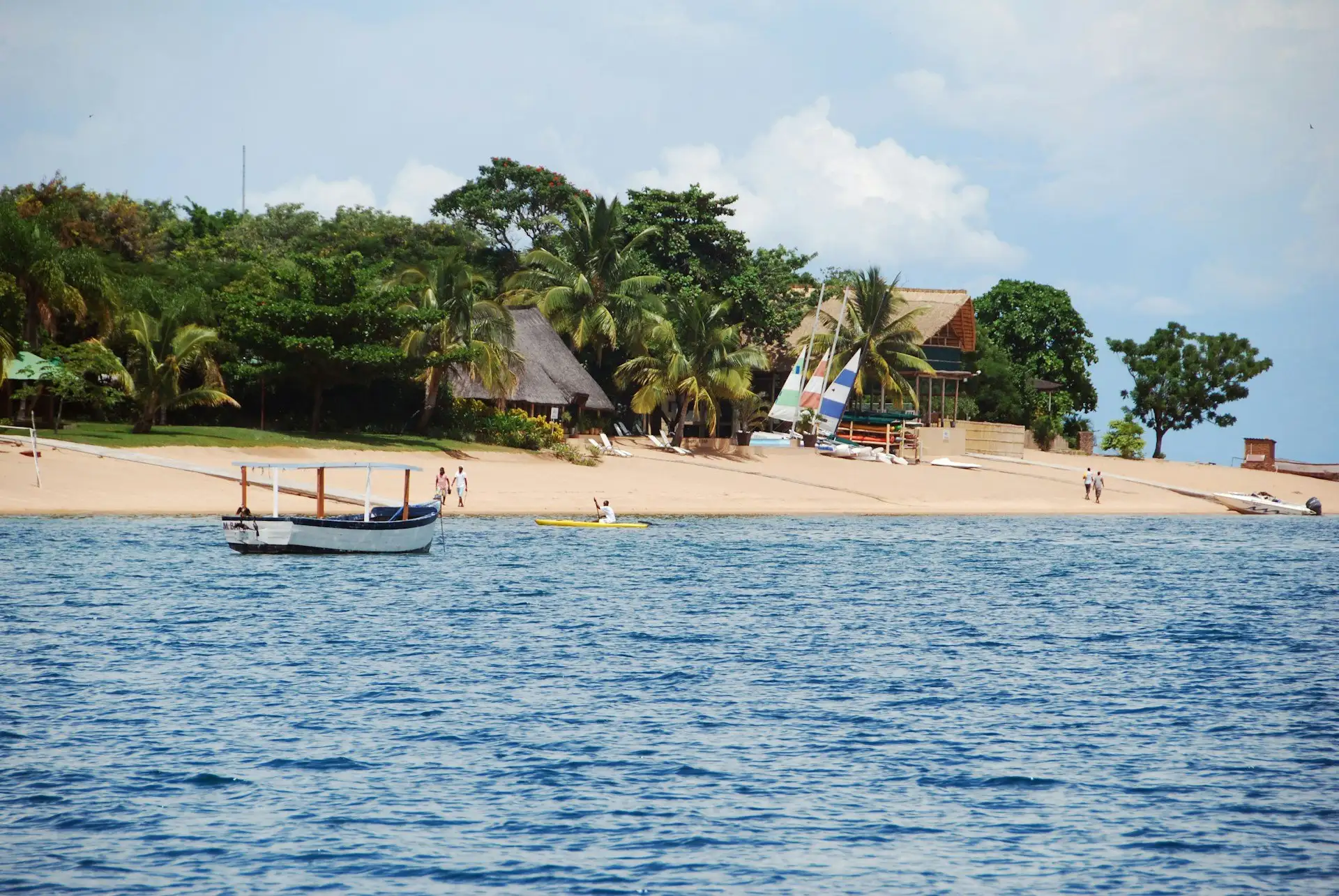
A lake that stretches 580 kilometers and feels like the sea. A Big Five safari that built itself from nothing in twenty years. A cathedral the size of Winchester's on an island most people have never heard of. The warm heart of Africa is not a marketing slogan.
What You're Actually Getting Into
Malawi is small by African standards — slightly smaller than England — and almost entirely dominated by one geographical feature: Lake Malawi, which runs 580 kilometers along its entire eastern border and covers about a fifth of the country's total area. The lake is so large it creates its own weather. Standing on its beach, you cannot see the other side. The water is warm, clear, and filled with more species of freshwater fish than any other lake on earth — over a thousand of them, most found nowhere else. The cichlids alone, in their fluorescent blues and oranges and yellows, are worth the trip.
Beyond the lake, Malawi has pulled off one of Africa's most remarkable conservation turnarounds. Twenty years ago, Majete Wildlife Reserve had been poached almost to silence. Today, under African Parks management, it holds all of the Big Five — elephant, lion, leopard, rhino, and buffalo — in a landscape that sees a fraction of the visitors that Kenya or Tanzania attract. Liwonde National Park, with its boat safaris along the Shire River through hippos and crocodiles and elephants drinking at the banks, consistently ranks among the best safari experiences in southern Africa. And almost nobody knows it.
That last point matters. Malawi has not yet had its moment. Visitor numbers are growing — 1.3 million in 2025 — but most of those are regional travelers and development workers, not the safari circuit crowd. The lodges are excellent and the game drives genuinely intimate. You will not queue to see a lion. You will probably have the hippo channel to yourself. The nickname "the Warm Heart of Africa" comes from its people, who are routinely cited as among the most genuinely welcoming on the continent, and it has been earning that description for decades.
Malawi at a Glance
A History Worth Knowing
The area around Lake Malawi has been inhabited for tens of thousands of years, with Stone Age rock paintings in the hills around Dedza and Chongoni representing some of the densest concentrations of ancient rock art in central Africa — the Chongoni Rock Art Area is now a UNESCO World Heritage Site. By the 15th century, the Chewa people had established the Maravi Empire on the southwestern shores of the lake, a powerful kingdom controlling trade routes across the region.
The Arab slave trade arrived in the 19th century, funneled through the town of Nkhotakota on the western lakeshore, which became one of the largest slave depots in central Africa. The Swahili-Arab trader Jumbe controlled the trade from Nkhotakota, shipping enslaved people across the lake to the coast. The scale of what happened there is worth sitting with when you visit the town today.
The figure who changed everything — and whose presence still echoes through the country's place names, mission stations, and history — was Dr. David Livingstone, a Scottish missionary and explorer. Livingstone reached Lake Malawi in 1859 and was horrified by the slave trade he witnessed. His reports galvanized abolitionist sentiment in Britain and drew Scottish missionaries into the region. The missionaries established the Livingstonia Mission on the lakeshore, eventually relocated to its current spectacular site at 900 meters above the lake after malaria drove them away from the lower altitudes twice. The town of Blantyre was named after Livingstone's Scottish birthplace.
Britain declared the territory a protectorate in 1891, partly to counter Portuguese expansion from Mozambique and partly to suppress the slave trade. The colonial period as Nyasaland — "land of the lake" — lasted until 1964, when Hastings Banda led the country to independence and renamed it Malawi. Banda then ruled as one of Africa's longest-serving autocrats until 1994, when Malawi held its first multiparty elections. Bakili Muluzi won, and Malawi has remained a functioning democracy since — imperfect but genuinely competitive.
The conservation story is one of the most important things to understand before you visit. By the early 2000s, Malawi's national parks had been catastrophically depleted by poaching and mismanagement. African Parks, a nonprofit conservation organization, took on Majete Wildlife Reserve in 2003 and began the restoration from scratch — restoring fences, rebuilding ranger capacity, and gradually reintroducing wildlife. By 2012 lion and leopard were back. In 2019 came one of the largest black rhino translocations in history, with 17 rhinos moved from South Africa to Liwonde. The same approach has been applied to Liwonde, Nkhotakota, and other reserves. When you pay your park fees in Malawi, the money stays in the parks.
The Chewa people establish a powerful kingdom on the lakeshore. The lake takes their name: Malawi, land of light.
Nkhotakota becomes a major slave depot. Thousands of people are trafficked across the lake annually.
David Livingstone reaches Lake Malawi and reports on the slave trade. Scottish missionaries follow. The abolitionist mission begins.
Colonial rule. Tea and tobacco estates established. Infrastructure built. Named after Livingstone's Scottish birthplace: Blantyre.
Hastings Banda leads Malawi to independence. Then rules as one of Africa's longest autocrats — until 1994.
Malawi becomes a democracy. Has remained one, imperfectly but consistently, ever since.
African Parks takes on Majete. Lions, leopards, rhinos return. One of Africa's great wildlife restoration stories, playing out in real time.
Top Destinations
Malawi divides neatly into three experiences: the lake (beaches, snorkeling, island camps, sunsets), the parks (safari, boat drives on the Shire, night walks), and the highlands (hiking, tea estates, colonial mission stations). A well-designed two-week trip weaves all three together. Most visitors arrive in Lilongwe, head south to Majete or Liwonde for safari, then up the lakeshore to Cape Maclear or Likoma Island for the water. The north — Nyika Plateau, Livingstonia, Vwaza Marsh — rewards those with more time.
Lake Malawi
The ninth-largest lake in the world holds more species of freshwater fish than any other — over a thousand, most found nowhere else. Snorkeling in the clear water at Cape Maclear or around the boulders of Nkhata Bay is genuinely among the best freshwater diving experiences on the planet. The cichlids are extraordinary: electric blue zebras, orange blotcheds, peacock cichlids in shades that seem impossible for a freshwater fish. The lake stretches so far north you cannot see the end. Sunsets over the water are a daily event that never becomes routine. Choose your base from backpacker camps at Cape Maclear, mid-range lodges along the Chintheche strip, or luxury island retreats at Mumbo and Domwe.
Liwonde National Park
Africa's finest boat safari. The Shire River flows along the park's western boundary and is patrolled by hippos in numbers you rarely see elsewhere — up to 80 in a single pool — along with crocodiles, water monitors, African fish eagles calling from dead trees, and elephant coming down to drink in the early morning light. The park also holds lions, leopards, black rhinos (relocated from South Africa in 2019), wild dogs, and one of Africa's most significant elephant populations. Game drives in the mopane and ebony woodland away from the river add a completely different dimension. Run by African Parks. Small, intimate, and extraordinary.
Majete Wildlife Reserve
Twenty years ago Majete had been poached to near silence. African Parks took it on in 2003 and began again from zero: fences, rangers, elephant restocking, then lions and leopards in 2011, giraffe and cheetah in 2018. Today it holds all the Big Five in terrain that few tourists visit. The confluence of the Shire and Mkulumadzi rivers provides the setting for Mkulumadzi Lodge, one of the finest safari camps in southern Africa. If you want to understand what conservation actually looks like when it works, Majete is the place.
Likoma Island
A Malawian island in Mozambican waters — retained by Malawi after World War II due to its missionary history — with powdery beaches, mango trees, and a cathedral. St Peter's Cathedral, built in 1903 using local granite and local labor, matches the footprint of Winchester Cathedral in the UK. It stands on an island in the middle of a lake in central Africa, and it is spectacular. The island also has Kaya Mawa Lodge, consistently rated among Africa's best boutique hotels. Reach it by the Ilala ferry — a classic slow-boat experience up the lake — or by light aircraft from Lilongwe.
Nyika National Park
Malawi's largest national park sits on a high-altitude plateau in the far north, a rolling grassland of wildflowers and mist that looks nothing like the Africa of postcards. At 2,000–2,600 meters, it's cool year-round. Zebra, eland, roan antelope, and leopard share the plateau. Orchids cover the hillsides after the rains. The hiking and mountain biking are exceptional. Some visitors compare the landscape to the Scottish Highlands — an unlikely comparison that makes complete sense when you're standing in it at 6am watching zebra move through the mist.
Mount Mulanje
A vast granite massif in southern Malawi, rising to 3,002 meters at Sapitwa Peak — the highest point south of Kilimanjaro outside of Tanzania. The mountain sits in a sea of tea plantations, dramatically visible from the surrounding flatlands. Hiking trails reach several peaks, with mountain huts operated by the Mountain Club of Malawi providing overnight shelter. Streams cascade off the plateau through cedar forests. Two to four days is the standard circuit. Arrange a local guide in Mulanje town.
Livingstonia
Perched at 900 meters above the lakeshore on a plateau in northern Malawi, established in 1894 by Robert Laws — a disciple of Livingstone himself — after malaria twice forced the mission to move from the lowlands. The views across the lake to Tanzania are extraordinary. The town is a preserved piece of Victorian missionary Africa: stone buildings, a church, a clock tower, a museum. The road up is 20 kilometers of hairpin bends on a steep escarpment — exhilarating and occasionally terrifying. Worth every corner.
Thyolo & Zomba Plateau
The Thyolo hills south of Blantyre are covered in tea estates — Malawi is Africa's second-largest tea producer — with Satemwa Tea Estate offering tours through the plantations and a historic lodge. The Zomba Plateau, rising to 1,800 meters behind the former colonial capital, has forest walks, trout fishing, and views over the southern plains. The old Zomba colonial buildings give it an end-of-empire atmosphere that is unlike anywhere else in the country.
Culture & Etiquette
The single most consistent thing every visitor to Malawi reports is the people. Malawians are, across the board, among the most genuinely welcoming people in Africa. This is not the performative friendliness of tourist economies — it's a cultural disposition toward hospitality that you feel from the first interaction. It also means that rudeness or impatience from visitors lands hard. Match the warmth you receive.
Malawi is a conservative Christian-majority country, particularly in rural areas, though there are significant Muslim communities along the lakeshore and in the north. Both traditions value modesty and respect in dress and behavior.
A handshake and "Moni" (hello in Chichewa) opens every door. In villages, greet the elders first. Malagasy-style, beginning a conversation with the question or request without a greeting is considered abrupt and dismissive.
In towns, markets, and villages, covered shoulders and knees are the baseline expectation for both men and women. Beachwear stays on the beach. Lilongwe and Blantyre are more relaxed but still not Tokyo or London.
If someone offers you food or drink, accepting it — even just a taste — is a significant gesture of respect. Refusing without a genuine reason can cause genuine offense.
Always ask. Most people are happy to be photographed; a few are not. The ask costs seconds and completely changes the interaction from extraction to exchange.
"Zikomo" (thank you), "Moni" (hello), "Bwanji" (how are you), "Chabwino" (fine/good). You will not be expected to speak Chichewa, but attempting a few words produces smiles of genuine delight.
The same principle as Madagascar and Liberia: direct cash gifts to children create dependency and pull them away from school. Support communities through your lodge's conservation programs, tip adults for actual services, and donate to established organizations.
Same-sex relationships are technically illegal in Malawi and social attitudes in rural areas remain deeply conservative. LGBTQ+ travelers should exercise discretion outside of private lodge settings.
Malawians have strong opinions about their politicians and enjoy political conversation. But as a visitor, listening is more appropriate than pronouncing. Let them lead.
Bilharzia (schistosomiasis) is present in parts of Lake Malawi, particularly near reed beds and in shallow water near fishing villages. Ask your lodge specifically about conditions at your location. Open water is generally lower risk.
The warmth of Malawian hospitality is genuine and remarkable. It is not a signal that boundaries don't exist or that the usual expectations about respect and consideration don't apply. If anything, they apply more.
Lake of Stars Festival
An annual music and arts festival held on the shores of Lake Malawi — one of the most celebrated music events in Africa. International and Malawian artists perform on stages by the water. October 2026 dates are to be confirmed. If your trip overlaps with it, restructure your itinerary around it.
Chongoni Rock Art
The densest concentration of rock art in central Africa, in the forested granite hills around Dedza. 127 sites span from the Late Stone Age through the Iron Age. The paintings were made by farming communities, unlike most African rock art which is associated with hunter-gatherers — making this a rare and distinct tradition. UNESCO World Heritage Site since 2006.
Fishing Culture
The lake is not backdrop — it is life. Thousands of families depend on fishing for both food and income. The usipa (small dagaa-like fish) are dried on the shore in the thousands, their smell announcing every lakeside village from a kilometer away. The chambo, a large cichlid considered a delicacy, is the most prized catch. Watching the boats come in at dawn at a fishing village is one of the most quietly powerful experiences Malawi offers.
Tea & Tobacco
Malawi is Africa's second-largest tea producer and one of the world's significant tobacco exporters — the crop that funded much of the colonial economy and still employs hundreds of thousands of rural Malawians. The tea estates in the Thyolo hills near Blantyre are active, working landscapes that offer a window into an agricultural economy unlike any other in the region. The Satemwa estate has been in operation since 1923.
Food & Drink
Malawian food is built around nsima — a stiff maize porridge that functions as bread, cutlery, and the foundation of every meal. You roll it into a ball with your right hand and use it to scoop up the ndiwo — the accompanying relish of vegetables, beans, or fish. It is filling, cheap, and once you adapt to the texture, genuinely satisfying. The lodge and hotel menus layer international options on top of a Malawian base, and the quality at the better safari lodges is excellent.
The chambo fish, caught fresh from the lake, is the meal you will remember. It is a large cichlid — tender, mild, and nothing like the fish you get anywhere that isn't in sight of Lake Malawi. It appears grilled, fried, or in stew across every restaurant along the lakeshore.
Nsima & Ndiwo
The national meal. Stiff maize porridge served with relish — beef, chicken, fish, pumpkin leaves, beans, or dried usipa fish. Eaten with the right hand, rolled into a ball and dipped. Local restaurants charge $1–3 for a full plate. This is what most Malawians eat, every day. It's worth eating it the local way at least once.
Chambo Fish
The lake's prize cichlid. Available grilled whole, fried with chips, or in curry. Grilled chambo eaten at a plastic table by the lakeshore at sunset is one of those meals that anchors a whole trip in memory. Order it at any lakeshore restaurant. Expect to pay $5–12 at a tourist-facing spot, less at a local one.
Mandazi & Zitumbuwa
Mandazi are sweet cardamom-spiced doughnuts, deep-fried and sold at every market and roadside stall from dawn. Zitumbuwa are banana fritters, dense and sweet, a breakfast staple along the lakeshore. Both cost almost nothing and are excellent with milky tea. Start most mornings this way and you will not go wrong.
Lake Fare & Camp Cooking
Safari lodges in Malawi punch well above their price point for food. Most run full board with meals that draw on local ingredients — lake fish, fresh vegetables from their own gardens, Malawian honey, and good Malawian coffee and tea from the Thyolo hills. The standard of cooking at Mkulumadzi, Robin's House in Liwonde, and Kaya Mawa is genuinely impressive.
Kuche Kuche & Gin
Kuche Kuche is Malawi's most popular local lager — light, cold, and fine after a long game drive. More interesting: Malawi Gin (MGT — Malawi Gin and Tonic) has developed a genuine following and is made from locally grown botanicals. Order it with tonic and lime at any lodge bar and you will understand why. Carlsberg also brews in Malawi and is widely available.
Coffee & Tea
Malawi grows excellent Arabica coffee in the highlands and is Africa's second-largest tea producer. The tea from the Thyolo hills — particularly from Satemwa Estate — is exceptional, sold in proper loose-leaf form at the estate shop at prices that feel indecently low. Bring extra luggage space for tea and vanilla.
When to Go
May to October is the dry season and the clear choice for wildlife viewing. Animals congregate around water sources as the bush thins, making sightings easier and more concentrated. July and August are peak season — book lodges at Liwonde and Majete well in advance. The lake is excellent year-round for swimming and snorkeling, though the dry-season months are particularly clear. The November to April rainy season brings lush green landscapes and excellent birdwatching, but some roads deteriorate and a few lodges close.
May – Oct
Dry SeasonPeak wildlife season. Animals concentrate around the Shire River in Liwonde. Roads are reliable. Lake is calm and clear for snorkeling. Temperatures in the highlands can drop sharply at night — bring a layer for Nyika and the mountain lodges.
Apr & Nov
ShoulderTransition months. April is the tail of the rains — landscapes are green, fewer visitors, good value. November is the start — wildlife still good before vegetation thickens. Both months offer value on accommodation.
Dec – Mar
Rainy SeasonMigrant birds from the Northern Hemisphere arrive in vast numbers. The highlands burst with orchids and wildflowers. Landscapes are dramatically green. Some lodges close and some roads are poor — do your research before booking any remote park in this window.
Trip Planning
Ten to fourteen days is the sweet spot for combining a Malawi safari with time on the lake. Seven days works if you focus on one or the other. The classic circuit: fly into Lilongwe, drive south to Majete or Liwonde for safari (3–4 nights), then north to Cape Maclear or up the lakeshore (3–4 nights), with Likoma Island for those with a spare two days and a spirit of adventure. Add Mulanje, Zomba, or Nyika with extra time.
Lilongwe + Liwonde
Arrive Lilongwe. Drive south (3.5 hours) to Liwonde National Park. Two days of safari: boat trips on the Shire River in the morning, game drive in the mopane woodland in the afternoon, night walk with a guide. Hippos by the hundred. Fish eagles constantly. Elephants at the riverbank at dawn.
Cape Maclear, Lake Malawi
Drive north to Cape Maclear (3 hours from Liwonde via Zomba). Three nights on the lakeshore: snorkeling among cichlids in the morning, kayaking to outlying islands in the afternoon, chambo fish and cold beer for dinner at sunset. This is the decompression portion of the trip. It earns its place.
Zomba Plateau + Lilongwe
Drive north through Zomba — a half-day stop for the plateau viewpoint and colonial town — then on to Lilongwe for final night and departure. Or skip Zomba and spend day six at the lake.
Lilongwe
Arrive, settle, explore Lilongwe's Old Town market and the Area 47 quarter. Good restaurant options in the capital. Night in a good city hotel before heading into the bush.
Majete Wildlife Reserve
Drive south (3 hours to Blantyre, then another hour to Majete). Three nights: the full conservation story. Morning and afternoon game drives, bush walks, sundowners at the river confluence. All the Big Five in a landscape that 20 years ago had almost nothing. The guides here know the history and tell it well.
Liwonde National Park
Drive north to Liwonde (3 hours). Three nights: boat safaris on the Shire are the priority — do one at dawn and one at dusk if possible. Add a night walk. Liwonde's bird list alone could occupy a week.
Cape Maclear & Lake Malawi
North to Cape Maclear. Three lake days: snorkeling, kayaking, boat trips to Otter Point, doing absolutely nothing with great commitment. Lake of Stars Festival if timing allows.
Likoma Island
Fly or take the Ilala ferry to Likoma. Two nights at Kaya Mawa or a smaller lodge. St Peter's Cathedral. Empty beaches. Snorkeling in water so clear you can count the fish. Return by small aircraft to Lilongwe.
Lilongwe Departure
Final morning in Lilongwe — last chance for the market, last Malawian coffee, last time someone says goodbye with genuine warmth and means it. Then the airport.
Vaccinations & Health
No mandatory vaccinations for most travelers, though yellow fever certificate required if arriving from a yellow fever country. Strongly recommended: malaria prophylaxis (essential throughout Malawi), Hepatitis A, Typhoid, and routine vaccines. Get a bilharzia test on return home if you swam in the lake.
Full vaccine info →Money
The Malawian kwacha has experienced significant inflation. USD and euros are widely accepted at lodges. ATMs exist in Lilongwe and Blantyre and accept major foreign cards, but are scarce outside cities. Bring enough USD cash for tips, smaller purchases, and any remote area activity. Forex bureaus in the cities give better rates than banks.
Connectivity
Airtel and TNM are the main networks. Buy a local SIM in Lilongwe — data is cheap. Coverage is good in cities and major towns, limited in national parks, and absent in parts of Nyika and remote lakeshore areas. Download offline maps before heading into the bush.
Travel Insurance
Medical facilities in Lilongwe and Blantyre are basic by Western standards. For serious illness, evacuation to Johannesburg or Nairobi is the realistic option. Comprehensive travel insurance with medical evacuation is essential. South Africa-based emergency services can usually reach Malawi within hours.
Power & Plugs
Malawi uses Type G (UK-style) three-pin plugs at 230V. Bring a UK adapter if you're from elsewhere. Load-shedding (planned power cuts) occurs in cities — lodges run generators but may not have power in some rooms during cuts. A power bank is useful.
Bilharzia
Schistosomiasis is present in Lake Malawi, particularly near reed beds and slow-moving inshore water. Open-water swimming at established lodge beaches carries lower risk. Ask your lodge specifically about conditions at your location. Get tested on return — treatment is a single tablet and completely effective when caught early.
Transport in Malawi
Malawi's main road, the M1, runs the length of the country from the northern border to Blantyre in the south and is in reasonable condition. Secondary roads vary significantly. Driving yourself is feasible — unlike Madagascar — but hiring a driver is recommended for anyone unfamiliar with southern African road conditions. The country is small enough that most key destinations are within half a day's drive of each other.
International Flights
Via Joburg/NairobiKamuzu International Airport in Lilongwe (LLW) handles most arrivals. Daily connections from Johannesburg (Ethiopian Airlines, Kenya Airways, Malawian Airlines, South African). Several per week from Nairobi and Addis Ababa. Fly in from Europe or the US via Joburg for the most options.
Domestic Flights
$80–180 one-wayMalawian Airlines and charter companies serve Lilongwe, Blantyre, Club Makokola (lake), Likoma Island, and some park airstrips. Flying to Likoma saves a very long ferry ride. Charter flights are reliable and often the only practical option for Nyika or remote reserves.
Self-Drive / Hire Car
$60–120/dayPractical along the M1 and to the major parks. 4x4 recommended for secondary roads and any park access. Avis and local operators available in Lilongwe and Blantyre. Drive on the left. Be alert for pedestrians, cyclists, and livestock on the road at all hours.
Minibuses & Coaches
$2–15/routeAXA Coach and other operators run between Lilongwe, Blantyre, Mzuzu, and main towns. Minibuses leave when full from bus stations. Cheap, slow, and crowded but functional. Fine for budget travelers on the main routes.
Ilala Ferry
$5–50 depending on classThe MV Ilala makes a weekly circuit up and down Lake Malawi, stopping at Monkey Bay, Nkhata Bay, Likoma Island, and other lakeshore ports. Deck class is $5–15, a cabin considerably more. The overnight leg under the stars is one of Africa's great slow-travel experiences. Check the schedule — it runs to its own rhythm.
Lake Boats & Dhows
NegotiateLocal fishermen's boats and wooden dhows connect smaller lakeshore settlements, Cape Maclear's islands, and reach Likoma from the Mozambican coast at Cobué. Negotiate the fare before boarding. They run to fishing schedules, not timetables.
Accommodation in Malawi
Malawi's lodge scene punches above its weight. The safari camps at Liwonde and Majete are genuinely world-class despite their lower price points compared to the Okavango or Maasai Mara. The island camps at Mumbo and Domwe — solar-powered, no more than a dozen guests, food cooked over fire on the beach — are as good as any glamping experience in Africa. And Kaya Mawa on Likoma remains one of the most quietly spectacular boutique hotels on the continent.
Safari Lodges
$200–600/night all-inclusiveMkulumadzi Lodge (Majete), Robin's House and Mvuu Camp (Liwonde) are the benchmarks. All-inclusive rates cover game drives, walks, boat safaris, and meals. Book direct or through a specialist Africa operator for best rates and genuine advice.
Island Camps
$100–300/nightMumbo Island and Domwe Island in Lake Malawi National Park: solar power, 6–8 chalets maximum, meals included, snorkeling off the shore. Kayaks, hammocks, fire at night. These are the best-value lake experiences in Malawi.
Luxury Lake
$350–800/nightKaya Mawa on Likoma Island is Malawi's flagship luxury property. Eleven rooms, private beach, world-class food, and a setting that justifies the price completely. The Makokola Retreat and Pumulani also offer high-end lake experiences on the southern and central lakeshore.
Budget Lakeshore
$10–60/nightCape Maclear has a cluster of backpacker camps and guesthouses along the beach — Gecko Lounge, Fat Monkeys, and others — where dormitory beds and basic chalets share space with the best fish-and-chips view in Malawi. Some of the longest-running backpacker scenes in the region.
Budget Planning
Malawi is genuinely better value than most of its neighbors for comparable safari and lake experiences. The safari lodges charge less than equivalent Botswana or Tanzania options. The lake is free. The entry system is straightforward. The main costs are international flights (expensive because Lilongwe is a secondary hub) and the all-inclusive safari lodge packages, which are priced in USD. But day-to-day spending in towns and on the lake is very affordable.
- Backpacker camps at Cape Maclear
- Local restaurants — nsima and chambo
- Minibuses and shared transport
- Self-organized park day visits
- Camping and basic guesthouses
- Mid-range lakeshore lodges
- Self-drive hire car or shared transfers
- Mix of lodge meals and restaurants
- Park fees and guided activities
- Mumbo Island or Domwe Island camp
- Mkulumadzi Lodge or Mvuu Camp (all-inclusive)
- Kaya Mawa on Likoma Island
- Charter flights between parks and lake
- Private guides and specialist activities
- Full board throughout
Quick Reference Prices
Visa & Entry
Malawi has one of the more visitor-friendly entry systems in the region. Citizens of many countries — including the US, UK, EU members, Australia, Canada, and most Commonwealth nations — can enter visa-free for up to 90 days. Others can obtain a visa on arrival at Kamuzu International Airport or apply via e-visa at evisa.gov.mw before departure.
One important caveat: Malawi announced in late 2025 that it may move to a reciprocity-based visa system, which would see visa-free access revoked for citizens of countries that require visas from Malawians. As of early 2026, this change requires parliamentary approval and has not yet been formally implemented, but the situation is evolving. Check the current status at evisa.gov.mw or through your country's foreign affairs ministry before booking.
US, UK, EU, Australia, Canada, and most Commonwealth citizens: visa-free up to 90 days. Others: visa on arrival or e-visa. Check current policy before travel — reciprocity changes may be underway.
Safety in Malawi
Malawi is one of the safest countries in Africa for travelers. Violent crime against tourists is rare. The country has been politically stable since 1994, and while the 2019–2020 election crisis created tension, it was resolved through the courts without violence — a meaningful test of democratic institutions that Malawi passed. Day-to-day safety requires standard urban awareness in Lilongwe and Blantyre but is genuinely low-risk compared to much of the continent.
Overall Safety
One of sub-Saharan Africa's safer countries for visitors. Most travelers complete entire trips without incident beyond the occasional pickpocket in busy markets. The atmosphere is relaxed and welcoming throughout.
Petty Theft
Bag snatching and pickpocketing occur in Lilongwe's Old Town and Blantyre's markets. Don't walk with a phone visibly out in busy areas. Use a money belt. Lodge and hotel theft is uncommon but use the safe.
Road Safety
The main risk for most travelers. Road accidents are common due to poor road conditions, overloaded vehicles, and pedestrians on unlit roads at night. Driving after dark is not recommended outside of towns. If you hire a car, drive cautiously and don't rush.
Malaria
Present year-round throughout Malawi. Take anti-malarial medication as prescribed, use DEET repellent from dusk, and sleep under a mosquito net at lower altitude lodges. Seek medical attention immediately for any fever after return home.
Lake Swimming
Bilharzia is present in some parts of the lake, particularly near reed beds. Ask your lodge for specific advice about your swimming location. Established lodge beaches at open-water sites carry lower risk. Get tested on return — early treatment is simple and effective.
Solo Women
Malawi is consistently rated as one of the more comfortable destinations in Africa for solo female travelers. Harassment is uncommon. The cultural warmth extends to women traveling alone. Standard precautions apply in cities at night.
Emergency Information
Key Embassies in Lilongwe
Most foreign missions are located in the diplomatic area around Area 40 in Lilongwe.
Book Your Malawi Trip
Everything in one place. The lodge bookings and flights are the two things that shape the whole trip.
Zikomo
Malawi is not trying to be Kenya. It is not trying to be Botswana or Tanzania or any of the safari destinations that dominate the market and the conversation. It is a small, landlocked country on a very large lake, with parks that were nearly dead twenty years ago and are now genuinely extraordinary, and with people who have been nicknamed the warm heart of Africa so consistently and for so long that the phrase has become the thing it describes.
Most visitors leave wanting to come back. Some come back every year. The ones who return describe something that's hard to name precisely — an ease to the place, a quality of the welcome, a particular light on the lake in the late afternoon. The boat safaris on the Shire at dawn, when the mist is still on the water and the hippos are still audible and the fish eagles are calling from the dead trees and an elephant is standing at the bank thirty meters away doing nothing in particular. That quality of experience, in a place that barely registers on the global safari circuit.
Zikomo means thank you in Chichewa. Malawians say it the way other cultures say hello — frequently and with warmth, for no particular reason. You will find yourself saying it back before you've been there a week.