
Kenya
Where the largest animal migration on earth crosses a river between two countries. Where elephants walk in front of Kilimanjaro at dawn. Where the Swahili coast was trading with Persia while Europe was in the dark ages. And where the tea is always too good and the nyama choma never quite runs out.
What You're Actually Getting Into
The thing about the wildebeest crossing the Mara River is that you never really expect it to look the way it looks. You've seen the footage. You know roughly what happens — a million and a half animals move across the savanna following rain, they reach a river with crocodiles in it, and they cross anyway because the grass on the other side is what they came for. But watching it in person, the noise and the dust and the scale of it, the way the river bank fills with animals that are genuinely terrified and go anyway — it is overwhelming in a way that secondhand description can't carry. That moment is why most people come to Kenya, and it is entirely worth it.
Kenya is more than the Migration, though the Migration tends to obscure this. The country straddles the equator, sits at a high altitude that moderates its tropical position into a near-perfect climate, and holds an extraordinary range of landscapes within its borders: the Rift Valley's soda lakes pink with flamingos, the semi-desert of Samburu in the north where rare species found nowhere else graze, the snow-capped peak of Mount Kenya, the Swahili coast with its coral reefs and Arab-influenced stone towns, and the broad plains of the Mara. This geographical variety makes Kenya the kind of country where two weeks feels like three different trips.
Nairobi deserves more credit than it gets from visitors who treat it as a transit hub. It is a genuinely interesting city — East Africa's most significant financial and cultural capital, with a restaurant scene that has improved dramatically in the last decade, a national park where lions still roam 7km from the central business district, and the Giraffe Centre and David Sheldrick Elephant Orphanage, which are two of the better wildlife experiences in the world in a setting that takes 20 minutes to reach from downtown. Budget at least two nights in Nairobi. It rewards the time.
The practical reality: Kenya is not a budget destination in the way that Southeast Asia or Morocco are. Safari accommodation has a floor price that is higher than equivalent experiences elsewhere, the ETA visa requirement is straightforward but requires advance planning, and getting between destinations typically involves either expensive domestic flights or very long road journeys. The investment is worth it. Kenya produces the kind of travel experiences that sit in the top five of every serious traveler's life list. But go in with realistic expectations on cost.
Kenya at a Glance
A History Worth Knowing
Kenya's Rift Valley is where some of the most significant early human fossils ever found were discovered. Homo habilis, Homo erectus, and other hominid remains dug from the lakeside sediments of Olduvai and Turkana have placed the Rift Valley at the center of the human origin story — this is, in a literal sense, where human beings come from. The Kenya National Museum in Nairobi holds some of these fossils and is well worth a morning for exactly this reason.
By the 8th century CE, Arab traders had established settlements along what they called the Swahili coast — from the Arabic word for coast, sawahil. The trading towns of Mombasa, Malindi, and Lamu traded ivory, enslaved people, gold, and spices with the Persian Gulf, India, and China. The Swahili language that developed along this coast — a Bantu language heavily influenced by Arabic — became the lingua franca of a trade network spanning the Indian Ocean. Lamu's stone town, still largely intact today, is one of the best-preserved examples of Swahili architecture in the world and a UNESCO World Heritage site.
The Portuguese arrived on the East African coast in the late 15th century, establishing control over Mombasa in 1505. They held the coast for two centuries, until the Omani Arabs drove them out in the late 17th century and established their own dominance from Zanzibar. The interior of Kenya remained largely outside any external political control — organized around pastoral communities including the Maasai, who moved into the Rift Valley around the 17th century and became the dominant pastoralists of the savanna, and the Kikuyu, who farmed the highlands around what is now Nairobi.
The British East Africa Protectorate was established in 1895, driven initially by the strategic importance of controlling the headwaters of the Nile rather than any interest in Kenya's own resources. The Uganda Railway — built between 1896 and 1901 from Mombasa to Lake Victoria using indentured Indian laborers, thousands of whom died during its construction — opened the interior to settlement. British settlers were encouraged to occupy the Kenyan highlands — land that the Kikuyu and other communities had farmed for generations — and by the 1920s a landed elite of white farmers controlled what they called the White Highlands while African communities were confined to native reserves.
The Mau Mau uprising, which began in 1952, was an armed resistance movement led primarily by Kikuyu against British colonial rule and the land dispossession it had produced. The British response was brutally disproportionate: over 150,000 Kenyans were detained in concentration camps where torture was systematic and documented, and the entire Kikuyu population of Nairobi was forcibly expelled. The historical record of British conduct during the Mau Mau suppression was largely suppressed for decades and only acknowledged formally by the British government in 2013, when it offered a financial settlement to surviving victims.
Kenya achieved independence on December 12, 1963, with Jomo Kenyatta — himself a former British detainee — as prime minister and then president. Kenyatta ruled until his death in 1978, followed by Daniel arap Moi, whose 24-year rule was characterized by increasing authoritarianism and corruption. Multi-party elections were restored in 1991 under international pressure. The subsequent decades have seen Kenya become East Africa's most significant economy, a regional hub for technology (M-Pesa, the mobile money platform invented in Kenya, changed how financial services work across the developing world), and a functioning if imperfect democracy. The 2007–2008 post-election violence, in which over 1,000 people died in ethnic conflict following a disputed election, remains a scar in the national memory and a reminder of how fragile stability can be.
Some of the earliest human fossils ever discovered. Kenya sits at the center of the human origin story.
Arab traders establish Mombasa, Malindi, Lamu. The Swahili language and culture emerge from this Indian Ocean trade network.
Portuguese establish coastal forts including Fort Jesus in Mombasa. Omani Arabs drive them out in 1698.
Uganda Railway built by indentured Indian labor. White settlers take the Kenyan Highlands. African communities confined to native reserves.
Armed resistance against colonial rule. British response involves mass detention camps and documented systematic torture. Over 150,000 Kenyans detained.
December 12, 1963. Jomo Kenyatta becomes first prime minister, then president. Kenya joins the Commonwealth.
Disputed election results trigger ethnic violence. Over 1,000 dead, 600,000 displaced. A power-sharing agreement ends the crisis.
Tech hub, M-Pesa pioneer, regional diplomatic center. Tourism remains a major foreign exchange earner.
Top Destinations
Kenya divides into four main circuits: the savanna parks (Maasai Mara, Amboseli, Tsavo), the northern reserves (Samburu, Laikipia, Buffalo Springs), the coast (Mombasa, Diani, Lamu), and Nairobi. Most first-time visitors pair the Maasai Mara with Amboseli, often adding Nairobi at the start or end. The coast requires a separate flight and additional time. Samburu is for people returning for a second or third visit who want something the south doesn't offer.
Maasai Mara
The most famous wildlife reserve in Africa, and the fame is earned. The Mara's rolling grassland supports year-round populations of lion, leopard, cheetah, elephant, buffalo, and giraffe in densities that justify the cost of getting there even outside Migration season. From late July through October, the wildebeest and zebra crossings of the Mara River produce scenes that have no equivalent in the natural world — the noise, the chaos, the crocodiles, and the sheer reckless determination of animals crossing to better grass. Three nights is the minimum for a meaningful Mara experience. Five nights allows you to wait out clouds and poor light for the photography you actually want.
Amboseli National Park
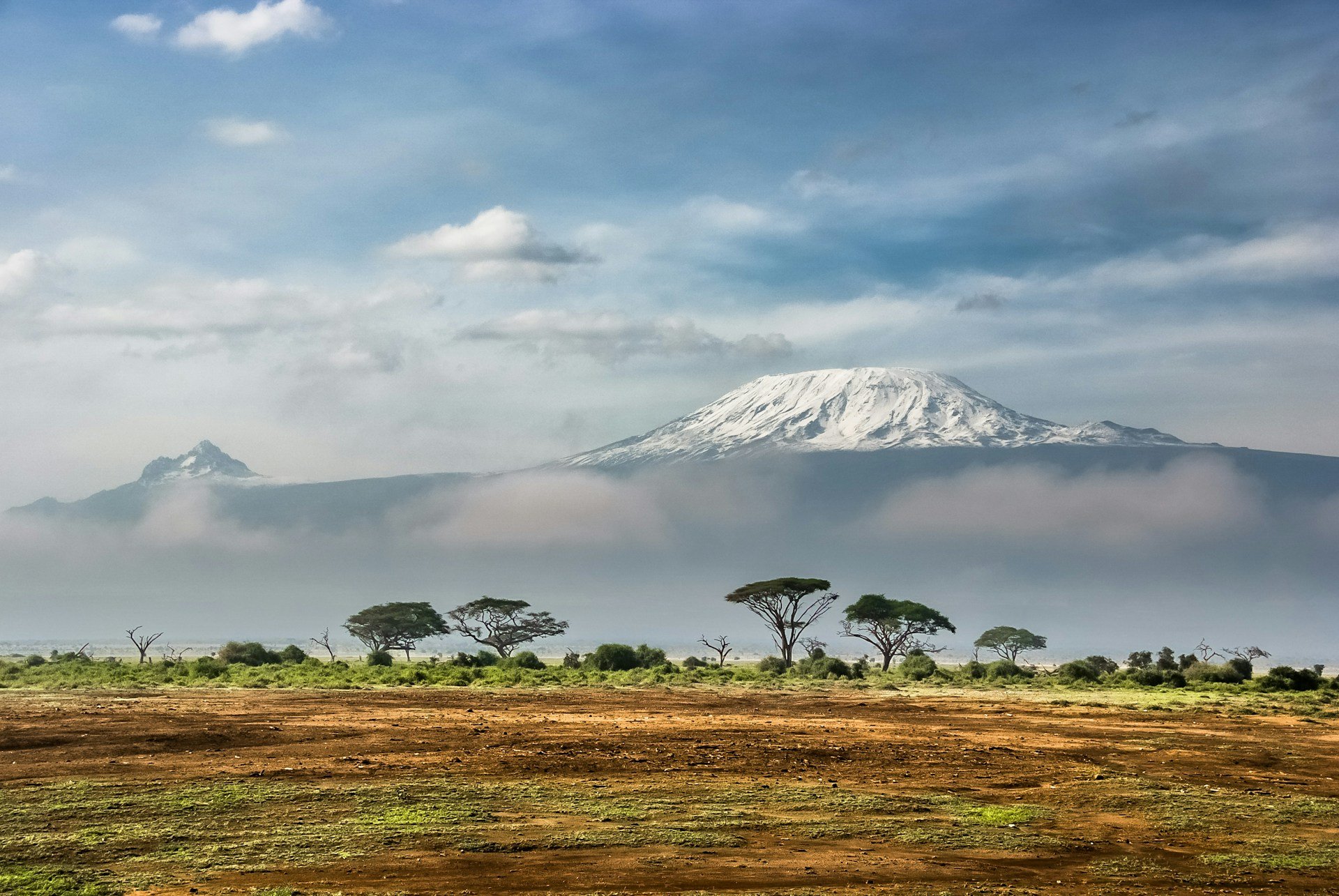
Amboseli is built around two things: the largest free-ranging elephant herds in East Africa, and the view. On a clear morning — more common in the dry season — Mount Kilimanjaro rises behind the swamps and open plains with an improbability that makes every photograph feel inadequate. The elephants here are habituated to vehicles and move close enough that their scale is apparent in a way that's different from any other park. Amboseli's research station has been studying these elephant families for over 50 years — the staff know each animal by name and family history. Two to three nights. Fly or drive from Nairobi (4 hours on reasonably good roads).
Nairobi
East Africa's most significant city, sitting at 1,795 metres altitude with a climate so comfortable that it makes no sense until you remember you're at the equator on a high plateau. Nairobi National Park, 7km from the CBD, has lions, rhinos, giraffe, and buffalo with the city skyline behind them. The Giraffe Centre lets you feed endangered Rothschild giraffes from a raised platform (and occasionally from your mouth). The David Sheldrick Elephant Orphanage opens daily for one hour during baby elephant feeding — one of the most moving wildlife experiences in Kenya. The Karen and Langata suburbs have good restaurants, the Westgate and Village Market malls are safe, and the city's matatu culture is chaotic and fascinating.
Samburu National Reserve
The semi-arid north of Kenya produces a different wildlife experience from the southern savanna. Samburu holds the "Samburu Special Five" — Grevy's zebra, reticulated giraffe, Somali ostrich, gerenuk (an antelope that stands on its hind legs to browse), and beisa oryx. None of these species are found in Kruger or the Mara. The Ewaso Ng'iro River running through the reserve attracts crocodiles and elephants in large numbers. The landscape is striking — dry riverine forest against open semi-desert. Two to three nights. Fly from Nairobi (1 hour).
Lamu Island
Lamu Town is the best-preserved Swahili stone town in East Africa and a UNESCO World Heritage site. No cars (the island is too narrow — donkeys and boats are the transport). Coral-stone buildings with intricately carved wooden doors. An Arab-influenced architecture that has barely changed in 500 years. Lamu is for people who want a different Kenya entirely — slow, historical, and genuinely removed from the safari circuit. The population is largely Muslim and the culture is conservative. Dress modestly, walk slowly, and eat at the small restaurants around the waterfront in the evening. Fly from Nairobi (1.5 hours).
Diani Beach
South of Mombasa, Diani is Kenya's best beach destination: a long stretch of white coral sand with warm Indian Ocean water, a reef offshore for snorkelling and diving, and a mix of accommodation from budget bandas to luxury resort hotels. The Colobus Trust here protects the endangered Angolan colobus monkey — forest patches along the beach road have resident troops that are reliably viewable. Diani is the natural end to a Kenya trip if you want beach time after safari. Two to three nights. Fly from Nairobi or Mombasa (40 minutes from Nairobi direct).
Ol Pejeta Conservancy
Ol Pejeta in the Laikipia plateau north of Nairobi is the largest black rhino sanctuary in East Africa and home to the last two northern white rhinos on earth — females named Najin and Fatu, under 24-hour armed guard. The conservancy also has chimpanzee sanctuary (the most westerly chimp population in the world), and excellent lion, leopard, and elephant populations. The community conservation model here is among the most studied in Africa. Two to three nights. Drive from Nairobi (3.5 hours) or fly to Nanyuki (1 hour).
Lake Nakuru & Rift Valley
The Rift Valley floor holds a series of soda lakes — Nakuru, Bogoria, Elementaita — that are shallow, alkaline, and extraordinarily productive of cyanobacteria that feeds flamingos in numbers that turn the lake pink from a distance. Lake Nakuru National Park also has significant rhino and lion populations and an observation point with arguably the best single panoramic view of any Kenyan park. Lake Naivasha, nearby, has hippo and is accessible by boat from the Sopa Lodge boat launch. Three to four hours drive from Nairobi.
Culture & Etiquette
Kenya has over 40 ethnic groups, each with distinct cultural practices, and a national culture forged from the interaction between these communities, British colonial influence, and the Swahili trading tradition of the coast. The most visible cultural markers for visitors are the Maasai — the red-cloaked pastoralists of the savanna whose distinctive dress, jewelry, and cultural practices have made them among the most photographed people in the world. Maasai visits are a standard part of the Mara safari experience; do them with awareness that the cultural performance has become a significant income source for communities that have lost much of their traditional land.
The concept of harambee — pulling together, mutual self-help — was adopted by Jomo Kenyatta as the national motto at independence and describes a genuine social ethic. The Swahili phrase karibu (welcome) is used constantly and sincerely. Kenya's culture leans outward — visitors are not an imposition but an opportunity for connection, and the warmth of most interactions in the country outside the heavy tourist transaction zones is genuine.
"Jambo" (hello), "Asante" (thank you), "Karibu" (welcome), "Habari?" (how are you?) — any attempt at Swahili is received with genuine warmth. Kenya is officially bilingual in Swahili and English but Swahili is the emotional language of the country. A few phrases go further here than almost anywhere.
The Swahili coast communities are predominantly Muslim. In Lamu and Mombasa's old town, covering shoulders and knees is respectful and expected. On Diani beach or at resort hotels, beach clothing is fine. The shift from beach to town requires the same adjustment as in Morocco.
In Maasai villages, at the coast, and in markets, asking permission before photographing people is both respectful and required — many communities now expect payment for photographs, and approaching with permission first rather than taking and then offering money is a meaningfully different interaction.
Kenya's national park fees are significant and go directly into wildlife and community conservation. The Maasai Mara conservancy fees support local Maasai communities that have converted grazing land into conservation areas. These fees are not tourist levies — they are the economic foundation that makes the wildlife you came to see possible.
M-Pesa, Kenya's mobile money system, is used for almost every transaction in the country. You can't set it up as a visitor without a Kenyan number and ID, but knowing what it is and accepting it exists helps you understand why your driver or guide might prefer a mobile transfer to cash. Having USD or KES cash remains important for remote areas.
The jumping dance and beaded jewelry sale at the end of a Maasai village visit is often the full content of what operators offer. Push for something more substantive — ask your guide to arrange a conversation about land rights, conservation relationships, or education. The communities have complex and thoughtful views on tourism and are rarely asked to share them.
At most safari camps and lodges, especially in unfenced areas, walking alone after dark is genuinely unsafe — not from human threat but from wildlife. Hippos, leopards, and buffalo are the primary risks. Lodges and camps have askari (guards) who escort guests between tents and the main area. Use them.
Ivory, rhino horn products, and certain shell jewelry are both illegal to purchase and deeply harmful to the wildlife you came to see. Kenya has been at the forefront of anti-poaching efforts and takes wildlife crime seriously. Don't create demand for products that are slowly eliminating the animals from these landscapes.
Kenyan politics is tribal, heated, and recent enough (2007–2008 post-election violence) to be sensitive in ways that aren't always apparent to visitors. Opinions on election results, ethnic communities, and political leaders are best not volunteered by visitors who don't know the people they're talking to well.
Nairobi sits at 1,795 metres. Many visitors experience mild altitude symptoms — headache, fatigue, breathlessness on exertion — in the first 24–48 hours. Drink more water than usual, don't schedule demanding activities on your first day, and know that the altitude explains why the 5km run you planned feels harder than it should.
The Maasai
The Maasai are semi-nomadic pastoralists whose territory spans the Kenya-Tanzania border and whose cultural identity — the red shukas (blankets), the beaded jewelry, the ochre-painted skin, the warrior tradition — is among the most distinctive in the world. Kenya's tourist industry has commercialized Maasai culture extensively. Behind the performance, the communities are navigating profound changes: land rights, education, conservation relationships, and the choice between traditional pastoral life and the opportunities (and risks) of tourism income.
M-Pesa & Tech Culture
Kenya invented mobile money. M-Pesa, launched by Safaricom in 2007, allows people to send money, pay bills, and access credit using a basic mobile phone. It transformed financial inclusion in Kenya and is now used in 10+ countries globally. The tech ecosystem in Nairobi — nicknamed Silicon Savannah — has produced a generation of African tech founders and attracted investment from Silicon Valley. Understanding this gives you a more accurate picture of Kenya than the safari brochure does.
Running Culture
Kenya produces the world's best long-distance runners in numbers that are statistically extraordinary. Iten, a small town in the Rift Valley at 2,400 metres altitude, is a global training destination where Kenyan and international runners coexist in the high-altitude air that explains much of the competitive advantage. The Kenyan running tradition is cultural as well as physiological — the discipline and pride that produced 20+ Olympic gold medals are visible in the training culture of any Kenyan town with a track.
Swahili Coast Culture
The Swahili people of the coast are distinct from the interior communities in language, religion (predominantly Islam), architecture, and food. Lamu's old town has the clearest concentration of this culture — the carved wooden doors, the veiled women, the call to prayer at dawn, the dhow boats in the harbor. It's a reminder that Kenya's history extends in multiple directions simultaneously and that the country contains multitudes that the standard safari narrative compresses.
Food & Drink
Kenyan food is not celebrated globally in the way that Japanese or Moroccan food is, but it is deeply satisfying in the way that honest food cooked from fresh ingredients always is. The national flavors are simple and good: well-seasoned grilled meat, starchy staples that carry everything else, an Indian Ocean coast tradition that applies coconut and spice in ways that reflect centuries of trade. Nairobi has a genuinely excellent restaurant scene — Indian, Ethiopian, Japanese, and contemporary Kenyan — that most visitors never find because they're in transit to the Mara.
Nyama Choma
Roasted meat — usually goat or beef, sometimes chicken — over charcoal and served with kachumbari (a tomato, onion, and coriander salad) and ugali. This is the social food of Kenya, eaten at nyama choma restaurants (chomas) on weekends with family and friends, accompanied by cold Tusker beer. The meat is typically ordered by weight, cooked slowly, and brought to the table. The best chomas are in Nairobi's Westlands and Karen suburbs. It is consistently one of the best things to eat in the country.
Ugali, Sukuma Wiki & Githeri
Ugali — dense white maize porridge cooked until it forms a stiff dough — is the staple carbohydrate of most Kenyan meals. It has almost no flavor of its own and functions as the vehicle for everything else: sukuma wiki (braised kale and onion, the literal translation is "stretch the week"), nyama, or stewed beans. Githeri is a boiled mixture of maize and beans that is filling, cheap, and genuinely good when well-seasoned. These are the foods that Kenya actually runs on, available at any local restaurant for KES 100–200.
Mandazi & Chai
Mandazi — triangular fried dough bread, slightly sweet, served warm — is the universal Kenyan breakfast alongside a cup of heavily spiced chai (tea boiled with milk, sugar, and spices including cardamom, ginger, and cinnamon). The combination costs about KES 50 at any roadside kiosk and is one of the more pleasurable small rituals of being in East Africa. Kenyan tea, grown in the highlands around Kericho and Nandi, is among the best-quality black tea in the world and the one you've been drinking in British tea bags for decades.
Coast Cuisine: Pilau & Biryani
The Swahili coast has a distinct food tradition shaped by Arab, Indian, and African influences. Pilau rice spiced with cardamom, cumin, cloves, and cinnamon and cooked with meat — the Swahili version of biryani — is the showcase dish. Coconut-based curries, samosas (introduced from India centuries ago), grilled whole fish, and mshikaki (marinated meat kebabs) are all coastal staples. In Lamu, the food at the small restaurants around the old harbor is inexpensive and excellent.
Tusker Beer & Drinks
Tusker, named after the elephant that killed its founder's brother (this story is real), has been brewed in Kenya since 1923. It's a clean, refreshing lager that tastes best cold in the late afternoon on a safari camp deck overlooking a waterhole. White Cap Lager and Pilsner are the other main local beers. Dawa — vodka, honey, lime, and ice — is Kenya's cocktail contribution and consistently delicious. Fresh passion fruit juice, which grows abundantly in the highlands, is available everywhere and extraordinary.
Indian-Kenyan Food
Kenya's significant Indian community, descended largely from the indentured workers who built the Uganda Railway, has integrated its food culture deeply into Kenyan urban life. Nairobi's Indian restaurants — particularly in Westlands — are genuinely excellent and cheap by any comparison. Samosas, chapati, and dhals have been adopted into mainstream Kenyan food culture so thoroughly that they're no longer considered "Indian" food by most Kenyans. The chapati with beans at a local restaurant is one of the most satisfying cheap meals in East Africa.
When to Go
Kenya straddles the equator and has two dry seasons and two wet seasons rather than the four-season calendar of the Northern Hemisphere. The long dry season (July to October) is the best overall time for wildlife — grass is short, animals concentrate at water, and the Migration crossings are happening in the Mara. The short dry season (January to March) is excellent for Amboseli and the coast. The long rains (April to June) make some tracks impassable but prices drop significantly and the parks are green and beautiful. The short rains (November to December) are manageable and less disruptive than the long rains.
Long Dry Season
Jul – OctThe Migration river crossings in the Mara (July–October). Excellent wildlife across all parks as animals concentrate at water sources. Short dry grass makes game viewing dramatically easier. Peak tourist season — book accommodation 6–12 months ahead for the Mara. Prices at their highest.
Short Dry Season
Jan – MarExcellent for Amboseli (clear Kilimanjaro views) and the coast. Animals congregating at permanent water. Slightly less busy than July–October, lower prices. Great for birding as migratory species are present. February and March are arguably the best months for Amboseli.
Short Rains
Nov – DecShort afternoon showers that rarely disrupt full days. Landscapes green and photogenic. Prices drop 20–30% at most lodges. Wildlife still excellent in most parks. The coast is at its calmest and warmest. December is fine except for the Christmas and New Year spike when prices and crowds briefly return to peak.
Long Rains
Apr – JunHeavy rain makes some unpaved park roads impassable, especially in the Mara. Thick vegetation makes wildlife harder to spot. Some lodges and camps close for maintenance. Prices drop significantly — up to 50% at some lodges. The landscape is genuinely beautiful and birding is extraordinary, but the practical difficulties of safari in wet conditions require accepting.
Trip Planning
Ten days to two weeks is the right length for a first Kenya trip. Less than that and the time getting between destinations eats into the time actually being at them. Two weeks allows Nairobi (2 nights), the Mara or Amboseli (3–4 nights), and optionally the coast (3 nights). Three weeks adds Samburu, the Rift Valley lakes, or a proper combination of multiple safari ecosystems.
The key planning decision is fly versus drive. Nairobi to the Maasai Mara is 4–5 hours by road (the last section on unpaved tracks that bounce you thoroughly). By light aircraft it's 45–55 minutes and deposits you at a bush airstrip to be met by a Land Cruiser. The flight costs $200–400 per person return and is worth it for trips of 10 days or less where road time is a significant proportion of the total trip. For longer trips, driving allows you to stop at the Rift Valley and experience the country between points. Both work.
Nairobi
Day one: land at JKIA, check into Karen or Westlands hotel, eat nyama choma for dinner. Day two: Nairobi National Park morning drive (lions against the skyline, 7km from downtown). Afternoon: Giraffe Centre and David Sheldrick Elephant Orphanage. Kenya National Museum if time allows. Fly to the Mara on day three morning.
Maasai Mara
Five nights. Dawn and evening game drives daily. If it's Migration season (July–October), stake out a river crossing point with your guide and wait — the patience is part of the experience. Non-Migration season: cheetah hunts, lion pride dynamics, leopard in the fig trees. One full day exploring the conservancy areas north of the national reserve where vehicles are fewer and the guiding goes deeper.
Amboseli
Fly from Mara airstrip to Amboseli (1 hour via Wilson Airport). Three nights with the elephants and Kilimanjaro. Dawn drive to observation hill for the classic view. Afternoon at the swamp where elephants wade. The research team at Amboseli Trust for Elephants occasionally takes visitors — ask your lodge. Fly back to Nairobi on day ten for departure.
Nairobi
Three nights to do Nairobi properly. National Park, Giraffe Centre, Elephant Orphanage, National Museum, Sheldrick Wildlife Trust behind-the-scenes tour if available. A full evening in the Westlands restaurant district. One afternoon in Karen exploring the suburb and Kazuri Beads workshop. Fly to Samburu on day four morning.
Samburu
Three nights in the north. Grevy's zebra, reticulated giraffe, gerenuk, beisa oryx — none of these in the south. Ewaso River morning walks. Night game drives permitted at most Samburu camps. Fly south to the Mara on day seven.
Maasai Mara
Five nights. Full Migration experience if in season, or the deep resident wildlife in the off-season. One day in the conservancies rather than the national reserve for a different experience. Hot air balloon safari at dawn (book in advance, costs $450–500 per person) — the Mara from the air is extraordinary.
Diani Beach
Fly from the Mara to Ukunda airport (near Diani). Three nights of Indian Ocean recovery. Reef snorkelling, Colobus monkey walks, Kisite Marine Park day trip. Fly back to Nairobi on day fourteen for departure.
Nairobi
Three full Nairobi days. All the city highlights. One evening in the Nairobi restaurant scene — try Carnivore for the full Kenyan game meat experience or one of the excellent Indian restaurants in Westlands for something more refined. Prepare gear for safari: binoculars, field guide, neutral clothing.
Ol Pejeta & Laikipia
Drive or fly to Ol Pejeta (3.5 hours or 1 hour by air). Three nights: the last two northern white rhinos, chimpanzees, lion and leopard. The conservancy model here is exceptional and the guides are deeply knowledgeable about conservation challenges.
Samburu
Fly north from Nanyuki. Three nights for the northern specials — the animals you can't see in the south. The Tented Camp experience in Samburu feels more remote and less trafficked than the Mara.
Maasai Mara
Five nights in the Mara. Every day different. Balloon safari on one morning. One full day in the Mara North Conservancy or Olare Motorogi for off-road access and fewer vehicles. Walking safari if the camp offers it — the Mara at ground level is an entirely different experience from the vehicle.
Amboseli
Fly from the Mara. Three nights: Kilimanjaro, elephants, the particular atmosphere of the great open basin. Dawn walks if the camp permits.
Lamu Coast
Fly from Amboseli to Lamu via Nairobi. Three nights in Lamu Old Town in a traditional Swahili guesthouse. Dhow sailing, old town walk, the waterfront in the evening. A completely different Kenya from the savanna — and the right note on which to end a three-week trip.
Vaccinations & Malaria
Malaria is present in Kenya's low-altitude areas including the Maasai Mara, Samburu, and the coast. Antimalarial prophylaxis (Malarone or Doxycycline) is strongly recommended for these areas. Nairobi is at altitude and generally considered low-risk. Yellow fever vaccine required if arriving from endemic countries. Hepatitis A, Typhoid, and routine vaccines should be current. See a travel health clinic 6–8 weeks before departure.
Full vaccine info →Kenya ETA
Kenya requires an Electronic Travel Authorization (ETA) for all visitors since January 2024. Apply at etakenya.go.ke at least 72 hours before departure. Cost is $30 USD. Processing is usually quick but plan for potential delays. Valid for 90 days. Print your approval or save it on your phone — immigration will check it on arrival.
Connectivity
Safaricom (M-Pesa network) is the dominant and most reliable carrier. Buy a Safaricom SIM at JKIA airport on arrival — cheap data bundles, good coverage in cities and along tourist routes. Coverage in the parks is variable; Mara and Amboseli main camps usually have WiFi. Download offline maps before going into the bush. An eSIM through Airalo is a good alternative.
Get Kenya eSIM →Power & Plugs
Kenya uses UK-style Type G plugs at 240V. European and North American visitors both need adapters. Most safari lodges have limited power (often solar/generator) — charge everything during mealtimes when power is usually available. Bring a battery pack for long drive days when cameras and phones need topping up away from camp.
Travel Insurance
Essential in Kenya. Medical evacuation from remote safari areas is expensive — ensure your policy covers emergency air evacuation (Flying Doctors/AMREF cover is worth having specifically). Diving coverage if visiting the coast. Medical care in Nairobi (Aga Khan University Hospital, MP Shah Hospital) is good but costly. The Flying Doctors annual membership ($25 USD) is worth buying for anyone spending significant time in remote areas.
Safari Kit
Binoculars are not optional — a good pair transforms the safari experience. 8x42 or 10x42. A wildlife field guide (Collins Field Guide to Mammals of Africa). Neutral coloured clothing — khaki, brown, olive. No bright colours or white. A lightweight fleece or down jacket for cold dawn drives (it drops to 10°C in the Mara at 5:30am). Insect repellent with DEET for evening hours. Sunscreen.
Transport in Kenya
Kenya's internal transport for tourists divides clearly: light aircraft for inter-park movement, safari vehicles for within the parks, and Uber/Bolt in Nairobi for city movement. The SGR (Standard Gauge Railway) connects Nairobi to Mombasa in 4.5 hours and is an excellent and comfortable intercity option. Road trips are possible but require time — roads in the parks and conservancies are unpaved and the distances are longer than they look. The key rule for driving in Kenya: don't drive outside cities after dark.
Bush Flights
$150–400/legLight aircraft (Cessna Caravans, usually) from Wilson Airport in Nairobi to bush airstrips in the Mara, Amboseli, Samburu, and elsewhere. The single best transport decision you can make in Kenya. 45–55 minutes versus 4–8 hours by road. Book through your lodge operator or directly with Safarilink, Air Kenya, or Fly540. 15kg soft bag limit enforced.
Uber & Bolt (Nairobi)
Fixed app rateBoth work well in Nairobi and are far safer than street taxis. Uber is the more reliable of the two for airport runs. Bolt is slightly cheaper for shorter city trips. Use one of these for all Nairobi movement — the alternative (matatu minibuses or street taxis) requires local knowledge that takes time to develop.
SGR Train (Nairobi–Mombasa)
$25–50The Standard Gauge Railway runs from Nairobi's Syokimau station to Mombasa in 4 hours 30 minutes. Clean, air-conditioned, on time, comfortable. The best way to travel between the capital and the coast. Book through the Kenya Railways website. Departs twice daily in each direction.
Safari 4x4
Included with lodgePop-top Land Cruisers and Land Rovers with roof hatches for standing game viewing. Your camp or lodge provides these with a driver-guide. In conservancies with walking safari permits, this is supplemented by guided walks. The guide is the most important variable in any safari — a knowledgeable, experienced guide transforms what you see and understand.
Self-Drive
$80–150/dayUnlike Kruger, self-drive in the Maasai Mara or Amboseli is technically possible but significantly less rewarding than guided driving. Park roads are unmarked, wildlife is harder to find without local knowledge, and the conservancy areas north of the national reserve don't permit self-drive at all. Self-drive works for the Rift Valley lakes and the SGR from Nairobi to Mombasa connection.
Hot Air Balloon (Mara)
$450–550/personDawn balloon flights over the Maasai Mara, landing with a champagne bush breakfast. One of the signature experiences of East African safari. You drift over the grasslands at sunrise watching the herds below. Book through your lodge well in advance — balloon companies have limited capacity and popular dates sell out months ahead.
Dhow (Coast)
$50–150/dayTraditional wooden sailing boats on the Lamu Archipelago and the Diani coast. Hire for a day to sail between islands, snorkel off sandbars, and eat fresh seafood on the boat. The dhow is the correct way to experience the Swahili coast and the operators around Lamu Old Town waterfront have been running these trips for generations.
Intercity Bus
KES 800–2,000Easy Coach, Modern Coast, and other operators run frequent services between Nairobi, Mombasa, Kisumu, and Nakuru. Comfortable and cheap. Use for city-to-city movement when the SGR isn't the right route. Don't take overnight buses as a visitor — the safety record at night on Kenyan roads requires knowing the country well.
Accommodation in Kenya
Kenya's accommodation is dominated by the safari lodge and tented camp model, and the quality across price ranges is genuinely good. The shift from a hotel room to a canvas-walled tent with a bush view and the sound of wildlife at night is one of the defining sensory experiences of an African safari — the slight vulnerability of the tent is part of what makes it different from an indoor room, and the better operators understand this and work with it rather than over-insulating guests from the environment.
Nairobi has a well-developed hotel sector with international chains in Westlands and Upperhill, and excellent guesthouses in Karen and Gigiri (the UN neighborhood). The airport area has functional transit hotels for early departures. The coast has a full range from budget bandas to luxury resort hotels.
Tented Safari Camp
$200–1,500+/person/nightThe definitive Kenya accommodation experience. Canvas walls, wooden floors, ensuite bathroom, usually a private deck overlooking bush or a waterhole. All-inclusive: all meals, twice-daily game drives, a ranger and tracker (at private conservancies). The quality spectrum is wide — at the budget end, basic but functional; at the luxury end, extraordinary. The guiding quality is more important than the thread count of the sheets.
Nairobi Hotel or Guesthouse
$60–250/nightKaren and Langata suburbs have the best mid-range guesthouses — family-run, secure, garden settings, good breakfast. The Westlands and Upperhill areas have international hotels (Tribe, Radisson Blu, Sarova Stanley) for the business and transit market. The Giraffe Manor — where Rothschild giraffes eat breakfast at your table through the dining room windows — is the most famous Nairobi hotel and books out years in advance.
Swahili Guesthouse (Lamu)
$50–300/nightIn Lamu Old Town, traditional coral stone guesthouses with wooden furnishings, rooftop terraces, and the sounds of the muezzin through the carved window screens. Petley's Inn, Lamu House, and various smaller family-run guesthouses are the correct accommodation for the island. Staying in a resort outside the old town misses the point of Lamu entirely.
Beach Resort (Coast)
$80–400/nightDiani Beach has everything from budget bandas (small beach cottages) to all-inclusive resort hotels. For diving and snorkelling, staying at a property with its own dive school simplifies logistics. The Almanara and The Sands at Nomad are the most design-conscious options. Budget travelers do well at Diani Beach Backpackers and similar guesthouses directly on the beach.
Budget Planning
Kenya is not a cheap safari destination. The Maasai Mara's conservation fees, flight costs, and lodge pricing reflect its position as one of the world's premier wildlife destinations. The shilling's weakness against the dollar and euro helps at the local food and city transport level, but safari accommodation is priced in USD by most operators and doesn't benefit from exchange rate advantages. Budget realistically: a genuine Mara safari with a reputable camp is a significant investment and the difference between a $150/night camp and a $400/night camp is mostly guiding quality and vehicle ratios, both of which directly affect what you see.
- Budget tented camp or camping
- Shared game drives
- Road transport (drive vs fly)
- Local restaurants in Nairobi
- Coast bandas or backpacker
- Good mid-range tented camp
- All-inclusive (meals + drives)
- Domestic bush flights
- Good Nairobi guesthouse
- Hot air balloon one morning
- Luxury private conservancy lodge
- Private vehicle and guide
- Walking safaris and night drives
- Giraffe Manor or equivalent
- Private bush dinners
Quick Reference Prices
Visa & Entry
Kenya introduced the Electronic Travel Authorization (ETA) in January 2024, replacing the previous visa and visa-on-arrival system. All visitors — including nationalities that previously entered Kenya visa-free — now require an ETA before arrival. The process is online only, costs $30 USD, and is typically processed within 72 hours. East African Community (EAC) citizens (Uganda, Tanzania, Rwanda, Burundi, South Sudan, DRC) are exempt.
Apply at etakenya.go.ke. All visitors (except EAC nationals) need an approved ETA before departure. Valid for 90 days single entry. Multiple entry available. Print or save the approval on your phone.
Family Travel & Pets
Kenya is outstanding for families with children old enough to engage meaningfully with wildlife. There is no upper limit. The lower age limit for game drives varies by camp — most require children to be at least 6 years old for game drives (some 7 or 8 for walking safaris), both for safety and for the ability to sit quietly in a vehicle. Nairobi has family-friendly activities that work for any age: the Giraffe Centre and Elephant Orphanage are universally loved.
The coast — Diani Beach particularly — works for families with very young children. Calm, shallow Indian Ocean water inside the reef, safe beaches, and a more contained environment than the open savanna. Many Diani properties have children's facilities and programs.
Giraffe Centre, Nairobi
Feeding endangered Rothschild giraffes from a raised platform — or receiving a giraffe kiss by holding a pellet in your mouth — is one of the most genuinely delightful animal encounters available anywhere in the world for children. The centre opens at 9am and is best visited early before groups arrive. Book ahead online. The adjacent Animal Orphanage has rescued wildlife from across Kenya.
Elephant Orphanage
The David Sheldrick Wildlife Trust's elephant orphanage in Nairobi National Park opens to visitors daily from 11am to noon — one hour of baby elephants mud-bathing, drinking milk, and wrestling with each other while keepers explain each animal's rescue story. Visiting is free (donations welcomed). It is genuinely moving for adults and transformative for children. Book a foster elephant before you visit — the program connects children emotionally to conservation.
Mara Safari (ages 6+)
Children who can sit quietly in a Land Cruiser and understand what they're seeing find the Mara extraordinary. The scale of the Migration, the proximity to lions, the giraffes walking in silhouette at dawn — these are experiences that children carry for life. Choose a camp with a family suite and a specific children's activity program if traveling with under-12s. Most good Mara camps have these.
Diani Beach
Warm, shallow Indian Ocean water inside the coral reef. White sand beaches. Colobus monkey walks in the coastal forest for older children. Snorkelling in the reef shallows for those who can swim. The beach is generally safe and the water clear enough for children to see reef fish from the surface. The Resort hotels on Diani have pool facilities and kids' clubs for families needing more structured entertainment.
Amboseli & Kilimanjaro
The view of Kilimanjaro from Amboseli is the image that appears in almost every child's geography lesson about Africa. Seeing it in person — the snow-capped summit above the herds of elephants — is something children understand immediately as extraordinary. Amboseli's elephants are exceptionally close and calm around vehicles, making photographs that look professional regardless of the camera.
Conservation Education
Several Kenya lodges and conservancies offer excellent children's conservation programs: junior ranger activities, tracking lessons, talks from anti-poaching teams. Ol Pejeta's education program around the last northern white rhinos is particularly impactful. These programs turn a safari from a passive wildlife viewing experience into an active education about the challenges facing the animals children have come to see.
Traveling with Pets
Kenya permits the import of dogs and cats with full documentation. Requirements include an ISO-standard microchip, valid rabies vaccination, a health certificate from an accredited vet issued within 14 days of departure, and import permits from Kenya Veterinary Services (KVS). Processing import permits takes several weeks — start at least two to three months before travel. Kenya's KEPHIS (Kenya Plant Health Inspectorate Service) and the Director of Veterinary Services are the relevant authorities.
Practically speaking, bringing a pet to Kenya is unusual and logistically demanding. No national parks or safari areas permit pets inside their boundaries — the wildlife interaction risk is extreme. In Nairobi, some residential guesthouses accept pets with advance notice; hotels generally do not. The coastal resorts are not equipped for pets. Unless you are relocating to Kenya rather than visiting, traveling with a pet here is unlikely to be practical or pleasant for the animal.
Specific risk: Kenya has rabies throughout the country. Any dog bite or scratch from an animal of unknown vaccination status should be treated as a medical emergency — rabies post-exposure prophylaxis must begin within hours and is available in Nairobi's major hospitals. This applies to your own animals as much as to strays.
Safety in Kenya
Kenya's tourist circuit — Nairobi, the safari parks, the coast — is manageable with sensible precautions and is visited safely by hundreds of thousands of people every year. The country's northeastern border regions near Somalia carry genuine security risks and should be avoided. Nairobi requires urban awareness: petty theft, phone snatching, and opportunistic crime are common in busy areas. The safari areas themselves are very safe from human threats — the wildlife is the relevant risk there.
Nairobi Urban Crime
Phone snatching in traffic, bag theft on the street, and pickpocketing in crowds are the main risks. Keep phones out of sight on the street and in cars with windows open. Use Uber rather than walking in unfamiliar areas. The CBD and River Road areas require specific awareness — the Karen, Westlands, and Gigiri suburbs are considerably calmer.
Safari Areas
Extremely safe from human threats. Wildlife risks require following your guide's instructions: don't leave the vehicle in the bush, don't approach animals on foot without a guide, follow the camp escort procedures at night. Incidents following these rules are extremely rare. The risks are real but the protocol to avoid them is simple.
Northern Regions
The northeastern counties bordering Somalia and the area near the Somali border carry elevated risk from Al-Shabaab activity. The government's travel advisories on these areas are not overcautious. Stick to established tourist routes and follow current FCO/State Department advice for specific areas.
Road Safety
Kenya's roads, particularly outside Nairobi, have a poor safety record. Don't drive after dark in rural areas. If using a taxi or private driver, choose one recommended by your hotel. Long road journeys on unpaved roads in the parks require 4x4 vehicles and experience — follow your guide's routing advice.
Malaria & Health
Malaria in the Mara, Samburu, and coast requires antimalarial prophylaxis. Use DEET insect repellent at dawn and dusk. Drink only bottled or filtered water. Food safety at established lodges and reputable restaurants is generally good — exercise more caution at street food stalls than in Japan or Korea. Stomach issues are common on first visits if you're cautious.
Medical Facilities
Nairobi has excellent private hospitals: Aga Khan University Hospital and MP Shah Hospital are the two best options for visitors. Outside Nairobi, medical facilities are limited. The Flying Doctors (AMREF) provide air evacuation from remote areas — their annual membership ($25 USD) is worth having for anyone spending time off the main tourist circuit.
Emergency Information
Your Embassy in Nairobi
Most foreign embassies are concentrated in Nairobi's Gigiri and Upper Hill neighborhoods.
Book Your Kenya Trip
Everything in one place. These are services worth actually using.
The Scale of It Stays With You
The Great Migration is not what you expect, because nothing about it is contained. It is not a single event — it is a continuous movement of one and a half million animals following rain across a 30,000 square kilometer ecosystem, and the river crossings are the moments when this continuous movement becomes briefly, dramatically visible. When you watch it happen, the thing that stays is not the crocodiles or the chaos. It's the scale: the absolute indifference to anything but the grass on the other side, the weight of biological compulsion that moves an entire species across a dangerous river because that is simply what they do.
Kenya does this repeatedly. The elephants in Amboseli with the mountain behind them. The giraffe silhouette at dawn on the Mara plains. The dhow on the Indian Ocean with the old Swahili town behind it. The dawn drive when the mist is still on the grass and you find the lion before the lion finds you. These images don't fade. And they don't go away. Kenya is one of those places.